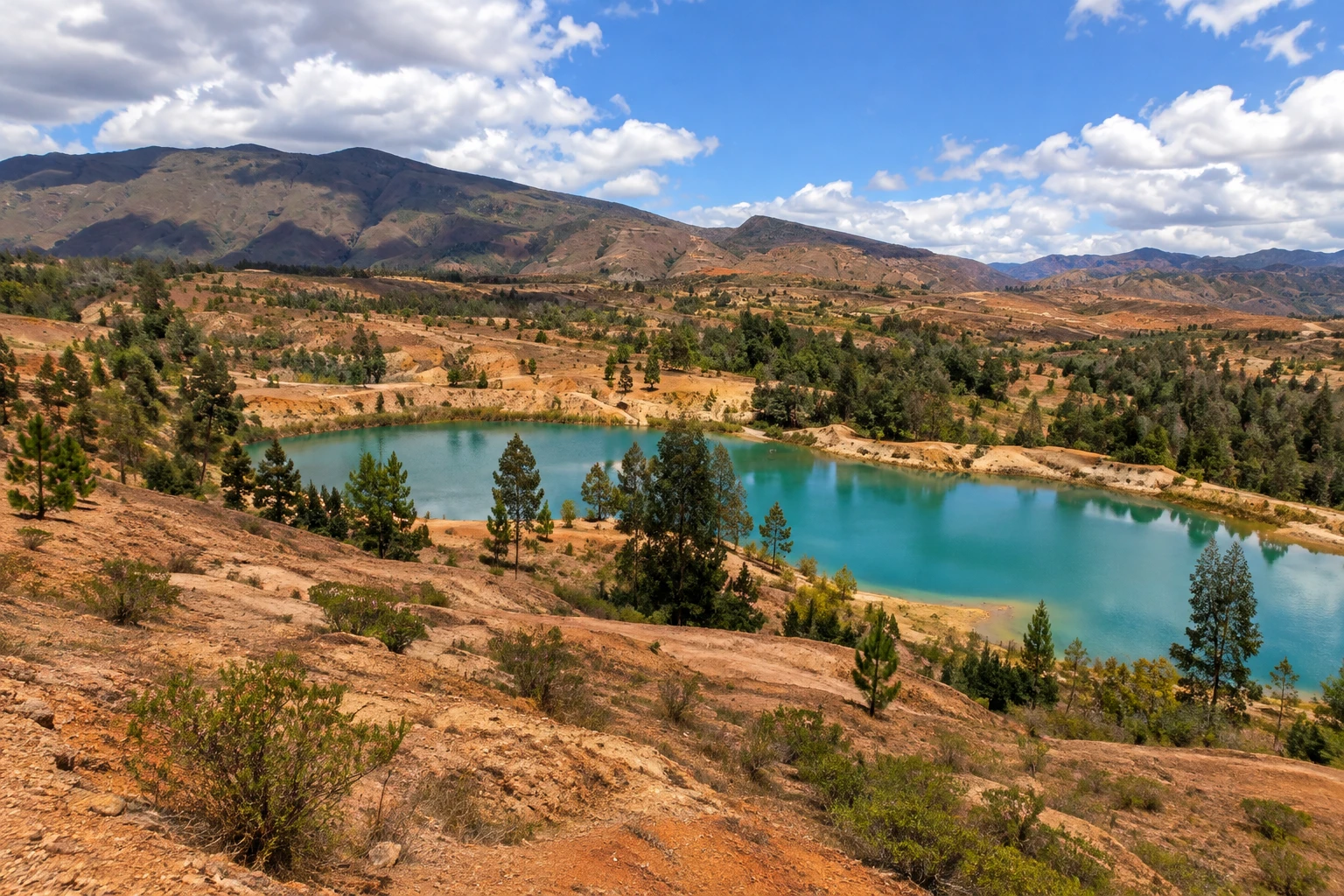
Illustrative images. The pictures in this guide are illustrations based on the real place, not photographs, and may differ from it.
The city
What to expect from Villa de Leyva.
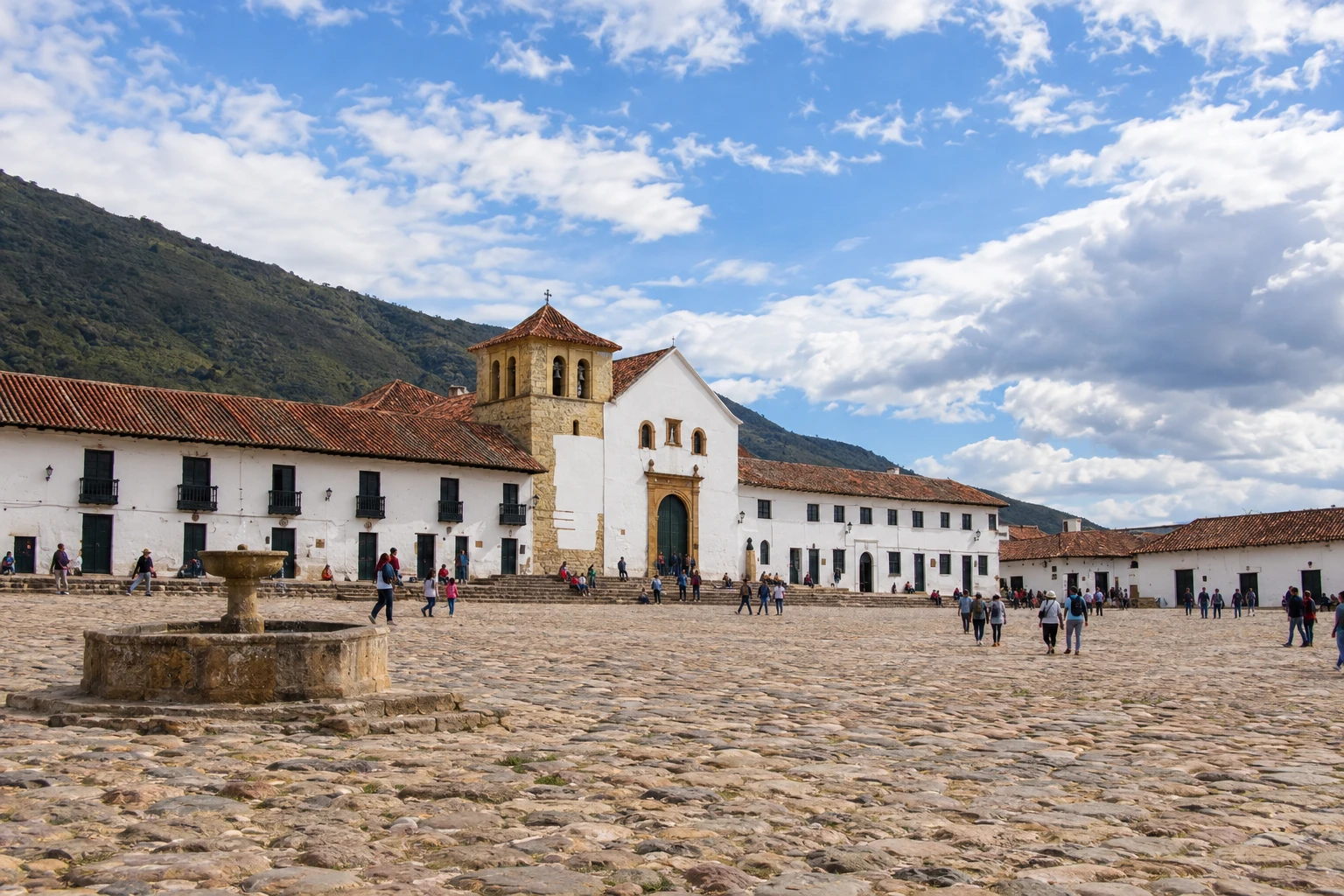
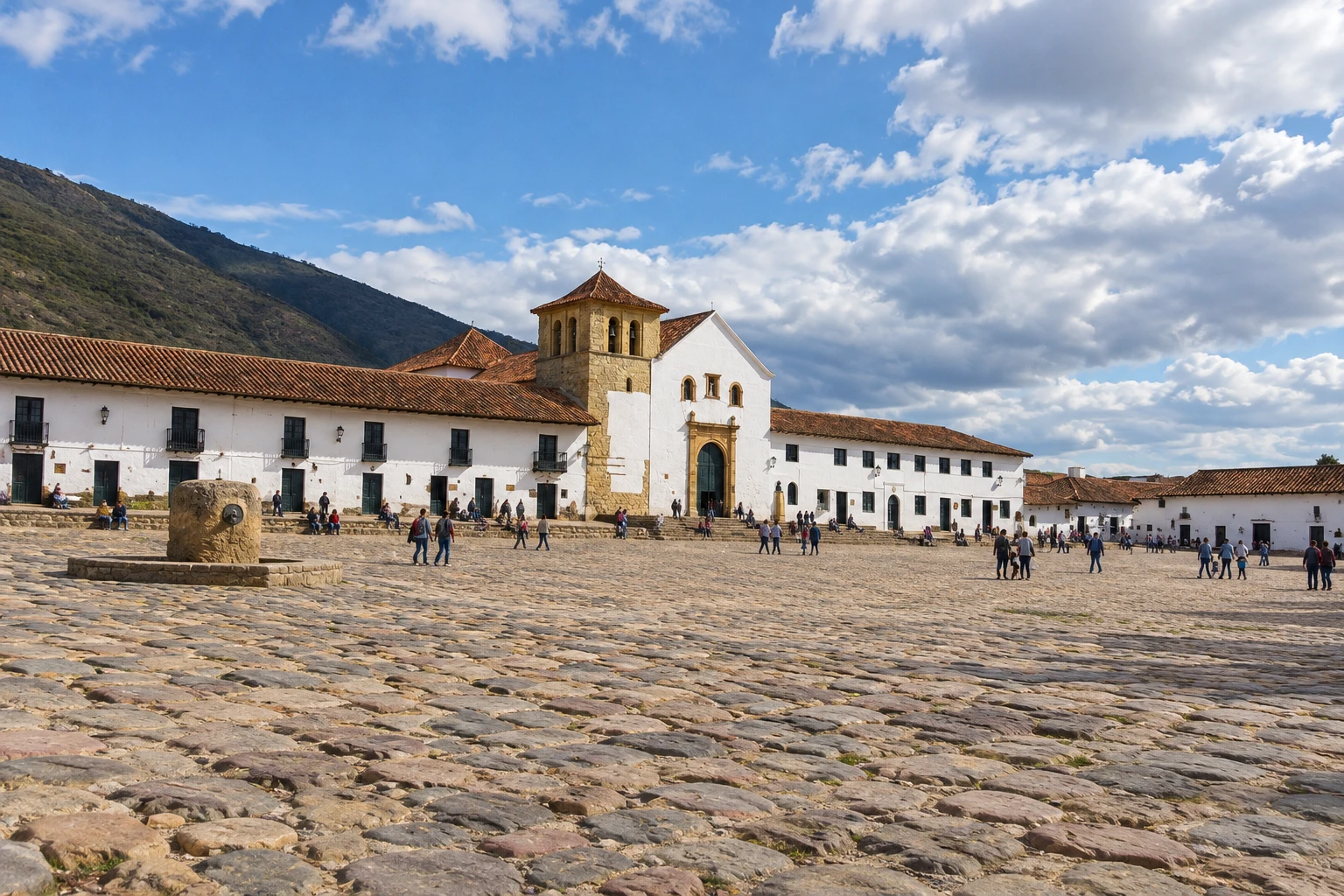
Villa de Leyva is a colonial town in Boyacá, founded in 1572, at about 2,100 meters altitude. The Plaza Mayor, made of stone and about 14,000 square meters, is surrounded by white houses with wooden balconies and by the church of Nossa Senhora do Rosário, from 1604. On the surrounding streets are the Museo del Carmen, of religious art, and house-museums. The surroundings, which were once seabed, contain fossils, the El Fósil museum, the muisca observatory El Infiernito, the Pozos Azules, the convent of Ecce Homo and Ráquira, the pottery village.
The stone square of about 14,000 square meters, one of the largest colonial squares in the Americas, surrounded by white houses, by the igreja do Rosário and with a mudéjar fountain in the center.
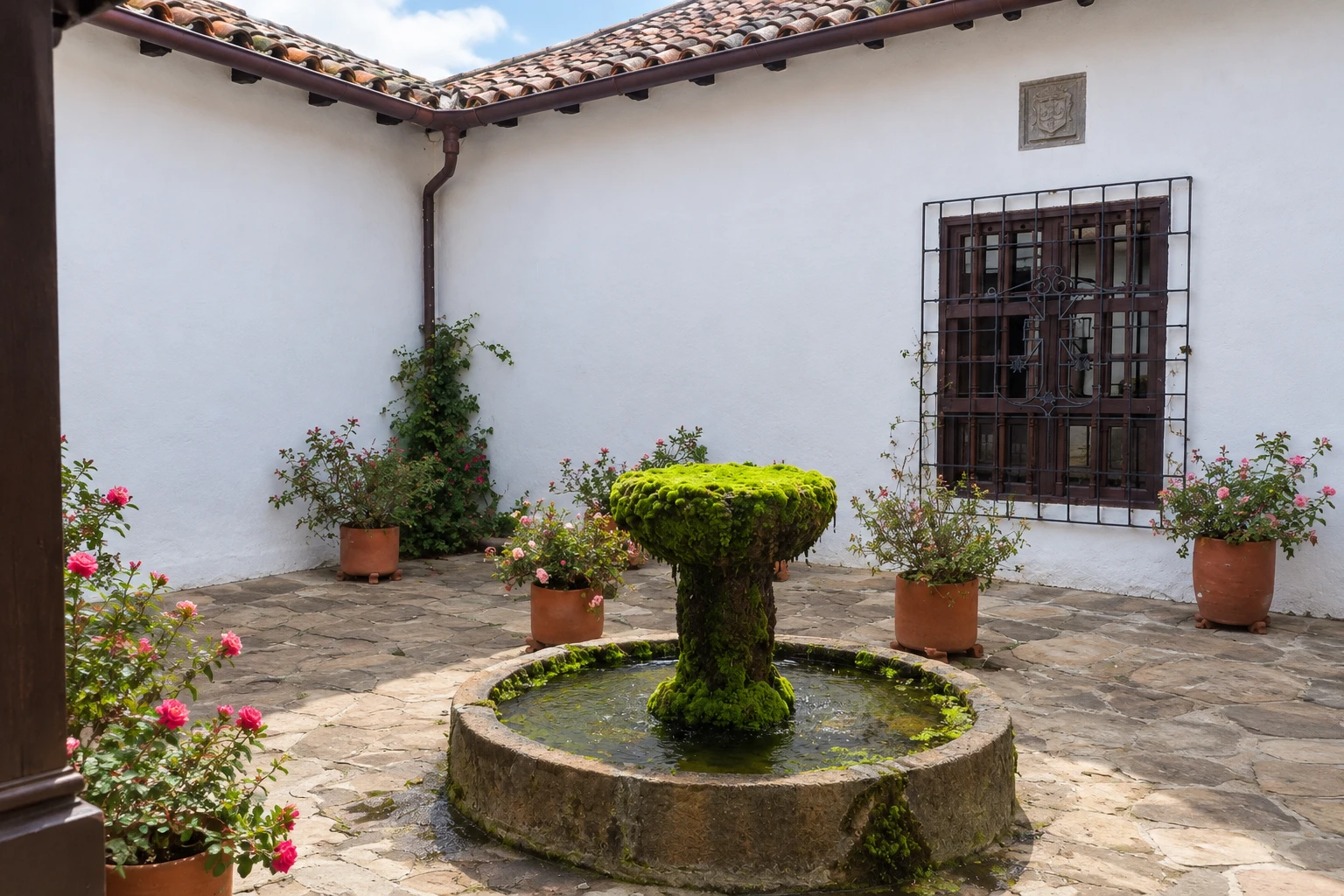
The museum of religious art of the Carmelite convent, in the praça do Carmen, with paintings, sculptures and devotional objects from the colonial period.
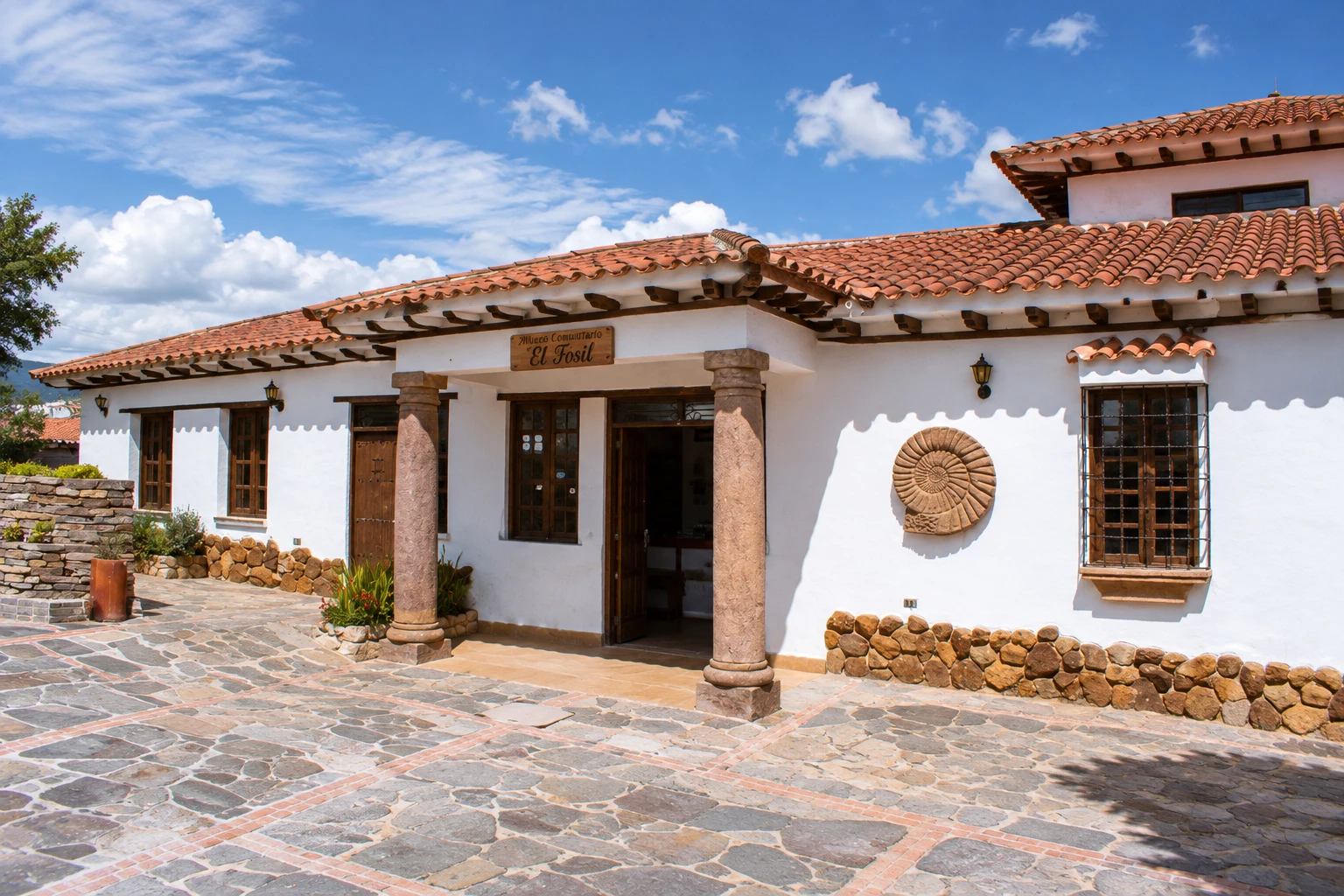
The museum built around the skeleton of a large marine reptile, about 7 meters long, found by farmers in 1977 and displayed at the site where it was discovered.
Aeropuerto Internacional El Dorado (BOG)Bogotá · 180 km
Terminal de Transporte de Villa de Leyva1 km
Approximate distances. Check flights and bus, train or boat schedules before you travel.
The connection with Brazil may be by direct flight or with a connection, depending on the season and the airline. Confirm before buying. The gateway is Bogotá, about 165 km away. There are direct buses from Bogotá, with a journey of about four hours, and frequent buses from Tunja, 40 km away. The bus terminal is a few minutes' walk from the Plaza Mayor. Brasília is two hours ahead.
How many days
Two days: the first for the Plaza Mayor, the central streets and the Museo del Carmen; the second for El Fósil, El Infiernito and the Pozos Azules. With a third day, go to the convent of Ecce Homo and Ráquira.
When to go
From December to February and from June to August it usually rains less. The kite festival takes place in August, and the lights festival in December. Weekends and Colombian public holidays fill the town; during the week it is calmer. Nights are cold all year round.
The seasons shown are the most usual ones; nature doesn't always follow the calendar.
Do you need a car?
Not for the center, which is small and can be walked, with irregular cobblestone streets. For the surroundings, there are taxis and tours that combine El Fósil, El Infiernito, the Pozos Azules and Ecce Homo; bicycles are also rented for the closest stretches.
Suggested itinerary
An order that works
Built with the places on this page. No rush: it's paced so you have time to see them.
One day in Villa de Leyva
manhã
Plaza Mayor
Start at the Plaza Mayor, with the church of Nossa Senhora do Rosário and the fountain in the center, and walk the cobblestone streets around it, with white houses and wooden balconies.
tarde
Museo del Carmen and the central streets
Head to the praça do Carmen and visit the Museo del Carmen, if it's open. Then look for ammonite fossils in the stones of the sidewalks and houses.
fim de tarde
Light on the plaza
Return to Plaza Mayor in the late afternoon, when the low light illuminates the facades and the surrounding mountains.
noite
Dinner in the center
Dine in one of the colonial houses in the center and try Boyacá cuisine, with soups, corn and trout. Bring a jacket: it gets cold at night.
2 days in Villa de Leyva
Day 1
manhã
Plaza Mayor
Plaza Mayor, igreja do Rosário and the center's cobbled streets.
tarde
Museo del Carmen
Praça do Carmen, Museo del Carmen and houses of the center.
fim de tarde
Late afternoon at the plaza
Walk through Plaza Mayor in the low light.
noite
Center
Dinner in the historic center.
Day 2
manhã
El Fósil and El Infiernito
By taxi or bicycle, head west: the El Fósil museum, with the large marine reptile displayed where it was found, and the El Infiernito archaeological park nearby.
tarde
Pozos Azules
On the return, stop at the Pozos Azules, about 2 km from town, and do the trail around the blue-green lagoons.
fim de tarde
Ecce Homo
By car or taxi, go to the convent of Santo Ecce Homo, about 8 km away, and see the cloister in the late-day light; check opening hours.
noite
Villa de Leyva
Return to the center and dine near Plaza Mayor.
Check before you go. Opening hours and days change, and places may close for renovations, holidays or events. This itinerary is a suggestion from Cidade Turismo, not a commitment: plan yours by checking directly with each place you intend to visit.
Before you go
Frequently asked questions
How to get from Bogotá to Villa de Leyva?
By direct bus, about four hours, or by bus to Tunja and another to Villa de Leyva. By car, the trip takes three to four hours, depending on traffic leaving Bogotá.
How big is Villa de Leyva's Plaza Mayor?
About 14,000 square meters, entirely paved with stones. It's one of the largest colonial squares in the Americas.
Why are there fossils in Villa de Leyva?
Over 100 million years ago the region was a seabed. That's why ammonites and other marine fossils appear in the stones and fields around, and there are paleontology museums in the town and nearby.
What to do around Villa de Leyva?
The most popular outings are the El Fósil museum, the El Infiernito archaeological park, the Pozos Azules, the convent of Santo Ecce Homo and Ráquira, the pottery village.
What is the altitude of Villa de Leyva?
About 2,100 meters. Days tend to be sunny and nights cold.


 Brazil
 Antarctica
 Argentina
 Bolivia
 Chile
 Ecuador
 Falkland Islands (Malvinas)
 French Guiana
 Guyana
 Paraguay
 Peru
 Suriname
 Uruguay
 Venezuela
 Austria
 Belgium
 Croatia
 Denmark
 Finland
 France
 Germany
 Greece
 Hungary
 Iceland
 Ireland
 Italy
 Luxembourg
 Norway
 Poland
 Portugal
 Slovakia
 Slovenia
 Spain
 Sweden
 Switzerland
 the Czech Republic
 the Netherlands
 the United Kingdom
 Turkey
 Bermuda
 Canada
 Greenland
 Mexico
 Saint Pierre and Miquelon
 the United States
 the Dominican Republic
 Japan
 Egypt
 South Africa
 Australia
 Fiji
 New Zealand
 Papua New Guinea