

 Brazil
 Antarctica
 Argentina
 Bolivia
 Chile
 Ecuador
 Falkland Islands (Malvinas)
 French Guiana
 Guyana
 Paraguay
 Peru
 Suriname
 Uruguay
 Venezuela
 Albania
 Austria
 Belgium
 Croatia
 Denmark
 Finland
 France
 Germany
 Greece
 Hungary
 Iceland
 Ireland
 Italy
 Luxembourg
 Norway
 Poland
 Portugal
 Slovakia
 Slovenia
 Spain
 Sweden
 Switzerland
 the Czech Republic
 the Netherlands
 the United Kingdom
 Turkey
 Bermuda
 Canada
 Greenland
 Mexico
 Saint Pierre and Miquelon
 the United States
 the Dominican Republic
 Japan
 Egypt
 South Africa
 Australia
 Fiji
 New Zealand
 Papua New Guinea
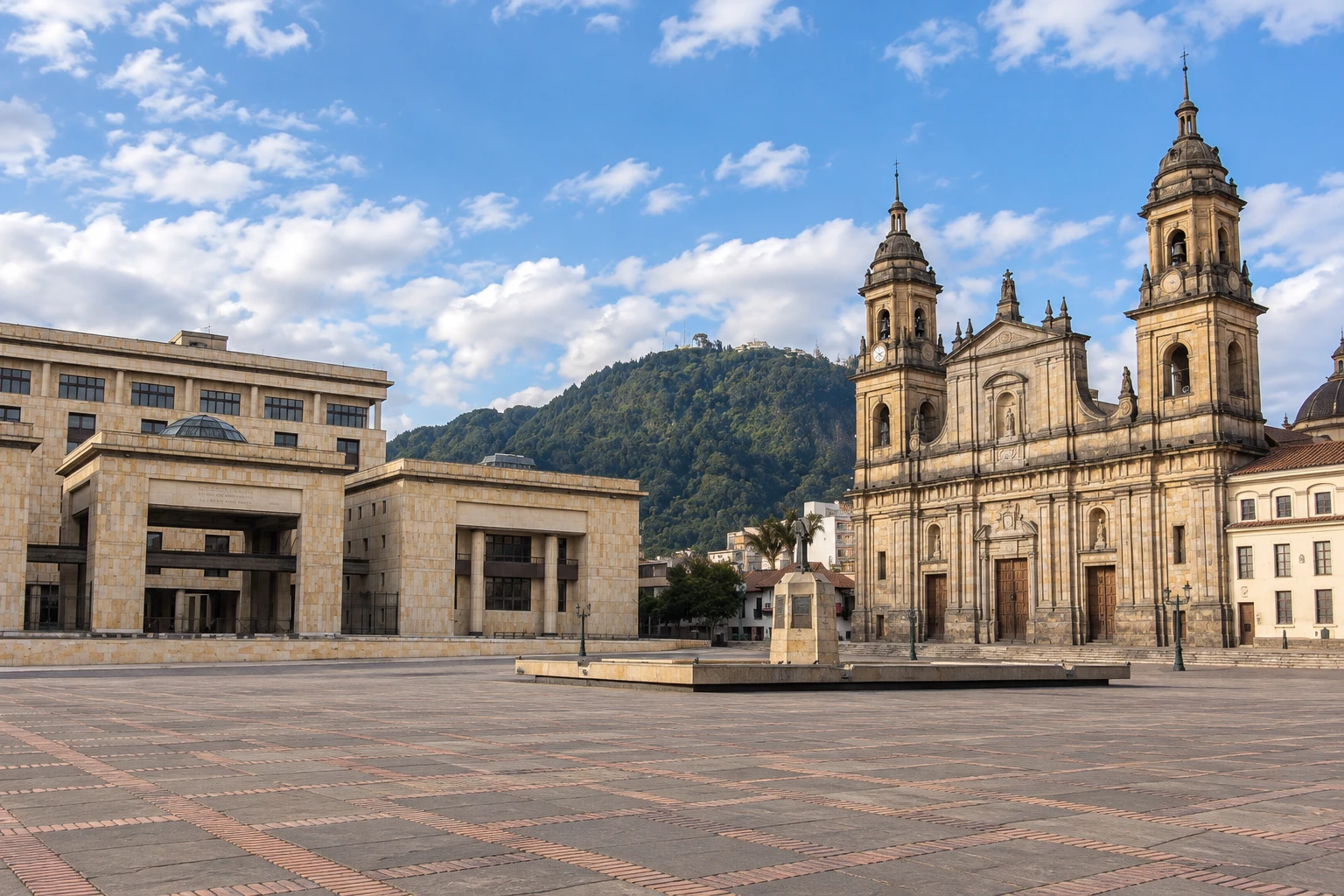
Square · Bogotá, Colombia
Bolívar Square
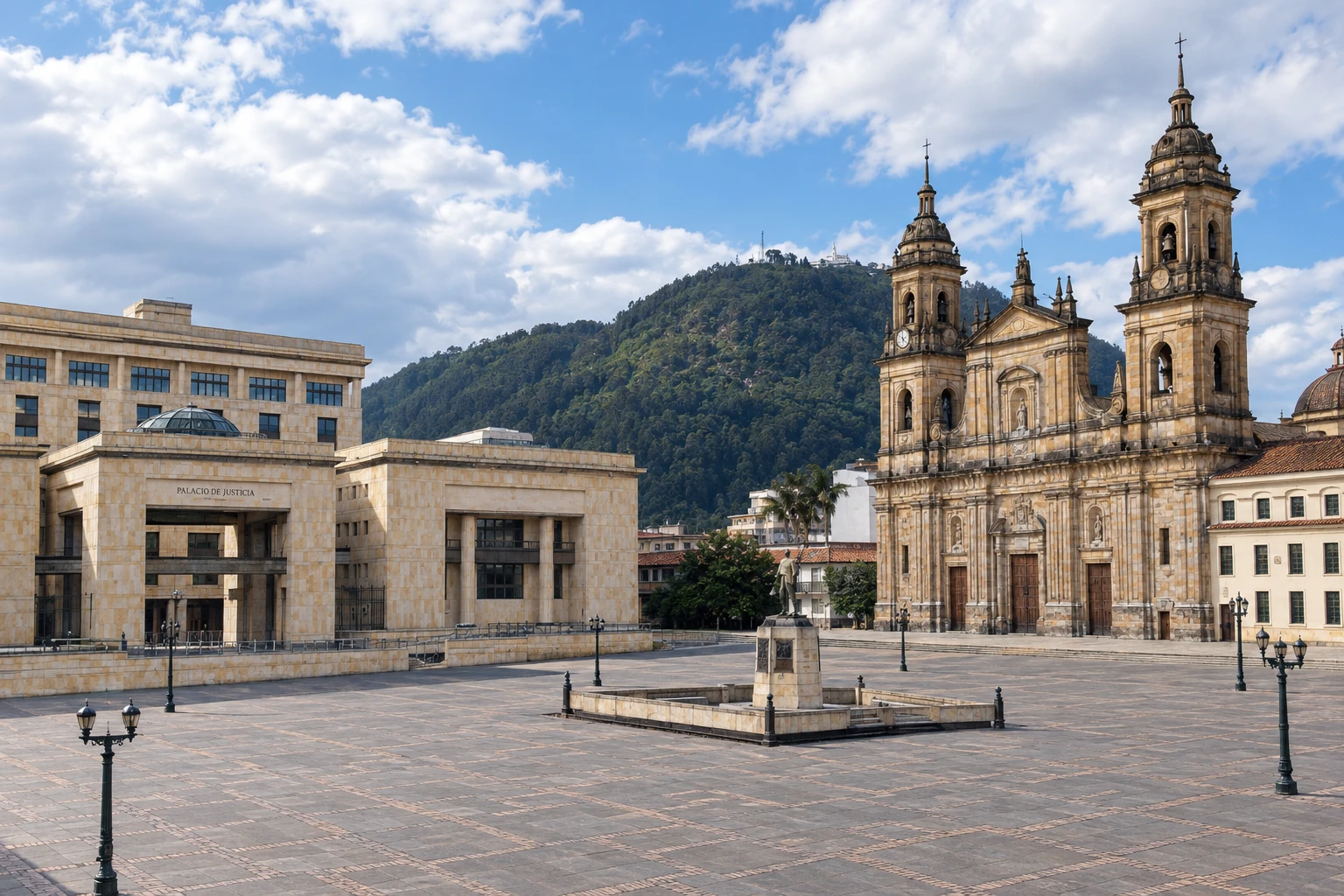
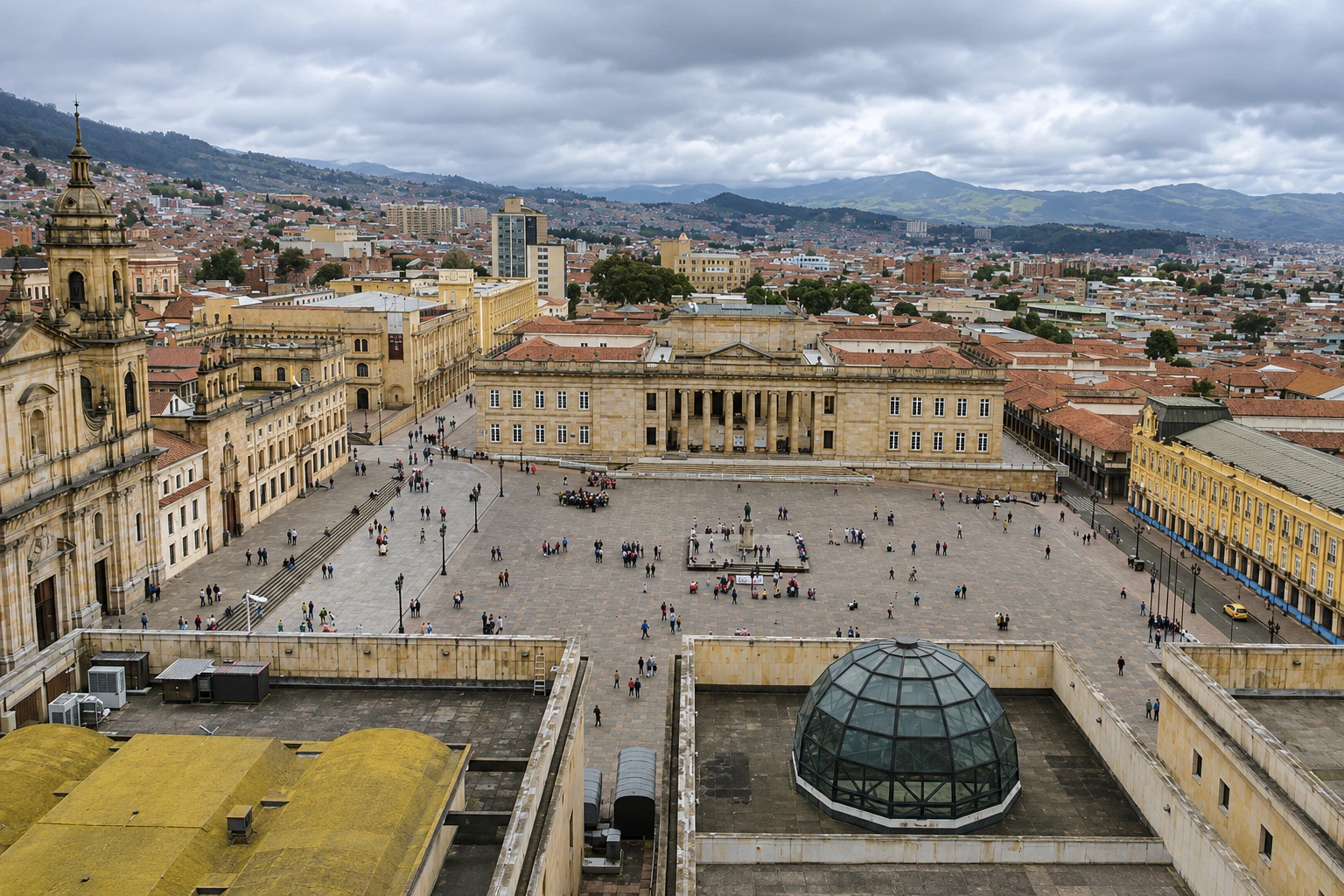
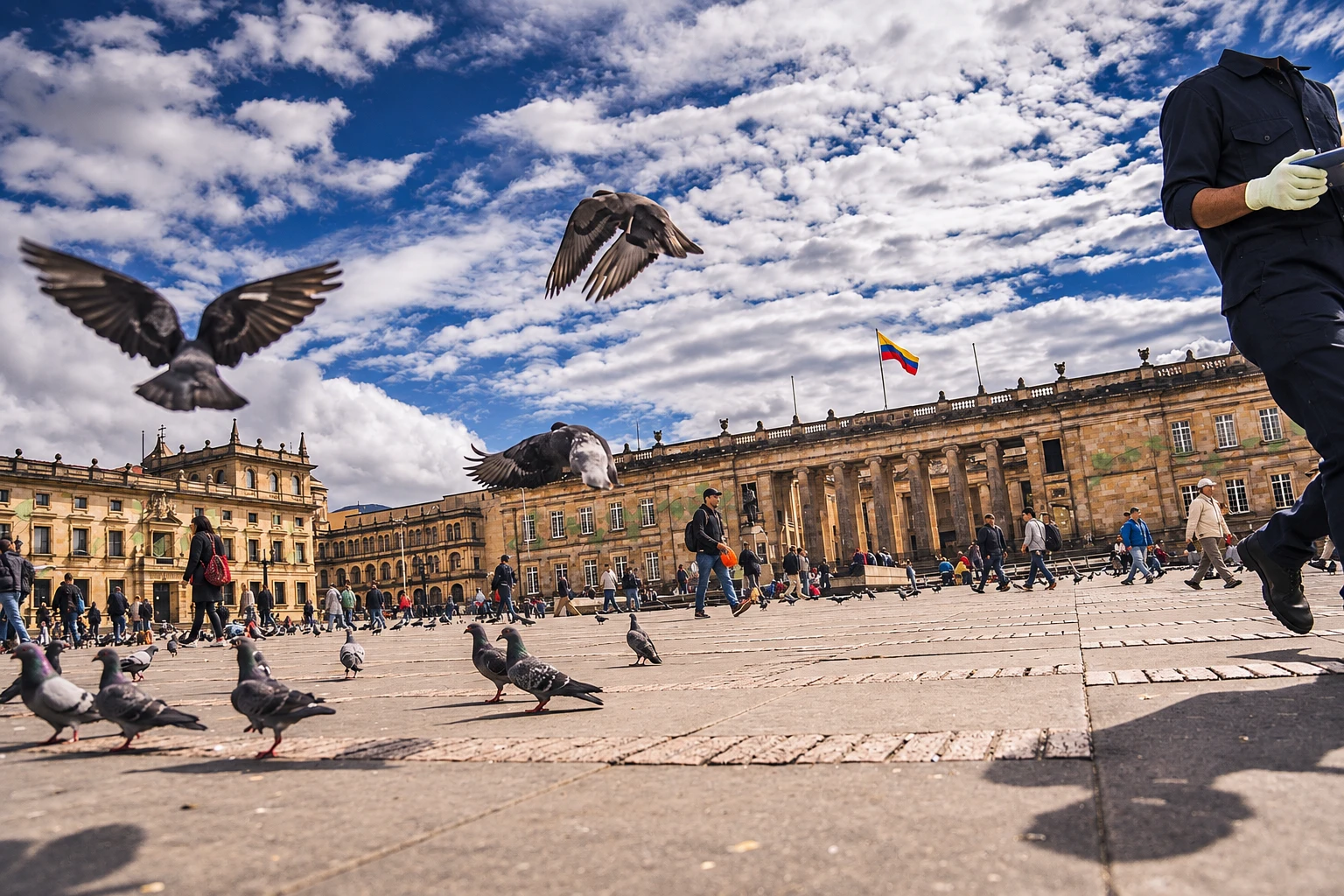
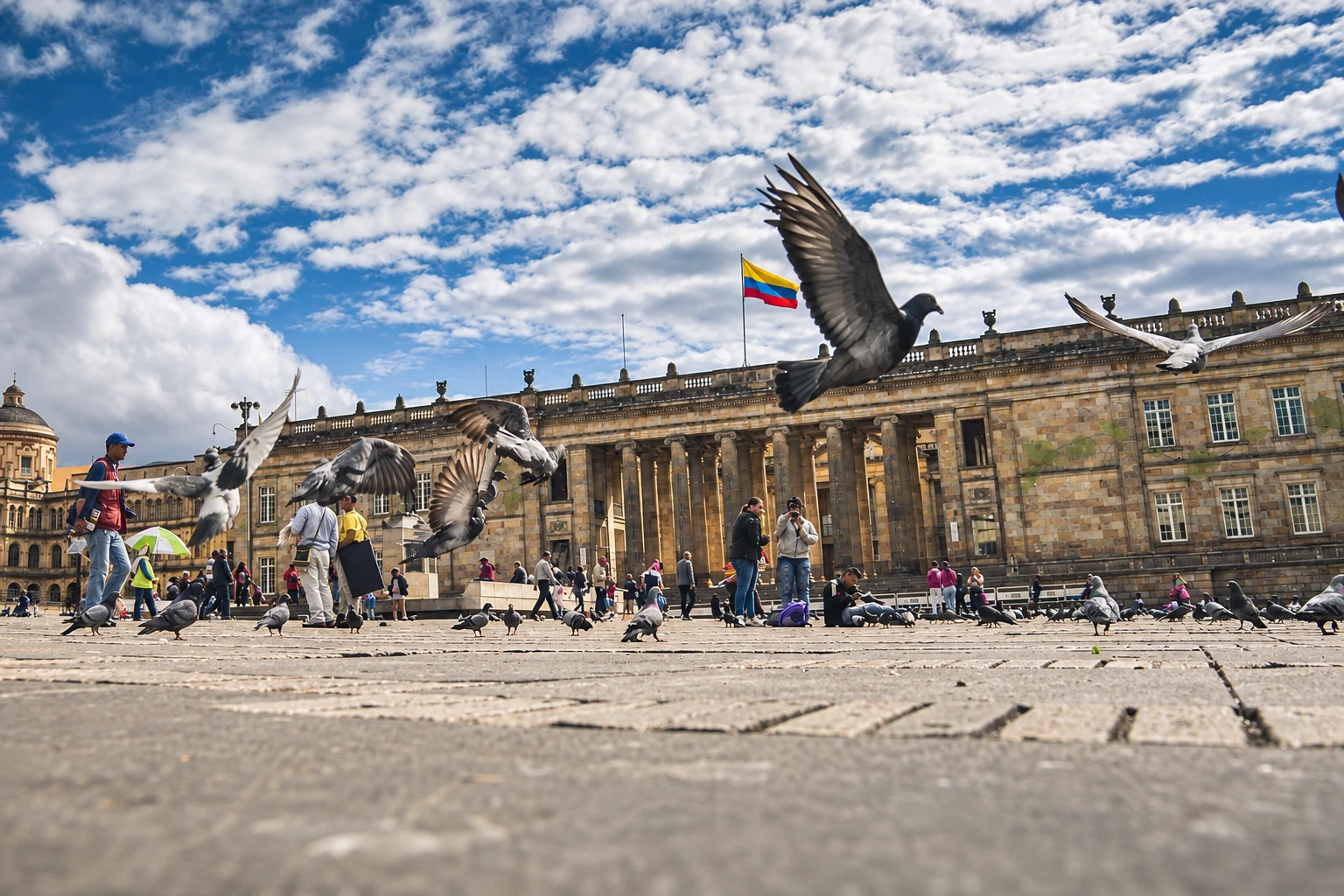
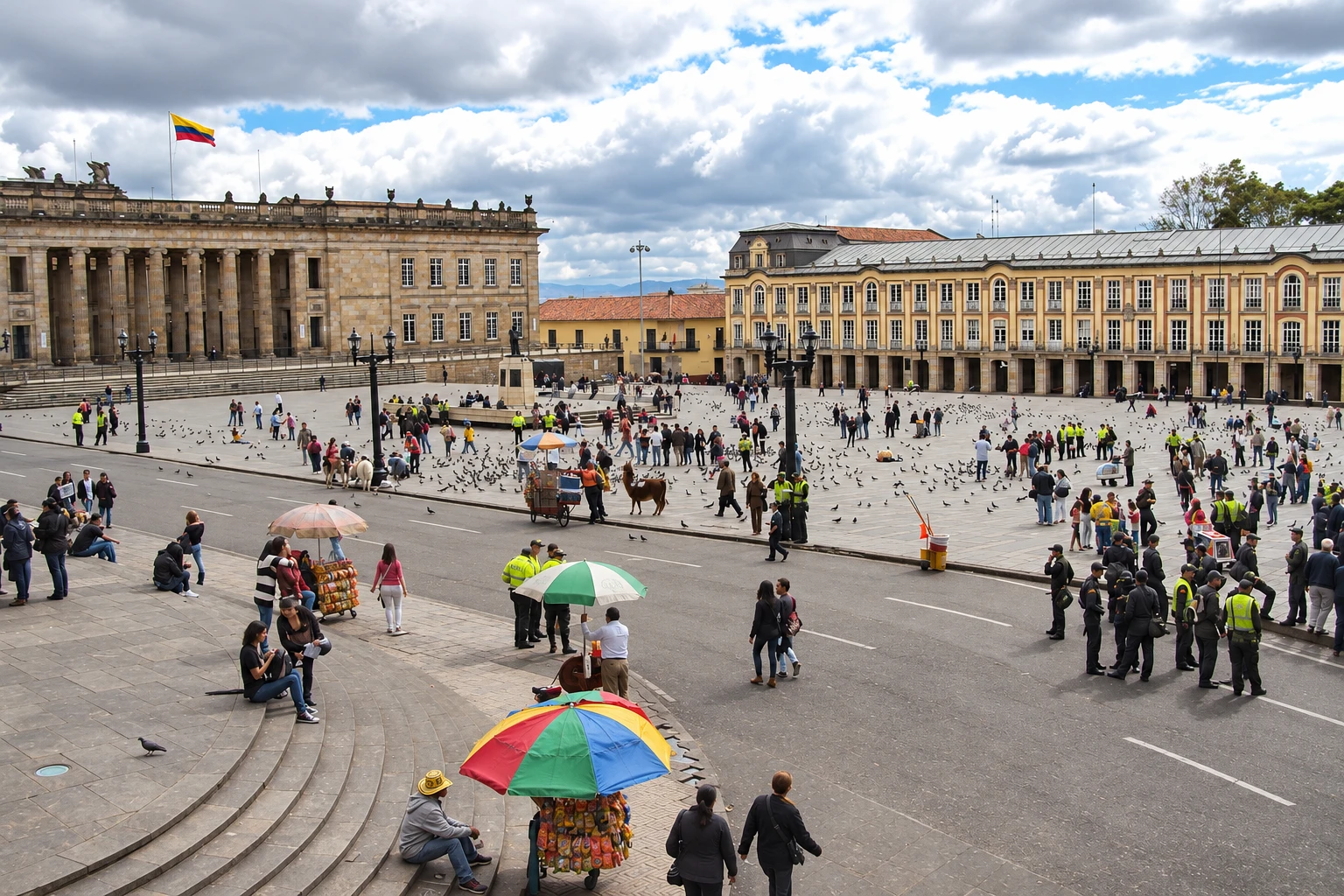
The central square of Bogotá, with the statue of Simón Bolívar, the Catedral Primada, the Capitolio Nacional, the Palacio de la Justicia and the city hall around it. It is the zero point of the country's political history.
Illustrative images. The pictures in this guide are illustrations based on the real place, not photographs, and may differ from it.

A look at the place
Bolívar Square in pictures
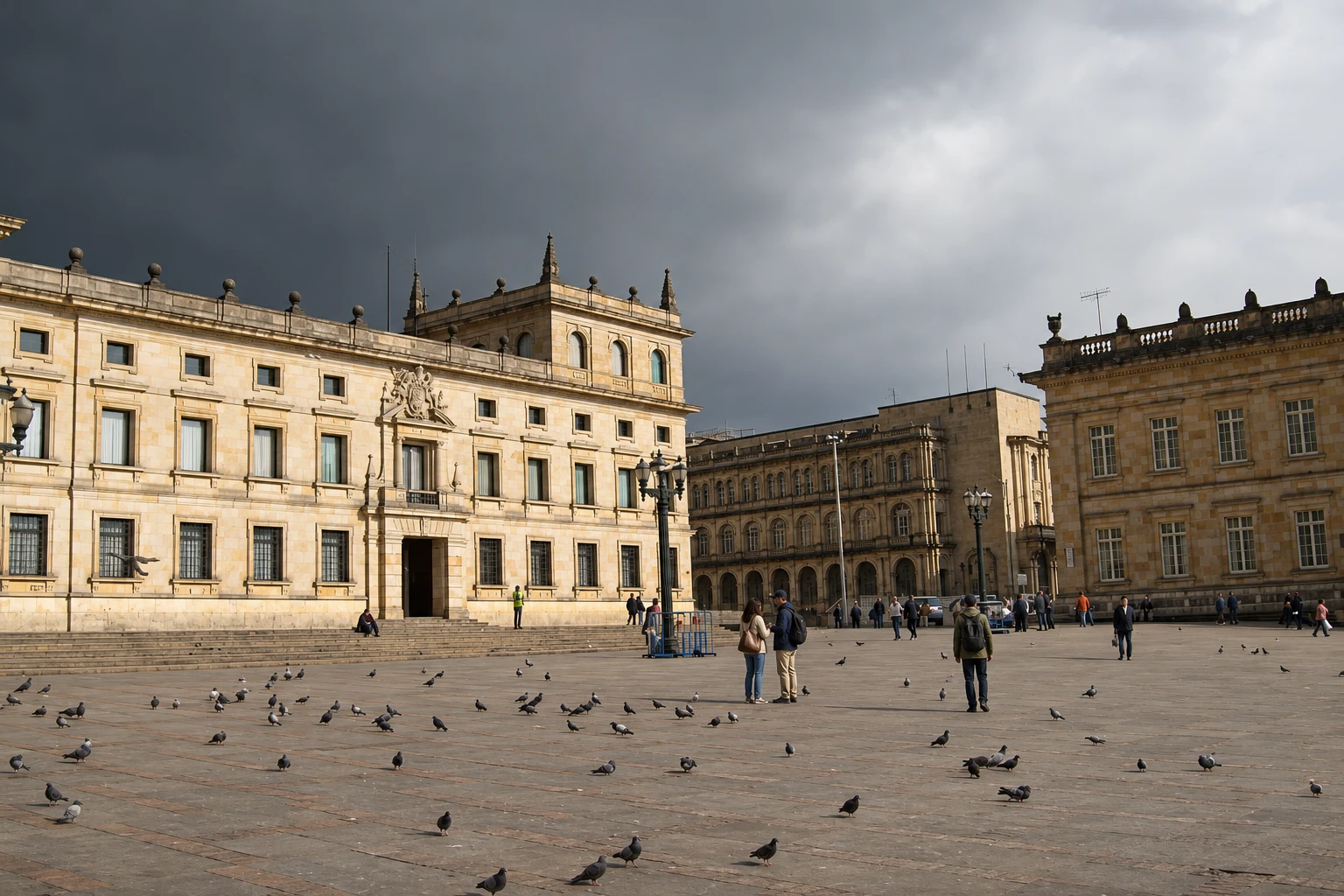
These pictures are illustrations based on the real place, not photographs. They may differ from the place.
Click the picture to enlarge it.
Discover
About Bolívar Square
The Plaza de Bolívar has been Bogotá's main square since its founding and the political center of Colombia. In the middle stands the statue of Simón Bolívar made by the Italian Pietro Tenerani and installed in 1846, the city's first public statue. The stone-paved area is open, without trees, and is often full of pigeons, vendors, students and demonstrations.
On the east side is the Catedral Primada de Colombia, with a neoclassical façade, built between 1807 and 1823 over earlier churches; next to it is the Capilla del Sagrario, with paintings by Gregorio Vásquez de Arce y Ceballos. On the south side is the Capitólio Nacional, seat of Congress, with a stone colonnade begun in 1848 and only finished in the 20th century. To the north is the Palacio da Justiça, and to the west, the Edificio Liévano, the city hall headquarters.
On the northeast corner, the Casa del Florero, now the Museo de la Independencia, preserves the story of July 20, 1810, when a quarrel over a borrowed flower vase became the spark of the independence movement. The Casa de Nariño, the president's residence, is one block south, behind the Capitólio.
The square is the natural starting point for La Candelaria, which rises to the east, and for the Carrera Séptima, a pedestrian street that continues north with shops and street performers.
Before you go
Practical information
Cidade Turismo reviews its information regularly, but something may have changed. Check with the place before planning your trip.
How much time to set aside
30 minutes to 1 hour for the square and the cathedral; another 1 hour including the Museo de la Independencia.
Best time
In the morning and early afternoon, while the cathedral and the museum are open. The center is calmer on Sunday mornings. Cathedral times vary with mass schedules; check before you go.
How to get there
In the center, at Carrera Séptima with Calle 10. The Museo del Oro TransMilenio station is about 700 meters away; from the square, La Candelaria begins immediately to the east.
Tip
Go into the Capilla del Sagrario, next to the cathedral; it is less visited and has a Baroque interior. For the best view of the whole ensemble, stand with your back to the Capitólio, looking at the cathedral with the hills and Monserrate in the background.
Your questions
Frequently asked questions about Bolívar Square
Can you enter the Capitol?
The Capitol is the seat of Congress and usually has guided visits on set days and times, with ID required. Check in advance.
What is the Casa del Florero?
It is the Museo de la Independencia, on the corner of the square. It tells the episode of July 20, 1810, when an argument over a vase of flowers sparked the revolt that set the path to independence.
Is the Casa de Nariño on the square?
It is one block to the south, behind the Capitol. It is the presidential residence and seat of government; the presidential guard change usually takes place on certain days of the week.