

 Brazil
 Antarctica
 Argentina
 Bolivia
 Chile
 Ecuador
 Falkland Islands (Malvinas)
 French Guiana
 Guyana
 Paraguay
 Peru
 Suriname
 Uruguay
 Venezuela
 Albania
 Austria
 Belgium
 Croatia
 Denmark
 Finland
 France
 Germany
 Greece
 Hungary
 Iceland
 Ireland
 Italy
 Luxembourg
 Norway
 Poland
 Portugal
 Slovakia
 Slovenia
 Spain
 Sweden
 Switzerland
 the Czech Republic
 the Netherlands
 the United Kingdom
 Turkey
 Bermuda
 Canada
 Greenland
 Mexico
 Saint Pierre and Miquelon
 the United States
 the Dominican Republic
 Japan
 Egypt
 South Africa
 Australia
 Fiji
 New Zealand
 Papua New Guinea
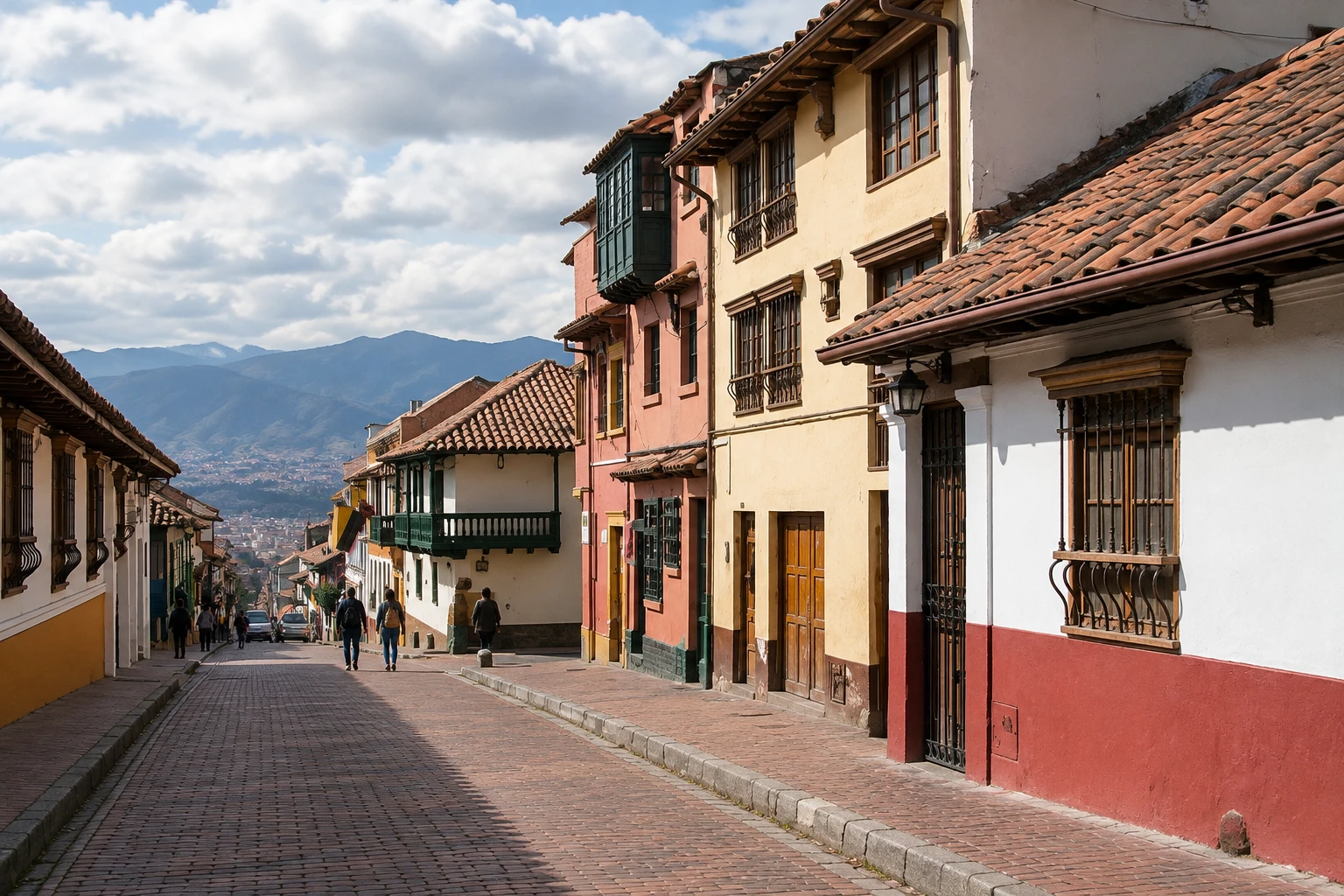
Neighborhood · Bogotá, Colombia
La Candelaria
The colonial neighborhood of Bogotá: cobbled slopes, houses with wooden balconies, churches, graffiti and the Chorro de Quevedo, the small square identified as the place where the city was founded in 1538.
Illustrative images. The pictures in this guide are illustrations based on the real place, not photographs, and may differ from it.

A look at the place
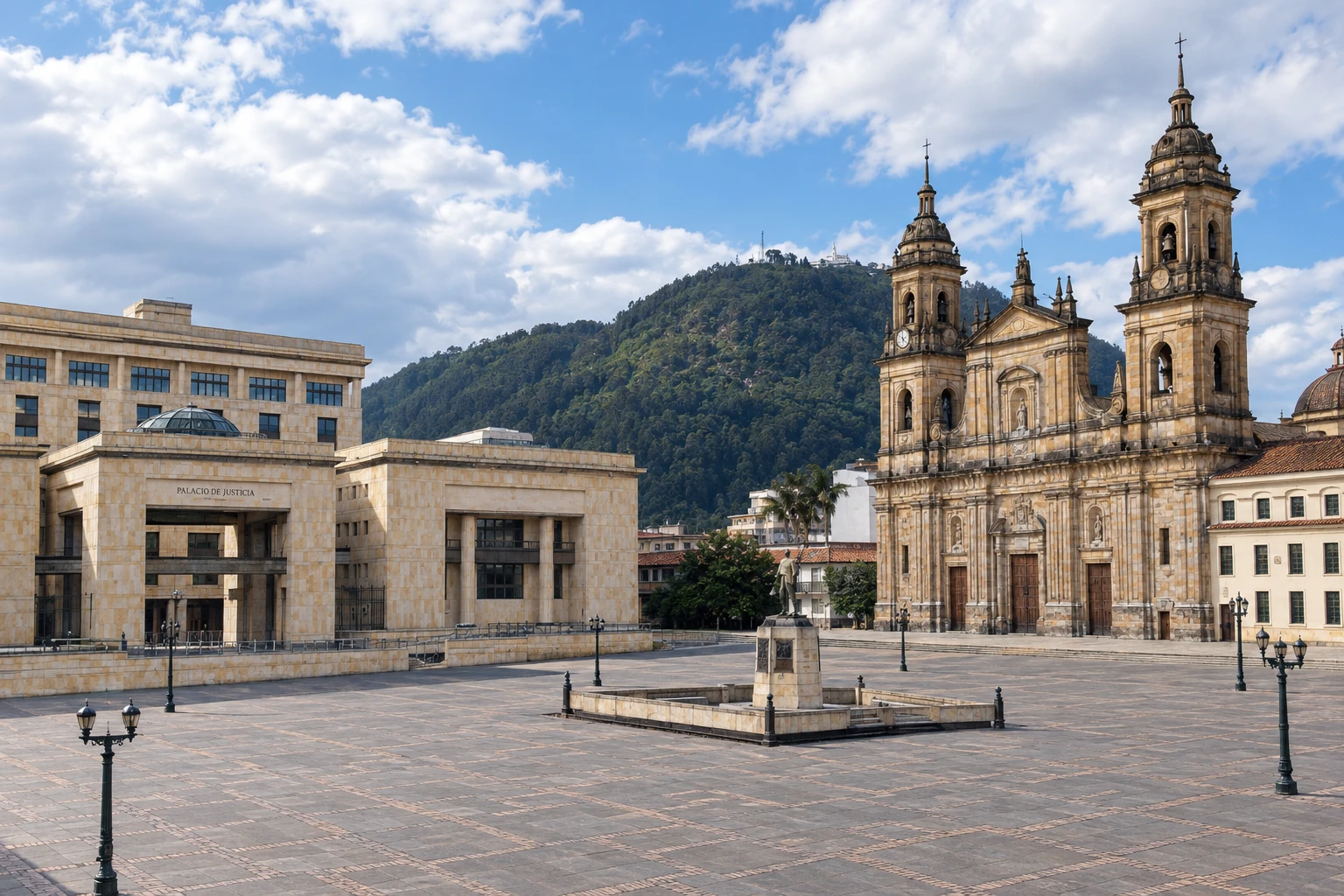
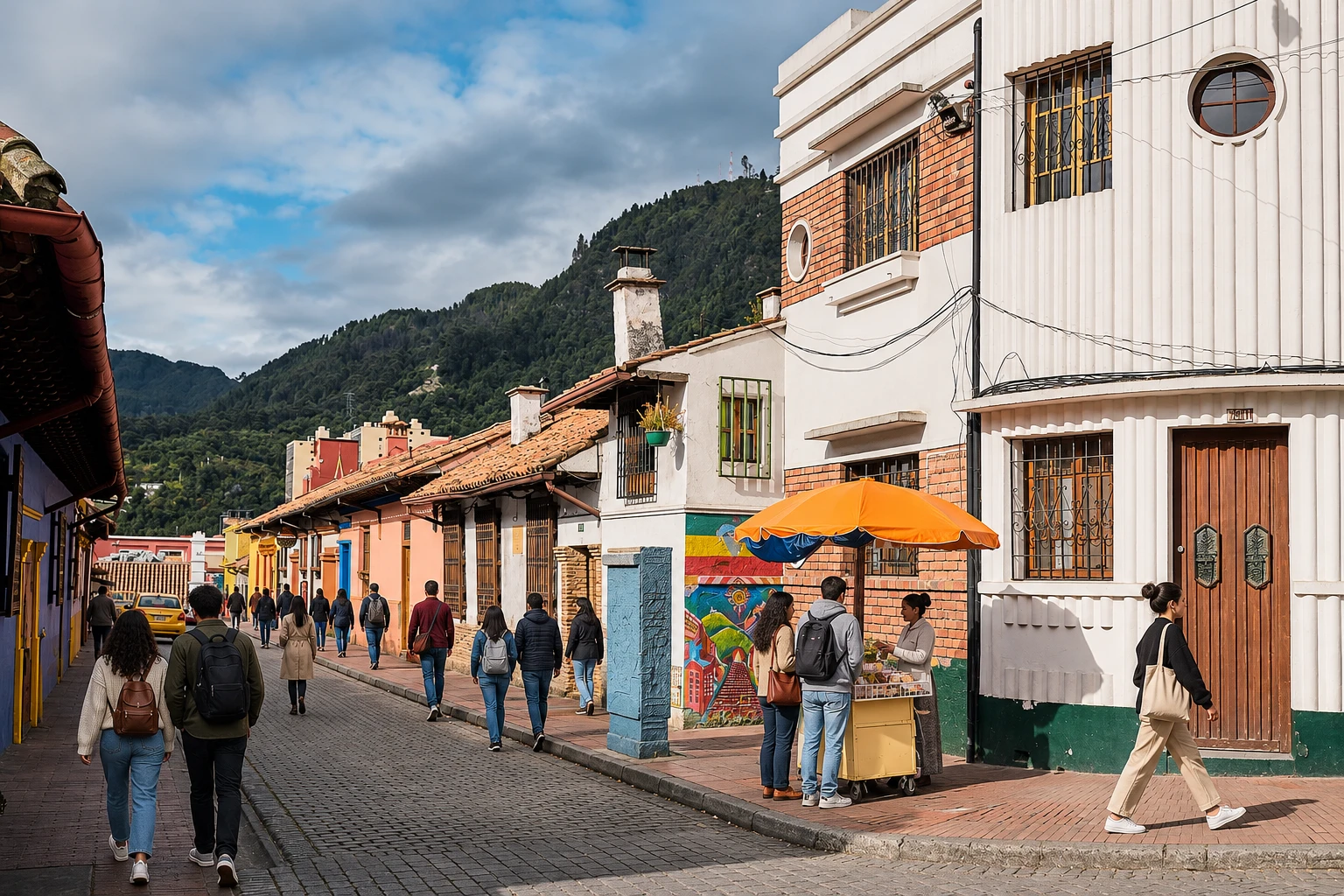
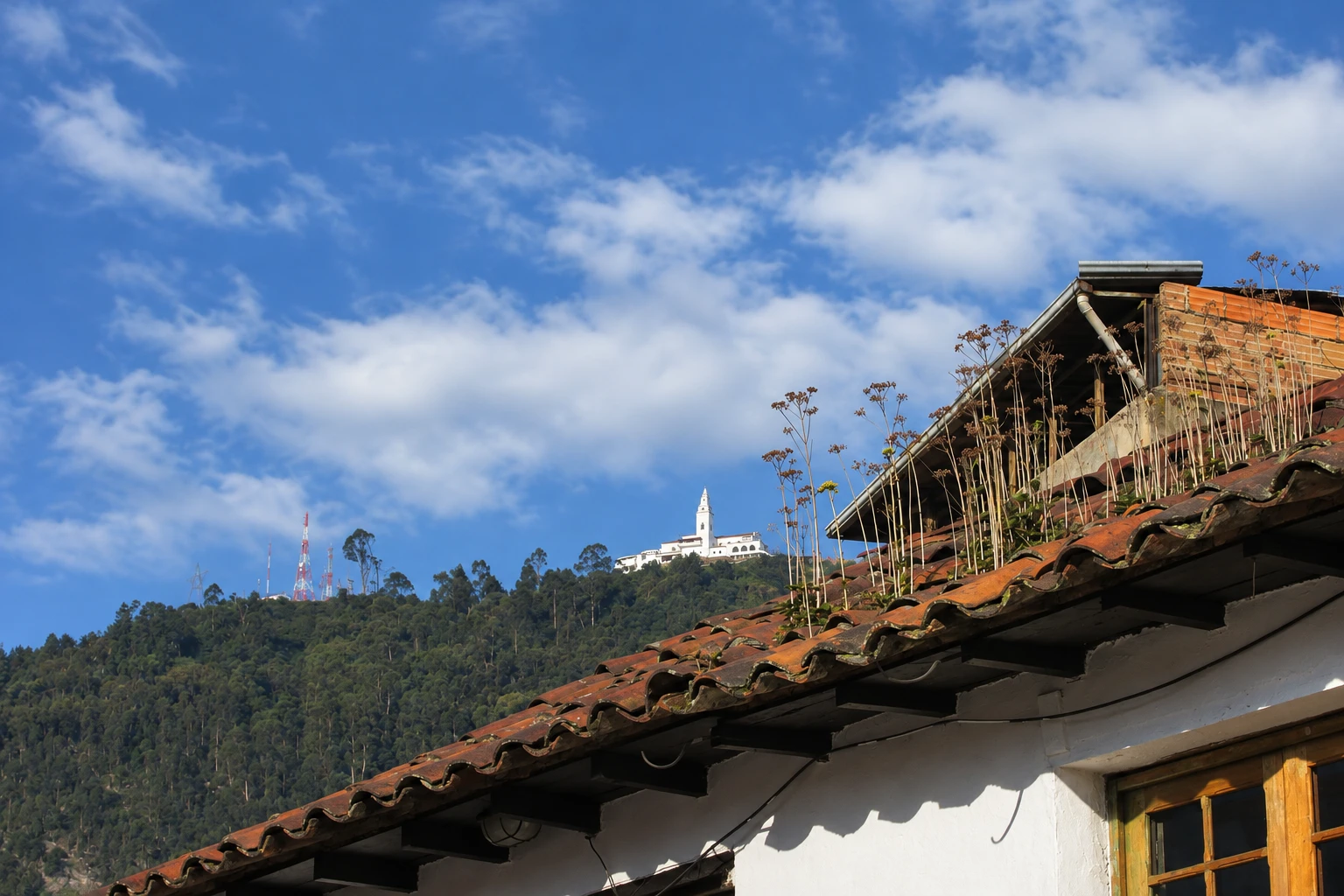
La Candelaria in pictures
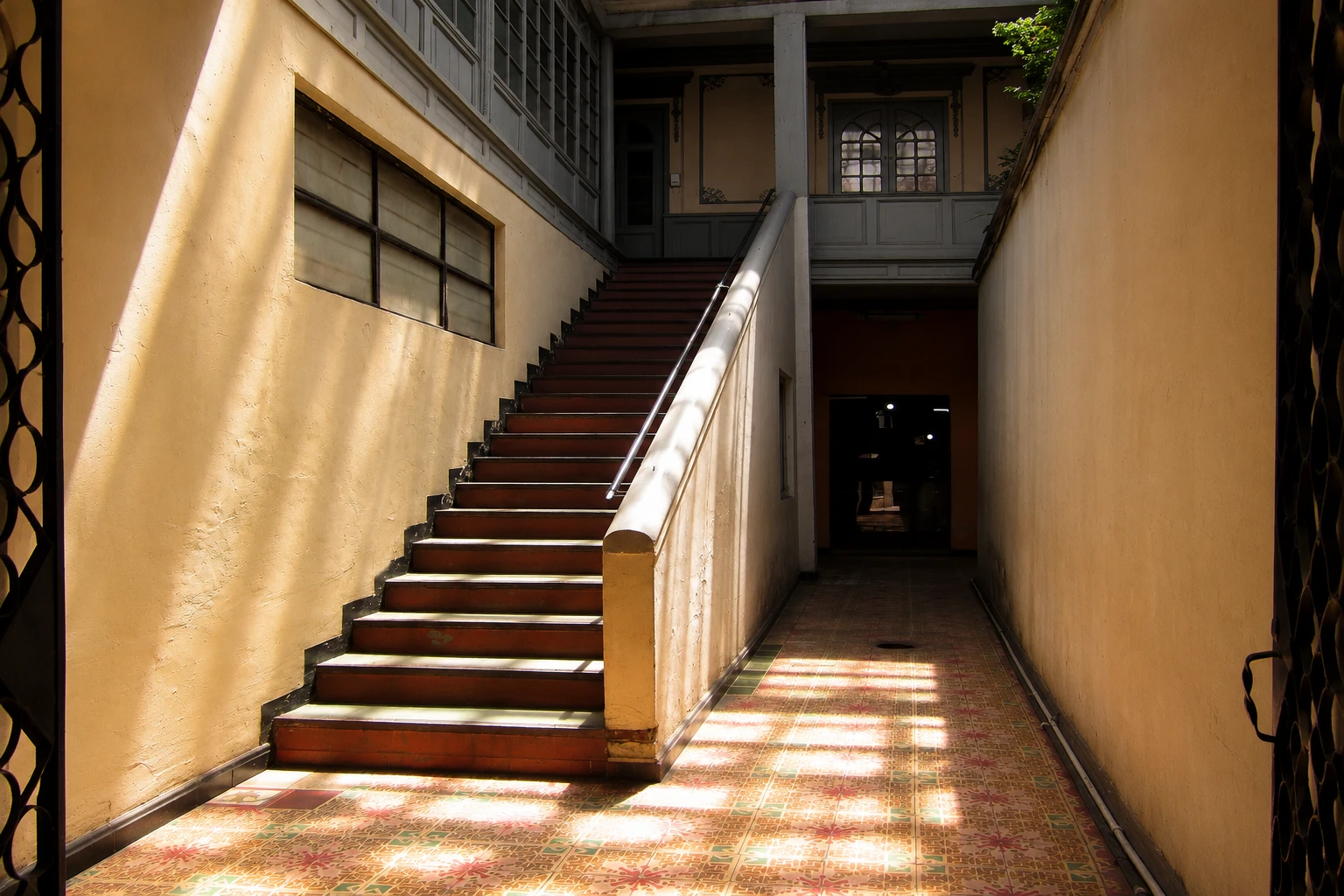
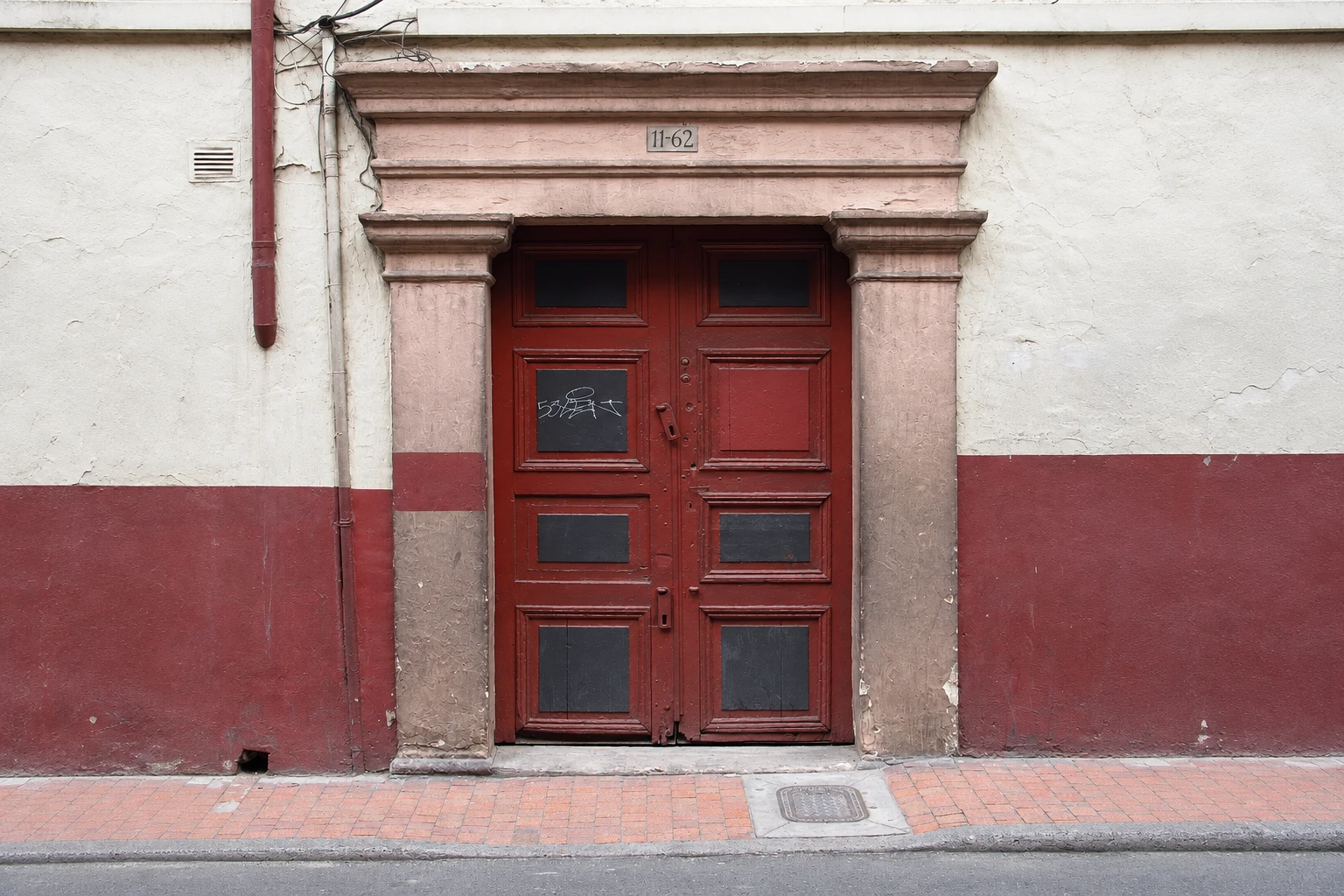
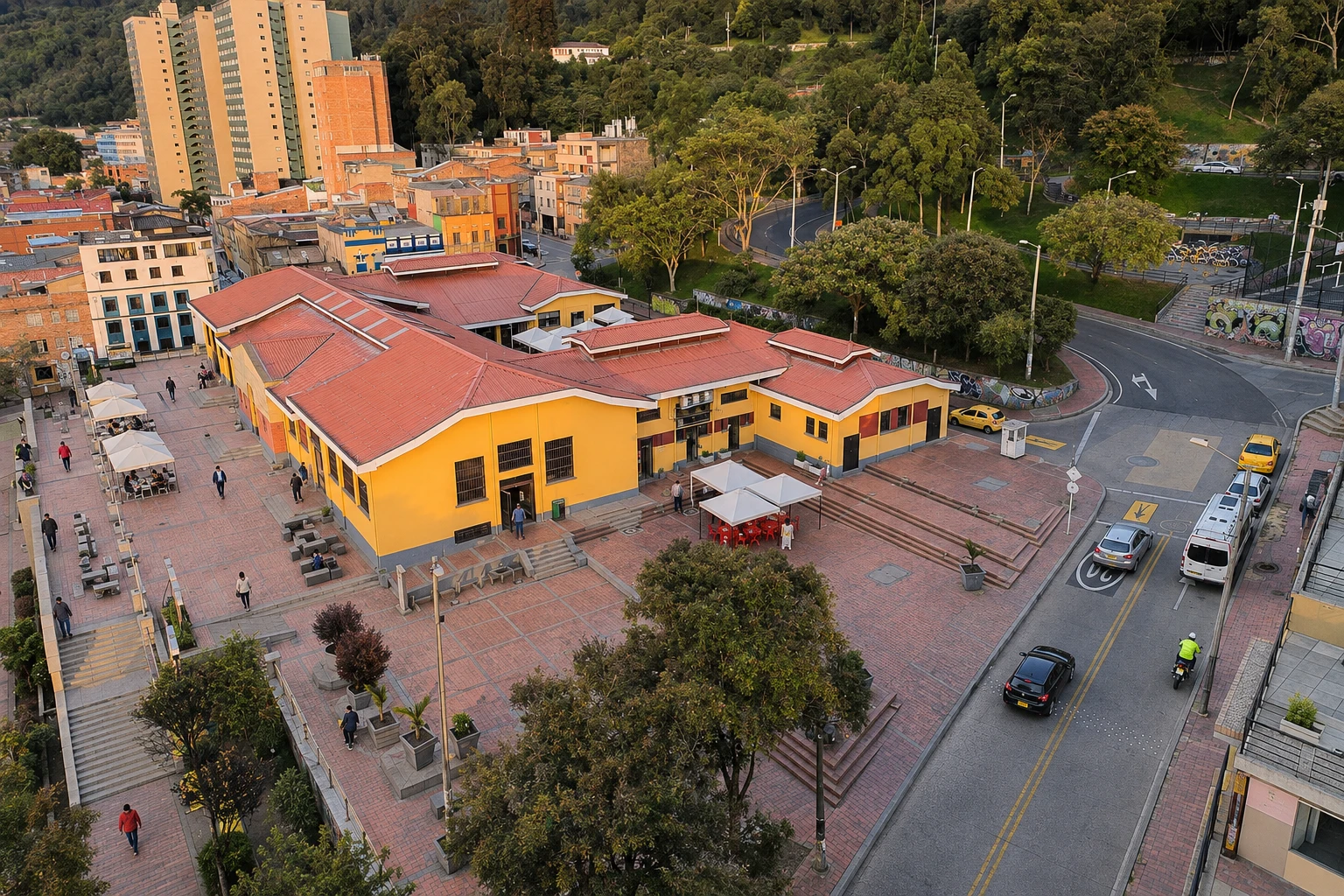
These pictures are illustrations based on the real place, not photographs. They may differ from the place.
Click the picture to enlarge it.
Discover
About La Candelaria
La Candelaria is the old core of Bogotá, between Plaza de Bolívar and the foot of the eastern hills. The streets climb toward the mountain and are narrow, with single‑story houses and colonial and republican townhouses painted in strong colors, wooden balconies and gates that open onto internal courtyards. Many of these houses now house universities, cultural centers, hostels and cafés.
The most symbolic spot is the Chorro de Quevedo, a small square with a white chapel and a fountain, at the top of the neighborhood. Tradition says that Gonzalo Jiménez de Quesada founded the city there. Around it, Calle del Embudo, an alley that narrows like a funnel, gathers bars where you can try chicha, the fermented corn drink inherited from the muiscas, and the walls are covered in graffiti.
Going down, the neighborhood has some of the city's cultural institutions: the Biblioteca Luis Ángel Arango, the Teatro Colón, from 1892, the Centro Cultural Gabriel García Márquez and the group of museums of the Banco de la República, where the Museo Botero is located. The Iglesia de La Candelaria, which gave the neighborhood its name, and the Iglesia de San Ignacio are along the way.
The best way to get to know it is on foot, without hurry, because the altitude tires you on the climbs. During the day the neighborhood is full of students and visitors; at night the shops close early and the streets empty.
Before you go
Practical information
Cidade Turismo reviews its information regularly, but something may have changed. Check with the place before planning your trip.
How much time to set aside
2 to 3 hours to walk the streets, reach the Chorro de Quevedo and visit one or two churches; a full day for the museums.
Best time
In the morning or early afternoon, when the shops, cafés and museums are open and the neighborhood is lively. On rainy afternoons, alternate the walk with museums and cafés.
How to get there
The neighborhood is behind Plaza de Bolívar, in the center. The TransMilenio stations Museo del Oro and Las Aguas are on the edge; by taxi, ask to be dropped off at the Chorro de Quevedo and walk down to the plaza.
Tip
Start at the top, at the Chorro de Quevedo, and go down toward Plaza de Bolívar: the slopes are less tiring that way. Order a chocolate santafereño with cheese and an almojábana at one of the old cafés to understand the Bogotan snack.
Your questions
Frequently asked questions about La Candelaria
What is the Chorro de Quevedo?
It is a small square high in La Candelaria, with a white chapel and a fountain, traditionally pointed out as the site of Bogotá's founding in 1538. Around it are Calle del Embudo, chicha bars and graffiti-covered walls.
Can you take a graffiti tour in the neighborhood?
Yes. There are guided walking tours of the street art in La Candelaria and downtown that show murals and explain the artists. Many operate on a tip basis; agree on terms with the guide beforehand.
What is chicha?
A fermented corn drink of Muisca origin, served in bowls or jugs in the bars of Calle del Embudo. It has a low alcohol content and a slightly tart taste.