Valparaíso and Viña del Mar

Valparaíso

Valparaíso and Viña del Mar

The port of colorful hills and century-old funiculars, next to the garden-city of beaches, about 120 km from Santiago on the Pacific coast.

Central

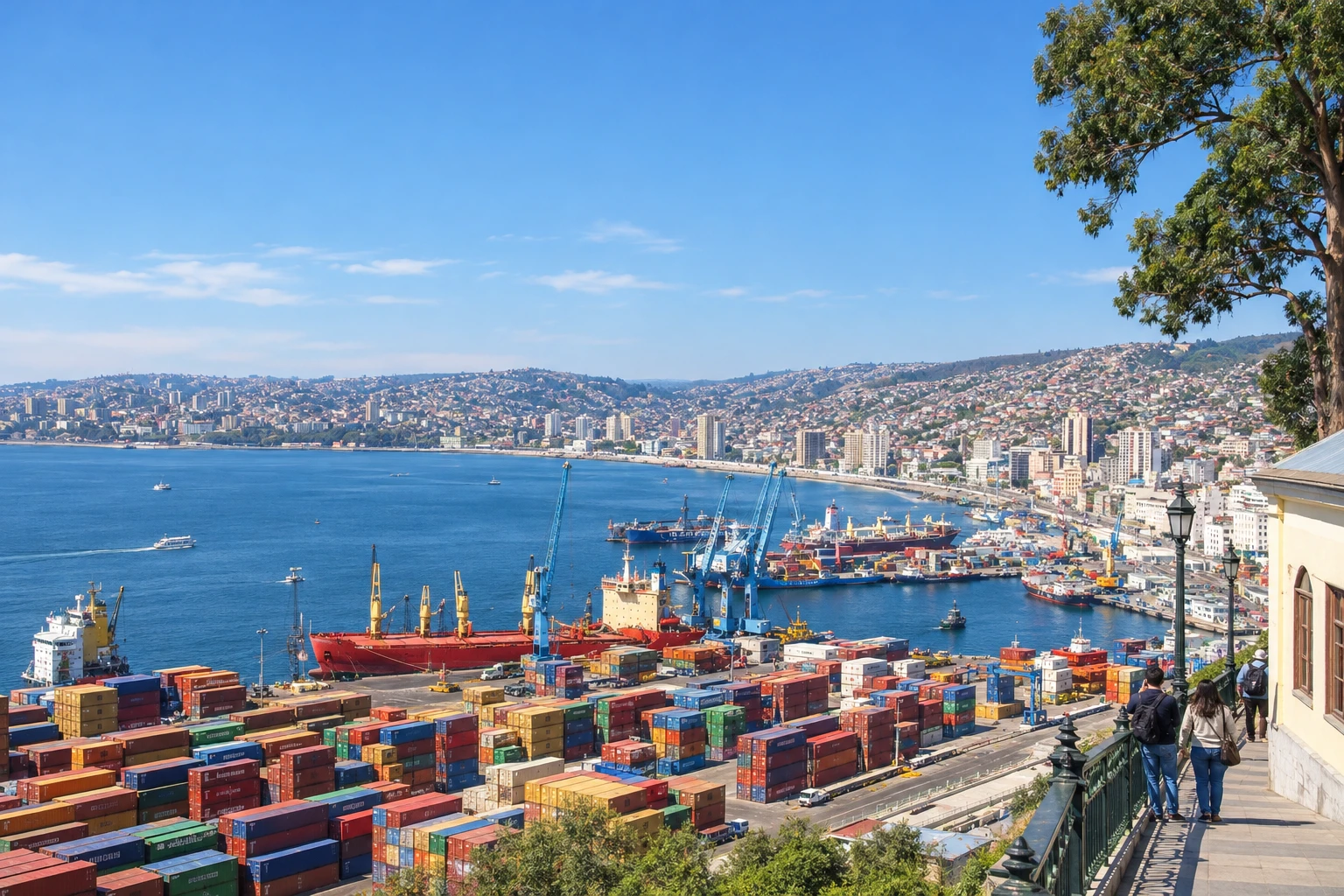
In the photo: Bay and port of Valparaíso seen from Paseo 21 de Mayo

Illustrative images. The pictures in this guide are illustrations based on the real place, not photographs, and may differ from it.

Get it on Google Play

Get to know the place

A region to enjoy
at your own pace.

Valparaíso and Viña del Mar form a single urban area on Chile's central coast, separated by just a few kilometers of seaside avenue. Valparaíso is the historic port, spread over dozens of cerros —as Chileans call the hills. Viña del Mar was born as a resort for Santiago's elite and earned the nickname Ciudad Jardín for its parks and flowerbeds.

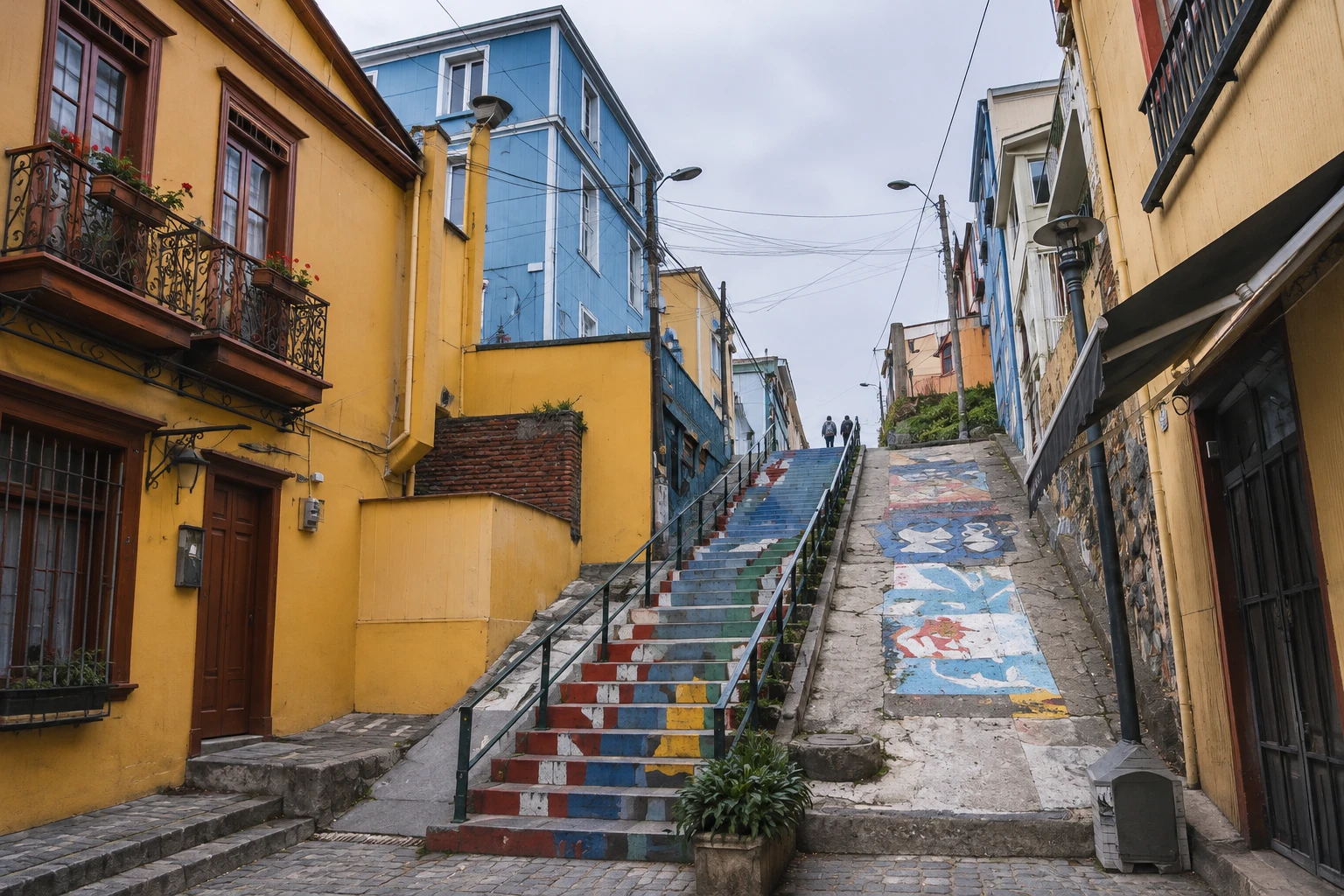
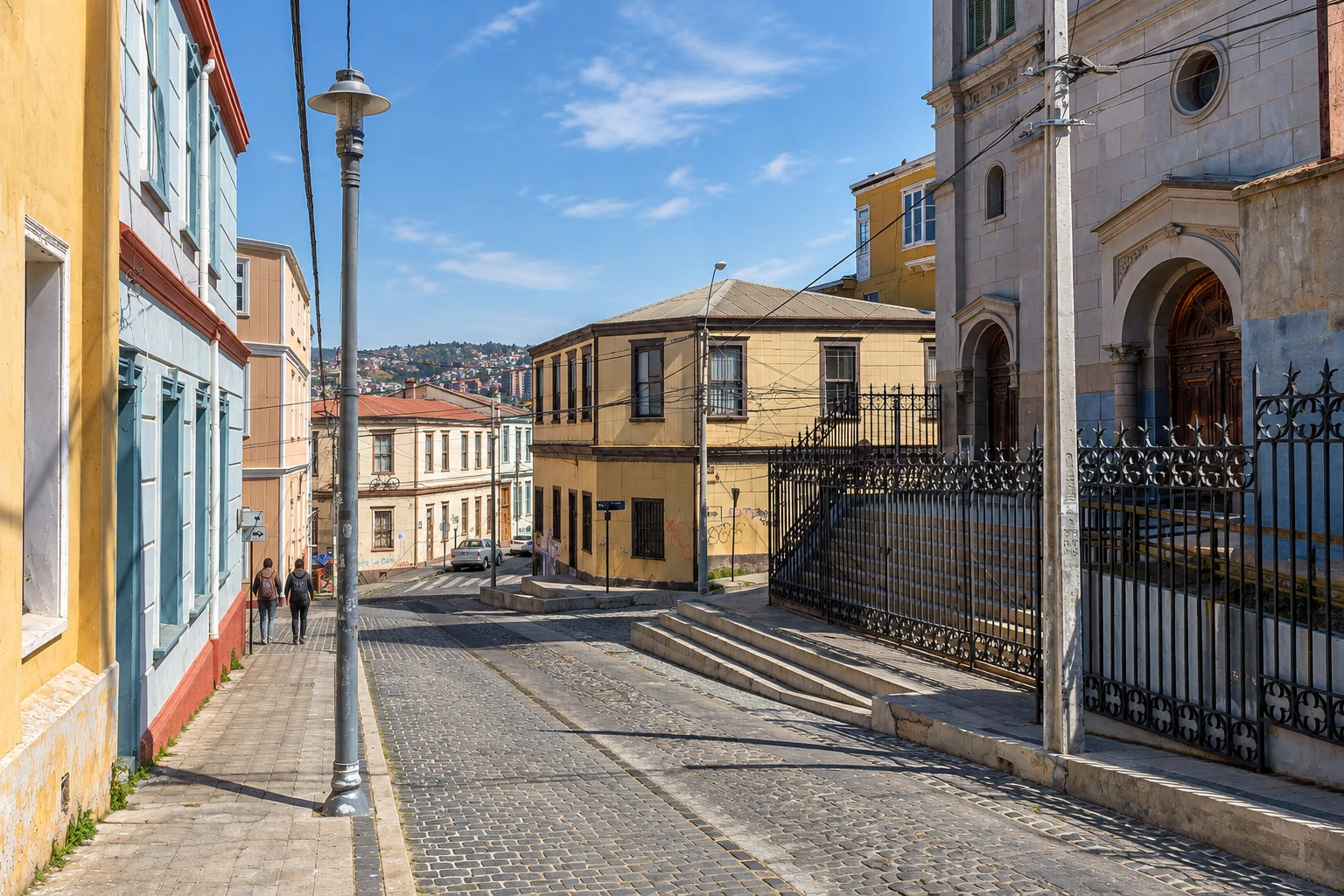
Valparaíso's historic quarter has been a UNESCO World Heritage Site since 2003. On cerros Alegre and Concepción, corrugated-iron houses painted in strong colors, murals and viewpoints called paseos give the city its character. The ascensores, funiculars from the late 19th and early 20th centuries, still climb the slopes. On top of Cerro Bellavista are La Sebastiana, Pablo Neruda's house, and the murals of Museo a Cielo Abierto. Below, Plaza Sotomayor and Muelle Prat open onto the bay and the port's ships.

Viña del Mar has a different pace: wide avenues, oceanfront buildings and pale-sand beaches like Acapulco and Reñaca. The Reloj de Flores, Castillo Wulff on the rocks, Quinta Vergara with its palace-museum and Museo Fonck —with a moai from Rapa Nui at the entrance— are close to one another. Further north, the dunes of Concón face the ocean.

The metropolitan train links the two cities in a few minutes, so you can sleep in one and visit the other. The sea is cold year-round because of the Humboldt Current, and lunch and dinner are served later than in Brazil.

This destination brings together 2 cities: Valparaíso, Viña del Mar.

Share: WhatsApp
Traveler, share your experiences through photos Up to 5 photos of each place you visited.

One destination, many paths

The cities on this trip

Start with one city or combine several in your itinerary.

Where Valparaíso and Viña del Mar is The star marks the capital, Valparaíso.
ValparaísoViña del Mar

Outlines: Natural Earth (public domain). Adapted by Cidade Turismo.

How to get there: Valparaíso and Viña del Mar

Aeropuerto Internacional Arturo Merino Benítez (SCL), in Santiago · 115 km to Valparaíso

The arrival airport is Santiago, about 115 km via Ruta 68. From Terminal Alameda and Terminal Pajaritos in Santiago there are frequent buses to Valparaíso and Viña. Connections with Brazil may be direct flights or with a stopover, depending on season and airline. Confirm before booking.

Suggested arrival point: Valparaíso

The local experience

Things to do in Valparaíso and Viña del Mar

Valparaíso · Valparaíso · Historic neighborhood

Cerro Concepción

Hill of Valparaíso's heritage neighborhood, with Paseo Gervasoni and Paseo Atkinson, houses of European immigrants, Protestant churches and the city's oldest ascensor.

Explore Cerro Concepción

Viña del Mar · Valparaíso · Monument

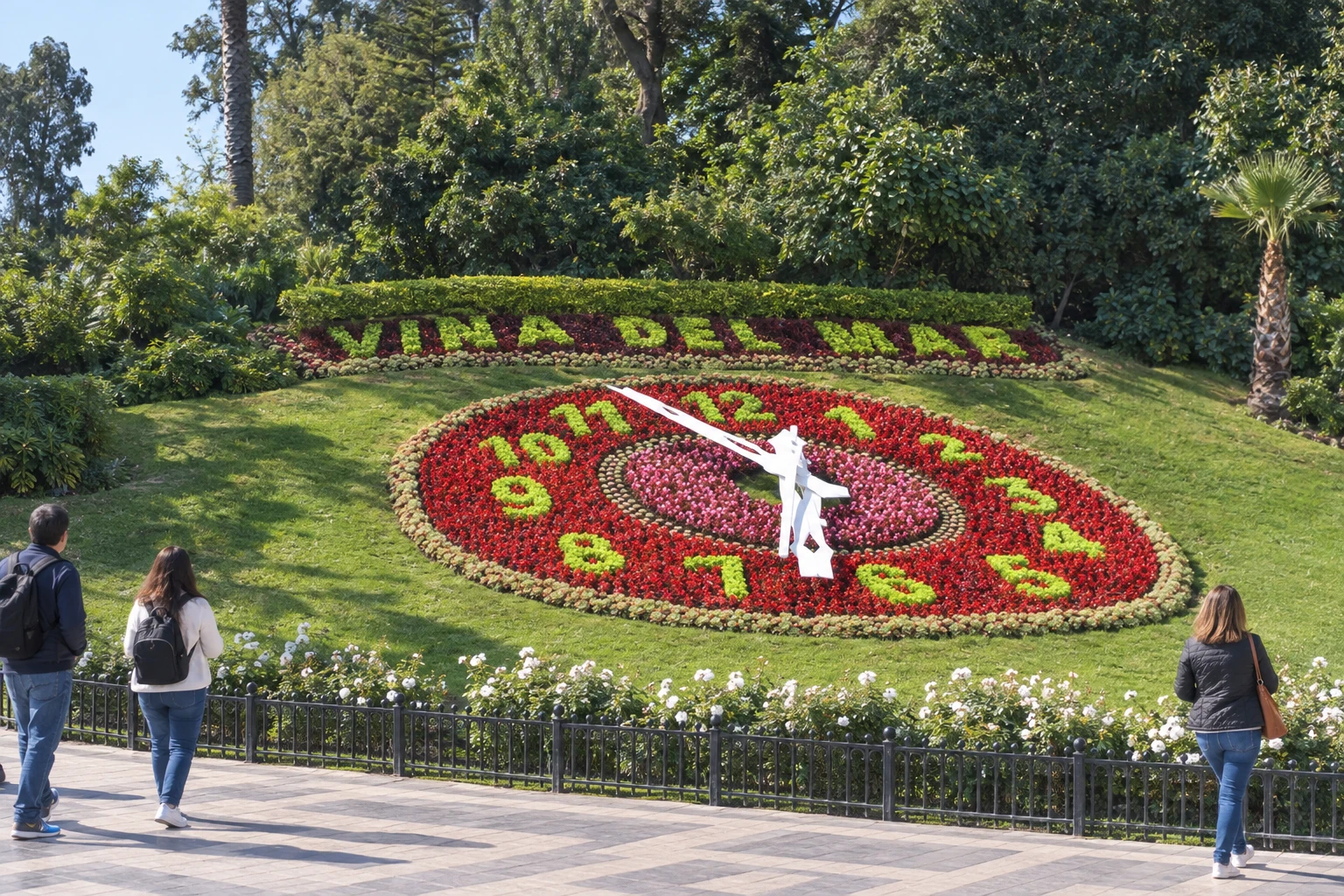
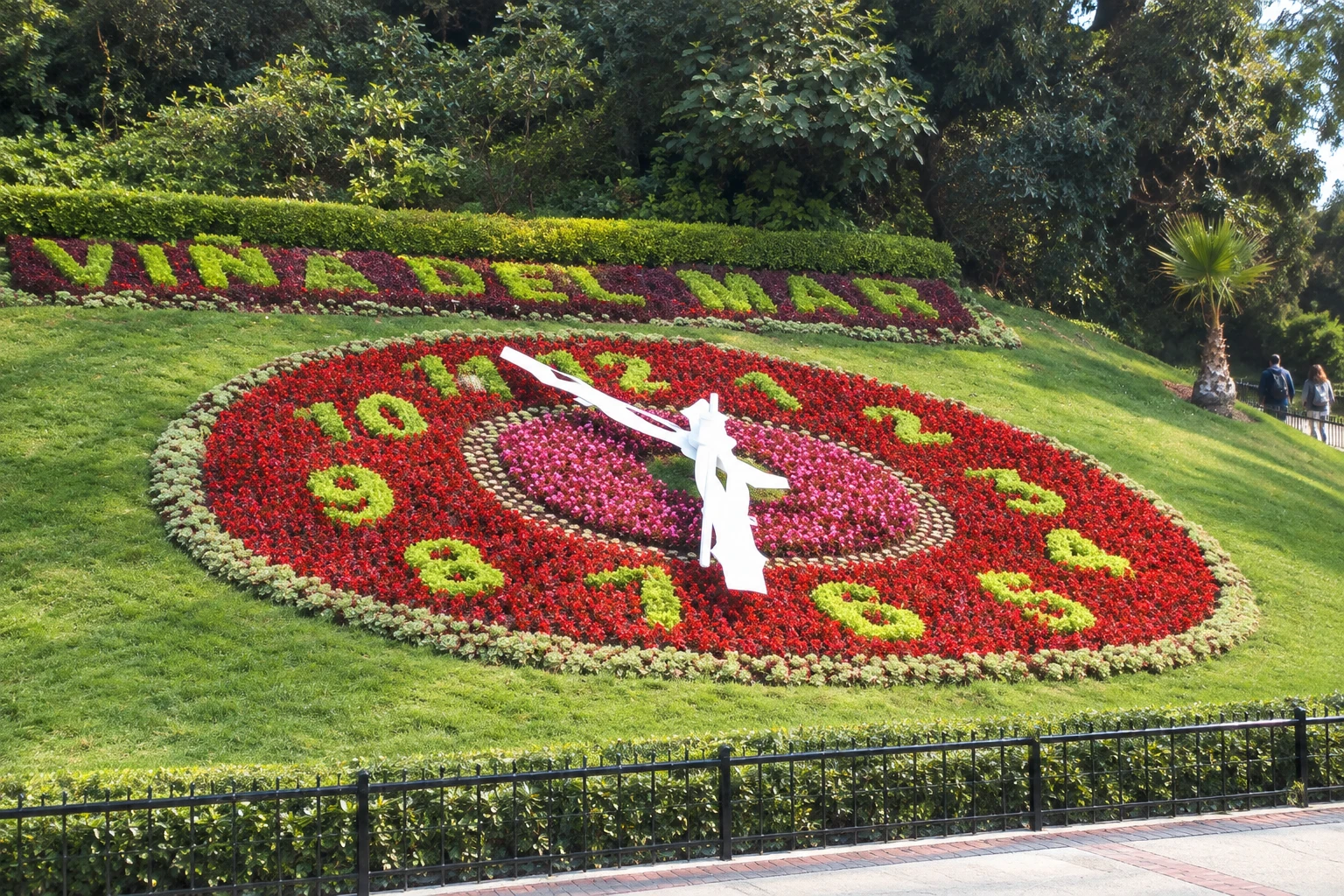
Flower Clock

Clock with a flower-faced dial at the foot of Cerro Castillo, near Caleta Abarca, which became a symbol of Viña del Mar since the 1962 World Cup.

Explore Flower Clock

Viña del Mar · Valparaíso · Historic building

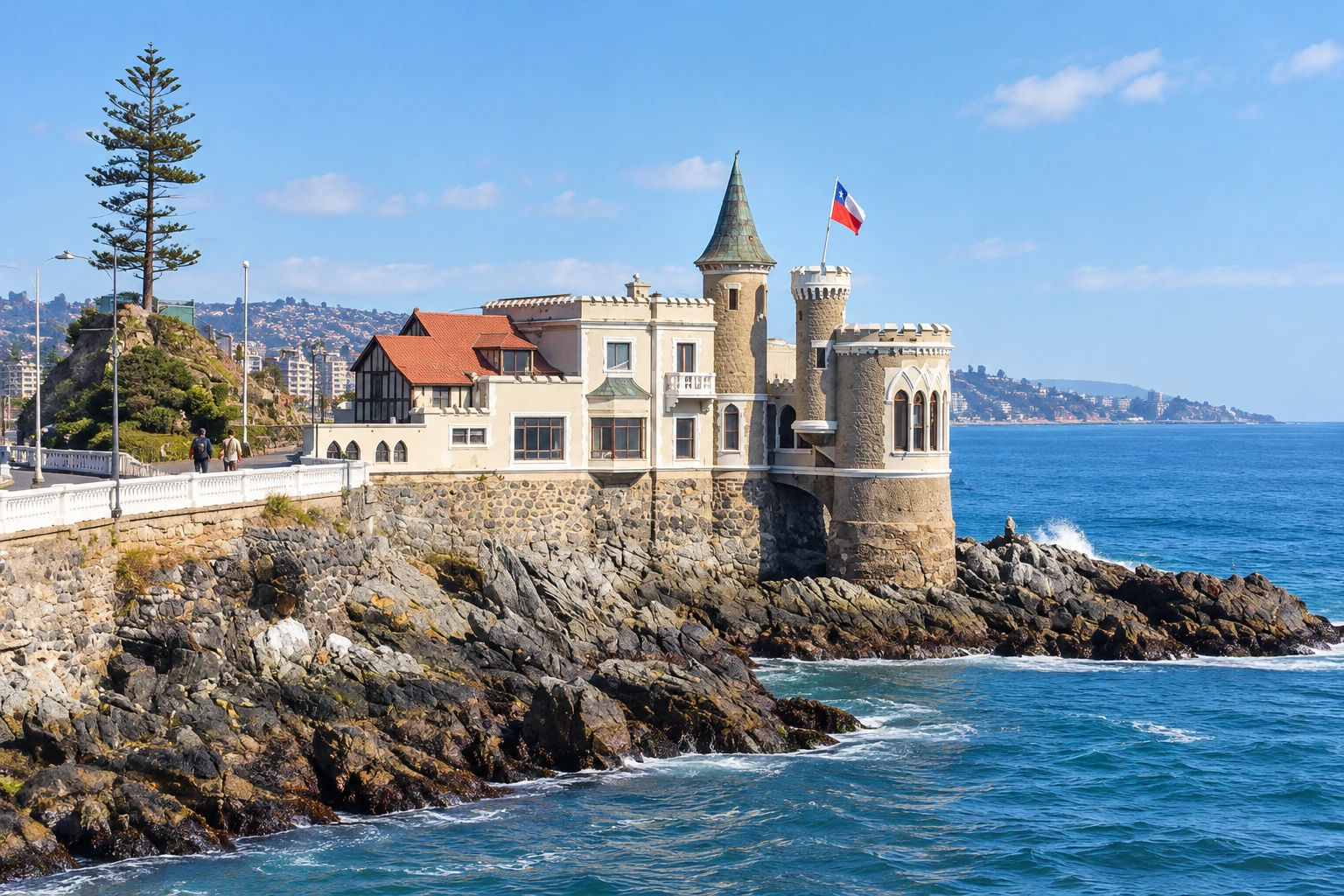
Wulff Castle

Stone castle built in 1906 on the rocks of Viña's waterfront, today a municipal exhibition center, with a tower connected by a bridge.

Explore Wulff Castle

Valparaíso · Valparaíso · Historic neighborhood

Cerro Alegre

Hill of steep streets, murals and colorful houses, with Paseo Yugoslavo, Paseo Dimalow and two historic ascensors, El Peral and Reina Victoria.

Explore Cerro Alegre

See 12 more places in Valparaíso and Viña del Mar

To choose before you go

Tours in Valparaíso and Viña del Mar

Where each tour starts, how long it takes, how it is done, what is included and the price range.

Cerro Concepción and Cerro Alegre on foot, with the funiculars

From Plaza Sotomayor or Calle Prat, on the Valparaíso map On foot, taking a funicular (ascensor) or via the stairways about 3 to 4 hours morning or afternoon moderate (hills and stairs)

The Concepción and Alegre hills are the two neighboring hills rising just above Valparaíso’s old town, within the area declared a UNESCO World Heritage Site. They are residential neighborhoods of wooden and corrugated-sheet houses painted in bright colors, with murals on the walls, stairways and viewpoints over the bay. The ascent can be made by the ascensores, the city’s historic funiculars. The Ascensor Concepción, from 1883, the oldest, rises from Calle Prat to Paseo Gervasoni; the Ascensor Reina Victoria leaves from the end of Calle Cumming and reaches Cerro Concepción; the Ascensor El Peral links Plaza Sotomayor to Paseo Yugoslavo on Cerro Alegre. On Cerro Concepción, the route passes Paseo Gervasoni and Paseo Atkinson, two viewpoints over the port, and the Iglesia Anglicana Saint Paul, a legacy of the 19th-century British community. On Cerro Alegre, Templeman and San Enrique streets concentrate murals, studios, cafés and restaurants, and Paseo Yugoslavo, in front of Palacio Baburizza, completes the loop with another view of the bay. The descent can be by Ascensor El Peral, which returns the visitor to Plaza Sotomayor.

Stops: Cerro Concepción, Cerro Alegre, Paseo Gervasoni, Paseo Atkinson, Paseo Yugoslavo, Iglesia Anglicana Saint Paul, Ascensor Concepción, Ascensor Reina Victoria, Ascensor El Peral.

Includes: Walking around the hills is free. Each funicular ride is paid separately, usually in cash, at the lower or upper station. Check the current rates.

Tip: Several funiculars frequently stop for maintenance or breakdowns: confirm which are operating before planning your ascent. If the one on your route is out of service, the stairways lead to the same points. Wear comfortable shoes with sturdy soles, because the sidewalks are steep and made of stone.

Best time: Year-round. From December to March days are long and dry; from May to August it can rain and the stairways become slippery.

Plaza Sotomayor, Muelle Prat and launch tour of the bay

From Plaza Sotomayor, downtown Valparaíso On foot to the pier and by launch around the bay about 2 hours morning or afternoon easy

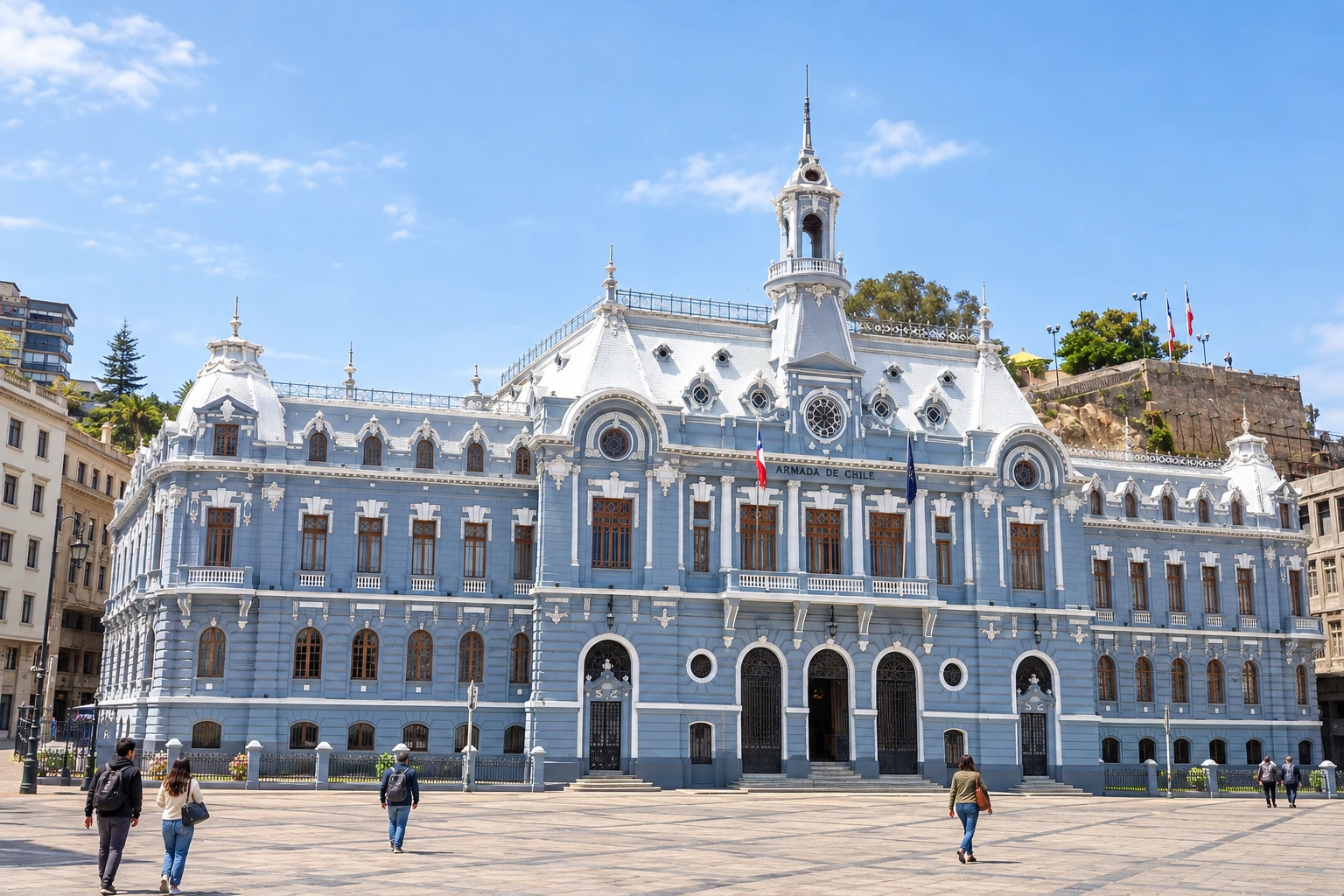
Plaza Sotomayor is the main square of Valparaíso’s port neighborhood. On one side is the Comandancia en Jefe de la Armada building; in the center, the Monumento a los Héroes de Iquique, where the remains of Arturo Prat and other sailors from the 1879 naval battle of Iquique rest, a date commemorated on May 21. The plaza is only a few minutes’ walk from Muelle Prat. At the pier, boat operators offer tours of the bay in launches and larger boats, which typically last about half an hour. From the sea you can see the amphitheater of the cerros with the colorful houses, the cranes and the port vessels and, depending on the day, Navy ships anchored in the bay. The tour returns to the same pier. In the same area are Mercado Puerto, with fish and seafood restaurants, and the start of the ascents to cerros Concepción and Alegre.

Stops: Plaza Sotomayor, Monumento a los Héroes de Iquique, Muelle Prat, Bay of Valparaíso.

Includes: The boat ride is paid separately, directly at the pier. The plaza and the pier have open access. Check the current price list.

Tip: The launches depart when enough passengers have gathered, with no fixed schedule, and do not run in rough seas or strong winds. The pier is undergoing dock renovations: check on site for current boarding arrangements.

Best time: Year‑round; from December to March the sea is usually calmer in the afternoons and there are more departures.

La Sebastiana, Pablo Neruda’s house in Valparaíso

From Valparaíso city center By taxi, micro (local bus) or on foot up the hill about 1 to 1.5 hours morning or afternoon easy (internal stairs)

La Sebastiana is one of the three Pablo Neruda houses open to visitors in Chile, along with La Chascona in Santiago and the house in Isla Negra. It sits on Calle Ferrari, high on the Bellavista and Florida hills, with broad views over the bay. Neruda bought the house in 1959 and opened it in 1961; he used to spend New Year’s Eve there to watch the fireworks over the sea. The building is narrow and tall, with five levels connected by stairs, and the poet occupied the upper floors. The visit goes through the rooms with the objects he collected: maps, marine-themed paintings, stained glass, a stuffed bird brought from Venezuela, a soup tureen shaped like a cow and a painting that is also a music box and clock. Large windows face the port. The house is managed by the Fundación Pablo Neruda.

Stops: La Sebastiana, Cerro Bellavista, Cerro Florida.

Includes: There is an entrance fee, with an audio guide in several languages including Portuguese. Photography inside the house is not allowed. Check the current rate.

Tip: The climb is steep: take a taxi to the entrance and walk down on foot via the Museo a Cielo Abierto, which is on the route. The house usually closes on Mondays; in January, February and on weekends, buy the ticket in advance.

Best time: All year; it’s a good option on rainy or foggy days.

Museo a Cielo Abierto, the murals of Cerro Bellavista

From Calle Huito (Ascensor Espíritu Santo) or La Sebastiana On foot, via the streets and stairways of Cerro Bellavista about 1.5 hours morning or afternoon moderate (hills and stairways)

The Museo a Cielo Abierto is a group of 20 murals painted on the walls of houses, retaining walls and stairways of Cerro Bellavista. The idea began in 1969 with students from the Instituto de Arte of the Pontificia Universidad Católica de Valparaíso, and the museum opened in 1992. The murals vary in style, from abstract to surrealist, and bear signatures of well-known Chilean artists such as Roberto Matta, Mario Carreño, Nemesio Antúnez, Roser Bru, José Balmes, Gracia Barrios and Guillermo Núñez. The most common route starts at the top of Ascensor Espíritu Santo and follows Calle Rudolph to the Ferrari climb; then returns via Pasaje Guimera and the Pasteur climb. Those who do not use the funicular climb the Pasteur stairway. At the top of the Ferrari climb is La Sebastiana, Neruda’s house, which makes it possible to combine the two visits.

Stops: Museo a Cielo Abierto, Cerro Bellavista, Ascensor Espíritu Santo.

Includes: The visit to the murals is free; the funicular is paid separately. Check the current price list.

Tip: The Ascensor Espíritu Santo has been out of service for long periods: check in advance. An alternative is to take a taxi up to La Sebastiana and follow the mural route on the way down.

Best time: All year round, preferably on a dry day.

Palacio Baburizza, Valparaíso Museum of Fine Arts

From Cerro Alegre, atop the Ascensor El Peral On foot, starting from Paseo Yugoslavo about 1 to 1½ hours morning or afternoon easy

Palacio Baburizza is a 1916 mansion in Cerro Alegre, designed by Italian architects Arnaldo Barison and Renato Schiavon in an Art Nouveau style, influenced by Central European architecture. Later it was the home of Pascual Baburizza, a businessman of Croatian origin, and the municipality of Valparaíso bought it in 1971. Today it houses the Valparaíso Municipal Museum of Fine Arts. The ground floor displays the European collection that Baburizza left to the city. The building underwent a long restoration, completed in 2012, which restored the original internal elevator. In front is Paseo Yugoslavo, an overlook donated to the city by Baburizza, with views over the bay and downtown. The Ascensor El Peral reaches the side of the palace, coming from Plaza Sotomayor.

Stops: Palacio Baburizza, Paseo Yugoslavo, Cerro Alegre, Ascensor El Peral.

Includes: There is an admission fee for the museum. Paseo Yugoslavo has open access. Check the current schedule.

Tip: Combine this visit with a walk through the Concepción and Alegre hills. The museum usually closes one day a week: check beforehand.

Best time: All year; a good option for a rainy day.

Paseo 21 de Mayo and Museo Marítimo Nacional, on Cerro Artillería

From Port district, near the Customs house By taxi, bus (micro) or on foot up the hill; funicular when it's operating about 2 hours morning or afternoon easy

Paseo 21 de Mayo is a pedestrian promenade on the edge of Cerro Artillería, about 50 meters above the port. It is one of Valparaíso’s viewpoints with open views over the bay, the cranes and containers at the terminal, the ships and the hills opposite. Next to it is the Museo Marítimo Nacional, housed in the former Naval School building, declared a National Monument and converted into a museum in 1988. It has 17 rooms with about 5,000 objects: ship models, uniforms, medals, flags, weapons, books and documents from Chile’s naval history, with emphasis on the War of the Pacific and the naval combat of Iquique. The museum has a courtyard, shop and café. The Ascensor Artillería, dating from 1893, linked the port district to the promenade; it has spent long periods out of service for repairs.

Stops: Paseo 21 de Mayo, Museo Marítimo Nacional, Cerro Artillería, Ascensor Artillería.

Includes: Paseo 21 de Mayo is open access. There is an admission fee for the Museo Marítimo Nacional. Check the current pricing table.

Tip: Check whether the Ascensor Artillería is operating; if not, go up by taxi or microbus. The museum is usually closed on Mondays.

Best time: All year. On summer mornings coastal fog can cover the bay; the view generally clears as the day progresses.

See 8 more tours

Viña del Mar waterfront: Reloj de Flores, Castillo Wulff and Caleta Abarca

From Reloj de Flores, Viña del Mar On foot, along the coastal avenue about 2 hours afternoon easy

Viña del Mar, the city neighboring Valparaíso, is known in Chile as Ciudad Jardín because of its many squares and gardens. The Reloj de Flores, a clock mounted on a flowerbed on the hillside, was installed for the 1962 World Cup and is the most common starting point for walking along the waterfront. From there, the avenue continues to Castillo Wulff, built between 1905 and 1906 by businessman Gustavo Wulff on the seaside rocks, between the mouth of the Marga Marga stream and Caleta Abarca beach. The castle has towers, terraces and a keep connected to the main building by a bridge; it is a Historic Monument and hosts cultural exhibitions run by the city. To the north, Avenida Perú follows the sea with promenades, benches and restaurants up to Muelle Vergara, an old pier turned walkway. To the south, Caleta Abarca beach sits in a small cove, beside the path to Valparaíso.

Stops: Reloj de Flores, Castillo Wulff, Caleta Abarca, Avenida Perú, Muelle Vergara.

Includes: The waterfront, the Reloj de Flores and Castillo Wulff have free access; the castle's exhibitions may vary.

Tip: Take the walk at sunset to see the sun set over the Pacific from the terraces of Castillo Wulff. From downtown Viña, the Miramar station of the Merval is near the Reloj de Flores.

Best time: All year; in summer (December to February) the waterfront is crowded on weekends.

Quinta Vergara and Museo de Bellas Artes Palacio Vergara

From Downtown Viña del Mar, near the Viña del Mar station of the Merval On foot about 2 hours morning or afternoon easy

Quinta Vergara is the large park in downtown Viña del Mar, formerly the estate of the Vergara family, founders of the city. The gardens contain trees brought from Asia, Australia and California in the 19th century, promenades and sculptures. In the middle of the park stands Palacio Vergara, dating to 1910 in a Venetian Gothic style, built after the 1906 earthquake destroyed the previous house. The palace houses the Museo de Bellas Artes de Viña del Mar: it was heavily damaged by the 2010 earthquake, underwent a lengthy restoration, and displays across 15 rooms Venetian painting from the 16th century, Spanish and Italian painting from the 17th century, canvases by Joaquín Sorolla and a room of Chilean painting, as well as the original furniture bought in Europe. The park also contains the amphitheater where the Festival Internacional de la Canción de Viña del Mar takes place in February.

Stops: Quinta Vergara, Museo de Bellas Artes Palacio Vergara, Quinta Vergara Amphitheater.

Includes: Park entry is free. Check at the entrance for museum visiting rules and temporary exhibitions.

Tip: During the Festival in February, the area around the amphitheater is closed and the park may have restricted access: check in advance. The museum is usually closed on Mondays.

Best time: Year‑round; in spring (September to November) the gardens are in bloom.

Museo Fonck and the moai of Viña del Mar

From Downtown Viña del Mar On foot about 1 hour to 1 hour 30 minutes morning or afternoon easy

The Museo de Arqueología e Historia Francisco Fonck is located on Calle 4 Norte in downtown Viña del Mar, in a building behind Palacio Carrasco. At the entrance, in the garden, there is a moai carved from volcanic stone brought from Easter Island (Rapa Nui) in 1951. Inside, the Rapa Nui collection is one of the most complete of its kind, with wooden and stone pieces, ritual objects and explanations about the island’s culture. The other rooms display items from indigenous cultures of northern, central and southern Chile, such as the atacameños, the diaguitas and the mapuches, and a natural history section. For those not traveling to Easter Island, it is a chance to see a moai up close; for those who are going, it is a good introduction.

Stops: Museo Fonck, Palacio Carrasco.

Includes: There is an admission fee for the museum. Check the current price list.

Tip: The moai in the garden can be seen from the street. The museum is usually closed one day a week: check in advance.

Best time: All year round; a good plan for a rainy day.

Playa Acapulco and the downtown beaches of Viña del Mar

From Downtown Viña del Mar On foot along the waterfront about 3 hours afternoon easy

Playa Acapulco is the most central beach in Viña del Mar, with light sand, north of the Marga Marga estuary, facing the buildings on Avenida San Martín and near the Casino Municipal on the estuary edge. The sandy stretch has a boardwalk, kiosks and restaurants, and in summer there are lifeguards, chairs and beach tents. For Brazilians, the main difference is the water: the Pacific in this region is cold year‑round because of the Humboldt Current, and even in summer many people only dip their feet. The sea can also have strong waves; respect the flags and enter only at sections with lifeguards. The walk pairs well with the Avenida Perú waterfront and an evening at Castillo Wulff.

Stops: Playa Acapulco, Casino Municipal de Viña del Mar, Avenida San Martín.

Includes: The beach has free access. Chairs and umbrellas are rented separately.

Tip: Bring a jacket even in summer: coastal fog can appear in the morning and the wind cools down late in the afternoon. Use sunscreen even with cloudy skies.

Best time: From December to March, the beach season with lifeguards. In January and February the beach becomes crowded, especially on weekends.

Reñaca, Viña del Mar’s beach to the north

From Viña del Mar city center By micro (city bus), taxi, or car via the coastal avenue about 4 hours afternoon easy

Reñaca is the resort area north of Viña del Mar, linked to the center by the coastal avenue that passes Las Salinas. The beach is long and divided into five sectors, each with its own crowd: some stretches are more family-oriented and others are popular with young people and those who surf or bodyboard. Behind the sand, buildings climb the hillside in steps, a familiar image of the place. The promenade has restaurants, ice cream shops, and stores, and in summer Reñaca is also lively at night. The water is cold, as along the entire central Chilean coast, and the sea can have strong waves. On Reñaca’s northern side the road continues to Concón and its dunes, which allows you to combine both outings.

Stops: Playa Reñaca, Reñaca.

Includes: The beach has free access. Chairs, beach umbrellas, and surfing lessons are paid separately.

Tip: In January and February the coastal avenue gets congested on weekends: prefer the micro or leave early. Enter the sea only in sectors with lifeguards.

Best time: From December to March for beachgoing; the rest of the year, the promenade and the view are still worthwhile, with far fewer people.

Dunas de Concón and the caletas of Concón

From Viña del Mar or Reñaca By car, taxi or local bus along the coastal avenue about 3 to 4 hours afternoon moderate (ascending and descending on sand)

The Campo Dunar de la Punta de Concón is an area of sand dunes on a marine terrace about 30 meters high, beside the coastal road between Reñaca and Concón. It has been a Santuario de la Naturaleza since 1993, protected for its landscape value and for science, and the dunes descend from the ravines to the sea. From the top you can see the coastline from Reñaca to Concón, and the place is sought in the late afternoon to watch the sunset. After the dunes, the road continues to Concón, a city of beaches and seafood restaurants. The fishing coves, such as Higuerillas and San Pedro, have colorful boats, fish stalls and restaurants; empanadas de mariscos (baked or fried pastries filled with seafood) are the region’s specialty.

Stops: Santuario de la Naturaleza Campo Dunar de la Punta de Concón, Caleta Higuerillas, Caleta San Pedro, Concón.

Includes: Access to the dunes and the coves is free of charge. Meals are paid separately.

Tip: Stay within the permitted access areas on the dunes and do not bring vehicles onto the sand, which is prohibited. Bring warm clothing: the wind is strong and it cools down in the late afternoon.

Best time: All year; from December to March the late afternoon is longer and drier.

Isla Negra, Neruda’s house on the southern coast

From Santiago or Valparaíso By car, bus or tour about 7 to 8 hours, round trip all day easy

Isla Negra is a locality in the El Quisco commune, on the coast south of Valparaíso, about 110 km from Santiago. There is the house Pablo Neruda favored, facing the Pacific, built gradually to resemble a ship. The visit goes through the rooms with the poet’s collections: figureheads, bottles, ships in bottles, maps and a large collection of shells in a room called Bajo el mar. Neruda and his third wife, Matilde Urrutia, are buried on the house grounds, facing the sea. The house is managed by the Fundación Pablo Neruda. After the visit you can walk on the shoreline rocks in front of the house.

Stops: Casa Museo Isla Negra, Isla Negra, El Quisco.

Includes: There is an entrance fee, with an audio guide in several languages, including Portuguese. Photography inside the house is not allowed. On organized tours, transportation is usually included and the entrance fee may be paid separately. Check the current price table.

Tip: The house usually closes on Mondays and has a daily visitor limit: in January, February and on weekends buy the ticket in advance. There are buses from Santiago and Valparaíso that stop near the house; check return schedules when you arrive.

Best time: All year; from December to February there is more activity and extended opening hours.

New Year in Valparaíso and Viña del Mar: fireworks in the bay

From Valparaíso or Viña del Mar On foot to a viewpoint or the waterfront; by boat, with reservation about 3 to 4 hours night easy (many people in the streets)

New Year’s Eve in the bay of Valparaíso is one of Chile’s best-known celebrations and draws large crowds to the hills, the waterfront and the sea. Valparaíso and Viña del Mar usually stage fireworks with multiple launch points in the sea along the bay, from Valparaíso to Reñaca, and the city’s celebration often includes performances at Plaza Sotomayor. People watch from hill viewpoints, Viña’s waterfront and from boats and launches that depart Muelle Prat shortly before midnight. Neruda spent New Year’s at La Sebastiana precisely to watch the fireworks over the sea. Timing, program and launch points change each year, and some viewpoints may be closed to the public for safety on the night of the 31st.

Stops: Plaza Sotomayor, Muelle Prat, Cerro Alegre, Cerro Concepción, Reñaca.

Includes: Watching from public spaces is free. New Year’s boat trips are paid separately and require reservation. Check the current rates.

Tip: Decide in advance where you will watch and how you will return: on the night of the 31st there are roadblocks, closed walkways and overcrowded transport. Book your trip from Santiago and the return in advance.

Best time: Night of December 31 to January 1.

Day by day

1, 2 and 3-day itinerary in Valparaíso and Viña del Mar

Suggestions to plan the trip. Change the order of the days according to the weather and tour availability.

1 day · Valparaíso and Viña del Mar in 1 day, leaving from Santiago

For Those staying in Santiago who want to visit the port and the waterfront on a day trip. · Based in Santiago
  1. Day 1 · Valparaíso hills, Plaza Sotomayor and late afternoon in Viña

    This itinerary works for a free day after arriving from Brazil: the flight lands at Santiago airport and the first night is in the capital. Leave early by bus from Terminal Alameda to Valparaíso, about 1 hour 45 minutes. In the morning, walk through Cerro Concepción and Cerro Alegre using the funiculars, and stop by Palacio Baburizza and Paseo Yugoslavo. Descend via Ascensor El Peral to Plaza Sotomayor, have lunch near the port, and take the speedboat tour from Muelle Prat. In the afternoon, take the Merval to Viña del Mar and walk the waterfront: Reloj de Flores and Castillo Wulff at sunset. Return by bus from Viña to Santiago. If you drive via Ruta 68 you can stop at a winery in the Casablanca Valley along the way.

2 days · Valparaíso and Viña del Mar in 2 days
For Those who want to spend a night on the coast and see museums, Neruda’s house, and the beaches at a relaxed pace. · Based in Valparaíso or Viña del Mar
  1. Day 1 · Trip from Santiago, Valparaíso hills and La Sebastiana

    If you arrive from Brazil on a daytime flight you can continue the same day: from Santiago airport there are direct buses to Viña del Mar or a connection via Terminal Pajaritos. If you arrive at night, sleep in Santiago and leave in the morning. In Valparaíso, walk Cerro Concepción and Cerro Alegre using the funiculars and visit Palacio Baburizza. In the afternoon, take a taxi up to La Sebastiana and descend along the Museo a Cielo Abierto. Overnight in Valparaíso or Viña.

  2. Day 2 · Port in the morning, Viña del Mar in the afternoon

    In the morning, go to Plaza Sotomayor and Muelle Prat for the speedboat tour, then visit Paseo 21 de Mayo and the National Maritime Museum. Have lunch in the port neighborhood and take the Merval to Viña del Mar. In the afternoon, visit Quinta Vergara and the Museo de Bellas Artes Palacio Vergara, see the moai at Museo Fonck, and finish on the waterfront between Reloj de Flores and Castillo Wulff. Return to Santiago by bus at the end of the day.

3 days · Valparaíso, Viña del Mar and the coast in 3 days
For For those who want to combine the port, the beaches, the Concón dunes, and Neruda’s house in Isla Negra. · Based in Viña del Mar or Valparaíso
  1. Day 1 · Arrival and Valparaíso hills

    With a daytime flight from Brazil, go from Santiago airport to the coast the same day, by bus or by car via Ruta 68, about 120 km; with a night flight, sleep in Santiago and leave in the morning. If driving, you can stop at a winery in the Casablanca Valley along the way. In the afternoon, walk Cerro Concepción and Cerro Alegre using the funiculars and watch the sunset from one of the viewpoints, such as Paseo Gervasoni or Paseo Yugoslavo.

  2. Day 2 · Museums and viewpoints of Valparaíso

    In the morning, Plaza Sotomayor and Muelle Prat, with the speedboat tour, and then Paseo 21 de Mayo and the National Maritime Museum. In the afternoon, go up to La Sebastiana and descend through the murals of Museo a Cielo Abierto. If time allows, visit Palacio Baburizza. Overnight in Viña or Valparaíso.

  3. Day 3 · Viña del Mar, Reñaca and Concón Dunes

    In the morning, Quinta Vergara, Museo de Bellas Artes Palacio Vergara and the moai at Museo Fonck. Then Viña’s waterfront: Reloj de Flores, Castillo Wulff and Playa Acapulco. In the afternoon, continue along the coastal avenue to Reñaca and the Concón Dunes, with a seafood dinner in a caleta in Concón, and return to Santiago at night. If you have an extra day you can swap the direct return for a day trip to Isla Negra, Neruda’s house on the southern coast, before heading back to the capital.

Best time to go

When to go: Valparaíso and Viña del Mar month by month

Summer, from December to March, brings dry days and crowded beaches. Autumn and spring have fewer people and mild temperatures for walking up the hills. Winter, from June to August, is the rainy season and brings damp cold. In February the Viña music festival takes place, and New Year's Eve with fireworks over the bay fills both cities.

The seasons shown are the most usual ones; nature doesn't always follow the calendar.

January Low rain

beach high season · vacations in Chile and Brazil

Summer: averages between 13.6 °C and 21.9 °C in Valparaíso, with almost no rain. Mornings often have coastal fog and afternoons are sunny. Sea water is cold. School holidays in Chile and Brazil: the beaches of Viña, Reñaca and Concón are crowded, especially on weekends, and traffic on Ruta 68 is heavy. Neruda houses and museums are busier; buy tickets in advance.

February Low rain

Viña Festival · crowded beaches

Summer: averages between 13.9 °C and 22.2 °C, the warmest month. Rain is rare. The Viña del Mar International Song Festival at Quinta Vergara fills the city and the area around the amphitheater is closed on show nights. School holidays in Chile and Carnival in Brazil: reserve buses and tours in advance.

March Low rain

end of summer · fewer crowds

End of summer: averages between 12.6 °C and 21.9 °C, still dry. After Chilean school holidays, beaches and hills are quieter and the days remain long. A good time to combine beach and walks on the cerros. Grape harvest season in Chilean valleys such as Casablanca, en route from Santiago.

April Low rain

mild autumn · cerros without lines

Autumn: averages between 10.7 °C and 19.8 °C. The first rains may appear at the end of the month. Few people at the beaches and museums have no lines. A good month for the cerros, La Sebastiana and Viña. Easter Week, depending on the year, can fill the coast during a long holiday.

May Some rain

rains begin · May 21

Autumn: averages between 9.9 °C and 18.5 °C, with the year’s rains starting to become frequent. May 21 is the Glories of the Navy holiday, with Armada events in Valparaíso at Plaza Sotomayor. Stairs and slopes can be slippery on rainy days; bring sturdy footwear and a warm layer.

June High rain

rainiest month · damp cold

Winter: averages between 8.6 °C and 17.1 °C, the rainiest month in Valparaíso. There are days of rain and wind fronts, and the sea can get rough, with boat trips cancelled. A good month for museums: Palacio Baburizza, the National Maritime Museum, Museo Fonck and the Neruda houses.

July High rain

winter · July school holidays

Winter: averages between 8.1 °C and 16.3 °C, the coldest month. Frequent rain alternates with clear days and wide views of the bay. Winter school holidays in Chile and Brazil: many Brazilians combine the Andes snow near Santiago with a day in Valparaíso and Viña. Bring a waterproof coat.

August High rain

end of winter · quiet city

End of winter: averages between 8.4 °C and 17.3 °C, still with rain. Few people at the beaches and museums. Days begin to get longer. A good month for walking the cerros on dry days and for museums on rainy days.

September Some rain

Fiestas Patrias · spring

Start of spring: averages between 9.7 °C and 17.3 °C, with rain becoming rarer. Fiestas Patrias on September 18 and 19: a long holiday, waves of Chileans on the coast, buses and tours are full; book ahead. The gardens of Quinta Vergara begin to bloom.

October Low rain

spring · long days

Spring: averages between 9.5 °C and 19 °C, with little rain. Long days, fewer people, and a good time to combine the Valparaíso hills, Neruda’s houses and Viña’s waterfront. Coastal fog may cover the bay in the morning.

November Low rain

late spring · before high season

Late spring: averages between 11 °C and 20 °C, with almost no rain. The sea water is still cold, but beach days begin. Moderate activity before summer holidays; a good time for Isla Negra and for the Concón Dunes in the late afternoon.

December Low rain

start of summer · New Year

Start of summer: averages between 12.3 °C and 21.5 °C, with no rain. Beaches have lifeguards from the summer season. On New Year’s Eve, the fireworks over the Valparaíso–Viña bay draw large crowds: transport, launches and tickets may require reservations, and there are road closures on the 31st.

Plan the journey

How to get there: Valparaíso and Viña del Mar

From Brazil by plane

There are direct flights from Brazil to Santiago at Arturo Merino Benítez Airport (SCL) from São Paulo and Rio de Janeiro and, depending on season and airline, also from other capitals such as Brasília, Florianópolis, Porto Alegre and Salvador. From other cities travel involves a connection. Check before booking. Valparaíso and Viña del Mar have no commercial flights: the journey continues by road, about 120 km on Ruta 68. From the airport there are direct buses to Viña del Mar of roughly 2 to 2.5 hours, or a two‑step connection: bus or taxi to Terminal Pajaritos, next to Santiago’s Pajaritos metro station, and from there a bus to Viña and Valparaíso.

By bus from Santiago

Buses from several companies, such as Tur Bus and Pullman Bus, depart from Terminal Alameda, next to Universidad de Santiago metro station, with frequent departures throughout the day, and many also stop at Terminal Pajaritos. The journey to Valparaíso or Viña del Mar takes about 1 hour 30 minutes to 2 hours, depending on traffic. Buses arrive at the coach terminals in Valparaíso and Viña del Mar. On summer weekends and holidays, buy your ticket in advance.

By car

From Santiago, Ruta 68 takes you to the coast in about 120 km, on a dual carriageway with tolls, passing through the Casablanca valley, where several wineries are located. Near the end of the road, signs indicate the turnoffs for Valparaíso or Viña del Mar. The trip takes about 1.5 hours without traffic; on summer weekends and holidays the return to Santiago is often slow. In Valparaíso’s cerros the streets are narrow and steep, with little parking: leave the car in a parking lot on the plano and go up on foot or by ascensor.

Getting around Valparaíso and Viña del Mar

The Merval, the region’s surface metro, links Puerto station, near Plaza Sotomayor, with Bellavista, Francia, Barón, Portales and Recreo stations and reaches Viña del Mar via Miramar and Viña del Mar stations, continuing to Limache. Payment is with the Conecta card, sold and recharged at stations. The micros (city buses) connect Valparaíso, Viña, Reñaca and Concón; in Valparaíso historic trolleybuses also operate. To go up the cerros there are ascensores (funiculars), paid in cash per ride; several stop frequently, so check which ones are operating. Taxis and ride‑hail apps are useful to get to La Sebastiana and the Concón Dunes.

Documents and time zone

Brazilian citizens enter Chile with a valid RG (identity card) or passport. Requirements can change: check before traveling. For minors, confirm the requirements before you go. Continental Chile is one hour behind Brasília or on the same time, depending on the time of year (Chilean daylight saving); Valparaíso and Viña del Mar follow Santiago time.

Museum tickets and Neruda houses

The cerros, plazas, viewpoints, the waterfront and the beaches have free access. There is an entrance fee for La Sebastiana and the house at Isla Negra, managed by the Fundación Pablo Neruda, with an audio guide in Portuguese; in January, February and on weekends buy in advance. There is also an entrance fee for Palacio Baburizza, the National Maritime Museum and the Museo Fonck. The ascensores and boat tours from Muelle Prat are paid separately. Many museums close one day a week, usually Mondays: check beforehand.

Before you go

Practical information

A little planning leaves more time to enjoy the journey.

When to go

Summer, from December to March, brings dry days and crowded beaches. Autumn and spring have fewer people and mild temperatures for walking up the hills. Winter, from June to August, is the rainy season and brings damp cold. In February the Viña music festival takes place, and New Year's Eve with fireworks over the bay fills both cities.

The seasons shown are the most usual ones; nature doesn't always follow the calendar.

How many days to stay

A busy one-day trip from Santiago shows the essentials of Valparaíso's hills and Viña's waterfront. With two days you can visit La Sebastiana and the museums without rushing. Three days allow you to include Reñaca, the Concón dunes and a full afternoon by the sea.

Which city to stay in

In Valparaíso, the cerros Alegre and Concepción concentrate guesthouses in old mansions, restaurants and viewpoints, all within walking distance but with steep streets and staircases. The plano, the lower area near Plaza Sotomayor and Plaza Victoria, is close to the metro and buses. In Viña del Mar, the waterfront between Caleta Abarca and Avenida San Martín features oceanfront buildings and is close to the beaches; the center, near Plaza Vergara, is convenient for those arriving by bus. Reñaca is for those who want to stay right on the sand in summer.

Respect the place

Take your trash with you, follow the signs and support local businesses. In natural areas, follow the visiting guidelines.

Beyond the guide

Your questions

Frequently asked questions about Valparaíso and Viña del Mar

How to get to Valparaíso and Viña del Mar from Brazil?

The flight arrives at Santiago airport. From there Ruta 68 takes you to the coast in about an hour and a half by car or bus. There are transfers and buses departing Santiago terminals several times a day. Brazilians enter Chile with a valid RG or passport. Requirements may change: confirm before traveling.

Can you do a day trip from Santiago?

Yes. It's roughly 120 km each way, and many travelers leave early, spend the day in Valparaíso's hills and finish with the sunset in Viña. The day is busy: those who want to visit La Sebastiana and the museums or see the waterfront at leisure benefit from spending a night on the coast.

How many days to allocate for the two cities?

Two days cover it well: one for Valparaíso—with the cerros, funiculars and Neruda's house—and one for Viña, with the Reloj de Flores, Quinta Vergara, Museo Fonck and the beach. A third day leaves time for Reñaca, Concón and the dunes.

When to go to Valparaíso and Viña del Mar?

From December to March is beach season, with long dry days. March, April, October and November usually have stable weather and fewer crowds. Even in summer, mornings on the coast can start cloudy, and the Pacific wind cools the late afternoon; bring a jacket.

Do you need a car?

No. The Metro Valparaíso connects the two cities —a train running from Puerto station to Viña and beyond. Within Valparaíso, the cerros are explored on foot and by funicular, and parking on narrow streets is difficult. A car mainly helps to reach the Concón dunes and the beaches farther north, which also have local buses.

Explore other destinations Search by state and city