Castro · PR · Museum
Museu do Tropeiro
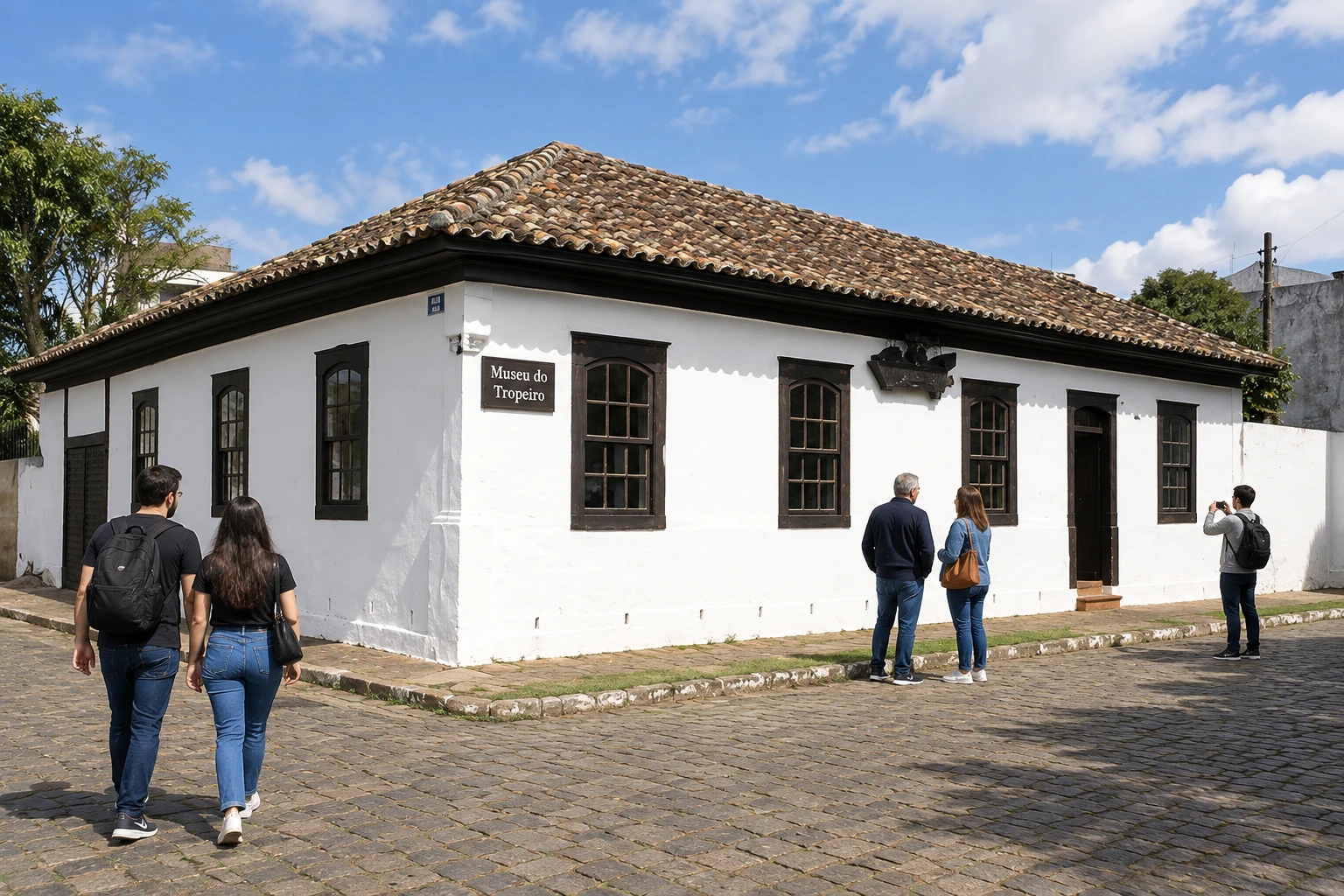
Castro museum dedicated to the troop routes, travel objects, and the formation of the Campos Gerais.

 Search
Brazil
 Antarctica
 Argentina
 Bolivia
 Chile
 Colombia
 Ecuador
 Falkland Islands (Malvinas)
 French Guiana
 Guyana
 Paraguay
 Peru
 Suriname
 Uruguay
 Venezuela
 Austria
 Belgium
 Croatia
 Denmark
 Finland
 France
 Germany
 Greece
 Hungary
 Iceland
 Ireland
 Italy
 Luxembourg
 Norway
 Poland
 Portugal
 Slovakia
 Slovenia
 Spain
 Sweden
 Switzerland
 the Czech Republic
 the Netherlands
 the United Kingdom
 Turkey
 Bermuda
 Canada
 Greenland
 Mexico
 Saint Pierre and Miquelon
 the United States
 the Dominican Republic
 JapanTurkey
 Egypt
 South Africa
 Australia
 Fiji
 New Zealand
 Papua New Guinea
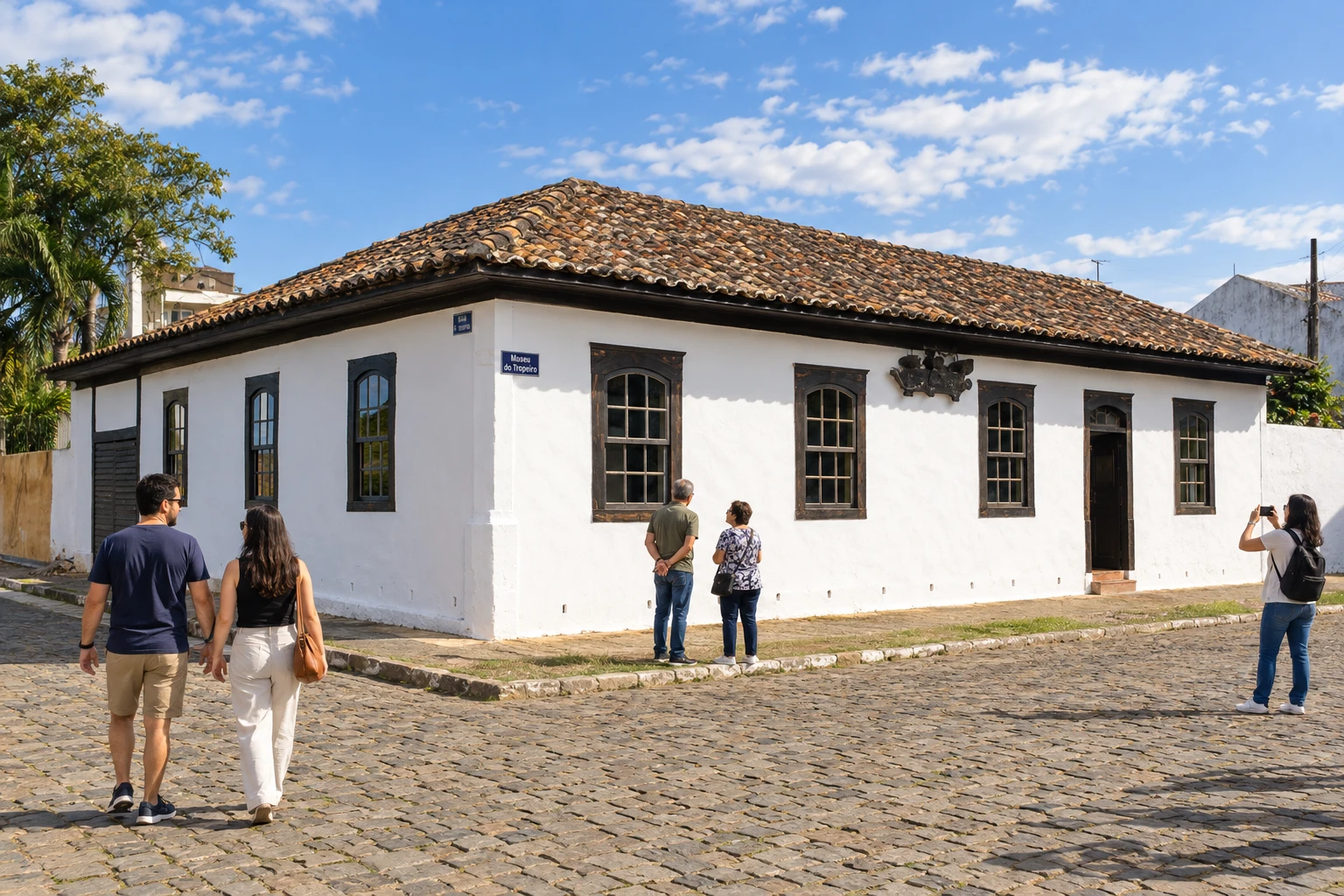
In the photo: Facade of the Museu do Tropeiro, in Castro.
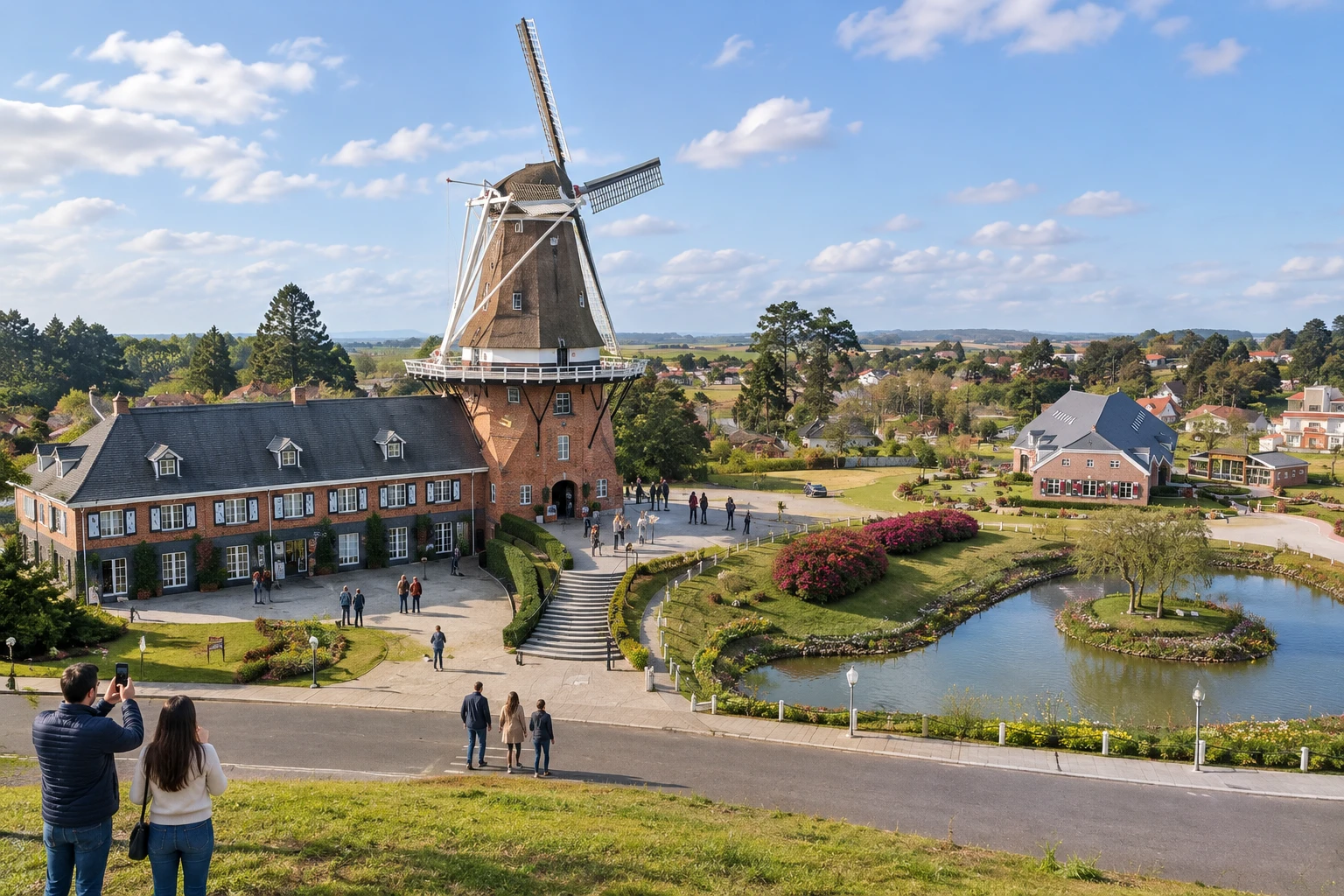
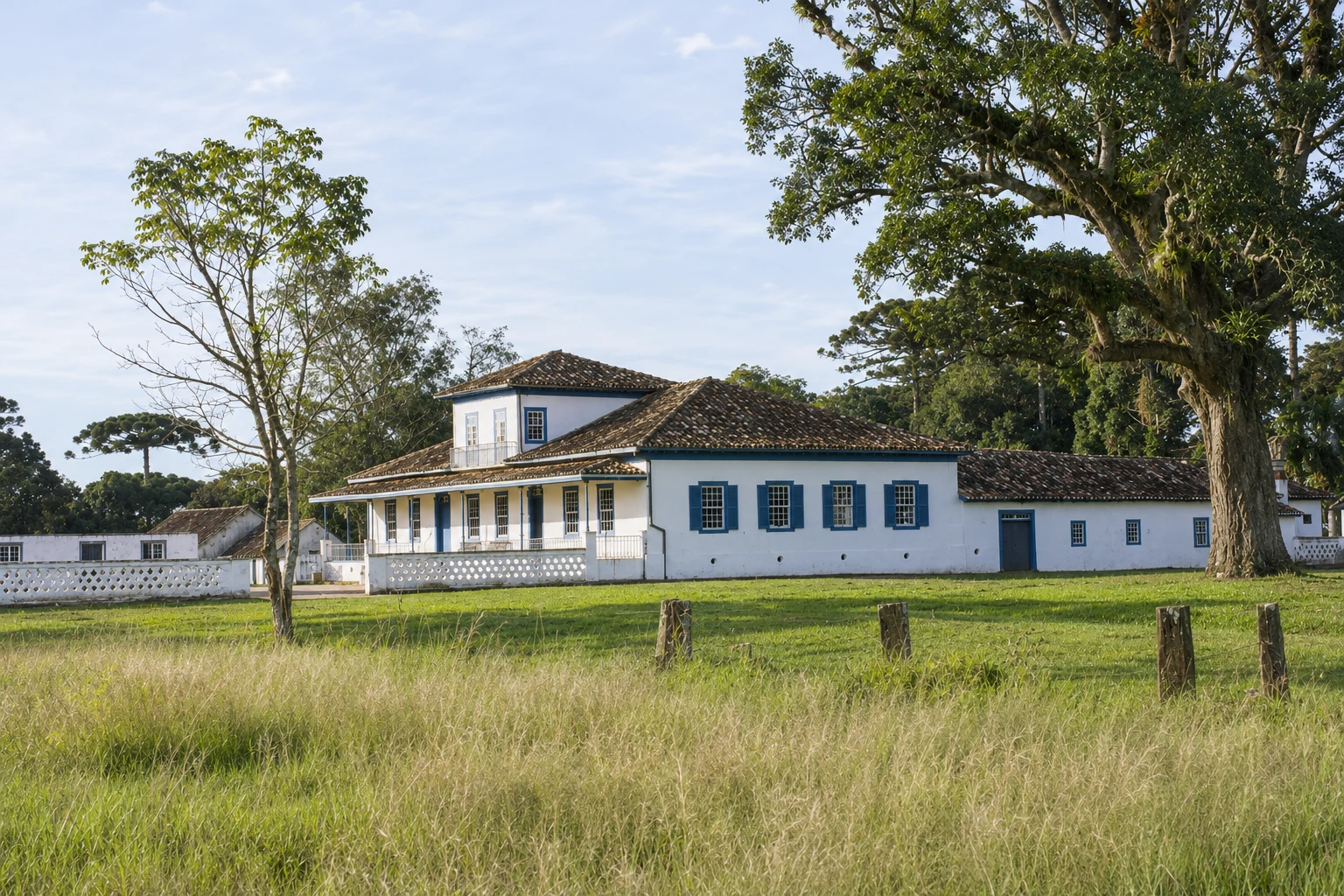
Illustrative images. The pictures in this guide are illustrations based on the real place, not photographs, and may differ from it.
The city
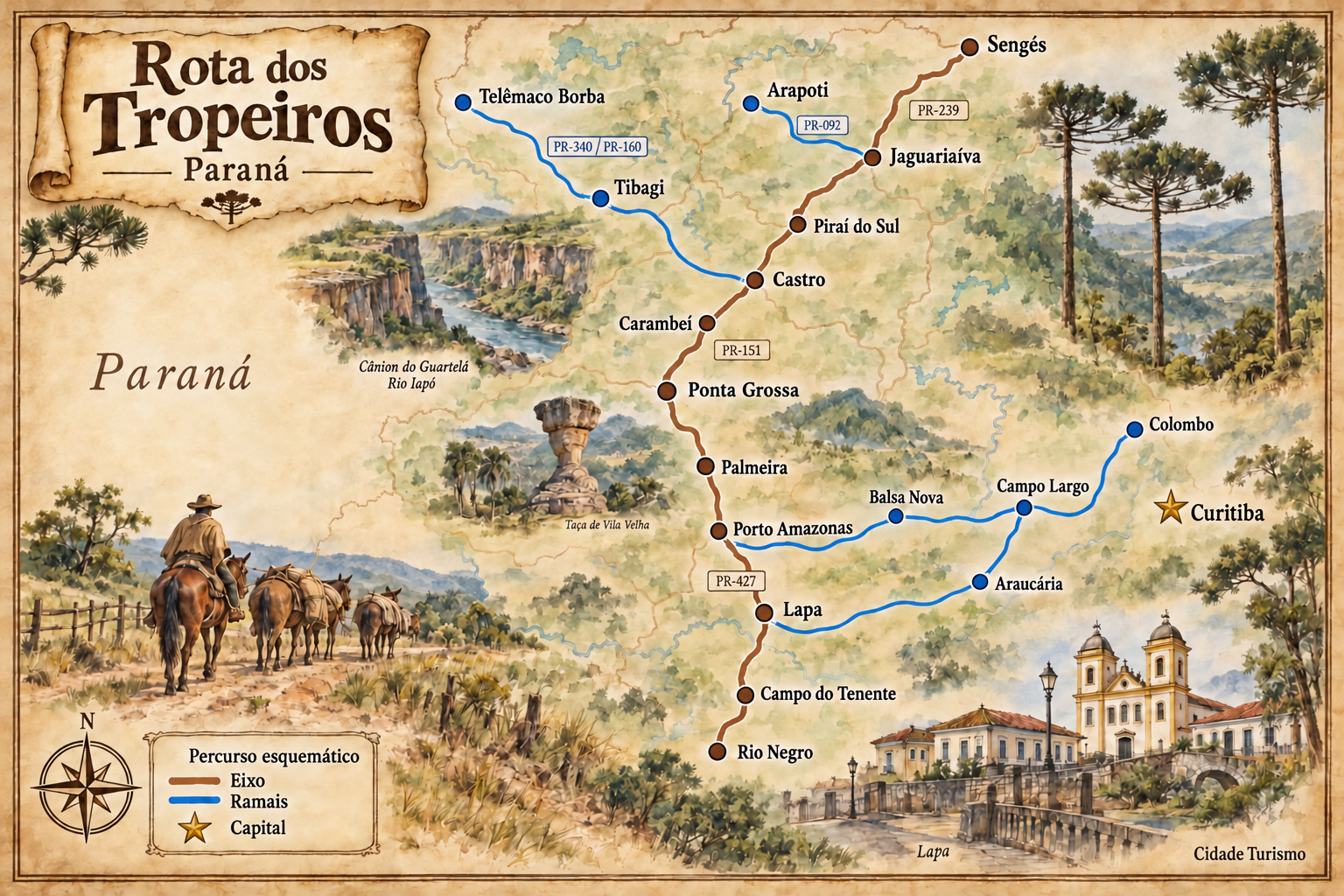
Castro developed as a stopping point along the Rio Iapó on the troop routes. The Museu do Tropeiro preserves objects and references from that period, while the Colônia Castrolanda adds the memory of Dutch immigration, with a mill and a historical museum. The city connects the PR-151 axis to the PR-340 branch toward Tibagi.
35 places to stay in Castro.
11 places to eat in Castro.
4 lugares no mapa: onde ficar e onde comer, por bairro.
how to get there · how many days · itinerary · questions
Castro highlights and titles
Brazilian routes
Historic routes, museums and landscapes between southern Paraná, the Curitiba Metropolitan Region and the Campos Gerais.
The local experience
Castro museum dedicated to the troop routes, travel objects, and the formation of the Campos Gerais.
Cultural complex of the Colônia Castrolanda with a mill and memory spaces of Dutch immigration.
A farmhouse from the drovers’ era about 10 km from downtown Castro, considered a landmark in the settlement of the Campos Gerais. The manor house, state‑protected, houses an exhibition about the history of the farm and the region.
Before you go
Castro – PR Destination Campos Gerais
Use PR-151 from Carambeí or Piraí do Sul. Castro's center and Castrolanda have different accesses; PR-340 begins the branch to Tibagi.
Two days accommodate the Museu do Tropeiro, the urban core, and the Centro Cultural Castrolanda, with time for travel.
In Castro, June to August is usually colder and less rainy than December to February. April and September are alternatives to combine museums and the outdoor areas of the colonies.
The seasons shown are the most usual ones; nature doesn't always follow the calendar.
The urban visit may include walking. Castrolanda is located in its own locality and requires a car or arranged transport for the trip and return.
Suggested itinerary
Built with the places on this page. No rush: it's paced so you have time to see them.
Day 1
Devote this stage to the collection related to tropeiro history on display and the central spaces linked to the Rio Iapó.
Day 2
Arrange the visit to the mill and the historical museum at the cultural complex's reception.
Check before you go. Opening hours and days change, and places may close for renovations, holidays or events. This itinerary is a suggestion from Cidade Turismo, not a commitment: plan yours by checking directly with each place you intend to visit.
Before you go
The colony belongs to Castro. The mill and the historical museum are part of its Centro Cultural and have their own reception.
The Museu do Tropeiro and the Centro Cultural Castrolanda are distinct spaces, with different themes and accesses.
PR-340 leads to the Tibagi branch. The park requires a specific detour and organizing the visit with its managers.
The complex can be viewed from authorized public spaces. Entry into the museum areas must be confirmed with the reception.