São Sebastião

São Paulo

São Sebastião

In the destination São Paulo North Coast.

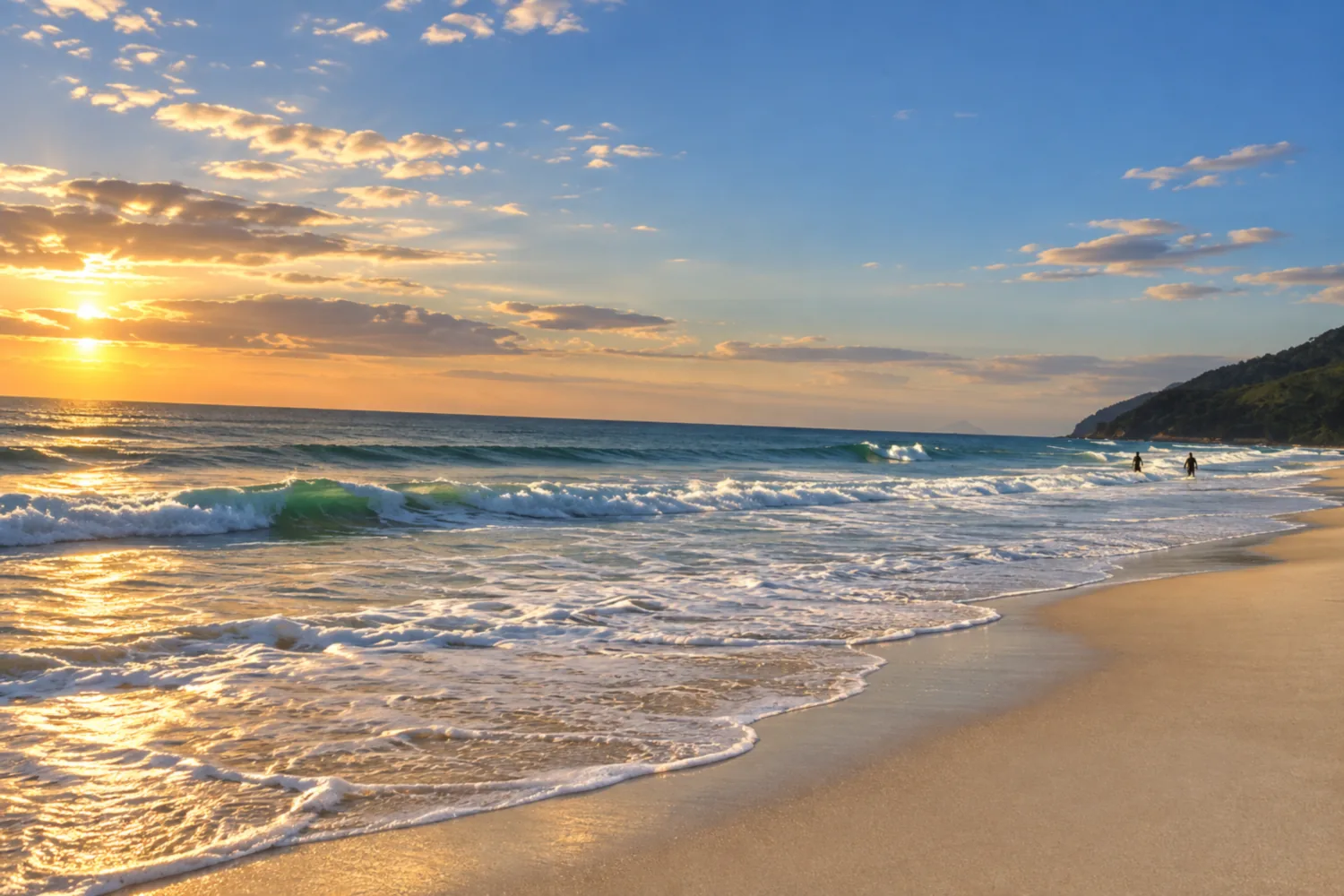
Illustrative images. The pictures in this guide are illustrations based on the real place, not photographs, and may differ from it.

The city

What to expect from São Sebastião.

São Sebastião has a historic center facing the channel and beaches spread along the coast. You can combine town walks with sea outings and caiçara (traditional coastal) culture.

São Sebastião is on the mainland, on the northern coast of the state of São Paulo, opposite Ilhabela, from which it is separated by a narrow channel. It is a long municipality squeezed between the Serra do Mar and the ocean: more than 45 km of road separate the Center from the southernmost beaches on the border with Bertioga. About 70% of the territory lies within the Serra do Mar State Park.

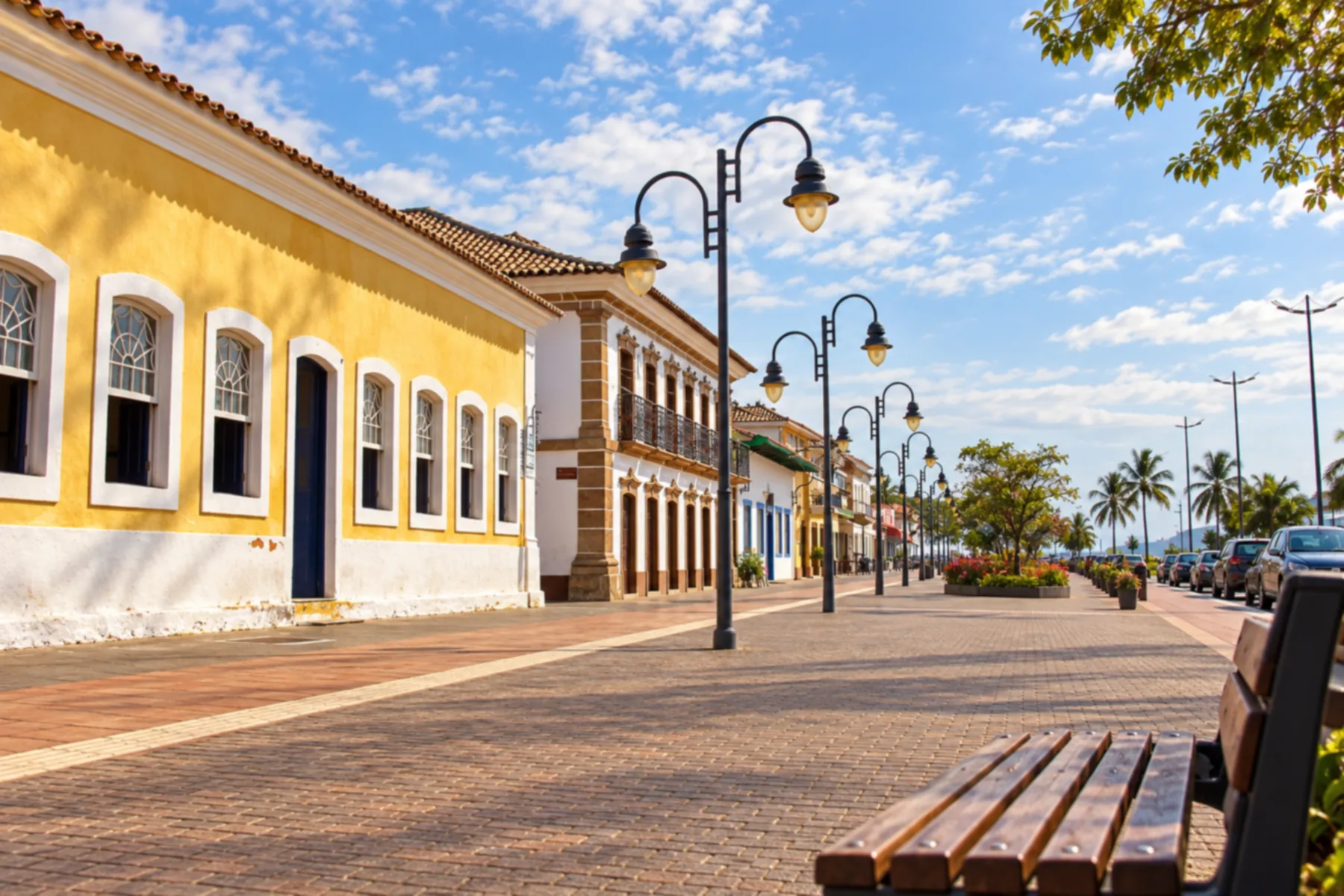
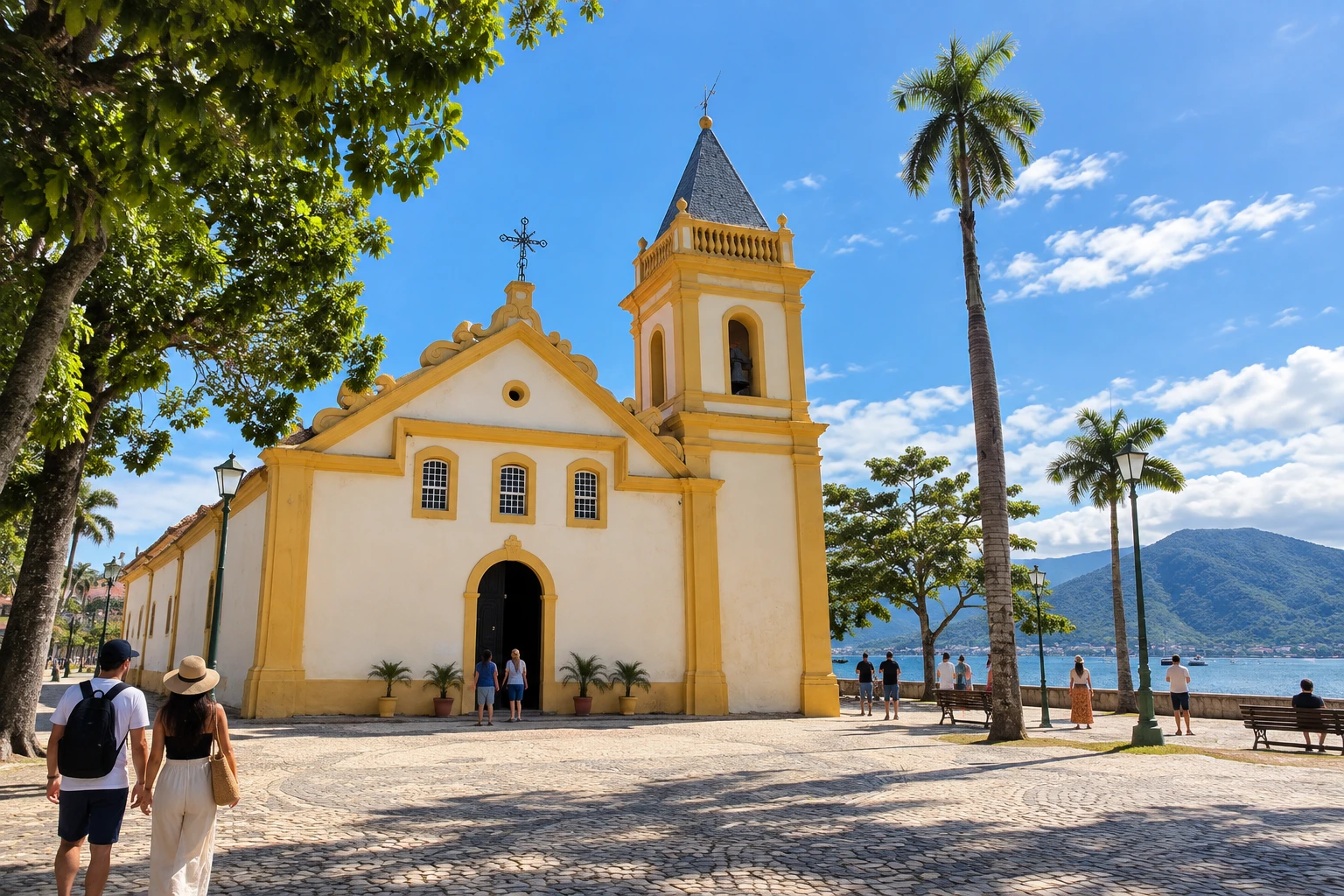
In practice there are three different areas. The Center is a historic port town: the village was founded on March 16, 1636, and the seven blocks of the old core, protected as state heritage, preserve colonial townhouses, the Mother Church and the chapel that houses the Museum of Sacred Art. The waterfront, Rua da Praia, is a promenade, square and event stage more than it is a bathing beach. The ferry to Ilhabela leaves from the Center.

North of the Center, toward Caraguatatuba, the beaches face the channel: shallow, calm water, fishing boats, sailing and kitesurfing, with Ilhabela always in view. There is São Francisco, the oldest neighborhood, with a 17th-century convent.

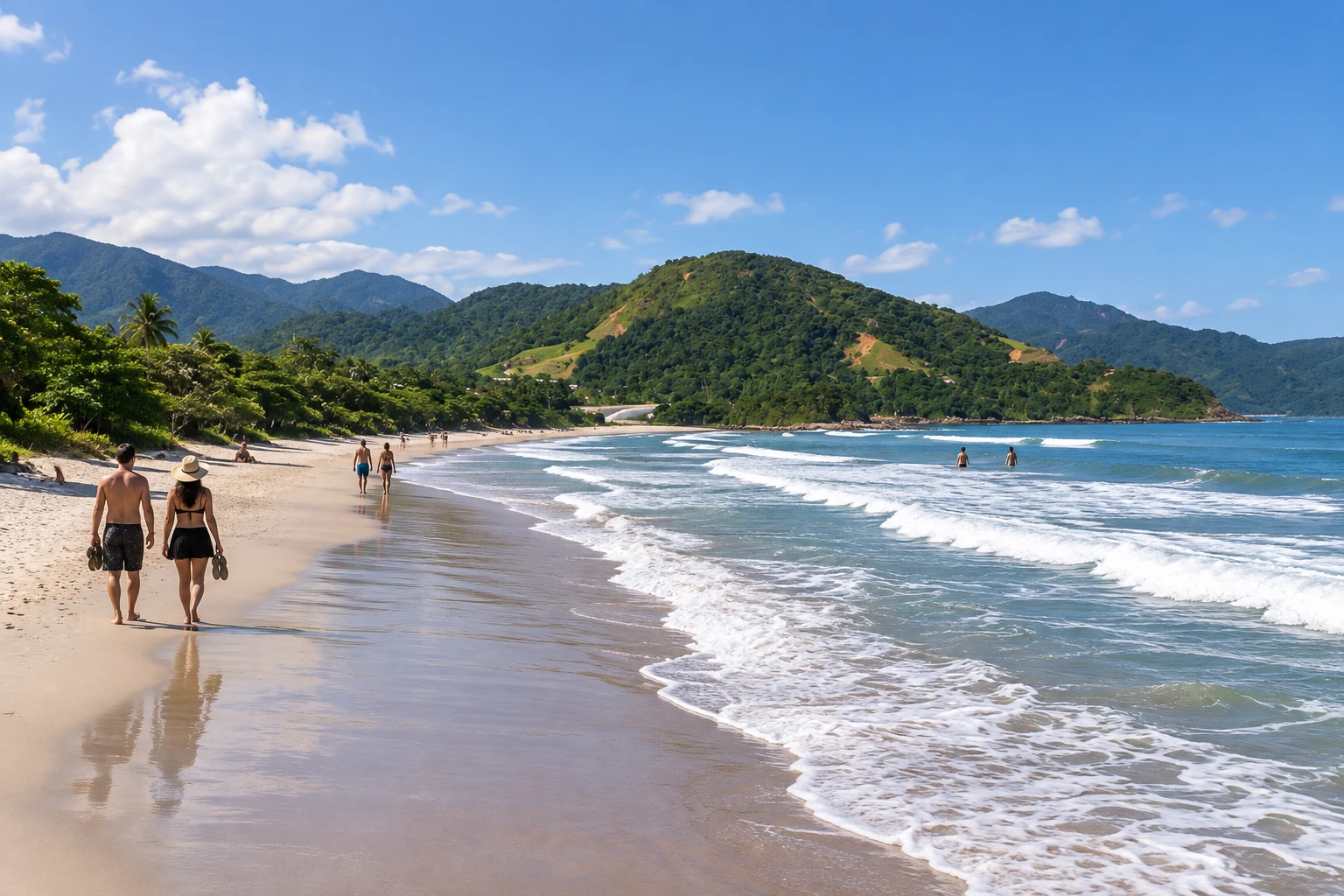
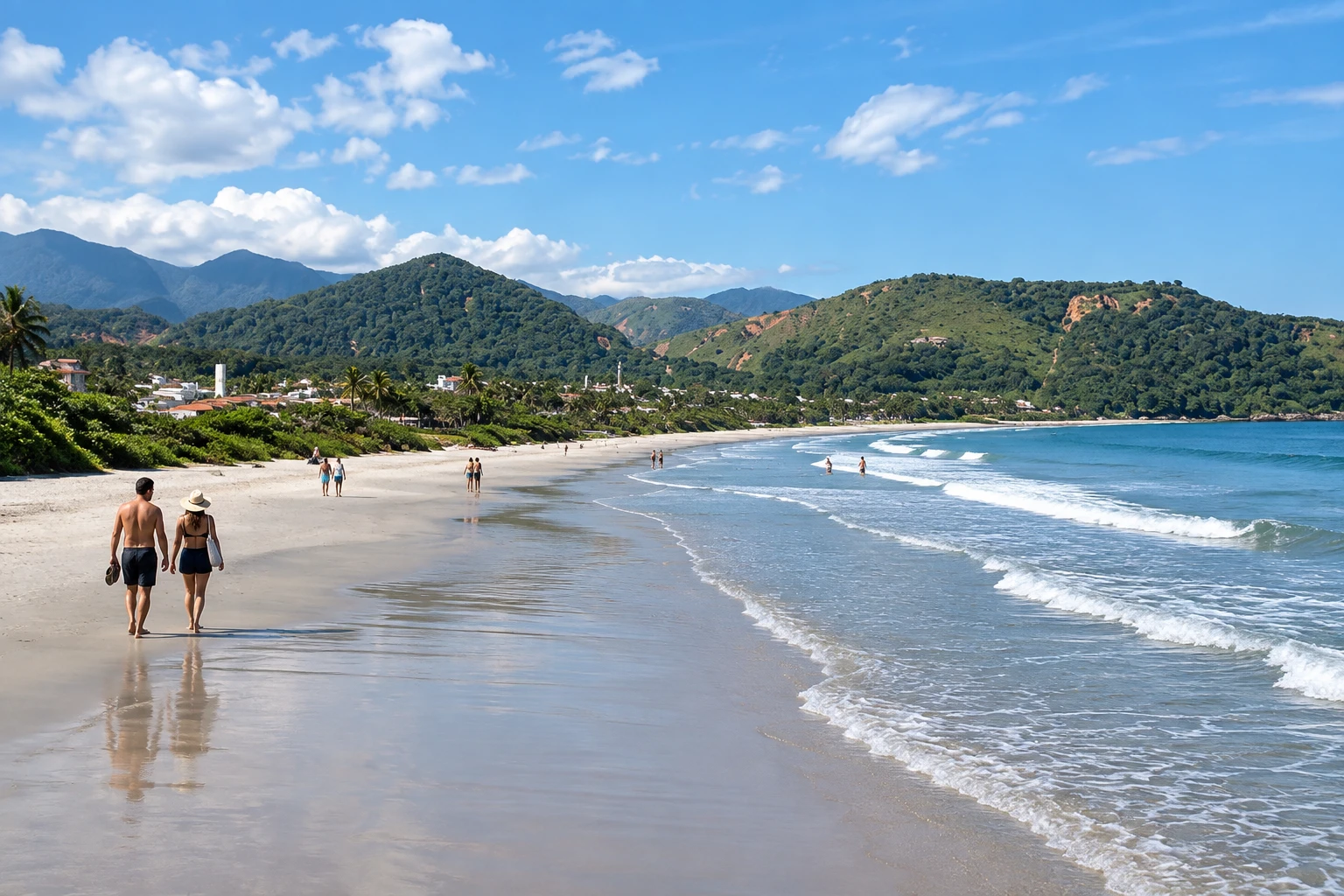
South of the Center begins the South Coast, the stretch that made the town famous. The Rio-Santos winds up and down hills covered in Atlantic Forest and passes more than twenty beaches. The first ones, Barequeçaba and Guaecá, still face Ilhabela. Then come small coves with clear water, such as Toque-Toque Grande, Calhetas, Toque-Toque Pequeno, Santiago and Paúba. Maresias, with 5 km of sand, is the surf and nightlife beach. Boiçucanga has shops and a sunset over the sea. Camburi and Camburizinho combine waves, restaurants and pousadas; Baleia, Barra do Sahy and Juquehy have calmer seas and a family vibe; Barra do Una is the boating point at a river mouth. Offshore lie islands visited by motorboat and, farther out, the Alcatrazes archipelago.

The climate is hot and humid. From December to March average temperatures range between 22 °C and 27 °C and it rains heavily, almost always in afternoon showers; January can exceed 280 mm. From June to August it rains less than 100 mm per month, averages range between 17 °C and 22 °C and the sea cools and gets waves. Between May and August humpback whales pass through the channel and the sea in front of the town.

The Center’s calendar starts in January with the patron saint festival and includes the Caiçara Gastronomic Festival in March, during the town’s anniversary week.

To choose where to stay, think about what you want to do: the Center suits those going to Ilhabela or seeking history and services; the South Coast suits those who want beaches. Two days cover part of the South Coast; with three or four days you can add the Center, a trail and a boat trip.

Share: WhatsApp

Where to stay

143 places to stay in São Sebastião.

Where to eat

18 places to eat in São Sebastião.

Mapa de São Sebastião

53 lugares no mapa: onde ficar e onde comer, por bairro.

São Sebastião highlights and titles

Seaside resort town

The local experience

Things to do in São Sebastião

São Sebastião · SP · historic center

Centro Histórico e Igreja Matriz

Listed as a heritage site by Condephaat in 1969, the seven-block area preserves colonial townhouses built with stone and mortar made from crushed shells. The Igreja Matriz, begun in 1603, stands on the main square, and the Convento de Nossa Senhora do Amparo is nearby.

Explore Centro Histórico e Igreja Matriz

São Sebastião · SP · beach

Praia de Camburi

With about 900 meters of white sand, it is separated from neighboring Camburizinho by the river that flows into the sea. The right end has the best waves for surfing, and the shore has restaurants and shops surrounded by Atlantic Forest.

Explore Praia de Camburi

São Sebastião · SP · beach

Praia da Baleia

With about 2.5 km of firm sand, it has a stretch with steady waves and another with shallow, calm water. Offshore is the Ilha dos Gatos, a rock formation whose profile looks like a whale, and behind the beach rise mountains covered in Atlantic Forest.

Explore Praia da Baleia

São Sebastião · SP · beach

Praia de Maresias

One of the most famous beaches on the São Paulo coast, with strong waves that have produced surf champions and nightlife known across the state. The wide strip of sand stretches for kilometers.

Explore Praia de Maresias

See 5 more places in São Sebastião

To choose before you go

Tours in São Sebastião

Where each tour starts, how long it takes, how it is done, what is included and the price range.

Historic Center and Rua da Praia on foot

From Praça Major João Fernandes, Historic Center on foot, on your own 2 to 3 hours morning or late afternoon easy

The Historic Center of São Sebastião fits into seven blocks along the canal. The ensemble has been state-protected since 1969 and preserves colonial two‑story houses built with stone and mortar made from ground shells. Start at Praça Major João Fernandes, where the Mother Church is located. Construction began in 1603 and the building underwent renovations over the centuries; it remains in use, so visits should respect religious services. A few steps away, on Rua Sebastião Silvestre Neves, the Chapel of São Gonçalo houses the Museum of Sacred Art, with images and pieces that tell the village’s religious history. Head toward the sea. On the waterfront avenue is Casa Esperança, a listed two‑story house also called the House with a Painted Ceiling, one of the landmarks of the Center’s architecture; the façade is worth stopping for, and access to the interior should be confirmed in advance. Nearby, Casa Caiçara hosts exhibitions, music, storytelling and traditional cooking activities. The walk ends at Rua da Praia, the boardwalk that runs along the small stretch of sand in the Center. It has a bike lane, a plaza, a playground, courts, a skate park and an open‑air theater, and it’s where Carnival, food festivals and concerts take place. Swimming is not recommended there because of the port and boat traffic. The meeting point is the breakwater: fishermen, boatmen offering canal tours and, beyond them, the mountains of Ilhabela and the coming and going of the ferries. At night, restaurants and the lighting make the waterfront the city’s busiest area.

Stops: Praça Major João Fernandes, Mother Church of São Sebastião, Museum of Sacred Art (Chapel of São Gonçalo), Casa Esperança, Casa Caiçara, Rua da Praia, Breakwater.

Includes: There is no charge to walk the streets, squares and the promenade. Museums and historic houses have specific opening days and hours; check in advance and see if there is an entrance fee.

Tip: Go at late afternoon, watch the day end from the breakwater with Ilhabela ahead, and stay for dinner. For guided visits, consult the tourism office.

Best time: All year round. In January there is the patron saint festival and in March the Caiçara Gastronomic Festival, both on Rua da Praia.

North Coast: São Francisco, Cigarras and the channel beaches

From São Sebastião downtown, via the Rio-Santos heading toward Caraguatatuba car or taxi half a day morning or afternoon easy

From the downtown to the border with Caraguatatuba, the Rio-Santos runs alongside the channel for about 12 km. The beaches on this side are shallow, with no waves, and always face Ilhabela. They are more for strolling, sports and boating than for open-sea swimming. The first one, 1 km from downtown, is Porto Grande, with white sand and calm water, a traditional sailing spot with a square dedicated to the sport. At Pontal da Cruz, a stone cross on the rocks gives the place its name and a caiçara legend; the pier is one of the departure points for schooners and tour boats. Arrastão, 3.5 km away, has a wide stretch of sand, beach tennis courts, bars and a marina, and hosts one of the New Year’s Eve fireworks displays. São Francisco, 4 km away, is the municipality’s oldest neighborhood. The beach is shaded by large trees, the sea is shallow and the fishermen’s boats anchor offshore; late morning it’s common to buy fish directly from those who caught it. Less than 500 meters from the sand is the Convento de Nossa Senhora do Amparo, built by the Franciscans between 1664 and 1668, with walls one meter thick. The neighborhood was also a center of clay-pot makers. Just after that, the wooden Píer da Figueira, built by the fishermen, serves fish landings, supplies for the islands and departures for boats. As Cigarras, at 9 km, is the bathing beach on this side: light sand, calm and clean water, trees along the whole shoreline, kiosks and a boardwalk. Enseada, the last beach, is so shallow that the water stays at knee depth for dozens of meters; when windy, it becomes the city’s main kitesurfing and windsurfing spot.

Stops: Porto Grande Beach, Pontal da Cruz Beach, Arrastão Beach, São Francisco Beach, Convento de Nossa Senhora do Amparo, Píer da Figueira, Praia das Cigarras, Enseada Beach.

Includes: Access to the beaches is free. The convent is an active religious site: confirm whether visits are allowed. Purchases at kiosks and paid parking, when charged, are each visitor’s responsibility.

Tip: Go to São Francisco in the morning to see the fishermen at work, and finish at Cigarras. In the neighborhoods’ narrow streets, park without blocking residents’ access.

Best time: All year; because the sea is sheltered by the channel, it’s a good choice when open‑ocean beaches have strong waves.

Barequeçaba, Pitangueiras and Guaecá

From São Sebastião downtown, via Rio-Santos heading south car half a day to one day morning and afternoon easy

The first beaches of the South Coast are a few minutes from downtown and still face Ilhabela. They’re the choice for people staying in town who don’t want to travel far. Pitangueiras, about 4 km away, is a small beach of roughly 250 meters, narrow and surrounded by forest, with shade most of the day and calm, clear water. Despite a pool-like look, it deepens quickly a few steps from shore. The rocky points at both ends are good for snorkeling. The entrance is on a sharp highway curve: slow down early. A dirt road leads to a small parking area of around 15 spaces. Barequeçaba, 6–7 km from downtown, is a cove just over 1 km long, with dark firm sand and shallow water that deepens gradually. It’s a family beach for children, walking and sand sports, with kiosks, inns, restaurants and a market a few meters away. Facing the channel, it has views of Ilhabela, especially at sunset, and on windy days gathers sailors. Guaecá follows: more than 2 km of light, soft sand between two forested hills. The sea alternates calm days, good for swimming, with days of waves and currents that attract surfers. Houses are set back and the shoreline seems almost free of development. There are few kiosks, open in season. Morro das Sete Voltas, at one end, is popular at dusk and with free-flight enthusiasts. From the southern corner trails lead to deserted little beaches and to Praia Brava de Guaecá, of medium difficulty, with many sandflies.

Stops: Pitangueiras Beach, Barequeçaba Beach, Guaecá Beach, Morro das Sete Voltas.

Includes: Beach access is free. Chairs, umbrellas and purchases at kiosks are each person’s responsibility. Parking spots in Guaecá and Pitangueiras are few.

Tip: In Guaecá, on days with waves, watch for rip currents that pull seaward. Bring insect repellent for the trails.

Best time: Sunny days. Barequeçaba is suitable year-round; Guaecá is better for swimming on low-tide days.

Toque-Toque Grande, Calhetas and Toque-Toque Pequeno

From Rio-Santos, between km 141 and 151 car; short trail to Calhetas one day morning and afternoon easy; steep descent at Calhetas

Between Guaecá and Maresias, the coast breaks into small coves with very clear water and villages that grew from fishing communities. This stretch is much sought after for snorkeling. Toque-Toque Grande, 16 or 17 km from the town center, despite its name has only about 600 meters of sand. The shoreline drops steeply, but it usually has few waves and transparent water. Streams run down from the hills at both ends, a dirt road runs behind the beach, and a chapel preserves the community’s memory. There is no row of kiosks. Calhetas, about 18 km from the town center, is a small peninsula with two beaches facing opposite directions and a grassy hilltop with sea views on both sides. You can reach it only on foot, through private property, with a descent of 10 to 15 minutes; the return is uphill. The beach on the right is for swimming; the one on the left, rockier and calmer, is good for floating and watching fish. There is no kiosk: bring water and take your trash with you. Toque-Toque Pequeno, 22 or 23 km away, is an arc of roughly 1 km of light sand, shaded by large trees. In front lies Ilha do Aparas, which resembles a turtle emerging from the water; on clear days you can see Alcatrazes and Ilha Montão de Trigo in the distance. Fishing canoes still arrive early with the day’s catch, and the rocky points are popular for free diving. Continuing south are Santiago, a rustic cove with camping on the sand, a freshwater spout and natural pools in the rocks, and Paúba, 450 meters long, with a river at the left corner and a village feel. On days with strong swell, Paúba attracts experienced surfers.

Stops: Toque-Toque Grande Beach, Calhetas Beach, Toque-Toque Pequeno Beach, Santiago Beach, Paúba Beach.

Includes: Access to the beaches is free; in Calhetas the passage goes through private land. Food and drinks are paid by each visitor.

Tip: Arrive early: parking spots are often few. Almost all have a steep drop-off near the water; watch children. Bring a snorkeling mask and sturdy shoes for Calhetas.

Best time: Days with calm seas and some days without rain, when the water is clearest.

Maresias: the beach, Canto do Moreira and viewpoint

From Maresias, on Rio-Santos on foot along the beach and through the neighborhood one day; overnight, for those who want whole day easy

Maresias is the best-known beach of São Sebastião: about 5 km of white sand between Paúba and Boiçucanga, with the highway running parallel and the mountain range covered in forest just behind. The sea drops steeply and has strong waves, and that is what made the place famous. Canto do Moreira, on the right tip, is the classic surf spot, host to national and international competitions; there are also schools that give lessons and rent boards. In other stretches, on days of lower seas, families go for a swim, always paying attention to the depth. On the left tip, the Maresias River reaches the sea and forms a freshwater area surrounded by restinga vegetation. The infrastructure is the largest on the South Coast: kiosks, beach clubs, bars on the sand, restaurants, hotels, guesthouses and hostels. Praça do Surf brings together a skate park, playground, craft fair and the tourist information center. Beco da Mulher Maravilha, covered in graffiti, became a street art gallery. Even with so much activity, buildings are low-rise. At night, Maresias is the address for the northern coast’s nightclubs, with big parties in summer and live music in bars year-round. To see the beach from above, the Mirante Maresias-Paúba trail, inside the state park, climbs the hill that separates the two beaches and offers views of both sides. Check trail conditions beforehand.

Stops: Praia de Maresias, Canto do Moreira, Rio Maresias, Praça do Surf, Beco da Mulher Maravilha, Trilha do Mirante Maresias-Paúba.

Includes: Access to the beach is free. Surf lessons, board rentals, chairs, food and entry to nightclubs are paid separately; check each provider’s price list.

Tip: On steep-drop beaches the bottom falls away right at the shore: take care when entering the sea. If you seek quiet, stay away from the town center or choose weekdays. In summer, book accommodation in advance.

Best time: For beachgoing, December to March; for surfing, autumn and winter usually have the most consistent waves.

Boiçucanga and the Praia Brava Trail

From Estrada da Praia Brava, km 160 of the Rio-Santos highway on foot; you can also reach it by boat from Boiçucanga 1 hour to 1h30 of walking each way morning, returning in the afternoon moderate

Boiçucanga, about 36 km from the Center and 10 km from Maresias, is the commercial and service neighborhood of the South Coast. The beach, about 1 km long, is horseshoe-shaped and faces west, so the sun sets over the sea. It is a steep beach, with waves in the center and on the right side; on the left, where the Boiçucanga River flows, the sea is calmer and fishing boats and tour boats to the islands are anchored. Between Boiçucanga and Maresias lies Praia Brava, one of the few deserted beaches on this coast, inside the state park. There is no road. The trail starts on Estrada da Praia Brava, which branches off at km 160 of the highway, and is 2 to 3 km long, with steep climbs and descents, earthen steps and sections that become slippery after rain. Along the way there are natural viewpoints. Down below, the beach is small, with light sand, blue-green water and strong waves, surrounded by forested slopes. It is a surfers’ spot; for swimming, only for strong swimmers, paying attention to currents. At the right end, a 3 to 4 meter waterfall drops from the slope and disappears into the sand, serving as a shower after the hike. There are no facilities on the beach: bring what you will consume and carry your trash out. When the sea is calm, boatmen from Boiçucanga make the trip.

Stops: Boiçucanga Beach, Praia Brava de Boiçucanga, Parque Estadual da Serra do Mar.

Includes: There is no park or trail entrance fee, and the trail can be done without a guide. A guide, if desired, and boat rides are paid separately.

Tip: Go in sneakers, bring water and start early. Save the end of the day to watch the sunset on Boiçucanga’s sand.

Best time: Days without rain the day before, when the ground is firm. From May to September it rains less and the trail is cooler.

See 6 more tours

Camburi, Camburizinho and Praia da Baleia

From Estrada do Camburi, after Boiçucanga car; on foot between Camburi and Camburizinho one day morning and afternoon easy

After Boiçucanga, three neighboring beaches form a stretch of dense forest, with dirt streets and upscale restaurants. Camburi, 37 km from the Center, has about 900 meters of white sand and generally rough sea. It is a surf beach, especially in autumn and winter, when the right-hand point receives the most sought-after waves; there are schools and board rentals. It has a lifeguard station, restaurants, inns and markets. The Rio Camburi separates the beach from its neighbor, Camburizinho, and from time to time changes its course, emptying sometimes to one side, sometimes to the other. You can cross between them through the river water or via the road bridge. Camburizinho is a small cove with loose white sand and calmer water, preferred by families, although it becomes deep quickly. There is no boardwalk: the small center, with dirt streets, gathers restaurants, cafés, ice cream shops and stores that, on weekends, also open at night. Praia da Baleia, 42 km from the Center, is different: 2.5 km of firm sand, good for walking, running and playing ball, with a section of waves and another of shallow, calm water. The forest reaches the shoreline, in one of the largest continuous coastal forest areas on the São Paulo coast. In front lies Ilha dos Gatos, whose profile resembles a whale. A residents’ association takes care of cleanliness, and the beach has amphibious chairs for people with disabilities and elderly visitors. The kiosks are concentrated; the rest of the sand is quiet.

Stops: Camburi Beach, Rio Camburi, Camburizinho Beach, Praia da Baleia, Ilha dos Gatos.

Includes: Beach access is free. Surf lessons, board and SUP rentals, chairs and food/beverage are paid separately. Boats to the islands depart from Camburi and are hired on the beach.

Tip: Park on the inner streets and walk to the sand. At the river mouth, check the signs about water quality before entering. Bring insect repellent.

Best time: For swimming, choose days with low tide, at Baleia and Camburizinho; for surfing in Camburi, autumn and winter.

Barra do Sahy, Juquehy and Barra do Una

From Barra do Sahy, about 45 km from the Center car, from one beach to another one day morning and afternoon easy

At the southern end of the municipality, the beaches are wider and calmer, and the rivers gain importance. This stretch is preferred by those traveling with children. Barra do Sahy is an old fishing village shaped like a horseshoe, with almond trees that provide shade and generally calm, clear sea. The Sahy River flows into the sea there, and a blue-painted wooden suspension bridge crosses it, leading to the Capela de Santana; the residents rebuilt the bridge after the 2023 floods. Natural tide pools form at the right corner. Beco do Sahy has become an open-air gallery, featuring works by more than twenty local artists. Boatmen take visitors to the islands in front; the nearest, As Ilhas, is 1.5 km away. Shortly after, Praia Preta is a 90-meter cove with dark, firm sand and still water, with no services; it is reached by a narrow lane from the highway. Juquehy has 3.5 km of light, firm sand and generally calm sea. It is one of the town’s most complete beaches, with restaurants, small shopping areas and pousadas. At the left end, the Juquehy River meets the sea, and many people gather there to watch the sunset. Barra do Una is the southern nautical center. The Una River runs alongside the sand before flowing out to sea, so you can choose between the still freshwater of the river and the sea. Boats to the islands depart from the marinas, and kayaks and paddleboards are used on the river. Further on are Engenho, 500 meters with calm water; Juréia, a steep beach with a dark-water lagoon at the left corner; and Boracéia, 5 km of compact sand and shallow sea up to the border with Bertioga, near an indigenous village.

Stops: Barra do Sahy Beach, Suspension bridge and Capela de Santana, Beco do Sahy, Praia Preta, Juquehy Beach, Barra do Una Beach, Engenho Beach, Jureia Beach, Boracéia Beach.

Includes: Access to the beaches is free. Boat tours, kayak and paddleboard rentals, chairs and food and drink are charged separately; check the price list of the providers.

Tip: Choose one beach as a base and visit the neighbors, because in summer traffic between them is slow. In Sahy, see the bridge and the alley before lunch, when there are fewer people.

Best time: Sunny days; outside school vacations and public holidays, some beach businesses are open only until late afternoon.

Coastal south islands by motorboat: As Ilhas, Gatos, Couves and Montão de Trigo

From Boiçucanga, Camburi, Barra do Sahy or Barra do Una motorboat or boat, shared or private half day; longer with Montão de Trigo morning or afternoon easy

Off the southern beaches, between Boiçucanga and Barra do Una, there is a cluster of islands close to the coast, inside the marine protected area of the northern coast. The motorboat tour among them is the most common sea activity on the Costa Sul. As Ilhas, despite the plural name, are a single island with two sandy beaches; they are 1.5 km from Barra do Sahy and are the most frequent swim stop. Ilha dos Gatos, opposite Praia da Baleia, is a rocky point over sand bottom, a diving spot when the sea is calm. Ilha das Couves has a sheltered stretch, the Portinho, with rocks and fish; it is the one in São Sebastião, not the island of the same name in Ubatuba. The longer version continues to Ilha Montão de Trigo, about 14 km from the coast. It is a mountain at sea, inhabited by caiçara families for over 200 years, with transparent water and submerged cliffs sought by divers; a trail leads to the summit. At the stops people swim and snorkel, and depending on the boat there may be kayaks and stand-up paddleboards. The local dive operators also offer introductory cylinder dives and outings for certified divers. Boats depart from the left corner of Boiçucanga, from Camburi, from Barra do Sahy and from the marinas of Barra do Una. The boarding point and the route vary with the company and the sea conditions of the day.

Stops: As Ilhas, Ilha dos Gatos, Ilha das Couves (São Sebastião), Ilha Montão de Trigo.

Includes: Usually includes the boat and the sailor. Food, drinks, diving equipment and transport to the boarding point are paid separately; check the current price list.

Tip: Bring a mask, water, sunscreen and a snack. Ask where the boarding point is and what happens if the sea prevents departure. When booking Ilha das Couves, confirm that it is the one in São Sebastião.

Best time: Days with calm sea and clear water; from March to May there is less traffic.

Whales and dolphins: wildlife-watching boat trip

From São Sebastião piers and marinas, depending on the operator boat, with a registered operator a few hours, depending on the operator easy

Every year humpback whales move up the Brazilian coast seeking warmer waters to breed, and the São Sebastião Channel and surrounding sea lie on their route. The city has a municipal observation program with registered operators and rules of conduct. Humpback passage in São Sebastião is concentrated between May and August; along the entire north coast the season can extend until November. The first animals may appear earlier, and counts vary from year to year. Besides whales, the coast hosts dolphins and other cetaceans. Trip times and durations vary by operator. When there is an encounter, humpbacks may show breaches and tail and flipper slaps. Whales and dolphins are wild animals: outings can return without any sightings, even in the middle of the season. The rule is to observe without interfering. Boats must follow approach rules, not chase the animals or alter their behavior. Prefer operators listed on the municipal tourism portal, which receive training. On land, Espaço Vida Marinha is an environmental education center open to the public, with dolphin skeletons, humpback vertebrae, photos of the channel’s fauna and information about the Alcatrazes archipelago. It’s a good complement, or an alternative, on a rough-sea day.

Stops: São Sebastião Channel, Espaço Vida Marinha.

Includes: The tour is paid to the operator. Ask about the duration, group size, what is provided on board and the rescheduling rule if the sea prevents departure.

Tip: Bring a windbreaker, cap and sunscreen; if you get seasick, take precautions before boarding.

Best time: Humpback whale season: mainly from May to August.

Waterfalls and trails of the state park

From Boiçucanga, Sertão de Cambury or Barra do Una, depending on the trail on foot; some trails require an accredited guide varies depending on the trail chosen morning easy to moderate

The São Sebastião Nucleus of the Serra do Mar State Park, created in 1998, covers about 70% of the municipality. In addition to the mountain range, it protects rocky shores and peninsulas between Boiçucanga and Calhetas. The trails open to the public pass by rivers, waterfalls and ruins. Ribeirão de Itu, in Boiçucanga: the walk follows the river through the forest and passes falls known as Hidromassagem, Pedra Lisa and Samambaiaçu. The climb up to Samambaiaçu is the most demanding part, steep and uneven. Rio das Pedras, in Sertão de Cambury: an easy trail with dense vegetation and waterfalls, recommended for those who want a river bath without a long walk. Trilha dos Poções, in Barra do Una: rivers, falls and natural pools, on a route of moderate difficulty. It can only be done with an accredited guide, who must be booked directly. São Francisco Archaeological Site, on the North Coast: in the middle of the forest, the ruins of an old slave-run farm, a chapel and other structures help explain the region’s settlement and the work of enslaved people. The trail is moderate and requires a monitor or accredited guide, hired by the visitor. Do not climb on the ruins or remove anything. The park operates from Tuesday to Sunday and requires booking. The headquarters are in Juquehy. Bringing pets, alcoholic beverages or making fires is not allowed.

Stops: Ribeirão de Itu (Hidromassagem, Pedra Lisa and Samambaiaçu waterfalls), Rio das Pedras Waterfall, Trilha dos Poções, São Francisco Archaeological Site.

Includes: There is no park entrance fee. Guides and monitors, mandatory on some trails, are paid separately; agree on the price when you book.

Tip: Confirm with the park before you go whether the trail is open. Wear closed shoes, bring repellent and swimwear. In rain, rivers rise quickly: postpone the outing.

Best time: Days without heavy rain. From May to September there is less rain; in summer the waterfalls usually have more water.

Alcatrazes: boat visit and diving

From Marinas in São Sebastião or Barra do Una boat operated by a company authorized by the federal environmental agency full day morning and afternoon easy; diving according to level

The Alcatrazes archipelago lies offshore, about 35 km from the coast, and can be seen from several southern beaches on clear days. It is a federal protected area, the Alcatrazes Archipelago Wildlife Refuge, and belongs to the municipality of São Sebastião. Visits are by boat: the tour is done from the vessel and, for divers, at regulated sites. Only companies and guides authorized by the managing agency may take visitors; being registered on the city tourism portal is not enough, so request the specific authorization before paying. The archipelago combines open-sea island scenery with abundant marine life. Underwater you’ll find fish, octopuses, rays and turtles; during the crossing dolphins may accompany the boat. No species is guaranteed to appear. There are more than one type of visit, each with its own requirements, and the itinerary is adjusted to the group’s experience and the day’s sea conditions. The crossing is long and in open sea. The managing agency recommends November to May as the period that usually offers better navigation and visibility. Departures leave from the marinas in Centro and Barra do Una and are canceled or rescheduled when sea conditions are unsafe.

Stops: Alcatrazes Archipelago Wildlife Refuge.

Includes: The tour is paid to the company. Ask what is included: equipment, dive guide, onboard snack and any fees. Check the current price list.

Tip: Book in advance and have an alternative date. Be honest about your dive level. If you get seasick, take precautions: the crossing is long.

Best time: November to May, generally the most favorable period for sea conditions and visibility.

Day by day

1, 2 and 3-day itinerary in São Sebastião

Suggestions to plan the trip. Change the order of the days according to the weather and tour availability.

1 day · São Sebastião in 1 day: a South Coast beach and the Historic Center

For those passing through Ilhabela or staying in another town on the northern coast · Based in day trip from the town center
  1. Day 1 · Toque-Toque in the morning, Downtown in the afternoon

    Leave Downtown early on the Rio-Santos heading south. In about 20 km you’ll find Toque-Toque Grande, Calhetas and Toque-Toque Pequeno; choose one and spend the morning there, with a snorkel. Those who prefer shallow sea for children should go earlier to Barequeçaba. Have lunch on the beach and return to Downtown in the midafternoon. Walk through the historic blocks: Mother Church, Museum of Sacred Art and Casa Esperança. If there’s time, go to São Francisco, 4 km away, to see the 17th-century convent and the fishermen’s beach. Finish on Rua da Praia. From the breakwater you can see Ilhabela and the ferries, and the waterfront restaurants open for dinner. Maresias and the beaches farther south are much farther away: leave them for a trip with an overnight stay.

2 days · São Sebastião in 2 days: Maresias and the south beaches
For beach weekend, on a first visit · Based in Maresias, Boiçucanga or Camburi
  1. Day 1 · Maresias and Paúba

    Spend the morning in Maresias. Surfers head to Canto do Moreira; those who just want the beach pick a calmer stretch, and children enjoy the freshwater of the river at the other end. After lunch, go to Paúba next door for a quieter afternoon of river and sea. If you feel like it, climb the trail to the viewpoint between the two beaches. At night, Maresias’ small center has restaurants and bars; those who want can continue at the nightclubs.

  2. Day 2 · Camburi, Baleia and Barra do Sahy

    Head south. Stop in Camburi to see the river meeting the sea and the waves, and cross to Camburizinho. Then choose where to stay: Baleia, wide with firm sand, or Barra do Sahy, with the blue bridge, the artists’ lane and the natural pools on the right corner. If the sea is calm, swap the afternoon for a speedboat to As Ilhas, departing from Sahy. On the return, stop in Boiçucanga for the sunset over the sea. If you return to São Paulo on Sunday you can leave via the Rio-Santos toward Bertioga, avoiding the Center.

3 days · São Sebastião in 3 days: South Coast, trail and Downtown
For for those who want beach, forest and a bit of history · Based in South Coast (Maresias to Juquehy); the last night can be in the Center
  1. Day 1 · Juquehy, Barra do Una and Barra do Sahy

    Start at the far south. In Barra do Una rent a kayak or a stand-up paddleboard and go up a stretch of the river; then swim at Juquehy and have lunch there. In the afternoon go to Barra do Sahy: suspension bridge, Capela de Santana and Beco do Sahy. Stay until the end of the day on the sand, under the almond trees’ shade, or return to Juquehy to watch the sun set by the river.

  2. Day 2 · Praia Brava trail and Boiçucanga, or islands

    Early in the morning, do the Praia Brava trail from km 160: one to one and a half hours of walking to a beach with no road and a waterfall in the corner. Bring water and snacks and return before mid-afternoon. If you prefer the sea to the forest, swap the trail for the islands’ speedboat: As Ilhas, Ilha dos Gatos and Ilha das Couves, with stops for swimming. Between May and August, the alternative is a whale-watching tour. End the day in Boiçucanga, with the sunset over the sea, or in Maresias if you want nightlife.

  3. Day 3 · Toque-Toque, Calhetas and the Historic Center

    On the way to the Center, stop at Toque-Toque Pequeno or descend the Calhetas trail for a snorkeling bath. Have lunch in Toque-Toque Grande or Barequeçaba. Arrive at the Center in the mid-afternoon. Walk the seven historic blocks, visit the Museum of Sacred Art and Casa Caiçara and finish at the Rua da Praia breakwater. With a fourth day, cross the ferry on foot and spend the day in Ilhabela, or do one of the state park’s waterfall trails, like the Ribeirão de Itu trail.

Best time to go

When to go: São Sebastião month by month

The seasons shown are the most usual ones; nature doesn't always follow the calendar.

January High rain

Feast of Saint Sebastian on Rua da Praia · Folia de Reis · High season

Hot and very rainy: average temperatures between 23 °C and 26 °C and the highest rainfall of the year, above 280 mm, almost always in afternoon downpours. This is the peak season, with Brazilian school holidays: crowded beaches, slow traffic on Rio–Santos and lines at the ferry. In the town center, the patron saint’s festival fills Rua da Praia, and Morro do Abrigo keeps the Folia de Reis. Book everything in advance and go to the beach in the morning.

February High rain

Rua da Praia Carnival · Warm sea

It stays hot and humid, with averages between 23 °C and 27 °C and heavy showers alternating with sunny days. The sea is warm. During Carnival, Rua da Praia has programming in the town center and the South Coast fills up. On stormy days, do not enter trails or rivers and check road conditions before leaving.

March High rain

Caiçara Food Festival and city anniversary (16th)

Still warm, with averages between 23 °C and 26 °C, and rainy, with dry weeks in between. The sea remains warm and the beaches empty after Carnival. In the week of the 15th and 16th, Caiçara Day and the city anniversary, Rua da Praia hosts the Caiçara Food Festival, with local cuisine, music and cultural events.

April Some rain

Less rain · Autumn swells begin

Rainfall drops by almost half and temperatures fall, with averages between 21 °C and 25 °C. The sea is still pleasant for swimming. The season of stronger waves in Camburi begins, lasting into winter. It’s a good month for the Praia Brava and waterfall trails. During Brazil’s long holidays the South Coast fills up; otherwise it stays quiet.

May Low rain

Start of the whale season · Settled weather

More settled, mild weather, with averages between 19 °C and 23 °C. The passage of humpback whales through the channel and the sea in front of the town begins and concentrates until August; whale-watching tours start operating. Alcatrazes still usually has good sea conditions. Bring a light jacket for the evening and for the boat.

June Low rain

June festivals and Caiçara Arraiá · Whale season

Little rain, averages between 18 °C and 22 °C and many clear days. Communities hold June festivals with traditional foods and quadrilhas; locations and dates change each year. The whale season continues. The water cools and waves grow at exposed beaches, filling Maresias, Camburi and Paúba with surfers.

July Low rain

Winter holidays · Whale season

The coldest month, with averages between 17 °C and 21 °C, clear days and cool nights. Brazilian school holidays increase weekend crowds: book accommodation. The whale season continues. Cold fronts bring one or two days of rain and rough seas, and the ferry can stop with strong winds; afterwards the weather clears.

August Low rain

Driest month · End of the main whale season

The driest month, with rainfall under 80 mm, averages between 17 °C and 22 °C and cold sea. Beaches are empty outside weekends. It’s a good time for hiking: Praia Brava, the Maresias lookout and the waterfalls of Ribeirão de Itu. Whales still pass by. In low season, some beach shops close in the late afternoon.

September Some rain

Spring · Rain returns gradually

Rain returns in showers, still with many clear days, and averages range between 18 °C and 22 °C. It’s a low-traffic month. The sea begins to warm. Have a plan for rainy weather: Historic Center, Museum of Sacred Art, the sea museum at Praia Grande, and the Marine Life Space.

October Some rain

Few people · Sea warming

Passing showers and warm temperatures, averaging between 19 °C and 23 °C. Speedboat tours and hikes run as usual, with attention to days of rough seas. Visitor numbers are low, except for the Brazilian holiday on October 12, when the South Coast and the ferry get busy.

November High rain

Program on Rua da Praia · Alcatrazes season begins

Heat returns, with averages between 20 °C and 24 °C, and late-afternoon downpours become frequent. Rua da Praia has events this month, such as the Italian Festival and São Sebastião Preta; check the dates each year. The generally more favorable period for trips to Alcatrazes begins now and runs until May. Brazilian holidays in the month increase visitor numbers.

December High rain

Illuminated Christmas · New Year’s with fireworks

Summer begins: averages between 22 °C and 25 °C, warm sea and afternoon rain. The city puts up Christmas decorations from the end of November. The first half of December is still calm; from Christmas through New Year’s the beaches fill up, the Rio-Santos highway slows down and the ferry line can take hours. On New Year’s there are fireworks at Praia do Arrastão. Book well in advance.

Plan the journey

How to get there: São Sebastião

By plane: via Guarulhos or São José dos Campos

São Sebastião has no airport with commercial flights; the journey always ends by road.

For scheduled national and international flights, the usual option is São Paulo/Guarulhos International Airport (GRU), in Greater São Paulo, about three hours by road from the northern coast. São José dos Campos Airport (SJK), in the Paraíba Valley, is closer but has few flights and the schedule changes frequently: check before buying.

From the airports you continue by rental car, arranged transfer or bus. For the bus you must first go to the Tietê Bus Terminal in São Paulo, or to São José dos Campos bus station.

When booking a transfer, specify the exact beach: the Center and the southern beaches are tens of kilometers apart, and the shortest route to each may differ.

By bus: from São Paulo to the Center and the beaches

From São Paulo, buses to São Sebastião depart from the Tietê Bus Terminal, with departures in the morning, afternoon and evening. The trip to the Center takes about three and a half hours, depending on traffic on Rodovia dos Tamoios.

In the Center, buses stop near the ferry, which makes it easy for those continuing on foot to Ilhabela. There are also links with Caraguatatuba and, from there, to Ubatuba.

If you are going to the South Coast, check when buying which route the bus takes and where it stops. Maresias, Boiçucanga, Camburi and Juquehy are 25 to 50 km from the Center, too far to complete the trip by taxi. Ask the company whether there is a stop at your destination beach.

Fares vary with date, company and seat type, and rise on holidays. Buy in advance in summer and check the current fare table.

By car: via Tamoios or via the Rio-Santos

São Sebastião has two entrances, and the choice depends on where your accommodation is located.

For the Center, the North Coast and the first southern beaches, the route is Rodovia dos Tamoios (SP-099), which descends the mountain from São José dos Campos to Caraguatatuba; from there the access roads lead to São Sebastião. From São Paulo it’s about 200 km, around three hours without traffic.

For the far southern beaches, such as Juquehy, Barra do Una and Barra do Sahy, many people go down the Mogi-Bertioga Highway and follow the Rio-Santos (BR-101/SP-055) northbound, entering the municipality via Boracéia. Barra do Sahy is about two and a half hours from São Paulo.

The Rio-Santos crosses the city from end to end. On the South Coast the road has mountain sections and sharp curves; beaches are marked by the highway kilometer. In heavy rain, check road conditions before leaving.

There are tolls on the access highways, paid separately. The municipality approved a law creating an environmental preservation fee for nonresident vehicles; confirm before traveling whether the charge has started. Buses and tour vans require city authorization.

On holidays and summer weekends, leave at dawn or outside peak days.

Ferry to Ilhabela

The crossing to Ilhabela departs from downtown São Sebastião and crosses about 800 meters of channel, in roughly 20 minutes, not counting waiting time. It operates day and night, every day.

Pedestrians and cyclists cross without paying a fare. For this reason many people leave their car in a parking lot in São Sebastião and spend the day on the island, using buses and taxis on the other side. Long-distance buses stop near the terminal.

Vehicles pay a fare that varies by vehicle type and by day: it is higher on Saturdays, Sundays and holidays. In addition to the ferry, non-resident cars pay the island’s environmental fee in Ilhabela.

Boarding follows arrival order. The paid Hora Marcada service allows you to schedule a time and board without facing the line; on holidays, it’s the difference between crossing immediately and waiting hours. The operator’s website shows the wait time on each side.

The operation of coastal crossings has changed operator. The new operator reports accepting debit card, credit card, Pix and automatic billing via toll tag. Check with them, before traveling, the fare for your vehicle and the booking rules.

Strong wind and rough seas can suspend crossings for a few hours.

How to get around São Sebastião

Distances are the key point to understand. From the Historic Center, Cigarras is 9 km and Enseada is 12 km to the north. To the south: Barequeçaba is 6 or 7 km away, Toque-Toque Grande 16 or 17 km, Calhetas 18 km, Toque-Toque Pequeno 22 or 23 km, Santiago 24 km, Boiçucanga 36 km, Camburi 37 km, Baleia 42 km and Barra do Sahy about 45 km. Maresias is 10 km before Boiçucanga.

Car: it’s the most practical way to see more than one beach. The Rio-Santos is the only connecting road and it gets slow on holidays. In small beaches parking spaces are few, on narrow streets or in pullouts from the highway; arrive early and don’t stop on the shoulder.

Without a car: stay at a beach with shops within walking distance, such as Maresias, Boiçucanga, Camburi or Juquehy, or in the Center, and hire tours with operators who pick up customers. The city’s tourism portal lists taxis and agencies. Ask locally about public transport between beaches.

Boats: departures to the islands leave from Boiçucanga, Camburi, Barra do Sahy and Barra do Una; in the channel, at Pontal da Cruz, in São Francisco and at the downtown breakwater.

One-day coach tours are only received at Balneário dos Trabalhadores, at Praia Grande, 3 km from the Center, which has paid parking, changing rooms, kiosks and courts.


Your questions

Frequently asked questions about São Sebastião

How many days to stay in São Sebastião?

Two days are enough for part of the South Coast — for example Maresias one day and Camburi, Baleia and Barra do Sahy the next. With three days you can add the Historic Center and the coves of Toque-Toque and Calhetas. Four or five days allow adding a speedboat trip to the islands, a state-park hike and a day in Ilhabela, crossing the ferry on foot. In summer, allow one spare day for rain.

When is the best time to go to São Sebastião?

From April to June and in September and October there are fewer people, less traffic on the Rio-Santos and more stable weather than in summer. From June to August it rains little and skies are often clear, but the sea cools; it’s surf season and the whale migration. From December to March it’s hot, the sea is warm and there is heavy afternoon rain; this is also when beaches and the ferry are busiest.

Where to stay in São Sebastião: downtown or on the South Coast?

It depends on your plan. Downtown suits those going to Ilhabela, arriving by bus, or wanting history, restaurants and services; the nearby beaches face the channel and are more for strolling than swimming. On the South Coast, Maresias has the widest infrastructure and nightlife; Boiçucanga has shops and services; Camburi and Camburizinho offer restaurants and pousadas set in the forest; Juquehy, Baleia and Barra do Sahy have calmer seas and a family atmosphere. The coves of Toque-Toque and Paúba are for those seeking quiet.

Do you need a car in São Sebastião?

To visit several beaches, yes: they stretch over more than 50 km of the Rio-Santos, and a car gives freedom to stop where you want. Without a car, choose a beach with shops within walking distance, such as Maresias, Boiçucanga, Camburi or Juquehy, and do excursions with agencies that pick up guests. Downtown everything is walkable, including the ferry to Ilhabela. In high season, cars face heavy traffic and scarce parking at small beaches.

What is Maresias like?

It’s the town’s most famous beach: 5 km of white sand, a steep drop-off with strong waves, championship-level surfing at Canto do Moreira and the most well-known nightlife on the northern coast. It has the largest offer of hotels, restaurants and bars on the South Coast, and therefore is also the busiest in summer. Buildings are low and the mountain behind is covered in forest. If you want quiet at night, stay away from the town center or in neighboring beaches such as Paúba.

Which São Sebastião beaches have calm water suitable for children?

On the South Coast, Barequeçaba has shallow water that deepens slowly; Juquehy and Barra do Sahy usually have calm water; Engenho is like a swimming pool; and in Barra do Una children stay in the river. Baleia has a shallow stretch. In the canal, near the town center, São Francisco, Arrastão, Cigarras and Praia Preta do Norte have no surf. Be careful of steep-drop beaches that deepen close to the shore even with a calm sea: Pitangueiras, Camburizinho, Toque-Toque and Paúba.

Where can I surf in São Sebastião?

Maresias is the reference point, especially Canto do Moreira, on the right point, where competitions take place. Camburi has consistent waves on the right corner, stronger in autumn and winter. Paúba gets tube waves on days of strong swell, for experienced surfers. Praia Brava de Boiçucanga, reached by trail, and Juréia are also sought after. Guaecá and Santiago work on some days. In Maresias and Camburi there are schools offering lessons and board rentals.

Can you swim in the sea downtown São Sebastião?

At the Central beach, next to Rua da Praia, swimming is not recommended because of the proximity to the port and boat traffic. The nearest canal beaches suitable for swimming are Cigarras, 9 km to the north, and Barequeçaba, 6–7 km to the south, both shallow and calm. Pitangueiras, 4 km away, has clear water but drops off quickly. Always check signage about water quality.

How to get from São Sebastião to Ilhabela without a car?

The ferry leaves from downtown São Sebastião, runs day and night and takes about 20 minutes. Pedestrians and cyclists ride free and do not queue with cars. On the other side there are municipal buses and taxis that run around the island. Drivers can leave their cars in parking lots in São Sebastião. For a day trip you can visit a southern beach of the island and the historic center, the Vila. With strong wind the crossing can be suspended for a few hours.

When is whale season in São Sebastião?

Humpback whales pass through the São Sebastião Channel and the sea in front of the city mainly between May and August; on the northern coast the season can extend until November. Not every tour sighting finds animals. Choose operators registered with the municipal program, which follow whale approach regulations.

Can you visit the Alcatrazes archipelago?

Yes, but only by boat. Alcatrazes is a federal conservation unit about 35 km from the coast. Visits are done from the boat, and there are regulated diving sites. Only companies and guides authorized by the managing agency may take visitors; ask for authorization before booking. Departures leave from the marinas of São Sebastião and Barra do Una and depend on sea conditions. November to May is usually the most favorable period.

What to do in São Sebastião when it rains?

Go to the Historic Center: the Mother Church, the Museum of Sacred Art in the Chapel of São Gonçalo, Casa Esperança and Casa Caiçara, which host exhibitions and cultural activities. At Praia Grande, 3 km away, there is a museum of maritime history and archaeology with shipwreck artifacts. Espaço Vida Marinha displays dolphin and whale skeletons. Restaurants on Rua da Praia and the small centers of Camburi and Maresias round out the day. Avoid trails, waterfalls and rivers.

Where to snorkel in São Sebastião?

In the clear-water coves between Guaecá and Maresias. The rocky shore at Toque-Toque Pequeno is the best-known spot; Calhetas, on the left side of the peninsula, has calm water and submerged rocks; Santiago forms natural pools at both ends; and Pitangueiras, near the center, has still, transparent water. By boat, stops include As Ilhas, Ilha dos Gatos and Ilha das Couves. Visibility drops after rain; prefer mornings with a flat sea.

Are there waterfalls in São Sebastião?

Yes, inside the state park. In Boiçucanga, the Ribeirão de Itu trail passes three falls: Hidromassagem, Pedra Lisa and Samambaiaçu, the last one with a steeper climb. In Sertão de Cambury, the Rio das Pedras trail is easy. In Barra do Una, the Trilha dos Poções has natural pools and is only done with a licensed guide. Praia Brava de Boiçucanga has a small waterfall that falls onto the sand. The park requires scheduling; do not enter rivers on rainy days.

How far is the São Sebastião town center from Maresias, Camburi and Juquehy?

They are beaches in the same municipality but far from the town center. Boiçucanga is about 36 km from the Historic Center and Maresias is 10 km before it; Camburi is 37 km; Baleia is 42 km; Barra do Sahy is about 45 km; Juquehy and Barra do Una come after. The road is the Rio-Santos, a single-lane highway with mountain stretches, so travel time is longer than distance suggests, especially on holidays.

Does São Sebastião accept day-trip tour buses?

Yes, with rules. Tour buses, minibuses and vans need prior authorization from the city hall to enter. Day trips without a local agency are received at Balneário dos Trabalhadores, on Praia Grande, 3 km from downtown: a leisure area with paid parking, changing rooms, showers, kiosks, barbecue grills, sports courts and calm, shallow sea. Request authorization in advance and check the current fee table.

Traveler, share your experiences through photos Up to 5 photos of each place you visited.

Brazilian routes

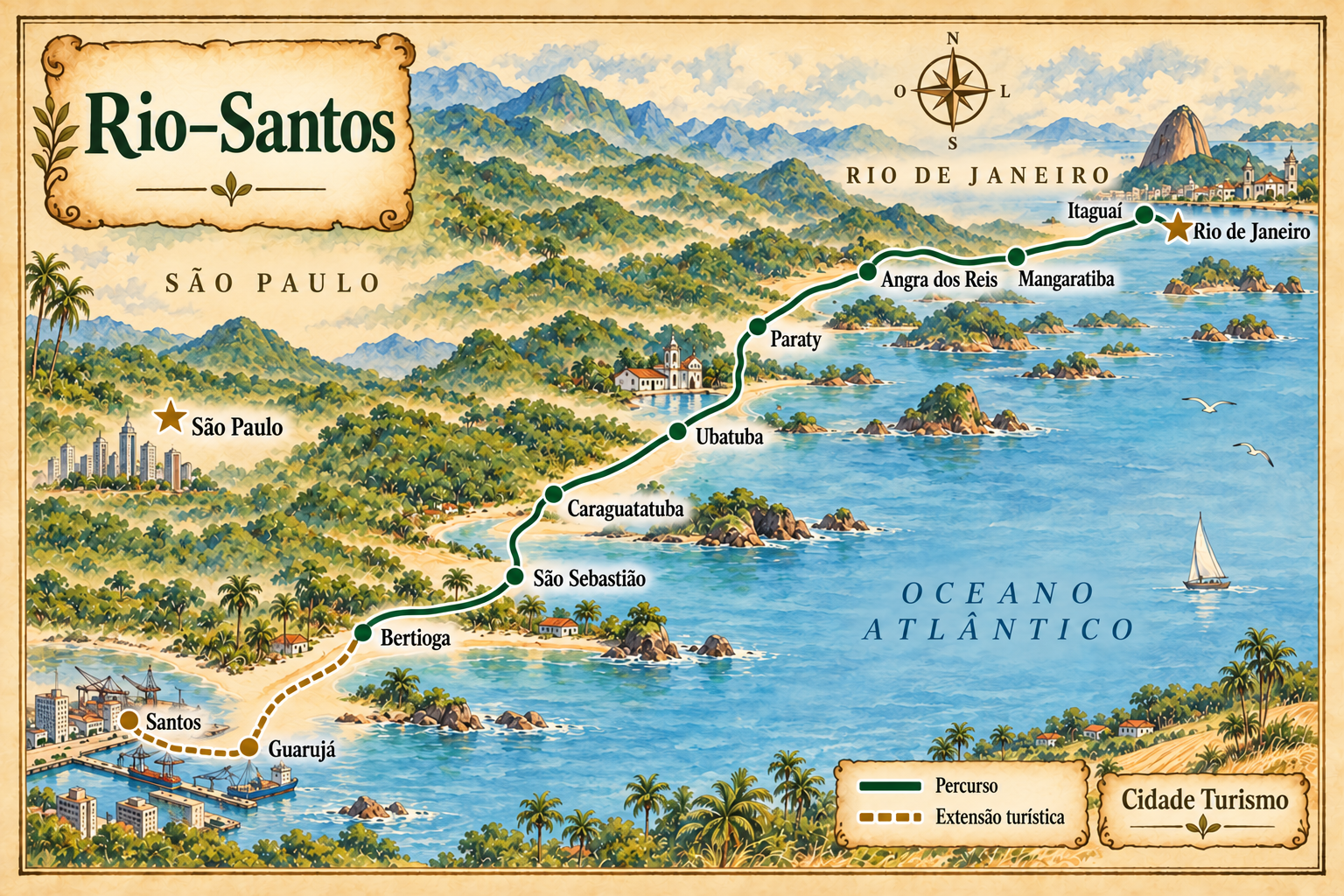
São Sebastião is part of the Rio–Santos

From the Costa Verde to the São Paulo coast, with beaches, heritage and an extension via Guarujá to Santos.

Illustrative map, not to scale. Tap a city to open its page.
Illustrated map of Rio–Santos
Explore the Rio–Santos
See the destination São Paulo North Coast Find another city