Ilhabela

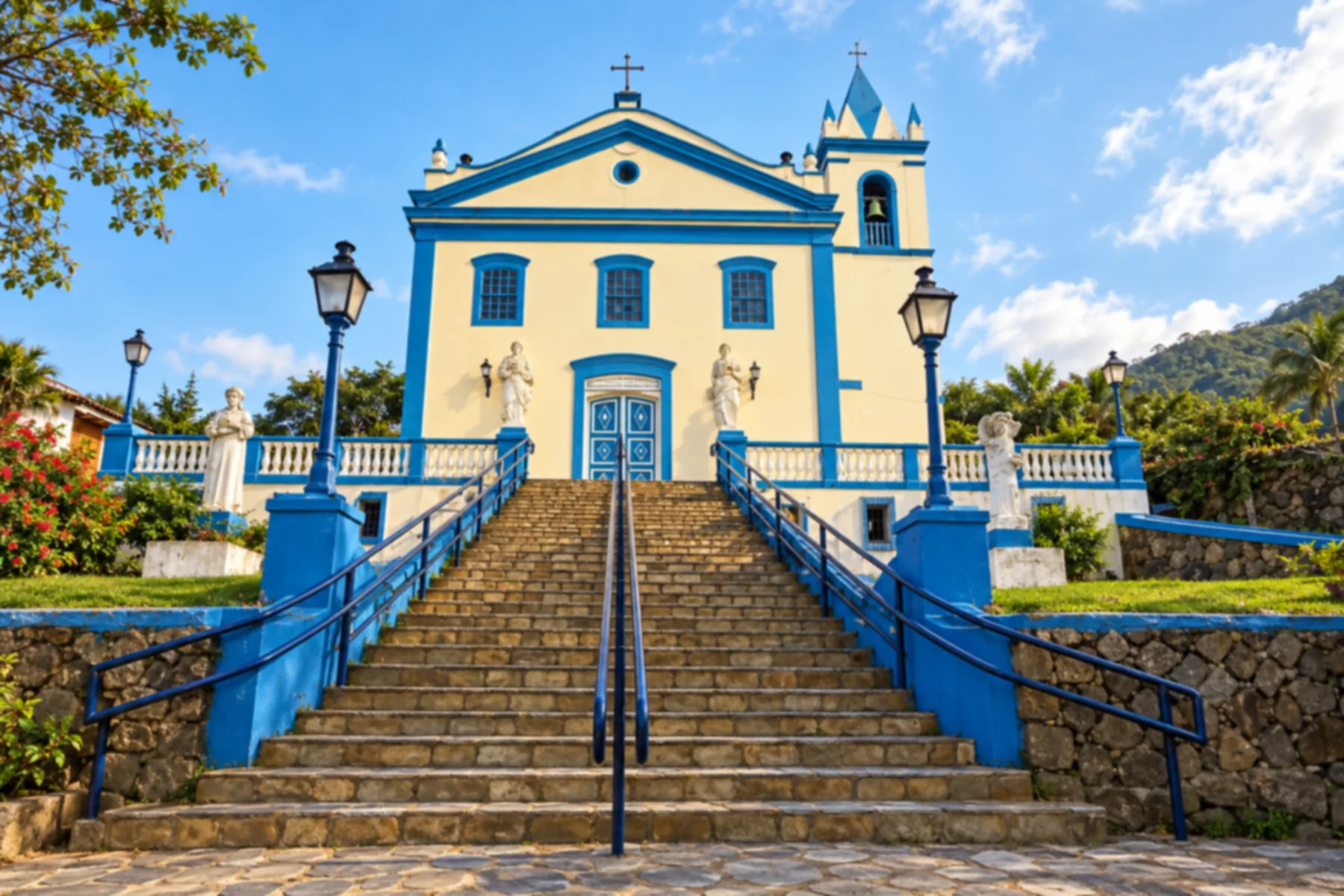
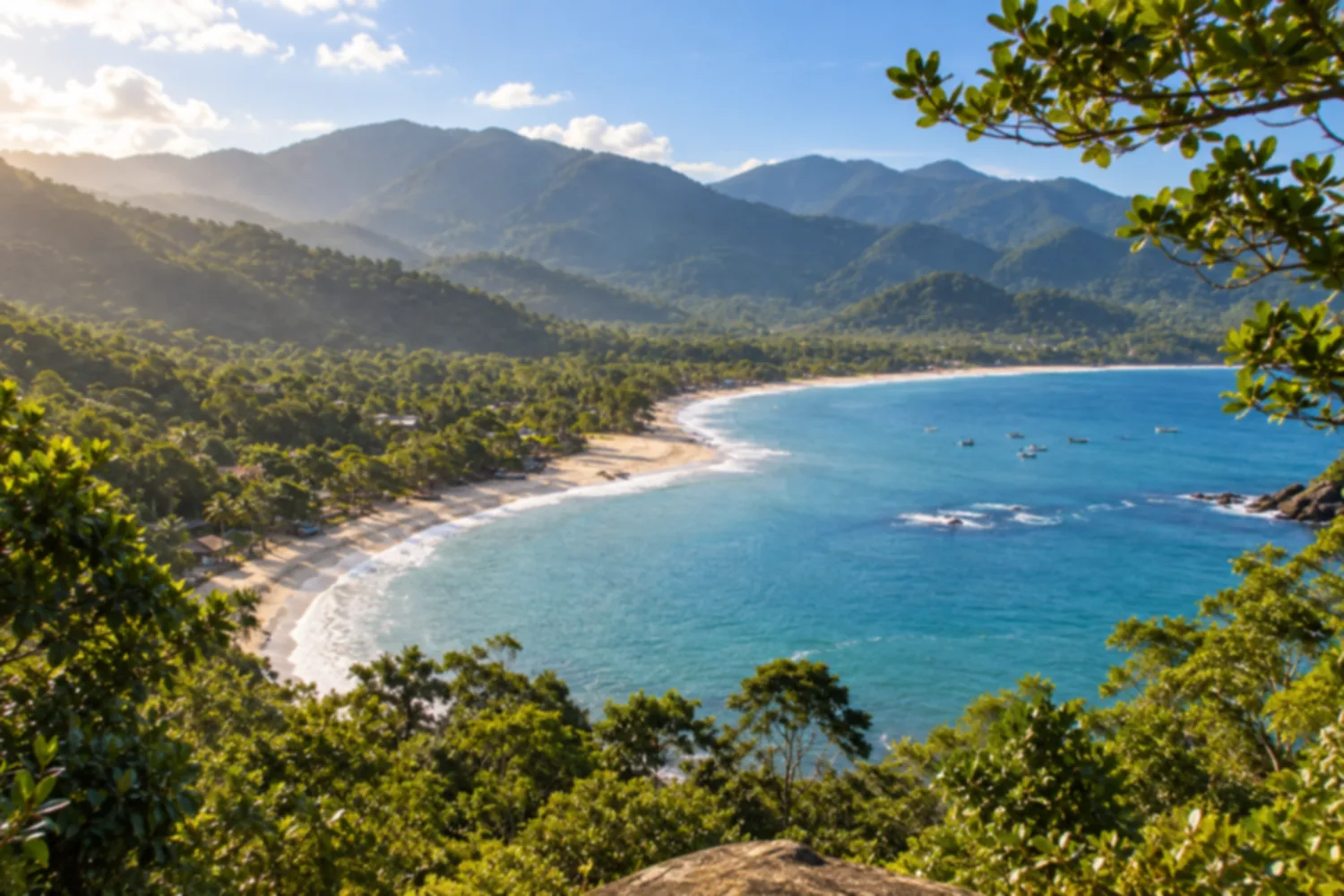
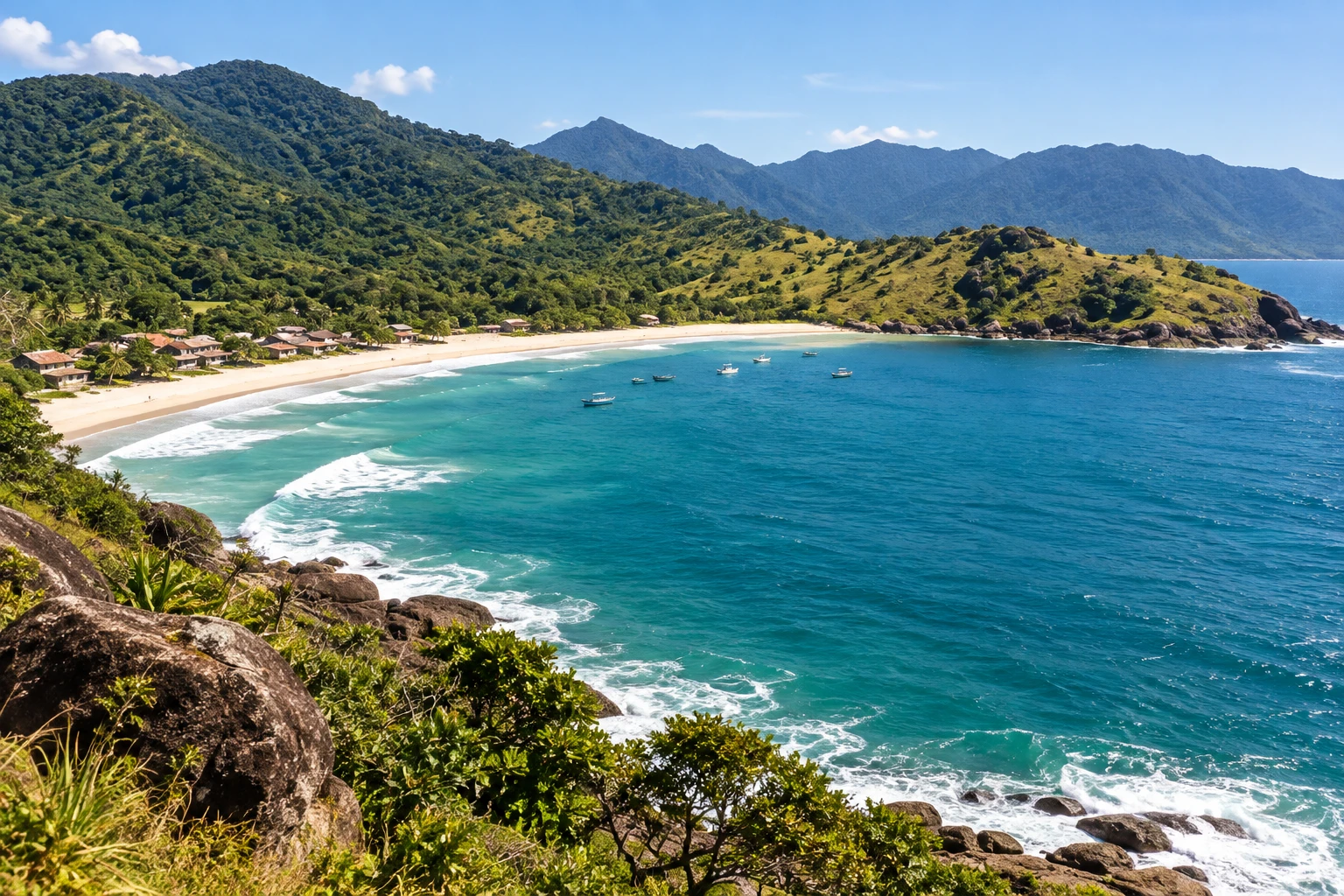
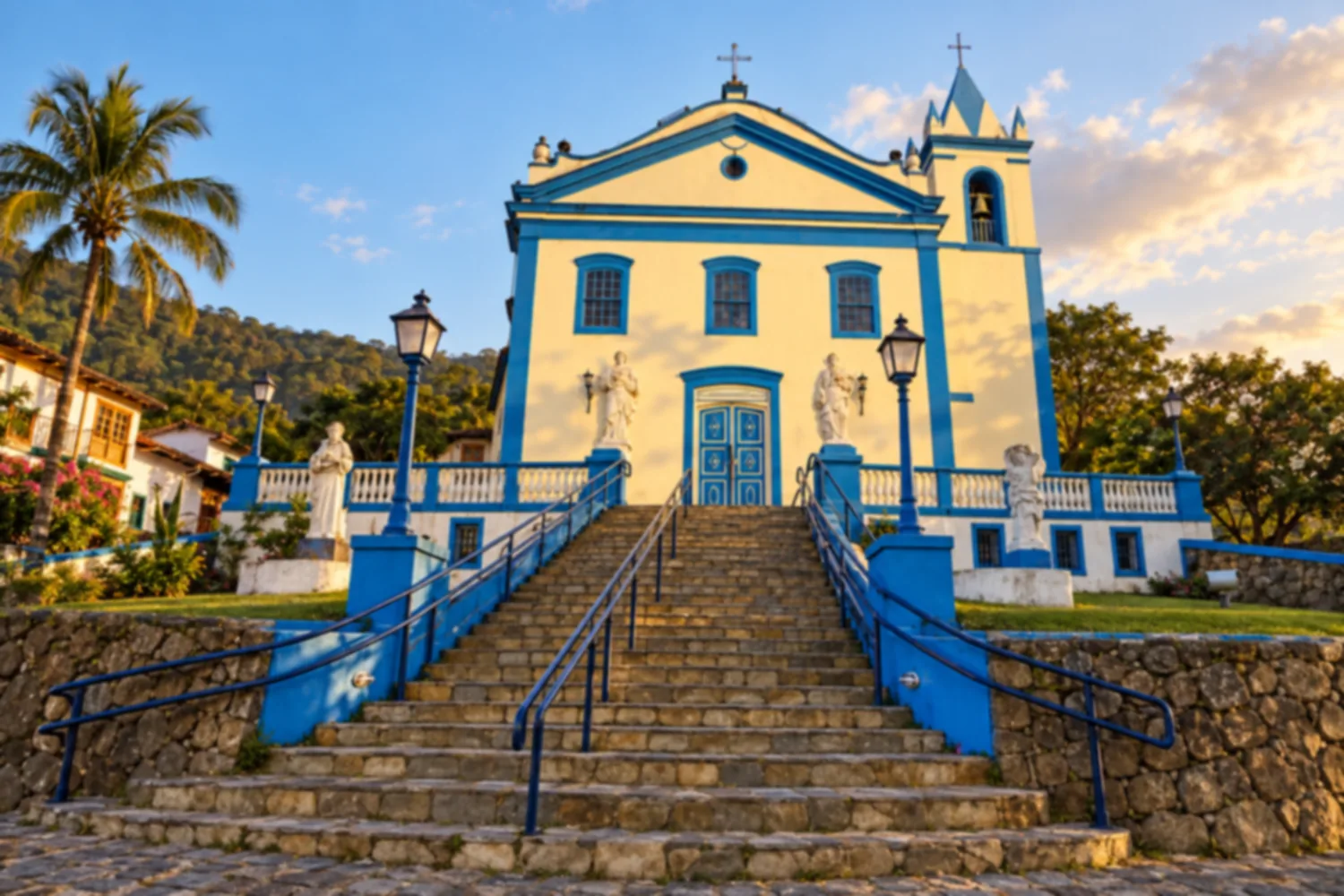
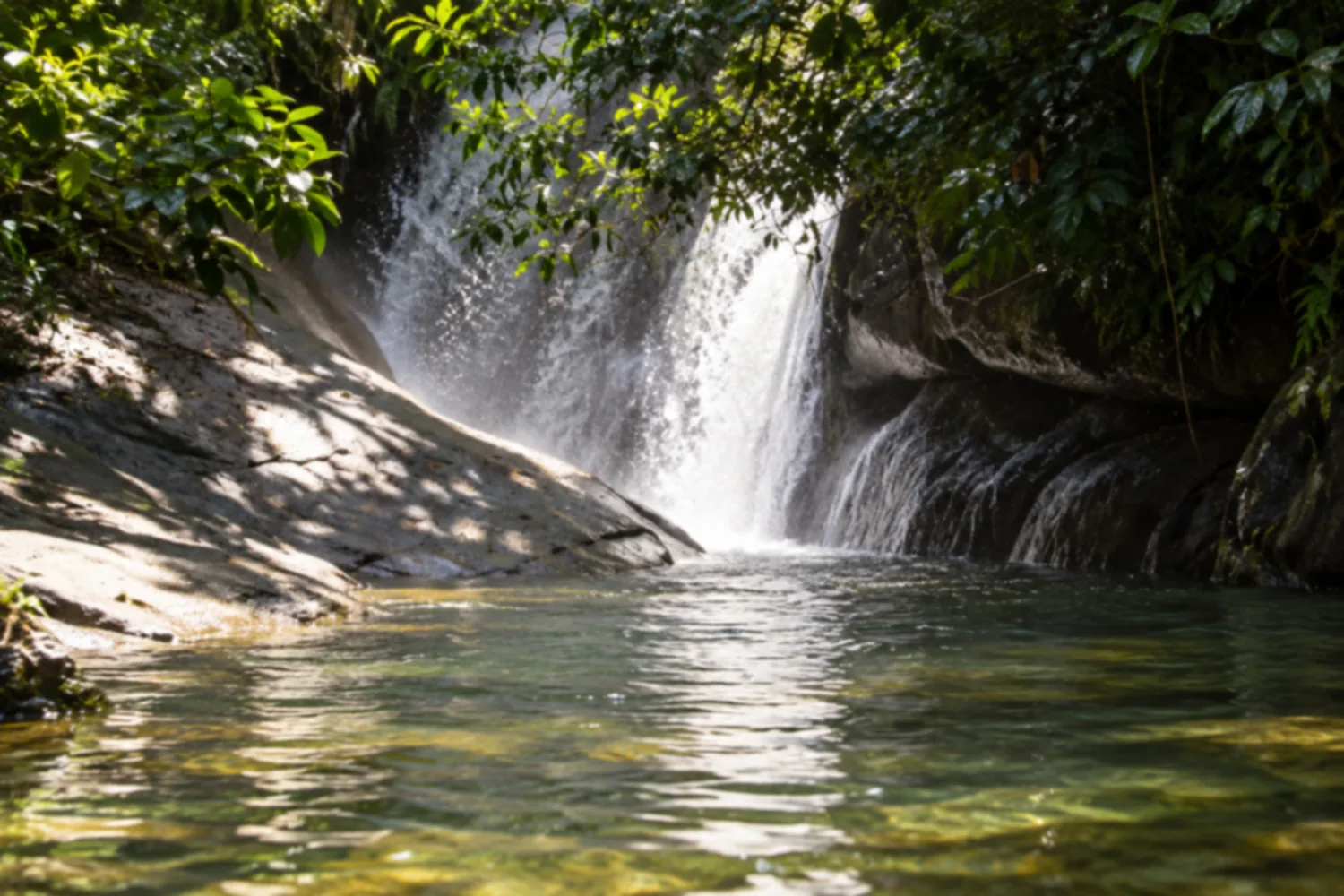
Illustrative images. The pictures in this guide are illustrations based on the real place, not photographs, and may differ from it.

The city

What to expect from Ilhabela.

Ilhabela sits on a mountainous island off the São Paulo coast and preserves large areas of Atlantic Forest. A trip here combines beaches, strolls around the town center and paths through waterfalls and forest.

Ilhabela is a municipality made entirely of islands on the northern coast of the state of São Paulo, about 200 km from the city of São Paulo. The main island, Ilha de São Sebastião, is where the town and almost all the beaches are located; Búzios, Vitória and smaller islets complete the archipelago. There is no bridge: you reach it by ferry, a crossing of about 20 minutes from São Sebastião on the mainland.

The island is a mountain covered in Atlantic Forest, with peaks over 1,000 m, surrounded by sea. The Ilhabela State Park, created in 1977, protects about 85% of the municipality. For that reason settlement is concentrated in a narrow strip on the west side, facing the mainland, along a single road a little over 30 km long that runs from north to south. The other side, facing the open ocean, has almost no road: that is where Castelhanos and Bonete are, beaches with caiçara communities reached by jeep, boat or on foot.

This geography divides the island into very different areas. The ferry arrives at Barra Velha, roughly in the middle. Heading north you come to Perequê, a commercial and service neighborhood with a long beach, and the Vila, the Historic Center, with cobbled streets, a colonial church, a pier, restaurants and shops; this is where the nightlife happens. Further north the road passes small, calm-water beaches such as Siriúba, Viana and Pedra do Sino, and ends at Jabaquara. To the south are beaches with more infrastructure, like Feiticeira, Julião, Praia Grande and Curral, and, at the end of the asphalt, the trailhead to Bonete.

The channel beaches have calm sea, narrow sand and, in many spots, rocks good for snorkeling. The ocean-facing beaches have waves, wide sand and little development. Between these are waterfalls: the park mentions more than 250, and several are close to the urban area, such as Água Branca, about 3 km from the ferry.

The channel wind made Ilhabela a sailing destination, and the International Sailing Week in July is one of the main events on the calendar. The surrounding sea holds shipwrecks, remembered at the Nautical Museum in the Vila, and humpback whales visit between May and November. In May, the Congada de São Benedito, a tradition more than two centuries old, fills the streets of the Vila.

The climate is hot and humid. From December to March average temperatures range between 24 °C and 26 °C and it rains a lot, almost always in afternoon showers; this is high season, with lines for the ferry. From June to August it rains less, averages range between 19 °C and 22 °C and the sea cools. April, May, September and October have quieter beaches.

A practical note: the island has sandflies (borrachudos), small biting mosquitoes found mainly near rivers, waterfalls and forested beaches. A good insect repellent is essential in your luggage.

Two days are enough for the Vila and some channel beaches. With three or four days you can include Castelhanos, the waterfalls and a boat trip. Visitors arriving by car pay an environmental fee per vehicle; pedestrians do not pay the ferry and get around by bus, taxi and organized tours.

Share: WhatsApp

Where to stay

132 places to stay in Ilhabela.

Where to eat

28 places to eat in Ilhabela.

Mapa de Ilhabela

36 lugares no mapa: onde ficar e onde comer, por bairro.

Ilhabela highlights and titles

Seaside resort town
Island
Waterfalls

The local experience

Things to do in Ilhabela

Ilhabela · SP · beach

Praia do Bonete

In the south of the island, it is reached by boat or by a long trail in the Parque Estadual de Ilhabela that passes the Laje, Areado and Saquinho waterfalls. It is home to a traditional caiçara (coastal) community and has waves sought after by surfers.

Explore Praia do Bonete

See 5 more places in Ilhabela

To choose before you go

Tours in Ilhabela

Where each tour starts, how long it takes, how it is done, what is included and the price range.

The Vila on foot: Ilhabela’s Historic Center

From Vila Pier, Ilhabela Historic Center on foot, on your own 2 to 3 hours late afternoon and evening, or morning easy

The Vila is what people call Ilhabela’s Historic Center: a few cobblestone streets by the sea with old houses, the colonial church of Nossa Senhora D'Ajuda, and a pier facing the channel. You can walk the whole area in a short stroll. Start at the pier, where cruise passengers disembark and some boat tours depart. Beside it there is a stretch of sand that only appears at low tide. From there you enter Rua do Meio, a pedestrian-only street with shops, ice cream parlors, bars and restaurants. The most striking building is the Old Jail and Courthouse, dating from 1913–1914, with a cylindrical tower. It houses the Nautical Museum, dedicated to shipwrecks around the island: more than 250 items recovered from the seabed, including anchors, dishes and cutlery, arranged chronologically from 1825 to 1990. The highlight is material from the Príncipe de Astúrias, the Spanish liner that sank in 1916. On the ground floor you can still see the bars from the old cells. Nearby is the Vila Cultural Center, which honors the painter Waldemar Belisário, who lived on the island from 1929. In addition to paintings, it has rooms on archaeology, the Congada tradition and the state park, plus a film club. In the late afternoon the pier is a sunset spot; at night the buildings are lit and Rua do Meio becomes lively. The neighboring Saco da Capela Beach has a promenade, bike lane and the town’s sailing school.

Stops: Vila Pier, Rua do Meio, Church of Nossa Senhora D'Ajuda, Nautical Museum (Old Jail and Courthouse), Vila Cultural Center, Saco da Capela Beach.

Includes: There is no fee to walk the streets and the pier. Museums and the cultural center have their own opening days and hours; check ahead and see whether there is an admission charge.

Tip: Come at late afternoon, watch the sunset from the pier and stay for dinner. In high season parking is difficult: use the bus, a taxi or water transport between neighborhoods.

Best time: All year. In May the Congada de São Benedito fills the streets; on cruise ship days and holidays the Vila gets crowded.

Fazenda Engenho D'Água and the Perequê waterfront

From Vila or Perequê, Ilhabela car, bus or bicycle 2 to 4 hours morning or afternoon easy

A few minutes from the Vila, in the island's most urban stretch, is one of its main historic sites: Fazenda Engenho D'Água. The farm was built between the 17th and 18th centuries and produced cachaça, which supported the island for a long time. The main house, made of stone, lime and wattle-and-daub, is one of the rare examples of colonial architecture still standing on the São Paulo coast and is listed as national and state heritage. Today the place functions as a municipal park. Visitors walk through the gardens, see what remains of the sugar mill and the stills, and follow the farm's history and the work that sustained it across 24 panels. In the same complex is the Museum of Afro-Brazilian Culture, with a collection on the Black presence in Ilhabela, from slavery to faith and the Congada. In the same neighborhood is Praia do Engenho D'Água, with almost 1 km of grassy, shaded shoreline and calm sea, where turtles are commonly seen. Also in the central area, Praia do Itaguaçu, about 300 meters long, has restaurants and kiosks that operate into the night. Praia do Perequê, 820 meters long, lies between the ferry and the Vila. The wind blows much of the year, so it is the spot for sailing, kitesurfing and windsurfing; kayaks, outrigger canoes and stand-up paddleboards are also rented. A bike path runs along the waterfront, which ends at a pier with a viewpoint—another good place for late afternoon.

Stops: Fazenda Engenho D'Água, Museum of Afro-Brazilian Culture, Praia do Engenho D'Água, Praia do Itaguaçu, Praia do Perequê.

Includes: There is no entrance fee to Fazenda Engenho D'Água; check opening days. Equipment rental and purchases at the kiosks are each visitor’s responsibility.

Tip: Combine the farm in the morning with an afternoon at the beach. For cyclists, there is a bike lane along much of the waterfront.

Best time: All year round; it's a good option for a cloudy day. For sailing, the wind tends to be stronger between March and July and between October and December.

North beaches: from Siriúba to Jabaquara

From Village, Ilhabela Historic Center car; bus for part of the way half a day to one day morning and afternoon easy

From the Village to the north, the road follows the channel and passes a sequence of small beaches with calm sea, ending at Jabaquara. It’s the quieter side of the island. Siriúba has a 400-meter arc of sand, no waves, a stream in the middle and many coconut trees; it’s one of the most suitable for children. Viana is a cove of just 100 meters, with rocks full of marine life, good for snorkeling and kayaking. At Garapocaia Beach, which everyone calls Pedra do Sino, the rocks at the right corner sound like a bell when struck; the Tupi name means “singing stone.” Armação is next to the Ponta das Canas lighthouse. It has an old chapel on the sand and fishing boats, and is a stop for sailors. The name comes from the whale station that operated there, when whale oil was used for lighting. Further on the asphalt ends. About 3 km of dirt road and a five-minute trail lead to Pacuíba, a narrow stretch of sand, without kiosks, almost deserted for much of the year. The road continues to Jabaquara, 17 km from the Village, the last northern beach reachable by car. A viewpoint, just before it, shows the cove from above. It has 361 meters of light sand, clear water, two streams — one forming a freshwater lagoon — and beachfront restaurants. From Jabaquara a trail of about one hour and 40 minutes leads to Praia da Fome, which can also be reached by boat.

Stops: Siriúba Beach, Viana Beach, Garapocaia Beach (Pedra do Sino), Armação Beach, Pacuíba Beach, Jabaquara Beach.

Includes: Access to the beaches is free. Parking, where available, and any purchases are each person's responsibility; Siriúba does not have parking.

Tip: Go early to Jabaquara; the final stretch is dirt road. Bring insect repellent, because Jabaquara and Pacuíba have many sandflies, and bring cash.

Best time: Sunny days, preferably outside summer weekends. After heavy rain, the dirt stretch worsens.

South beaches: from Ilha das Cabras to Curral

From Ferry (Barra Velha), Ilhabela car, bus or bicycle half a day to a day morning and afternoon easy

South of the ferry are Ilhabela’s most popular beaches, many with restaurants, kiosks and parking. You can choose one and spend the day there, or stop at several. The first ones are good for fishwatching. Pedras Miúdas Beach is 100 meters from Ilha das Cabras, an ecological sanctuary where fishing is prohibited and where there is a statue of Neptune on the seabed, at 7 meters. At Portinho, only 60 meters long, water visibility can reach 10 meters, and turtles are commonly seen. Feiticeira has 250 meters of soft sand and, in one corner, the manor house of an old farm — the origin of the legend that gave the beach its name. Near it, a short trail of about 700 meters round trip leads to Cachoeira dos Três Tombos, with three drops and a swimming pool. Julião, also 250 meters, has rocks and islets that form natural pools and a ramp with a handrail that eases access for people with reduced mobility. Praia Grande, with 600 meters, has good public infrastructure: promenade, showers, court, playground and the Chapel of São Benedito. In August it hosts the Tainha Festival. Curral, 9 km from the ferry, is the island’s liveliest beach: bars and restaurants along the entire shore, music in high season and water sports at sea. 300 meters from there, Veloso is the opposite — quiet; divers go there for the remains of the ship Aymoré, sunk in 1920. After Veloso the road continues to Borrifos, where the Bonete trail begins.

Stops: Pedras Miúdas Beach and Ilha das Cabras, Portinho Beach, Feiticeira Beach, Cachoeira dos Três Tombos, Julião Beach, Praia Grande, Curral Beach, Veloso Beach.

Includes: Beach access is free. Private parking, chair rental and purchases are paid separately; check the current rates on site.

Tip: In summer and on holidays, arrive before midmorning to get a parking spot. By bus, municipal lines run the south road. Bring a snorkel mask for the first beaches.

Best time: All year, on sunny days. From March to May and from September to November the beaches are less crowded.

Castelhanos by jeep via the Estrada Parque

From Perequê or Vila, with an agency; some tours pick up at accommodations 4x4 jeep with driver; return by boat on some itineraries 7 to 8 hours full day easy, on a very rough road

Castelhanos is the largest beach in the archipelago and faces the open sea. To reach it by land you must cross the mountain via the Estrada Parque de Castelhanos: about 22 km of dirt road inside the Ilhabela State Park, opened in 1958 as a military road. The route is part of the attraction. The road starts near the Água Branca neighborhood, climbs to around 700 meters of altitude and descends to the other side, with mud, rocks, streams and steep ramps. Only four-wheel-drive vehicles are allowed, and the park controls entry: there is a time slot for going in the morning and another for returning in the afternoon. Allow one to two hours each way, depending on road conditions. Accredited agencies make the trip in jeeps, with stops at viewpoints; from the Mirante de Castelhanos the beach appears in the shape of a heart. The beach has more than 1.5 km of sand, surf waves, popular with surfers, two streams and a caiçara community that runs simple restaurants and campsites. There is no cell signal, and electricity is not always available. Groups usually have a few free hours for swimming and lunch. Those who want to hike continue along the left end of the beach to the Cachoeira do Gato trail, the tallest waterfall in the park: 4 to 5 km, done in one to one and a half hours. The waterfall is for viewing; swimming is at the pool indicated by the signage. Some agencies sell the jeep outbound and the boat return along the north coast, with a stop at Praia da Fome. This stretch depends on sea conditions.

Stops: Estrada Parque de Castelhanos, Ilhabela State Park, Mirante de Castelhanos, Praia de Castelhanos, Cachoeira do Gato.

Includes: Usually includes the jeep and the driver, who also guides the group. Lunch and drinks are paid separately. The park does not charge an entrance fee, but requires scheduling for some trails. Check the agency’s current schedule.

Tip: Bring strong insect repellent, because Castelhanos has many black flies, and carry cash, a towel and a sweater for the highlands. If you have your own 4x4, check with the park in advance about scheduling and allowed passage periods.

Best time: Days without rain, when the road is firm. After heavy storms the park may close the passage.

Parque das Cachoeiras and Trilha da Água Branca

From Portal of Parque das Cachoeiras, Água Branca neighborhood car or taxi to the entrance; then on foot 2 to 4 hours morning easy to moderate

About 3 km from the ferry, a gate marks access to two neighboring visitor areas: Parque Municipal das Cachoeiras and the entrance to Parque Estadual de Ilhabela. It is one of the easiest river baths on the island. In the municipal park, a viewpoint shows Cachoeira da Água Branca, a two-tiered fall that reaches 60 meters and that once powered the small plant that brought electricity to the island. You don’t enter the water there: the bed is smooth and the current is strong. Next to it is Brazil’s first waterfall adapted for wheelchair users, with ramps and handrails from the entrance to the water, reserved parking and accessible restrooms. Those who want to continue follow a short trail to Poço do Furado. At the state park gate, at the start of Estrada de Castelhanos, begins Trilha da Água Branca. It is self-guided, marked, about 4 km round trip, and passes five pools along the same stream. Poço da Pedra is about 100 meters from the start, on almost flat ground; it has shallow parts and deep parts. Then come Poço da Escada, with a rest area, Poço da Ducha, more for viewing than bathing, Poço do Jequitibá and Poço do Jabuti. Difficulty increases with each stretch, with rocks and smooth ground. From Jabuti, an access path leads to the road and shortens the return. The entrance has toilets, showers and parking. A 4x4 vehicle is not needed to reach the gate.

Stops: Cachoeira da Água Branca, Accessible waterfall, Poço do Furado, Poço da Pedra, Poço da Escada, Poço da Ducha, Poço do Jequitibá, Poço do Jabuti.

Includes: There is no entrance fee at the two parks. At the state park gate visitors are registered; check the current booking rule. Guides and instructors, when hired, are paid separately.

Tip: Go early, wear closed shoes and bring insect repellent. With small children or low fitness, stay at Poço da Pedra. After heavy rain, do not enter the pools.

Best time: Days without recent rain, when the water is clear and the trail is firm. In summer a cold swim relieves the heat.

See 5 more tours

Schooner to the north: Praia da Fome and Jabaquara

From Perequê pier or Vila pier shared schooner 5½ to 6 hours morning and early afternoon easy

This is Ilhabela’s classic boat tour and the simplest way to reach a beach without a road. The schooner leaves from Perequê pier or Vila pier and goes up the channel toward the north, with the island’s coast on one side and the mainland on the other. It’s about an hour and a half of sailing to the first stop. Praia da Fome is after Jabaquara, where the road already ends. It has 122 meters of sand, split in two by rocks, in a cove of calm, clear water, with a colonial-style manor house, fishing boats and two streams. The boat stays for about an hour, time for swimming and snorkeling by the rocks. The name is said to come from castaways who arrived there starving. The second stop is Jabaquara, which can also be reached by car. The schooner anchors among speedboats and sailboats, and passengers go ashore onto the sand. This is the lunch stop, at the beachfront restaurants; those who prefer can stay at the freshwater lagoon in the corner of the beach. Return to the pier happens in the mid-afternoon. The schooners have a restroom and a bar. The itinerary depends on the sea and the number of passengers: off-season, some departures happen only with a minimum group. On rough-sea days, the route can change or the departure be canceled.

Stops: São Sebastião Channel, Praia da Fome, Jabaquara Beach.

Includes: Usually includes the sailing and stops. Lunch, drinks and mask rental are paid separately. Check the agency’s current pricing.

Tip: Book through an agency accredited by the city hall and confirm the departure pier. Bring insect repellent for the stop at Jabaquara, sunscreen and a towel.

Best time: Days with calm seas; from March to May there are fewer boats at the beaches.

Bonete Trail and Laje Waterfall

From Park gatehouse at Ponta da Sepituba (Borrifos), southern tip on foot; return by boat for those going to Bonete 2 to 3 hours to Laje, round trip; a full day to Bonete morning, or morning and afternoon moderate (Laje); difficult (Bonete)

At the southern tip, where the road ends, the best-known trail on Ilhabela begins. From the ferry it’s 22 km of paved road and another 2 km of dirt to the state park gatehouse at Ponta da Sepituba. There are two ways to do the hike. The short route goes only to Cachoeira da Laje, the first stop: 4.6 km round trip on a wide, well-marked trail to a slab of rock with natural pools. It’s a good morning option for those who want forest and a river bath without committing the whole day. The long route continues to Praia do Bonete: about 12 km one way, which the park classifies as difficult, with climbs, descents and flat sections. It also passes the Areado and Saquinho waterfalls, crosses rivers on footbridges and, at the end, reveals the beach from above. Bonete has just over 600 meters of sand, a wave-prone sea that attracts surfers, and the largest caiçara community in the municipality, which runs the pousadas, campsites and bars. Expect three to six hours of walking, depending on your pace. Most people return by boat, with boatmen from the community, in 40 minutes to an hour to Borrifos. If the sea is rough the boat does not run; in that case you sleep in Bonete or walk back. The park requires online scheduling, limits the number of visitors per day and registers entry at the gatehouse, with signing a liability waiver.

Stops: Ponta da Sepituba, Cachoeira da Laje, Cachoeira do Areado, Cachoeira do Saquinho, Bonete Beach.

Includes: Park entry is not charged. Return boat, guide or monitor and meals in Bonete are paid separately and arranged with the community. Check the current rate table.

Tip: For Bonete, start early in the morning and arrange the boat before you leave; first-timers should go with a guide. Bring ID, plenty of water, snacks, insect repellent and trail shoes.

Best time: Days without rain, with firm ground and calm seas for the return boat.

Pico do Baepi with a guide

From End of Rua Morro da Cruz, Itaguaçu neighborhood on foot, with mandatory environmental guide 5½ to 6 hours, round trip morning difficult

Pico do Baepi is just over one thousand meters high, and the trail to the summit is one of the most demanding in the state of São Paulo. The hike begins in the Itaguaçu neighborhood. The first 400 meters cross a stretch of grass and reach a viewpoint where you can already see the channel, ship traffic, the Serra do Mar on the mainland and, in the distance, the Alcatrazes archipelago. Many people stop there. From that point the trail enters the Atlantic Forest and climbs relentlessly: roots that serve as steps, loose rocks and sections where you need to use your hands to steady yourself. Vegetation changes with altitude, and there is a chance to see birds of prey. It is about 7 km round trip, with three to four hours just for the ascent. From the top, the view circles all around: the channel and the mainland on one side, the island’s mountains on the other. The route is inside the state park and has its own rules. Ascending the peak is only permitted with an environmental guide; the park requires online booking, limits the number of people per day and only allows trail entry in the morning. agencies accredited by the city organize departures and handle reservations. This is not a walk for beginners or for rainy days or low cloud, when the summit becomes obscured.

Stops: Baepi Viewpoint, Ilhabela State Park, Pico do Baepi.

Includes: Park entry is not charged. The environmental guide is paid separately; check the current rates with the agency or the guide.

Tip: Bring at least 2 liters of water per person, snacks, insect repellent, a rain poncho and trail shoes. Plan to start in the early morning.

Best time: Dry days with clear skies.

Whales and dolphins: wildlife-watching tour

From Piers of Ilhabela, depending on the operator boat, with a licensed operator a few hours, depending on the operator easy

The sea around Ilhabela is on the route of humpback whales that travel up the Brazilian coast in autumn and winter. The season runs from May to November, and encounters are more common in June and July. Twelve species of whales and dolphins have already been recorded in the region, in addition to rays, turtles and seabirds. Tours are done by boat, with agencies, operators and fishermen authorized to carry passengers, and search for the animals in the channel and around the island. There is no fixed point or guaranteed time: some days bring several encounters and others none. Dolphins also appear and sometimes accompany the boat. Approaching the animals follows sighting rules that protect the whales and the passengers. To know which operators comply, the city maintains the Whale-Friendly City Seal. The seal is given to companies and professionals who took part in a best-practices workshop held with the Humpback Whale Project, have permits and registration with the Ministry of Tourism, and use an appropriate vessel and a qualified sailor. The list of accredited operators is public and shows each boat’s name. This is a winter outing, in open sea: dress warmly and ask, when booking, how long the trip lasts and what happens if the sea conditions prevent departure.

Stops: São Sebastião Channel, Ilhabela coast.

Includes: What is included varies by operator. Check the current table and the rescheduling policy.

Tip: Choose an operator with the city’s seal. Bring a windbreaker and sunscreen; if you get seasick, prepare before boarding.

Best time: Humpback whale season: May to November, with more sightings in June and July.

Diving at Ilha das Cabras and the shipwrecks

From Praia das Pedras Miúdas or dive operators on the south side of the island freediving on your own; scuba diving with an operator 2 to 4 hours morning easy for freediving

Ilhabela is sought for diving for two reasons: the marine life around the channel rocks and the ships that sank around the island. You don’t need a course to start. Snorkeling, with just a mask, snorkel and fins, can be done from the sand at several beaches on the south side. The best known is Pedras Miúdas, 100 meters from Ilha das Cabras. The area is an ecological sanctuary, where fishing and hunting are prohibited, and therefore it gathers fish such as groupers, snappers and seabreams, as well as starfish and turtles. At 7 meters deep there is a statue of Neptune. Portinho and Julião are other clear-water beaches with shallow rocks. Those who want to go deeper look for specialized operators, which offer activities for beginners and open-water dives with tanks for those who have the required certification. Among the wrecks visited is the Aymoré, which sank in 1920 and lies between 4 and 18 meters, off Praia do Veloso. On the east face, near Praia da Serraria, there are other sunken ships visited on full-day outings. The history of these ships is told at the Nautical Museum in Vila, which is a worthwhile complement on land. Visibility varies a lot from day to day, depending on rain, wind and tide.

Stops: Ilha das Cabras, Praia das Pedras Miúdas, Praia do Portinho, Praia do Veloso, Praia da Serraria.

Includes: Freediving from the beach has no cost beyond equipment. Trips with an operator are paid separately; check the current rate and what is included.

Tip: For freediving, do not enter unfamiliar areas alone and check sea conditions. At Ilha das Cabras, do not touch anything or feed the fish.

Best time: On calm sea days with no recent rain, when the water is clearer.

Day by day

1, 2 and 3-day itinerary in Ilhabela

Suggestions to plan the trip. Change the order of the days according to the weather and tour availability.

1 day · Ilhabela in 1 day: one southern beach and the Village

For for those coming from São Sebastião or another north-coast town for a day visit · Based in day trip, crossing the ferry on foot or by car
  1. Day 1 · Beach in the morning, Village in the afternoon

    Cross early. On foot the ferry is free and there’s no car line; from the landing at Barra Velha, buses and taxis go to both sides of the island. By car, remember the environmental fee and, on a holiday, reserve a ferry time. Spend the morning on a southern beach. Julião and Feiticeira are small and pretty; Praia Grande has good infrastructure; Curral, 9 km from the ferry, is the liveliest. Bring a snorkel if you stop near Ilha das Cabras. Have lunch on the beach. In the midafternoon, head north. If there’s time, stop at Fazenda Engenho D’Água on the way. Arrive at the lit Village: walk along Rua do Meio, see the Nautical Museum from outside or inside and go to the pier for sunset. Dine in the Village and return to the ferry. Castelhanos, Bonete and the schooner tours require a full day and don’t fit a round trip.

2 days · Ilhabela in 2 days: Castelhanos and the channel beaches
For weekend and first visit · Based in Vila or Perequê
  1. Day 1 · Castelhanos by jeep

    Reserve the entire first day for Castelhanos with the tour booked in advance. The jeep leaves in the morning, climbs the mountain via the Park Road, stops at viewpoints and reaches the beach near midday. Enjoy the surf, have lunch at one of the community restaurants and, if you’re up for it, hike to Cachoeira do Gato. Return in the midafternoon via the same road or by boat, depending on the chosen itinerary. In the evening, dine in the Village and walk the cobblestone streets. If it rained heavily the day before, ask the agency about road conditions and, if necessary, swap the days.

  2. Day 2 · Waterfalls, south beaches and late afternoon at Perequê

    Start early on the Trilha da Água Branca, about 3 km from the ferry: the first pools are near the shelter and are enough for a river bath. If you prefer to stay dry, view the Água Branca Waterfall from the municipal park overlook. Afterwards, go down to the south beaches. Stop at Pedras Miúdas to snorkel in front of Ilha das Cabras and choose a beach for lunch: Feiticeira, Julião, Praia Grande or Curral. End the day at Perequê, watching the sailboats and the sunset from the pier. If you return to the mainland on Sunday, allow extra time for the ferry line.

3 days · Ilhabela in 3 days: open sea, north and south
For for those who want to see both sides of the island, with one day by boat or by trail · Based in Vila or Perequê
  1. Day 1 · Beaches of the north and the Village

    Drive north: Siriúba, Viana and Pedra do Sino, with calm sea, and Armação next to the lighthouse. Continue to Jabaquara, 17 km from the Village, on the final dirt stretch; stop at the viewpoint before descending and have lunch on the beach. Without a car, replace the day with the schooner, which goes to Praia da Fome and Jabaquara. On the way back, stop at Fazenda Engenho D’Água. Leave the late afternoon and evening for the Village: pier, Rua do Meio and Nautical Museum.

  2. Day 2 · Castelhanos

    A full day on the other side of the island. The jeep crosses the state park along the Estrada Parque, stopping at the Castelhanos overlook, and drops the group at the beach for a few hours. Sea bath, lunch in the caiçara community and, for those who enjoy hiking, the Cachoeira do Gato trail. Bring insect repellent, cash and a sweater for the mountain. Back in town, Perequê has restaurants and a nice waterfront for an evening walk.

  3. Day 3 · Waterfall and south beaches, or whales

    Use the morning for the forest: the Trilha da Água Branca and its pools or, for the more fit, the walk to Cachoeira da Laje at the start of the Bonete trail on the southern tip. Between May and November, an alternative is an early whale- and dolphin-watching trip. In the afternoon, south beaches: snorkeling at Pedras Miúdas, Cachoeira dos Três Tombos near Feiticeira, and late afternoon at Curral or Praia Grande. With a fourth day, do the full Bonete trail, returning by boat, or climb Pico do Baepi with a guide.

Best time to go

When to go: Ilhabela month by month

The seasons shown are the most usual ones; nature doesn't always follow the calendar.

January High rain

High season · Wettest month

Hot and rainy: average temperatures between 24 °C and 26 °C and the highest rainfall of the year, around 190 mm, almost always in afternoon downpours. This is the peak season, coinciding with Brazilian school holidays: crowded beaches and lines at the ferry. Book the crossing, accommodation and the Castelhanos jeep tour in advance, go to the beaches in the morning and leave the Vila for late afternoon.

February High rain

Carnival · Warm sea

It stays hot and humid, with averages between 24 °C and 26 °C, clear days alternating with heavy showers. The sea is warm. During Carnival the island receives many visitors, with ferry lines in both directions. After heavy rain, Estrada de Castelhanos and some trails can close for a day.

March High rain

End of summer · Winds for sailing

Still warm, with averages between 24 °C and 26 °C, and rainy, with dry weeks in between. The sea remains warm and the beaches empty after Carnival. One of the seasons with more consistent wind in the channel begins, good for sailing and kitesurfing at Perequê and Armação. Check the forecast the day before boat trips.

April Some rain

Less rain · Empty beaches

Rain decreases and so does the heat, with averages between 23 °C and 24 °C. The sea is still pleasant. It’s a good month for the Água Branca and Bonete trails and for Castelhanos, with firmer road conditions. During Brazil’s long holidays this month there are ferry lines; outside those dates the island is quiet.

May Low rain

Congada of Saint Benedict · Start of the whale season

More settled, mild weather, with averages between 21 °C and 23 °C. During Caiçara Culture Week, the Village hosts the Congada of Saint Benedict, the island’s most emblematic cultural event, with three days of masses, processions, dances and a communal lunch. The humpback whale season begins, lasting until November. Bring a light jacket for the evening and for boat trips.

June Low rain

Whale season · Dry days

Little rain, averages between 20 °C and 22 °C, and the sea is clearer on many days. It’s one of the months with the most whale records in the São Sebastião Channel. Good time for long hikes, such as Bonete and Pico do Baepi. The water becomes colder and the waves grow at exposed beaches, which attracts surfers to Castelhanos and Bonete.

July Low rain

International Sailing Week · Whale season

Winter with clear skies on many days, averages between 19 °C and 21 °C. Ilhabela’s International Sailing Week, held in July, fills the channel with sailboats and the Village with people. Brazilian school holidays also increase weekend crowds: book accommodation and tours in advance. The whale season continues.

August Low rain

Shrimp Festival · Mullet Festival · Driest month

The driest month, with averages between 19 °C and 21 °C, generally clear days and cold sea. The Shrimp Festival usually starts at the beginning of the month, and Praia Grande hosts the Mullet Festival. There is less activity than in July. Whales still pass by, in smaller numbers. Bring a jacket for boat trips because of the wind.

September Some rain

Spring · Rain returns gradually

Rain returns in showers, still with many clear days, and averages range between 19 °C and 21 °C. It’s a low-traffic month, good for those who want empty beaches. The sea begins to warm and the whale season continues. Have a plan for rainy weather: Náutico Museum, Vila Cultural Center and Fazenda Engenho D'Água.

October Some rain

Winds for sailing · Few people

Passing showers and warm temperatures, averaging between 20 °C and 22 °C. The season of steady winds for sailing returns, lasting through December. Boat trips and hikes run as usual, but watch for days with rough seas. Visitor numbers are low, except for the Brazilian holiday on October 12, when the ferry fills. There’s still a chance to see whales.

November High rain

Rain increases · End of the whale season

Heat returns, with averages between 21 °C and 23 °C, and late-afternoon downpours become frequent. The sea warms. The whale season ends. Brazilian holidays in the month bring extra visitors and lines at the ferry. Do hikes and boat trips in the morning and leave the afternoon for the beach or the Vila.

December High rain

Summer begins · Christmas and New Year

Summer starts: averages between 23 °C and 25 °C, warm sea and afternoon rain. The first half of the month is still calm; from Christmas the island fills up, with long lines at the ferry and crowded beaches through New Year’s. Book the crossing, accommodation and tours well in advance and travel outside peak hours.

Plan the journey

How to get there: Ilhabela

By plane: via São José dos Campos or Guarulhos

Ilhabela has no airport, and the journey always ends by road and ferry.

The closest airport is São José dos Campos (SJK), about 113 km away. Flight availability there is limited and changes frequently: check before buying. For scheduled national and international flights, the usual option is São Paulo/Guarulhos International Airport (GRU), in Greater São Paulo, about 187 km away, roughly three hours by road to São Sebastião, not counting the ferry.

From the airports you continue by rental car, transfer or bus. For the bus you must first go to the Tietê Bus Terminal in São Paulo, or to São José dos Campos bus station. Book transfers or tickets in advance, especially on holidays and in summer, and allow extra time for the crossing.

By bus: to São Sebastião, and the ferry on foot

Intercity buses do not enter the island. You must go to São Sebastião on the mainland and cross the ferry as a pedestrian.

From São Paulo, buses to São Sebastião depart from the Tietê Bus Terminal, with departures in the morning, afternoon and evening. The trip takes about three and a half hours, depending on traffic on Rodovia dos Tamoios. There are also connections from São Sebastião to Caraguatatuba, Ubatuba and other coastal towns.

In São Sebastião, buses stop near the ferry. Pedestrians and cyclists cross free of charge, on a dedicated vessel. On the other side, at Barra Velha, there is a taxi stand and municipal buses that run the island from north to south.

Those arriving without a car should choose accommodation near the main road, in Vila, Perequê or on a southern beach, and book farther excursions with agencies that pick up passengers.

By car: via Rodovia dos Tamoios or the Rio-Santos

From São Paulo it’s about 200 km. The most used route follows the Ayrton Senna and Carvalho Pinto highways, or the Presidente Dutra, to São José dos Campos, and descends the mountain via the Rodovia dos Tamoios to Caraguatatuba. From there, the access roads lead to São Sebastião and the ferry terminal. Allow at least three hours, without traffic, plus the crossing.

Those coming from Rio de Janeiro or the Costa Verde arrive via the Rio-Santos, passing Paraty, Ubatuba and Caraguatatuba. From the south, the Rio-Santos connects São Sebastião to Bertioga, with access via the Mogi-Bertioga Highway; it’s used as an alternative.

There are tolls on the access highways, paid separately. On the island, nonresident vehicles pay an environmental preservation fee each time they enter. Buses, minibuses, vans, kombis, trailers and motorhomes require prior authorization from the city.

On holidays and summer weekends, the mountain roads, the Rio-Santos and the ferry queue add hours to the trip. Leave early, monitor the queue via the crossing cameras and, if possible, reserve a ferry time.

São Sebastião–Ilhabela ferry

The ferry is the only regular link to the island. It departs from São Sebastião, crosses about 800 meters of channel and arrives at Barra Velha, in Ilhabela. The crossing takes around 20 minutes, not counting waiting time.

It operates day and night, every day. During the day departures run at intervals of about half an hour; at night the intervals increase. It carries cars, motorcycles, buses, bicycles and pedestrians; each ferry holds up to 40 vehicles. Pedestrians and cyclists travel free.

Vehicles pay a fare that varies by vehicle type and is higher on weekends and holidays. Boarding follows arrival order. There is a paid reservation service, Hora Marcada, which gives boarding priority and avoids the line; on holidays, it’s the difference between a quick crossing and hours of waiting.

The operation of São Paulo’s coastal crossings has changed hands: check with the operator, before traveling, the fare for your vehicle, the accepted payment methods, the Hora Marcada rules and whether payment is charged only on the outbound trip. The online queue cameras help choose when to leave.

Those who don’t need a car on the island can leave it in a São Sebastião parking lot and cross on foot.

Ilhabela Environmental Preservation Fee (TPA)

Ilhabela charges an Environmental Preservation Fee (TPA) for vehicles from outside that enter the island. The fee is charged per vehicle, not per person, once per entry, regardless of length of stay: a few hours or a month cost the same. If you leave and return you pay again.

The amount depends on the vehicle type: motorcycle, private car, van, truck, minibus and bus have different rates. the price shown is for a private car, light utility or kombi.

Vehicles registered in Ilhabela and São Sebastião are exempt, recognized automatically, as are official vehicles. People who cross by foot or bicycle are not charged.

Entry registration is electronic. For those using a compatible toll tag, the charge is automatic; others pay online at the city’s indicated site, by Pix or boleto. There is a service center at Barra Velha, right at the town entrance. Check the current table and payment deadline before you travel.

R$48 · per private car, each time you enter Ilhabela · official price

How to get around in Ilhabela

The urban part of the island stretches just over 30 km along a single road, SP-131, from north to south, with the ferry roughly in the middle. Almost everything is along this road.

Bus: municipal lines run this axis, from the north to the far south, with regular frequency during the day and fewer services at night. Guests staying near the road do almost everything by bus plus a short walk.

Boat: the Aquabus, public sea transport, links points such as the Vila, Engenho D'Água, Perequê, the ferry area and Praia Grande when the sea allows. Check routes and times before relying on it.

Taxi and apps: the major ride-hailing apps do not operate on the island. There are taxi stands at the ferry, in the Vila and in main neighborhoods, and local apps with limited availability outside peak hours; agree the fare in advance.

Bicycle: there is a bike lane on much of the road, especially between the central region and the south, and rental shops in Perequê and Barra Velha.

Car: gives freedom to reach northern and southern beaches but faces traffic and scarce parking in high season; many beach parking lots are private and paid. A 4x4 is required for Castelhanos. Beaches like Bonete and Fome are only accessible by boat or on foot.


Your questions

Frequently asked questions about Ilhabela

How many days to stay in Ilhabela?

Two days are enough for the Vila and some beaches on the channel. With three days you can include Castelhanos, which takes a full day, and still have time for the Água Branca waterfalls. Four or five days allow adding a boat trip, the northern beaches and a long trail, such as the Bonete trail. In summer, count on one extra day: rain can close the Castelhanos road and cancel boats.

What is the best time to go to Ilhabela?

From April to June and from September to November the island has fewer people, shorter ferry lines and more stable weather than in summer. From June to August it rains little and the sky is often clear, but the sea cools; this is whale season and the International Sailing Week in July. From December to March it’s hot, the sea is warm and there is heavy afternoon rain; it’s also when the island is busiest.

Where to stay in Ilhabela: in the Vila, in Perequê, in the north or in the south?

The Vila has the historic center, restaurants and nightlife within walking distance; it’s the choice for those who want to go out at night without a car. Perequê, between the Vila and the ferry, concentrates shops and services, has a long beach and is midway to everything. The south has beaches with more facilities, like Feiticeira, Julião, Praia Grande and Curral, good for those who want to wake up on the sand. The north is quieter, with small beaches and less activity. Castelhanos and Bonete offer simple lodging for those seeking isolation.

Do you need a car in Ilhabela?

No, it’s not necessary. Municipal buses run the main road from north to south, there are taxis and local ride‑hailing apps, and tours to Castelhanos and by boat are done through agencies. A car gives freedom to stop at several beaches in one day and reach Jabaquara, but you pay the ferry and the environmental fee and face queues and limited parking in high season. For a short stay in the Vila or Perequê, walking across the ferry is often simpler.

Is there Uber in Ilhabela?

No. The major ride‑hailing apps don’t operate on the island. There are local apps that work similarly, with a small fleet, and taxi stands at the ferry, in the Vila and in main neighborhoods. Availability drops at night and in remote areas: install the app before you arrive, agree the fare in advance and don’t leave your return for the last minute.

Can you go to Castelhanos with a regular car?

No. The Castelhanos State Park road is about 22 km of dirt, with mud, rocks and steep ramps, and only admits four‑wheel‑drive vehicles. The state park controls entry, with set times for arrival and return, and can close passage after rain. Those without a 4x4 go in agency jeeps, by boat along the coast, or on foot and by bicycle if they are very fit.

Are there many biting midges (borrachudo) in Ilhabela?

Yes. The borrachudo is a small mosquito that breeds in clean, running water, and the island has waterfalls and streams everywhere. It appears more at dawn and dusk, near rivers, trails and beaches bordered by forest, such as Jabaquara, Castelhanos and Bonete. The bite itches a lot. Bring an insect repellent containing icaridin; common repellents are usually not enough.

Which Ilhabela beaches are good for children?

The channel beaches, with calm water. Perequê has a long sand strip, a boardwalk, a bike path and a playground. Siriúba, in the north, has no waves and has a stream crossing the beach. In the south, Praia Grande has showers and a playground, and Julião forms shallow pools between the rocks. Pedra do Sino entertains with rocks that ring like a bell. Castelhanos and Bonete have wavy seas and require extra caution.

What is the difference between the channel beaches and the open‑sea beaches?

Channel beaches face the mainland along the road: they have calm seas, generally narrow sand strips, restaurants and paved access. The ocean‑side beaches, like Castelhanos and Bonete, have waves, wide sand, forest to the water’s edge and caiçara communities, and are reached only by jeep, by boat or by trail. The first group serves everyday visits; the others are full‑day outings.

When is whale season in Ilhabela?

Humpback whales pass along the northern São Paulo coast from May to November, with encounters more common in June and July. whale‑watching trips depart early and last a few hours; not every trip finds whales. Prefer operators with the City Friendly to Whales Seal (Selo Cidade Amiga das Baleias) from the city hall, who follow distance and time rules around the animals.

What to do in Ilhabela when it rains?

Stay on the urban side. In the Vila, the Nautical Museum tells the story of the shipwrecks, and the Vila Cultural Center has exhibitions and a film club. Fazenda Engenho D'Água, with its colonial house and the Museum of Afro-Brazilian Culture, is another option that is almost entirely covered. Restaurants and shops on Rua do Meio round out the day. Avoid trails, waterfalls and the Castelhanos road: in rain the rivers rise quickly and the ground becomes slippery.

Is it possible to do a day trip to Ilhabela?

Yes, especially for those in São Sebastião, Caraguatatuba or another town on the northern coast. Cross the ferry on foot — there is no charge and no line for pedestrians — and use a bus or taxi on the other side. In one day you can visit a south-side beach and spend the late afternoon in the Vila. From São Paulo it’s about 200 km each way, plus the ferry: it gets tiring, and on holidays traffic takes up much of the day.

Where to snorkel (mask and snorkel) in Ilhabela?

On the rocky beaches of the channel, where the water is clear and the sea calm. The best-known is Pedras Miúdas, opposite Ilha das Cabras, an ecological sanctuary where fishing is prohibited. Portinho, Julião and Viana also have shallow rocks with abundant marine life, and Praia da Fome, reached by schooner, usually has transparent water. Visibility drops after rain; prefer mornings with calm seas.

What is free to visit in Ilhabela?

The ferry is free for pedestrians and cyclists. There is no entrance fee for the Ilhabela State Park, which includes the Trilha da Água Branca and the Bonete trail, nor for the Municipal Waterfalls Park and Fazenda Engenho D'Água. Beach access is free. Charged items: the ferry and the environmental fee for vehicles; private parking; tours, guides and boats. Museums may charge admission. Check each site’s current fee table.

Do you need to book to hike in Ilhabela State Park?

The park requires online booking for the trails and limits the number of visitors per day on each one. The Pico do Baepi trail can only be done with an environmental monitor; on the Bonete and Cachoeira do Gato trails the monitor is optional or not required. At the park gate you must register entry with ID. If you hire an agency or guide, they usually make the reservation for you. Rules change: confirm with the park before you go.

Traveler, share your experiences through photos Up to 5 photos of each place you visited.
See the destination São Paulo North Coast Find another city