Campos do Jordão

São Paulo

Campos do Jordão

In the destination Serra da Mantiqueira.

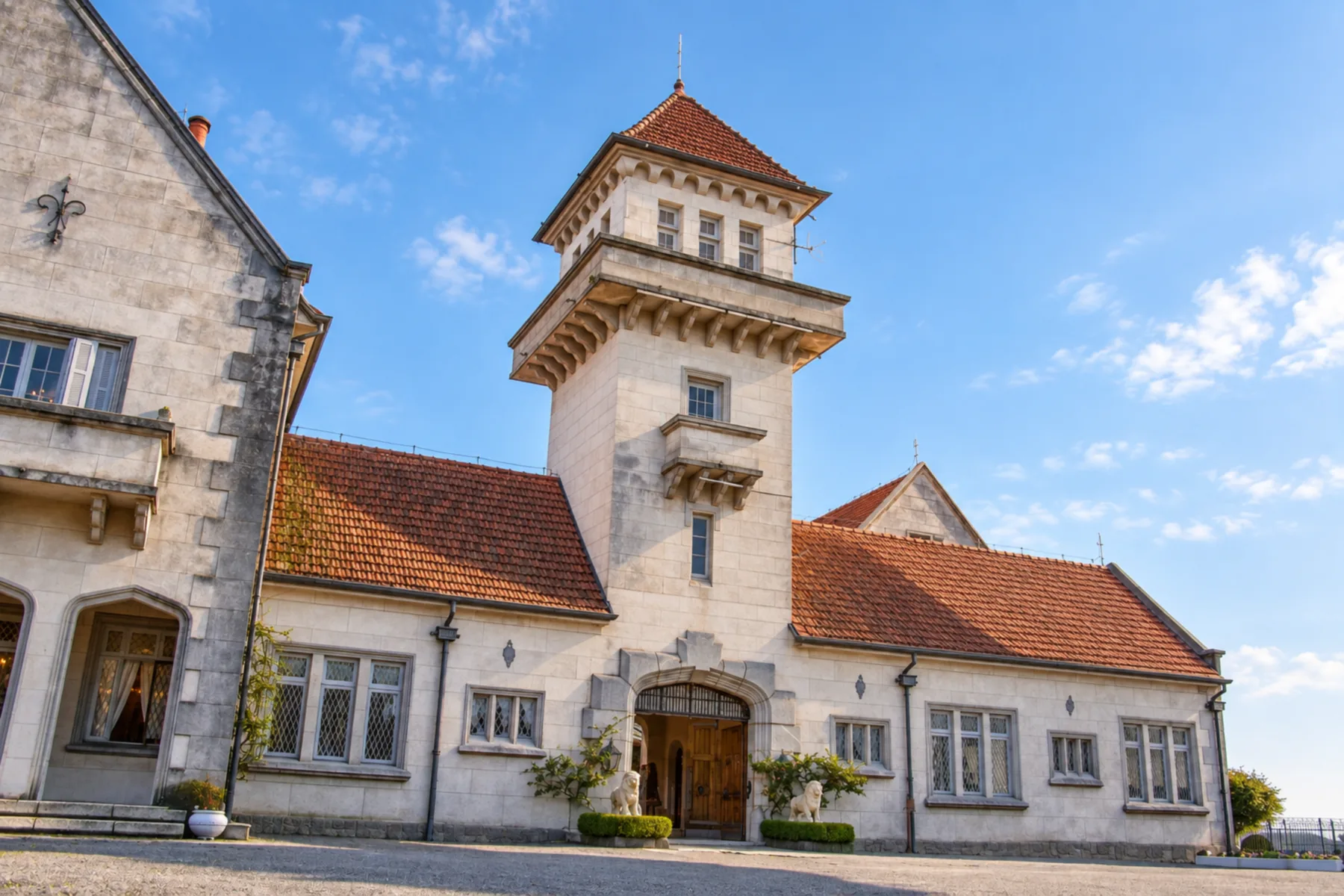
Illustrative images. The pictures in this guide are illustrations based on the real place, not photographs, and may differ from it.

The city

What to expect from Campos do Jordão.

Campos do Jordão brings together forest and European-inspired architecture in the São Paulo part of the Mantiqueira. A visit can alternate outdoor walks with art, music and food.

Campos do Jordão sits high on the Serra da Mantiqueira in the state of São Paulo, about 180 km from the state capital. The municipal seat is at 1,628 meters of altitude, the highest among Brazilian towns, and that altitude explains almost everything there: the cold, the araucarias, the fog at viewpoints and the town’s appeal for winter tourism.

The settlement began in 1874 and took the name of an early landowner, Brigadier Jordão. In the early 20th century, the cold, dry mountain air attracted lung patients, and the town grew around sanatoriums. When medicine made that treatment unnecessary after the 1950s, Campos do Jordão turned to visitors.

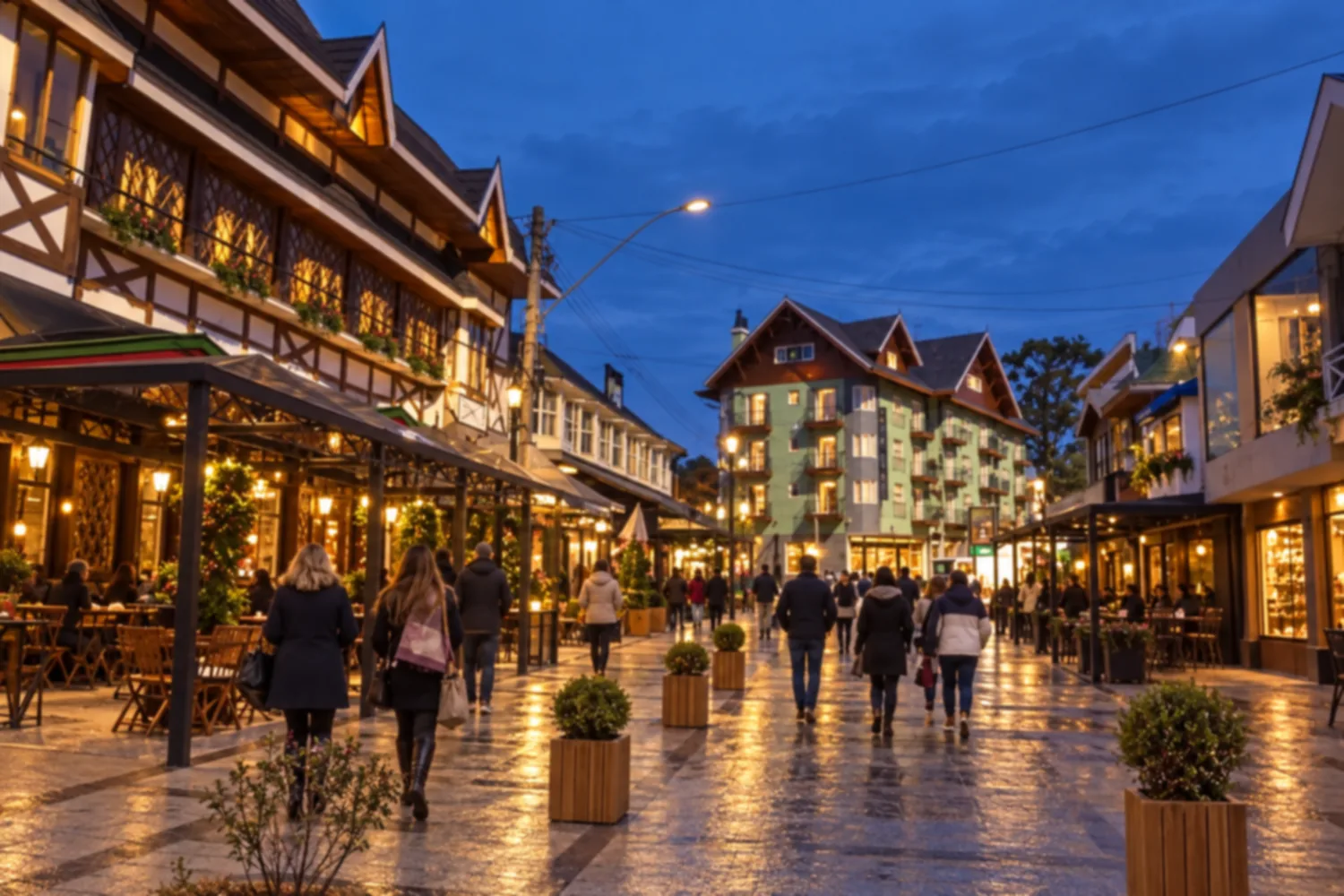
The town developed in villages. Abernéssia, which grew with the sanatoriums, and Jaguaribe are the oldest. Capivari is the tourist village: buildings with Alpine-style inspiration, knitwear and chocolate shops, fondue restaurants and a square with a street thermometer that becomes a photo spot on cold days. Next to the square, Parque Capivari includes the pedal-boat lake, a Ferris wheel and the cable car that climbs Morro do Elefante.

The rest is scattered along the slopes and requires transport. Alto da Boa Vista houses Palácio Boa Vista, the São Paulo government’s winter residence, with a collection of Brazilian art, and the Museu Felícia Leirner, a sculpture garden next to the Auditório Claudio Santoro. Horto Florestal, about 13 km from Capivari, has flat trails among araucarias along the Sapucaí River. Parque Amantikir gathers gardens inspired by several countries, and Pico do Itapeva, at 2,030 meters, opens onto the Paraíba Valley.

From June to August it gets truly cold: highs near 18 °C, early mornings around 3 °C and sometimes down to zero, with frost. This is high season, which begins at the Corpus Christi holiday and peaks in July with the Winter Festival of classical music. Snow is rare and should not be expected. In summer, highs are near 23 °C and it rains almost every day, usually in the afternoon; the town is quieter. Autumn, from April to May, is dry and has orange plane trees; spring brings flowers and the return of rain.

Two days are enough for Capivari, the cable car and one or two parks. With three days you can include Horto Florestal at a relaxed pace, Alto da Boa Vista and Pico do Itapeva. Bring a jacket at any time of year: even in summer nights are cool, and it’s windy at the viewpoints.

Share: WhatsApp

Where to stay

192 places to stay in Campos do Jordão.

Where to eat

39 places to eat in Campos do Jordão.

Mapa de Campos do Jordão

37 lugares no mapa: onde ficar e onde comer, por bairro.

Campos do Jordão highlights and titles

Climate resort town

Brazilian routes

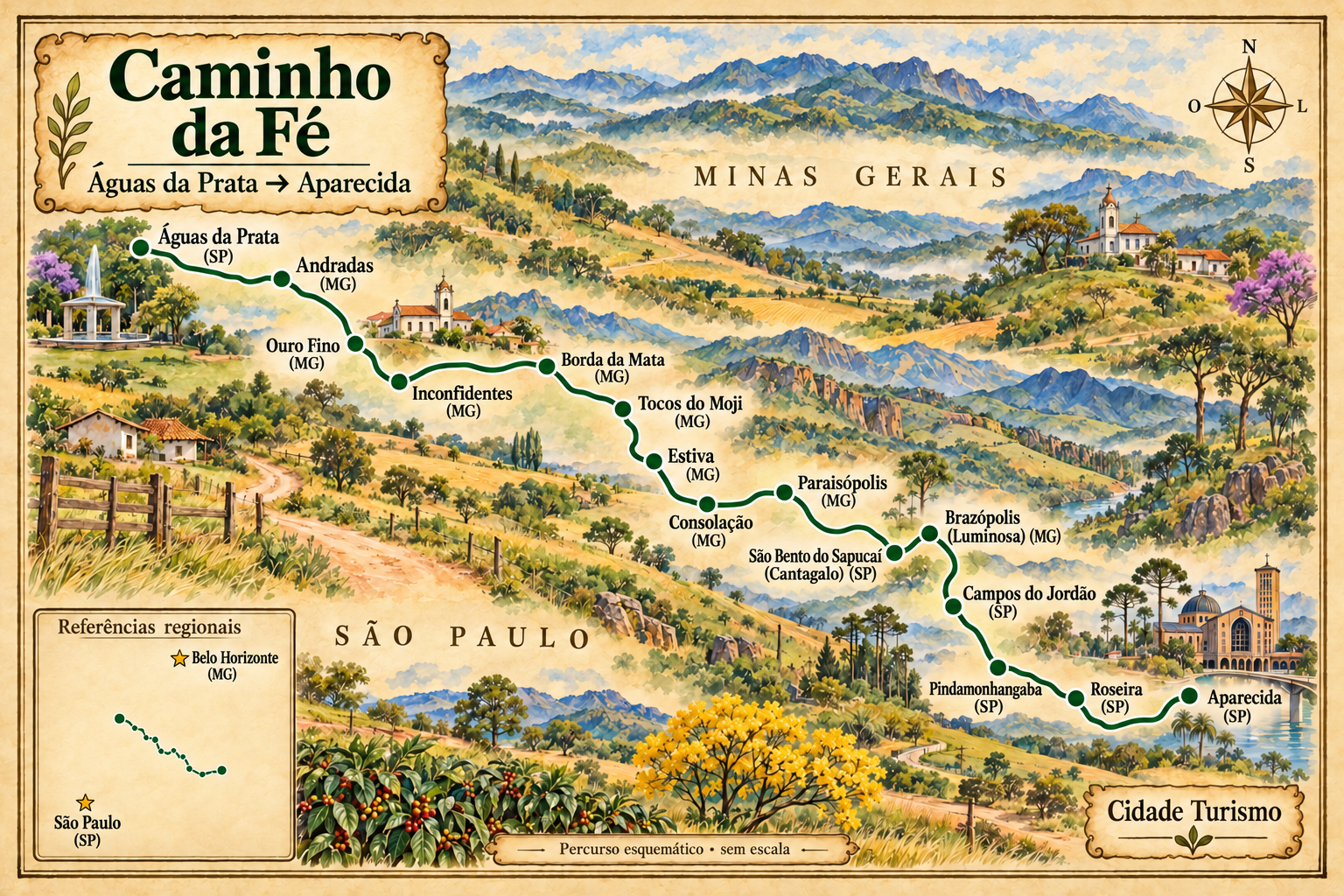
Campos do Jordão is part of the Caminho da Fé

From Águas da Prata to Aparecida, a pilgrimage branch through towns and landscapes of the Mantiqueira.

Illustrative map, not to scale. Tap a city to open its page.
Illustrated map of Caminho da Fé
Explore the Caminho da Fé

Brazilian routes

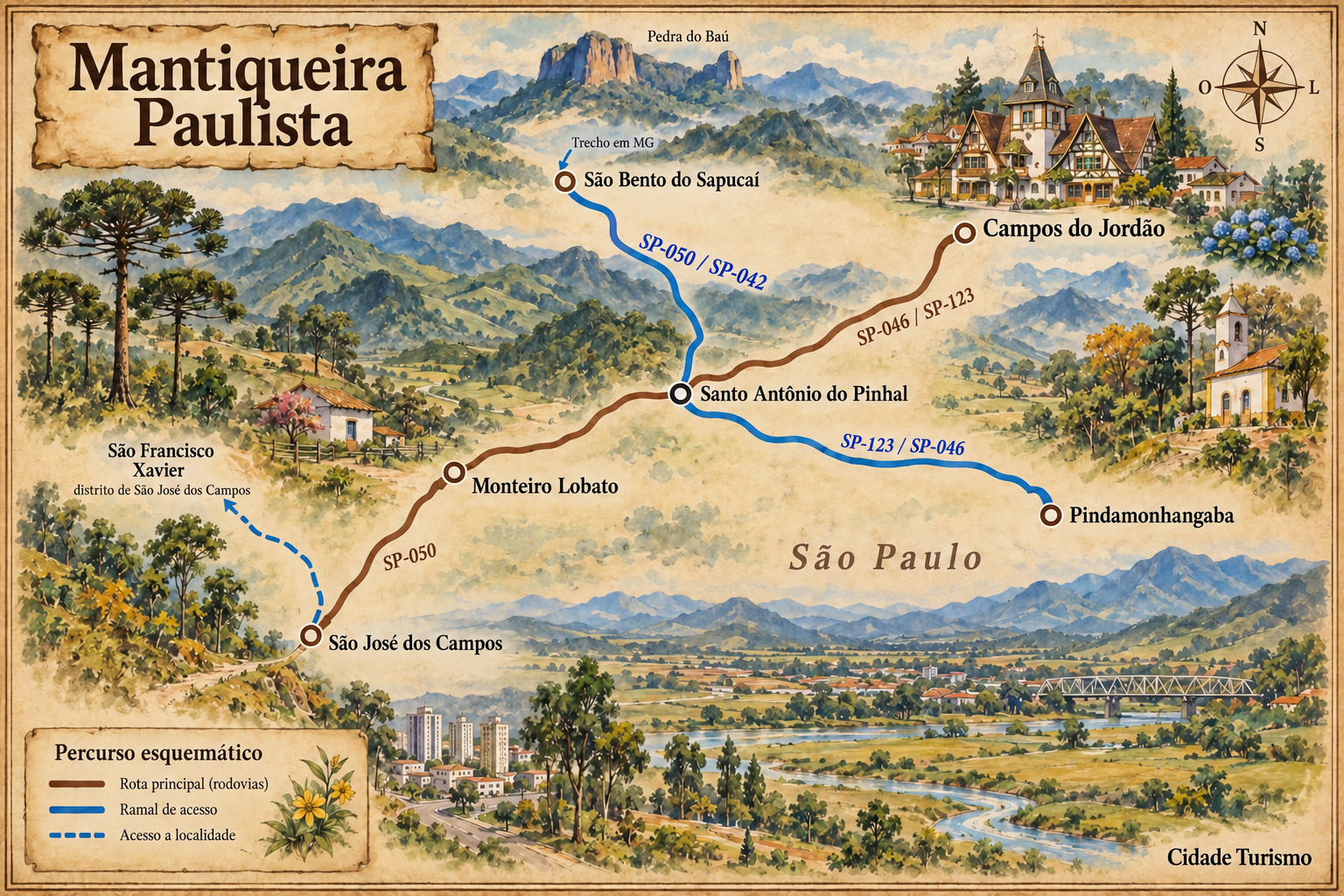
Campos do Jordão is part of the Mantiqueira Paulista

Mantiqueira roads between the Vale do Paraíba, mountain towns and the São Francisco Xavier district.

Illustrative map, not to scale. Tap a city to open its page.
Illustrated map of Mantiqueira Paulista
Explore the Mantiqueira Paulista

Festivals and events

Festivals Campos do Jordão

Dates change every year: check this year's date before you travel.

Festival calendar in Brazil

The local experience

Things to do in Campos do Jordão

Campos do Jordão · SP · tourist center

Vila Capivari

A central neighborhood with Alpine-inspired architecture packed with chocolate shops, restaurants, stores and the town's nightlife. In winter the streets fill with people in coats and the smell of fondue and mulled wine.

Explore Vila Capivari

Campos do Jordão · SP · museum

Museu Felícia Leirner

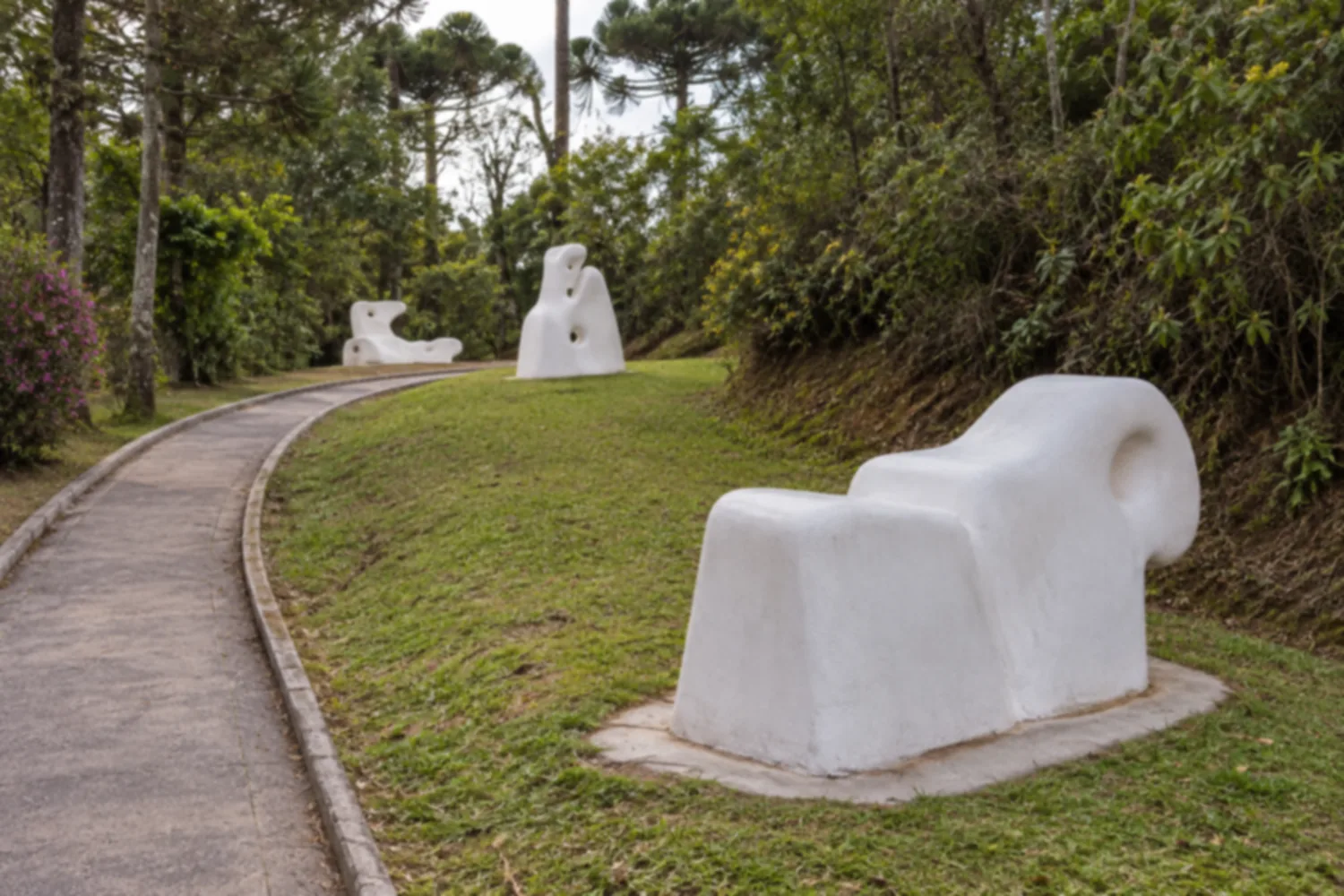
An open-air museum with 88 works by Polish-born artist Felícia Leirner spread across a lawn overlooking the mountains. Next door is the Auditório Cláudio Santoro, home of the winter festival.

Explore Museu Felícia Leirner

See 5 more places in Campos do Jordão

To choose before you go

Tours in Campos do Jordão

Where each tour starts, how long it takes, how it is done, what is included and the price range.

Walk through Capivari

From Praça do Capivari, Vila Capivari on foot 2 to 3 hours late afternoon and early evening easy

Capivari is the neighborhood where a visit to Campos do Jordão begins and, almost always, ends. It is flat, compact and walkable, with buildings featuring Swiss- and German-inspired facades and roofs. The center of everything is Praça do Capivari, also called Praça São Benedito because of the church. It has plane trees, pines, flowerbeds and a street thermometer that shows the day’s cold. Around it are Djalma Forjaz and Diogo José de Carvalho streets and Avenida Macedo Soares, with knitwear and chocolate shops, cafés and fondue and German cuisine restaurants. On Boulevard Genève, a side street is decorated with hanging umbrellas and string lights. Across the street begins Parque Capivari, about 40,000 square meters, with gardens and a lake with pedal boats. Entry is free; attractions such as the 22-meter Ferris wheel, the carousel, the ice-skating rink and the mountain sled are paid individually. The cable car to Morro do Elefante departs from there. At night, the park and the Ferris wheel are illuminated. The atmosphere changes by the hour. In the morning the streets are quiet and good for photos. In the late afternoon, when it cools, the neighborhood fills up, and in winter the nights are the highlight, with the streets full of people in coats.

Stops: Praça do Capivari, Boulevard Genève, Djalma Forjaz Street, Avenida Macedo Soares, Parque Capivari.

Includes: There is no charge to walk around the square, the streets and Parque Capivari. The park attractions, parking, shopping and meals are paid separately; check the current price list.

Tip: In high season, arrive early and leave your car parked: spaces disappear and traffic clogs the streets around the square. Bring warm clothing even in summer.

Best time: All year. From June to August the nights are cold and busy; in December the neighborhood gets Christmas decorations.

Cable Car and Elephant Hill

From Capivari Park, Vila Capivari cable car; or drive to the top of the hill 1 hour to 1 hour 30 minutes morning easy

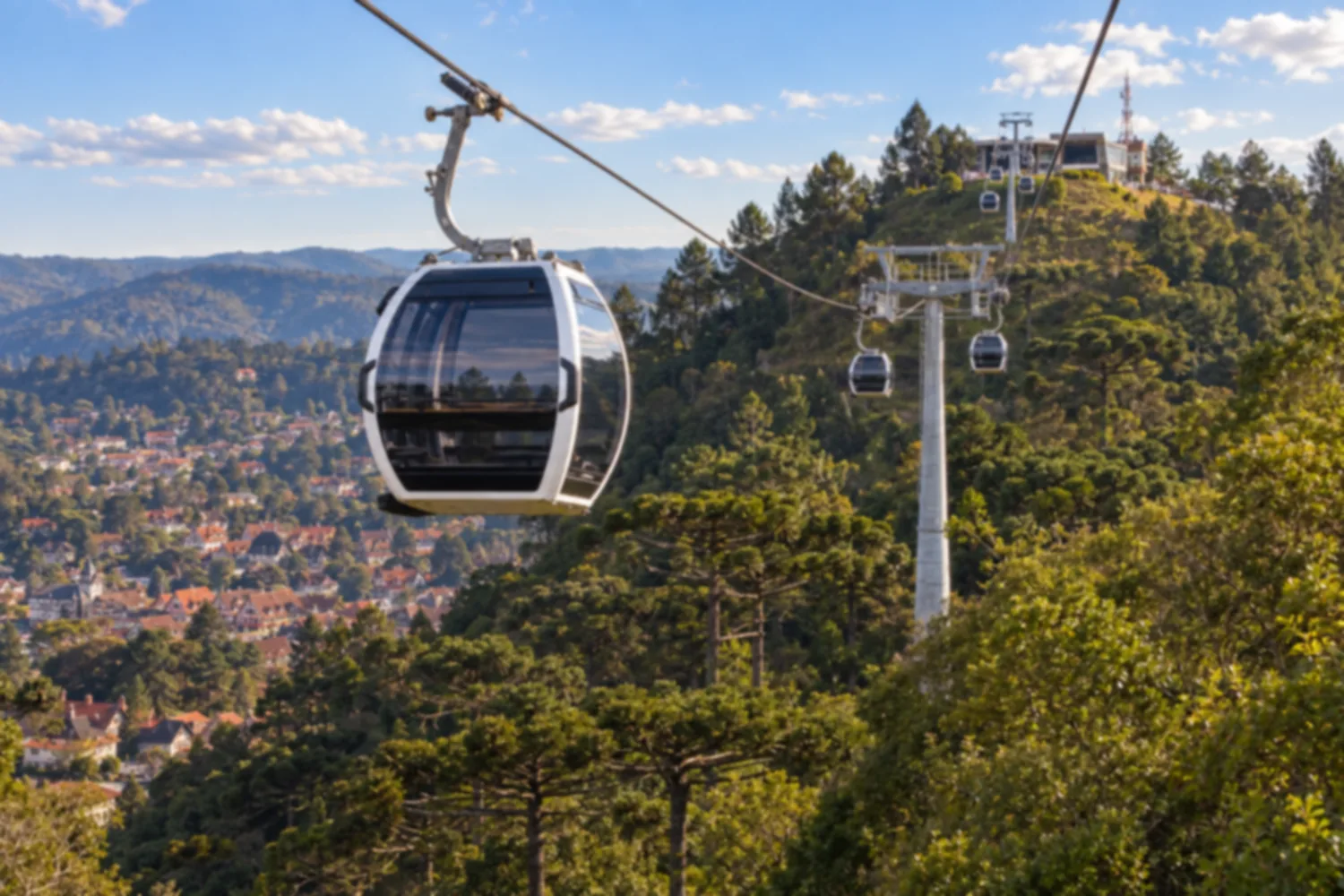
Elephant Hill is Capivari’s viewpoint: it sits just above the neighborhood, at about 1,800 meters altitude, and from the top you can see the village roofs, the valley the town spreads across, and the Mantiqueira mountains. The traditional way up is Park Capivari’s cable car, from 1970, the first in Brazil. Today it’s mixed: visitors choose between the open chair, with a safety bar, and the enclosed cabin, which accepts pets. The ascent passes over the slope’s araucaria trees. At the top there is a lookout, a garden with benches, and the Elephant Park, with elephant sculptures and plaques that tell the animals’ story. Access to this area is free for visitors who arrive. You can also drive up in about ten minutes from Capivari via the Jardim Belvedere neighborhood; parking spots at the top are few. It’s the alternative for those who are afraid of heights or find the cable car not operating: with rain or strong wind, service is suspended. The outing is short and suitable for any age. Combine it with a walk through Capivari during the same period.

Stops: Capivari Park, Cable Car, Elephant Hill, Elephant Park.

Includes: The cable car ticket covers the ascent and descent. Other Park Capivari attractions and parking are paid separately; check the park’s website for the current price list.

Tip: Go up early: there are shorter lines and, in summer, rain usually comes in the afternoon. In the open chair, carry little in your hands and hold your phone securely. Bring a jacket for the hilltop.

Best time: All year; from April to September there are more dry days and clear skies. In July lines are long.

Alto da Boa Vista: Palácio Boa Vista and Felícia Leirner Museum

From Vila Capivari car, taxi or rideshare 3 to 4 hours morning or afternoon easy, with uphill sections in the garden

Alto da Boa Vista is the elevated, tree-lined part of town, a few kilometers from Capivari, and houses the two main art sites of Campos do Jordão. They are close to each other, on the same uphill road. The Palácio Boa Vista, dating from 1964, is the state of São Paulo’s winter residence and also functions as a museum. It preserves furniture, porcelain, and paintings by Brazilian artists such as Tarsila do Amaral, Anita Malfatti and Di Cavalcanti, as well as temporary exhibitions. Visits are always accompanied by educators, in groups of up to 20 people, with numbered tickets handed out on a first-come, first-served basis. Bags, cell phones and cameras must be left in the cloakroom. The Felícia Leirner Museum is an open-air sculpture garden of about 35,000 square meters. The works, in bronze, white cement and granite, are spread across lawns and patches of forest and follow the artist’s phases, from figurative to abstract, between 1950 and 1982. Felícia Leirner was born in Warsaw, arrived in Brazil in 1927 and lived in Campos do Jordão. From some points in the garden you can see Pedra do Baú. On the same grounds is the Claudio Santoro Auditorium, with 820 seats and large glass walls, the main hall of the Winter Festival, which also hosts concerts at other times of the year.

Stops: Palácio Boa Vista, Chapel of São Pedro Apóstolo, Felícia Leirner Museum, Claudio Santoro Auditorium.

Includes: There is no admission charge at Palácio Boa Vista. Museu Felícia Leirner charges an entrance fee, with exemptions in some cases; check the current schedule. Parking at the museum and a café on site.

Tip: The palace is not open every day and may suspend visits in rain or when it hosts official guests: confirm in advance and arrive at gate opening, because visitor slots run out early in high season. Bring a coat, as it is windy at the higher area.

Best time: All year round; on dry autumn and winter days the view of the garden is clearer. In July, arrive early.

Horto Florestal and Ducha de Prata

From Vila Capivari car, taxi, ride‑hail or municipal bus half a day to a full day morning and early afternoon easy to moderate

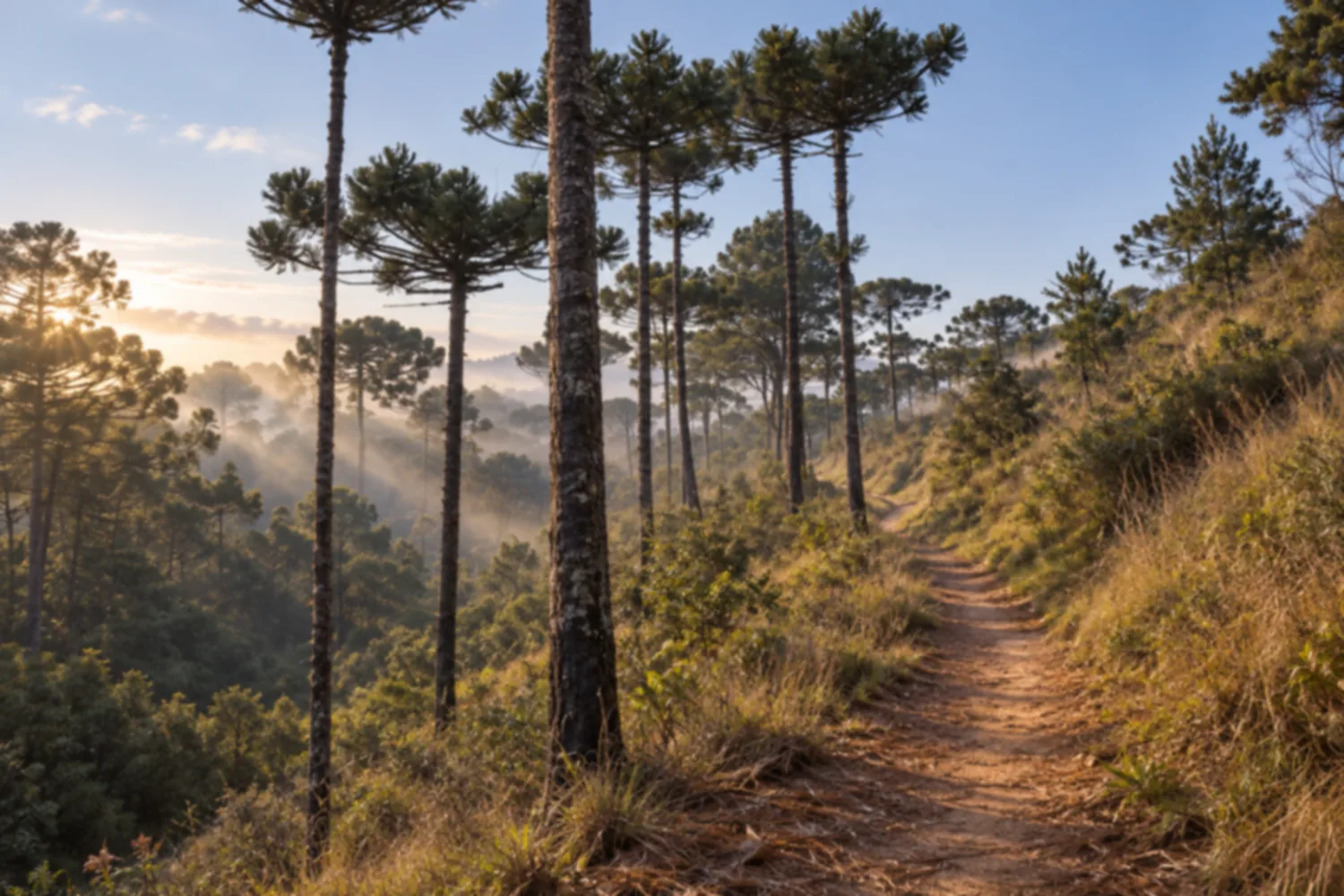
The Campos do Jordão State Park, commonly called Horto Florestal, is the nature day of the trip. It is about 13 km from Capivari, via paved avenue, and protects araucaria forests and highland fields near the border with Minas Gerais. The park has existed since 1941; pine trees planted in the early decades still mark the landscape near the entrance. The visitor area follows the Sapucaí River, with lawns, a lake and places to eat. Marked trails leave from there. The Waterfall Trail is flat, about 4.5 km. The Bridges Trail crosses suspension bridges, and the Sapucaí River Trail runs along the bank with little effort. The Fields Trail is intermediate and ends in an open area surrounded by araucarias. The Galharada Trail follows the stream of the same name through the forest. Monkeys and many birds appear near the paths. Those seeking more activity will find zipline, canopy course, bike rentals and pedal boats, paid separately. On the road between Capivari and the Horto is Ducha de Prata, a series of waterfalls formed by damming the Perdizes Stream. Wooden walkways pass beside the water, and around it there is a gallery of knitwear, handicraft and chocolate shops. It is a stop of about an hour, on the way there or back.

Stops: Ducha de Prata, Campos do Jordão State Park, Waterfall Trail, Bridges Trail, Sapucaí River Trail, Fields Trail, Galharada Trail.

Includes: The park ticket gives access to the visitor area and trails. Zipline, canopy course, bicycles and parking are paid separately; check the current price list. At Ducha de Prata, shopping and food are paid separately.

Tip: Bring warm clothes, water and closed shoes, and do not feed the monkeys. Cell signal is weak in the park: if you go by taxi or ride‑hail, arrange your return beforehand. In summer, go early, before the afternoon rain.

Best time: All year; from April to September the trails are drier. From December to March it rains a lot and the river rises.

Amantikir Park: gardens and mazes

From Capivari neighborhood car, taxi or ride‑hail 2 to 3 hours morning easy, with gentle climbs

Amantikir is a garden park created in 2007 by landscape artist Walter Vasconcellos on the grounds of a former horse farm, in the Gavião Gonzaga neighborhood. In about 60,000 square meters it brings together more than 700 plant species, in gardens inspired by styles from several countries. The visit is a walk along paths that go up and down the hillside, among flower beds, lawns, ponds and hedgerow mazes, with viewpoints facing the Mantiqueira mountains. Each garden has its own design, and the whole changes with the seasons: summer is greener and more florid, and in winter the grass can be covered with frost in the morning. The route is entirely on foot, on terrain with gentle climbs, and takes two to three hours at a relaxed pace. There is a café and a shop, and the park offers guided visits. It is open every day of the year.

Stops: Amantikir Park.

Includes: The ticket grants access to the gardens and the park’s trails. Food is extra. Reduced tickets are available for some groups with ID; check the park’s website for the current price table.

Tip: Arrive at opening time to walk with fewer people, especially in July and on holidays. Wear comfortable shoes and bring a warm layer. On days of heavy rain the visit loses much of its appeal: reschedule if you can.

Best time: All year. From October to March the gardens are usually more in bloom; from June to August the days are dry and cold.

Itapeva Peak: Vale do Paraíba viewpoint

From Capivari neighborhood car, taxi, ride-hailing app, or agency tour 1 to 2 hours morning or late afternoon easy

Itapeva Peak stands at 2,030 meters of altitude on the ridge of the range, and is one of the highest viewpoints in Brazil accessible by car. It lies in the territory of Pindamonhangaba, right on the border, but the road access is from Campos do Jordão: about 14 km from Capivari, on paved road with many curves. From the top, the range drops down to the Vale do Paraíba, and the view reaches several cities below, such as São José dos Campos, Taubaté and Pindamonhangaba. The name comes from Tupi and means flat stone. There are two stopping points. At the roadside, an open viewpoint with a portal showing the name and altitude. Beside it is a private park with a large wooden lookout, a lavender bed and a snack bar; there entrance and parking are charged. Everything depends on the weather. It is common for the peak to be shrouded in fog even when the sky is clear in town, and the view can close within minutes. In good weather, mornings usually have cleaner air, and late afternoon offers sunset light over the valley. It is colder and windier than Capivari at any time of year.

Stops: Itapeva Peak.

Includes: The roadside viewpoint is free. At the private park, entrance and parking are paid; check the current price table and accepted payment methods.

Tip: Check the sky before you leave and, if the day starts overcast, save it for another time. Bring a windbreaker, a hat, and cash. If you don’t have a car, arrange your return with the driver, because there are few transport options up there.

Best time: From May to September, in the dry season, the sky is usually clearer. In summer fog is more frequent.


See 1 more tour

Winter Festival: July concerts

From Claudio Santoro Auditorium or Capivari Park on foot in Capivari; car, taxi or rideshare to the auditorium 1 to 2 hours per concert afternoon and evening easy

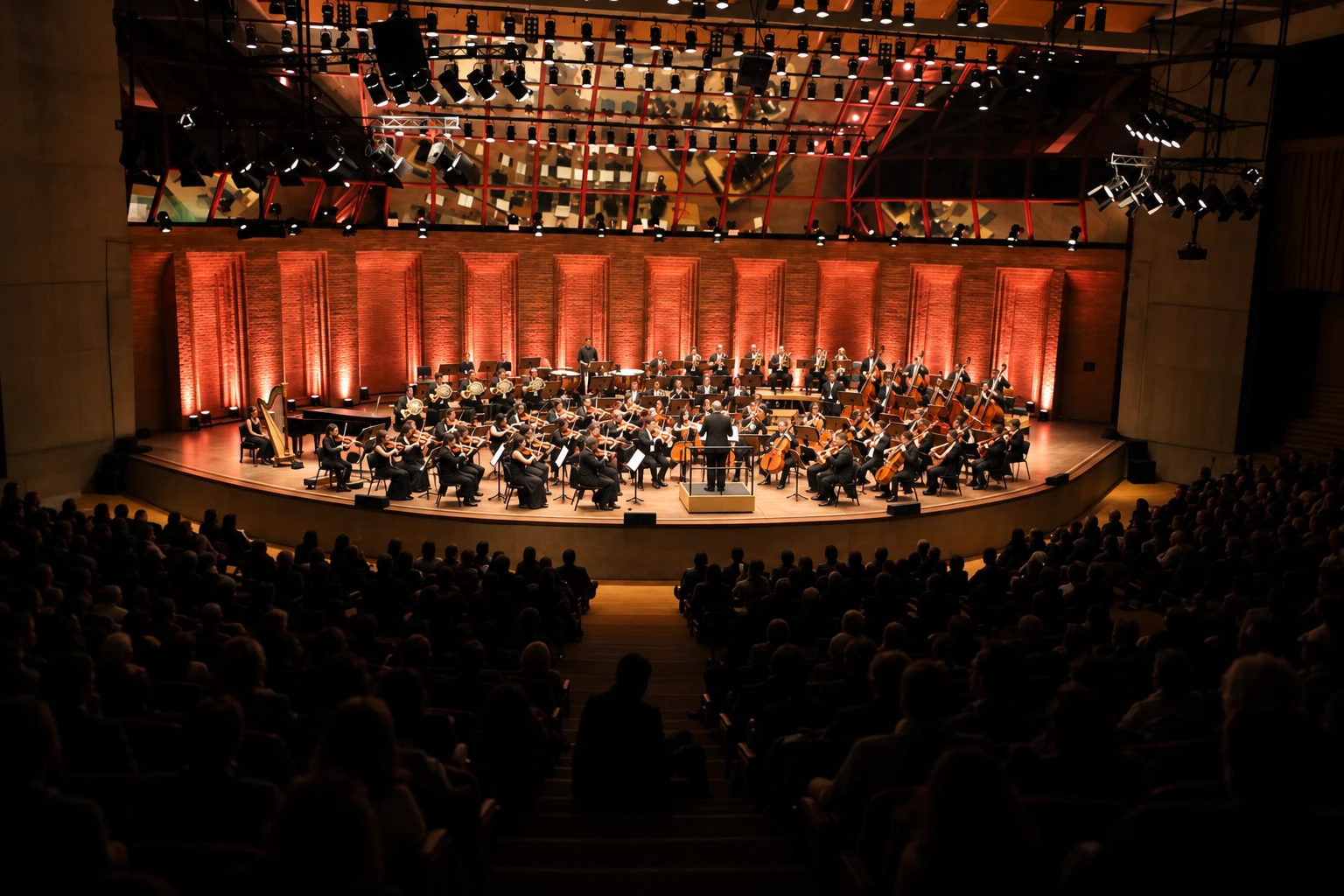
The Campos do Jordão Winter Festival is the city’s main event and one of the most traditional classical music festivals in Latin America. Conceived in 1970, it lasts about a month, usually from early July to early August. The program features orchestras, chamber groups, choirs and soloists from Brazil and other countries, plus performances by young scholarship musicians who study in the city for the month. There are also evenings of popular music. The main stage is the Claudio Santoro Auditorium, in Alto da Boa Vista, with 820 seats. Outdoor concerts take place in Capivari Park, next to the square. The list is completed by the São Pedro Apóstolo Chapel at Palácio Boa Vista, the Espaço Cultural Dr. Além and the open-air amphitheater at the Felícia Leirner Museum. In recent editions, concerts did not charge admission. For indoor venues, such as the auditorium, you need to collect tickets in advance, and a portion is distributed on the day; entry to Capivari Park is free. The program is released a few weeks before opening. July is also the busiest month in the city: festival visitors should book accommodation well in advance.

Stops: Claudio Santoro Auditorium, Capivari Park, São Pedro Apóstolo Chapel, Espaço Cultural Dr. Além, Felícia Leirner Museum.

Includes: Check each edition to see whether there is a fee and how to collect tickets for indoor venues. Transport, parking and food are each person's responsibility.

Tip: For concerts at the Claudio Santoro Auditorium, pick up your ticket as soon as distribution opens and leave Capivari with plenty of time, because July traffic is slow. At outdoor evening concerts, temperatures can drop close to zero: bring gloves, a hat and a blanket.

Best time: From early July to early August; check the dates for the year’s edition.

Day by day

1, 2 and 3-day itinerary in Campos do Jordão

Suggestions to plan the trip. Change the order of the days according to the weather and tour availability.

1 day · Campos do Jordão in 1 day: cable car, Capivari and a viewpoint

For those coming from São Paulo or the Paraíba Valley for a day trip · Based in Campos do Jordão
  1. Day 1 · From Morro do Elefante to late afternoon in Capivari

    Arrive early, park near Parque Capivari and take the cable car up to Morro do Elefante while the line is short. From the viewpoint you can get a sense of the town’s layout. Back at the park, walk around the lake and head to Praça do Capivari and Boulevard Genève. After lunch, choose an outing in the upper area depending on the weather. With clear skies, Pico do Itapeva, about 14 km away, offers views of the Vale do Paraíba. With mist or light rain, Alto da Boa Vista, with Palácio Boa Vista if it’s an open-visiting day, and the sculpture garden at Museu Felícia Leirner are better options. Finish in Capivari in the late afternoon, when it cools down and the neighborhood fills up. Horto Florestal and Amantikir require more time and are best visited with an overnight stay.

2 days · Campos do Jordão in 2 days: Capivari, parks and nature
For weekend and first visit · Based in Campos do Jordão
  1. Day 1 · Capivari, cable car and Alto da Boa Vista

    Start with the cable car and Morro do Elefante early in the morning. Then walk around Capivari: the park’s lake, the square with the thermometer and the shopping streets. In the afternoon, go up to Alto da Boa Vista. Get a ticket for Palácio Boa Vista if it’s an open-visiting day, and visit Museu Felícia Leirner to walk among the sculptures with views of Pedra do Baú. Return to Capivari for dinner. In July, check whether there’s a concert from the Winter Festival at Parque Capivari or at Auditório Claudio Santoro.

  2. Day 2 · Horto Florestal and Amantikir

    Nature day. Leave early for Horto Florestal, about 13 km from Capivari, and do the Cachoeira trail or the Pontes trail, both easy. Have lunch in the park. On the way back, stop at Ducha de Prata, which is on the route. If you have time and energy left in the afternoon, visit Parque Amantikir with its gardens and mazes; if you prefer views, swap it for Pico do Itapeva, provided the sky is clear. Doing all three in one day is rushed: choose two.

3 days · Campos do Jordão in 3 days: the unhurried town
For those who want to see the parks at a relaxed pace, with children or in winter · Based in Campos do Jordão
  1. Day 1 · Capivari and Morro do Elefante

    Use the first day to get your bearings. Take the cable car to Morro do Elefante in the morning and spend the rest of the day in Capivari: Parque Capivari with its lake and children’s attractions, the square and Boulevard Genève. In the late afternoon, sit in a café and watch the neighborhood fill up. Bring a warm layer for the evening, at any time of year.

  2. Day 2 · Horto Florestal and Ducha de Prata

    Dedicate the day to Horto Florestal. Arrive early, do a trail in the morning such as the Cachoeira trail, which is flat, and another after lunch like the Campos trail, which is a bit more demanding. Travelers with children can swap the second trail for the zipline, the canopy course or the bicycles. On the return to Capivari, stop at Ducha de Prata to see the falls from the walkways.

  3. Day 3 · Itapeva, Amantikir and Alto da Boa Vista

    If the day dawns clear, start at Pico do Itapeva before the mist rolls in. Then visit Parque Amantikir, which requires two to three hours. After lunch, close the trip at Alto da Boa Vista, with Palácio Boa Vista if it’s an open-visiting day, and Museu Felícia Leirner. With closed weather, reverse the order: start with the palace and the museum and leave the viewpoints for when it clears. Those with a car and an extra day can go to São Bento do Sapucaí to see Pedra do Baú on the other side of the range, which is part of the Serra da Mantiqueira guide.

Best time to go

When to go: Campos do Jordão month by month

The seasons shown are the most usual ones; nature doesn't always follow the calendar.

January High rain

Rainy summer · Quieter town

The rainiest month of the year, with heavy showers almost every day, usually in the afternoon. Highs are around 23 °C and nights are cool, often below 15 °C. There are shorter lines and less traffic than in winter. Do outdoor activities in the morning and save Palácio Boa Vista and Capivari’s shops for the afternoon. The viewpoints are often misty in the morning.

February High rain

Frequent rain · Carnival

Remains warm by mountain standards, with highs around 23 °C, and rainy, with clearer mornings than afternoons. The trails in Horto Florestal get muddy. Carnival usually fills the town for a few days; outside that period, visitor numbers are low.

March High rain

End of summer · Green gardens

It still rains frequently, but storms begin to thin out toward the end of the month. The gardens at Amantikir and the forests of the Horto are at their greenest. Outside holiday periods, the town is quiet. Capivari often has Easter decorations in the weeks before the date.

April Some rain

Dry autumn · Yellow plane trees

The dry season begins. Lows are around 9 °C and highs near 21 °C; nights already call for a heavy coat. Fog decreases and views from Morro do Elefante and Pico do Itapeva tend to clear. Plane tree leaves change color. Holy Week and the Brazilian holiday of Tiradentes fill the town.

May Some rain

First cold snaps · Pinhão Festival

Days of steady sun and the first cold early mornings. It’s a low-traffic month, good for trails and viewpoints before high season. Pinhão, the araucaria seed, is in season, and the town usually holds a festival dedicated to it between April and May.

June Low rain

Frost · Start of high season

Dry and cold: highs are around 18 °C and nights drop to about 3 °C, with frost and temperatures near zero on some days. Skies are often blue and the viewpoints are open. Corpus Christi marks the start of high season. Book accommodation and bring gloves, a hat, and layered clothing.

July Low rain

Winter Festival · Cherry trees in bloom

The coldest and most crowded month. Early mornings hover around 3 °C and can reach zero; snow is rare and shouldn’t be expected. The Winter Festival, focused on classical music, runs through the month, and Brazilian school holidays bring the town to full capacity. Cherry trees usually bloom between July and August. Book everything in advance and arrive early at attractions.

August Low rain

Dry and cold · End of high season

Remains dry, with chilly mornings and sunny afternoons. The Winter Festival usually ends early in the month, and cherry trees may still be in bloom. After the holidays, weekday traffic falls; weekends remain busy. It’s one of the months with the clearest skies for Pico do Itapeva.

September Some rain

Spring · Return of the rains

Temperatures rise and the first rains return. Gardens begin to flower, and trails are still firm. The town usually hosts art programming tied to spring from September to November. The September 7th holiday in Brazil brings a peak in visitors.

October Some rain

Town in bloom · Afternoon rain

Minimum temperatures rise above 10 °C and rain returns more regularly, usually in the afternoon. The mountains turn green and the flowerbeds in Capivari and Amantikir are in bloom. Outside the October 12 public holiday in Brazil, it’s a quiet month.

November High rain

Frequent rain · Low activity

It rains frequently, especially in the afternoon, and mist covers the high areas on many days. Prefer morning outings and have an indoor plan for the afternoon. Brazilian public holidays in the month bring peaks of activity; on other days the town is quiet.

December High rain

Christmas in Capivari · Summer showers

Very rainy, with mild days and cool nights. Capivari is decorated and hosts Christmas programming, and between Christmas and New Year’s the activity picks up again. The waterfalls and the Sapucaí River run full. Bring a raincoat and a light warm layer.

Plan the journey

How to get there: Campos do Jordão

By plane: Guarulhos and São José dos Campos

Campos do Jordão does not have a commercial airport. The most used option is São Paulo–Guarulhos International Airport (GRU), about 160 km away: it sits by the exit to the Paraíba Valley, and the route to the mountains does not pass through the city of São Paulo. It receives flights from across Brazil and many countries.

São José dos Campos airport is closer but small and has few flights; check with the airline whether it operates on your dates. São Paulo’s Congonhas Airport is another option, with the drawback of requiring a crossing of the capital.

From the airports you continue by road. Options are rental car, the most used, transfer, or bus. There is no direct bus from Guarulhos to Campos do Jordão: you must take a bus to São José dos Campos and change there, which lengthens the trip.

By bus: from São Paulo, São José dos Campos and Rio de Janeiro

From São Paulo, Pássaro Marron departs the Tietê Bus Terminal for Campos do Jordão; the trip takes about 3 hours. When there’s no direct service, an alternative is to go to São José dos Campos, which has more departures per day, and change buses there; from that point it’s less than 2 hours to Campos do Jordão.

Passengers arriving at Guarulhos airport use the same connection: there are buses from the airport to the São José dos Campos bus terminal in a little over 1h30.

From Rio de Janeiro, Viação Sampaio departs from the Novo Rio bus terminal. It’s a long trip, 5h30 to 7h30 depending on the schedule; confirm whether the line operates on your date.

On winter weekends and holidays tickets sell out: buy in advance, including the return. The bus terminal is not in Capivari; to reach your lodging, count on taxi, ride-hailing or an urban bus.

By car: from São Paulo, Rio de Janeiro and Minas Gerais

From São Paulo it’s about 180 km, a little over 2 hours without traffic. There are two routes to the Paraíba Valley with similar travel times: the Ayrton Senna/Carvalho Pinto highways or the Via Dutra (BR-116), both tolled. Near Taubaté take the Rodovia Floriano Rodrigues Pinheiro (SP-123), which climbs the mountain to the town. It’s well maintained and winding in some stretches.

From Rio de Janeiro it’s about 330 km: follow the Via Dutra to the same exit for SP-123.

Another ascent is via SP-50, through São José dos Campos, Monteiro Lobato and Santo Antônio do Pinhal — slower and very curvy. From Belo Horizonte it’s about 490 km, via the Rodovia Fernão Dias to southern Minas and then through São Bento do Sapucaí.

Fog is common in the mountains, especially in summer and at dusk: reduce speed and avoid driving up at night if you don’t know the road. On the return from holiday weekends and Sundays in July the descent toward the valley can be slow; leave early.

By transfer

If you arrive by plane and don’t want to drive in the mountains, a transfer takes you from Guarulhos or Congonhas airport to your accommodation. These are usually private, per-vehicle services.

Book in advance, provide your flight number and confirm the waiting time included in case of delay. It’s also worth arranging the return ride.

Remember that without a car, excursions outside Capivari rely on taxi, ride-hailing apps or a tour agency. Travelers who plan to visit Horto Florestal, Amantikir and Pico do Itapeva in a few days often find it quicker to rent a car at the airport.

How to get around Campos do Jordão

Capivari is best explored on foot: the square, the shopping streets, Parque Capivari and the cable car are all just minutes from each other. If you stay in the neighborhood or nearby, you won’t need transport at night.

Other attractions are more spread out. Alto da Boa Vista is a few kilometers away, Horto Florestal about 13 km, and Pico do Itapeva about 14 km from Capivari. A car is the most practical option; in high season traffic and parking in Capivari require patience.

Without a car, taxis are available at Praça do Capivari; hotel reception can call them, and they will often agree to longer trips. Ride-hailing apps operate in town but do not always appear in remote spots: arrange your return with the driver. The city bus reaches Horto Florestal and Alto da Boa Vista; check schedules.

A tourist train on wheels also departs from Capivari on a circuit of about 1h30 with stops, including Ducha de Prata. Local agencies sell tours with transport to the main attractions and to Pedra do Baú in São Bento do Sapucaí.

Your questions

Frequently asked questions about Campos do Jordão

How many days to stay in Campos do Jordão?

Two days are enough for Capivari, the Morro do Elefante cable car, and one or two parks. With three days you can calmly see Horto Florestal, Parque Amantikir, Alto da Boa Vista and Pico do Itapeva. If you only have one day, stick to Capivari, the cable car and one lookout.

What is the best time to go to Campos do Jordão?

It depends on what you’re looking for. From June to August it’s cold, the weather is dry and the city is in high season, with the Winter Festival in July; this is also when everything is busiest. April, May and September have dry or only slightly rainy days, cold nights and far fewer people. From November to March it rains a lot, but the town is empty and green.

Does it snow in Campos do Jordão?

It’s very rare: there are few records of snow in the city, and they’re all old. What often happens in winter is frost, which leaves lawns and roofs white on the coldest dawns, with temperatures around zero or below. Come for the cold and the scenery, but don’t count on snow.

Do you need a car in Campos do Jordão?

In Capivari, no: everything is walkable. For Horto Florestal, Parque Amantikir, Alto da Boa Vista and Pico do Itapeva you need transportation, because they are several kilometers away. Without a car, use taxi, rideshare, local bus where available, or agency tours, and always arrange the return from distant spots.

Where to stay in Campos do Jordão?

Capivari and its immediate surroundings are the choice for those who want to do everything on foot at night, between restaurants and shops; in exchange there is more activity and traffic in high season. On the slopes and in outlying neighborhoods, like the road to Horto Florestal and Alto da Boa Vista, accommodations offer more quiet, forest and views, and require a car. Abernéssia and Jaguaribe are the oldest villages, outside the tourist area.

What to do in Campos do Jordão on a rainy day?

Stick to covered activities: visiting Palácio Boa Vista, when not suspended due to rain, the knitwear and chocolate shops and the cafés in Capivari, the ice-skating rink and the covered attractions at Parque Capivari. The cable car stops in rain or strong wind, and lookouts lose their view in fog. In summer, rain usually comes in the afternoon: do outdoor tours in the morning.

Is it worth going to Campos do Jordão in summer?

It’s worthwhile for those who want to escape the heat: highs stay around 23 °C and nights are cool. The town is quieter, without the winter lines. The downside is the rain, almost daily from December to March, and fog at the lookouts. Plan outdoor activities for the morning.

What to do in Campos do Jordão with children?

Parque Capivari concentrates the attractions for kids: pedal boats on the lake, a carousel, Ferris wheel, little train and mountain sled, plus the cable car. Horto Florestal has flat trails, like the Waterfall trail, lawns, bicycles and a treetop adventure course. At Morro do Elefante, the elephant sculptures please little ones. Bring warm clothing for children at any time of year.

What can you visit without paying entrance in Campos do Jordão?

Walking around Capivari, the square and Parque Capivari, where only individual attractions charge; the roadside lookout at Pico do Itapeva; and the top of Morro do Elefante for those who drive up. Palácio Boa Vista does not charge entrance. In recent editions, the Winter Festival concerts have also been free.

Is Pedra do Baú in Campos do Jordão?

No. Pedra do Baú is in São Bento do Sapucaí, a neighboring municipality on the other side of the mountain range, connected to Campos do Jordão by a paved road. From Campos do Jordão it can be seen from afar, from spots like the garden of the Felícia Leirner Museum. To climb Bauzinho or Ana Chata, reserve half a day and go by car or with an agency; the excursion is in the Serra da Mantiqueira guide.

What clothes to pack for Campos do Jordão?

Warm clothing at any time of year. In winter, a heavy coat, gloves, a beanie, and layered clothing, because nights can be close to 0 °C while sunny days warm up. In summer, a light jacket for the evening and a raincoat. For Horto Florestal and Amantikir, closed, comfortable shoes; for Pico do Itapeva, a windbreaker.

Which is the nearest airport to Campos do Jordão?

São José dos Campos is the closest, but it has few flights. In practice the main gateway is São Paulo International Airport (Guarulhos), about 160 km away, with flights from across Brazil and many countries. From there you continue by rental car, transfer, or bus with a change in São José dos Campos.

What is the Campos do Jordão Winter Festival like?

It is a classical music festival that runs for about a month, usually from early July to early August, featuring orchestras, chamber groups, and young scholarship musicians. Concerts take place at the Claudio Santoro Auditorium, outdoors in Parque Capivari, and at other city venues. Check the program and ticket collection procedures for each edition, and book accommodation well in advance.

Traveler, share your experiences through photos Up to 5 photos of each place you visited.
See the destination Serra da Mantiqueira Find another city