Walk through Capivari
From Praça do Capivari, Vila Capivari on foot 2 to 3 hours late afternoon and early evening easy
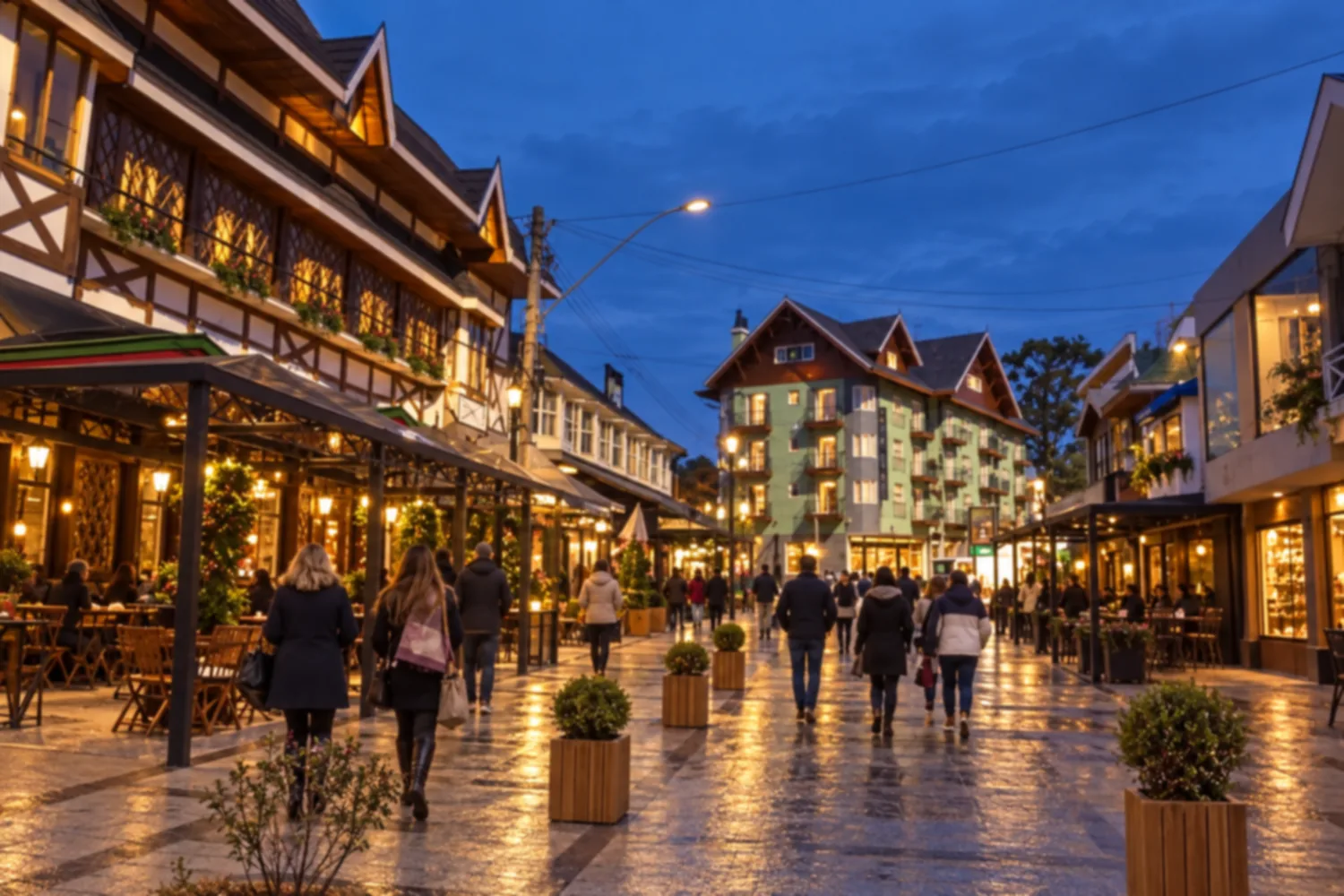
Capivari is the neighborhood where a visit to Campos do Jordão begins and, almost always, ends. It is flat, compact and walkable, with buildings featuring Swiss- and German-inspired facades and roofs.
The center of everything is Praça do Capivari, also called Praça São Benedito because of the church. It has plane trees, pines, flowerbeds and a street thermometer that shows the day’s cold. Around it are Djalma Forjaz and Diogo José de Carvalho streets and Avenida Macedo Soares, with knitwear and chocolate shops, cafés and fondue and German cuisine restaurants. On Boulevard Genève, a side street is decorated with hanging umbrellas and string lights.
Across the street begins Parque Capivari, about 40,000 square meters, with gardens and a lake with pedal boats. Entry is free; attractions such as the 22-meter Ferris wheel, the carousel, the ice-skating rink and the mountain sled are paid individually. The cable car to Morro do Elefante departs from there. At night, the park and the Ferris wheel are illuminated.
The atmosphere changes by the hour. In the morning the streets are quiet and good for photos. In the late afternoon, when it cools, the neighborhood fills up, and in winter the nights are the highlight, with the streets full of people in coats.
Stops: Praça do Capivari, Boulevard Genève, Djalma Forjaz Street, Avenida Macedo Soares, Parque Capivari.
Includes: There is no charge to walk around the square, the streets and Parque Capivari. The park attractions, parking, shopping and meals are paid separately; check the current price list.
Tip: In high season, arrive early and leave your car parked: spaces disappear and traffic clogs the streets around the square. Bring warm clothing even in summer.
Best time: All year. From June to August the nights are cold and busy; in December the neighborhood gets Christmas decorations.
Cable Car and Elephant Hill
From Capivari Park, Vila Capivari cable car; or drive to the top of the hill 1 hour to 1 hour 30 minutes morning easy
Elephant Hill is Capivari’s viewpoint: it sits just above the neighborhood, at about 1,800 meters altitude, and from the top you can see the village roofs, the valley the town spreads across, and the Mantiqueira mountains.
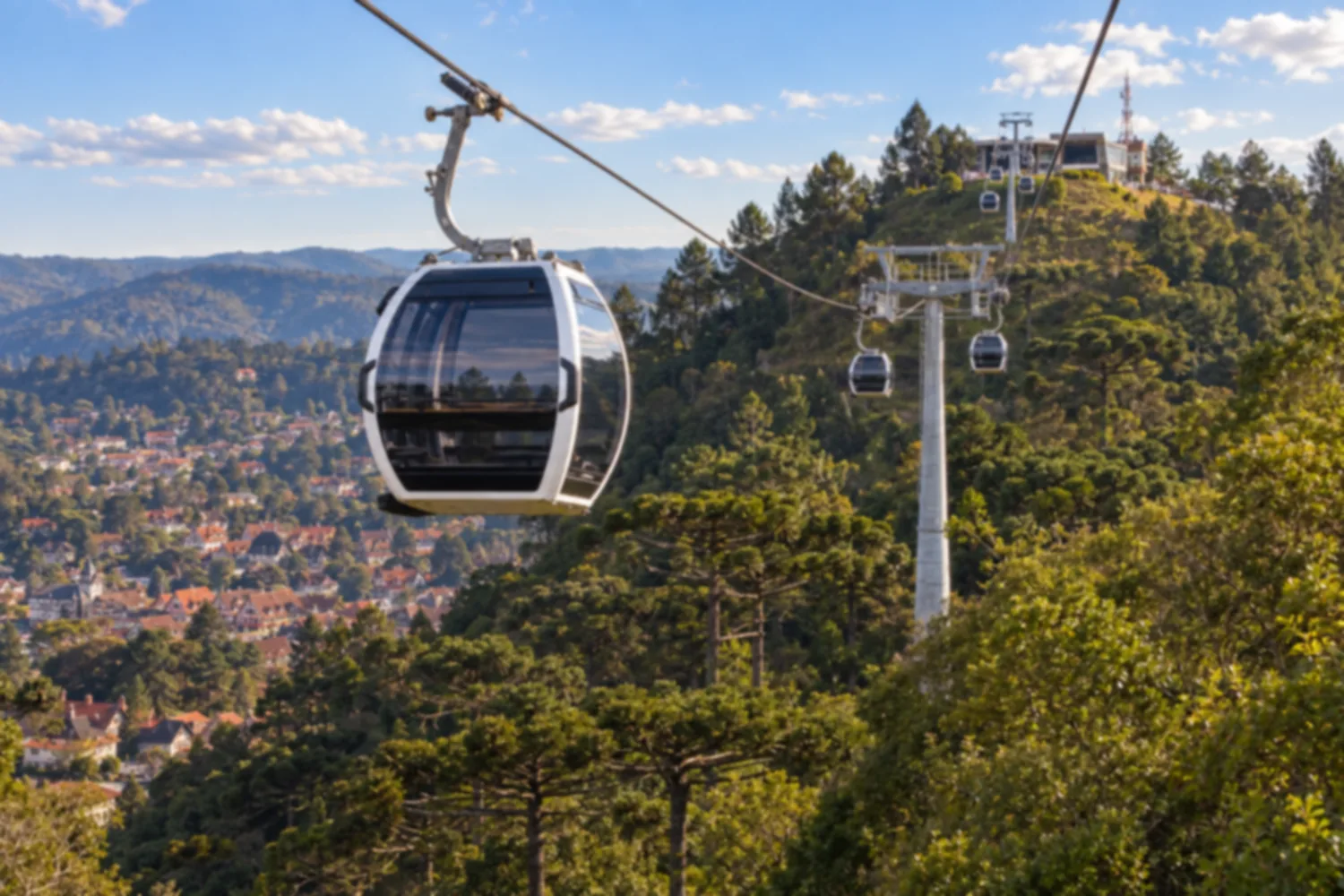
The traditional way up is Park Capivari’s cable car, from 1970, the first in Brazil. Today it’s mixed: visitors choose between the open chair, with a safety bar, and the enclosed cabin, which accepts pets. The ascent passes over the slope’s araucaria trees.
At the top there is a lookout, a garden with benches, and the Elephant Park, with elephant sculptures and plaques that tell the animals’ story. Access to this area is free for visitors who arrive.
You can also drive up in about ten minutes from Capivari via the Jardim Belvedere neighborhood; parking spots at the top are few. It’s the alternative for those who are afraid of heights or find the cable car not operating: with rain or strong wind, service is suspended.
The outing is short and suitable for any age. Combine it with a walk through Capivari during the same period.
Stops: Capivari Park, Cable Car, Elephant Hill, Elephant Park.
Includes: The cable car ticket covers the ascent and descent. Other Park Capivari attractions and parking are paid separately; check the park’s website for the current price list.
Tip: Go up early: there are shorter lines and, in summer, rain usually comes in the afternoon. In the open chair, carry little in your hands and hold your phone securely. Bring a jacket for the hilltop.
Best time: All year; from April to September there are more dry days and clear skies. In July lines are long.
Alto da Boa Vista: Palácio Boa Vista and Felícia Leirner Museum
From Vila Capivari car, taxi or rideshare 3 to 4 hours morning or afternoon easy, with uphill sections in the garden
Alto da Boa Vista is the elevated, tree-lined part of town, a few kilometers from Capivari, and houses the two main art sites of Campos do Jordão. They are close to each other, on the same uphill road.
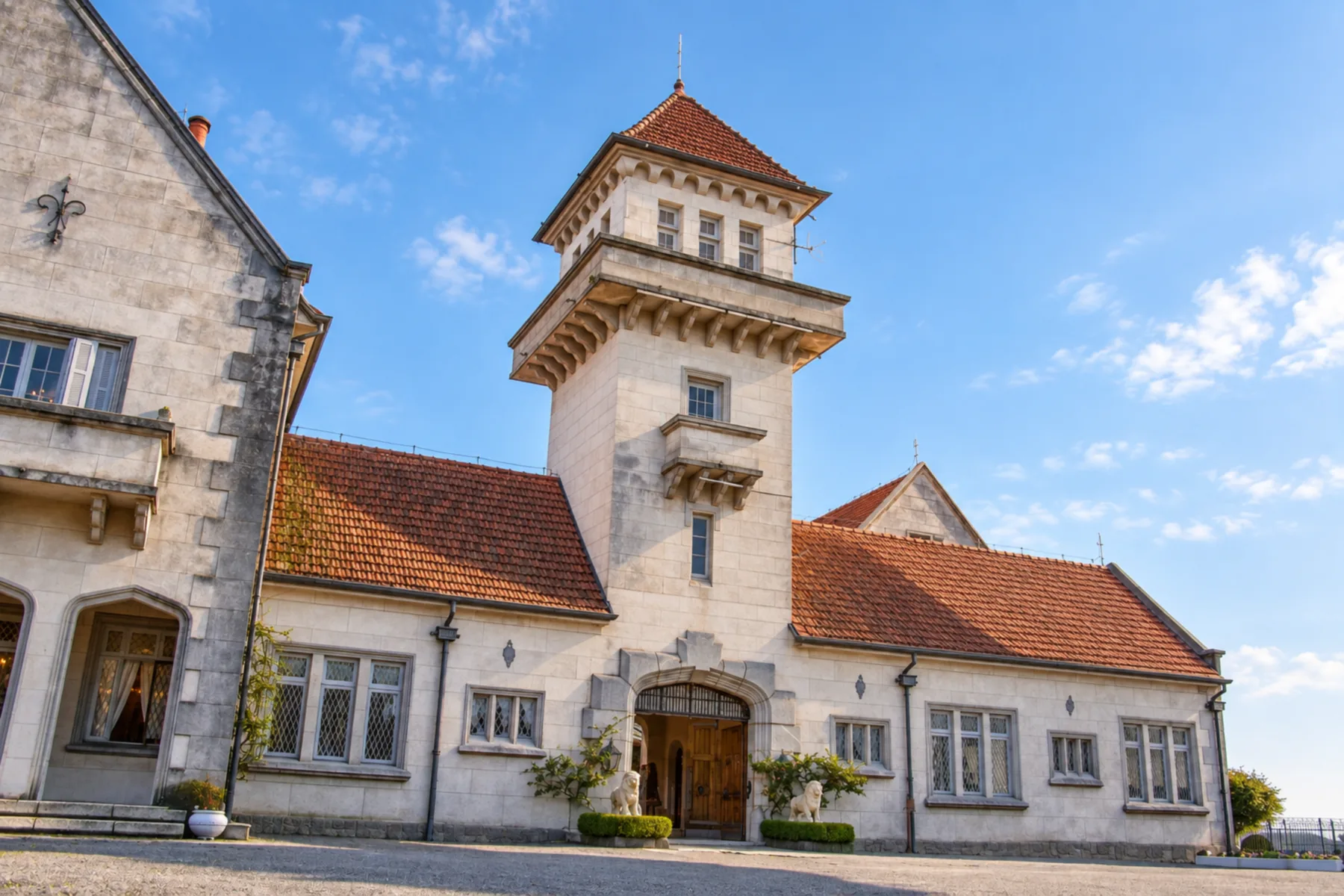
The Palácio Boa Vista, dating from 1964, is the state of São Paulo’s winter residence and also functions as a museum. It preserves furniture, porcelain, and paintings by Brazilian artists such as Tarsila do Amaral, Anita Malfatti and Di Cavalcanti, as well as temporary exhibitions. Visits are always accompanied by educators, in groups of up to 20 people, with numbered tickets handed out on a first-come, first-served basis. Bags, cell phones and cameras must be left in the cloakroom.
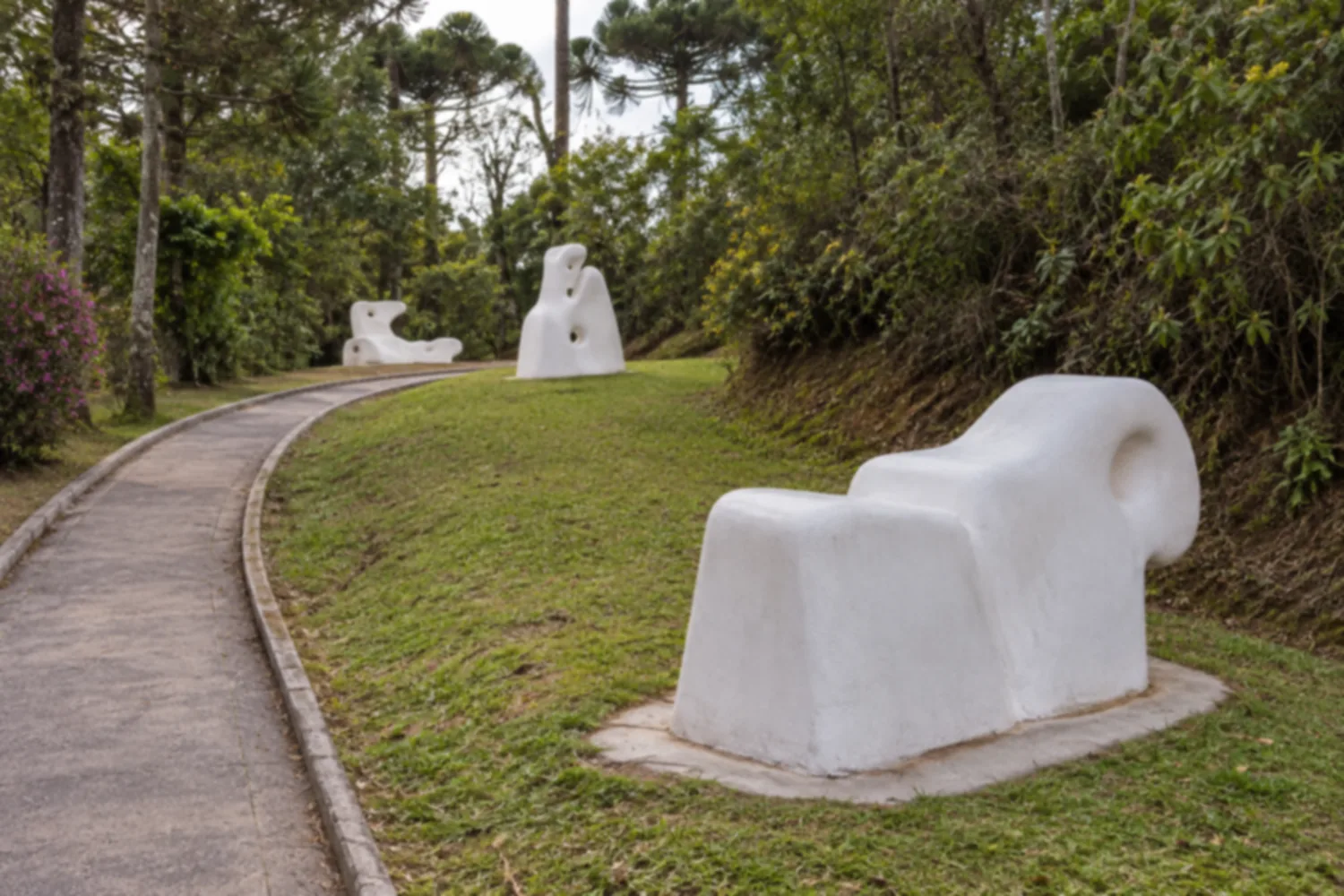
The Felícia Leirner Museum is an open-air sculpture garden of about 35,000 square meters. The works, in bronze, white cement and granite, are spread across lawns and patches of forest and follow the artist’s phases, from figurative to abstract, between 1950 and 1982. Felícia Leirner was born in Warsaw, arrived in Brazil in 1927 and lived in Campos do Jordão. From some points in the garden you can see Pedra do Baú.
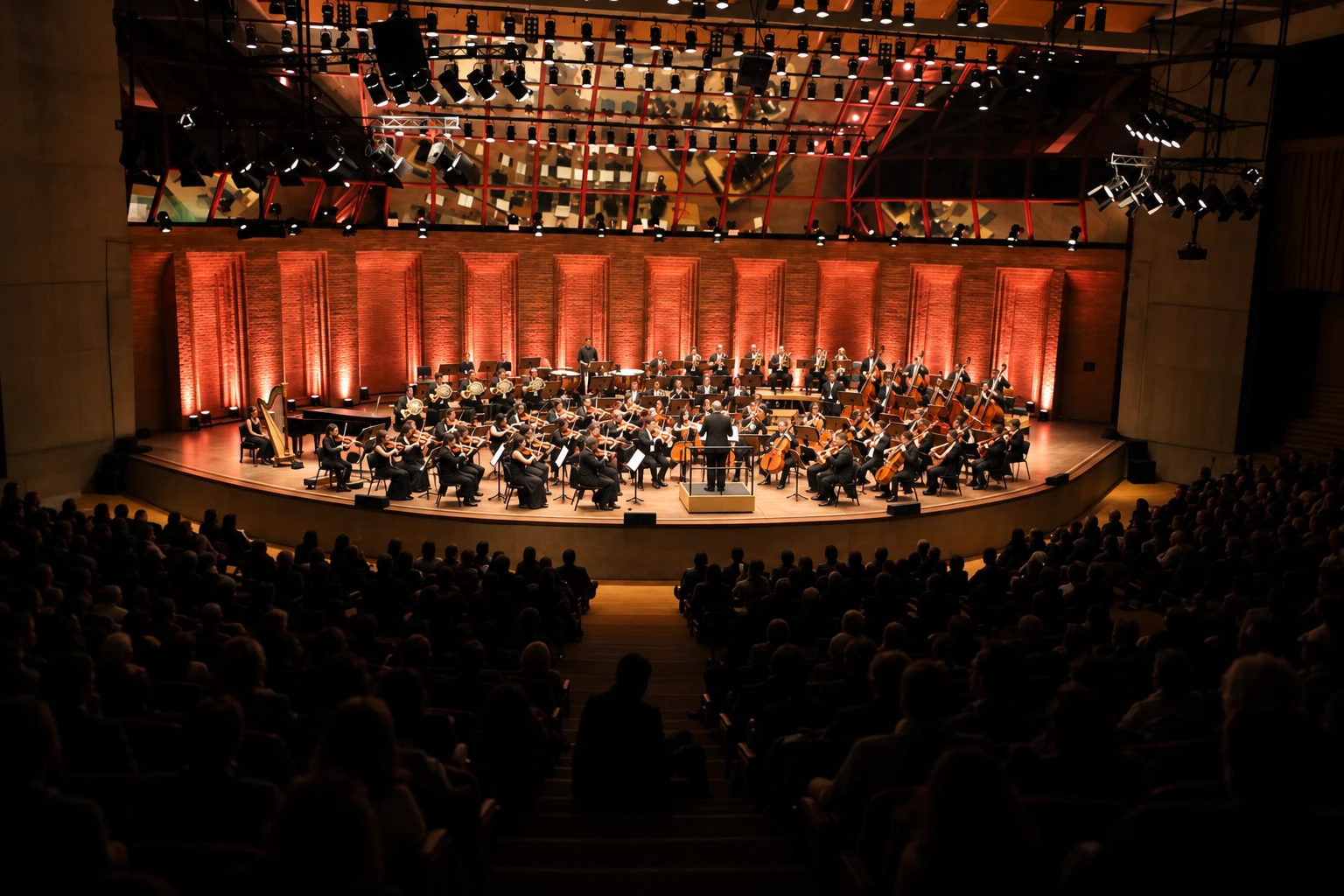
On the same grounds is the Claudio Santoro Auditorium, with 820 seats and large glass walls, the main hall of the Winter Festival, which also hosts concerts at other times of the year.
Stops: Palácio Boa Vista, Chapel of São Pedro Apóstolo, Felícia Leirner Museum, Claudio Santoro Auditorium.
Includes: There is no admission charge at Palácio Boa Vista. Museu Felícia Leirner charges an entrance fee, with exemptions in some cases; check the current schedule. Parking at the museum and a café on site.
Tip: The palace is not open every day and may suspend visits in rain or when it hosts official guests: confirm in advance and arrive at gate opening, because visitor slots run out early in high season. Bring a coat, as it is windy at the higher area.
Best time: All year round; on dry autumn and winter days the view of the garden is clearer. In July, arrive early.
Horto Florestal and Ducha de Prata
From Vila Capivari car, taxi, ride‑hail or municipal bus half a day to a full day morning and early afternoon easy to moderate
The Campos do Jordão State Park, commonly called Horto Florestal, is the nature day of the trip. It is about 13 km from Capivari, via paved avenue, and protects araucaria forests and highland fields near the border with Minas Gerais. The park has existed since 1941; pine trees planted in the early decades still mark the landscape near the entrance.
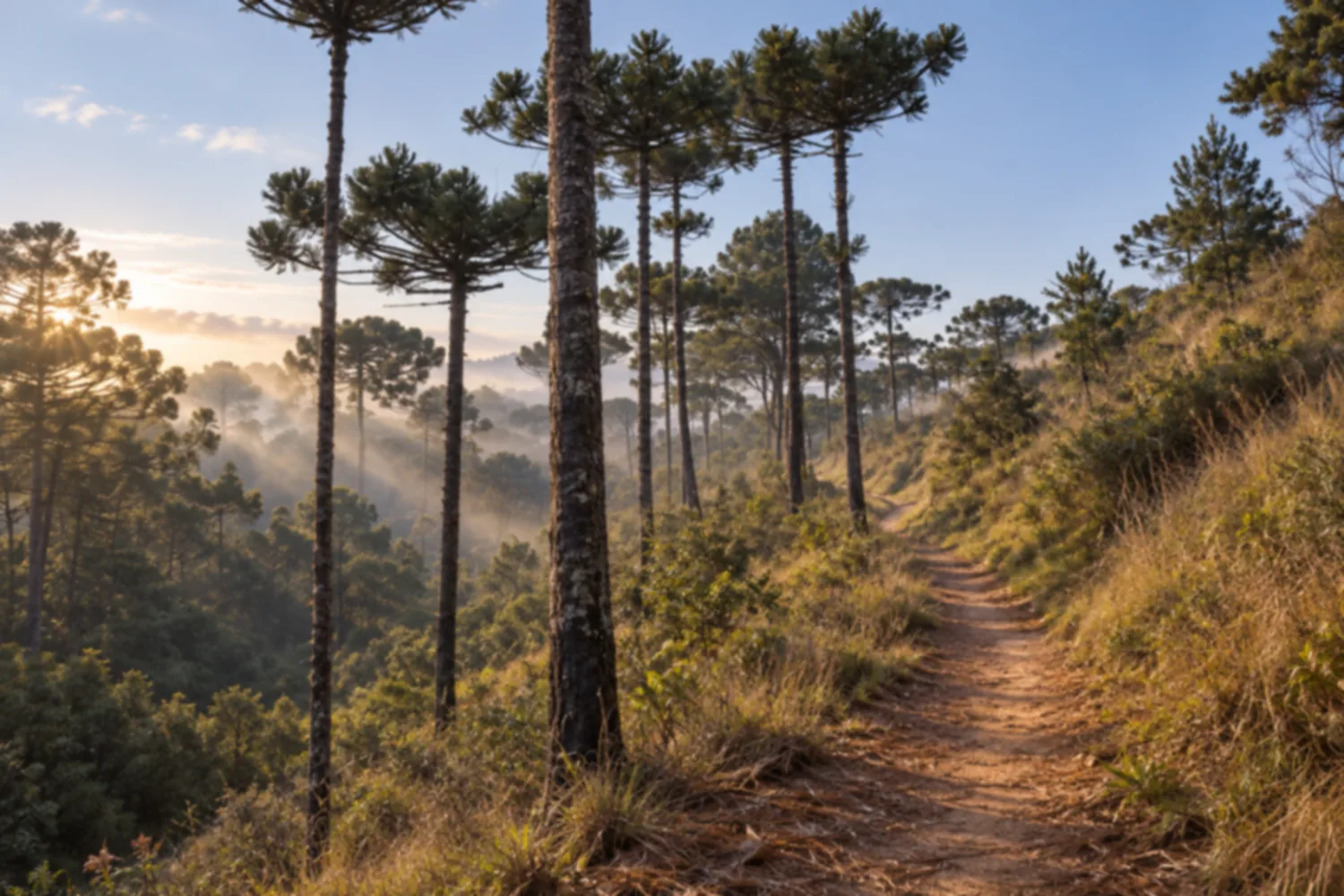
The visitor area follows the Sapucaí River, with lawns, a lake and places to eat. Marked trails leave from there. The Waterfall Trail is flat, about 4.5 km. The Bridges Trail crosses suspension bridges, and the Sapucaí River Trail runs along the bank with little effort. The Fields Trail is intermediate and ends in an open area surrounded by araucarias. The Galharada Trail follows the stream of the same name through the forest. Monkeys and many birds appear near the paths.
Those seeking more activity will find zipline, canopy course, bike rentals and pedal boats, paid separately.
On the road between Capivari and the Horto is Ducha de Prata, a series of waterfalls formed by damming the Perdizes Stream. Wooden walkways pass beside the water, and around it there is a gallery of knitwear, handicraft and chocolate shops. It is a stop of about an hour, on the way there or back.
Stops: Ducha de Prata, Campos do Jordão State Park, Waterfall Trail, Bridges Trail, Sapucaí River Trail, Fields Trail, Galharada Trail.
Includes: The park ticket gives access to the visitor area and trails. Zipline, canopy course, bicycles and parking are paid separately; check the current price list. At Ducha de Prata, shopping and food are paid separately.
Tip: Bring warm clothes, water and closed shoes, and do not feed the monkeys. Cell signal is weak in the park: if you go by taxi or ride‑hail, arrange your return beforehand. In summer, go early, before the afternoon rain.
Best time: All year; from April to September the trails are drier. From December to March it rains a lot and the river rises.
Amantikir Park: gardens and mazes
From Capivari neighborhood car, taxi or ride‑hail 2 to 3 hours morning easy, with gentle climbs
Amantikir is a garden park created in 2007 by landscape artist Walter Vasconcellos on the grounds of a former horse farm, in the Gavião Gonzaga neighborhood. In about 60,000 square meters it brings together more than 700 plant species, in gardens inspired by styles from several countries.
The visit is a walk along paths that go up and down the hillside, among flower beds, lawns, ponds and hedgerow mazes, with viewpoints facing the Mantiqueira mountains. Each garden has its own design, and the whole changes with the seasons: summer is greener and more florid, and in winter the grass can be covered with frost in the morning.
The route is entirely on foot, on terrain with gentle climbs, and takes two to three hours at a relaxed pace. There is a café and a shop, and the park offers guided visits. It is open every day of the year.
Stops: Amantikir Park.
Includes: The ticket grants access to the gardens and the park’s trails. Food is extra. Reduced tickets are available for some groups with ID; check the park’s website for the current price table.
Tip: Arrive at opening time to walk with fewer people, especially in July and on holidays. Wear comfortable shoes and bring a warm layer. On days of heavy rain the visit loses much of its appeal: reschedule if you can.
Best time: All year. From October to March the gardens are usually more in bloom; from June to August the days are dry and cold.
Itapeva Peak: Vale do Paraíba viewpoint
From Capivari neighborhood car, taxi, ride-hailing app, or agency tour 1 to 2 hours morning or late afternoon easy
Itapeva Peak stands at 2,030 meters of altitude on the ridge of the range, and is one of the highest viewpoints in Brazil accessible by car. It lies in the territory of Pindamonhangaba, right on the border, but the road access is from Campos do Jordão: about 14 km from Capivari, on paved road with many curves.
From the top, the range drops down to the Vale do Paraíba, and the view reaches several cities below, such as São José dos Campos, Taubaté and Pindamonhangaba. The name comes from Tupi and means flat stone.
There are two stopping points. At the roadside, an open viewpoint with a portal showing the name and altitude. Beside it is a private park with a large wooden lookout, a lavender bed and a snack bar; there entrance and parking are charged.
Everything depends on the weather. It is common for the peak to be shrouded in fog even when the sky is clear in town, and the view can close within minutes. In good weather, mornings usually have cleaner air, and late afternoon offers sunset light over the valley. It is colder and windier than Capivari at any time of year.
Stops: Itapeva Peak.
Includes: The roadside viewpoint is free. At the private park, entrance and parking are paid; check the current price table and accepted payment methods.
Tip: Check the sky before you leave and, if the day starts overcast, save it for another time. Bring a windbreaker, a hat, and cash. If you don’t have a car, arrange your return with the driver, because there are few transport options up there.
Best time: From May to September, in the dry season, the sky is usually clearer. In summer fog is more frequent.


 Antarctica
 Argentina
 Bolivia
 Chile
 Colombia
 Ecuador
 Falkland Islands (Malvinas)
 French Guiana
 Guyana
 Paraguay
 Peru
 Suriname
 Uruguay
 Venezuela
 Austria
 Belgium
 Croatia
 Denmark
 Finland
 France
 Germany
 Greece
 Hungary
 Iceland
 Ireland
 Italy
 Luxembourg
 Norway
 Poland
 Portugal
 Slovakia
 Slovenia
 Spain
 Sweden
 Switzerland
 the Czech Republic
 the Netherlands
 the United Kingdom
 Turkey
 Bermuda
 Canada
 Greenland
 Mexico
 Saint Pierre and Miquelon
 the United States
 the Dominican Republic
 Japan
 Egypt
 South Africa
 Australia
 Fiji
 New Zealand
 Papua New Guinea


 June/July/August