6 places to visit Mangaratiba (RJ), chosen by the Cidade Turismo guide.
Illustrative images. The pictures in this guide are illustrations based on the real place, not photographs, and may differ from it.
To start
The 6 main places Mangaratiba
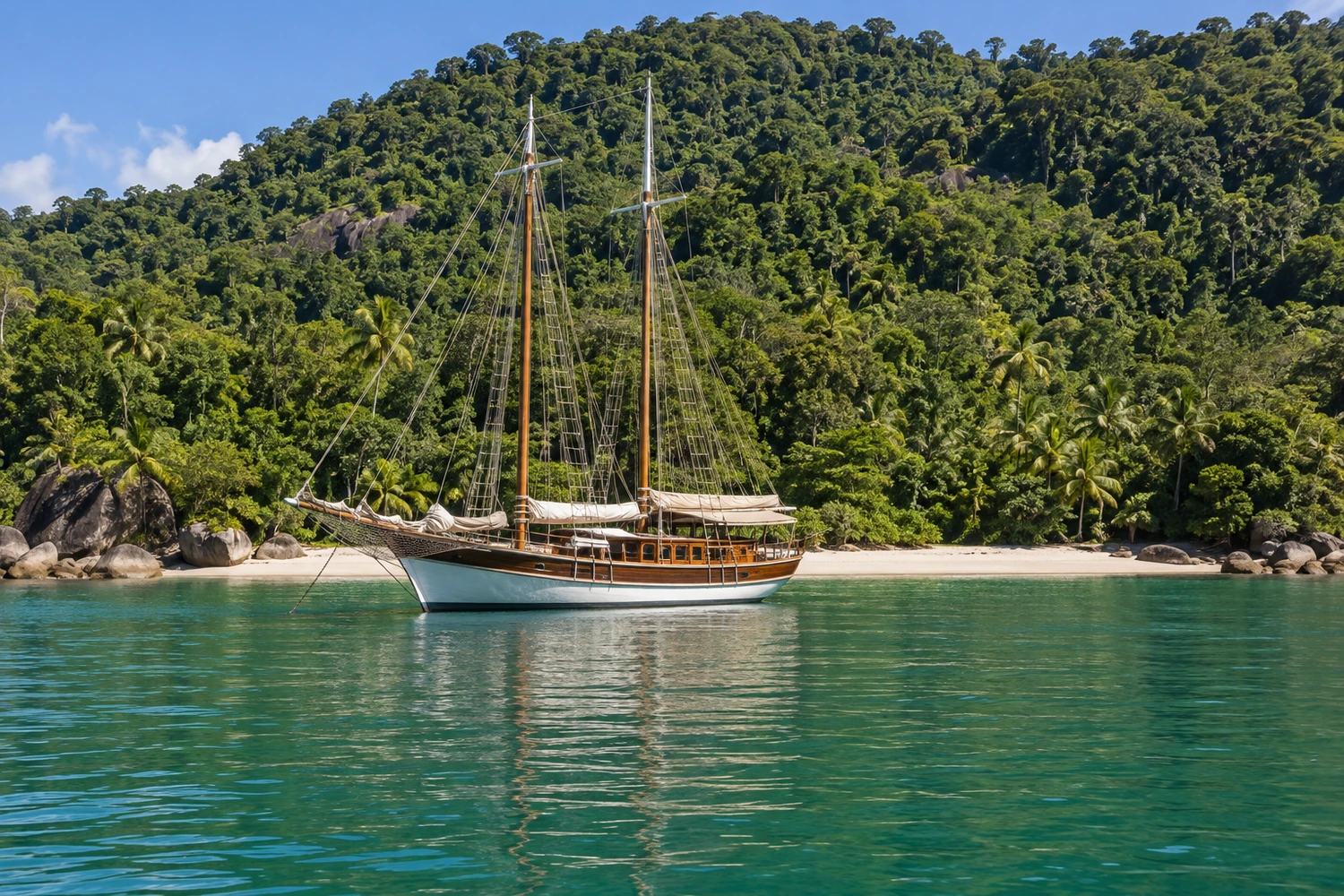
Ilha de ItacuruçáLocated in the Baía de Sepetiba, across from the district of Itacuruçá, it's the destination of the schooner and saveiro trips leaving from the pier.
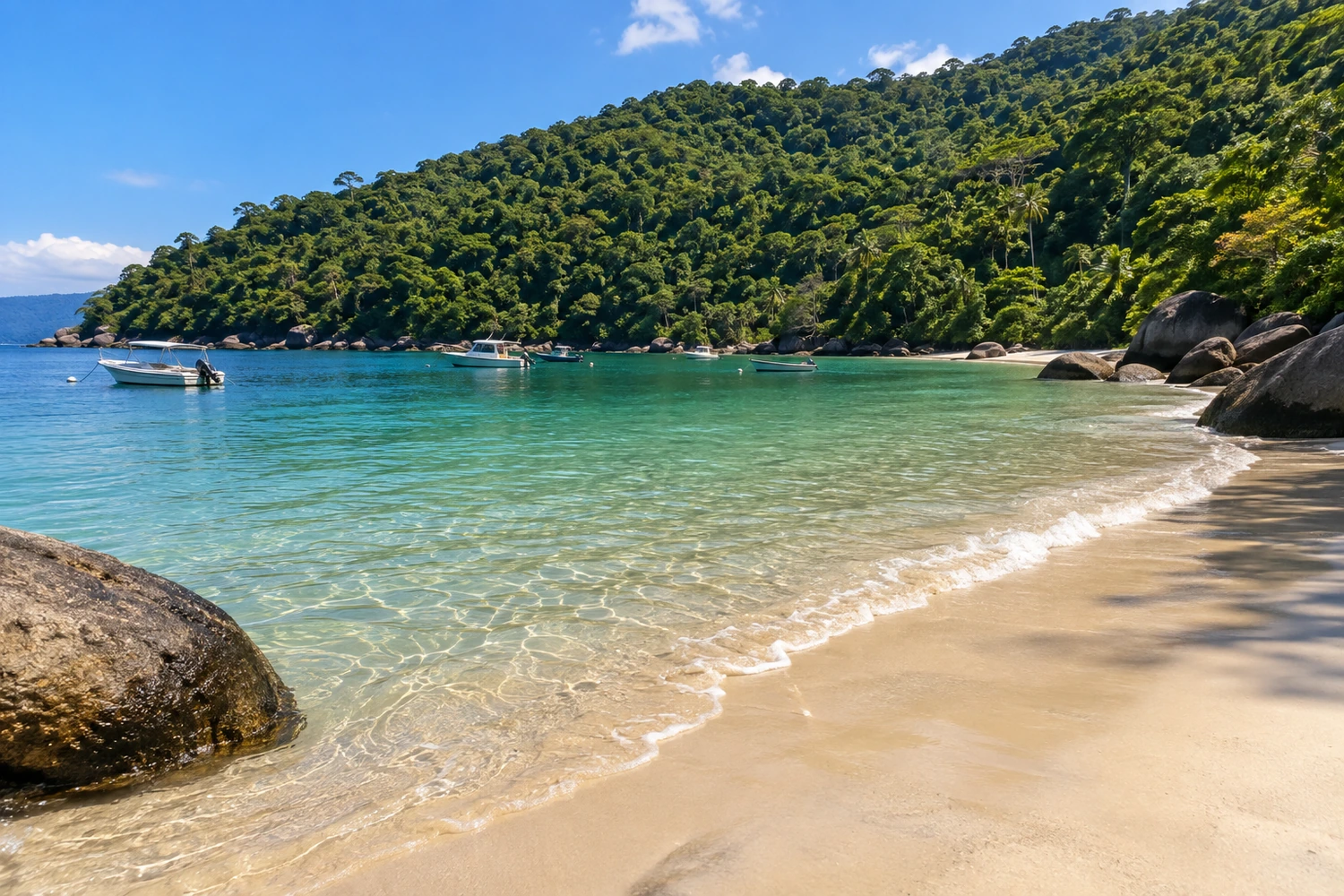
Ilha de JaguanumAn island covered in preserved Atlantic Forest, reached by boat from Itacuruçá.
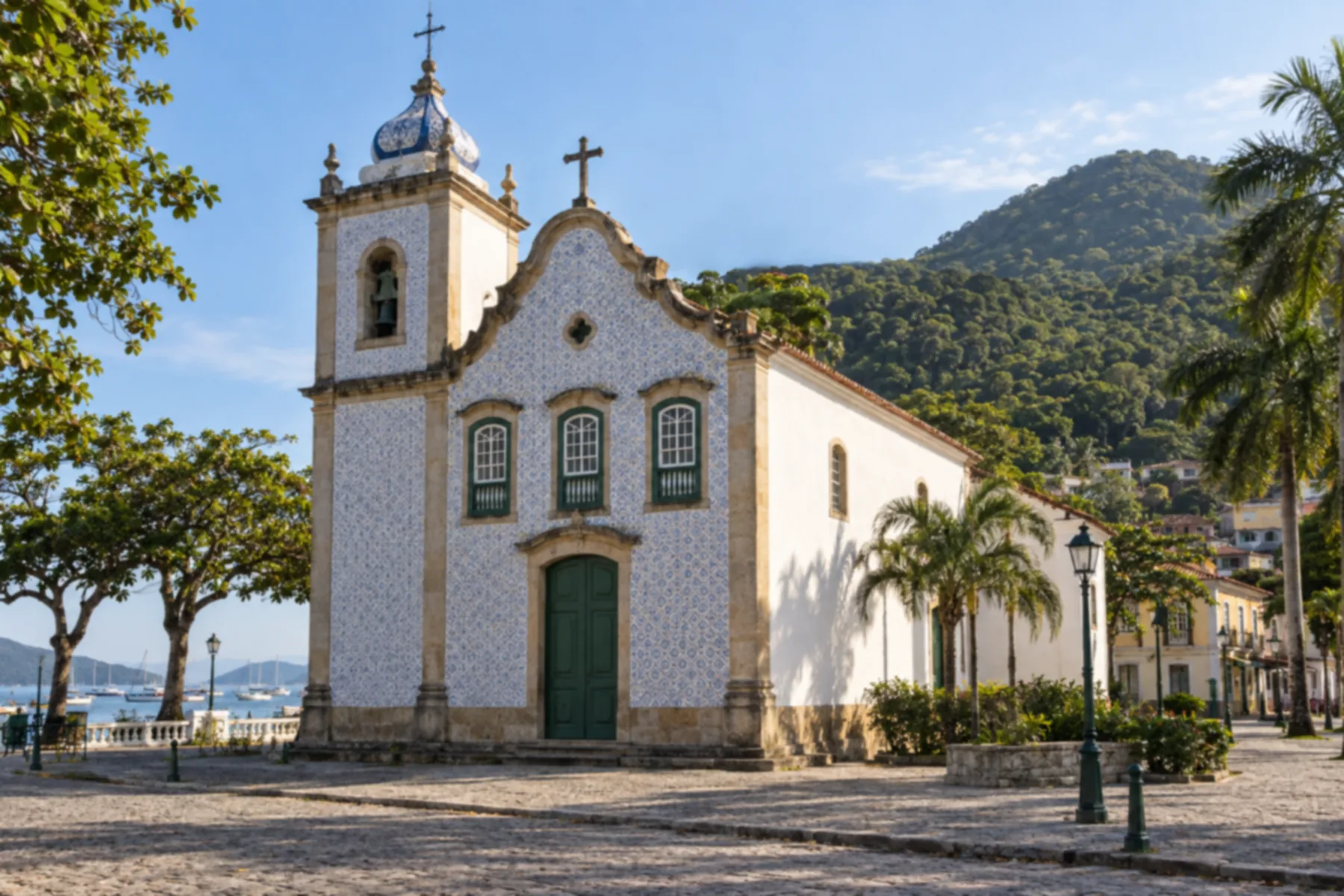
Igreja Matriz de Nossa Senhora da GuiaBuilt in 1795 on the site of an earlier chapel dedicated to the patron saint, it has a facade covered in Portuguese tiles.
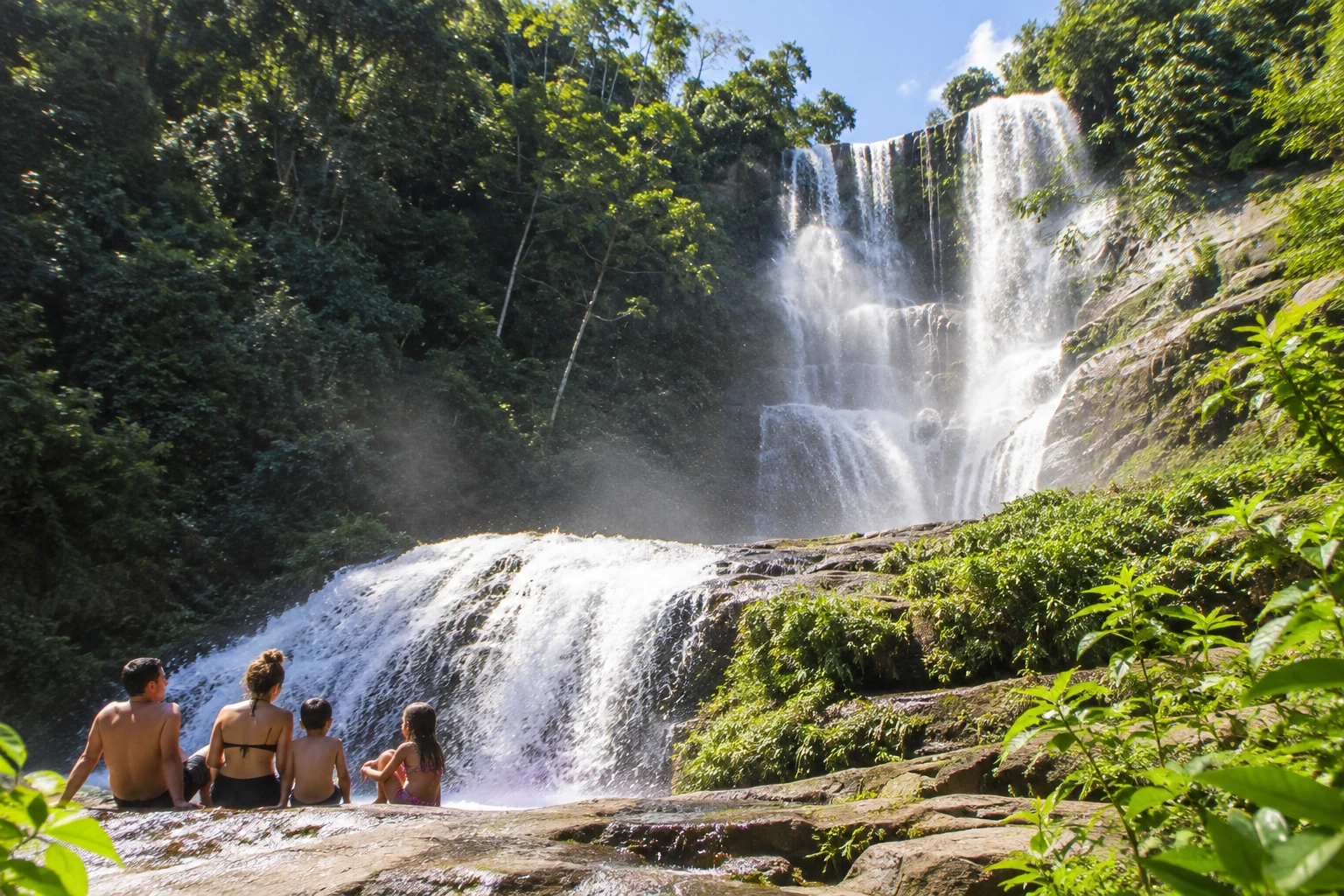
Cachoeira Véu da Noiva (Muriqui)It's in the district of Muriqui, inside the Parque Estadual Cunhambebe, and is reached by short trails.
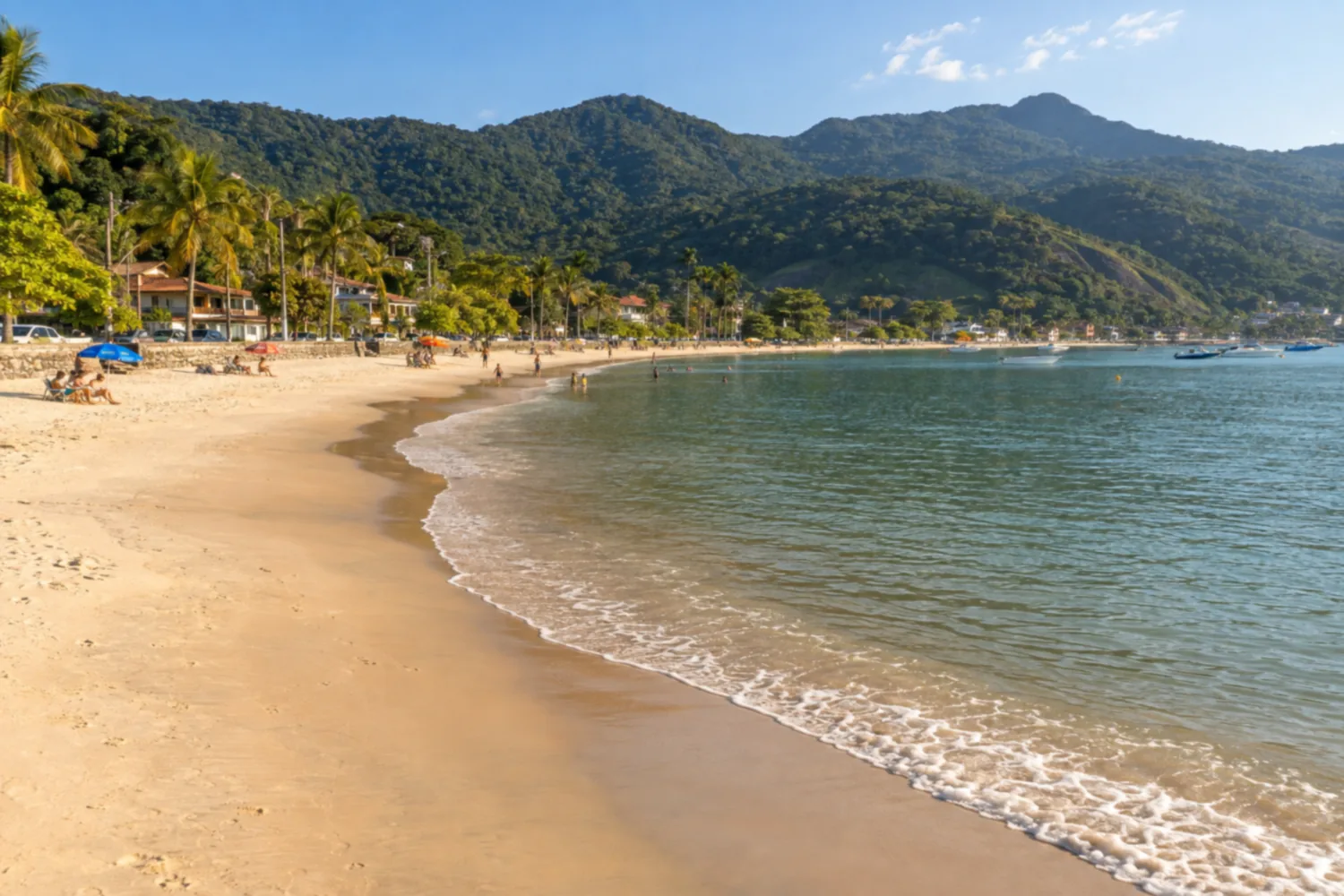
Praia do SacoA beach with calm water and light sand near downtown Mangaratiba, one of the most popular with families since it has no strong waves.
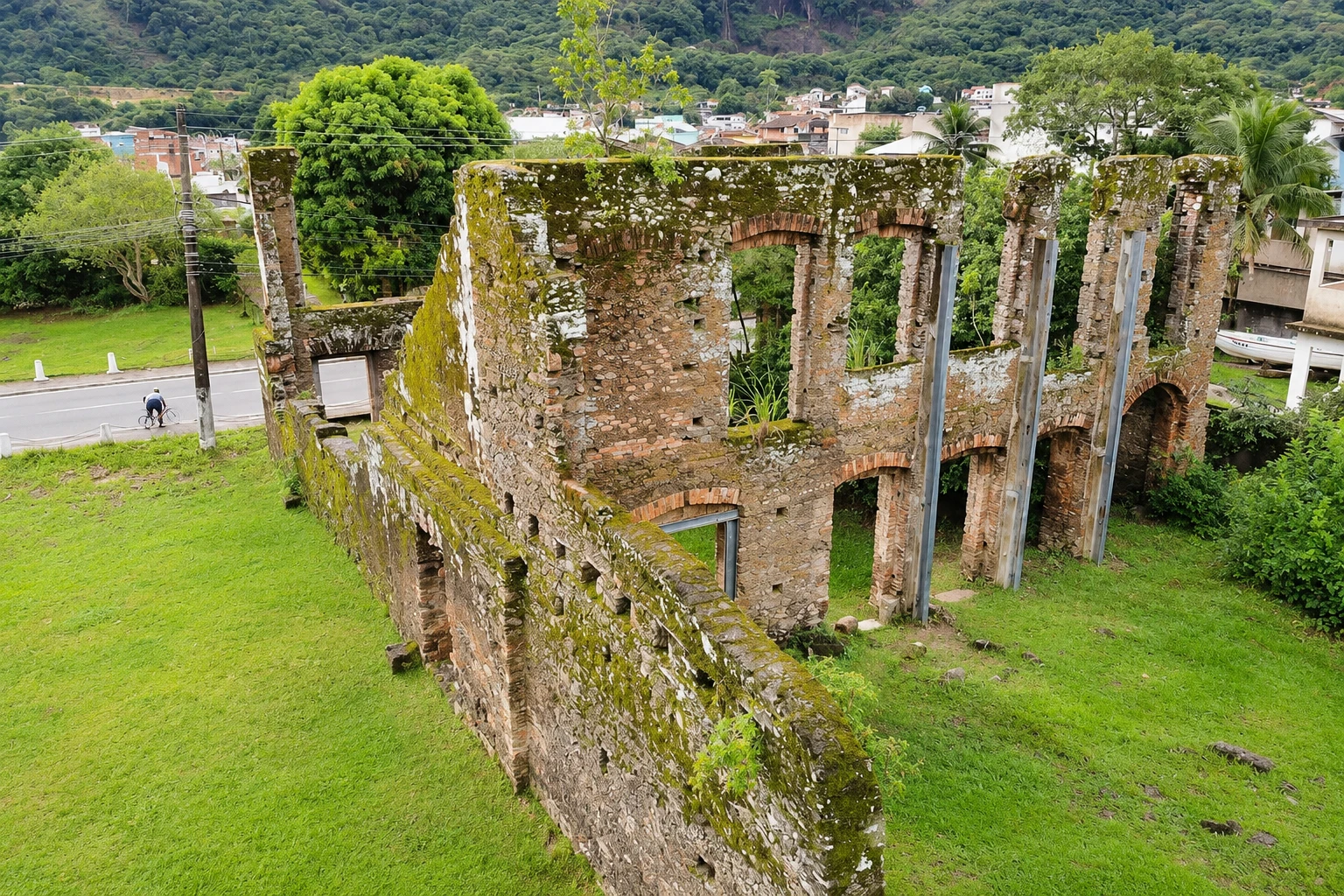
Ruins of Saco de MangaratibaRuins of the former village and port of Saco de Mangaratiba, from where coffee shipped down the Estrada Imperial in the 19th century.
Located in the Baía de Sepetiba, across from the district of Itacuruçá, it's the destination of the schooner and saveiro trips leaving from the pier. It has several calm-water beaches linked by trails, including Praia Grande and Praia Brava.
An island covered in preserved Atlantic Forest, reached by boat from Itacuruçá. Praia do Araçá, with about 250 meters of light sand and clear water, is the most popular, and the rocky coast is home to a small fishing community.
Built in 1795 on the site of an earlier chapel dedicated to the patron saint, it has a facade covered in Portuguese tiles. It was listed by Iphan in 1967, and the altar holds the original Baroque-style wooden statue of Nossa Senhora da Guia.
It's in the district of Muriqui, inside the Parque Estadual Cunhambebe, and is reached by short trails. The lower part has a drop with a natural rock slide, and the upper part has natural pools with forest views.
A beach with calm water and light sand near downtown Mangaratiba, one of the most popular with families since it has no strong waves. It works well as a base for trips to the islands of Itacuruçá and Jaguanum.
Ruins of the former village and port of Saco de Mangaratiba, from where coffee shipped down the Estrada Imperial in the 19th century. What remains are stone walls from docks, warehouses and two‑story buildings beside RJ-149, near Praia do Saco.


 Antarctica
 Argentina
 Bolivia
 Chile
 Colombia
 Ecuador
 Falkland Islands (Malvinas)
 French Guiana
 Guyana
 Paraguay
 Peru
 Suriname
 Uruguay
 Venezuela
 Albania
 Austria
 Belgium
 Croatia
 Denmark
 Finland
 France
 Germany
 Greece
 Hungary
 Iceland
 Ireland
 Italy
 Luxembourg
 Norway
 Poland
 Portugal
 Slovakia
 Slovenia
 Spain
 Sweden
 Switzerland
 the Czech Republic
 the Netherlands
 the United Kingdom
 Turkey
 Bermuda
 Canada
 Greenland
 Mexico
 Saint Pierre and Miquelon
 the United States
 the Dominican Republic
 Japan
 Egypt
 South Africa
 Australia
 Fiji
 New Zealand
 Papua New Guinea