Arraial do Cabo · RJ · Beach
Forno Beach
Praia do Forno, in Arraial do Cabo, is accessible by trail or boat from Praia dos Anjos. The cove is a stop to enjoy the scenery and spend time on the sand.

 Search
Brazil
 Antarctica
 Argentina
 Bolivia
 Chile
 Colombia
 Ecuador
 Falkland Islands (Malvinas)
 French Guiana
 Guyana
 Paraguay
 Peru
 Suriname
 Uruguay
 Venezuela
 Austria
 Belgium
 Croatia
 Denmark
 Finland
 France
 Germany
 Greece
 Hungary
 Iceland
 Ireland
 Italy
 Luxembourg
 Norway
 Poland
 Portugal
 Slovakia
 Slovenia
 Spain
 Sweden
 Switzerland
 the Czech Republic
 the Netherlands
 the United Kingdom
 Turkey
 Bermuda
 Canada
 Greenland
 Mexico
 Saint Pierre and Miquelon
 the United States
 the Dominican Republic
 JapanTurkey
 Egypt
 South Africa
 Australia
 Fiji
 New Zealand
 Papua New Guinea
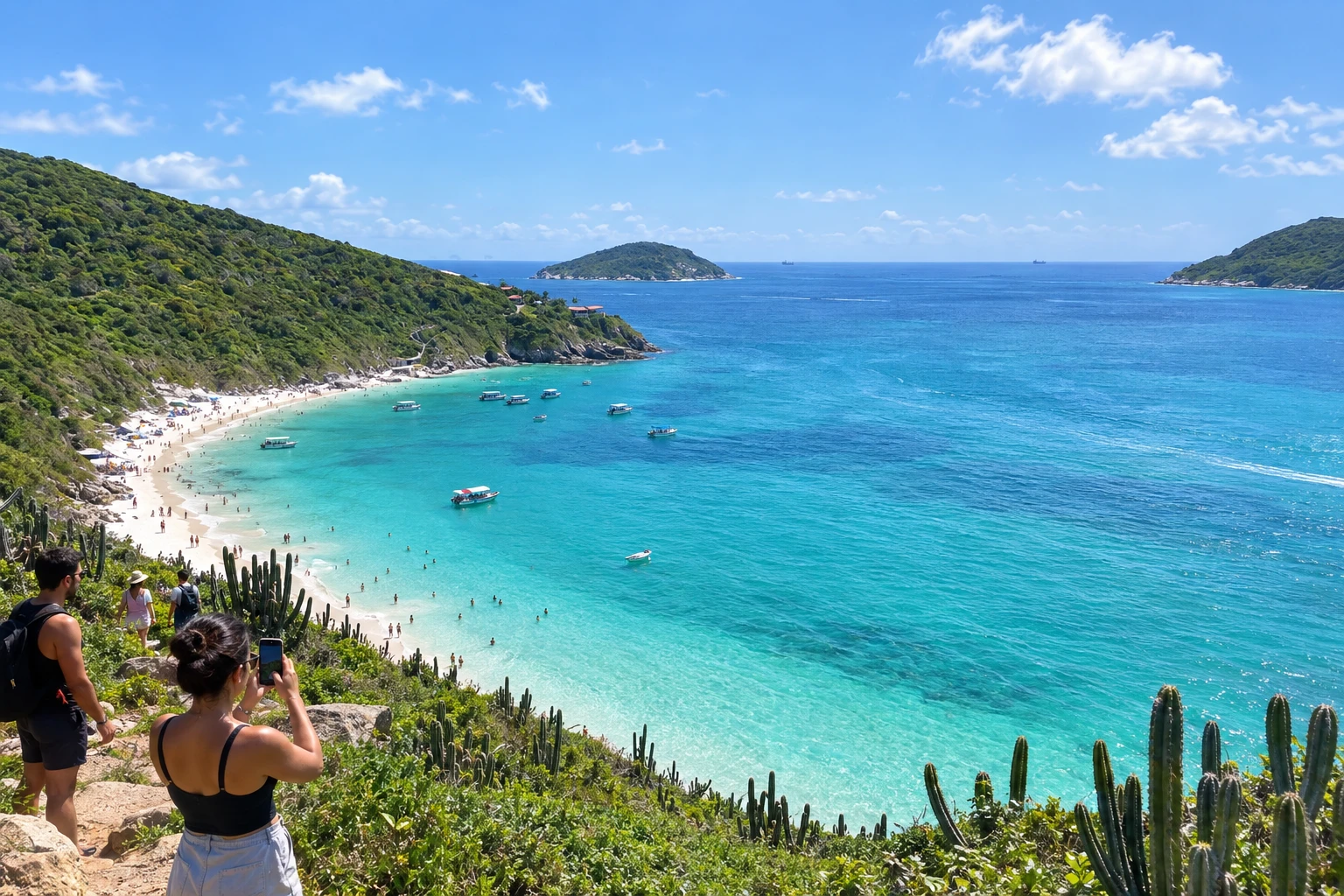
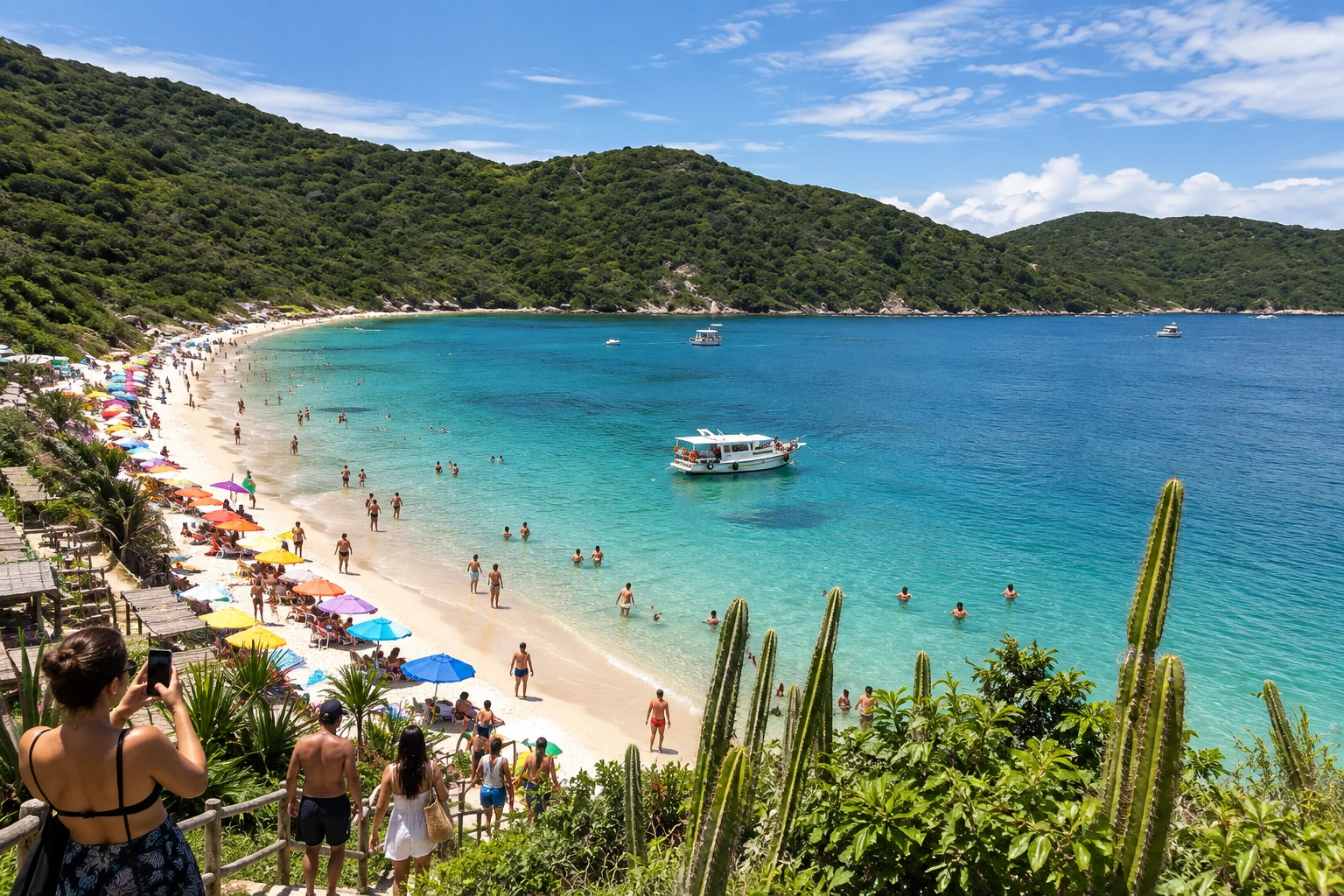
In the photo: Praia do Forno, in Arraial do Cabo.
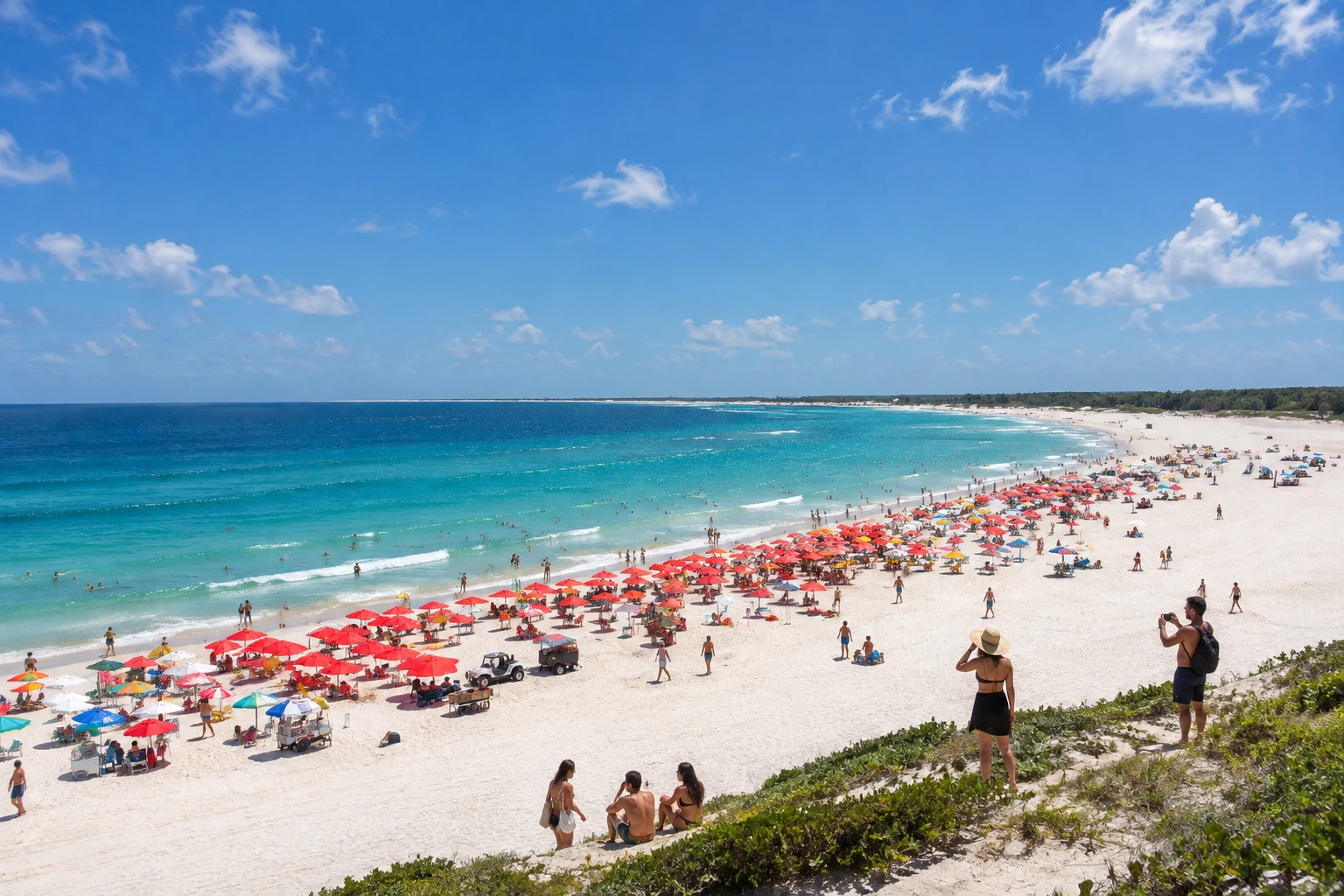
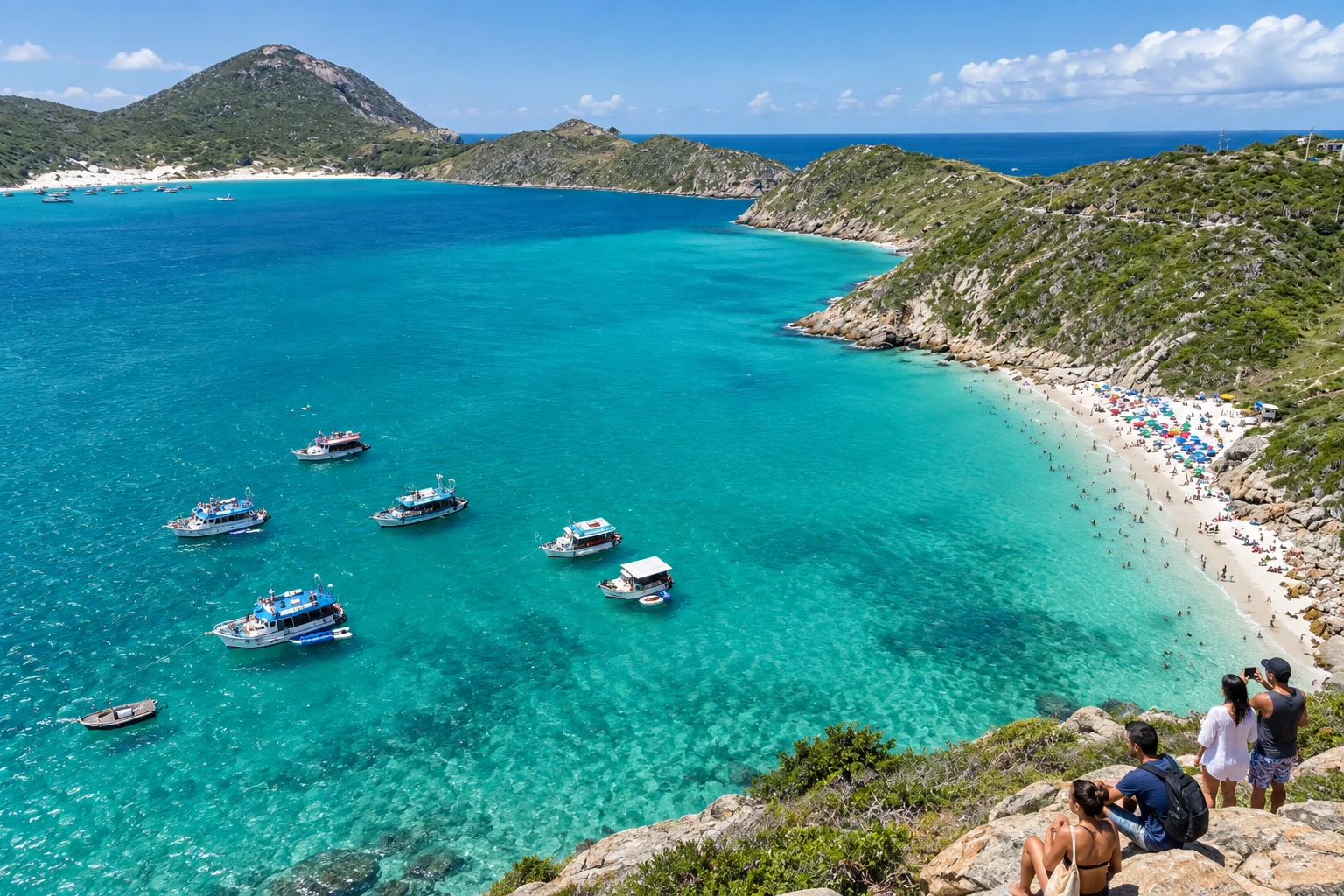
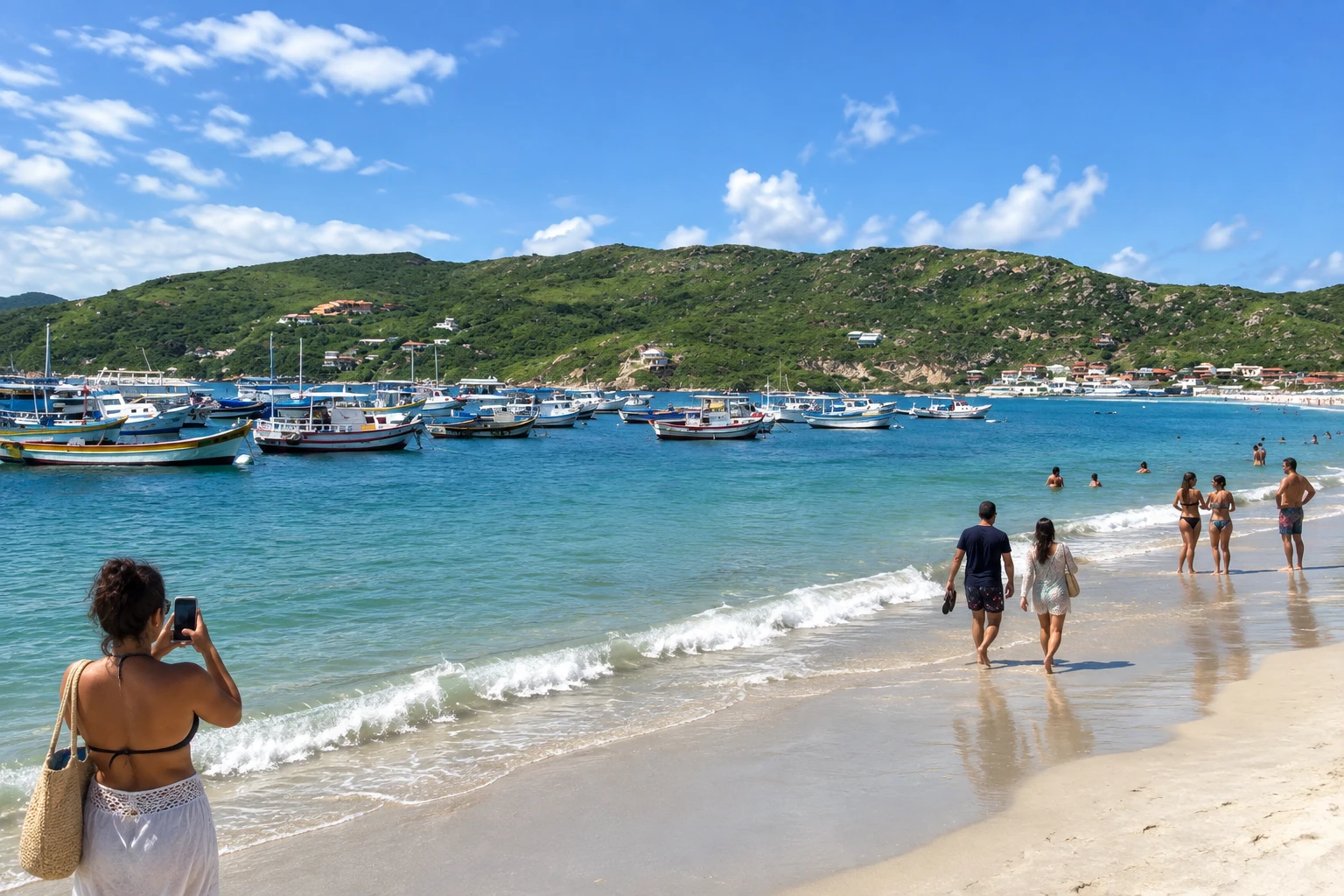
Illustrative images. The pictures in this guide are illustrations based on the real place, not photographs, and may differ from it.
The city
Arraial do Cabo brings together clear-water beaches and sea-related activities. Praia do Forno requires access by trail or boat, and the Prainhas do Pontal do Atalaia are known for their stairway. Prainha and Praia Grande round out a trip with time to rest and enjoy the scenery.
Arraial do Cabo sits on the tip of a cape jutting into the Atlantic, in the Região dos Lagos, about 165 km from Rio de Janeiro. It is a small, fishing-origin town surrounded by coves of very white sand and by a sea that, on sunny days, ranges from light-green to blue. Almost everything to do there is water-related: boat trips, diving, beaches and short walks to viewpoints.
The color and temperature of the sea have the same cause. At the tip of the cape an upwelling occurs, a phenomenon where deep, cold, nutrient-rich waters rise to the surface. That’s why the water tends to be clear and cold even in summer, and marine life is so abundant that the town earned a reputation as Brazil’s diving capital. Much of that sea belongs to a federal marine extractive reserve, and the slopes and sandbank ecosystems are part of the Costa do Sol State Park; hence the visitation rules at several sites.
The town is organized around four areas. Praia dos Anjos is the oldest core: here are the Marina dos Pescadores, from which tour and dive boats depart, the Church of Our Lady of Remedies and the Oceanographic Museum. From the beach corner a trail leads to Praia do Forno, a calm-water cove reachable only on foot or by boat. Praia Grande, on the other side of the center, is long, faces the open sea and has cold water, a promenade, kiosks and the most sought-after sunset. Prainha, at the town entrance, has calm water and easy access. Pontal do Atalaia is the headland that closes Praia Grande: it has viewpoints and the staircase that descends to Prainhas do Pontal do Atalaia.
Opposite is Ilha do Cabo Frio, a Navy area that includes Praia do Farol. Landing there is allowed only on authorized tours, with a limited number of visitors and short stays. The same tour passes by Gruta Azul, Fenda de Nossa Senhora and Pedra do Gorila.
The municipality extends beyond the cape. To the west, the Massambaba sandbank separates the sea from Lagoa de Araruama, and in the districts of Monte Alto and Figueira the beaches are lagoon-type, with shallow, warm water and steady wind, popular for kitesurfing. Ponta da Acaíra, nicknamed Arubinha, lies in that stretch.
The climate is the driest on the state’s coast. From April to September little rain falls, temperatures range from 20 °C to 26 °C and the town is emptier, except for July school holidays. From November to March it gets hotter, with highs near 28 °C, and rains come in showers, especially in November and December. Cold fronts can close the weather and affect the sea at any time, and the northeast wind, common in spring and summer, makes the water even colder.
Crowds affect the experience as much as weather. In summer, Carnival and long holidays the town receives far more people than it can accommodate: there are queues for boats, traffic at the entrance and little room in the coves. On weekdays off-season, the same beaches are almost empty.
Two days are enough for the boat trip, Praia do Forno and Pontal do Atalaia. With three or four days you can add diving, a relaxed visit to Praia Grande and the lagoon beaches. Allow flexibility in your schedule: boats and dives depend on wind and sea, and the day’s itinerary can change. Cabo Frio is about 12 km away, and Búzios about 35 km; both have separate pages.
78 places to stay in Arraial do Cabo.
6 places to eat in Arraial do Cabo.
11 lugares no mapa: onde ficar e onde comer, por bairro.
The local experience
Praia do Forno, in Arraial do Cabo, is accessible by trail or boat from Praia dos Anjos. The cove is a stop to enjoy the scenery and spend time on the sand.
Praia Grande has an extensive stretch of sand and an urban section with a waterfront and establishments. It's a good option for walking, relaxing and enjoying the open sea.
Prainhas do Pontal do Atalaia are known for the staircase and clear waters. Plan access and return to enjoy the scenery calmly.
Praia dos Anjos is a starting point for boat tours in Arraial do Cabo. The visit can combine observing the cove, walking, and enjoying local cuisine nearby.
To choose before you go
Where each tour starts, how long it takes, how it is done, what is included and the price range.
This is the excursion that brings most people to Arraial do Cabo and the only way to set foot on Praia do Farol. Boats depart from the Marina dos Pescadores piers at Praia dos Anjos, cross the channel and circle the sheltered side of Ilha do Cabo Frio. The most anticipated stop is Praia do Farol, with white, fine sand and no kiosks or buildings. The island is a Navy area: the number of people allowed on the sand is limited and the stay is short, usually 40 minutes to 1 hour. Boats that leave late, on busy days, may not get a landing slot; anyone who insists on visiting the beach should choose one of the first departures and, if possible, a weekday. From there the boat passes in front of Gruta Azul, Fenda de Nossa Senhora and Pedra do Gorila, seen from aboard. It then goes to the Prainhas of Pontal do Atalaia, where it usually stops in front of the sand; disembarking there depends on authorization from the environmental agency that manages the marine reserve, and there are periods when landings are suspended. The last stop is usually the cove of Praia do Forno, for swimming and snorkeling beside the boat. Boats vary widely: there are simple fishing boats, two-deck saveiros, boats with water slides and music, and speedboats for small groups. The route is almost the same on all of them; comfort, capacity and onboard atmosphere differ. A municipal law prohibits boarding with coolers, insulated bags and outside beverages on tourist boats. From the deck, with some luck, you may see turtles and dolphins. The order of stops is decided on the day, depending on wind, sea conditions and Navy instructions.
Stops: Farol Beach, Cabo Frio Island, Blue Grotto, Our Lady's Fissure, Gorilla Rock, Pontal do Atalaia Small Beaches, Forno Beach.
Includes: Generally includes the navigation, life jacket, floatation devices and water. Food, drinks, photos and mask rental are paid separately. The marina embarkation fee is charged per person at the pier, in cash or Pix, with exemptions for young children and seniors; check the current table and age brackets.
Tip: Arrive at the pier at least 40 minutes early for check-in and the marina fee. Before paying, ask the departure time, whether there is a disembarkation at Praia do Farol and the small beaches (Prainhas), and how many people the boat carries. Bring sunscreen, a towel and a light jacket: the water is cold and it can be windy on the return.
Best time: Year-round. From April to October it rains less and there are fewer people; from December to March and on holidays, book the day before and prefer the earliest departures.
R$60 to R$125 · per person, shared tour of about 4 hours (marina embarkation fee not included)Pontal do Atalaia is the hill that closes Praia Grande and faces Ilha do Cabo Frio. At the top are the viewpoints; below are the Prainhas do Pontal do Atalaia, two strips of white sand with calm, clear water that join into one at low tide. The descent is via a wooden staircase with more than 250 steps, which became one of the city’s most iconic images. From the top you can see the two beaches, the channel and the island in front. Going down is easy; the climb up, after hours in the sun, is the hard part. On the right corner as you face the sea is Gruta do Amor, a crack in the rocks reachable at low tide. Access by land has rules. The road to Pontal do Atalaia passes through the Costa do Sol State Park, and an agreement between the city hall and the Public Prosecutor’s Office prohibits driving up and parking with private vehicles, both for visitors and residents. Registered taxis and ride-hailing cars can go up only to drop off and pick up passengers. You can also walk: the walk from Prainha or Praia dos Anjos takes about 1 hour, with uphill stretches and little shade. By sea, water taxis cross from Praia dos Anjos when landing is allowed. Facilities on the sand are minimal: there are no restrooms, and vendors set up kiosks depending on demand. The little beaches are small and fill up early on weekends. The hilltop viewpoint is the most popular spot to watch the sunset over Praia Grande. If you want both experiences, go down early to the Prainhas and stay up top for late afternoon.
Stops: Pontal do Atalaia, Mirante do Pontal do Atalaia, Prainhas do Pontal do Atalaia, Gruta do Amor.
Includes: There is no entry fee for the staircase or the beach. Taxi, ride-hailing, water taxi and purchases at the beach kiosks are paid separately and arranged locally.
Tip: Access rules change: check with your pousada or the Tourism Office about the climb on the day you go. Arrange the return time with the taxi driver, because there isn’t always a car waiting at the top. Take water, a hat and travel light. Check the tide tables to go at low tide.
Best time: All year; April to October has fewer people and less rain. Avoid midday in summer, when climbing the staircase becomes strenuous.
Praia do Forno is the cove beside Praia dos Anjos, hidden behind a hill. There is no road to it: you reach it by trail or by sea, which helps keep the sand free of cars and buildings. The trail starts at the left corner of Praia dos Anjos, near the boat pier. It is about 600 meters: a short steep climb over rocks that get slick when it rains, a lookout at the top and the descent to the sand. From the lookout you see the whole cove, in a horseshoe shape, with light green water and hills covered in cacti and low vegetation typical of this dry stretch of coast. Children and people without hiking experience do the route at a slow pace. Down below, the sand strip is wide and the sea is usually calm, without waves, and a bit less cold than the open-ocean beaches. It is one of the city’s most popular beaches for snorkeling: near the rocky outcrops schools of fish appear and sometimes turtles. Stalls rent chairs and umbrellas and serve snacks and seafood. The beach changes during the day. Early it is nearly empty and the water still. From late morning to mid-afternoon, the tour boats make their last stop there and the cove fills with vessels. Those who do not want or cannot hike take the water-taxi, which leaves from Praia dos Anjos and takes just a few minutes.
Stops: Praia dos Anjos, Praia do Forno lookout, Praia do Forno.
Includes: The trail is open and does not require a guide. The water-taxi, chair rental and purchases at the beach stalls are paid separately; check the current price list.
Tip: Go early, before the tour boats arrive, and wear sneakers or sturdy sandals. Bring a snorkeling mask, water and cash. After rain, go down slowly: the trail rocks become slippery.
Best time: Year-round; from April to October it usually rains less and the cove is quieter on weekdays.
Upwelling, which brings cold, nutrient-rich water to the surface, makes the sea around Arraial do Cabo one of Brazil’s most sought-after dive areas. The water is often clear, and rocky shores host schools of fish, turtles, morays, rays and corals; seahorses appear less frequently. An introductory dive (batismo) is a cylinder dive for someone who has never dived. The outing lasts about 3 hours 30 minutes: instruction on land or aboard, navigation to a sheltered spot and the dive itself, about 30 minutes, alongside an instructor who manages the equipment the whole time. The usual spots for beginners are shallow, calm coves such as Saco do Cherne and the inner side of Ilha dos Porcos; the choice is made on the day according to wind and visibility. Those who prefer to stay at the surface can join the same boat as companions and snorkel. And those who don’t want to board can find fish with mask and snorkel at Praia do Forno, Prainha and the Prainhas do Pontal do Atalaia. Certified divers have separate departures to deeper sites, caves and 19th-century shipwrecks, such as the frigate Thetis and the Dona Paula. At these open-sea sites the water can become very cold. Water temperature can change from day to day, and operators provide neoprene suits. The Oceanographic Museum on Praia dos Anjos explains the upwelling and displays items recovered from shipwrecks.
Stops: Marina dos Pescadores, Saco do Cherne, Ilha dos Porcos, Ilha do Cabo Frio.
Includes: Generally: boat, full equipment, instruction, certified instructor, water and a snack. Underwater photos and videos are extra, as is the marina embarkation fee. Check the operator’s current price list.
Tip: There is usually a minimum age, generally 10 years, and a medical form before boarding: asthma, epilepsy, hypertension and pregnancy commonly prevent diving. Do not schedule a flight in the 24 hours following the dive. On weekends and in summer, reserve several days in advance.
Best time: All year; visibility changes with the wind and upwelling. From April to October there is usually less rain and fewer boats at sea.
Praia dos Anjos is the oldest stretch of Arraial do Cabo and the place where the town still shows its fishing origins. It’s a short walk, good for the afternoon after a boat trip or for a windy day when the sea prevents outings. Start at the waterfront. The cove is full of traditional fishing boats and tour boats, and throughout the day fishermen unload their catch at the marina. It’s not the beach most people choose for swimming, precisely because of the boat traffic, but it offers the best view of the port’s comings and goings. A few steps away is the Church of Our Lady of Remedies, small and simply designed. Municipal records note a construction date of 1506, while other sources mention 1503; all link it to the early years of the Portuguese presence. It was on this cove that Amerigo Vespucci’s expedition landed in the early 16th century, and one of Brazil’s first trading posts for brazilwood is said to have operated here. The Largo do Descobrimento, with a monument to the navigator, commemorates the episode. Then head to the Oceanographic Museum of the Almirante Paulo Moreira Institute of Marine Studies, a navy research center. The exhibition explains the upwelling phenomenon that makes the city’s water cold and clear, and showcases marine organisms from the region and shipwreck artifacts from the 19th and 20th centuries. The visit is quick and helps you understand what you’ll see on boat trips and dives. At the left corner of the beach the trail to Praia do Forno begins, which can round out the walk. In the evening, the nearby streets concentrate many of the town’s restaurants.
Stops: Praia dos Anjos, Church of Our Lady of Remedies, Largo do Descobrimento, Monument to Amerigo Vespucci, Oceanographic Museum, Fishermen’s Marina.
Includes: There is no charge to walk along the waterfront or to see the church from the outside. The museum has its own opening days and times, and its entrance fee is charged separately: check before you go.
Tip: The church is used by the local community: respect services and visit the interior when it’s open. Walk by the marina early in the morning or late in the afternoon, when the fishing boats usually return.
Best time: All year. In October the town celebrates its patron saint, Our Lady of Remedies, with festivities around the church.
Praia Grande is Arraial do Cabo’s open-sea beach. It begins by the Pontal do Atalaia hill and runs west along the Massambaba sandbank for dozens of kilometers. The urban stretch has a promenade, kiosks and a wide strip of white sand. The sea is light green, with waves, and is usually the coldest in town: it’s the beach for surfers and for those who like rough sea bathing. Check the sea before entering and stay in shallow water on days with strong swell. At the left corner, by the rocks, a short walk leads to the Janela do Paraíso, an abandoned building whose windows open directly onto the sea, and to the Deck dos Pescadores, a support point for the beach’s fishers. From the same corner a trail climbs to the Mirante do Pontal and descends to Praia Brava, a small beach with no facilities and strong waves. The round trip takes about 1 hour 30 minutes, with stairs and slippery rock sections. The sand on Praia Brava only appears at low tide, and the sea there is not for swimming: it’s worth it for the walk and the view. Late afternoon is Praia Grande’s prime time: it’s the city’s most popular beach to watch the sunset from the sand, and locals and visitors fill the promenade to watch. From there, the restaurants and bars along the shore solve dinner without needing a car.
Stops: Praia Grande, Janela do Paraíso, Mirante do Pontal, Praia Brava.
Includes: Free access to the beach and trail. Chair rentals, purchases at the kiosks and a trail guide, if you want one, are paid separately.
Tip: For Praia Brava, check the tide tables, bring water and sturdy footwear, and don’t go alone if you don’t know the route. At Praia Grande, take a light jacket for the late afternoon: the wind cools after the sun goes down.
Best time: All year for late afternoons; for the trail, April to October, when it usually rains less and it’s not as hot.
They are the first two beaches you reach by road, and the simplest to visit: no trail, stairs or boat are required. Prainha is a cove at the city’s entrance. The sea is calm, a light blue you can already see from the access road. It’s the locals’ and families’ favorite beach, with kiosks, chair and umbrella rentals, and a street alongside the sand. On sunny weekends and in summer it gets quite crowded, the sand filled with stalls; early in the day and on weekdays the scene is different. Near the rocks at the ends you can snorkel with a mask. Praia do Pontal lies farther north, on the border with Cabo Frio, and is the opposite: long, open sea, with little development and lots of space. It is the southern tip of the sand arc that comes from Praia do Forte in Cabo Frio, goes past Dunas and Foguete beaches and ends at Pontal, without interruption. Facilities are minimal, with few kiosks, and the sea changes with the wind: some days have waves, others are calmer. It’s good for long walks along the water and for those who want distance from crowded coves. Don’t mix up the names. Prainha is not the same place as Prainhas do Pontal do Atalaia, and Praia do Pontal is not located at Pontal do Atalaia, which is the hill on the other side of town. Both beaches fit into the same day: morning in Prainha’s still water and an afternoon walk at Pontal.
Stops: Prainha, Praia do Pontal.
Includes: Free access to both beaches. Parking, chair rentals and purchases are charged separately.
Tip: At Prainha, arrive early on weekends to secure space on the sand. For Praia do Pontal, bring water, a beach umbrella and whatever you will consume, and choose a swimming spot with other people nearby.
Best time: From December to March, with the hottest days, although the water remains cold; from April to October both beaches are quieter.
The municipality of Arraial do Cabo does not end at the cape. To the west, a narrow strip of coastal plain, the Massambaba restinga, separates the open sea from the Lagoa de Araruama, a large very salty lagoon. In this stretch are the districts of Monte Alto and Figueira, with lagoon beaches quite different from the coves near the town center. The most visited spot is Ponta da Acaíra, nicknamed Arubinha: a tongue of white sand that extends about 1 km into the lagoon, with shallow, clear water on both sides. There are no waves, the water is warm and shallow for a good distance, which appeals to travelers with children and to those who find the Cabo’s sea too cold. The constant wind makes the place a spot for kitesurfing and windsurfing, with schools set up in tents on the sand; on calmer days you can paddle a kayak or a stand-up paddleboard. The surrounding landscape is restinga and low dunes. Access is the weak point. You reach it via the road that runs along the lagoon to the Figueira district and, from there, a dirt road with stretches of soft sand that bogs down ordinary cars, especially after rain. For that reason most visitors go by buggy, on tours that depart from Arraial do Cabo town center and last about 4 hours, with the driver at the wheel and stops for swimming. Facilities are rustic: few tents and no full-service restaurants.
Stops: Ponta da Acaíra (Arubinha), Lagoa de Araruama, Figueira, Monte Alto, Massambaba restinga.
Includes: The tour usually includes the buggy and the driver. Food, drinks, and kitesurf lessons or equipment rental are paid separately. Check the current price list and the minimum age, which varies by agency.
Tip: Bring water, snacks, a hat and sunscreen: there is almost no shade or commerce. Do not enter the dirt road with a regular car. Monte Alto and Figueira have other lagoon beaches: ask the driver which are included in the route.
Best time: From September to March, with warmer days and steady wind for kitesurfing; from April to June the place becomes quieter.
Prices are estimates, checked in November 2026 with local operators, and may change with the season and the type of tour. Confirm with the operator before booking.
Day by day
Suggestions to plan the trip. Change the order of the days according to the weather and tour availability.
Chegue cedo à Praia dos Anjos e vá direto à Marina dos Pescadores. Escolha uma das primeiras saídas do passeio de barco: são cerca de 4 horas, com a Praia do Farol, a Gruta Azul, as Prainhas do Pontal do Atalaia vistas do mar e banho na enseada da Praia do Forno. Sair cedo aumenta a chance de desembarcar na Praia do Farol, onde o número de visitantes é limitado. De volta ao píer, almoce na própria Praia dos Anjos e veja, a poucos passos, a Igreja de Nossa Senhora dos Remédios e o Largo do Descobrimento. No meio da tarde, suba ao Pontal do Atalaia de táxi ou de carro de aplicativo: veículos particulares não podem subir. Quem ainda tem pernas desce a escadaria das Prainhas para um último banho; quem prefere poupar a subida fica no mirante. Espere ali o pôr do sol sobre a Praia Grande e combine antes a volta com o motorista. Se o vento fechar a barra e os barcos não saírem, troque a manhã pela trilha da Praia do Forno e pelo Museu Oceanográfico, e mantenha o fim de tarde no Pontal ou na Praia Grande.
Reserve a manhã para o passeio de barco, saindo da Marina dos Pescadores numa das primeiras partidas. O roteiro leva à Praia do Farol, na Ilha do Cabo Frio, passa pela Gruta Azul e termina com banho na enseada da Praia do Forno. Almoce na Praia dos Anjos e use o começo da tarde para a caminhada curta pelo trecho antigo: a Igreja de Nossa Senhora dos Remédios, o Largo do Descobrimento e o Museu Oceanográfico, se estiver aberto. Depois siga para a Praia Grande, do outro lado do centro. O mar é aberto e frio, bom para um mergulho rápido, e o calçadão enche no fim da tarde, quando o sol baixa sobre a água. Jante ali mesmo, nos restaurantes da orla.
Comece cedo pela trilha da Praia do Forno, no canto esquerdo da Praia dos Anjos: cerca de 15 minutos de caminhada, com um mirante no alto. Chegando antes dos barcos de passeio, a enseada está vazia e a água, parada, boa para flutuar com máscara perto dos costões. Fique até o fim da manhã. À tarde, vá ao Pontal do Atalaia de táxi ou de carro de aplicativo. Desça a escadaria das Prainhas, com mais de 250 degraus, de preferência na maré baixa, quando as duas faixas de areia se juntam e dá para chegar à Gruta do Amor. Suba de volta com calma e feche a viagem no mirante, para ver o pôr do sol. Quem tem carro e pouca disposição para escadas troca as Prainhas pela Prainha, na entrada da cidade, de mar calmo e acesso direto.
Faça o passeio de barco logo no primeiro dia: se o vento atrapalhar, ainda sobram duas manhãs para remarcar. Saia cedo da Marina dos Pescadores, para a Praia do Farol, a Gruta Azul e a enseada da Praia do Forno. À tarde, caminhe pela Praia dos Anjos, veja a Igreja de Nossa Senhora dos Remédios e o Museu Oceanográfico, que explica por que a água da cidade é tão fria e clara. Termine o dia no calçadão da Praia Grande, para o pôr do sol.
Pela manhã, mergulho de batismo com saída da Marina dos Pescadores: cerca de 3 horas e 30 minutos entre instrução, navegação e uns 30 minutos debaixo d'água, ao lado de um instrutor. Quem não quer usar cilindro vai no mesmo barco para fazer snorkel, ou troca o programa pela trilha da Praia do Forno, com máscara na mochila. Depois do almoço, suba ao Pontal do Atalaia de táxi ou de carro de aplicativo e desça a escadaria das Prainhas. Fique para o fim de tarde no mirante do alto do morro.
Dia para mudar de água. Um passeio de buggy de cerca de 4 horas leva à Ponta da Acaíra, a Arubinha, no distrito de Figueira: uma língua de areia que entra pela Lagoa de Araruama, com água rasa e morna dos dois lados e velas de kitesurf no horizonte. Leve água e lanche, porque a estrutura é mínima. Quem prefere ficar perto escolhe entre a manhã na Praia do Forno, chegando pela trilha antes dos barcos, e o mar parado da Prainha, na entrada da cidade. À tarde, a Praia do Pontal, na divisa com Cabo Frio, é boa para uma última caminhada longa na areia antes de pegar a estrada.
Best time to go
The seasons shown are the most usual ones; nature doesn't always follow the calendar.
Verão e alta temporada · Shows de verão nos fins de semana
Calor, com máximas perto de 28 °C, e pancadas de chuva de verão que costumam passar depressa. É o mês mais cheio do ano: fila nos barcos, trânsito na entrada da cidade e enseadas lotadas, sobretudo até a metade do mês e nos fins de semana. O vento nordeste pode esfriar a água de um dia para o outro. Reserve hospedagem e passeios com antecedência e saia nas primeiras partidas do barco.
Carnaval · Mar menos frio
Costuma ser o mês mais quente, com máximas perto de 28 °C, e chove menos do que em janeiro. A água do mar tende a estar menos fria no fim do verão. No Carnaval, quando cai em fevereiro, a cidade recebe muito mais gente do que comporta e a estrada fica lenta. Fora do feriado, os dias de semana já são mais tranquilos.
End of summer · Less busy
Ainda quente, com temperaturas entre 23 °C e 27 °C e chuva em pancadas. Depois do Carnaval o movimento cai e os barcos saem com menos gente nos dias de semana. A água segue entre as menos frias do ano. Bom mês para as enseadas, como a Praia do Forno e as Prainhas do Pontal do Atalaia.
Começo da época seca · Festival da Lula
As chuvas diminuem e as temperaturas ficam entre 23 °C e 26 °C. O céu costuma abrir, e a cidade fica calma fora dos feriados da Semana Santa e de Tiradentes. Em abril costuma acontecer o Festival da Lula. Boa época para o barco, o mergulho e as trilhas curtas, com menos calor.
Aniversário da cidade, em 13 de maio · Pouca chuva
Chove pouco e as temperaturas ficam entre 21 °C e 25 °C. É baixa temporada: praias vazias nos dias de semana e barcos sem fila. As frentes frias começam a chegar e podem agitar o mar por um ou dois dias. A cidade comemora o aniversário em torno do dia 13, com programação na rua.
Abertura da temporada de baleias · Festa de São Pedro, na Figueira
Um dos meses mais secos, com temperaturas entre 21 °C e 25 °C e noites frescas. A água do mar está fria, e a roupa de neoprene faz diferença no mergulho. A partir de junho as baleias-jubarte costumam passar pela costa em migração e, com sorte, são vistas dos mirantes e dos barcos. No fim do mês, a Festa de São Pedro movimenta o distrito de Figueira.
Férias escolares · LiterArraial · Festival da Baleia
Tempo seco, com máximas perto de 24 °C e mínimas perto de 19 °C. As férias escolares brasileiras trazem mais movimento, sobretudo nos fins de semana, mas longe do aperto do verão. Dias de céu aberto favorecem os mirantes e as trilhas. A cidade costuma receber em julho a festa literária LiterArraial e o Festival da Baleia.
Mês mais seco · Cidade vazia
O mês menos chuvoso do ano e um dos mais vazios. Os dias costumam ser de sol, com vento e temperaturas amenas; a água do mar está entre as mais frias. É a época de quem quer as enseadas quase sem gente e aceita um banho rápido. As frentes frias ainda podem cancelar saídas de barco.
Primavera · Vento nordeste · Celebra Arraial
As temperaturas voltam a subir aos poucos, entre 20 °C e 24 °C, com pouca chuva. O vento nordeste se firma, bom para o kitesurf na Lagoa de Araruama, e a ressurgência costuma deixar a água do mar mais fria e clara. Movimento moderado, maior no feriado de 7 de setembro.
Festa de Nossa Senhora dos Remédios, a padroeira
Dias mais quentes e a chuva voltando aos poucos, com a passagem de frentes frias. Movimento moderado, fora o feriado de 12 de outubro. Em outubro a cidade celebra a padroeira, Nossa Senhora dos Remédios, com festa religiosa em torno da igreja da Praia dos Anjos. Bom mês para combinar barco, praia e trilha antes da alta temporada.
Chuvas de primavera · Festival de Frutos do Mar
Um dos meses mais chuvosos, com pancadas que se alternam com dias de sol e temperaturas entre 22 °C e 26 °C. Os feriados do mês enchem a cidade. As saídas de barco e de mergulho podem ser remarcadas por causa do tempo: deixe um dia de folga. Em novembro costuma acontecer o Festival de Frutos do Mar.
Começo do verão · Festival da Lagoa · Réveillon
Quente, com temperaturas entre 22 °C e 26 °C e chuvas de verão. A primeira quinzena ainda é tranquila; do Natal em diante começa a alta temporada, com praias, barcos e estrada cheios. A cidade faz festa de Réveillon. Reserve com antecedência a hospedagem, o barco e o mergulho.
Plan the journey
Arraial do Cabo não tem aeroporto. O mais próximo é o Aeroporto Internacional de Cabo Frio (CFB), a cerca de 10 km, que recebe voos domésticos em número reduzido e voos de temporada; a oferta muda ao longo do ano e se concentra no verão. Do terminal, segue-se de táxi, carro de aplicativo ou carro alugado em poucos minutos.
A maioria dos viajantes chega pelos aeroportos do Rio de Janeiro e completa a viagem por estrada. O Galeão (GIG), que concentra os voos internacionais, fica a cerca de 169 km de Arraial do Cabo; o Santos Dumont (SDU), de voos domésticos, a cerca de 165 km. A diferença entre os dois é pequena: escolha pelo voo.
Dos aeroportos do Rio segue-se de carro alugado, de transfer ou de ônibus. Para o ônibus é preciso ir antes à Rodoviária Novo Rio, a cerca de 12 km do Galeão e 6 km do Santos Dumont; do Santos Dumont, o VLT faz a ligação. Calcule a conexão com folga, porque o trânsito de saída da capital varia muito.
Do Rio de Janeiro, a Auto Viação 1001 liga a Rodoviária Novo Rio ao Terminal Rodoviário de Arraial do Cabo, com várias saídas por dia. A viagem leva cerca de 3 horas, e bem mais nos feriados e nos fins de semana de verão.
Nem todos os ônibus da linha entram em Arraial do Cabo: confira o destino na hora da compra. Quando não há lugar, a saída é comprar a passagem até Cabo Frio, que tem mais horários, e fazer o trecho final, de cerca de 20 minutos, em ônibus urbano, táxi ou carro de aplicativo.
Há ônibus a partir de São Paulo, com saída do Terminal Tietê, em poucos dias e horários; em geral compensa ir até o Rio de Janeiro ou Cabo Frio e trocar de ônibus.
Nos feriados prolongados e no verão as passagens esgotam: compre com antecedência, inclusive a de volta.
Do Rio de Janeiro são cerca de 165 km, em 2 horas e 30 minutos a 3 horas sem trânsito. Atravessa-se a Ponte Rio-Niterói e segue-se pela BR-101 até Rio Bonito, onde começa a RJ-124, a Via Lagos. No fim dela, em São Pedro da Aldeia, toma-se a RJ-140, que contorna Cabo Frio e termina em Arraial do Cabo. Todo o trajeto é asfaltado e bem sinalizado.
Há pedágio na ponte e na Via Lagos, que cobra tarifa mais alta nos fins de semana e feriados.
O tempo de viagem depende do dia. Nas sextas-feiras, nas vésperas de feriado e no verão, a saída do Rio e a Via Lagos congestionam, e a viagem pode durar o dobro ou mais. Sair de madrugada ou viajar em dia de semana faz diferença.
Em Arraial do Cabo as ruas são estreitas e as vagas, poucas na alta temporada. Há áreas de estacionamento com cobrança oficial perto das praias, identificadas por placas. Não se sobe de carro particular ao Pontal do Atalaia: use o estacionamento da hospedagem e vá de táxi ou a pé.
Há transfers compartilhados, em van, que ligam os aeroportos do Galeão e Santos Dumont e hotéis do Rio de Janeiro a Arraial do Cabo, além de serviços privativos, por veículo. São a opção de quem chega de avião e não quer dirigir nem passar pela rodoviária. Reserve com antecedência, informe o número do voo e pergunte o limite de bagagem.
Agências do Rio de Janeiro, de Búzios e de Cabo Frio vendem excursões de um dia com transporte e passeio de barco. Resolvem a visita de quem tem pouco tempo, mas o dia fica longo a partir do Rio, com cerca de 3 horas de estrada em cada sentido, e o barco costuma ser o do horário mais cheio.
A cidade cobra uma taxa de entrada de ônibus, micro-ônibus e vans de turismo, com cadastro prévio do veículo. Quem viaja em excursão deve confirmar com a agência se a taxa está incluída no valor.
A cidade é pequena. A Praia dos Anjos, a Praia Grande e a Prainha ficam a uma caminhada umas das outras, e a trilha da Praia do Forno começa na própria Praia dos Anjos. Quem se hospeda nessa área faz quase tudo a pé.
A prefeitura opera cinco linhas de ônibus municipais, que ligam o centro aos bairros e aos distritos, com tarifa única e integração entre linhas; os itinerários e horários estão no site do município. Táxis e carros de aplicativo funcionam na cidade e fazem também o trecho até Cabo Frio.
Para o Pontal do Atalaia e as Prainhas valem regras próprias: veículos particulares não sobem nem estacionam na via. O acesso é a pé, de táxi ou de carro de aplicativo cadastrado, só para embarque e desembarque, ou pelo mar.
Barcos-táxi saem da Praia dos Anjos para a Praia do Forno e, quando o desembarque está liberado, para as Prainhas. A Praia do Farol só recebe passeios de barco autorizados.
Para a Praia do Pontal, na divisa com Cabo Frio, e para os distritos de Monte Alto e Figueira, na Lagoa de Araruama, é preciso transporte: ônibus, táxi, carro ou passeio de buggy. A estrada de areia da Arubinha não é para carro comum.
R$2 · por viagem, tarifa única dos ônibus municipais · official priceBoa parte do que se visita em Arraial do Cabo fica em área protegida, e isso se traduz em regras e cobranças que convém conhecer antes.
Nos passeios de barco e de mergulho com saída da Marina dos Pescadores há uma taxa de embarque por pessoa, cobrada no píer pela fundação municipal que administra a marina, à parte do valor do passeio. Paga-se em dinheiro ou Pix, e há isenção para crianças pequenas e idosos, mediante documento. Confira a tabela atual com a operadora.
Uma lei municipal proíbe entrar nos barcos de turismo com cooler, bolsa térmica e bebidas de fora; o consumo é o vendido a bordo.
A Ilha do Cabo Frio é área da Marinha: o desembarque na Praia do Farol é limitado em número de pessoas e em tempo, e depende das condições do dia. O mar em volta do cabo pertence a uma reserva extrativista marinha federal, cujo órgão gestor autoriza, restringe ou suspende o desembarque de embarcações em praias como as Prainhas do Pontal do Atalaia.
As encostas do Pontal do Atalaia fazem parte do Parque Estadual da Costa do Sol. Ali, um acordo entre a prefeitura e o Ministério Público proíbe a circulação e o estacionamento de veículos particulares na via de acesso às Prainhas.
Essas regras mudam com alguma frequência. Antes de sair, confirme a situação do dia com a operadora, a hospedagem ou a Secretaria de Turismo.
Your questions
The final access is by trail or boat. Choose the option according to your mobility and confirm local conditions.
Consider both the descent and the climb. If you have difficulty with steps, consider another outing or check the access conditions by boat.
Wind and sea conditions can change departures. Confirm with the provider and have an alternative plan on land.
No. They are different beaches. Prainha is at the city's entrance; Prainhas do Pontal do Atalaia are known for access via the staircase.
Yes. The itinerary can focus on beaches, walks along the shore, and enjoying the scenery. Choose swimming according to sea conditions and your experience.
Two days are enough for the boat tour, Praia do Forno and the Prainhas do Pontal do Atalaia. With three days you can add an introductory scuba dive and a relaxed visit to Praia Grande; with four days you can include the beaches of Lagoa de Araruama. A rest day helps at any time of year, because boats and dives depend on wind and sea conditions and may be rescheduled.
April and May combine little rain, sea that is not yet very cold and a quiet town. From June to September it rains even less and days are often sunny, but the water becomes colder. From December to March it’s hotter and the water is less cold, but it’s high season, with crowded beaches and boats. In any month, prefer weekdays and avoid long holiday weekends.
Because of upwelling. At the tip of the cape, wind and currents bring deep, cold, nutrient‑rich waters to the surface. It’s the same phenomenon that makes the sea clear and attracts so much marine life. The water tends to be cold year‑round, including in summer when the northeast wind is more frequent; sheltered coves, like Praia do Forno, are usually a bit less cold than Praia Grande.
Not with a private vehicle. An agreement between the city hall and the Public Prosecutor’s Office prohibits driving up and parking on the Pontal do Atalaia road, which crosses a state park; the rule applies to visitors and residents. You can reach it on foot, by taxi or by registered ride‑hail car that only drops off and picks up passengers, or by sea from Praia dos Anjos. Rules can change: check the situation before you go.
No. Praia dos Anjos, Praia Grande and Prainha are close to each other, the Praia do Forno trail starts at Praia dos Anjos and boats depart from the marina in the same area. Private cars are not allowed up to Pontal do Atalaia. A car helps those who want to visit Praia do Pontal, the beaches of Lagoa de Araruama and neighboring towns, but parking is difficult in high season.
Praia dos Anjos is the most practical base: it’s next to the marina, the Praia do Forno trail and some restaurants. Praia Grande has a boardwalk, kiosks and sunset at your doorstep, a few minutes’ walk from downtown. Prainha, at the city entrance, suits families seeking calm water in front. Pontal do Atalaia offers views and quiet, but relies on taxis for almost everything. During holidays and peak summer many people stay in Cabo Frio, about 12 km away.
Yes, but it makes for a long day: it’s about 165 km and nearly 3 hours of driving each way, longer on weekends. Agencies in Rio sell one‑day excursions with transport and a boat tour. On your own, leave at dawn, take the morning boat tour and return before late afternoon. Staying one night also lets you see Praia do Forno and Pontal do Atalaia.
Yes, but only on authorized boat tours and under controlled conditions. The beach is on Ilha do Cabo Frio, a Navy area: the number of people on the sand is limited and the stay is usually 40 minutes to 1 hour. On busy days, boats that depart later may not get a spot. Choose one of the early departures and ask, before paying, whether that day’s itinerary includes the landing.
No. A municipal law prohibits boarding tourist boats in Arraial do Cabo with coolers, insulated bags and drinks brought from outside. Boats usually provide water and sell drinks and snacks on board. Bring the essentials: sunscreen, towel, snorkel mask if you have one, and cash or Pix for the boarding fee charged at the pier.
Humpback whales pass along the city’s coast during their migration. The season usually starts in June, with more sightings in July, and records continue through spring. When they appear, they can be seen from tour boats and from high points such as Pontal do Atalaia. The town marks the season with an opening at the beginning of June and with the Whale Festival in July.
Arubinha is the nickname for Ponta da Acaíra, a sand spit in Lagoa de Araruama, in the Figueira district, still within Arraial do Cabo. You go via the highway that runs along the lagoon and then by a dirt road with soft sand that can bog down ordinary cars. The simplest option is to hire a buggy tour from the town center, about 4 hours. Bring water and snacks: facilities at the site are minimal.
Not much. Nights are quiet, with restaurants and bars at Praia dos Anjos and along the Praia Grande waterfront, and street events on festival dates such as summer concerts and food festivals. People wanting more nightlife usually go to Cabo Frio, about 12 km away, or to Búzios, about 35 km away.
Cabo Frio (CFB), about 10 km away, with few domestic and seasonal flights. Most travelers use the Rio de Janeiro airports — Galeão (GIG) for international flights and Santos Dumont (SDU) — and continue by road, about 165 km, by car, transfer or bus from Rodoviária Novo Rio. Check flight availability to Cabo Frio before buying, as it changes with the season.