Região dos Lagos

RJ

Região dos Lagos

Praias, enseadas e caminhos à beira-mar entre Búzios, Arraial do Cabo e Cabo Frio.

Sudeste

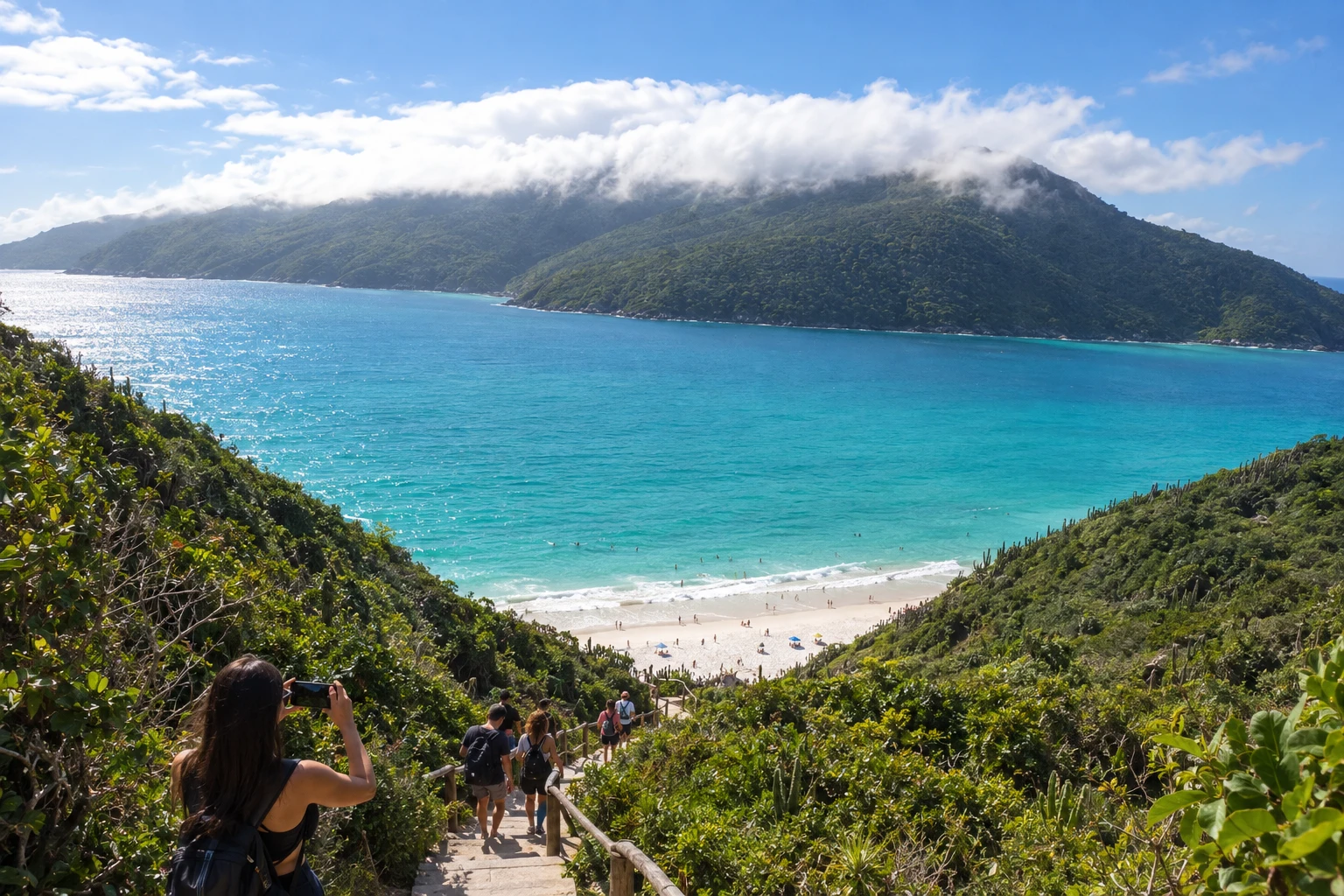
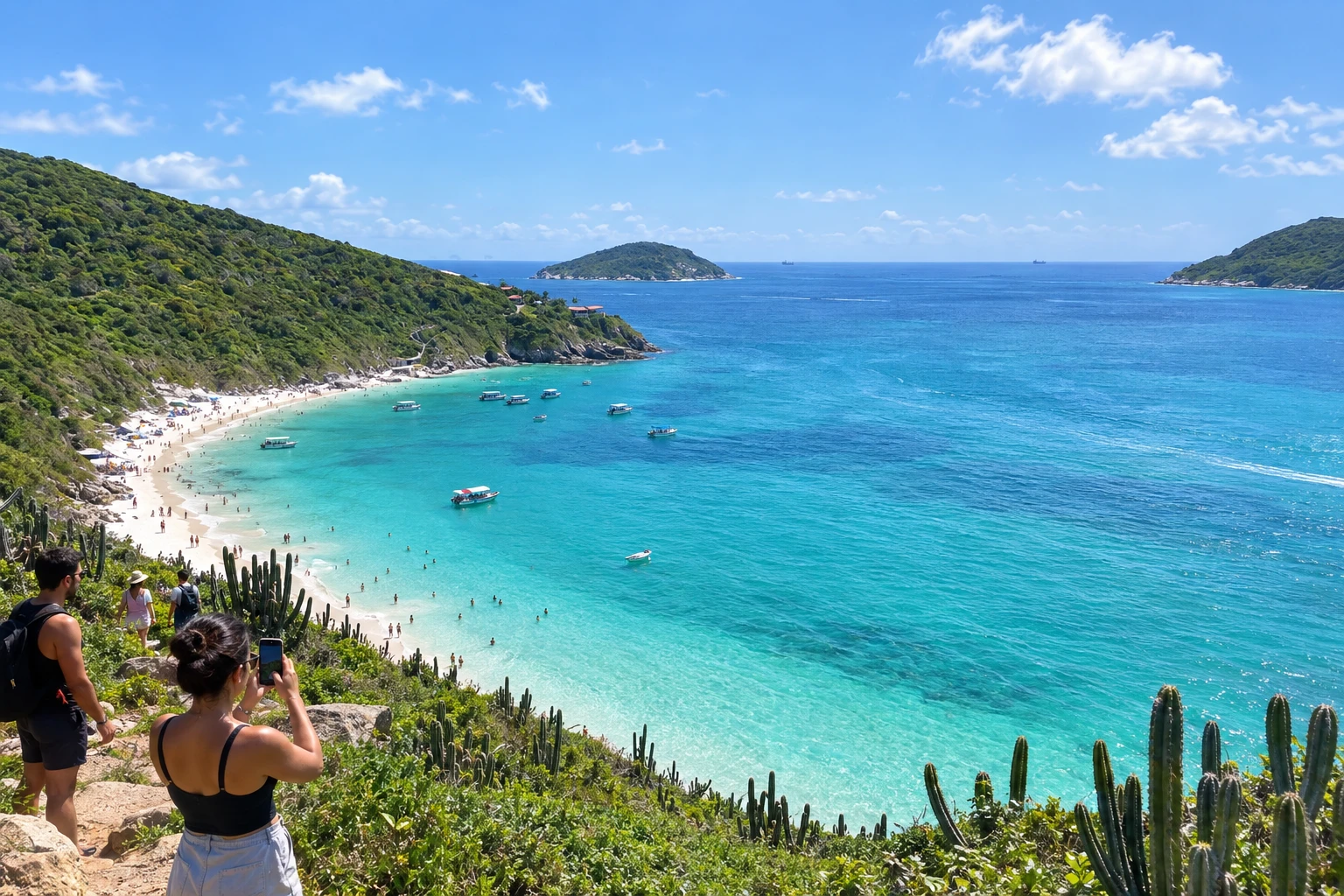
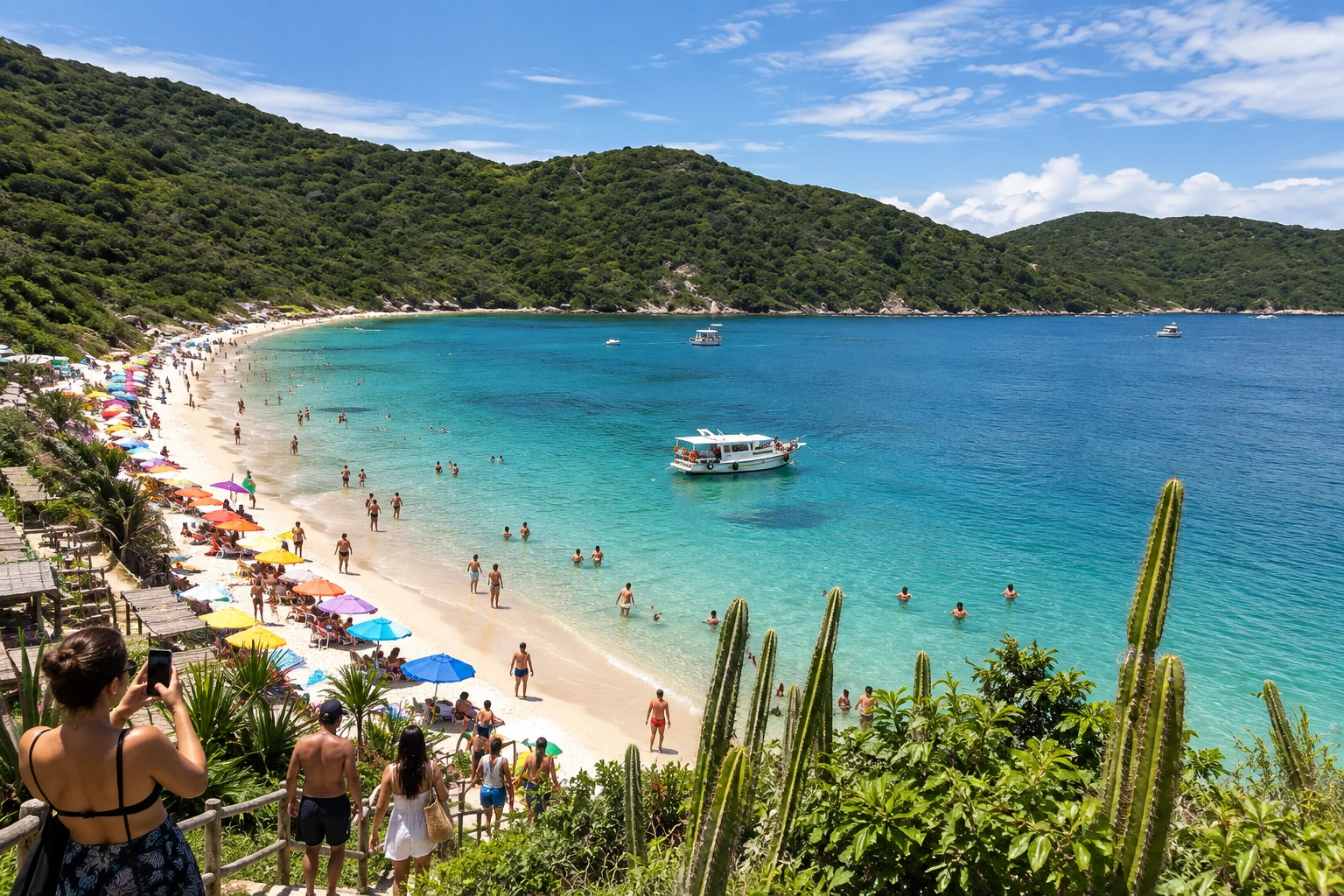
In the photo: Prainhas do Pontal do Atalaia, em Arraial do Cabo, na Região dos Lagos.

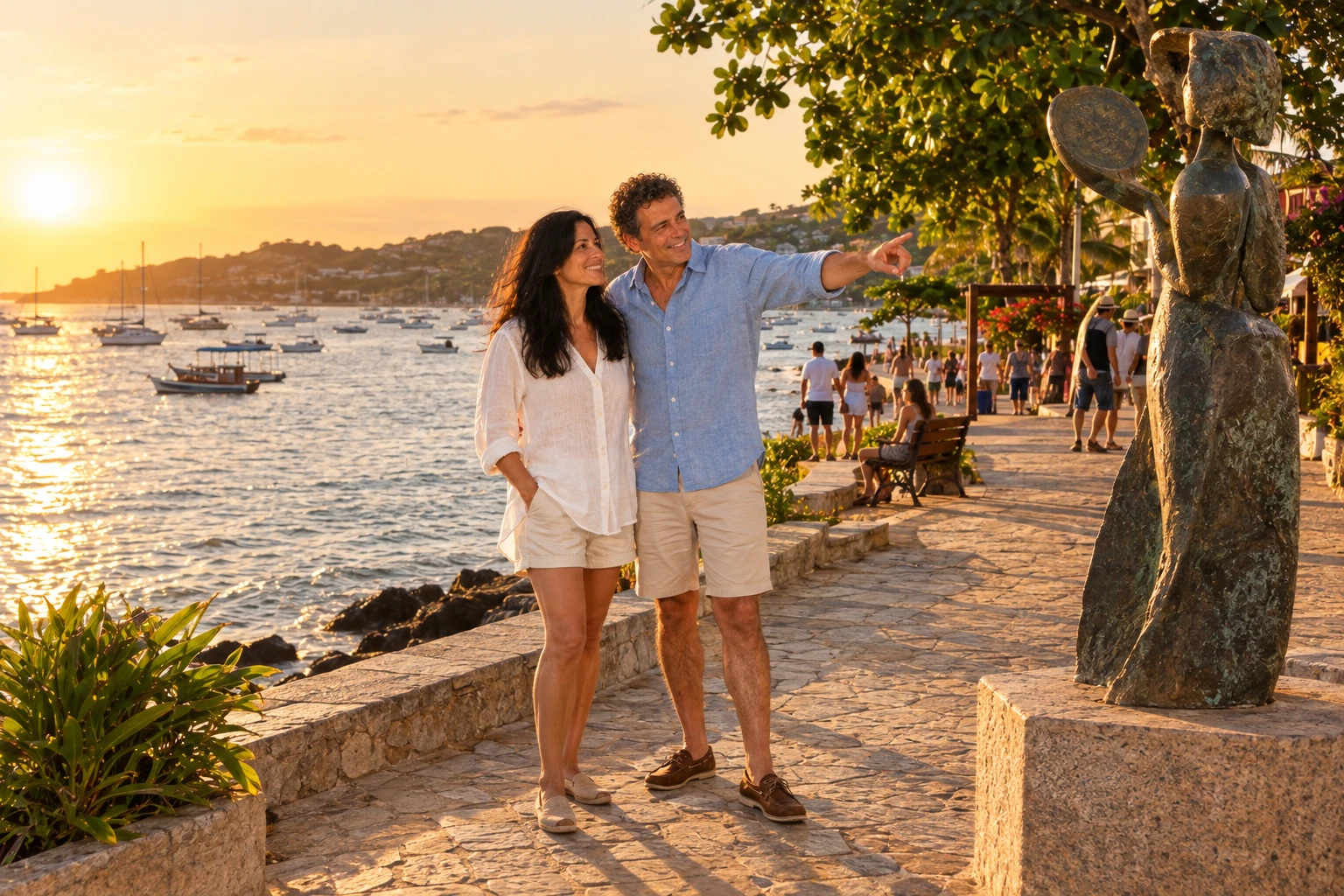
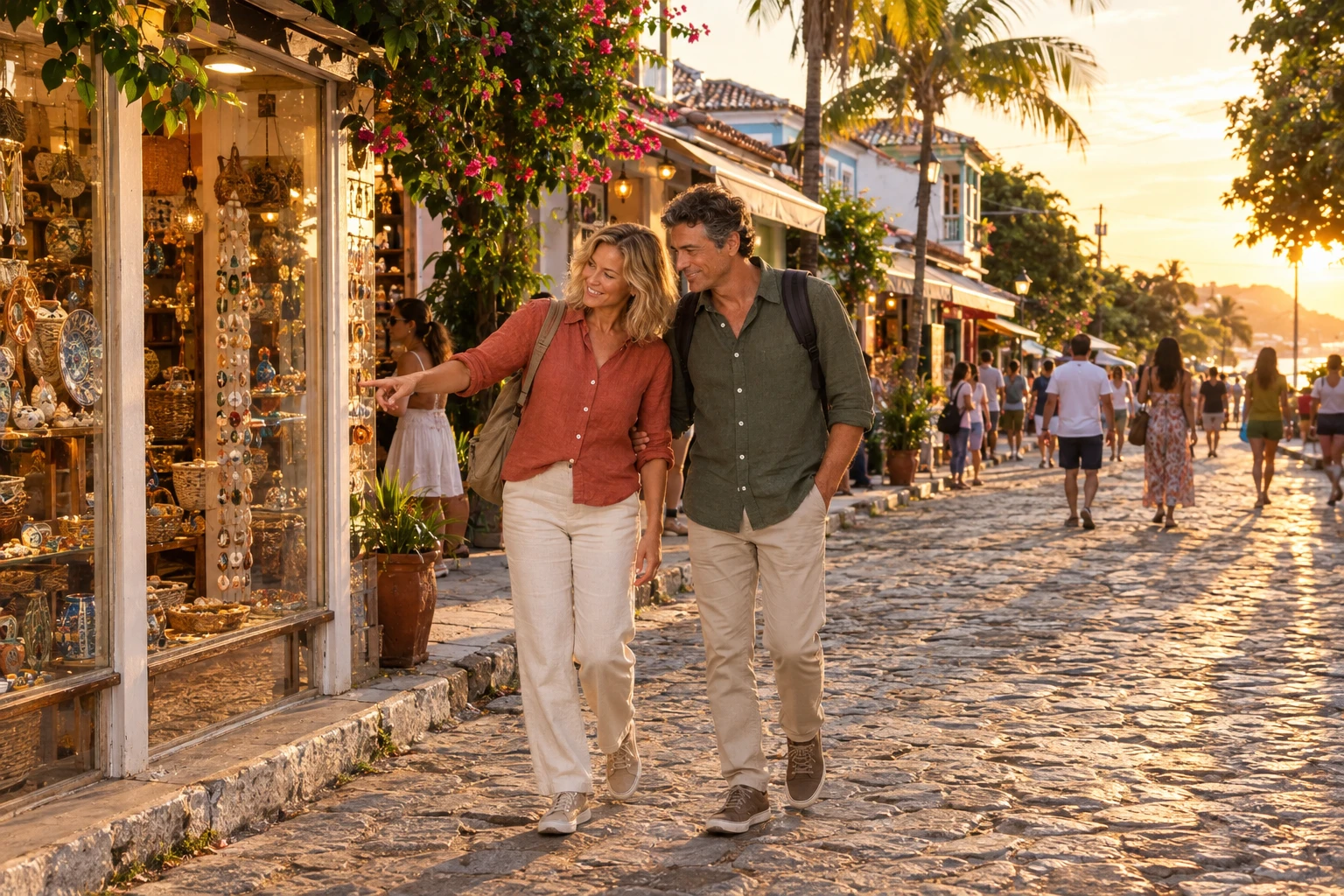
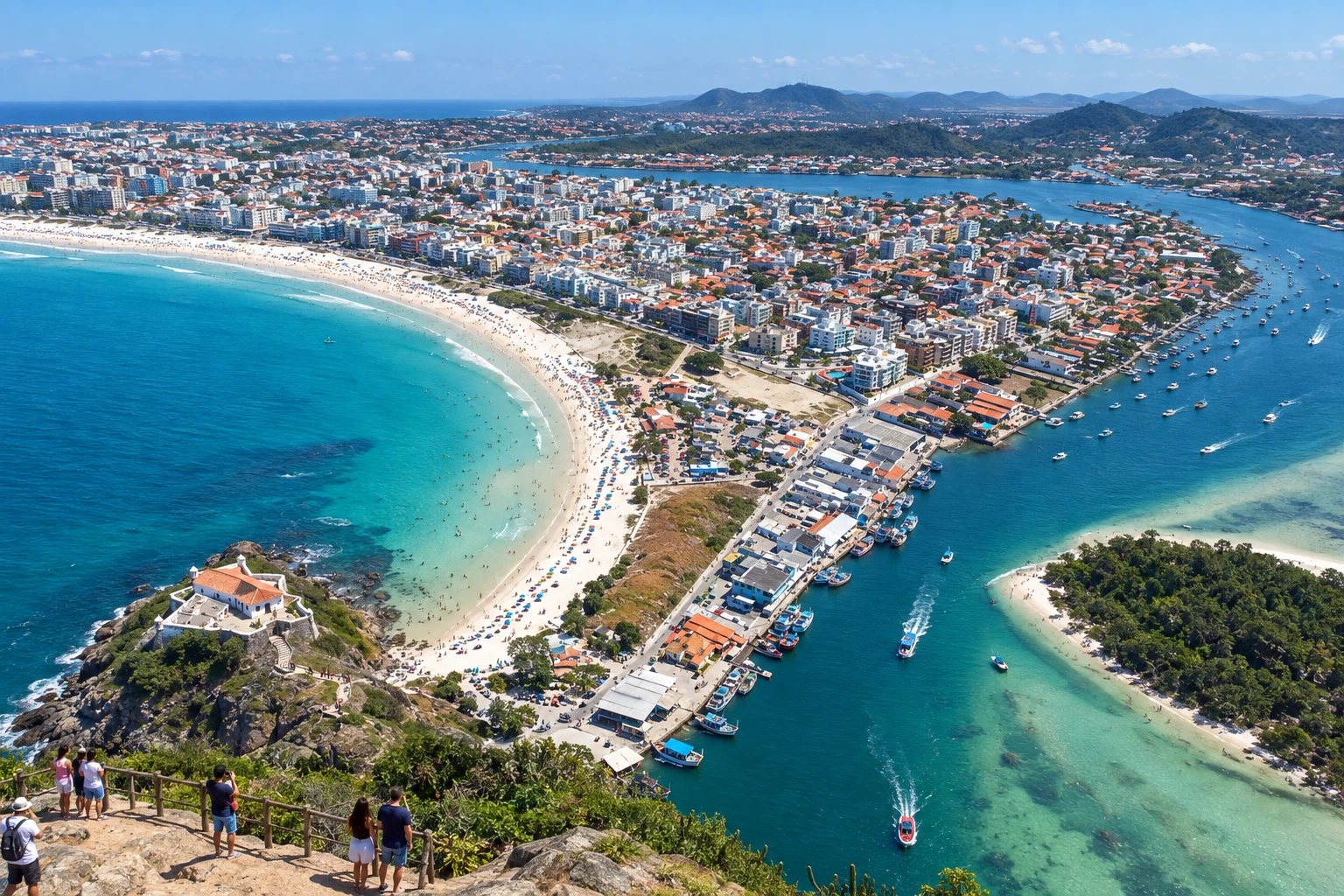
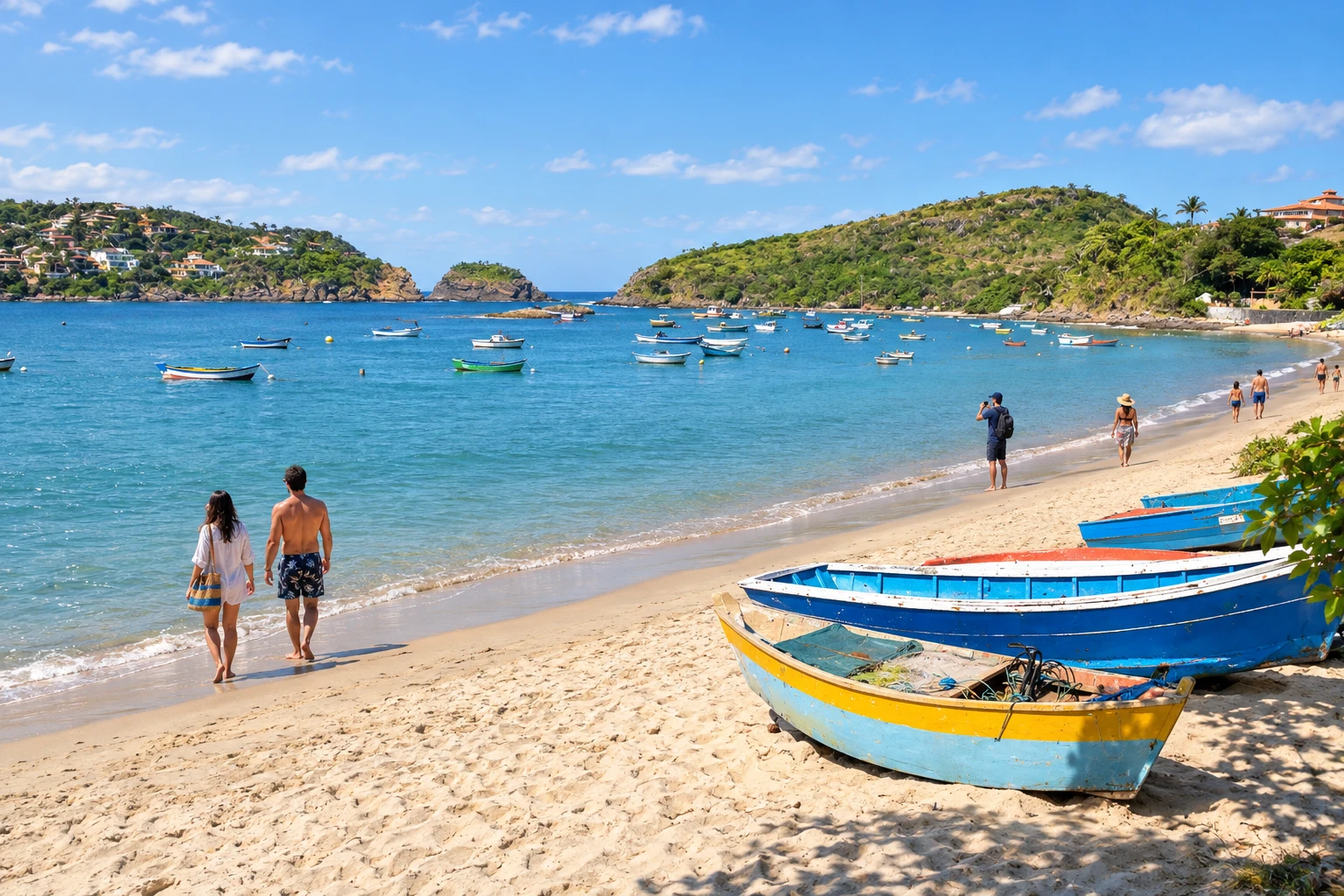
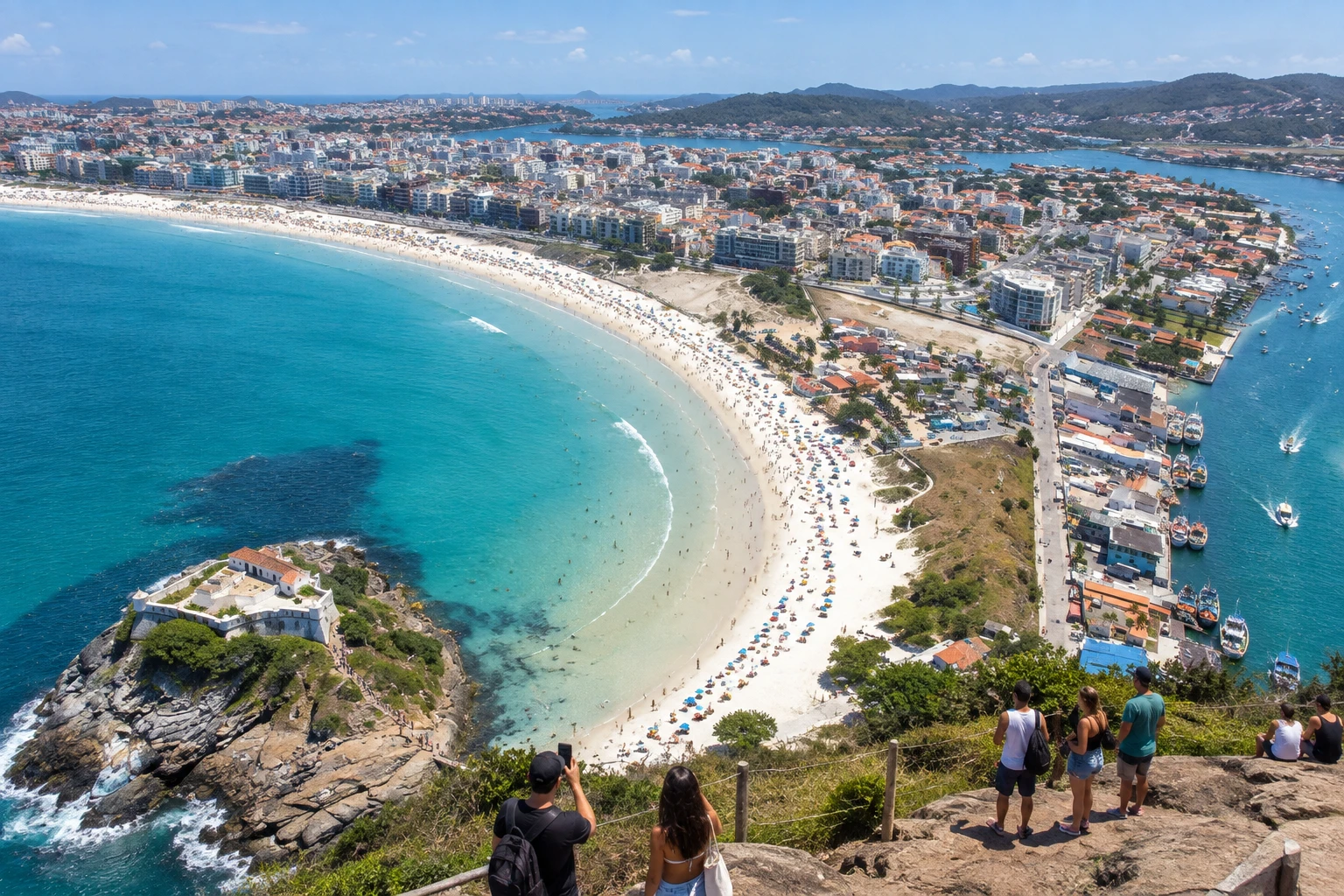
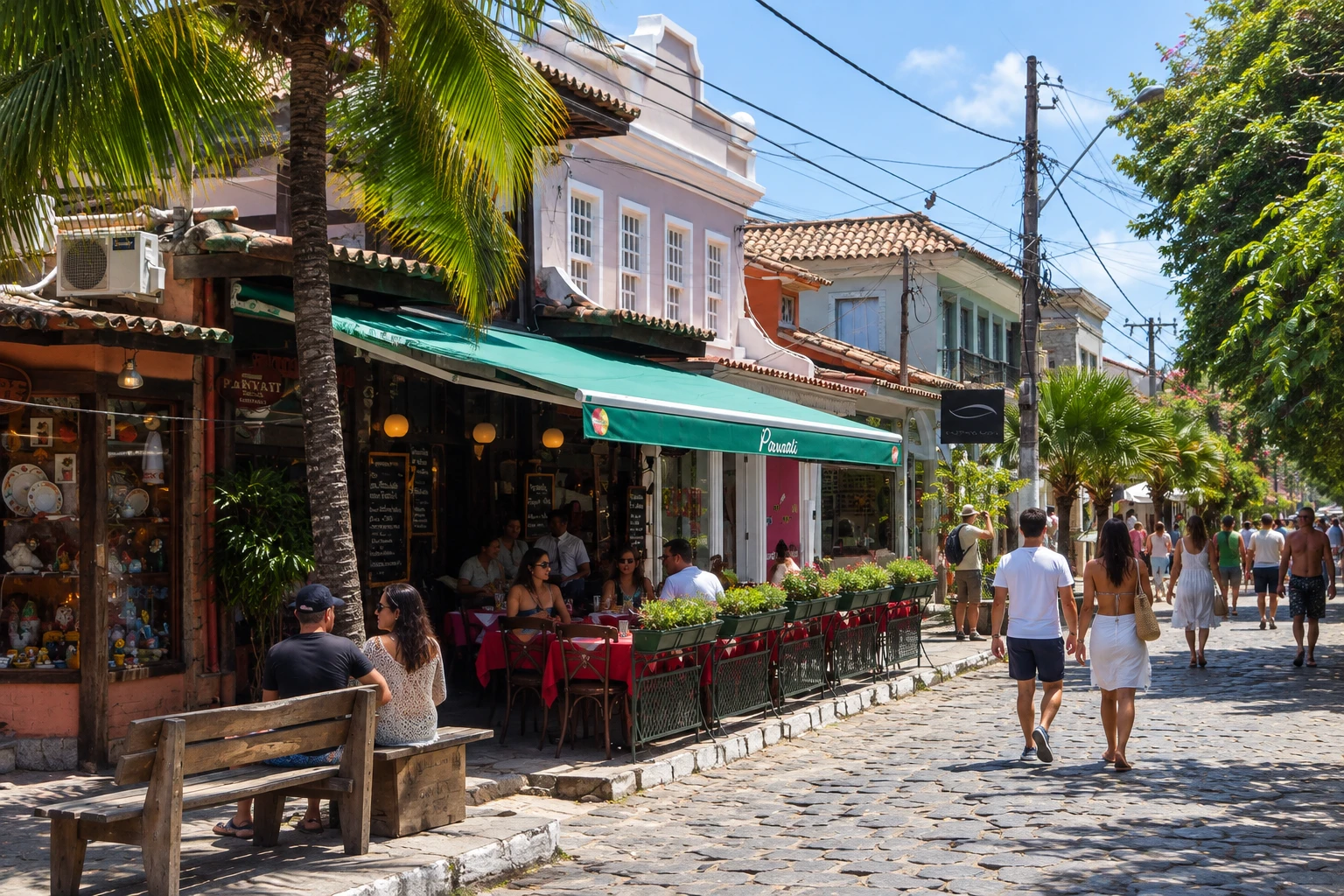
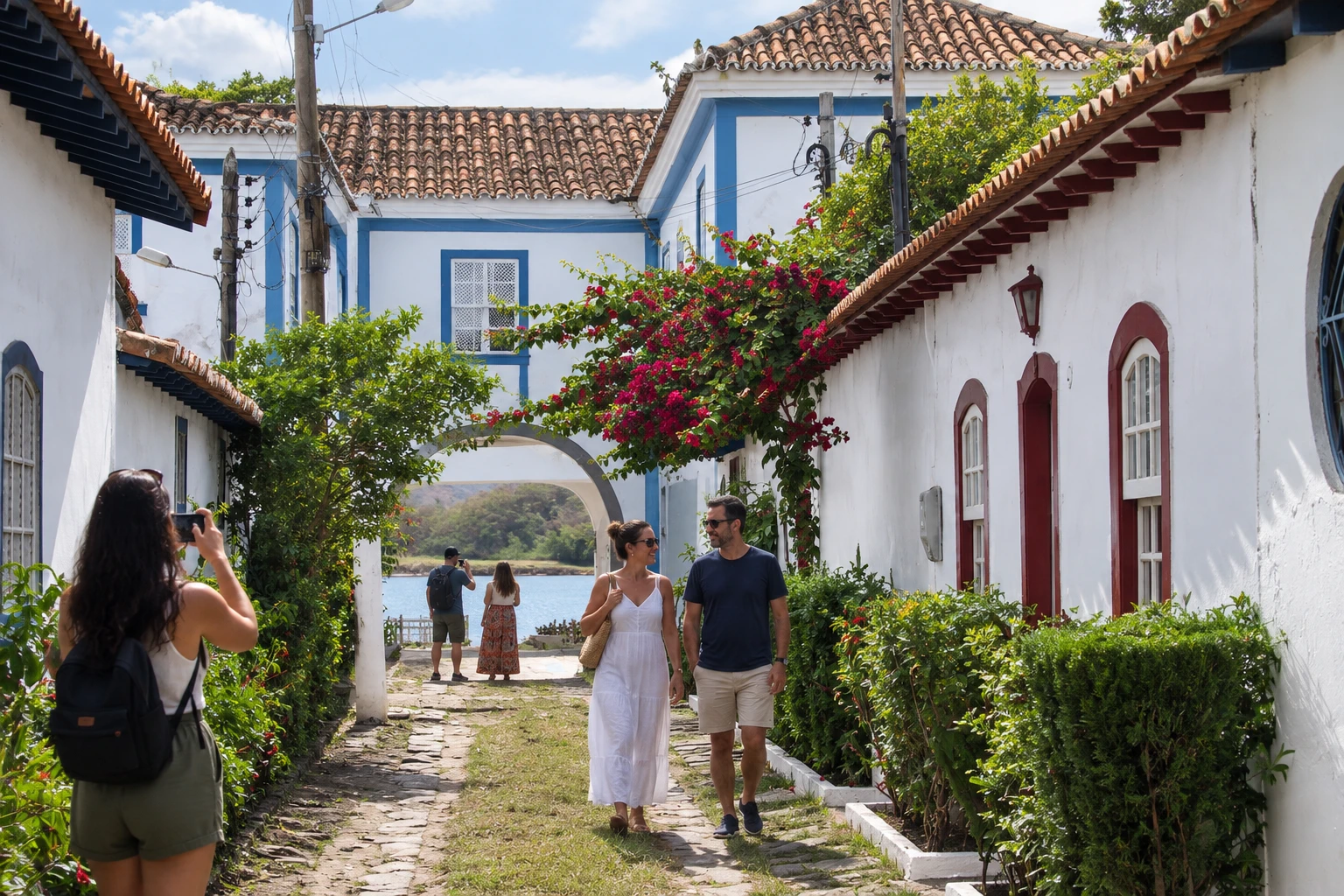
Illustrative images. The pictures in this guide are illustrations based on the real place, not photographs, and may differ from it.

Get to know the place

A region to enjoy
at your own pace.

A Região dos Lagos, no litoral fluminense, convida a combinar dias de praia com passeios por enseadas, orlas e bairros históricos. Neste roteiro, Armação dos Búzios, Arraial do Cabo e Cabo Frio oferecem experiências diferentes e complementares para uma viagem de lazer.

Em Búzios, alterne praias como Geribá e Ferradura com caminhadas pela Orla Bardot e pela Rua das Pedras. Arraial do Cabo concentra praias de águas transparentes, acessos por trilhas e passeios pelo mar. Escolha os programas conforme suas condições de mobilidade e o estado do tempo.

Cabo Frio reúne a Praia do Forte, o bairro da Passagem e opções de gastronomia à beira do Canal do Itajuru. Use a cidade como uma das possíveis bases e reserve tempo para os deslocamentos. Um roteiro com menos trocas de hospedagem permite aproveitar melhor cada parada.

This destination brings together 3 cities: Cabo Frio, Armação dos Búzios, Arraial do Cabo.

Share: WhatsApp

Travelers' photos

Região dos Lagos through the eyes of those who went

Região dos Lagos
Illustrative image
Região dos Lagos
Illustrative image
Traveler, share your experiences through photos Up to 5 photos of each place you visited.

One destination, many paths

The cities on this trip

Start with one city or combine several in your itinerary.

Where Região dos Lagos is The star marks the nearest capital, Rio de Janeiro.
Rio de JaneiroCabo FrioArmação dos BúziosArraial do Cabo

Mapa: @svg-maps/brazil, CC BY 4.0

How to get there: Região dos Lagos

Aeroporto Internacional de Cabo Frio (CFB) · 8 km to Cabo Frio

Saindo do Rio de Janeiro, o acesso rodoviário passa pela BR-101 e pela Via Lagos, com conexões locais para cada cidade. Há serviços de ônibus para as três cidades. O aeroporto de Cabo Frio é uma alternativa regional; confira a disponibilidade de voos e organize o transporte até a hospedagem.

Suggested arrival point: Cabo Frio

The local experience

Things to do in Região dos Lagos

Arraial do Cabo · RJ · Praia

Praia do Forno

A Praia do Forno, em Arraial do Cabo, tem acesso por trilha ou barco a partir da Praia dos Anjos. A enseada é uma parada para aproveitar a paisagem e um período na areia.

Explore Praia do Forno

Cabo Frio · RJ · Praia

Praia do Forte

A Praia do Forte é uma referência de Cabo Frio, com areia clara, mar aberto e passeio pela orla. O Forte São Mateus integra a paisagem de uma de suas extremidades.

Explore Praia do Forte

Armação dos Búzios · RJ · Rua

Rua das Pedras

A Rua das Pedras concentra lojas, bares e restaurantes no centro de Búzios. É um passeio para combinar caminhada, compras e uma pausa para comer.

Explore Rua das Pedras

Cabo Frio · RJ · Bairro

Bairro da Passagem

O bairro da Passagem reúne edificações históricas, a Igreja de São Benedito e um polo gastronômico. É uma opção para caminhar e terminar o dia em Cabo Frio.

Explore Bairro da Passagem

See 23 more places in Região dos Lagos

To choose before you go

Tours in Região dos Lagos

Where each tour starts, how long it takes, how it is done, what is included and the price range.

Boat tour in Arraial do Cabo

From Marina dos Pescadores, Praia dos Anjos, Arraial do Cabo Local operator boat about 4 hours morning or afternoon easy

This is the tour that brings the most visitors to Arraial do Cabo. Boats depart from the piers at Marina dos Pescadores, on Praia dos Anjos, and circle Ilha do Cabo Frio. The itinerary usually includes a stop at Praia do Farol on Ilha do Farol, with white sand and clear water, no kiosks or buildings. Visitor numbers on the island are controlled, and disembarkation depends on authorization on the day. On the return, the boat passes in front of Fenda de Nossa Senhora, Pedra do Gorila and Gruta Azul, which are viewed from inside the vessel for photos. At Prainhas do Pontal do Atalaia, the boat generally stops in front of the beaches, and going down to the sand depends on permission. The last stop is usually the cove of Praia do Forno, for swimming and snorkeling. There are many types of boats: basic ones, two-deck vessels, boats with waterslides, with swings or with a floating mat. The basic route is similar on all; what changes is onboard comfort and group size. There are also enclosed boats for private groups.

Stops: Ilha do Farol, Fenda de Nossa Senhora, Pedra do Gorila, Gruta Azul, Prainhas do Pontal do Atalaia, Praia do Forno.

Includes: Generally includes the boat ride, life jackets and mineral water. Some boats have water slides, swings and background music. The marina boarding fee is charged separately per person at embarkation; some age groups are exempt. Check the current table and exemptions with the operator.

Tip: Arrive at the pier early for check‑in. Bring cash or Pix for the boarding fee, sunscreen and a snorkel mask if you have one. Stops vary depending on wind and sea conditions, and the operator may change the order of the itinerary. Arraial’s water is usually cold even in summer.

Best time: All year; from December to March there is more activity, and from April to October there are fewer people and less rain.

Introductory dive in Arraial do Cabo

From Marina dos Pescadores, Praia dos Anjos, Arraial do Cabo Dive operator boat about 3 hours 30 minutes morning or afternoon easy to moderate

Arraial do Cabo is known as Brazil’s diving capital. A baptism is an introductory scuba dive for those who have never dived and are not certified. It begins with a short classroom briefing, continues by boat to a dive site chosen according to the day’s weather and sea conditions, and ends with a dive alongside a certified instructor who manages the equipment the whole time. On the seabed you commonly see schools of fish, turtles, moray eels, rays and corals; seahorses appear less often. Certified divers can join trips to deeper sites, including shipwrecks. The water is cold because of upwelling, and operators provide neoprene suits.

Stops: Marina dos Pescadores, Praia dos Anjos, Ilha do Cabo Frio.

Includes: Generally includes boat transport, all equipment, classroom and practical lessons, a certified instructor, water and a snack. Underwater photos vary by operator. The marina boarding fee is charged separately.

Tip: There is a minimum age (usually 10 years, with a guardian) and a medical questionnaire before boarding. Asthma, epilepsy, hypertension and pregnancy commonly prevent diving. Avoid alcohol beforehand and do not schedule a flight within 24 hours after diving.

Best time: All year; visibility changes with wind and upwelling. From April to October there is usually less rain and less crowding.

Trail from Praia dos Anjos to Praia do Forno

From left end of Praia dos Anjos, Arraial do Cabo On foot about 15 minutes each way morning or afternoon easy

Praia do Forno is in a sheltered cove next to Praia dos Anjos. You can reach it by water taxi or by the trail of about 600 meters that starts at the left end of Praia dos Anjos, near the boat pier. The path has a short climb, viewpoints over the town and marina, and then descends to the sand. The water is usually calm and clear, good for snorkeling and kayaking. There are kiosks serving seafood. It is also a stop on boat tours, so the cove gets busier in late morning and early afternoon.

Stops: Praia dos Anjos, Praia do Forno.

Includes: Access via the trail without a guide. The water taxi from Praia dos Anjos is paid separately.

Tip: Go early, before the tour boats arrive. Wear sneakers or sturdy sandals for the trail and bring water. At Praia dos Anjos you can also find the Igreja de Nossa Senhora dos Remédios.

Best time: All year; from April to October it usually rains less.

Mirante and Prainhas do Pontal do Atalaia

From Arraial do Cabo town center Private car, taxi or ride‑hail app about 2 to 4 hours morning or late afternoon easy to moderate (stairs)

The Pontal do Atalaia is the headland that closes off Praia Grande. From the Mirante do Pontal do Atalaia you can see the Prainhas, Praia Grande and much of Arraial’s coastline. It’s a popular spot at sunset. The Prainhas do Pontal do Atalaia are small strips of white sand with calm, turquoise-blue water. They are reached overland by a long staircase that descends the hill. The prainhas are small and fill up quickly.

Stops: Mirante do Pontal do Atalaia, Prainhas do Pontal do Atalaia, Praia Grande.

Includes: Self-access. Parking and purchases are paid separately.

Tip: Arrive early to secure a spot on the sand. Climbing the stairs on the return is tiring: bring water. Ask in town whether land access to the small beaches is open that day.

Best time: Year‑round; from April to October there are fewer people and less rain.

Trail from Praia Grande to Praia Brava via Mirante do Pontal

From Praia Grande, Arraial do Cabo On foot about 1 hour 30 minutes round trip morning or afternoon moderate

The trail starts at Praia Grande, climbs to the Mirante do Pontal and descends to Praia Brava, a beach with no facilities, strong waves and few visitors. The route includes stairs and rocky sections that become slippery. The sand of Praia Brava appears at low tide. Praia Grande, the starting point, is a long open-sea beach popular with surfers and has beach kiosks along the waterfront.

Stops: Praia Grande, Mirante do Pontal, Praia Brava.

Includes: Self-guided hike. If you lack experience you can hire a local guide.

Tip: Check the tide table before you go. There is no infrastructure along the route or at Praia Brava: bring water, snacks, and sunscreen. The sea at Praia Brava is strong; avoid entering the water.

Best time: From April to October, when it usually rains less.

Ilha do Japonês

From Bairro da Passagem or Ogiva, Cabo Frio Water taxi, on foot at low tide, kayak or stand-up paddle half day morning or afternoon easy

Ilha do Japonês is a small islet in the Itajuru Canal, between Praia do Forte and Praia Brava, in Cabo Frio. The water around it is shallow, calm and clear — good for children, snorkeling, kayaking and stand-up paddle. You can walk around the islet in a few minutes. There are three ways to get there: water taxi from Bairro da Passagem, a few minutes’ crossing; on foot when the tide is low, from the parking area on the road to Praia do Peró in Ogiva; or by paddling, in a kayak or on a stand-up board. The islet has no restaurant or chair rentals; vendors pass by selling snacks and drinks.

Stops: Ilha do Japonês, Itajuru Canal, Bairro da Passagem, Ogiva.

Includes: Access on your own. Water taxi, parking and kayak or stand-up rentals are paid separately.

Tip: Check the tide table if you plan to cross on foot. Bring food, water, a chair or beach wrap, and take your trash with you. Weekends and holidays get crowded; weekdays are quieter.

Best time: All year; from December to March there is more activity.

See 11 more tours

Cabo Frio historic center: Forte São Mateus, Passagem and Morro da Guia

From Praia do Forte, Cabo Frio On foot about 3 hours morning or late afternoon easy

Forte São Mateus was built in the 17th century on the corner of Praia do Forte to defend the coast from the French and Dutch, and is protected by Iphan. Praia do Forte has about 7 km of white sand; near the fort, the water is calmer. The Passagem neighborhood, on the edge of the Canal do Itajuru, was the city’s first urban nucleus, with colorful houses, Praça São Benedito and the Igreja de São Benedito. At night it gathers bars and restaurants. Morro da Guia has an ascent of about 15 minutes via stone pavement up to the Capela Nossa Senhora da Guia, from 1740, with views over the channel. Rua dos Biquínis brings together dozens of beachwear shops.

Stops: Forte São Mateus, Praia do Forte, Bairro da Passagem, Igreja de São Benedito, Morro da Guia, Capela Nossa Senhora da Guia, Canal do Itajuru, Rua dos Biquínis.

Includes: Self-guided walk. The chapel atop Morro da Guia opens only a few times a year; the outdoor area is open to the public.

Tip: Combine Forte São Mateus and Praia do Forte in the morning with the Passagem neighborhood and Morro da Guia at late afternoon. The nearby Boulevard Canal is the departure point for schooner trips through the channel.

Best time: All year; April to October usually has less rain.

Peró Dunes

From Peró neighborhood, Cabo Frio Own car and on foot about 2 hours morning or late afternoon easy

The Peró Dunes are a field of white dunes behind Peró Beach, in a protected area. The climb to the top takes about 5 minutes from a dead-end street in the neighborhood. From up there you can see Peró Beach in the distance, the restinga vegetation and, at certain times, small lagoons between the dunes. There is also the Parque das Dunas, with the Duna Mãe, higher, about a 20-minute climb from the General Alfredo Gomes Martins highway, opposite the Praia das Dunas condominium. Motorized vehicles are prohibited on the dunes. Local guides offer sandboarding with equipment.

Stops: Peró Dunes, Peró Beach, Parque das Dunas, Duna Mãe.

Includes: Access on foot on your own. Sandboarding with a guide is paid separately and requires a reservation.

Tip: Avoid midday: the sand gets hot and there’s no shade. Bring water, a hat and light footwear. The lagoons between the dunes depend on rain and do not always appear.

Best time: All year; from April to October it usually rains less and the heat is milder.

Schooner through the Itajuru Channel

From Boulevard Canal, Cabo Frio Schooner or operator’s boat about 1 hour 30 minutes to 3 hours afternoon easy

Boats leave from Boulevard Canal and follow the Itajuru Canal, passing the Bairro da Passagem, Ilha do Japonês and Praia do Forte. The short version, about 1 hour 30 minutes, stays in the canal and usually departs in the afternoon, with a bar on board. The longer version, about 3 hours, goes out to sea through Boca da Barra, passes in front of Forte São Mateus and Farol da Lajinha, and stops for swimming and snorkeling.

Stops: Itajuru Canal, Bairro da Passagem, Praia do Forte, Ilha do Japonês, Forte São Mateus, Farol da Lajinha.

Includes: Usually navigation, life jacket and flotation rings are included. Food, drinks and snorkel mask are paid separately, as is the boarding fee, charged in cash.

Tip: Bring cash for the boarding fee. Departure to the sea depends on the day’s conditions.

Best time: All year; from December to March there are usually more departures.

Trail to Farol da Lajinha and Praia Brava, Cabo Frio

From Parque Municipal da Boca da Barra, Ogiva, Cabo Frio On foot about 1 hour 30 minutes morning or afternoon moderate

The trails in Parque Municipal da Boca da Barra start near Ilha do Japonês. The trail to Farol da Lajinha is about 1.3 km, with an uphill section, and offers views of the Boca da Barra, Praia do Forte, Ilha do Japonês and Canal do Itajuru, among cacti and birds. From the same access point a trail of about 1 km leads to Praia Brava, which faces the open sea. One stretch of the beach is a naturist area and another, popular with surfers, is for general use.

Stops: Parque Municipal da Boca da Barra, Farol da Lajinha, Praia Brava, Ilha do Japonês, Canal do Itajuru.

Includes: Self-guided trail; local guides offer paid accompaniment separately.

Tip: Combine with Ilha do Japonês on the same day. Bring water and wear sturdy footwear. Respect the naturist area at Praia Brava.

Best time: From April to October, when it usually rains less and the heat is milder.

Praia do Peró, Praia das Conchas and Morro do Vigia Trail

From Praia do Peró, Cabo Frio Private car and on foot about 1 hour 30 minutes to 2 hours of trekking full day moderate

Praia do Peró has about 7 km of wide sand and some waves; the left corner is quieter and the right side has kiosks. Next to it is Praia das Conchas, about 600 meters long, in a cove with calmer water. The Morro do Vigia Trail starts behind a restaurant at the right corner of Peró. It’s a loop of about 860 meters with climbs, passing viewpoints over Peró and the Conchas and small hidden beaches like Praia do Pesqueirinho, where you can swim.

Stops: Praia do Peró, Praia das Conchas, Morro do Vigia, Praia do Pesqueirinho.

Includes: Access on your own. Parking and guide are paid separately.

Tip: Take the trail with a guide if you don’t know the way. Bring water; there are no facilities on the hill. End the day at Conchas, where the sea is usually calmer.

Best time: All year; it usually rains less from April to October.

Schooner tour in Búzios

From Búzios town waterfront (Orla Bardot and Praça Santos Dumont) Operator schooner about 2 hours 30 minutes to 3 hours morning or afternoon easy

The schooners leave from the town waterfront and circumnavigate part of the Búzios peninsula. From the boat you can see about a dozen beaches and islands, such as Armação, Ossos, Azeda and Azedinha, João Fernandes, Ilha do Caboclo and Ilha Branca. Usually there are three stops for swimming and snorkeling, often at João Fernandes, Ilha Feia and Praia da Tartaruga, depending on the sea that day. The schooners have two or three decks, a guide onboard and a bar. It’s a relaxed tour, useful to get an overview of the beaches before choosing where to spend the following days.

Stops: Praia da Armação, Ilha do Caboclo, Praia dos Ossos, Azeda e Azedinha, João Fernandes e João Fernandinho, Ilha Branca, Ilha Feia, Praia da Tartaruga, Praia das Virgens, Praia dos Amores, Praia do Canto.

Includes: Generally navigation, guide, life jacket and floats are included. Food, drinks and diving equipment are paid extra. The boarding fee is charged separately, in cash, on the day.

Tip: Bring cash for the boarding fee and a snorkel mask, if you have one. Confirm the boarding point when you book: the schooners leave from different points along the waterfront.

Best time: All year; from December to March there are more departures and more activity.

Rua das Pedras and Orla Bardot

From Búzios town center On foot about 2 to 3 hours late afternoon and evening easy

Rua das Pedras is the pedestrian street in Búzios’ small center, with shops, restaurants and bars. Orla Bardot continues the seaside stroll, with statues of Brigitte Bardot, Juscelino Kubitschek and the three fishermen, the latter in the water. Watching the sunset from the pier is a common activity. Following the promenade you reach Praia dos Ossos, with fishing boats and low houses. The parallel street, Manuel Turíbio de Farias, offers more budget-friendly restaurant options.

Stops: Rua das Pedras, Orla Bardot, Praia da Armação, Praia dos Ossos.

Includes: Self-guided walk.

Tip: Parking near Rua das Pedras is difficult on holidays and in high season; prefer to go on foot, by taxi or ride app.

Best time: All year; from December to February and on holidays the street fills up at night.

Búzios beaches by land: João Fernandes, Ferradura and Geribá

From Búzios town center Private car, jardineira, buggy, taxi or ride-hailing app full day morning and afternoon easy

Búzios has more than 20 beaches, and many are just minutes apart by car. João Fernandes has calm, clear water and chair and umbrella rentals; nearby is the João Fernandes viewpoint, overlooking the town center. Azeda and Azedinha are small coves with calm seas. Ferradura is a closed bay with tranquil water. Geribá is long, good for walking and surfing, and more crowded. If you don’t want to drive you can take the jardineira circuit, about 1 hour 30 minutes, which goes by João Fernandes, Brava, Forno, Foca and Ferradura with stops at some of them, or a buggy tour along the beaches.

Stops: João Fernandes Beach, João Fernandes Viewpoint, Azeda and Azedinha, Forno Beach, Foca Beach, Ferradura Beach, Geribá Beach.

Includes: On your own; there is no beach access fee. Minibus tours, buggies, parking and chair rentals are paid separately.

Tip: On cove beaches, arrive early to find parking. North of the peninsula the sea is usually calmer; Geribá and Brava have bigger waves.

Best time: All year; from December to March the water is more sought after and it’s busier.

Ferradurinha trail and natural pools

From Ferradurinha Beach, Búzios On foot (or with a kayak section) about 4 hours 30 minutes morning moderate

The trail is about 3.5 km along the headland starting from Ferradurinha Beach, a small cove where sea turtles often appear. The route passes by Praia dos Amores, with pink sand, two sets of natural rock pools, a small saltwater cascade facing the sea, and the Pedra do Guardião. The trail has no signs, and much of it is over rocks and without shade.

Stops: Ferradurinha Beach, Praia dos Amores, Pedra do Guardião.

Includes: Hike on your own; local guides offer paid accompaniment.

Tip: Go with a guide if you don’t know the headland. Wear footwear with good grip, bring water and sunscreen; there are no restrooms or water for sale along the way. The tide affects the pools.

Best time: From April to October, with less rain and lower heat; check the tide beforehand.

Praia Rasa, Mangue de Pedras and Mirante da Ponta do Pai Vitório

From Praia Rasa, Búzios By own car and on foot about 3 hours morning or afternoon easy

Praia Rasa is long and peaceful, on the side of the peninsula facing the mainland. At the left corner a trail of about 400 meters starts, roughly a 10-minute walk, up to the Mirante da Ponta do Pai Vitório, from where a staircase made of tires descends to a small beach. From another access point at Praia Rasa, on flat ground, you reach the Mangue de Pedras, a mangrove that grows over rocks — a rare formation on the coast.

Stops: Praia Rasa, Mangue de Pedras, Mirante da Ponta do Pai Vitório.

Includes: Self-guided walk.

Tip: Park on the street behind the houses, at the left corner of Praia Rasa. Combine the tour with a swim at Praia Rasa itself.

Best time: All year; it usually rains less from April to October.

Serra das Emerências and Praia de Tucuns

From Praia de Tucuns or José Gonçalves neighborhood, Búzios On foot about 1 hour to 2 hours 45 minutes round trip afternoon moderate

Serra das Emerências is the highest point in Búzios at 164 meters, offering wide views of the peninsula at late afternoon. There are two accesses: via Praia de Tucuns, steeper, about a 40-minute ascent, or via the José Gonçalves neighborhood, wider and flatter but longer.

Stops: Serra das Emerências, Praia de Tucuns, José Gonçalves.

Includes: Hike on your own; local guides offer paid accompaniment.

Tip: Bring a flashlight if you plan to stay until late afternoon, and also water and sturdy footwear. The trail has no signs: go with a guide or someone who knows the way.

Best time: From April to October, when it usually rains less.

Day by day

3, 5 and 7-day itinerary in Região dos Lagos

Suggestions to plan the trip. Change the order of the days according to the weather and tour availability.

3 days · Lagos Region in 3 days: Arraial do Cabo, Cabo Frio and Búzios

For For those with a long weekend who want to see the essentials of all three towns. · Based in Cabo Frio, roughly halfway between Arraial do Cabo and Búzios
  1. Day 1 · Boat tour in Arraial do Cabo

    Leave early for Marina dos Pescadores at Praia dos Anjos and take the boat tour in Arraial do Cabo to Ilha do Farol, Gruta Azul and Praia do Forno. In the afternoon, climb to the Mirante do Pontal do Atalaia to see the Prainhas and Praia Grande from above.

  2. Day 2 · Ilha do Japonês and Cabo Frio historic center

    Morning at Ilha do Japonês, with a water-taxi crossing from Passagem or on foot at low tide. After lunch, Praia do Forte and Forte São Mateus. At sunset, climb Morro da Guia and dine in the Bairro da Passagem.

  3. Day 3 · Schooner and Rua das Pedras in Búzios

    Head to Búzios and take the schooner tour in the morning with swimming stops. In the afternoon, visit João Fernandes Beach and a viewpoint. Finish at Orla Bardot and Rua das Pedras.

5 days · Lagos Region in 5 days with beaches, hikes and diving
For For those who want to explore the three towns at a relaxed pace, alternating between boat trips, beach time and short hikes. · Based in Arraial do Cabo for the first two nights and Búzios for the next three
  1. Day 1 · Boat tour and Praia do Forno

    Boat tour in Arraial do Cabo in the morning. In the afternoon, return to Praia do Forno via the trail that starts at Praia dos Anjos to swim more peacefully.

  2. Day 2 · Introductory dive and Pontal do Atalaia

    Introductory dive in the morning, departing from Marina dos Pescadores. In the afternoon, descend to the Prainhas do Pontal do Atalaia via the staircase and stay for the late afternoon at the viewpoint.

  3. Day 3 · Cabo Frio: Ilha do Japonês and Dunas do Peró

    On the way to Búzios, stop in Cabo Frio. Morning at Ilha do Japonês; in the afternoon, visit the Peró dunes and Praia das Conchas. Continue to Búzios at the end of the day.

  4. Day 4 · Schooner and Búzios beaches

    Morning schooner cruise in Búzios. In the afternoon, visit Azeda and Azedinha or João Fernandes. At night, Orla Bardot and Rua das Pedras.

  5. Day 5 · Ferradura, Geribá and Mangue de Pedras

    Morning at Praia da Ferradura and Geribá. In the afternoon, Praia Rasa, Mangue de Pedras and the Ponta do Pai Vitório viewpoint before hitting the road.

7 days · Lagos Region in 7 days: the three towns at an unhurried pace
For For people with a week of vacation who like to combine beach time with hikes and boat tours. · Based in Arraial do Cabo (2 nights), Cabo Frio (2 nights) and Búzios (3 nights)
  1. Day 1 · Arrival and Praia do Forno

    Arrive in Arraial do Cabo and hike from Praia dos Anjos to Praia do Forno in the afternoon. Dine near Praia dos Anjos.

  2. Day 2 · Boat, Prainhas and Praia Brava

    Boat tour in Arraial do Cabo in the morning. In the afternoon, hike from Praia Grande to Praia Brava via the Mirante do Pontal, checking the tide beforehand, or just visit the Mirante do Pontal do Atalaia for those who prefer less walking.

  3. Day 3 · Introductory dive and transfer to Cabo Frio

    Introductory dive in the morning. In the afternoon, head to Cabo Frio and walk through the Bairro da Passagem and the Canal Boulevard.

  4. Day 4 · Ilha do Japonês, Farol da Lajinha and schooner on the canal

    Morning at Ilha do Japonês. Hike the Farol da Lajinha trail in the Parque Municipal da Boca da Barra. At late afternoon, take a schooner through the Itajuru Canal.

  5. Day 5 · Peró, dunes and historic center

    Morning at the Dunas do Peró and the Morro do Vigia trail, with a swim at Praia das Conchas. In the afternoon, visit Forte São Mateus, Praia do Forte and Morro da Guia. Continue to Búzios in the evening.

  6. Day 6 · Schooner and Búzios center

    Morning schooner cruise in Búzios. In the afternoon, Praia de João Fernandes and its viewpoint. At night, Orla Bardot and Rua das Pedras.

  7. Day 7 · Ferradurinha or Serra das Emerências

    Morning on the Ferradurinha trail, with a guide, to the natural pools. If you prefer less effort, stay in Geribá or Ferradura and climb the Serra das Emerências via Praia de Tucuns at late afternoon.

Best time to go

When to go: Região dos Lagos month by month

Choose your dates according to whether you prefer beach time or urban outings. To avoid busier periods, prefer weekdays outside holidays and school vacations. Before sea activities, check the wind forecast and navigation conditions; keep onshore alternatives.

The seasons shown are the most usual ones; nature doesn't always follow the calendar.

January Some rain

summer · high season

Hot, with summer rains in heavy downpours. It is high season: beaches, boats and roads get crowded, especially on weekends. The water around Arraial do Cabo can cool suddenly with a northeast wind and upwelling. Book tours in advance.

February Some rain

summer · Carnival

Hot and one of the least rainy months of the region’s summer. Carnival packs the three towns and the Via Lagos road. Outside the holiday, boat tours and schooners run frequently.

March Some rain

late summer · quieter

Still hot, with rain in heavy showers. Traffic decreases after Carnival, and tours are less busy on weekdays. A good month for sheltered beaches like Forno, João Fernandes and Ferradura.

April Low rain

less crowded · holidays

Rains ease and temperatures become milder. Low crowds except during the Easter and Tiradentes holidays. Trails like Ferradurinha and Praia Brava are more pleasant with less heat.

May Low rain

mild weather · low season

Dry weather and shorter days. The water gets colder and the sea can be choppier when cold fronts arrive. Good period for hikes and Cabo Frio’s historic center, with fewer lines for boats.

June Low rain

dry · cool by local standards

One of the driest and coolest months of the year. The water is usually cold, and cold fronts can affect boat itineraries for a day or two. Low crowds, except on sunny weekends.

July Low rain

July school break · dry weather

Dry and cool. School holidays bring more visitors, especially on weekends. Clear days favor the Peró Dunes and the viewpoints.

August Low rain

dry · windy

A dry month with wind and cold water. Good for walks and hikes. Diving runs year-round, with a wetsuit.

September Low rain

spring · northeast wind

Temperatures gradually rise and the northeast wind settles in. Low rainfall and moderate crowds. Arraial do Cabo’s water often stays cold due to upwelling.

October Some rain

spring · fewer people

Warmer days and returning rain. Moderate activity, outside holidays. A good month to combine boat trips, beaches and trails before high season.

November High rain

spring rains · year-end approaching

One of the rainiest months, with heavy showers alternating with sunny days. The month’s public holidays fill the towns. Boat tours may change schedules because of the weather.

December High rain

summer · New Year’s Eve

Hot with summer rains. The second half of the month and New Year’s Eve mark the start of high season, with crowded beaches and roads. Book boats and dives in advance.

Plan the journey

How to get there: Região dos Lagos

By plane

Cabo Frio International Airport is about 10 km from Arraial do Cabo and receives domestic flights from carriers such as Azul and LATAM, with connections to Belo Horizonte (Confins) and São Paulo (Guarulhos), plus seasonal flights from Argentina. The network changes with the season and is concentrated in summer. Búzios has Umberto Modiano Airport, aimed at executive aviation and seasonal flights.

The most common option is to fly to Rio de Janeiro, to Galeão (international) or Santos Dumont, and continue by road: it’s about 156 km to Cabo Frio, 165 km to Arraial do Cabo and 176 km to Búzios.

By bus

Auto Viação 1001 links Novo Rio Bus Station to the bus stations in Cabo Frio, Arraial do Cabo and Búzios, with several departures per day. The trip takes about 3 hours, and longer on holidays and summer weekends. Not all buses stop in Arraial do Cabo: check the destination when buying your ticket. From Galeão there is a direct bus to Búzios. There are also routes from São Paulo and Belo Horizonte, with fewer schedules.

Vans and private transfers depart from the airports and from neighborhoods in Rio to the three towns.

By car

From Rio de Janeiro, cross the Rio-Niterói Bridge and follow BR-101 to Rio Bonito. There the RJ-124, the Via Lagos, begins and leads to RJ-106 (Rodovia Amaral Peixoto) near São Pedro da Aldeia. For Cabo Frio and Arraial do Cabo, follow RJ-140; for Búzios, take RJ-102. Approximate distances from Rio: 156 km to Cabo Frio, 165 km to Arraial do Cabo and 176 km to Búzios, roughly 2 hours 30 minutes to 3 hours without traffic.

There are tolls on the Rio-Niterói Bridge and on the Via Lagos, which charges different rates on weekends and holidays. The entire route is paved. On long holidays and in high season travel time can double: leave early.

Getting around between the towns and within destinations

Cabo Frio is central: Arraial do Cabo is about 20 minutes by bus, and Búzios about 25 km away. There are intercity buses between the three towns, but a car gives more freedom to reach more distant beaches like Peró, Conchas, Praia Rasa and Tucuns.

In Búzios, vans run along the main avenue, and there are taxis, ride apps, water taxis for the beaches and a tourist open-top truck. In Arraial do Cabo, water taxis depart Praia dos Anjos for Praia do Forno. In Cabo Frio, water taxis cross from Bairro da Passagem to Ilha do Japonês. Parking near Rua das Pedras, the Prainhas and the sheltered beaches is difficult in high season.

Package with transfer or on your own

Rio travel agencies sell day trips to Búzios and Arraial do Cabo with transport, boat and lunch, and from Búzios day tours run to Arraial do Cabo and Cabo Frio. They’re convenient if you have little time, but the day is long, with about 3 hours on the road each way from Rio.

On your own, by car or bus, you can stay longer at each beach and choose boat times. For three days or more, basing yourself in Cabo Frio makes it easier to reach the other two towns.

Municipal fees and embarkation fee

Arraial do Cabo and Cabo Frio charge an entry fee for buses, minibuses and tour vans, requiring prior registration with the Tourism Department and rates that vary by vehicle, season and reservations made in the town. If you travel with an organized tour, confirm with the agency whether the fee is included.

On boat tours from Arraial do Cabo, Cabo Frio and Búzios there is an embarkation fee per person, paid separately at boarding, usually in cash or via Pix. Check the operator’s current rate table.

Your base to explore

Where to stay and where to eat

Before you go

Practical information

A little planning leaves more time to enjoy the journey.

When to go

Choose your dates according to whether you prefer beach time or urban outings. To avoid busier periods, prefer weekdays outside holidays and school vacations. Before sea activities, check the wind forecast and navigation conditions; keep onshore alternatives.

The seasons shown are the most usual ones; nature doesn't always follow the calendar.

How many days to stay

As a suggested itinerary, allow five to seven days to combine the three towns without packing all transfers into the same day. With less time, pick one base and prioritise two towns. Extra days help reschedule sea activities when weather requires.

Which city to stay in

Choose Cabo Frio if you want to combine beach, urban walks and services. In Búzios, the centre area makes it easy to enjoy Rua das Pedras and the Orla Bardot; near Geribá or Ferradura, prioritise the chosen beach. In Arraial do Cabo, pick accommodation according to access to excursions. Compare location and return transport before booking.

Respect the place

Take your trash with you, follow the signs and support local businesses. In natural areas, follow the visiting guidelines.

Beyond the guide

Your questions

Frequently asked questions about Região dos Lagos

É possível conhecer as três cidades na mesma viagem?

Sim. Sugerimos distribuir os passeios em vários dias, deixando margem para os deslocamentos e para eventuais mudanças nas condições do mar.

Qual cidade pode servir como porta de entrada?

Cabo Frio reúne aeroporto, rodoviária e estrutura de hospedagem. A melhor chegada para sua viagem depende da origem e dos serviços disponíveis nas datas escolhidas.

É necessário carro para todo o roteiro?

O carro facilita deslocamentos entre cidades e praias. Para um roteiro concentrado em uma base, planeje ônibus, táxi ou transporte contratado e confirme a volta antes de sair.

O que fazer quando um passeio de barco não puder sair?

Reorganize o dia com caminhadas urbanas, como a Rua das Pedras e a Orla Bardot, em Búzios, ou o bairro da Passagem, em Cabo Frio. Deixe atividades no mar para condições adequadas.

Explore other destinations Search by state and city