Angra dos Reis

Rio de Janeiro

Angra dos Reis

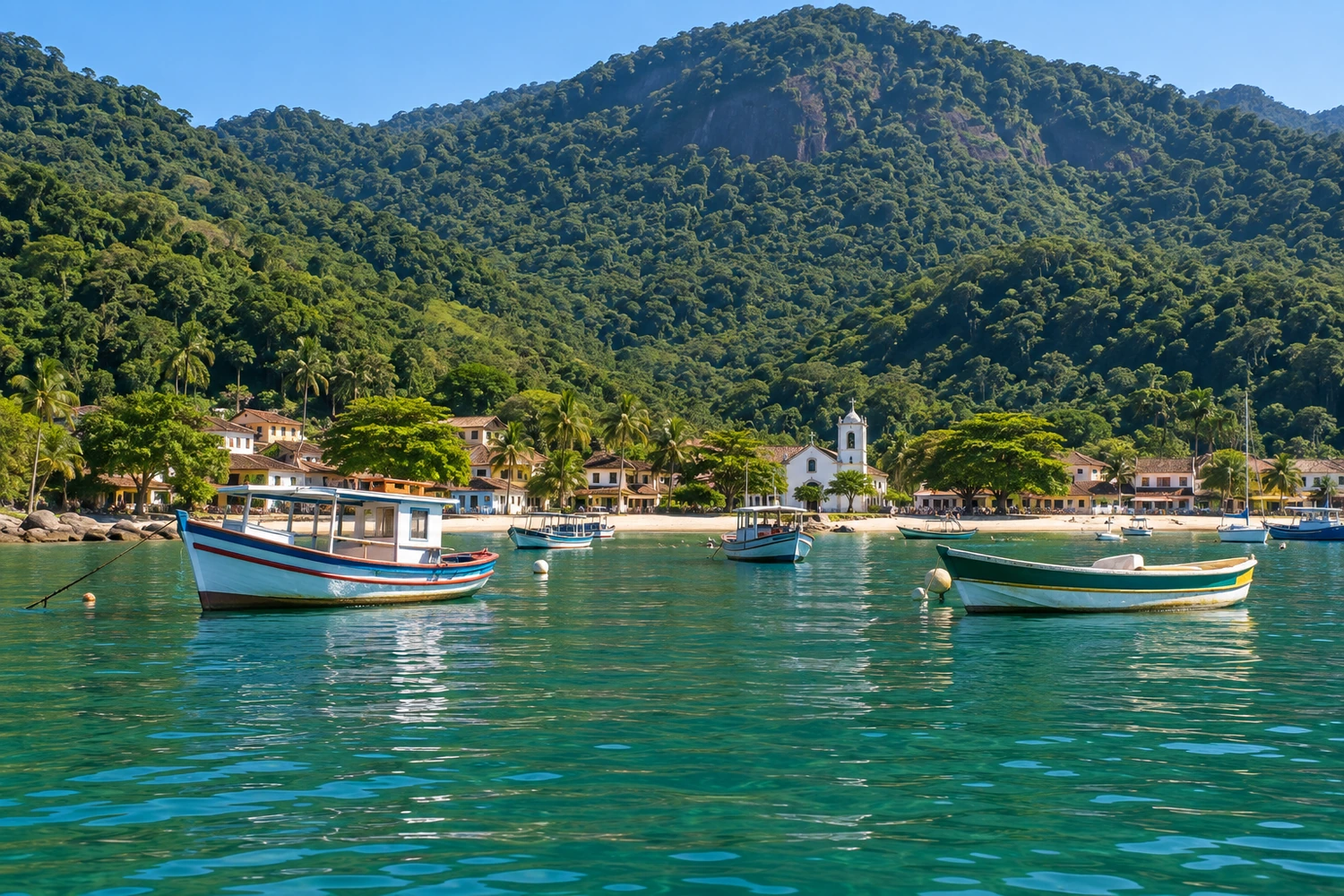
In the destination Costa Verde.

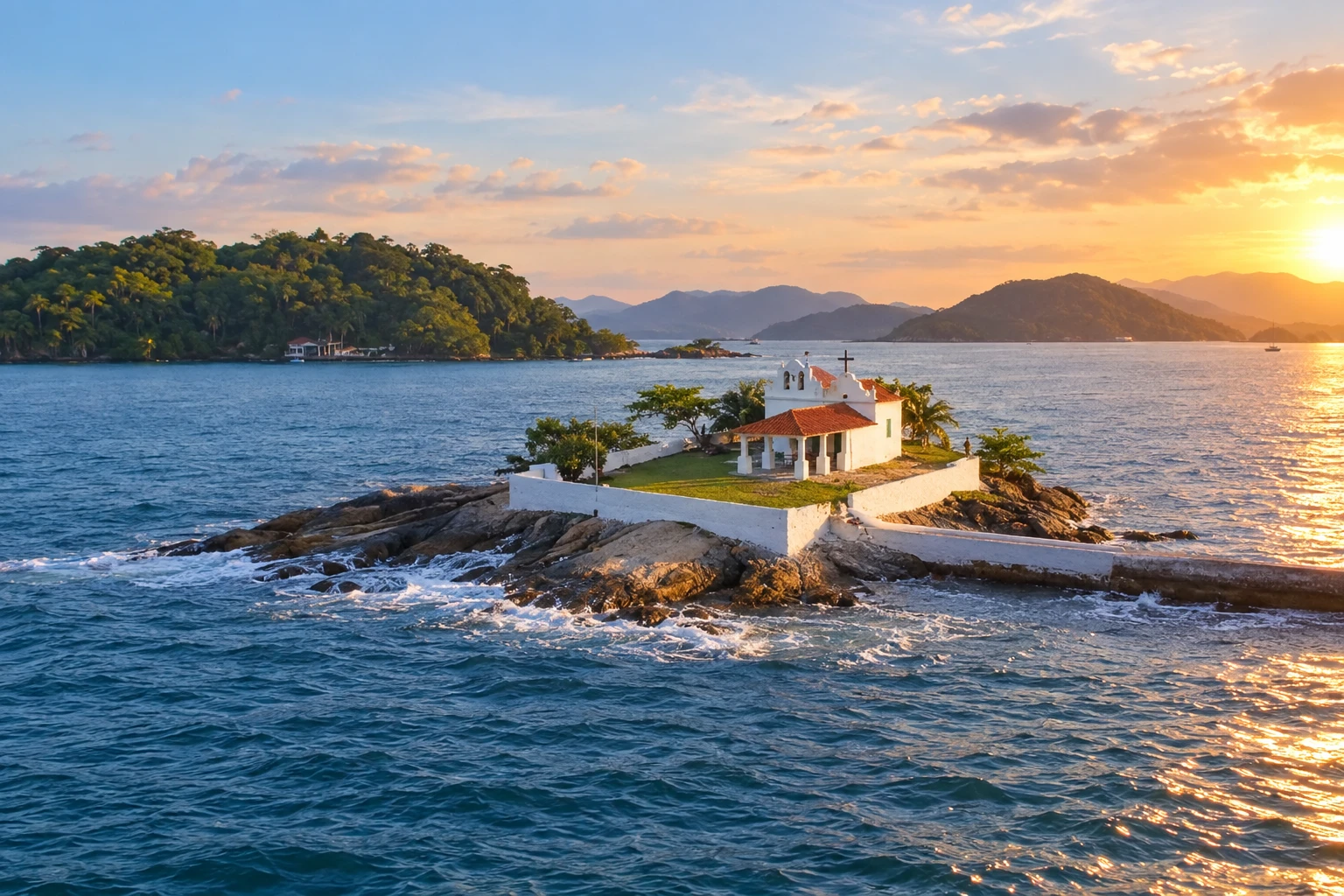
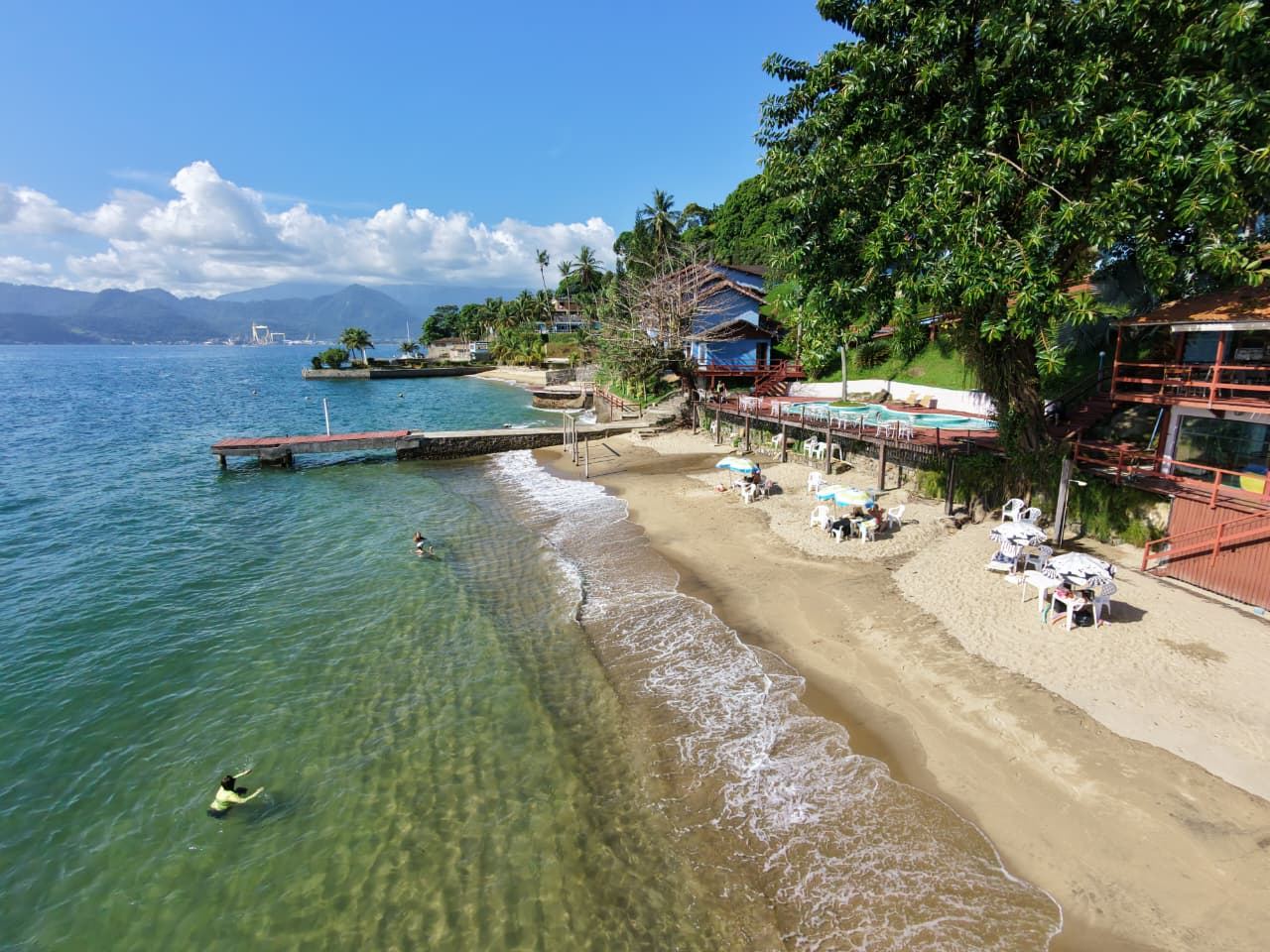
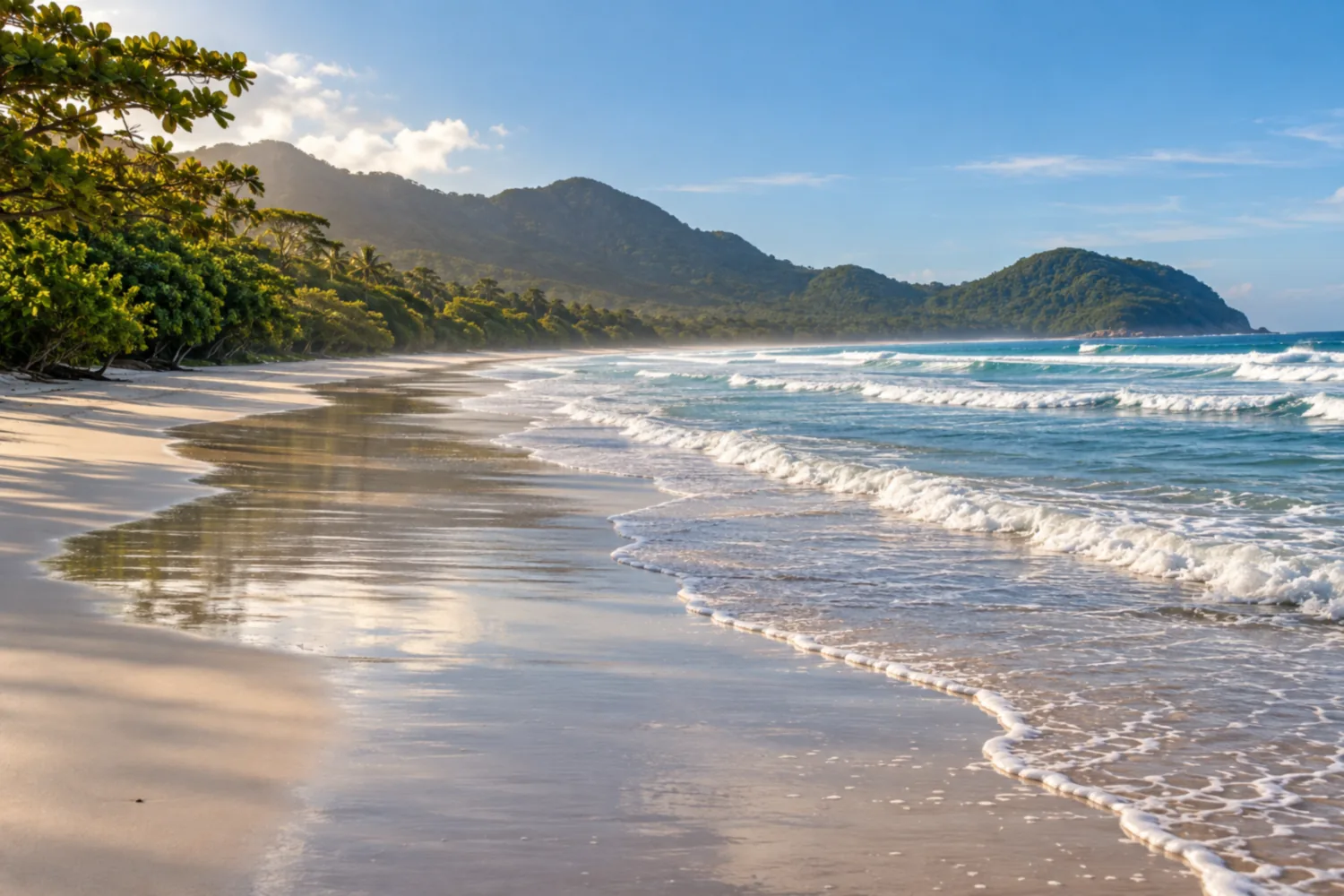
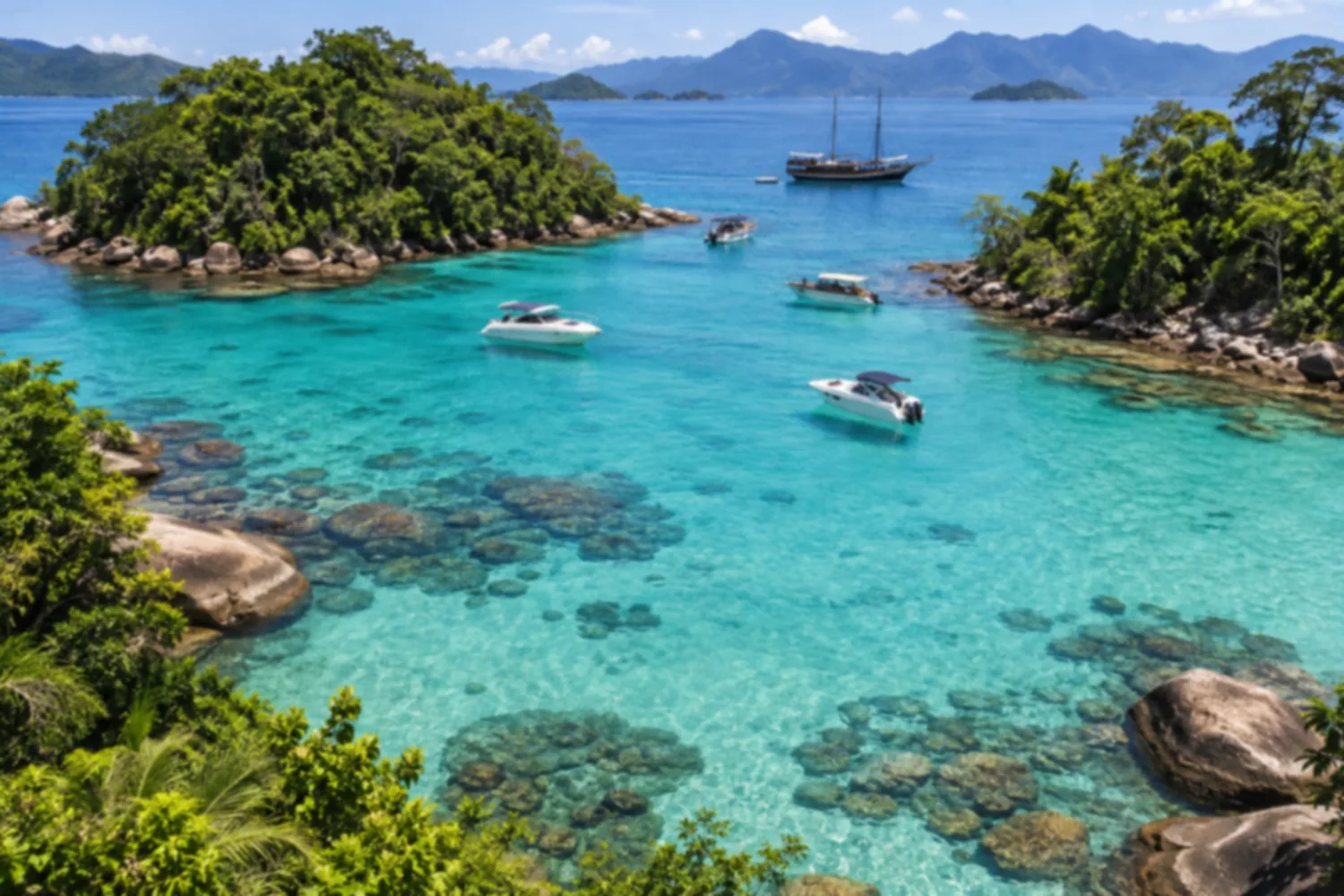
Illustrative images. The pictures in this guide are illustrations based on the real place, not photographs, and may differ from it.

The city

What to expect from Angra dos Reis.

Angra dos Reis spreads out between the jagged coastline and the islands of the Costa Verde. Boat trips let you explore beaches and coves, while downtown holds buildings tied to the town's history.

Angra dos Reis is on the southern coast of the state of Rio de Janeiro, in the Costa Verde, about 150 km from the city of Rio de Janeiro and about 100 km from Paraty. The municipality is a narrow strip of mainland squeezed between the Serra do Mar and the Baía da Ilha Grande, plus hundreds of islands. Local tradition says there are 365, one for each day of the year. The largest, Ilha Grande, belongs to Angra and is, for many people, the reason for the trip.

The bay was recorded by the Portuguese expedition of Gonçalo Coelho on January 6, 1502, Epiphany, which is where the name comes from. The first settlement arose around 1556, where Vila Velha is today; in 1617 the village moved to the site of the current Center, next to the Carmelite convent. From that past remain in the Center the Convent and Church of Our Lady of Mount Carmel, the Church of Santa Luzia, from 1632, the Mother Church of Our Lady of Conception, the Museum of Sacred Art and the ruins of the Convent of São Bernardino de Sena, on top of a hill.

It’s worth adjusting expectations: Angra is a working town, with a port, shipyard and nuclear power plants, and the Center does not have a beach-resort look. What brings travelers is the sea. From Estação Santa Luzia, in the Center, schooners and motorboats depart daily for the islands of the bay: the Ilhas Botinas, the Ilhas Cataguases, Ilha da Gipóia, with Praia do Dentista, and Lagoa Azul, already near Ilha Grande. The water is sheltered, almost without waves, and the trips require no special physical preparation.

Ilha Grande is another world. It has 193 km², more than a hundred beaches, almost the entire area protected by a state park and no private cars. You reach Vila do Abraão, the main village, by boat, and from there everything is done on foot on marked trails, or by boat: Praia de Lopes Mendes, exposed to the open sea, Cachoeira da Feiticeira, the village of Dois Rios, with what remains of the old prison, and Pico do Papagaio, at 982 meters. In 2019, Ilha Grande and Paraty were inscribed together on the UNESCO World Heritage List as a mixed site of culture and nature.

On the mainland the city is divided into quite different areas. The Center concentrates the pier, the churches, the bus station and services. The Estrada do Contorno, which circles the peninsula beside the Center, gathers the beaches most used by residents, such as Praia Grande, Praia do Bonfim and Praia da Vila Velha. Toward Rio de Janeiro is Ponta Leste, with beaches like Biscaia and Garatucaia. Toward Paraty is Ponta Sul, with Frade, Bracuí and the Historic Village of Mambucaba, on the municipal border.

The climate is hot and humid. From November to March it is warm, with averages of maximums near 26 °C to 27 °C, and it rains a lot, generally in late-afternoon showers; this is also high season. From June to August it rains little, maximums are around 22 °C, minimums around 16 °C, and the sea cools. April, May, September and October are in between, with less rain than summer and less crowded islands.

The city’s calendar begins on New Year’s Day with the Maritime Procession, a parade of decorated boats across the bay, and continues with Angra’s anniversary on January 6. The Festa do Divino Espírito Santo usually falls in May; the Angra International Theater Festival runs between May and June; and the Ilha Grande Music and Ecology Festival takes place in July in Vila do Abraão.

One day is enough for a boat trip through the islands. With two or three days you can include the Historic Center, the Contorno beaches and a visit to Ilha Grande; those who want to explore the island calmly should spend the night there. The municipality charges visitors a tourism fee, issued online before boarding. And leave flexibility in the itinerary: with strong wind or heavy rain, boats change route or don’t run.

Share: WhatsApp

Where to stay

109 places to stay in Angra dos Reis.

Where to eat

21 places to eat in Angra dos Reis.

Mapa de Angra dos Reis

21 lugares no mapa: onde ficar e onde comer, por bairro.

Angra dos Reis highlights and titles

World Heritage Site (UNESCO)
Intangible heritage (IPHAN)
Quilombo community
National park

Cidade Turismo partners

Featured places to stay in the region

Pousada Angra Fashion

Partner

Pousada · by the beach · Angra dos Reis

A beachfront pousada in Angra dos Reis (Rio de Janeiro). Seafront pool, beachside restaurant and 4 room categories.

Beachfront Fishing Swimming pool Breakfast On-site restaurant Wi-Fi Air conditioning Parking Pet friendly

The local experience

Things to do in Angra dos Reis

Angra dos Reis · RJ · natural pool

Lagoa Azul - Ilha Grande

A shallow natural pool sheltered by islets in the north of Ilha Grande, with Caribbean-colored water so clear you can see the bottom from the boat. It's the must-stop on schooner trips around the bay.

Explore Lagoa Azul - Ilha Grande

See 6 more places in Angra dos Reis

To choose before you go

Tours in Angra dos Reis

Where each tour starts, how long it takes, how it is done, what is included and the price range.

Walk through Angra dos Reis Historic Center

From Santa Luzia Station, Angra dos Reis downtown on foot, independently 2 to 3 hours morning or late afternoon easy, with one slope and one ascent

Angra’s downtown is small and can be walked in a morning. A good starting point is Santa Luzia Station, the pier where the boats leave, because from there you enter directly into the oldest part of town. A few steps ahead are the Church of Santa Luzia, from 1632, the first built in masonry in the village, and the Santa Luzia Hill, which still has the stone paving from the 18th and 19th centuries. From there continue along Rua do Comércio, the former Rua Direita. At one corner is the Casa de Cultura Poeta Brasil dos Reis, a two-story house from 1824 that residents prevented from being demolished and that now hosts exhibitions. Nearby is the Mercado Redondo, from 1914, built where fishermen used to beach their canoes; fish is still sold there. Praça General Osório, which locals call Pracinha do Carmo, was laid out by landscape architect Roberto Burle Marx and features the Chafariz Marquês do Herval, from 1881, known as the Fountain of the Dragons. Beside it is the Convent and Church of Nossa Senhora do Carmo, begun in 1593 and completed in 1617, where the Carmelite friars still live. The Mother Church of Nossa Senhora da Conceição, the city’s patroness, took 125 years to be finished, from 1625 to 1750. The former Chapel of Nossa Senhora da Lapa e Boa Morte, from 1752, houses the Museum of Sacred Art, with more than two thousand pieces brought from churches and brotherhoods in the municipality. To finish, climb Morro de Santo Antônio: there you’ll find the church and the ruins of the Convent of São Bernardino de Sena, from the 18th century, with stone walls without a roof and a view of the bay.

Stops: Church of Santa Luzia, Santa Luzia Hill, Casa de Cultura Poeta Brasil dos Reis, Mercado Redondo, Praça General Osório, Convent and Church of Nossa Senhora do Carmo, Mother Church of Nossa Senhora da Conceição, Museum of Sacred Art, Ruins of the Convent of São Bernardino de Sena.

Includes: There is no fee to walk the streets, squares and the pier. Churches, the museum and cultural houses have specific opening days and hours and may charge admission; check each current fee schedule.

Tip: Go in the morning, before the heat, and leave the climb to the ruins for the end. Those who will board later can use the stop at Estação Santa Luzia to obtain the tourism fee voucher and choose the boat.

Best time: All year. In December Praça General Osório is decorated for Christmas; on rainy days the walk is still possible.

Schooner trip around the bay islands, departing from Angra downtown

From Santa Luzia Station, downtown Angra dos Reis shared schooner about 6 hours late morning and afternoon easy

This is the simplest boat trip to take from the town and the least expensive. Boarding is at Santa Luzia Station, downtown, in the late morning, and return is in the late afternoon. Angra schooners are large boats for 140 to 180 people, with a bar and restrooms on board. The most common itinerary has four stops: Lagoa Azul, a shallow natural pool next to Ilha Grande; Praia do Araçá; the Ilhas Botinas, two small islets surrounded by transparent water; and Praia das Flechas, on Ilha da Gipóia, where lunch is served at a beach restaurant. Each stop lasts 20 to 30 minutes, and the lunch stop around an hour. Some companies substitute one of the points with the Ilhas Cataguases or Praia de Japariz. One detail matters when choosing: Lagoa Azul and the Ilhas Botinas have no pier or sand strip for disembarkation. The boat anchors, and those who want to enter the water go down directly into the sea; you must know how to swim. The flotation devices offered on board help, but life jackets are reserved for emergencies. On the beaches, disembarkation is onto the sand. The bay sea is sheltered, which helps those prone to seasickness. On windy days or heavy rain the itinerary changes or the departure is canceled. Those who prefer a smaller group and more bathing time should look for the shared speedboat.

Stops: Lagoa Azul, Praia do Araçá, Ilhas Botinas, Praia das Flechas, Ilha da Gipóia.

Includes: Usually includes the boat tour and flotation devices. Lunch, drinks and snorkel rental are paid separately, and most schooners do not allow boarding with outside food or beverages. The municipal tourism fee is paid separately. Check the agency's current price table.

Tip: Arrive at the pier in advance with the tour voucher, the tourist tax receipt and an ID. Bring sunscreen, a towel and your own snorkeling mask if you have one.

Best time: April to June and September to November, when the sea is clearer and the islands are less crowded. In summer, prefer days with calm mornings.

R$49 to R$100 · per person, adult, boat trip only

Shared speedboat: Ilhas Botinas, Praia do Dentista and Ilha da Gipóia

From Estação Santa Luzia, downtown Angra dos Reis shared speedboat about 5 hours morning and early afternoon easy

The speedboat covers a route similar to the schooner’s in less time and with a smaller group: the boats carry 16 to 32 people. It departs from Estação Santa Luzia and spends almost all the time around Ilha da Gipóia, the bay’s second largest island, close to the mainland. The first stop is usually Ilhas Botinas, also called the Twin Islets: two small forested islets surrounded by very clear water, where you snorkel among schools of fish. There is no beach; you disembark from the boat directly into the water. Next comes Praia de Jurubaíba, commonly known as Praia do Dentista, on Gipóia’s southern face. It’s a cove with white sand and shallow water where speedboats and sailboats anchor side by side; on summer weekends it fills with boats and music. Lunch is at Praia das Flechas, in calm water with a beach restaurant, and lasts about an hour. The route ends at Ponta da Piedade, also on Gipóia, where the little Church of Our Lady of Piedade stands. The other stops last 20 to 30 minutes. Agencies also sell a second speedboat route that includes Lagoa Azul and the Ilhas Cataguases. If you have two days at sea you can do one route each day. The vessel is determined on the day of the trip, and the agency may change the order of stops according to the wind.

Stops: Ilhas Botinas, Praia de Jurubaíba (Praia do Dentista), Praia das Flechas, Ponta da Piedade, Ilha da Gipóia.

Includes: Usually includes the speedboat, the sailor, flotation devices, and a shared cooler with ice; generally you may bring food and drinks, except in glass. Lunch and the tourism fee are paid separately. Check the agency’s current price list.

Tip: Prefer weekdays to find Praia do Dentista less crowded. Bring a snorkel mask, sunscreen, and a change of clothes.

Best time: April to June and September to November, with more days of calm sea and fewer boats in the coves.

R$132 to R$180 · per person, adult, shared speedboat

Contorno Road: Praia Grande, Bonfim and Vila Velha

From downtown Angra dos Reis car, taxi or municipal bus half day morning or afternoon easy

Estrada do Contorno circles the peninsula beside downtown and passes the mainland beaches most frequented by local residents. It’s the plan for a free afternoon, a day without a boat, or for travelers with small children. Parque da Cidade occupies an elevated area of the peninsula and serves as a viewpoint: from there you can see the sea on both sides and the bay islands. The road also passes in front of Colégio Naval, a Navy school established in the city in the 1950s, facing Enseada Batista das Neves. Praia Grande has the largest continuous stretch of sand in the region, with bars and restaurants. Bonfim is the most populated village along the road, with a tradition of diving and canoeing. Next to it, on a rock slab surrounded by sea, stands the Ermida do Senhor do Bonfim, a white chapel built in 1780 by a devotee who survived a shipwreck; it is reached by a walkway. It is one of Angra’s most recognized images. Praia da Vila Velha preserves the beginning of the town’s history: around 1556 the first settlement was established there, before the village moved to the current downtown. A stone marker recalls the arrival of the first inhabitants. Facing Ilha da Gipóia, it is sought out at late afternoon for the sunset. Praia das Gordas, with good shade, has a viewpoint beside it.

Stops: Parque da Cidade, Colégio Naval, Praia Grande, Praia do Bonfim, Ermida do Senhor do Bonfim, Praia da Vila Velha, City landmark, Praia das Gordas.

Includes: Access to the beaches and the park is free. Parking, bus fares and purchases at kiosks are each person’s responsibility.

Tip: Before entering the sea, check the bathing water bulletin from the state environmental agency, which assesses each beach. The road is winding, and double-decker tour buses do not pass the Colégio Naval stretch.

Best time: All year; on summer weekends the beaches fill early. The Festa do Senhor do Bonfim usually takes place in early May.

Cataguases Islands by water taxi, departing from Camorim

From Camorim neighborhood, Angra dos Reis water taxi half day or full day, your choice morning and afternoon easy

The Cataguases Islands are a group of very white sand islets with shallow, clear water, very close to the mainland. They are included on several schooner and motorboat itineraries, but always for about half an hour. If you want to spend more time there, there’s a dedicated option: the water taxi that leaves from the Camorim neighborhood, the mainland point closest to the islands. The crossing is short. Registered boatmen take the group to the sand, agree on the pickup time, and return at the end of the period. On the island the program is simple: bathing in calm sea water, good for children, and snorkeling with a mask near the rocks. Vegetation is low and reaches close to the sand, and in the background you can see the Serra do Mar covered in forest. The group of islets is a protected area, the Área de Relevante Interesse Ecológico das Ilhas Cataguases. Bring what you will consume, and everything you bring must return on the boat, including trash. This outing depends on sun: with overcast skies the water loses its color, and with wind the crossing becomes uncomfortable. On summer weekends the islets usually receive many boats; on weekdays the place is quieter.

Stops: Cataguases Islands, Camorim.

Includes: You pay the round-trip transfer, arranged with the boatman. Bring water and food; the municipal tourism fee is paid separately. Check the current rate locally.

Tip: Use only licensed boatmen and confirm the return time in advance. Bring a hat, a snorkeling mask, and a bag for trash.

Best time: Sunny days with little wind, preferably Monday through Friday. From April to June and from September to November there are fewer boats.

Vila do Abraão and Abraão Circuit, on Ilha Grande

From Santa Luzia Station, downtown Angra dos Reis speedboat or ferry to Vila do Abraão; then on foot 6 to 8 hours, including the crossing full day easy, with one uphill section

This is a way to see Ilha Grande in a single day without booking another tour. Fast boats leave Santa Luzia Station and take 30 to 40 minutes to reach Vila do Abraão, across sheltered waters. If you board early, you’ll have most of the day on the island. Abraão is the island’s main settlement: a pier, cobblestone streets without cars, restaurants, guesthouses and agencies. From there start the Parque Estadual da Ilha Grande’s marked trails, numbered from T1 onward. T1, the Abraão Circuit, is the shortest: under 2 km, done in one to two hours, with one uphill section. It passes the Praia Preta viewpoint, the Poção, a waterfall with a natural pool, and the Ruins of the Lazareto. The Lazareto was built between 1884 and 1886 as a quarantine for sick travelers and immigrants arriving by ship and, in the 20th century, became a prison; only ruins remain, visible from the outside. The circuit also reaches the old aqueduct. Back in the village there’s time for lunch and a swim at one of the beaches near the village. Those staying overnight on the island use this circuit as the arrival-day excursion and leave Lopes Mendes and Feiticeira for the following days. The point to watch is the return: confirm the time of the last boat to Angra before you leave for the trail and be at the pier with time to spare.

Stops: Vila do Abraão, Abraão Circuit (trail T1), Poção, Praia Preta viewpoint, Ruins of the Lazareto, Aqueduct.

Includes: You pay for the round-trip crossing and the municipal tourism fee. The trail is done on your own. Check the operators’ current schedule.

Tip: Buy the return ticket together with the outbound one. Wear sneakers, bring water and insect repellent. The line ferry is slower and has few departures per day: for a day trip, the speedboat is more efficient.

Best time: Dry days, between April and September, for the trail. In summer and on holidays, crossings fill up and require reservations.

See 6 more tours

Lopes Mendes Beach, from Vila do Abraão

From Vila do Abraão pier, Ilha Grande boat to Praia do Pouso and trail; or on foot from Abraão 5 to 6 hours morning and early afternoon easy by boat; moderate on foot

Lopes Mendes faces the open ocean side of Ilha Grande. It has almost 3 km of fine white sand, no buildings and no kiosks, with almond trees along the edge and a wave-swept sea, popular with surfers. It’s the most common excursion for those staying in Abraão. Boats do not land at the beach because of the open sea. They depart Abraão pier in the morning and drop passengers at Praia do Pouso, on the sheltered side, a 30-minute to one-hour ride. From there, trail T11 crosses a hill in 20 to 30 minutes, with a short but steep climb at the start. Those who like to hike can walk from the village via trail T10: about 6 km, taking two and a half to three hours, with ups and downs and a pass by Praia de Palmas, one of the island’s oldest settlements. The most common approach is to walk one way and return by boat, or vice versa. On the beach, choose your spot by looking at the sea. There are shallow stretches good for swimming and other areas with stronger waves for surfing. There is no sale of food or drinking water: everything you consume must come in your backpack, and you must take your trash back with you. Arrange the return boat time with the sailor when you get off at Pouso and start the return hike with plenty of time.

Stops: Praia do Pouso, Trail T11, Lopes Mendes Beach, Trail T10, Praia de Palmas.

Includes: The round-trip boat is sold by the village agencies and paid separately. The trail is done on your own. Check the current schedule.

Tip: Wear closed shoes even if you go by boat: trail T11 is slippery when the ground is wet. Carry at least 1.5 liters of water per person, snacks and sunscreen.

Best time: Clear-sky days, between April and November. In summer and on holidays, take the first boat to find the least crowded beach.

Cachoeira da Feiticeira via trail T2

From Vila do Abraão, Ilha Grande on foot; or water taxi to Praia da Feiticeira about 3 hours, round trip morning moderate

Feiticeira is Ilha Grande’s most visited waterfall: a fall of about 15 meters in the middle of the forest, with a pool for bathing and a natural rock slide. It is also the place where island operators offer rappelling. The walk starts in Abraão, follows the Circuito do Abraão to the Aqueduct and there takes trail T2. The path is signposted and goes up and down through dense forest, with roots and rocks. Count on about an hour and a half from the village to the fall. Many families make the route without a guide. After the swim there are two choices. The first is to descend to Praia da Feiticeira, small and calm, with large rocks at both ends, and return to Abraão by water taxi. The second is to continue along T2, which from Praia da Camiranga becomes flat and ends at Saco do Céu, an inlet of always-calm sea where sailboats spend the night. The entire section from the Aqueduct to Saco do Céu is about 6 km and takes three to three and a half hours; the return, in that case, is arranged by boat. Those who don’t want to walk as much do the reverse: water taxi to Praia da Feiticeira and about a half-hour climb to the waterfall. After heavy rain the trail becomes slippery and the water flows stronger: wait one day.

Stops: Aqueduct, Trail T2, Cachoeira da Feiticeira, Praia da Feiticeira, Saco do Céu.

Includes: The trail is done independently. Water taxi, guide and rappelling, when hired, are paid separately. Check current park visitation rules.

Tip: Leave early to walk in the shade and find the pool empty. Bring water, insect repellent and firm-soled shoes, and arrange the return boat before leaving the village.

Best time: Dry days, between April and September. In summer there is more water at the fall and more mud on the path.

Dois Rios and the Prison Museum via the prison road

From Vila do Abraão, Ilha Grande on foot, via trail T14 6 to 7 hours, round-trip, including time at the beach full day moderate, due to the distance

Dois Rios is on the other side of Ilha Grande, facing the open sea, and holds the most well-known part of the island’s history. From 1903 it operated as a penal colony that received common and political prisoners; writer Graciliano Ramos was among them. The route is the prison road itself, opened in the 1940s with prisoner labor. Trail T14 starts beside Abraão’s soccer field and follows a wide dirt road, first uphill, then downhill. After about 45 minutes, a tight bend, the Curva da Morte, opens the view to Enseada do Abraão. There are marked shortcuts that shorten the road’s curves, water taps along the way and, further on, the Piscina dos Soldados, a river pool. Expect two to two and a half hours each way. The arrival is via an avenue of royal palms, which ends in a square with the church and the village’s old houses. A park ranger usually records visitors’ names. The prison’s main building was demolished; in what remains operates the Prison Museum, maintained by the state university, with objects and documents from the institution. The beach has a river at each end. Before reaching the sea, the two form freshwater pools, good for bathing, under the shade of almond trees. The sea has waves. There is no inn or camping area in Dois Rios: it’s a round-trip excursion in a single day.

Stops: Trail T14, Curva da Morte (Death Curve), Piscina dos Soldados, Vila de Dois Rios, Prison Museum, Dois Rios Beach.

Includes: Trail done independently. Check museum opening days in advance. There is only one bar and one canteen in the village, which are not always open.

Tip: Leave Abraão early in the morning and start the return in the early afternoon to arrive while it’s still light. Bring snacks, water, insect repellent and a flashlight. Spring water from taps should be treated before drinking.

Best time: Dry days, between April and September, with firmer roads and less heat.

Blue Lagoon and Green Lagoon by speedboat, departing from Abraão

From Abraão Village pier, Ilha Grande shared speedboat about 6 hours morning and afternoon easy

For those sleeping on Ilha Grande, this is the boat trip equivalent to the schooner tours from Angra, with the advantage of departing from within the island. Agencies in Abraão sell the itinerary under the name Half Circle: the speedboat follows the sheltered northern coast and returns to the village late in the afternoon. The two main stops are natural pools. Lagoa Azul is beside Ilha dos Macacos, at the point of Ilha Grande closest to the mainland; the water is shallow with a light-colored bottom, and fish come close to people who float. The name came from the 1980s movie. Lagoa Verde, further west near Enseada de Araçatiba, is the stretch of sea between Ilha Grande and Ilha da Longa: it changes tone with the light and the tide and is good for snorkeling with a mask. Between the two, the speedboat stops at beaches on the northern coast, such as Praia da Feiticeira, and enters Saco do Céu, a closed cove with always-still water. Lunch is usually at a beach restaurant, at places like Japariz. The stops are longer than those on the schooners, about 50 minutes each. Speedboats carry from 10 to 24 people, depending on the agency. The itinerary depends on the sea: with wind, the order of stops changes.

Stops: Lagoa Azul, Lagoa Verde, Praia da Feiticeira, Saco do Céu, Praia de Japariz.

Includes: Usually includes the speedboat and the pilot; snorkeling equipment varies by agency. Lunch and drinks are paid separately. Check the current rates.

Tip: Compare the number of passengers and the time at each stop before booking. Bring a snorkeling mask, sunscreen, and cash or card for lunch.

Best time: April to June and September to November, when the water is clearer. In summer and on holidays the lagoons fill with boats.

Pico do Papagaio: the most demanding ascent on Ilha Grande

From Vila do Abraão, Ilha Grande on foot, preferably with a guide 6 to 7 hours, round trip pre-dawn and morning, or all day difficult

Pico do Papagaio is 982 meters high and is the second highest point on Ilha Grande. It is the island’s toughest trail, and those who do it should be accustomed to hiking. The route begins on the Dois Rios road, trail T14. About 20 minutes after setting out you reach a bend with the sign for T13, and that is where the real climb starts: dense forest, narrow path, roots, rocks and fallen trees, with almost no flat section until the top. It’s about 12 km round trip. The summit is a bare rock slab without vegetation. On a clear day you can see almost the whole island, the bay with Angra in the background and the Restinga da Marambaia; on very clear days Pedra da Gávea in Rio de Janeiro appears in the distance. With clouds, the view disappears, so it’s worth choosing a good day. Many people start before dawn with a headlamp to watch the sunrise from up there. The park only allows night ascents with a licensed guide or authorized leader; you must sign a liability waiver and there is a daily limit on the number of people. During daytime the guide is not mandatory but is recommended: the trail has forks and little signage in the upper sections. This is not a hike for small children or for rainy days.

Stops: Trail T14, Trail T13, Pico do Papagaio.

Includes: The guide is paid separately and arranged in the village. Water and snacks are each person’s responsibility. Confirm current rules with the park administration.

Tip: Bring at least 2 liters of water per person, a flashlight, a light jacket for the summit, and trail shoes. The descent strains the knees; trekking poles help.

Best time: Dry, clear-sky days, between April and September.

Ponta Sul via the Rio-Santos: Vila Histórica de Mambucaba

From Downtown Angra dos Reis car; or bus along the Rio-Santos highway half a day to a day morning and afternoon easy

Ponta Sul is the stretch of Angra that follows the Rio-Santos toward Paraty. It’s the drive for those traveling by car who want to see part of the city without a boat, or a good stop for those traveling between the two cities. Around km 504 of the highway are the Ruins of the Engenho Central do Bracuhy, a 19th-century sugarcane-era building with thick stone walls. O Frade is a neighborhood with a pier and a calm-sea beach facing Ilha Cunhambebe, at the foot of the peak of the same name. The region houses the Almirante Álvaro Alberto Nuclear Complex, with the Angra 1 and Angra 2 plants. For visitors there is the Nuclear Observatory, a visitor center that explains, with panels and interactive exhibits, how energy is generated and how plant safety works; it is open every day. Also on Ponta Sul, Praia Secreta, with rounded stones and clear water, is no longer a secret and has become a photo stop. The final point is the Vila Histórica de Mambucaba, on the border with Paraty. It was a wealthy parish in the coffee era and preserves part of its houses and the Igreja de Nossa Senhora do Rosário, completed in 1770, facing a wide beach with generally calm water. There are pousadas, bars and restaurants. Those seeking surf should head to Praia Brava, inside the residential village for plant employees; access is controlled, with ID required at the gate.

Stops: Ruins of the Engenho Central do Bracuhy, Praia do Frade, Nuclear Observatory, Praia Secreta, Vila Histórica de Mambucaba, Igreja de Nossa Senhora do Rosário.

Includes: Self-guided visit. Check in advance the visiting days and hours for the Nuclear Observatory and whether there is an entrance fee. Food and parking are extra.

Tip: Leave early and save Mambucaba for lunch. If going by bus, confirm the line and return times at the bus station. Bring ID for the gate at Praia Brava.

Best time: All year. With rain, the Nuclear Observatory and the historic village remain visitable; beaches need a clear day.

Prices are estimates, checked in November 2026 with local operators, and may change with the season and the type of tour. Confirm with the operator before booking.

Day by day

1, 2 and 3-day itinerary in Angra dos Reis

Suggestions to plan the trip. Change the order of the days according to the weather and tour availability.

1 day · Angra dos Reis in 1 day: bay islands and Historic Center

For for those coming from Rio de Janeiro or Paraty to spend the day, or passing through on the Rio-Santos highway · Based in downtown Angra dos Reis
  1. Day 1 · A day by boat, with the town at the start and end

    Arrive early at the Center. Before boarding, issue the tourism tax voucher and use the first hour to see the old part next to the pier: the Church of Santa Luzia, the stone slope, Rua do Comércio and Praça General Osório, with the Convento do Carmo. The boat tour takes up the middle of the day. The schooner leaves Estação Santa Luzia in the late morning and passes by Lagoa Azul, the Botinas Islands and beaches of Ilha da Gipóia, with a stop for lunch. Those who prefer a smaller group can swap the schooner for a shared speedboat, which leaves earlier and includes Praia do Dentista. Back at the pier, while there is still light, take a taxi or drive to Parque da Cidade or Praia da Vila Velha on Estrada do Contorno to see the late afternoon over the bay. Dine in the Center or at Praia Grande. Ilha Grande doesn’t fit in this itinerary together with the boat tour: in a single day it’s one or the other.

2 days · Angra dos Reis in 2 days: bay islands and Ilha Grande
For weekend and first visit · Based in Angra dos Reis Historic Center or Praia Grande
  1. Day 1 · Historic Center and island tour

    Start at the Historic Center on foot: Church of Santa Luzia, Casa de Cultura, Mercado Redondo, Praça General Osório, Convento do Carmo and the cathedral. If the Sacred Art Museum is open, go in. Late in the morning, board at Estação Santa Luzia for the schooner or speedboat tour of the islands: Lagoa Azul, Ilhas Botinas and beaches of Ilha da Gipóia. Bring a snorkel mask, sunscreen and a towel. On the way back, buy the crossing for the next day to Ilha Grande, round trip, and confirm the time of the last boat. At night, Praia Grande on Estrada do Contorno has seafront bars and restaurants.

  2. Day 2 · Ilha Grande: Abraão and a short trail

    Take one of the first speedboats to Vila do Abraão; the crossing takes 30 to 40 minutes. On the island, do the Abraão Circuit, trail T1, with the Praia Preta viewpoint, Poção and the Lazareto Ruins, in one to two hours. If you have energy and leave early, you can swap the circuit for Cachoeira da Feiticeira, about an hour and a half hike from the village, returning by water taxi. Lopes Mendes requires the whole day and is tight for a day trip. Have lunch in the village, swim and be at the pier with plenty of time for the return boat. If the weather turns bad, switch the days or stay on the mainland: Historic Center, Parque da Cidade and Estrada do Contorno.

3 days · Angra dos Reis in 3 days: islands, Lopes Mendes and Contorno
For for those who want to combine a boat trip, open-sea beach and the town · Based in Angra dos Reis (1 night) and Vila do Abraão (1 night), or Angra dos Reis for both nights
  1. Day 1 · Bay islands by schooner or speedboat

    Sea day. Board at Estação Santa Luzia for the islands route: Ilhas Botinas, Praia do Dentista and Praia das Flechas by speedboat, or Lagoa Azul, Botinas and Flechas by schooner. Lunch on the beach is at each traveler’s expense. In the late afternoon, head to Vila do Abraão on one of the last speedboats of the day and sleep on the island. Those who prefer a single base stay in Angra and cross early the next morning.

  2. Day 2 · Lopes Mendes

    Reserve the day for Praia de Lopes Mendes. Leave Abraão pier on one of the first boats to Praia do Pouso and cross the hill via trail T11 in 20 to 30 minutes. Those who like to walk go on foot by T10, about 6 km, and return by boat. Bring water and food: the beach has no kiosks. In the mid-afternoon, return to Abraão. Travelers staying in Angra take the speedboat back to the mainland; those sleeping on the island enjoy the night in the village, where there are no cars.

  3. Day 3 · Historic Center and Estrada do Contorno

    Back in Angra, use the morning for the Historic Center: Santa Luzia, Rua do Comércio, Convento do Carmo, the cathedral, the Sacred Art Museum and the ruins of the Convento de São Bernardino de Sena on the hill. After lunch, follow Estrada do Contorno: Parque da Cidade, Praia Grande, the Ermida do Senhor do Bonfim and Praia da Vila Velha, where the town began. It’s a good spot for the last late afternoon. With a fourth day and a car, follow the Rio-Santos to the Vila Histórica de Mambucaba, passing the Nuclear Observatory, or sleep another night on the island to visit Dois Rios.

Best time to go

When to go: Angra dos Reis month by month

The seasons shown are the most usual ones; nature doesn't always follow the calendar.

January High rain

Maritime Procession (Jan 1) · City Anniversary (Jan 6) · Festa de São Sebastião

Hottest and rainiest month: lows around 22 °C, highs around 27 °C, and heavy showers, almost always late afternoon. The year opens with the Maritime Procession, a parade of decorated boats across the bay, and with shows at Praia do Anil up to the city’s anniversary on the 6th. It’s high season: book crossings and tours and take boats in the morning.

February High rain

Carnival · Day of Iemanjá (day 2)

Hot, very humid, and often rainy, with sun much of the time; lows around 22 °C and highs around 27 °C. The sea is warm. During Carnival, when it falls in February, there are events in town and in Vila do Abraão, and crossings to Ilha Grande are crowded. After a storm, nearshore water can be murky for a day or two.

March High rain

Feast of Saint Benedict · Holy Week (March or April)

Still hot and rainy, with lows around 22 °C and highs around 26 °C; downpours start to become less frequent at the end of the month. Traffic falls after Carnival and boats run with fewer people. Trails on Ilha Grande are muddy and waterfalls remain full.

April Some rain

Fish with Banana Festival · Decreasing rain

Rain decreases and days clear more, with lows around 20 °C and highs around 25 °C. The Fish with Banana Festival, a gastronomic event on the official calendar, usually takes up one weekend of the month. Outside long holidays, the islands are much quieter than in summer and the sea is often clear.

May Some rain

Feast of the Holy Spirit · Feast of Senhor do Bonfim · Start of FITA

The driest period begins: lows around 18 °C and highs around 23 °C. The Feast of the Holy Spirit, a religious and cultural celebration in town, usually falls this month, and the International Theatre Festival of Angra starts at the end of May. Good month for Ilha Grande trails; bring a light jacket for the boat.

June Low rain

FITA · Mussel Festival · Corpus Christi (May or June)

One of the months with the least rain, with lows around 17 °C and highs around 22 °C. Mornings are cool and the sea cools down, but calm coves remain good for swimming. The International Theatre Festival of Angra continues through the first week, and the Mussel Festival usually takes place at the start of the month.

July Low rain

Ilha Grande Music and Ecology Festival · Abraão June Party · Angra Moto Fest

Dry month, mostly clear skies: lows around 16 °C and highs around 22 °C. Vila do Abraão hosts the Ilha Grande Music and Ecology Festival with outdoor concerts, and the village’s June festival; on those dates the island fills up. Brazilian school holidays also increase traffic. Trails are firm.

August Low rain

Feast of Our Lady of Lapa (day 15) · Dry month

Among the driest months of the year, with lows around 16 °C and highs near 22 °C. This is the best time for Pico do Papagaio and the hike to Dois Rios. The sea is colder and the late-afternoon wind calls for a jacket on the boat. In the Centro, the former chapel of the Museum of Sacred Art again hosts the celebrations of Nossa Senhora da Lapa and da Boa Morte.

September Some rain

Angra Expo · National Street Theater Meeting

Temperatures rise, with lows near 18 °C and highs around 23 °C, and rain returns gradually. The sea is often clear and the islands are less crowded than in summer. The National Street Theater Meeting brings performances to the squares; the official schedule usually places it in September, but it has occurred in November. Check the forecast the day before your outing.

October Some rain

Angra Rock · Expressions of the Land Exhibition

Moderate heat, with lows around 19 °C and highs around 24 °C; rain increases compared with September, in quick downpours. The sea still has good visibility on many days. Cais de Santa Luzia hosts exhibitions and shows throughout the month. Outside the Brazilian holiday on October 12, the town and the crossings are quiet.

November High rain

Maré de Música, orchestra meeting · Opening of Vila do Noel

Warmth returns and rain becomes more frequent, with showers in the late afternoon; lows around 19 °C and highs around 24 °C. The sea warms up. Brazilian holidays this month bring peaks of activity. At the end of November the downtown area unveils its Christmas decorations. Prefer boats in the morning and have a plan for rain.

December High rain

Feast of Our Lady of Conception (day 8) · Christmas · New Year’s Eve

Start of summer, with lows around 21 °C, highs around 26 °C, and frequent afternoon rain. On the 8th the town celebrates its patron saint, Nossa Senhora da Conceição. The first half of the month is still calm; between Christmas and New Year’s, Angra and Ilha Grande fill up, with year-end parties at Praia do Anil and Vila do Abraão. Book early.

Plan the journey

How to get there: Angra dos Reis

By plane: via the airports of Rio de Janeiro

Angra dos Reis does not have regular commercial flights. The city airport, about 5 km from the Centro, is small and serves private and executive flights. The journey always ends by road.

The most used airports are in Rio de Janeiro. Galeão (GIG), which handles international flights, is about a two-and-a-half-hour drive from Angra. Santos Dumont (SDU) receives domestic flights. Travelers arriving from São Paulo use Guarulhos (GRU), much farther: Angra is a little over 400 km from São Paulo.

From the airports you continue by rental car, transfer or bus. For the bus you must first go to the city bus terminal: Novo Rio in Rio de Janeiro, or Terminal Tietê in São Paulo. Allow plenty of time for connections, especially if you have a boat to Ilha Grande the same day: traffic leaving the capitals varies widely.

By bus: from Rio de Janeiro, São Paulo and Paraty

From Rio de Janeiro, Costa Verde Transportes connects Rodoviária Novo Rio to Angra dos Reis, with departures throughout the day. The trip takes about three hours along the Rio-Santos, with stops in towns en route. The same buses serve Conceição de Jacareí, which also has launches to Ilha Grande.

From São Paulo, Reunidas Paulista departs from Terminal Rodoviário Tietê. It is a long trip, eight to nine hours.

From Paraty there are frequent regional buses along the Rio-Santos; allow about two hours. This is the route for travelers who combine both cities without a car.

Angra’s bus station is about 2 km from the Centro and the pier; take a taxi or municipal bus for that segment. On holidays and summer weekends tickets sell out: buy in advance, including your return, and leave enough time between the bus arrival and your boat departure.

By car: via the Rio-Santos

The main road to Angra is the BR-101, the Rio-Santos, which follows the coast.

From Rio de Janeiro it is about 150 km, roughly two and a half hours: take Avenida Brasil to BR-101 and continue through Itaguaí and Mangaratiba. Conceição de Jacareí, another embarkation point for Ilha Grande, is about 30 km before Angra.

From São Paulo it is just over 400 km, by two possible routes. Via Dutra, leave the highway near Barra Mansa and descend the mountain by RJ-155, which passes Rio Claro and Lídice and reaches the Rio-Santos about 15 km from Angra. Along the coast, descend the mountain to Caraguatatuba and continue through Ubatuba and Paraty.

From Paraty it is about 100 km, roughly one hour and 45 minutes, on a two-lane winding road.

If you are going to Ilha Grande you leave the car on the mainland: there are paid parking lots near the embarkation points. On holidays and summer weekends, depart early, because the Rio-Santos gets slow in both directions.

By transfer or van

For travelers arriving by plane who don’t want to drive, a transfer covers the whole trip. There are shared van services that pick up passengers at Galeão and Santos Dumont airports and at Rio de Janeiro hotels and deliver them to Angra dos Reis, and there are private transfers by vehicle.

For Ilha Grande there are door-to-door packages that combine the van and the boat: the driver takes you to the pier at Angra or Conceição de Jacareí, and the launch completes the trip to Vila do Abraão. The same kind of service connects Paraty to the island.

Book in advance, provide your flight number and confirm the drop-off point and baggage limit. Also ask whether Angra’s tourist tax is included or must be issued separately before boarding.

Boats from Angra to Ilha Grande

Ilha Grande can only be reached by boat, and the main arrival point is Vila do Abraão. From Centro de Angra it is about a 21 km crossing in sheltered waters, calmer than other routes.

Fast launches: depart from Estação Santa Luzia, in the Centro, at various times between morning and late afternoon, and take 30 to 40 minutes. They are operated by tour companies, and schedules change with the season.

Public ferry: this is the public transport option, slower and cheaper. It takes about one hour ten minutes to one hour thirty minutes and has few departures per day. Check the operator’s current timetable before planning connections.

Other island beaches, such as Araçatiba, Provetá and Bananal, are served by residents’ boats that leave from Centro de Angra on limited days and times. If you stay outside Abraão, coordinate the crossing with your pousada, because there are almost no scheduled ferries between island communities.

You can also reach Ilha Grande from Conceição de Jacareí, which has more departures and a shorter crossing, and from Mangaratiba; both lie on the route for travelers coming from Rio de Janeiro. On any route, obtain the tourist tax voucher beforehand, buy your return ticket in advance for holidays, and arrive early at the pier.

Sustainable Tourism Fee of Angra dos Reis

Angra dos Reis charges visitors a Sustainable Tourism Fee, per person. It applies to the mainland and to the municipality’s islands, including Ilha Grande, and the voucher is valid for 30 days, without a new charge to travel between the mainland and the island.

The standard rate is the same for the mainland and the islands. Travelers who embark for the islands from another municipality, such as Mangaratiba, Conceição de Jacareí or Paraty, pay the standard rate if they prove at least two nights in a licensed Angra accommodation; without proof, they pay double. There is also a temporarily reduced rate for one-day group tours embarking at Estação Santa Luzia.

Exemptions: residents of Angra and their relatives up to second degree, registered service providers, children up to 12 years, people aged 60 and over, and people with disabilities. An exemption voucher also needs to be issued.

Issuance is done on the Viva Angra portal, the municipality’s digital tourism system, or at the kiosks and service points at Estação Santa Luzia in the Centro and Vila do Abraão. The voucher is individual and requires ID, arrival and departure dates and embarkation location. Issue it before boarding and check the current table, as rules may change.

R$50 to R$100 · per person; voucher valid for 30 days · official price

How to get around Angra dos Reis

In the Centro, everything is within walking distance: the pier at Estação Santa Luzia, the churches, the market and Rua do Comércio are just minutes apart. The bus station is about 2 km away; use a taxi or the municipal bus.

Boat tours depart from the Centro and eliminate the need for transport. For beaches along Estrada do Contorno, such as Praia Grande, Bonfim and Vila Velha, there are municipal buses, taxis and cars; the road is winding. For Ponta Leste and Ponta Sul, located along the Rio-Santos, a car is more practical; if taking the bus, check the lines in advance. The city government publishes routes and schedules for public transport.

On Ilha Grande private cars do not circulate. In Vila do Abraão you walk; to reach beaches you use trails, tour boats and water taxis, arranged at the pier.

A car is only useful for those who want freedom of schedule to visit mainland beaches and Mambucaba. Travelers using boat tours and Ilha Grande can arrive by bus or transfer and leave the driving to someone else. Tour buses and vans need prior municipal authorization to operate.


Your questions

Frequently asked questions about Angra dos Reis

Can I visit Ilha Grande on a day trip?

Yes, but only Vila do Abraão and a boat trip. Speedboats from Angra and Conceição de Jacareí make the crossing in under an hour. Lopes Mendes on foot takes the whole day: for that, stay overnight on the island.

Can I take my car to Ilha Grande?

No. Private cars don't circulate on the island. Leave your car in a parking lot near the departure pier and cross by ferry or speedboat.

Do visitors pay any fee?

Angra dos Reis charges visitors a municipal tourism fee, higher for Ilha Grande, with exemptions for some groups. The fee is recent and still being challenged in court: check the city hall website before you go.

Do I need to book the boat trip?

In summer and on holidays, yes. Otherwise, you can book at the pier the day before. In rough seas, the route changes or the trip is canceled.

Do I need a guide for Pico do Papagaio?

The trail is long and tough, about twelve kilometers round trip. Many people climb before dawn to see the sunrise, and for that a guide is the best option. Check with the Parque Estadual da Ilha Grande before you go up.

How many days should you stay in Angra dos Reis?

One day is enough for a boat tour of the bay’s islands. With two days you can add the Historic Center and a day trip to Vila do Abraão on Ilha Grande. Three days allow for spending a night on the island and doing Lopes Mendes at a relaxed pace. If you really want to get to know Ilha Grande, reserve three or four days just for it. In the rainy season, keeping an extra day free helps, because boats may not run.

What is the best time to go to Angra dos Reis?

April, May, June, September, October and November have less rain than summer, generally clearer seas and less crowded islands. June through August is the driest period, with clear days, cool nights and colder sea; it’s the recommended time for Ilha Grande’s hikes. December to March is hot with heavy afternoon showers, but the sea is warm: take boat trips in the morning.

Where to stay in Angra dos Reis: in the Center, on the mainland beaches or on Ilha Grande?

Staying in the Center puts you within walking distance of the tour and crossing piers, with restaurants and services nearby; it’s practical for one or two nights but lacks a beach atmosphere. Praia Grande and the neighboring beaches along Estrada do Contorno have sand at the door and are close to the Center. Along the Rio-Santos, on the East Point and South Point, there are beaches with pousadas, holiday homes and condominiums—good if you have a car. On Ilha Grande, Vila do Abraão is the base for trails and tours, with no cars; if you want more peace, look for coves like Saco do Céu.

Do you need a car in Angra dos Reis?

For boat tours and Ilha Grande, no: boats leave from the Center, the island has no cars, and there are buses and transfers from Rio de Janeiro, São Paulo and Paraty. A car helps if you want to visit the beaches on Estrada do Contorno, the East Point and the historic village of Mambucaba at your own pace. If you stay overnight on Ilha Grande, leave the vehicle in a paid lot near the pier.

Schooner or speedboat: which boat tour to choose in Angra dos Reis?

The schooner is larger, more stable and cheaper, carries over a hundred people, has a bar and music on board and lasts about six hours; it’s the choice for families and for those who want a relaxed day. The shared speedboat holds up to about 30 people, is faster, reaches spots like Praia do Dentista and allows bringing your own drinks. A private speedboat lets your group set the itinerary. In any case, ask about the stops, the time at each and what is included.

Do you need to know how to swim to do the boat tour in Angra dos Reis?

To board, no. But Lagoa Azul and the Ilhas Botinas, two of the best-known stops, have no pier or sand: the boat anchors and those who want to enter the water jump straight into the sea. At these points you need to know how to swim, even with the flotation device boats lend. Non-swimmers can enjoy stops at beaches such as Praia das Flechas and Praia do Dentista, where the water is shallow and landing is on sand.

Can I bring food and drinks on the boat tour?

It depends on the boat. Schooners have a bar on board and generally do not accept outside food or drinks. Shared speedboats usually allow it and provide a communal cooler with ice, without glass containers. Lunch, in both cases, is at a beach restaurant and paid separately. Confirm the rule with the agency when booking.

Where do the boat tours and the crossing to Ilha Grande depart from?

From Estação Santa Luzia, the tourist pier in Angra dos Reis Center. Agencies, the boarding for tour schooners and speedboats, fast boats to Vila do Abraão and a Viva Angra desk that issues the tourism-tax voucher are all there. The Ilhas Cataguases can also be reached by water taxi from the Camorim neighborhood. Arrive in advance: boarding requires the voucher and an ID document.

Are the beaches in downtown Angra dos Reis suitable for swimming?

The beaches near the Center, such as Praia do Anil, are bay beaches with shallow, still water, used more for events and walking than for bathing. Water conditions vary from beach to beach and week to week: check the state environmental agency’s bathing water bulletin before entering the sea. For clear water, take a boat to the islands or Ilha Grande.

What to do in Angra dos Reis when it rains?

Stay on land. The Historic Center can be visited even in closed weather: Convento do Carmo, the Matriz, the Museu de Arte Sacra, Casa de Cultura Poeta Brasil dos Reis, Casa Larangeiras, with exhibitions, and the Mercado Redondo. By car, the Nuclear Observatory on the South Point is an indoor option, and the historic village of Mambucaba has old houses and restaurants. Postpone boats and trails: after a storm the water becomes turbid and paths turn slippery.

Can you visit the nuclear power plants at Angra?

Angra 1 and Angra 2 are located on the southern point of the municipality, along the Rio-Santos highway. Visitors are received at the Nuclear Observatory, a visitor center with panels and exhibits about power generation, uses of nuclear technology and safety systems. It is open every day during daytime hours. Check before you go whether group visits require advance booking.

How do you visit Praia do Aventureiro on Ilha Grande?

Aventureiro is on the south coast of Ilha Grande, facing the open sea, inside a sustainable development reserve. Access is controlled: there is a limit of 560 people per day, and visitors must sign a commitment form and pick up a wristband at a tourist information post in Angra before going; confirm the pickup location with the city government. There is no scheduled boat service: crossings are arranged with local boatmen and do not operate in rough seas. The neighboring Praia do Sul is a biological reserve and cannot be visited.

Are there beaches with waves in Angra dos Reis?

Almost all beaches on the mainland and the islands in the bay have calm water. Waves are found where the coastline opens to the ocean: at Praia Brava on the mainland, inside the residential village near the power plants with controlled access at the gate, and on the south coast of Ilha Grande at Lopes Mendes, Dois Rios and Aventureiro. These beaches are popular for surfing.

Is Angra dos Reis a good destination for traveling with children?

Yes. The bay’s water is calm, and the large, stable schooner works well with children; at stops without sand, like Lagoa Azul, children usually stay on board or enter the water only with a competent swimming adult. Ilhas Cataguases and Praia das Flechas have shallow water. On Ilha Grande, the Abraão circuit is short, and Lopes Mendes can be reached by boat with a 20–30 minute trail. Pico do Papagaio and the hike to Dois Rios are not suitable for small children.

Can you visit Angra dos Reis and Paraty on the same trip?

Yes. The two towns are about 100 km apart along the Rio-Santos, roughly 1 hour 45 minutes by car, and there are regional buses between them. They complement each other: Angra is the sea, the islands and Ilha Grande; Paraty is the historic center, waterfalls and distilleries. A day trip is possible but tiring; the usual approach is to split the nights between them. There are also van and boat transfers that connect Paraty to Vila do Abraão.

When does Angra dos Reis’s Maritime Procession take place?

On January 1st. Decorated boats parade through the bay, usually from Praia das Flechas on Gipóia Island to the Santa Luzia Pier in the town center, and the most elaborately decorated vessels are awarded. From the town waterfront you can watch their arrival. The period from New Year’s Eve to the city’s anniversary on January 6th is the busiest of the year: book accommodation and crossings months in advance.

Traveler, share your experiences through photos Up to 5 photos of each place you visited.

Brazilian routes

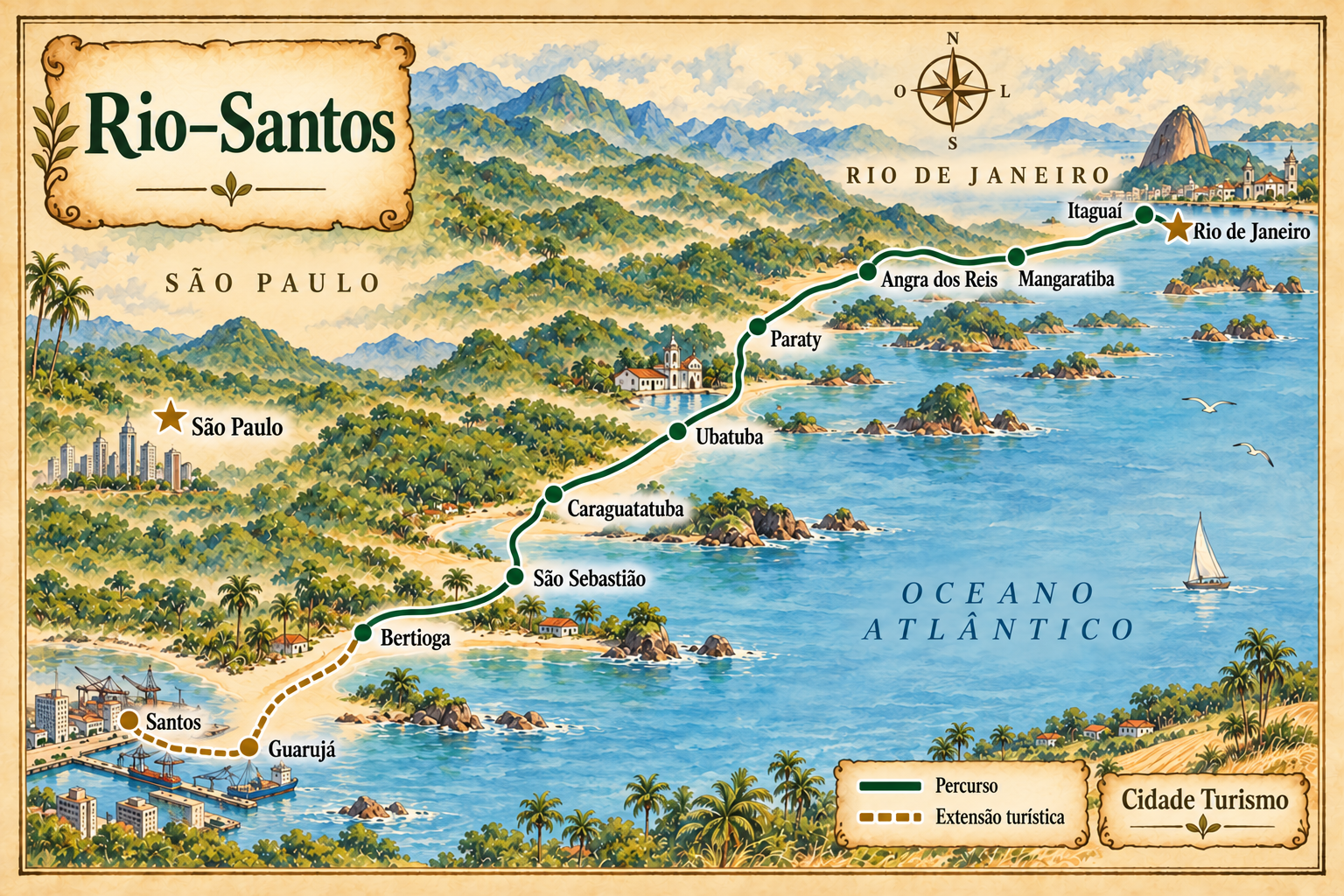
Angra dos Reis is part of the Rio–Santos

From the Costa Verde to the São Paulo coast, with beaches, heritage and an extension via Guarujá to Santos.

Illustrative map, not to scale. Tap a city to open its page.
Illustrated map of Rio–Santos
Explore the Rio–Santos
See the destination Costa Verde Find another city