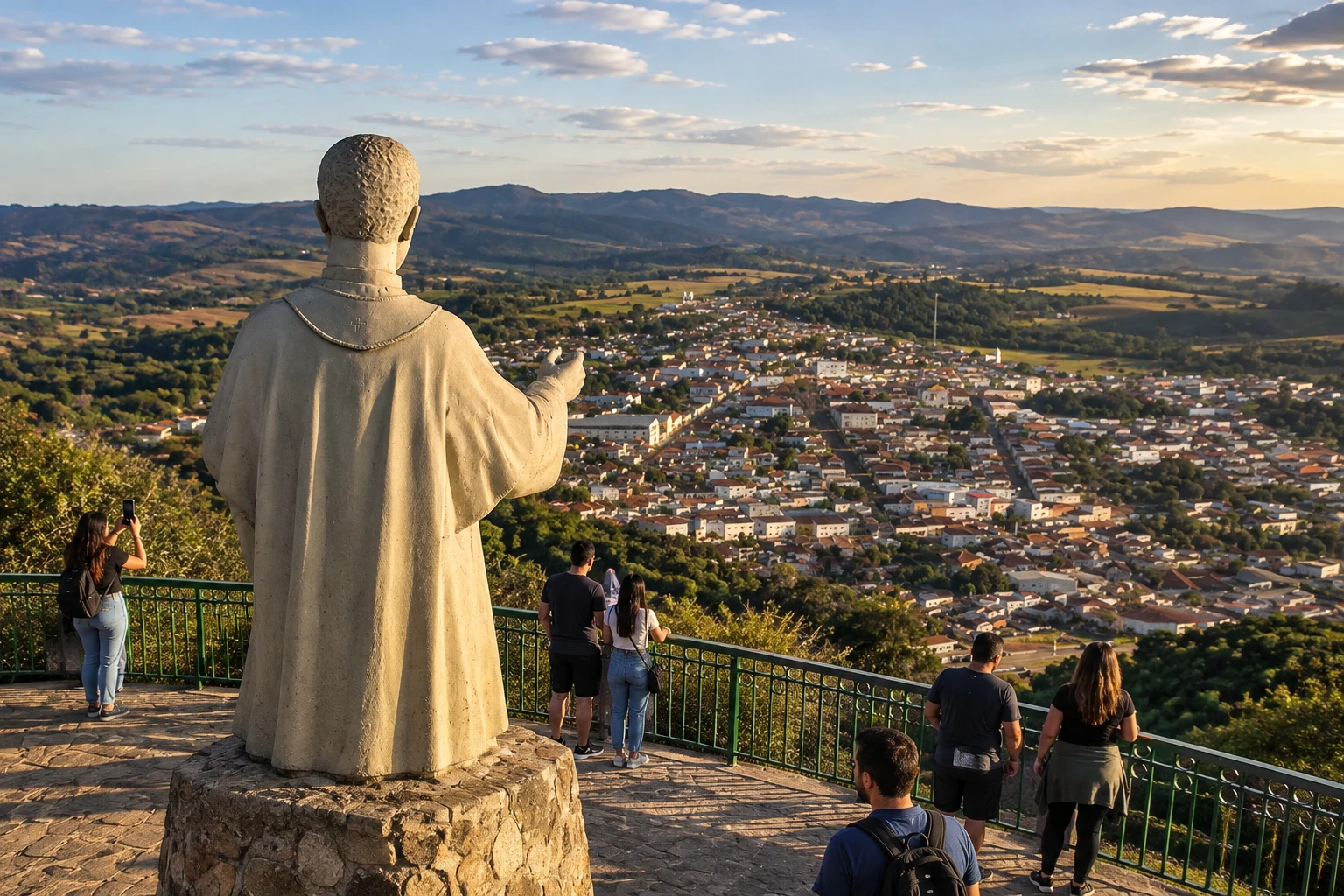
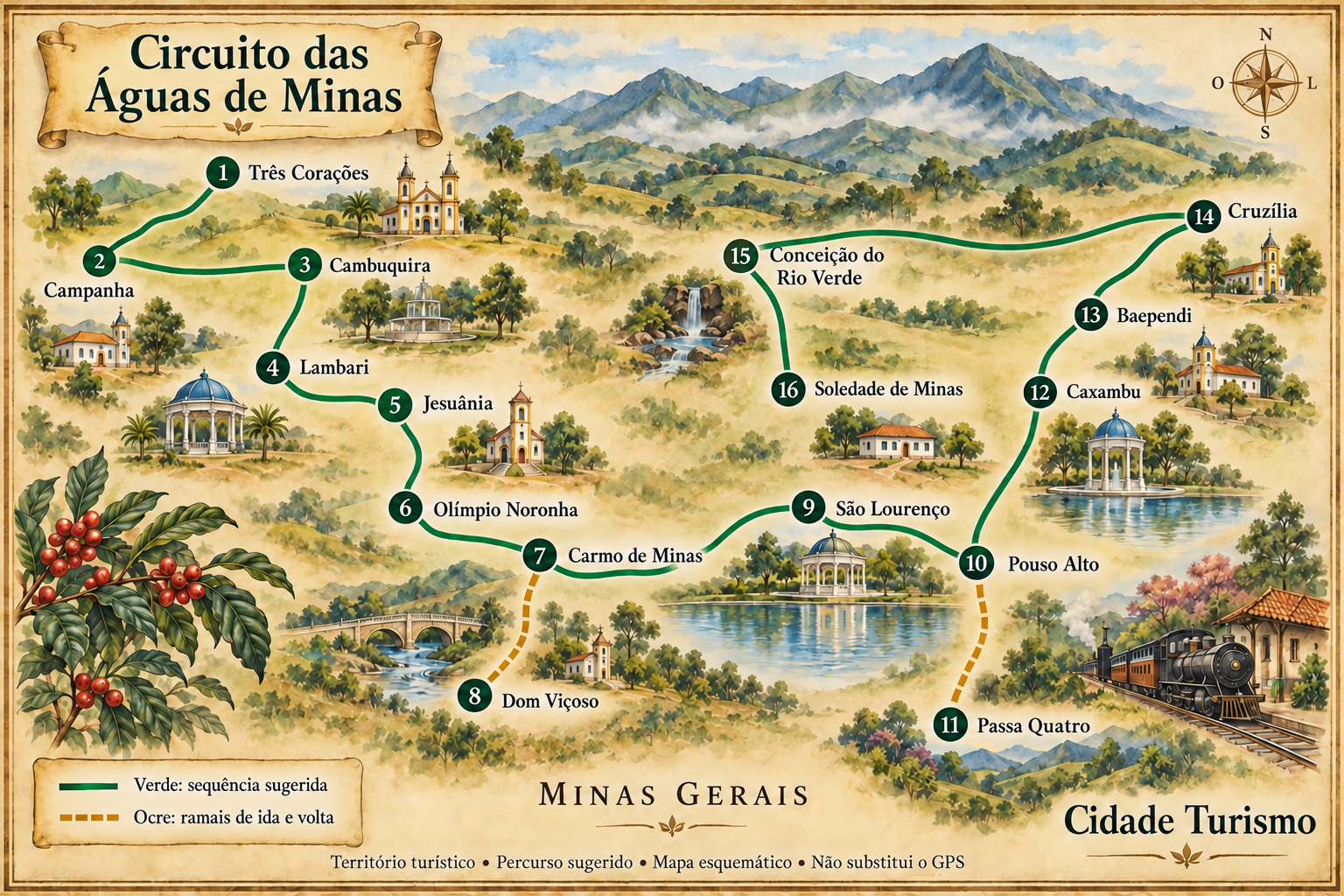
Campanha has two museums with different focuses: the birth house of Vital Brazil preserves the scientist's trajectory, and the Museu Regional do Sul de Minas houses historical and sacred art collections. The Catedral de Santo Antônio marks the urban core. Outside enclosed spaces, the Morro do Cruzeiro offers another viewpoint over the Campanha landscape.
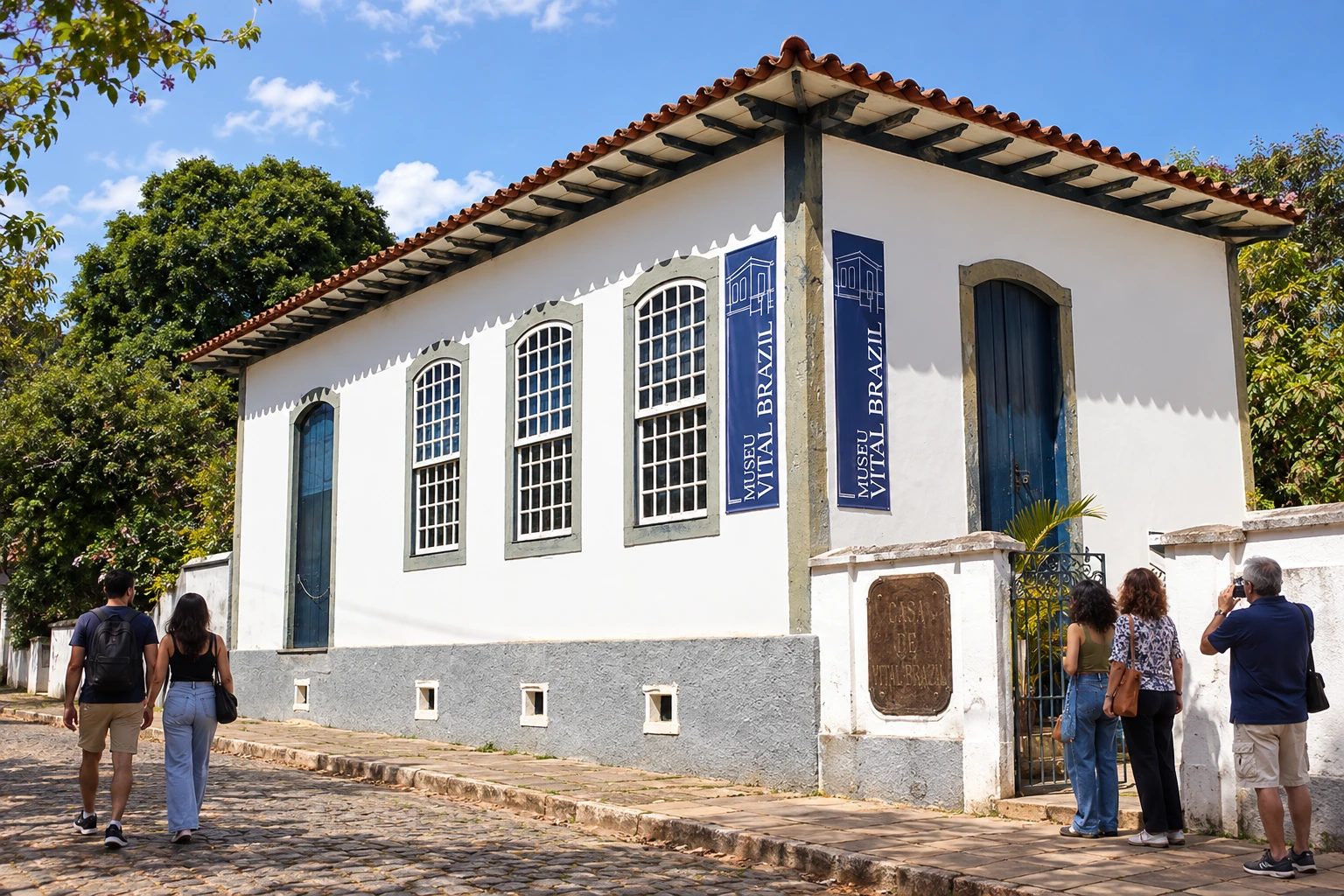
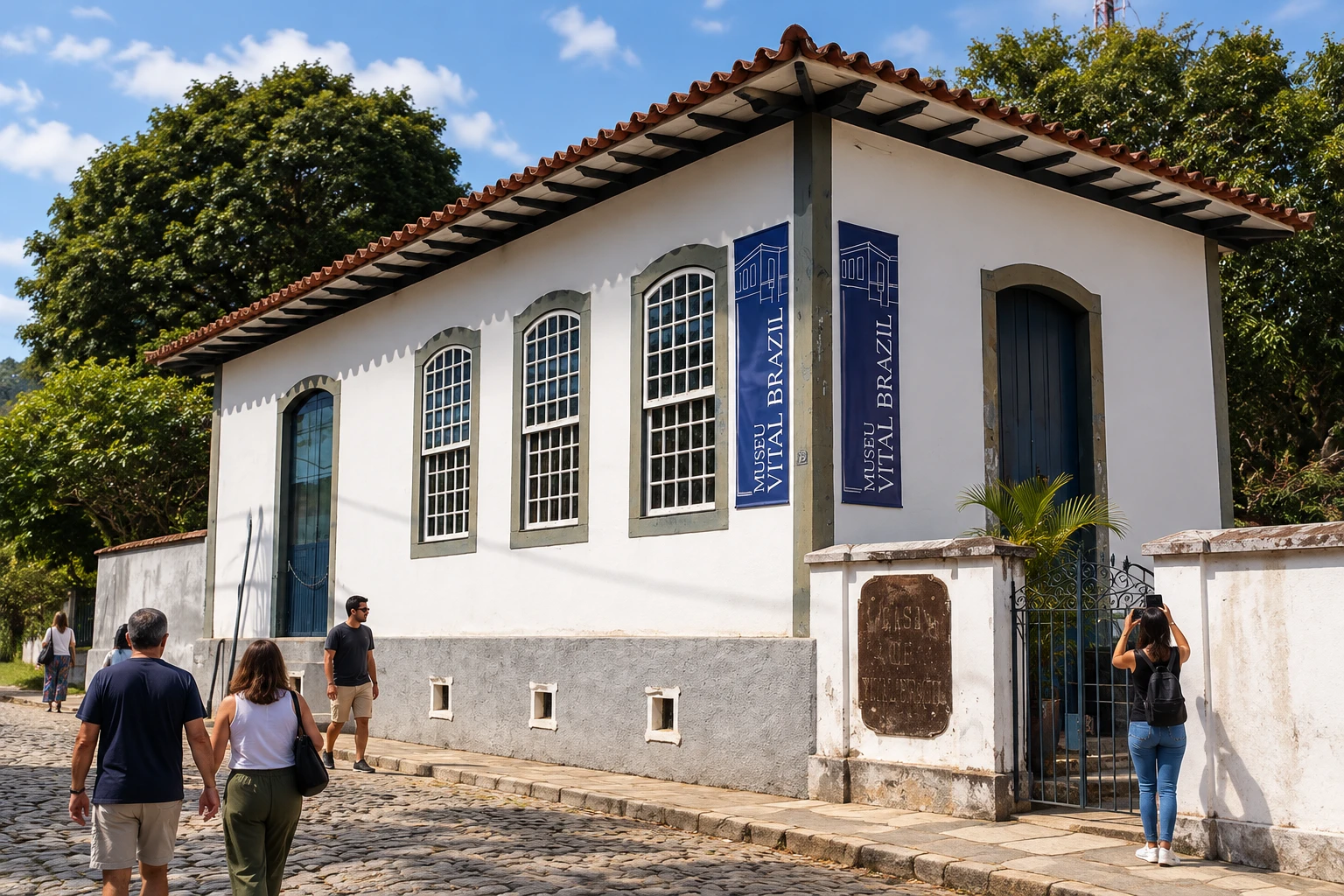
The house where Vital Brazil was born preserves documents, photographs, and objects associated with the scientist's career. The museum brings the history of scientific research closer through the memory of a residence in Campanha. Studying the collection helps trace a life devoted to knowledge and its ties to the municipality.
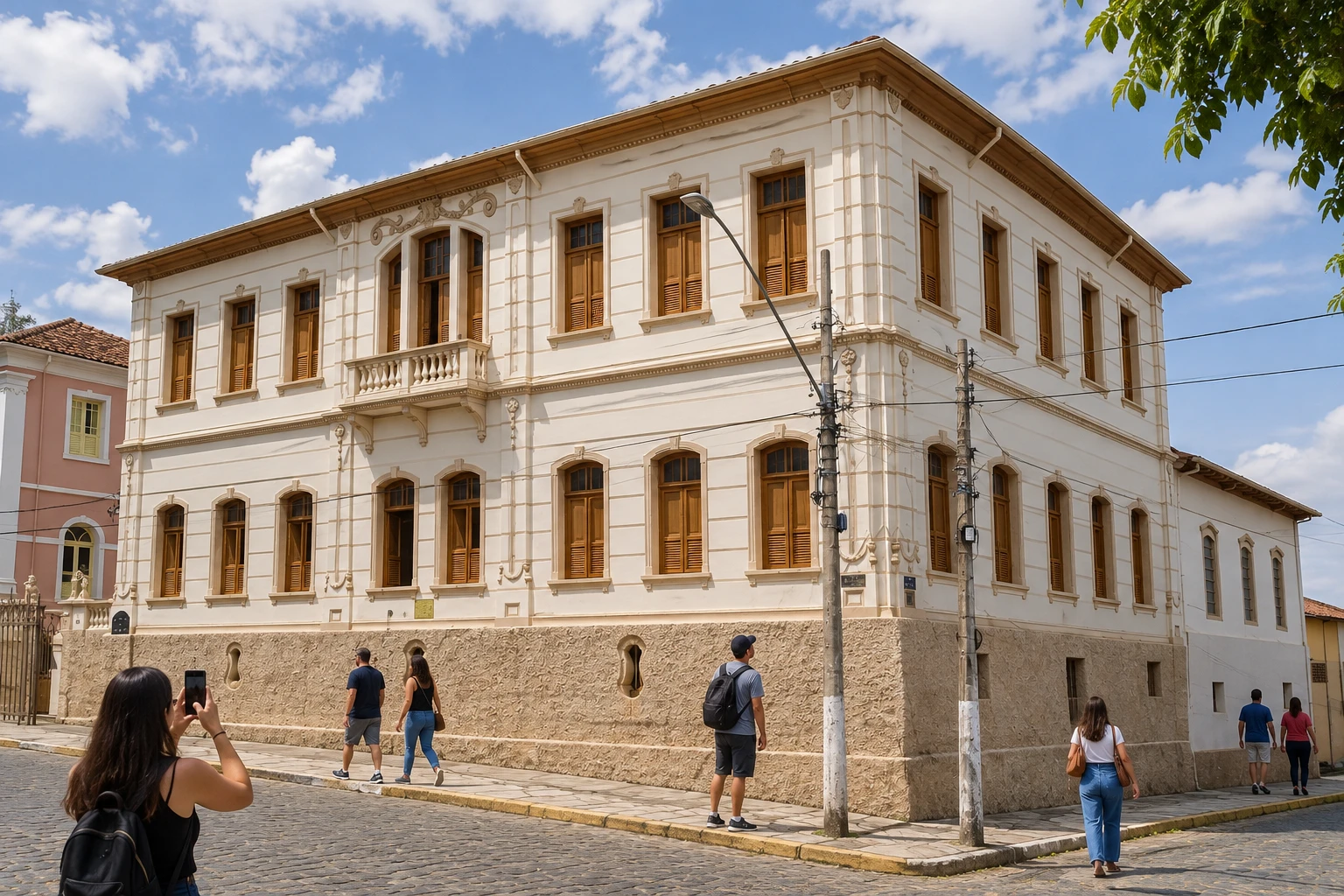
The Museu Regional do Sul de Minas gathers references of regional history and pieces of sacred art in Campanha. The collection has a different focus from that dedicated to Vital Brazil: here the experience turns to cultural expressions and objects preserved as testimonies of life in the Sul de Minas.
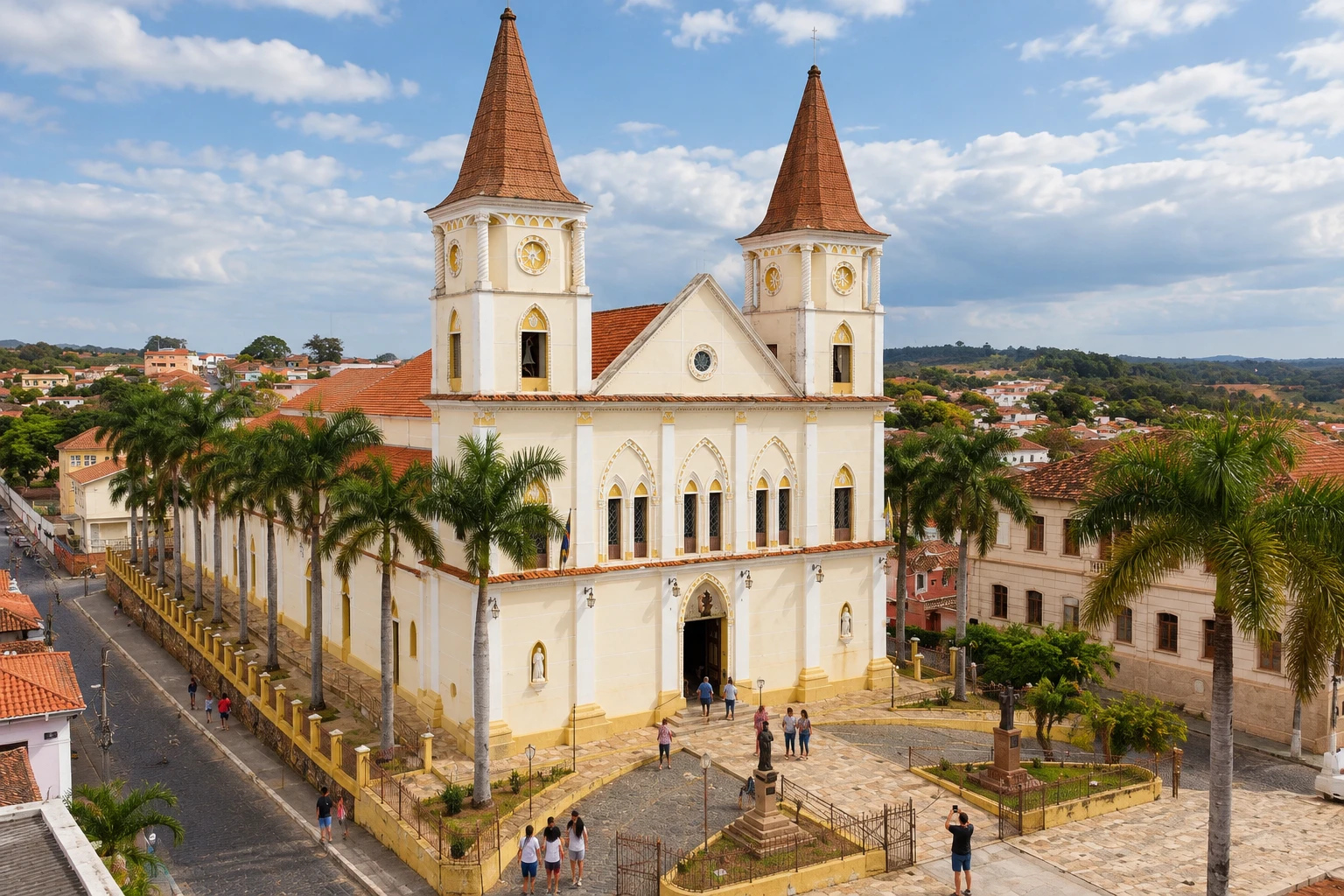
The Catedral de Santo Antônio is a landmark of Campanha's historic core and remains linked to the celebrations of the Catholic community. Its presence helps to understand the centrality of religious heritage in the urban landscape. The temple can be observed for its architecture and for the continuity of its liturgical use.
Morro do Cruzeiro offers an elevated point from which to observe Campanha's landscape. The cross marks the site and participates in its relationship with the town. The outing is contemplative in nature, focused on the terrain and the urban core, unlike visits to preserved collections inside museums.
Campanha is accessed via the BR-267 corridor, connected to BR-381. The Museu Casa de Vital Brazil is on Rua Vital Brazil; reaching the Morro do Cruzeiro requires continuing along the accesses in the Santa Cruz neighborhood.
How many days
Two days allow you to spread the two museums, the Cathedral and the Morro do Cruzeiro, allocating specific time slots for guided visits.
When to go
The museums' schedules determine internal visits. To view the town from the Morro do Cruzeiro, choose a day with good visibility; Holy Week adds celebrations at the Cathedral.
The seasons shown are the most usual ones; nature doesn't always follow the calendar.
Do you need a car?
The historic center allows walks between cultural visits. For the Morro do Cruzeiro, arrange transport and assess access before you depart.
Suggested itinerary
An order that works
Built with the places on this page. No rush: it's paced so you have time to see them.
2 days in Campanha
Day 1
Dia
Museums and Cathedral
Visit the birth house of Vital Brazil with a guide and reserve a separate time slot for the historical and sacred art collection at the Museu Regional. Include the Cathedral according to its opening hours.
Day 2
Dia
Campanha view
Plan the trip to the Morro do Cruzeiro and view the urban core from the available circulation areas. Visibility will guide the choice of timing.
Check before you go. Opening hours and days change, and places may close for renovations, holidays or events. This itinerary is a suggestion from Cidade Turismo, not a commitment: plan yours by checking directly with each place you intend to visit.
Before you go
Frequently asked questions
Do the two museums in Campanha display the same collection?
The Casa de Vital Brazil focuses on the scientist's life and work. The Museu Regional do Sul de Minas presents regional history and sacred art.
What to observe in the Catedral de Santo Antônio?
The temple marks the historic core and the city's religious life. Internal visits follow the opening hours and the community's celebrations.
Which outing offers a view of the town?
The Morro do Cruzeiro allows views of the urban landscape and Campanha's relief, depending on visibility.
Does the visit to the Casa de Vital Brazil include guided accompaniment?
Municipal services provide guided visits. Arrange the visit with the staff to see the house and the scientist's documents.


 Antarctica
 Argentina
 Bolivia
 Chile
 Colombia
 Ecuador
 Falkland Islands (Malvinas)
 French Guiana
 Guyana
 Paraguay
 Peru
 Suriname
 Uruguay
 Venezuela
 Austria
 Belgium
 Croatia
 Denmark
 Finland
 France
 Germany
 Greece
 Hungary
 Iceland
 Ireland
 Italy
 Luxembourg
 Norway
 Poland
 Portugal
 Slovakia
 Slovenia
 Spain
 Sweden
 Switzerland
 the Czech Republic
 the Netherlands
 the United Kingdom
 Turkey
 Bermuda
 Canada
 Greenland
 Mexico
 Saint Pierre and Miquelon
 the United States
 the Dominican Republic
 Japan
 Egypt
 South Africa
 Australia
 Fiji
 New Zealand
 Papua New Guinea