Jijoca de Jericoacoara

Ceará

Jijoca de Jericoacoara

In the destination Jericoacoara and the West Coast of Ceará.

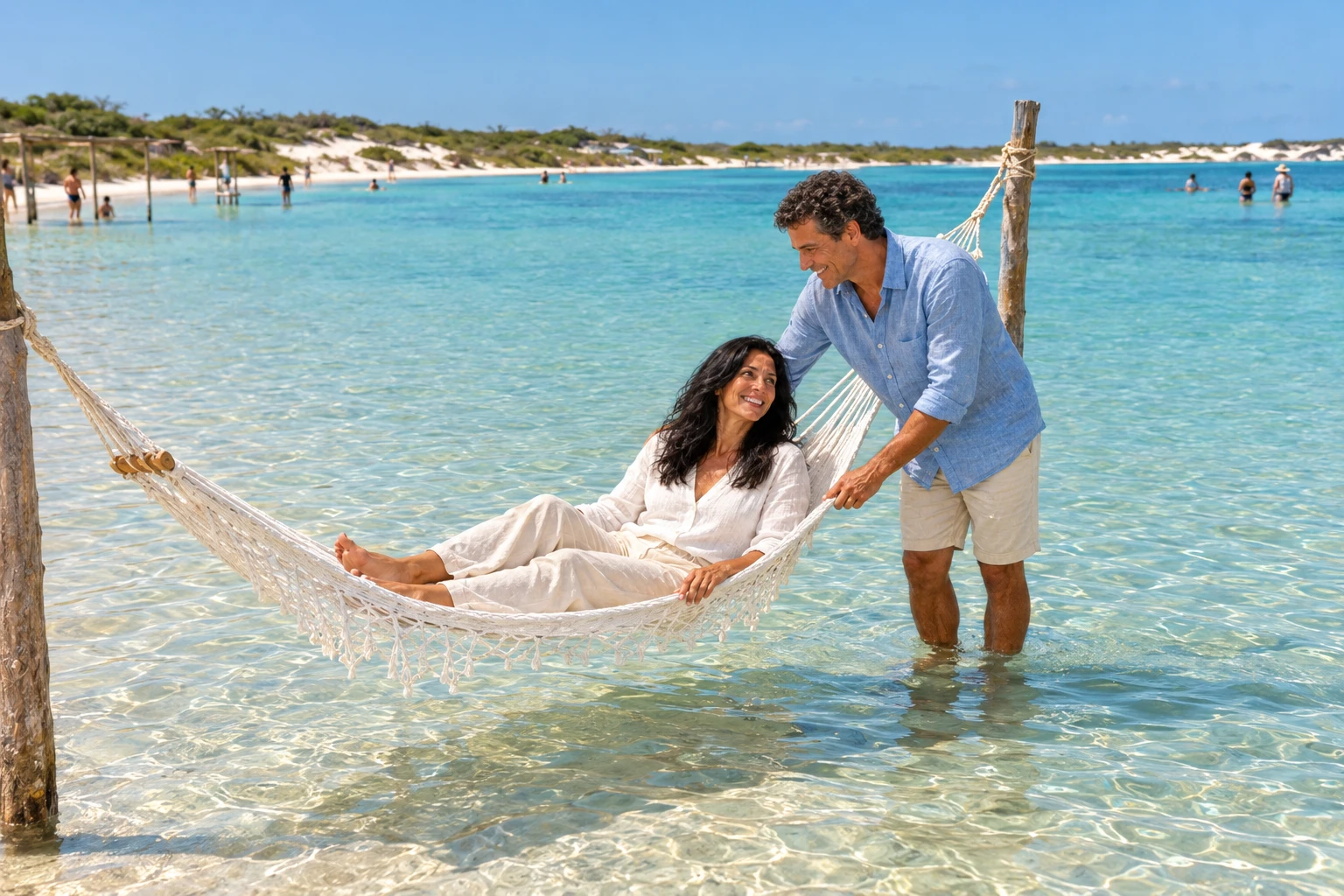
Illustrative images. The pictures in this guide are illustrations based on the real place, not photographs, and may differ from it.

The city

What to expect from Jijoca de Jericoacoara.

Jijoca de Jericoacoara brings together lagoons, dunes and the village of sand streets by the sea. Pedra Furada and the beaches of the national park reveal landscapes carved by wind and water on the Ceará coast.

Jijoca de Jericoacoara is on the west coast of Ceará, about 300 km from Fortaleza. The municipality has two very different centers. The seat, Jijoca, is a small town beside a large freshwater lagoon. The village of Jericoacoara, which almost everyone calls Jeri, is about 20 km from there, by the sea, surrounded by the dunes of Jericoacoara National Park. Most of the pousadas, restaurants and tour agencies are in the village.

The village has no pavement. The streets are sand, and visitors’ cars do not enter: you arrive by jardineira, a 4x4 pickup with benches in the bed, by buggy or transfer, and from there everything is done on foot. Three parallel streets organize the place — São Francisco, the Principal and Rua do Forró — connected by narrow alleys and all ending at the beach. In the center are the square and the Church of Our Lady of Fátima, built in 1945 with stones from the Serrote, the hill next to the village.

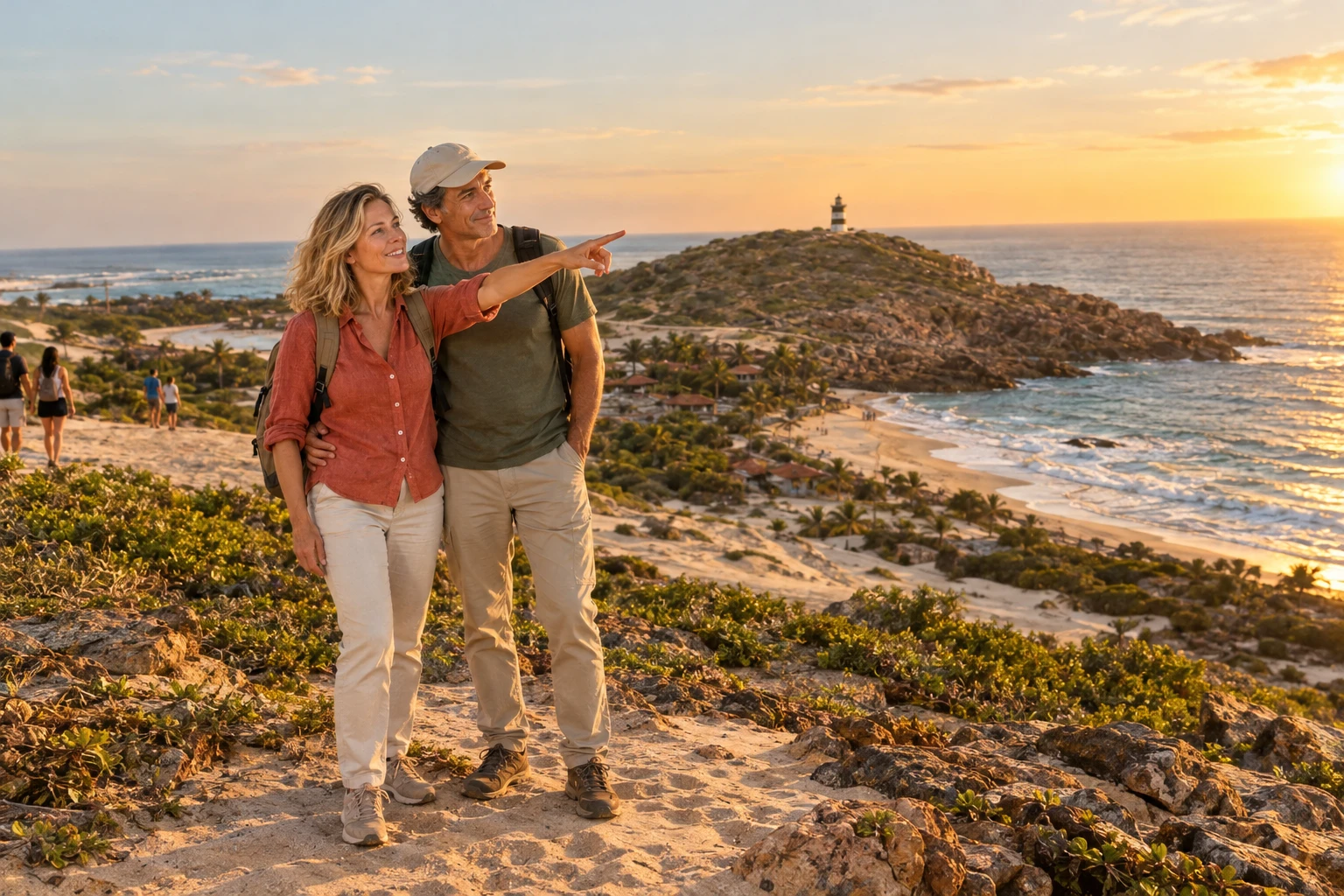
The area has been protected since 1984 and became a national park in 2002, with about 8,850 hectares of dunes, restinga, mangrove and a stretch of sea. Within it are the places you can reach on foot from the village: Praia da Malhada, the Serrote, with the lighthouse at the top at 95 meters, and Pedra Furada, the rock arch about 3 km away. Because this stretch of coast faces north and west, the sun sets over the sea, and the evening on the beach is the daily gathering of residents and visitors. The dune that served as a grandstand next to the village has lost most of its sand to the wind.

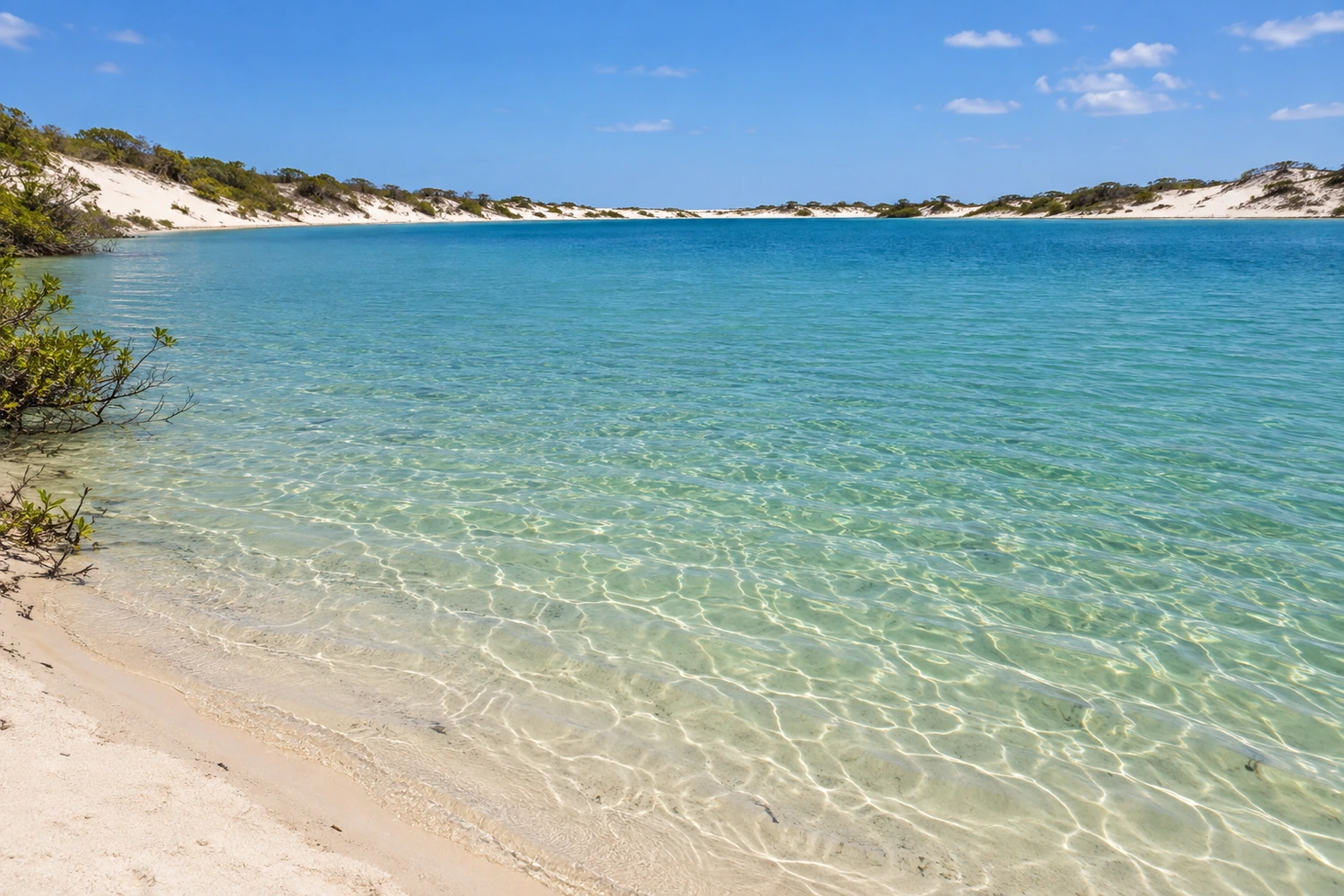
The lagoons are on the other side of the municipality, near the seat. Lagoa de Jijoca is one when it is full and has two arms with their own names: Lagoa do Paraíso, about 5 km from the center of Jijoca, and Lagoa Azul, smaller and quieter. The water is fresh, shallow and warm, and the shores have hammocks set up in the lagoon. From the village you go by sand trails, by jardineira, buggy or 4x4.

It is hot year round, with highs just above 30 °C and nights near 24 °C. What changes are the rain and the wind. From February to May it rains a lot, peaking in March and April; the lagoons fill, temporary lagoons appear among the dunes and the village is quieter. From July to December it hardly rains and the wind blows strong and steady, especially from August to November: it is windsurfing and kitesurfing season. The lagoons are usually fuller from May to August and drop by the end of the dry period.

Where you stay changes the trip. In the village everything is a few minutes’ walk away, including the beach and the nightlife, which has live music and forró. At the seat and on the shores of Lagoa do Paraíso you reach by paved road and the pace is calmer, but you need transport to go to the village. Praia do Preá, about 12 km away in the neighboring municipality of Cruz, is the base for kitesurfers.

Three days cover the village, the walk to Pedra Furada and the lagoons. With more time you can do trips that depart from there to neighboring municipalities: Tatajuba, in Camocim, to the west, and Barrinha, in Acaraú, to the east. Take flip‑flops for the sand streets and closed shoes for the rocky trails, and plan walks by the tide table.

Share: WhatsApp

Where to stay

149 places to stay in Jijoca de Jericoacoara.

Where to eat

18 places to eat in Jijoca de Jericoacoara.

Mapa de Jijoca de Jericoacoara

19 lugares no mapa: onde ficar e onde comer, por bairro.

Jijoca de Jericoacoara highlights and titles

Sand dunes
National park

The local experience

Things to do in Jijoca de Jericoacoara

Jijoca de Jericoacoara · CE · viewpoint

Duna do Pôr do Sol

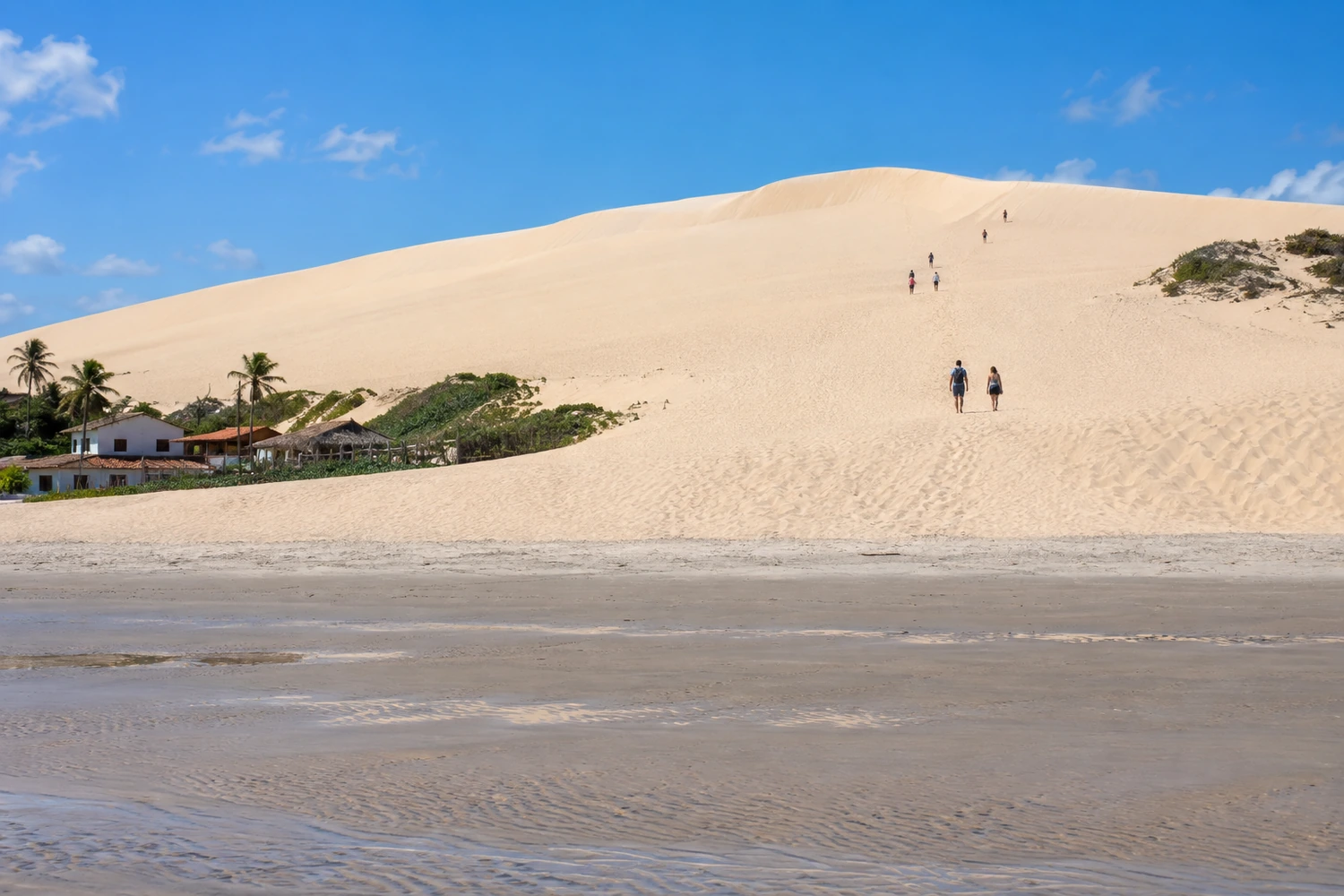
The big dune next to the village is the late-afternoon meeting point, with an open view of the sea. The climb is quick and the way down usually involves some sliding in the sand.

Explore Duna do Pôr do Sol

Jijoca de Jericoacoara · CE · rock formation

Pedra Furada

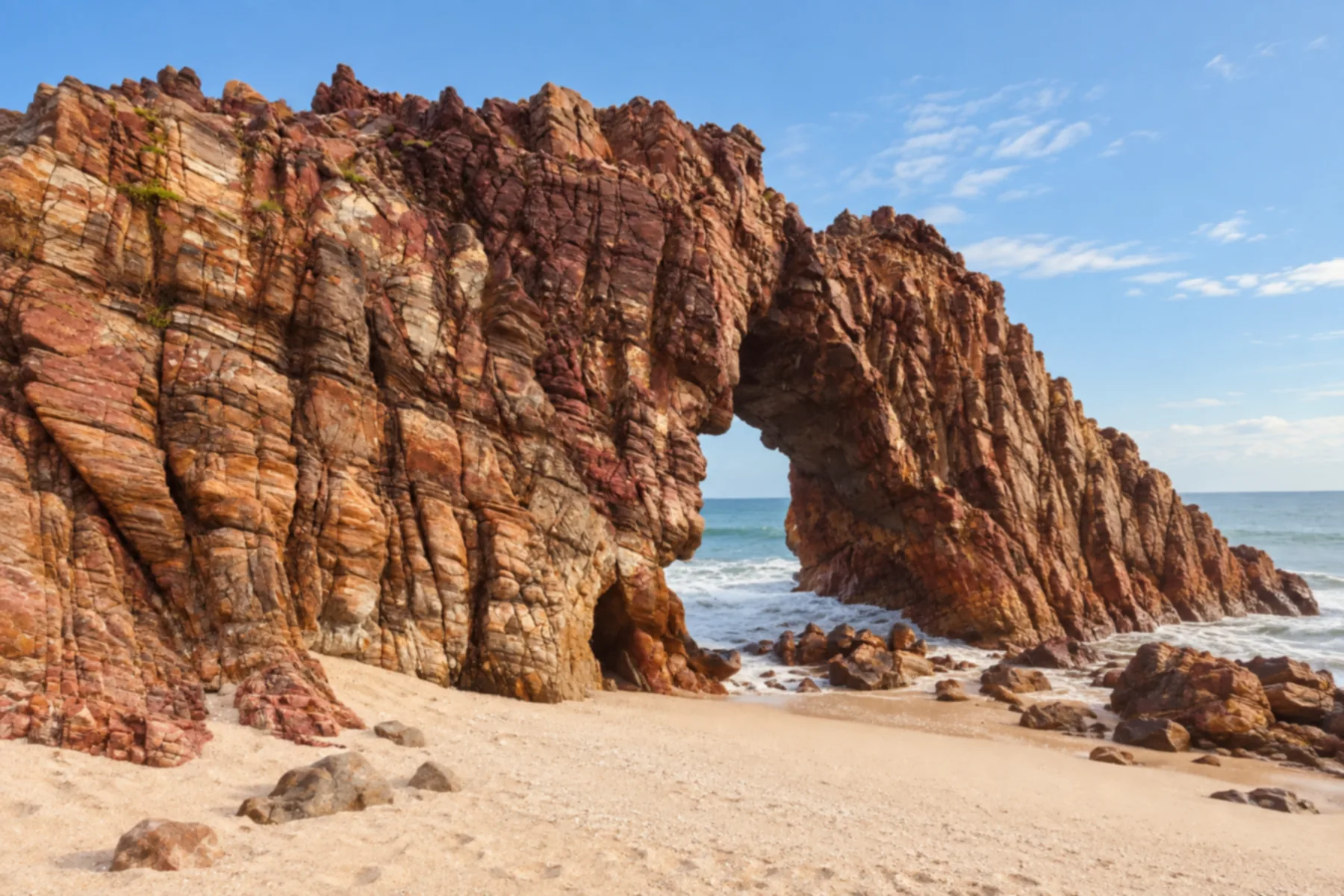
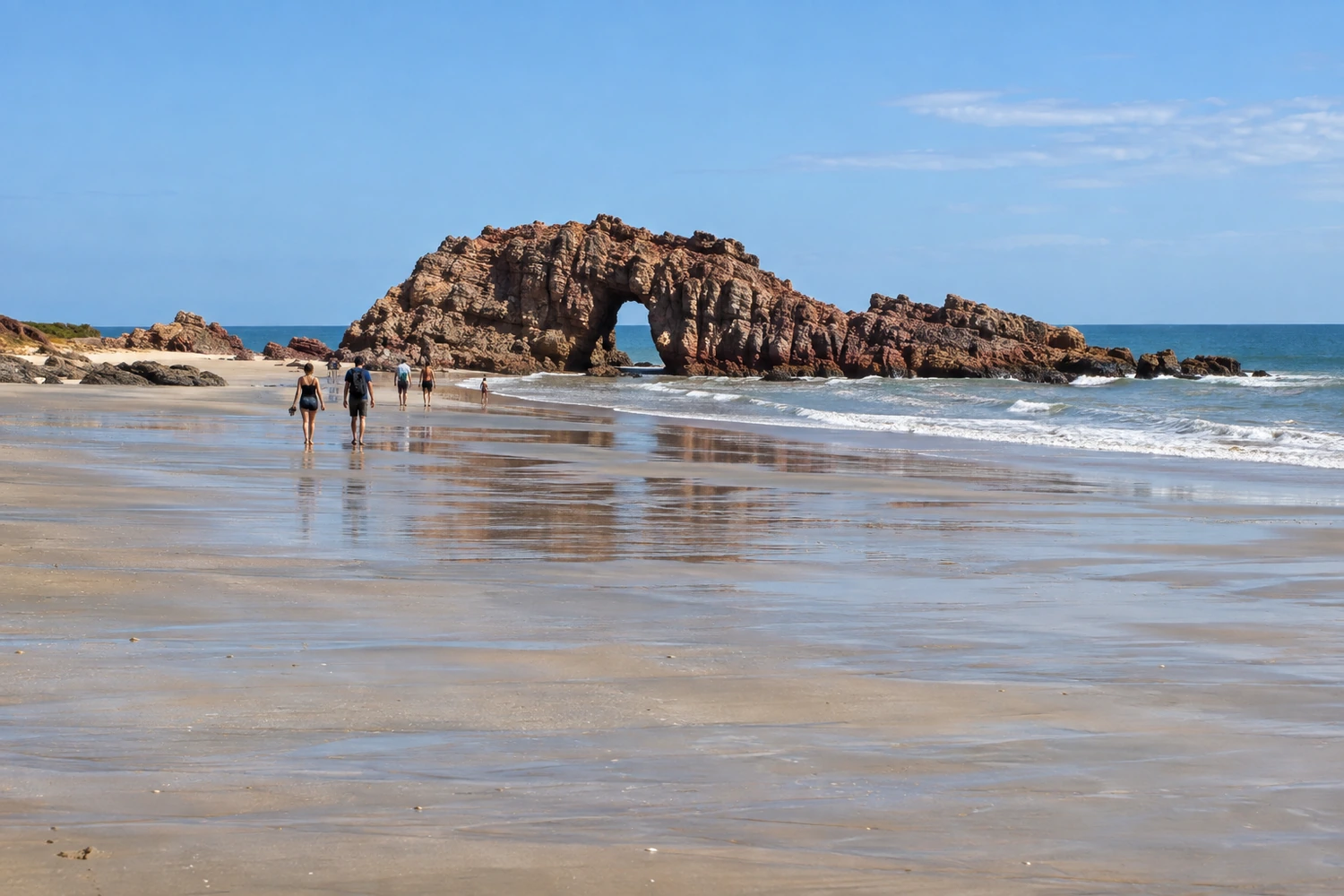
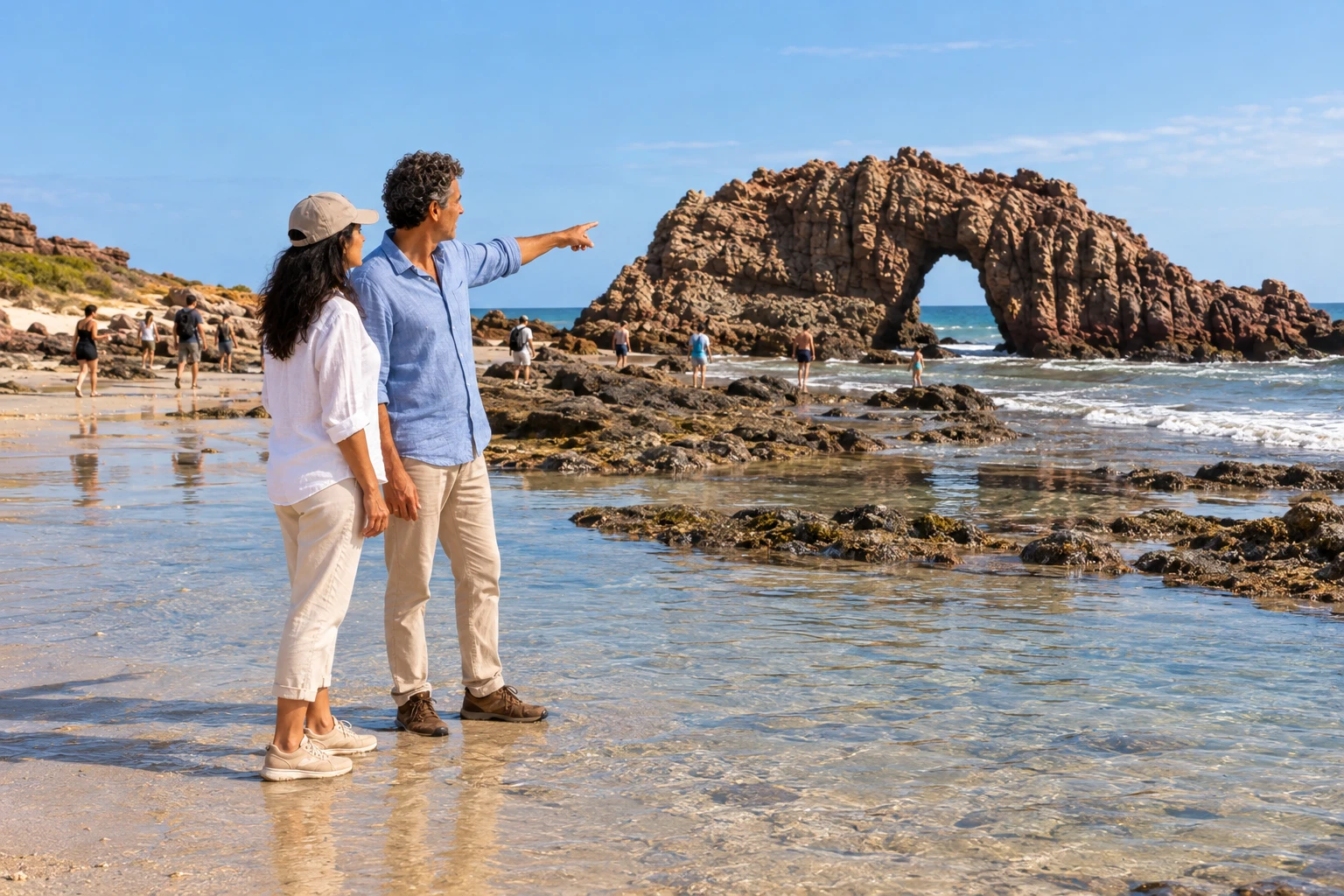
A rock arch carved by the sea, the symbol of Jeri, reached by a walk along the beach at low tide. Between mid-July and August the sun sets right inside the opening.

Explore Pedra Furada

Jijoca de Jericoacoara · CE · lagoon

Lagoa do Paraíso

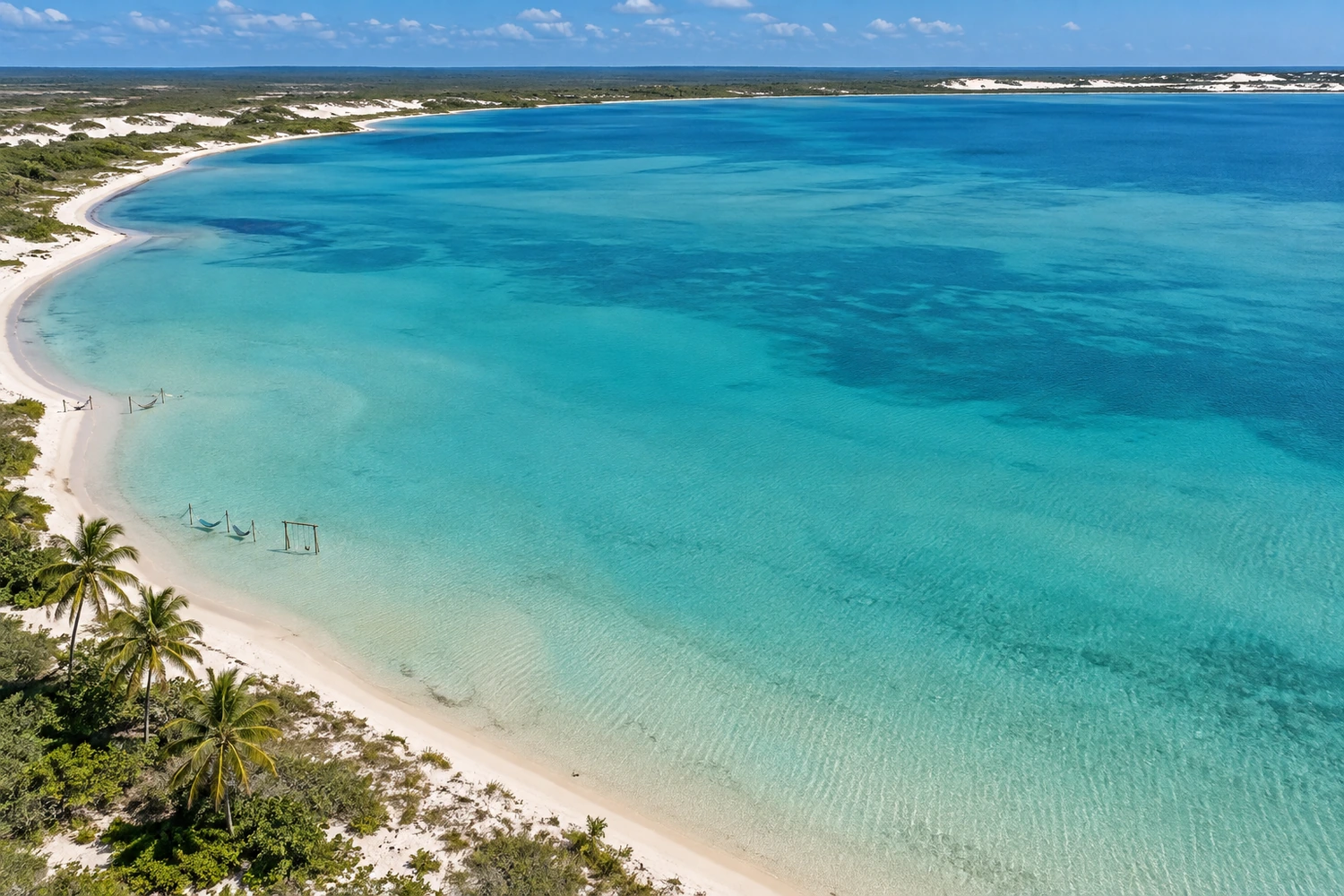
A huge lagoon of shallow fresh water, with hammocks and swings in the water and stalls on the shore. It makes for a full-day outing.

Explore Lagoa do Paraíso

Jijoca de Jericoacoara · CE · lagoon

Lagoa Azul

Next to Lagoa do Paraíso, it is smaller and usually calmer, good if you want to escape the crowds. Both fit into the same buggy tour.

Explore Lagoa Azul

See 4 more places in Jijoca de Jericoacoara

To choose before you go

Tours in Jijoca de Jericoacoara

Where each tour starts, how long it takes, how it is done, what is included and the price range.

Walk through the village of Jericoacoara

From Main square of the village of Jericoacoara on foot, on your own 1 to 2 hours morning or late afternoon easy, on sand streets

The village is small and can be walked in full on foot, without a map. The ground is sand from start to finish, and therefore the pace is slow: reserve your first evening to get to know the place. A good start is the main square, with the village sign and a jangada. This is where the stage is set up for party nights and festivals, and around it are restaurants, ice‑cream shops and the agencies that sell the tours. A few steps away is the Church of Our Lady of Fátima, from 1945, small, with walls of stone taken from the Serrote and a single tower. There is mass on Sundays, and the church is lit at night. Three streets organize the village and lead to the beach: São Francisco, the Principal and Rua do Forró. Between them run narrow alleys, shaded by trees, with shops selling crochet, hammocks and crafts, cafés and thatched‑roof pousadas. Free‑roaming donkeys move between the village and the national park and are part of the landscape. At the end of these streets is the Main Beach. The sand strip is wide at low tide and shortens considerably at high tide; the sea is shallow for many meters, with weak waves. To the left when facing the sea is the corner where the sunset dune once stood; to the right is the path to Praia da Malhada and the Serrote. At night activity concentrates on Rua Principal, Rua do Forró and the sand in front, where drink stalls set up around a small stage.

Stops: Main square, Church of Our Lady of Fátima, Rua Principal, Rua São Francisco, Rua do Forró, Main Beach.

Includes: There is no charge to walk the streets, the square and the beach or to enter the church. The Sustainable Tourism Fee, charged by the city hall, is paid by visitors to the village; check the current rate table.

Tip: Go in flip‑flops or barefoot: closed shoes fill with sand. Rolling suitcases don’t move on the streets, so arrange with the pousada where the jardineira leaves the luggage. Bring a small flashlight for darker alleys at night.

Best time: All year round. From July to December it rarely rains; from February to May the sand streets can have puddles after showers.

Sunset at Jericoacoara Beach

From Main Beach, village of Jericoacoara on foot about 1 hour late afternoon easy

In Jericoacoara the sun sets over the sea, which is rare on the Brazilian coast, most of which faces east. Here the shoreline curves and faces north and west, and the late afternoon has become the village ritual. For decades the meeting point was the Sunset Dune, to the left of the Main Beach when facing the sea. The dune is mobile and has been losing sand: it was about 60 meters high in the 1970s and 1980s and very little remains today. Causes cited include the natural movement of sand toward the sea and the village itself, which blocks the arrival of new sand. As a result, the sunset came to be watched from the beach. Any spot on the shore will do; if you want fewer people walk left, as far as the corner of the former dune, or right, toward the slope beside Praia da Malhada, a few minutes from the village. In the windy season, from July to December, windsurf sails and kitesurf kites cross the scene. Around July, when you are in front of Pedra Furada you can see the sun descend through the arch; in that case the plan is the walk there, described in another outing. Some agencies take groups by jardineira to watch the late afternoon from the top of a dune inside the park, on a separate paid tour. In the rainy season, from February to May, clouds can cover the horizon.

Stops: Main Beach, Sunset Dune, Praia da Malhada.

Includes: There is no charge to watch the sunset from the beach. Loungers, drinks and the jardineira ride to the dunes are paid extras; check the current price list.

Tip: Check the sunset time for the day and arrive about 30 minutes before. Do not run up or down the remaining part of the dune: the sand is what keeps it in place.

Best time: All year; from July to December the sky is usually clearer.

Pedra Furada on foot, via Malhada Beach or the Serrote

From Jericoacoara village, right end of the beach or the end of Rua do Forró on foot, on your own about 2 hours, round trip early morning or late afternoon moderate, with loose rocks

Pedra Furada is a rock arch sculpted by the waves, about 3 km from the village, to the east, inside the national park. No vehicle reaches it: the final stretch is always on foot, and there are two routes. The first follows the shoreline and exists only at low tide. It starts from the right end of the Main Beach, passes Malhada Beach, a shore with no buildings at the foot of the Serrote, and continues along the headland, among rocks, tide pools and natural pools left by the tide. It’s about a 30-minute walk. If you leave the village up to an hour and a half before the lowest tide point, you can go and return along the sand. The second goes up Morro do Serrote and is usable at any tide. The trail starts at the end of Rua do Forró, crosses the top of the hill among cacti and orange soil, and descends an steep slope of loose rocks to the arch beach. It takes 40 to 50 minutes, with no shade. In the morning the sun lights the face of the rock and the beach is almost empty; groups arrive from mid-morning onward. In the late afternoon, the rock is backlit. The exception is the period around July, when the sun sets aligned with the opening and the beach fills for photos. The formation is fragile and climbing on it is not allowed. There is no infrastructure at the site—no shade and no permanent water sales.

Stops: Malhada Beach, Morro do Serrote, Pedra Furada.

Includes: There is no fee to do the trail or to see the rock.

Tip: Check the tide table before choosing the route and, if going along the beach, return before the tide comes in. Wear closed shoes, bring water and a hat. A good combination is to go by the beach and return over the hill, or vice versa, depending on the tide.

Best time: All year, early morning. Around July, the sun sets inside the arch.

Serrote and Jericoacoara Lighthouse

From End of Rua do Forró, village of Jericoacoara on foot 1h30 to 2 hours, round trip early morning or late afternoon moderate, no shade

The Serrote is the rocky hill that closes the village on the east side and the highest point in Jericoacoara National Park, at 95 meters. At the top is the Jeri lighthouse, a striped tower visible from the beach. The climb starts at the end of Rua do Forró and follows an open trail of orange soil and rock, with cacti and low vegetation. It’s about 40 minutes to the lighthouse. The path is simple and does not require a guide, but there is no shade at all, and the sun is strong. From the top you can see the whole ensemble: the village nestled among the dunes, the Main Beach, Praia da Malhada just below and, on the other side, the rocky coastline that reaches Pedra Furada. It’s a good place to understand Jeri’s geography before going on other excursions. In the late afternoon you can also watch the sun set over the sea, to the west. The trail continues along the ridge and descends to Pedra Furada; if you have the energy you can combine both sights in the same walk, going over the top and returning along the beach when the tide allows. The horse-drawn carts that used to take visitors up the hill have stopped operating in the village; expect to climb on foot.

Stops: Morro do Serrote, Jericoacoara Lighthouse, Praia da Malhada (view).

Includes: There is no charge to climb. The lighthouse is viewed from the outside.

Tip: Bring water and a hat and avoid the middle of the day. If you stay for sunset, go down with a flashlight: the trail has loose stones and it gets dark quickly.

Best time: All year; from July to December there are fewer clouds at sunset. After rain, the ground becomes slippery.

Day at Lagoa do Paraíso from the village or from Jijoca

From Jericoacoara village or downtown Jijoca shared pickup truck on the Jeri–Jijoca line, 4x4 transfer or car (from Jijoca) 5 to 7 hours, including travel time full day easy

Lagoa do Paraíso is the best-known arm of Lagoa de Jijoca, the large freshwater lagoon next to the municipal seat, outside the national park. The water is shallow, warm and still, over light sand, and changes from blue to green depending on depth and sun. The famous photos of hammocks in the water credited to Jericoacoara are taken here. If you don't want the full-day tour with multiple stops you can come only for the lagoon. From the village, the shared pickups on the Jeri–Jijoca line cross the park’s sand tracks and drop passengers at shoreline points near downtown Jijoca; return is arranged on site. Agencies also sell round-trip transfers to the more distant beach clubs. For those staying in the municipal seat, the lagoon is about 5 km away on a paved road. The shore is occupied by restaurants, inns and beach clubs, almost all with shaded tables, hammocks and chairs in the water. Smaller places charge only for what you consume; larger ones charge an entrance or day-use fee and have club facilities with boardwalks, swings and floating toys. Many offer kayak and stand-up paddleboard rental. Water level depends on rainfall: the lagoon fills from February to May and is usually more attractive in the second half of the year, dropping at the end of the dry season. After years of very heavy rain, the band of transparent water close to the shore can remain narrower for a while.

Stops: Lagoa do Paraíso, Lagoa de Jijoca, Downtown Jijoca.

Includes: Transport and entrance or daily use fees for the beach clubs are paid separately, as are food, drinks and equipment rental. Check the current price list for each place.

Tip: Arrive in the morning: tour groups tend to show up around lunchtime. Ask in advance whether the place charges an entrance fee, a minimum spend, or nothing. The lagoon is shallow and calm near the shore, good for children.

Best time: June to October, when the lagoon is full and there is little rain. Wind increases from July onward.

East side: Árvore da Preguiça and the lagoons of Jijoca

From Jericoacoara village, with hotel pickup buggy (up to 4 people), shared pickup, 4x4 or ATV 5 to 6 hours full day easy

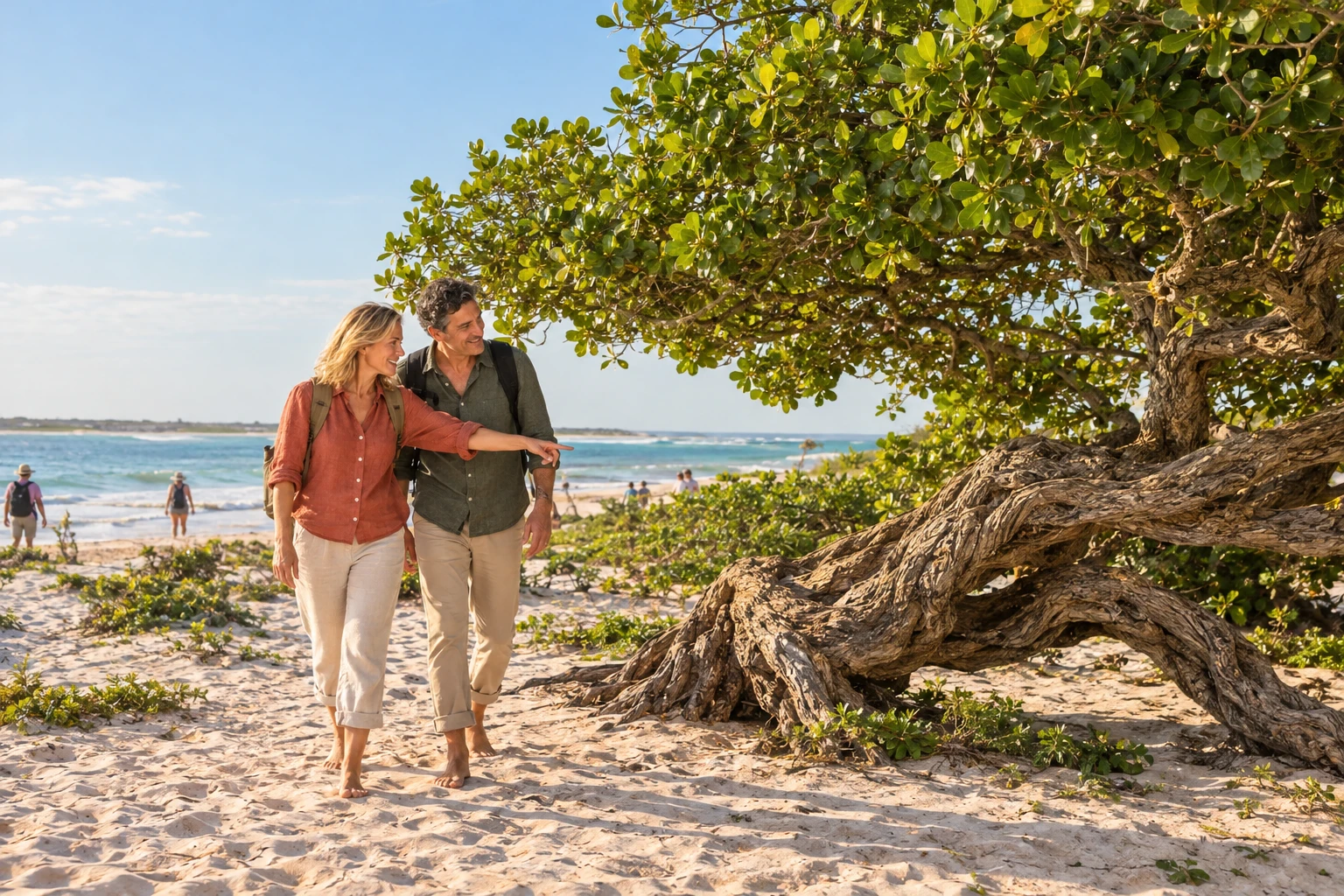
This is the tour that combines the municipality’s lagoons in one day. The vehicle picks up the group at the pousada in the morning and travels along the beach, heading east, through the national park. The first stop is the Árvore da Preguiça, a mangrove that the wind made grow tilted, almost touching the sand, near the sea. It’s a short stop for photos. The route continues along the shoreline to Preá Beach, about 12 km from the village, already in the neighboring municipality of Cruz, where the kitesurf schools are located. From there the itinerary turns inland. Many drivers stop at one of the open turquoise-blue water clubs formed in old excavations on the Preá road, also in Cruz, with an entry fee. Then come the two arms of Lagoa de Jijoca: Lagoa Azul, smaller and calmer, where the crossing to the bathing area can be done on foot through a shallow stretch or on small rafts depending on the water level, and Lagoa do Paraíso, where the longest stop is made, with lunch and hammocks in the water. In the months after the rains, some routes include the Lagoas do Amâncio, which form between the park’s dunes and dry up during the second half of the year. The return is along sand trails in the mid-afternoon. By buggy, the price is per vehicle and the stops are arranged with the driver. In the jardineira, you pay per person and the group follows a fixed route. Some people extend the day to the Barrinha dunes, in Acaraú, for sunset.

Stops: Árvore da Preguiça, Preá Beach, Lagoa Azul, Lagoa do Paraíso, Lagoas do Amâncio.

Includes: Vehicle with driver and hotel pick-up. Lunch, drinks and entrance fees for beach clubs and lagoons are paid separately.

Tip: Agree the stops before you leave: if you don’t want a specific club, tell the driver. Choosing a single lagoon and a single club leaves more time for swimming. If you’re leaving the same day you can ask to finish the tour in Jijoca.

Best time: June to October, when the lagoons are full and there is little rain; the temporary dunes lagoons generally hold water from May to August.

R$399 to R$500 · by buggy (up to 4 people), private tour on the east side
See 1 more tour

Windsurfing, kitesurfing and stand up paddle at Praia Principal

From Praia Principal, village of Jericoacoara lesson with an instructor or equipment rental lessons of about 3 hours morning or afternoon easy to moderate

Wind is part of Jeri’s identity. Windsurfing arrived first and, in season, the colorful sails fill the cove in front of the village; later came kitesurfing and, more recently, wingfoil. The season runs from July to January, with the strongest winds from August to November, especially in the afternoon. On Praia Principal there are schools and yacht clubs that give lessons and rent equipment for windsurfing, wingfoil, surfing, stand up paddle and kayaking. Lessons usually last about 3 hours, with equipment included. The village cove has shallow water and weak waves, which helps beginners in windsurfing and stand up paddle, the latter better in the morning, before the wind picks up. For kitesurfing, many schools give lessons at Praia do Preá, about 12 km away in the municipality of Cruz, reachable by 4x4 or buggy. Those who have never practiced generally need about 8 to 10 lessons to sail alone. Out of season, from February to June, the wind weakens: stand up paddle, kayaking and surfing at Praia da Malhada remain available. Even those who don’t enter the water follow the movement of the sand: late afternoon, with dozens of sails backlit, is one of the village’s most iconic scenes.

Stops: Praia Principal, Praia da Malhada.

Includes: Instructor and equipment provided according to the school. Transfer to Preá, when available, is paid separately. Check the current rate table.

Tip: From August to November schools fill up: book lessons before you arrive. Ask the minimum age and whether lessons are private or group. Wear a sun-protection shirt: the wind hides the sun’s strength.

Best time: July to January for windsurfing and kitesurfing, with a peak from August to November; February to June for stand up paddle and kayak.

Prices are estimates, checked in November 2026 with local operators, and may change with the season and the type of tour. Confirm with the operator before booking.

Day by day

1, 2 and 3-day itinerary in Jijoca de Jericoacoara

Suggestions to plan the trip. Change the order of the days according to the weather and tour availability.

1 day · Jericoacoara in 1 day: village, Pedra Furada and sunset on the beach

For those passing through the Rota das Emoções or coming from nearby beaches for a day trip · Based in Village of Jericoacoara
  1. Day 1 · The village and the park on foot

    With only one day, stay in the village and visit what you can reach on foot. Check the tide table the evening before: it determines the order of the day. If low tide is in the morning, start early for Pedra Furada, leaving from the right end of the beach and via Praia da Malhada; it’s about a 30‑minute walk across sand and rocks. Return over the top of the Serrote, passing the lighthouse, to see the village from above. If the tide is high, do the reverse: climb from the end of Rua do Forró and descend to the arch. Have lunch in the village and reserve the hours of strong sun for shade: the square, the Church of Nossa Senhora de Fátima, the alleys between Rua Principal and Rua do Forró. In mid‑afternoon, go to Praia Principal. You can rent a stand up paddle board, go into the shallow sea or just wait for the end of the day. The sun sets over the sea; choose a spot on the shore half an hour before. At night, activity centers on Rua Principal and the sand in front of it. The lagoons require at least half a day more and do not fit into this itinerary without cutting the walk.

2 days · Jericoacoara in 2 days: village, Pedra Furada and lagoons
For weekend and first visit · Based in Village of Jericoacoara
  1. Day 1 · Arrival, village and late afternoon

    Arrive in the morning, pay the Sustainable Tourism Fee in advance and leave your luggage at the pousada. Use the rest of the morning to walk around the village: the square, the stone church, the three streets and the alleys down to the beach. After lunch, rest from the sun and head out again in the mid‑afternoon. Climb the Serrote from the end of Rua do Forró in about 40 minutes to see the village, the dunes and the coast from the lighthouse. Descend in time to watch the sun set over the sea, from Praia Principal or the slope beside Praia da Malhada. Use the evening to book the next day’s tour at an agency or at the pousada and agree on the stops.

  2. Day 2 · Pedra Furada early and lagoons

    Wake up early and go to Pedra Furada before breakfast, when the sun lights the arch and the beach is empty: via Praia da Malhada if the tide is low, or via the Serrote. You’ll be back in two hours. In the mid-morning, head east by buggy or jardineira: Árvore da Preguiça, Praia do Preá, Lagoa Azul and Lagoa do Paraíso, with lunch and a swim in the lagoon. Return in the mid-afternoon via the park trails. If the morning tide doesn’t cooperate or you prefer a quieter day, swap the full tour for a direct trip to Lagoa do Paraíso by jardineira and spend the day in a hammock in the water. If you’re continuing your journey, you can ask to end the tour in Jijoca, where the parking and bus stop are.

3 days · Jericoacoara in 3 days: village, trails, lagoons and wind
For those who want to get to know the municipality without hurry and still have a day off · Based in Village of Jericoacoara
  1. Day 1 · Village, Serrote and sunset

    Arrival day. After you settle in, walk around the village: the square, the Church of Our Lady of Fátima, Main Street, São Francisco, Rua do Forró and the alleys that connect them. In the mid-afternoon, climb the Serrote up to the lighthouse, 95 meters, the highest point in the park. Bring water and a hat. Back at the beach, wait for the sun to set into the sea; in the windy season, windsurf sails pass by in front. At night, dine in the village, on foot.

  2. Day 2 · East side and Jijoca lagoons

    Reserve the day for the lagoons. The buggy or jardineira leaves the village in the morning, stops at Árvore da Preguiça and Praia do Preá, and continues to Lagoa Azul and Lagoa do Paraíso. Arrange with the driver where the long stop will be and choose one place to have lunch and stay in the water. Between May and August, ask about the Amâncio lagoons, which form in the dunes after the rains. Back in the village in the mid-afternoon, there’s still time to watch the end of the day on the beach.

  3. Day 3 · Pedra Furada and morning at sea

    Leave early for Pedra Furada, using the route the tide allows. At low tide, linger in the natural pools on the headland between Praia da Malhada and the arch. Around July, postpone the walk to late afternoon, when the sun sets through the stone. Spend the rest of the day in the village sea: a windsurf or kitesurf lesson from July to January, or stand up paddle and kayak in the low-wind months. With a fourth day, do the west-side tour, which crosses the Rio Guriú by ferry and goes to the dunes and the Lago Grande of Tatajuba, in the neighboring municipality of Camocim; or extend the east side to the Barrinha dunes in Acaraú.

Best time to go

When to go: Jijoca de Jericoacoara month by month

The seasons shown are the most usual ones; nature doesn't always follow the calendar.

January Some rain

End of the windy season · Busy village

Rains return over the month in showers, and the wind loses strength. The region’s average rainfall is around 114 mm. It’s hot, with highs just above 30 °C. The lagoons among the dunes are still low, and Lagoa do Paraíso remains with water. It’s one of the busiest months in the village: book accommodation and transfers in advance.

February High rain

Rains · Lagoons filling

Rainy month, with an average near 173 mm, and little wind. Showers tend to be heavy and brief, with sun between them. The lagoons begin to fill. The village sea becomes calmer, good for stand up paddle. Clouds can hide the sunset, and the sandy streets get puddles. Carnival fills the village.

March High rain

Municipality anniversary (March 6) · Peak of the rains

The wettest month, with an average near 321 mm. There are fully overcast days and others with sun between showers. The lagoons fill, and the park’s sandy trails become heavier for vehicles. The village is quieter.

April High rain

Heavy rains · Lagoons full

Still very rainy, with an average near 309 mm, and almost no wind. The lagoons of Jijoca are full, and the temporary dune lagoons form. Low activity. Leave a spare day in your itinerary to reschedule lagoon trips if needed.

May Some rain

Crowning of Mary at the village church · Lagoons full

Rain decreases, to an average near 142 mm, and sunny days return to being the majority. The lagoons are full, including those of Amâncio among the dunes. The park vegetation is green. The Church of Nossa Senhora de Fátima celebrates the Crowning of Mary. It is still not very windy, and the village remains peaceful.

June Some rain

End of the rains · Lagoons full

End of the rainy season, with an average near 65 mm. The sky clears, the lagoons are at their highest level and the water is clearer. Wind starts to return at the end of the month. It’s a good combination of full lagoons and few people, before July school holidays.

July Low rain

Sun through the Pedra Furada arch · Start of the wind

Almost no rain, with an average near 25 mm. The wind season begins, and sails return to the village cove. The lagoons remain full. Around this month the sunset aligns with the opening of the Pedra Furada, and the arch beach fills in the late afternoon. It’s a very busy month: book in advance.

August Low rain

Stronger wind · Windsurfing and kitesurfing

Dry, with an average near 5 mm, and the month of strongest winds, especially in the afternoon. It’s the peak of windsurfing in the village and kitesurfing in Preá. The lagoons begin to drop, but Lagoa do Paraíso remains full.

September Low rain

Wind season · Clear skies

Dry, with an average near 2 mm, clear skies and strong, steady wind. Sunsets rarely have clouds. The lagoons between the dunes lower; Lagoa do Paraíso and Lagoa Azul still have water for swimming. Sailing schools fill up: reserve lessons in advance.

October Low rain

Patron saint festivities at the village church · Strong wind

Dry, with an average near 2 mm, and one of the hottest months, with highs over 32 °C. The wind remains strong, and the village receives sailors from several countries. The village church holds the patron saint festivities. The smaller lagoons run low at the end of the month.

November Low rain

Choro Jazz Festival (end of month) · Strong wind

One of the driest months, with an average near 3 mm. The wind continues strong. The temporary dunes’ lagoons are low or dry; Lagoa do Paraíso keeps water. The Choro Jazz Festival usually occupies the main square between late November and early December, with outdoor shows and workshops.

December Low rain

Choro Jazz Festival · Feast of Santa Luzia (13th) · New Year’s Eve

Dry, with an average near 15 mm, and still windy. Lagoa Azul may be very low. The Choro Jazz Festival often extends into the first days of the month. On the 13th, the town celebrates Santa Luzia, the municipality’s patron. New Year’s Eve features open-air shows and fills the village: book months in advance.

Plan the journey

How to get there: Jijoca de Jericoacoara

By plane: Jericoacoara or Fortaleza airport

There are two possible airports. The nearest is Jericoacoara Regional Airport (JJD), in the neighboring municipality of Cruz, about 30 to 35 km from the village. It receives only domestic flights, with few regular routes and extra flights in high season; check flights with the airline, as schedules change throughout the year.

The other gateway is Fortaleza international airport, about 300 km away, with flights from all over Brazil. It’s the natural choice for those coming from abroad or who cannot find a flight to Jericoacoara on the desired date.

In both cases, the trip ends by land, in a vehicle suitable for sand. Travelers arriving at night should book their transfer before boarding.

From Jericoacoara airport to the village

From Jericoacoara airport, the transfer takes 50 minutes to 1 hour. It’s about 20 km on paved road and 12 km on sandy trail through the national park, on the side of Praia do Preá, in a 4x4 pickup.

There are shared transfers, which wait to gather passengers from the same flight, and private transfers by vehicle. Both can be booked through the pousada, village agencies or at the airport counters, and drop passengers at the accommodation’s door, or as close as the road allows.

If you’re staying in Jijoca town or on the shore of Lagoa do Paraíso, you go only by paved road, in a regular car or taxi.

From Fortaleza: bus with jardineira or transfer

By bus, there is a regular line from Fortaleza to Jijoca de Jericoacoara, with few departures per day. In Jijoca, passengers transfer to the 4x4 jardineira, included in the ticket, which crosses the dunes and leaves them at the pousada. The whole trip takes 7 to 8 hours. Confirm schedules and the boarding point in Fortaleza with the company.

The shared transfer from agencies picks up at the airport or hotel, goes by minibus or van to Jijoca and switches to the jardineira for the final stretch; it takes 5 to 6 hours. There is also a direct 4x4 transfer, shared or private, of about 5 hours, and a longer coastal route with stops that works more as a tour than a shuttle.

Book round trips in advance in the busiest months.

By car: CE‑085 to Jijoca and parking

From Fortaleza, the route is CE‑085: about 300 km of paved road to the Jijoca seat. The first third is dual carriageway; after that, single lane. Avoid driving at night.

Visitor cars do not circulate in the village. Those who arrive by car leave the vehicle in a paid parking lot at the entrance to the Jijoca seat or at the village entrance, and complete the trip by jardineira, which departs when full, or by private pickup, which departs immediately. From the seat to the village it’s about 20 km, half of it on a sandy road inside the national park.

Access to the village entrance passes by Praia do Preá, along a firm sand strip. Outside the rainy season, regular cars often cover this stretch; after heavy rain there is a risk of getting stuck, and a 4x4 is recommended. When in doubt, stop in Jijoca.

For those staying in the seat or at Lagoa do Paraíso, the car reaches the door.

Sustainable Tourism Fee and village entrance

The Jijoca de Jericoacoara City Hall charges a Sustainable Tourism Fee for visitors to the village. Payment is valid for up to 10 days, with an additional daily charge for extra days.

The fee can be issued online on the city hall website before travel, or paid at service booths in Jijoca town and at the village entrance. Keep the receipt on your phone: it’s requested on arrival and sometimes when returning from tours.

The municipal decree provides exemptions, including children up to 12 years old, people over 60, people with disabilities and residents of the municipality; bring proof.

This is the only charge to enter the village. The national park concession foresees a separate ticket for visitation areas, the charging of which has been under legal dispute: confirm the situation before traveling.

How to get around between the village, the seat and the lagoons

In the village, everything is done on foot: from the square to the beach it’s only a few minutes, and Praia da Malhada and the start of the Serrote trails are right next door.

Between the village and the Jijoca seat, regular jardineiras (line shuttles) run, crossing the park and passing near the bathing points of Lagoa do Paraíso close to the center. For more distant lagoons, Árvore da Preguiça and Preá, use buggy, sightseeing jardineira, 4x4 or ATV, always with a licensed driver or guide; traffic over the park dunes is restricted to authorized routes.

Do not rely on ride‑hail apps. Tours and transfers are booked at guesthouses, the square agencies and on Rua Principal or with the buggy drivers’ cooperatives.

From the village there are also transfers to nearby towns and to the Rota das Emoções: Camocim to the west, the Parnaíba Delta and the Lençóis Maranhenses.


Your questions

Frequently asked questions about Jijoca de Jericoacoara

Can cars enter the village?

Not into the village. Private cars stay in an authorized parking lot, at the village entrance or in Jijoca; from Jijoca, the last stretch, about 20 km on sand, is done by jardineira (open-sided truck), 4x4 or buggy. If you arrive by bus or transfer, the change happens along the way.

Is there a fee to enter Jericoacoara?

Yes. The city government charges a Sustainable Tourism Fee to every visitor to the village. Pay on the city government's website before your trip or at the posts at the entrance. It is valid for a set number of days and, after that, is charged per extra day.

Can I stay in Jijoca and visit Jeri?

Yes. The town is close to the lagoons and has simpler lodging. To the village, take a jardineira or a transfer from the local cooperatives.

Are there ride-hailing apps?

Don't count on them in the region. Use jardineiras, buggy drivers and transfers from the local cooperatives.

What is the difference between Jijoca and Jericoacoara?

Jijoca de Jericoacoara is the municipality. The seat, Jijoca, is the town by the lagoon where the paved road and buses arrive. Jericoacoara, or Jeri, is the sandy-street village by the sea, about 20 km from the seat, surrounded by the national park. The Lagoa do Paraíso and Lagoa Azul are near the seat; the Pedra Furada, the Serrote and the sunset beach are in the village.

How many days should you stay in Jericoacoara?

Three days cover the municipality well: one for the village, the Serrote and the sunset, one for the lagoons on the east side and one for the Pedra Furada and the sea. With two days, you can do the Pedra Furada early and the lagoons the same day. With four or five days you can include tours to neighboring municipalities, like Tatajuba in Camocim and the Barrinha in Acaraú, and still have time for windsurf or kitesurf lessons.

Where to stay: in the village of Jericoacoara, in Jijoca or in Preá?

In the village, you can do everything on foot, including at night, and tours pick up guests at the pousada; on the other hand, you cannot arrive by car and the streets near the bars have music until late. In the seat of Jijoca and on the shore of Lagoa do Paraíso, a car can reach the door, the setting is calmer and the lagoon is next to the property, but you need a jardineira or transfer to go to the village. Praia do Preá, about 12 km away in the municipality of Cruz, is the base for those traveling to kite surf.

Does the Sunset Dune still exist?

Hardly. The dune next to the Main Beach is mobile and has been losing sand for decades: it was about 60 meters high in the 1970s and 1980s and now very little remains. The late-afternoon ritual continues, but on the beach: the sun sets over the ocean and can be seen from any point of the shore, from the corner of the former dune or from the slope beside Praia da Malhada.

Can you go to Lagoa do Paraíso without doing the buggy tour?

Yes. From the village, the jardineiras on the Jeri–Jijoca line drop passengers at points on the lagoon’s shore near the center of Jijoca, and agencies sell round-trip transfers to the more distant beach clubs. Transport is paid separately, per leg or round trip; check the current price list. From accommodations in the seat, the lagoon is about 5 km away on a paved street.

Is the village beach of Jericoacoara good for swimming?

It is a shallow-sea beach, with weak waves and compact dark sand. You have to walk quite a bit for the water to reach waist depth, and the sand strip grows and shrinks a lot with the tide. It’s suitable for children, for stand up paddle and for spending the day without taking transport. Those looking for clear water go to the freshwater lagoons on the other side of the municipality.

Who is exempt from paying the Jericoacoara Sustainable Tourism Fee?

The municipal decree exempts children up to 12 years old, people over 60, people with disabilities with a medical report, residents of Jijoca de Jericoacoara and village workers with proven employment ties. You must present ID. Rules can change: confirm on the city hall website before traveling.

Is it worth going to Jericoacoara in the rainy season?

Yes, if you know what to expect. From February to May it rains a lot, peaking in March and April, but generally in downpours with sun between storms. The lagoons fill, the park turns green, the village is quieter and there is almost no wind. In exchange, the sunset may be overcast, sand trails become heavier and it’s not windsurfing or kitesurfing season. Leave a spare day in your itinerary.

Is Jericoacoara a good destination with children?

Yes, with some adjustments. The village sea and the lagoons are shallow and calm, and there are no cars on the streets. Sandy streets, however, make using a stroller difficult. The buggy is open and has no child seat: for small children, prefer a closed 4x4 truck. The trail to Pedra Furada via the Serrote has a steep descent and loose rocks and is not recommended for very young children.

What to bring to Jericoacoara?

Flip-flops for the sandy streets and closed shoes for the rocky Serrote and Pedra Furada trails. Sunscreen, a hat and a sun-protection shirt: the wind disguises the sun. A small flashlight is useful for alleys and for returning from the Serrote after sunset. Prefer a backpack or shoulder bag to a wheeled suitcase, which won’t roll on the sand.

What is the nightlife like in Jericoacoara?

Nightlife takes place in the village, on foot. Activity starts at sunset on the beach and continues along the Main Street and Forró Street, with restaurants, bars with live music and forró on some nights. On the sand in front of the Main Street, drink stalls set up around a small stage. Light sleepers should choose accommodation away from that stretch.

Where to eat in Jericoacoara?

In the village, restaurants are concentrated on the Main Street, Forró Street, the square and the waterfront, offering regional and international cuisine, pizzerias, bars and cafés. On tour days, lunch is usually at the edges of the lagoons, at the restaurants and beach clubs of Lagoa do Paraíso, with tables and hammocks in the water.

Travelers' photos

Jijoca de Jericoacoara through the eyes of those who went

Serrote e o farol
Illustrative image
Árvore da Preguiça
Illustrative image
Pedra Furada
Illustrative image
Lagoa do Paraíso
Illustrative image
Traveler, share your experiences through photos Up to 5 photos of each place you visited.

Brazilian routes

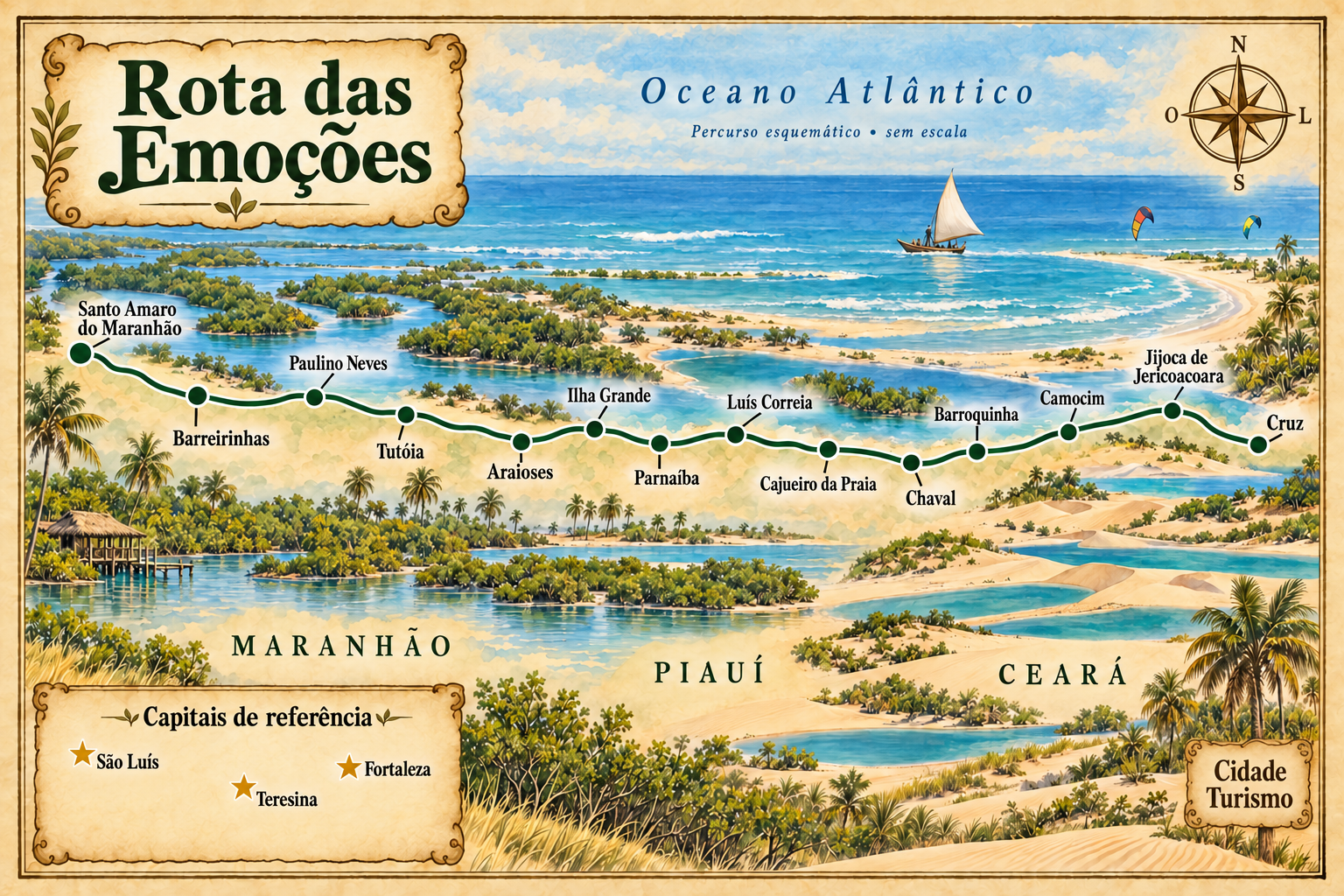
Jijoca de Jericoacoara is part of the Route of Emotions

From the coast of Jericoacoara to the Parnaíba Delta and the Lençóis Maranhenses, through fourteen municipalities.

Illustrative map, not to scale. Tap a city to open its page.
Illustrated map of Route of Emotions
Explore the Route of Emotions
See the destination Jericoacoara and the West Coast of Ceará Find another city