Jijoca de Jericoacoara
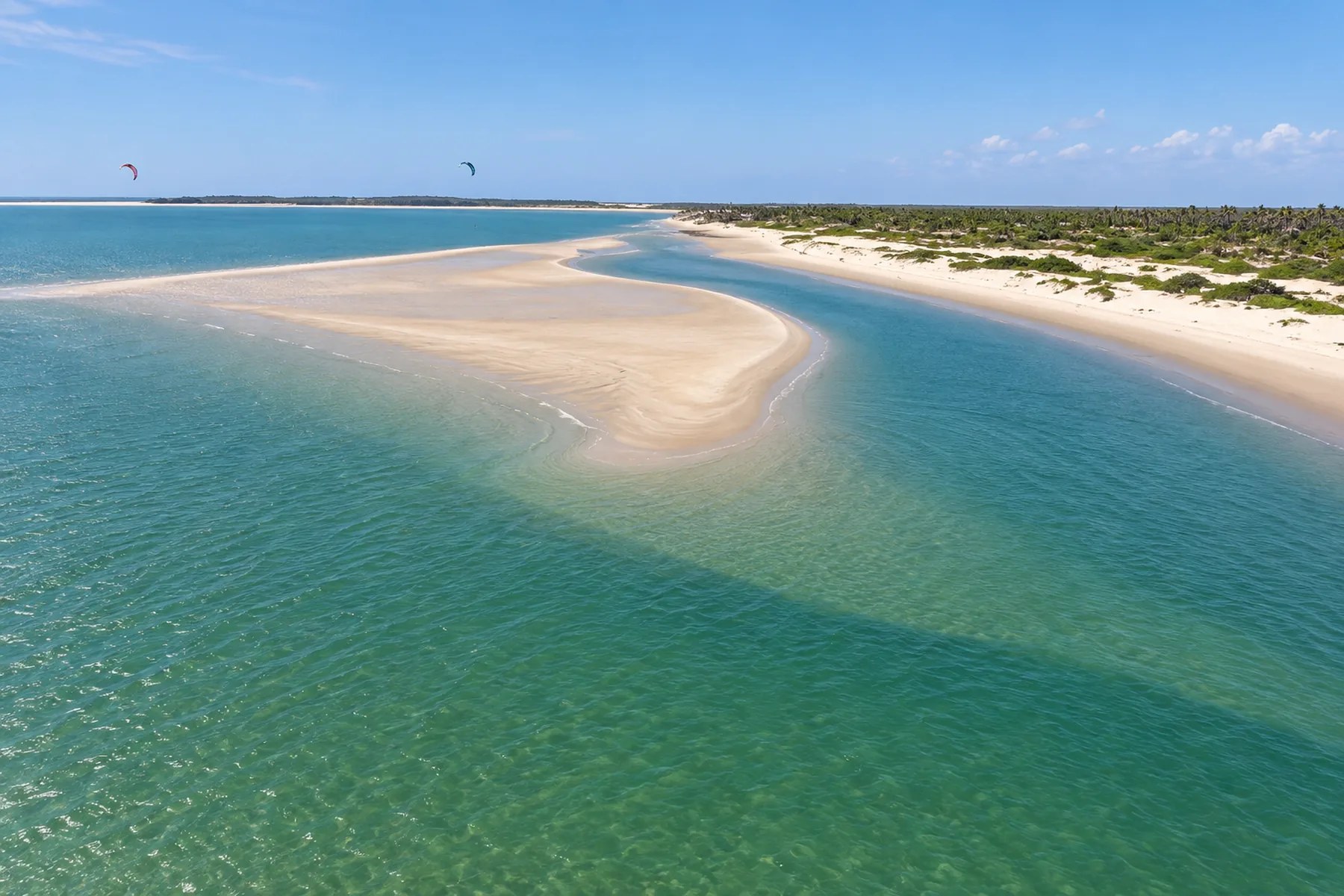
Jijoca de Jericoacoara reúne lagoas, dunas e a vila de ruas de areia junto ao mar. A Pedra Furada e as praias do parque nacional revelam paisagens esculpidas pelo vento e pelas águas no litoral cearense.
Antarctica
CE
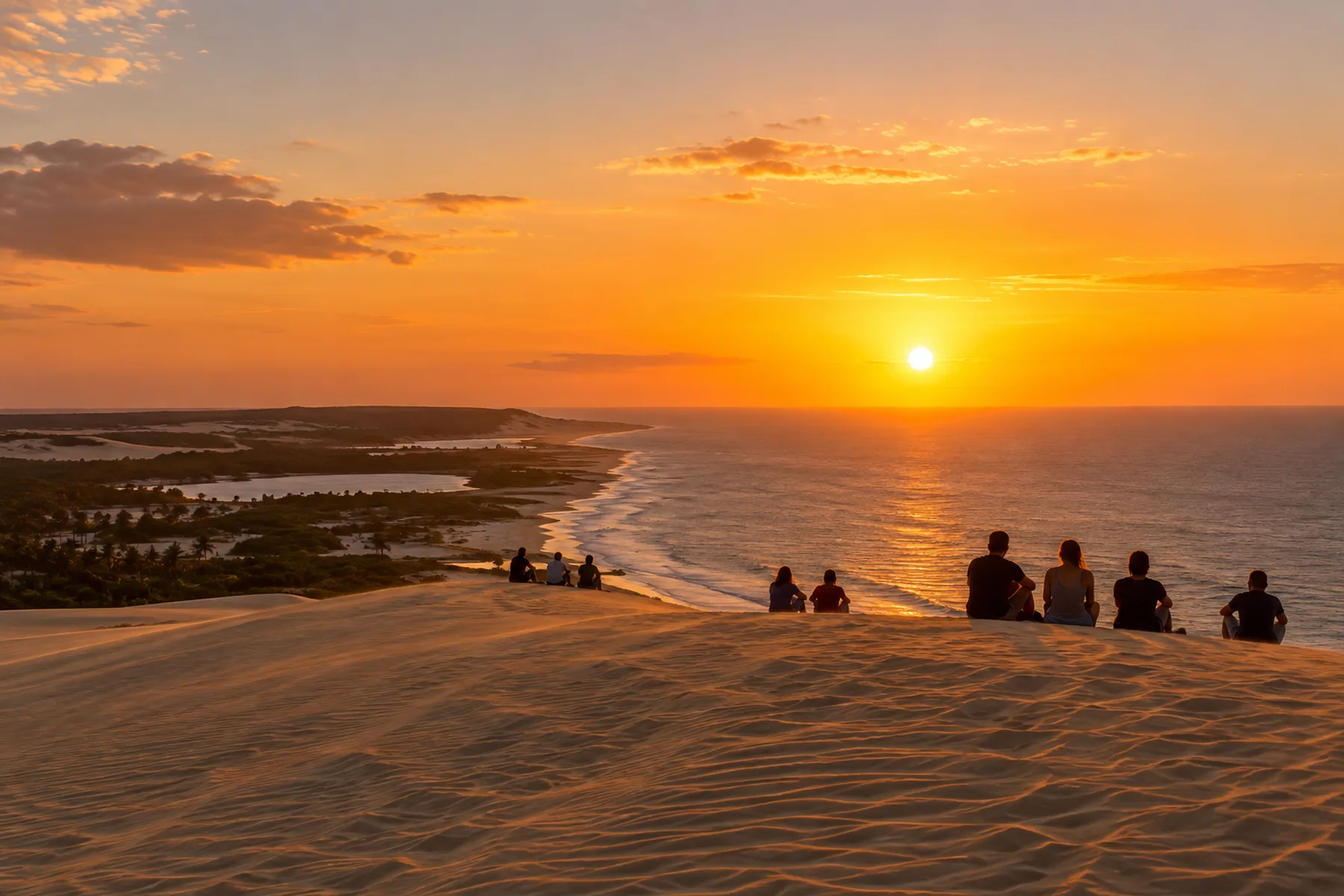
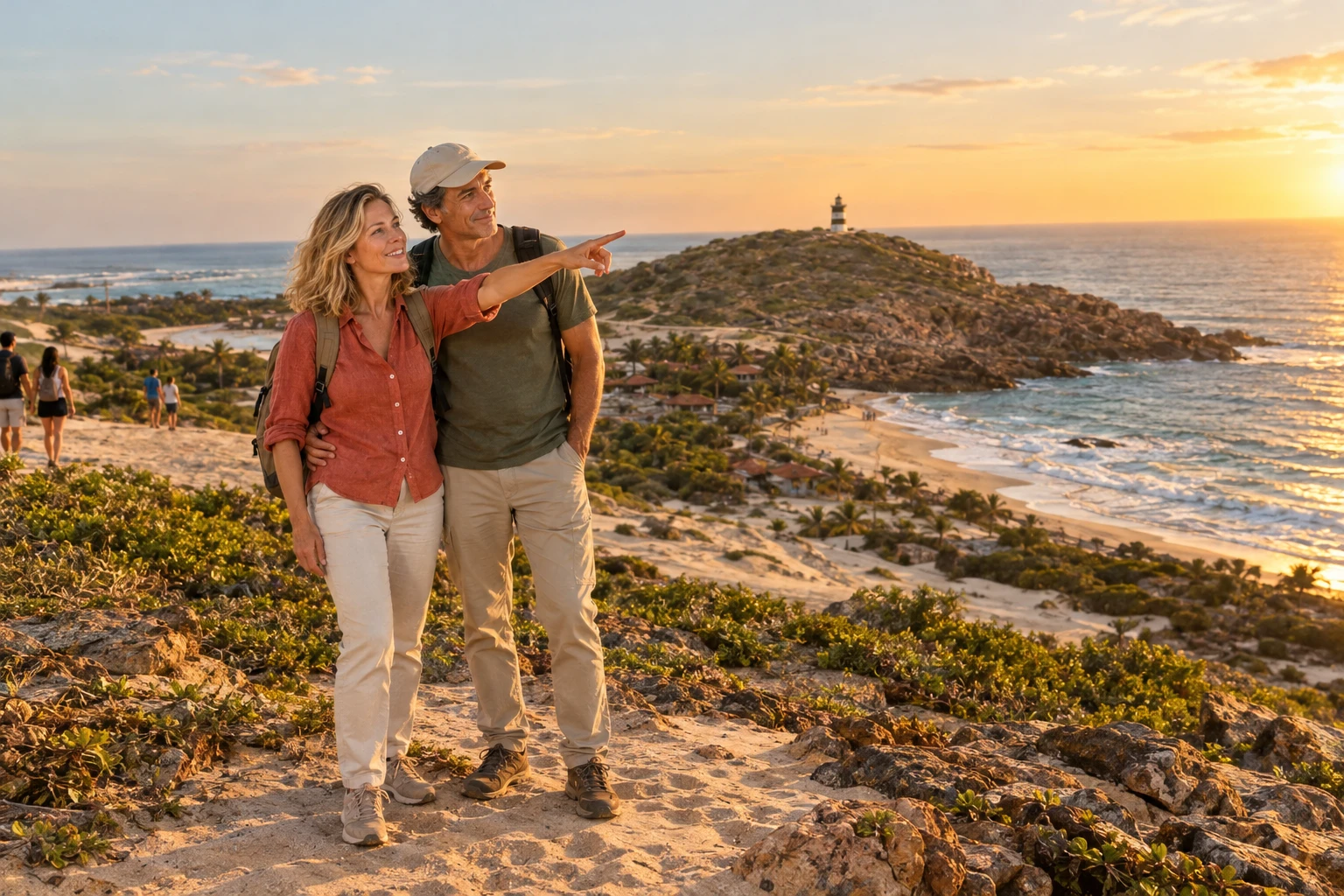
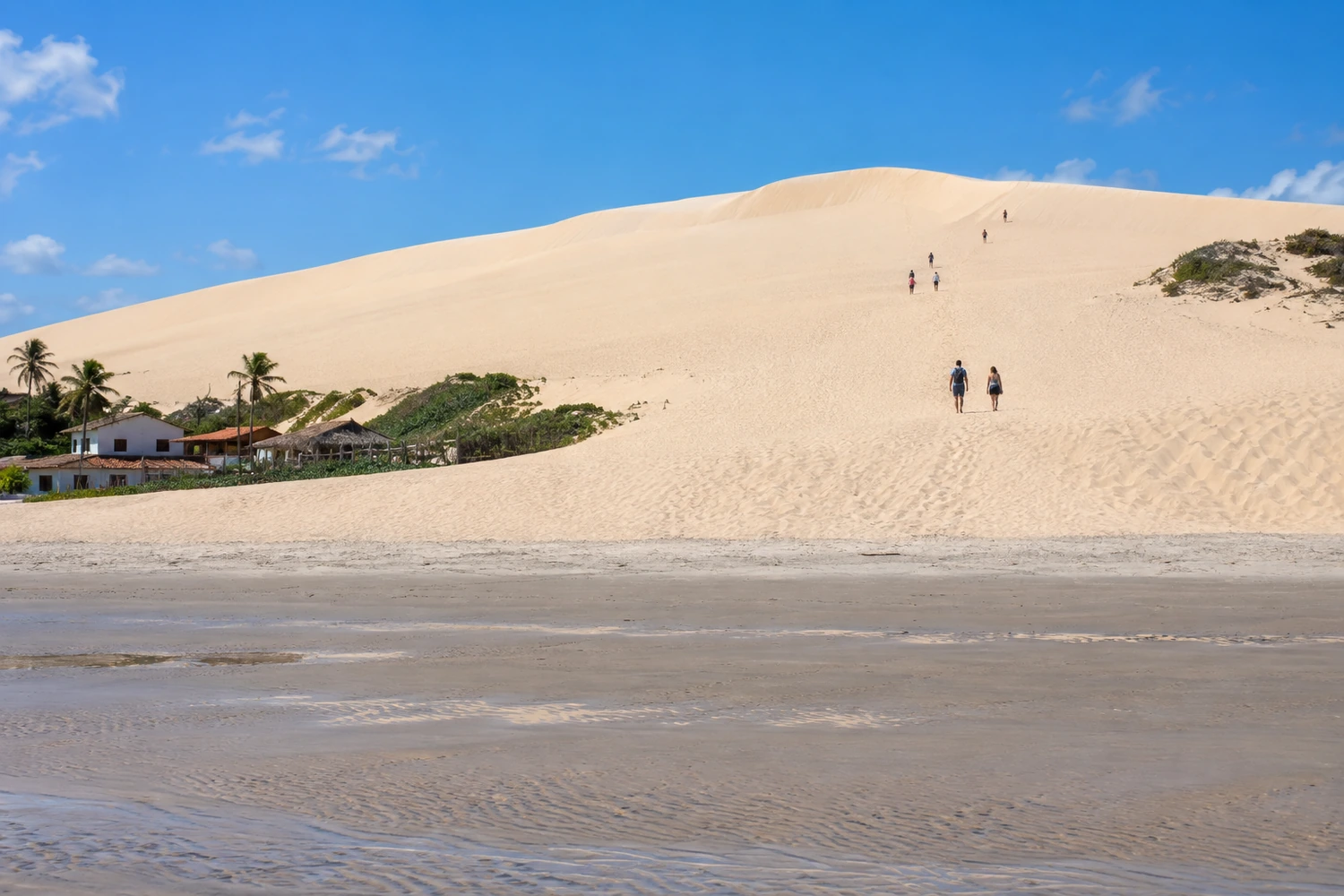
Dunas, lagoas de água doce e o pôr do sol no alto da duna.
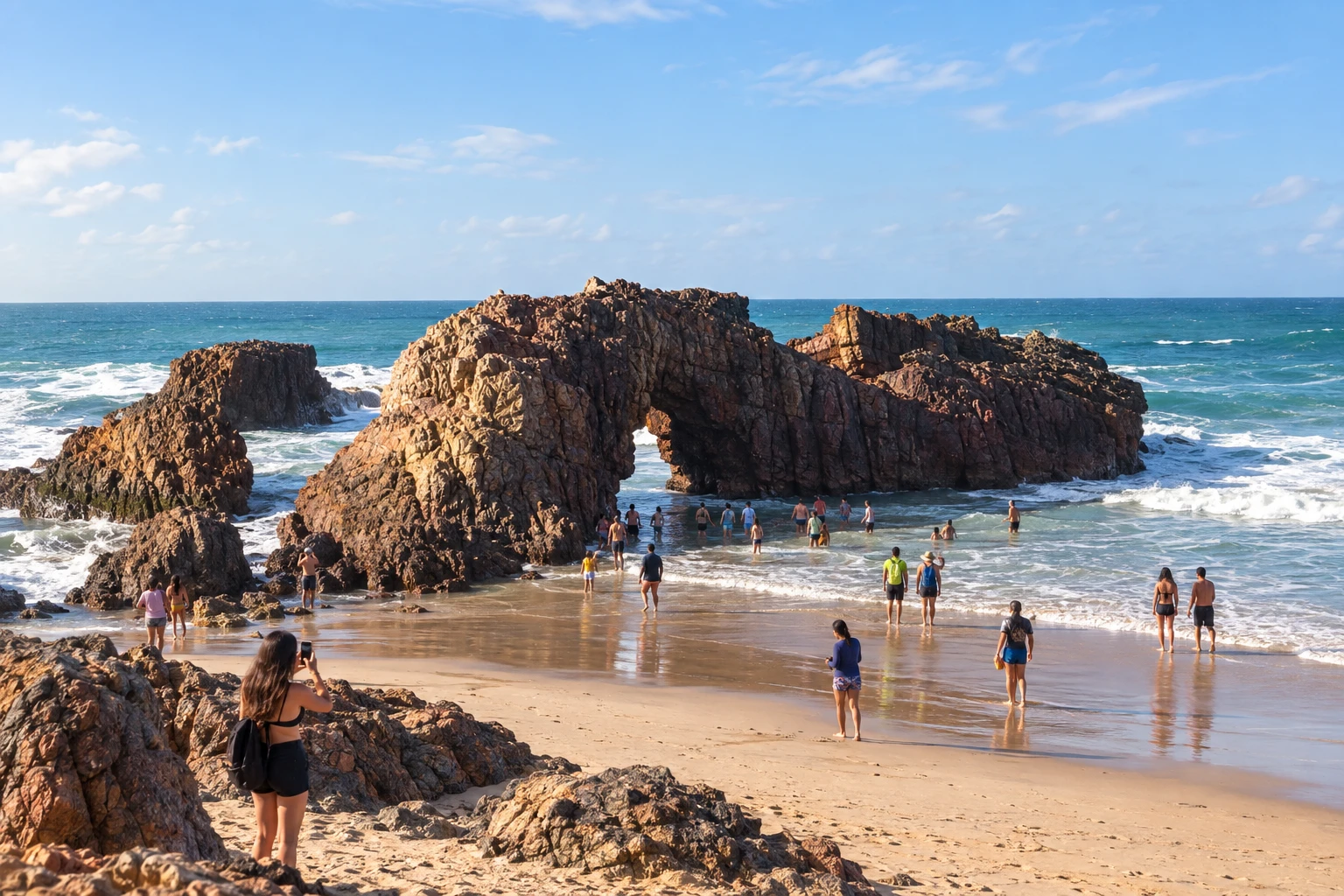
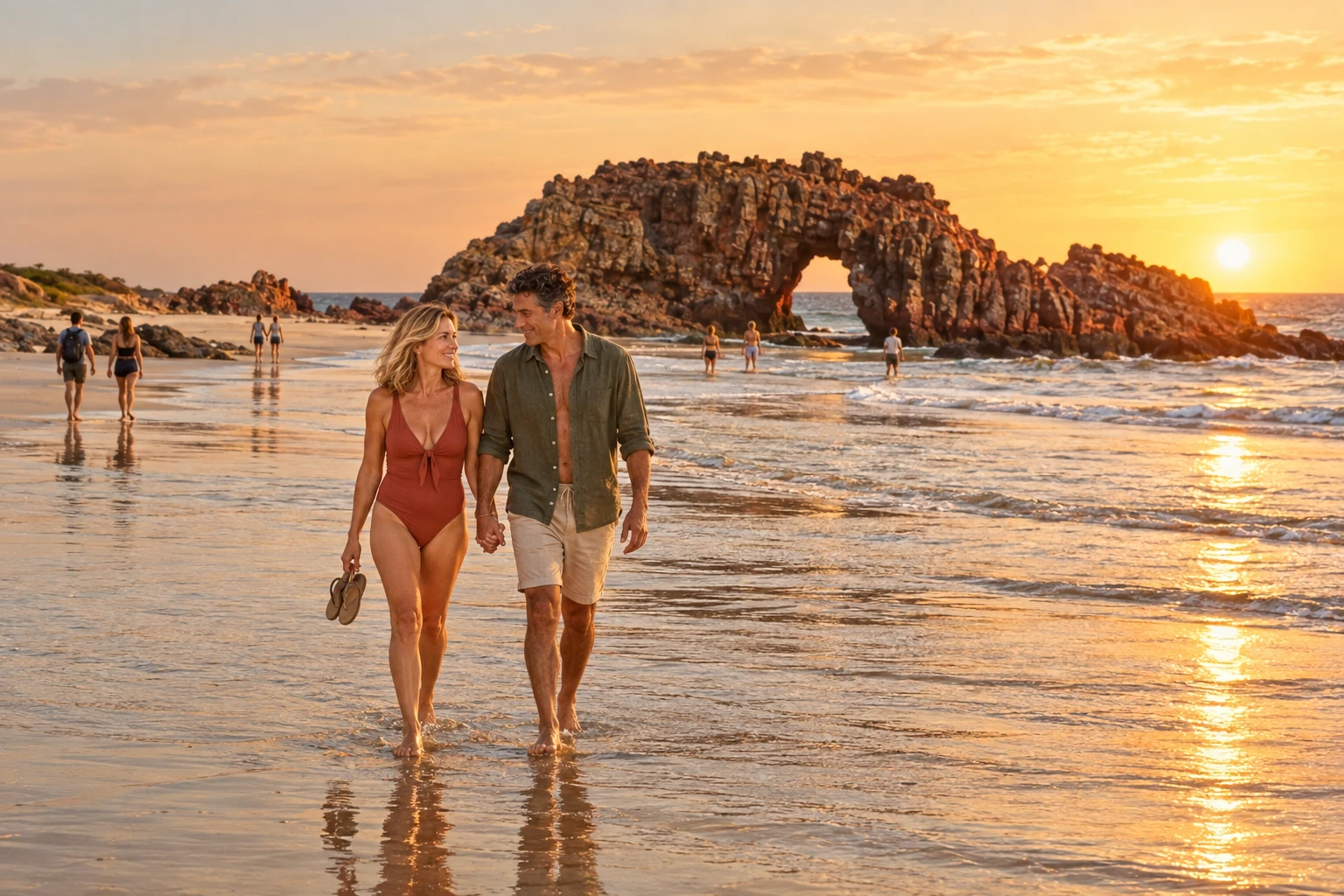
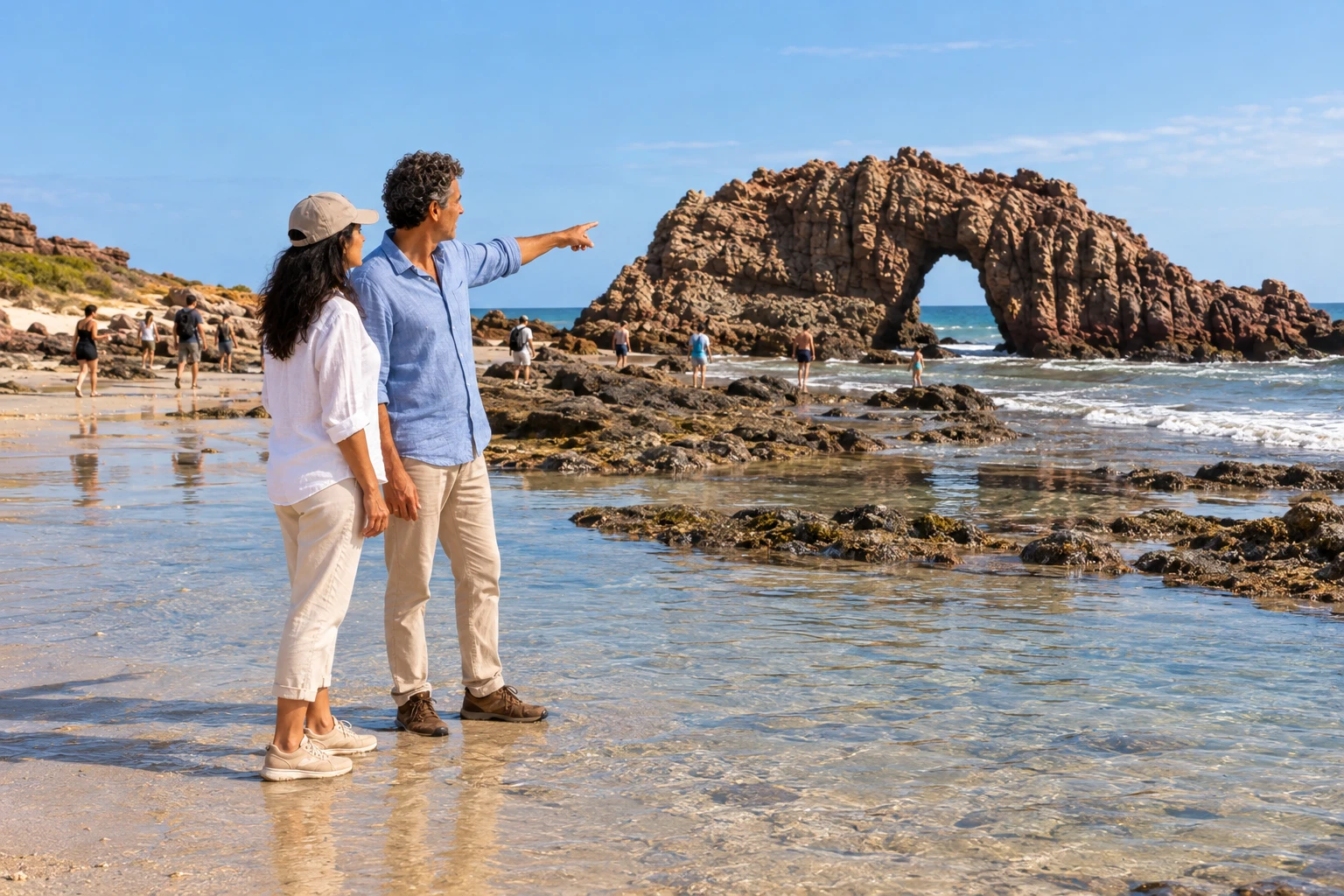
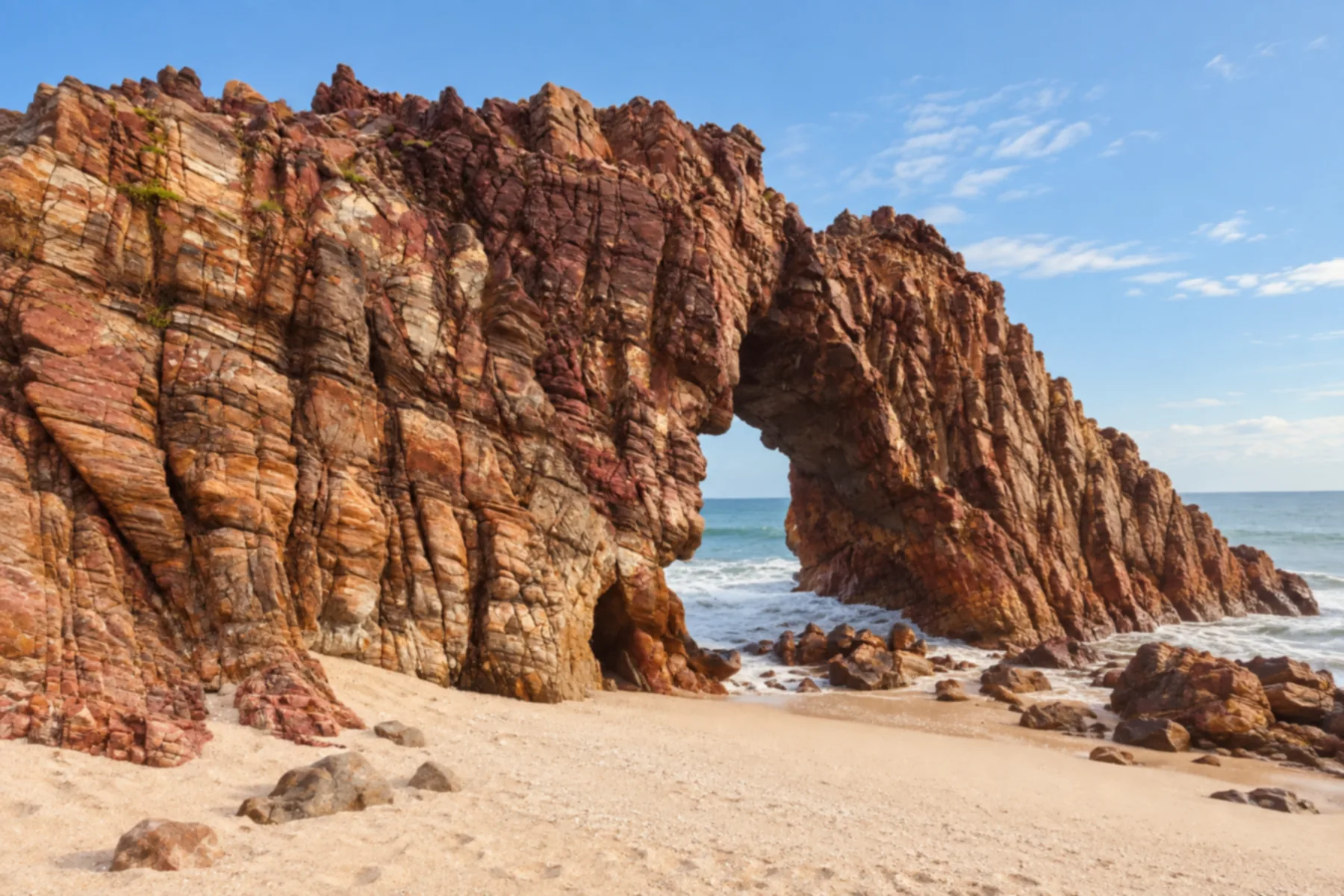
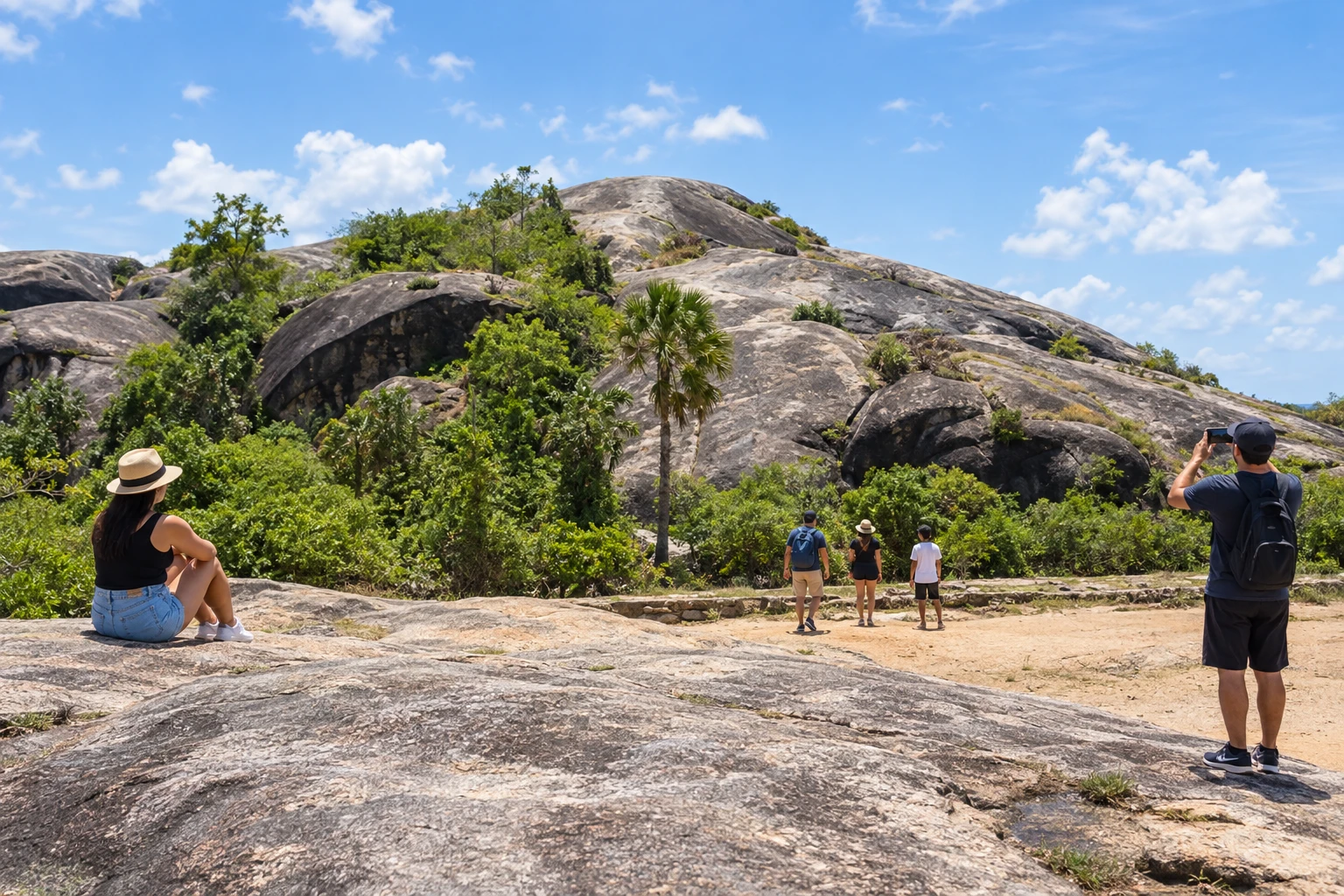
In the photo: Pedra Furada
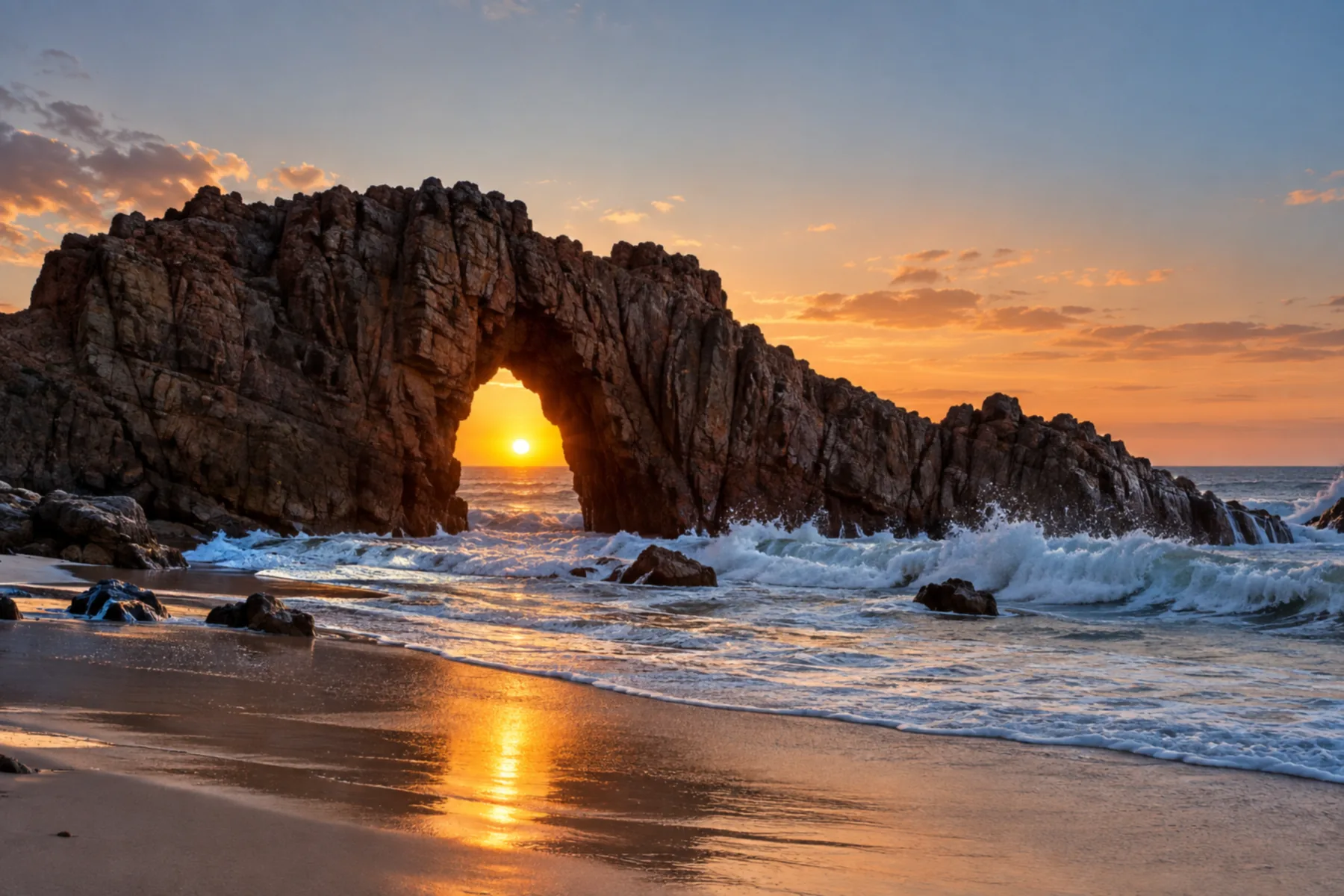
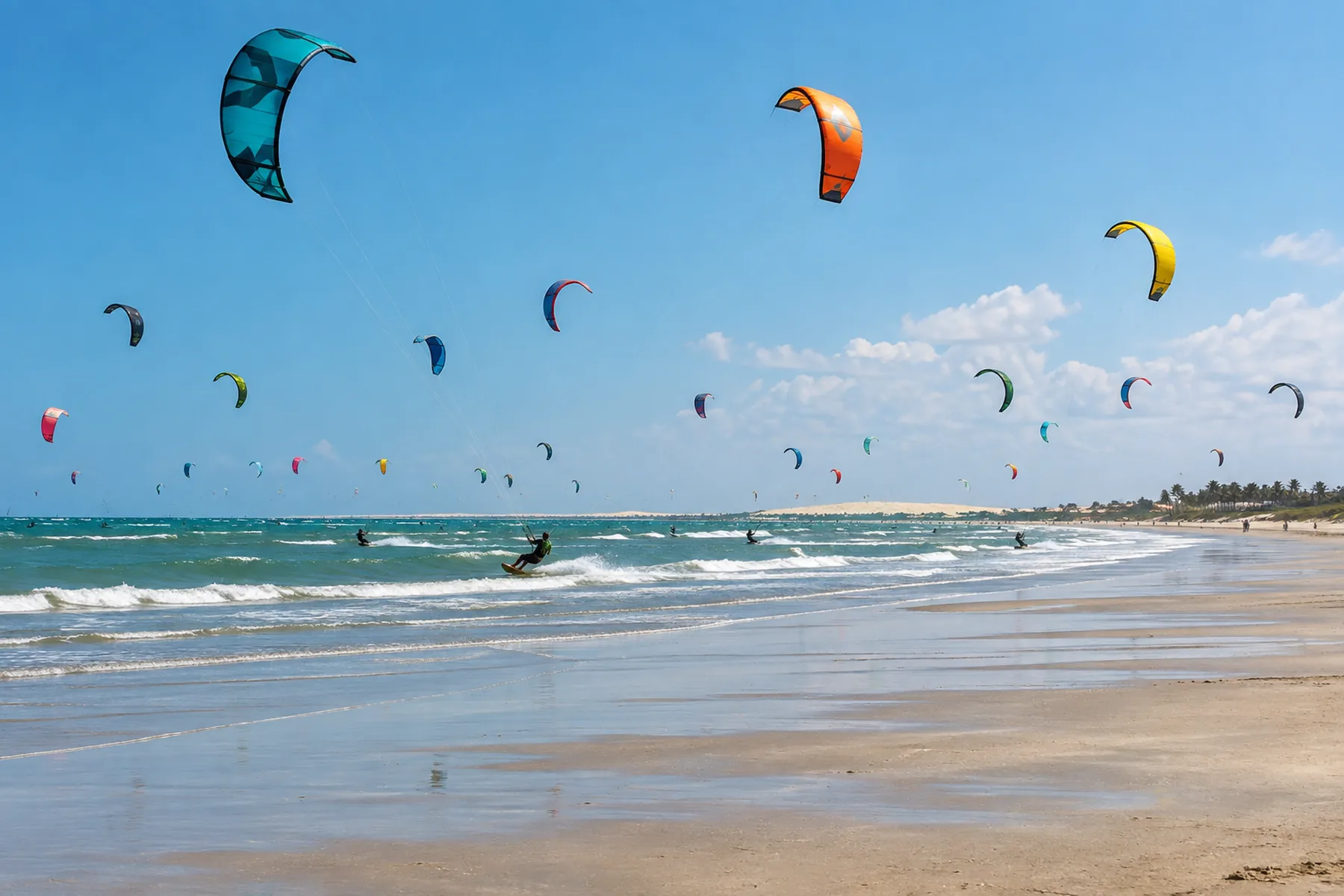
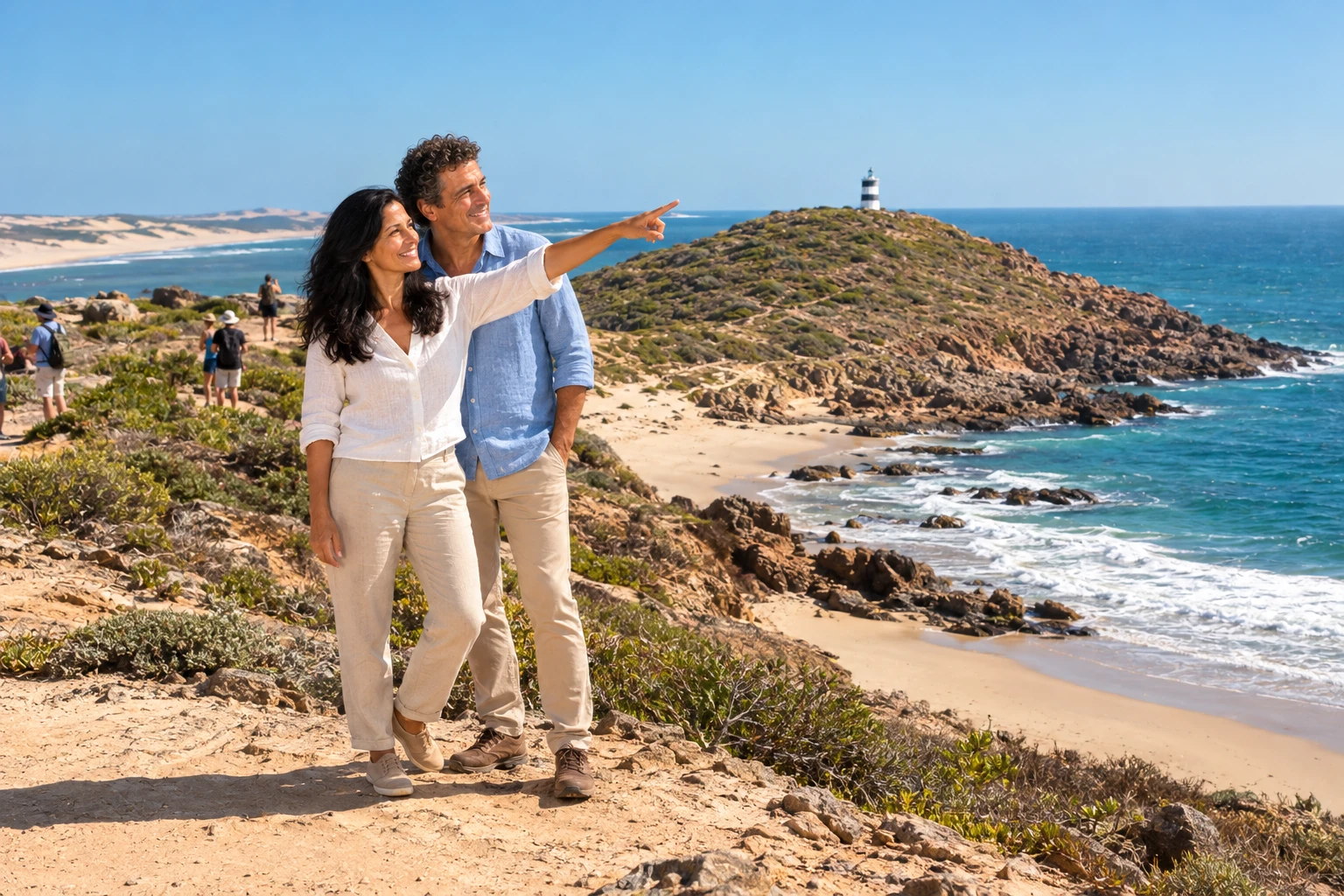
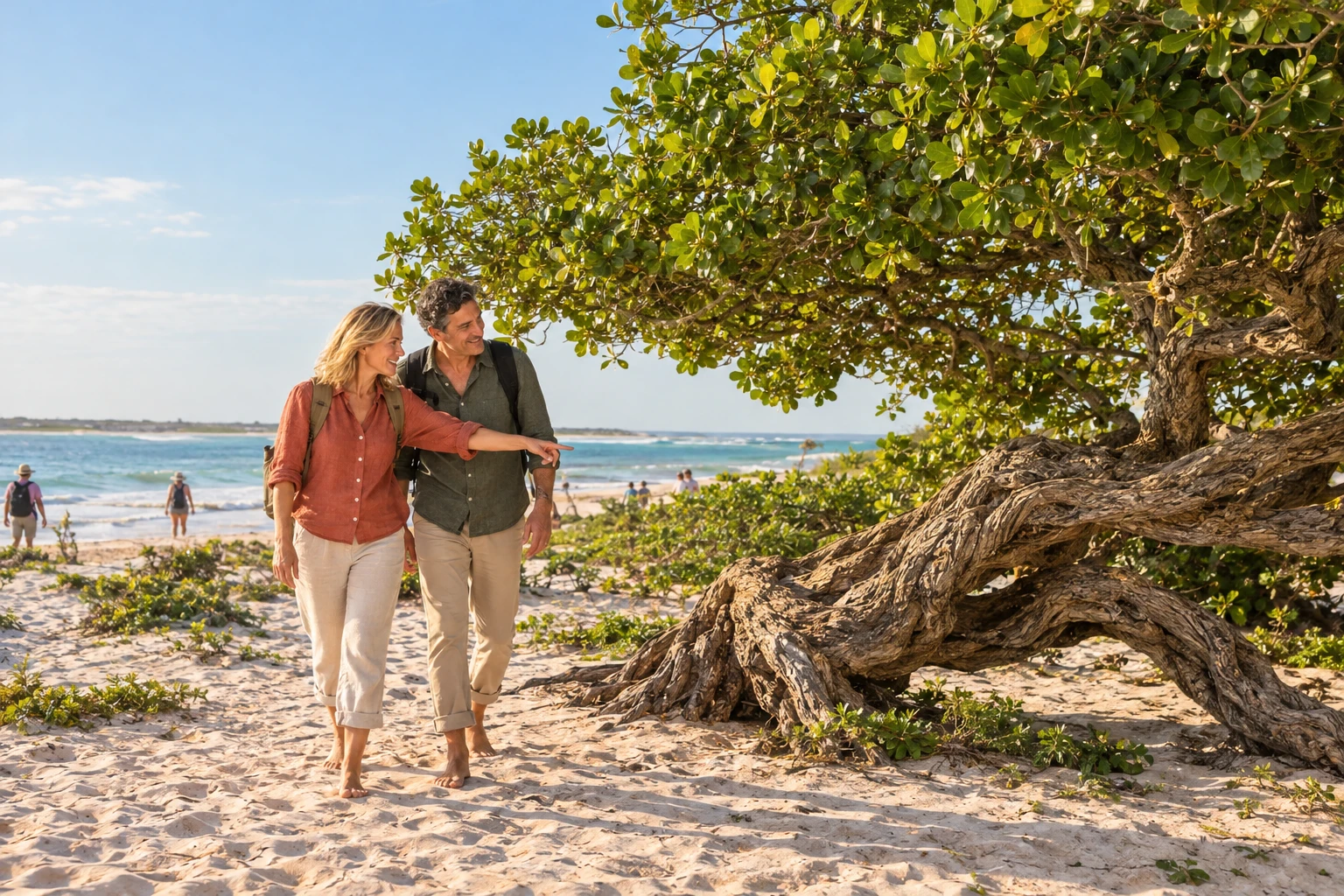
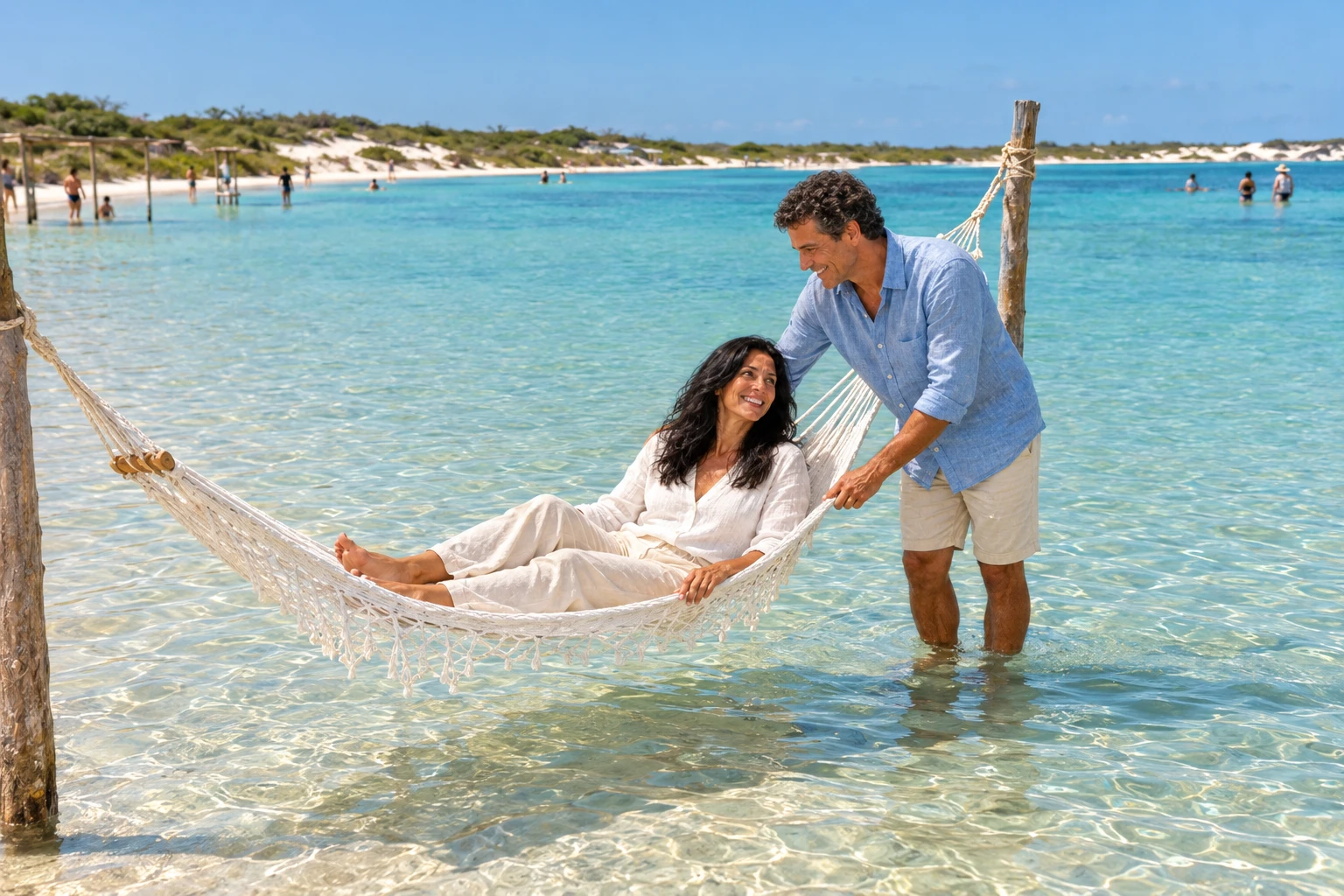
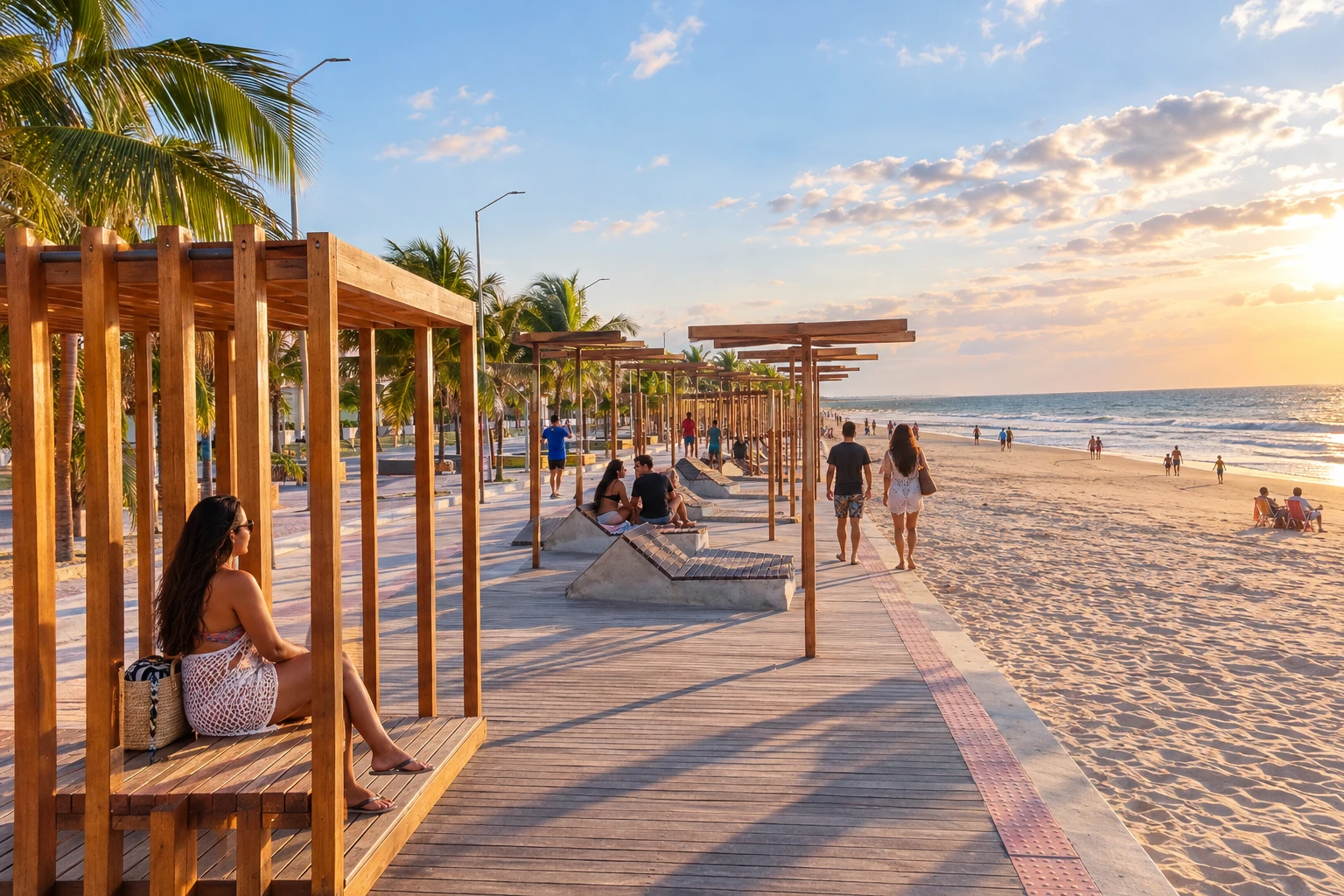
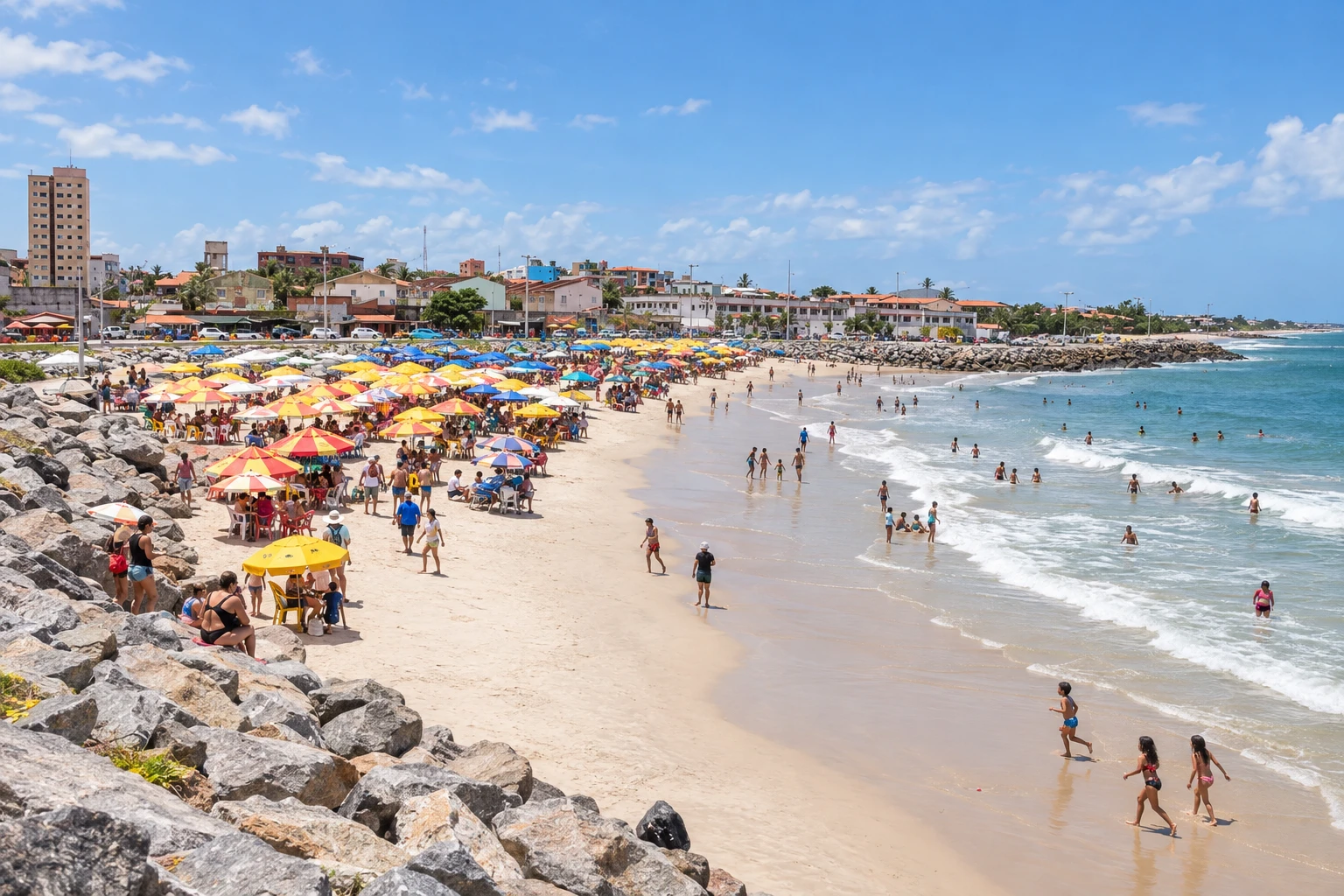
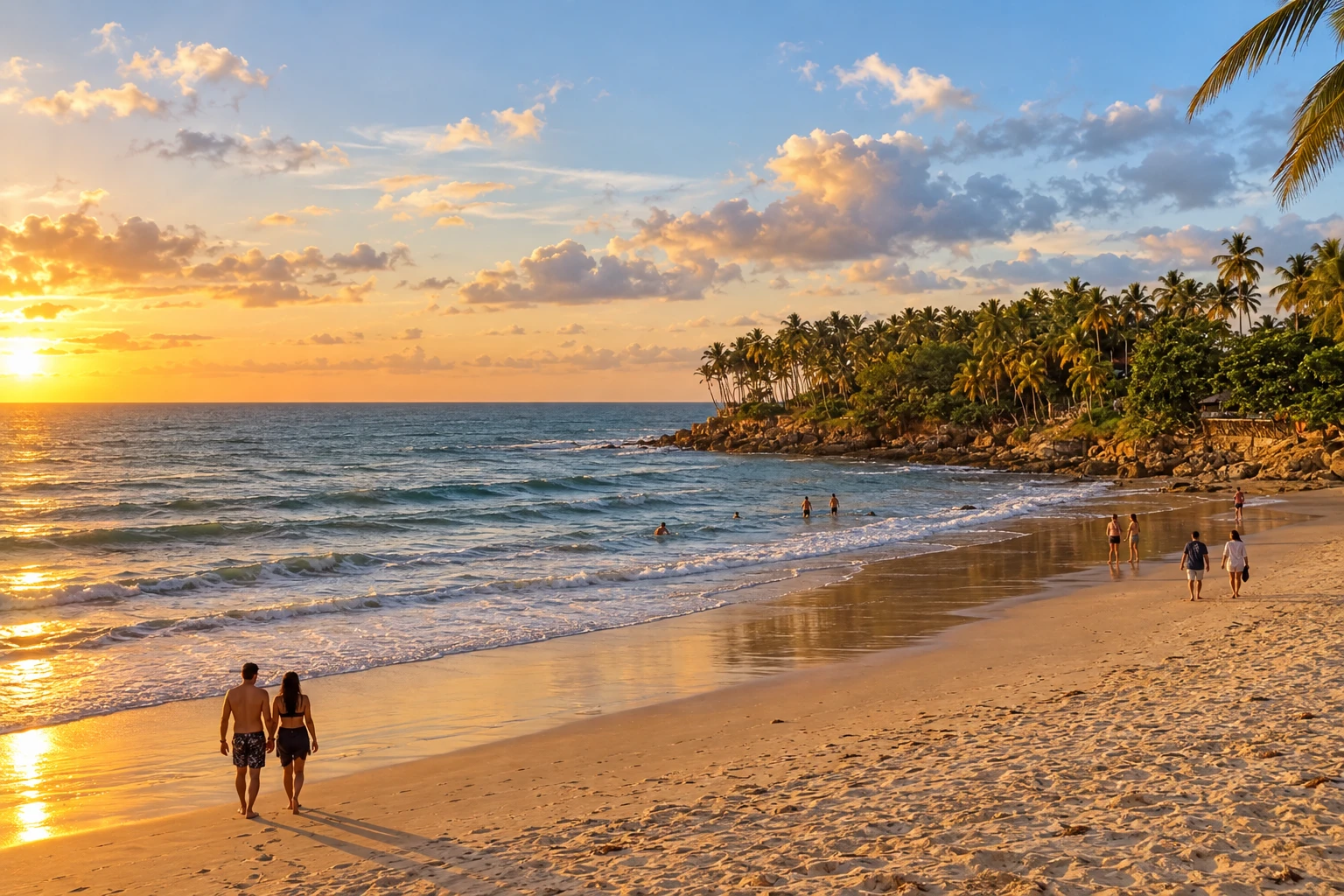
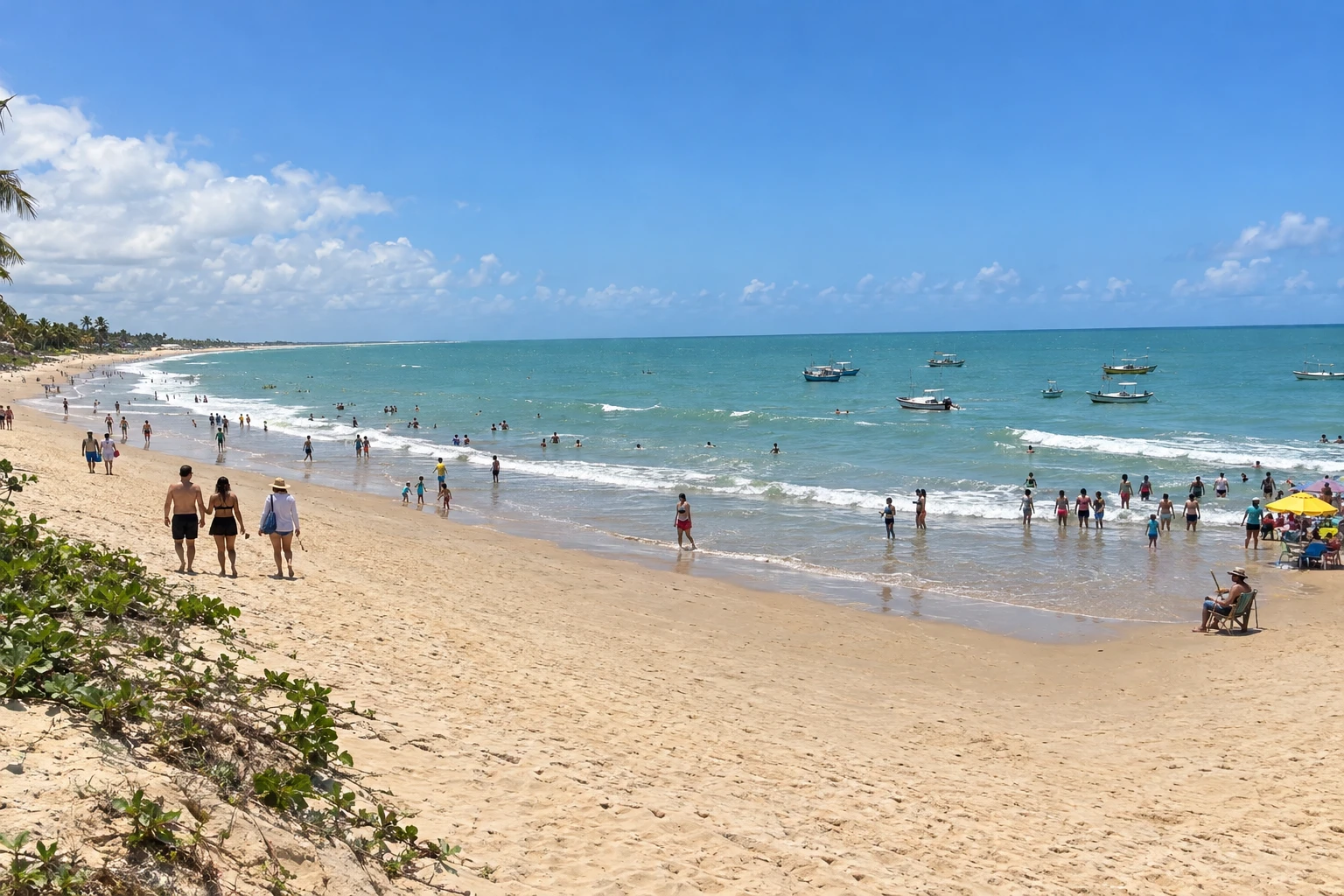
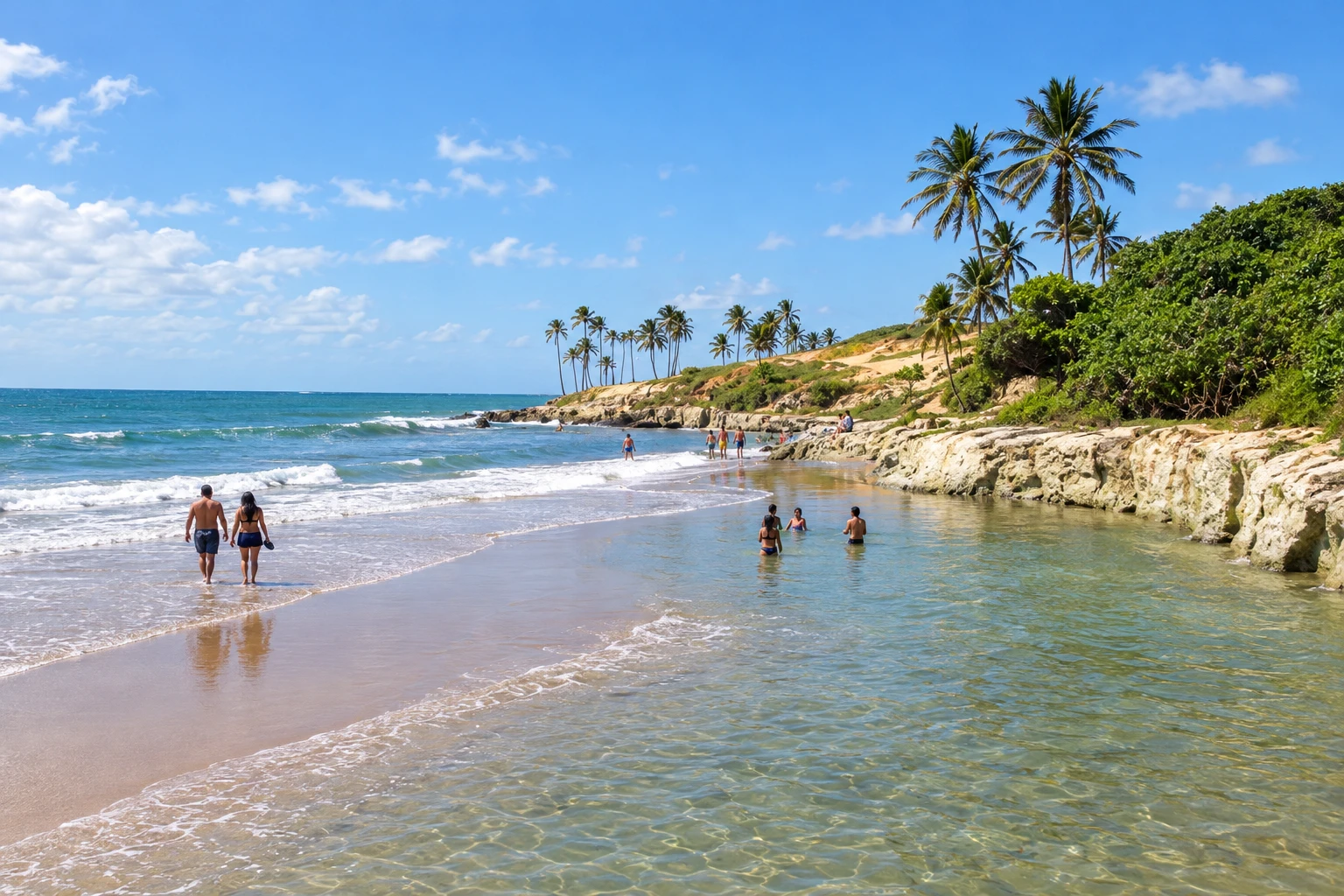
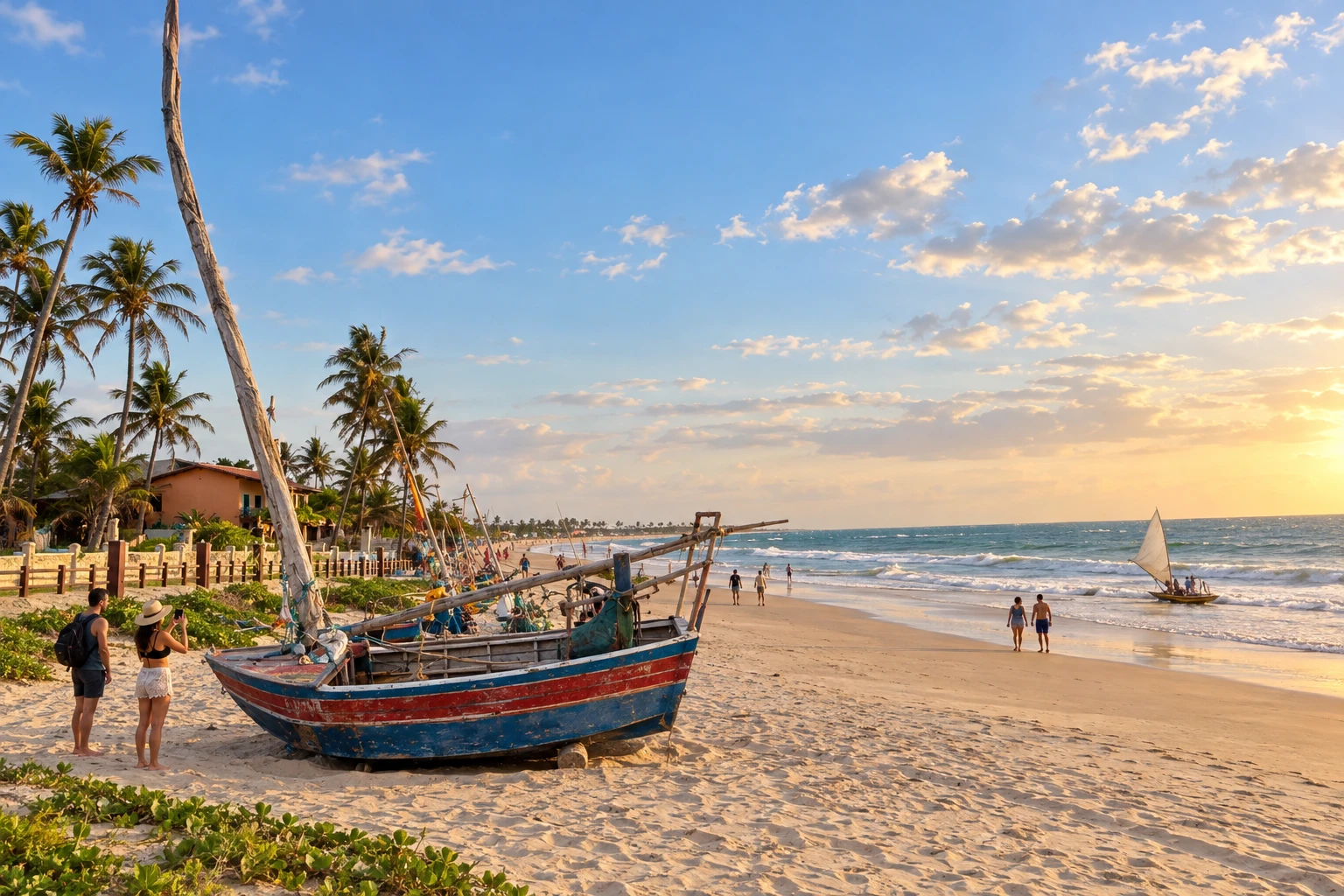
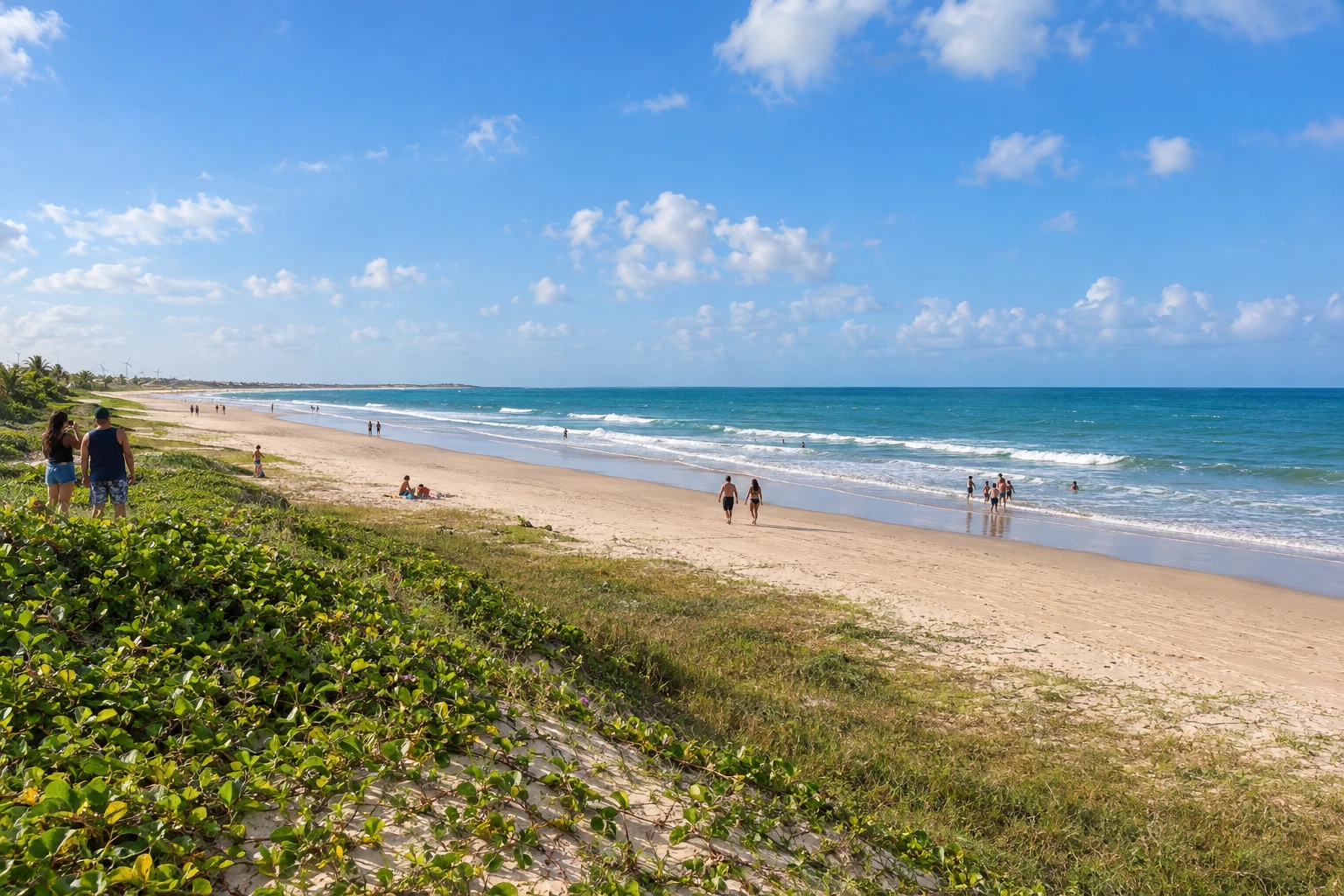
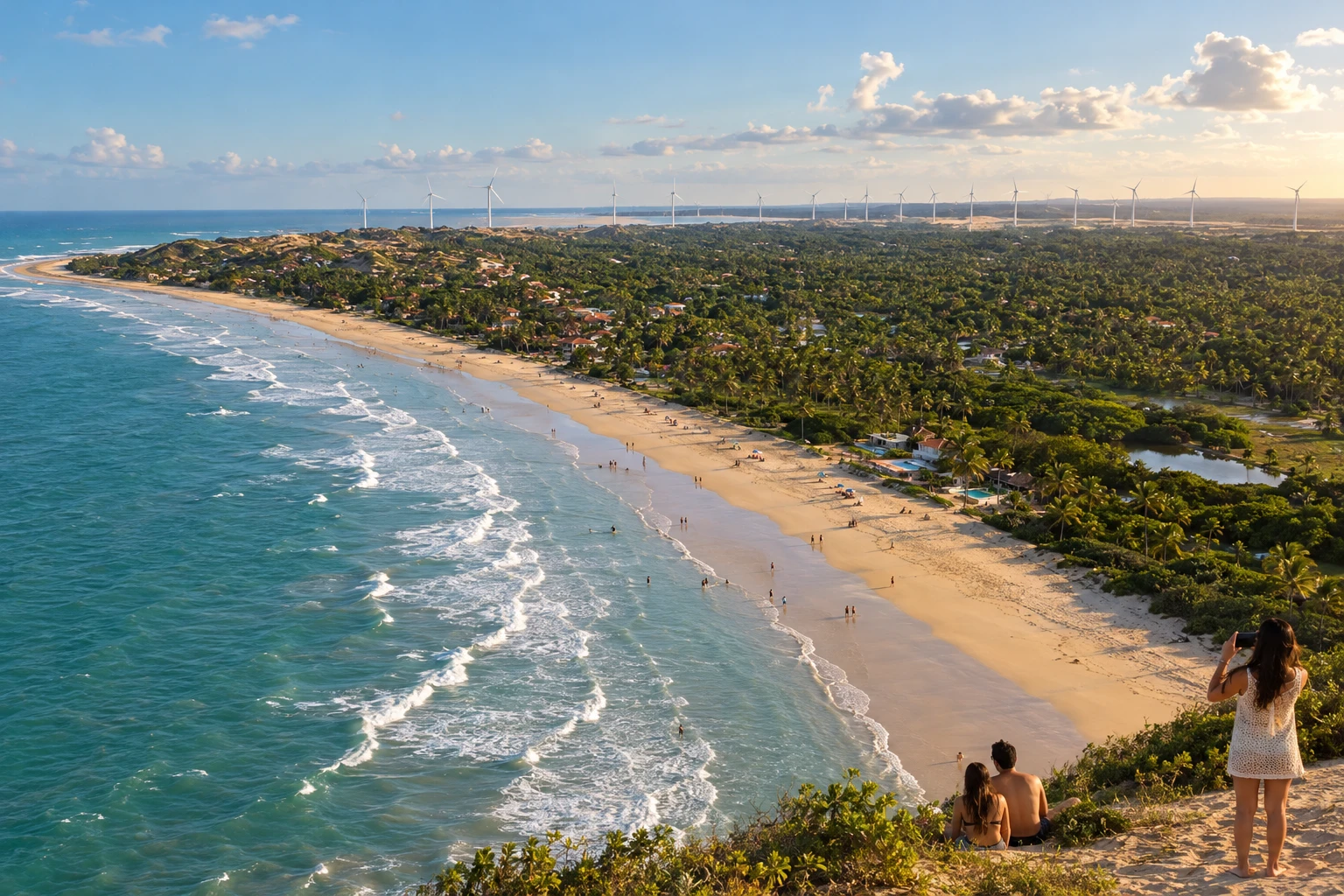
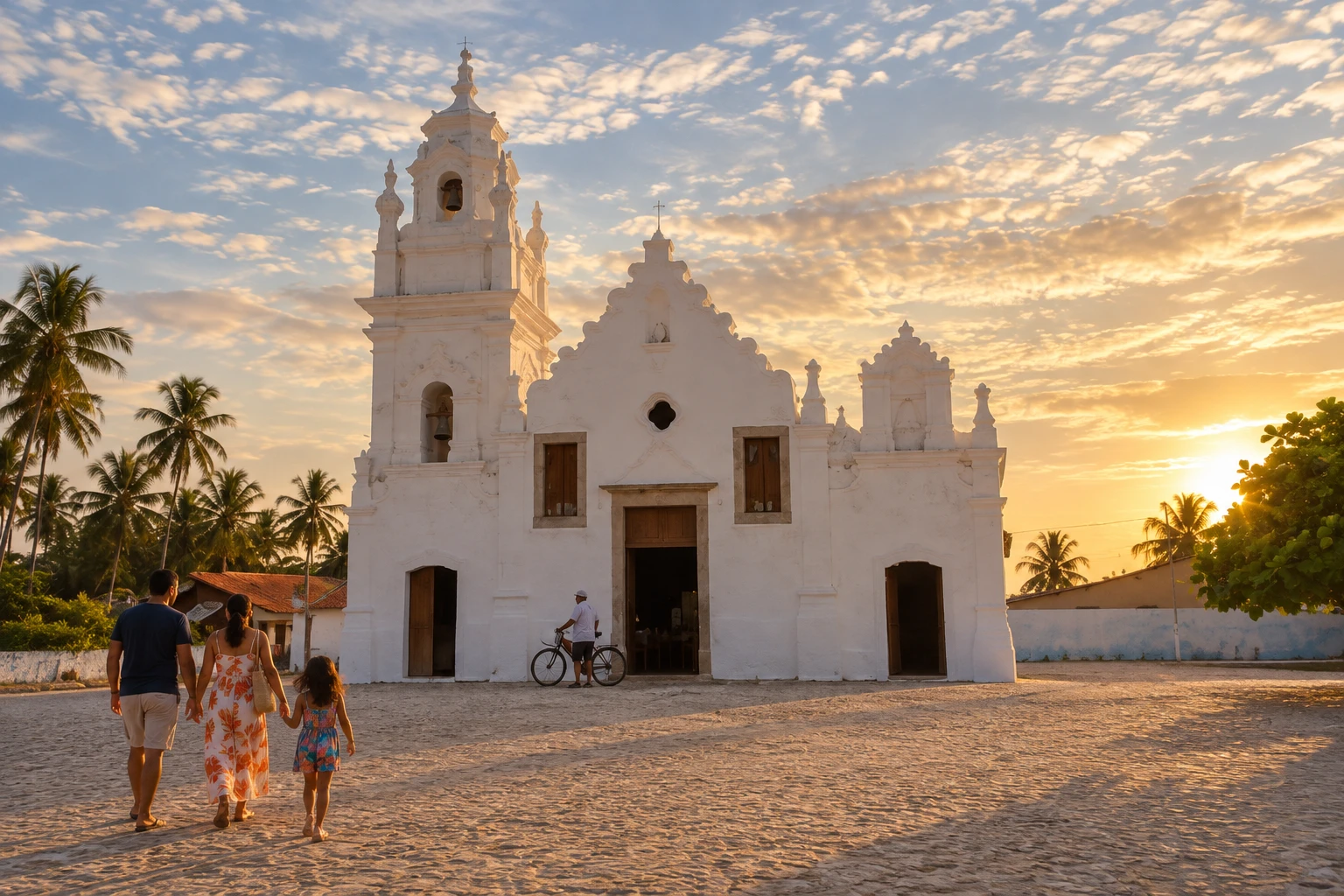
Illustrative images. The pictures in this guide are illustrations based on the real place, not photographs, and may differ from it.
Get to know the place
Jericoacoara continua sendo uma vila de ruas de areia, mas cercada por um parque nacional de dunas, lagoas e falésias. Você passa o dia de lagoa em lagoa, de rede dentro d'água, aprende kitesurfe no vento constante e termina na duna vendo o sol cair no mar.
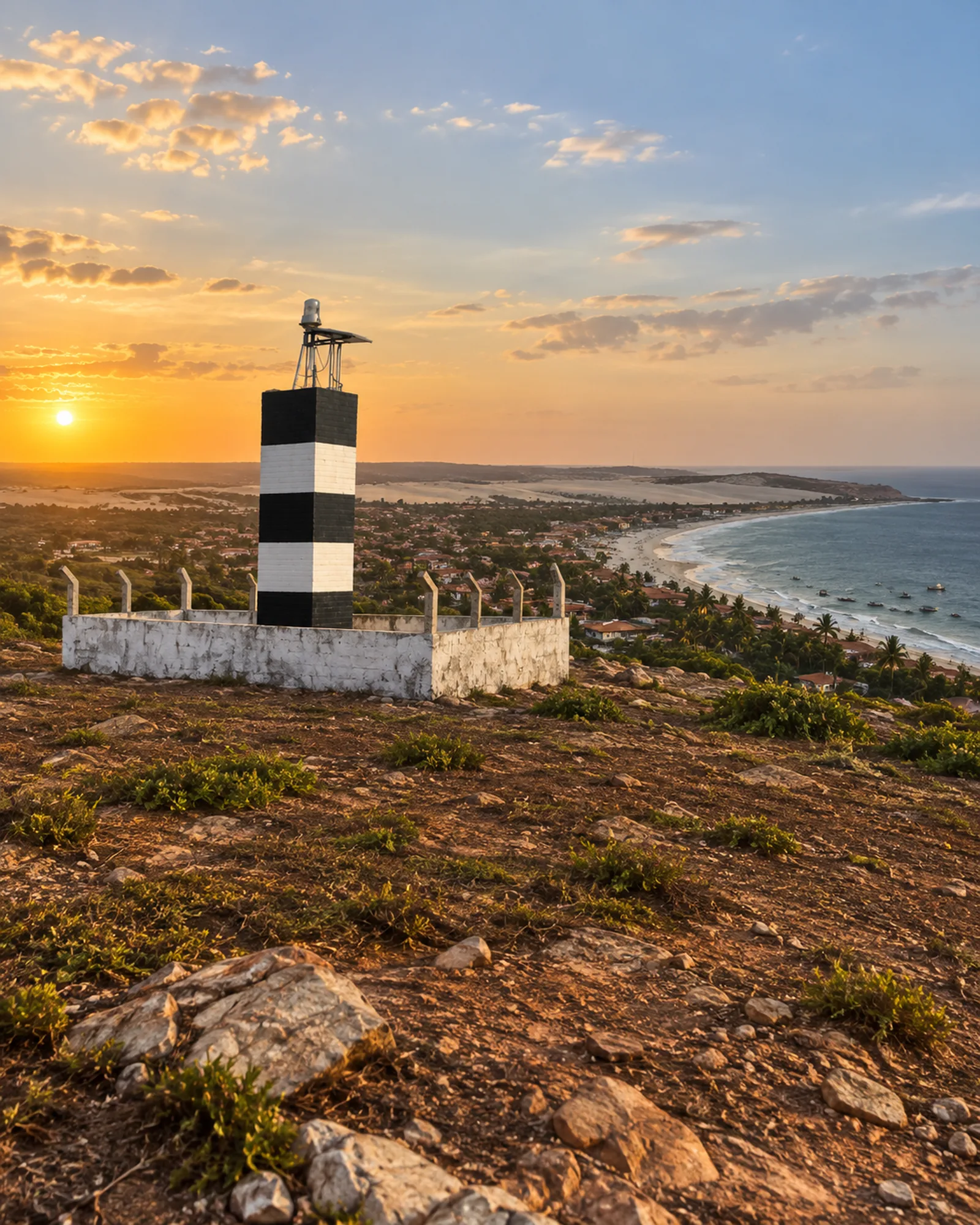
Dentro do Parque Nacional de Jericoacoara ficam a Pedra Furada, o arco de rocha que virou símbolo da vila, o Serrote com o farol e a Árvore da Preguiça, moldada pelo vento. As lagoas Azul e do Paraíso ficam no município de Jijoca, a um passeio curto de buggy. Do outro lado, a leste, a Praia do Preá, em Cruz, é um dos pontos preferidos do kitesurfe, e o Buraco Azul, em Caiçara, é uma lagoa de água muito azul numa antiga área de extração.
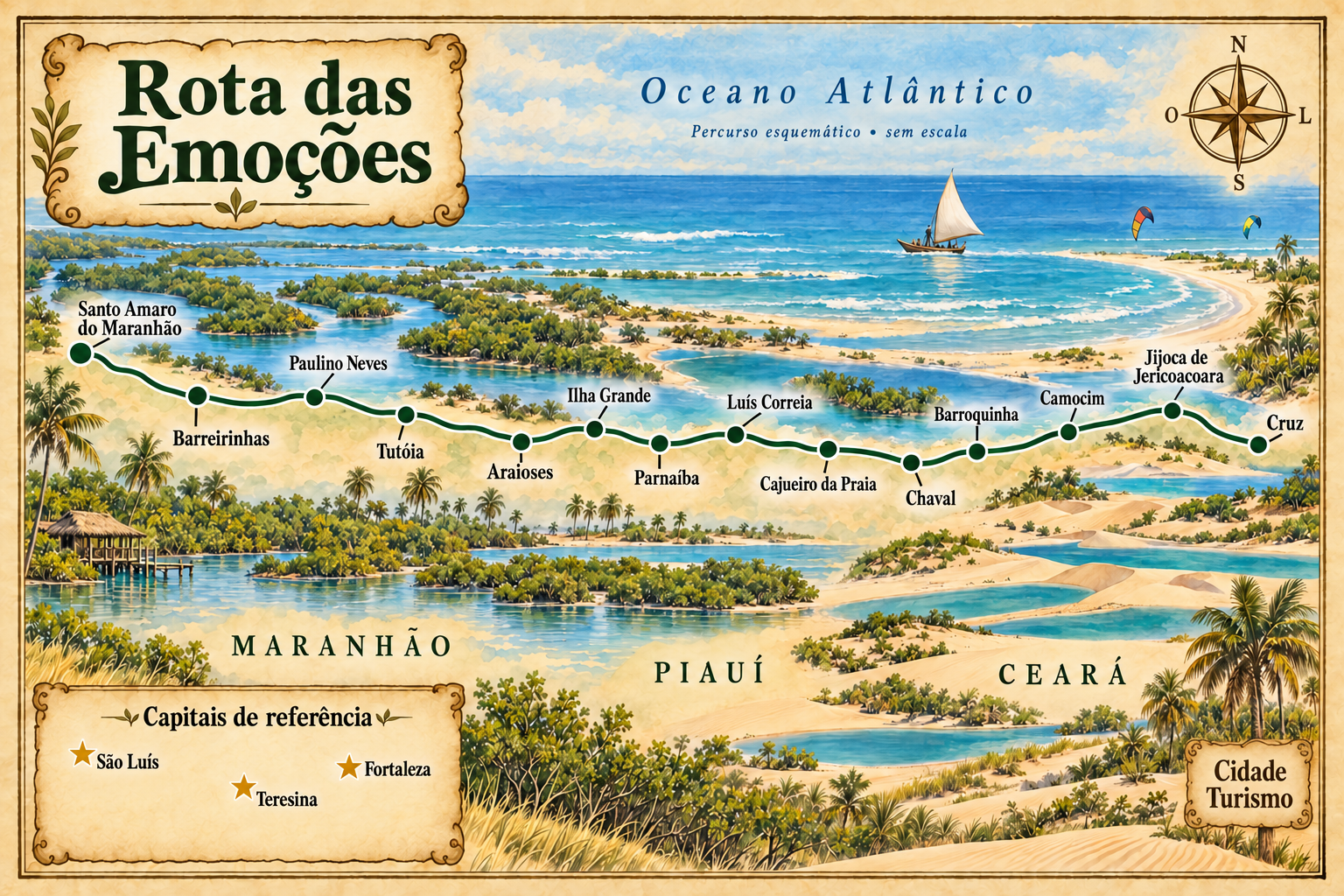
A oeste, o passeio de buggy ou 4x4 até Tatajuba e Camocim cruza dunas, rios de balsa e lagoas, e é atração por si só. Ao longo do litoral, Acaraú e Itarema têm praias de pescadores e as melhores condições de vento do Ceará. Jeri é o começo da Rota das Emoções, que segue para o Delta do Parnaíba e os Lençóis Maranhenses.
This destination brings together 14 cities: Jijoca de Jericoacoara, Cruz, Camocim, Acaraú, Itarema, Barroquinha, Chaval, Caucaia, São Gonçalo do Amarante, Paracuru, Paraipaba, Trairi, Itapipoca, Amontada.
A look at the place
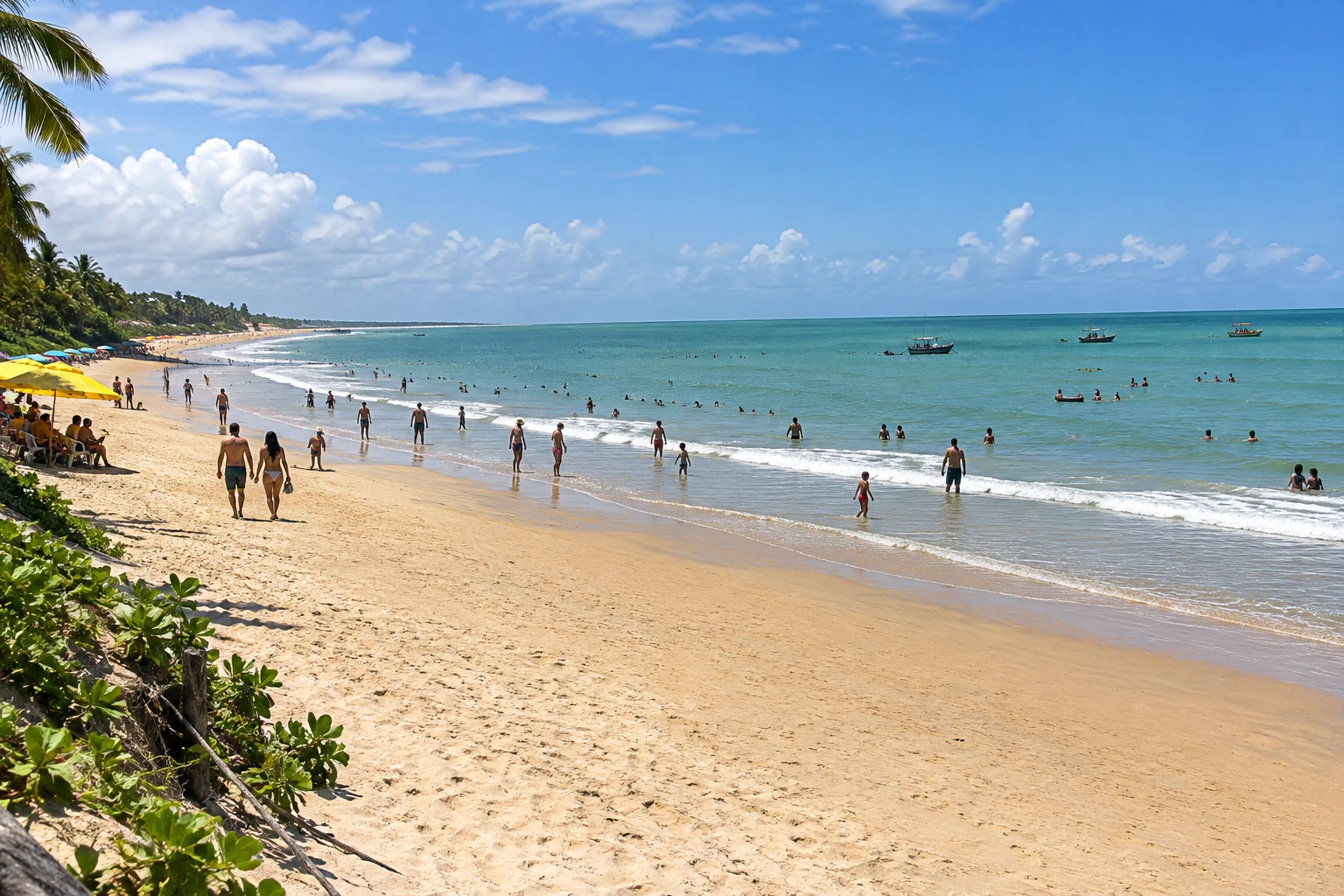
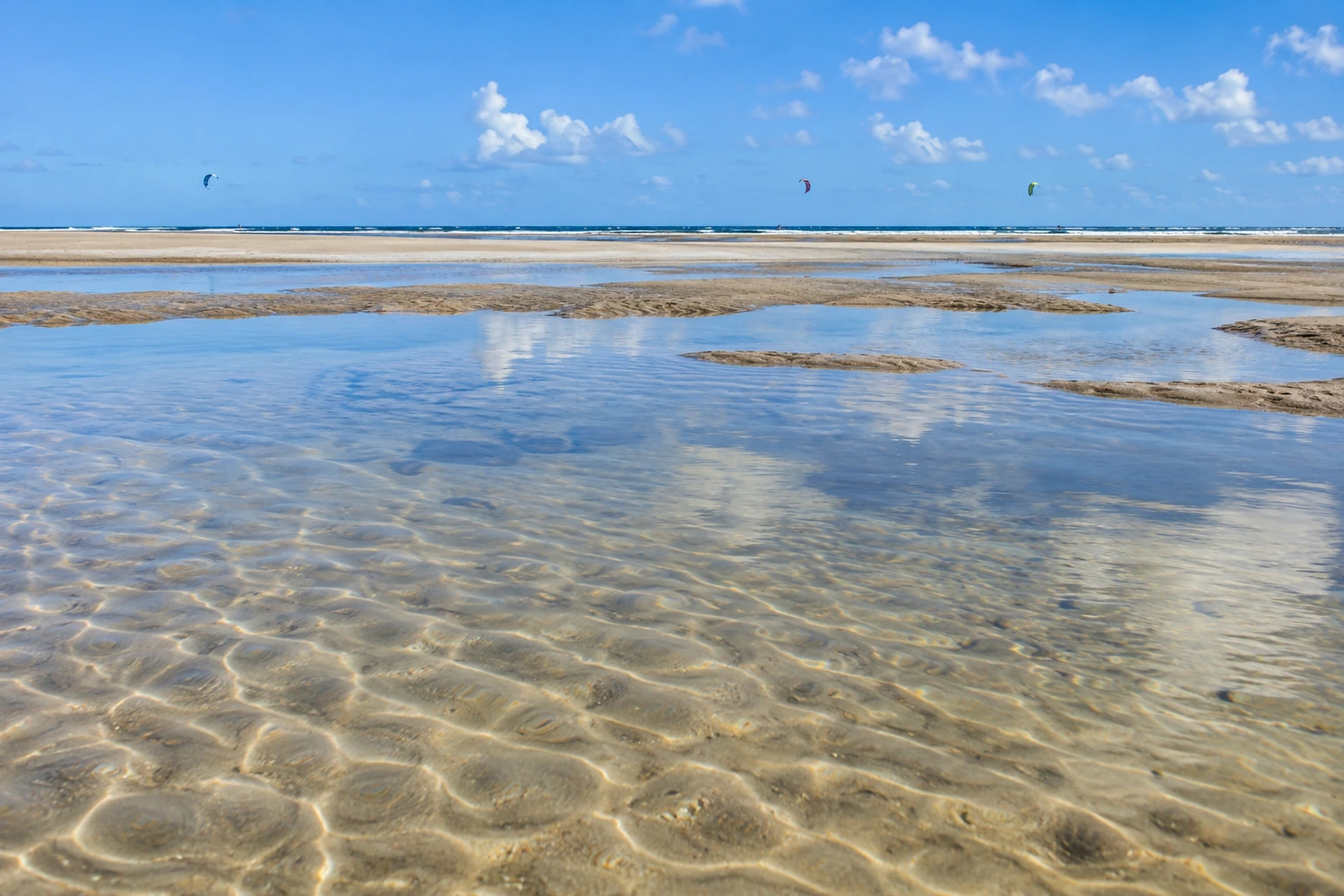
These pictures are illustrations based on the real place, not photographs. They may differ from the place.
Click the picture to enlarge it.
Travelers' photos
One destination, many paths
Start with one city or combine several in your itinerary.
Mapa: @svg-maps/brazil, CC BY 4.0
Aeroporto Regional de Jericoacoara (JJD), in Cruz · 13 km to Jijoca de Jericoacoara
Aeroporto Internacional de Fortaleza (FOR), in Fortaleza
Aeroporto de Jericoacoara (JJD), em Cruz, a cerca de uma hora da vila. Pela estrada, Jijoca fica a cerca de 300 km de Fortaleza, pela CE-085. O trecho final, de Jijoca até a vila, é feito em veículo 4x4 ou jardineira, porque carros comuns não circulam dentro de Jericoacoara.
Suggested arrival point: Jijoca de Jericoacoara

Jijoca de Jericoacoara reúne lagoas, dunas e a vila de ruas de areia junto ao mar. A Pedra Furada e as praias do parque nacional revelam paisagens esculpidas pelo vento e pelas águas no litoral cearense.

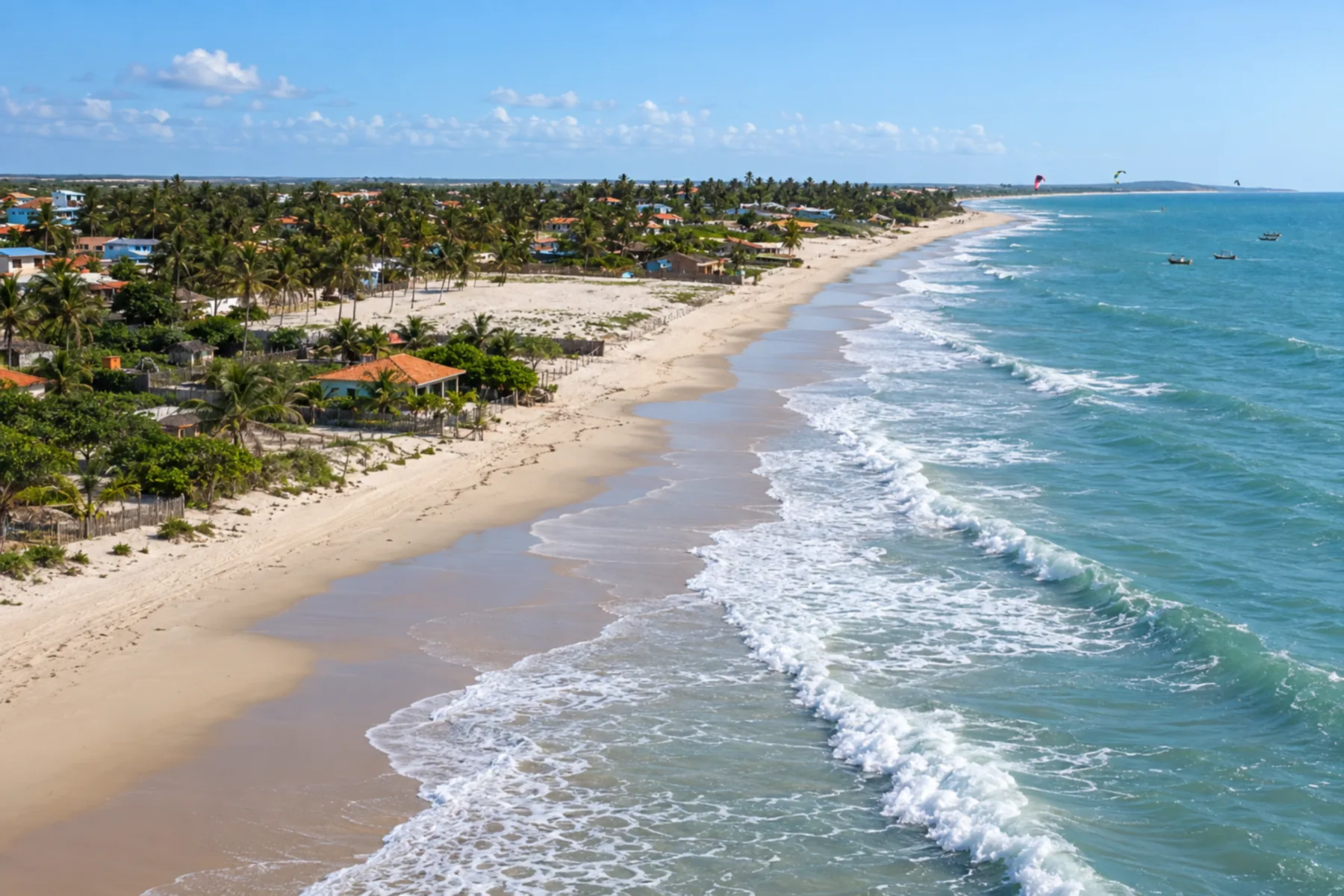
Cruz abriga a Praia do Preá, marcada pela pesca e pelos ventos do litoral oeste cearense. A extensa faixa de areia e a presença do kitesurfe compõem a paisagem, entre barcos e a vida da comunidade costeira.

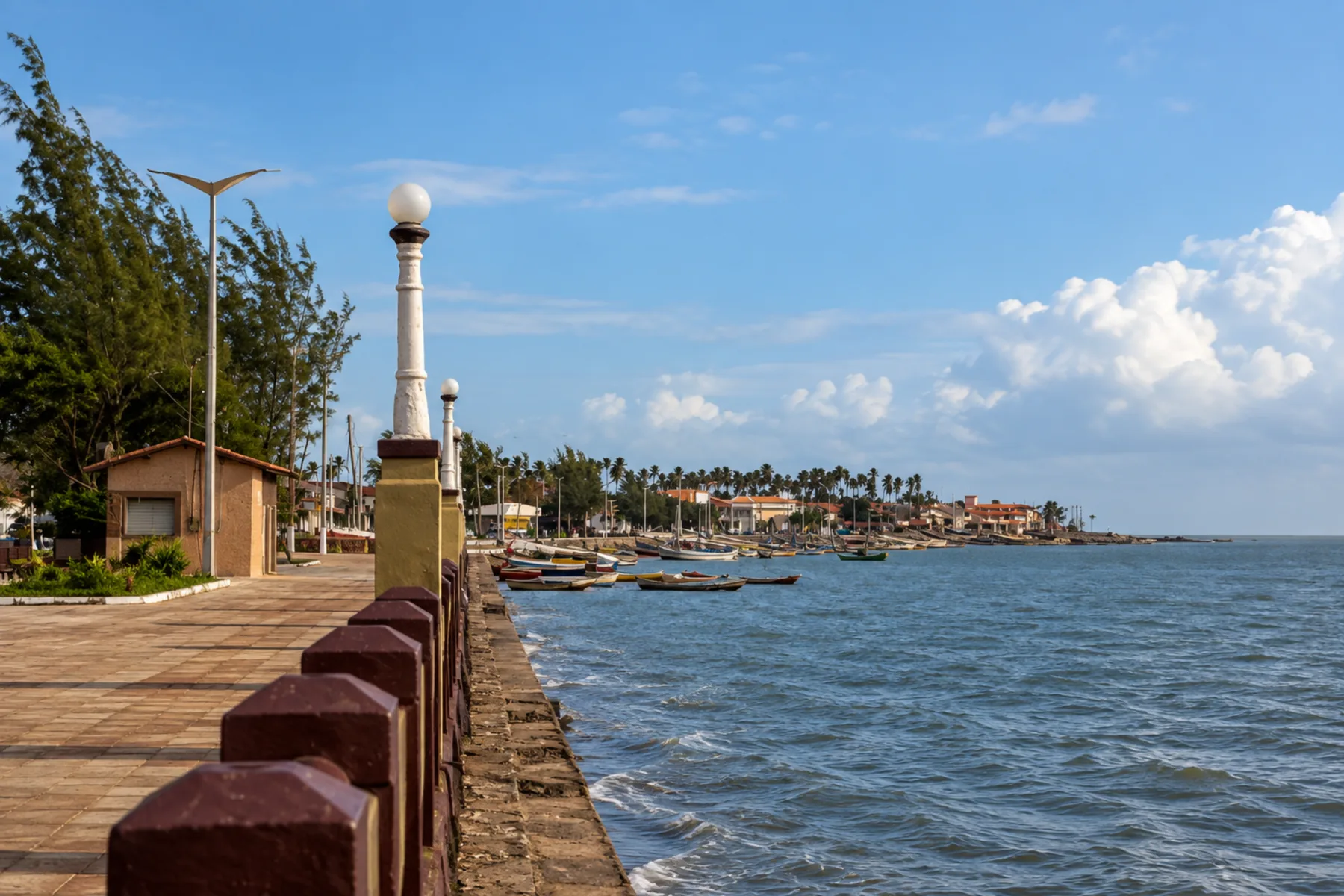
Camocim se abre para o estuário do Rio Coreaú, entre barcos de pesca e paisagens de dunas. A orla da cidade e os caminhos para praias e lagoas mostram diferentes faces do litoral oeste do Ceará.

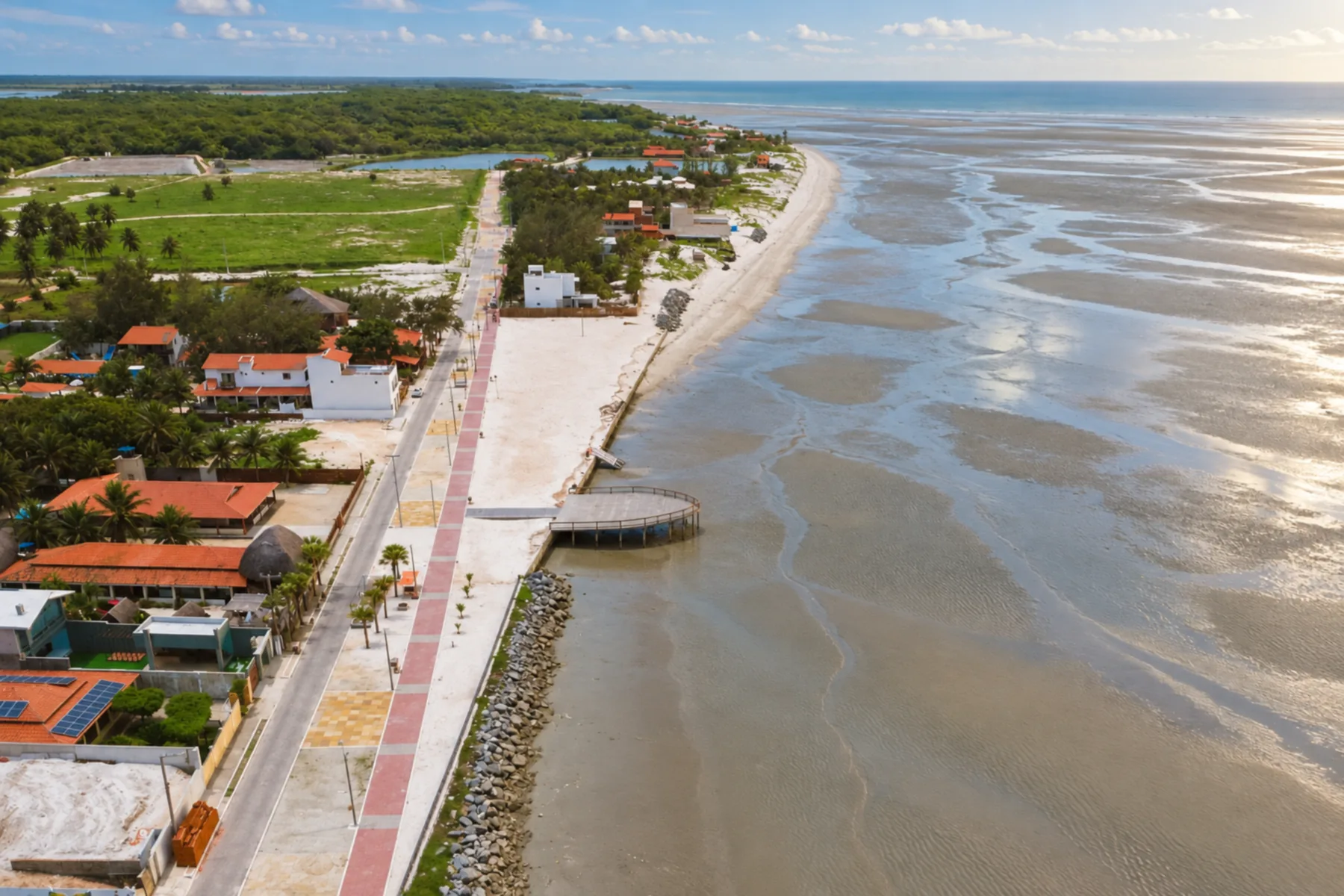
Acaraú combina tradição pesqueira, manguezais e praias no litoral oeste do Ceará. Em Arpoeiras, a maré baixa revela uma ampla faixa de areia e transforma a paisagem junto à comunidade costeira.

Itarema reúne comunidades pesqueiras e paisagens de manguezais, praias e bancos de areia. Na Ilha do Guajiru, as águas protegidas e os ventos atraem praticantes de kitesurfe ao litoral cearense.

Barroquinha tem na Praia de Bitupitá uma referência de seu litoral e no BituFolia uma manifestação do carnaval à beira-mar. Bitupitá é uma localidade distinta da sede municipal, com acesso e estadia próprios. A visita pode privilegiar a paisagem costeira ou acompanhar a programação cultural confirmada para a viagem.

Chaval tem na Pedra da Carnaúba uma formação rochosa de referência, com vista para a cidade, o mar e a foz do Rio Ubatuba. No topo, a acumulação de água no período chuvoso acompanha um pequeno conjunto de carnaúbas. Essa paisagem permite uma visita voltada à observação do relevo, com subida somente quando as condições e o acesso estiverem confirmados.

Caucaia tem Cumbuco entre dunas e mar, além das praias de Icaraí, Pacheco e Iparana. A Lagoa do Cauípe também participa dos percursos de esportes de vento. A costa do município oferece a primeira etapa após Fortaleza, com entradas próprias para cada núcleo.

São Gonçalo do Amarante reúne a vila e a Praia da Taíba e a comunidade costeira do Pecém. O porto participa da economia local, mas não é tratado como passeio livre. A etapa de praia concentra-se nesses núcleos, além da ligação com a sede municipal.

Paracuru apresenta a Praia da Pedra Rachada e a Praia da Bica perto do núcleo urbano. A Barra se relaciona à foz do Rio Curu e a Lagoa Grande acrescenta um ambiente de água doce. A visita distribui-se entre a costa e os acessos locais.

Paraipaba reúne a enseada de Lagoinha, a Praia de Capim Açu e o acesso à Lagoa das Almécegas, na divisa com Trairi. O cultivo do coco marca sua área irrigada junto ao Curu. Lagoinha é uma localidade do município, com circulação própria entre vila e praia.

Trairi reúne Flecheiras e Guajiru no litoral, além de Emboaca e Mundaú. O estuário do Rio Mundaú distingue a extremidade oeste dessa etapa. As comunidades têm entradas separadas, e atividades no mar ou no rio devem ser confirmadas com os responsáveis.

Itapipoca tem a Praia da Baleia e a Praia do Maceió na faixa costeira, enquanto a Serra de Arapari acrescenta outro ambiente ao território. Fósseis encontrados no município integram seu patrimônio paleontológico. A sede fica ao interior; a etapa do litoral exige escolher o acesso da praia.

Amontada abriga Icaraí de Amontada, conhecido como Icaraizinho, e Moitas junto ao Rio Aracatiaçu. Caetanos de Baixo é outro núcleo costeiro. A sede municipal fica ao interior, e o término da viagem pode ser organizado nas comunidades de praia desse município.
The local experience
A grande duna ao lado da vila é o ponto de encontro do fim de tarde, com vista aberta para o mar. Subir é rápido e a descida costuma render escorregões na areia.
Erguida no início do século XVIII em terras dos indígenas Tremembé, foi soterrada pelas dunas a partir de 1897 e só voltou a ficar à vista nos anos 1940. Tombada pelo Iphan em 1980, fica no distrito de Almofala.
Praia próxima ao núcleo urbano de Paracuru, cujo nome se relaciona às bicas de água da faixa costeira.
Fica a cerca de 20 quilômetros do centro, com extensa faixa de areia e mar de águas mornas. Na maré baixa formam-se piscinas naturais, e o vento constante faz da praia um ponto frequentado por praticantes de kitesurf.
To choose before you go
Where each tour starts, how long it takes, how it is done, what is included and the price range.
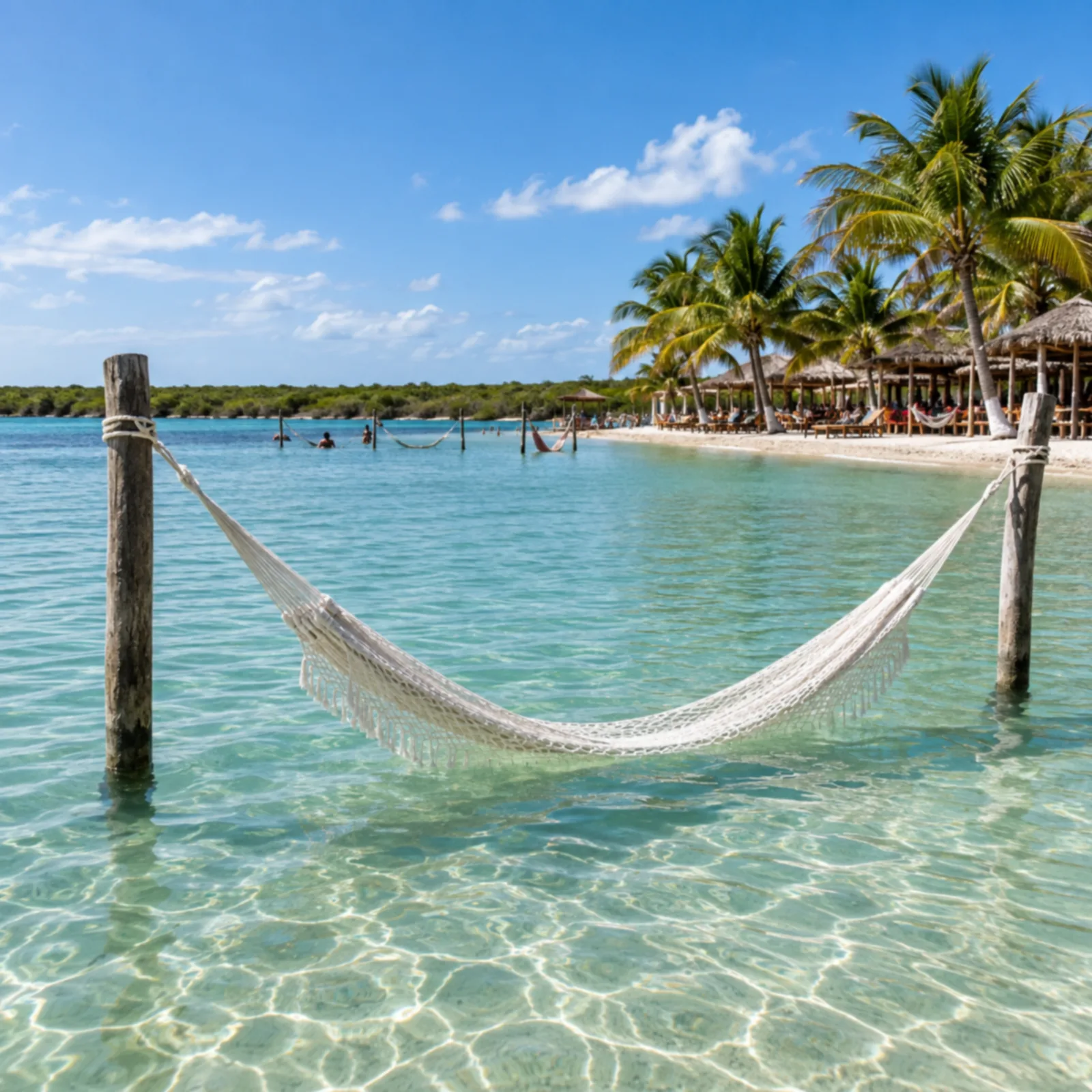
The buggy driver picks up the group at the inn between 9 am and 10 am and heads east along the beach. The first stop is the Árvore da Preguiça (Lazy Tree), a mangrove tree that grows bent over by the wind. Next comes Praia do Preá, a kitesurfing spot about 12 km from the village. The route continues to Buraco Azul, a pool of blue rainwater, and to the Jijoca lagoons. Lagoa do Paraíso is the longest stop, with lunch, hammocks in the water and swimming. Lagoa Azul is right next to it, and at some points you reach the swimming area by sailing raft (jangada). The Lagoas do Amâncio are included when they have water, usually after the rains. The return is through the National Park's dunes. The buggy carries up to 4 passengers plus the driver.
Stops: Árvore da Preguiça, Praia do Preá, Buraco Azul, Lagoa Azul, Lagoa do Paraíso, Lagoas do Amâncio.
Includes: Buggy with driver for up to 4 people, with pick-up at your inn. Food, drinks and entry to Buraco Azul and the beach clubs are not included.
Tip: Buraco Azul charges about R$ 40 per person. At Lagoa do Paraíso the shore is open to all, but the beach clubs charge entry or a minimum spend. Agree on the stops with your buggy driver before setting off.
Best time: May to October, when the lagoons are full
Agencies that run it: Sim7 Viagens, Loucos por Jeri Turismo.
R$450 to R$500 · per buggy (up to 4 people), private tourThis is the same east-side itinerary, done in a jardineira: a 4x4 pickup with benches in the back, shared with other visitors. Departure is between 9 am and 10 am, with pick-up at the village inns. The vehicle passes Árvore da Preguiça and Praia do Preá, continues to Lagoa Azul and ends the outward leg at Lagoa do Paraíso, where it stops for swimming and lunch. Some agencies include Buraco Azul or the Lagoas do Amâncio, when they have water. The return is along the tracks between the National Park's dunes. Groups have up to about 10 people. Time at each stop is fixed, since the group travels together.
Stops: Árvore da Preguiça, Praia do Preá, Lagoa Azul, Lagoa do Paraíso, Buraco Azul.
Includes: Transport in a shared 4x4 jardineira, with pick-up at your inn in the village. Food, drinks and entry to the beach clubs and Buraco Azul are not included.
Tip: It is the most affordable option if you are travelling alone or as a couple. If you want more time at Lagoa do Paraíso, you can book just the round-trip transfer to the lagoon.
Best time: May to October
Agencies that run it: Sim7 Viagens.
R$80 to R$120 · per person, shared tourThe buggy leaves the village along the beach, heading west, and enters the National Park. At Guriú, the vehicle crosses the river by ferry. On the riverbank there is an optional boat stop to see seahorses in the mangroves. Mangue Seco has roots exposed in the sand, with swings and hammocks for photos. Then the buggy crosses the shifting dunes of Tatajuba, where you can slide down on a board (esquibunda) or a water slide into a shallow lagoon, both paid separately. The main stop is at Lago Grande, also called Lagoa de Tatajuba, with hammocks in the water and fish stalls. Some routes pass Vila Velha de Tatajuba, an old fishing village buried by the dunes; the residents rebuilt their homes on the other side of the river. The return is along the beach.
Stops: Praia do Mangue Seco, Rio Guriú, Tatajuba dunes, Lago Grande, Vila Velha de Tatajuba, Lagoa da Torta.
Includes: Buggy with driver for up to 4 people, with pick-up at your inn. The ferry, seahorse boat, esquibunda (sliding down the dune seated on a board), water slide and food are paid separately.
Tip: Bring cash for the Guriú ferry (about R$ 30 to R$ 50 per buggy, round trip) and for the seahorse boat (about R$ 20 to R$ 30 per person).
Best time: May to October
Agencies that run it: Sim7 Viagens, Loucos por Jeri Turismo.
R$450 to R$550 · per buggy (up to 4 people), private tourThe west-side itinerary is also done in a shared 4x4 jardineira, with other visitors. The vehicle leaves the village along the beach, crosses the Rio Guriú by ferry and stops at Mangue Seco. If you like, you can take the seahorse boat at Guriú, paid separately. Then the group crosses the Tatajuba dunes and spends most of the afternoon at Lago Grande, with hammocks in the water and fish and seafood stalls. The driver sets the time at each stop for the whole group. The return is along the beach, in the late afternoon.
Stops: Rio Guriú, Praia do Mangue Seco, Tatajuba dunes, Lago Grande.
Includes: Transport in a shared 4x4 jardineira, with pick-up at your inn. The ferry, boat, dune attractions and food are paid separately.
Tip: At Lago Grande, lunch costs on average R$ 70 to R$ 200 per person. Check when booking whether the ferry is included.
Best time: May to October
Barrinha lies beyond Lagoa do Paraíso, to the east, in the municipality of Acaraú. It is an old fishing village partly buried by the dunes, with a lagoon between the sand hills. The outing is usually sold as an extension of the Litoral Leste tour: the buggy visits the Jijoca lagoons during the day and heads to the Barrinha dunes in the late afternoon to watch the sunset. Some agencies sell only the Barrinha circuit, without the east-side stops. The return to the village is after sunset.
Stops: Barrinha de Baixo, Lagoa da Barrinha, Barrinha dunes.
Includes: Transport with driver and pick-up at your inn. Food and beach club entry are not included.
Tip: Ask the agency what time you leave the dunes after sunset and confirm whether the price includes the east-side stops.
Best time: May to October
Agencies that run it: Sim7 Viagens, Loucos por Jeri Turismo.
Lagoa do Paraíso (lagoon) is in the municipality of Jijoca de Jericoacoara, about 20 km from the village, and can only be reached by 4x4. It is a freshwater lagoon, warm and calm, fed by rainwater and the water table. The shore is open to the public. Restaurants and beach clubs rent out tables, umbrellas and hammocks in the water; some charge entry or day use. You can rent stand-up paddleboards and kayaks. Lagoa Azul is next to it and smaller. If you don't want the full east tour, you can book just the round-trip transfer and spend the day at the lagoon.
Stops: Lagoa do Paraíso, Lagoa Azul.
Includes: Round-trip transfer, depending on the agency. Food and beach club entry are not included.
Tip: At the larger beach clubs, day use starts at about R$ 60 per person. Smaller restaurants charge only for what you consume.
Best time: all year; windier from July to January
Pedra Furada (Pierced Rock) is a rock arch carved by the sea, about 3 km east of the village. There are two routes. Along Praia da Malhada, by the sea, it takes about 30 minutes, but that stretch can only be passed at low tide. Over Morro do Serrote, the trail takes 40 to 50 minutes and can be done at any tide; it starts at the end of Rua do Forró. There are rocky sections along the way. In July the sun sets right inside the arch, as seen from the sand. Cart drivers take visitors from the village to the top of the Serrote, and the last part is on foot.
Stops: Praia da Malhada, Morro do Serrote, Pedra Furada.
Includes: There is no charge for the trail.
Tip: Check the tide table before you set out and wear closed shoes. Bring water; no drinks are sold along the way.
Best time: July, to see the sun inside the rock; all year for the trail
The Duna do Pôr do Sol (Sunset Dune) is to the left of Praia Principal, a few minutes' walk from the village center. In the late afternoon, visitors climb the dune or stay on the beach to watch the sun set over the sea, something few places on the Brazilian coast offer. The dune has lost height in recent decades: it was about 60 m tall in 1975 and under 10 m in 2024, according to experts. After sunset there is often a capoeira circle on the beach. The bars of Praia Principal are just a few metres away.
Stops: Duna do Pôr do Sol, Praia Principal.
Includes: There is no charge.
Tip: Check the day's sunset time on your phone, as it changes through the year. Don't run down the dune, to avoid speeding up erosion.
Best time: all year; less rain from July to December
Serrote is the hill east of the village. Trails climb to the Farol do Serrote (lighthouse) at the top, with views of the village, the sea and the National Park's dunes. It is the same path that leads to Pedra Furada at high tide. The walk starts at the end of Rua do Forró and climbs over sand and rock. Late afternoon is the most popular time, for the light and the cooler temperature. From the top you can watch the sun set over the sea, west of the village. Cart drivers take visitors from the village up the Serrote if you'd rather not walk.
Stops: Morro do Serrote, Farol do Serrote.
Includes: There is no charge.
Tip: Bring a flashlight for the walk down after sunset and wear closed shoes.
Best time: July to December
Praia da Malhada (beach) is right next to the village, to the east, and you can walk there. It is calmer than Praia Principal and has rock formations. At low tide, natural pools appear among the rocks. The beach is also popular for surfing. It is the first stretch of the seaside path to Pedra Furada, about 3 km from the village. It lies at the foot of Morro do Serrote and attracts those who want a beach without the bars and bustle of Praia Principal. At high tide, the strip of sand narrows and the rocks are covered.
Stops: Praia da Malhada.
Includes: There is no charge.
Tip: Go at low tide to see the pools and to continue along the sand to Pedra Furada.
Best time: all year
In Guriú, west of the village, boatmen take visitors by canoe through the river's mangroves to look for seahorses. You leave from the riverbank, where the buggy stops before crossing by ferry. The outing is part of the Litoral Oeste itinerary and is paid separately. Nearby is Mangue Seco, a stretch of mangrove buried by sand, with exposed roots, swings and hammocks for photos, and stalls serving crab dishes. ICMBio lists the canoe trip on the Rio Guriú among the National Park's activities.
Stops: Rio Guriú, Praia do Mangue Seco.
Includes: Boat with boatman.
Tip: Seahorses don't always show up. Don't touch the animals.
Best time: all year
Praia do Preá (beach) is about 12 km from the village, in the municipality of Cruz, on the edge of the National Park. It is one of Ceará's kitesurfing and windsurfing spots, with schools, equipment rental and inns geared to the sport. The wind is steady from July to January, and August is the strongest month, with up to 35 to 40 knots in the afternoon. There are also windsurfing and kite schools on Praia Principal in Jericoacoara. Beginners usually need 8 to 10 lessons to ride on their own.
Stops: Praia do Preá, Praia Principal.
Includes: Instructor and equipment, depending on the school.
Tip: Book lessons in advance from August to November, when the schools fill up.
Best time: July to January (peak August to November)
Agencies offer the Litoral Leste and Litoral Oeste itineraries by quad bike, for up to 2 people per vehicle. You follow a guide along the beach and the sand tracks. On the east side, the route passes Árvore da Preguiça, Praia do Preá, Lagoa Azul and Lagoa do Paraíso, returning along the National Park's tracks. On the west side, it includes the Rio Guriú ferry, which costs about R$ 35 per quad bike. Departure is between 9 am and 11 am, with pick-up at your inn.
Stops: Árvore da Preguiça, Praia do Preá, Lagoa Azul, Lagoa do Paraíso.
Includes: Quad bike for up to 2 people and guide. Food, drinks and admission fees are not included.
Tip: Check with the agency whether you need a driver's license to ride.
Best time: May to October
Agencies that run it: Loucos por Jeri Turismo.
R$450 to R$550 · per quad bike (up to 2 people)The Litoral Leste and Litoral Oeste itineraries are also sold in an enclosed, air-conditioned 4x4 pickup for a family group. The SW4 seats up to 6 passengers. The stops are the same as by buggy: on the east side, Árvore da Preguiça, Praia do Preá and the Jijoca lagoons; on the west side, Rio Guriú, Mangue Seco, the Tatajuba dunes and Lago Grande. It is the option for those travelling with young children or who prefer not to be exposed to sun and wind on the way.
Stops: Lagoa do Paraíso, Lagoa Azul, Tatajuba, Lago Grande.
Includes: 4x4 vehicle with driver and pick-up at your inn. Food, the ferry and admission fees are not included.
Tip: Buggies have no child seats; for young children, a pickup is the alternative.
Best time: May to October
Agencies that run it: Loucos por Jeri Turismo.
R$600 to R$750 · per 4x4 vehicle (4 to 6 people), private tourCamocim lies west of Jericoacoara, about 1h15 to 1h30 by car. The coastal route passes Guriú and the Tatajuba dunes, home to Lagoa da Torta (lagoon), with hammocks in the water and fish stalls. In Camocim, a ferry crosses the Rio Coreaú to Ilha do Amor (island), with a beach, dunes and freshwater lagoons. This stretch is also part of the Rota das Emoções 4x4 transfer between Jericoacoara and Piauí, which crosses the Rio Coreaú by ferry.
Stops: Tatajuba, Lagoa da Torta, Camocim, Rio Coreaú, Ilha do Amor.
Includes: Transport with driver, depending on the agency. The ferry and food are paid separately.
Tip: If you are heading on to the Delta do Parnaíba or the Lençóis, you can cover this stretch as part of the Rota das Emoções transfer.
Best time: May to October

Prices are estimates, checked in October 2026 with local operators, and may change with the season and the type of tour. Confirm with the operator before booking.
Day by day
Suggestions to plan the trip. Change the order of the days according to the weather and tour availability.
Arrive via Jericoacoara airport, in Cruz, or via Fortaleza, about 300 km away. From Jeri airport, the transfer to the village takes about 50 minutes. Pay the Taxa de Turismo Sustentável online beforehand. In the late afternoon, watch the sun set over the sea from the Duna do Pôr do Sol. Night in the village.
Do the Litoral Leste by buggy or jardineira: Árvore da Preguiça, Praia do Preá, Buraco Azul, Lagoa Azul and Lagoa do Paraíso, with lunch at the lagoon. Return in the late afternoon through the National Park's dunes. Night in the village.
Set off early on foot to Pedra Furada, along Praia da Malhada at low tide or over Morro do Serrote. Return to the village before lunch. In the afternoon, transfer to Jeri airport or to Fortaleza, about 5 hours.
Arrive via Jeri airport or Fortaleza. Stroll the village's sandy streets and watch the sunset from the Duna do Pôr do Sol. Afterwards, catch the capoeira circle on Praia Principal. Night in the village.
Buggy or jardineira along the Litoral Leste: Árvore da Preguiça, Praia do Preá, Buraco Azul and Lagoa do Paraíso. In the months after the rains, include the Lagoas do Amâncio. Night in the village.
In the morning, walk to Pedra Furada along Praia da Malhada at low tide. Free afternoon in the village. At the end of the day, climb Morro do Serrote to the lighthouse for views of the village and the dunes. In July, swap the Serrote for the sunset inside Pedra Furada. Night in the village.
Buggy along the Litoral Oeste: ferry across the Rio Guriú, seahorse boat, Mangue Seco, the Tatajuba dunes and an afternoon at Lago Grande, with a fish lunch. Return along the beach in the late afternoon. Night in the village.
If your flight is in the evening, do the Extremo Leste with sunset at Barrinha the day before and keep the morning for a kitesurfing lesson in Preá, from July to January. Transfer to Jeri airport or to Fortaleza.
Arrive via Fortaleza or Jeri airport. Pay the Taxa de Turismo Sustentável online. Late afternoon at the Duna do Pôr do Sol and dinner in the village. Night in Jericoacoara.
Litoral Leste by buggy, with Árvore da Preguiça, Praia do Preá, Buraco Azul, Lagoa Azul and Lagoa do Paraíso. If you like, add the sunset at the Barrinha dunes. Night in Jericoacoara.
Litoral Oeste: ferry across the Rio Guriú, seahorses, Mangue Seco, the Tatajuba dunes and Lago Grande. Return along the beach in the late afternoon. Night in Jericoacoara.
Walk to Pedra Furada at low tide and spend the afternoon at Lagoa do Paraíso or at a kitesurfing lesson in Preá. Book the next day's transfer to Barreirinhas. Night in Jericoacoara.
Leave Jericoacoara early on the Rota das Emoções transfer to Barreirinhas, in Maranhão. The trip takes about 7 to 8 hours, with a ferry crossing of the Rio Coreaú in Camocim and a stretch through Piauí. Night in Barreirinhas.
In the morning, the Circuito Lagoa Azul by 4x4, returning around 1 pm. In the afternoon, the Circuito Lagoa Bonita, with a dune climb and sunset over the Lençóis. Night in Barreirinhas.
Van, bus or car from Barreirinhas to São Luís, about 4 hours. For late-afternoon flights, leave Barreirinhas in the morning.
Best time to go
From July to January, when the wind is strong and steady for kitesurfing and windsurfing and rain is rare. The lagoons are fullest in the middle of the year, after the rains, which run from February to May. If you don't practice wind sports, June to August combines full lagoons and less wind.
The seasons shown are the most usual ones; nature doesn't always follow the calendar.
Low lagoons · Moderate wind
Rains return during the month; average of 114 mm in Acaraú. The lagoons between the dunes are still low. End of the wind season. Vacation high season, with a packed village and high prices.
Lagoons filling · Light wind
A rainy month, averaging 173 mm. The lagoons between the dunes start to form. Little wind. Carnival brings high demand.
Lagoons filling · Light wind
Peak of the rains, averaging 321 mm. Heavy showers and lagoons filling up. Little wind. Low season, with lower prices.
Full lagoons · Light wind
Still very rainy, averaging 309 mm. The lagoons between the dunes are full. Little wind. Low season.
Full lagoons · Light wind
Rains ease, averaging 142 mm. The Lagoas do Amâncio and the lagoons between the dunes are full. Little wind and a quieter village.
Full lagoons · Light wind
End of the rainy season, averaging 65 mm. Full lagoons. Less wind. The cheapest month before the July vacation.
Full lagoons · Strong wind
Almost no rain, averaging 25 mm. Full lagoons. The wind and kitesurfing season begins. The sun sets inside Pedra Furada. School vacation in Brazil and high prices.
Lagoons dropping · Strong wind
Dry, averaging 5 mm. The windiest month, with up to 35 to 40 knots in the afternoon. Kitesurfing season in Preá and the village. The lagoons start to drop.
Lagoons dropping · Strong wind
Dry, averaging 2 mm. Strong wind and kitesurfing season. The lagoons between the dunes are dropping; Lagoa do Paraíso still has water.
Low lagoons · Strong wind
Dry, averaging 2 mm. Strong wind and many foreign kitesurfers. The smaller lagoons get low by the end of the month.
Low lagoons · Strong wind
One of the driest months, averaging 3 mm. Strong wind. The lagoons between the dunes are low or dry.
Dry lagoons · Strong wind
Dry, averaging 15 mm. The wind is still strong. Lagoa Azul and Laguinho da Torta may be almost dry. High season from mid-month and New Year's Eve with a packed village.
Plan the journey
Jericoacoara Regional Airport is in Cruz, about 30 to 35 km from the village. In September 2026 it had scheduled flights by Latam and Gol from Guarulhos (São Paulo) and by Azul from Confins (Belo Horizonte); Fraport took over its operation in 2026. There are extra flights in high season. The other gateway is Fortaleza airport, about 300 km away, with flights from all over Brazil.
The transfer from the airport to the village takes about 50 minutes to 1 hour by 4x4, with about 20 km of asphalt and 12 km of track through the National Park, on the Praia do Preá side. There are shared and private transfers, booked through your inn, agencies or the airport desks.
R$70 to R$100 · per person, shared transfer from Jericoacoara airport to the village, one wayFrom Fortaleza, the Expresso Guanabara bus goes to Jijoca de Jericoacoara, where passengers switch to a 4x4 jardineira that drops them at their inn; the trip takes 7 to 8 hours. Agencies sell shared transfers with pick-up at the airport or hotel, by bus or van to Jijoca and jardineira for the last stretch, in about 5 to 6 hours. There are also direct 4x4 transfers, shared or private, taking about 5 hours.
R$115 to R$165 · per person, shared transfer from Fortaleza to Jericoacoara with a change to a jardineira in Jijoca, one wayFrom Fortaleza it is about 300 km on the CE-085 to Jijoca de Jericoacoara or to Praia do Preá. The last stretch is sand, unsigned, and calls for GPS. Visitors' cars may not drive inside the village: your car stays in the authorized parking lot at the village entrance, and a jardineira takes you to your inn. In June 2026, a day's parking at the village entrance cost about R$ 40.
Between Jijoca or Preá and the village, the route crosses dunes and tracks in the National Park. That is why the last stretch is done in 4x4 vehicles: pickups, buggies and jardineiras. If you arrive by bus, the jardineira is included in your ticket. If you arrive by car, leave it in the entrance parking lot and continue by jardineira.
You can buy a package with transfer and tours in advance, from Fortaleza or Jeri airport, or go on your own and book tours in the village. Agencies in the village and in Fortaleza sell transfers, buggy and jardineira tours and the Rota das Emoções transfer to the Delta do Parnaíba and the Lençóis Maranhenses. In high season, book ahead.
No need. In the village you get around on foot along the sandy streets, and tours leave with a driver, with pick-up at your inn. A rental car only makes sense if you are combining other towns along the coast, and even then it stays in the entrance parking lot during your stay.
The Jijoca de Jericoacoara town hall charges the Taxa de Turismo Sustentável (sustainable tourism fee) to visitors to the village. The amount covers up to 10 days; each extra day costs R$ 4.15. You can issue it online in advance on the town hall website, or pay at the service points at the entrance to the town and at the village entrance.
R$41.50 · per person, valid for up to 10 days · official pricePrices are estimates, checked in October 2026 with local operators, and may change with the season and the type of tour. Confirm with the operator before booking.
Who takes you
Only agencies with an active registration in Cadastur, the official registry of Brazil's Ministry of Tourism, are listed. The order is not a ranking: compare the tours and book directly with the agency.
Cidade Turismo reviews its information regularly, but something may have changed. Check with the place before planning your trip.
Scheduled transfers from Fortaleza to Jericoacoara and from Jeri airport to the village, plus tours of the east and west coasts. The website shows the same number as both its CNPJ (company registration) and Cadastur.
Tours: Litoral Leste buggy tour, Litoral Leste tour in a shared jardineira, Litoral Oeste and Tatajuba buggy tour, Extremo Leste and sunset at Barrinha.
Cadastur checked in October 2026
Fortaleza-based inbound agency with shared and private transfers from Fortaleza to Jericoacoara. It also advertises buggy tours in Jericoacoara.
Cadastur checked in October 2026
Shared transfers between Jericoacoara village and Fortaleza airport, by jardineira to Jijoca and Hilux 4x4 to Fortaleza.
Cadastur checked in October 2026
Located on the village's Rua Principal. It runs transfers from Fortaleza and Jeri airport, and to Barreirinhas, Barra Grande and the Delta do Parnaíba, plus tours of the east and west coasts and Barrinha.
Tours: Litoral Leste buggy tour, Litoral Oeste and Tatajuba buggy tour, Extremo Leste and sunset at Barrinha, Quad bike tour, Private 4x4 tour (Hilux or SW4).
Cadastur checked in October 2026
Your base to explore
Before you go
A little planning leaves more time to enjoy the journey.
From July to January, when the wind is strong and steady for kitesurfing and windsurfing and rain is rare. The lagoons are fullest in the middle of the year, after the rains, which run from February to May. If you don't practice wind sports, June to August combines full lagoons and less wind.
The seasons shown are the most usual ones; nature doesn't always follow the calendar.
Plan 4 to 5 days: one for the east tour, with the lagoons and Pedra Furada; one for the west tour, to Tatajuba; and the rest for the beach, the sunset and, if you like, kitesurfing lessons. If you continue along the Rota das Emoções, you need another week for the Parnaíba Delta and Lençóis Maranhenses.
Most pousadas (guesthouses) and restaurants are inside the village of Jericoacoara, where you can do everything on foot. If you are going to kitesurf, Praia do Preá, in Cruz, has pousadas facing the wind areas. Jijoca, outside the park, has simpler options and is close to the lagoons.
Take your trash with you, follow the signs and support local businesses. In natural areas, follow the visiting guidelines.
Beyond the guide
Your questions
A vila fica dentro de um parque nacional, e carros comuns não entram. De Jijoca, o trecho final, de cerca de 20 km em areia, é feito em jardineira, 4x4 ou buggy. Quem vai de carro próprio deixa o veículo em estacionamento autorizado. Do aeroporto de Cruz e de Fortaleza, há transfers que já incluem a troca de veículo.
Sim. A prefeitura de Jijoca cobra a Taxa de Turismo Sustentável de todos os visitantes da vila. O pagamento pode ser feito pelo site oficial da prefeitura, antes da viagem, ou nos postos de atendimento na entrada. A taxa cobre um período de dias e é cobrada por dia adicional depois dele.
O passeio leste passa pela Pedra Furada, pela Lagoa do Paraíso, pela Lagoa Azul e pelo Buraco Azul. O passeio oeste cruza dunas e rios até Tatajuba e a Lagoa da Torta. Os dois são feitos de buggy ou 4x4, com motorista credenciado, e ocupam boa parte do dia.
De julho a janeiro, quando os ventos alísios sopram forte e constante, com o pico entre setembro e novembro. Jericoacoara, a Praia do Preá e as praias de Itarema e Acaraú têm escolas e aluguel de equipamento, e as lagoas de água rasa são boas para quem está aprendendo.
O ponto tradicional é a Duna do Pôr do Sol, na beira da vila, onde as pessoas se reúnem no fim da tarde. Outra opção é caminhar até a Pedra Furada, que em parte do ano fica alinhada com o sol poente. Para chegar à Pedra Furada pela praia, confira a tábua de maré: só dá para passar na maré baixa.
Não, por enquanto. A concessão do parque prevê um ingresso cobrado pela concessionária, mas a cobrança está suspensa por decisão judicial desde dezembro de 2024. Em 2026, a única taxa em vigor é a Taxa de Turismo Sustentável da prefeitura.
Não. A circulação de carros particulares dentro da vila é restrita. O carro fica no estacionamento autorizado na entrada da vila, e uma jardineira leva o visitante até a pousada. O trânsito de veículos sobre as dunas também é proibido pelo ICMBio fora das rotas usadas pelos passeios.
O Aeroporto Regional de Jericoacoara, em Cruz, a cerca de 30 a 35 km da vila. Em setembro de 2026 recebia voos regulares de Guarulhos (Latam e Gol) e de Confins (Azul). Do aeroporto, o traslado em 4x4 leva cerca de 50 minutos. A alternativa é voar para Fortaleza, a cerca de 300 km, e seguir de traslado ou ônibus.
Não. O buggy privativo é cobrado por veículo e leva até 4 passageiros. Em 2026, o Litoral Leste custa de R$ 450 a R$ 500 por buggy, e o Litoral Oeste, de R$ 450 a R$ 550. Quem viaja sozinho ou em dupla pode fazer o passeio em jardineira compartilhada, cobrado por pessoa. Entradas, balsa e alimentação são pagas à parte.
O leste vai para as lagoas de Jijoca: Árvore da Preguiça, Praia do Preá, Buraco Azul, Lagoa Azul e Lagoa do Paraíso. O oeste vai para o Rio Guriú, com balsa e cavalos-marinhos, para o Mangue Seco, para as dunas de Tatajuba e para o Lago Grande. Os dois duram cerca de 6 horas e saem pela manhã.
Sim. Pela posição da costa, em Jericoacoara o sol se põe no mar, visto da Praia Principal e da Duna do Pôr do Sol. Em julho, quem está na areia diante da Pedra Furada vê o sol se pôr dentro do arco da pedra.
Sim. São cerca de 3 km. Pela Praia da Malhada, a caminhada leva cerca de 30 minutos, mas só com a maré baixa. Pelo Morro do Serrote, leva de 40 a 50 minutos e pode ser feita com qualquer maré. Use calçado fechado e leve água.
Depende do objetivo. Para as lagoas entre as dunas cheias, vá de maio a agosto, logo depois das chuvas. Para o kitesurfe, de julho a janeiro, com vento mais forte de agosto a novembro. De fevereiro a abril chove mais e os preços caem. Julho, dezembro e janeiro são os meses mais cheios.
Sim. É a Rota das Emoções. Agências da vila fazem traslado de Jericoacoara até Barreirinhas, no Maranhão, em cerca de 7 a 8 horas, passando por Camocim e pelo Piauí. Também há traslado até o Delta do Parnaíba, em cerca de 6 horas. A volta costuma ser por São Luís.
Brazilian routes
From the coast of Jericoacoara to the Parnaíba Delta and the Lençóis Maranhenses, through fourteen municipalities.
Brazilian routes
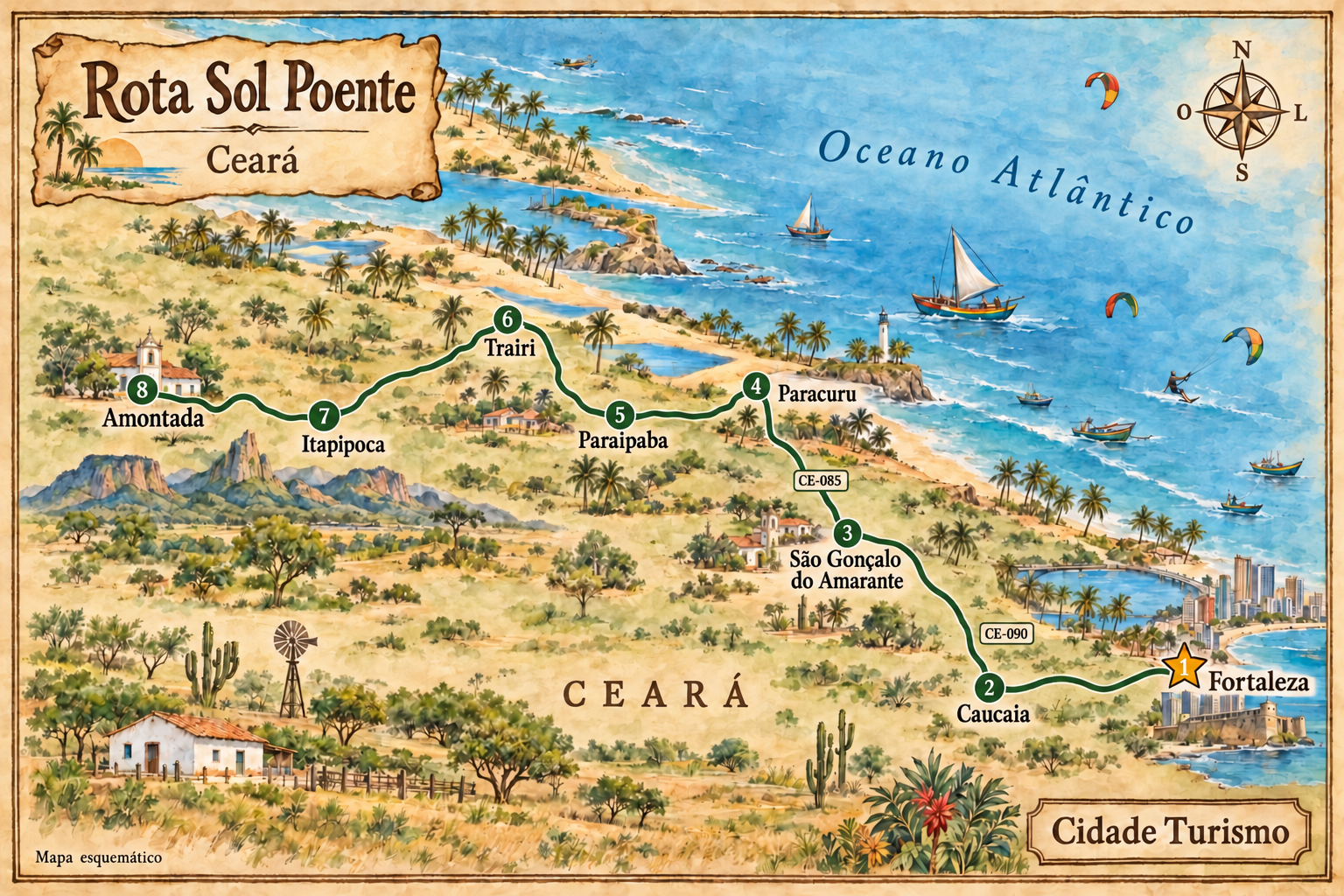
From Fortaleza to Amontada, the western coast of Ceará combines dunes, fishing villages and estuaries, with access to Cumbuco, Taíba, Lagoinha and Flecheiras.