

 Antarctica
 Argentina
 Bolivia
 Chile
 Colombia
 Ecuador
 Falkland Islands (Malvinas)
 French Guiana
 Guyana
 Paraguay
 Peru
 Suriname
 Uruguay
 Venezuela
 Austria
 Belgium
 Croatia
 Denmark
 Finland
 France
 Germany
 Greece
 Hungary
 Iceland
 Ireland
 Italy
 Luxembourg
 Norway
 Poland
 Portugal
 Slovakia
 Slovenia
 Spain
 Sweden
 Switzerland
 the Czech Republic
 the Netherlands
 the United Kingdom
 Turkey
 Bermuda
 Canada
 Greenland
 Mexico
 Saint Pierre and Miquelon
 the United States
 the Dominican Republic
 Japan
 Egypt
 South Africa
 Australia
 Fiji
 New Zealand
 Papua New Guinea
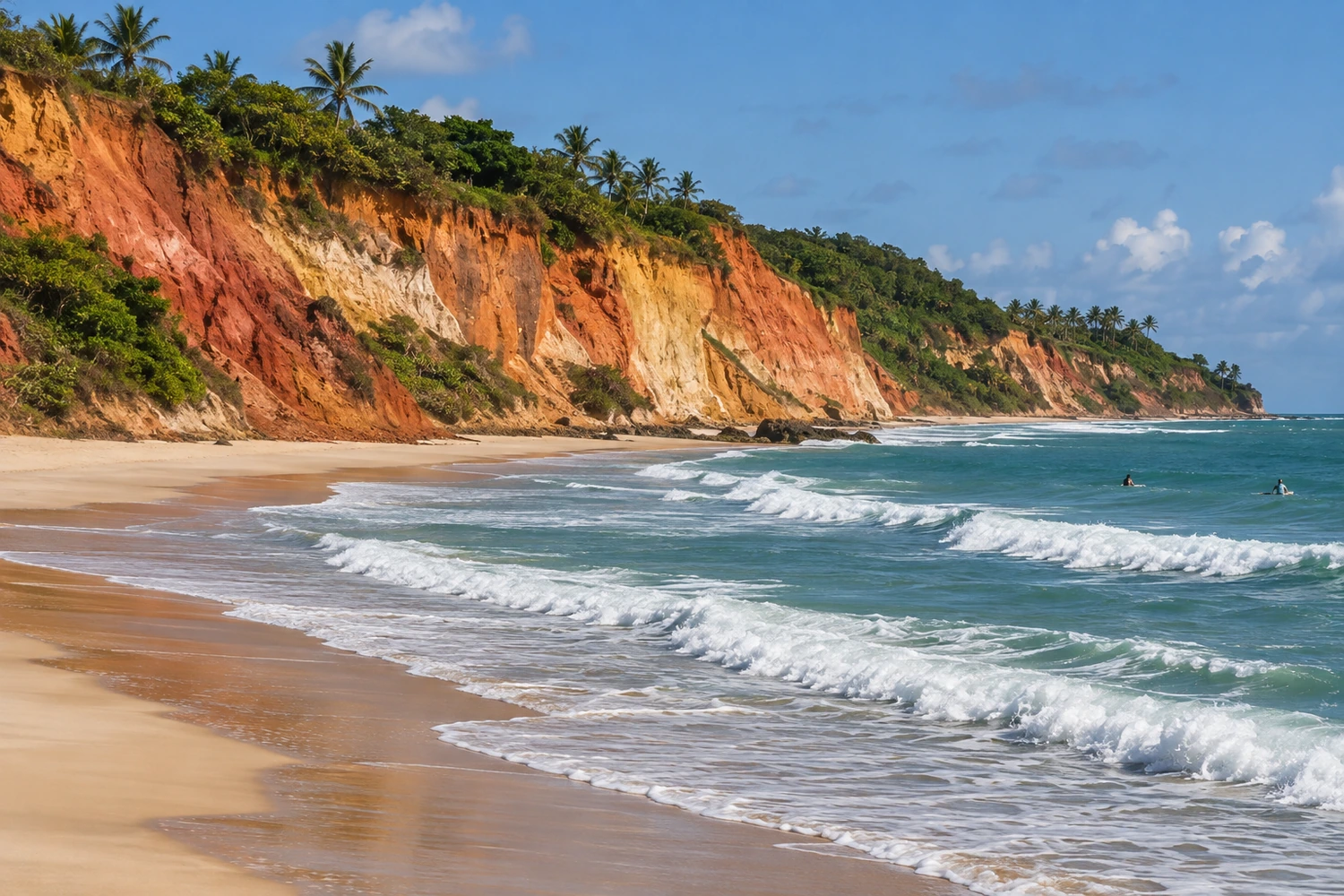
beach · Passo de Camaragibe, AL
Praia dos Morros
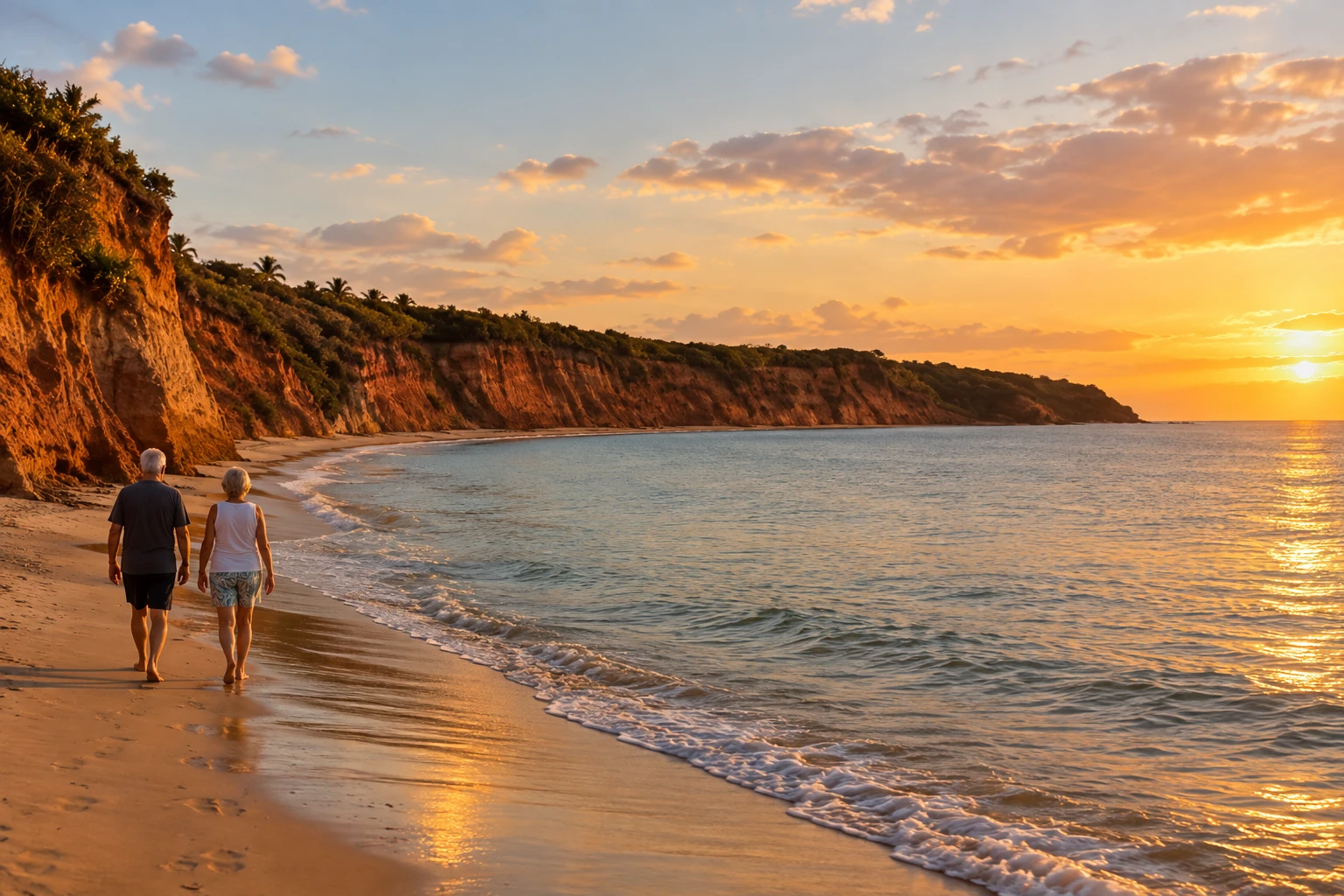
Reached by crossing the Rio Camaragibe (river) by canoe from Barra, it has cliffs and waves popular with surfers. This stretch is more isolated than the neighboring beaches.
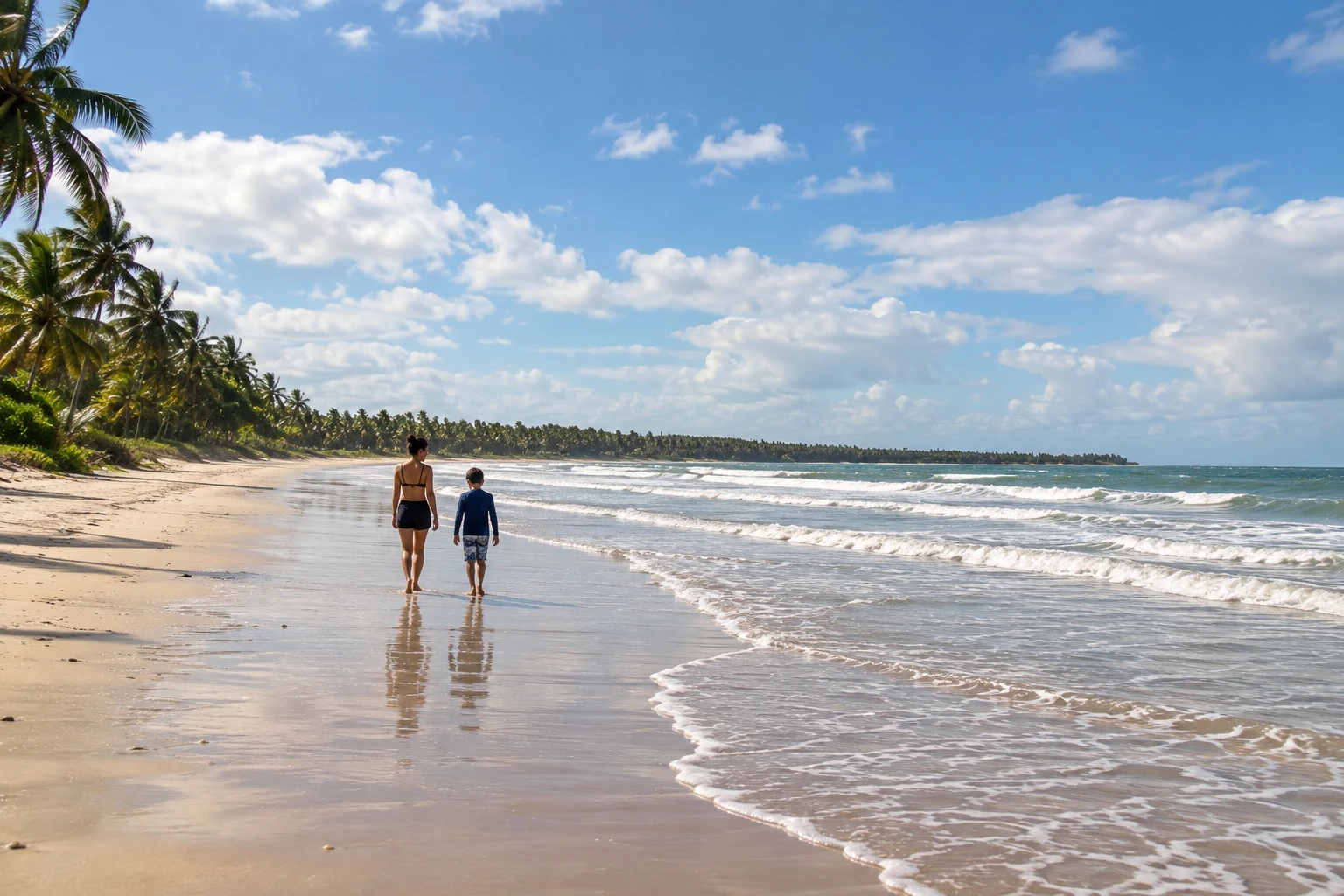
Illustrative images. The pictures in this guide are illustrations based on the real place, not photographs, and may differ from it.


A look at the place
Praia dos Morros in pictures
These pictures are illustrations based on the real place, not photographs. They may differ from the place.
Click the picture to enlarge it.
Discover
About Praia dos Morros
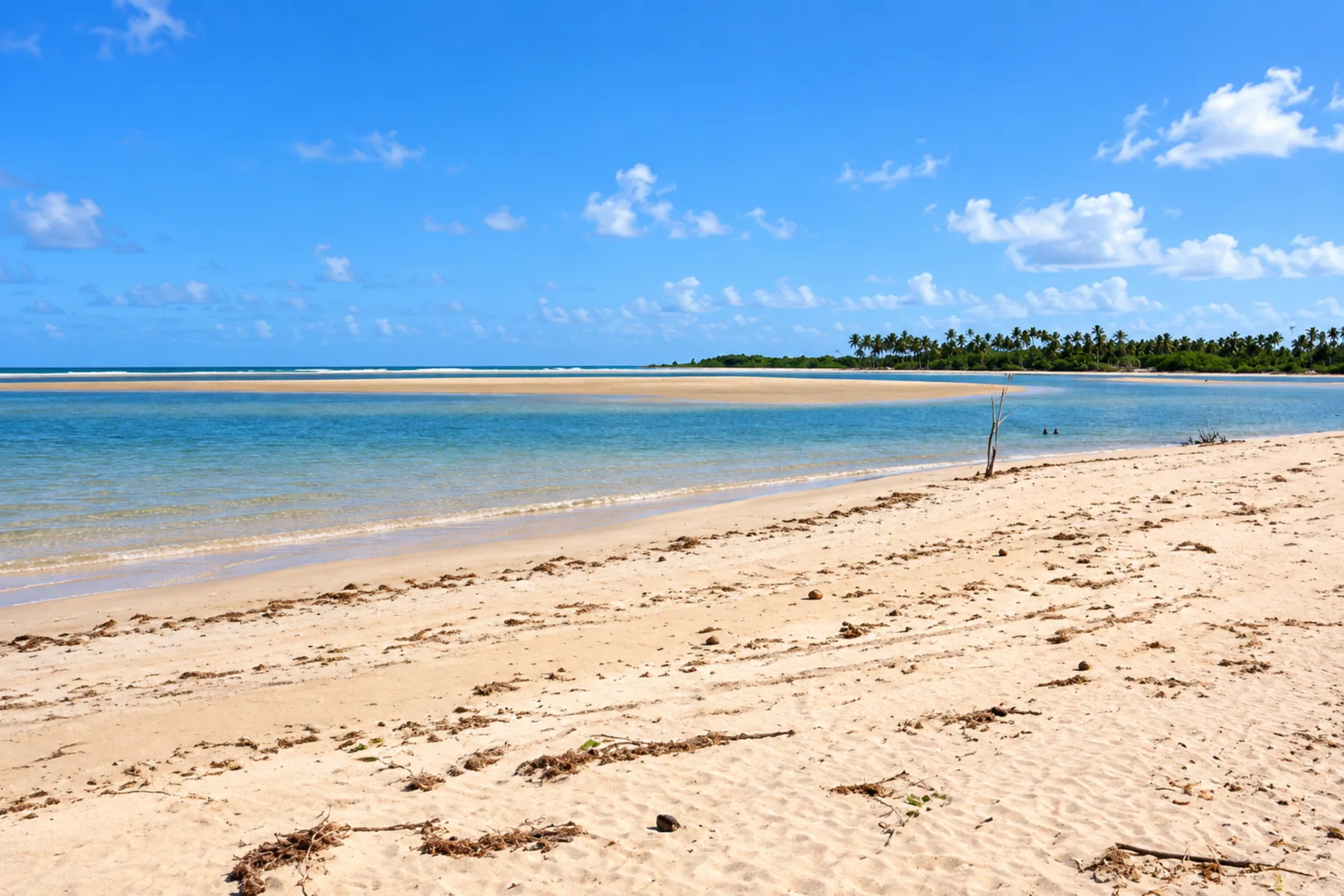
Praia dos Morros (beach) is in Passo de Camaragibe, on the north coast of Alagoas, across the Rio Camaragibe (river) from Barra de Camaragibe. It is considered one of the most unspoiled and least visited stretches of the Rota Ecológica dos Milagres, and it is usually almost deserted.
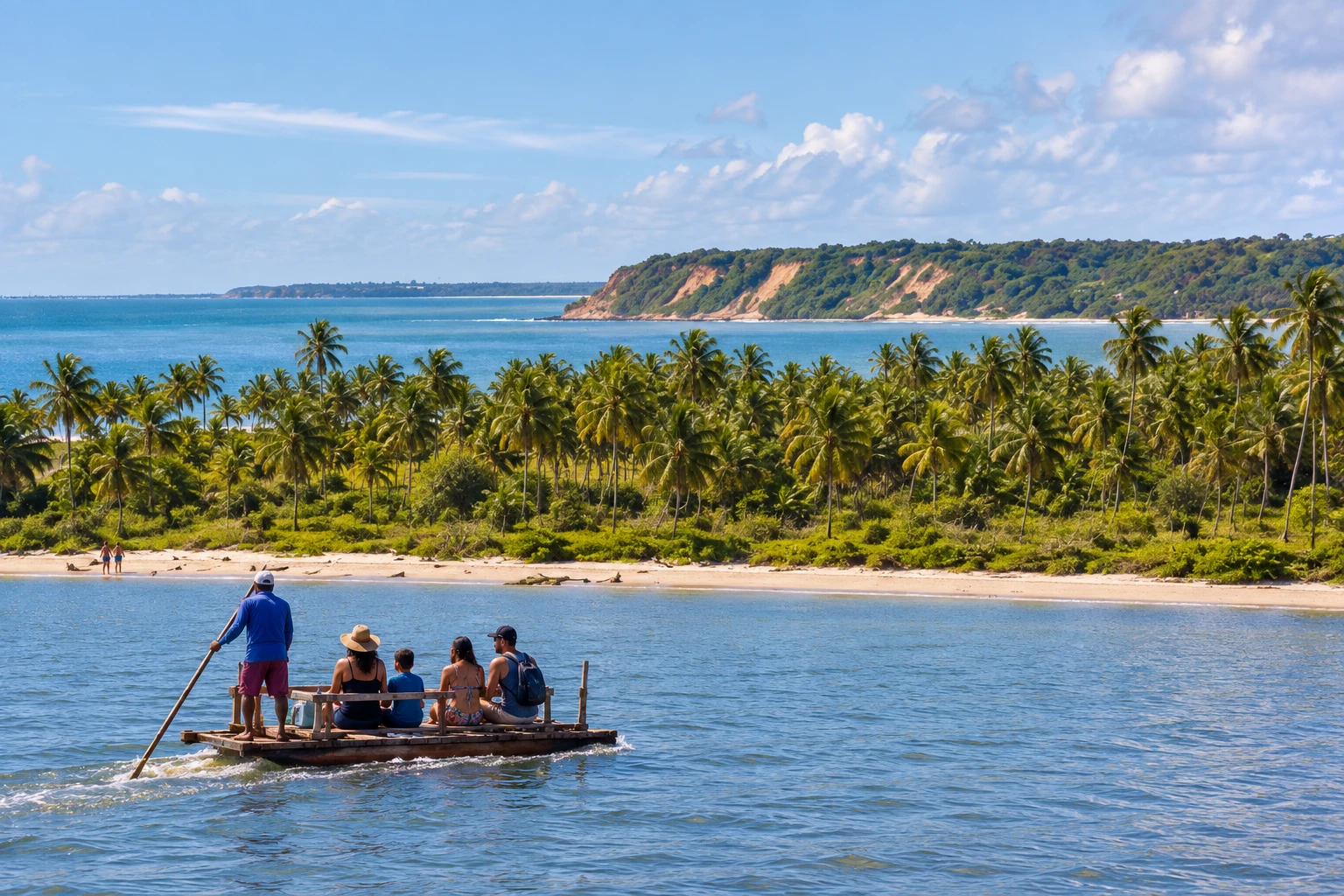
The most common way to get there is to cross the river by jangada (raft) or canoe from Barra. The crossing is short and, on the other side, a walk along a trail through the coconut grove leads to the beach. There is also access via unmarked dirt roads, less practical if you don't know the region.
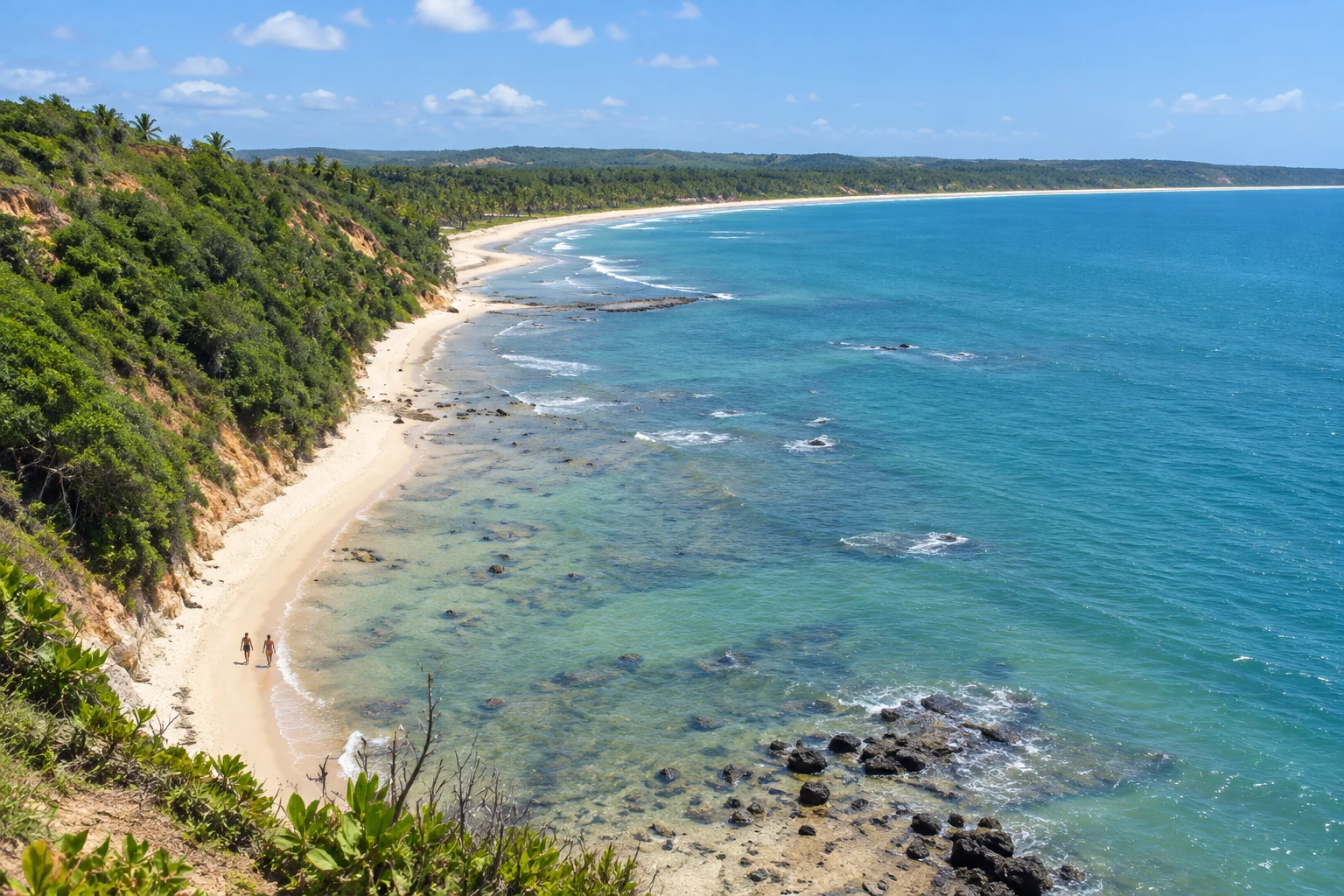
At the northern end is the river mouth. Heading south, you find an extensive coconut grove, dark rocks on the sand, colorful cliffs and the hills (morros) that give the beach its name. Among the rocks, pools with little fish form, like small aquariums. There are patches of Atlantic Forest and restinga (coastal scrub), within the Costa dos Corais Environmental Protection Area.
Facilities are minimal or nonexistent: don't count on a restaurant or beach stall. It is an outing for those who enjoy wild beaches and don't mind walking on sand and trails.
Before you go
Practical information
Cidade Turismo reviews its information regularly, but something may have changed. Check with the place before planning your trip.
How much time to set aside
Set aside half a day or a full day, counting the crossing, the trail and time on the beach.
Best time
From September to March, the drier season; go in the morning, in daylight, so you have time to walk and get back before late afternoon.
How to get there
Start from Barra de Camaragibe, a district of Passo de Camaragibe on the north coast of Alagoas, reached via the AL-101. At the riverside, arrange the jangada or canoe crossing with the boatmen and, on the other side, follow the trail through the coconut grove to the beach.
Tip
Bring water, snacks, sunscreen and something for shade, because the beach has no facilities. Agree on the return time with the boatman.
Your questions
Frequently asked questions about Praia dos Morros
How do I get to Praia dos Morros?
The most common way is to cross the Rio Camaragibe (river) by jangada (raft) or canoe from Barra de Camaragibe and then follow a trail through the coconut grove to the beach.
Does the crossing to Praia dos Morros take long?
No. The river crossing is short, just a few minutes. On the other side, there is still a walk along the trail to the beach.
Is there a restaurant or beach stall at Praia dos Morros?
Facilities are minimal or nonexistent. Bring water, food and something for shade.
Why is it called Praia dos Morros?
Because of the hills (morros) and cliffs along the beach, south of the mouth of the Rio Camaragibe.
Does Praia dos Morros get crowded?
It is usually almost deserted. It is one of the least visited stretches of the Rota Ecológica dos Milagres, because access is harder.