Região Turística da Fé

SP

Região Turística da Fé

Santuários, patrimônio e caminhos de peregrinação no Vale do Paraíba.

Sudeste

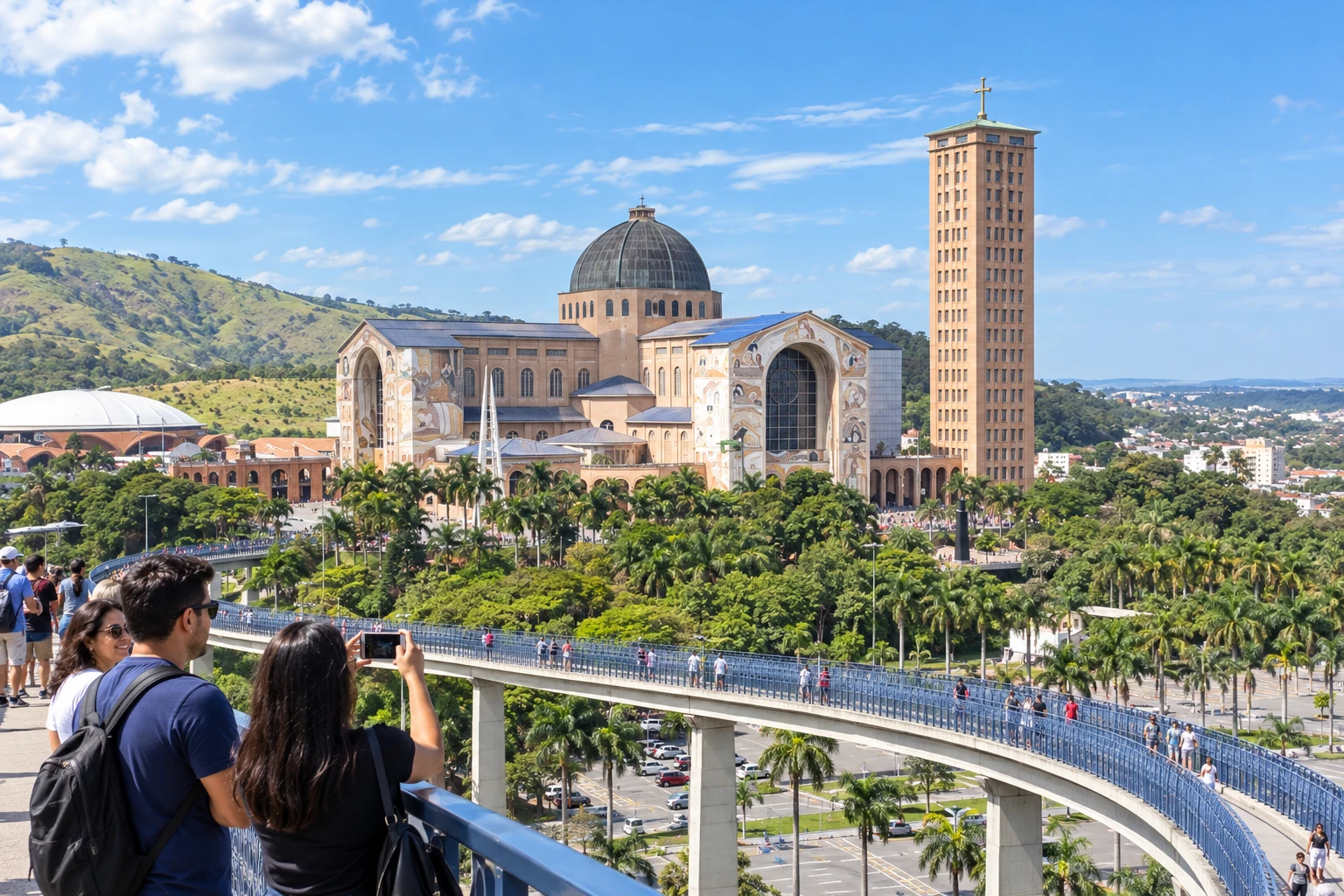
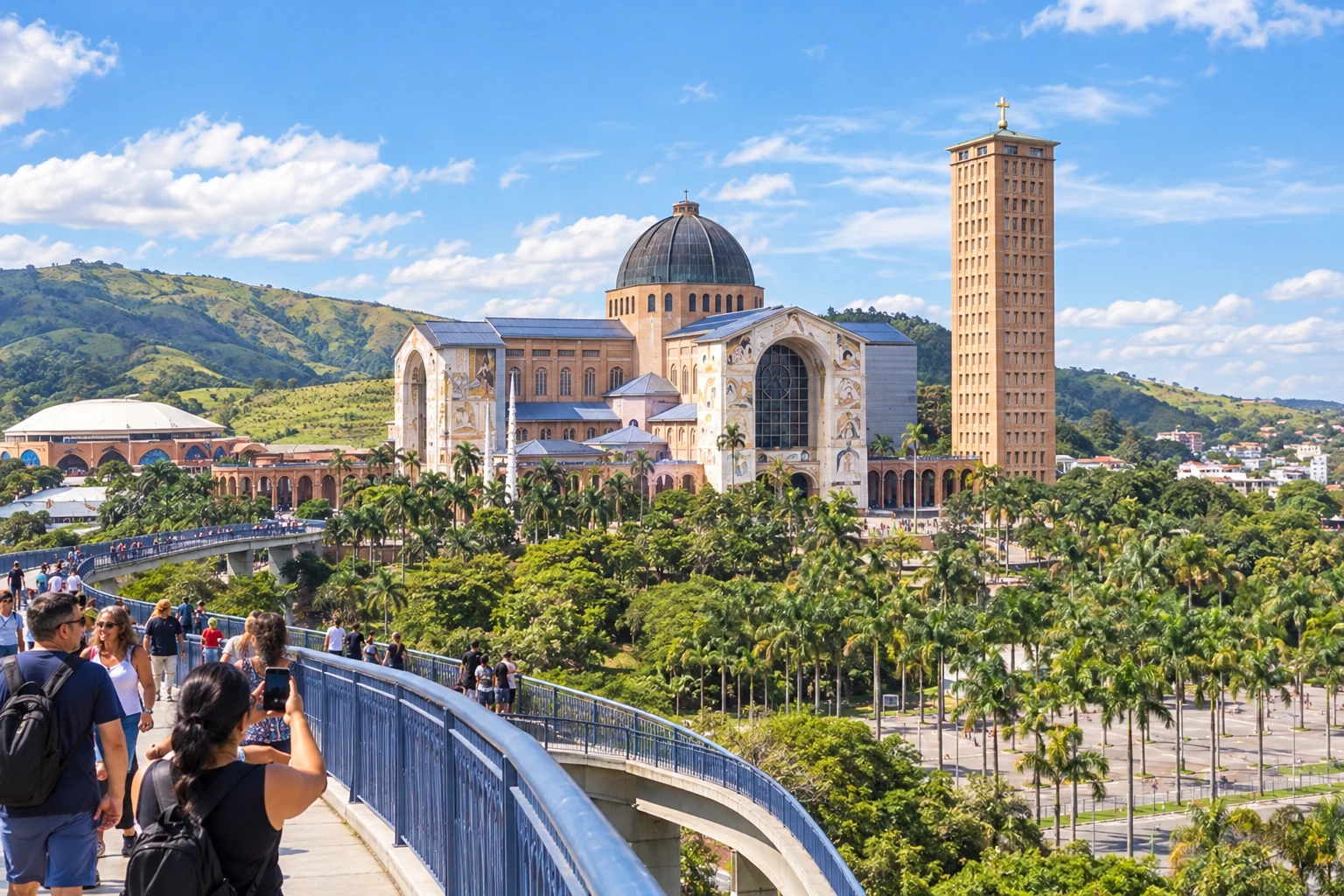
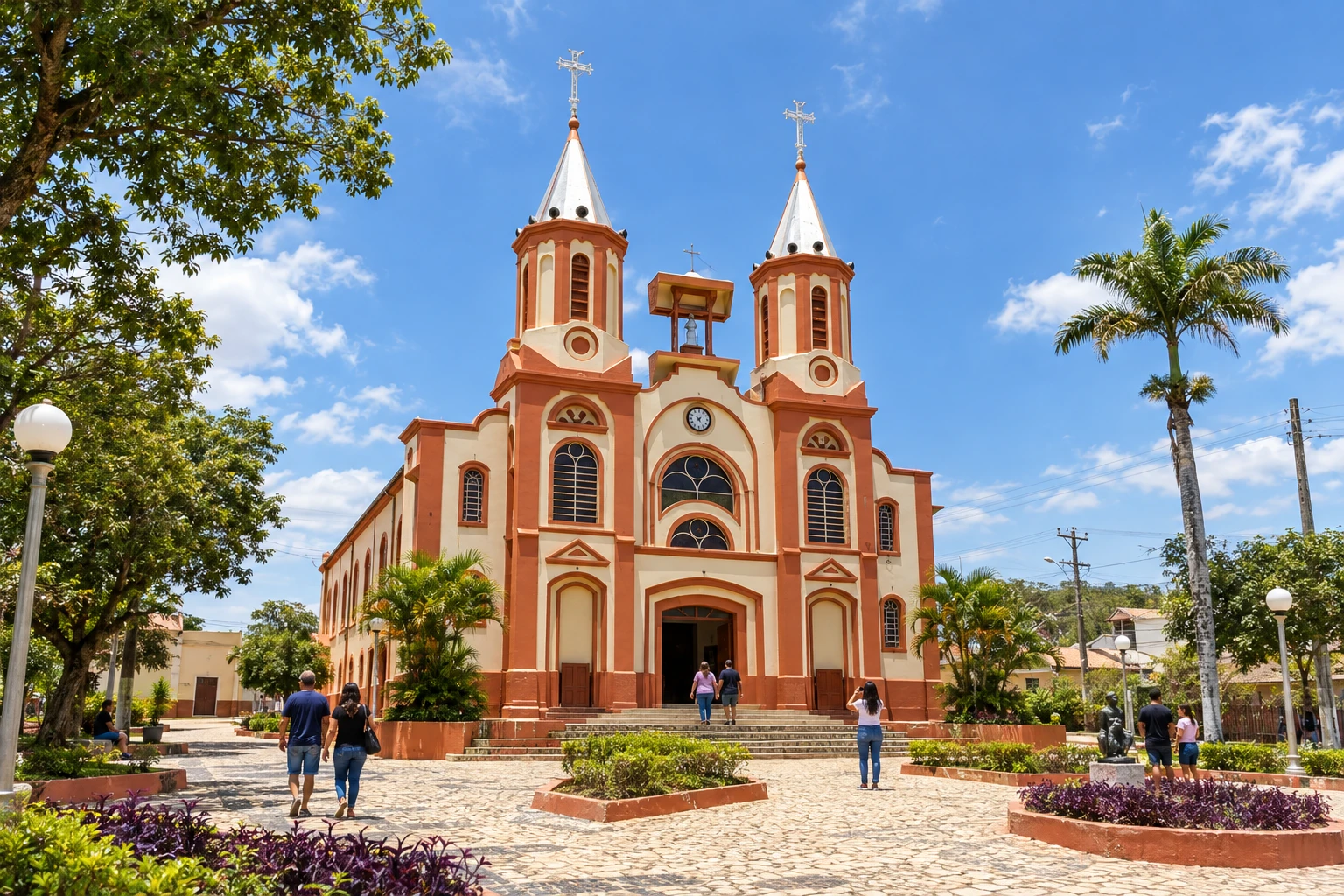
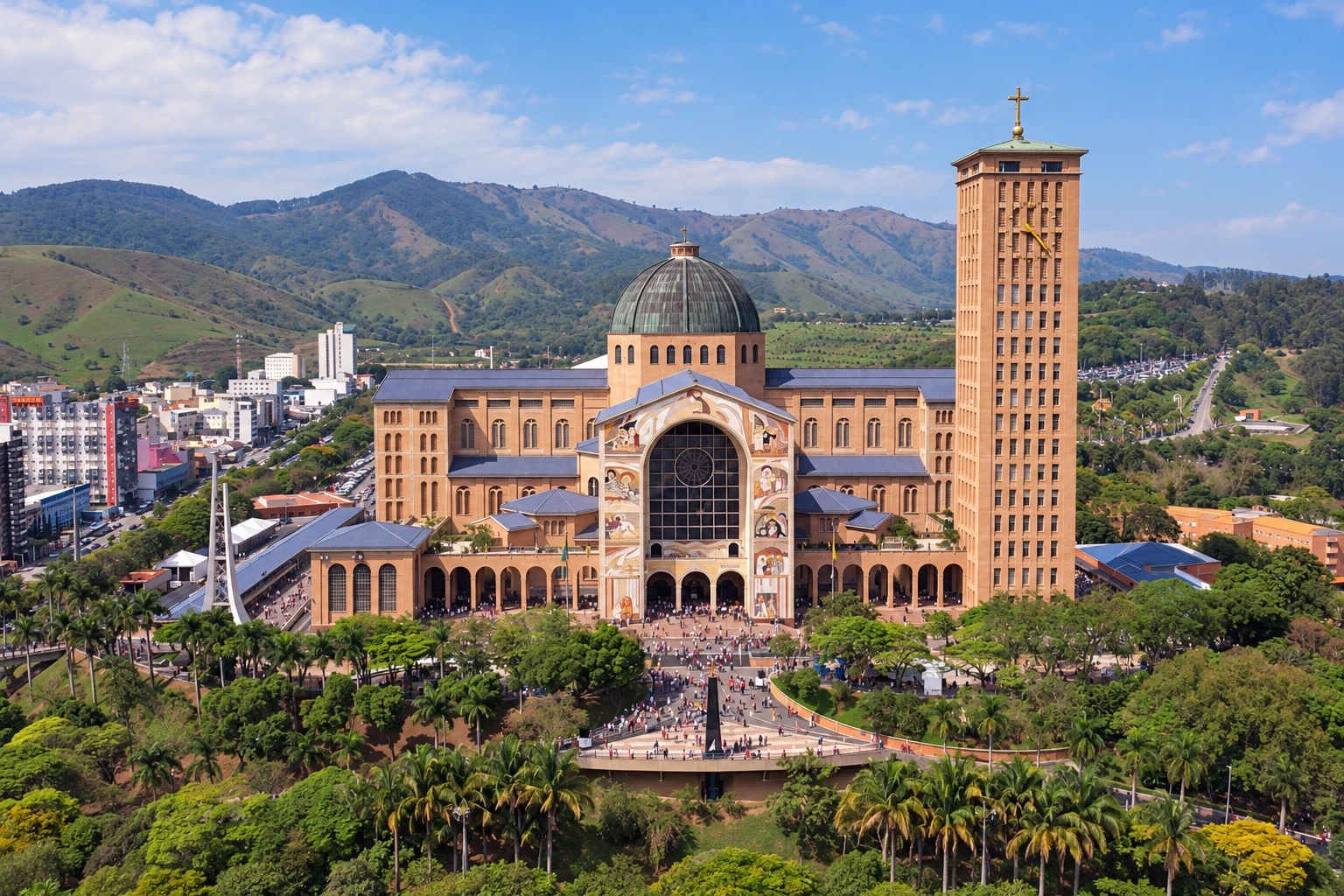
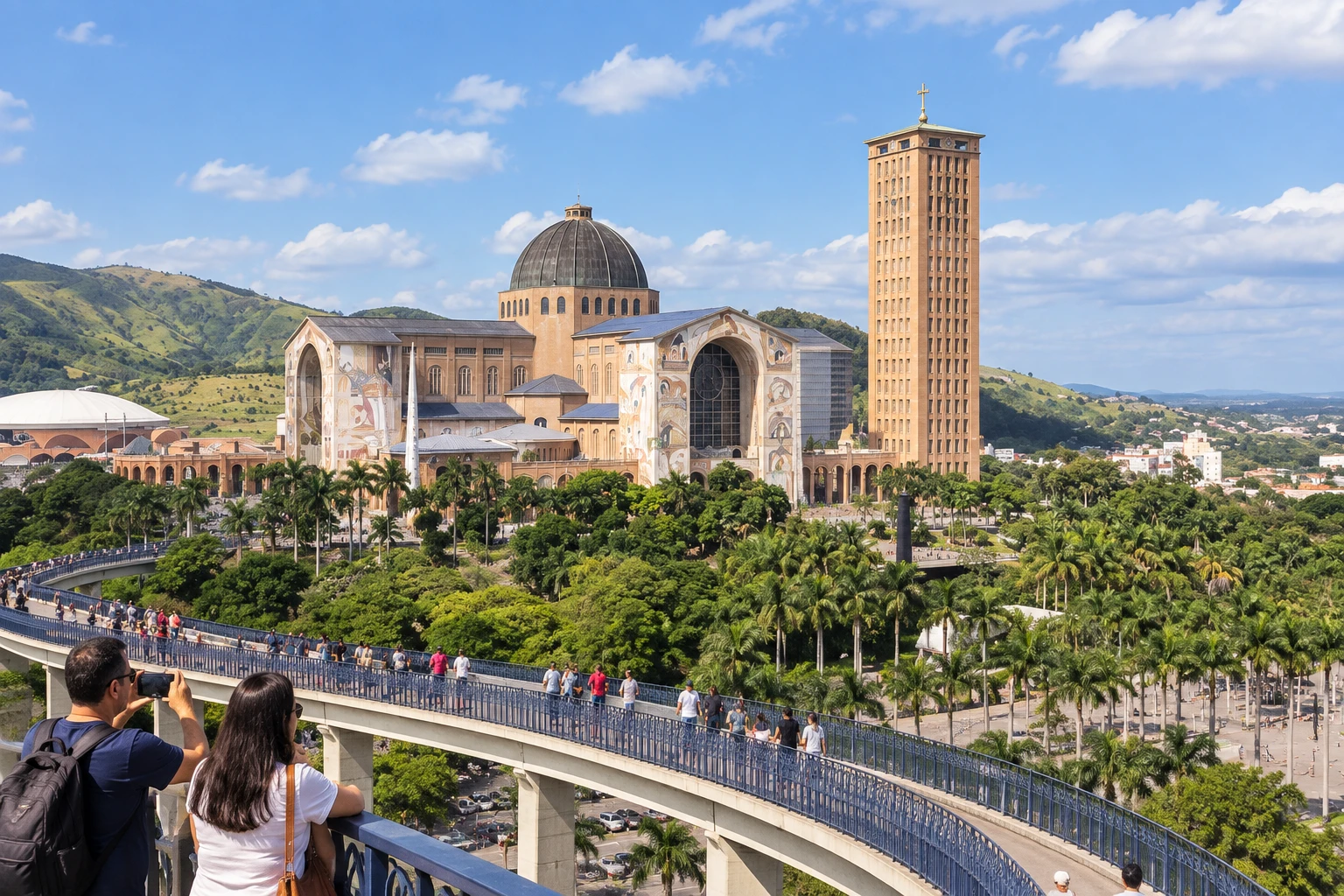
In the photo: Santuário Nacional de Nossa Senhora Aparecida, Aparecida (SP), Região Turística da Fé

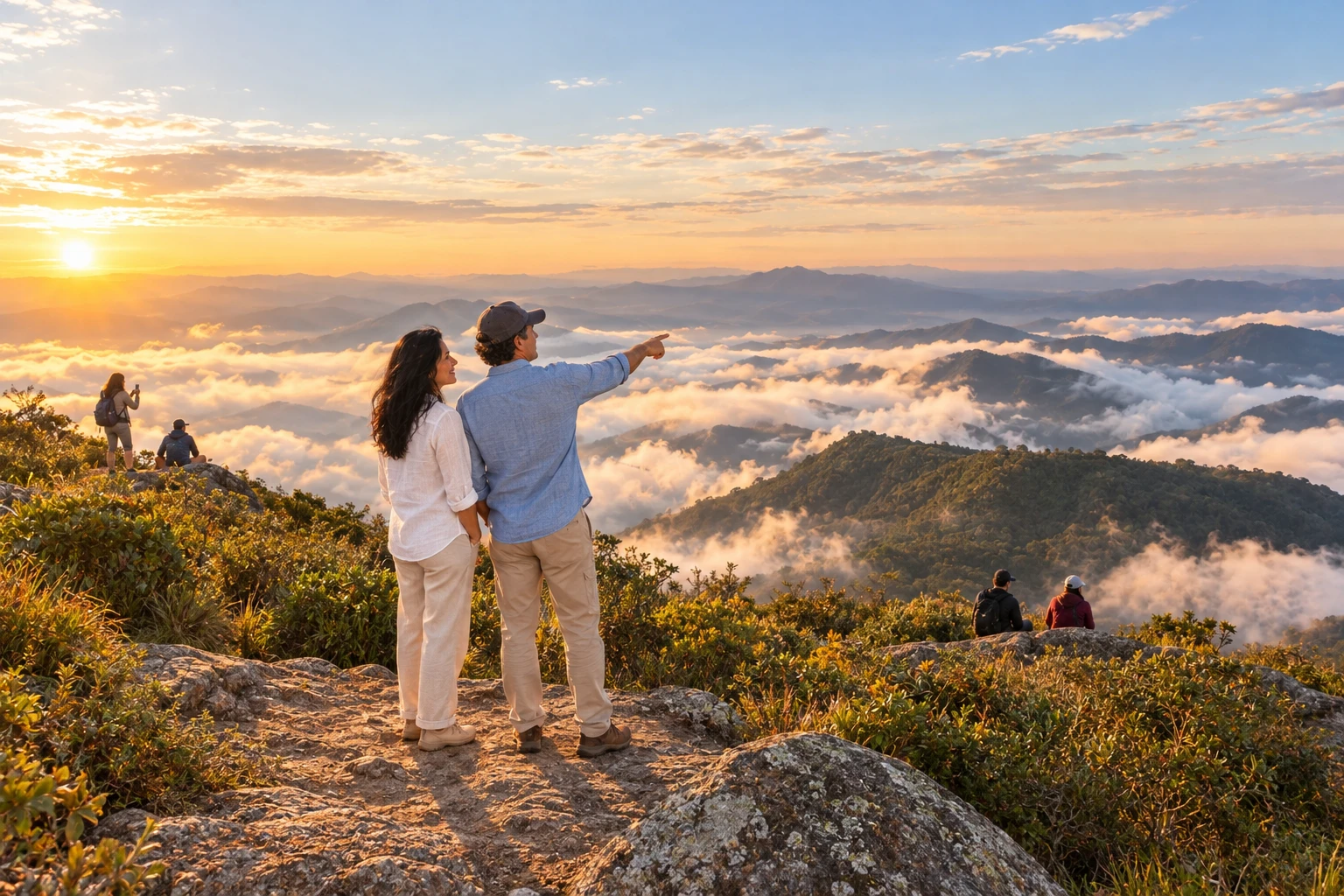
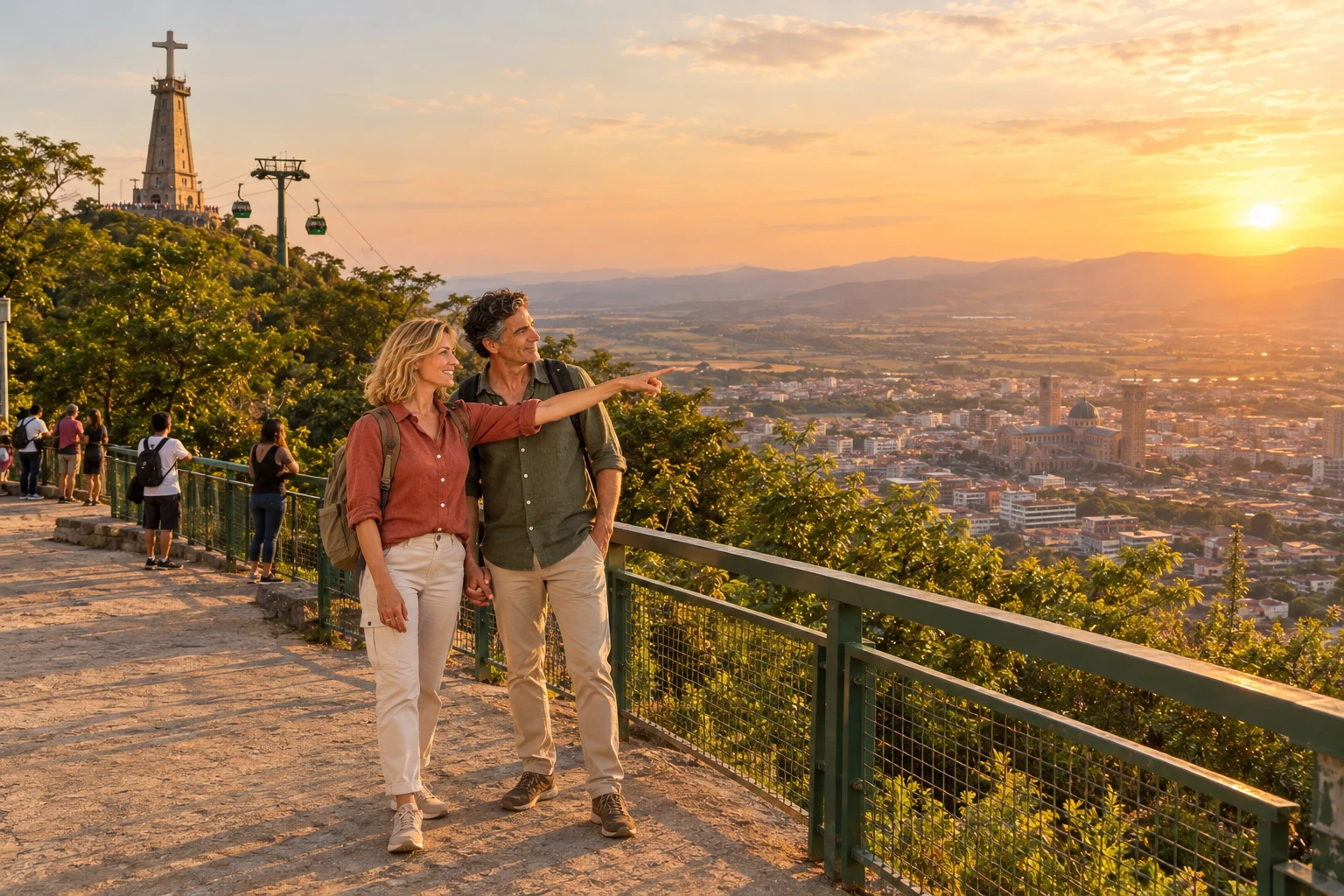
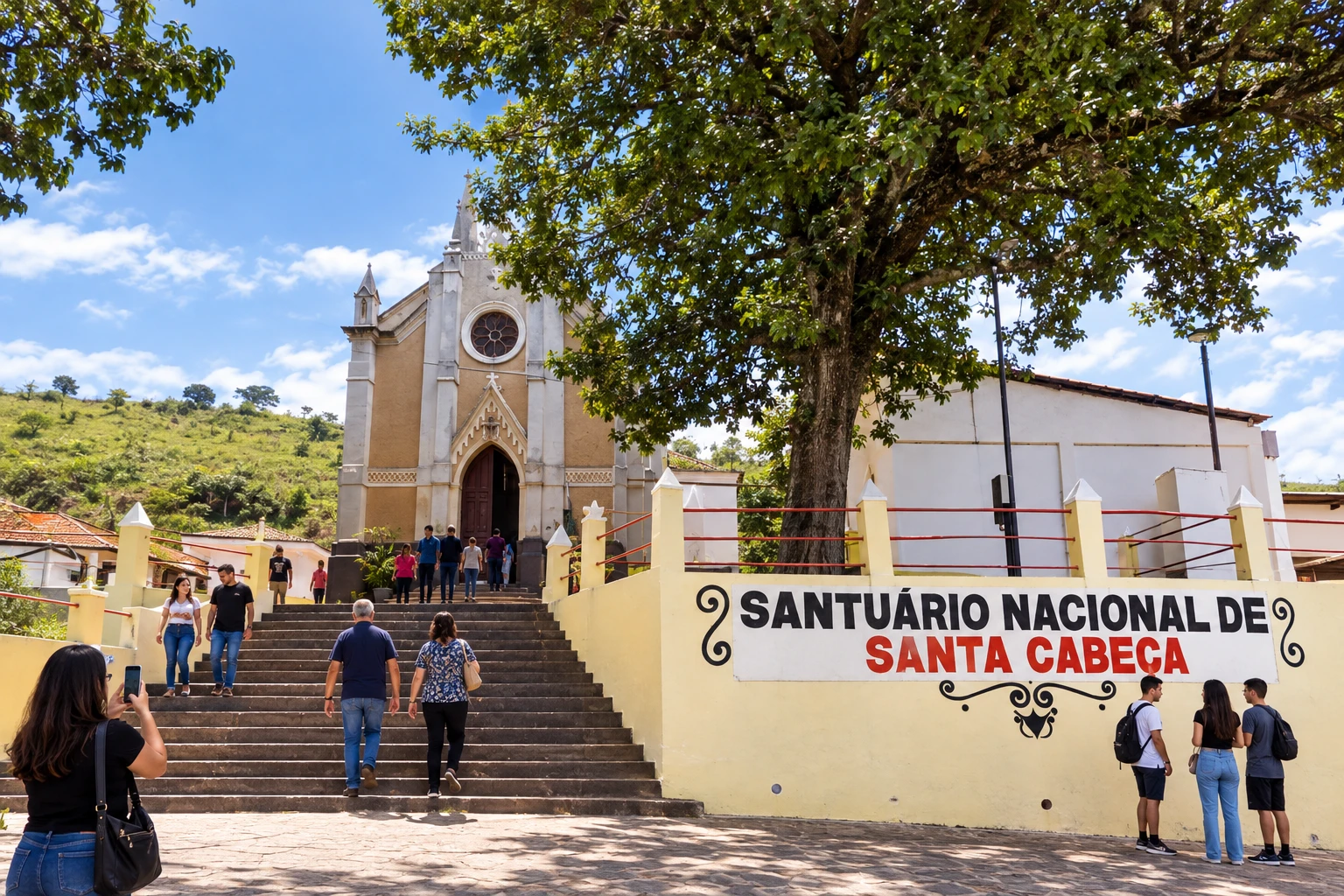
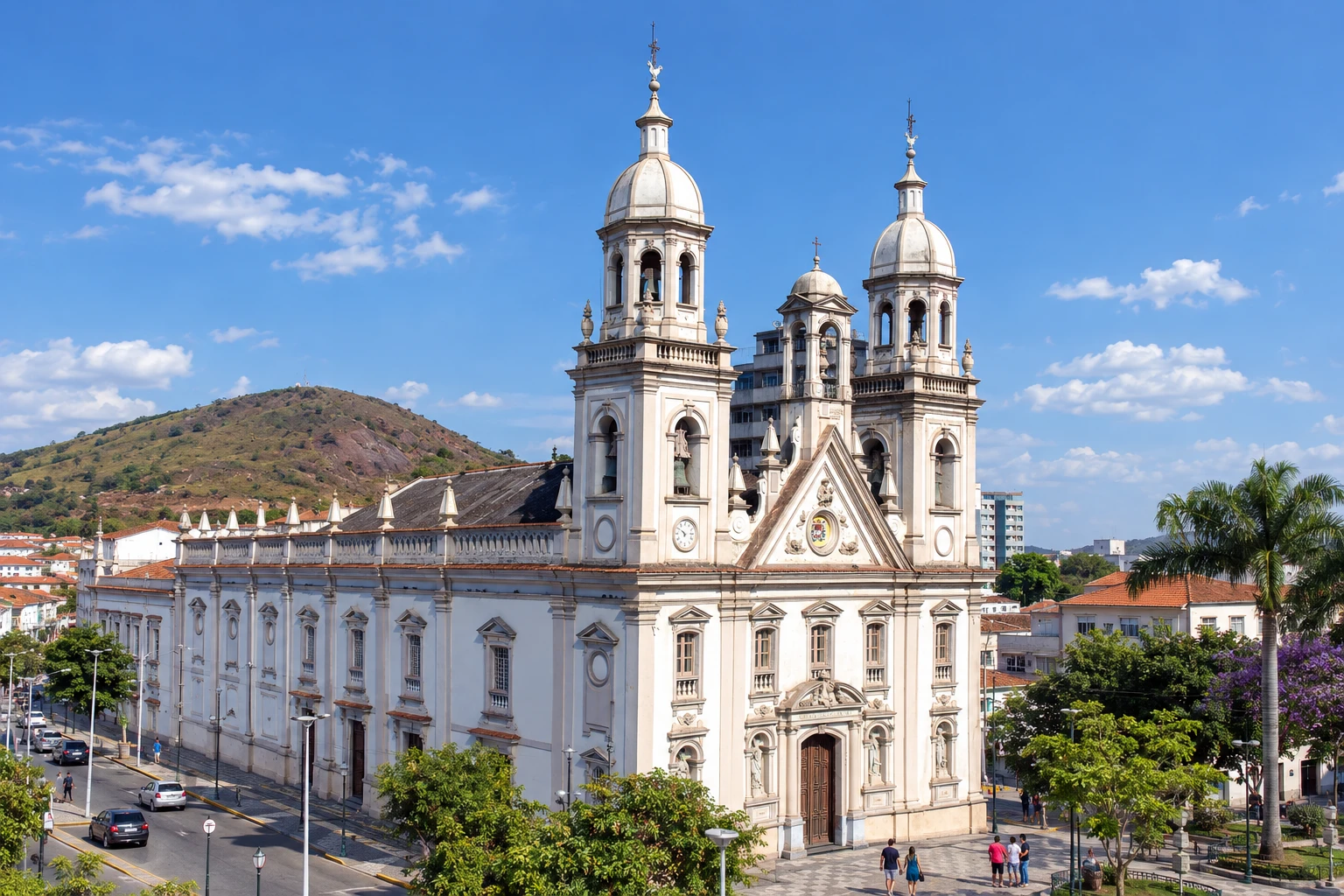
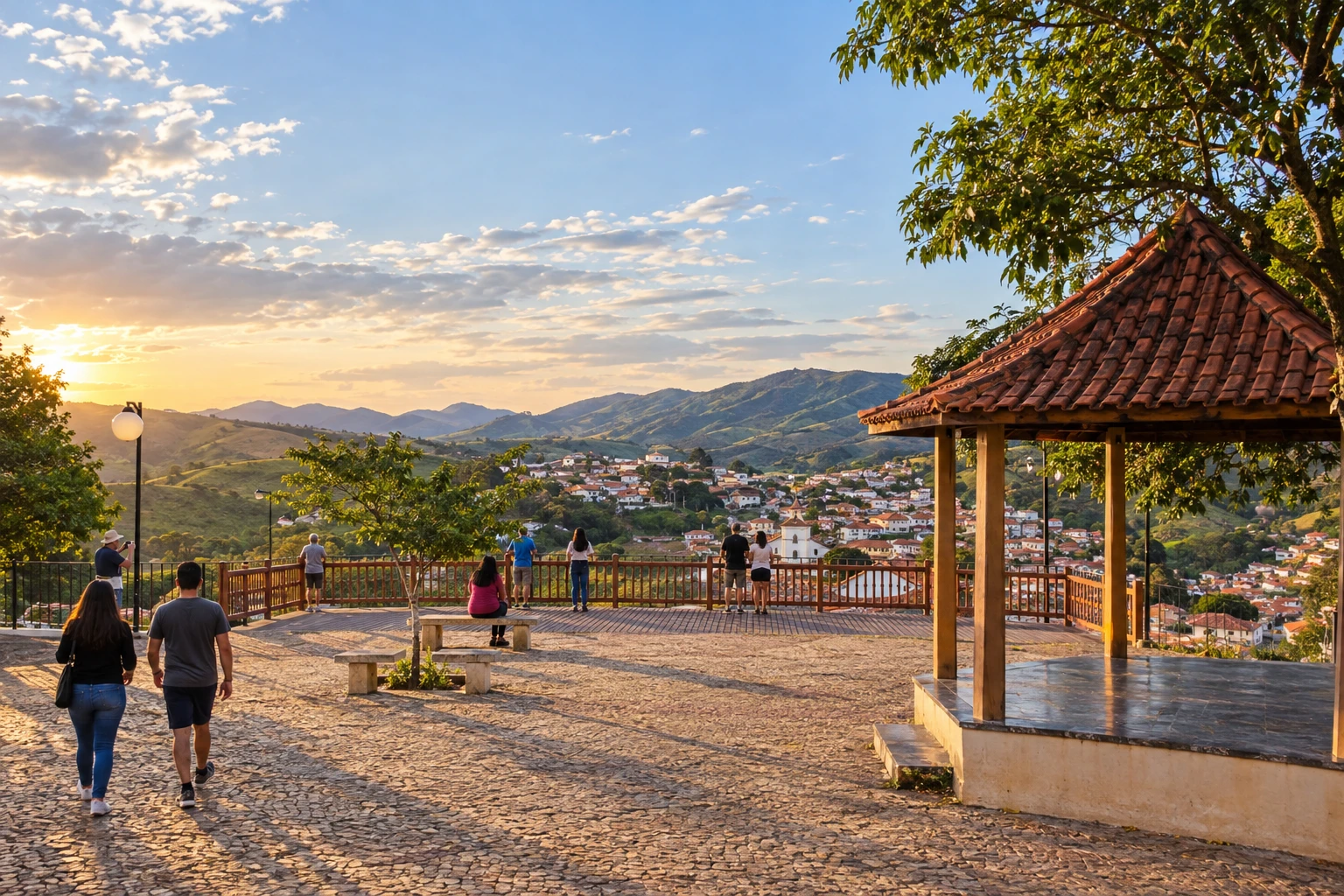
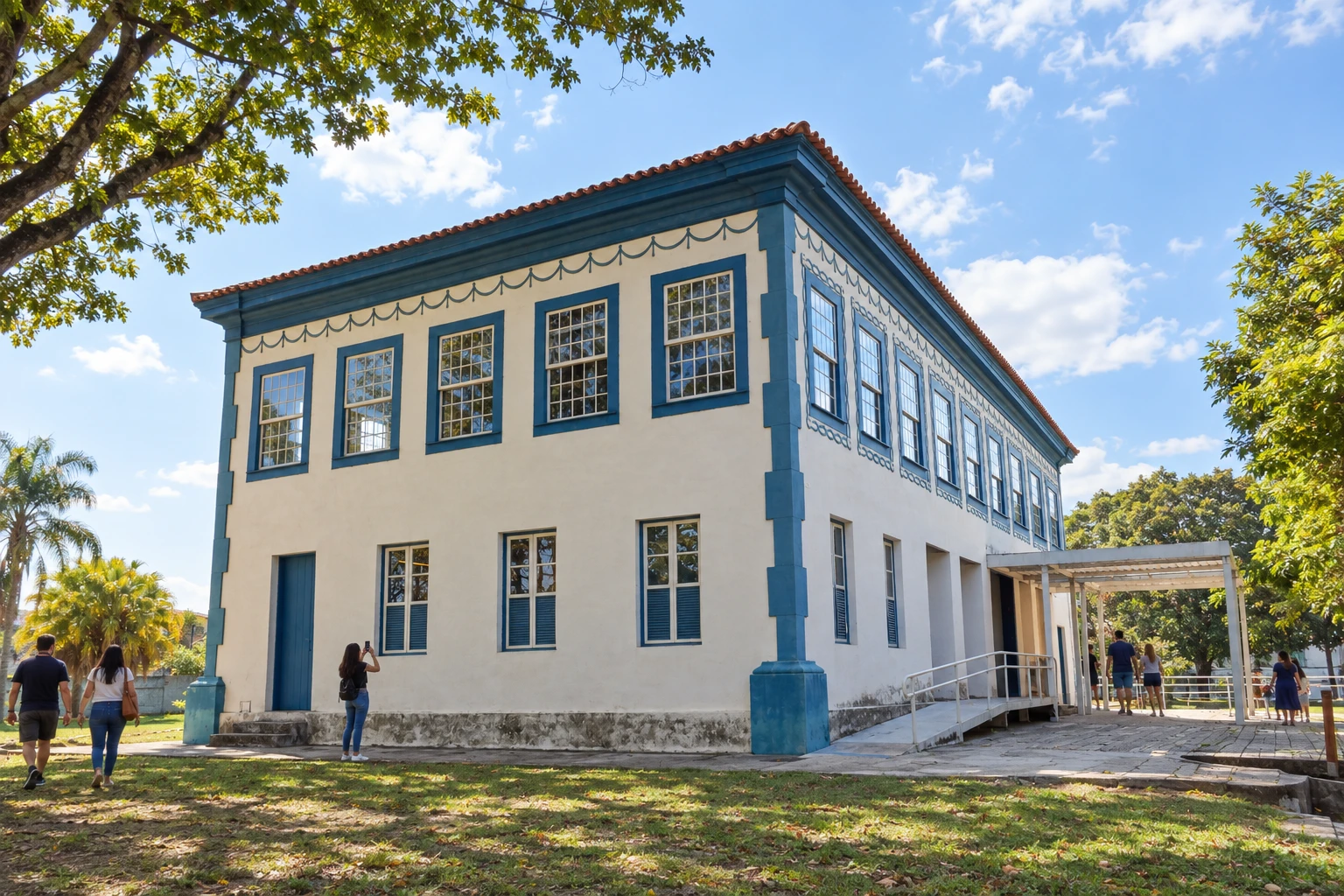
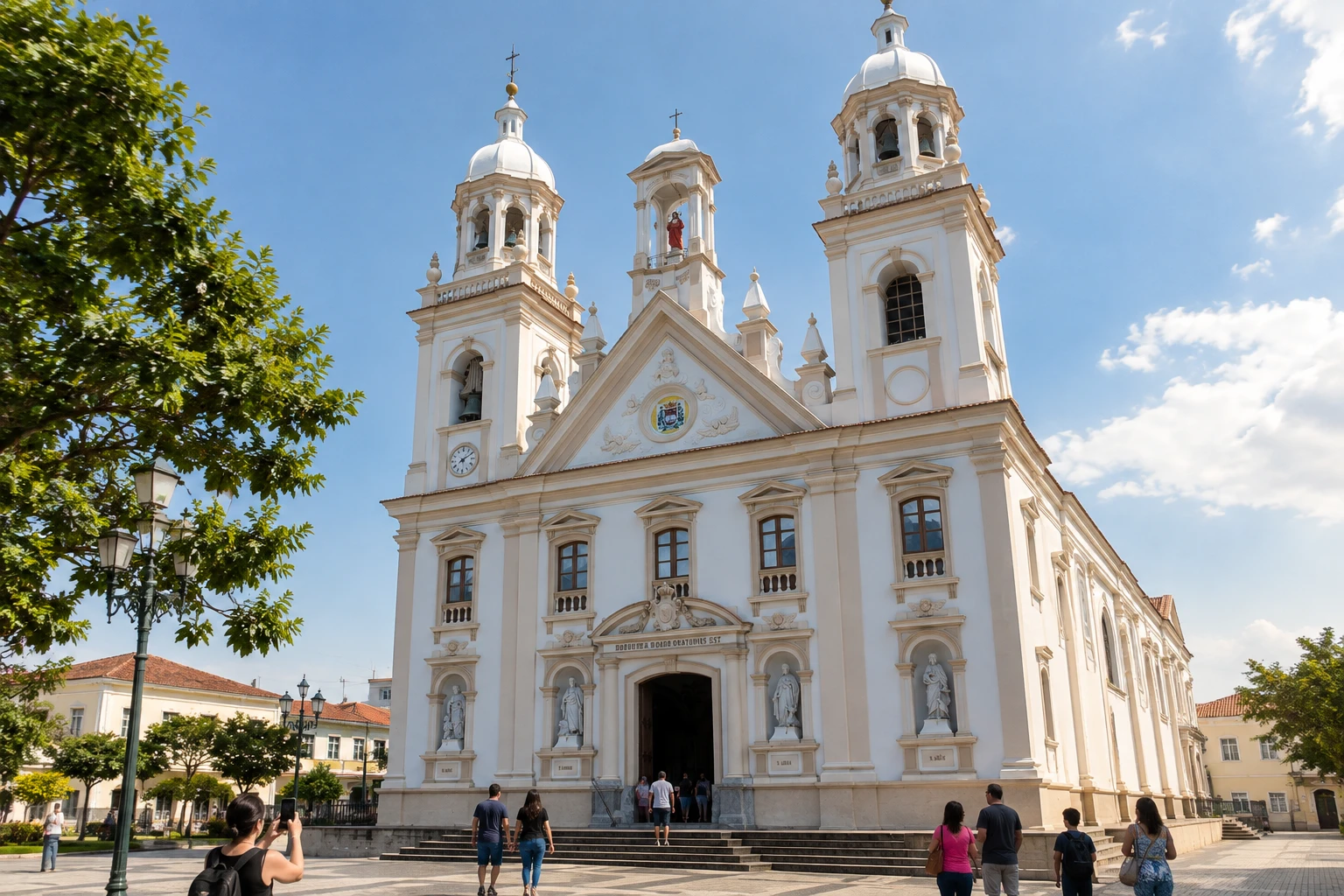
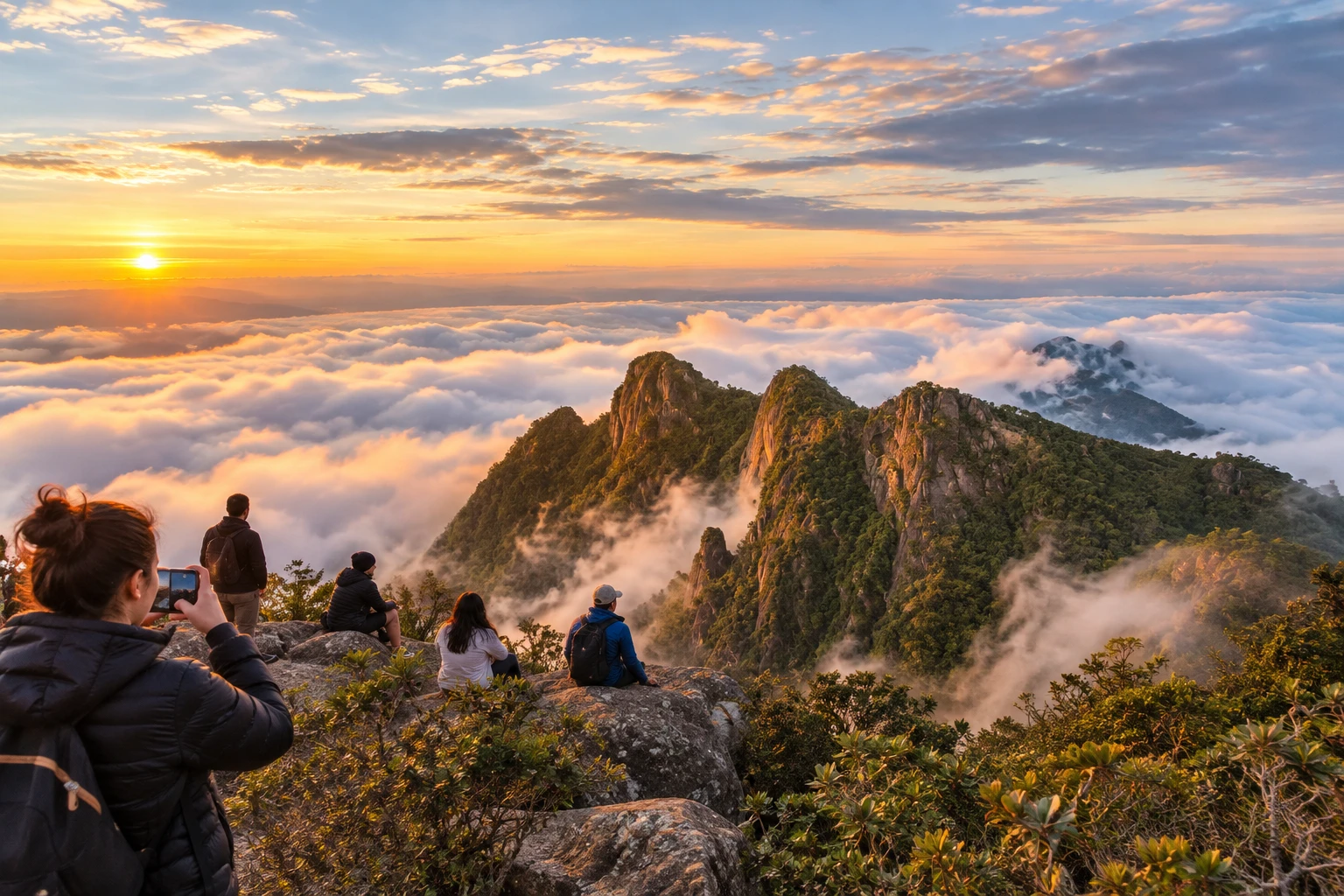
Illustrative images. The pictures in this guide are illustrations based on the real place, not photographs, and may differ from it.

Get to know the place

A region to enjoy
at your own pace.

Região Turística da Fé convida a organizar uma viagem de lazer com tempo para conhecer a paisagem e o cotidiano das cidades. Neste recorte do guia, Aparecida apresenta opções para combinar passeios e descanso, sem transformar cada dia numa sequência de deslocamentos.

Aparecida é uma das principais referências do roteiro, com o Santuário Nacional, a Basílica Histórica e a Passarela da Fé. O Morro do Cruzeiro acrescenta um percurso de contemplação e vistas da cidade ao programa religioso.

Escolha uma base que facilite os programas de maior interesse e distribua as visitas por áreas próximas. Reserve intervalos para refeições e descanso, confira as condições de acesso e mantenha uma alternativa para dias em que o tempo exigir mudanças no roteiro.

This destination brings together 6 cities: Aparecida, Roseira, Cachoeira Paulista, Guaratinguetá, Cunha, Cruzeiro.

Share: WhatsApp

Travelers' photos

Região Turística da Fé through the eyes of those who went

Região Turística da Fé
Illustrative image
Região Turística da Fé
Illustrative image
Traveler, share your experiences through photos Up to 5 photos of each place you visited.

One destination, many paths

The cities on this trip

Start with one city or combine several in your itinerary.

Where Região Turística da Fé is The star marks the nearest capital, São Paulo.
São PauloAparecidaRoseiraCachoeira PaulistaGuaratinguetáCunhaCruzeiro

Mapa: @svg-maps/brazil, CC BY 4.0

How to get there: Região Turística da Fé

Aeroporto Internacional de São Paulo/Guarulhos (GRU), in Guarulhos

Aparecida fica no eixo da Rodovia Presidente Dutra. Uma opção aérea é Guarulhos (GRU), em Guarulhos, com continuação terrestre. De ônibus, consulte o Terminal Rodoviário de Aparecida. Reserve margem para o movimento nas datas de peregrinação.

Suggested arrival point: Aparecida

Festivals and events

Festivals Região Turística da Fé

Dates change every year: check this year's date before you travel.

Festival calendar in Brazil

The local experience

Things to do in Região Turística da Fé

Cunha · SP · Natureza

Pedra da Macela

A Pedra da Macela é um mirante na área do Parque Nacional da Serra da Bocaina, com acesso pelo lado de Cunha. Em boas condições de visibilidade, o panorama alcança o litoral fluminense e as serras do entorno.

Explore Pedra da Macela

See 14 more places in Região Turística da Fé

To choose before you go

Tours in Região Turística da Fé

Where each tour starts, how long it takes, how it is done, what is included and the price range.

National Sanctuary of Our Lady of Aparecida: basilica, Dome and Brasília Tower lookout

From Aparecida on foot through the sanctuary complex 3 to 5 hours morning or afternoon easy

The National Sanctuary of Our Lady of Aparecida is the center of Catholic pilgrimage in Brazil and the main reason people visit the region. The visit begins at the basilica, where the image of Our Lady of Aparecida is kept; it was found in the Paraíba do Sul River in 1717. Besides religious services, the complex has a visitor circuit. The Dome Visit Circuit goes up to the top of the central dome, 52.86 meters above the floor, with panels explaining the construction and an exhibition about the 300 years since the image was found; the route has platforms and elevators, and there is an audio guide in Portuguese, Spanish and English. The lookout is on the 16th floor of the Brasília Tower, offering 360-degree views of the sanctuary, the stretch of river where the image was found, and part of the city. In the same tower, the Our Lady of Aparecida Museum brings together items related to the history of the devotion. At the Memorial of Devotion, the Wax Museum tells this story with life-size figures in staged scenes. The sanctuary has its own parking, restrooms, baby-changing facilities, a medical post, shops and a food court.

Stops: National Sanctuary of Our Lady of Aparecida, Central Dome, Brasília Tower Lookout, Our Lady of Aparecida Museum, Aparecida Wax Museum.

Includes: There is no admission fee for the basilica. Dome, lookout, museums and parking are charged separately; check the sanctuary’s current price list.

Tip: The Sanctuary Tourist Information Center guides the route and lends wheelchairs to those who need them. On weekends and in October there are many more people: if you want a calm visit, prefer weekdays. Mass times vary by day; check before you go.

Best time: All year. From May to August there is less rain. In October, the patroness’ month, visitor numbers are at their highest.

Guided visit at the National Sanctuary

From Aparecida (Sanctuary Tourist Information Center) on foot, in a group, with a sanctuary guide about 1 hour per route morning or afternoon easy

The National Sanctuary offers guided visits led by its own monitors and cultural guides, using radio receivers so the group can hear the explanations. Each route takes about one hour. There are routes through the interior of the sanctuary and the Central Dome; the Lookout and the Nossa Senhora Aparecida Museum; the Historic Basilica, with its Baroque architecture; Porto Itaguaçu and the Chapel of the Miraculous Fishing; and the outdoor Rosary Path. The Biblical Journey route goes around the four façades of the sanctuary, covered in mosaics that depict passages from the Bible, from Genesis to Revelation. The south façade also has a night visit, with special lighting on the mosaics. It’s the most complete way to understand the sacred art and the history of the place for those who are not visiting as part of an organized pilgrimage.

Stops: Façades of the National Sanctuary, Central Dome, Historic Basilica of Nossa Senhora Aparecida, Porto Itaguaçu, Rosary Path.

Includes: Sanctuary guide and audio equipment. The price depends on the route and group size; check the current price list at the Tourist Information Center.

Tip: Book in advance through the Tourist Information Center: some routes have small groups and only run on weekdays, not on holidays.

Best time: All year; there are more openings on weekdays.

Historic Basilica and Walkway of Faith

From Aparecida (National Shrine) on foot 1 to 2 hours morning or afternoon easy

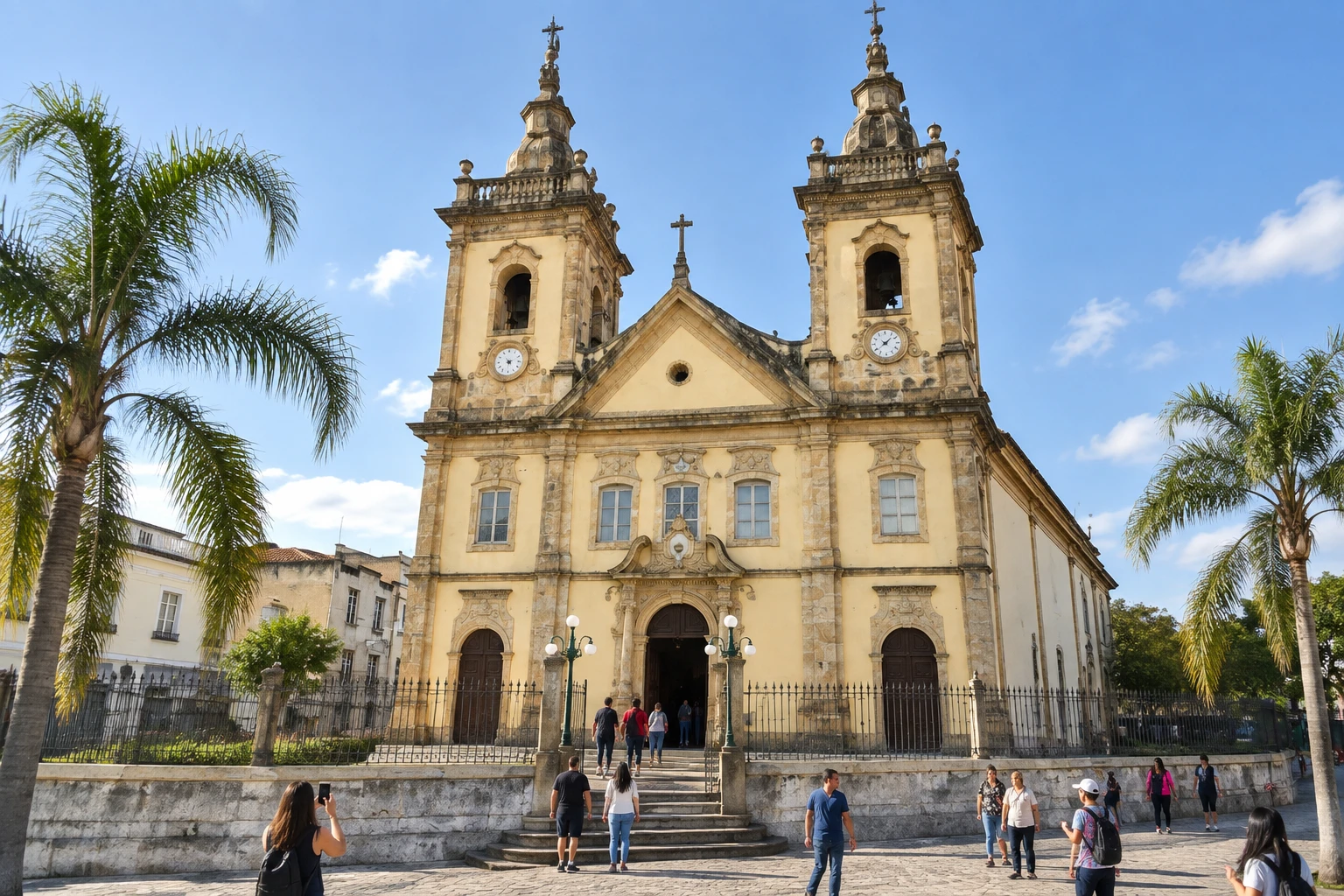
The Walkway of Faith connects the National Shrine to the Historic Basilica, at the top of Aparecida’s old town. It is about 392 meters long, S-shaped, and forms part of many pilgrims’ route. On the other side is the Historic Basilica, also called the Old Basilica, a baroque-style church dating from 1888, built on the site where devotion was organized since the first chapel of 1745. It was granted the title of minor basilica in the early 20th century and is listed by São Paulo state’s heritage authority.

Stops: Walkway of Faith, Historic Basilica of Our Lady of Aparecida.

Includes: There is no charge to enter the walkway or the Historic Basilica.

Tip: On sunny days, cross early or late afternoon and bring water. If you have difficulty walking, you can drive or take a taxi to the Historic Basilica.

Best time: All year round.

Aerial Cable Car and Morro do Cruzeiro

From Aparecida (courtyard of the National Sanctuary) aerial cable car; on the top, on foot 1 to 2 hours morning or afternoon easy

The Cable Car is an aerial tram that departs from a station in the National Sanctuary courtyard and climbs to the top of Morro do Cruzeiro. The route is about 1.1 km and overcomes an elevation difference of more than 100 meters, with views of the sanctuary, the city and the Paraíba do Sul River valley. Morro do Cruzeiro is the site of Aparecida’s Way of the Cross: the stations are located along the ascent, which many pilgrims make on foot in prayer. At the top there is a tower with an observation deck charged separately. You can buy just the ascent, just the descent, or both segments, which allows you to go up by cable car and descend via the Way of the Cross, or vice versa.

Stops: Cable Car, Morro do Cruzeiro.

Includes: Cable car tickets are paid separately, per leg or round trip; the lookout tower has its own admission fee. Check the current price list.

Tip: Those who climb on foot via the Stations of the Cross should bring water and wear sturdy footwear. Confirm the cable car’s operation on the day of your visit.

Best time: All year round; from May to August the sky is usually clearer.

Porto Itaguaçu and Caminho do Rosário

From Aparecida (Cidade do Romeiro) on foot via the Caminho do Rosário; car or taxi to the entrance 1h30 to 2 hours morning or afternoon easy

Porto Itaguaçu is the point on the Paraíba do Sul riverbank where, in 1717, three fishermen pulled from the water the image that would be venerated as Our Lady Aparecida. The site features the Capela da Pesca Milagrosa, of modern architecture, and a riverside viewpoint. You reach it via the Caminho do Rosário, a garden that links Cidade do Romeiro to the port. The route has 20 scenes with 128 sculptures representing the mysteries of the rosary, set among plantings of Atlantic Forest species, and functions as an open-air museum. It’s a peaceful walk, done at the pace of someone praying or simply strolling. A tourist train runs part of the route, with tickets sold separately.

Stops: Caminho do Rosário, Porto Itaguaçu, Capela da Pesca Milagrosa.

Includes: No admission is charged for the Caminho do Rosário or Porto Itaguaçu. The tourist train is paid separately; check the current rates.

Tip: Prefer early morning or late afternoon. The path is outside the basilica’s courtyard; arrange transportation for both ways.

Best time: All year; in summer, avoid the middle of the day.

Guaratinguetá: places linked to Frei Galvão

From Guaratinguetá on foot from the center; car or taxi to the sanctuary 3 to 4 hours morning or afternoon easy

Guaratinguetá, the neighboring city of Aparecida, is the birthplace of Saint Anthony of St. Anne Galvão, known as Frei Galvão, the first saint born in Brazil, canonized in 2007. The route starts in the downtown area at the Casa de Frei Galvão, where he was born in 1739; the house serves as a memorial, with a relic room, documents and family objects. Also downtown is the Cathedral of Saint Anthony, a church tied to the city’s origins, where the saint was baptized. The Frei Galvão Museum, on Praça Conselheiro Rodrigues Alves, completes the historical part. Outside downtown, in the Jardim do Vale neighborhood, the Santuário Frei Galvão receives pilgrims year-round, houses relics and distributes Frei Galvão’s pills, a tradition associated with the saint. Those interested in architecture can add the Guaratinguetá Railway Station, from 1914, built in exposed brick with a four-faced clock tower.

Stops: Casa de Frei Galvão, Cathedral of Saint Anthony, Frei Galvão Museum, Santuário Frei Galvão, Guaratinguetá Railway Station.

Includes: Self-guided visit. Museums may charge admission; check the current rates.

Tip: Each site has its own opening days; confirm before you go. Frei Galvão’s liturgical day is October 25, and the town receives more pilgrims on the novena days that precede it.

Best time: All year; October hosts the festivals of Frei Galvão and the patroness in Aparecida.

See 5 more tours

Canção Nova, in Cachoeira Paulista

From Cachoeira Paulista car, bus or tour; on foot inside the complex 3 to 4 hours morning or afternoon easy

Cachoeira Paulista is home to the Canção Nova headquarters, a Catholic community known in Brazil for its TV and radio stations and its large prayer gatherings. The complex houses the Sanctuary of the Father of Mercies, open to the faithful every day, the Rincão do Meu Senhor where the major events take place, chapels and prayer spaces. A visit on a regular day is quiet, focused on prayer and seeing the facilities. On weekends with prayer camping—events with preaching, music and Masses—the headquarters receives caravans from many parts of the country. One of the best-known events is the youth camp held in July. Regional tours often include Canção Nova as a second stop after Aparecida.

Stops: Sanctuary of the Father of Mercies, Rincão do Meu Senhor.

Includes: There is no entrance fee to the complex or the prayer camps. Food and transport are the visitor’s responsibility.

Tip: Check the community events calendar before choosing a date: on weekends with camping, book accommodation in advance.

Best time: All year. In July and on long holidays there are large public gatherings.

Cunha: Pedra da Macela

From Cunha (km 66 on SP-171) car to the gate; uphill on foot 3 to 4 hours morning moderate

Pedra da Macela is a viewpoint at 1,840 meters altitude, inside the Serra da Bocaina National Park, with access from the Cunha side. The entrance is at about km 66 on SP-171, the road that descends from Cunha toward Paraty. A dirt road leads to the park gate, where you leave the car; from there the ascent is on foot along a steep path of about 2 km. From the top, on a clear day, you can see Paraty, Ilha Grande bay and the mountain ranges surrounding Cunha. Sunrise is the most sought-after time, and guided groups often start climbing in the early hours. On the same road, near the access point, the Mato Limpo Waterfall can be seen from the track and makes for a short stop.

Stops: Pedra da Macela, Mato Limpo Waterfall.

Includes: Self-guided walk. There is no sale of water or food along the way.

Tip: Bring a jacket even in summer: it’s windy and cold at the top. Fog is common and can close the view; the dry months, May to August, have more clear mornings. Confirm access conditions with the national park.

Best time: May to August, with less rain and clearer skies.

Cunha: ceramic studios

From Cunha on foot through the town center; car to the more distant studios 2 to 4 hours morning or afternoon easy

Cunha is known in Brazil for high-fired art ceramics. The town has studios open to visitors, where you can see the pieces, talk with the ceramicists and buy directly from the makers. Several work with noborigama-style kilns. A kiln opening, when pieces are removed after firing, is an event each studio schedules in advance and opens to the public. In October the town usually holds a ceramics festival. The visit pairs well with a walk through the center and the mountain cuisine restaurants. Cunha is also the state’s largest producer of pinhão and has lavender fields open to visitors.

Stops: Cunha ceramics.

Includes: The pieces are sold at the studios themselves. Confirm visiting conditions with each studio.

Tip: Check the kiln opening dates with the studios before scheduling your trip. Some of them close on certain weekdays.

Best time: All year. July hosts the town’s winter festival.

Cunha: trails of Parque Estadual Serra do Mar — Núcleo Cunha

From Cunha car to the visitor center; trails on foot from 2 hours to a day morning easy to difficult, depending on the trail

The Núcleo Cunha of Parque Estadual Serra do Mar protects high-altitude forests and stretches of the Paraibuna River. Trails start at the visitor center and visits require booking. The Trilha do Rio Paraibuna, almost 2 km, is the only self-guided trail and follows the river through the forest. The other two, about 7.7 km and 14.7 km, can only be done with a guide and require readiness for a full day’s hike. The park is popular for birdwatching and Atlantic Forest vegetation observation.

Stops: Parque Estadual Serra do Mar — Núcleo Cunha, Rio Paraibuna.

Includes: Self-guided visits on the short trail; longer trails require a guide hired separately.

Tip: Book with the park before you go and ask about road conditions. Bring water, snacks, a rain poncho, and closed-toe shoes.

Best time: May to August, with less rain. In summer the trails stay wet.

Cunha: Pimenta and Desterro waterfalls

From Cunha car by dirt roads; short trails on foot 3 to 5 hours morning or afternoon easy to moderate

Cunha’s rural area has waterfalls open to visitors. Cachoeira do Pimenta is a series of drops linked to an old hydroelectric plant. Cachoeira do Desterro has two falls of about 12 meters and a cold-water pool; it is on private land open to visitors, with no tourist facilities, reached by dirt road and a short trail along the river. Both make for a day trip with a swim in the warm months.

Stops: Cachoeira do Pimenta, Cachoeira do Desterro.

Includes: Self-guided visit. Owners may charge entrance or parking fees; check the current rates.

Tip: After heavy rain the dirt roads become slippery and river levels rise quickly. Ask in town about access conditions before you go.

Best time: October to March for swimming; from May to August the roads are firmer.

Day by day

2, 3 and 5-day itinerary in Região Turística da Fé

Suggestions to plan the trip. Change the order of the days according to the weather and tour availability.

2 days · Faith Tourist Region in 2 days: Aparecida and Guaratinguetá

For First visit to the National Sanctuary, with time to pray and see the essentials. · Based in Aparecida (1 night).
  1. Day 1 · National Sanctuary and Historic Basilica

    Reserve the morning for the National Sanctuary: a visit to the image, a celebration and the Dome Visit Circuit. After lunch, go up to the Brasília Tower Lookout and see the Nossa Senhora Aparecida Museum. Late in the afternoon, cross the Walkway of Faith to the Historic Basilica and return through the old town. Anyone who wants a more detailed explanation can swap part of the day for a guided visit of the sanctuary.

  2. Day 2 · Porto Itaguaçu, Morro do Cruzeiro and Guaratinguetá

    Start early on the Rosary Path to Porto Itaguaçu, where the image was found. Next, go up to Morro do Cruzeiro by cable car and, if you have energy, descend on foot along the Way of the Cross. In the afternoon, head to neighboring Guaratinguetá to visit the House of Frei Galvão, the Cathedral of Saint Anthony and the Frei Galvão Sanctuary before hitting the road.

3 days · Faith Tourist Region in 3 days: Aparecida, Guaratinguetá and Canção Nova
For Pilgrims and families who want the three religious centers of the Paraíba Valley without rushing. · Based in Aparecida or Guaratinguetá (2 nights).
  1. Day 1 · National Sanctuary

    A full day at the National Sanctuary. In the morning, the basilica and a celebration; then the Dome Visit Circuit, the Lookout and the Nossa Senhora Aparecida Museum. In the afternoon, a guided visit of the mosaic façades or the interior helps to understand the sacred art of the place. Finish at the Walkway of Faith and the Historic Basilica.

  2. Day 2 · Porto Itaguaçu, Morro do Cruzeiro and Guaratinguetá

    In the morning, the Rosary Path and Porto Itaguaçu, then the Aerial Cable Car and Morro do Cruzeiro. Have lunch in Aparecida and spend the afternoon in Guaratinguetá: House of Frei Galvão, Cathedral of Saint Anthony, Frei Galvão Museum and Frei Galvão Sanctuary. If there’s time left, stop by Guaratinguetá Railway Station.

  3. Day 3 · Canção Nova, in Cachoeira Paulista

    Follow the Via Dutra to Cachoeira Paulista and spend the morning at the Canção Nova headquarters, with the Sanctuary of the Father of Mercies and the Rincão do Meu Senhor. On weekends with a prayer camp, the program lasts all day. On the way back, those who want can stop again in Aparecida for one last visit to the basilica.

5 days · Faith Tourist Region in 5 days: sanctuaries and the Cunha mountains
For For those who want to combine the pilgrimage with two days in the mountains, ceramics and nature. · Based in Aparecida (2 nights) and Cunha (2 nights).
  1. Day 1 · National Sanctuary

    Basilica, Dome Visit Circuit, Brasília Tower Lookout and Nossa Senhora Aparecida Museum. Late in the afternoon, the Walkway of Faith and the Historic Basilica.

  2. Day 2 · Porto Itaguaçu, Morro do Cruzeiro and Canção Nova

    Morning on the Caminho do Rosário, at Porto Itaguaçu and Morro do Cruzeiro, with the aerial cable car. In the afternoon, go to Cachoeira Paulista to visit the Canção Nova headquarters and return to sleep in Aparecida.

  3. Day 3 · Guaratinguetá and the climb to Cunha

    In the morning, visit the places associated with Frei Galvão in Guaratinguetá. After lunch, take the SP-171, a mountain road that leaves Guaratinguetá, and climb up to Cunha. Use the late afternoon to walk around the town center and visit the first ceramic studios.

  4. Day 4 · Pedra da Macela and ceramics

    Leave before dawn to see the sunrise at Pedra da Macela; the final ascent is on foot. On the way back, stop at Cachoeira do Mato Limpo. In the afternoon, visit more ceramic studios and, if there is one, attend a kiln opening.

  5. Day 5 · Atlantic Forest or waterfalls

    Choose between the Rio Paraibuna trail, in the Cunha Sector of the Serra do Mar State Park, by appointment, and the Pimenta and Desterro waterfalls. After lunch, descend back to the Paraíba Valley via SP-171, or follow the same road toward Paraty on the coast of the state of Rio de Janeiro.

Best time to go

When to go: Região Turística da Fé month by month

Choose dates according to the activities you plan to do. Weekdays outside of holidays usually make for a less crowded itinerary. For outdoor activities, check the forecast and confirm local conditions before you go.

The seasons shown are the most usual ones; nature doesn't always follow the calendar.

January High rain

Summer · wettest month

In the Paraíba Valley, lows around 18 °C and highs of 27 °C, with showers almost every afternoon; it is the month with the highest rainfall. Brazil’s school holidays bring many families to Aparecida. In Cunha, in the mountains, dirt roads and trails get wet and fog often closes the view from Pedra da Macela. Do outdoor visits in the morning.

February High rain

Carnival · prayer camp at Canção Nova

It remains hot and rainy, with lows of 18 °C and highs of 27 °C. During Carnival, Canção Nova holds a prayer campsite in Cachoeira Paulista. On weekdays outside the holiday, Aparecida is quieter. Waterfall bathing in Cunha is only advisable in stable weather.

March High rain

End of summer · Lent

Lows of 18 °C and highs of 26 °C, still with a lot of rain. It’s Lent, a period of preparation for Easter in the Catholic calendar. A good month for those who want the sanctuary to have moderate movement on weekdays.

April Low rain

Holy Week · Festa de São Benedito (Aparecida) · pinhão in Cunha

Rain decreases and temperatures become mild, from 16 °C to 25 °C. Holy Week, in March or April depending on the year, gathers many faithful at the National Sanctuary and at Canção Nova. In April, Aparecida holds the Festa de São Benedito, with congada groups and large crowds. In Cunha the pinhão harvest begins, with a festival dedicated to it between April and May.

May Low rain

Month of Mary · start of the dry season

Dry, clear days, with lows of 13 °C and highs of 22 °C. May is the month dedicated to Mary in Catholic tradition. It’s a good month for Pedra da Macela and for Cunha’s trails, where nights are already cold.

June Low rain

Dry season · Corpus Christi

One of the driest months, with lows of 12 °C and highs of 22 °C. The Corpus Christi holiday, in May or June depending on the year, has a special schedule at the National Sanctuary. In the Cunha highlands the pre-dawn hours are cold and mornings usually clear, which helps those who climb Pedra da Macela for sunrise.

July Low rain

School vacations · youth camp at Canção Nova · Cunha winter festival

Dry month and the coldest, with lows of 11 °C and highs of 22 °C in the valley. School vacations increase the flow in Aparecida. In Cachoeira Paulista, Canção Nova holds its largest youth camp, with tens of thousands of participants. Cunha hosts a winter festival with music in the town square: book accommodation in advance.

August Low rain

Dry season

Still dry, with lows of 12 °C and highs of 23 °C. After the holidays, weekdays in Aparecida become calm again. A good month for trails and viewpoints in Cunha, with clear skies and firm dirt roads. Waterfalls usually have less water.

September Some rain

Spring

Rain begins to return, with lows of 14 °C and highs of 25 °C. Pilgrimages increase as October approaches, and weekends in Aparecida already have many people. In Cunha the days get longer and temperatures rise.

October High rain

Novena and Feast of the Patroness (3–12) · Feast of Frei Galvão (25) · ceramics in Cunha

The busiest month in the region. The Novena and Feast of the Patroness at the National Sanctuary runs from the 3rd to the 12th, a national holiday in Brazil, with pilgrimages on foot along the Via Dutra and the town crowded. In Guaratinguetá, Frei Galvão’s novena ends on the 25th. Book accommodation months in advance and arrive early at the sanctuary. It rains more, with highs of 26 °C.

November High rain

Rainy spring

Lows of 17 °C and highs of 25 °C, with frequent rain. After October the crowds in Aparecida decrease on weekdays, but weekends remain busy. In Cunha, the rain requires attention on dirt roads.

December High rain

Advent and Christmas

Summer, with lows of 18 °C and highs of 26 °C and afternoon showers. The National Sanctuary holds Christmas celebrations, and the year-end holidays bring many families. Between Christmas and New Year’s Eve accommodation in Aparecida and Cunha is in high demand.

Plan the journey

How to get there: Região Turística da Fé

By plane: São Paulo or Rio de Janeiro

The region has no airport with regular flights. The most used is São Paulo–Guarulhos International Airport, which receives flights from across Brazil and other countries and is about 150 to 160 km from Aparecida via the Via Dutra. The Rio de Janeiro airports are the other option; the city of Rio is about 260 km from Aparecida along the same highway.

São José dos Campos airport is the closest, about 90 km away, but its schedule of commercial flights is limited and changes frequently; check with airlines before relying on it.

From Guarulhos airport, travelers continue by rental car, arranged transfer or bus. By bus, the usual route is to go to São José dos Campos or to São Paulo’s bus station and then board a bus to Aparecida.

By bus: from São Paulo, Rio and other cities

Aparecida has a bus station in the center. From São Paulo, buses depart from the Tietê Bus Terminal and take from 2h20; Pássaro Marron and Cometa are among the companies on the route, with several departures per day. There are also lines from São José dos Campos and other cities; check schedules for your departure point.

Guaratinguetá, Aparecida’s neighbor, and Cachoeira Paulista are also served by regular buses; check times.

Cunha is outside that axis, in the mountains. Check departure and return schedules at the Guaratinguetá bus station before heading up.

In October, on holidays and on weekends with large gatherings, buy tickets in advance.

By car: Via Dutra and the Cunha mountain route

The Rodovia Presidente Dutra (BR-116), which connects São Paulo to Rio de Janeiro, crosses Aparecida and is the region’s main axis. The city is about 180 km from São Paulo and 260 km from Rio. The highway is dual carriageway on the whole stretch and has tolls. Other distances from Aparecida: Taubaté, 43 km; São José dos Campos, 93 km; Ubatuba (coast), 136 km; Campinas, 230 km.

Roseira, Guaratinguetá, Cachoeira Paulista and Cruzeiro lie along the same Via Dutra axis.

Cunha is in the mountains, off the Dutra. Access is via the SP-171, which leaves from Guaratinguetá; it is a single-lane road with curves. After Cunha, the same road descends the Serra do Mar toward Paraty, in the state of Rio de Janeiro, on a steep section that crosses the national park; check conditions before descending.

The National Shrine has its own paid parking, with thousands of spaces for cars, buses and motorcycles. On feast days, follow the city’s traffic directions.

On foot or by bicycle: the pilgrimage routes

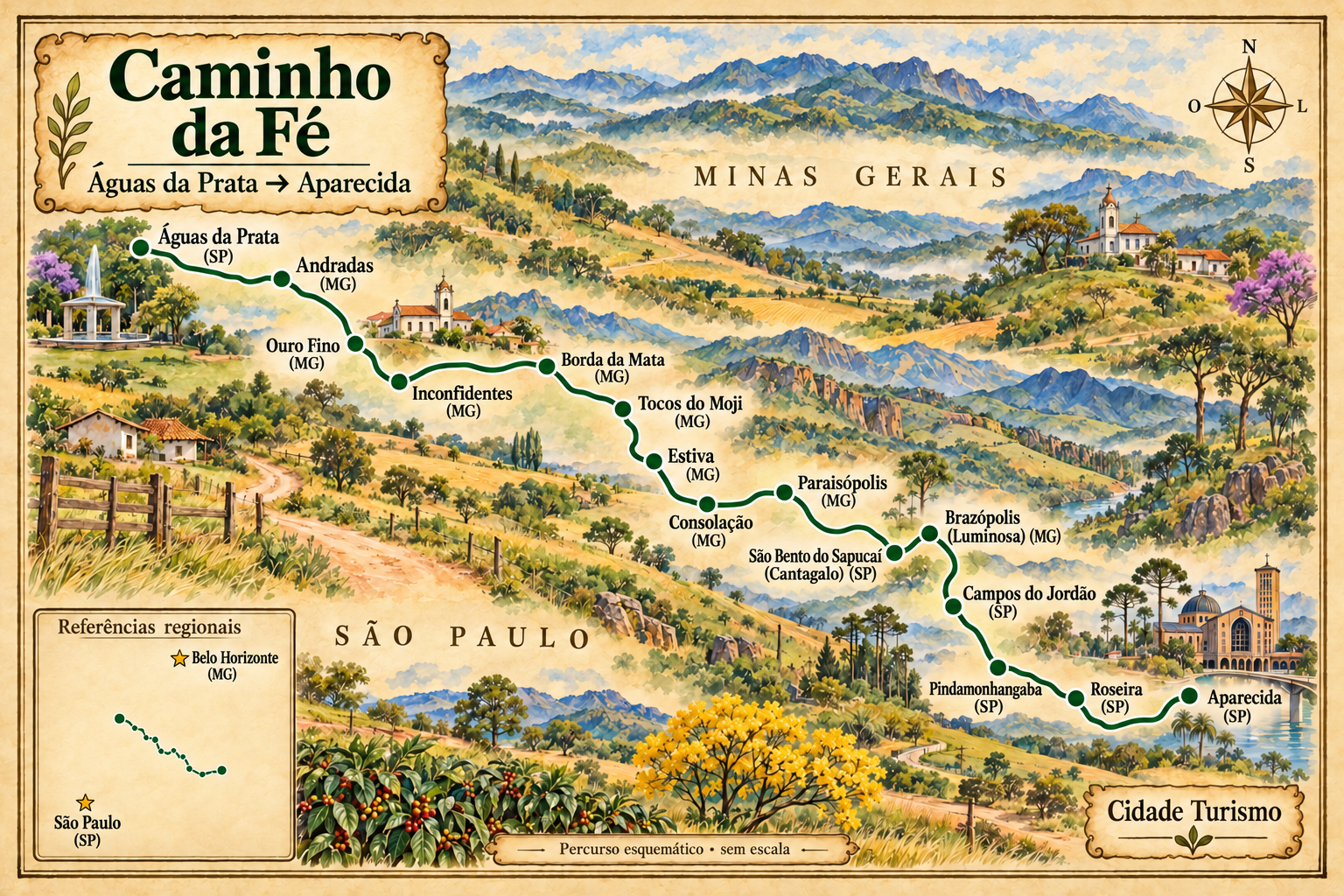
Many devotees reach Aparecida on foot. The most structured route is the Caminho da Fé, inspired by the Camino de Santiago: the main route is about 318 km, starts in Águas da Prata in the interior of São Paulo, crosses the Mantiqueira Range and ends at the National Sanctuary, marked by yellow arrows. It can be done on foot or by bicycle, in stages.

The sanctuary issues certificates for those who complete the devotion routes it recognizes, at the Tourist Information Center. Cyclists must walk their bicycles within the sanctuary grounds. For pilgrimages on horseback, the sanctuary has a dedicated reception with rules that must be checked in advance.

In the weeks before October 12, thousands of people walk along the Via Dutra toward Aparecida; drivers during this period should exercise extra caution.

How to get around the region

In Aparecida, almost everything is within walking distance. The National Sanctuary, the Passarela da Fé, the Historic Basilica and the Aerial Cable Car station are close to each other. Porto Itaguaçu and the Caminho do Rosário are farther away and require a car or taxi.

Guaratinguetá is neighboring Aparecida: you can go and return in the same day. Cachoeira Paulista is also on the Via Dutra and fits a day trip. There are tours that combine these stops.

Cunha requires a car and at least one overnight stay. The downtown studios are visited on foot, but Pedra da Macela, the Núcleo Cunha and the waterfalls are on rural roads, some of them unpaved.

People with reduced mobility will find ramps, elevators and wheelchair loan service at the National Sanctuary. The ascent of Morro do Cruzeiro on foot and the Pedra da Macela trail are steep.


Your base to explore

Where to stay and where to eat

Before you go

Practical information

A little planning leaves more time to enjoy the journey.

When to go

Choose dates according to the activities you plan to do. Weekdays outside of holidays usually make for a less crowded itinerary. For outdoor activities, check the forecast and confirm local conditions before you go.

The seasons shown are the most usual ones; nature doesn't always follow the calendar.

How many days to stay

We suggest three to five days to see the main sights with breaks. On a short trip, choose one town as your base and reduce transfers. Allow extra days if you want to combine visits to other towns in the region.

Which city to stay in

Use Aparecida as a base, comparing proximity to the Santuário Nacional, the Basílica Histórica and the Passarela da Fé. Confirm actual walking distances and mobility conditions before booking.

Respect the place

Take your trash with you, follow the signs and support local businesses. In natural areas, follow the visiting guidelines.

Beyond the guide

Your questions

Frequently asked questions about Região Turística da Fé

Como organizar uma primeira viagem?

Escolha uma base, selecione os passeios de maior interesse e distribua os deslocamentos em dias diferentes.

É preciso carro?

O carro facilita a combinação de cidades e programas afastados. Em um roteiro concentrado, confira transportes locais e a volta antes de sair.

Quantos dias reservar?

Sugerimos de três a cinco dias, ajustando a duração ao número de cidades e ao ritmo da viagem.

Como planejar atividades ao ar livre?

Confira o tempo e as condições de acesso. Escolha passeios compatíveis com a mobilidade e experiência do grupo.

Quais são as datas de maior movimento em Aparecida?

O período de maior movimento é a Novena e Festa da Padroeira, de 3 a 12 de outubro; o dia 12 é feriado nacional no Brasil e a cidade fica lotada. A Semana Santa, a Festa de São Benedito, em abril, os feriados prolongados, as férias de julho e de fim de ano e os fins de semana em geral também atraem muitas romarias. Quem prefere uma visita mais tranquila deve escolher dias de semana fora desses períodos.

O que visitar em Aparecida além do Santuário Nacional?

Dentro do complexo do santuário há o Circuito de Visitação à Cúpula, o Mirante da Torre Brasília, o Museu Nossa Senhora Aparecida e o Museu de Cera. A Passarela da Fé leva à Basílica Histórica, no centro antigo. O Bondinho Aéreo sobe ao Morro do Cruzeiro, onde fica a Via-Sacra. O Caminho do Rosário termina no Porto Itaguaçu, lugar onde a imagem foi encontrada em 1717. Um dia inteiro dá para o santuário e a Basílica Histórica; com dois dias, cabem os demais.

Precisa pagar para entrar no Santuário Nacional de Aparecida?

Não se cobra entrada na basílica, na Passarela da Fé, na Basílica Histórica nem no Caminho do Rosário. São pagos à parte o estacionamento, o Circuito de Visitação à Cúpula, o Mirante, os museus, o Bondinho Aéreo e as visitas monitoradas. Confira a tabela atual de cada atração antes de ir.

Como chegar a Aparecida saindo de São Paulo ou do Rio de Janeiro?

Aparecida fica na Via Dutra (BR-116), a cerca de 180 km de São Paulo e 260 km do Rio de Janeiro. De carro, a estrada é duplicada e tem pedágios. De ônibus, há saídas diárias do Terminal Rodoviário Tietê, em São Paulo, com viagem a partir de 2h20, e linhas a partir do Rio. Quem chega de avião costuma usar o aeroporto de Guarulhos, a cerca de 150 a 160 km.

Quem foi Frei Galvão e o que ver em Guaratinguetá?

Santo Antônio de Sant'Anna Galvão, o Frei Galvão, nasceu em Guaratinguetá em 1739 e foi canonizado em 2007; é o primeiro santo nascido no Brasil. Na cidade, vizinha de Aparecida, visitam-se a casa onde ele nasceu, a Catedral de Santo Antônio, onde foi batizado, o Museu Frei Galvão e o Santuário Frei Galvão, que distribui as pílulas ligadas à devoção. O dia litúrgico do santo é 25 de outubro.

Dá para visitar a Canção Nova fora dos dias de evento?

Sim. A sede da Canção Nova, em Cachoeira Paulista, recebe visitantes todos os dias, e o Santuário do Pai das Misericórdias fica aberto para oração. Fora dos acampamentos de oração, a visita é calma e leva algumas horas. Em fins de semana de encontro, a sede recebe caravanas e a programação ocupa o dia inteiro; veja o calendário da comunidade antes de escolher a data.

Vale a pena incluir Cunha na viagem a Aparecida?

Cunha é a parte de serra e natureza do destino, diferente do roteiro religioso do vale. Fica fora da Via Dutra, com acesso pela SP-171 a partir de Guaratinguetá, e pede pelo menos uma noite. Os principais programas são a Pedra da Macela, mirante a 1.840 metros de altitude, os ateliês de cerâmica, as trilhas do Núcleo Cunha do Parque Estadual Serra do Mar e as cachoeiras. Faz frio à noite boa parte do ano.

Qual é a melhor época para visitar a Região Turística da Fé?

De maio a agosto chove pouco e as temperaturas são amenas, com manhãs frias; é o melhor período para caminhar em Aparecida e para os mirantes e trilhas de Cunha. De outubro a março chove mais, quase sempre em pancadas à tarde. Outubro concentra as festas da padroeira e de Frei Galvão e exige reserva antecipada. Julho, mês de férias, tem movimento alto em toda a região.

Brazilian routes

Região Turística da Fé is on the Caminho da Fé

From Águas da Prata to Aparecida, a pilgrimage branch through towns and landscapes of the Mantiqueira.

Illustrative map, not to scale. Tap a city to open its page.
Illustrated map of Caminho da Fé
Explore the Caminho da Fé

Brazilian routes

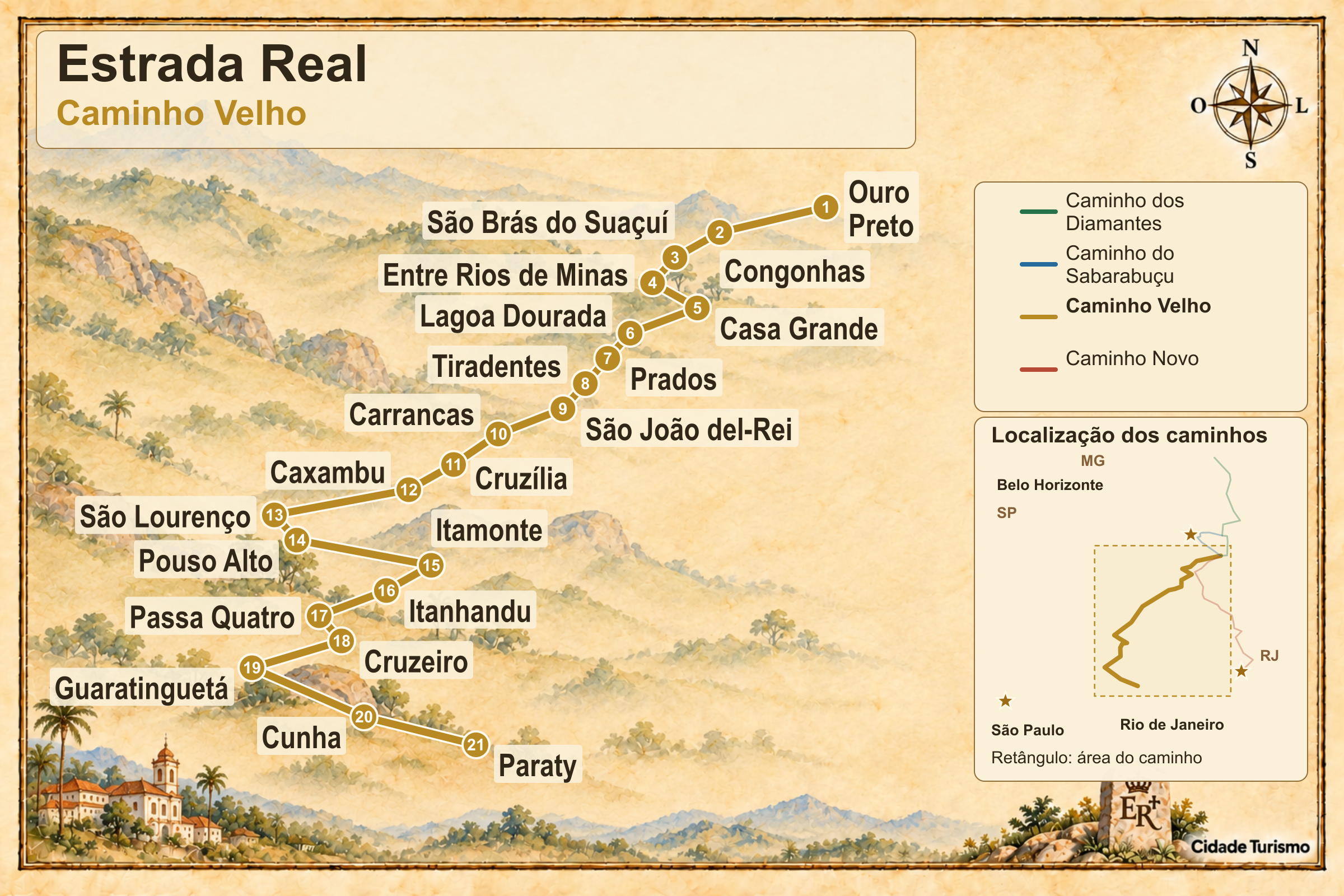
Região Turística da Fé is on the Estrada Real – Old Route

From Ouro Preto to Paraty, the oldest route of the Estrada Real passes through historic towns, mineral-water spa towns, and the Mantiqueira mountain range.

Illustrative map, not to scale. Tap a city to open its page.
Illustrated map of Estrada Real – Old Route
Explore the Estrada Real – Old Route
Explore other destinations Search by state and city