Antonina
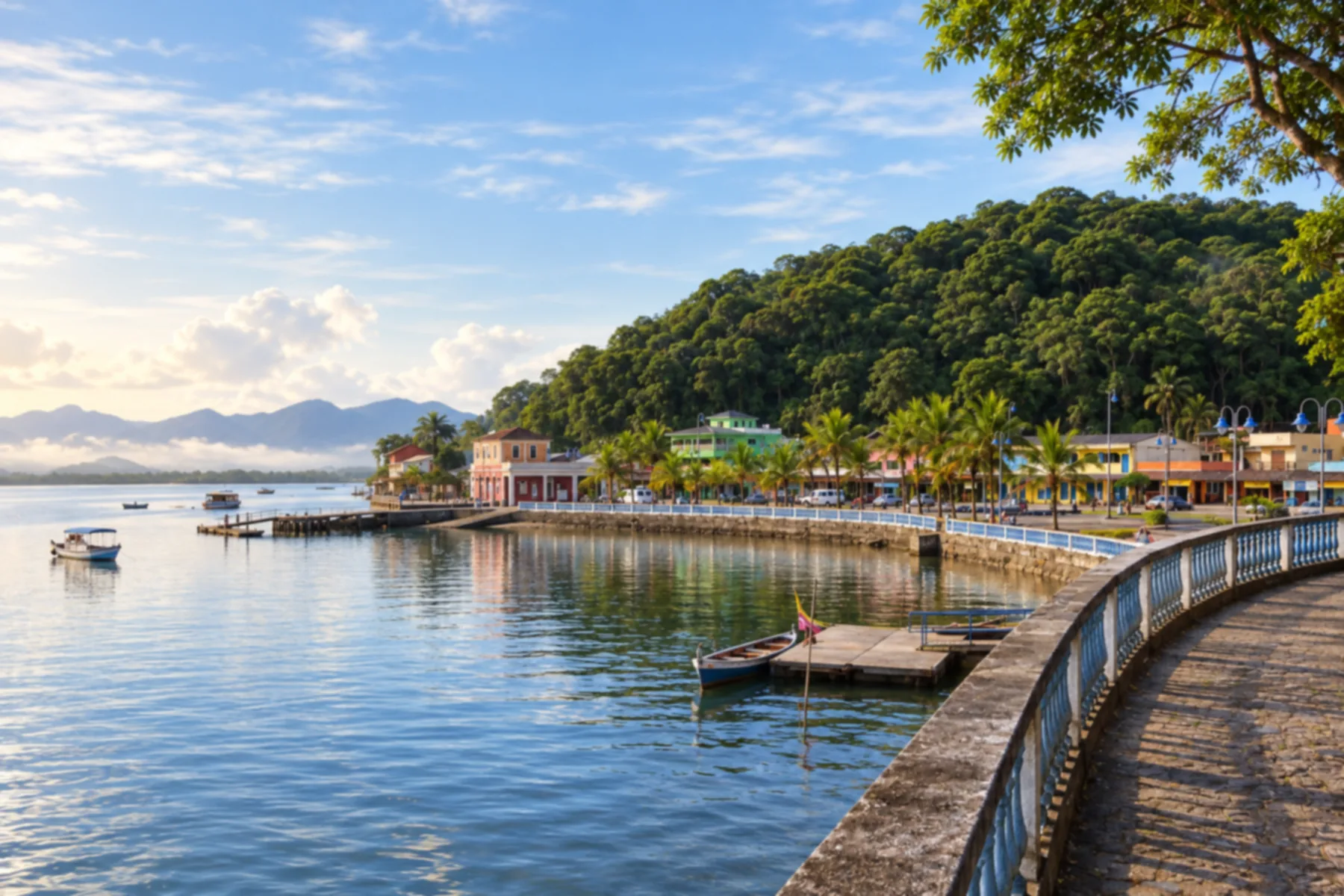
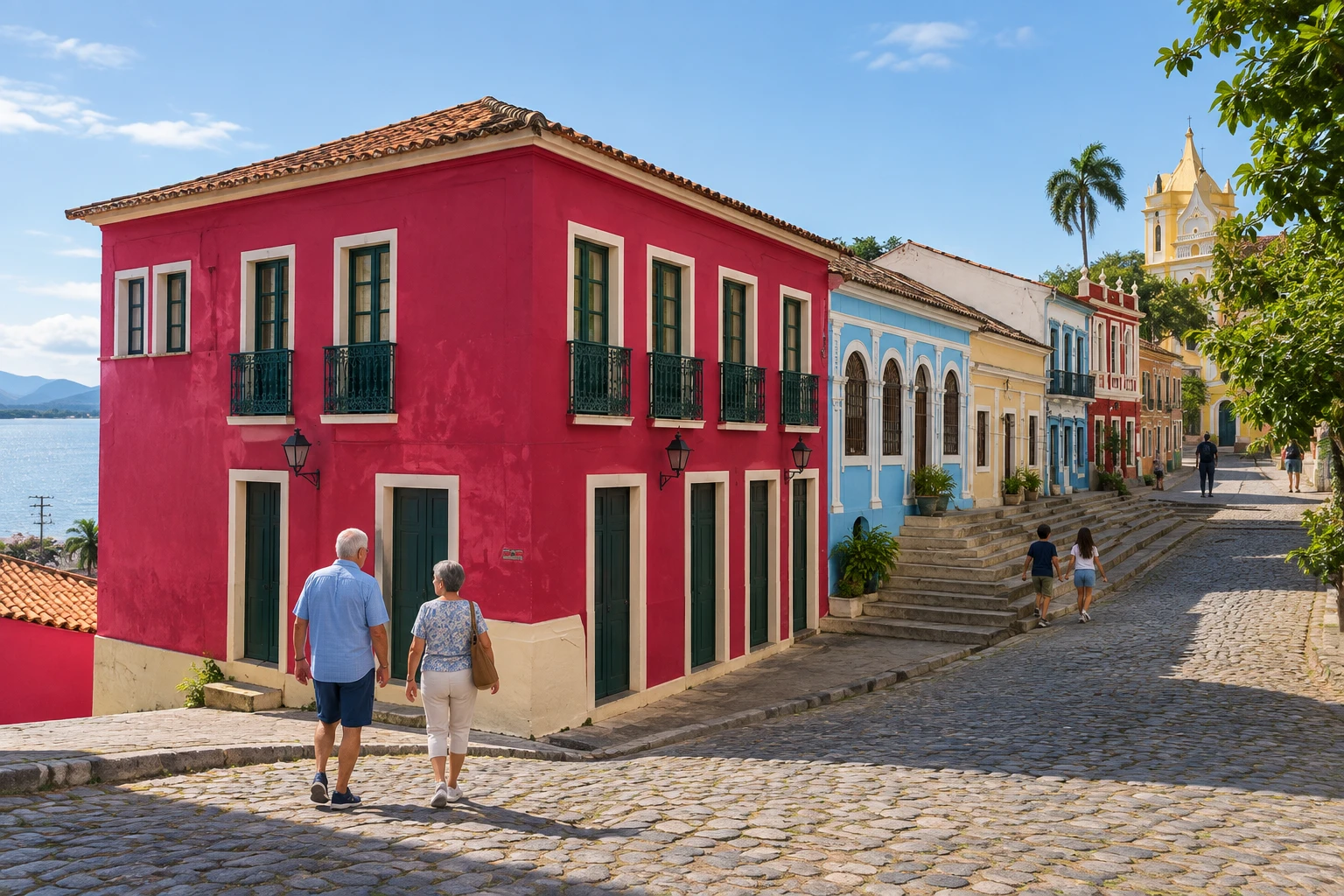
Antonina preserva um centro histórico voltado para a baía, aos pés da Serra do Mar. Caminhadas entre igrejas e casarios podem ser combinadas com a observação da paisagem portuária e dos manguezais.
Antarctica
PR
Sete municípios entre centros históricos, ilhas, praias e a Mata Atlântica da Serra do Mar.
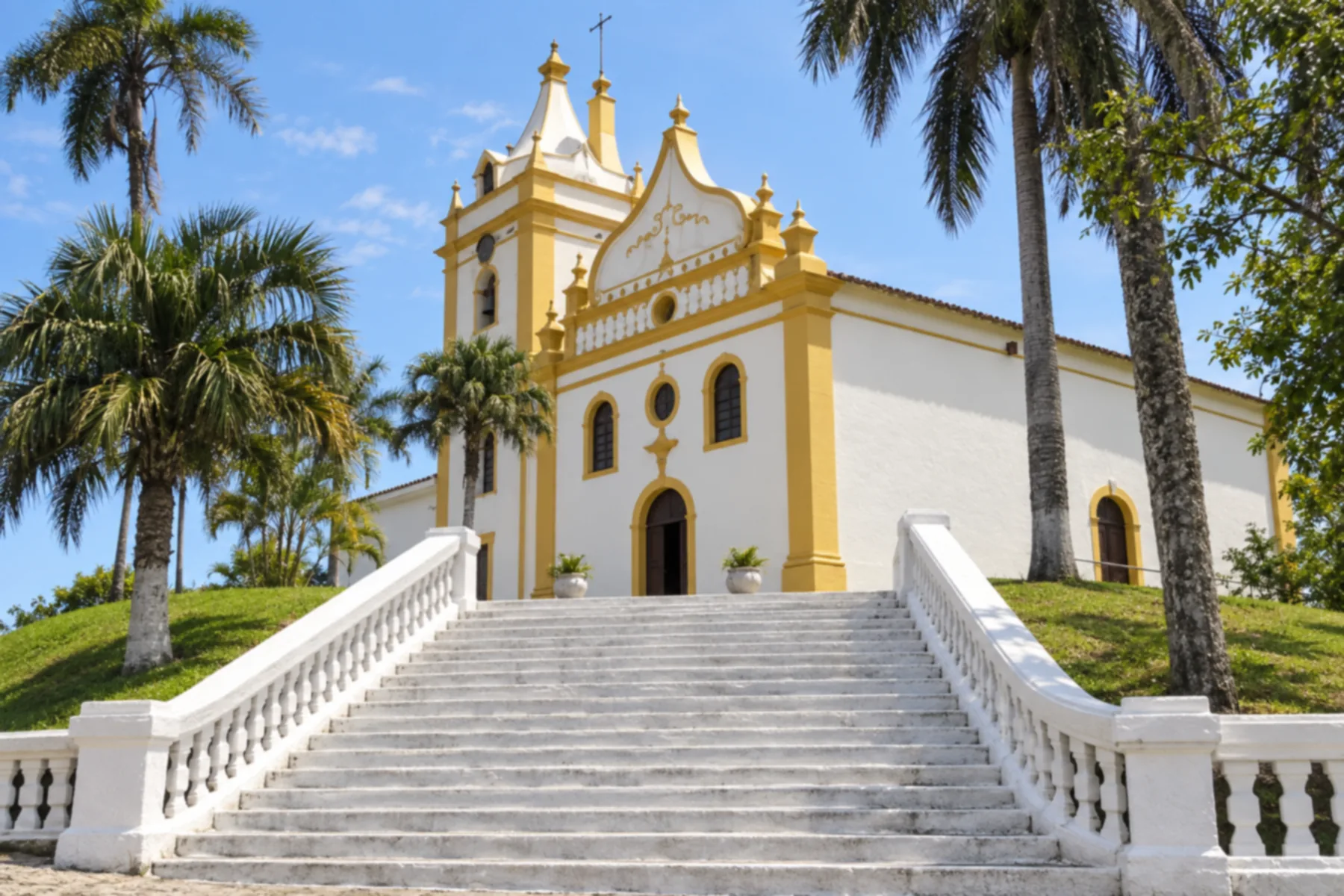
In the photo: Igreja de Nossa Senhora do Pilar, centro histórico de Antonina (PR).
Illustrative images. The pictures in this guide are illustrations based on the real place, not photographs, and may differ from it.
Get to know the place
O Litoral do Paraná reúne Antonina, Guaraqueçaba, Guaratuba, Matinhos, Morretes, Paranaguá e Pontal do Paraná. A região combina a ocupação histórica junto às baías com praias, ilhas e áreas de Mata Atlântica. Cada parte pede um ritmo de viagem diferente.
Morretes liga o passeio pelo centro histórico ao Rio Nhundiaquara e ao barreado. Antonina acrescenta casario, baía e a Igreja de Nossa Senhora do Pilar. Em Paranaguá, o patrimônio urbano pode ser combinado com a travessia para a Ilha do Mel, que pertence ao município.
Matinhos, Pontal do Paraná e Guaratuba concentram trechos de praia e balneários. Em Guaraqueçaba, o roteiro se aproxima das comunidades, das ilhas e da conservação da natureza; Superagui é uma das referências desse setor.
A comida também diferencia as paradas. Além do barreado de Morretes, há bala de banana em Antonina, ostras do Cabaraquara em Guaratuba e preparos de peixe e frutos do mar. Para reunir essas experiências, vale alternar bases em vez de tentar percorrer as sete cidades a partir de uma única praia.
This destination brings together 7 cities: Antonina, Guaraqueçaba, Guaratuba, Matinhos, Morretes, Paranaguá, Pontal do Paraná.
Travelers' photos
One destination, many paths
Start with one city or combine several in your itinerary.
Mapa: @svg-maps/brazil, CC BY 4.0
Curitiba é um ponto de chegada para descer a Serra do Mar pela BR-277 ou pela Estrada da Graciosa. A BR-376 também integra o acesso ao litoral. O trem entre Curitiba e Morretes é outra forma de fazer parte da chegada; as visitas às ilhas exigem travessia de barco.

Antonina preserva um centro histórico voltado para a baía, aos pés da Serra do Mar. Caminhadas entre igrejas e casarios podem ser combinadas com a observação da paisagem portuária e dos manguezais.

Guaraqueçaba fica entre a baía, manguezais e extensas áreas de Mata Atlântica no litoral paranaense. Passeios pela orla e de barco aproximam o visitante da paisagem e das comunidades costeiras.

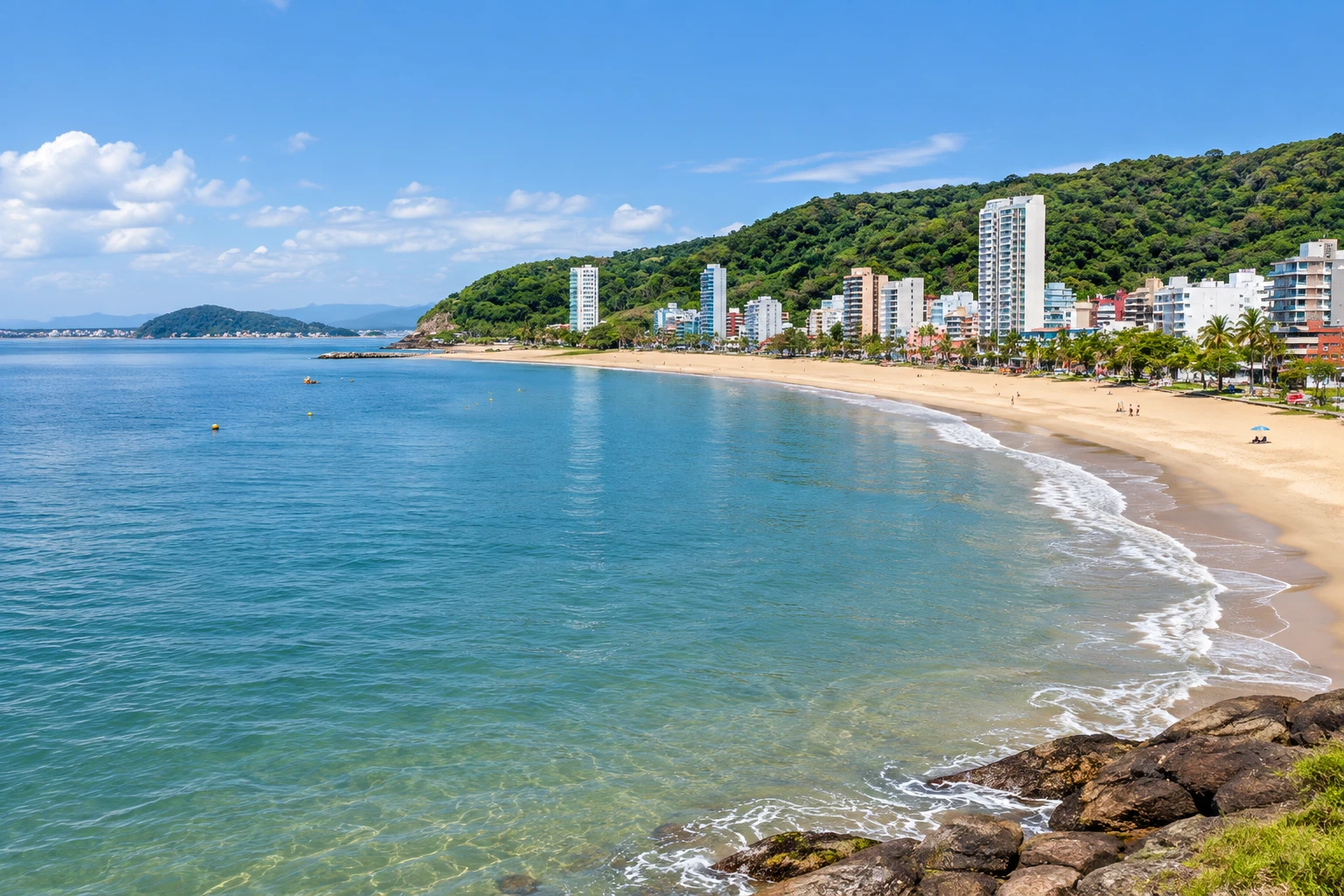
Guaratuba combina uma baía cercada de vegetação com praias abertas para o Atlântico. O visitante pode caminhar pela orla, subir ao Morro do Cristo e explorar a paisagem das águas interiores.

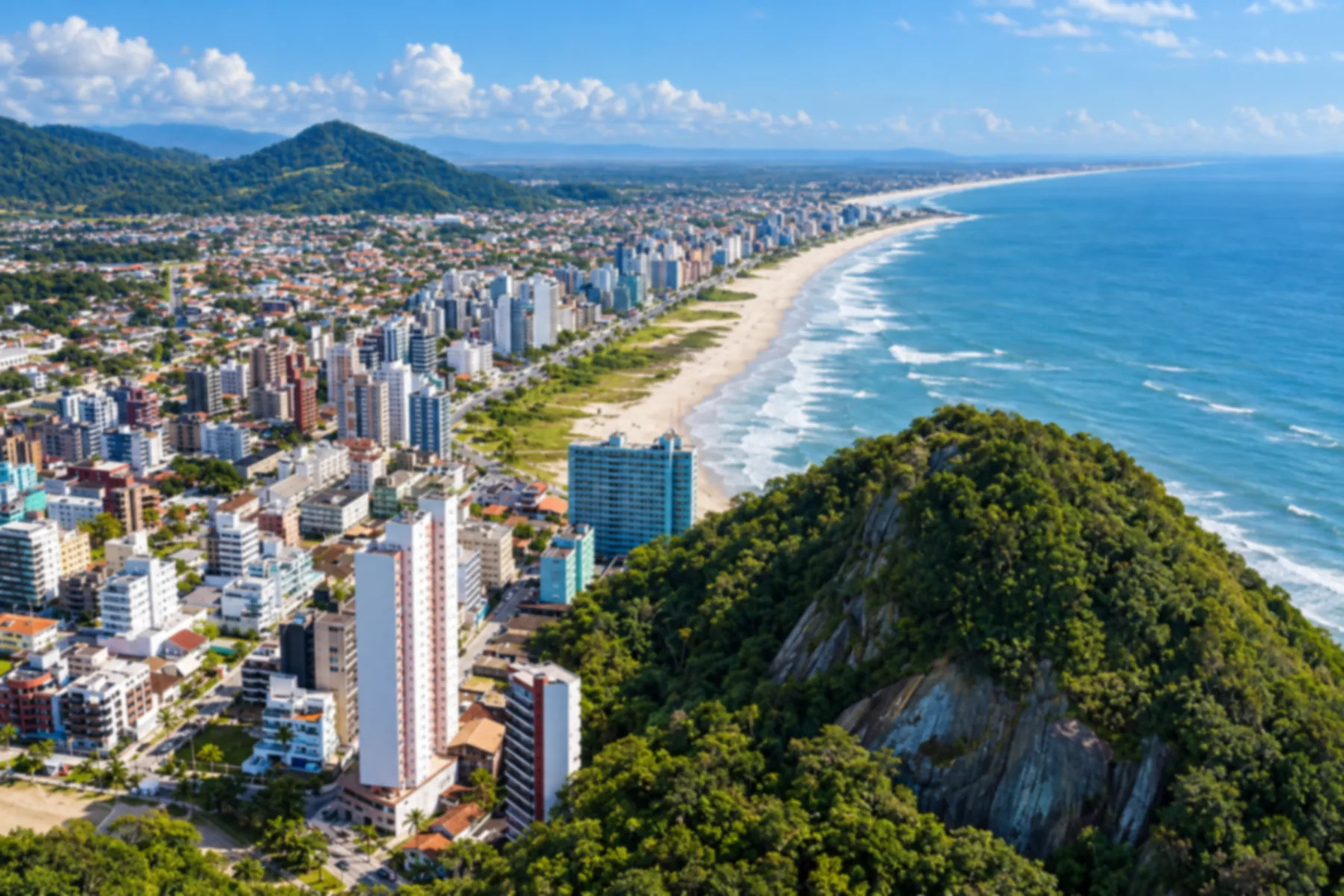
Matinhos reúne praias urbanas, costões e áreas de Mata Atlântica no litoral do Paraná. Caminhadas pela orla de Caiobá e passeios pelo entorno revelam o contraste entre os morros verdes e o mar.

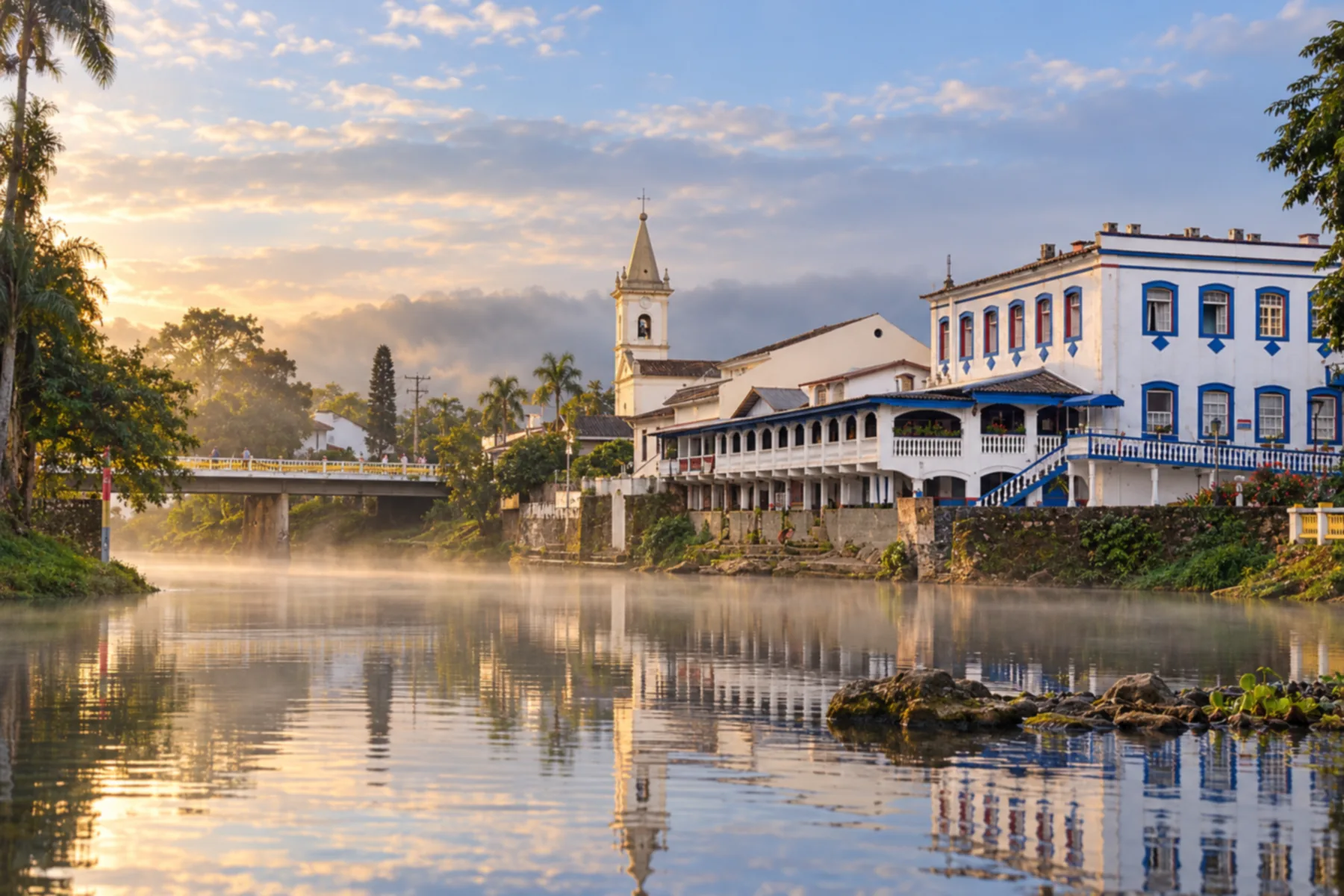
Morretes preserva casarios históricos às margens do rio Nhundiaquara, junto à Serra do Mar. O visitante pode caminhar pelo centro, experimentar a culinária local e conhecer paisagens de rios e mata.

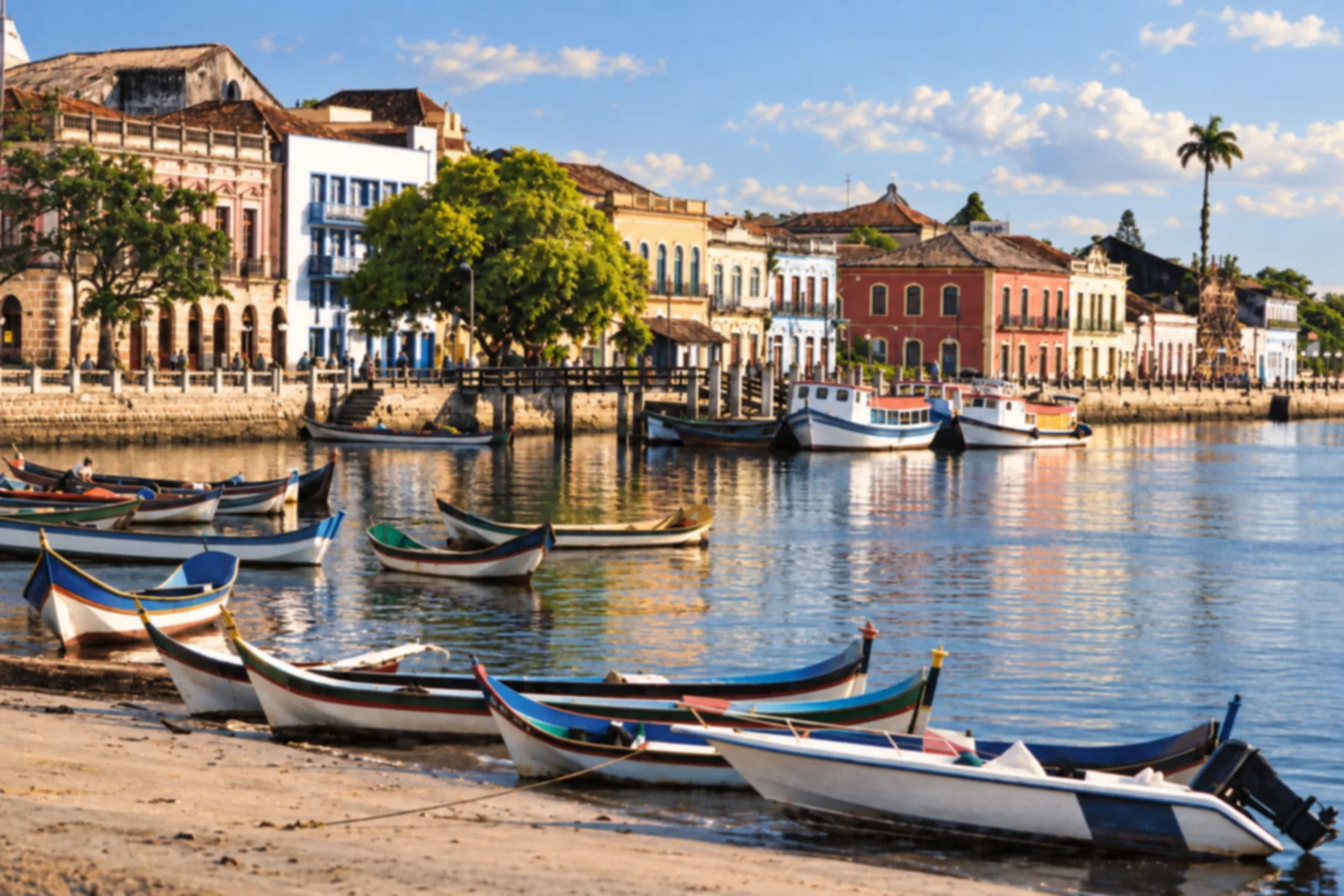
Paranaguá reúne patrimônio histórico e uma paisagem ligada ao porto, aos rios e às ilhas. Caminhadas pela Rua da Praia podem ser combinadas com passeios de barco e visitas ao litoral da baía.

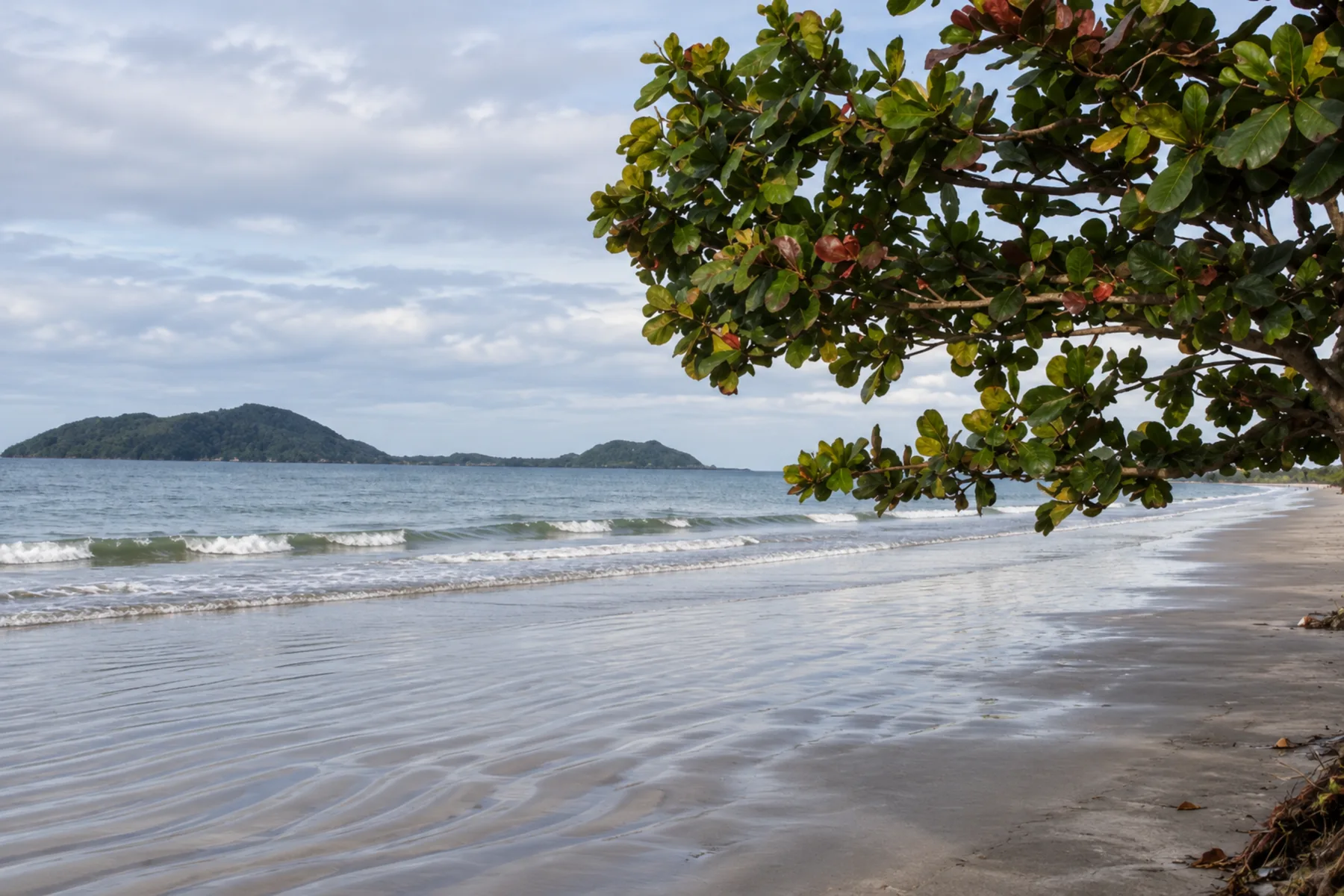
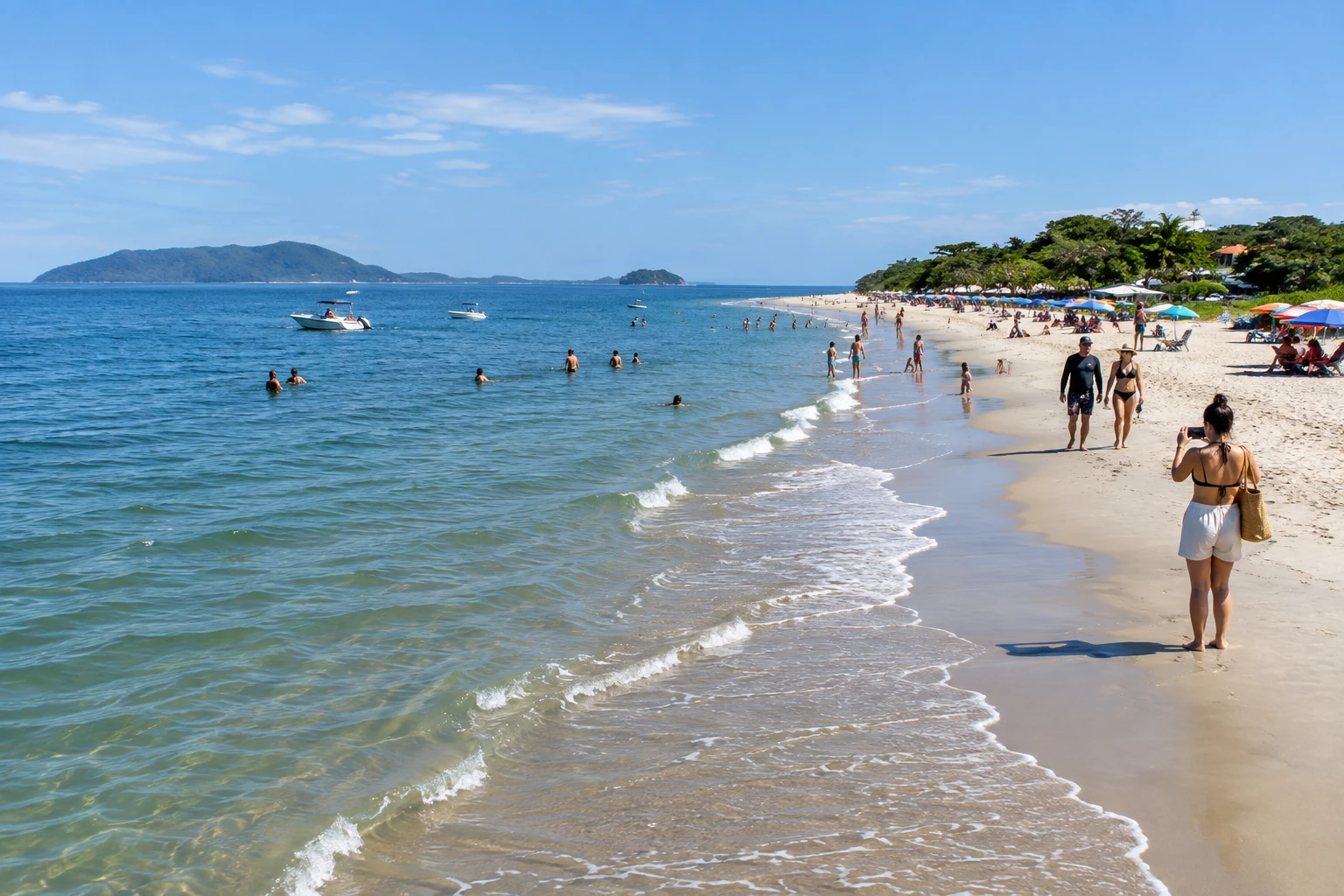
Pontal do Paraná tem uma longa faixa de praias e áreas de restinga no litoral do estado. O visitante pode caminhar pelos balneários e embarcar em Pontal do Sul para conhecer a Ilha do Mel.
The local experience
Tombado pelo Iphan em 2012, reúne casarões e armazéns da época em que o porto escoava erva-mate, como o Armazém Macedo. O conjunto inclui ainda a Fonte da Carioca, a estação ferroviária de 1916 e o Theatro Municipal.
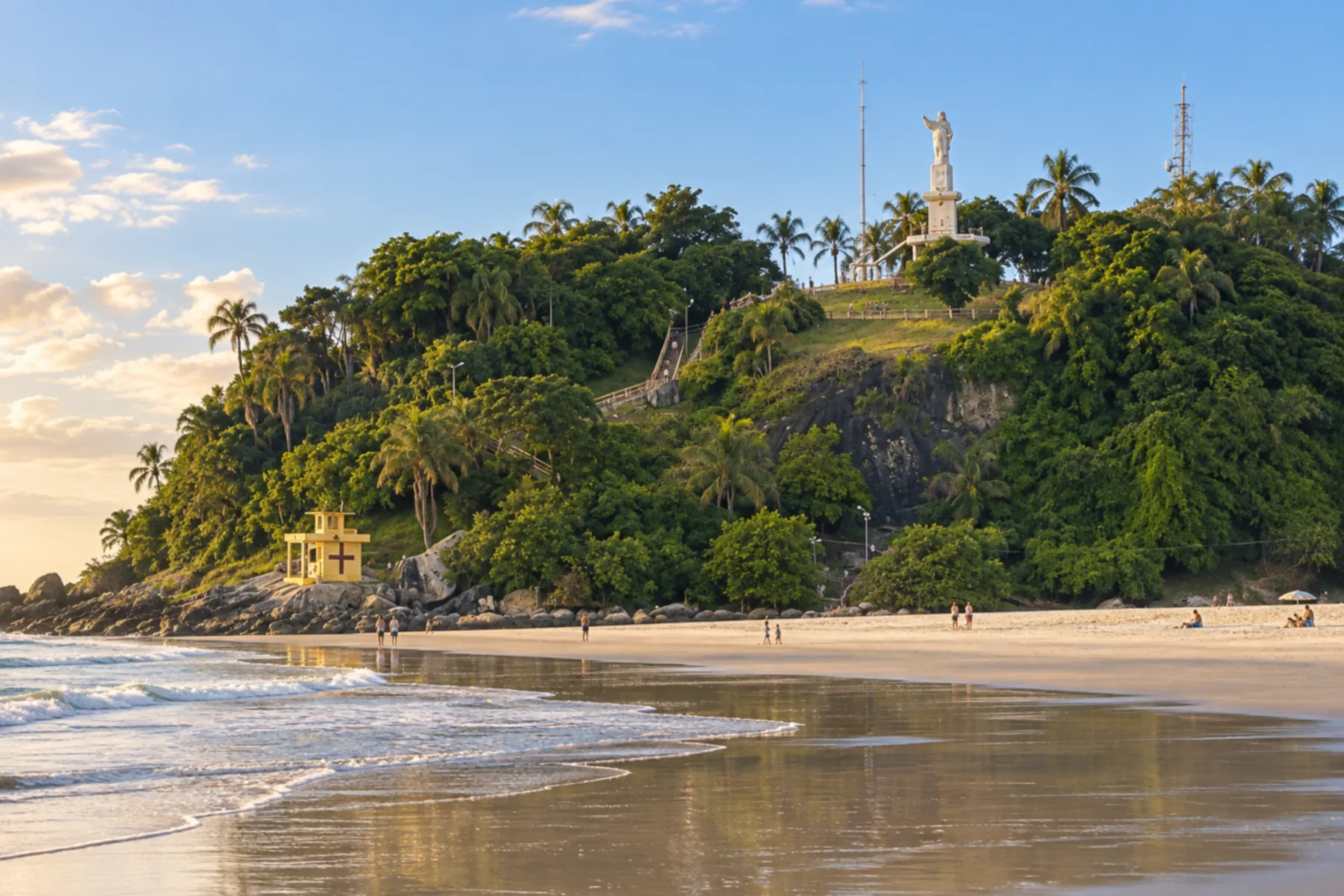
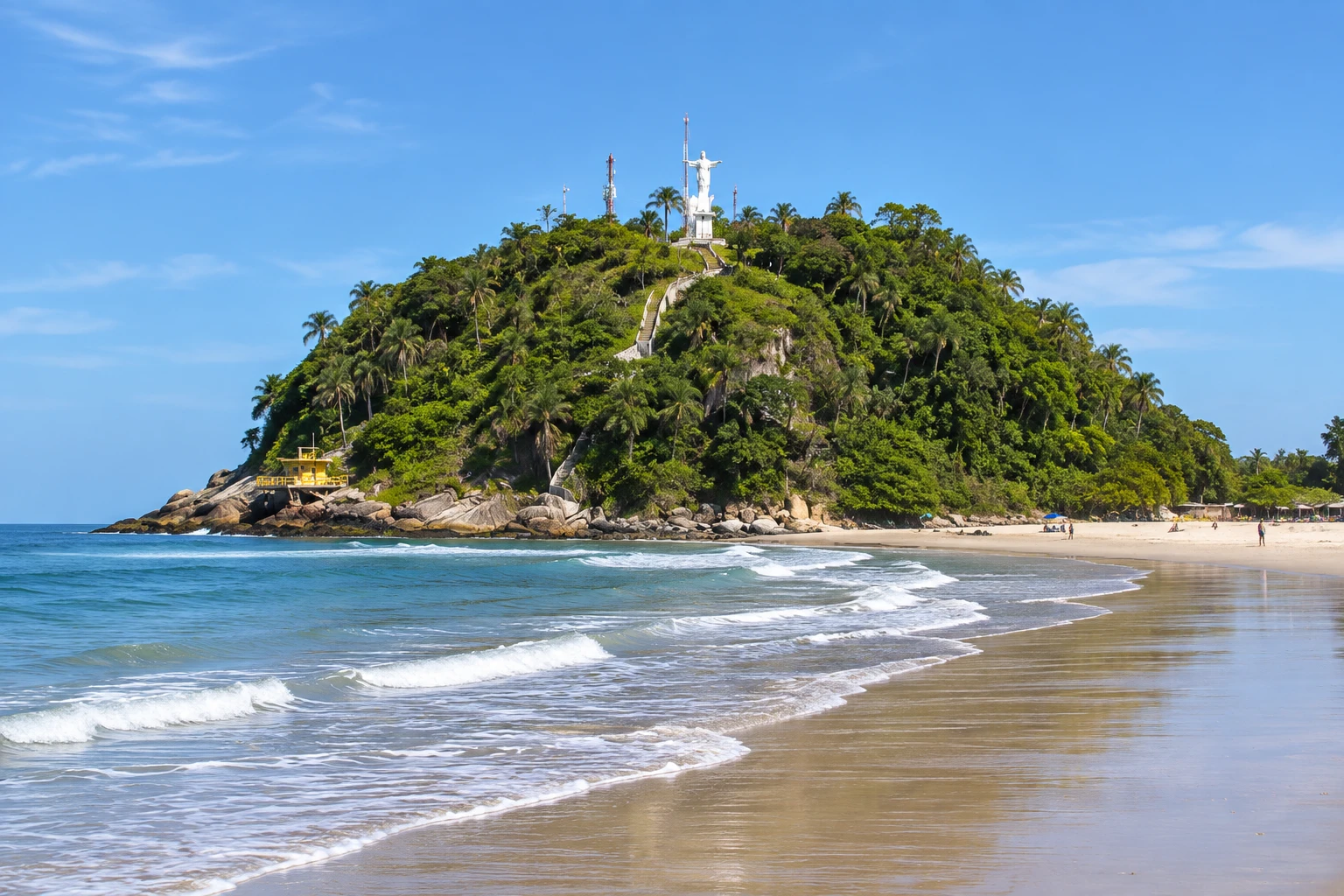
Elevação no extremo sul da orla central, junto à Praia de Brejatuba, tem no alto uma estátua do Cristo Redentor que se tornou símbolo do município. Uma escadaria de 199 degraus leva ao topo, mirante natural com vista para as praias.
Balneário voltado para a baía de Paranaguá, tem águas mais calmas que as praias de mar aberto do município. É o ponto de embarque dos barcos para a Ilha do Mel, e grupos de golfinhos costumam ser avistados na região.
Protegida por uma enseada de cerca de 1 quilômetro, tem faixa larga de areia e águas calmas e rasas, na entrada da baía de Guaratuba. Do canto da praia parte a trilha que sobe o Morro do Boi.
To choose before you go
Where each tour starts, how long it takes, how it is done, what is included and the price range.
O trem sai de Curitiba pela manhã e desce a Serra do Mar pela ferrovia Curitiba–Paranaguá, em cerca de 4h30 até Morretes. O trajeto passa por túneis, pontes e Mata Atlântica, com vista para paredões de pedra, represas e cachoeiras. A Cachoeira Véu de Noiva, no Rio Ipiranga, pode ser vista da linha férrea. O trem também serve a Estação Marumbi, porta de entrada do Parque Estadual Pico do Marumbi. Em Morretes o desembarque é perto do centro histórico, onde a maioria dos visitantes almoça barreado e caminha pelo casario e pelas margens do Rio Nhundiaquara. Há bilhete só do trem e pacotes que somam city tour em Morretes e Antonina, almoço e retorno de van pela Estrada da Graciosa ou pela BR-277. Também dá para fazer o sentido inverso, de Morretes a Curitiba no fim do dia.
Stops: Rodoferroviária de Curitiba, Serra do Mar, Estação Marumbi, Cachoeira Véu de Noiva, Estação de Morretes, Centro Histórico de Morretes.
Includes: The train ticket covers the route and a light snack with a drink. There are classes with different service (tourist, boutique and litorina), each with different prices. Operator packages usually include hotel transfer, barreado lunch, guide and city tour. On a basic ticket, lunch and other extras are paid separately. Check the current price list.
Tip: Buy in advance for holidays and weekends. To save time, do only one leg by train and the other by intercity bus, which is faster. On foggy days the mountain views are reduced; check the forecast. Buses do not run along Estrada da Graciosa: the return via that road is by van or car.
Best time: All year round. Clear-sky days favor the mountain views; holidays and weekends are busier.
Agencies that run it: Rota do Sol Turismo, Calango Expedições, Paranagua Tours.
R$206 · per person, one way, tourist class (published starting price) · official priceThe crossing departs from the terminal at Pontal do Sul, in Pontal do Paraná, and takes about 30 minutes; departing from Paranaguá, the trip is about 1h30. The island belongs to Paranaguá and has no cars. There are two landings: Encantadas on the south side, and Nova Brasília further north. From Encantadas, a trail of about 600 meters leads to the Gruta das Encantadas, a rocky formation by the sea. From Nova Brasília, the trail of about 1.6 km reaches the Farol das Conchas, from 1872, atop Morro das Conchas, after a staircase of 150 steps, with panoramic views of the island. Those who want to see both sides can walk between the villages, about 5 km across sand, forest and rocky headlands, or pay for a boat transfer between Encantadas and Brasília. The rest of the day is usually spent on the beaches.
Stops: Terminal de Pontal do Sul, Vila de Encantadas, Gruta das Encantadas, Nova Brasília, Farol das Conchas, Praia Grande, Praia de Fora.
Includes: Round-trip crossing, boat transfers between the villages and meals are paid separately. The island has visitor access control and may require a separate entrance fee: check the current rule with the managing authority. Agency packages departing from Curitiba usually include transport, boat, guide and lunch; check the current price table.
Tip: Confirm the time of the last return boat before moving away from the pier. Bring closed-toe shoes, sunscreen and water. Check the tide table for the cave visit. From Curitiba, access to Pontal do Sul is by car via BR-277; on holidays, leave early to catch the crossing.
Best time: All year. Summer has more boats and more people; outside the high season the island is quieter. Avoid days of heavy rain.
Agencies that run it: Rota do Sol Turismo, Paranagua Tours.
Boarding is at the pier behind Aquário Municipal, next to Ponte do Valadares, in downtown Paranaguá. The boat goes down the Rio Itiberê, passes in front of Ilha da Cotinga, where there is a fishing community, and proceeds to the port terminals, from which ships can be seen up close. In the longer version, about two hours, the route crosses Baía de Paranaguá, passes Ilha das Cobras and Ilha da Cotinga and includes Baía dos Golfinhos, where there is a chance of seeing dolphins near the vessel. Departures are daily throughout the day, and the boats are inspected by the Capitania dos Portos. Local agencies also sell private boats with stops at Ilha do Mel, at the Fortaleza de Nossa Senhora dos Prazeres and at Ilha das Peças.
Stops: Rio Itiberê, Ilha da Cotinga, Ilha das Cobras, Porto de Paranaguá, Baía dos Golfinhos.
Includes: The tour ticket covers the boat route. Small children usually have special conditions. Food and drinks are paid separately. Private boats are priced per group; check the current price list of each operator.
Tip: Buy the ticket at the kiosk next to the pier or from agencies in the historic center. Bring sunscreen and a light jacket for the bay breeze. Combine the trip with a visit to the museum and to the Mercado do Artesanato, a few minutes on foot.
Best time: All year round, including on cloudy days. Spotting dolphins depends on luck and the day's conditions.
Agencies that run it: Paranagua Tours.
The motorboat departs from Rua da Praia, in Paranaguá, skirts Ilha da Cotinga and heads to Baía de Guaraqueçaba. The trip to Vila de Superagui takes about 50 minutes, depending on tide and weather. Superagui is part of Parque Nacional do Superagui, in the municipality of Guaraqueçaba. In the village, a sandy trail crosses the island to Praia Deserta, a long stretch of undeveloped beach. Lunch is usually in the village. The return goes inside the bay and takes about 1h30. If you have more time you can add the community of Barbados, about 20 minutes by boat, with artisanal fishing and oyster and crab farming. Larger scheduled boats also make the crossing, more slowly.
Stops: Rio Itiberê, Ilha da Cotinga, Baía de Guaraqueçaba, Vila de Superagui, Praia Deserta, Parque Nacional do Superagui, Barbados.
Includes: On agency tours, the boat and the pilot are usually included, and the price depends on the number of people. Lunch, drinks and insurance are usually paid separately. Tours require prior booking and depart for closed groups. Check the current price list of each operator.
Tip: Book in advance and confirm departure according to the tide and wind forecast. Bring insect repellent, sunscreen, water and closed shoes for the sand trail. Arrange the return time with the operator, as it depends on the tide.
Best time: All year, with calm seas. Summer has higher demand; check the forecast and navigation conditions.
Agencies that run it: Paranagua Tours.
The reserve, maintained by Fundação Grupo Boticário, is located in the locality of Morato, in Guaraqueçaba, about 172 km from Curitiba. The standard visit is the Trilha do Salto, self-guided, which follows the Mata Atlântica to Salto Morato, a waterfall over 100 meters high, passing points such as the Figueira Ancestral and the Aquário natural, a river pool used for bathing. There is also the Trilha do Rio Bracinho, about 7.4 km round trip, taking 6 to 8 hours, of moderate difficulty, which ends at Cachoeira do Rio Bracinho; it requires prior booking and signing a liability waiver. The Visitor Center provides information about the region. The reserve is open Tuesday through Sunday, including holidays, with limited spots, and may close in case of heavy rain.
Stops: Reserva Natural Salto Morato, Trilha do Salto, Salto Morato, Figueira Ancestral, Aquário natural, Trilha do Rio Bracinho, Cachoeira do Rio Bracinho.
Includes: The ticket entitles you to a self-guided visit; there is a half-price ticket for students and other categories. Guided experiences and the Trilha do Rio Bracinho are scheduled separately. Transport and meals are the visitor's responsibility. Check the current price list.
Tip: Buy the ticket through the reserve's platform before you go. Closed shoes are mandatory; alcoholic beverages and pets are not allowed. Access includes a stretch of dirt road; without a car, arrange a taxi in Guaraqueçaba, about 20 km away. Bring swimwear, insect repellent and snacks.
Best time: Year-round; days without heavy rain are better, as the reserve can close in bad weather.
Agencies that run it: Viva a Vida Viagens.
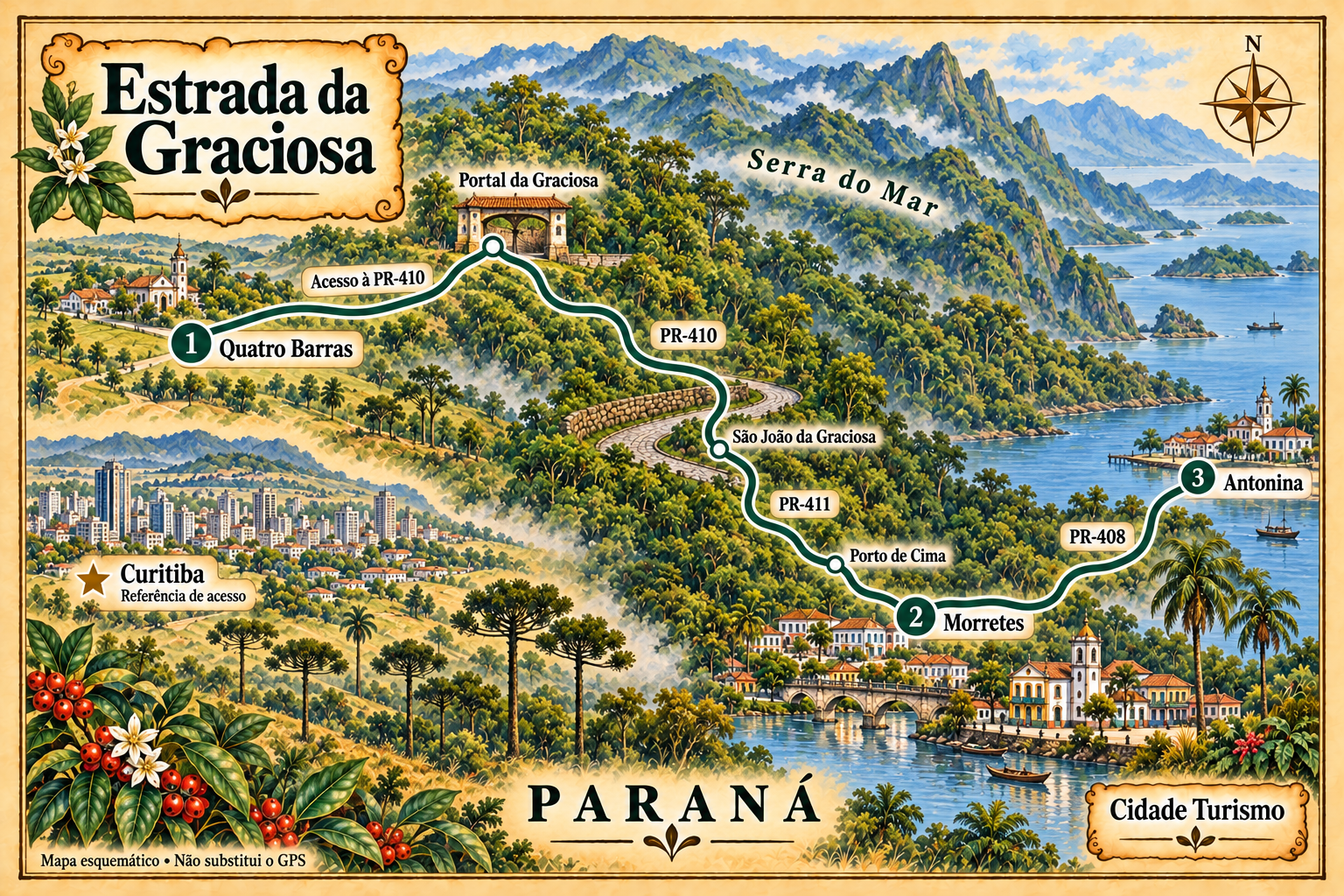
R$40 · per person, full-price ticket (self-guided visit) · official priceThe Estrada da Graciosa (PR-410) links Quatro Barras to Morretes and starts at the Portal da Graciosa. The descent of the mountain has paved sections and sharp curves, through the Atlantic Forest. Along the route there are recantos with parking, barbecue areas, restrooms, kiosks selling typical products and viewpoints. The Recanto Engenheiro Lacerda has a lookout with views as far as the sea. At the Recanto Mãe Catira, an iron bridge crosses the river of the same name. In São João da Graciosa there are craft stalls and access to other trails. Near the Curva da Preguiça is the trail to Salto Tombo d'Água, a waterfall of about 15 meters, on a route of around 45 minutes. Further down, a fork marks the end of the trip: Morretes or Antonina.
Stops: Portal da Graciosa, Recanto Engenheiro Lacerda, Recanto Mãe Catira, Ponte de ferro sobre o Rio Mãe Catira, São João da Graciosa, Salto Tombo d'Água, Morretes.
Includes: There is no fixed package: the road is traveled independently or as the van return of train tour packages. Parking, kiosks and purchases at the stops are paid separately. Check current prices with each operator.
Tip: Buses do not run along the Graciosa. In heavy rain or fog, the return is usually made via BR-277. Most of the road has no shoulder: stop only at pullouts. Combine the descent with lunch in Morretes.
Best time: All year. On foggy days views from the lookout points are impaired; choose clear-sky days.
The tour combines a walk through the historic center with a boat ride on the Rio Nhundiaquara. The center is small and has colonial houses, craft shops and riverside restaurants, where the typical dish is barreado. The walk passes by the Igreja Matriz de Nossa Senhora do Porto. The boat departs from the center, on the riverbank, in small vessels similar to gondolas, operated by local boatmen. The ride lasts about 20 minutes on average and shows the town from the river side, with bridges and large colonial houses. Tours run mainly on weekends. The river is also a starting point for other activities, such as tubing.
Stops: Centro Histórico de Morretes, Rio Nhundiaquara, Igreja Matriz de Nossa Senhora do Porto, Estação de Morretes.
Includes: The boat is paid per person, separately, directly to the boatman; check the current rates. Lunch and crafts are the visitor's responsibility.
Tip: Go on the weekend, when the boat usually runs. Arrive before lunch: riverside restaurants fill up on holidays. Arrange it with Antonina, about 15 km away.
Best time: All year round; on weekends and holidays there are more boats.
The walking route usually starts at the Igreja Matriz de Nossa Senhora do Pilar, on a hill next to Praça Coronel Macedo, with a view over the bay. From there the path follows the stone streets, among manor houses and ruins of the old erva-mate port, passing Teatro Municipal, Fonte da Carioca and the railway station. In the lower part are Mercado Municipal and Trapiche Municipal, in front of Baía de Antonina, surrounded by Serra do Mar. The walk can end at Ponta da Pita. Lunch is usually barreado, fish or seafood, and bala de banana is the town's typical sweet. The historic center is listed as national heritage.
Stops: Santuário Nossa Senhora do Pilar, Praça Coronel Macedo, Teatro Municipal, Fonte da Carioca, Mirante do Valente, Mercado Municipal, Trapiche Municipal, Ponta da Pita.
Includes: There is no ticket to walk through the center. Lunch, sweets and any guided visits are paid separately; check the current list of fees from providers who charge.
Tip: Wear comfortable footwear for the stone streets and bring sunscreen. Confirm the restaurants' opening status in advance. Combine the visit with Morretes, about 15 km away.
Best time: All year round; Carnival and the Festa de Nossa Senhora do Pilar, in August, change the city's activity.
Paranaguá is the oldest city in Paraná, and the historic center is explored on foot. A good starting point is the Museu de Arqueologia e Etnologia da UFPR, on Rua XV de Novembro, housed in a mid-18th-century building on the banks of the Rio Itiberê. The collection includes archaeological pieces, indigenous ethnology and popular culture. Nearby are Praça 29 de Julho and the Mercado do Artesanato, the former fish market, now home to shops and small restaurants. Cobblestone streets and old mansions lead to the Catedral de Nossa Senhora do Rosário. The new Mercado do Peixe sells fish and seafood. The Aquário Marinho is near the pier from which the boats depart.
Stops: Museu de Arqueologia e Etnologia da UFPR, Praça 29 de Julho, Mercado do Artesanato, Mercado do Peixe, Rio Itiberê, Catedral de Nossa Senhora do Rosário, Aquário Marinho.
Includes: The museum is open Tuesday through Sunday with extended hours; check whether there is an admission fee. The aquarium, meals and purchases are charged separately; check the current rates.
Tip: The museum is closed on Mondays, so plan your visit from Tuesday to Sunday. Save the end of the tour for a seafood lunch near the market and, if time allows, a boat trip around the bay.
Best time: All year round; a good option for cloudy days or when the sea is rough.
The activity goes down the rivers Ipiranga and Nhundiaquara, in Morretes, in individual inner tubes, passing through gentle rapids and pools. The meeting point for one of the operators is its headquarters in the historic center, where helmets, life jackets and other safety equipment are issued and adjusted. Then a 4x4 transport drives up a rural road, upriver, to the starting point, and the group descends accompanied by guides. The route takes about two and a half hours, with stops. There are also places that rent tubes with transport to the start of the descent and guides.
Stops: Rio Nhundiaquara, Rio Ipiranga, Centro Histórico de Morretes.
Includes: Safety equipment, transport to the departure point and guides are usually included. Photos, lunch and other extras are paid separately. There are age and minimum height limits; check the current table and the rules of each operator.
Tip: Bring swimwear, closed or securely fastened footwear and a change of clothes. On heavy rain days the activity may be canceled due to the river level. Book in advance on holidays.
Best time: Warm, from spring to summer. Check the river level and the forecast.
Agencies that run it: Calango Expedições.
The starting point is the Trapiche de Nova Brasília, on the north side of Ilha do Mel. The trail, about 4 km, is mostly flat along the seafront and Praia da Fortaleza, alternating sand and stretches of forest. At the end is the Fortaleza de Nossa Senhora dos Prazeres, a colonial seaside fort with preserved cannons and views over Baía de Paranaguá. The walk there takes about an hour. Those who wish can add a roughly 30-minute climb to Farol das Conchas from Brasília. The return is on foot along the same route.
Stops: Nova Brasília, Praia da Fortaleza, Fortaleza de Nossa Senhora dos Prazeres, Farol das Conchas.
Includes: The trail is done independently. The boat crossing to the island, food and drinks are paid separately. The island has access control and may require an entrance fee: check the current rules.
Tip: Check the tide table before walking along the beach. Bring water, sunscreen, insect repellent and closed-toe shoes. Leave early to return to the pier before the last boat.
Best time: All year round; avoid heavy rain and rough seas.
Agencies that run it: Paranagua Tours.
Cabaraquara fica em Guaratuba, na margem da baía em frente a Caiobá. De carro, o caminho é pela Ponte de Guaratuba, com um retorno logo depois dela, e a estrada sobe pela Mata Atlântica; ao longo de cerca de 700 metros ficam os restaurantes especializados em ostras, de frente para a baía, com passarelas e decks sobre o cultivo. De barco, o passeio sai da Praia das Caieiras, atravessa a Baía de Guaratuba, passa pelo manguezal e inclui uma trilha curta, com o condutor acompanhando o grupo. O passeio dura cerca de uma hora. As ostras produzidas ali são o prato principal, ao lado de peixes e frutos do mar. Alguns pontos têm stand up paddle e caiaque.
Stops: Praia das Caieiras, Baía de Guaratuba, Manguezal, Estrada do Cabaraquara, Caminho das Ostras.
Includes: The boat tour includes boat transport and the guide. Oysters, lunch, drinks and activities such as kayaking and stand up paddle are paid separately. Longer tours require booking with the community tourism agency. Check the current table.
Tip: The Estrada do Cabaraquara is narrow and mostly unpaved; in summer, go early. Check in advance whether the restaurants are operating. To arrive by boat, book in advance.
Best time: All year round. According to local producers, the oysters are meatier in winter.
Local association boats depart from Praça dos Namorados for a trip of about one and a half hours around Baía de Guaratuba, the second largest in Paraná, featuring islands and mangroves. With prior arrangement there are variations: a tour with a trail on Ilha da Pescaria, including visits to sambaquis and lithic workshops and ending at an oyster farm in Cabaraquara; and birdwatching trips to see guarás and other seabirds. There are also departures from the Terminal Turístico Pesqueiro. Private speedboats and fishing trips are hired separately.
Stops: Baía de Guaratuba, Ilha da Pescaria, Cabaraquara, Praça dos Namorados.
Includes: The ticket covers the boat trip. Variations that include a trail, birdwatching and lunch require booking and may have their own cost. Check the current price list with the associations and agencies.
Tip: In summer schedules fill up: buy early. Bring sunscreen, a cap, and water. Combine the trip with the Caminho das Ostras.
Best time: All year round; there are more departures in summer. For birdwatching, check the season with the agency.
Morro do Cristo is located at the end of Praia Central, at Praia do Cristo, between the beaches of Canoas and Brejatuba. The ascent is via a staircase of 199 steps to a natural viewpoint about 38 meters up. At the top is the image of Cristo Redentor, 8.3 meters tall. From there you can see Praia Central, part of the town and the ocean; on the other side of the hill are Baía de Guaratuba and Praia Brava. Access is open during the day. The visit fits into a break between the beach and lunch.
Stops: Morro do Cristo, Praia do Cristo, Praia Central, Praia Brava.
Includes: There is no admission fee for the climb. Food and parking are paid separately when applicable; check the current fee table of the party that charges.
Tip: Wear closed shoes, especially if the ground is wet. Prefer late afternoon for better light and less heat. The trail on the right side of the hill is often slippery after rain.
Best time: All year round; clear-sky days give a better view.
The descent is made on the Rio Cachoeira, in Bairro Alto, Antonina, along a route of about 3 km in an inflatable raft, with class II and III rapids that in some stretches can reach class IV. The group meets at one of the bases, changes clothes, receives equipment and safety training, proceeds to the river and descends accompanied by an instructor. There are stops in natural pools, with views of the Serra do Mar mountains, including Pico Paraná. Minimum age is 6 years. Two bases operate, with different days and departures, and the river level determines whether the activity takes place. Access is via Antonina, along PR-340, to the Usina Parigot de Souza.
Stops: Rio Cachoeira, Bairro Alto, Usina Parigot de Souza, Pico Paraná (view).
Includes: Life jacket, helmet, paddle and instructor are usually included. Transport from Curitiba, snacks and photos vary by operator. There is a reduced rate for children. Check the current price list.
Tip: Confirm the date with the operator: the activity depends on the river level and schedules differ between weekdays and weekends. Bring closed shoes that can get wet, swimwear, a towel and a change of clothes.
Best time: Check with the operator; the activity depends on river volume and suitable conditions.
Agencies that run it: Calango Expedições.
The boat departs from the Trapiche de Antonina and sails across the bay, surrounded by the Serra do Mar. The basic route passes by the old houses and continues toward the mangrove, in a trip of roughly thirty to fifty minutes. The vessel holds up to 20 people, and departures run with a minimum of four passengers, so it's worth calling ahead. Some agencies in Curitiba combine this trip with the train and the historic centers of Morretes and Antonina.
Stops: Trapiche Municipal de Antonina, Baía de Antonina, Historic houses, Mangrove.
Includes: The price covers the boat tour; food and drinks are paid separately. In agency packages, the train and guide may be included. Check the current price list with the boatman or the agency.
Tip: Arrange the time in advance and arrive at the pier with time to spare, especially on slow days when they wait to assemble the minimum group. Bring sunscreen.
Best time: All year round; choose clear-sky days.
Parque Estadual Pico do Marumbi is located in Morretes, Piraquara and Quatro Barras. The main access is the train from Curitiba to Estação Marumbi, or via Porto de Cima, where the IAT post is located. The trilha do Morro do Rochedinho, at 625 m altitude, starts near the station and has shaded stretches in Mata Atlântica, with no ropes or ladders. From the top you can see the serra, the station and the tracks that skirt the Serra do Mar. It is the park's shortest option; Pico Marumbi and other trilhas are longer and require preparation. Before entering it is mandatory to register and sign the risk-awareness form at the park entrance.
Stops: Parque Estadual Pico do Marumbi, Estação Marumbi, Morro do Rochedinho, Porto de Cima, Conjunto Marumbi.
Includes: There is no organized tour structure: the trail is self-guided, with registration and signing of the form at the park entrance. Local operators sell the trail with transport and a guide; snack and transport to the park are paid separately. Check the rules and the current rates.
Tip: Arrive early and register your entry and exit at the IAT post. There is a cutoff entry time for the longer trails; confirm with the managing agency. Bring water, a snack and hiking footwear; the final stretch of road access may require 4x4 traction or walking.
Best time: All year round, on dry days; avoid heavy rain.
Agencies that run it: Calango Expedições.
The Caminho do Itupava connects the plateau in Quatro Barras to the coast in Morretes via a historic trail opened in the 17th century and later paved with stones. The section is about 20 to 25 km long, with a descent of more than 900 meters, and crosses Parque Estadual Serra da Baitaca and Parque Estadual Pico do Marumbi. The most common direction is from Quatro Barras to Morretes, downhill. It passes through river valleys, paved stretches, Casa do Ipiranga and Santuário de Nossa Senhora do Cadeado, with views of the Conjunto Marumbi. It is long, wet and demands physical fitness; entry is only permitted through the park's official gate, with a signed risk acknowledgment form.
Stops: Borda do Campo (Quatro Barras), Parque Estadual Serra da Baitaca, Casa do Ipiranga, Santuário de Nossa Senhora do Cadeado, Porto de Cima (Morretes).
Includes: Operators from Curitiba offer the crossing with transport between the points, a mountain guide and insurance; food is usually at the visitor's expense. Check the current pricing table.
Tip: Check with the managing authority whether the trail is open before you go, as it can be closed in bad weather. Start early, bring water, a snack, a raincoat and hiking shoes, and consider going with a guide. Enter only through the official gate.
Best time: Drier months; avoid rainy days, when the terrain becomes slippery.
Agencies that run it: Calango Expedições.
The trail starts at Praia Mansa de Caiobá, in Matinhos, and ascends Morro do Boi, about 160 meters high, declared a protected site in 1989. The climb is short, around 15 to 20 minutes, through the forest, with steep rocky sections; on the final rock face a rope is used for support. From the top the view reaches Praia Mansa, Praia Brava, Praia dos Amores, the Matinhos waterfront and Baía de Guaratuba. Another trail through the forest leads to Praia dos Amores. Rappelling and climbing at the site are done with instructors.
Stops: Morro do Boi, Praia Mansa, Praia dos Amores, Praia Brava, Praia do Belo.
Includes: The trail is self-guided and has no entrance fee. Rappelling, climbing and guides, when hired, are paid separately; check the current rates with the instructors.
Tip: Wear shoes with good traction and avoid going on wet rock. Bring water and insect repellent. The hill is not constantly maintained: go carefully and, if you prefer, with a local guide.
Best time: All year; prefer dry days.

Day by day
Suggestions to plan the trip. Change the order of the days according to the weather and tour availability.
Leave Curitiba early. The train ride from Curitiba to Morretes along the Serra do Mar departs the Rodoferroviária in the morning and takes a few hours, with bridges and tunnels on the descent. The train does not run every day and seats are limited: check the schedule and book in advance. In Morretes, visit the Centro histórico de Morretes and take a boat trip on the Rio Nhundiaquara, and have barreado for lunch, a typical local dish. Stay overnight in Morretes.
In the morning, go from Morretes to Antonina. If you don't have a car, check bus times or book a transfer in advance. Visit the historic center of Antonina and the Igreja de Nossa Senhora do Pilar, with its houses facing the bay, and try the bala de banana, the town's typical sweet. In the afternoon, go to Paranaguá and visit the historic center of Paranaguá and the Museu de Arqueologia e Etnologia. Stay overnight in Paranaguá.
Leave early from the Paranaguá terminal for Ilha do Mel. The crossing from Paranaguá is longer than from Pontal do Sul; the state's official page states about 1h30. On the island, the Ilha do Mel in one day itinerary—Gruta das Encantadas and Farol das Conchas—is done on foot, since there are no vehicles. Crossings can be changed due to bad weather, so allow extra time before the bus back to Curitiba.
Drive down from Curitiba along the Estrada da Graciosa, with stops at scenic spots and viewpoints. Reserve the morning for those stops and arrive in Morretes at lunchtime to try the barreado. In the afternoon, visit the Centro histórico de Morretes and take a boat ride on the Rio Nhundiaquara. Stay overnight in Morretes.
In the morning, go tubing (bóia cross) on the Ipiranga and Nhundiaquara rivers in Morretes. Book with an operator, as the route depends on river levels. In the afternoon, drive to Antonina and visit the historic center of Antonina and the Igreja de Nossa Senhora do Pilar. Try the bala de banana and see the bay at the end of the day. Stay overnight in Antonina.
Drive from Antonina to the community of Morato in Guaraqueçaba and arrive in the morning. The Reserva Natural Salto Morato is open Tuesday to Sunday, offers self-guided visits, has a paid ticket with reduced fare and requires closed footwear. Heavy rain can close visits, so confirm beforehand. Return to Antonina in the late afternoon.
Drive to Paranaguá. In the morning, visit the historic center of Paranaguá and the Museu de Arqueologia e Etnologia. In the afternoon, take a boat trip through the Baía de Paranaguá and Baía dos Golfinhos, which departs from the city's port. Book in advance and check the weather forecast. Stay overnight in Paranaguá.
Leave early from the Paranaguá terminal for Ilha do Mel. Follow the Ilha do Mel in one day itinerary: Gruta das Encantadas and Farol das Conchas. Hikers can swap it for Ilha do Mel: the trail to the Fortaleza de Nossa Senhora dos Prazeres. Cars are not allowed on the island. Return to Paranaguá with time to spare and continue to Curitiba via BR-277.
Take the train ride from Curitiba to Morretes along the Serra do Mar, which departs from the Rodoferroviária in the morning. The train does not operate every day: check the schedule and book. In Morretes, visit the historic center of Morretes and take a boat trip on the Rio Nhundiaquara and have barreado for lunch. Those who prefer hiking can leave the Trilha do Rochedinho at Parque Estadual Pico do Marumbi for another day, confirming the access rules beforehand. Stay overnight in Morretes.
Go from Morretes to Antonina. In the morning, go rafting on the Rio Cachoeira in Antonina, with an operator booked in advance. In the afternoon, visit the historic center of Antonina and the Igreja de Nossa Senhora do Pilar and try the bala de banana. Those who don't want to raft can substitute a boat trip around the Baía de Antonina. Stay overnight in Antonina.
Arrive in the morning at Reserva Natural Salto Morato, in the community of Morato, Guaraqueçaba, departing from Antonina by road. The reserve is open Tuesday to Sunday, visits are self-guided and the entrance fee is charged, with a reduced fare. Wear closed footwear and bring water. Return to Antonina in the late afternoon. If that day falls on a Monday, swap the order of the itinerary.
Go from Antonina to Paranaguá. In the morning, visit the historic center of Paranaguá and the Museu de Arqueologia e Etnologia. In the afternoon, take a boat trip through the Baía de Paranaguá and Baía dos Golfinhos. Stay overnight in Paranaguá.
Full day on an island, departing from Paranaguá terminal. Option 1: Ilha do Mel in one day: Gruta das Encantadas and Farol das Conchas, or the trail to Fortaleza de Nossa Senhora dos Prazeres. Option 2: Ilha de Superagui and Praia Deserta, a round-trip from Paranaguá with a trail to the beach. Choose just one and book in advance. The sea may affect schedules. Stay overnight in Paranaguá.
Reserve the morning for the transfer from Paranaguá to Guaratuba by car or bus. In the afternoon, do the Caminho das Ostras in Cabaraquara (Guaratuba), or take a boat tour of the Baía de Guaratuba; check with the operator what each tour includes. At the end of the day, climb Morro do Cristo, Guaratuba's viewpoint. Stay overnight in Guaratuba.
In the morning, travel by road to Caiobá in Matinhos and do the Trilha do Morro do Boi in Caiobá (Matinhos). Reserve the rest of the morning for the beach. After lunch, return to Curitiba via the BR-376. If it's summer, allow extra time because of road congestion.
Best time to go
Summer favors a trip focused on beaches and seaside resorts. For historic centers and meals in Morretes and Antonina, outings can be spread throughout the year. For visits to islands and natural areas, check the forecast, navigation conditions and access guidelines.
The seasons shown are the most usual ones; nature doesn't always follow the calendar.
Busy summer · Rain showers
Month of heat and humidity: average temperatures in Paranaguá are around 23 °C low and 28 °C high, with about 300 mm of rain. Showers are frequent. Beaches and resorts see the year's highest crowds, and the Curitiba–Morretes train may run more departures in the season. Book trains, crossings and tours in advance and bring a rain jacket for trails and river trips.
Heat and rain · Carnival on the beaches
It remains hot and humid, with about 285 mm of rain on average and temperatures between 23 °C and 28 °C in Paranaguá. Beaches and resorts are crowded, especially if Carnival falls in this month. On islands and in bays, check the forecast and navigation conditions. In Morretes and Antonina, the rain can affect rivers and trails.
End of summer · Birds in Superagui
Rainfall is still high, averaging around 246 mm, and temperatures range between 23 °C and 27 °C. Beach crowds decrease after the holidays. According to a local operator, March and April are recommended for birdwatching in Superagui. Check the train schedule, which may operate on fewer days.
More settled weather · Easter holidays
Rainfall falls to about 153 mm and temperatures are between 21 °C and 25 °C in Paranaguá. It's a transitional period, with sunny days and some rain fronts. Good for historic centers, the train and boat trips. Holidays in the month, like Easter and Tiradentes, increase crowds in Morretes, Antonina and Ilha do Mel.
Mildly cool days · Few people
It gets cooler: lows around 18 °C and highs of 23 °C in Paranaguá, with average rainfall around 140 mm. The beaches are better for walking than for swimming. There is less activity, which helps when visiting Morretes, Antonina and Paranaguá. For trails and islands, check the forecast and bring a light jacket.
Mildly cool · Clear days
Start of winter, with temperatures between 16 °C and 21 °C in Paranaguá and average rainfall of about 107 mm. Cold fronts bring windy days and the sea can become rough. It's a time for cultural outings and barreado in Morretes and Antonina. On islands and in bays, crossing times can change; check beforehand and bring warm clothing.
School holidays · Winter Festival
A cold month for the coast, with averages between 15 °C and 20 °C in Paranaguá and about 104 mm of rain. With school holidays, the train runs more services and Morretes and Antonina receive more visitors. The UFPR Winter Festival in Antonina draws a crowd in winter; check dates and programming. Beaches are for walking, not swimming.
Lowest rainfall of the year · Wind and cold fronts
In Paranaguá it's the month with the lowest rainfall in the series, averaging around 92 mm, with temperatures between 16 °C and 21 °C. Skies are often clear between cold fronts. Good for hikes, Salto Morato, Ilha do Mel and boat trips, but wind can affect navigation. Traffic is moderate, outside holiday periods.
Spring · Rain returns
Spring warms the coast, with temperatures between 17 °C and 22 °C in Paranaguá, and rainfall rising to about 158 mm. Open days alternate with rain fronts. It's a good time to combine historic centers, rivers and islands with little crowding. For trails and river trips, check conditions and the forecast before you go.
Variable weather · Moderate crowds
Average rainfall is about 178 mm, with temperatures between 19 °C and 23 °C in Paranaguá. The weather changes quickly, with sun in the morning and showers in the afternoon. Holidays and weekends draw crowds to Morretes, Antonina and Ilha do Mel. Schedule boat and river trips for the morning and check the forecast and navigation conditions.
Festa do Rocio · Heat building
Average rainfall around 177 mm and temperatures between 20 °C and 24 °C in Paranaguá. In November the Festa de Nossa Senhora do Rocio takes place, with processions and heavy crowds in Paranaguá, especially around the 15th. Visitors at that time should book crossings and transfers in advance. Beaches begin to fill toward the end of the month.
Start of summer · Rain showers
Temperatures rise, between 22 °C and 27 °C in Paranaguá, and average rainfall exceeds 220 mm, mostly in showers. Crowds increase at the beaches of Matinhos, Pontal do Paraná and Guaratuba, and the islands fill up near the year-end holidays. Book the train, crossings and tours in advance, and bring a rain jacket for trails and rivers.
Plan the journey
Afonso Pena International Airport (CWB) is in São José dos Pinhais, about 18 km from Curitiba. It’s the main airbase used for Paraná’s coast. From there you continue by road, via BR-277 or the Estrada da Graciosa.
Approximate road distances from the airport: - Paranaguá: about 75 km. - Antonina: about 78 km. - Matinhos: about 103 km. - Guaratuba: about 120 km.
For those heading to the southern part (Guaratuba and Matinhos), Joinville (SC) airport is an alternative: it’s 84 km from Matinhos.
Check with airlines to see which cities have flights. Book transfers or a rental car before you arrive so you don’t depend on availability the day of travel. For returning flights, leave a buffer between departing the coast and your flight time.
A Viação Graciosa liga Curitiba a Morretes, Antonina, Guaratuba, Matinhos e Pontal do Paraná. Para Guaraqueçaba, a linha sai de Antonina e pode ter mudado de empresa: confirme na rodoviária. As saídas são da estação rodoferroviária de Curitiba. A empresa também lista uma linha de Curitiba ao embarque da Ilha do Mel.
Tempos de viagem informados em consulta de passagens: - Curitiba a Praia de Leste (Pontal do Paraná): cerca de 1h30. - Curitiba a Matinhos: cerca de 2h10. - Curitiba a Antonina: cerca de 1h40 em condições normais. - Matinhos a Guaratuba: cerca de 35 minutos.
Entre as cidades do litoral, a empresa opera a linha Paranaguá, Morretes e Antonina, além de ligações de Paranaguá com Guaratuba e Pontal do Sul. Há também linha entre Guaraqueçaba e Antonina em alguns dias da semana. Confira dias e horários atuais.
O trem entre Curitiba e Morretes é outra forma de chegar. Morretes pode ser alcançada por estrada ou pelo trem Serra Verde Express, a partir de Curitiba. Confira a tabela atual de quem cobra a passagem.
Vans e traslados privativos também fazem o trecho. Veja a parte sobre pacote com traslado.
R$10.65 · per person, section of the Paranaguá–Morretes–Antonina metropolitan line · official priceFrom Curitiba, take BR-277 toward Paranaguá, about 90 km from the capital. To Matinhos, it’s about 110 km from Curitiba. The route goes on BR-277 and then PR-508.
Estrada da Graciosa is the alternative to reach Morretes. It’s accessed from BR-116; in Morretes, PR-422 leads to BR-277.
Coming from Santa Catarina or Rio Grande do Sul: via BR-376, at Garuva (SC), follow PR-412 to Guaratuba. PR-412 continues to Praia de Leste, in Pontal do Paraná. The distance from Curitiba airport to Florianópolis is about 314 km, and to São Paulo about 408 km.
The connection between Guaratuba and Matinhos is made by the Guaratuba Bridge, which cuts the crossing to about two minutes. The state government chose not to charge tolls and restricted heavy vehicle traffic. Older guides still mention a ferry for this crossing.
There is no car access to the islands. Ilha do Mel and Superagui require boat travel.
It’s not mandatory to rent a car, but the choice depends on your itinerary.
Without a car, it works well to plan the trip using base towns. Intercity buses connect Paranaguá with Morretes and Antonina. They also link Paranaguá to Guaratuba and Pontal do Sul. Schedules are estimated and may suffer delays. Within each historic center, Morretes, Antonina and Paranaguá are walkable.
With a car, it’s easier to combine Morretes, Antonina and Paranaguá in the same day, or to alternate beach towns. In Guaratuba, the City Hall regulates circulation of tourist buses and vans in the center and on the waterfront. See the section about the fee.
Ilha do Mel and Superagui have no car access. For Ilha do Mel, the boat departs from Pontal do Paraná or from Paranaguá. For Superagui, the boat leaves from the same Paranaguá pier used by Ilha do Mel boats. Check schedules, navigation conditions and any boarding rules before you go. Boarding is usually done at terminals, so leave your car in a nearby parking lot. Book the trip and the return in advance during busy periods.
Both approaches work, and the choice depends on how much you want to plan.
On your own: buy the bus ticket, rent a car or take the train to Morretes. This gives more freedom to alternate bases between towns. It requires checking bus, boat and tour schedules.
Organized package or booked transfer: tour operators and transport companies offer transfers with pickup at the airport, hotels or companies. One company in Curitiba states the route to Paranaguá, about 83 km, takes around 1h30. Viação Graciosa also works with tourism and charters. This is useful for groups and for those who want set times before arrival.
For any option, compare what’s included: train, bus, meals, boat and fees paid separately. For boat trips, ask the boarding point and the crossing time. Prices vary by operator, so check each operator’s current rates.
Guaratuba: the city government charges a tourism fee for certain vehicles to reduce traffic impact in the downtown area and on the waterfront. The fee targets vehicles used for tourist transportation. Buses, minibuses and vans pay. Private passenger cars are not the aim of this fee. If you travel on an excursion bus or tourist van, ask the company whether the fee is included. The amount, exemptions and payment method vary. Check the current schedule at the Guaratuba City Hall, which was not found for this guide.
Ilha do Mel (Paranaguá): the state law provides for an entrance fee, with exemptions that include registered residents. This is not a municipal fee. The state government determined that collection will only start after sanitation works are completed. Before you travel, check with the Instituto Água e Terra (IAT) or the Paranaguá City Hall to see whether there is a fee and how to pay. The expected payment method is an app.
In the other cities in this guide, no municipal tourism fee for visitors was found. Check before you go.
Who takes you
Only agencies with an active registration in Cadastur, the official registry of Brazil's Ministry of Tourism, are listed. The order is not a ranking: compare the tours and book directly with the agency.
Cidade Turismo reviews its information regularly, but something may have changed. Check with the place before planning your trip.
Operator from Curitiba, on Rua Marechal Rondon. Sells the Curitiba–Morretes train tour in packages with hotel transfer, train ticket, optional lunch and return by van via the Estrada da Graciosa. Also sells the day trip to Ilha do Mel, departing from Curitiba with crossing via Pontal do Sul. Provides transfers only in the central area of Curitiba.
Tours: Train ride from Curitiba to Morretes along the Serra do Mar, Ilha do Mel in one day: Gruta das Encantadas and Farol das Conchas.
Cadastur checked in October 2026
Travel agency from Curitiba. Sells the package to Guaraqueçaba including Ilha das Peças and Reserva Natural Salto Morato, with Curitiba–Paranaguá minibus, boat crossing and accompanying guide. The package is operated by a partner agency and includes entrance to Salto Morato.
Tours: Reserva Natural Salto Morato, in Guaraqueçaba.
Cadastur checked in October 2026
Nature tour operator based in Morretes, active since 2004. Sells bóia cross, rafting, canoeing, bike touring, city tours, 4x4 rides, trails and mountaineering in the Serra do Mar and in the Lagamar. Tours depart from the headquarters in downtown Morretes. Also puts together two-day packages that include the Curitiba–Morretes train descent.
Tours: Train ride from Curitiba to Morretes along the Serra do Mar, Bóia cross on the rivers Ipiranga and Nhundiaquara, Rafting on the Rio Cachoeira, in Antonina, Trilha do Rochedinho, in Parque Estadual Pico do Marumbi, Caminho do Itupava: historic crossing from Quatro Barras to Morretes.
Cadastur checked in October 2026
Tour operator from Paranaguá, with an office on Rua da Praia. Organizes boat trips for closed groups, departing from Paranaguá: Ilha do Mel (Fortaleza, Farol das Conchas or Encantadas), Superagui and Praia Deserta, communities and islands in the Baía de Paranaguá. Also offers transfers and tours in Morretes, including the Serra do Mar train. Tours require prior booking.
Tours: Train ride from Curitiba to Morretes along the Serra do Mar, Ilha do Mel in one day: Gruta das Encantadas and Farol das Conchas, Boat tour of Baía de Paranaguá and Baía dos Golfinhos, Ilha de Superagui and Praia Deserta, day trip from Paranaguá, Ilha do Mel: trail to the Fortaleza de Nossa Senhora dos Prazeres.
Cadastur checked in October 2026
Your base to explore
Before you go
A little planning leaves more time to enjoy the journey.
Summer favors a trip focused on beaches and seaside resorts. For historic centers and meals in Morretes and Antonina, outings can be spread throughout the year. For visits to islands and natural areas, check the forecast, navigation conditions and access guidelines.
The seasons shown are the most usual ones; nature doesn't always follow the calendar.
In five days, combine Morretes and Antonina, Paranaguá's center and Ilha do Mel, plus two days of beach in Matinhos, Pontal do Paraná or Guaratuba. To include Guaraqueçaba and Superagui, add at least three days and organize the crossings as a separate stage.
Morretes is a base for the historic houses, the river and the barreado, with Antonina in the same historic sector. For beaches, choose Matinhos, Pontal do Paraná or Guaratuba depending on the stretch you want to visit. Staying overnight on Ilha do Mel makes it possible to split your walks over two days. Guaraqueçaba deserves its own base when communities and islands are the priority.
Take your trash with you, follow the signs and support local businesses. In natural areas, follow the visiting guidelines.
Beyond the guide
Your questions
São Antonina, Guaraqueçaba, Guaratuba, Matinhos, Morretes, Paranaguá e Pontal do Paraná. O conjunto permite alternar patrimônio histórico, praias e visitas à natureza.
A Ilha do Mel integra Paranaguá. A visita envolve travessia de barco e caminhadas na ilha, por isso convém separar essa etapa do passeio pelo centro histórico da cidade.
Morretes é uma das referências para o barreado. Combine a refeição com o centro histórico e o passeio junto ao Rio Nhundiaquara.
Dois dias pedem um recorte. Escolha Morretes e Antonina para história e gastronomia, ou concentre a estadia em um dos municípios de praia. Guaraqueçaba e as ilhas merecem mais tempo para deslocamento e travessia.
Superagui fica em Guaraqueçaba. Trate a visita como uma etapa ligada à natureza e às comunidades desse município, com tempo reservado para a navegação e para permanecer no local.
Os guias consultados informam que não há taxa de entrada na ilha. O gasto fixo é a passagem de barco de ida e volta, paga à parte. O valor muda conforme o ponto de embarque e a empresa, então confira a tabela atual. A ilha é Unidade de Conservação: cerca de 93% da área está dentro de uma Estação Ecológica e de um Parque Estadual. A visita à Estação Ecológica só é permitida com autorização do órgão ambiental do estado e com fins educativos. Por isso, fique nas trilhas e nas áreas abertas ao público.
A saída por Pontal do Sul, em Pontal do Paraná, leva cerca de 30 minutos de travessia. A saída por Paranaguá leva cerca de 1 hora e 30 minutos. Nos dois casos o transporte é feito por barcos de linha ou por táxis náuticos autorizados. As passagens podem ser compradas pela internet ou nos terminais, que têm estacionamento. Em feriados prolongados, reserve o barco com antecedência. Na ilha não circulam carros: o deslocamento é a pé ou de bicicleta. Leve bagagem leve e deixe o carro no estacionamento do terminal.
Na alta temporada (dezembro, janeiro, fevereiro e a segunda quinzena de julho), o Trem da Serra do Mar Paranaense sai todos os dias. Nos outros meses, as saídas são às sextas, sábados, domingos e feriados. A viagem dura cerca de 4h30. O trem sai de Curitiba pela manhã e a volta de Morretes é à tarde. O bilhete pode ser de ida e volta ou só de um trecho. A compra é pelo site da operadora, na bilheteria da Rodoferroviária de Curitiba ou na estação de Morretes. Nas compras no balcão há risco de bilhetes esgotados, por isso compre antes em feriados e férias. Confira a tabela atual de preços.
Podem. Menores de 16 anos precisam apresentar documento original com foto no embarque, como RG, passaporte ou CNH. Para crianças de até 12 anos também vale a certidão de nascimento original. Sem a documentação legal, o embarque de crianças e adolescentes não é permitido. Quem tem até 16 anos precisa estar com os pais ou com um responsável expressamente autorizado. Crianças de 0 a 5 anos não ocupam assento no trem. Se a volta for de van ou ônibus, o assento é cobrado à parte. Quem quiser assento no trem para essa faixa de idade deve falar com a operadora. Adultos devem levar documento com foto e o cartão usado na compra, que podem ser pedidos.
A Estrada da Graciosa (PR-410) tem cerca de 40 km e liga Quatro Barras a Morretes e Antonina. De carro e sem parar nos recantos, o trajeto leva cerca de uma hora e meia. É uma rodovia de curvas, sem acostamento em vários trechos, com limite de velocidade baixo (40 ou 60 km/h em alguns trechos). Caminhões e veículos pesados não podem circular. Por ser área de preservação ambiental, é proibido acampar e pernoitar. Também são proibidos som alto e fogueira. Em dias de chuva ou de eventos, o trânsito pode ser bloqueado, e há neblina em alguns períodos. Consulte as condições da estrada antes de sair e programe o trecho para o dia, com margem de tempo.
A reserva recomenda o agendamento antecipado pelo site, porque as vagas são limitadas. O pagamento do ingresso pode ser feito na portaria. Há meia-entrada, e a tabela atual fica na página oficial. A reserva abre de terça a domingo, com entrada permitida entre a manhã e o meio da tarde. Experiências guiadas, como a trilha aquática, são pagas à parte e também precisam de agendamento. De Guaraqueçaba, são cerca de 17 km de estrada de chão até a reserva. Quem vai de carro ou transporte fretado usa a PR-405. Quem chega de barco em Guaraqueçaba precisa de transporte terrestre até lá. Leve água, repelente e calçado fechado.
O parque exige cadastro de entrada e um Termo de Conhecimento de Risco assinado. O termo deve ser levado impresso, e a entrada é só pela portaria oficial do órgão ambiental do estado. O registro é feito no início e no fim da trilha, nas bases do parque. A travessia tem desnível de quase 1.000 m, em sentido de descida de Quatro Barras a Morretes, e leva mais de seis horas. O chão costuma ficar úmido e é fácil se perder em alguns trechos. Agências oferecem o transporte até o ponto de partida e a retirada no fim. Comece cedo, informe-se sobre o estado da trilha antes e não caminhe pela linha do trem.
Sim, mas com reserva antecipada. Pela regra do órgão ambiental do estado, a reserva é feita por WhatsApp, com pelo menos sete dias de antecedência. Informe as datas de entrada e saída e envie cópia do documento de quem vai acampar. O pagamento é feito só depois que o órgão confirma a vaga, e idosos têm direito à meia-entrada. O parque tem cadastro obrigatório para visitantes e Termo de Conhecimento de Risco. O acesso é pela ferrovia, a pé pelo Caminho do Itupava ou pela estrada de Porto de Cima à Estação Engenheiro Lange. As regras podem mudar, então confirme os dados atuais com o parque antes de viajar.
Dá para os principais trechos. O trem liga Curitiba a Morretes, e de Morretes há ônibus até Paranaguá. De Paranaguá saem os barcos para a Ilha do Mel. Para Pontal do Sul, há ônibus saindo de Curitiba que deixam o passageiro perto do terminal de embarque. Entre Paranaguá e Guaraqueçaba há barcos de linha e táxis náuticos, com dias e horários que variam por embarcação. Reserve a travessia antes de chegar e confirme os horários de volta. Salto Morato e as ilhas pedem transporte combinado antes: de Guaraqueçaba, o acesso à reserva é por estrada de chão. Para roteiros com várias paradas no mesmo dia, o carro ou o transporte contratado dão mais flexibilidade.
Brazilian routes
Quatro Barras, Morretes and Antonina on a trip through the Serra do Mar, with historic paving, rivers and coastal heritage.