13 lugares para conhecer Goiânia (GO), escolhidos pelo guia Cidade Turismo.
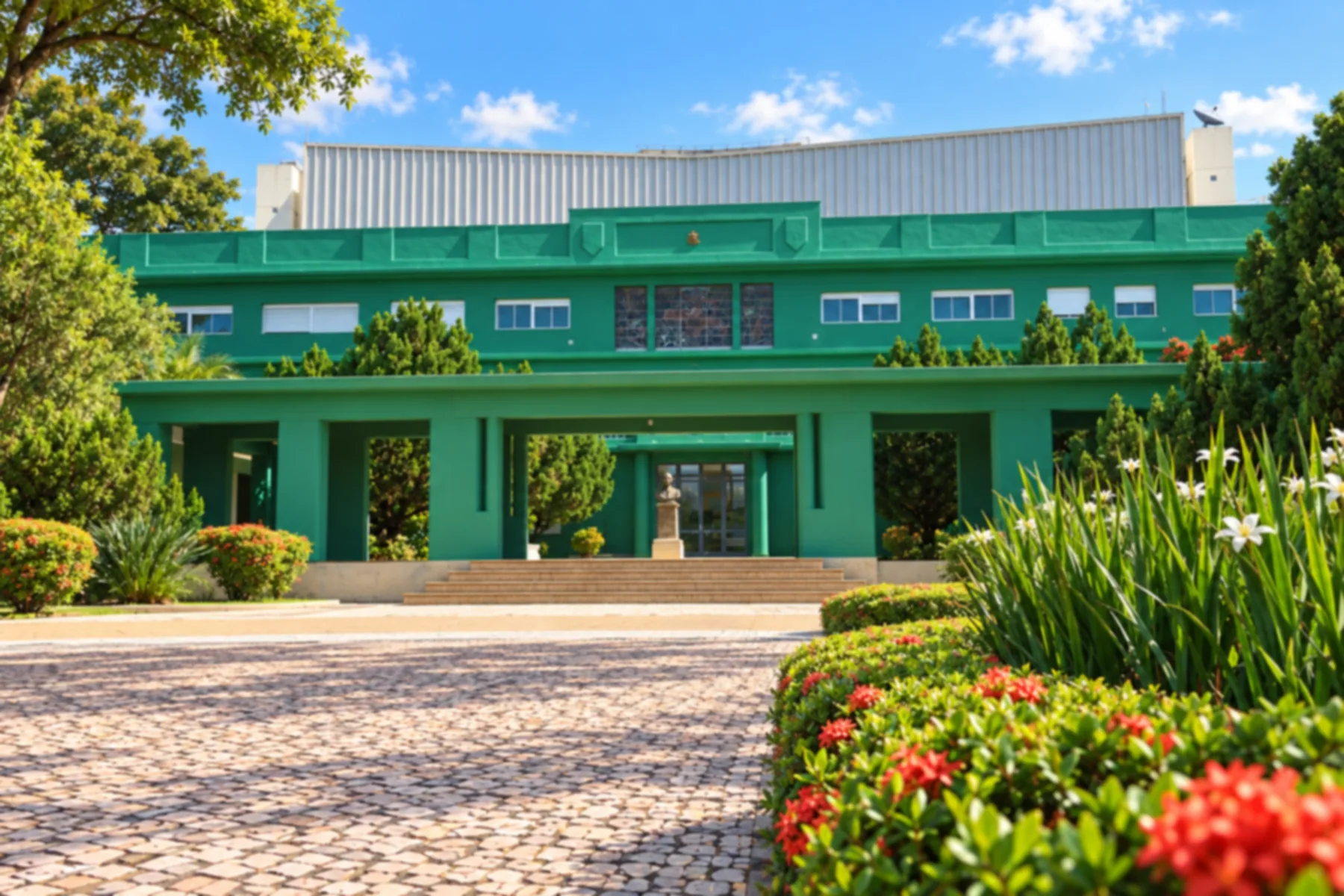
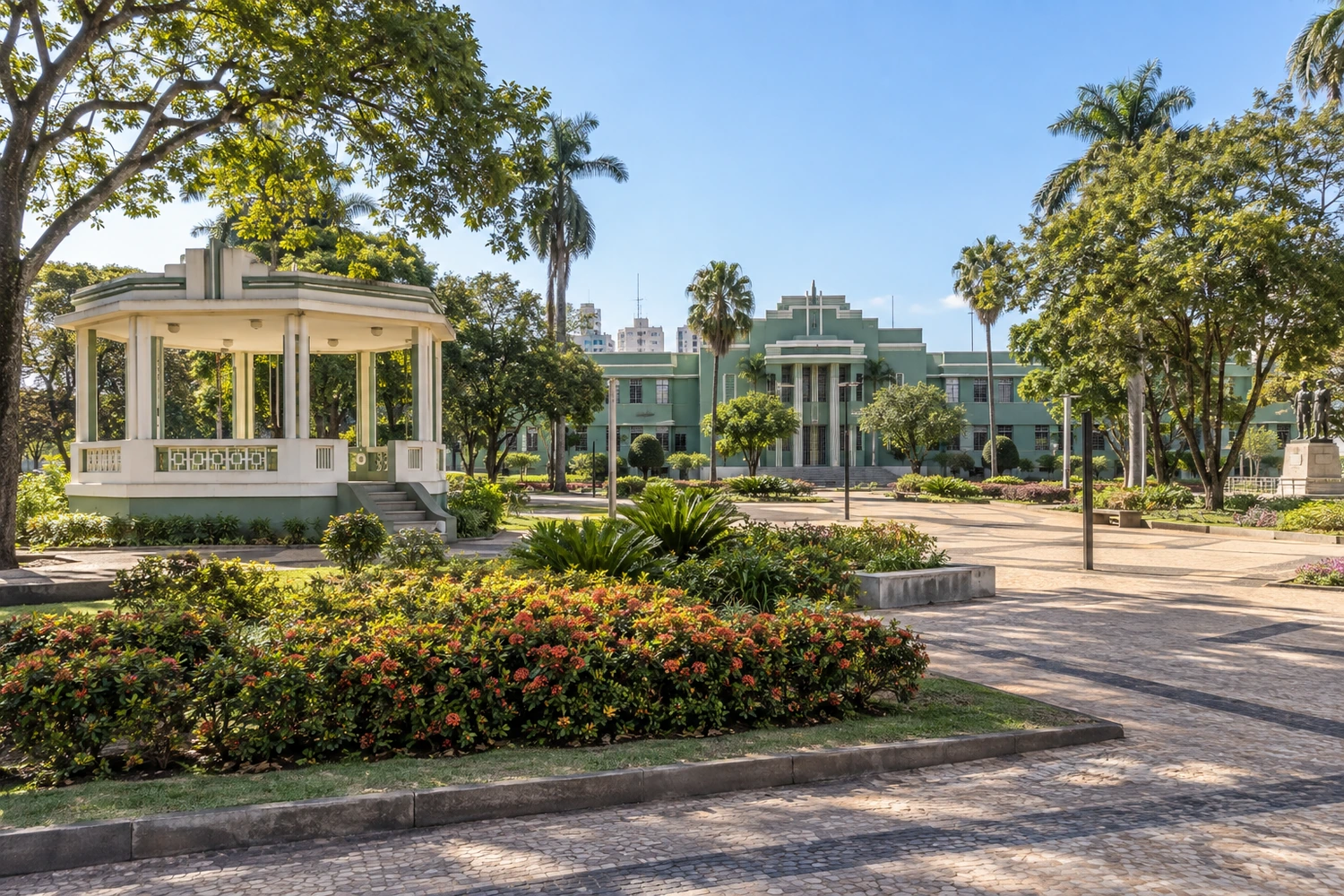
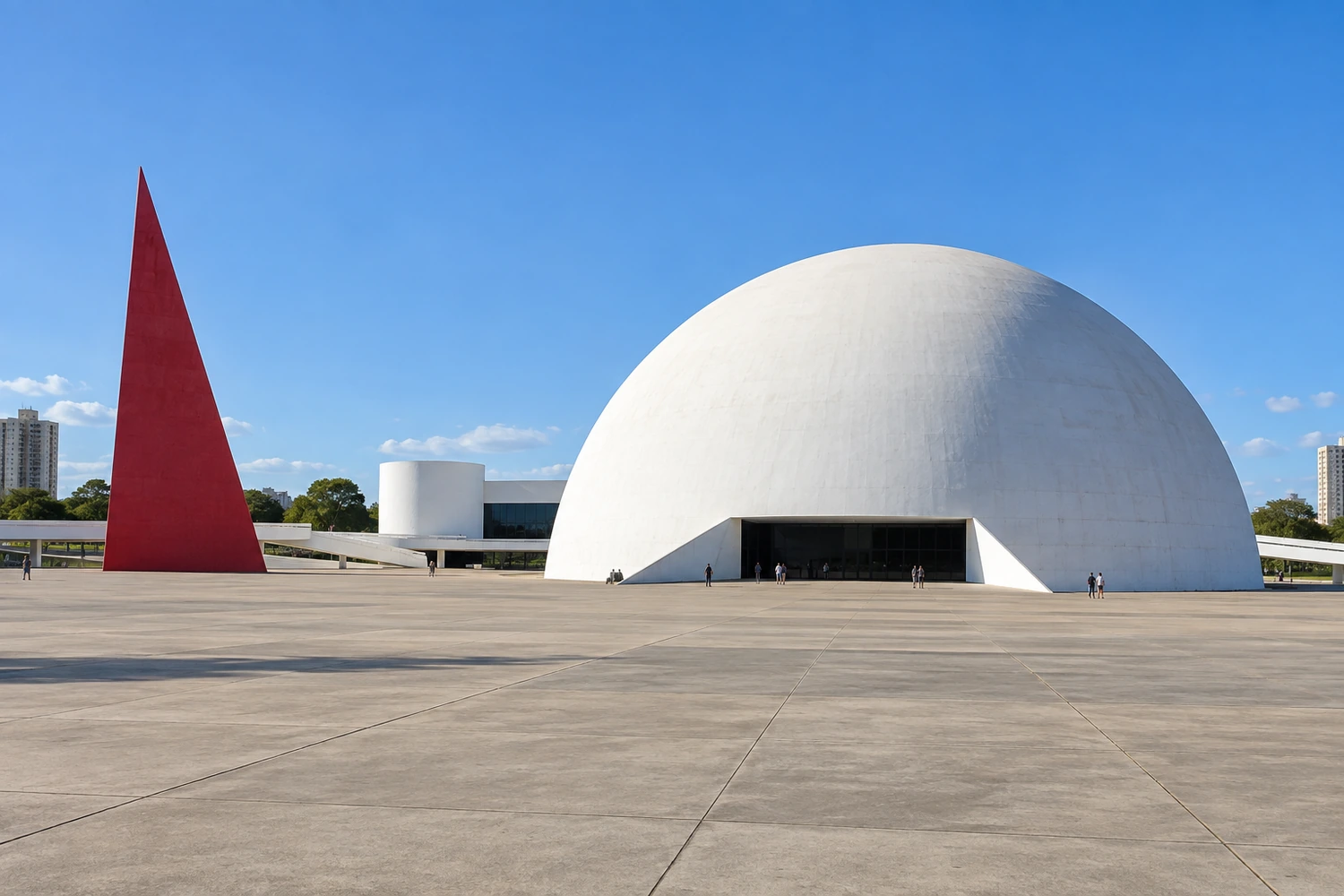
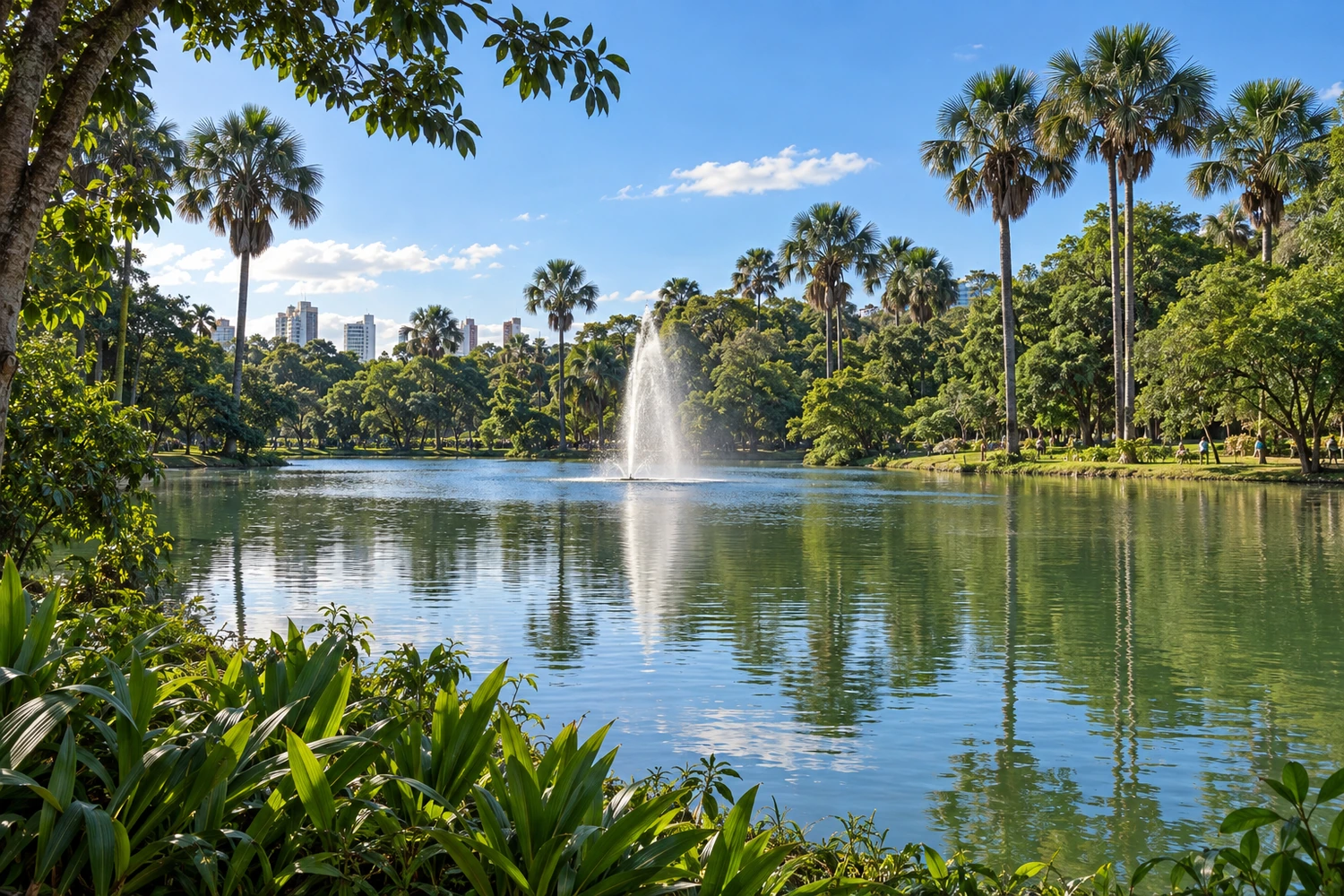
Illustrative images. The pictures in this guide are illustrations based on the real place, not photographs, and may differ from it.
Para começar
Os 10 principais lugares Goiânia
Praça CívicaOfficially Praça Pedro Ludovico Teixeira, it is the heart of the capital's original layout and brings together the Palácio das Esmeraldas, the Museu Zoroastro Artiaga and the Ar...
Centro Cultural Oscar NiemeyerOpened in 2006 and designed by Oscar Niemeyer, it brings together a library, the Museum of Contemporary Art, the sphere-shaped Palácio da Música and the Human Rights Monument, m...
Bosque dos BuritisA wooded park in Setor Oeste, near Praça Cívica, with three lakes, illuminated fountains, inner trails and an orchid house.
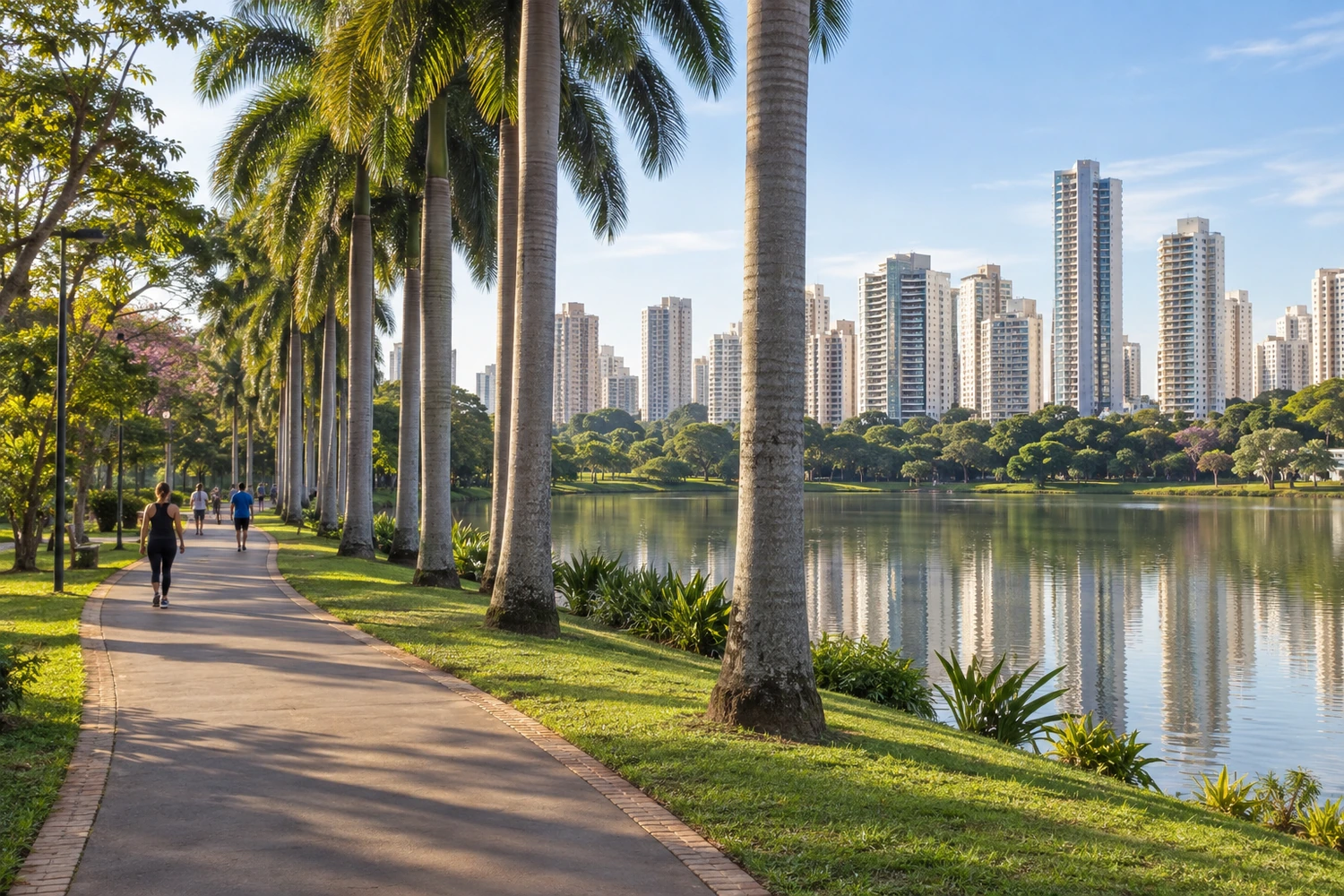
Parque Vaca BravaCreated in 1988 in Setor Bueno, it has a central lake surrounded by royal palms and a jogging track, amid residential high-rises.
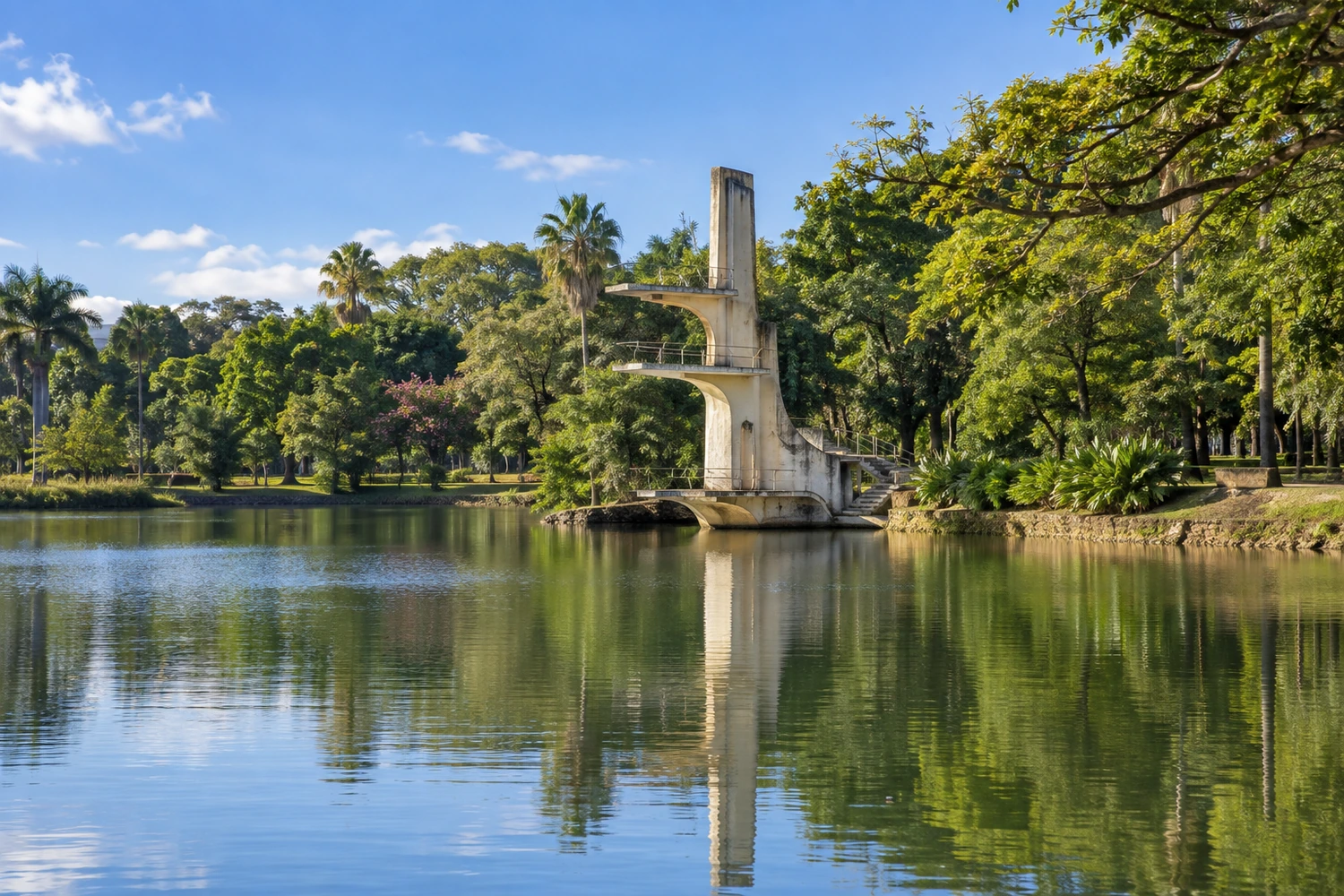
Parque Lago das RosasBuilt in the 1940s, it keeps original Art Deco elements, such as the old diving board and stone walls, and owes its name to the rose beds of that era.
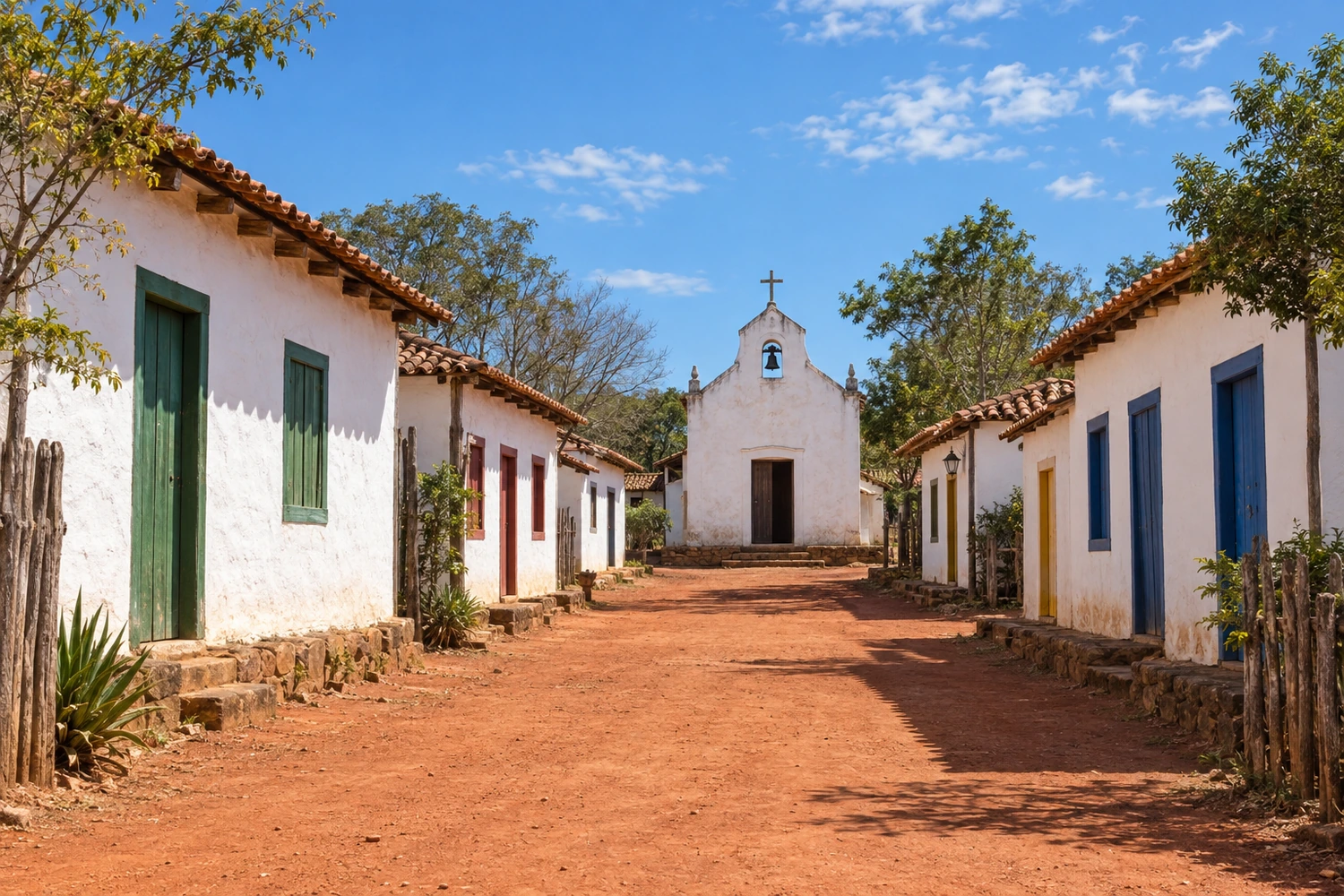
Memorial do CerradoAn open-air museum on Campus II of PUC Goiás, with the Vila Cenográfica Santa Luzia, which recreates a colonial village, as well as replicas of a quilombo (a community of escape...
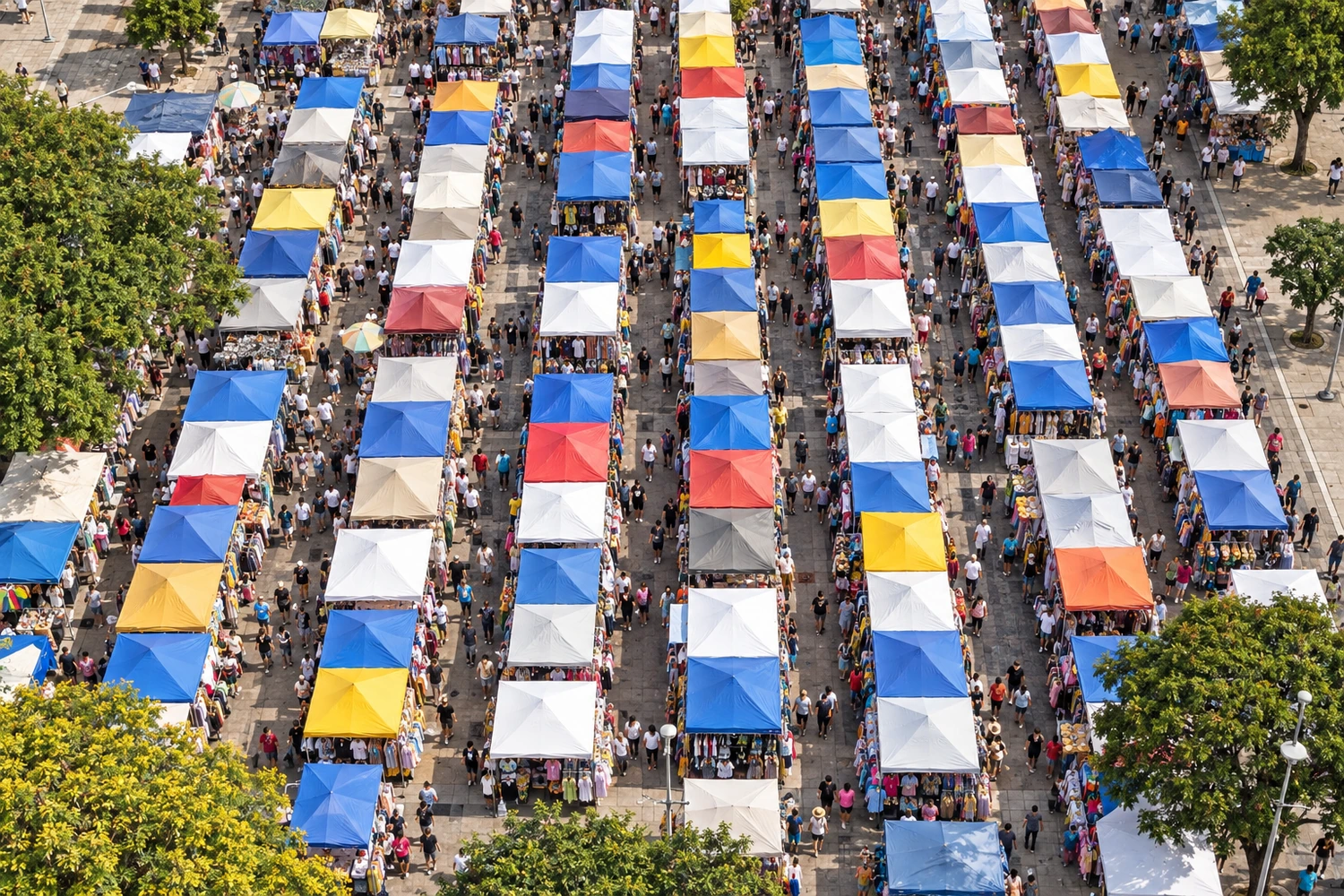
Feira HippieStarted in the 1960s by artisans who displayed their work at Mutirama, it moved through other squares before settling on Praça do Trabalhador, where it takes place on Sunday mor...
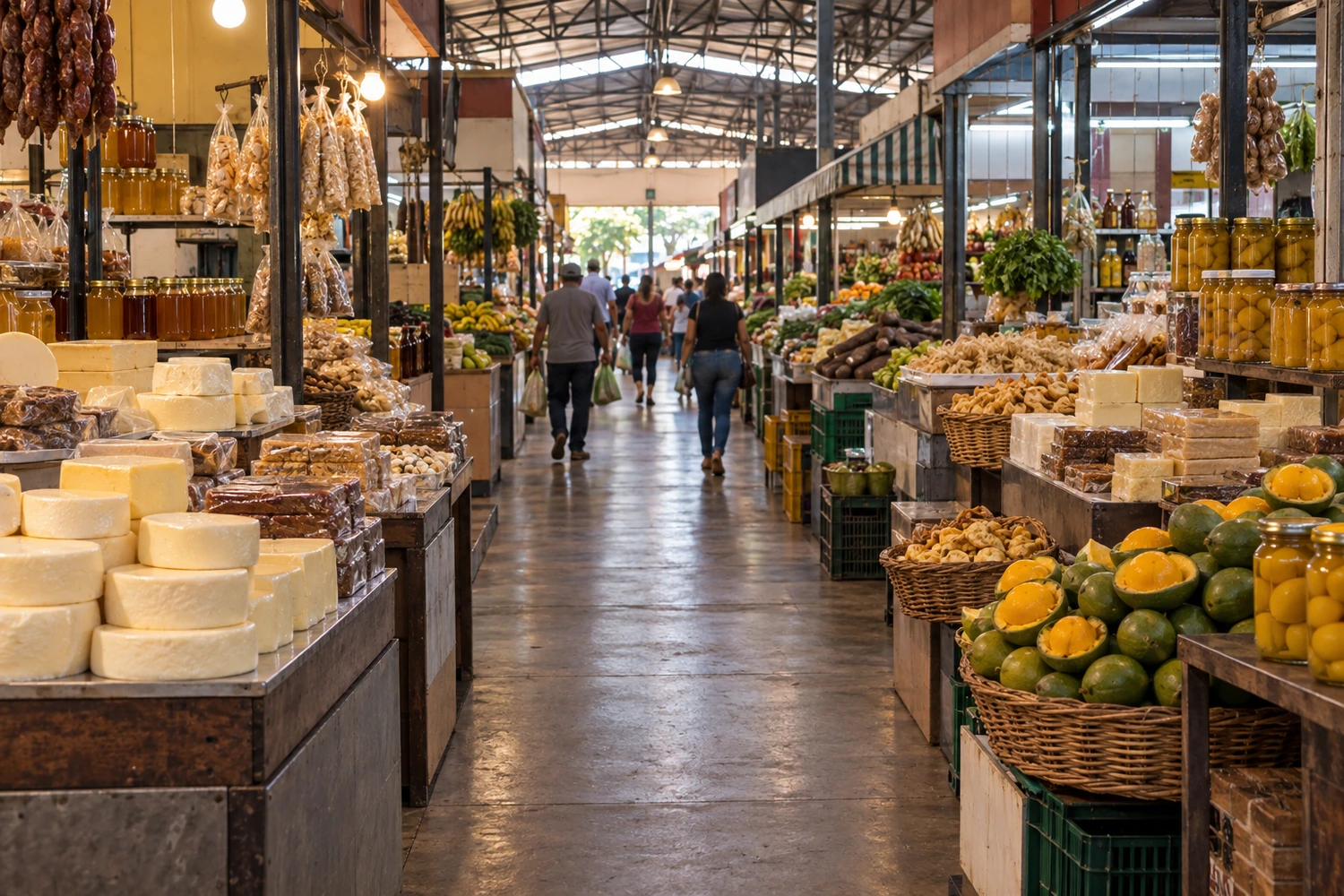
Santiago Central MarketFounded in 1950 in Setor Central, it is one of the capital's most traditional municipal markets and a meeting point for locals.
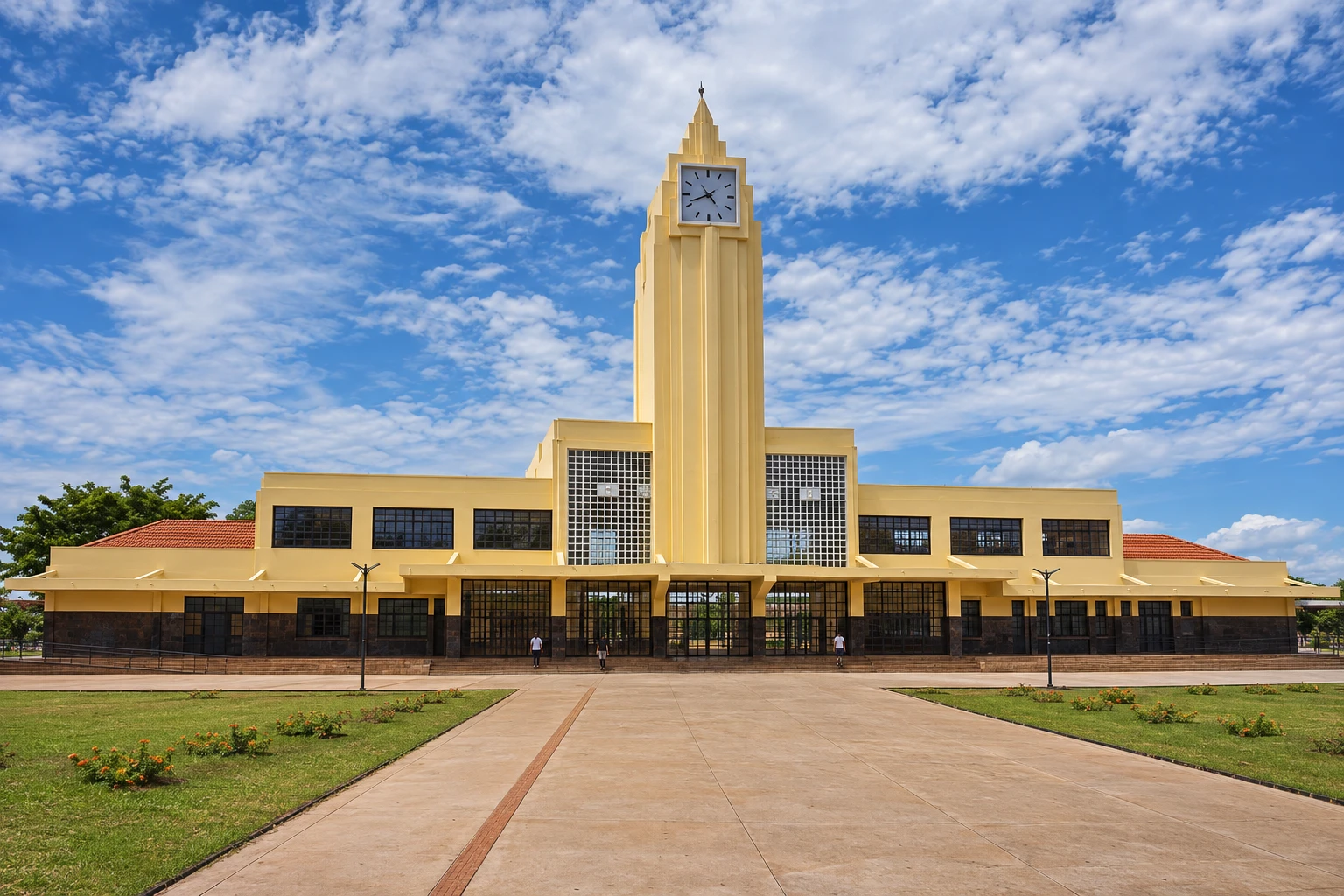
Goiânia Railway StationOld Art Deco train station at the end of Avenida Goiás, in Praça do Trabalhador.
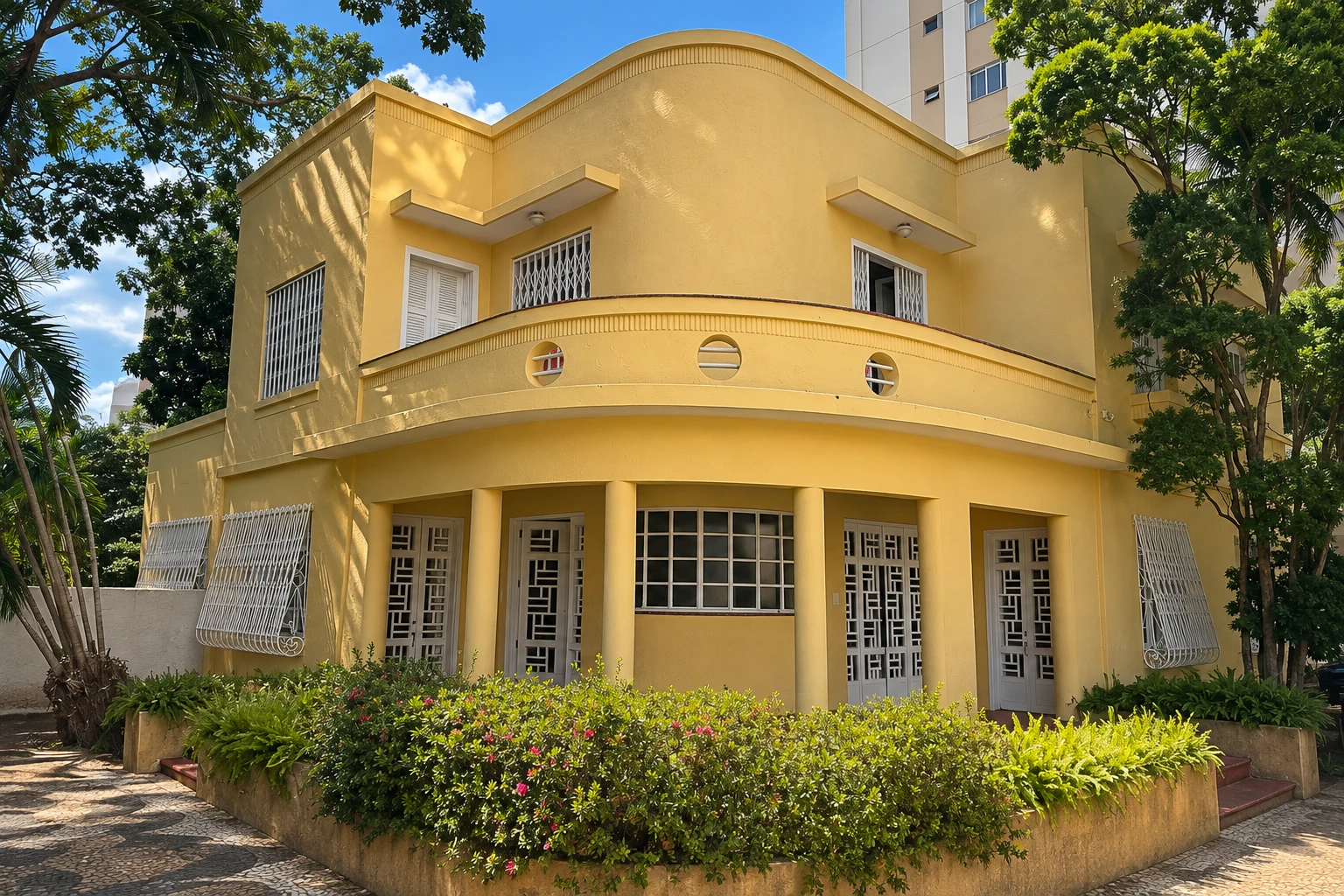
Pedro Ludovico MuseumArt déco house where Pedro Ludovico Teixeira, the founder of Goiânia, lived, a few blocks from Praça Cívica.
Officially Praça Pedro Ludovico Teixeira, it is the heart of the capital's original layout and brings together the Palácio das Esmeraldas, the Museu Zoroastro Artiaga and the Art Deco bandstand opened in 1942. Several buildings in the ensemble are listed by Iphan (Brazil's national heritage institute).
Opened in 2006 and designed by Oscar Niemeyer, it brings together a library, the Museum of Contemporary Art, the sphere-shaped Palácio da Música and the Human Rights Monument, marked by a large red triangle. The buildings surround an esplanade used for concerts and events.
A wooded park in Setor Oeste, near Praça Cívica, with three lakes, illuminated fountains, inner trails and an orchid house. Inside is the Museu de Arte de Goiânia, devoted to regional and national art.
Created in 1988 in Setor Bueno, it has a central lake surrounded by royal palms and a jogging track, amid residential high-rises. It is a meeting point for locals and visitors and often hosts leisure and wellness events.
Built in the 1940s, it keeps original Art Deco elements, such as the old diving board and stone walls, and owes its name to the rose beds of that era. The Goiânia Zoo is next door, and a walking track circles the lake.
An open-air museum on Campus II of PUC Goiás, with the Vila Cenográfica Santa Luzia, which recreates a colonial village, as well as replicas of a quilombo (a community of escaped slaves) and a Timbira Indigenous village. There is also a natural history museum and nature trails through preserved cerrado.
Started in the 1960s by artisans who displayed their work at Mutirama, it moved through other squares before settling on Praça do Trabalhador, where it takes place on Sunday mornings. With thousands of registered vendors, it is considered the largest open-air market in Brazil and Latin America.
Founded in 1950 in Setor Central, it is one of the capital's most traditional municipal markets and a meeting point for locals. It is known for its empadas goianas (savory pies) and for selling regional products.
Old Art Deco train station at the end of Avenida Goiás, in Praça do Trabalhador. It is part of Goiânia’s Art Deco ensemble protected by Iphan and houses panels by the painter Frei Nazareno Confaloni. The building hosts the Museu Frei Confaloni.
Art déco house where Pedro Ludovico Teixeira, the founder of Goiânia, lived, a few blocks from Praça Cívica. Built between 1934 and 1937, it preserves furniture, personal items and family documents. Visits must be scheduled with the museum.
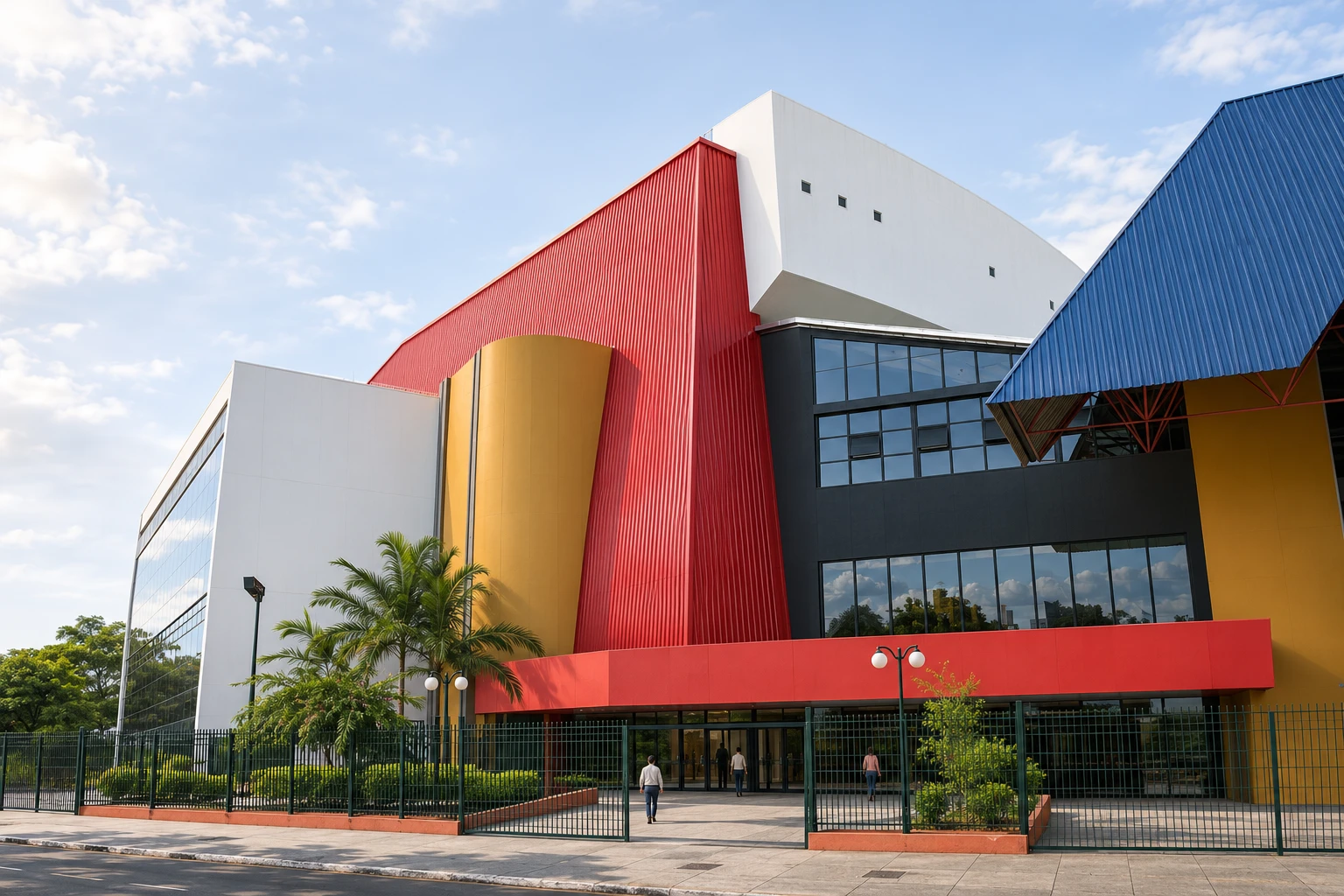
Event complex in the Central Sector, with a theater of over 2,000 seats, an auditorium, meeting rooms and exhibition pavilions. It hosts congresses, fairs, graduations and shows and is close to Praça Cívica and Avenida Goiás.
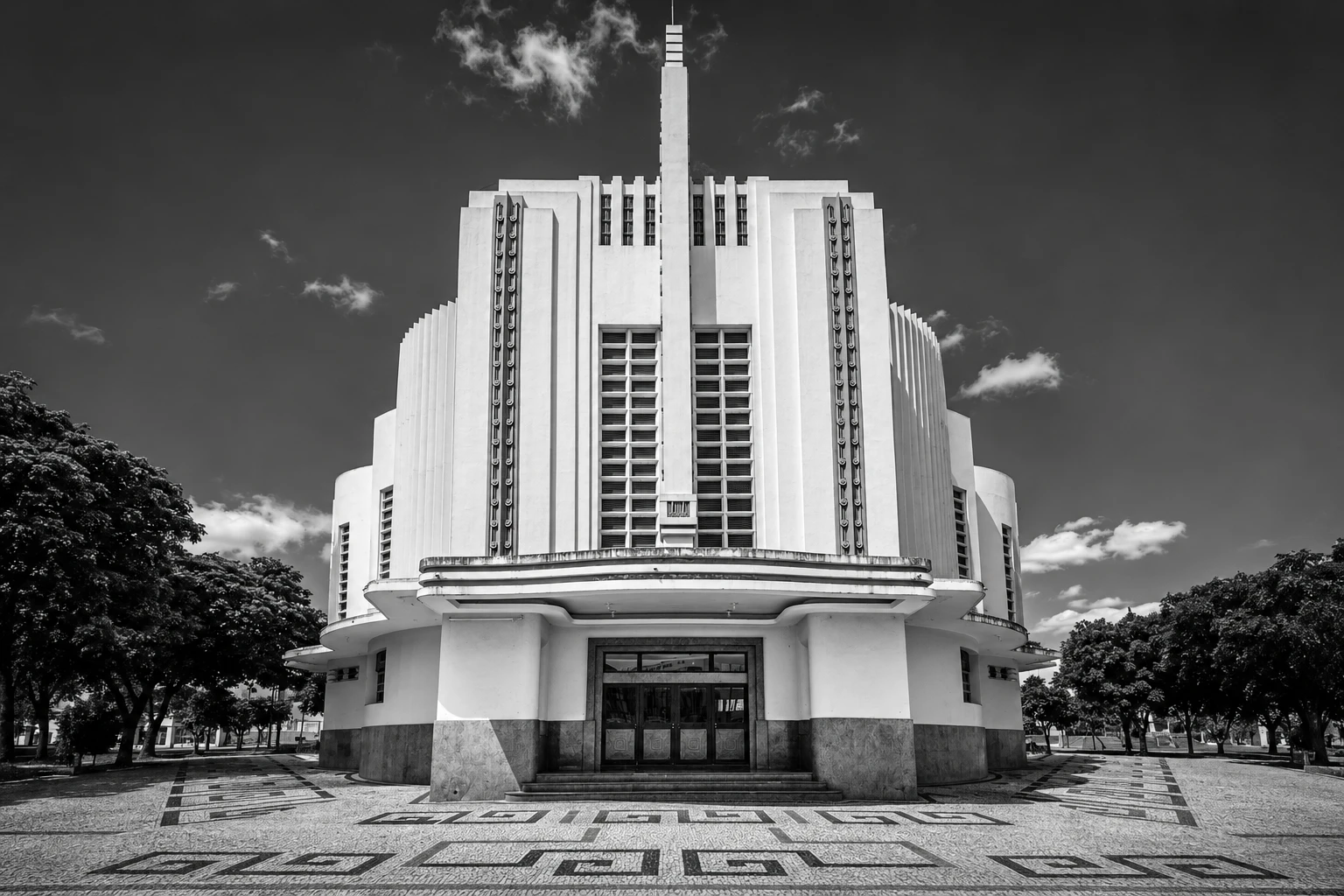
An Art Deco theater from 1942 at the corner of Tocantins and Anhanguera avenues in downtown. Opened as Cine Teatro Goiânia, its lines recall a ship and it is part of the Art Deco ensemble protected by Iphan. Hosts plays, concerts and shows.
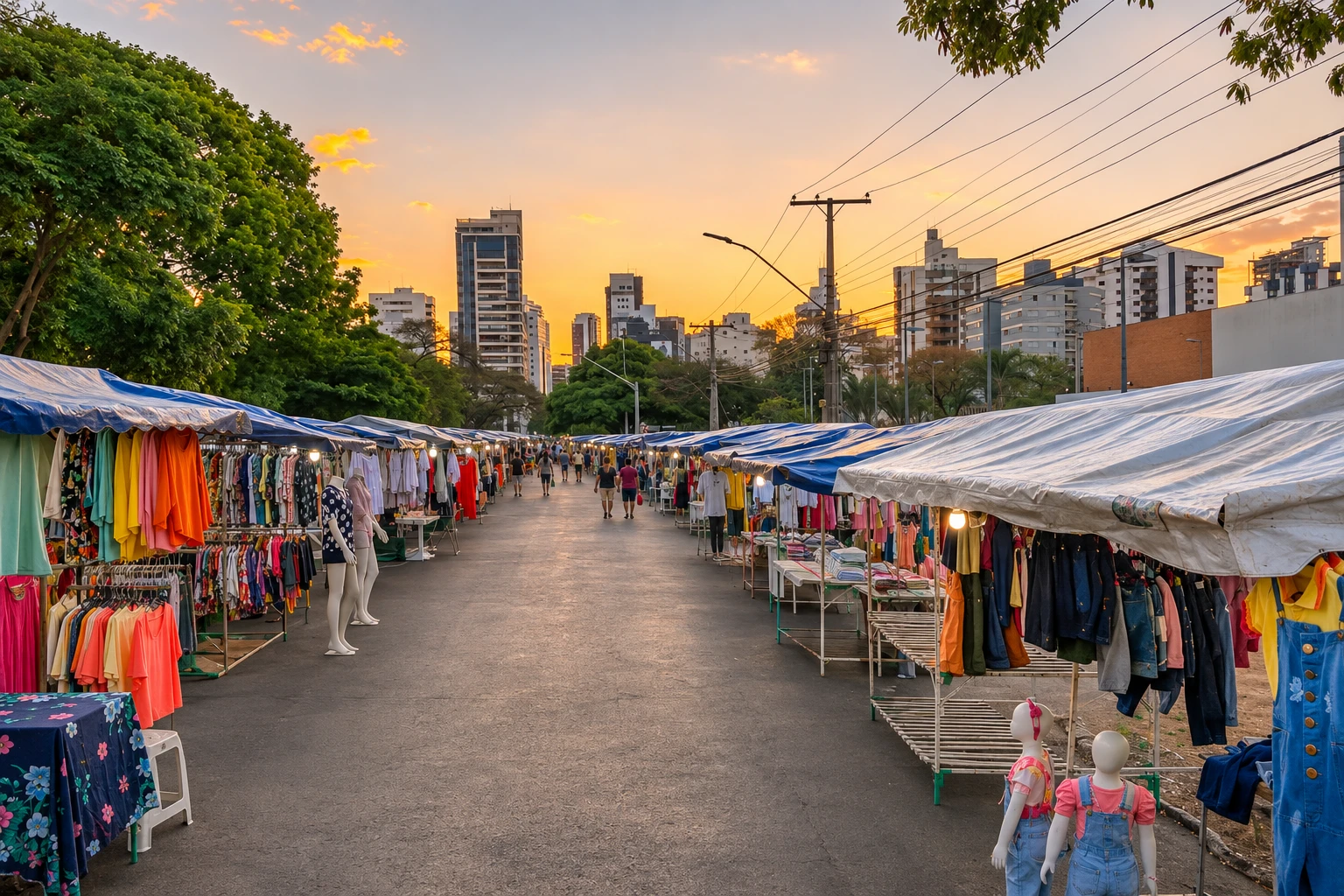
Open-air market that takes over Praça Tamandaré in Setor Oeste on Saturdays from late afternoon into the evening. It brings together hundreds of stalls selling clothing, accessories, handicrafts and typical food from Goiás, and is one of Goiânia’s most traditional markets.


 Antarctica
 Argentina
 Bolivia
 Chile
 Colombia
 Ecuador
 Falkland Islands (Malvinas)
 French Guiana
 Guyana
 Paraguay
 Peru
 Suriname
 Uruguay
 Venezuela
 Austria
 Belgium
 Croatia
 Denmark
 Finland
 France
 Germany
 Greece
 Hungary
 Iceland
 Ireland
 Italy
 Luxembourg
 Norway
 Poland
 Portugal
 Slovakia
 Slovenia
 Spain
 Sweden
 Switzerland
 the Czech Republic
 the Netherlands
 the United Kingdom
 Turkey
 Bermuda
 Canada
 Greenland
 Mexico
 Saint Pierre and Miquelon
 the United States
 the Dominican Republic
 Japan
 Egypt
 South Africa
 Australia
 Fiji
 New Zealand
 Papua New Guinea