

 Antarctica
 Argentina
 Bolivia
 Chile
 Colombia
 Ecuador
 Falkland Islands (Malvinas)
 French Guiana
 Guyana
 Paraguay
 Peru
 Suriname
 Uruguay
 Venezuela
 Austria
 Belgium
 Croatia
 Denmark
 Finland
 France
 Germany
 Greece
 Hungary
 Iceland
 Ireland
 Italy
 Luxembourg
 Norway
 Poland
 Portugal
 Slovakia
 Slovenia
 Spain
 Sweden
 Switzerland
 the Czech Republic
 the Netherlands
 the United Kingdom
 Turkey
 Bermuda
 Canada
 Greenland
 Mexico
 Saint Pierre and Miquelon
 the United States
 the Dominican Republic
 Japan
 Egypt
 South Africa
 Australia
 Fiji
 New Zealand
 Papua New Guinea
historic center · Goiânia, GO
Praça Cívica
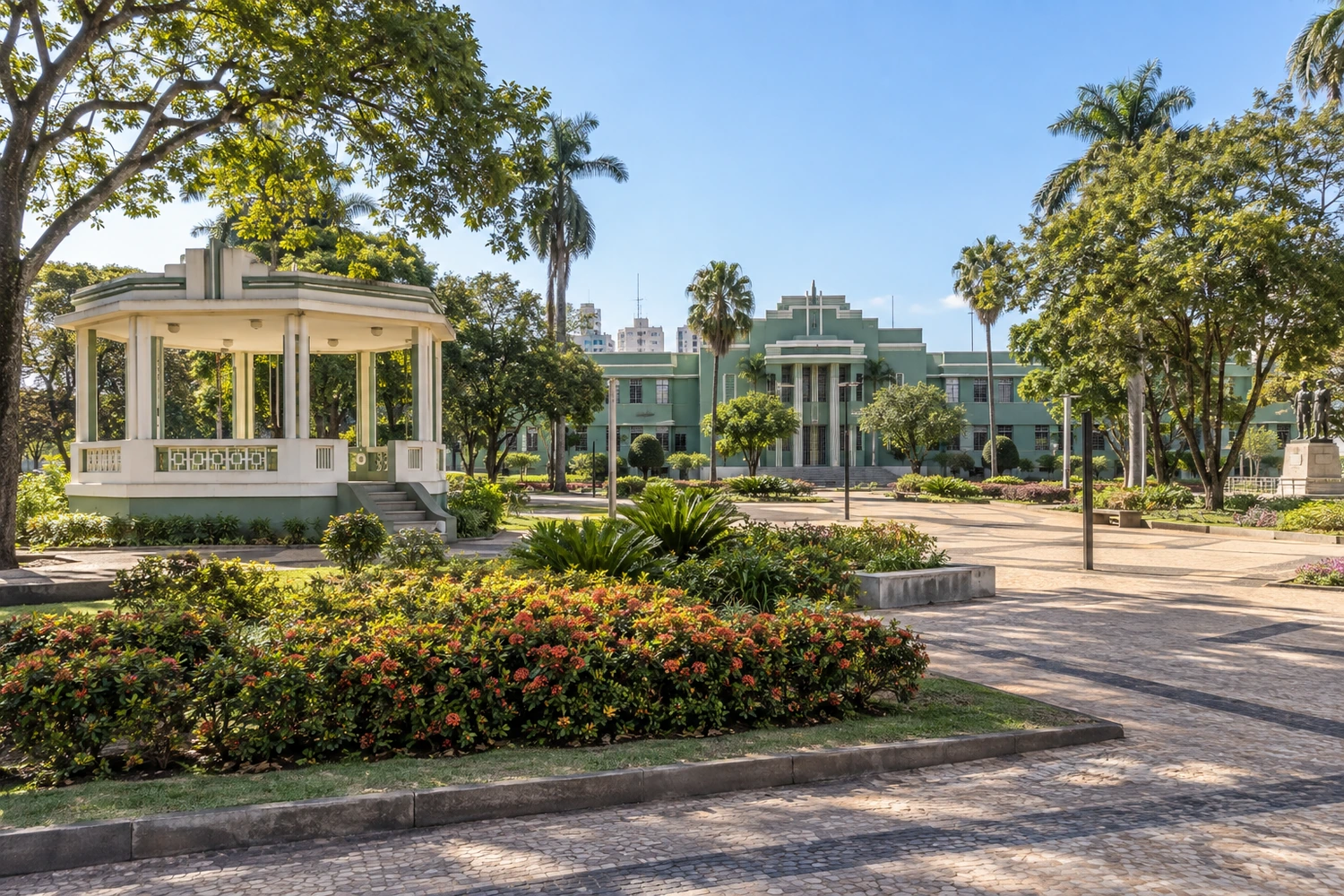
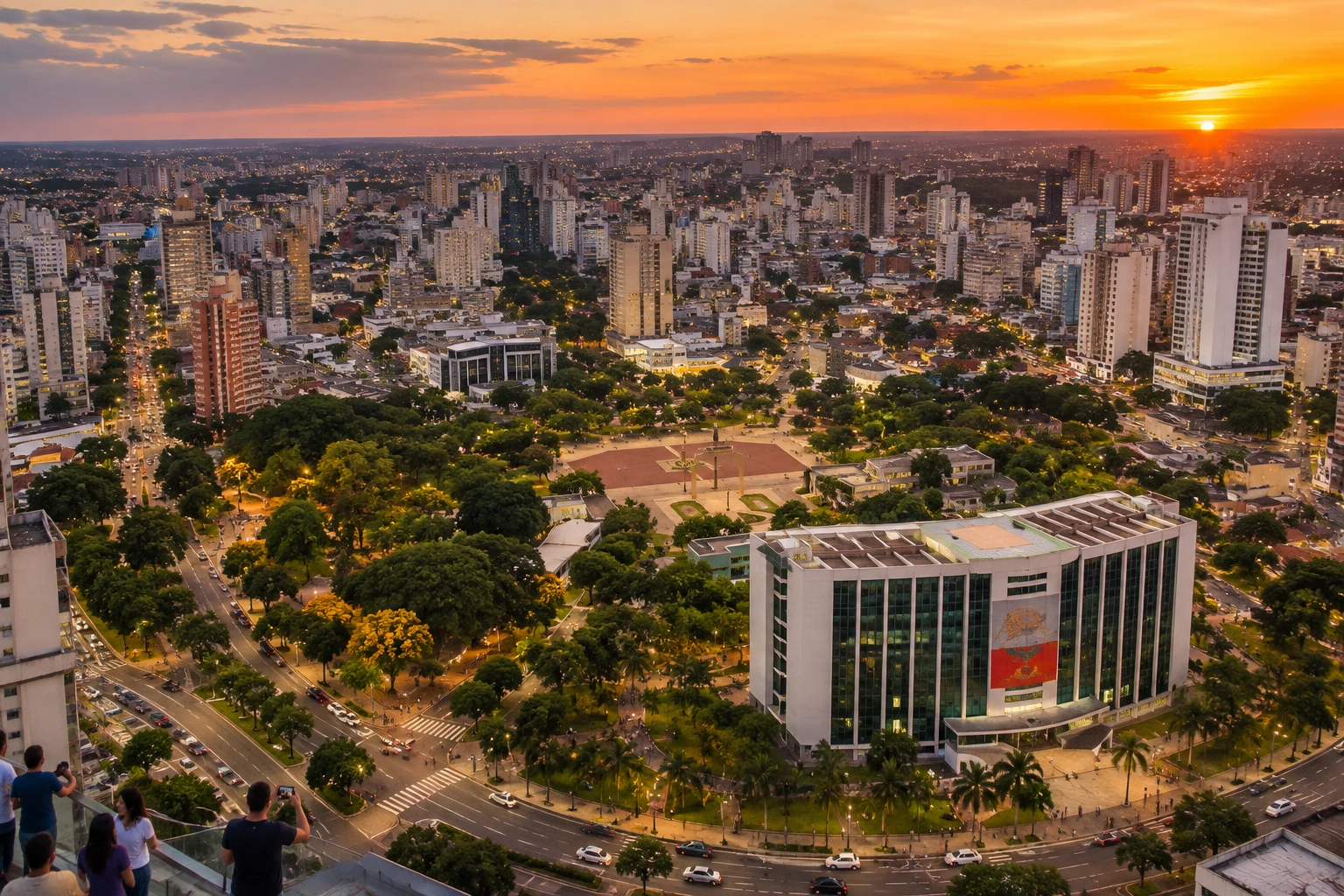
Officially Praça Pedro Ludovico Teixeira, it is the heart of the capital's original layout and brings together the Palácio das Esmeraldas, the Museu Zoroastro Artiaga and the Art Deco bandstand opened in 1942. Several buildings in the ensemble are listed by Iphan (Brazil's national heritage institute).
Illustrative images. The pictures in this guide are illustrations based on the real place, not photographs, and may differ from it.


A look at the place
Praça Cívica in pictures
These pictures are illustrations based on the real place, not photographs. They may differ from the place.
Click the picture to enlarge it.
Discover
About Praça Cívica
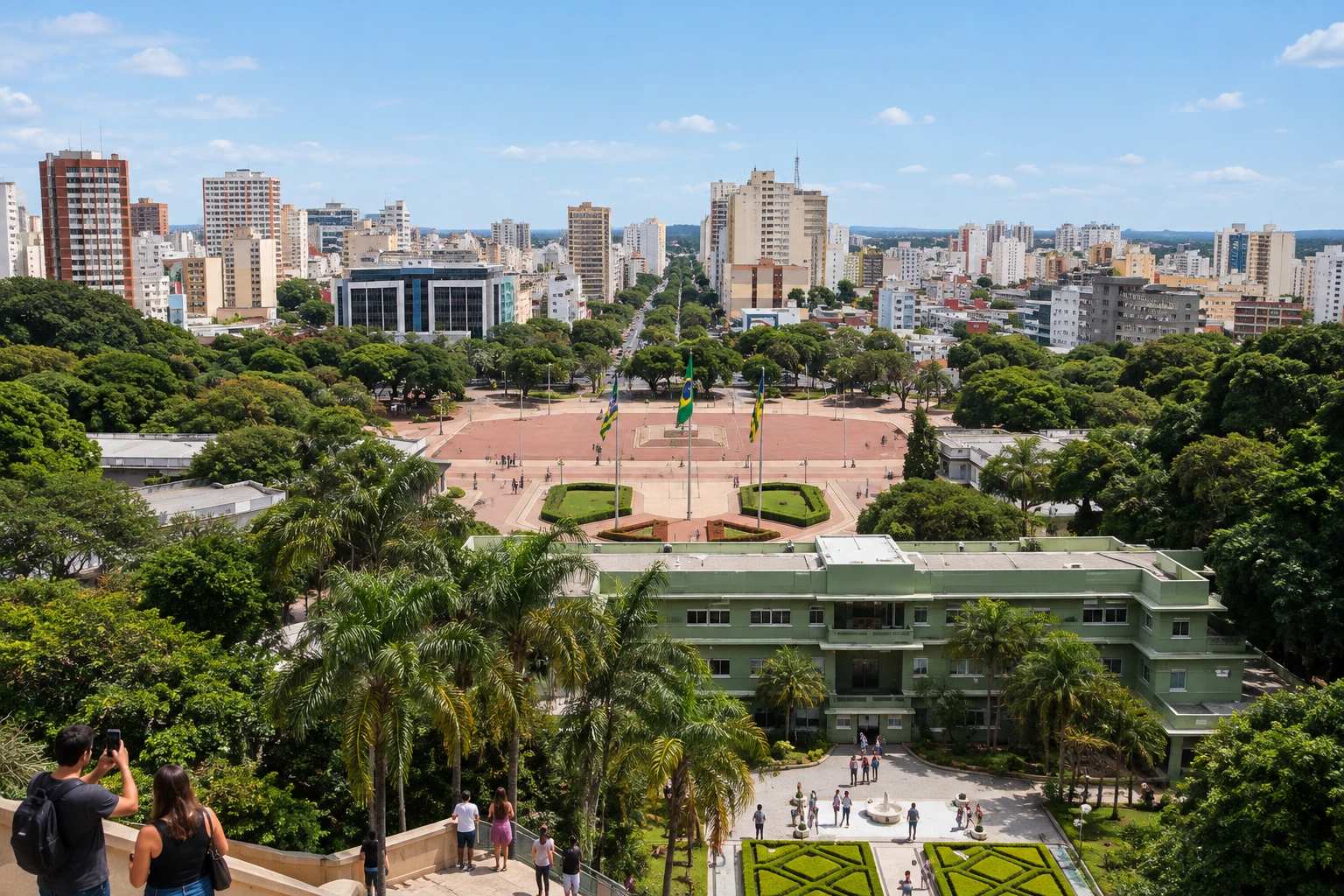
Praça Cívica is Goiânia's starting point. Officially called Praça Doutor Pedro Ludovico Teixeira, it was the first square built in the new capital, in 1933. Urban planner Attilio Corrêa Lima designed the city outward from it: the great downtown avenues, such as Avenida Goiás, radiate from here.
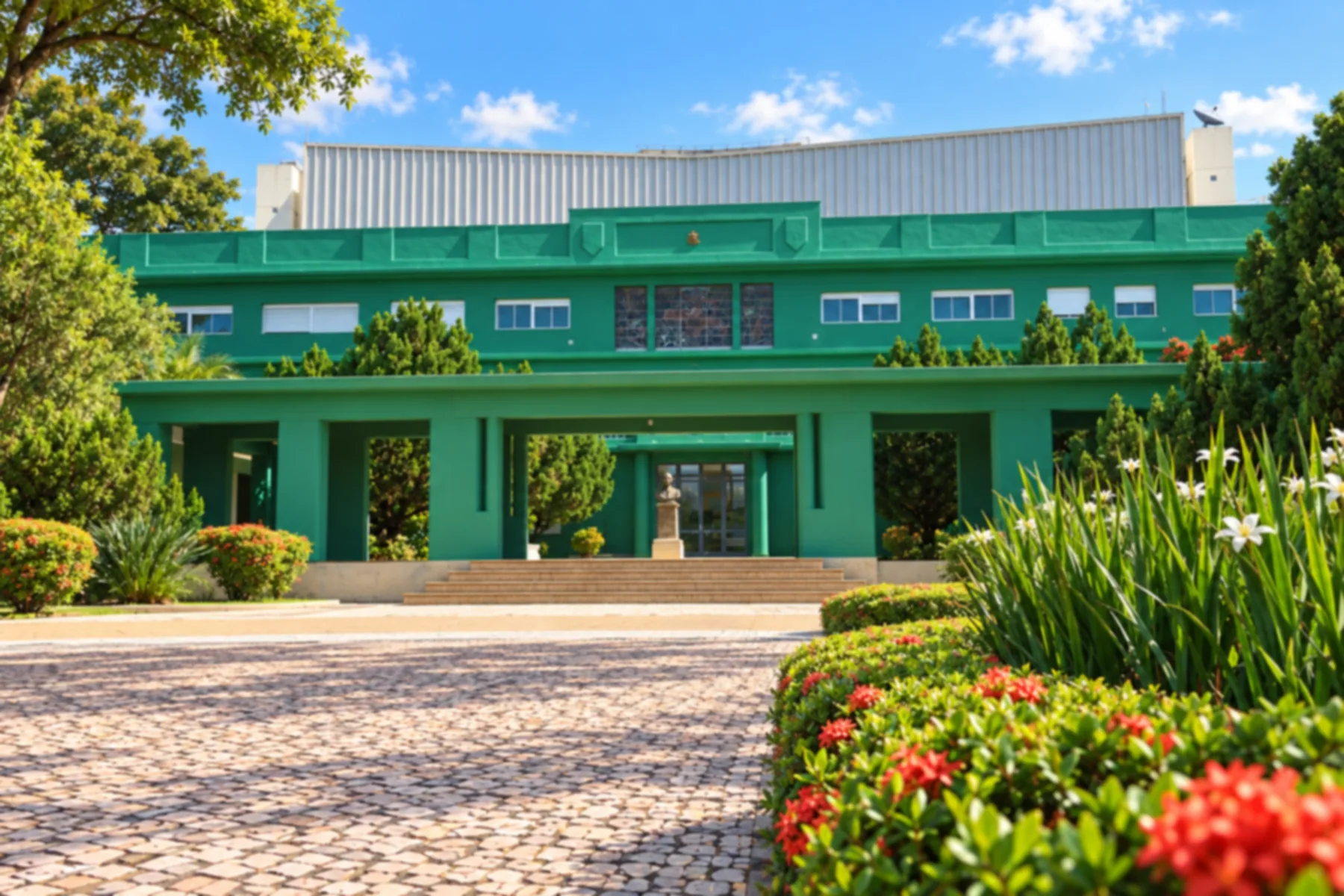
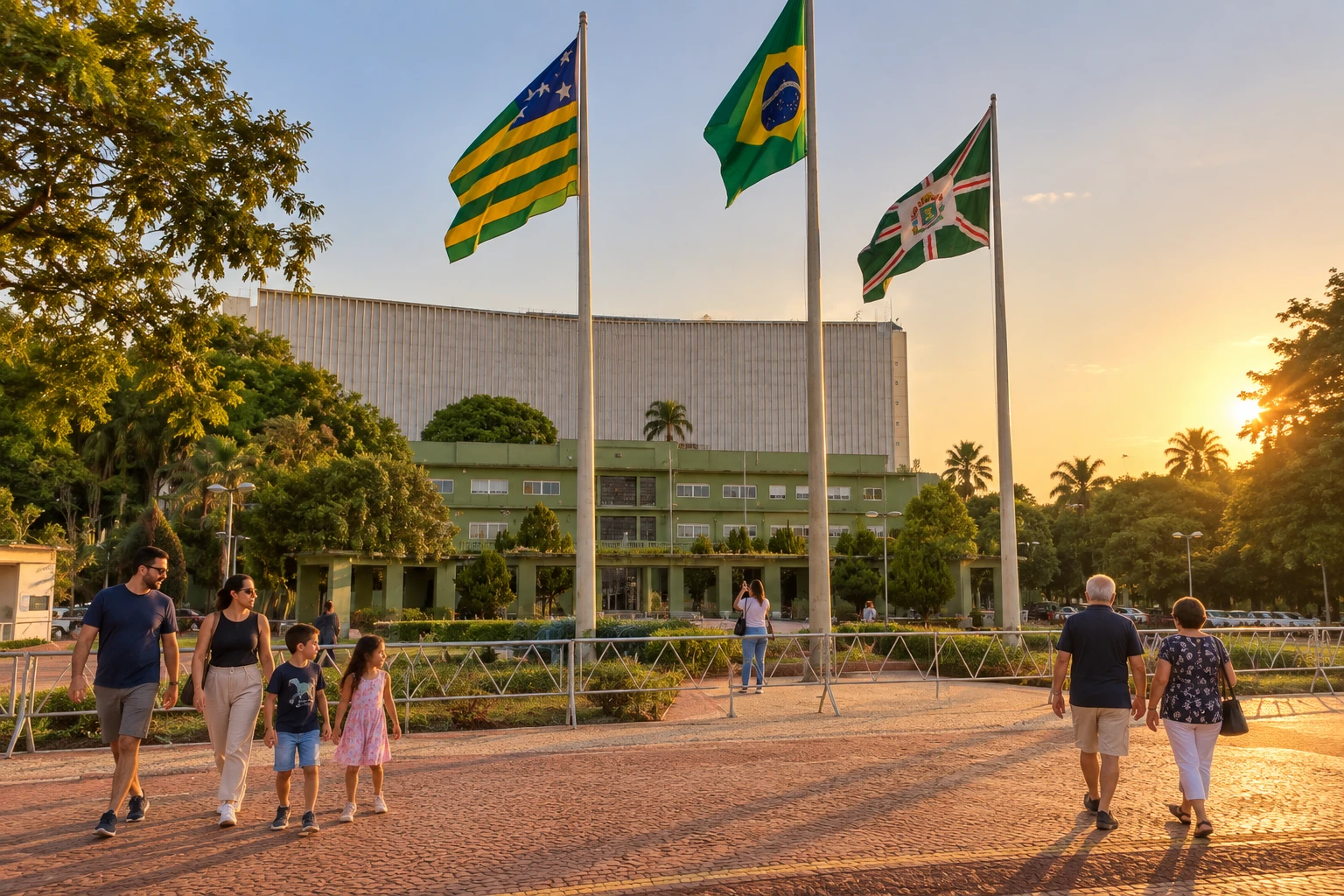
Around the square stand the buildings that marked the city's founding. The Palácio das Esmeraldas is the official residence of the governor of Goiás. Also there are the Museu Zoroastro Artiaga, with a collection on the history and culture of Goiás, the Centro Cultural Marietta Telles Machado and the Cine Cultura.
The Art Deco bandstand was inaugurated in 1942, at Goiânia's Batismo Cultural (official inauguration), and is listed by Iphan, like other buildings in the ensemble. The Torre do Relógio (clock tower), which marks the start of Avenida Goiás, was inaugurated the same year. In the middle of the square is the Monumento às Três Raças (Monument to the Three Races), by artist Neusa Moraes, a tribute to the peoples who formed the population of Goiás.
The visit is on foot and outdoors, good for anyone who enjoys history and architecture. It is the right place to start an Art Deco tour of Goiânia, a city with one of the most important ensembles of this style in Brazil. The square also hosts city events, such as the celebrations of Goiânia's anniversary on October 24.
Before you go
Practical information
Cidade Turismo reviews its information regularly, but something may have changed. Check with the place before planning your trip.
How much time to set aside
About 1 hour to walk around the square; allow more time if you are visiting the museum.
Best time
Early in the morning or late in the afternoon, when the sun is weaker; in the dry season, from May to September, the sky is usually clear, but the air gets very dry, so bring water.
How to get there
It is in Setor Central, at the start of Avenida Goiás. Several bus lines pass nearby, and you can get there by car or ride-hailing app; from there, the historic center is explored on foot.
Tip
Walk along Avenida Goiás from the Torre do Relógio (clock tower) to see other Art Deco buildings downtown, and check the museum's hours before you go.
Your questions
Frequently asked questions about Praça Cívica
Is there an entrance fee at Praça Cívica?
No. The square is an open public space. For the museum and nearby cultural centers, check rules and hours on the official channels.
How long does it take to see Praça Cívica?
About 1 hour to walk around the square and see the buildings from outside. With a museum visit, allow more time.
What is the official name of Praça Cívica?
Praça Doutor Pedro Ludovico Teixeira, in honor of Goiânia's founder.
What is there to see at Praça Cívica?
The Palácio das Esmeraldas, the Museu Zoroastro Artiaga, the 1942 Art Deco bandstand, the Monumento às Três Raças and, right next to it, the Torre do Relógio (clock tower), at the start of Avenida Goiás.
Can you walk from Praça Cívica to other sights downtown?
Yes. The square is in Setor Central, and Avenida Goiás, which starts there, leads on foot to other Art Deco buildings downtown.