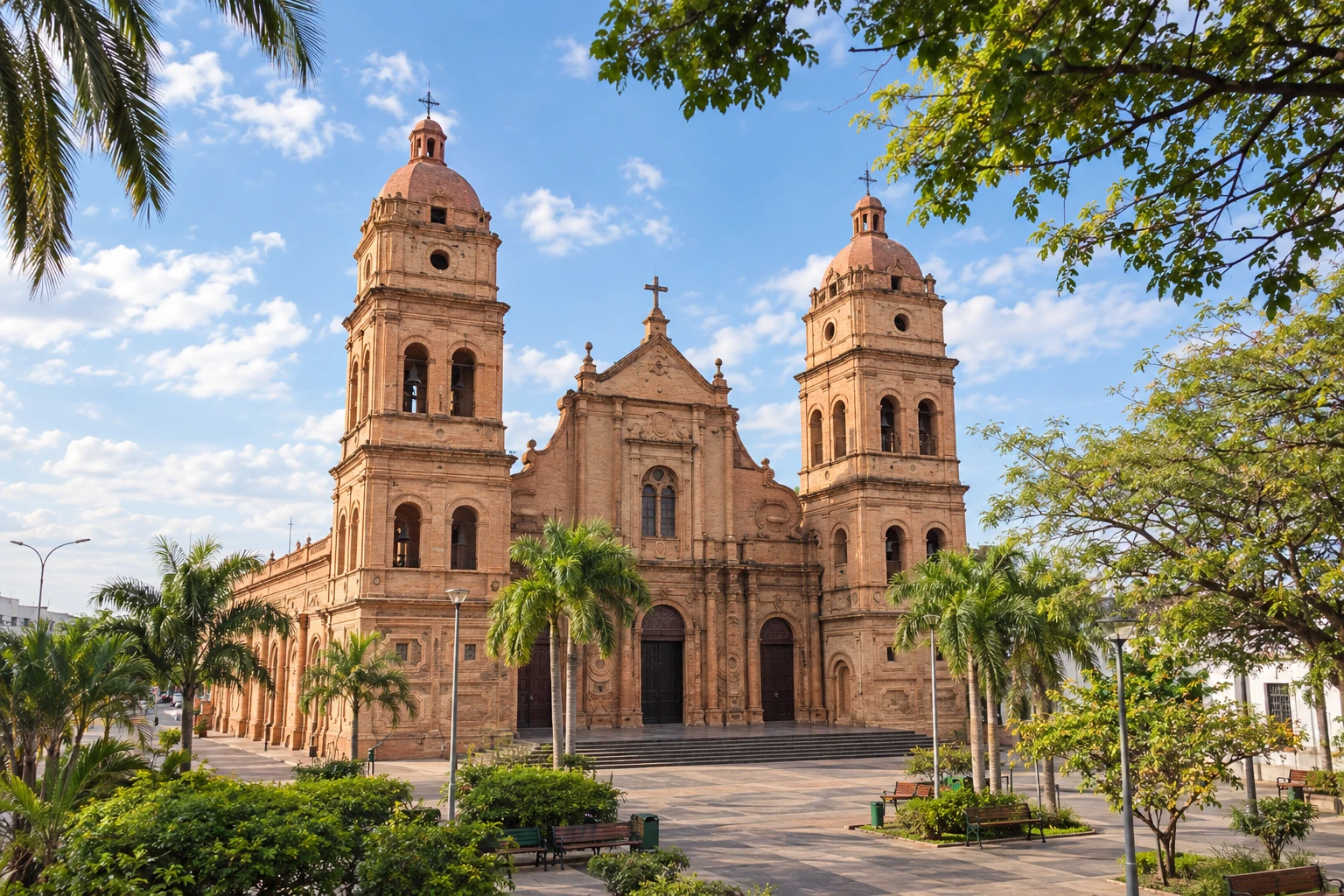
In the photo: Catedral Basílica de San Lorenzo, Santa Cruz de la Sierra
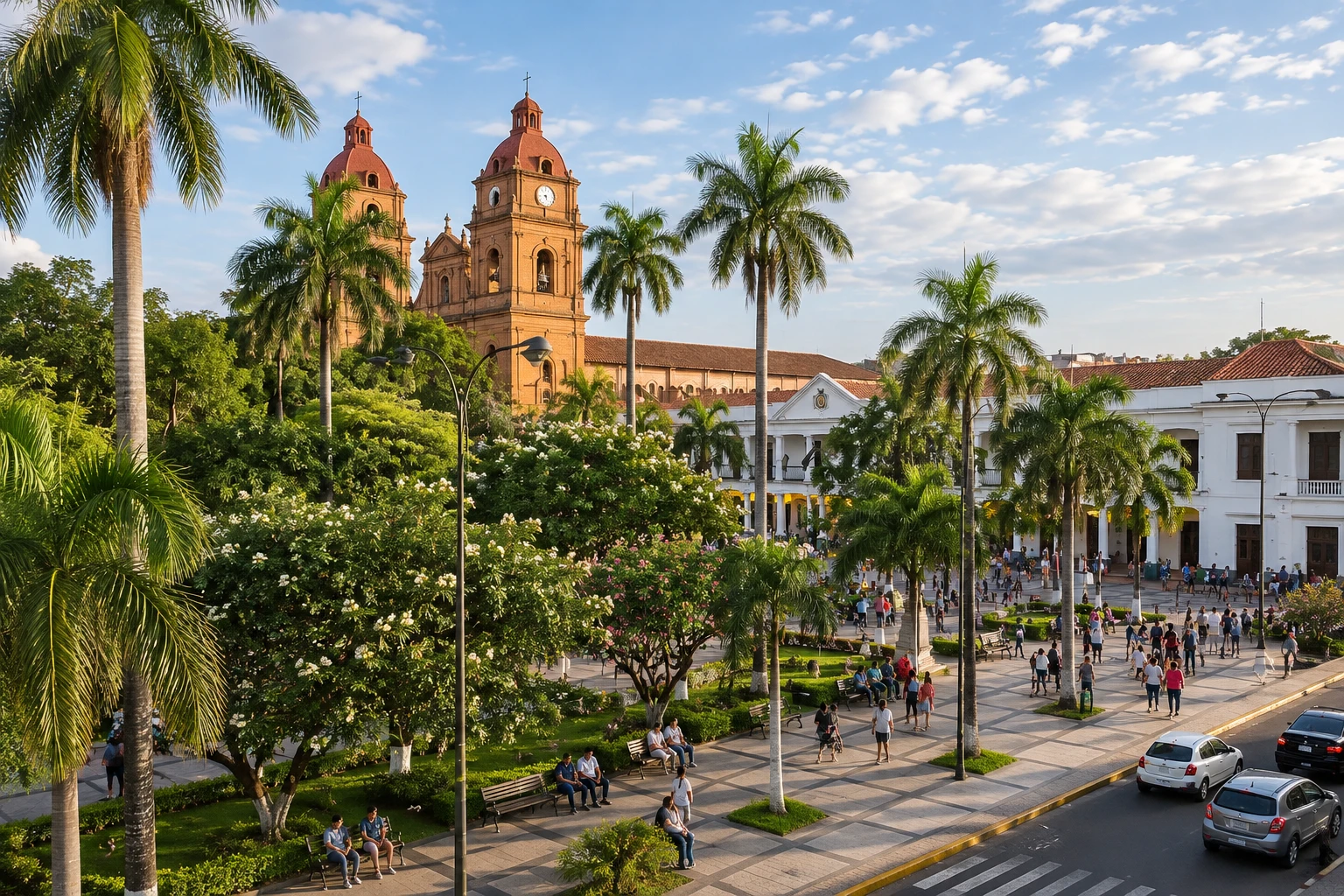
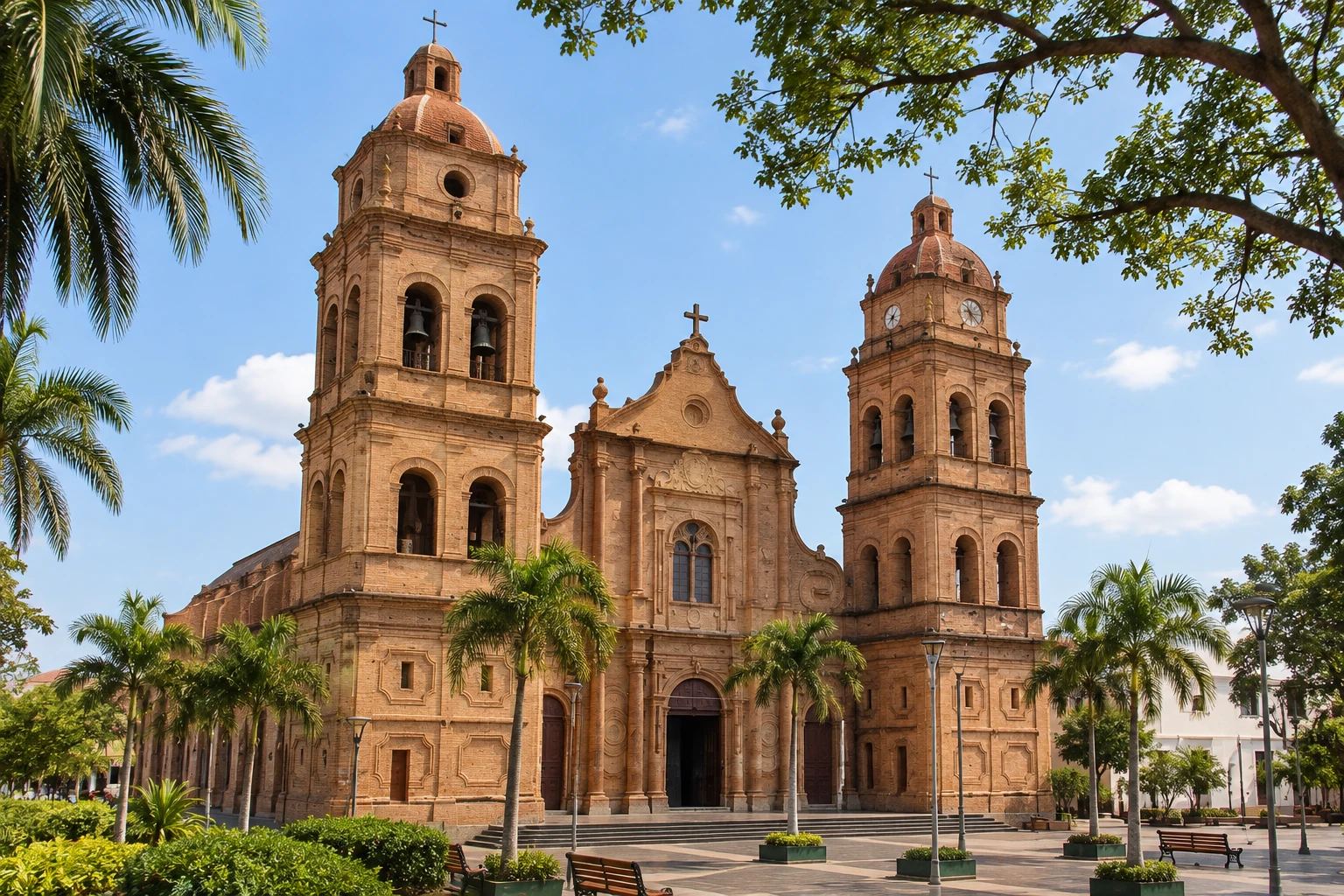
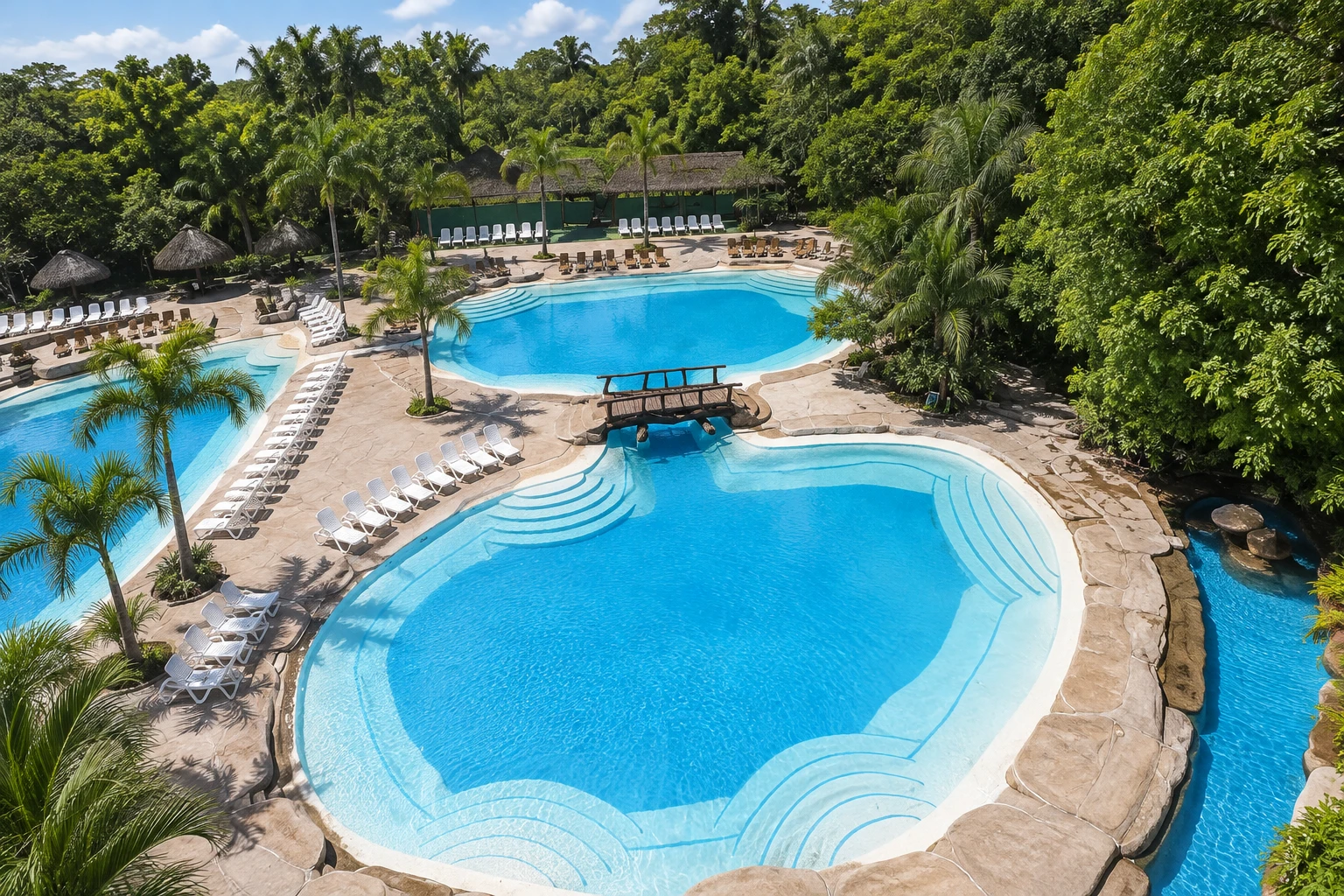
Illustrative images. The pictures in this guide are illustrations based on the real place, not photographs, and may differ from it.
The city
What to expect from Santa Cruz de la Sierra.
Santa Cruz de la Sierra is the largest city in Bolivia and the capital of the department of Santa Cruz, on the eastern plains, at about 400 metres. Hot and humid, it has the historic center around Plaza 24 de Septiembre, with the brick cathedral, and ring avenues. It is the main gateway into the country for those coming from Brazil and the base for Samaipata, Amboró and the Missões de Chiquitos.
The central square of Santa Cruz, with tall trees, benches and the statue of Ignacio Warnes, surrounded by the brick cathedral, the Palacio de Gobierno departamental and large houses with verandas.
Brick cathedral on Plaza 24 de Septiembre, built between 1845 and 1915, with a painted wooden ceiling, a silver altar from the Jesuit missions, Museo de Arte Sacra and the tower that serves as a viewpoint.
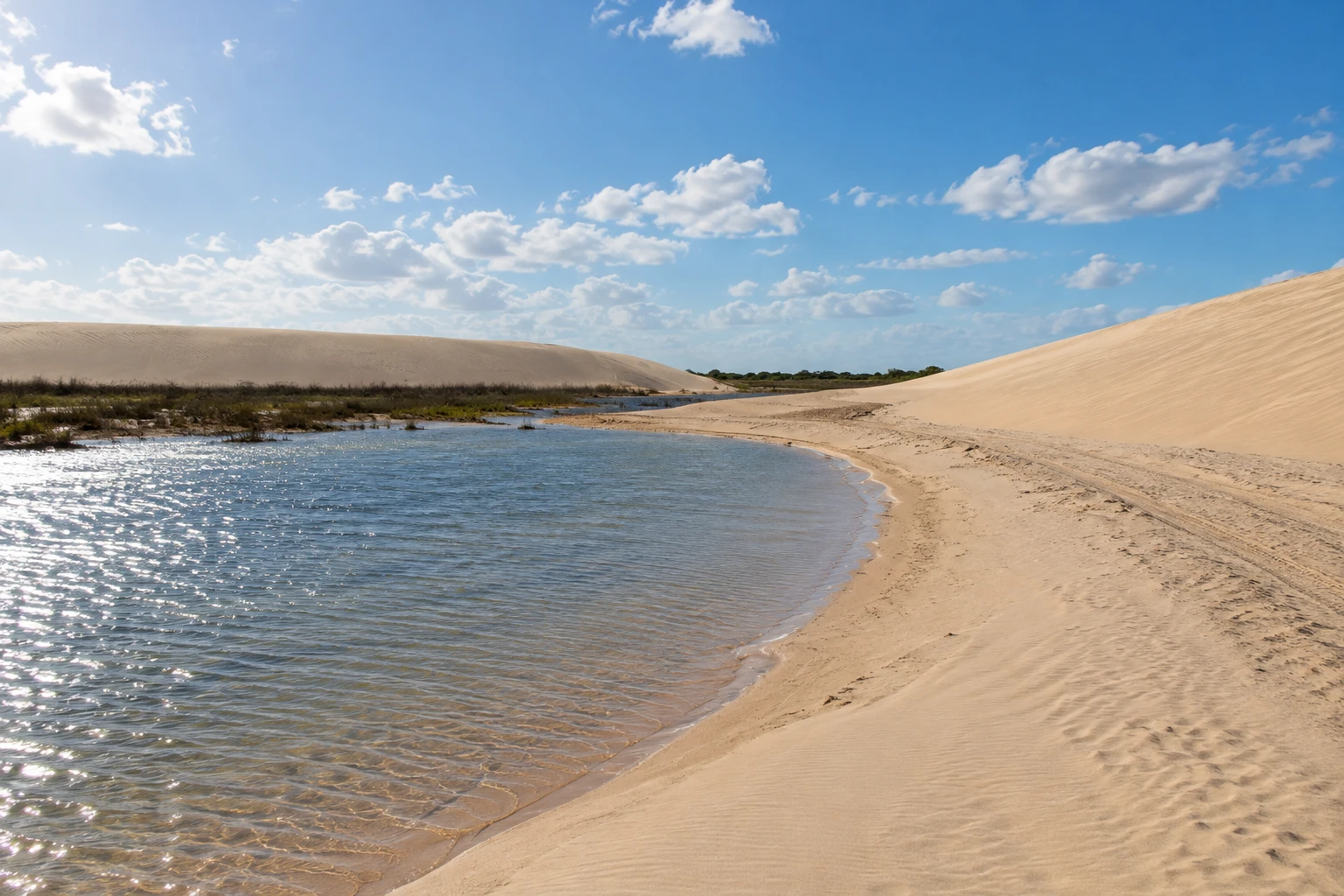
Protected area about 16 km south of Santa Cruz, with white sand dunes amid the forest, lagoons and birds, visited on foot, by 4x4 or with a tour operator.
Aeropuerto Internacional Viru Viru (VVI)Santa Cruz de la Sierra · 16 km
Terminal Bimodal de Santa Cruz2 km
Approximate distances. Check flights and bus, train or boat schedules before you travel.
Connections with Brazil may be direct flights or with a connection, depending on the season and the airline. Confirm before buying. Aeropuerto Internacional Viru Viru is 16 km from the center, about a 30-minute taxi ride. By land, from Corumbá you cross to Puerto Quijarro, from where the trem do Oriente and buses depart to the Terminal Bimodal of Santa Cruz; check schedules.
How many days
Two days: one for the center, the Cathedral and the museums; another for Biocentro Güembé or the Lomas de Arena. The city is a base for Samaipata, 3 hours away, and for the Missões de Chiquitos.
When to go
From May to September it is usually drier and less hot, with occasional cold fronts. From November to March it is very hot and rains more. Carnival, in February or March depending on the year, is the city's biggest festival, with parades and comparsas.
The seasons shown are the most usual ones; nature doesn't always follow the calendar.
Do you need a car?
Not for the center, which is done on foot, nor for city trips, which are made by taxi or app. For the Lomas de Arena, the last stretch is on sand: go with an agency or in a 4x4 vehicle. For Samaipata there are shared taxis and buses.
Suggested itinerary
An order that works
Built with the places on this page. No rush: it's paced so you have time to see them.
One day in Santa Cruz de la Sierra
manhã
Plaza 24 de Septiembre
Start at Plaza 24 de Septiembre and climb the Cathedral tower to see the city from above.
tarde
Biocentro Güembé
Head to Biocentro Güembé, in Urubó, for the butterfly house, the orchids and the lagoons, with lunch in the park.
fim de tarde
Historic center
Return to the center and walk along the streets with verandas surrounding the square.
noite
Dinner
Have dinner in the center or in Equipetrol: try the majadito and the cuñapé.
2 days in Santa Cruz de la Sierra
Day 1
manhã
Square and Cathedral
Plaza 24 de Septiembre, Cathedral and the Museo de Arte Sacra.
tarde
Center
Lunch in the center and a walk along the streets with verandas.
fim de tarde
Equipetrol
Late afternoon in the Equipetrol neighbourhood.
noite
Dinner
Dinner in Equipetrol.
Day 2
manhã
Lomas de Arena
Excursion with an agency to Parque Regional Lomas de Arena, with the dunes and the lagoons.
tarde
Biocentro Güembé
Afternoon at Biocentro Güembé, with the pools and the butterfly house.
fim de tarde
Return to the center
Return to the center and rest.
noite
Departure for Samaipata
Dinner and preparation to head to Samaipata the next day.
Check before you go. Opening hours and days change, and places may close for renovations, holidays or events. This itinerary is a suggestion from Cidade Turismo, not a commitment: plan yours by checking directly with each place you intend to visit.
Before you go
Frequently asked questions
What to eat in Santa Cruz?
Majadito (rice with charque and egg); cuñapé and pan de arroz, cheese breads and mandioca, relatives of the pão de queijo mineiro; and locro, a rice soup with chicken.
Is Santa Cruz the capital of Bolivia?
No. It is the largest city and the capital of the department of Santa Cruz. The constitutional capital is Sucre, and the seat of government is La Paz.
How to get to the Missões de Chiquitos?
By bus or car from Santa Cruz, with trips of 4 to 8 hours to the villages. Agency itineraries take three to five days to tour the missões.
Is it very hot in Santa Cruz?
Yes, mainly from November to March. From May to September the heat is usually less, and cold fronts coming from the south can lower the temperature for a few days.


 Brazil
 Antarctica
 Argentina
 Chile
 Colombia
 Ecuador
 Falkland Islands (Malvinas)
 French Guiana
 Guyana
 Paraguay
 Peru
 Suriname
 Uruguay
 Venezuela
 Albania
 Austria
 Belgium
 Croatia
 Denmark
 Finland
 France
 Germany
 Greece
 Hungary
 Iceland
 Ireland
 Italy
 Luxembourg
 Norway
 Poland
 Portugal
 Slovakia
 Slovenia
 Spain
 Sweden
 Switzerland
 the Czech Republic
 the Netherlands
 the United Kingdom
 Turkey
 Bermuda
 Canada
 Greenland
 Mexico
 Saint Pierre and Miquelon
 the United States
 the Dominican Republic
 Japan
 Egypt
 South Africa
 Australia
 Fiji
 New Zealand
 Papua New Guinea