29 places to visit and 16 tours, chosen by the Cidade Turismo guide.
Updated
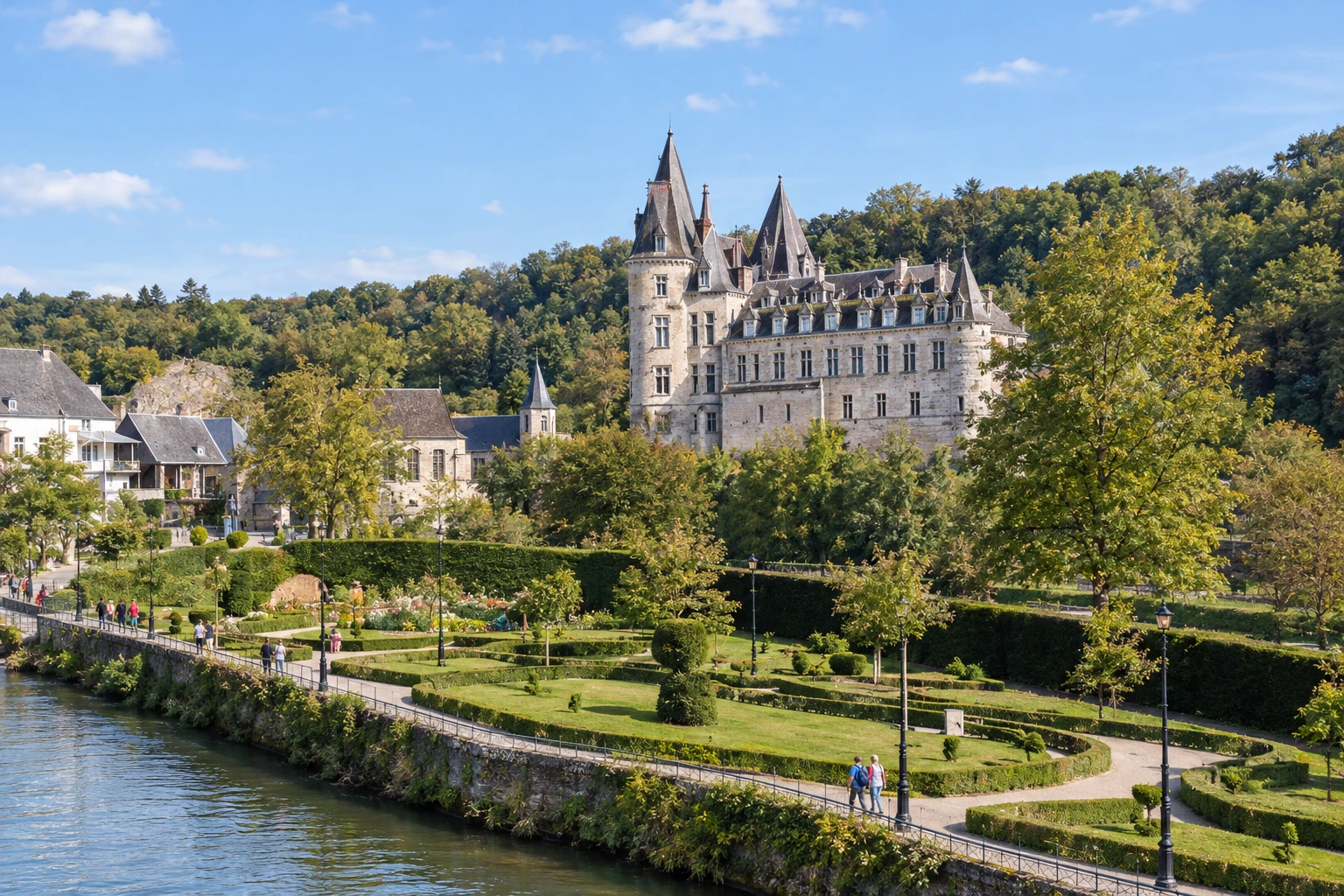
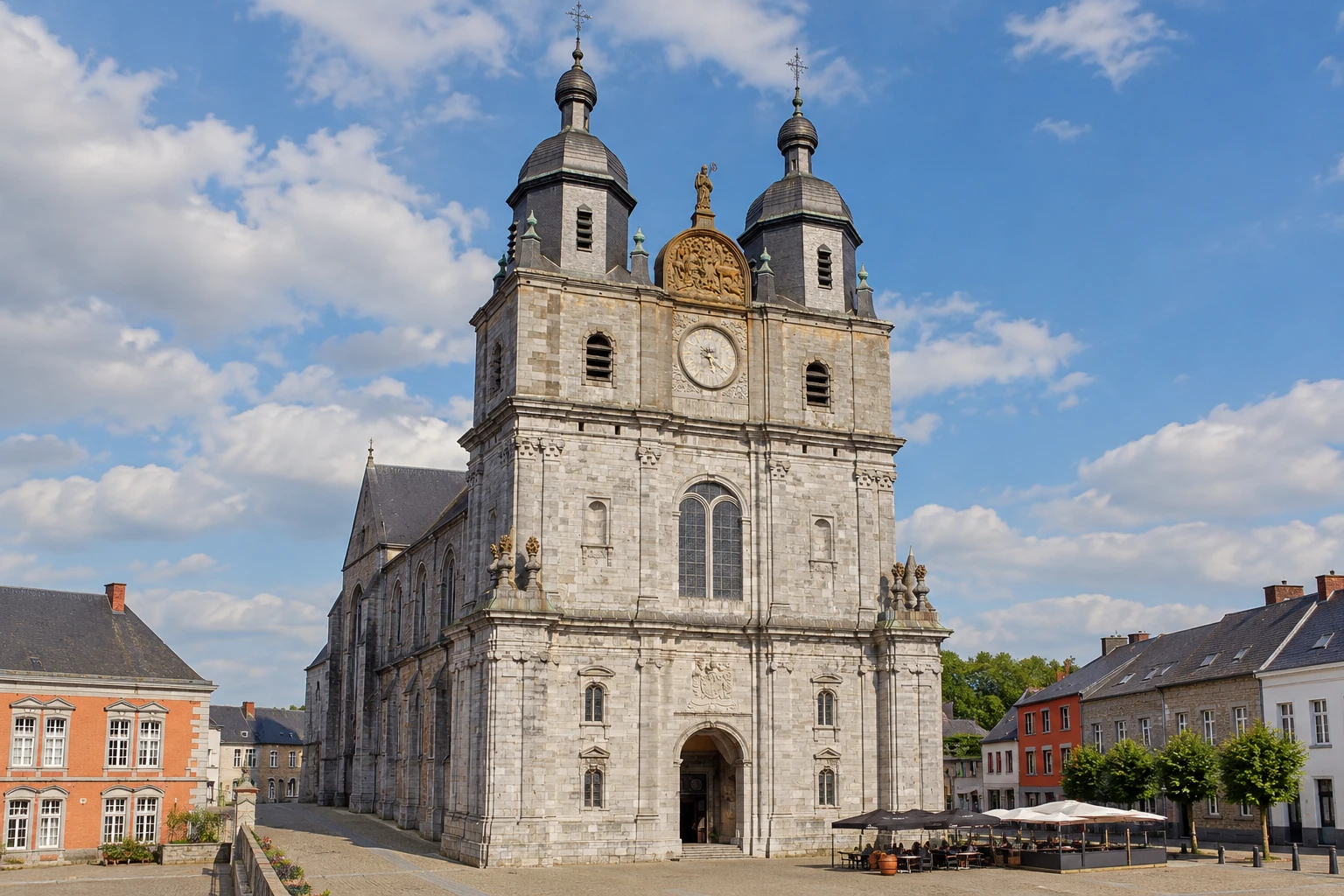
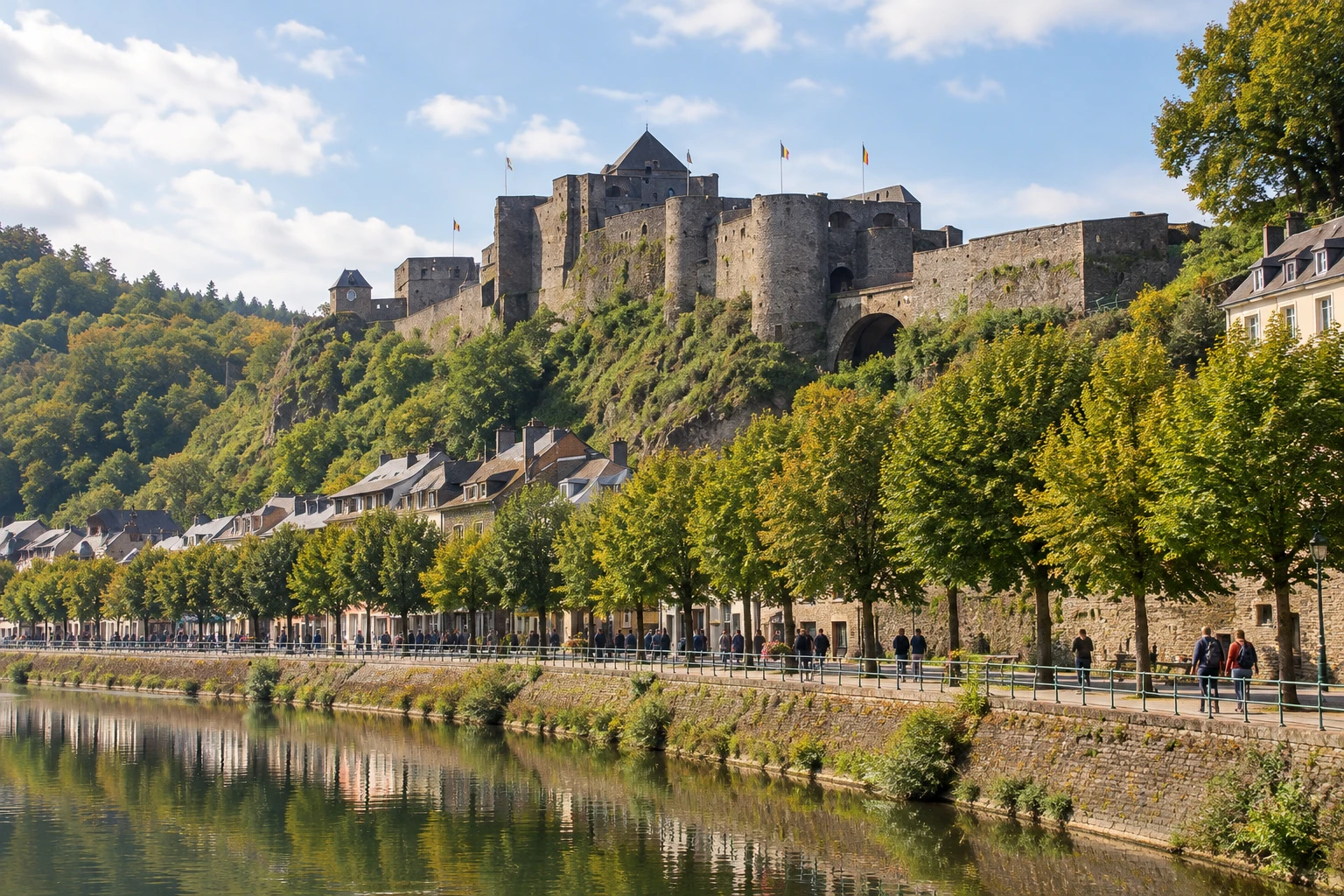
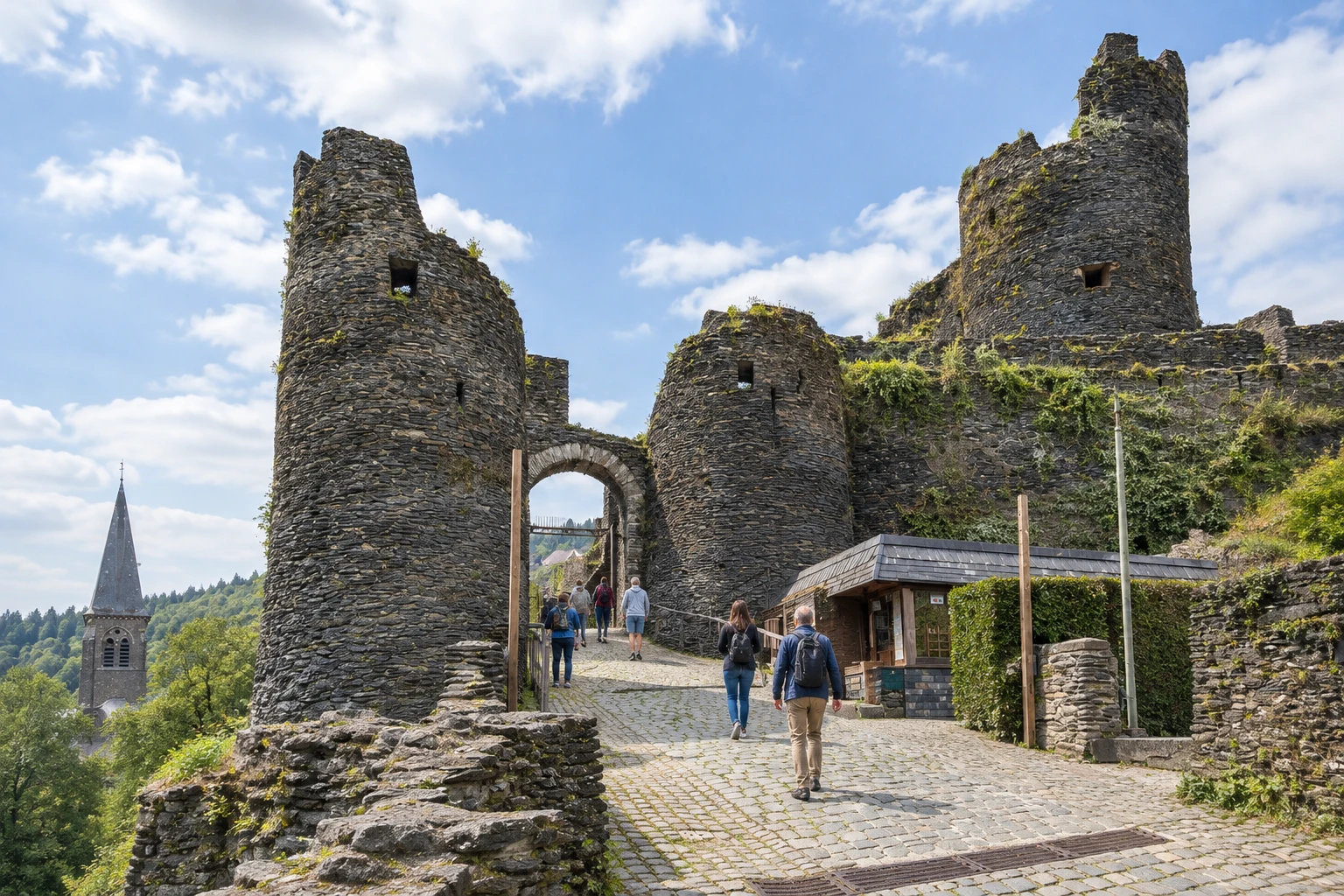
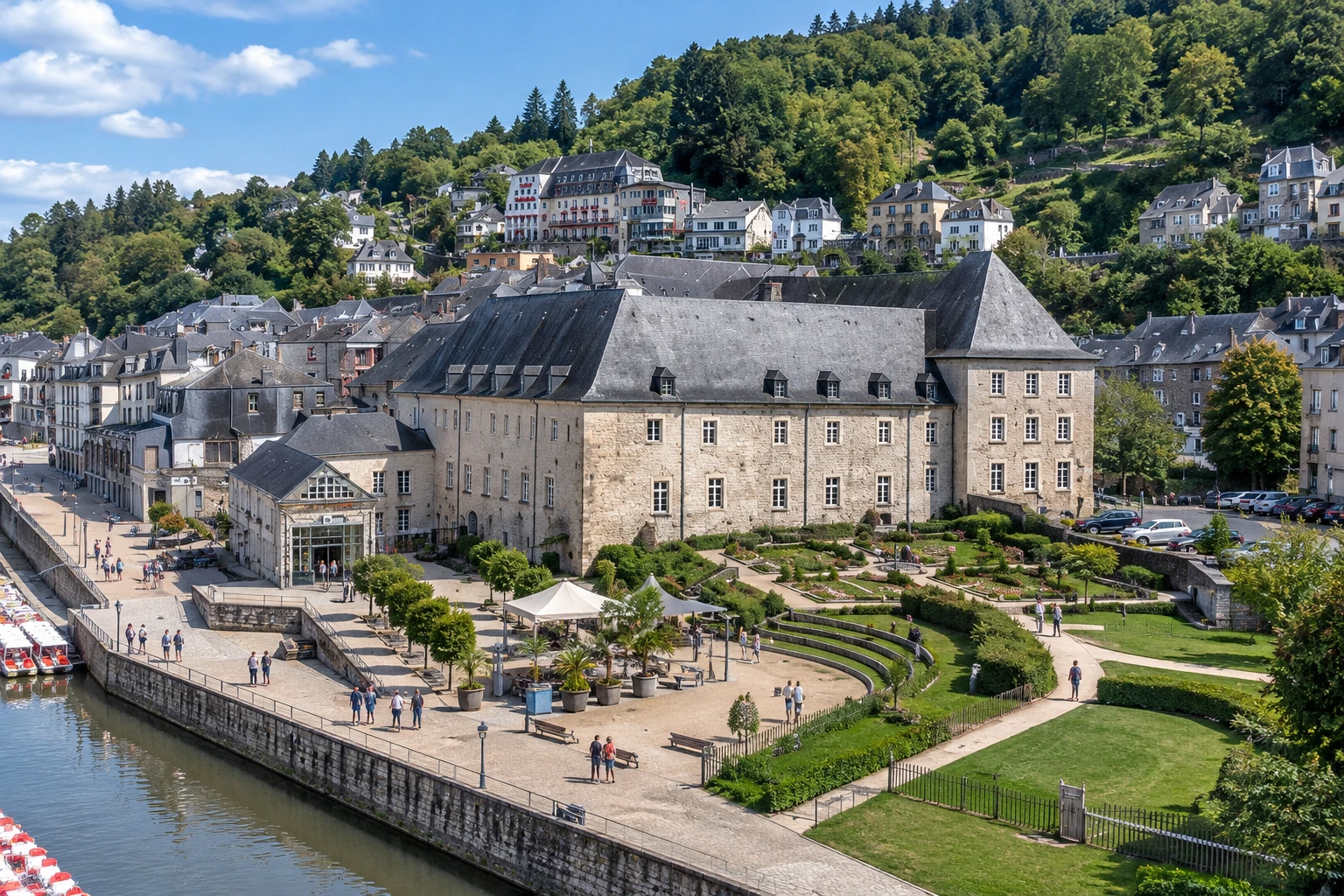
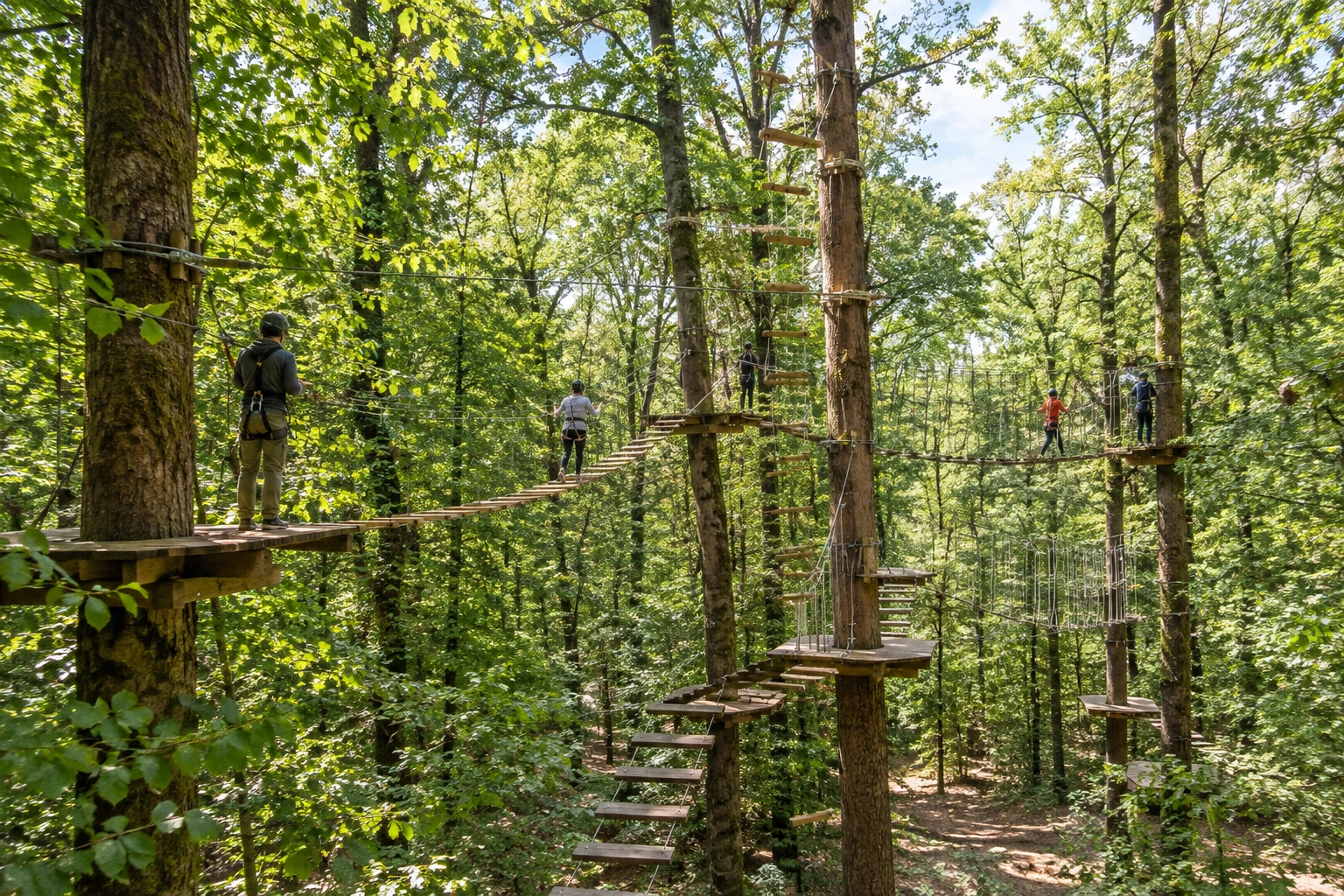
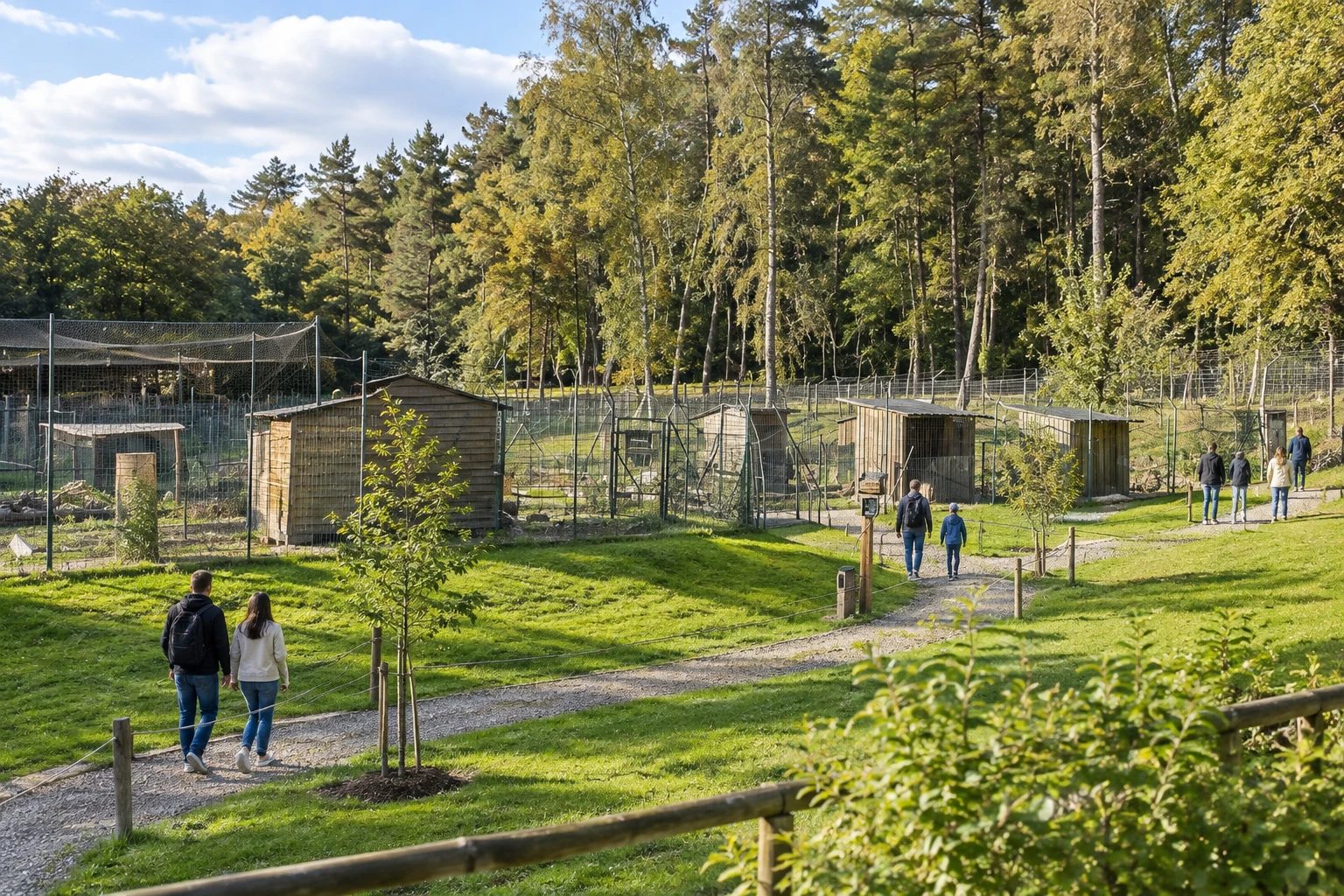
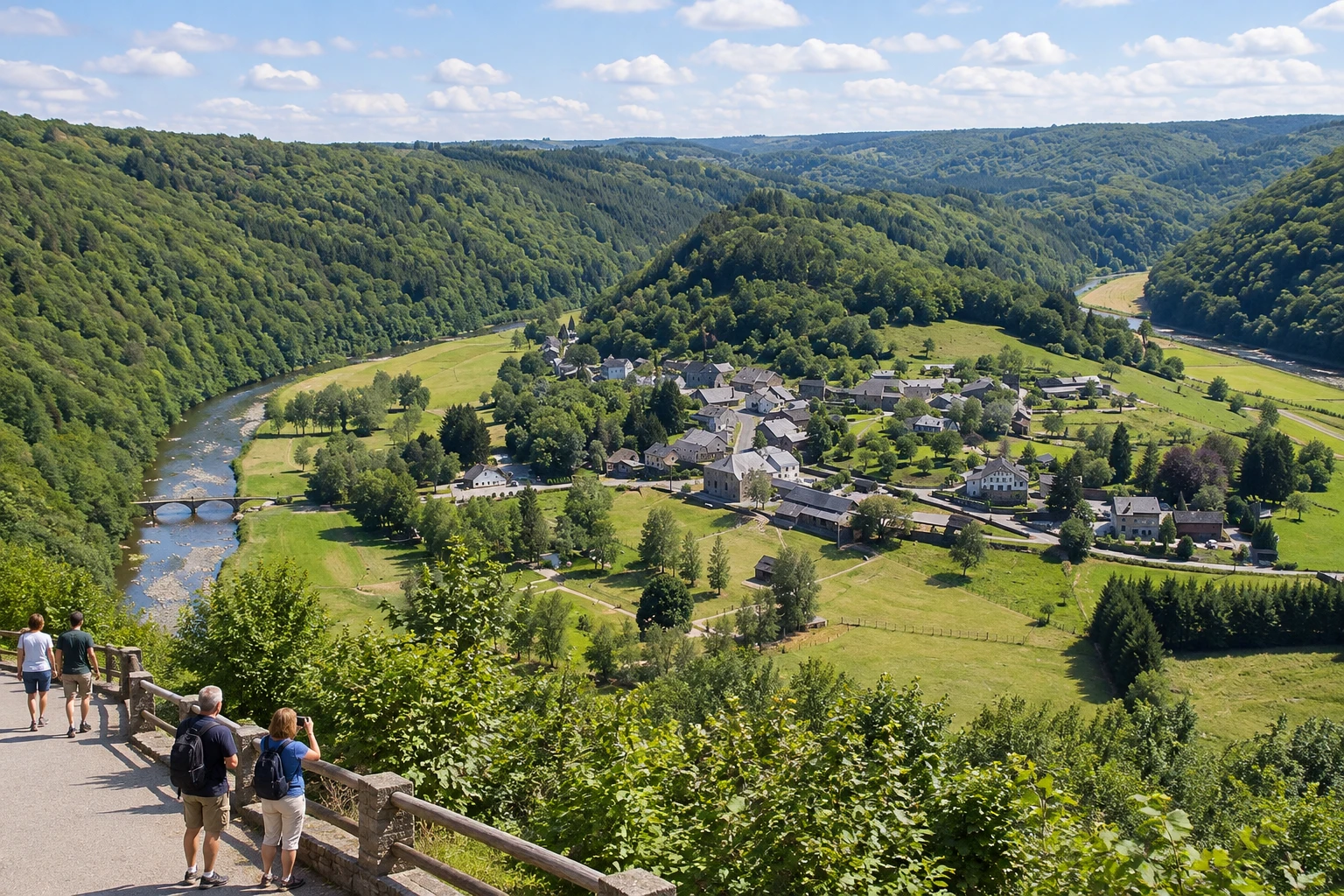
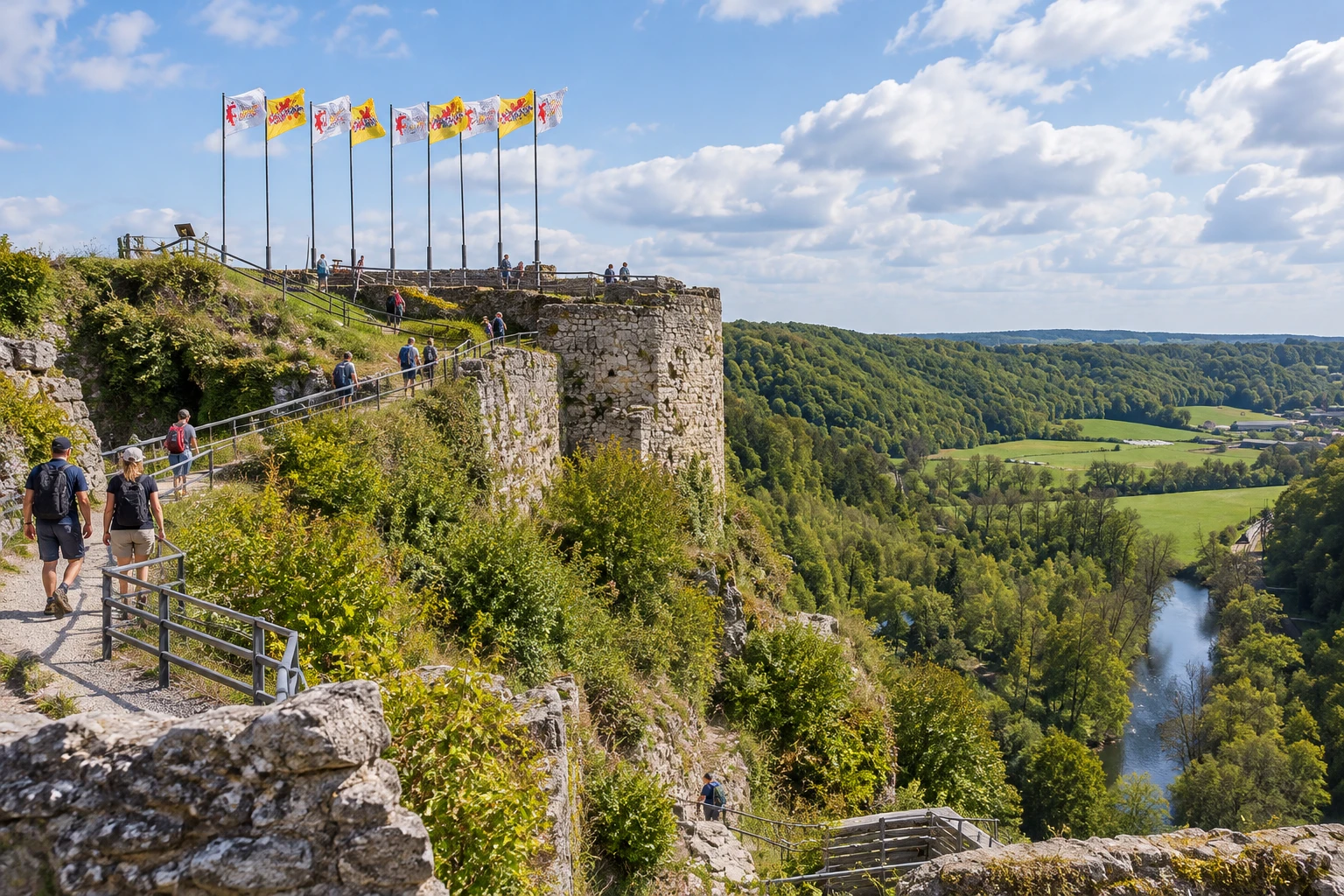
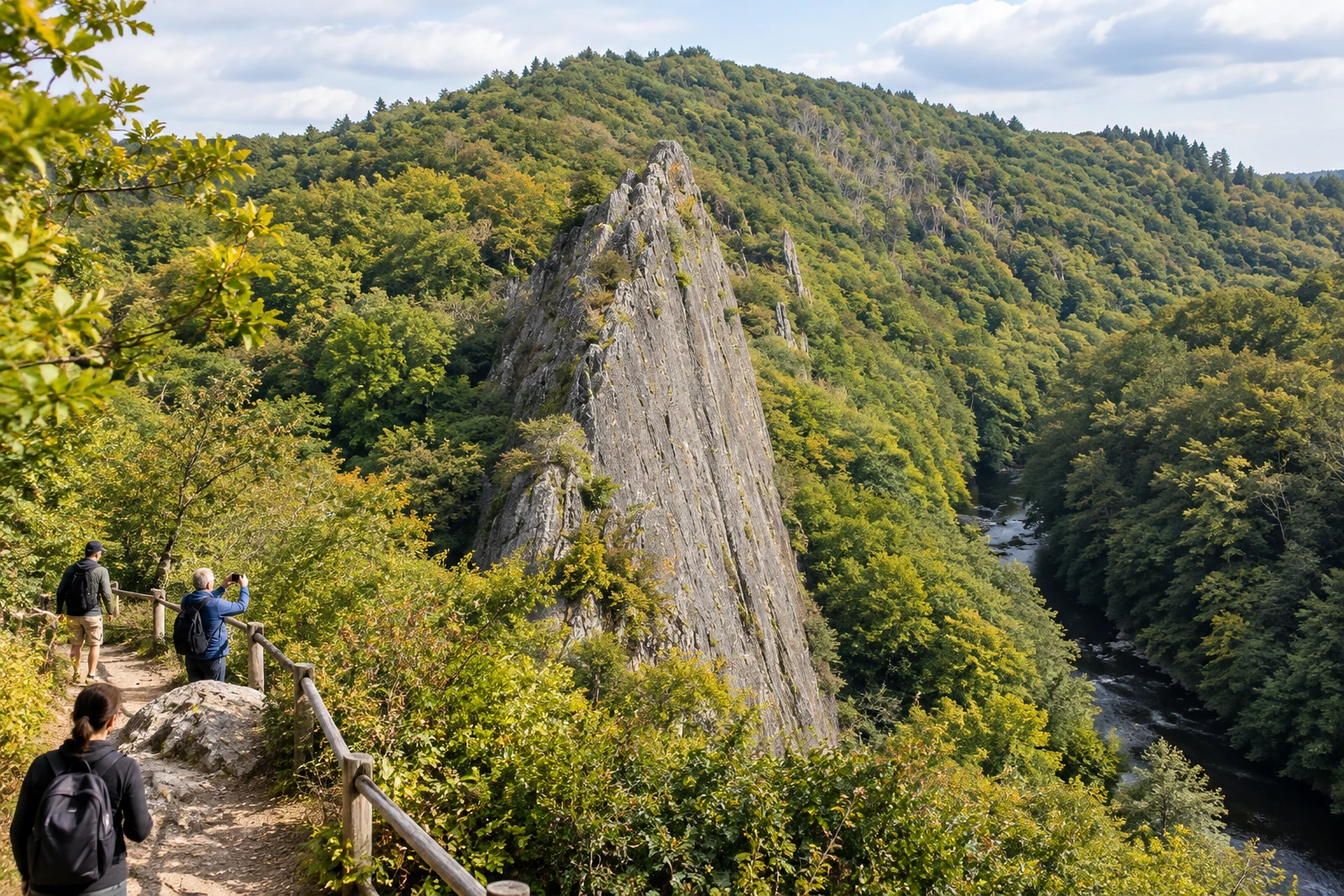
Illustrative images. The pictures in this guide are illustrations based on the real place, not photographs, and may differ from it.
To start
The 10 main places Ardennes
Basilica of Saint Hubert · Saint-HubertFormer church of the Benedictine abbey of Saint-Hubert, with a 16th-century Gothic nave, Baroque façade with towers of about 60 metres, Romanesque crypt and choir stalls carved...
Bastogne War Museum · BastogneA museum on Mardasson Hill devoted to World War II and the Battle of the Bulge, with artifacts, personal accounts, and recreated settings.
Bouillon Castle · BouillonMedieval fortress on three rocky peaks above the Semois, associated with Godofredo de Bulhão and strengthened by Vauban.
La Roche-en-Ardenne Castle · La Roche-en-ArdenneRuins of a medieval castle on a rocky spur, between a bend of the Ourthe and the Deister hill.
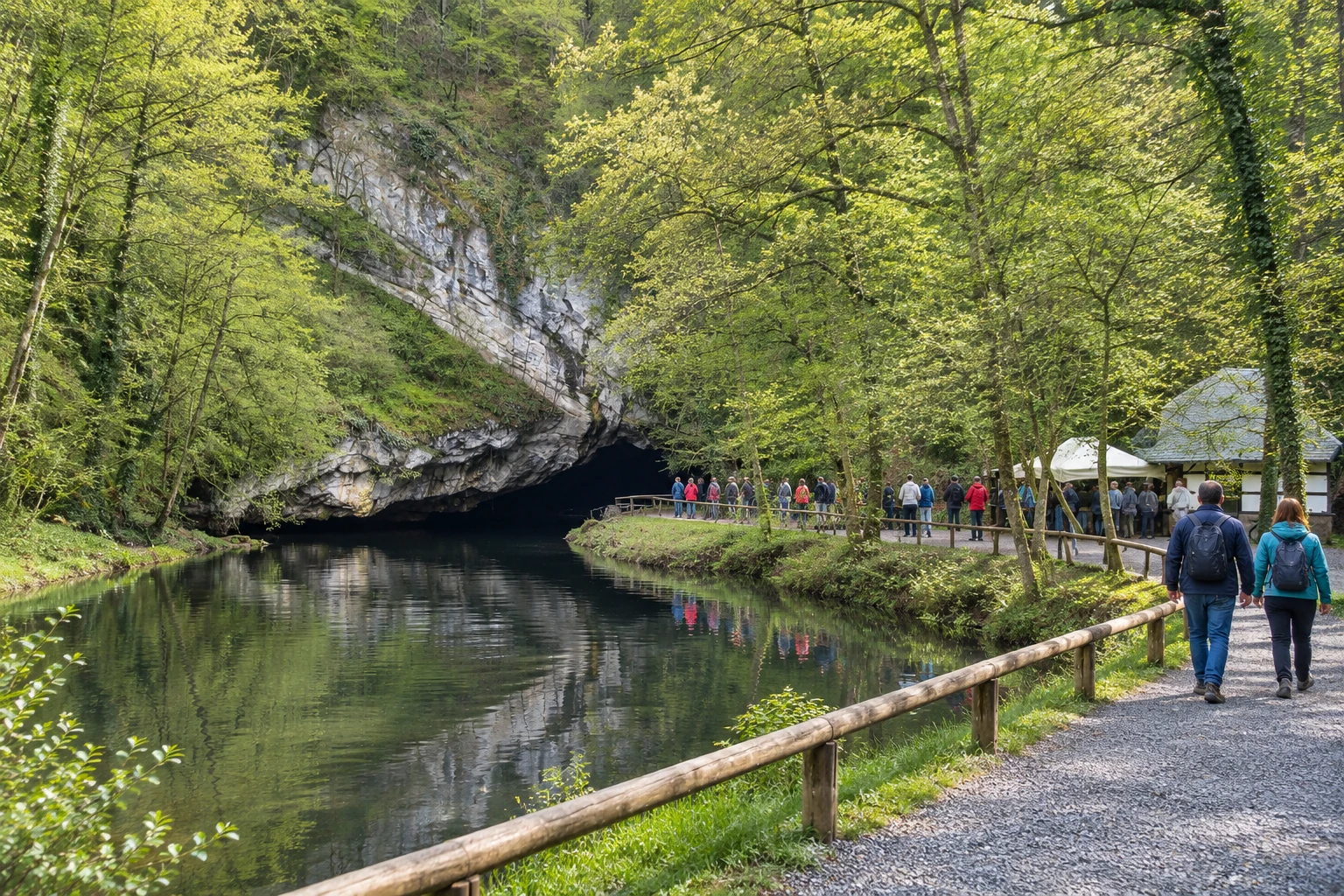
Caves of Han · RochefortCave formed by the river Lesse under a limestone hill in Han-sur-Lesse.
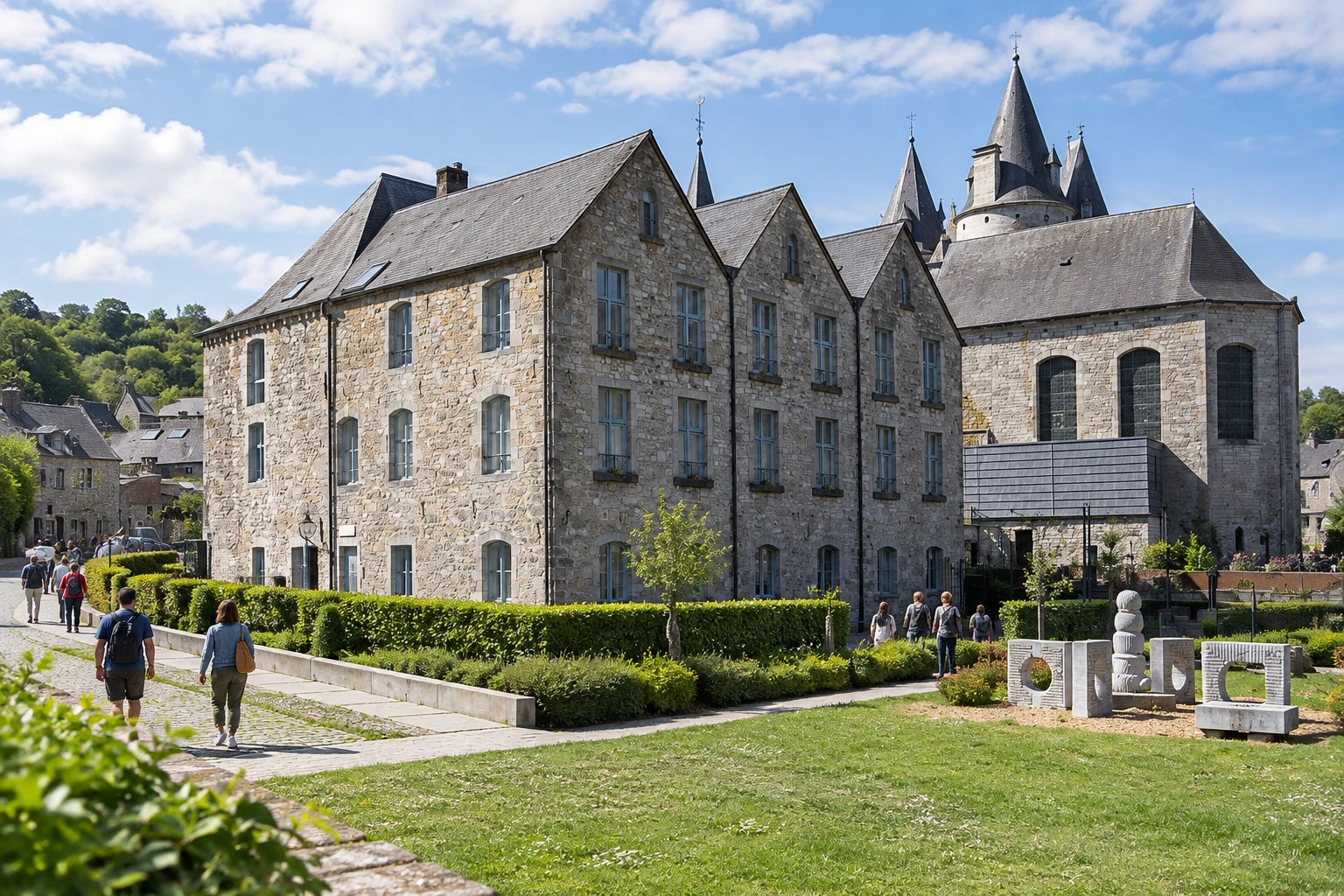
Durbuy Old Town · DurbuyOld centre of Durbuy, with cobbled streets, limestone and half-timbered houses, the church Saint-Nicolas and the castle d'Ursel on the rock, all within a former bend of the Ourthe.
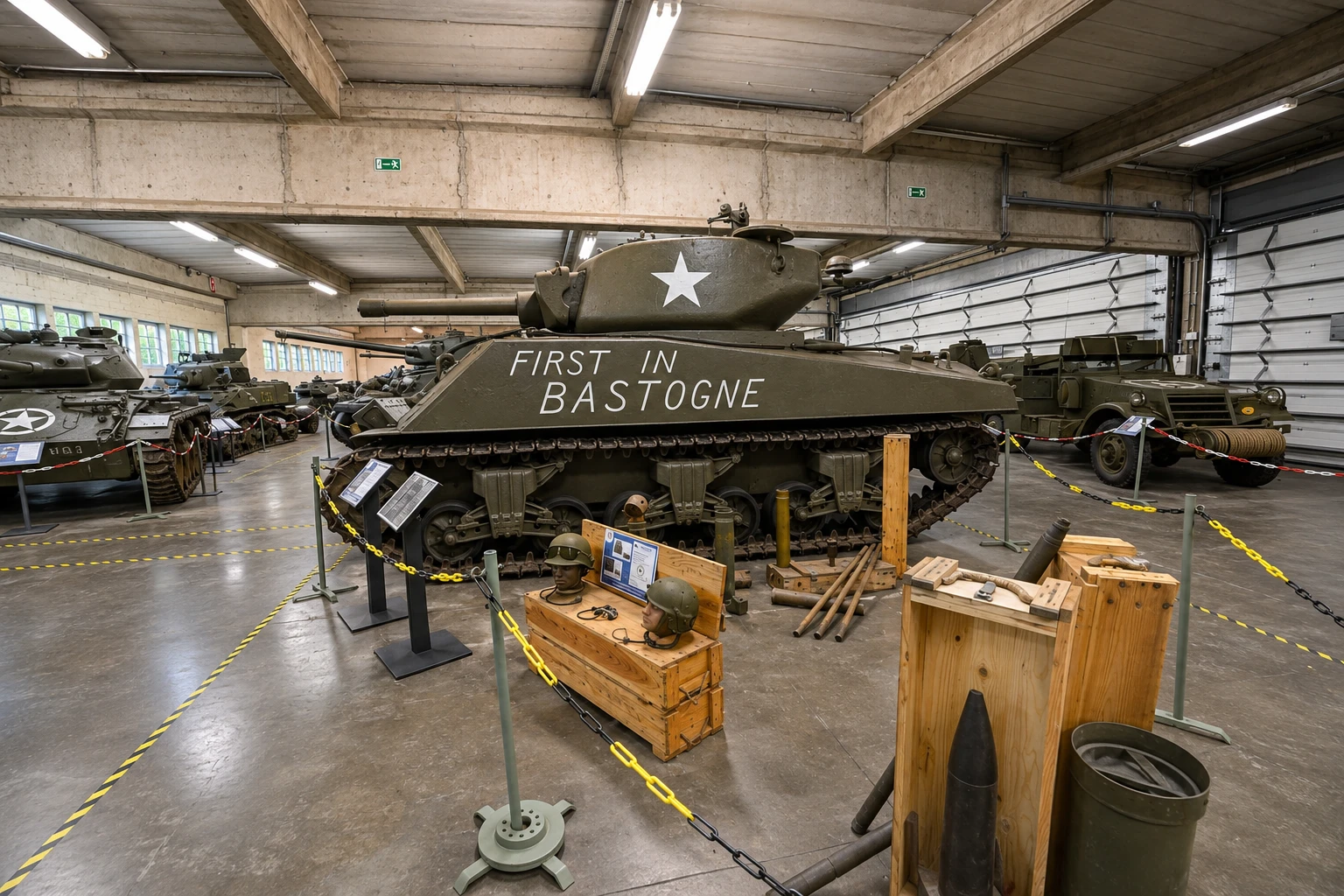
Bastogne Barracks · BastogneHangars at a former military barracks house a collection of World War II vehicles and equipment.
Bouillon Medieval Experience · BouillonMultimedia route about Godofredo de Bulhão and the First Crusade, at the foot of the castle on the Quai des Saulx.
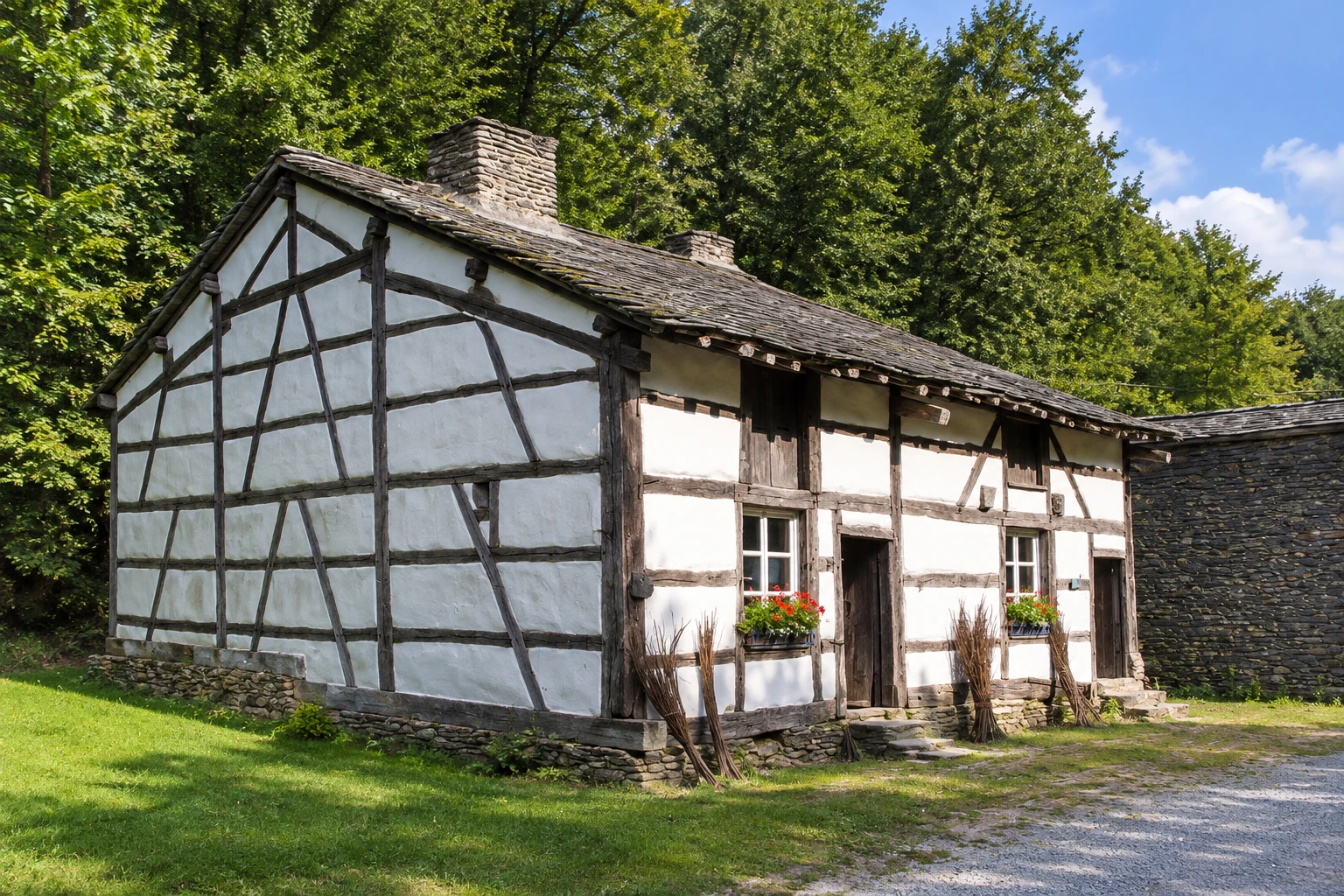
Fourneau Saint-Michel · Saint-HubertEstate about 8 km from Saint-Hubert, in a forest valley, with the abbey's old 1771 blast furnace and an open-air museum of Walloon rural houses brought from various places and r...
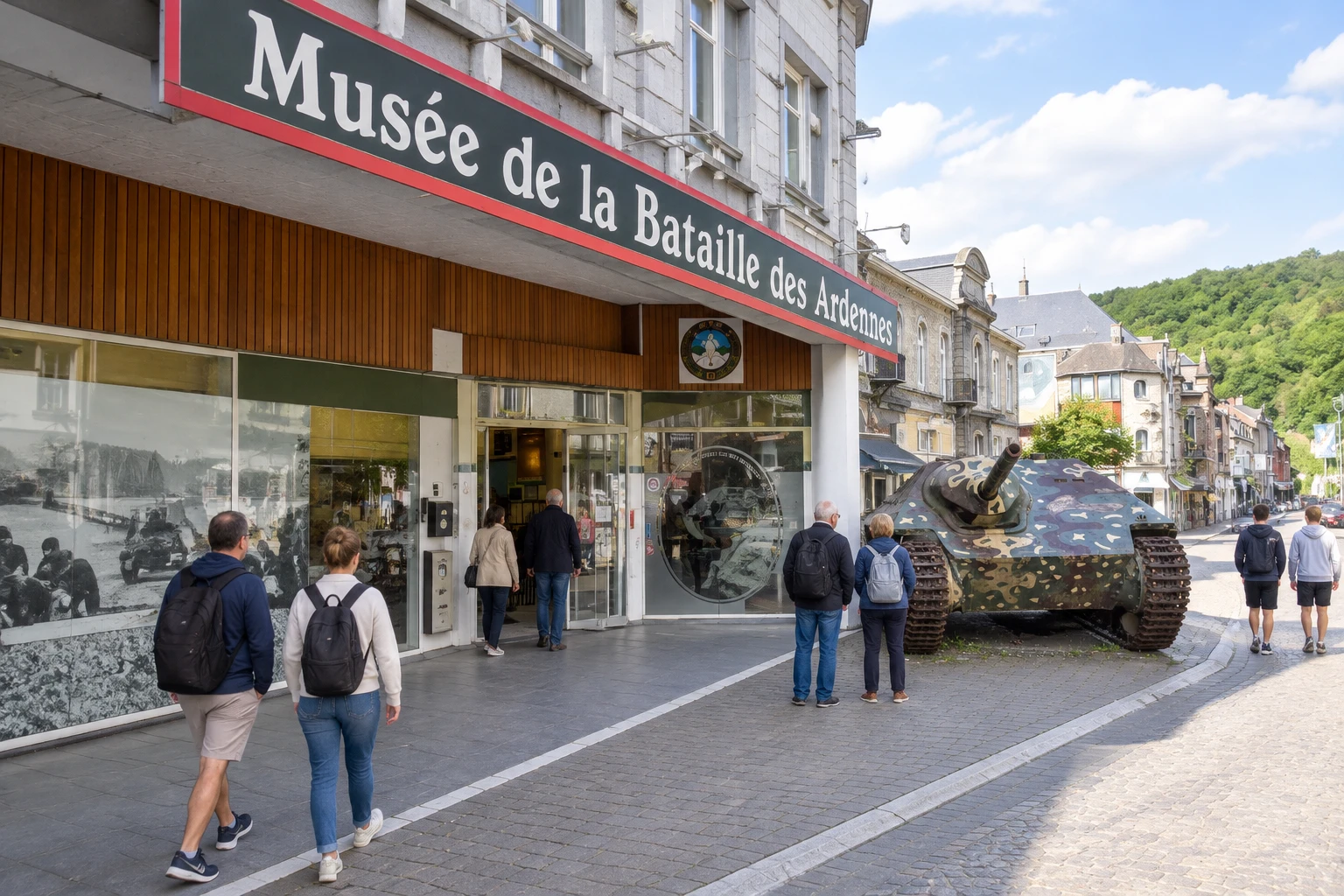
Battle of the Bulge Museum · La Roche-en-ArdenneMusée de la Bataille des Ardennes, with over 2,000 square metres across four floors: about 120 uniformed mannequins, military vehicles, weapons, maps and a wing dedicated to the...
Former church of the Benedictine abbey of Saint-Hubert, with a 16th-century Gothic nave, Baroque façade with towers of about 60 metres, Romanesque crypt and choir stalls carved with scenes from the life of Saint Hubert. Beside it stands the 18th-century abbey palace.
Medieval fortress on three rocky peaks above the Semois, associated with Godofredo de Bulhão and strengthened by Vauban. It has rooms carved into the rock, the Tour d'Autriche and falconry flights.
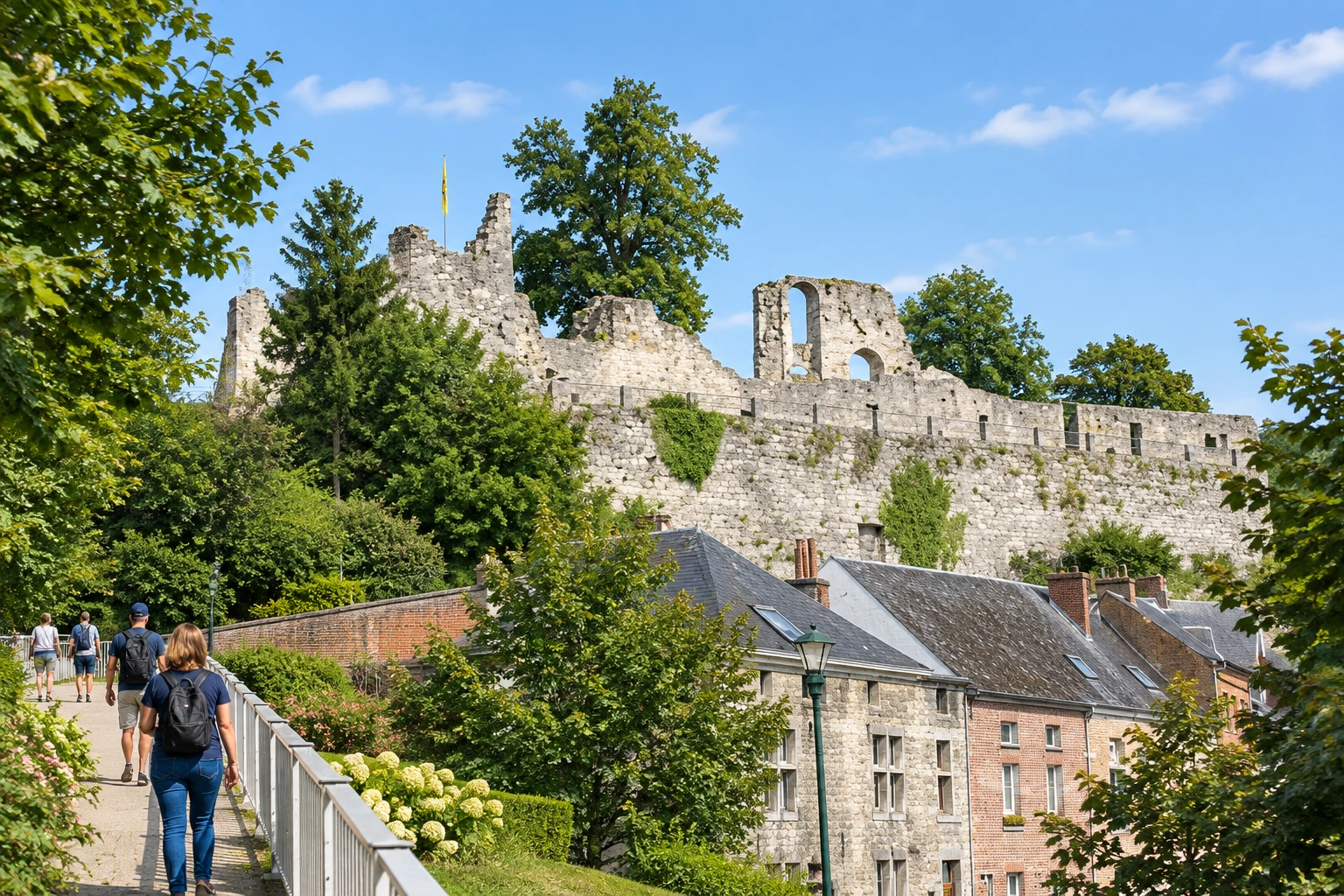
Ruins of a medieval castle on a rocky spur, between a bend of the Ourthe and the Deister hill. It has ramparts to walk, views over the town centre and the legend of the ghost of Countess Berthe.
Cave formed by the river Lesse under a limestone hill in Han-sur-Lesse. Access is by an old tram that leaves the village, and the guided tour goes through rooms with stalactites, along the underground river and into the large Salle du Dôme.
Old centre of Durbuy, with cobbled streets, limestone and half-timbered houses, the church Saint-Nicolas and the castle d'Ursel on the rock, all within a former bend of the Ourthe.
Multimedia route about Godofredo de Bulhão and the First Crusade, at the foot of the castle on the Quai des Saulx. Former Archéoscope Godefroid de Bouillon, with seven rooms and three projections.
Estate about 8 km from Saint-Hubert, in a forest valley, with the abbey's old 1771 blast furnace and an open-air museum of Walloon rural houses brought from various places and reassembled on site.
Musée de la Bataille des Ardennes, with over 2,000 square metres across four floors: about 120 uniformed mannequins, military vehicles, weapons, maps and a wing dedicated to the British troops.
A 250-hectare park of woodland and fields cut by the Lesse, in Han-sur-Lesse, with animals of European wildlife: brown bear, wolf, European bison, lynx and wolverine. The visit is on foot along trails, or in a safari vehicle.
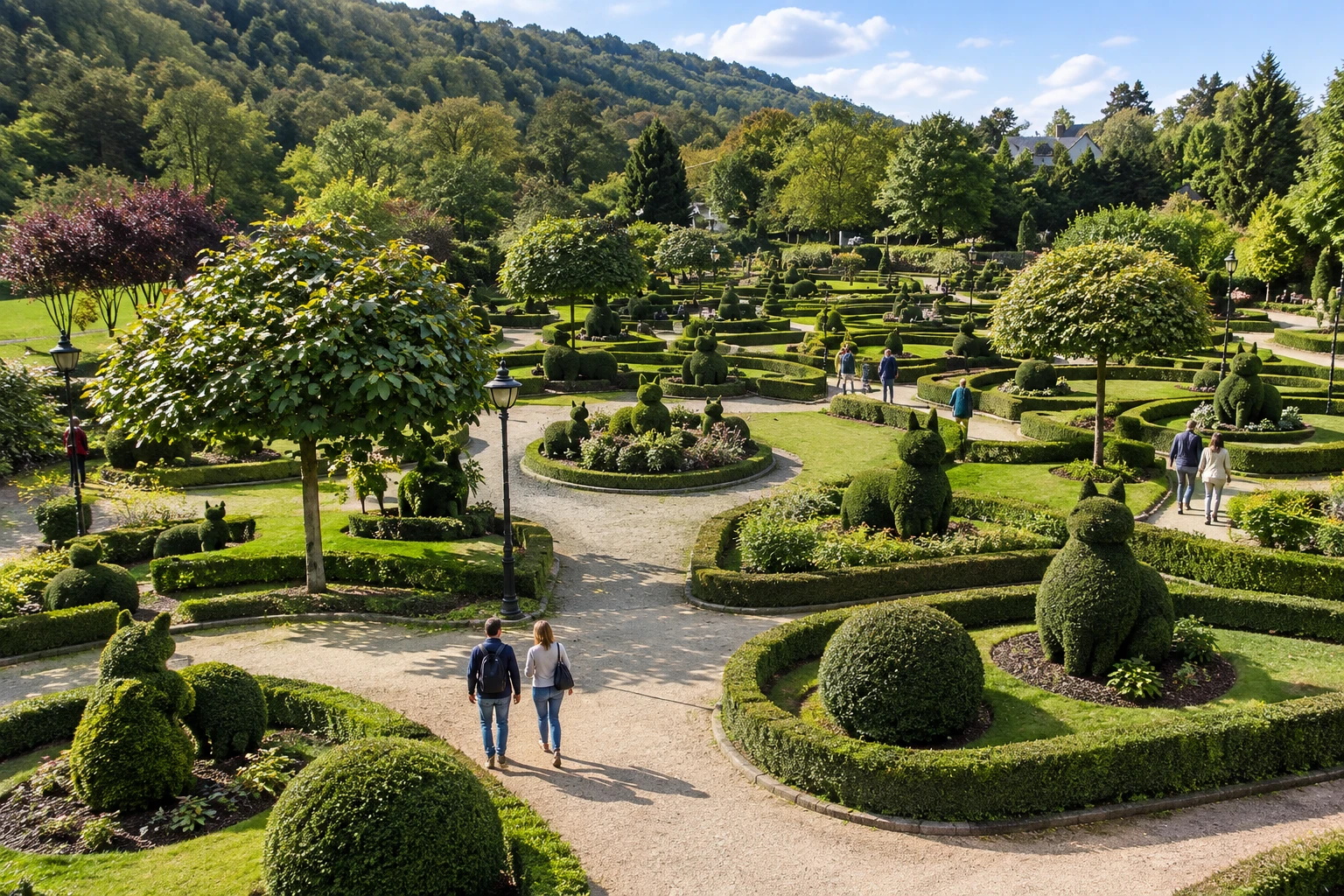
Garden of about 10,000 square meters on the left bank of the Ourthe, with more than 250 figures made from clipped boxwood: animals, characters and even a vegetal Manneken Pis.
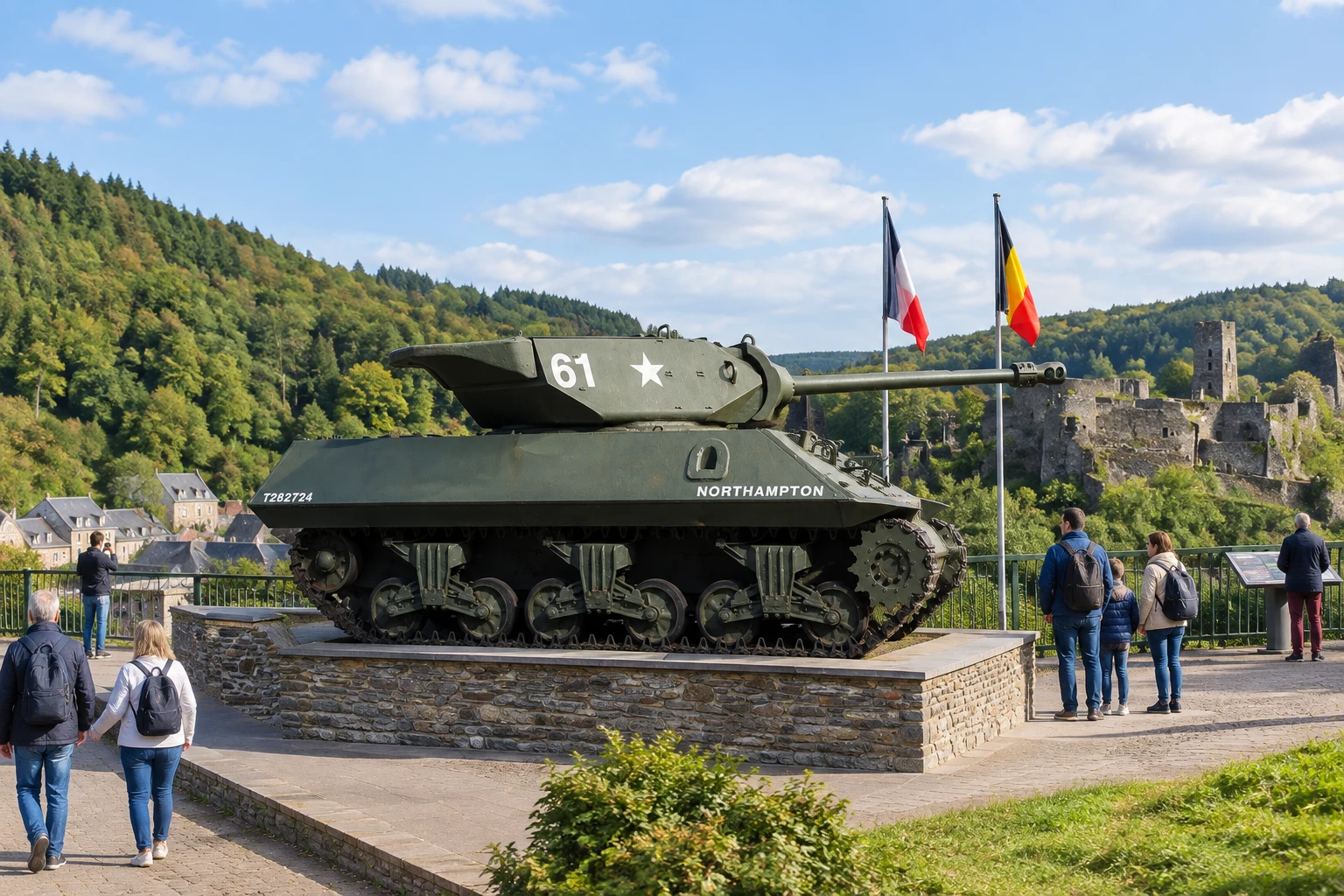
British tank destroyer M10 Achilles, the first armoured vehicle to enter La Roche in the liberation of 11 January 1945. Restored, it is a monument to the 1st Northamptonshire Yeomanry regiment.
Ruins of the medieval castle that gave Rochefort its name, on a limestone promontory above the river Lomme. First mentioned in 1155, it was converted into a palace in the 17th century and dismantled after the French Revolution.
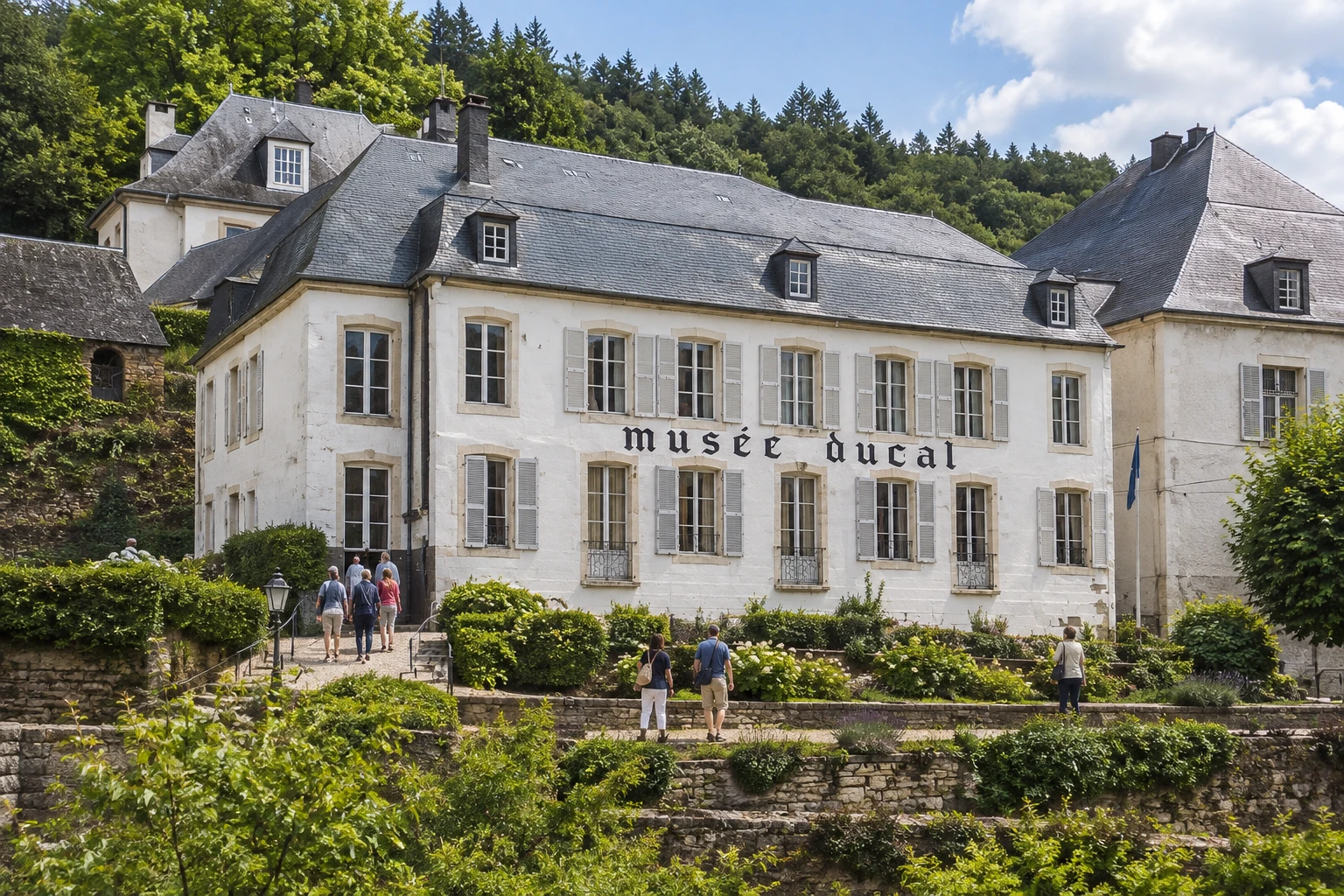
Museum in listed buildings from the 17th and 18th centuries with three sections: Godofredo de Bulhão and the Crusades, the life and trades of the Semois valley, and ironwork.
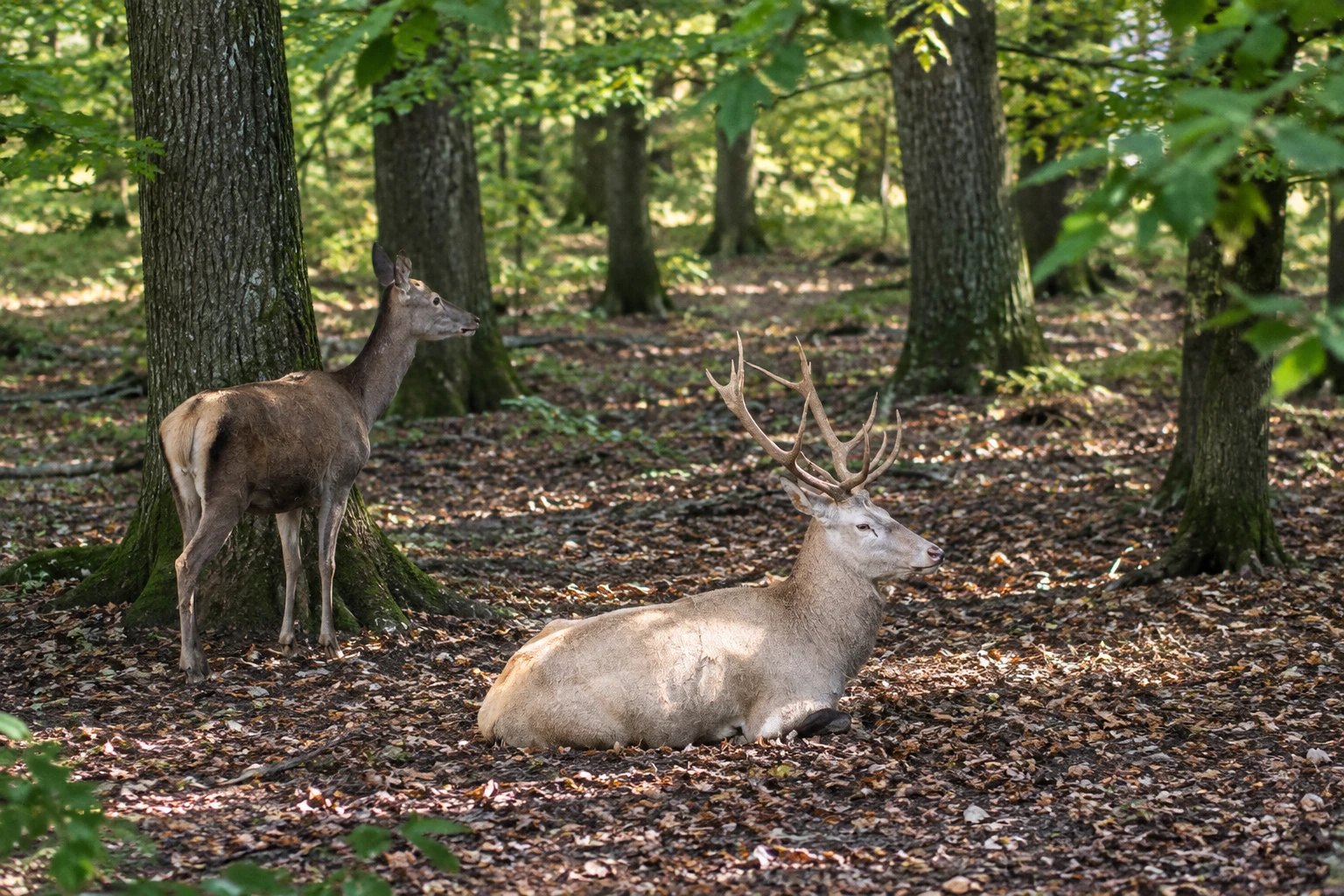
Seventeen-hectare park in the forest near Saint-Hubert, with about 200 Ardennes animals living semi-wild, such as deer, fallow deer, mouflons and wild boar, plus an aviary and trails.
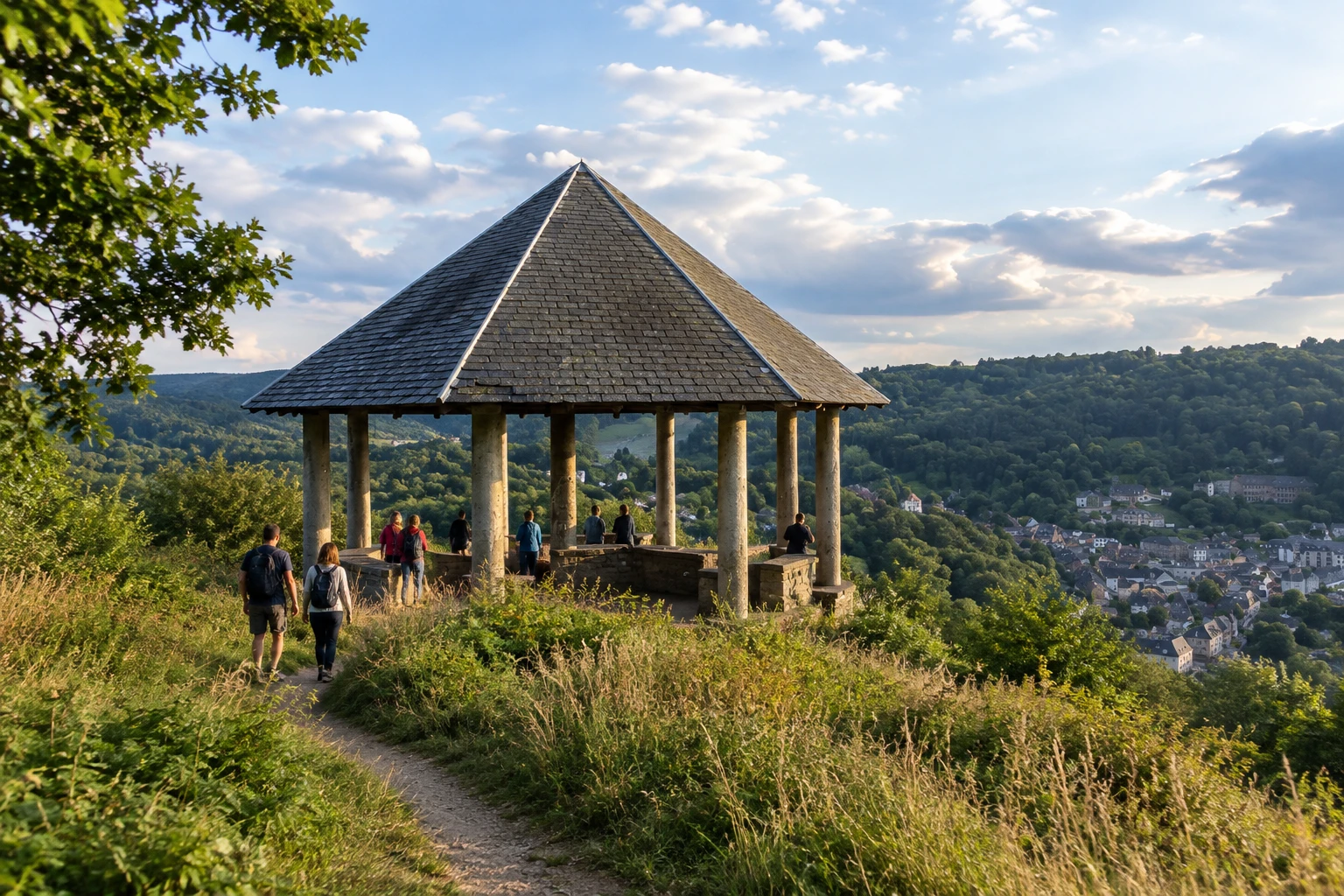
Viewpoint at the top of the Deister, the hill above La Roche. The climb on foot starts near the chapel Sainte-Marguerite and ends with views over the town, the castle and the bend of the Ourthe.
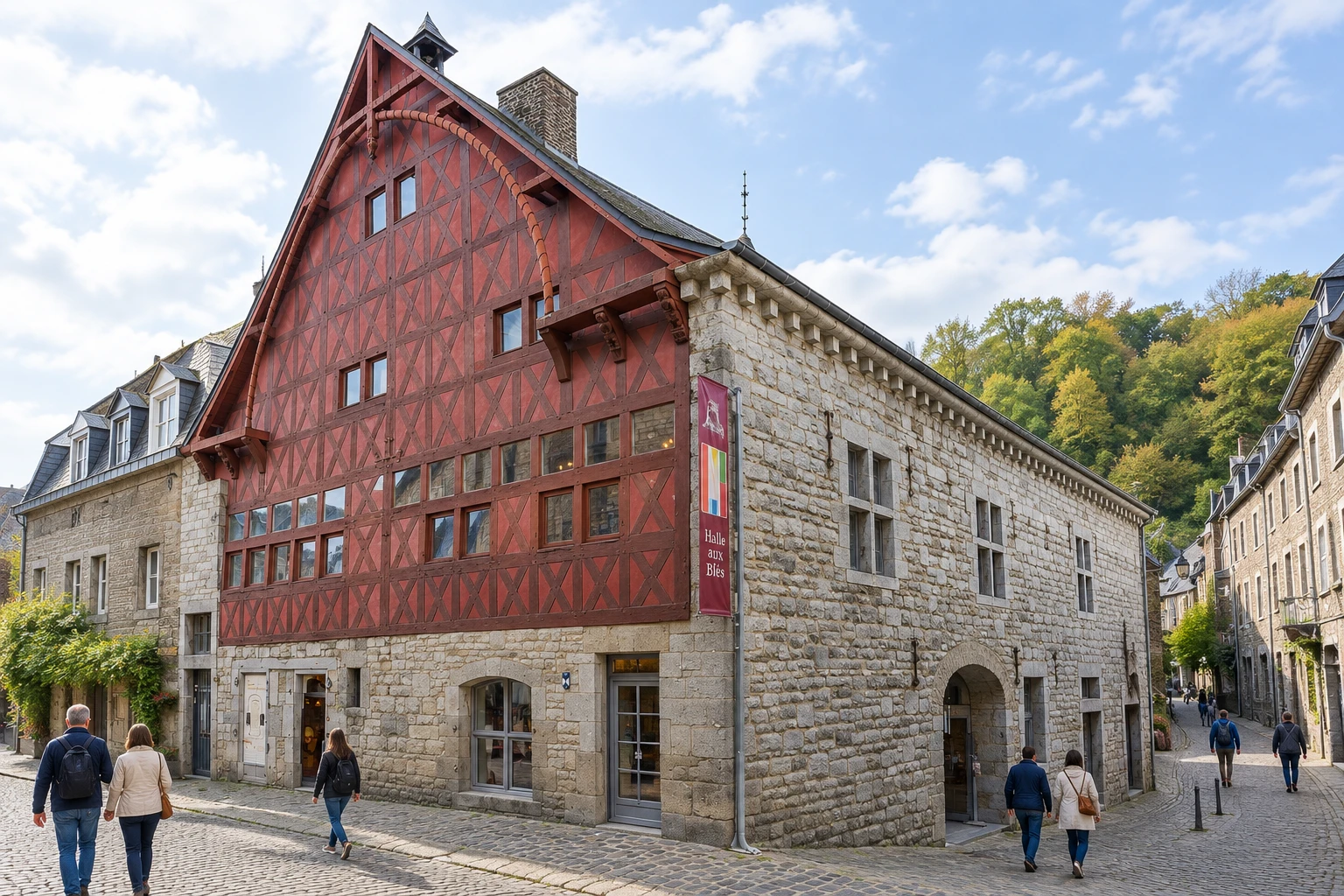
Former timber-framed grain market, mentioned since 1380 and retaining a 16th-century appearance. It houses the DHAM, the museum of Durbuy history and modern and contemporary art.
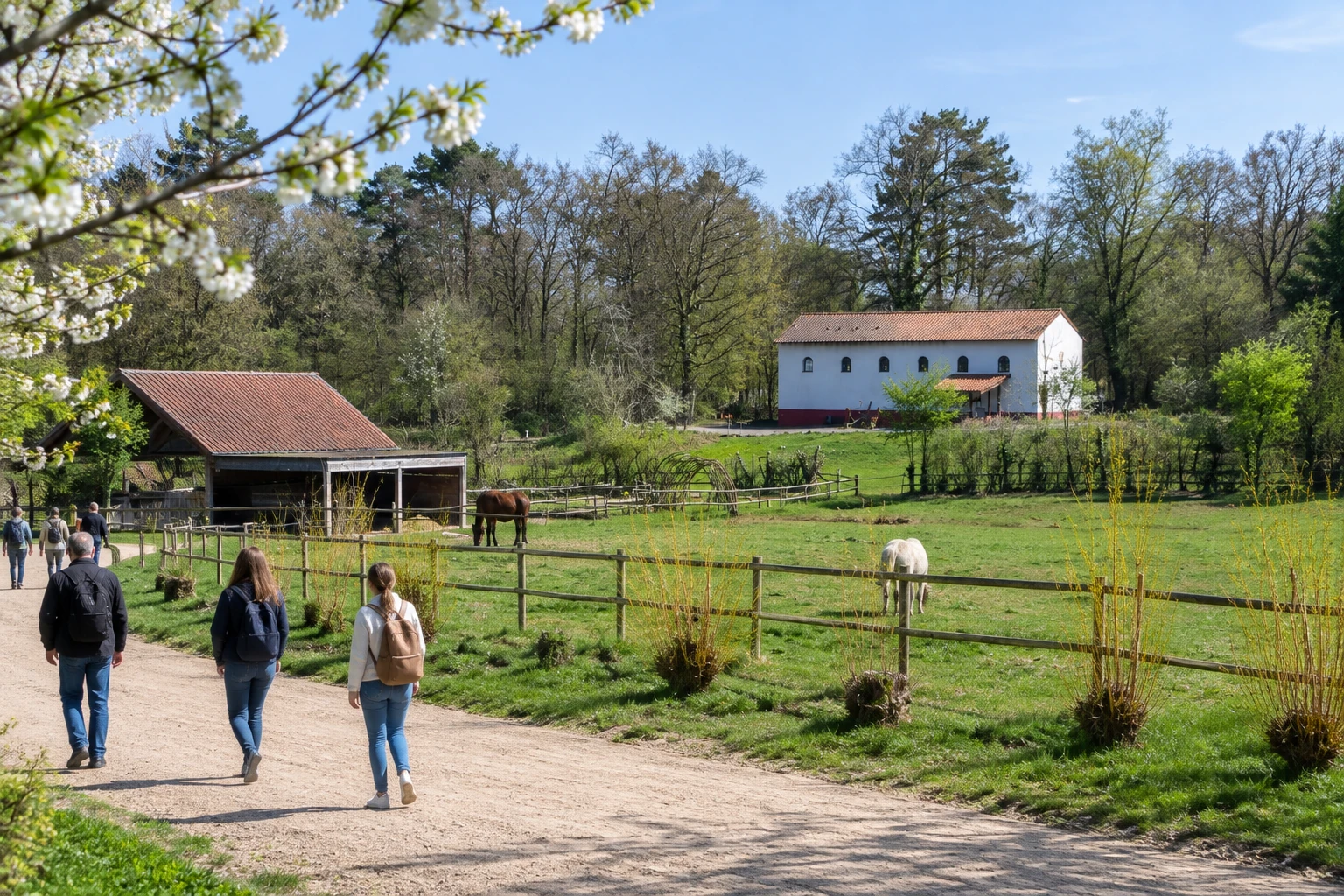
A 14-hectare archaeological park between Rochefort and Jemelle, over the remains of one of the largest Roman villas in northern Gaul, from the 1st century. It features reconstructions, gardens, heritage breeds of animals and workshops.
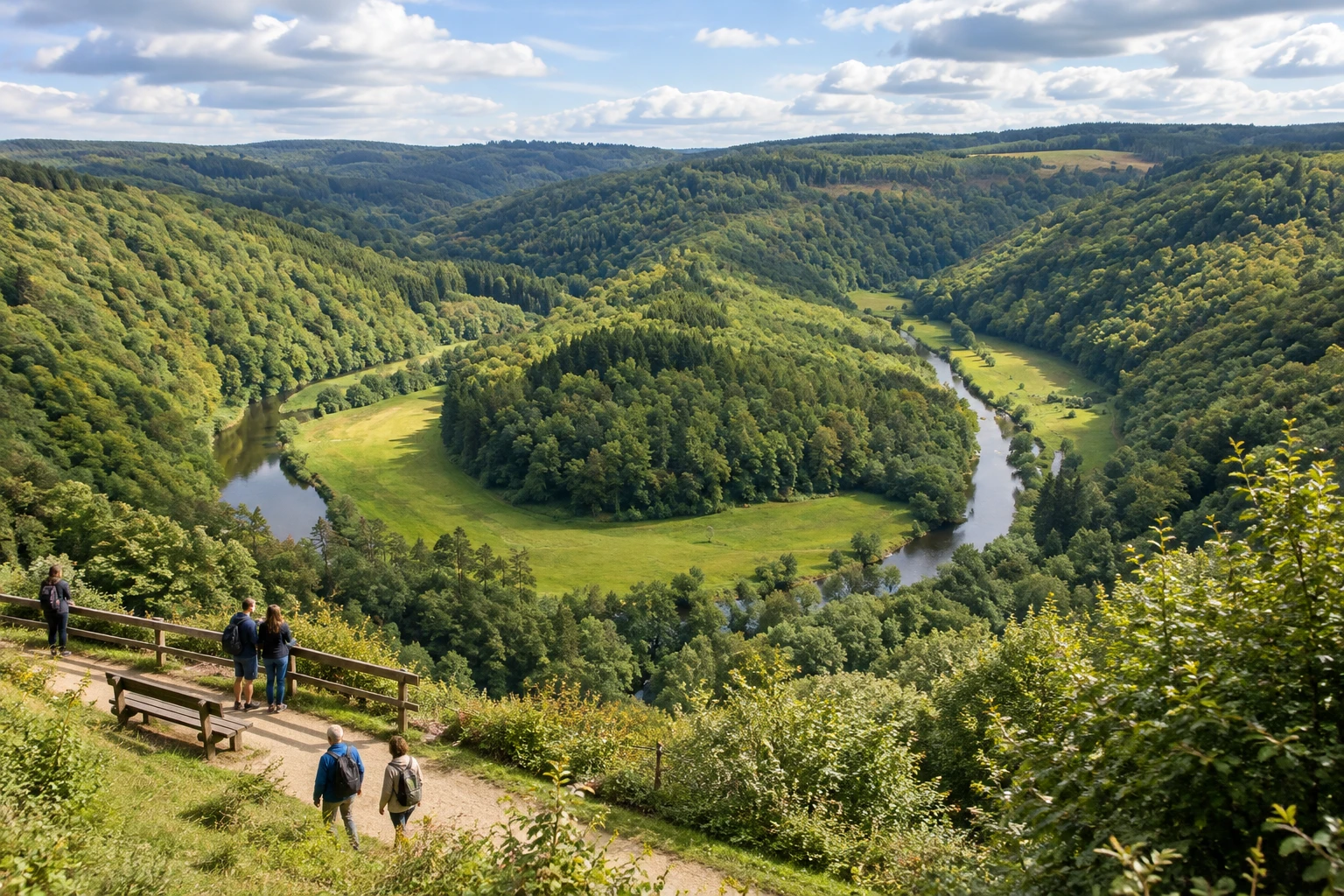
Viewpoint overlooking an almost complete loop of the Semois around a wooded hill, near Botassart. It is a landscape classified as exceptional heritage of Valônia.
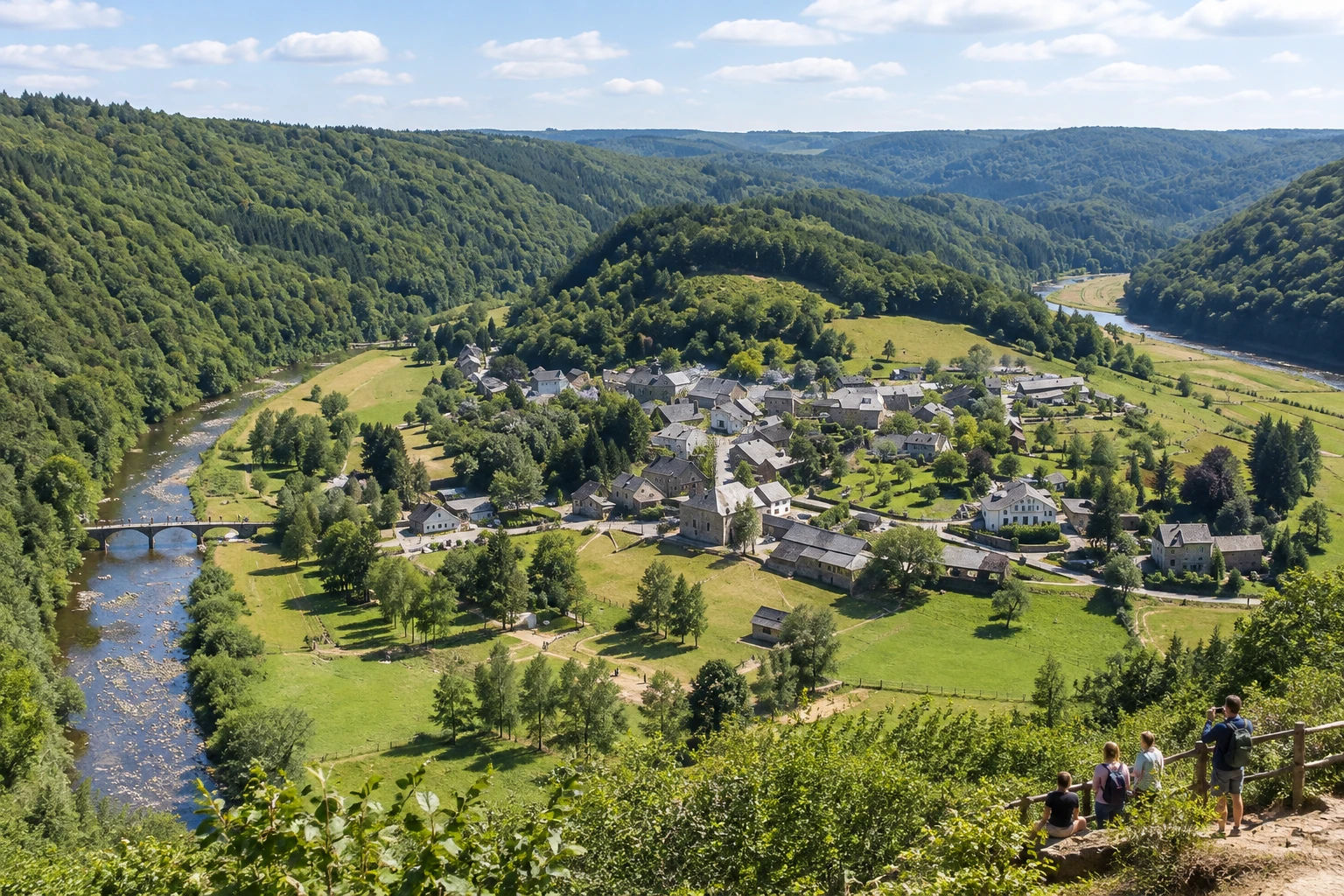
Village of stone houses with slate roofs on a peninsula almost entirely encircled by a loop of the Semois, about ten kilometres from Bouillon. It has a church from 1843, old tobacco-drying sheds and ridge trails.
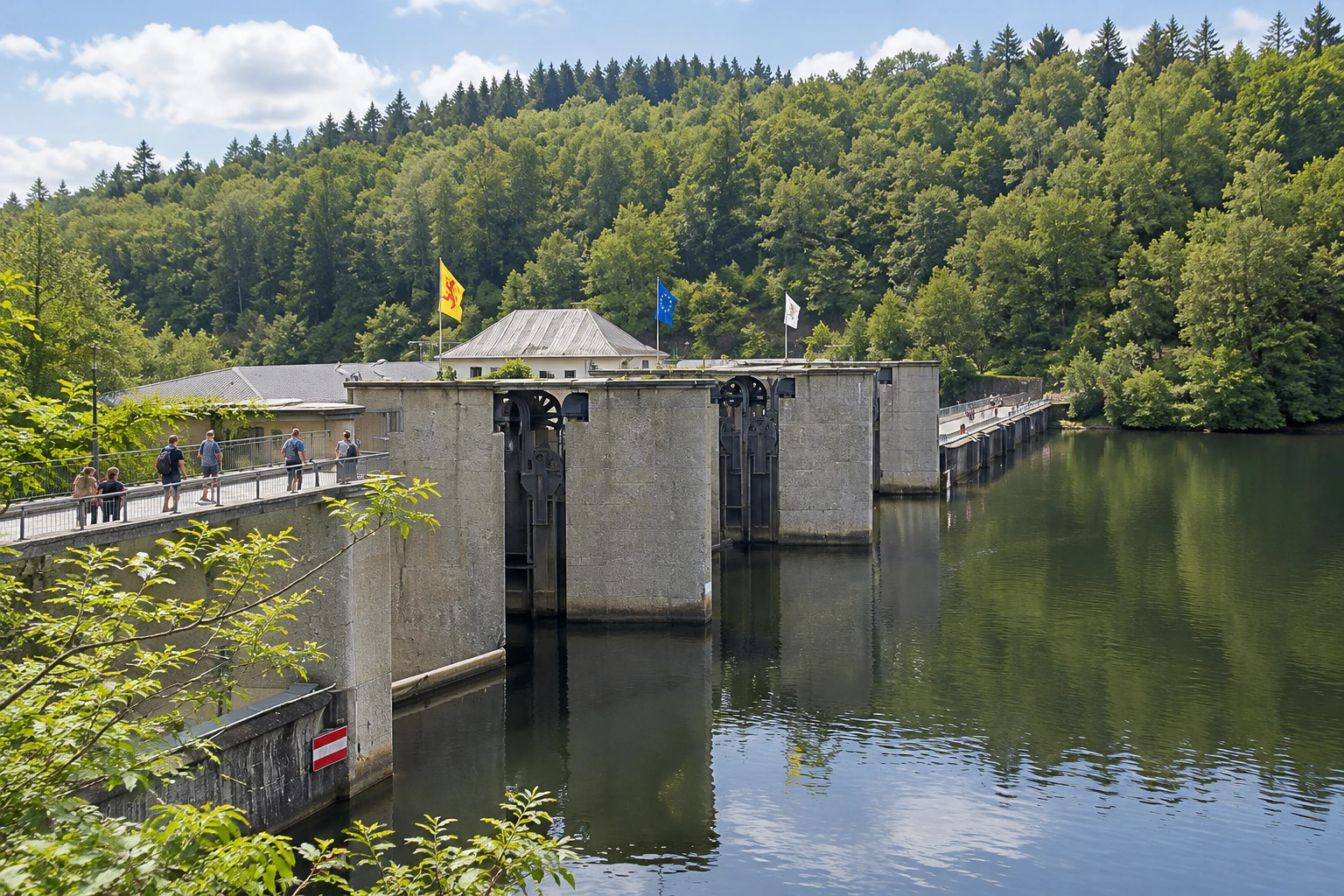
An artificial lake of about four kilometres where the western Ourthe and the eastern Ourthe meet, southeast of La Roche. The 116-metre dam supplies water to the valley; around it there are trails, viewpoints and a picnic area.
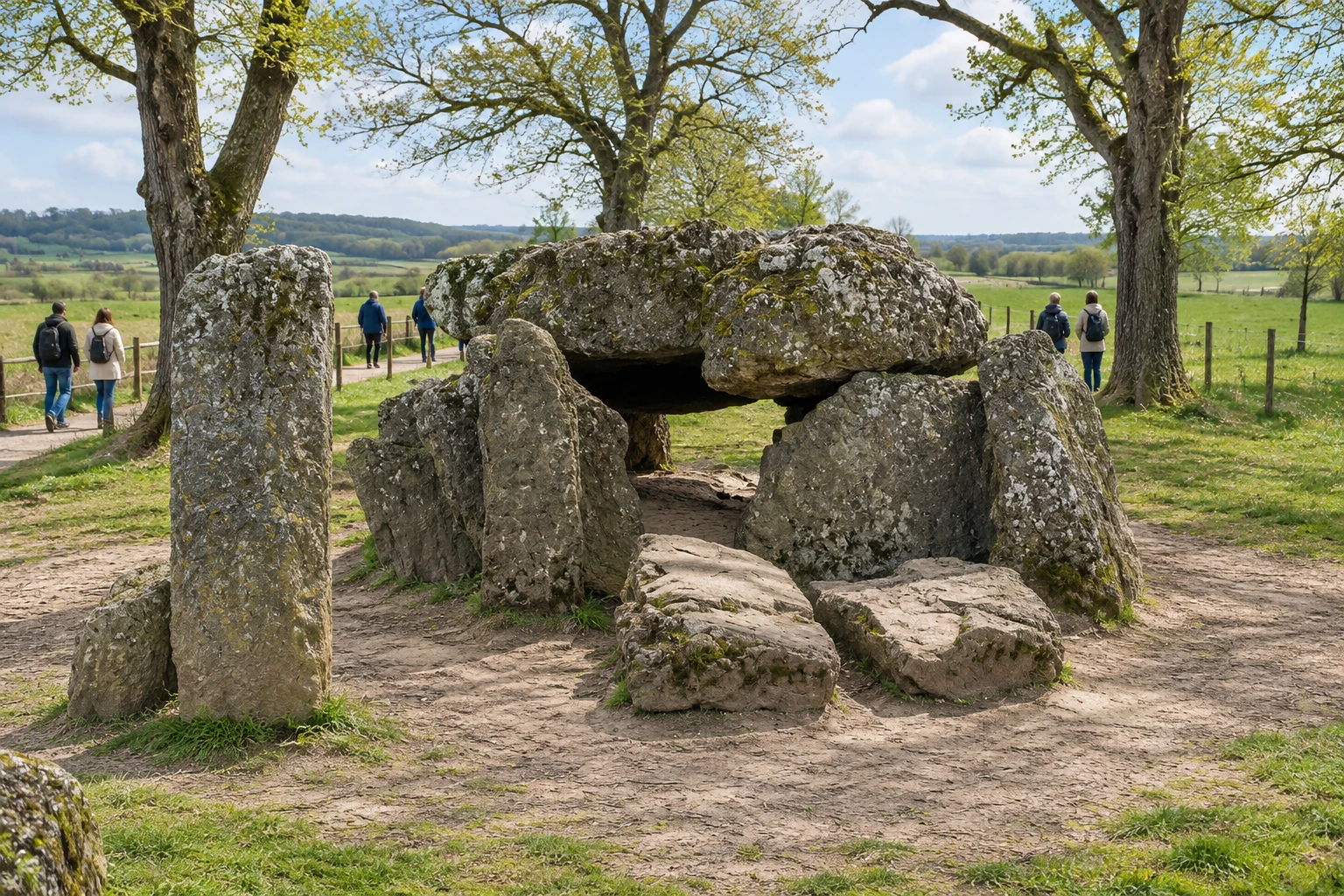
Group of prehistoric dolmens and menhirs spread over about 8 km around the village of Wéris, some 10 km from Durbuy, with the Maison des Mégalithes at the center.
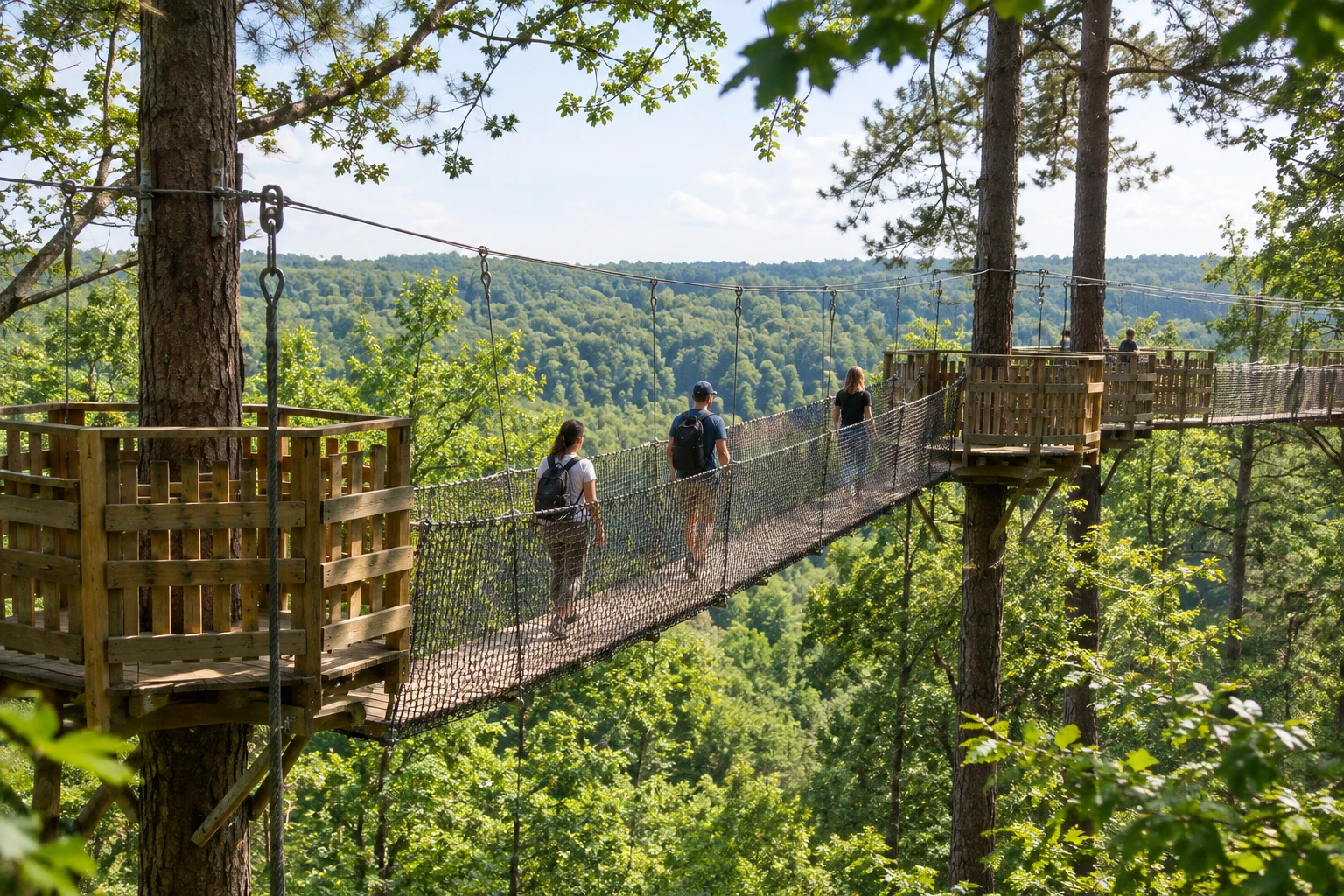
Adventure park south of Durbuy's center, in the forest by the Ourthe: ropes-course circuits, a 566-metre zip line, via ferrata, treetop walkway and indoor activities for rainy days.
Ardennes animal park on the Deister plateau above La Roche. A forest trail passes enclosures with deer, wild boar, wolves, lynx, foxes and mouflon, and ends at a small farm.
Viewpoint on the edge of the Rochehaut plateau, at about 340 metres altitude, overlooking Frahan and the Semois loop. It is classified as exceptional heritage of Valônia and lies next to the village.
Ruins of a fortress of the abbey of Stavelot on a rocky spur between the Ourthe and the Lembrée, near Vieuxville. It was destroyed in 1521 by the troops of Charles V; it has underground chambers, a 56-metre well and a nearby museum.
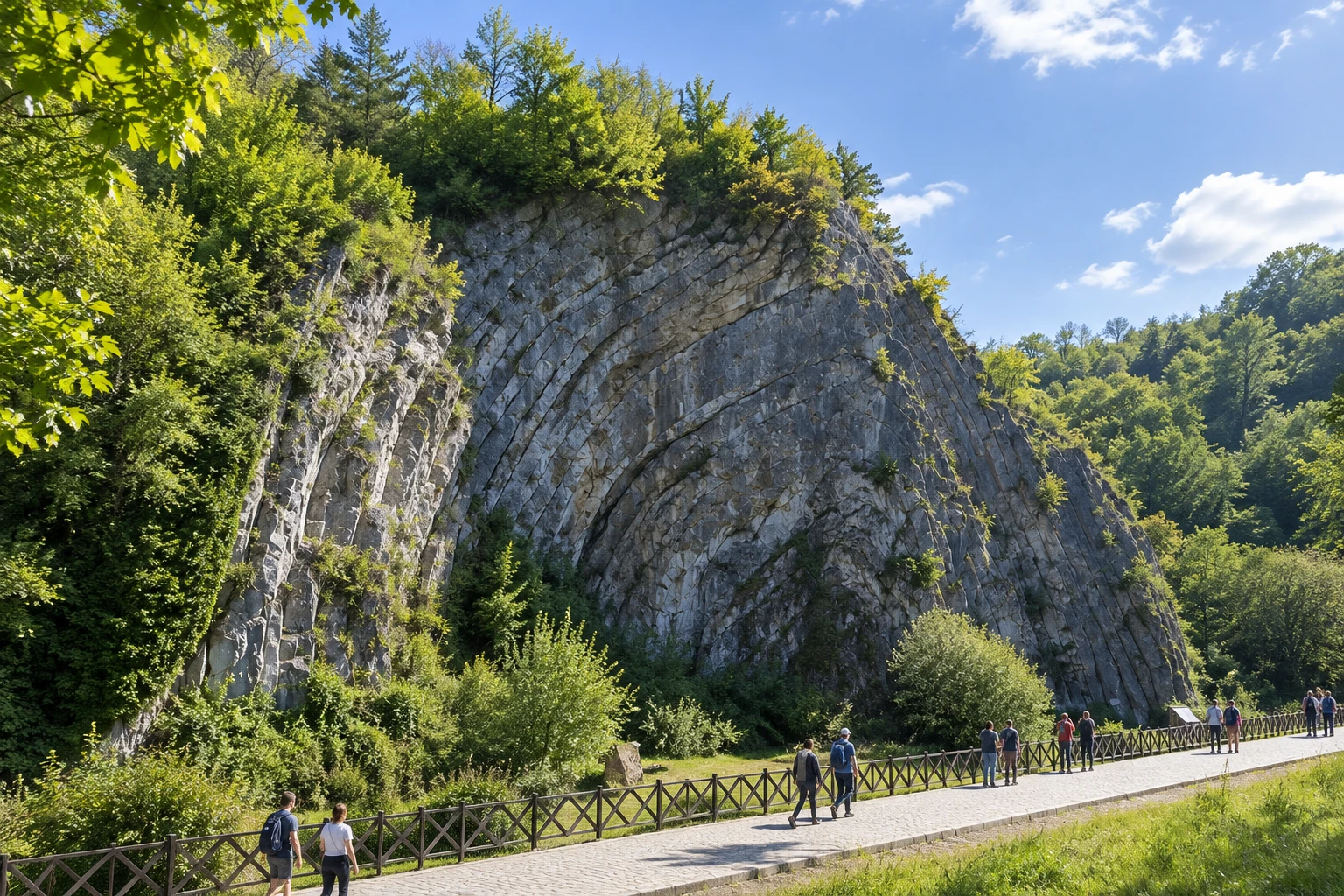
Rock ridge about 1.5 kilometres long that crosses the Ourthe valley near Nadrin, southeast of La Roche. It is 80 to 90 metres high, forces the river to make tight bends, and has been a protected site since 1937.
How many days should you set aside to see Ardennes?
The guide's itineraries cover 3, 5 and 7 days: in 3 days, Durbuy, Han-sur-Lesse and La Roche-en-Ardenne; in 5 days, Ourthe, Han-sur-Lesse and Saint-Hubert; in 7 days, from the Ourthe to the Semois.
What to do Ardennes in one day?
Arrival and Durbuy old town. Land at Brussels Airport and drive a rental car to Durbuy in about 1 hour 30 minutes. After resting, take a walk through Durbuy’s old town, the Halle aux Blés and the Falize anticline at an easy pace to overcome jet lag. If time allows, visit the Parc des Topiaires.
When is the best time to go to Ardennes?
It generally rains less in April and September. The rainiest months are usually from November to January. The guide covers each month, with the weather and what changes on the tours.


 Brazil
 Antarctica
 Argentina
 Bolivia
 Chile
 Colombia
 Ecuador
 Falkland Islands (Malvinas)
 French Guiana
 Guyana
 Paraguay
 Peru
 Suriname
 Uruguay
 Venezuela
 Austria
 Croatia
 Denmark
 Finland
 France
 Germany
 Greece
 Hungary
 Iceland
 Ireland
 Italy
 Luxembourg
 Norway
 Poland
 Portugal
 Slovakia
 Slovenia
 Spain
 Sweden
 Switzerland
 the Czech Republic
 the Netherlands
 the United Kingdom
 Turkey
 Bermuda
 Canada
 Greenland
 Mexico
 Saint Pierre and Miquelon
 the United States
 the Dominican Republic
 Japan
 Egypt
 South Africa
 Australia
 Fiji
 New Zealand
 Papua New Guinea