Bad Schandau · Germany · Viewpoint
Bastei
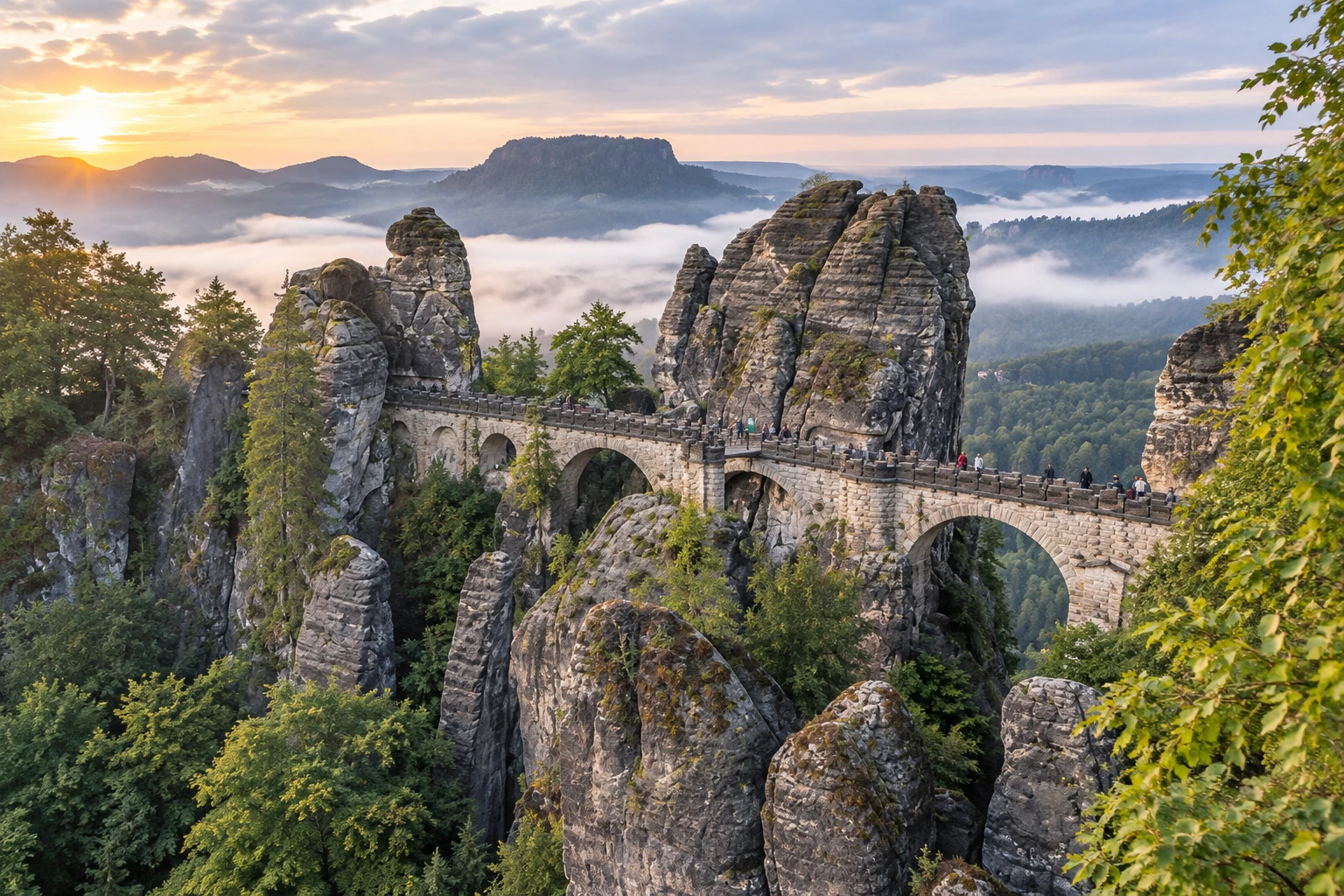
Sandstone formation about 190 metres above the Elba, with the Basteibrücke, a stone bridge from 1851, and viewpoints over the valley. It is the emblematic postcard image of Saxon Switzerland.

 Search
 Brazil
 Antarctica
 Argentina
 Bolivia
 Chile
 Colombia
 Ecuador
 Falkland Islands (Malvinas)
 French Guiana
 Guyana
 Paraguay
 Peru
 Suriname
 Uruguay
 Venezuela
 Austria
 Belgium
 Croatia
 Denmark
 Finland
 FranceGermany
 Greece
 Hungary
 Iceland
 Ireland
 Italy
 Luxembourg
 Norway
 Poland
 Portugal
 Slovakia
 Slovenia
 Spain
 Sweden
 Switzerland
 the Czech Republic
 the Netherlands
 the United Kingdom
 Turkey
 Bermuda
 Canada
 Greenland
 Mexico
 Saint Pierre and Miquelon
 the United States
 the Dominican Republic
 JapanTurkey
 Egypt
 South Africa
 Australia
 Fiji
 New Zealand
 Papua New Guinea
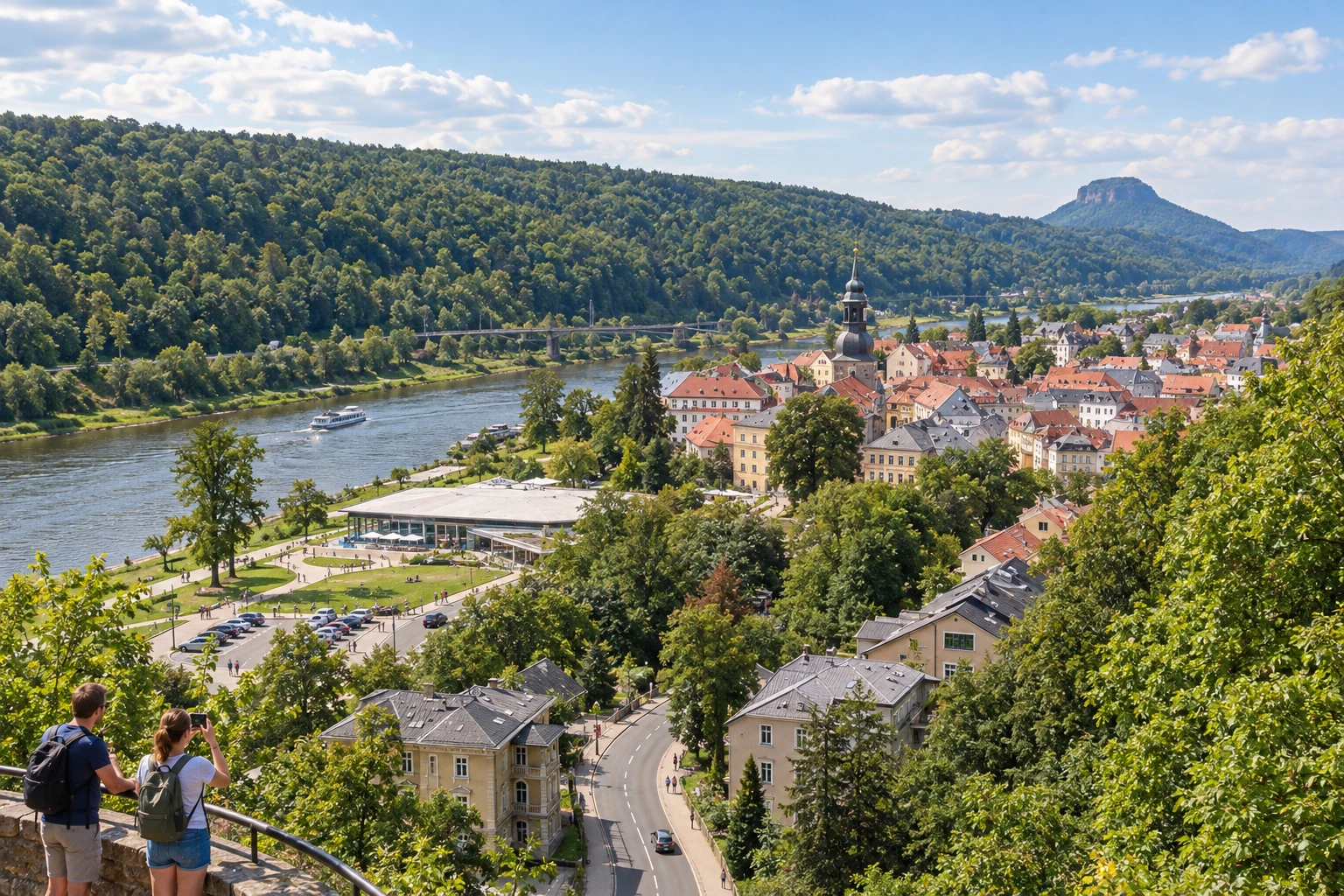
In the photo: Bad Schandau by the Elba
Illustrative images. The pictures in this guide are illustrations based on the real place, not photographs, and may differ from it.

The city
A small spa town (Kurort) on the banks of the Elba, Bad Schandau is the most practical base for exploring the Parque Nacional Suíça Saxônica. From there depart the historic tram of the Kirnitzsch valley, the Schrammsteine trails and the lift to the Ostrau plateau, and the S-Bahn takes you to the Bastei and the Festung Königstein. The Lichtenhainer Wasserfall is at the end of the valley.
There's no accommodation in the guide yet in Bad Schandau.
Do you run a hotel, guesthouse or vacation rental here? List itThere are no restaurants in the guide yet in Bad Schandau.
Know a good one? Recommend it to usThe city's hotels and restaurants on the map.
how to get there · how many days · itinerary · questions
The local experience
Sandstone formation about 190 metres above the Elba, with the Basteibrücke, a stone bridge from 1851, and viewpoints over the valley. It is the emblematic postcard image of Saxon Switzerland.
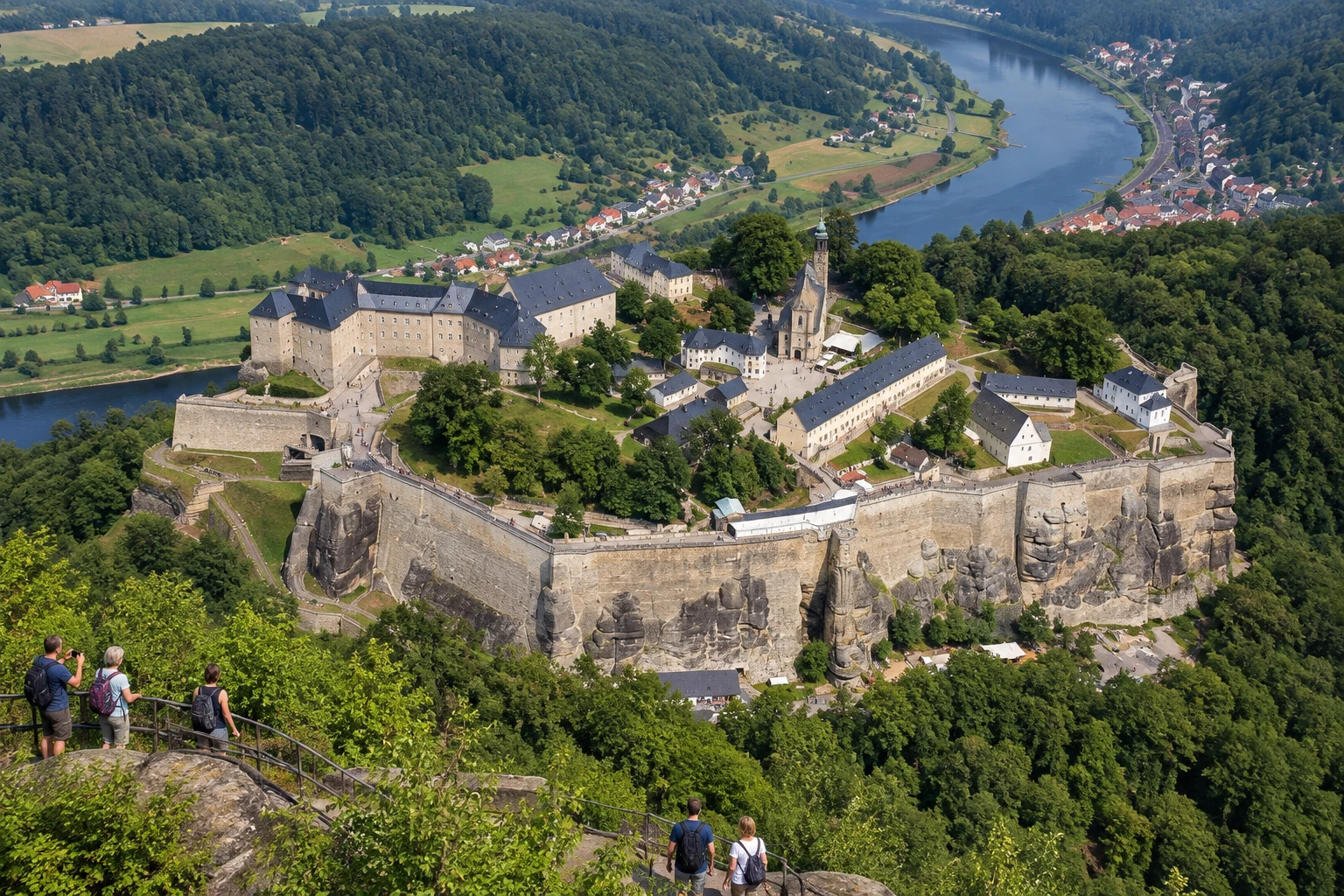
Fortress on a flat-topped hill about 240 meters above the Elba, with more than 50 buildings, walls up to 42 meters high and views of the valley. Open year-round.
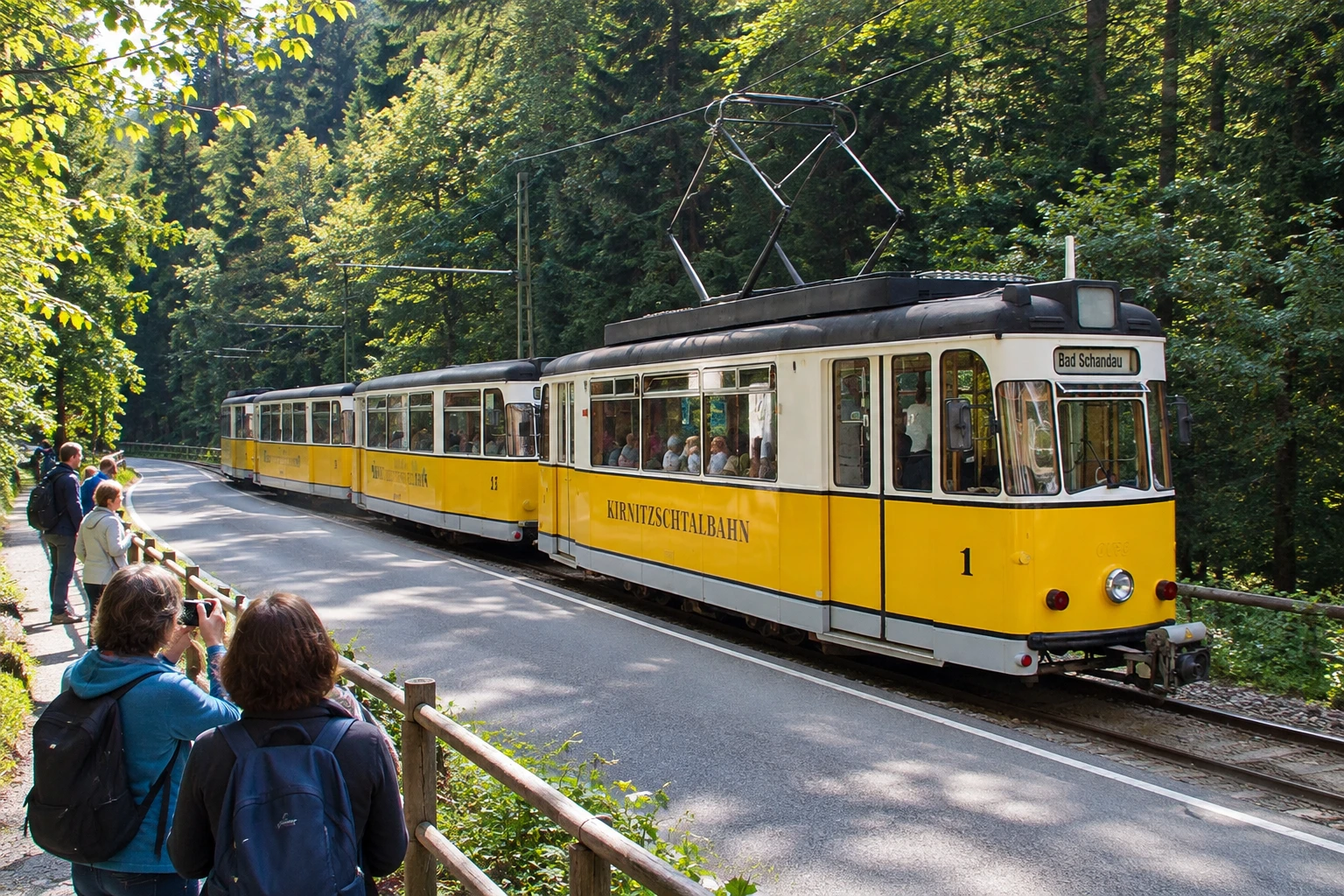
Historic tram from 1898 that climbs the valley of the river Kirnitzsch for about 8 km, from the Kurpark of Bad Schandau to the Lichtenhainer Wasserfall, with stops next to the trails.
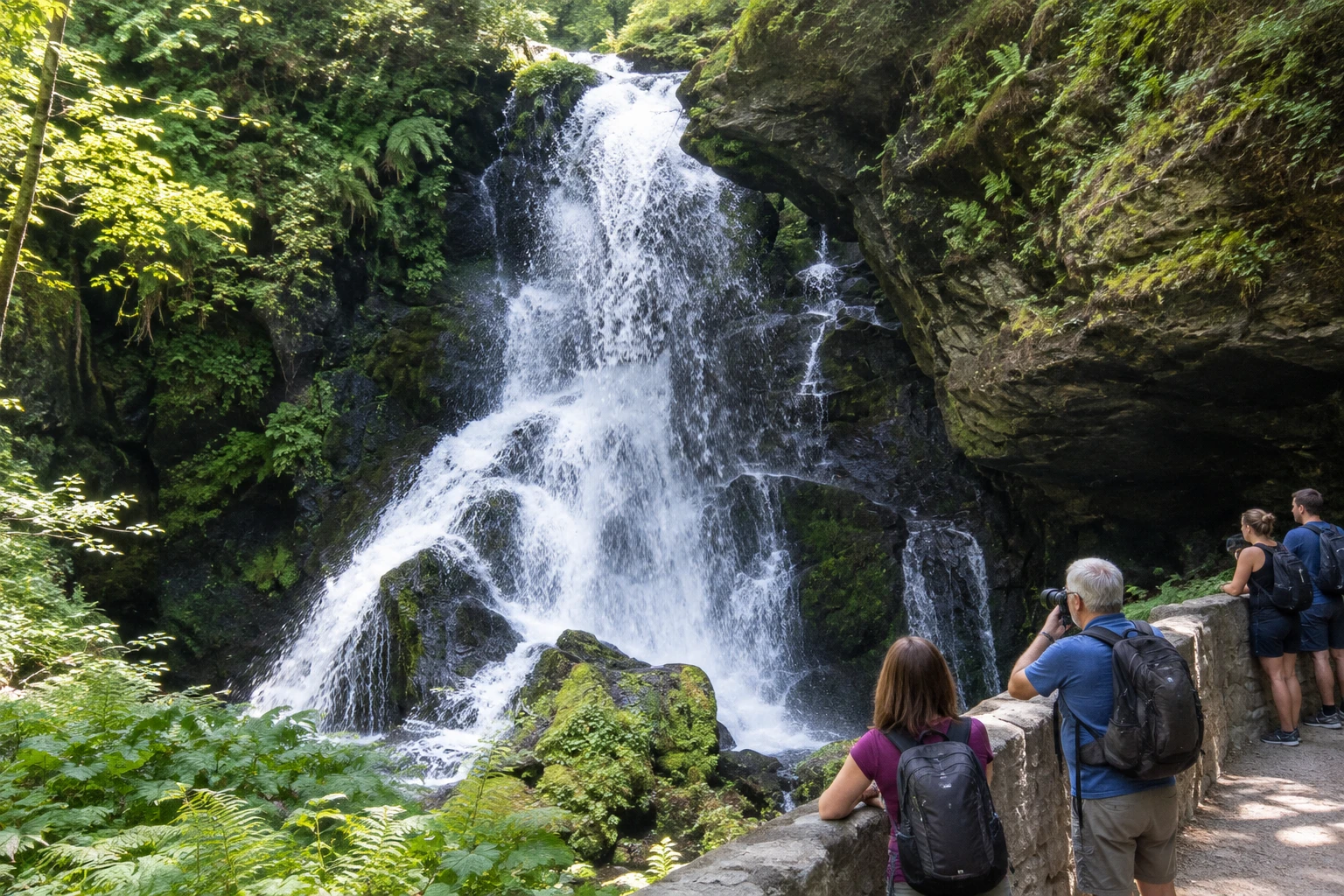
Small waterfall at the end of the tram line in the Kirnitzsch valley, dammed since 1830 so the water can be released in bursts. It is the starting point of the trail to the Kuhstall.
Before you go
Bad Schandau – Germany Destination Dresden and Saxon Switzerland about 40 km from Dresden
Approximate distances. Check flights and bus, train or boat schedules before you travel.
Connections from Brazil usually involve a stopover in another city. Check before you book. The most common route is to arrive in Dresden (DRS airport or train from Berlin) and take the S-Bahn S1 from Dresden Hauptbahnhof to Bad Schandau in about 45–50 minutes. Trains between Berlin, Dresden and Prague also stop there. The station is on the opposite bank: cross by ferry or by bus.
One day is enough for the Bastei and Festung Königstein as a day trip from Dresden. To include the Schrammsteine, the Kirnitzsch valley and the Kuhstall at a relaxed pace, stay at least one or two nights in Bad Schandau.
From May to September, with long days for hiking; September and October are usually quieter and the forest changes color. boats on the Elba typically run from April to October, but they stop when the river is low. In winter, from December to February, it's cold, it gets dark early and trails with stairs can have ice.
The seasons shown are the most usual ones; nature doesn't always follow the calendar.
No. The S-Bahn S1 links Bad Schandau with Kurort Rathen, Königstein and Dresden, the tram climbs the Kirnitzsch valley and there are buses and ferries across the Elba. A car only helps for more remote villages; parking near the trails tends to fill up on summer weekends. Validate your ticket when the machine asks.
Suggested itinerary
Built with the places on this page. No rush: it's paced so you have time to see them.
Leave early from Dresden or Bad Schandau on the S-Bahn S1 to Kurort Rathen, cross the Elba by ferry and hike up to the Bastei. Cross the Basteibrücke and visit the viewpoints before the tour groups arrive.
Descend to Kurort Rathen, take the S1 to Königstein and go up to the fortress on foot or by Festungsexpress. Walk all the way around the ramparts and see the exhibitions about the site's history.
Take the S1 to Bad Schandau, cross the river by ferry and go up by elevator to the Ostrau plateau to see the Elba valley at the end of the day.
Dine in central Bad Schandau, near the market square and the riverside. If you're returning to Dresden, check the time of the last S-Bahn.
Day 1
Catch the S1 early to Kurort Rathen, cross the Elba by ferry and hike up to the Bastei to cross the stone bridge and view the valley from the viewpoints.
Take the S1 to Königstein and dedicate the afternoon to the fortress, walking around the ramparts and visiting the exhibitions.
Continue to Bad Schandau, drop off your bags and walk along the Elba riverside and the Kurpark, where the Kirnitzsch valley tram starts.
Have dinner in town and rest for the next day's hike. Bad Schandau is small and quiet at night.
Day 2
Take the elevator up to the Ostrau plateau and follow the signposted trails to the Schrammsteine, including the iron staircases up to the Schrammsteinaussicht viewpoint.
Descend to the Kirnitzsch valley and take the Kirnitzschtalbahn to the terminus at Lichtenhainer Wasserfall. Have lunch at the inn by the waterfall.
Hike up in about 30 minutes to the Kuhstall, the large rock arch with a viewpoint, then return to the waterfall to catch the tram back to Bad Schandau.
Take the S1 back to Dresden in under an hour, or stay another night in Bad Schandau to continue by train toward Prague.
Check before you go. Opening hours and days change, and places may close for renovations, holidays or events. This itinerary is a suggestion from Cidade Turismo, not a commitment: plan yours by checking directly with each place you intend to visit.
Before you go
By the S-Bahn S1, which departs from Dresden Hauptbahnhof and runs along the Elba valley, stopping at Pirna, Kurort Rathen and Königstein. The journey takes about 45 to 50 minutes. Bad Schandau station is on the other side of the river: cross by ferry or bus to reach the town center.
Yes — it's the most common option for those who want to see the Bastei and Festung Königstein in one day. For longer hikes, like the Schrammsteine, it's worth staying in Bad Schandau.
In season, usually from April to October, paddle steamers run the route along the Elba, taking much longer than the train. When the river is low, services to the Saxon Switzerland are suspended: check before you go.
For the Bastei and the Kuhstall you only need the willingness to climb steps. The Schrammsteine include iron staircases and exposed sections that require comfort with heights. Wear sturdy footwear and stick to the marked trails, as the park requests.
Yes. Long-distance trains between Dresden and Prague stop at Bad Schandau, and the border with the Czech Republic is just a few kilometers away.