Illustrative images. The pictures in this guide are illustrations based on the real place, not photographs, and may differ from it.
The city
What to expect from Trier.
Trier, on the banks of the Mosela and near Luxembourg, was founded by the Romans as Augusta Treverorum and is considered the oldest city in Germany. Porta Nigra, Konstantinbasilika, Kaiserthermen, the amphitheatre, the Römerbrücke, the cathedral and Liebfrauenkirche are a UNESCO World Heritage Site. The Rheinisches Landesmuseum houses the Roman finds, and the house where Karl Marx was born has become a museum. The Hauptmarkt is the city centre.
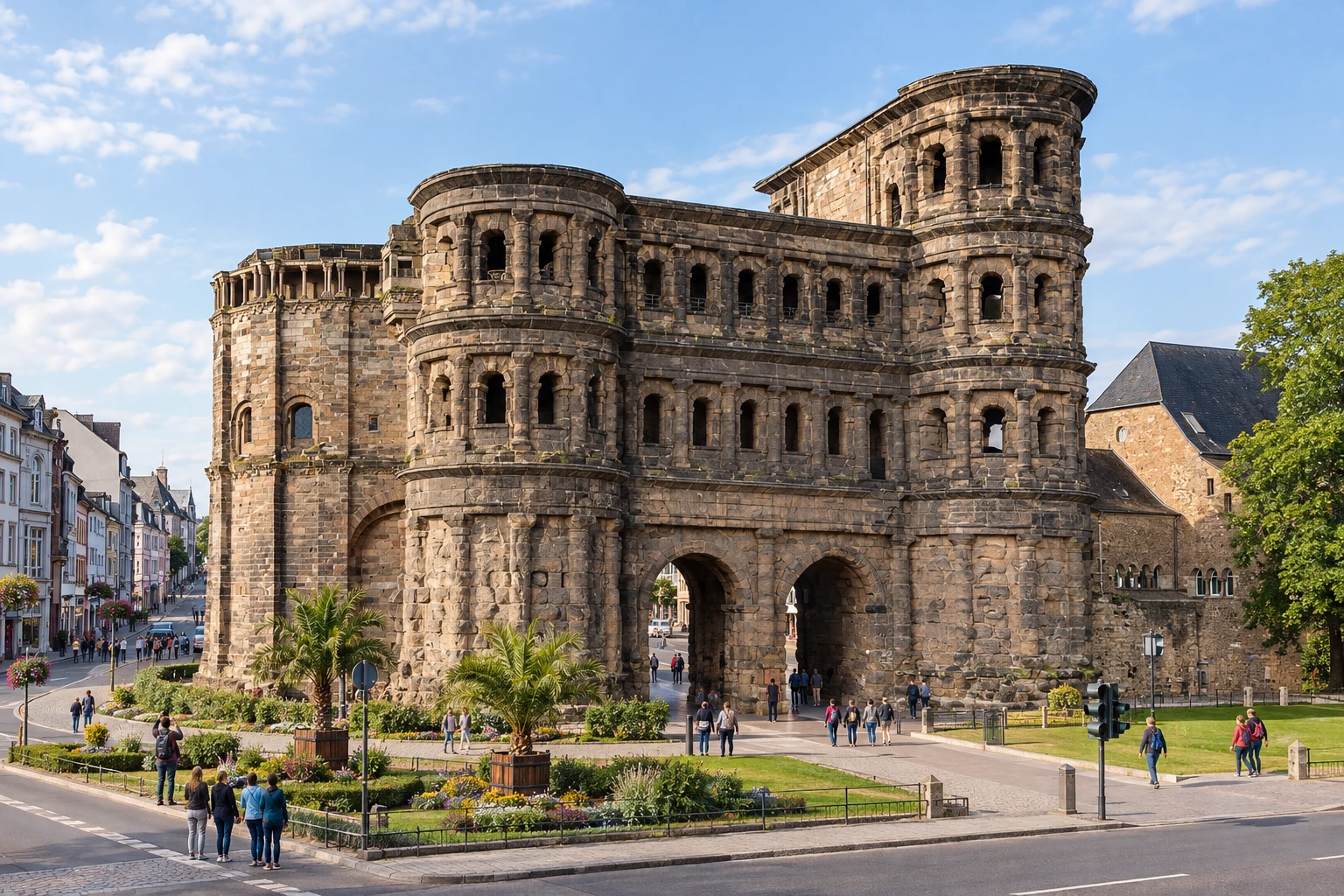
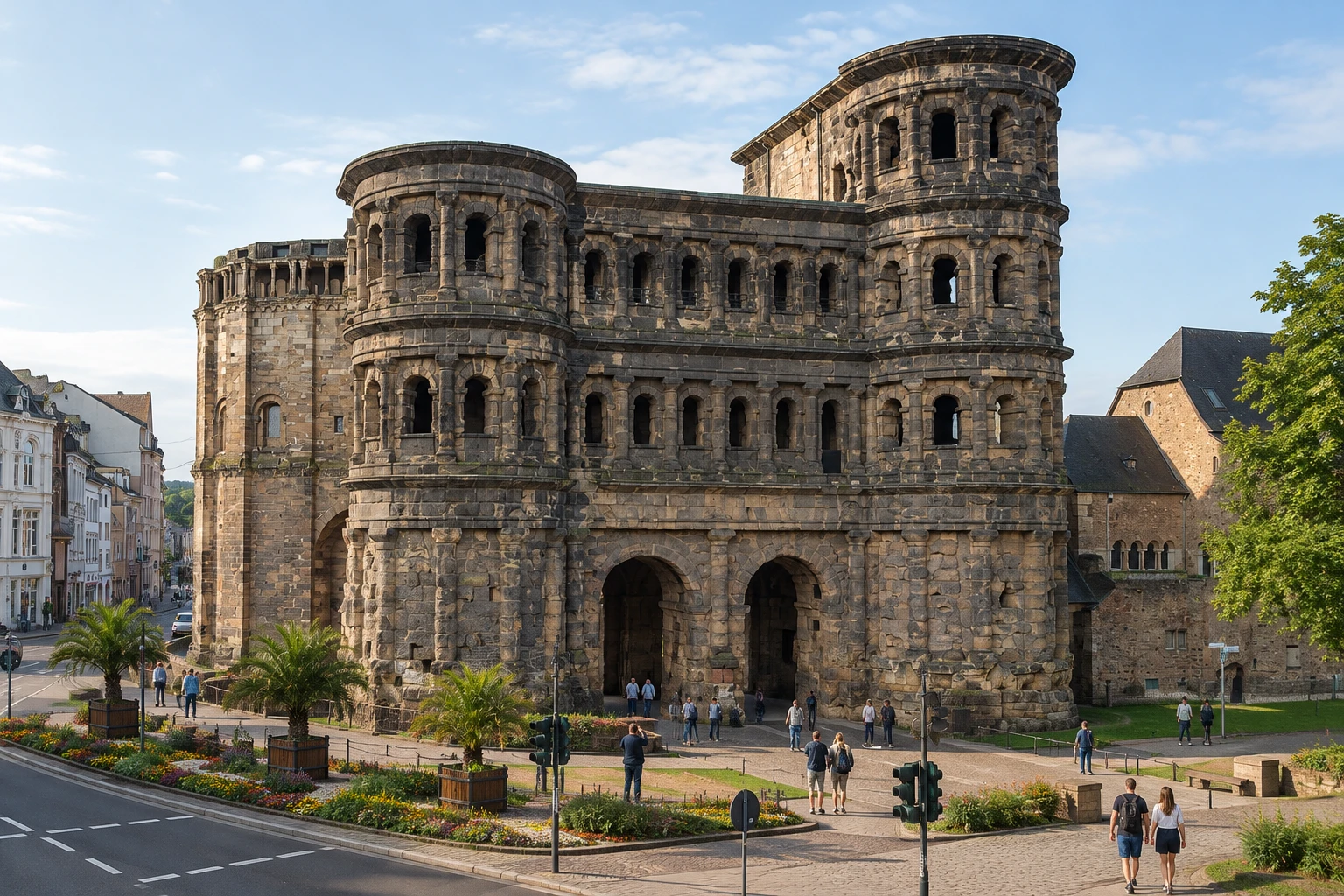
Roman sandstone gate built around AD 170, the only one of the four gates of the old Augusta Treverorum still standing. It became a church in the Middle Ages and was returned to its Roman form by order of Napoleon.
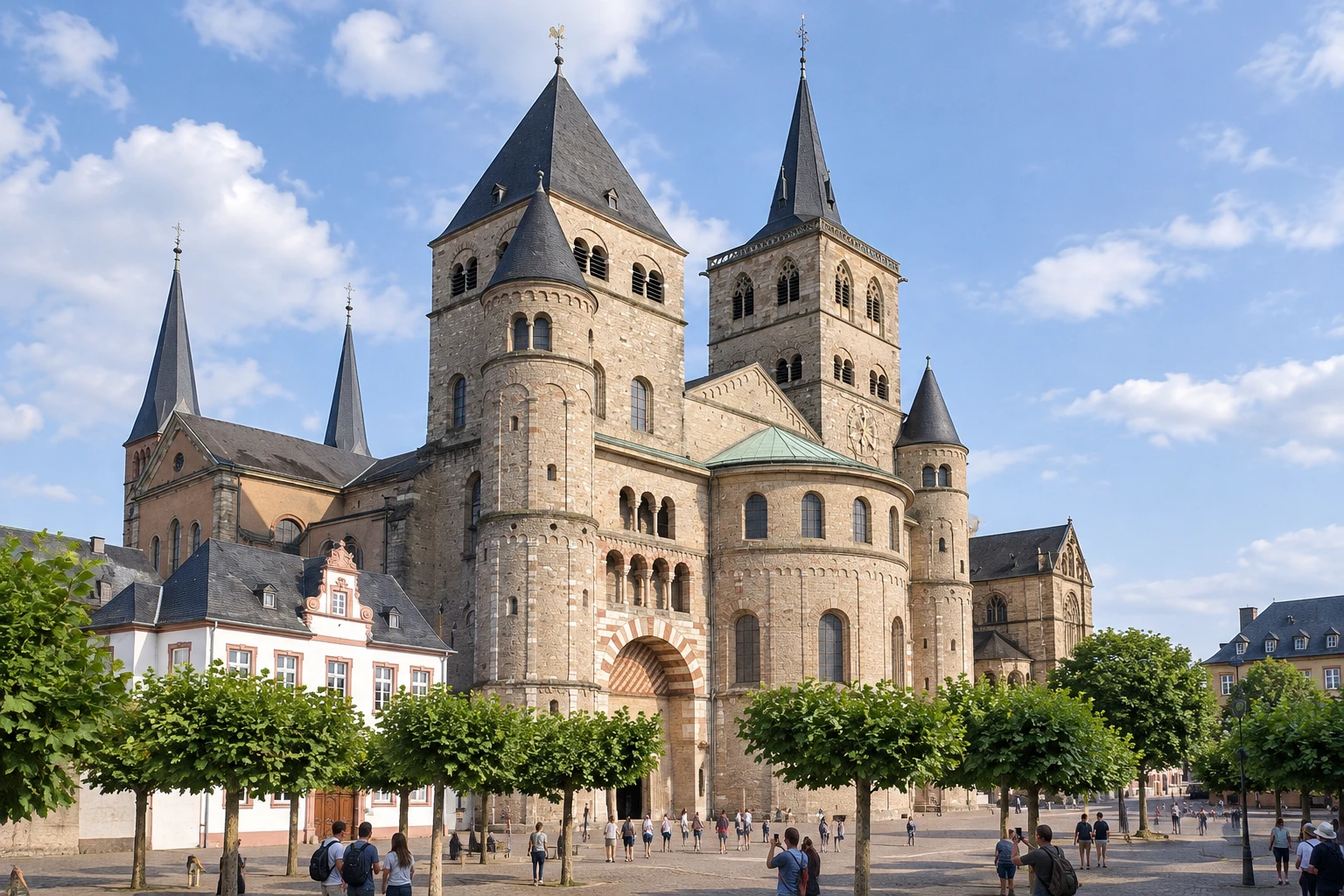
Catedral de São Pedro, with a Roman core from the 4th century, considered the oldest church in Germany still in use. It houses the Túnica Sagrada, a relic rarely displayed, and a treasury of sacred art.
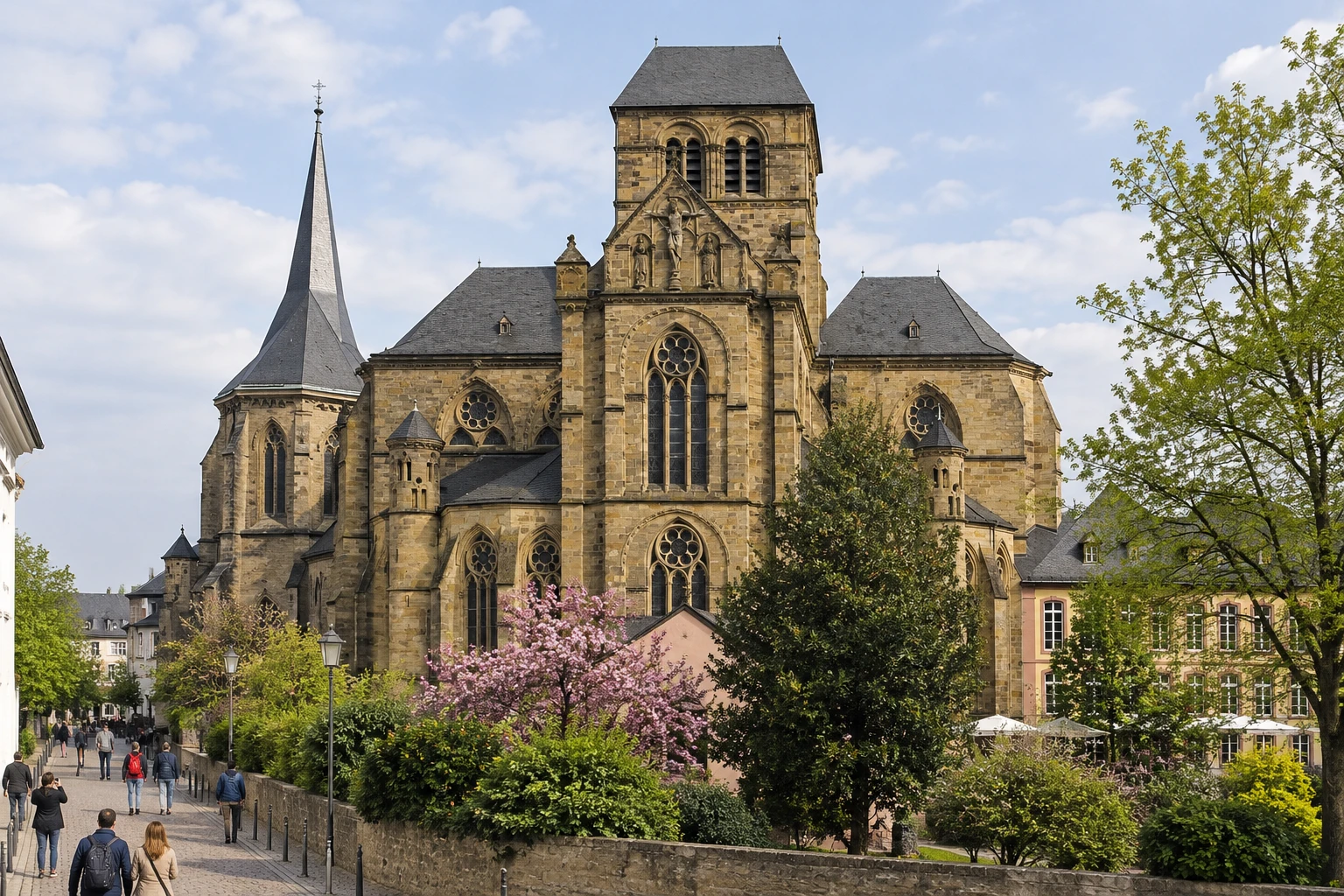
Igreja de Nossa Senhora, next to the cathedral, built from around 1230. Together with the Elisabethkirche of Marburg, it is considered the oldest Gothic church in Germany.
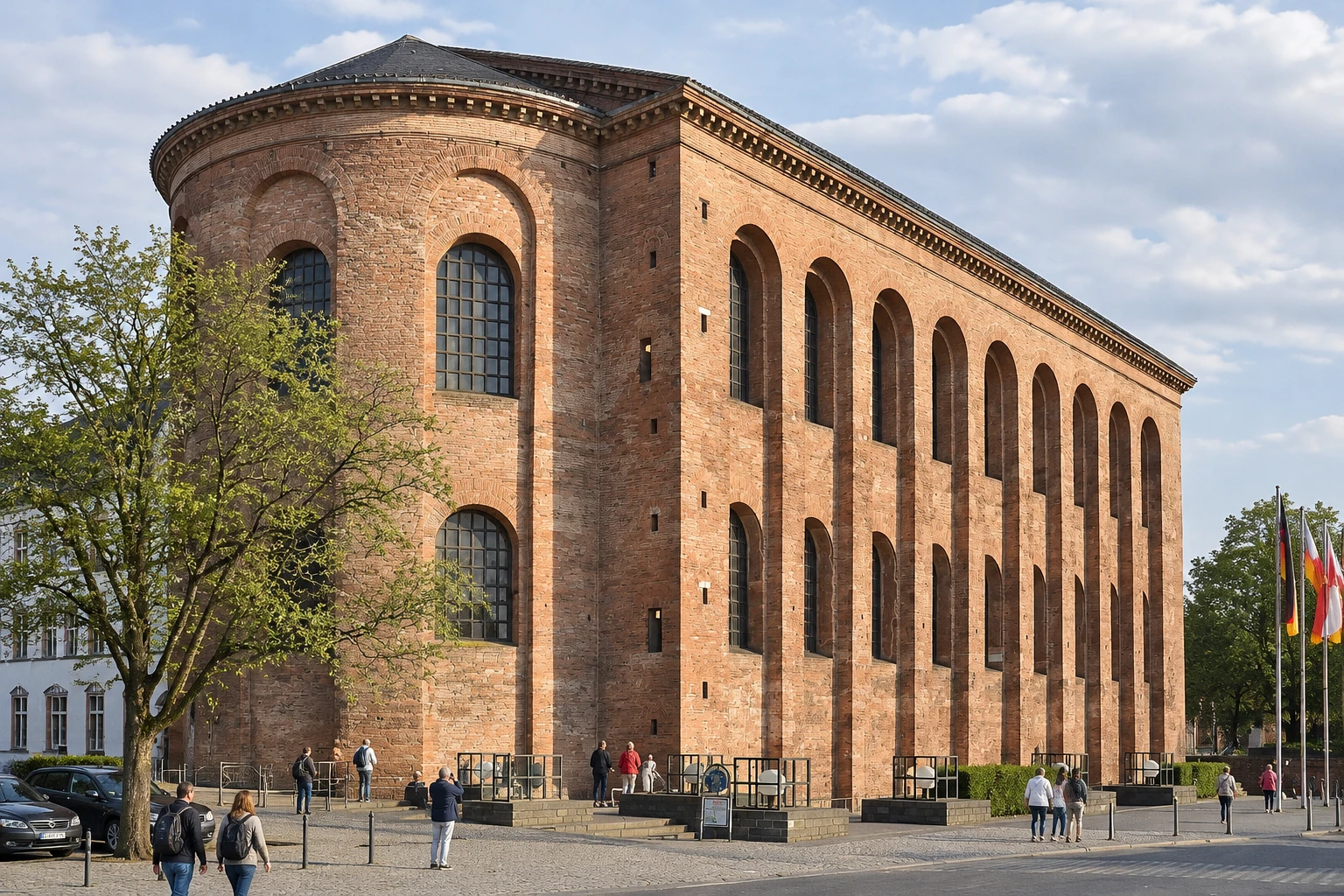
Former audience hall of Emperor Constantine's palace, from the early 4th century, measuring 67 meters long and 33 meters high. Since 1856 it has been used as a Protestant church.
Flughafen Frankfurt am Main (FRA)Frankfurt am Main · 177 km
Trier Hbf1 km
Approximate distances. Check flights and bus, train or boat schedules before you travel.
From Frankfurt or Cologne, take the train to Koblenz Hbf and change to the regional Mosela line to Trier Hbf; from Frankfurt it's about three hours. From Cologne there is also a regional train via the Eifel region. Luxembourg is about 50 minutes by train. Connections with Brazil usually involve a stopover in another city. Check before booking.
How many days
One day is enough for the main monuments, which are all within walking distance in the centre. With two days you'll have time for the Rheinisches Landesmuseum, the baths' underground galleries and the amphitheatre at a relaxed pace, plus a walk along the riverbank.
When to go
April to October, when the monuments have longer opening hours and there are staged visits at the Porta Nigra. The Christmas market at the Hauptmarkt usually runs from late November until near Christmas. In winter days are short and monuments close earlier.
The seasons shown are the most usual ones; nature doesn't always follow the calendar.
Do you need a car?
No. Trier's centre is compact and the Roman monuments are within walking distance of each other; the amphitheatre is a 15-minute walk from the centre. The main station is close to the old town, and city buses cover the rest of the city.
Suggested itinerary
An order that works
Built with the places on this page. No rush: it's paced so you have time to see them.
One day in Trier
manhã
Porta Nigra and Hauptmarkt
Start at the Porta Nigra and climb to the upper levels. Continue along Simeonstraße to the Hauptmarkt, with the market cross of 958 and the Saint Peter fountain.
tarde
Cathedral and Liebfrauenkirche
Visit the Trierer Dom and the Liebfrauenkirche, linked by the cloister. Avoid service times, when visiting is suspended.
fim de tarde
Konstantinbasilika and Kaiserthermen
Enter the Konstantinbasilika, cross the garden of the Elector princes' palace and descend to the underground galleries of the Kaiserthermen.
noite
Evening at the Hauptmarkt
Return to the centre for dinner near the Hauptmarkt, with a Mosela wine, and see the Porta Nigra illuminated.
2 days in Trier
Day 1
manhã
Porta Nigra and Hauptmarkt
Porta Nigra, with a climb to the upper levels, and a walk to the Hauptmarkt.
tarde
Cathedral and Liebfrauenkirche
Trierer Dom, with the treasury, and the Liebfrauenkirche next door.
fim de tarde
Karl Marx House
Follow Brückenstraße to the Museum Karl-Marx-Haus, the baroque house where he was born in 1818.
noite
Dinner in the old town
Dine in a tavern in the old town with a Riesling from the Mosela.
Day 2
manhã
Rheinisches Landesmuseum
Start the day at the archaeological museum, with mosaics, the Neumagen wine ship and the hoard of gold coins. Closed on Mondays.
tarde
Konstantinbasilika and Kaiserthermen
Konstantinbasilika and, via the palace garden, the Kaiserthermen with their underground galleries.
fim de tarde
Amphitheatre and Römerbrücke
Walk to the Roman amphitheatre and go down to the arena's basement. Then head to the Römerbrücke, the bridge of Roman piers over the Mosela.
noite
Mosela riverside
Finish with a walk along the riverbank and dinner in the centre.
Check before you go. Opening hours and days change, and places may close for renovations, holidays or events. This itinerary is a suggestion from Cidade Turismo, not a commitment: plan yours by checking directly with each place you intend to visit.
Before you go
Frequently asked questions
How to get from Frankfurt to Trier by train?
Take the train to Koblenz Hbf and change to the regional Mosela line to Trier Hbf. It's about three hours in total.
Is Trier really the oldest city in Germany?
It is considered the oldest, founded by the Romans as Augusta Treverorum shortly before the Christian era. Other cities, such as Cologne and Worms, also claim the title.
Are the Roman monuments close to each other?
Yes. Porta Nigra, the cathedral, Konstantinbasilika and Kaiserthermen are a few minutes' walk apart. The amphitheatre and the Römerbrücke are about a 15-minute walk from the centre.
Can you go from Trier to Luxembourg?
Yes. There is a direct regional train between Trier and the city of Luxembourg, hourly, taking about 50 minutes.
Is there a combined ticket for the Roman monuments?
State-run monuments, such as Porta Nigra, Kaiserthermen and the amphitheatre, often offer a combined ticket. Check options before you go.
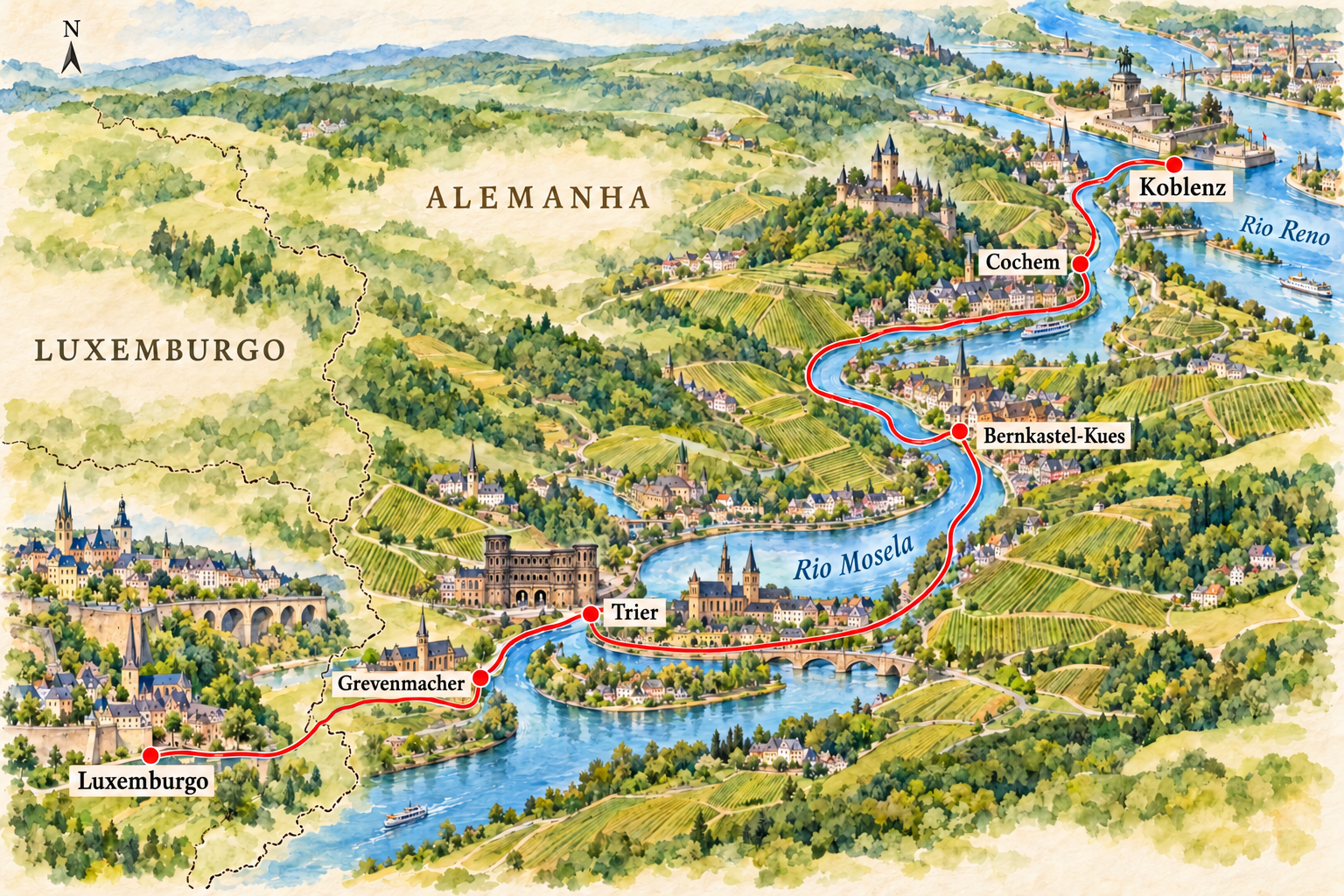
Trier is part of the Moselle Valley: Luxembourg–Trier–Cochem–Koblenz
Along the Moselle River, from Luxembourg to Germany: vineyards on slopes, half-timbered villages, Roman Trier, Cochem Castle, and the confluence with the Rhine in Koblenz.
Illustrative map, not to scale. Tap a city to open its page.


 Brazil
 Antarctica
 Argentina
 Bolivia
 Chile
 Colombia
 Ecuador
 Falkland Islands (Malvinas)
 French Guiana
 Guyana
 Paraguay
 Peru
 Suriname
 Uruguay
 Venezuela
 Austria
 Belgium
 Croatia
 Denmark
 Finland
 France
 Greece
 Hungary
 Iceland
 Ireland
 Italy
 Luxembourg
 Norway
 Poland
 Portugal
 Slovakia
 Slovenia
 Spain
 Sweden
 Switzerland
 the Czech Republic
 the Netherlands
 the United Kingdom
 Turkey
 Bermuda
 Canada
 Greenland
 Mexico
 Saint Pierre and Miquelon
 the United States
 the Dominican Republic
 Japan
 Egypt
 South Africa
 Australia
 Fiji
 New Zealand
 Papua New Guinea