Koblenz · Germany · Monument
Deutsches Eck
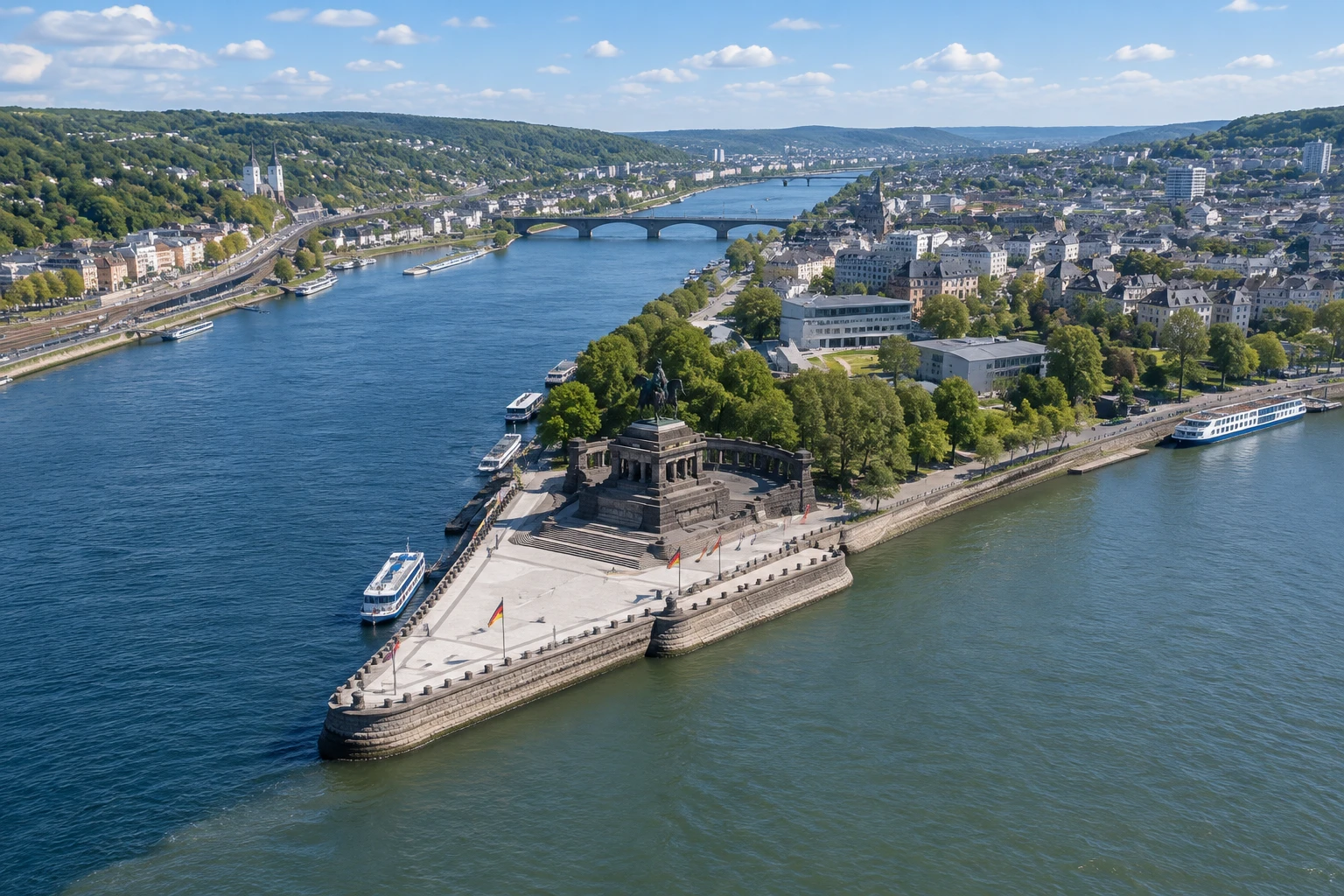
The point of land where the Mosela empties into the Reno, with the equestrian monument to Emperor Guilherme I atop a pedestal with steps and a viewpoint over both rivers.

 Search
 Brazil
 Antarctica
 Argentina
 Bolivia
 Chile
 Colombia
 Ecuador
 Falkland Islands (Malvinas)
 French Guiana
 Guyana
 Paraguay
 Peru
 Suriname
 Uruguay
 Venezuela
 Austria
 Belgium
 Croatia
 Denmark
 Finland
 FranceGermany
 Greece
 Hungary
 Iceland
 Ireland
 Italy
 Luxembourg
 Norway
 Poland
 Portugal
 Slovakia
 Slovenia
 Spain
 Sweden
 Switzerland
 the Czech Republic
 the Netherlands
 the United Kingdom
 Turkey
 Bermuda
 Canada
 Greenland
 Mexico
 Saint Pierre and Miquelon
 the United States
 the Dominican Republic
 JapanTurkey
 Egypt
 South Africa
 Australia
 Fiji
 New Zealand
 Papua New Guinea
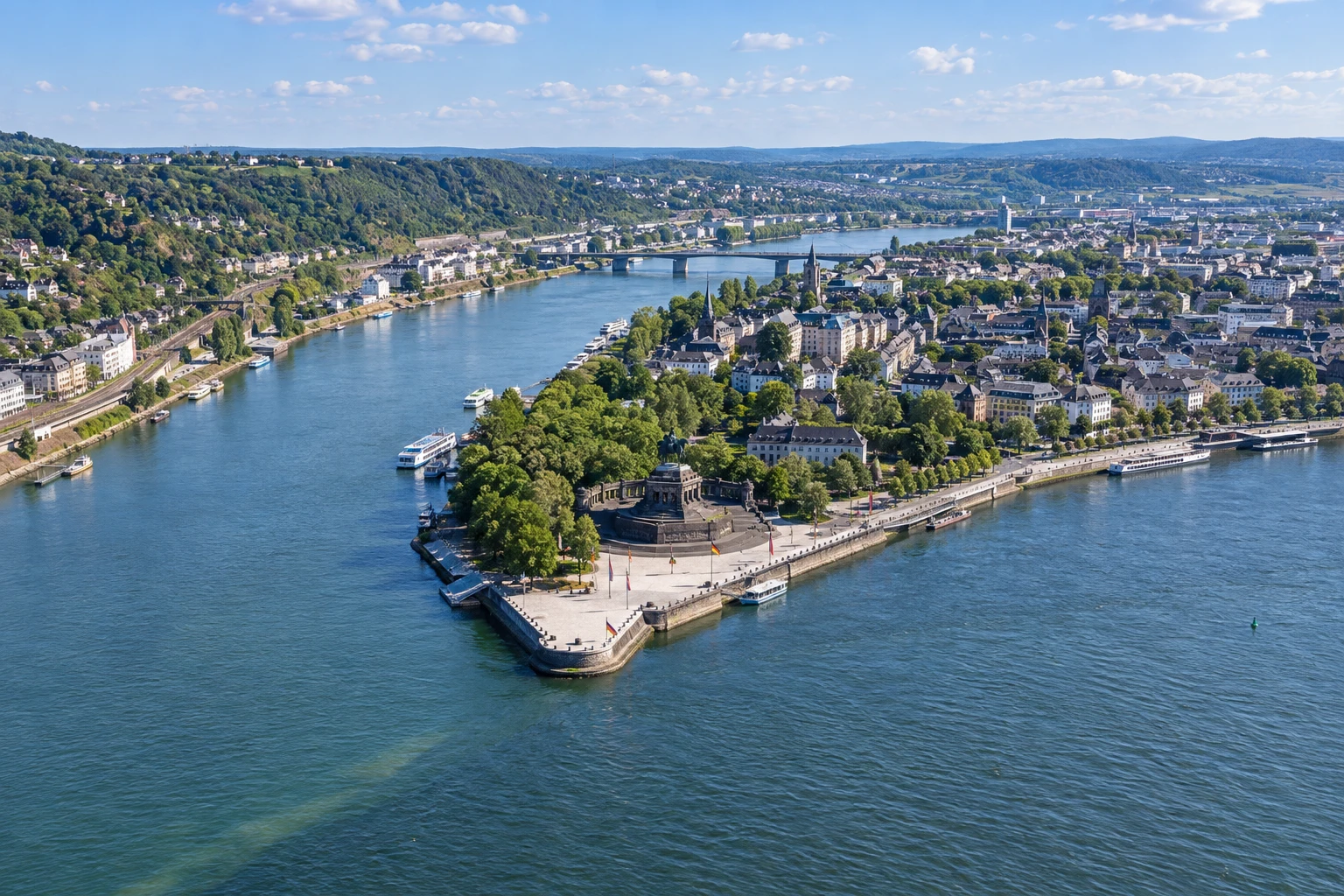
In the photo: Confluence of the Reno and the Mosela, Koblenz
Illustrative images. The pictures in this guide are illustrations based on the real place, not photographs, and may differ from it.

The city
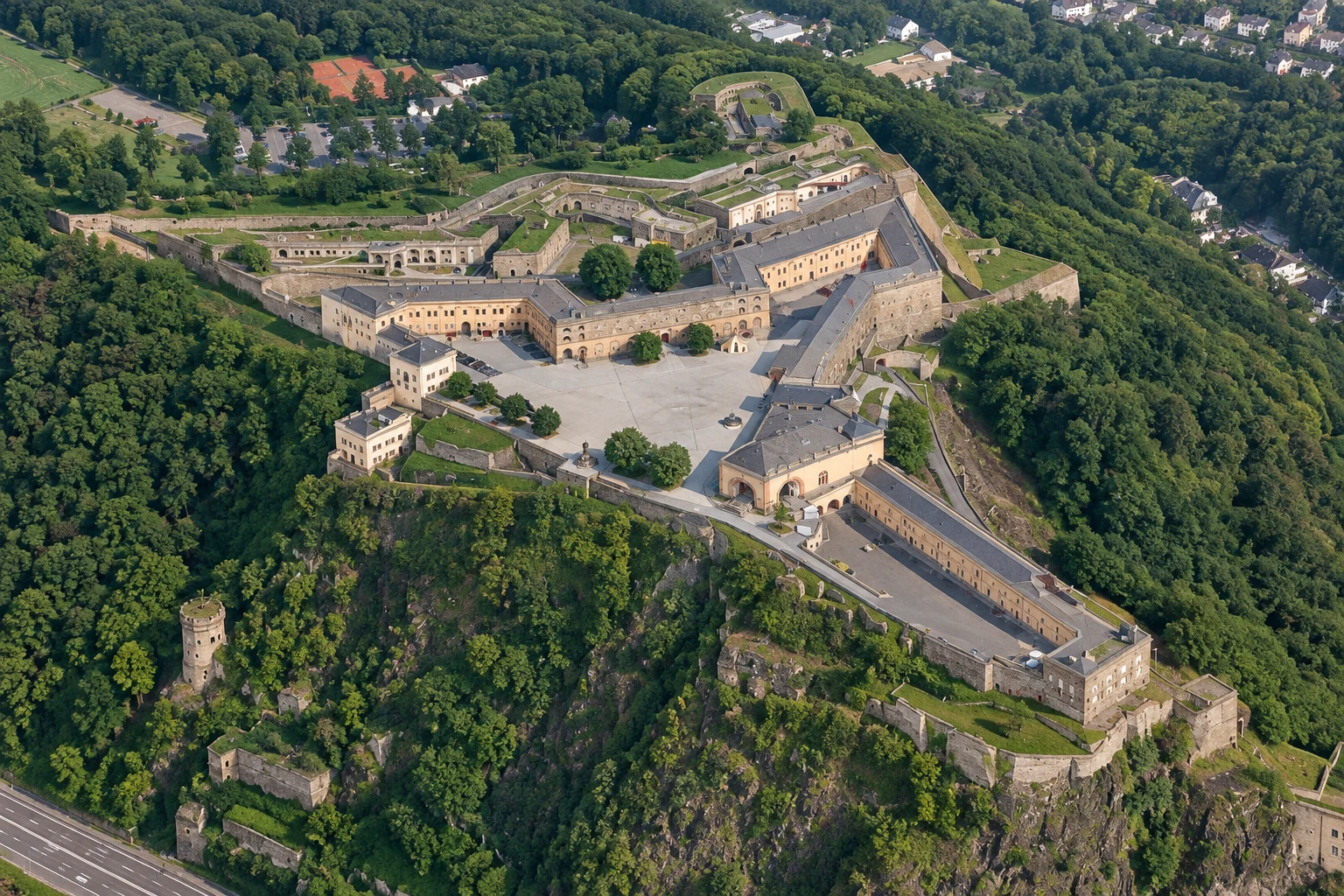
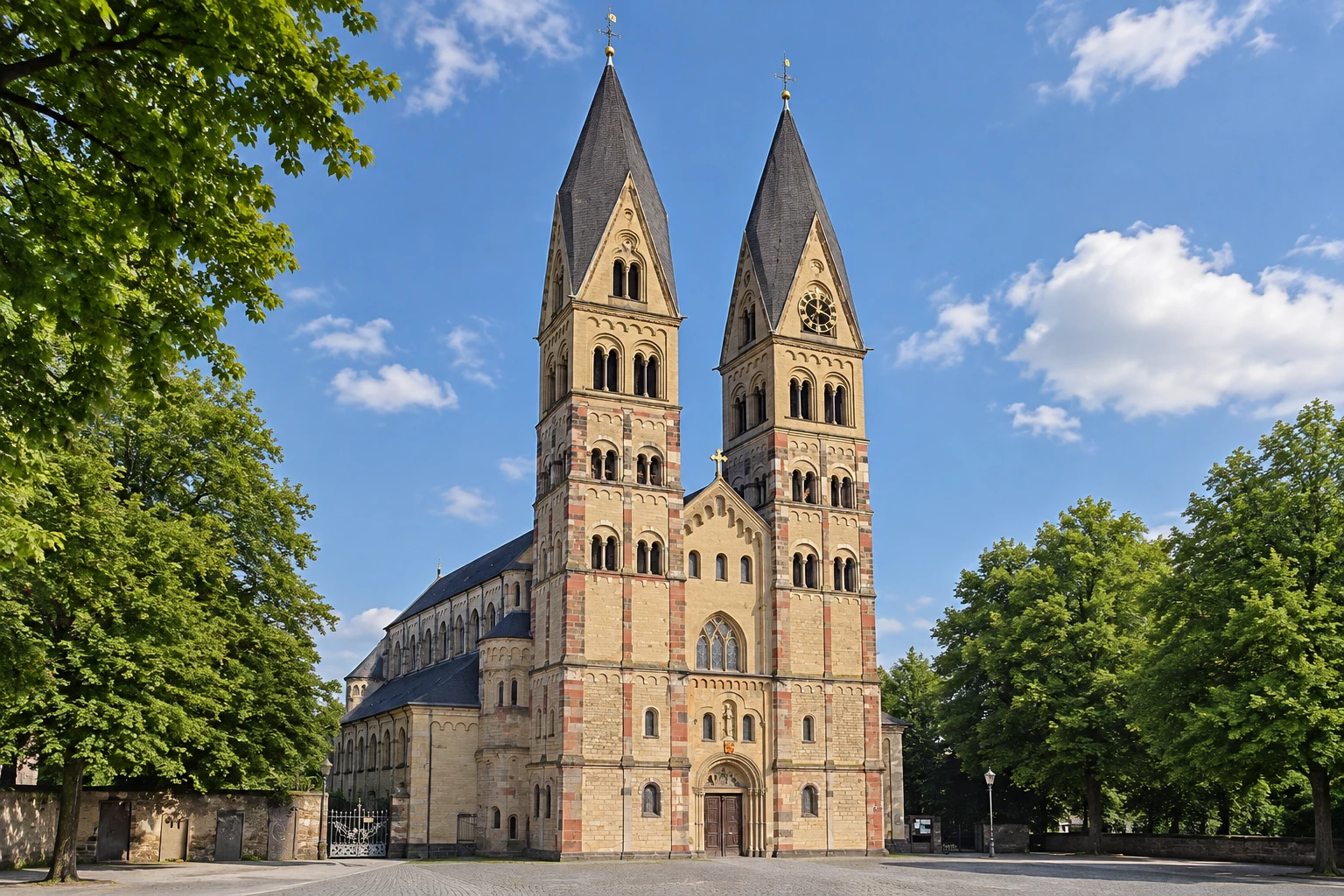
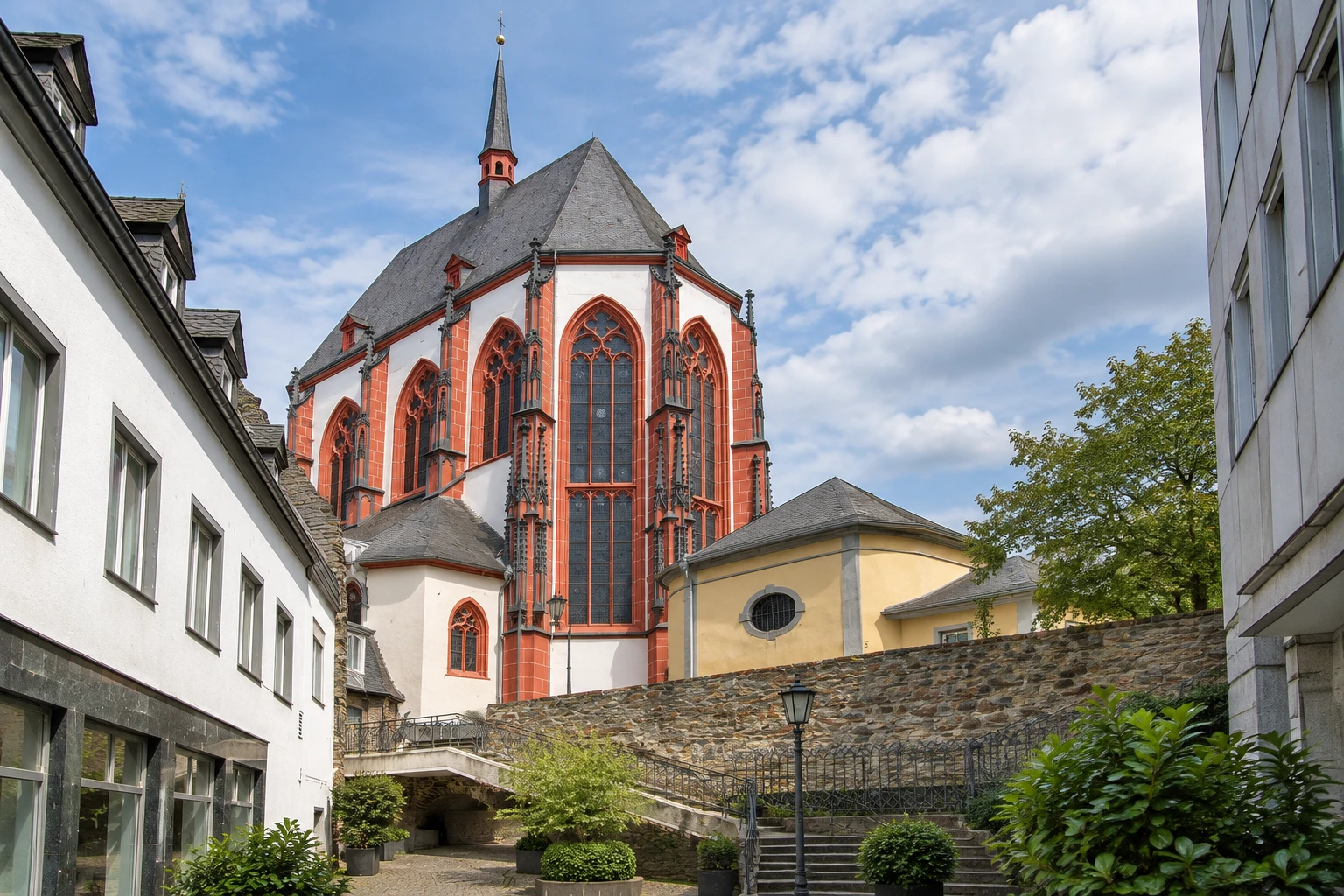
Koblenz began as a Roman camp at the confluence of the Mosela and the Reno, and its name comes from the Latin Confluentes. The point between the two rivers is the Deutsches Eck, with the equestrian monument to Emperor Guilherme I. On the other side of the Reno, the Prussian fortress of Ehrenbreitstein is reached by a cable car that crosses the river. The old town brings together the basílica de São Castor, the Liebfrauenkirche and squares such as the Jesuitenplatz. Upstream begins the romantic valley of the Reno, a World Heritage Site, with o castelo de Stolzenfels and the Marksburg a few kilometers away. German is spoken.
There's no accommodation in the guide yet in Koblenz.
Do you run a hotel, guesthouse or vacation rental here? List itThere are no restaurants in the guide yet in Koblenz.
Know a good one? Recommend it to usThe city's hotels and restaurants on the map.
how to get there · how many days · itinerary · questions
The local experience
The point of land where the Mosela empties into the Reno, with the equestrian monument to Emperor Guilherme I atop a pedestal with steps and a viewpoint over both rivers.
19th-century Prussian fortress high on the right bank of the Reno, opposite the Deutsches Eck, with walls, courtyards, the Landesmuseum Koblenz and viewpoints over the rivers’ confluence.
The oldest church in Koblenz, consecrated in 836, with a Romanesque façade of four towers, painted vaults and the fountain bearing Napoleon’s inscription in the square in front.
Church at the highest point of Koblenz's old town, with a Romanesque nave, a Gothic choir and the two onion‑domed towers that define the city's skyline.
Before you go
Koblenz – Germany Destination Moselle Valley
Approximate distances. Check flights and bus, train or boat schedules before you travel.
Connections to Brazil usually involve a stopover in another city. Check before booking. Frankfurt airport is about 110 km away, with trains to Koblenz central station in around 1h30 to 2 hours, generally with a change. Long-distance trains arrive from Colônia, Bonn, Mainz and Frankfurt, and regional trains run down the Mosela from Trier and Cochem. By car, via the motorways A61 and A48. Scheduled boats run up and down the Reno in season.
One day is enough for the Deutsches Eck, the cable car, the Ehrenbreitstein fortress and the old town. With two days there is time for o castelo de Stolzenfels and the Marksburg upriver, or for a boat trip along the romantic Reno. Koblenz also works as a base to explore the lower Mosela, with Cochem about 50 minutes by train.
From May to September the days are long, Reno and Mosela boats run more frequently and the fortress has more outdoor programming. September and October bring the grape harvest on the slopes. In winter the days are short and cold, and some surrounding castles reduce their opening days. Remember that the seasons are reversed compared with Brazil and that Germany is 4 to 5 hours ahead of Brasília, depending on the time of year.
The seasons shown are the most usual ones; nature doesn't always follow the calendar.
No. The old town is covered on foot, the cable car links the Deutsches Eck to the fortress and regional trains take you to the Mosela valley and the Reno towns. The Marksburg is one train stop away, in Braubach, and Stolzenfels is served by a city bus. A car helps to combine several castles and wineries in one day.
Suggested itinerary
Built with the places on this page. No rush: it's paced so you have time to see them.
Start at the Deutsches Eck, the point where the Mosela enters the Reno, with the monument to Guilherme I. Climb the steps of the pedestal to view both rivers. Beside it are the basílica de São Castor, the city's oldest church, and the lower station of the cable car.
Cross the Reno by cable car to the Ehrenbreitstein fortress. Walk the ramparts and courtyards, see the state museum housed inside and the viewpoints over the river confluence. Allow at least three hours up there.
Back in the center, walk from the Liebfrauenkirche to the Jesuitenplatz, with the Schängelbrunnen, the fountain of the boy who spits water, and the Vier Türme, four baroque corner houses. Finish at the Florinsmarkt.
The streets around the Münzplatz and the Florinsmarkt have restaurants and taverns serving Mosela and Reno wines. In the warm months, the Mosela bank offers outdoor seating.
Day 1
Same start to the one-day itinerary: the Deutsches Eck, the basílica de São Castor and the cable car.
A whole afternoon at the fortress, with the museum, the ramparts and views over the rivers.
Liebfrauenkirche, Jesuitenplatz, Vier Türme and Florinsmarkt.
Restaurants at the Münzplatz and the Florinsmarkt.
Day 2
Take the regional train on the right bank of the Reno to Braubach and climb on foot along the hillside trail to the Marksburg. The visit is guided and includes the medieval kitchen, the armoury and the herb gardens.
Return to Koblenz and take the bus to Stolzenfels on the left bank. The neo-Gothic castle, rebuilt by the Prussian kings, has decorated rooms and gardens overlooking the river.
Walk through the gardens of the Palácio do Eleitor and follow the riverside promenade along the Reno, the Rheinanlagen, to the Deutsches Eck.
Dinner on the Mosela bank, near the Balduinbrücke bridge, or in the old town.
Check before you go. Opening hours and days change, and places may close for renovations, holidays or events. This itinerary is a suggestion from Cidade Turismo, not a commitment: plan yours by checking directly with each place you intend to visit.
Before you go
Both. The city sits at the point where the Mosela flows into the Reno, the Deutsches Eck. The old town is on the Mosela bank and the Ehrenbreitstein fortress on the opposite bank of the Reno.
By train, in about 1h30 to 2 hours, on the line that follows the Reno or with a change in Mainz or Colônia. By car it's about 110 km on the motorways, in a little over an hour.
Yes. The city marks the northern tip of the romantic valley of the Reno, a World Heritage Site. Trains from both banks and scheduled boats depart Koblenz for Boppard, St. Goar and the rock of Loreley.
No. The center is walkable, the cable car takes you to the fortress and regional trains serve the Marksburg, the Mosela and the Reno towns.
One day for the Deutsches Eck, the fortress and the old town. Two days to include the Marksburg and o castelo de Stolzenfels, or a boat trip on the Reno.
Cross-border routes
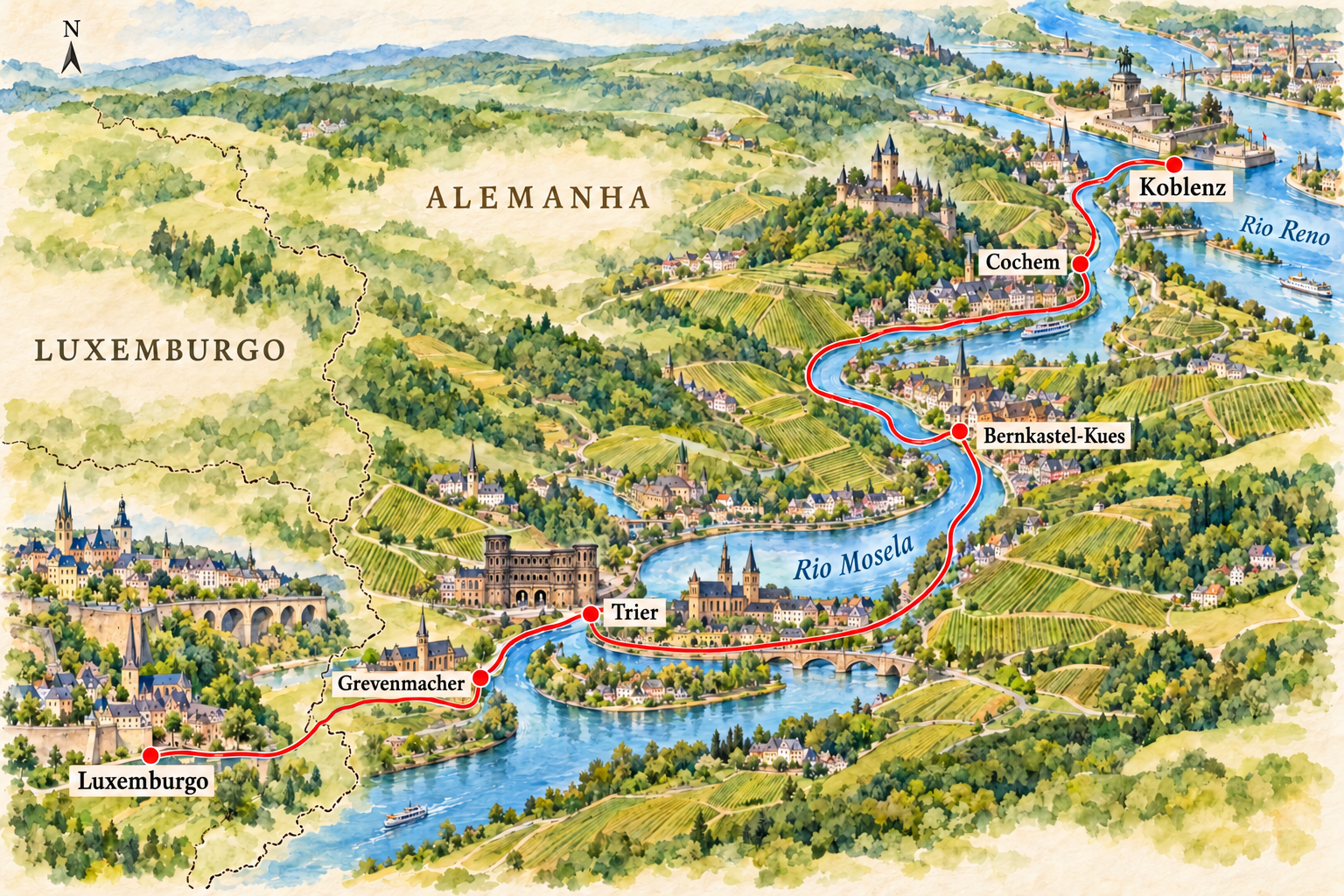
Along the Moselle River, from Luxembourg to Germany: vineyards on slopes, half-timbered villages, Roman Trier, Cochem Castle, and the confluence with the Rhine in Koblenz.