18 places to visit and 14 tours, chosen by the Cidade Turismo guide.
Updated
Illustrative images. The pictures in this guide are illustrations based on the real place, not photographs, and may differ from it.
To start
The 10 main places Weimar and Erfurt
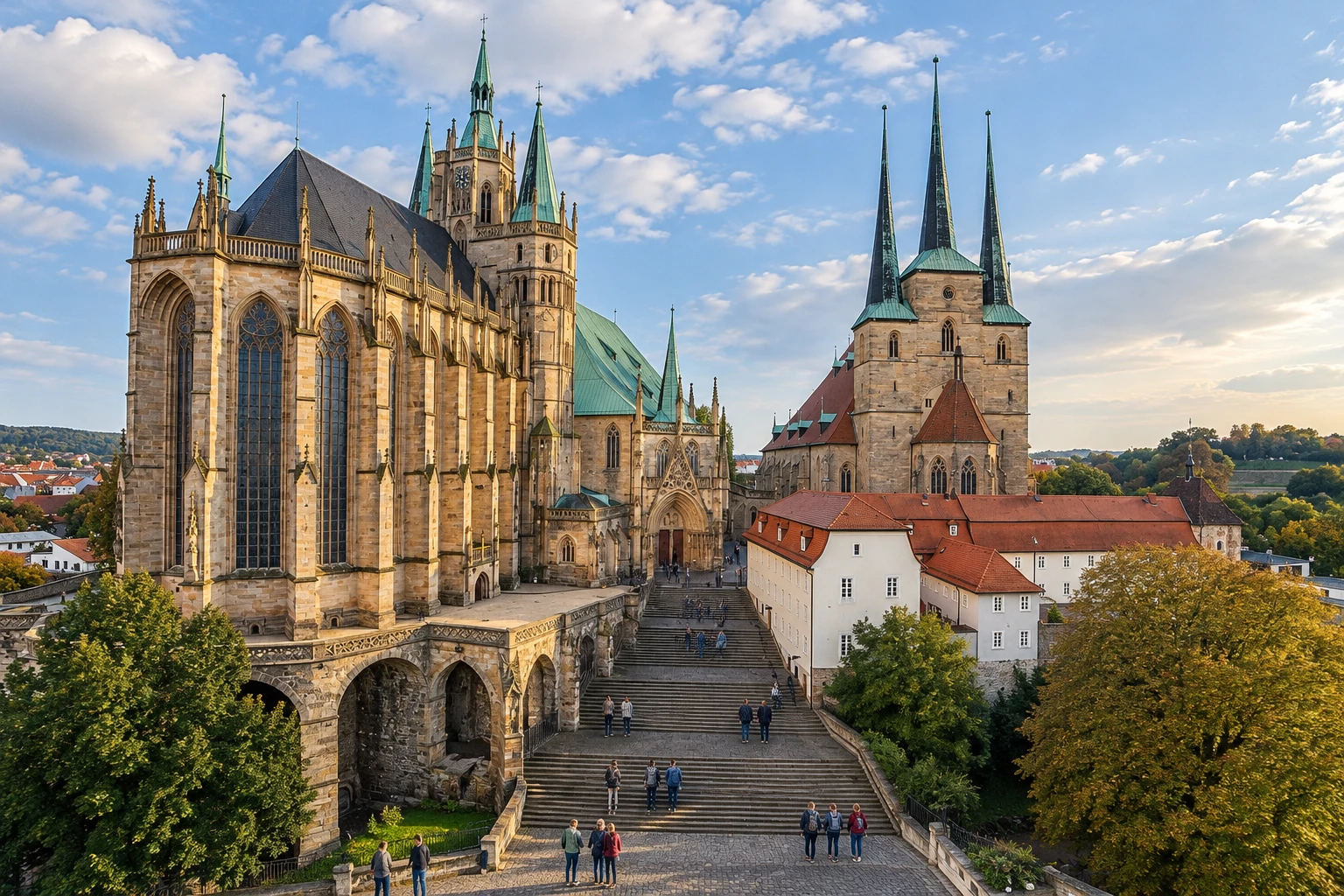
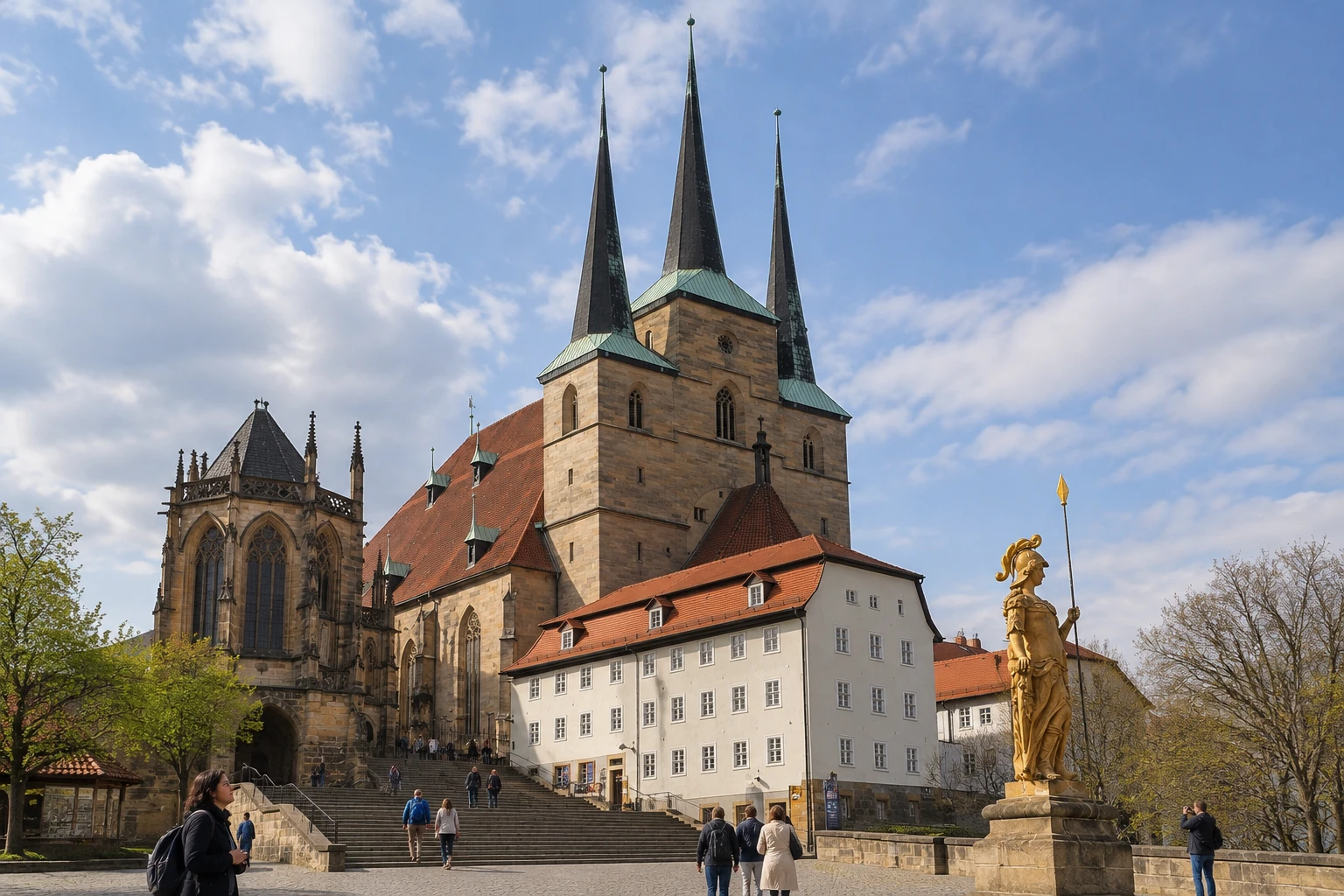
Erfurt Cathedral · ErfurtThe Gothic cathedral of Santa Maria sits atop the steps of the Domplatz.
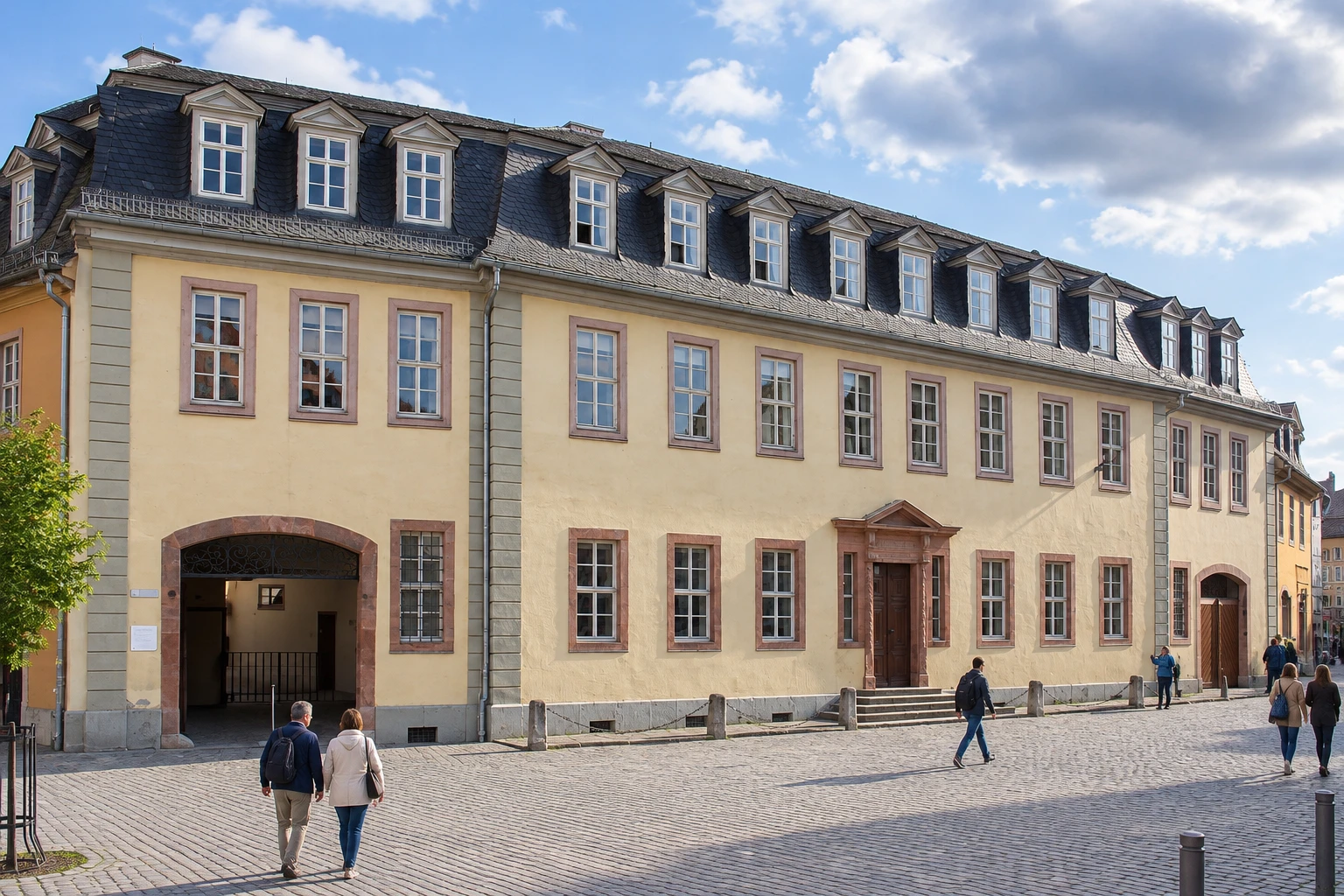
Goethe National Museum · WeimarThe house on the Frauenplan where Goethe lived for about 50 years and died in 1832, with original furniture, collections, a private library and the permanent exhibition about th...
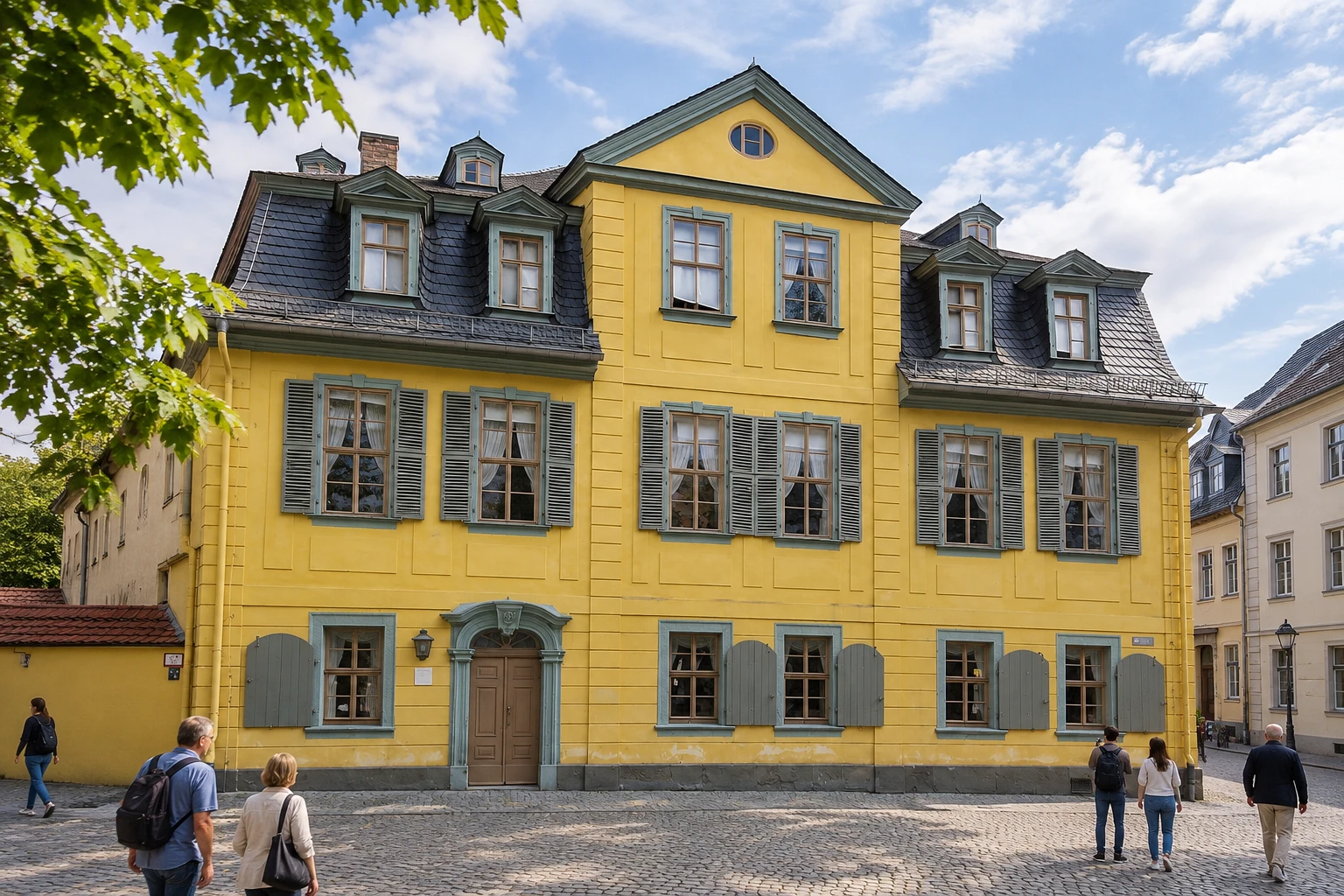
Schiller's Home · WeimarThe house that Friedrich Schiller bought in 1802 and where he died in 1805.
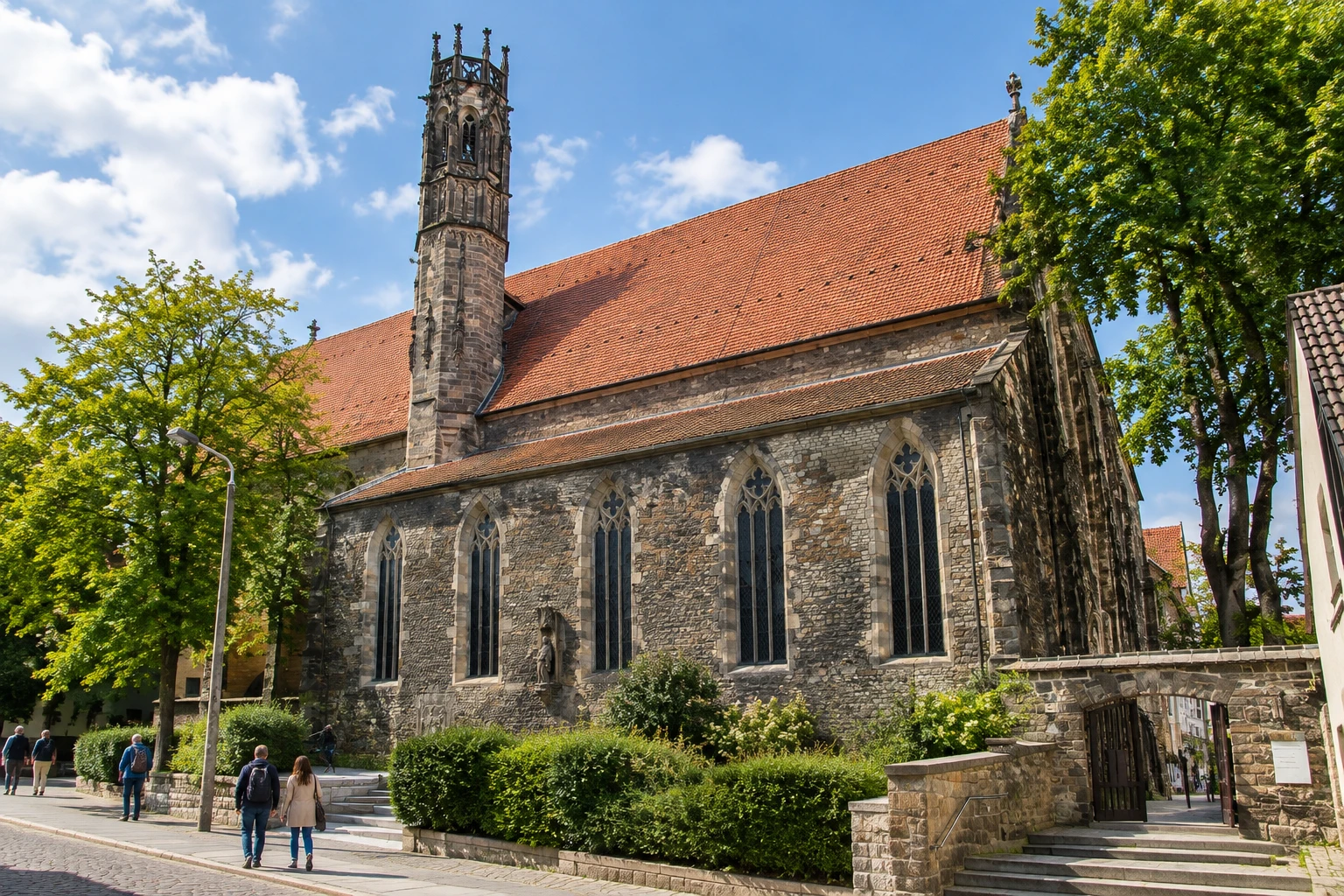
St. Severus' Church · ErfurtGothic church next to the cathedral, at the top of the Domberg.
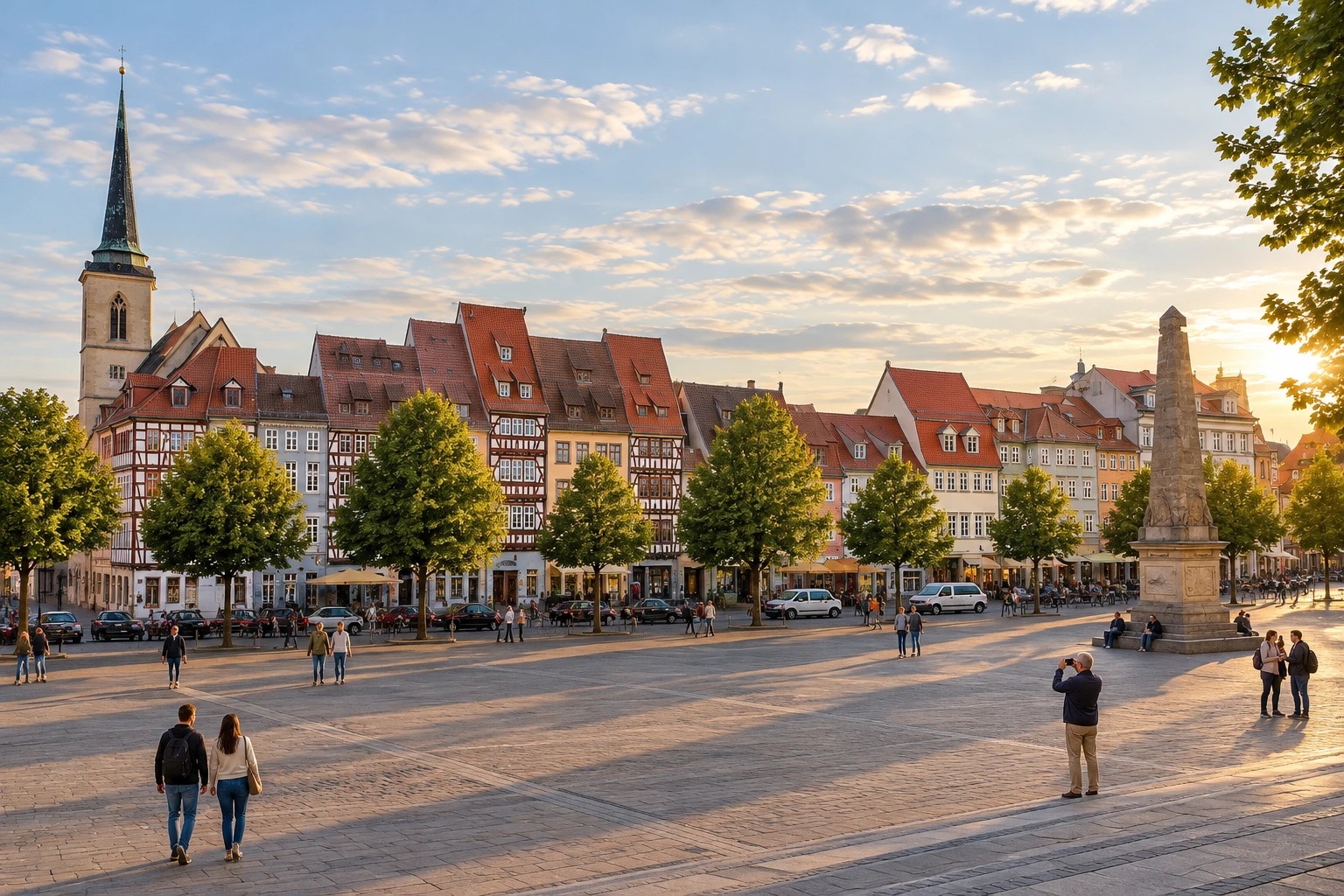
Cathedral Square · ErfurtOne of the largest squares in Germany, at the foot of the cathedral and São Severo.
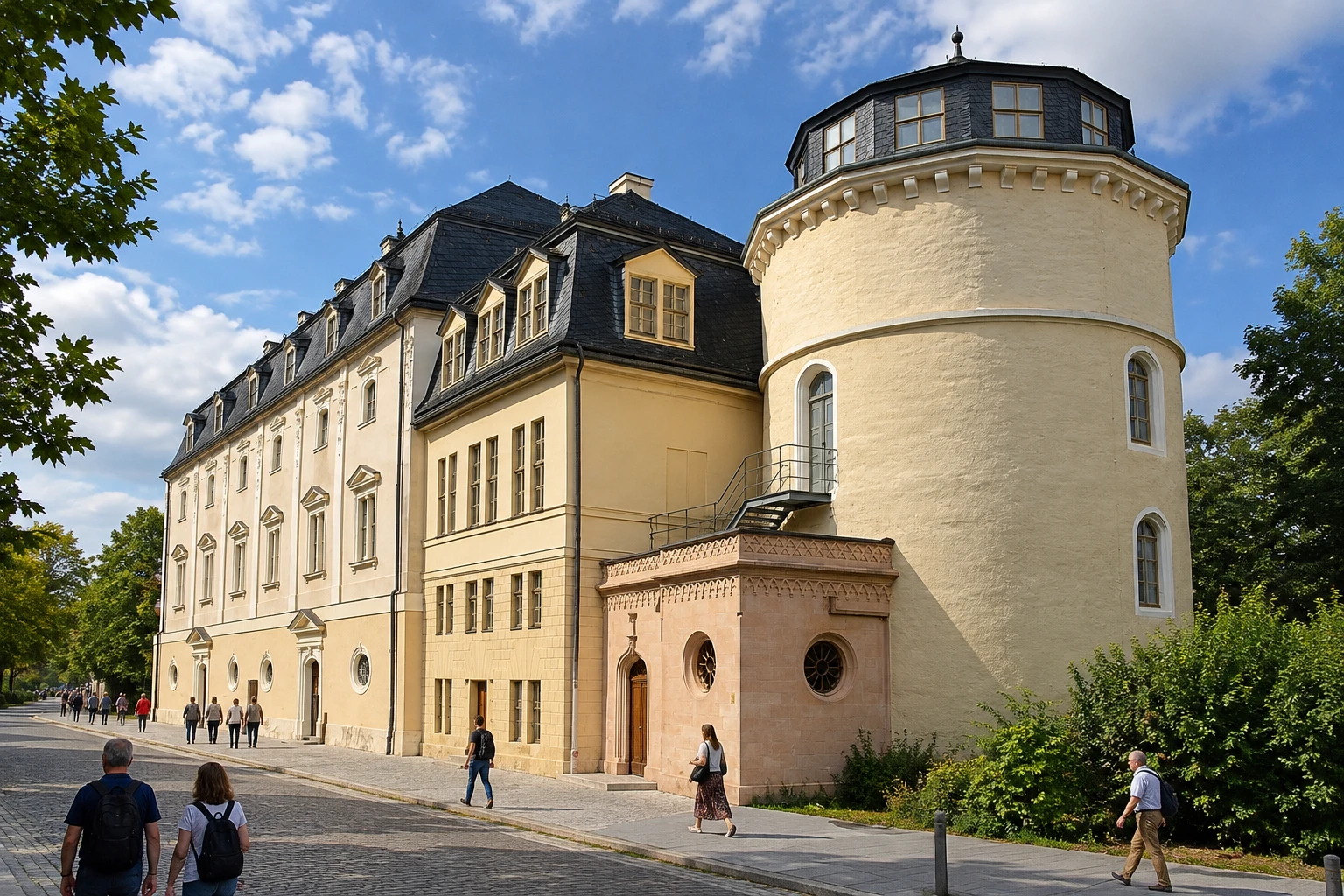
Duchess Anna Amalia Library · WeimarHistoric library with the Rokokosaal, an oval hall from 1766, World Heritage.
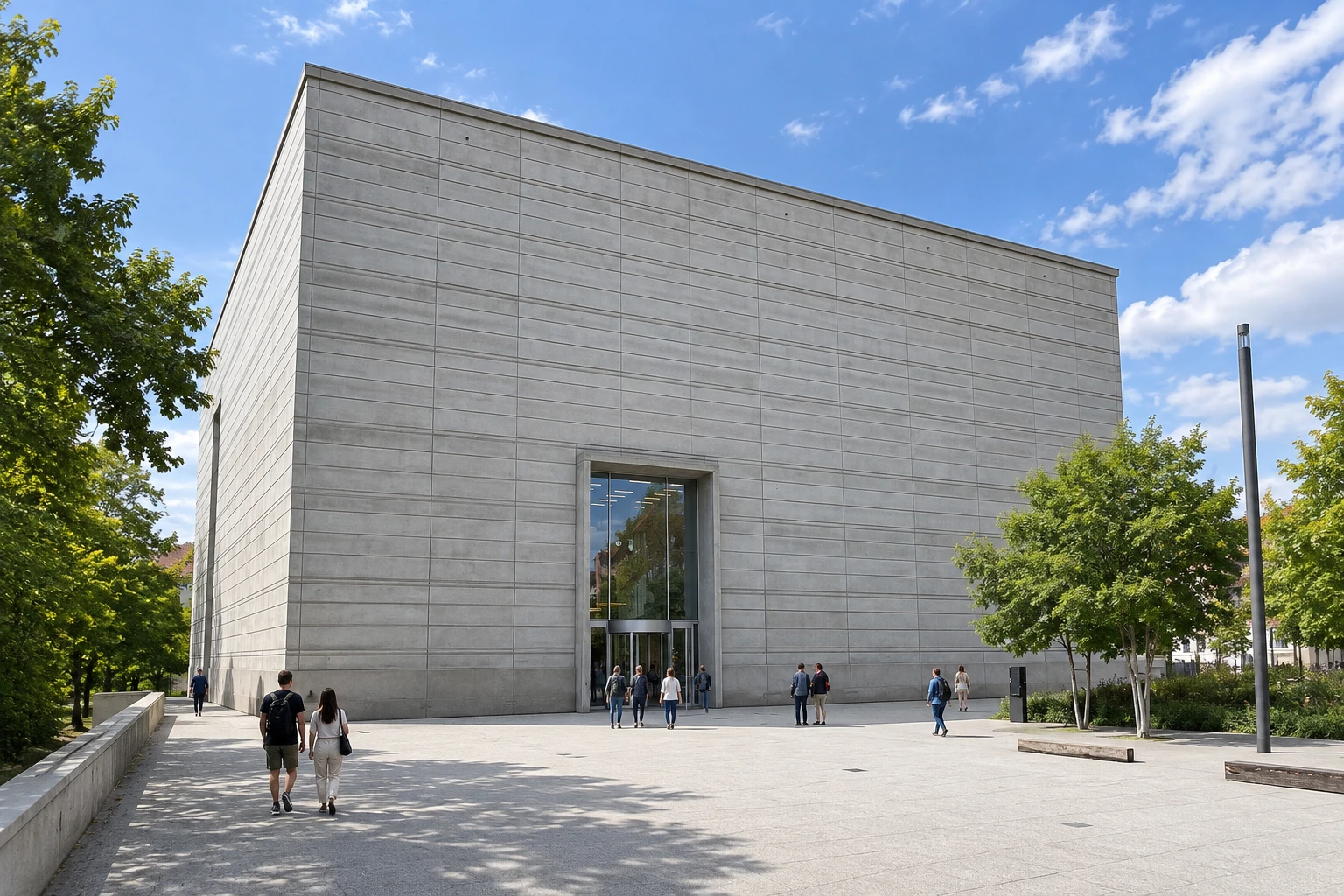
Bauhaus Museum Weimar · WeimarMuseum of the Bauhaus school, founded in Weimar in 1919, housed in a new building.
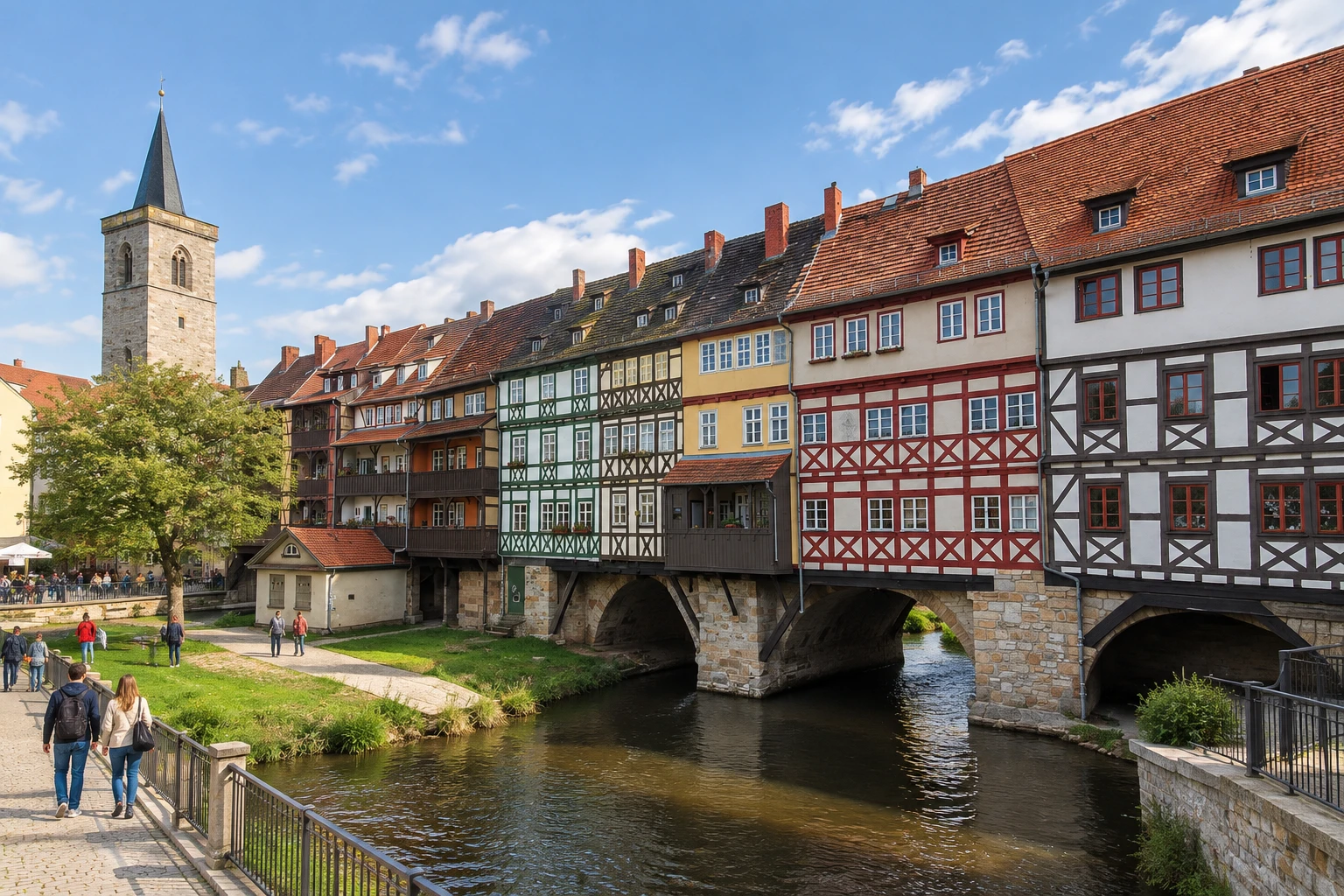
Merchants' Bridge · ErfurtStone bridge dating from 1325 over the river Gera, lined on both sides with half-timbered houses.
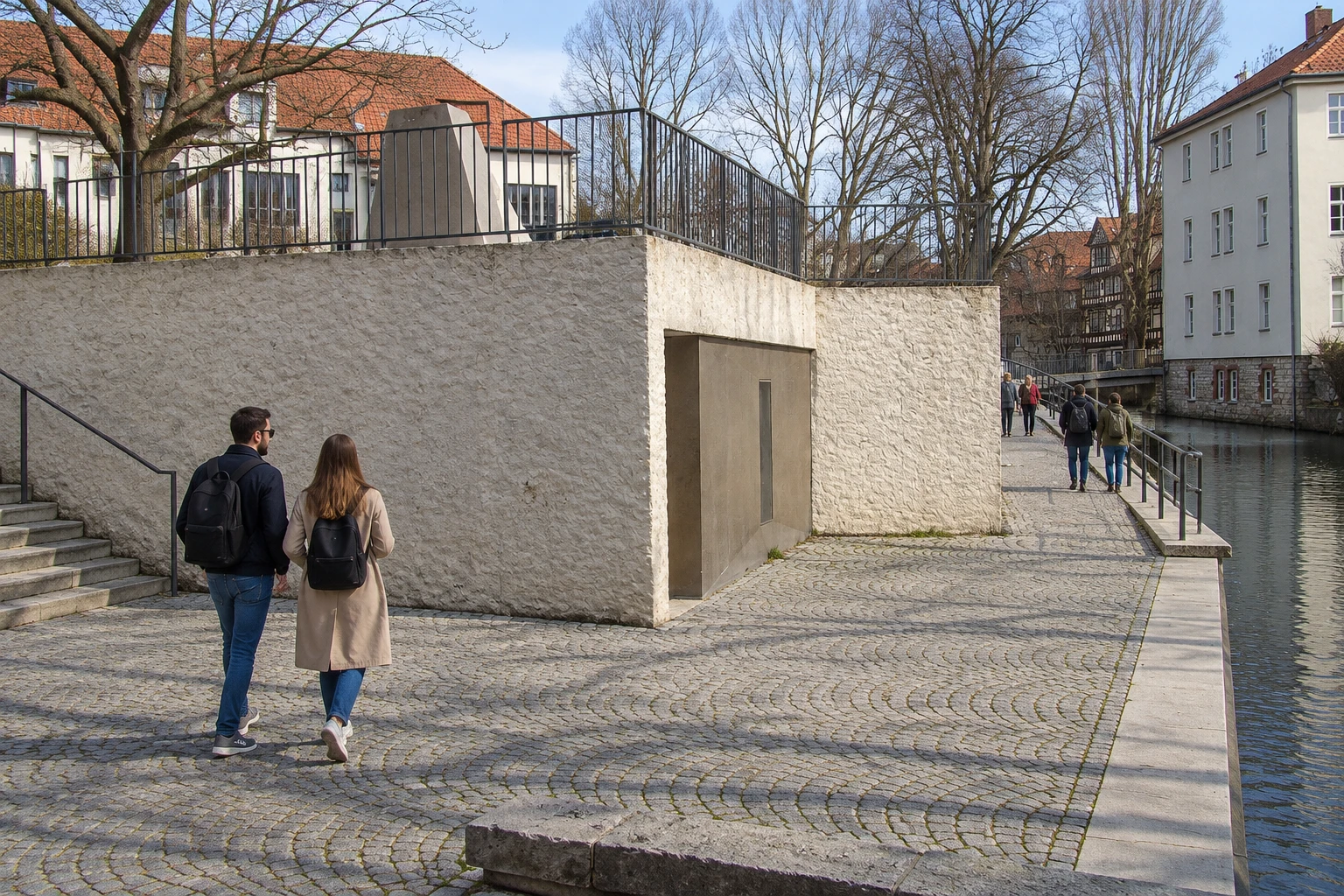
Medieval Mikveh · Erfurt13th-century Jewish ritual bath, beside the Gera River, rediscovered in 2007.
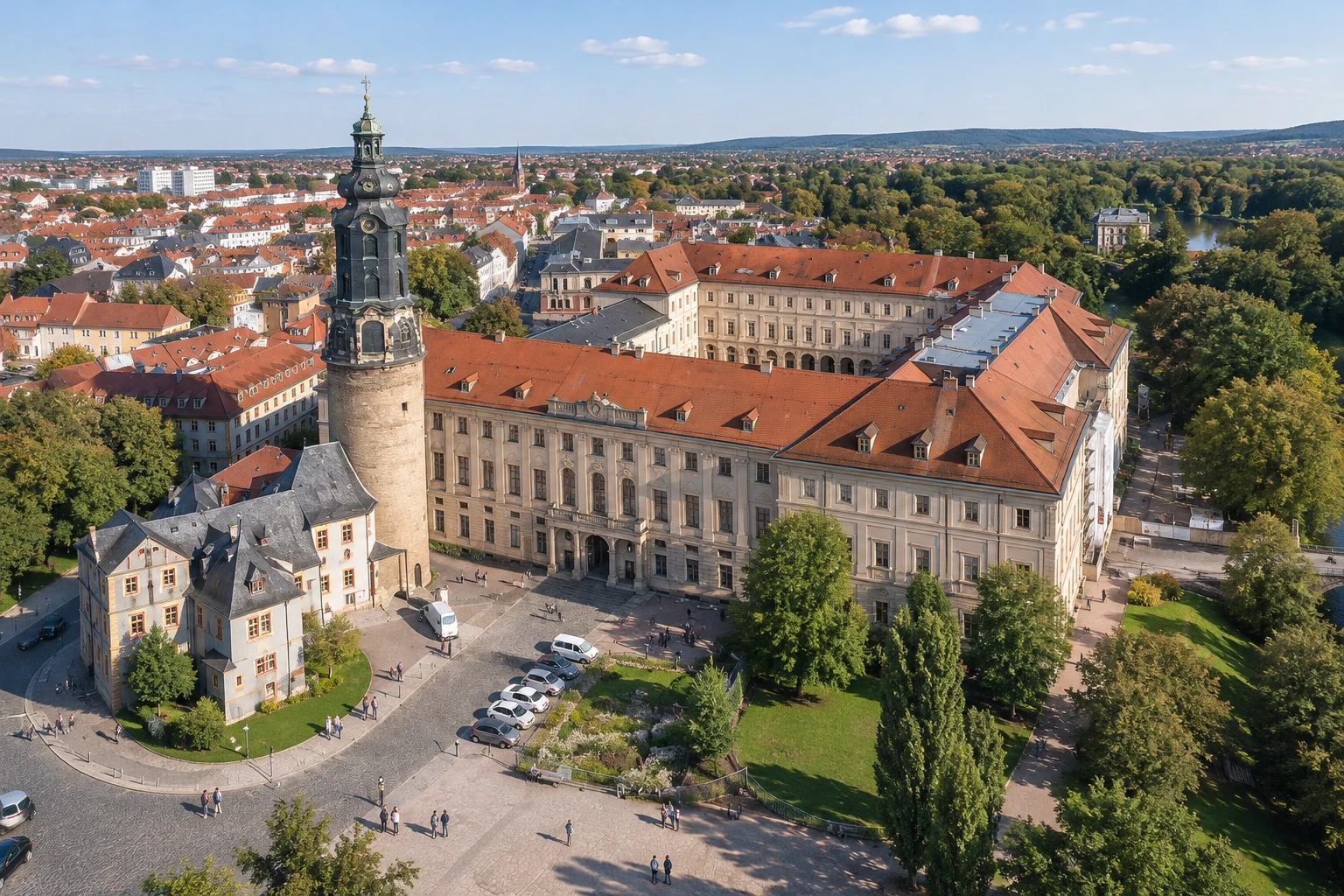
Weimar City Palace · WeimarFormer palace of the dukes of Weimar, rebuilt after the 1774 fire with Goethe leading the work.
The Gothic cathedral of Santa Maria sits atop the steps of the Domplatz. It houses the Gloriosa, dating from 1497, the largest medieval bell still in use in the world, choir stained glass and the place where Luther was ordained as a priest.
The house on the Frauenplan where Goethe lived for about 50 years and died in 1832, with original furniture, collections, a private library and the permanent exhibition about the writer.
The house that Friedrich Schiller bought in 1802 and where he died in 1805. The study preserves the writer’s desk and bed; it was there that he wrote William Tell.
Gothic church next to the cathedral, at the top of the Domberg. It is a five-aisled hall church with an almost square plan, three pointed towers and the sarcophagus of São Severo with 14th-century reliefs.
One of the largest squares in Germany, at the foot of the cathedral and São Severo. It features old houses, a market, summer performances and a Christmas market at the end of the year.
Museum of the Bauhaus school, founded in Weimar in 1919, housed in a new building. The permanent exhibition displays furniture, objects and ideas of the school based on the Weimar collection.
Stone bridge dating from 1325 over the river Gera, lined on both sides with half-timbered houses. With 32 houses, it is the longest bridge in Europe with houses along its entire length.
13th-century Jewish ritual bath, beside the Gera River, rediscovered in 2007. It is part of the World Heritage of Erfurt’s medieval Jewish heritage and is visited with a guide.
Former palace of the dukes of Weimar, rebuilt after the 1774 fire with Goethe leading the work. The restored east wing houses the permanent exhibition Weimarer Klassik.
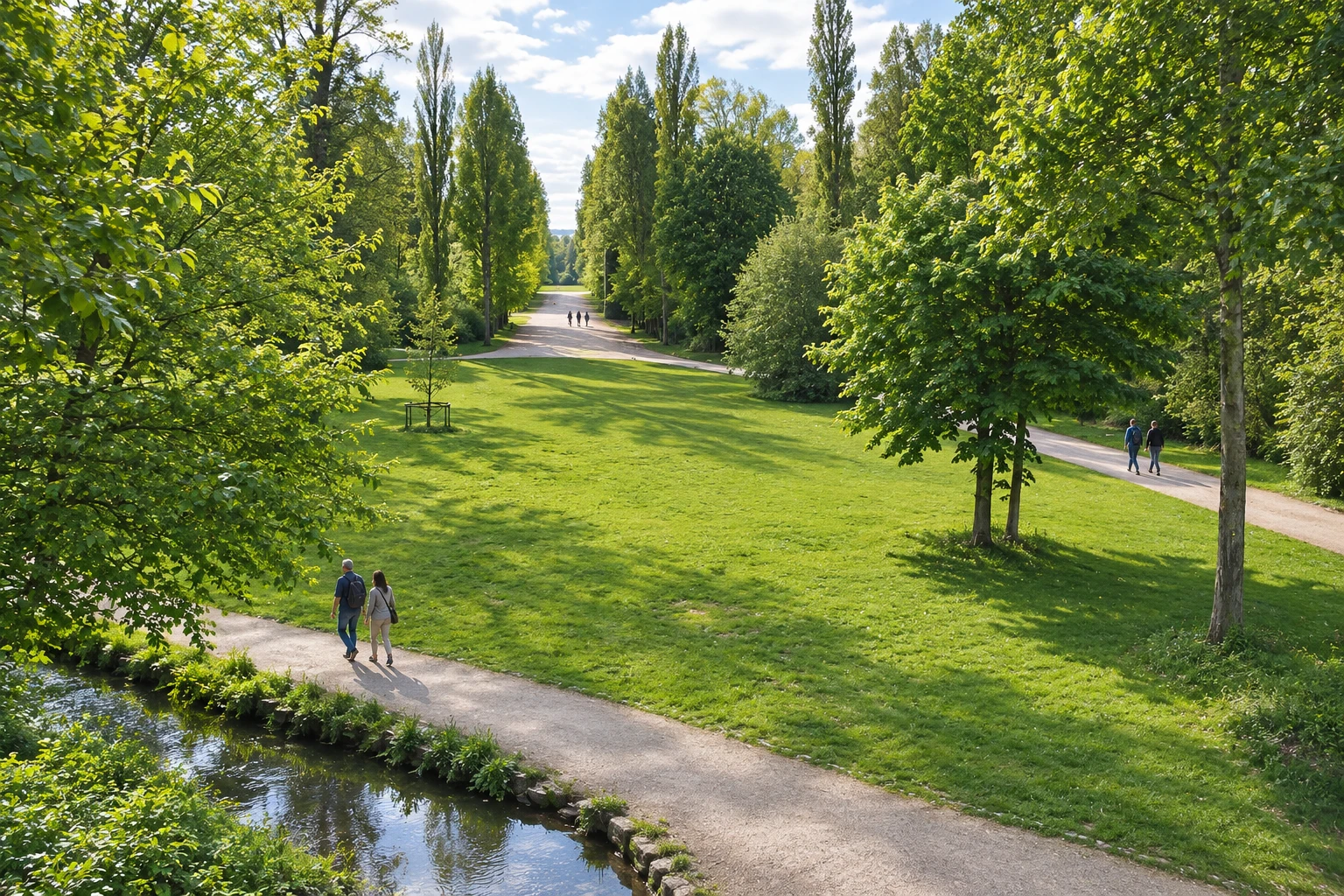
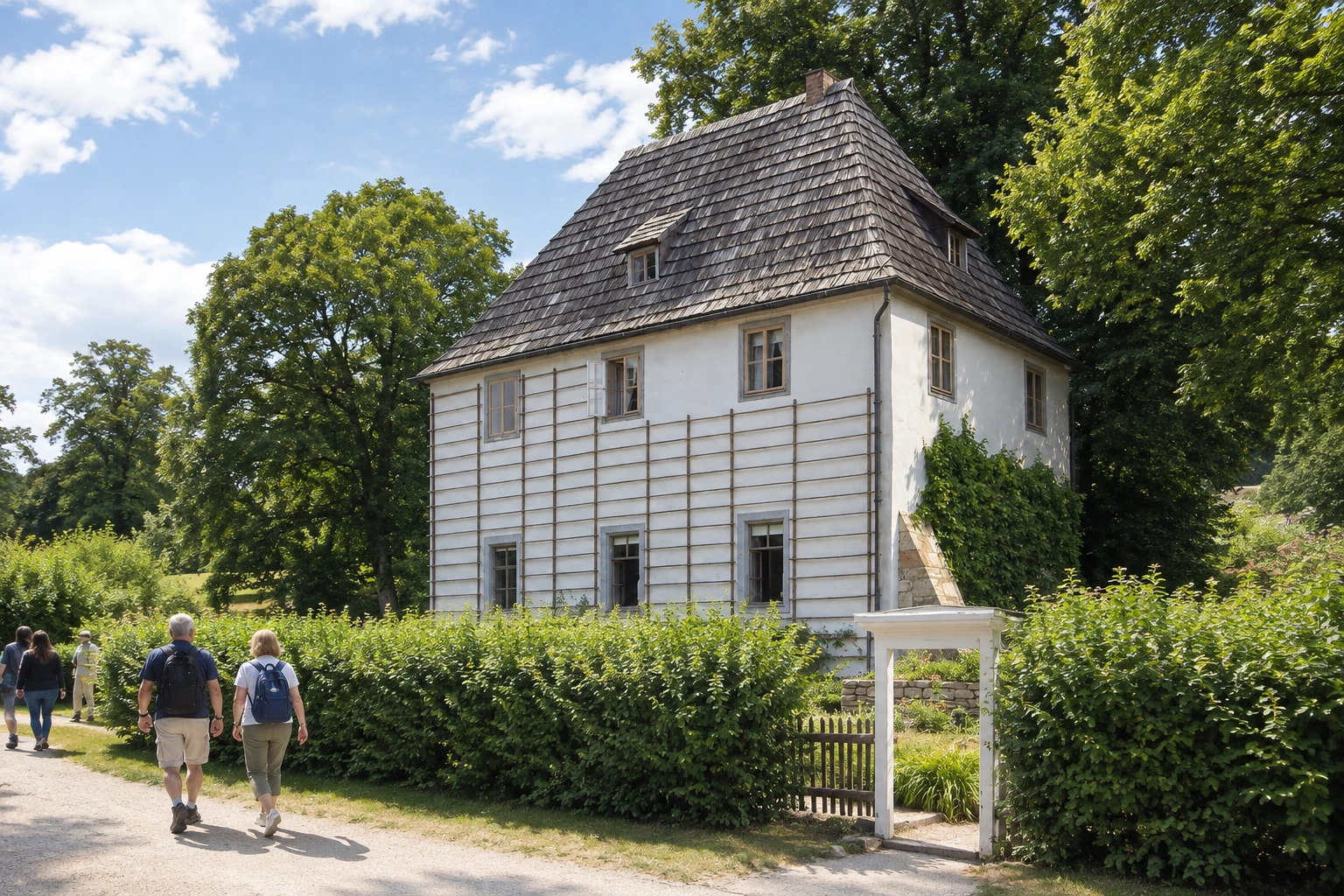
An English-style garden of 48 hectares along the Ilm river, created from 1776 with Goethe's involvement. It features the Römisches Haus, the Shakespeare monument and Goethe's garden house.
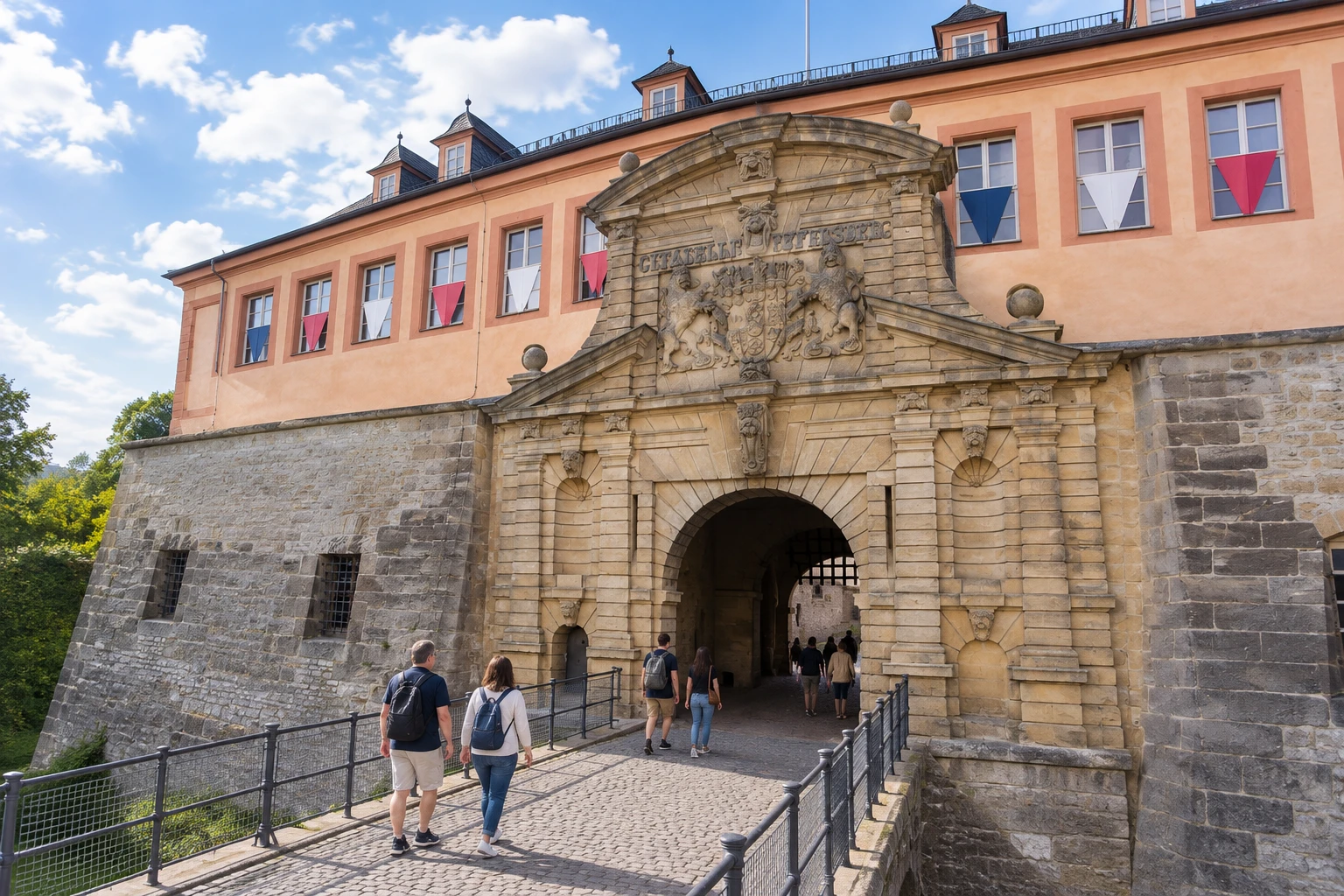
Baroque star-shaped fortress, built from 1665 on the hill behind the cathedral. It has bastions with views, an exhibition in the Kommandantenhaus and listening tunnels that are visited with a guide.
13th-century Augustinian convent where Martin Luther lived as a monk from 1505 to 1511. It has a church with 14th-century stained glass, a cloister, an exhibition about Luther and daily guided tours.
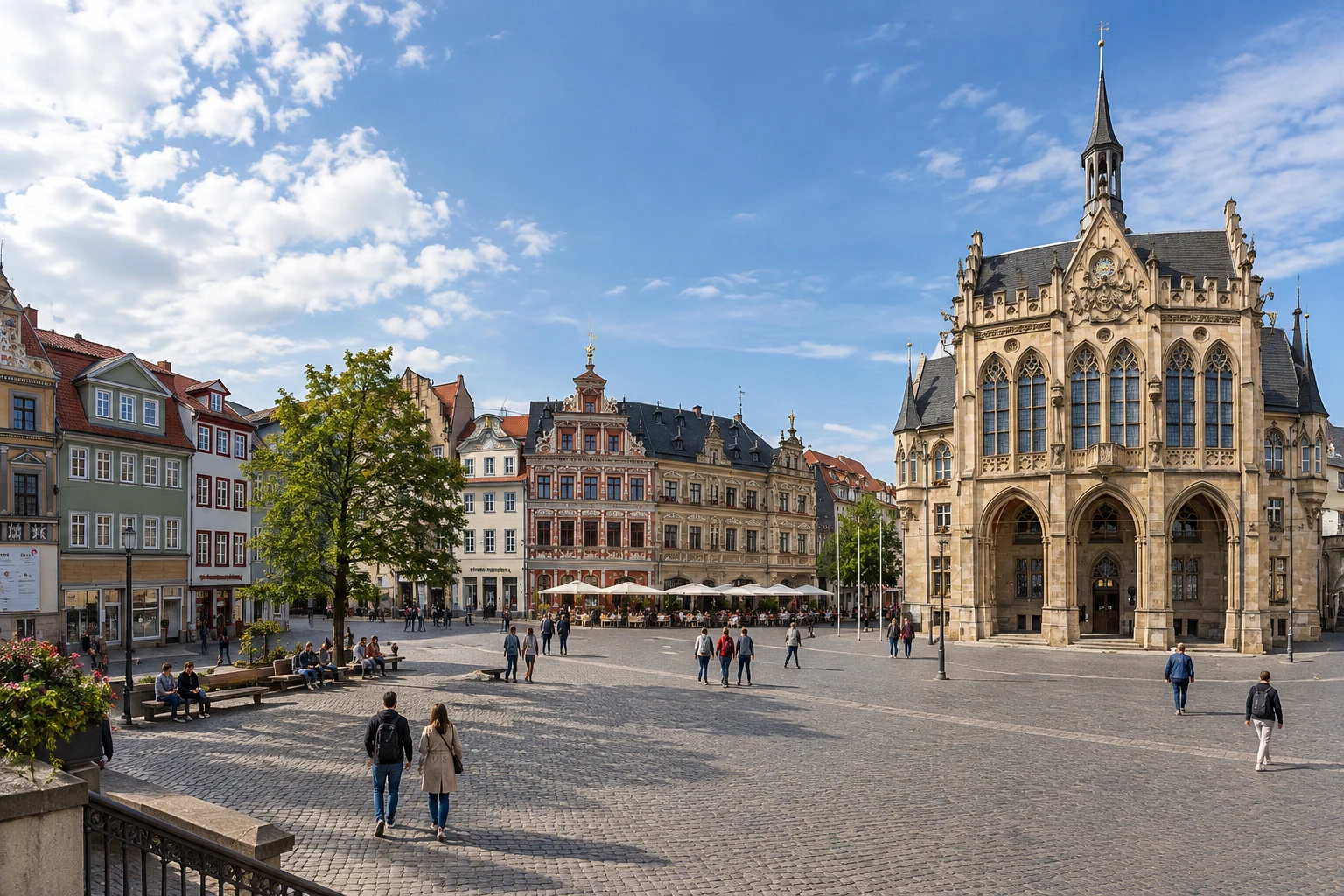
The historic heart of Erfurt’s old town, with the neo-Gothic town hall from 1875, Renaissance houses such as the Haus zum Breiten Herd, and the warrior column Römer from 1591.
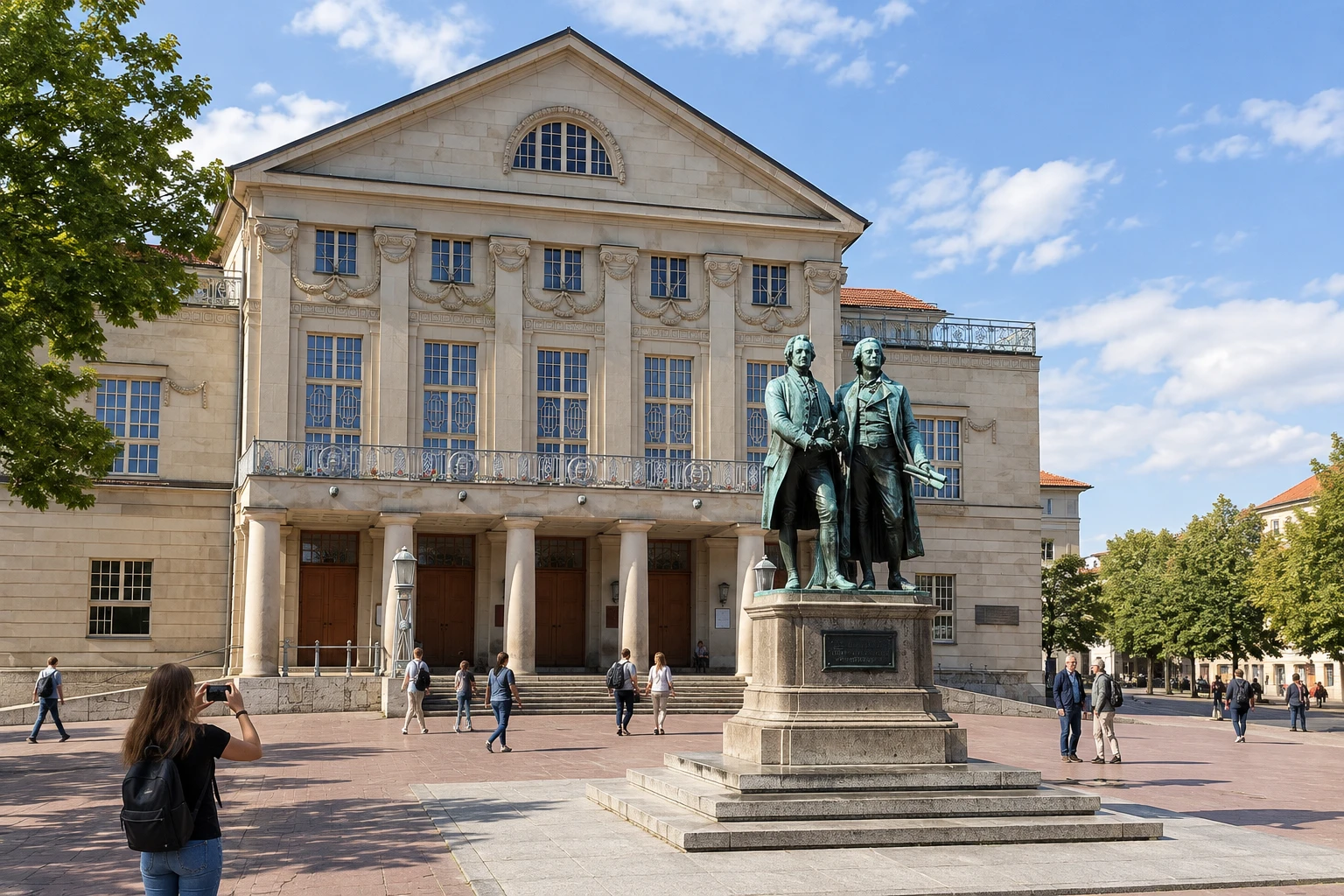
Bronze monument from 1857 showing Goethe and Schiller side by side, in front of the National Theatre on Theaterplatz. It was in that theatre that the Weimar Constitution was approved in 1919.
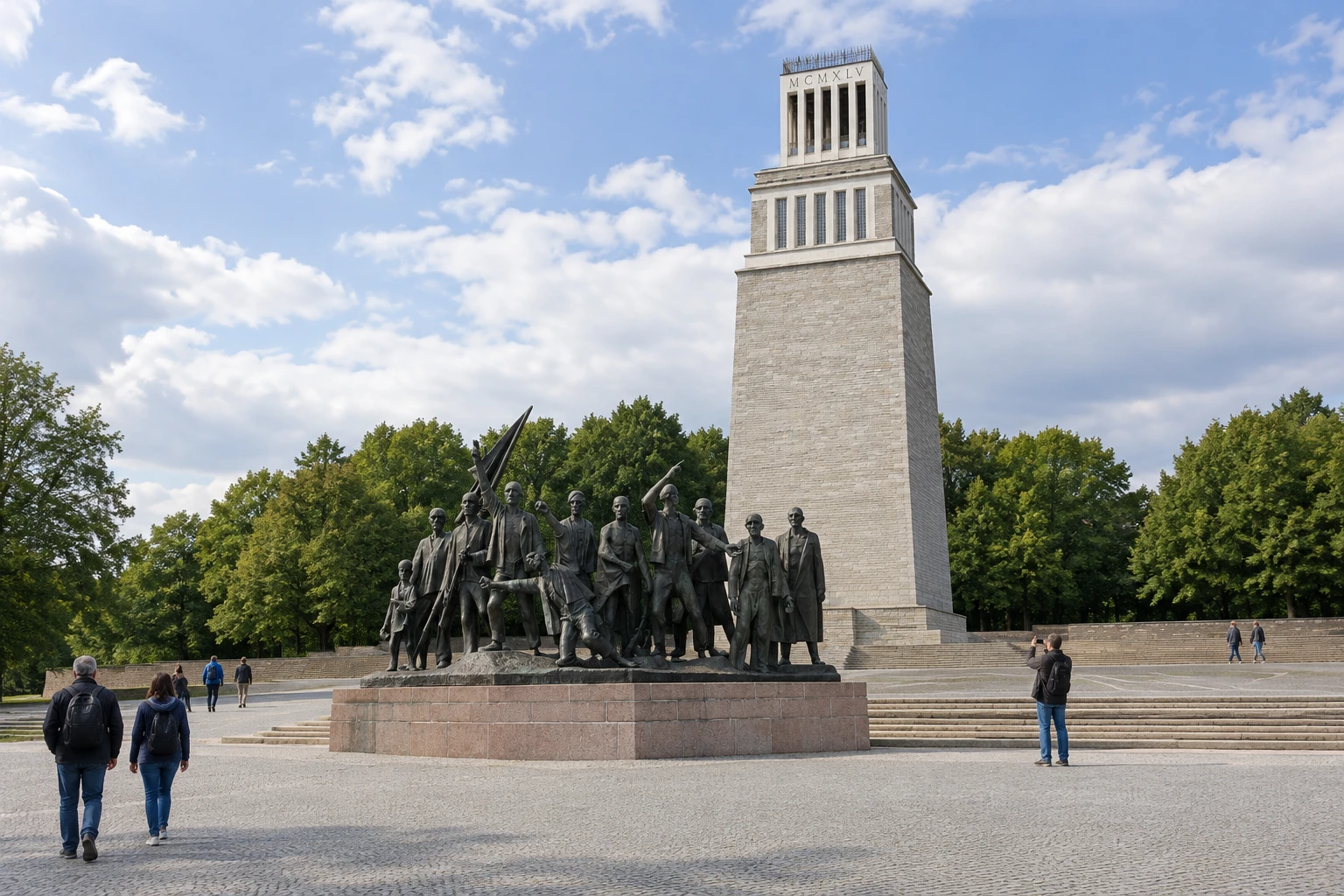
Memorial on the site of the Nazi concentration camp Buchenwald, on the Ettersberg hill near Weimar. Exhibitions about the prisoners and about the Soviet postwar camp. A place of remembrance.
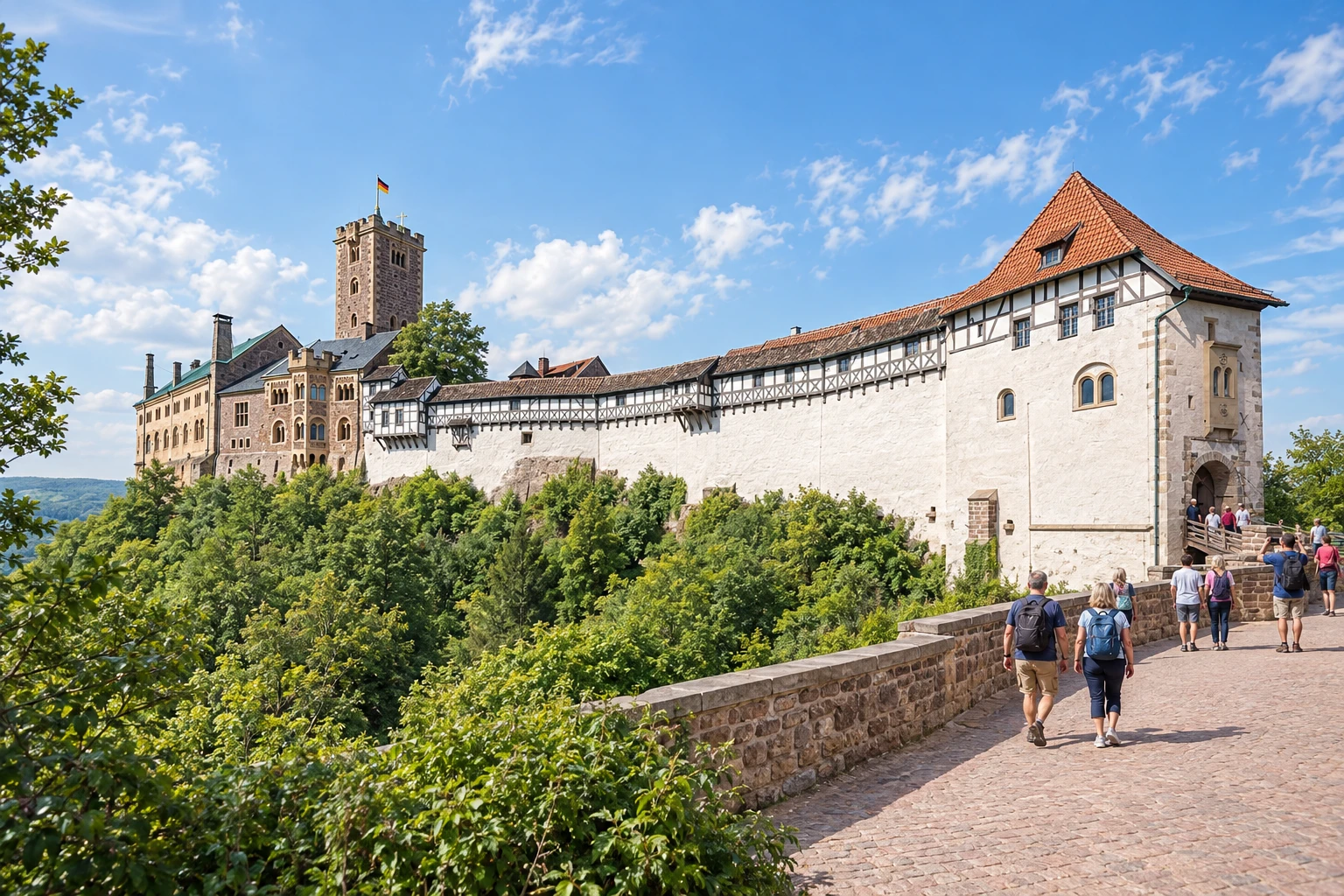
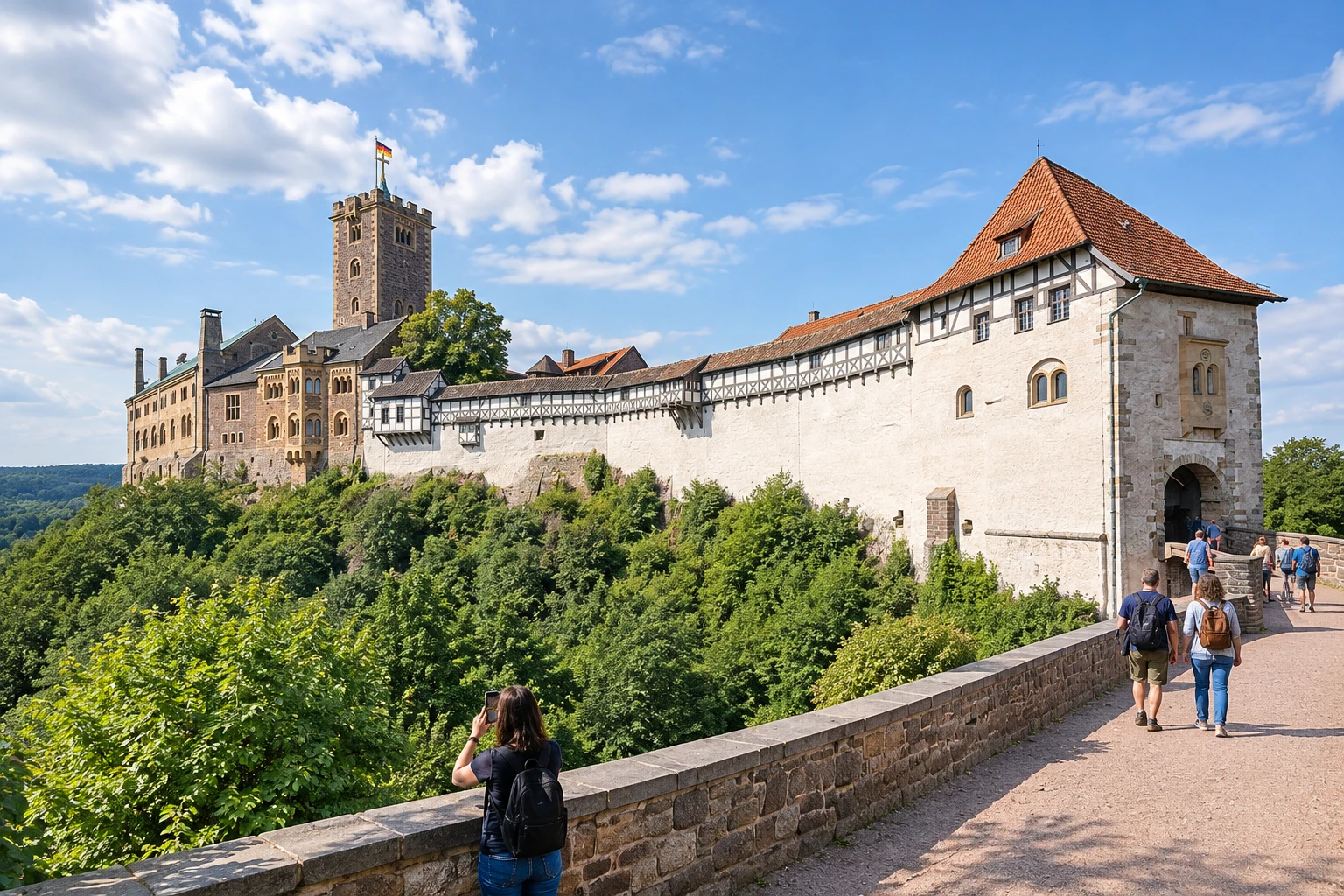
Medieval castle above Eisenach, about 60 km from Erfurt, a World Heritage Site. Luther translated the New Testament there into German; the Romanesque Palas is seen on a guided tour.
How many days should you set aside to see Weimar and Erfurt?
The guide's itineraries cover 2, 3 and 5 days: in 2 days, Goethe, the library and the Domberg; in 3 days, classical, Bauhaus, Buchenwald and medieval Erfurt; in 5 days, both cities in full and the Wartburg.
What to do Weimar and Erfurt in one day?
Weimar: Goethe’s house, Anna Amalia Library and the park. Arriving in the morning at Weimar Hauptbahnhof, walk down to the center in about 15 minutes. Start at the Goethe National Museum on Frauenplan, with the audio guide. At the scheduled time, visit the Rokokosaal of the Herzogin Anna Amalia Library, 5 minutes away. Have lunch at the Markt and do the walking tour of Weimar on foot, including the Herderkirche and Cranach’s altar. In the afternoon, cross the Park an der Ilm to Goethes Gartenhaus and return via the Römisches Haus. At the end of the day, Schillers Wohnhaus and the Goethe-Schiller Monument at Theaterplatz, if time still allows.
When is the best time to go to Weimar and Erfurt?
It generally rains less from December to April. The rainiest months are usually from May to August. The guide covers each month, with the weather and what changes on the tours.


 Brazil
 Antarctica
 Argentina
 Bolivia
 Chile
 Colombia
 Ecuador
 Falkland Islands (Malvinas)
 French Guiana
 Guyana
 Paraguay
 Peru
 Suriname
 Uruguay
 Venezuela
 Austria
 Belgium
 Croatia
 Denmark
 Finland
 France
 Greece
 Hungary
 Iceland
 Ireland
 Italy
 Luxembourg
 Norway
 Poland
 Portugal
 Slovakia
 Slovenia
 Spain
 Sweden
 Switzerland
 the Czech Republic
 the Netherlands
 the United Kingdom
 Turkey
 Bermuda
 Canada
 Greenland
 Mexico
 Saint Pierre and Miquelon
 the United States
 the Dominican Republic
 Japan
 Egypt
 South Africa
 Australia
 Fiji
 New Zealand
 Papua New Guinea