Koblenz · Rhineland-Palatinate · Monument
Deutsches Eck
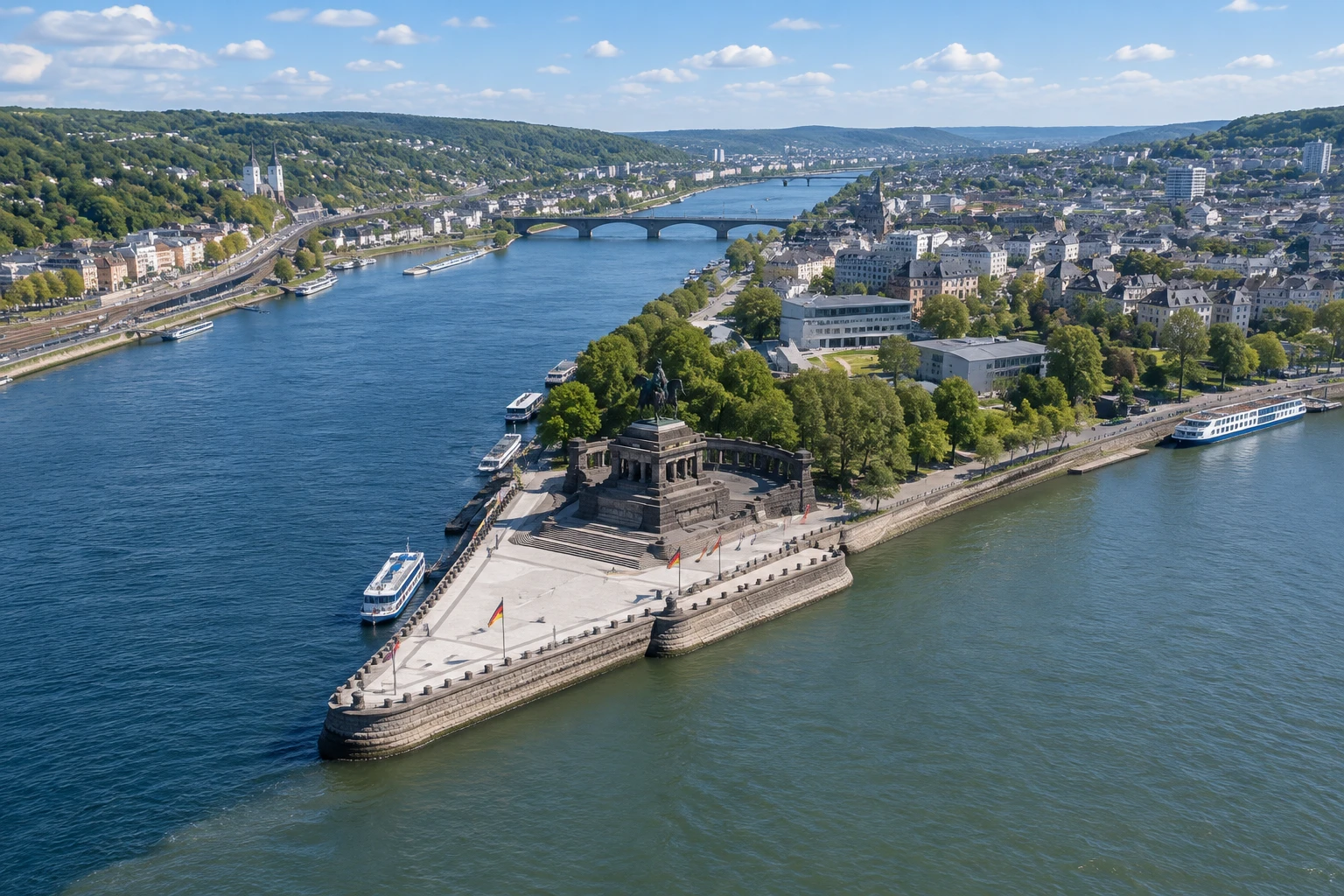
The point of land where the Mosela empties into the Reno, with the equestrian monument to Emperor Guilherme I atop a pedestal with steps and a viewpoint over both rivers.

 Search
 Brazil
 Antarctica
 Argentina
 Bolivia
 Chile
 Colombia
 Ecuador
 Falkland Islands (Malvinas)
 French Guiana
 Guyana
 Paraguay
 Peru
 Suriname
 Uruguay
 Venezuela
 Austria
 Belgium
 Croatia
 Denmark
 Finland
 FranceGermany
 Greece
 Hungary
 Iceland
 Ireland
 Italy
 Luxembourg
 Norway
 Poland
 Portugal
 Slovakia
 Slovenia
 Spain
 Sweden
 Switzerland
 the Czech Republic
 the Netherlands
 the United Kingdom
 Turkey
 Bermuda
 Canada
 Greenland
 Mexico
 Saint Pierre and Miquelon
 the United States
 the Dominican Republic
 JapanTurkey
 Egypt
 South Africa
 Australia
 Fiji
 New Zealand
 Papua New Guinea
Rhineland-Palatinate
24 places to visit and 15 tours, chosen by the Cidade Turismo guide.
Updated
Illustrative images. The pictures in this guide are illustrations based on the real place, not photographs, and may differ from it.
To start
One by one
The point of land where the Mosela empties into the Reno, with the equestrian monument to Emperor Guilherme I atop a pedestal with steps and a viewpoint over both rivers.
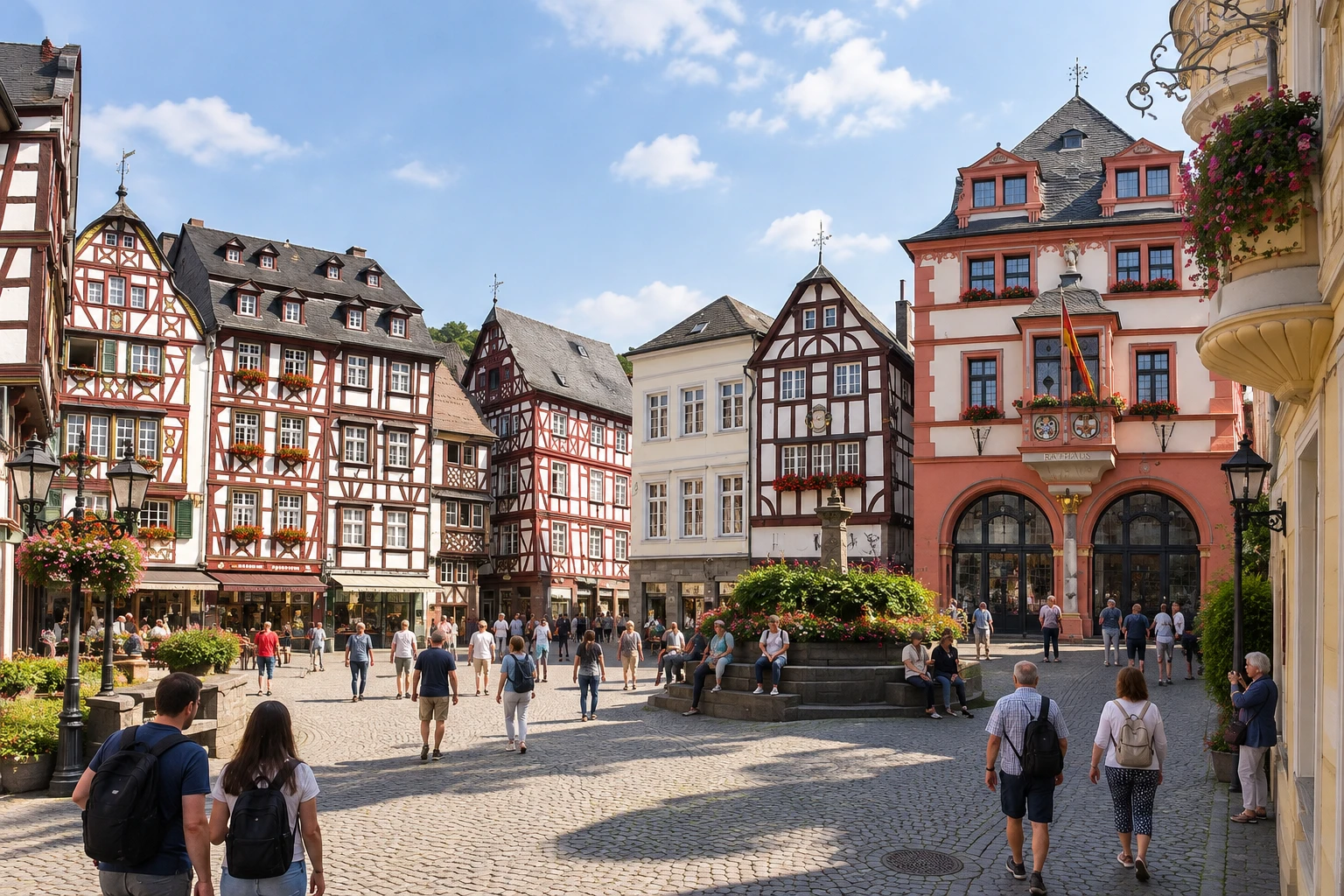
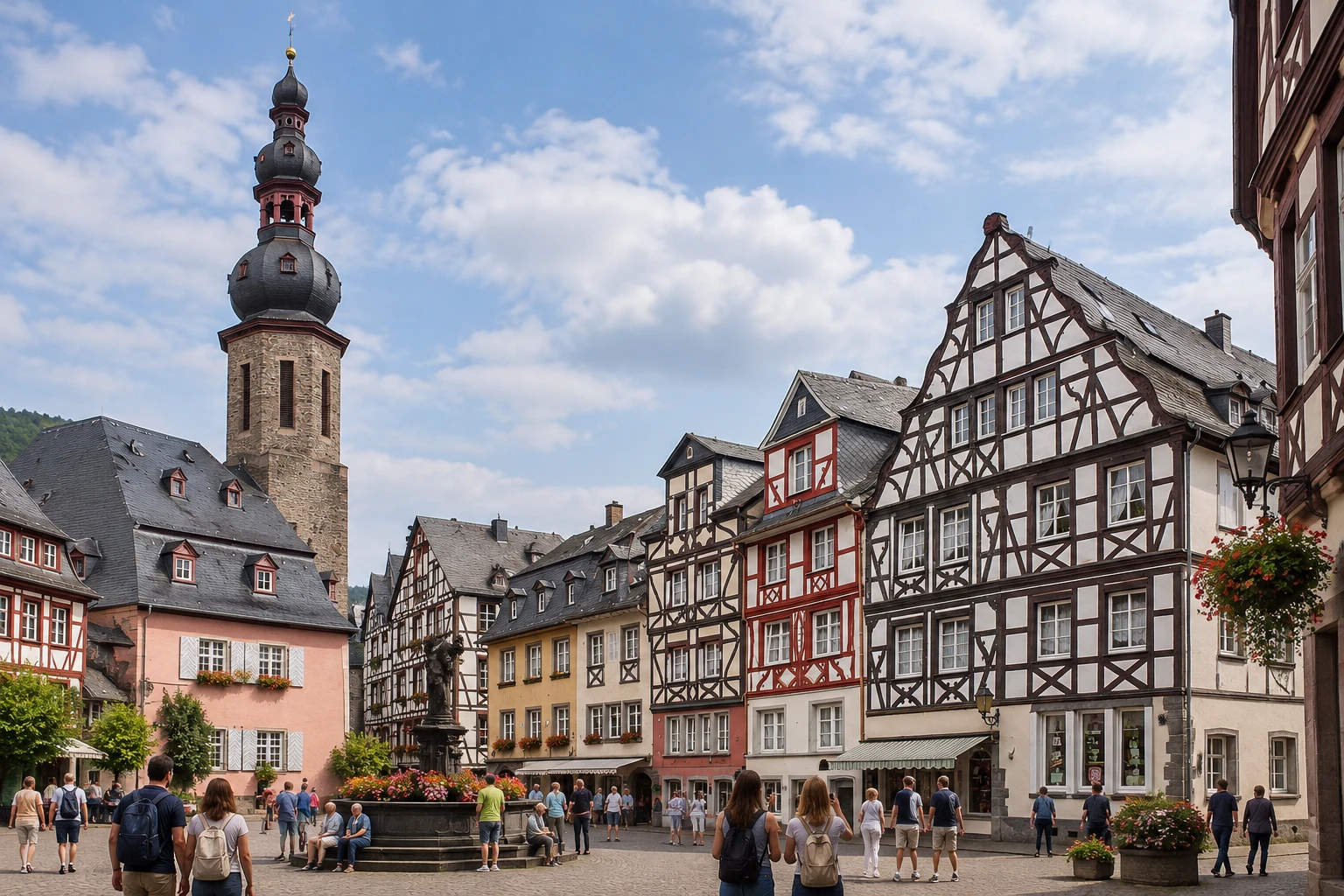
Medieval square of Bernkastel, surrounded by half-timbered houses from the 16th and 17th centuries, with the Renaissance town hall of 1608, Saint Michael's fountain of 1606 and, on the corner, the narrow Spitzhäuschen dating from 1416.
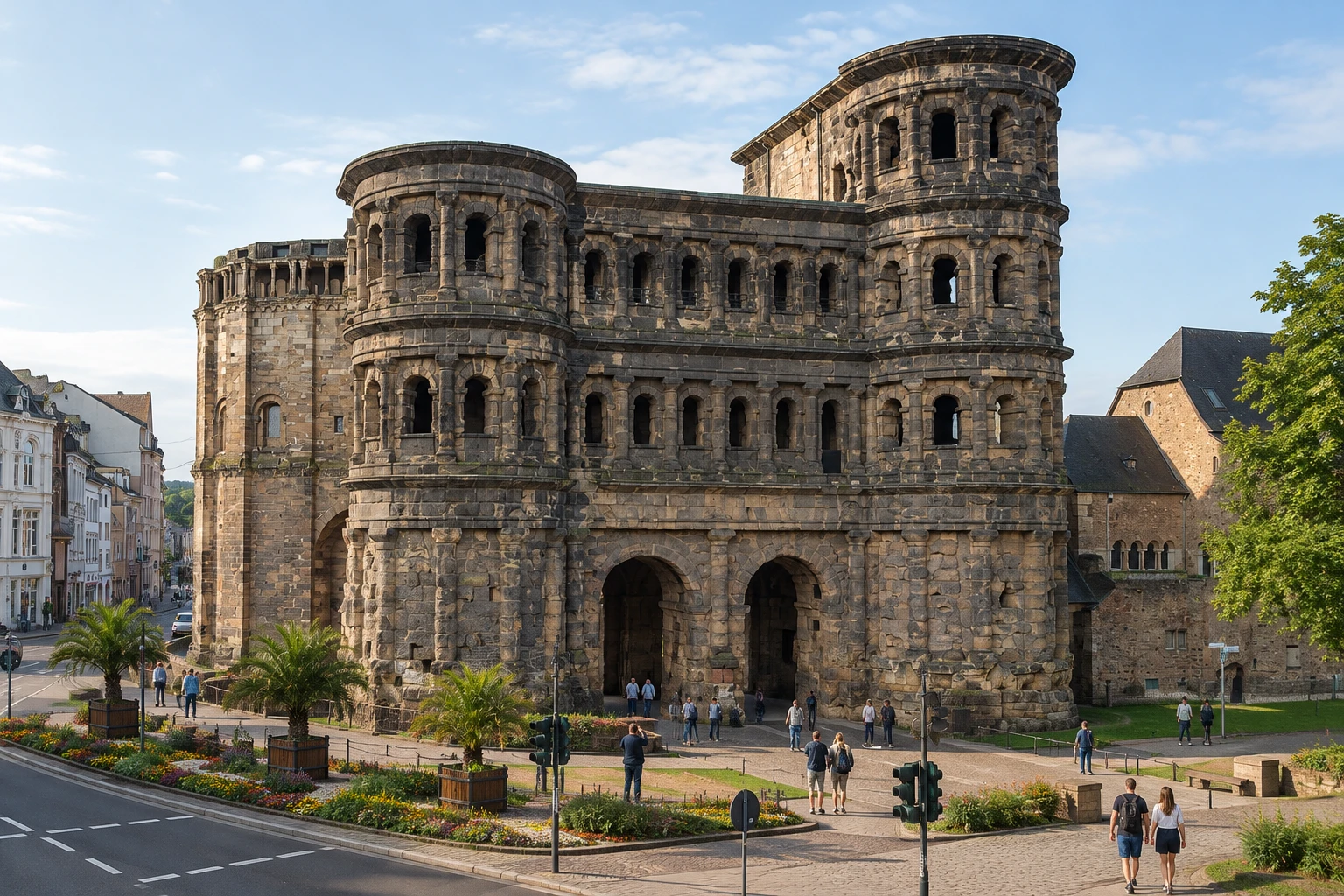
Roman sandstone gate built around AD 170, the only one of the four gates of the old Augusta Treverorum still standing. It became a church in the Middle Ages and was returned to its Roman form by order of Napoleon.
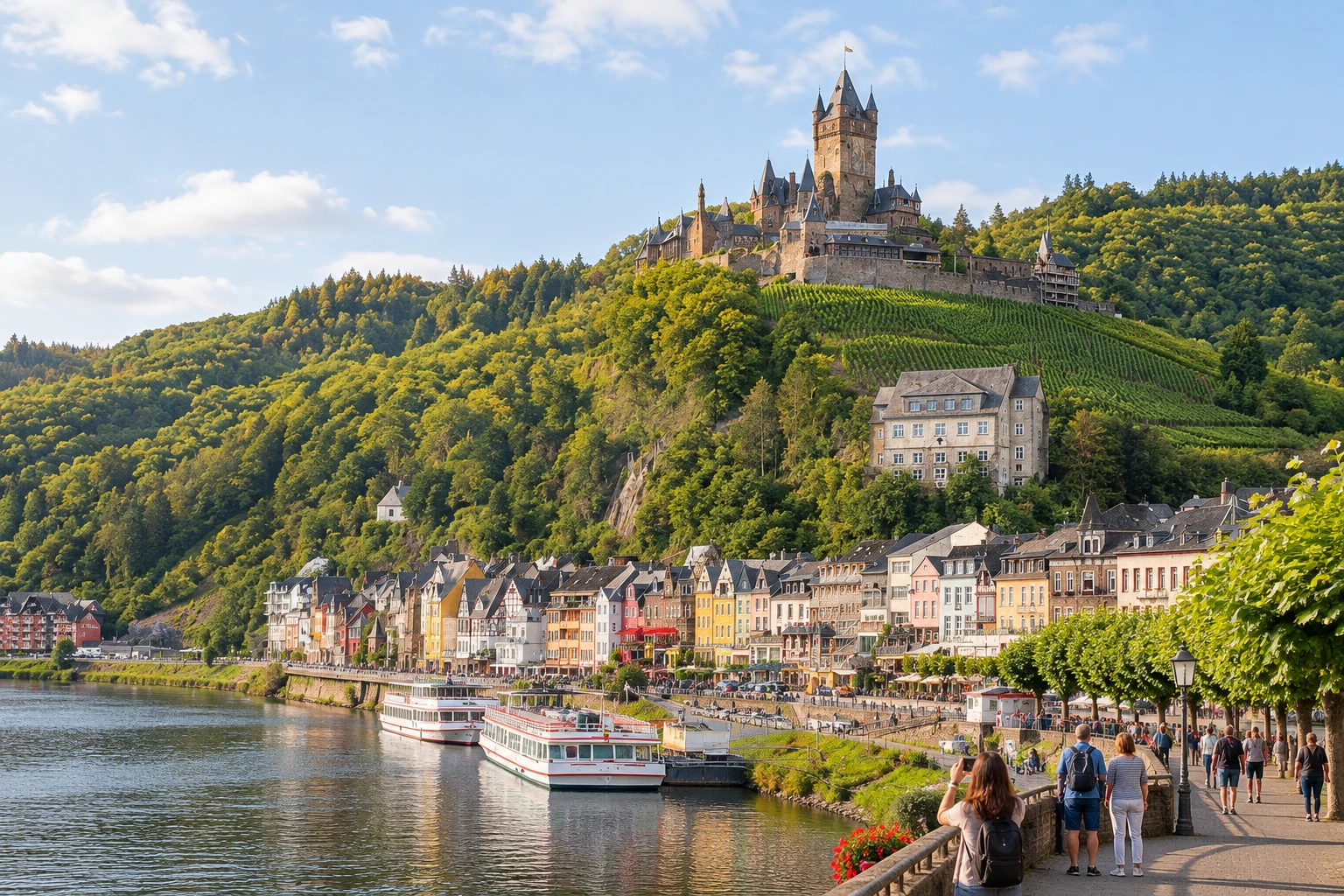
Castle on a hill about 100 meters above Cochem, of medieval origin, destroyed by the French in 1689 and rebuilt in a neo-Gothic style in the 19th century. Visits are by guided tour only.
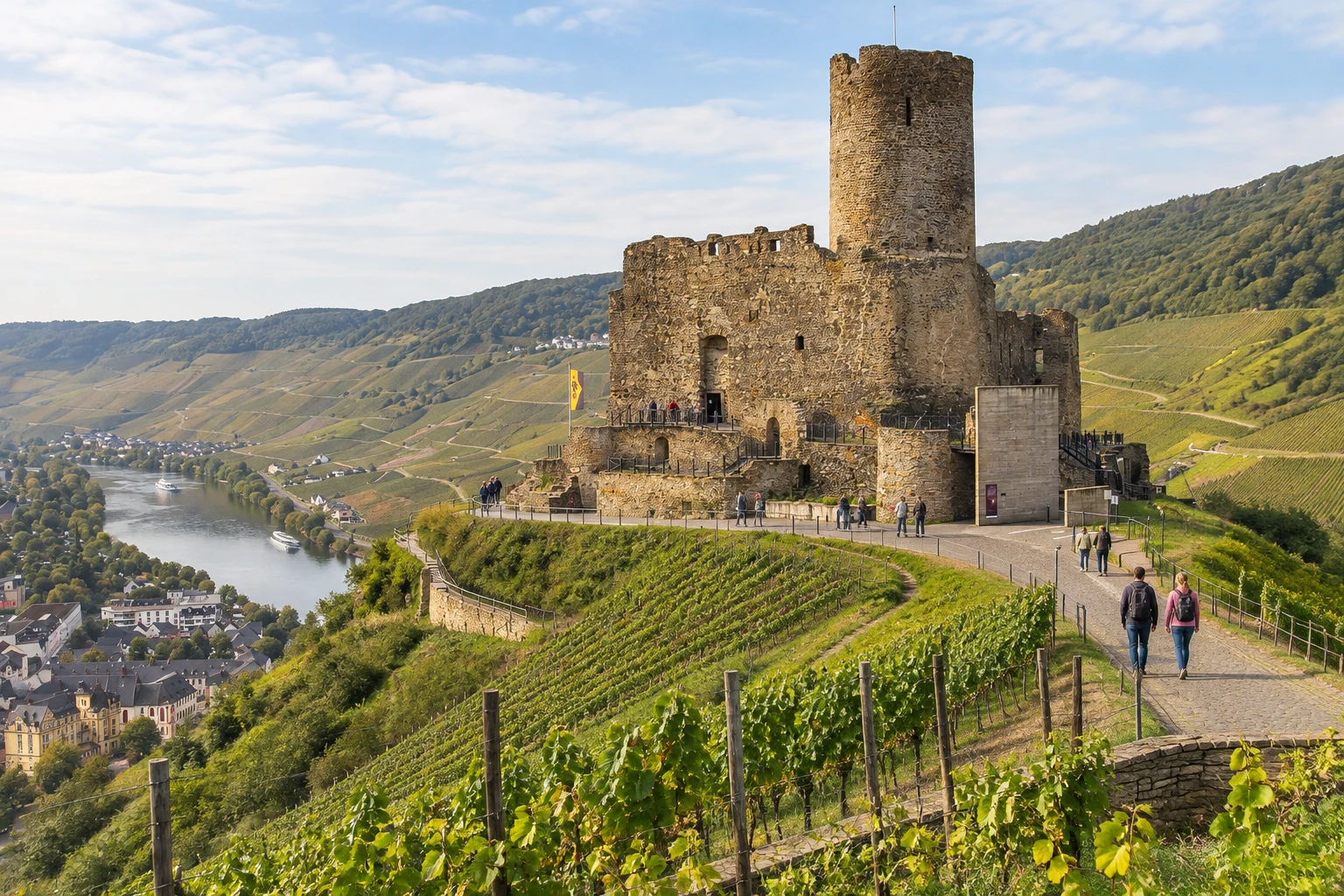
Castle ruin atop the hill above Bernkastel, former summer residence of the archbishops of Trier, destroyed by a fire in 1692. The tower and terrace are viewpoints over the Mosela bend.
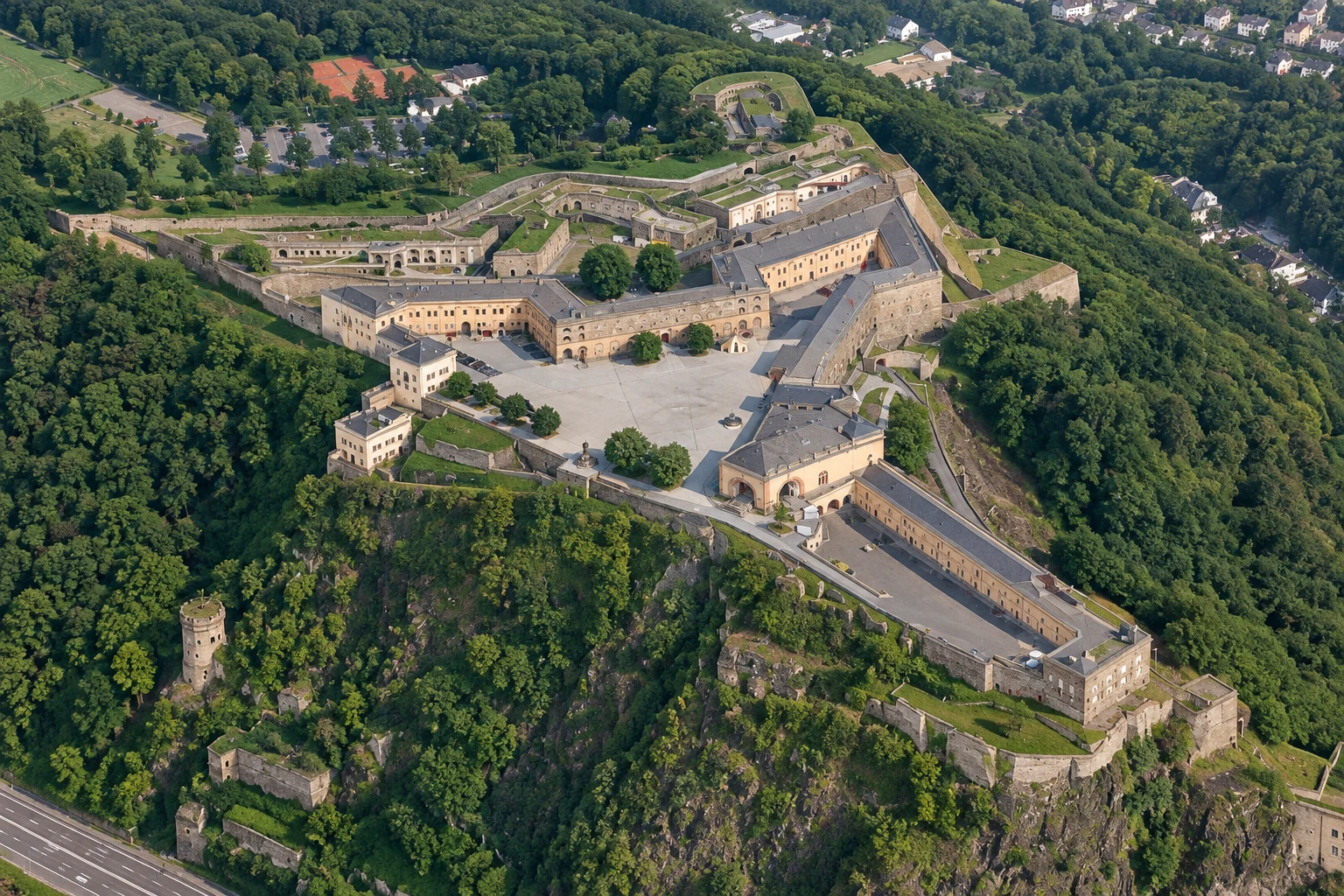
19th-century Prussian fortress high on the right bank of the Reno, opposite the Deutsches Eck, with walls, courtyards, the Landesmuseum Koblenz and viewpoints over the rivers’ confluence.
Cochem's market square, surrounded by half-timbered houses, with the baroque town hall from 1739 and the Martinsbrunnen. From here narrow lanes of the old town lead off and the path to the Mosela riverbank.
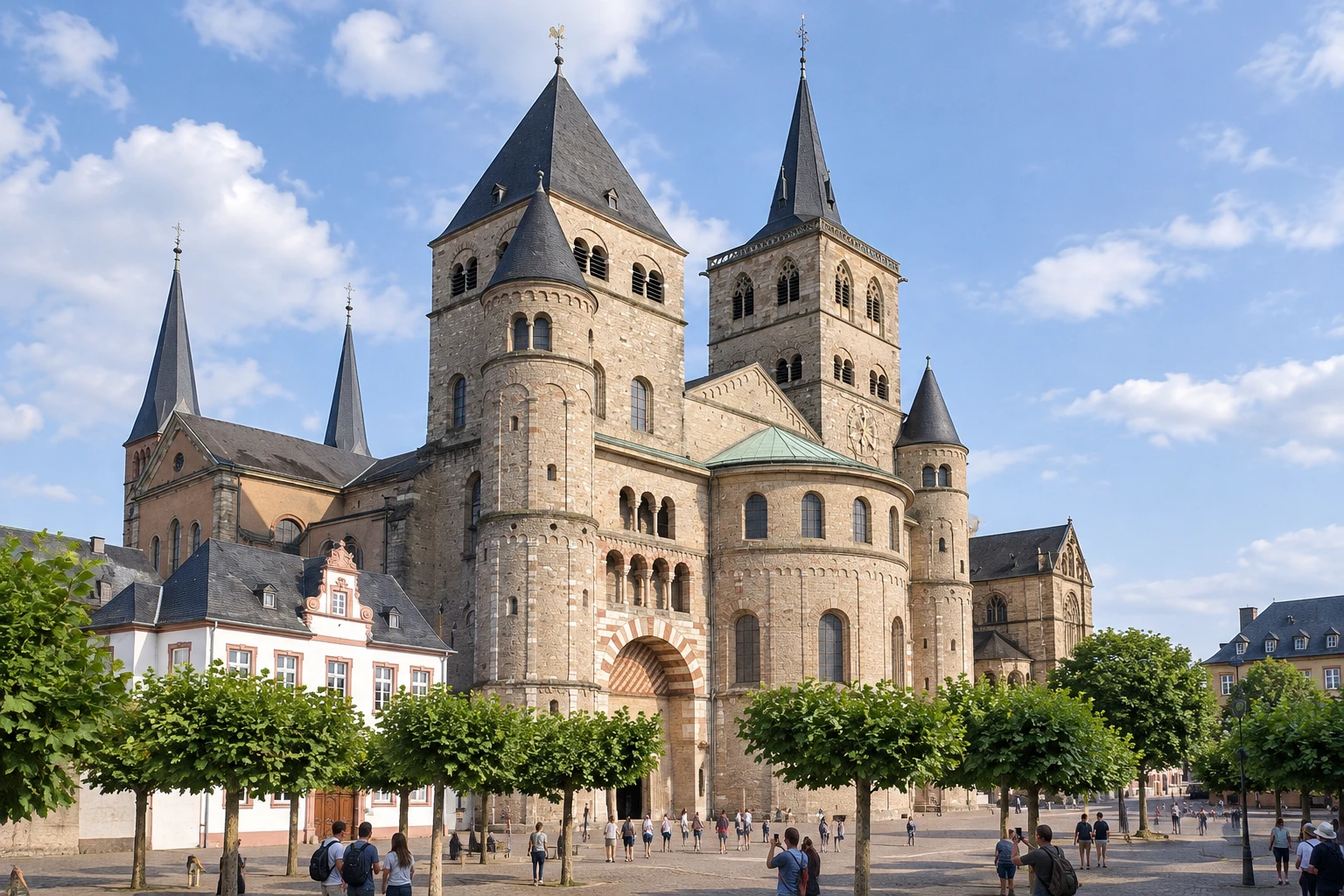
Catedral de São Pedro, with a Roman core from the 4th century, considered the oldest church in Germany still in use. It houses the Túnica Sagrada, a relic rarely displayed, and a treasury of sacred art.
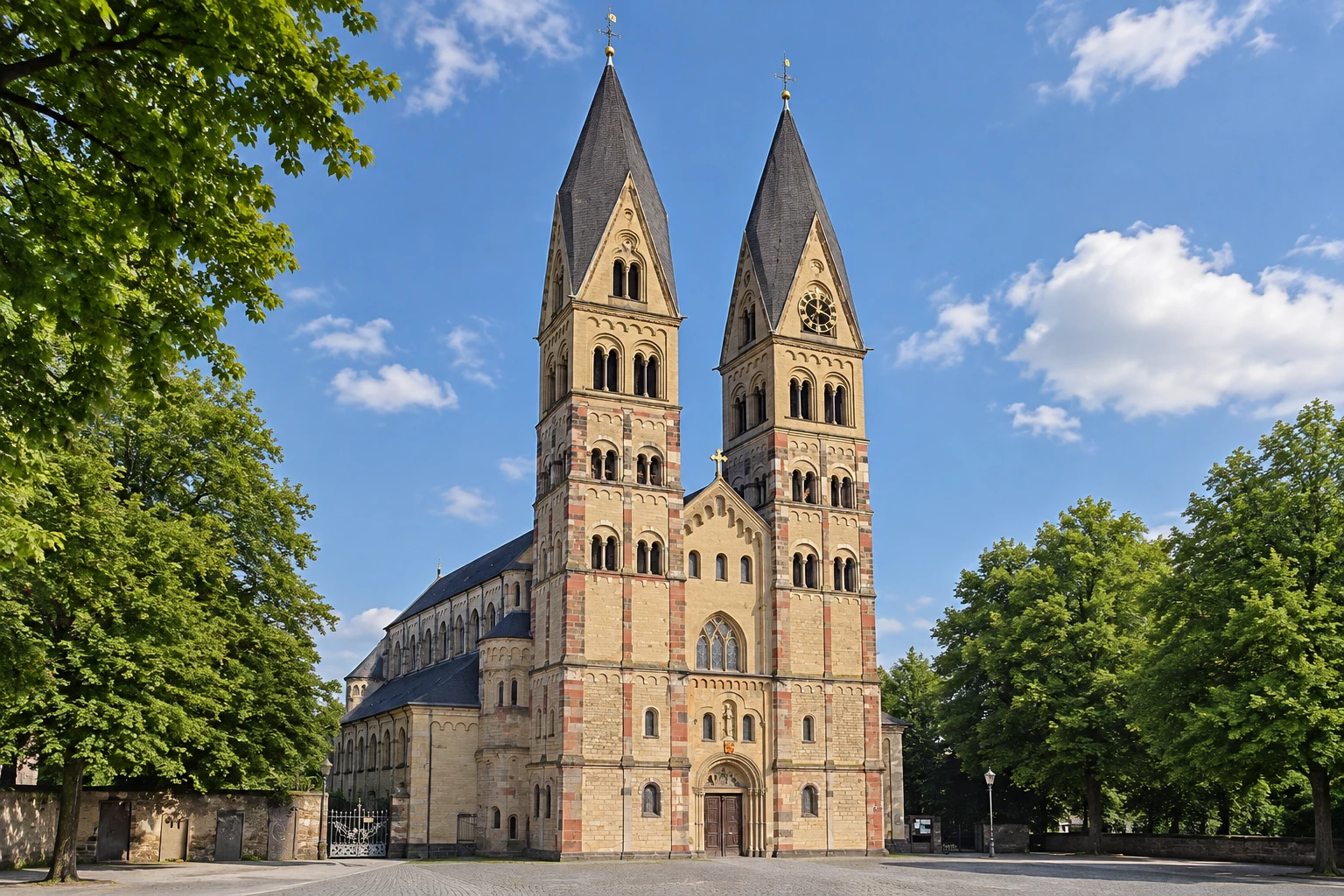
The oldest church in Koblenz, consecrated in 836, with a Romanesque façade of four towers, painted vaults and the fountain bearing Napoleon’s inscription in the square in front.
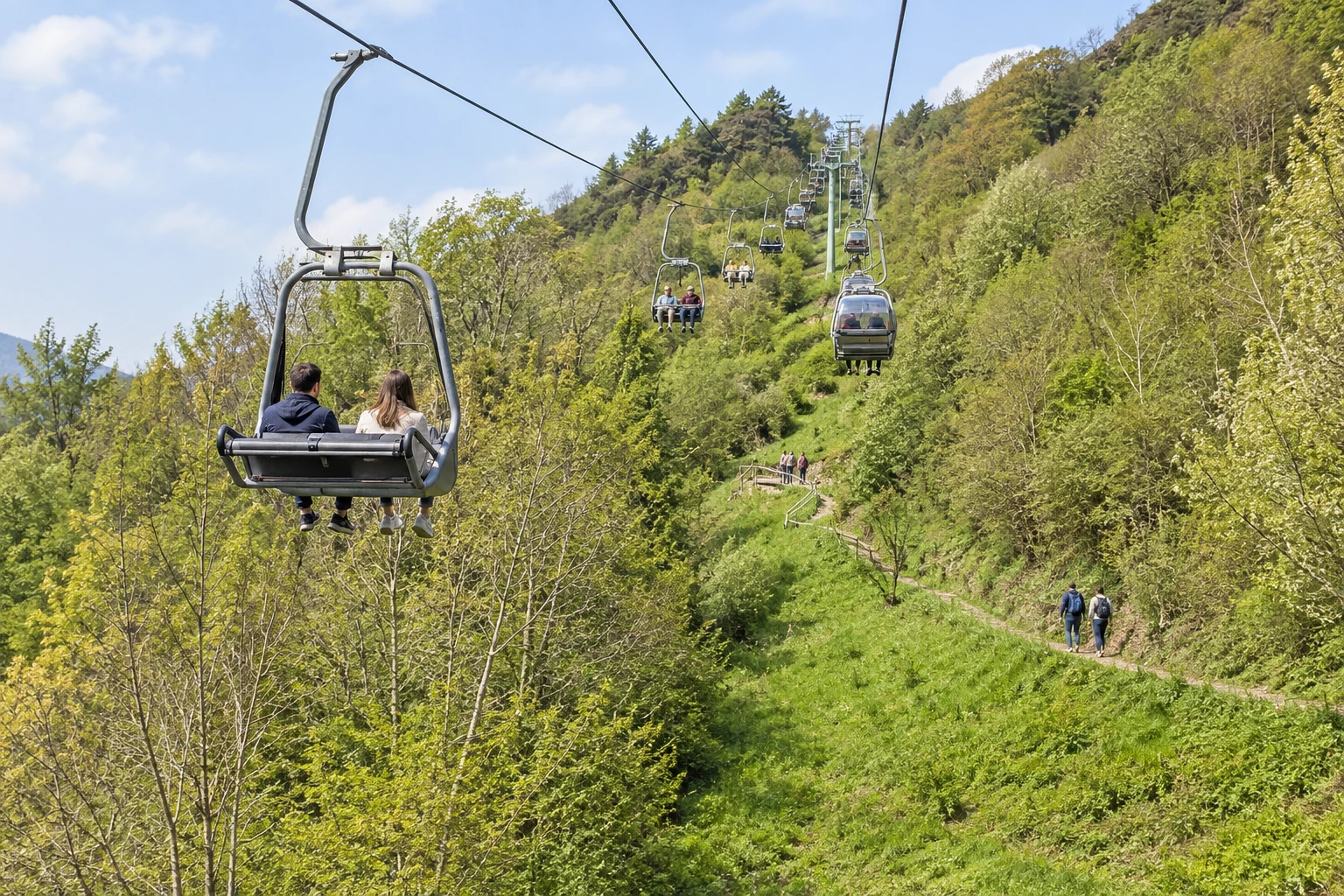
Chairlift-style cable car operating since 1955 that climbs to the Pinnerkreuz, a viewpoint with views over the Reichsburg and the valley. Along the way, on Endertstraße, is the Historische Senfmühle, a mustard mill.
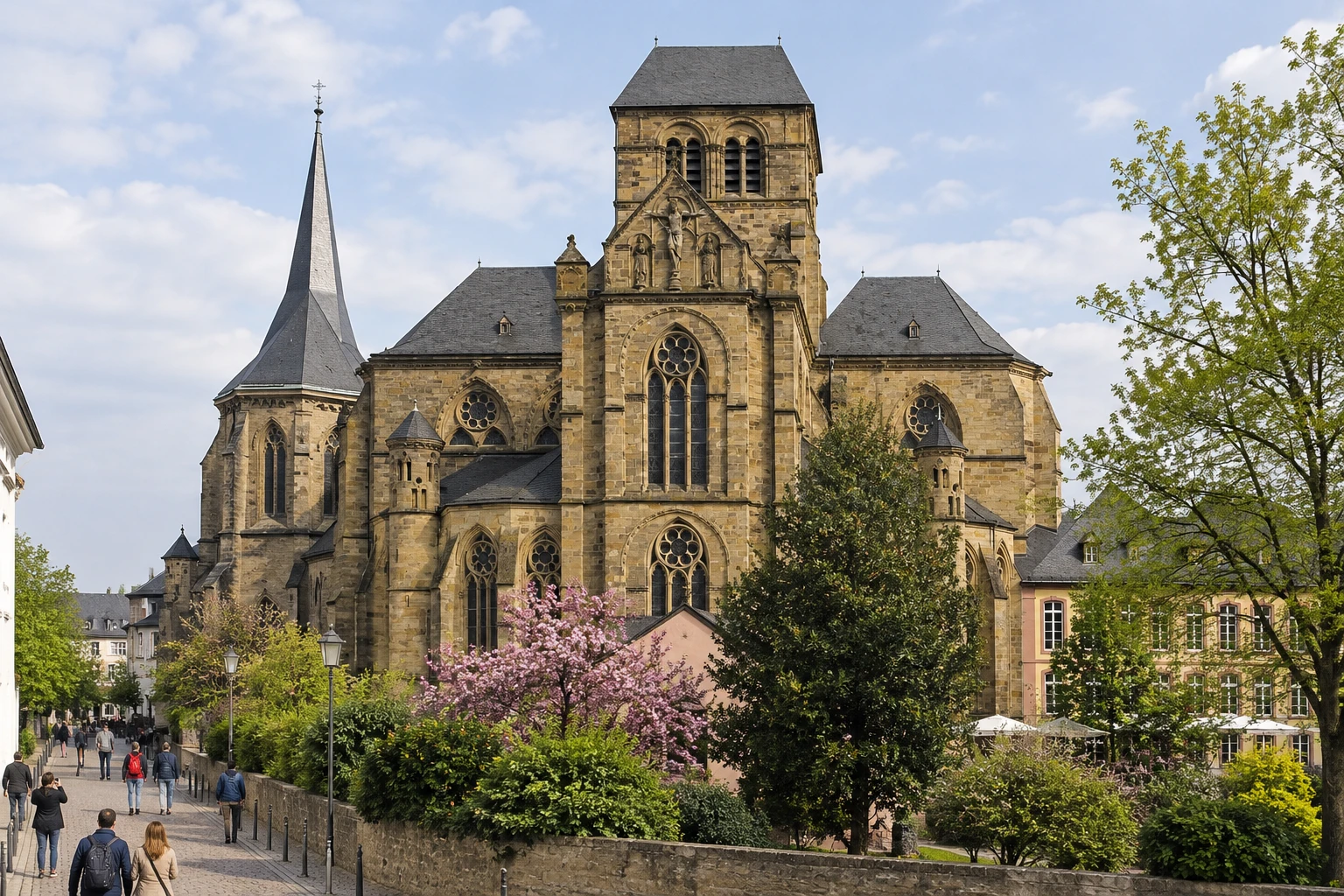
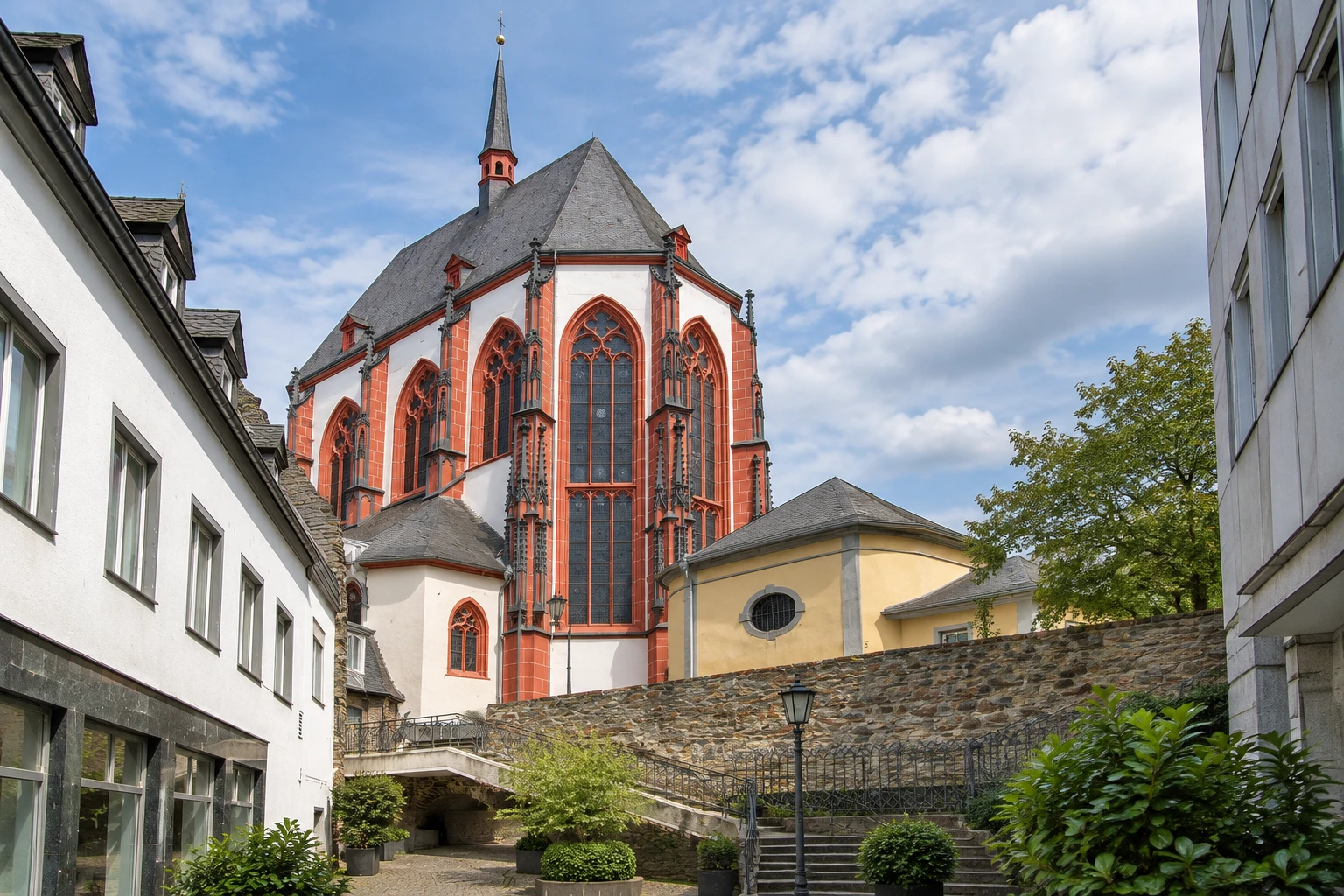
Church at the highest point of Koblenz's old town, with a Romanesque nave, a Gothic choir and the two onion‑domed towers that define the city's skyline.
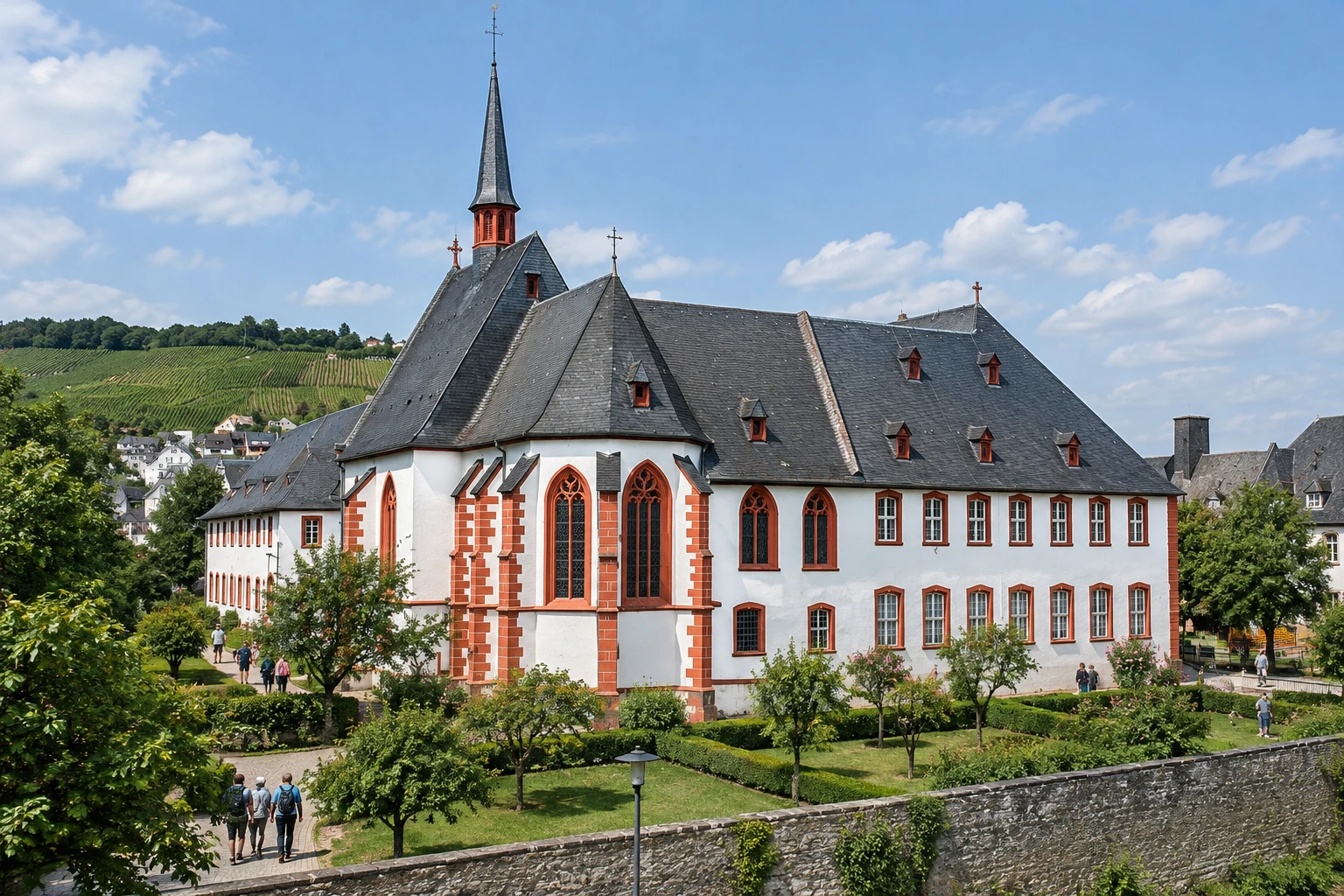
Gothic hospice founded in 1458 by the cardinal and philosopher Nicolau de Cusa, born in Kues. It has a cloister, a chapel containing the founder's heart and a library of medieval manuscripts, and it still functions as a home for the elderly.
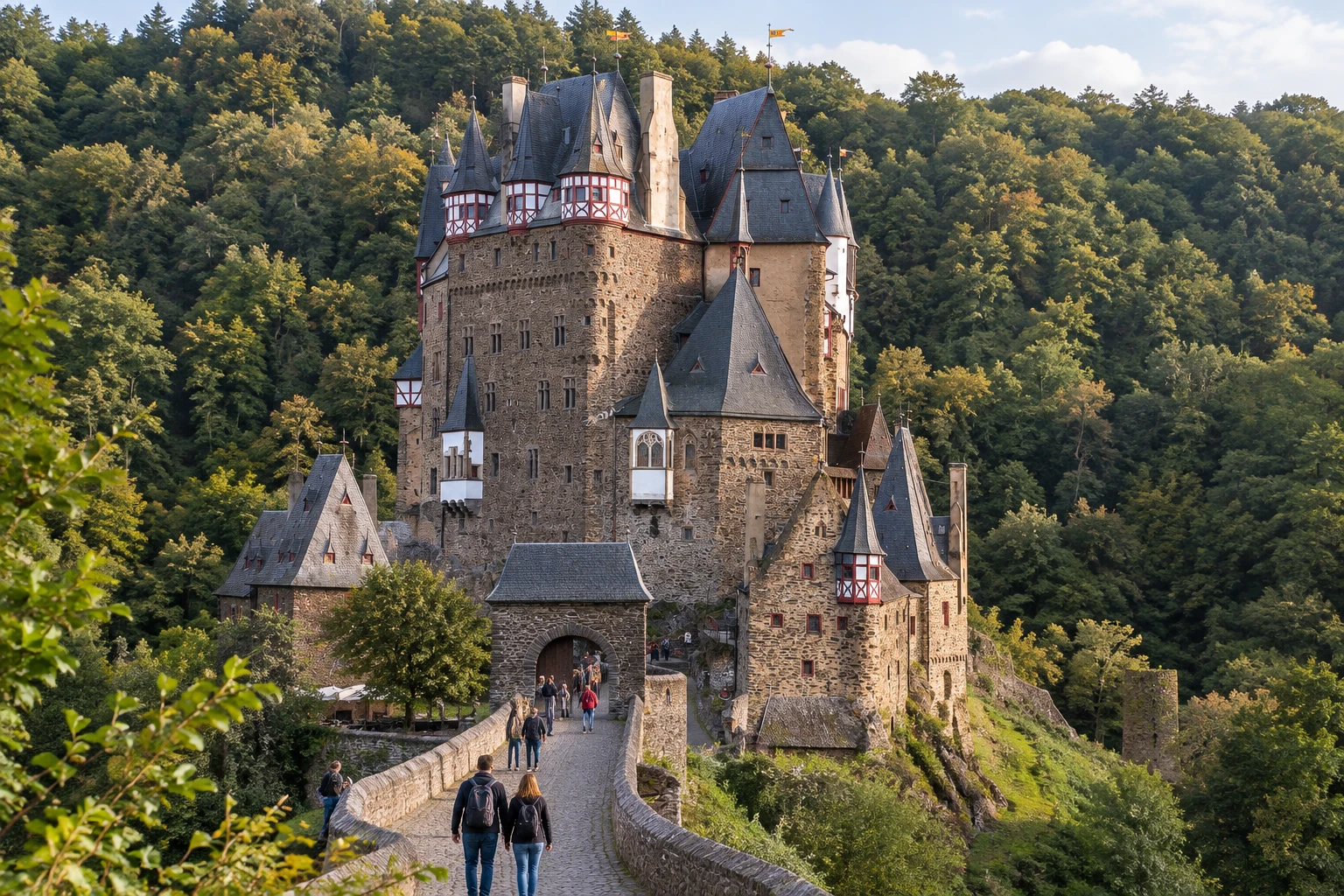
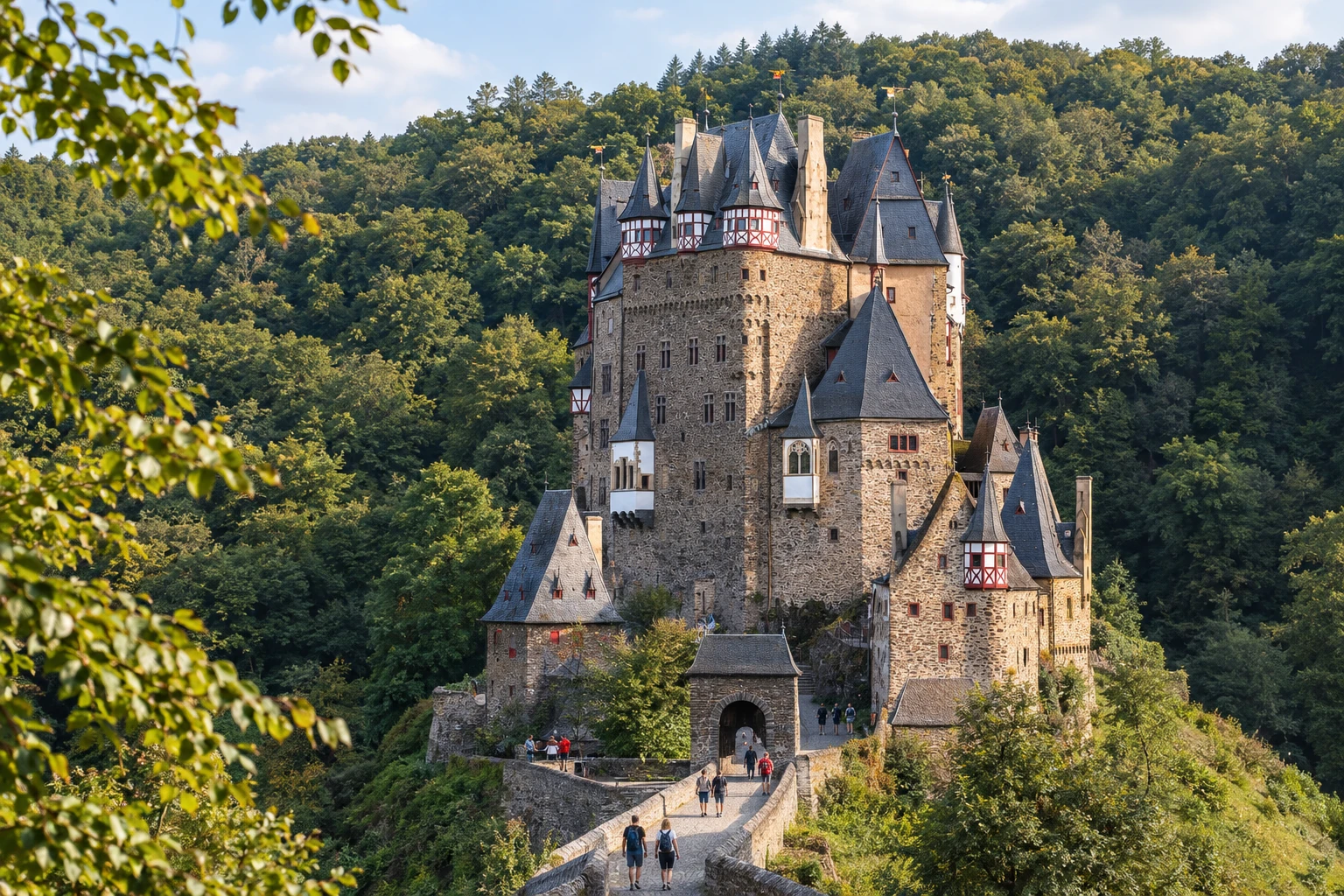
Medieval castle hidden in a wooded valley above the Mosela, with construction dating to before 1157 and never destroyed. It still belongs to a branch of the Eltz family and contains a treasure with items of gold, silver and suits of armor.
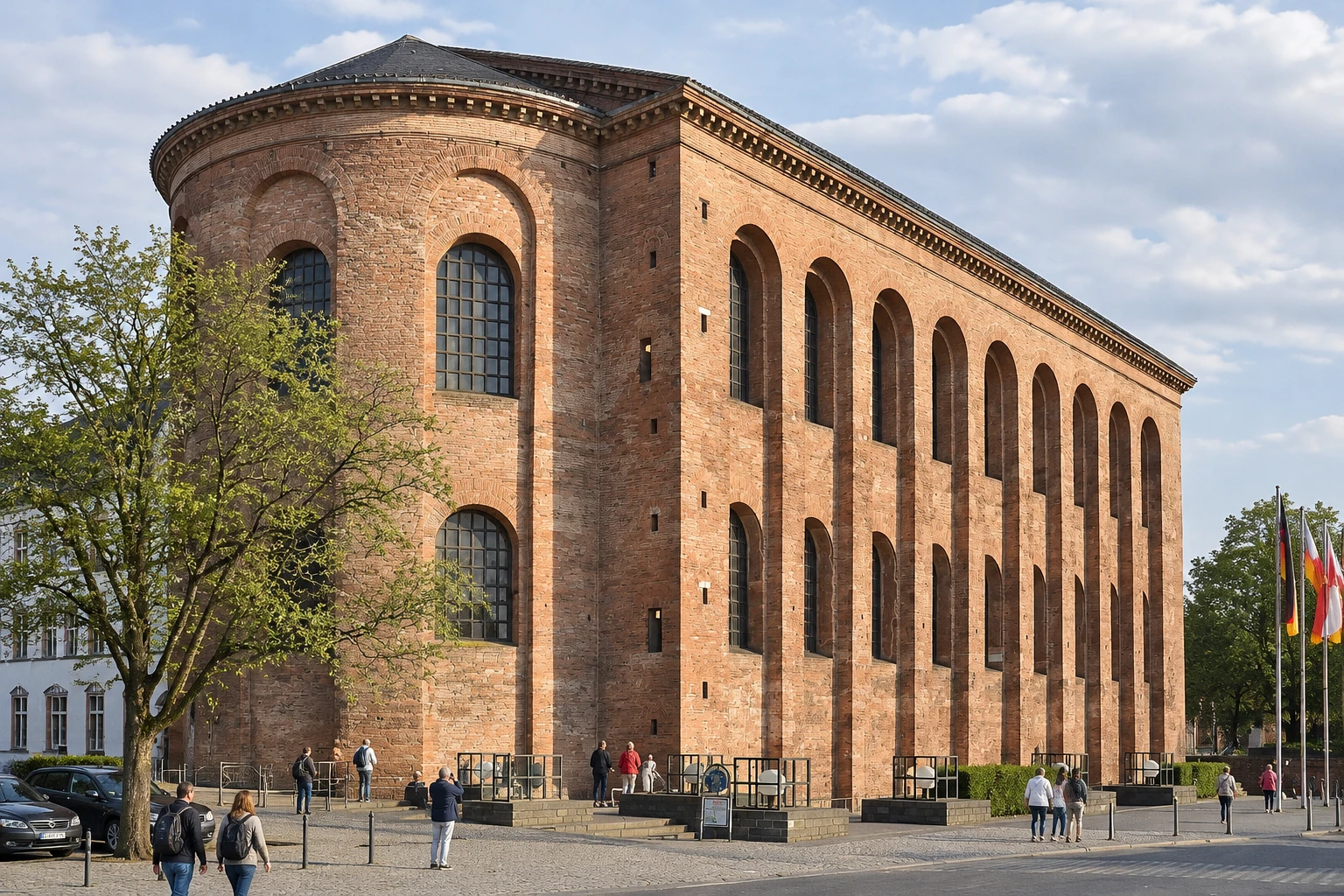
Former audience hall of Emperor Constantine's palace, from the early 4th century, measuring 67 meters long and 33 meters high. Since 1856 it has been used as a Protestant church.
Church at the highest point of Koblenz's old town, with a Romanesque nave, a Gothic choir and the two onion‑domed towers that define the city's skyline.
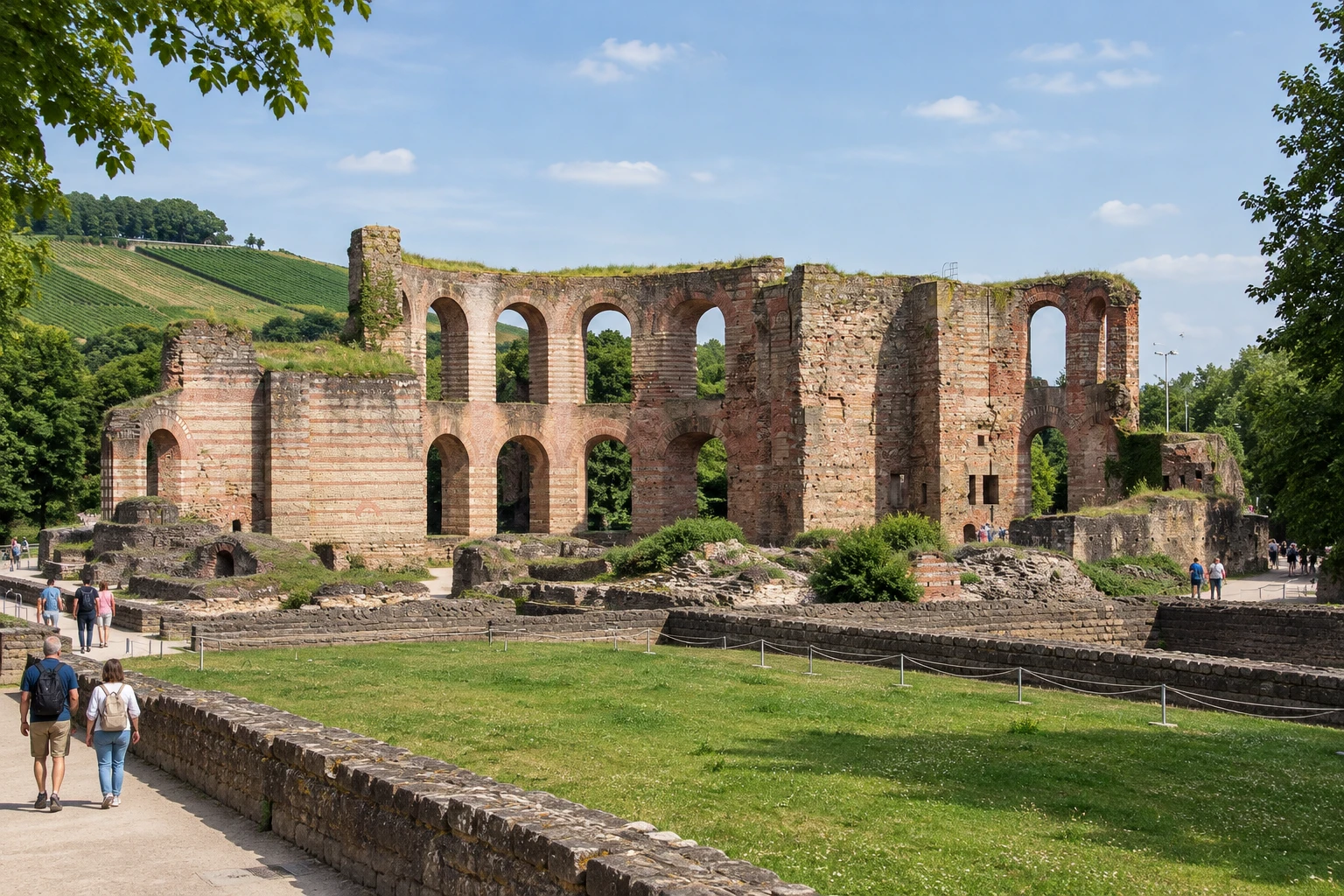
Imperial baths begun around the year 300 and never completed as bathing facilities. They became a Roman barracks and, in the Middle Ages, part of the city wall. The underground service galleries can be explored on foot.
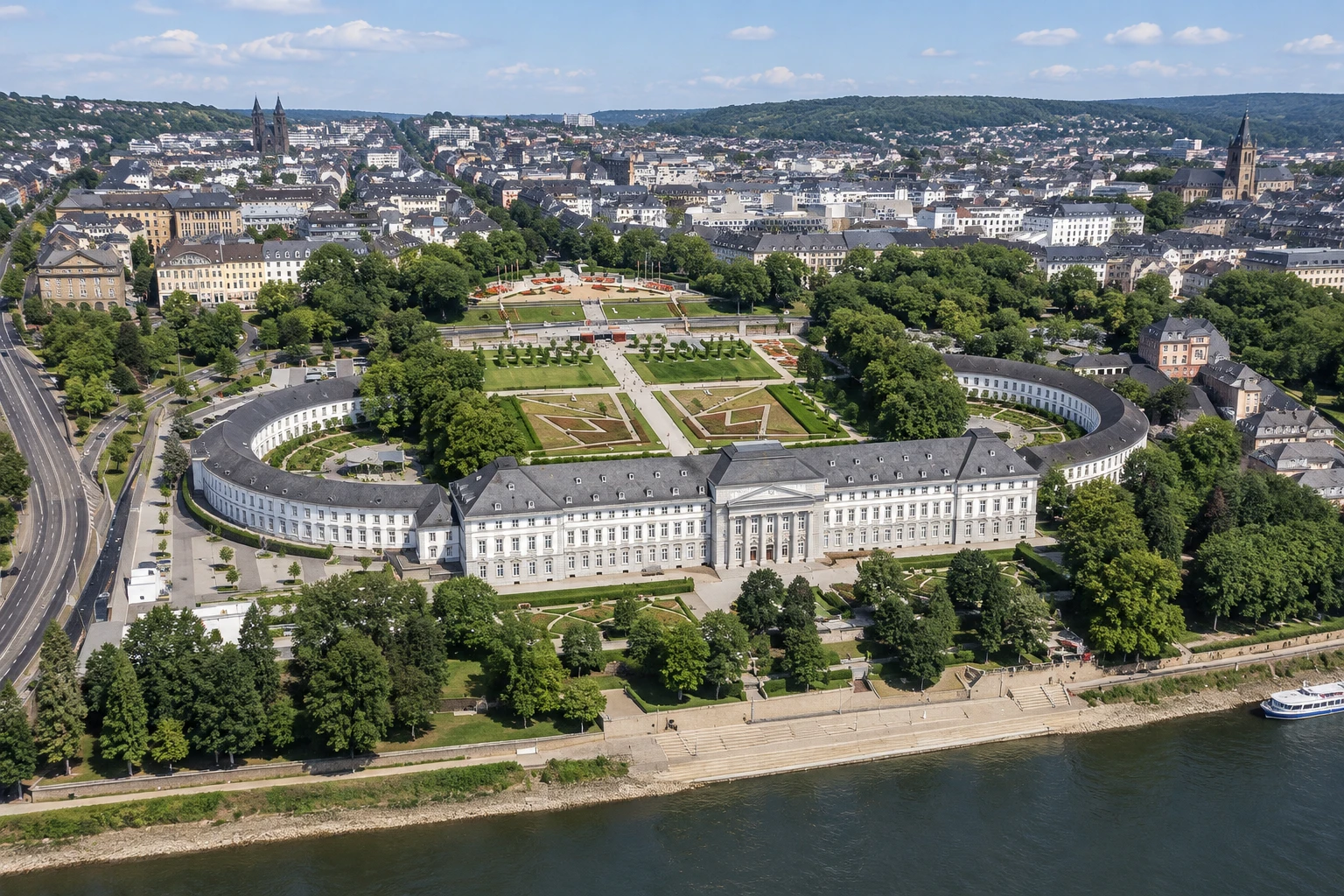
Neoclassical palace of the last prince‑elector of Trier, from 1786, on the banks of the Reno, with open gardens and the riverside promenade.
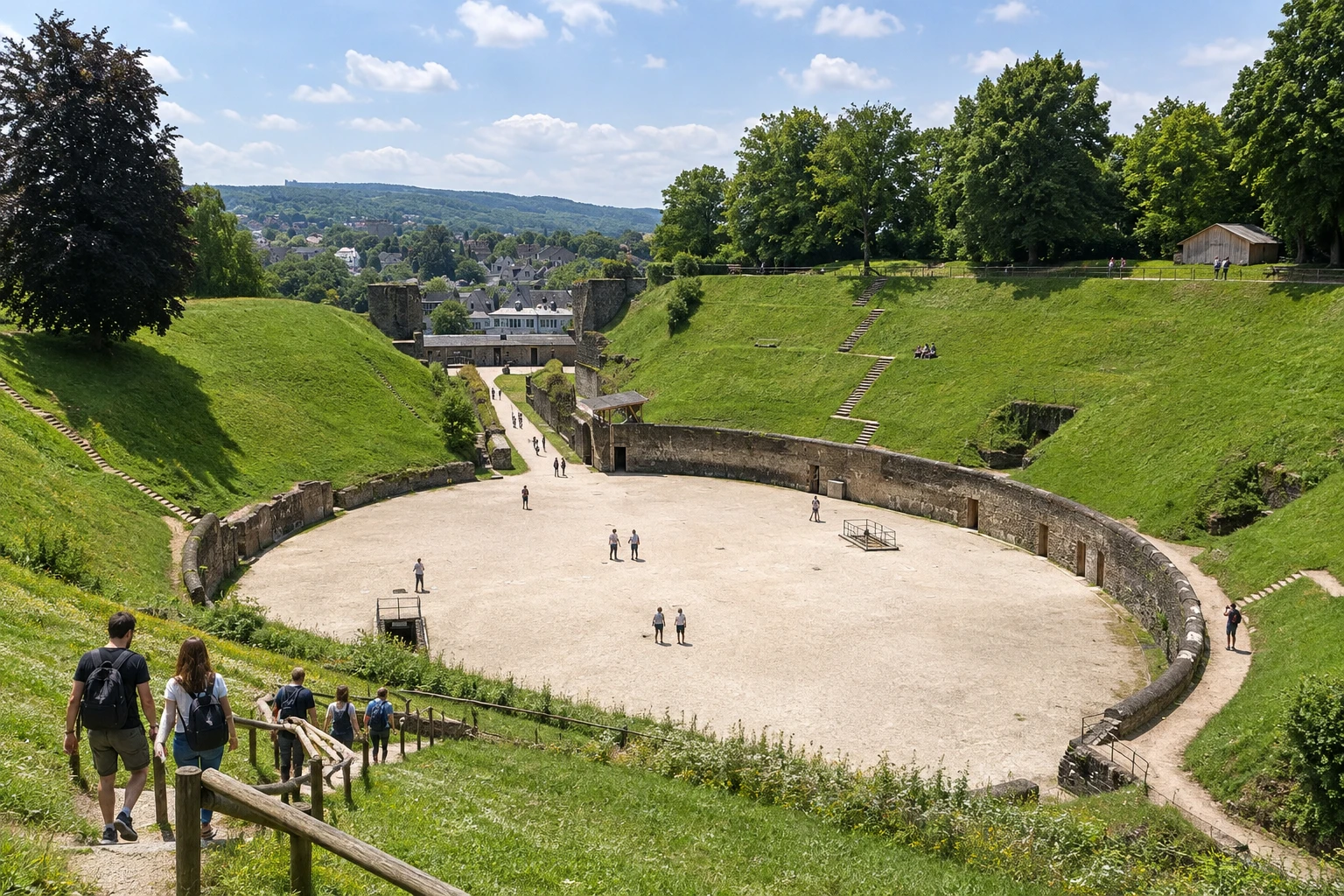
2nd-century Roman amphitheatre, with capacity for about 20,000 people, used for gladiator fights and animal spectacles. The cellar beneath the arena can be visited.
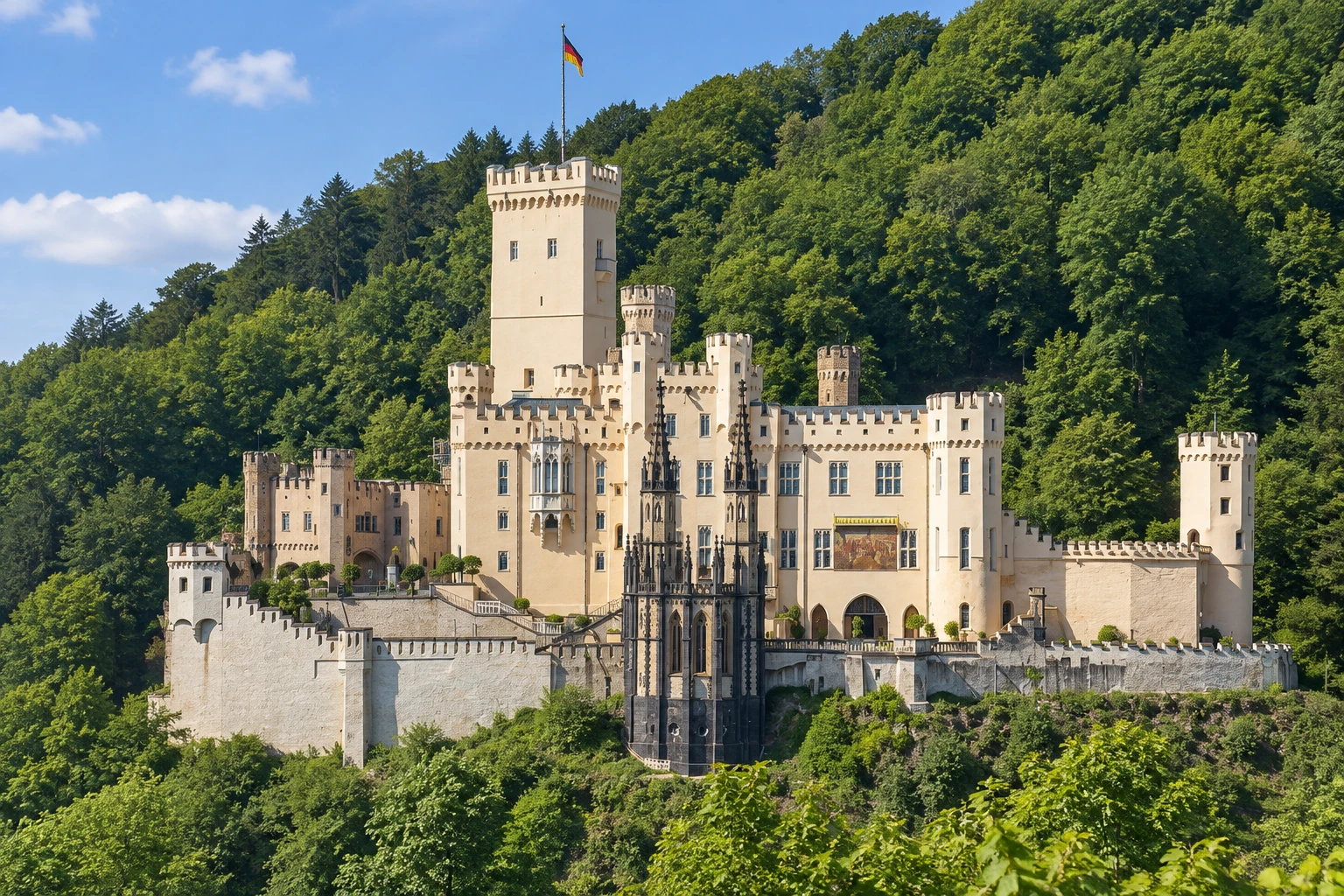
Neo‑Gothic castle on the left bank of the Reno, south of Koblenz, rebuilt from 1836 for the Prussian crown prince, with decorated rooms, a chapel and a garden.
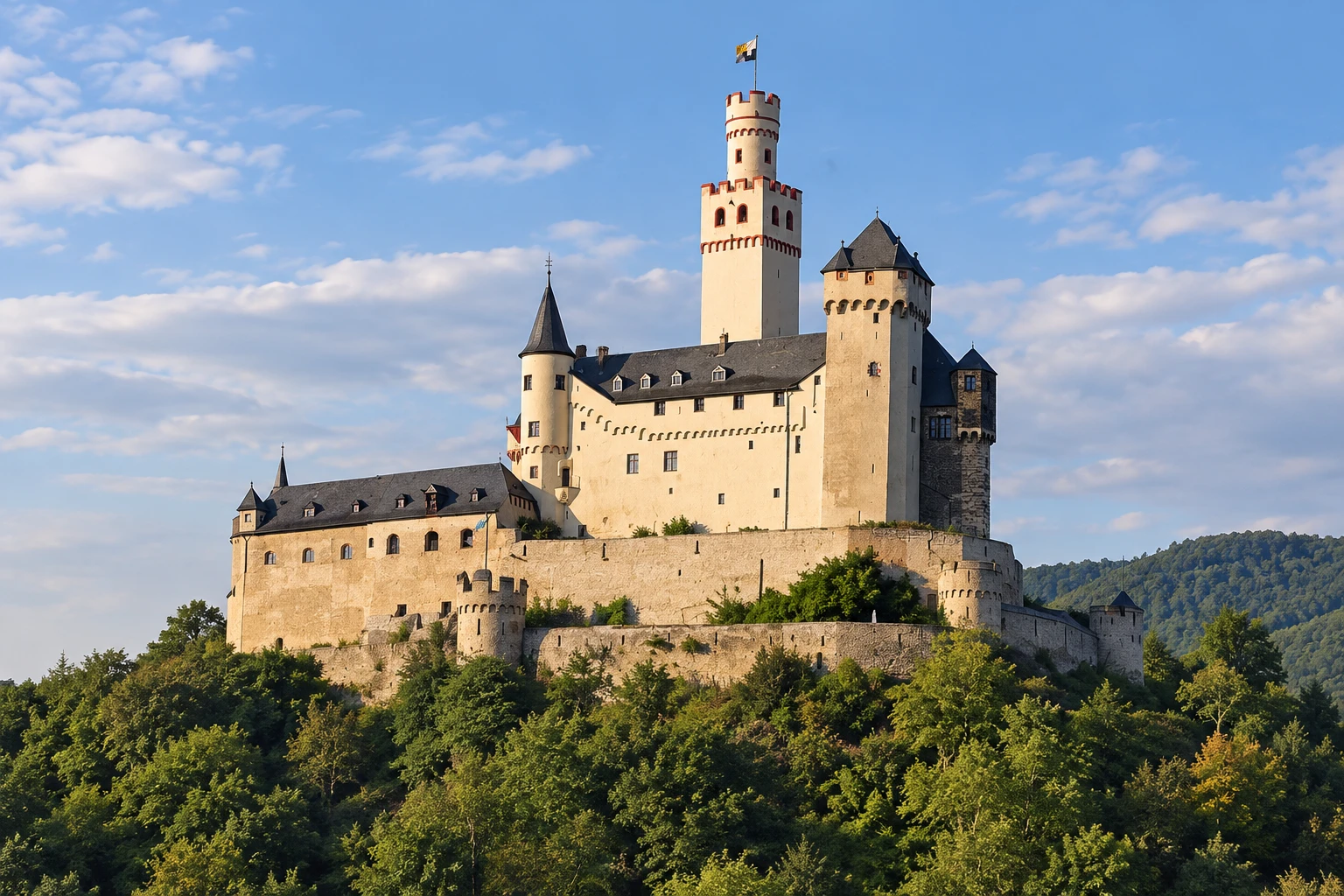
Medieval hilltop castle above Braubach, overlooking the Reno, the only hill castle in the Middle Rhine Valley that was never destroyed, with guided visits to the rooms, the kitchen and the herb garden.
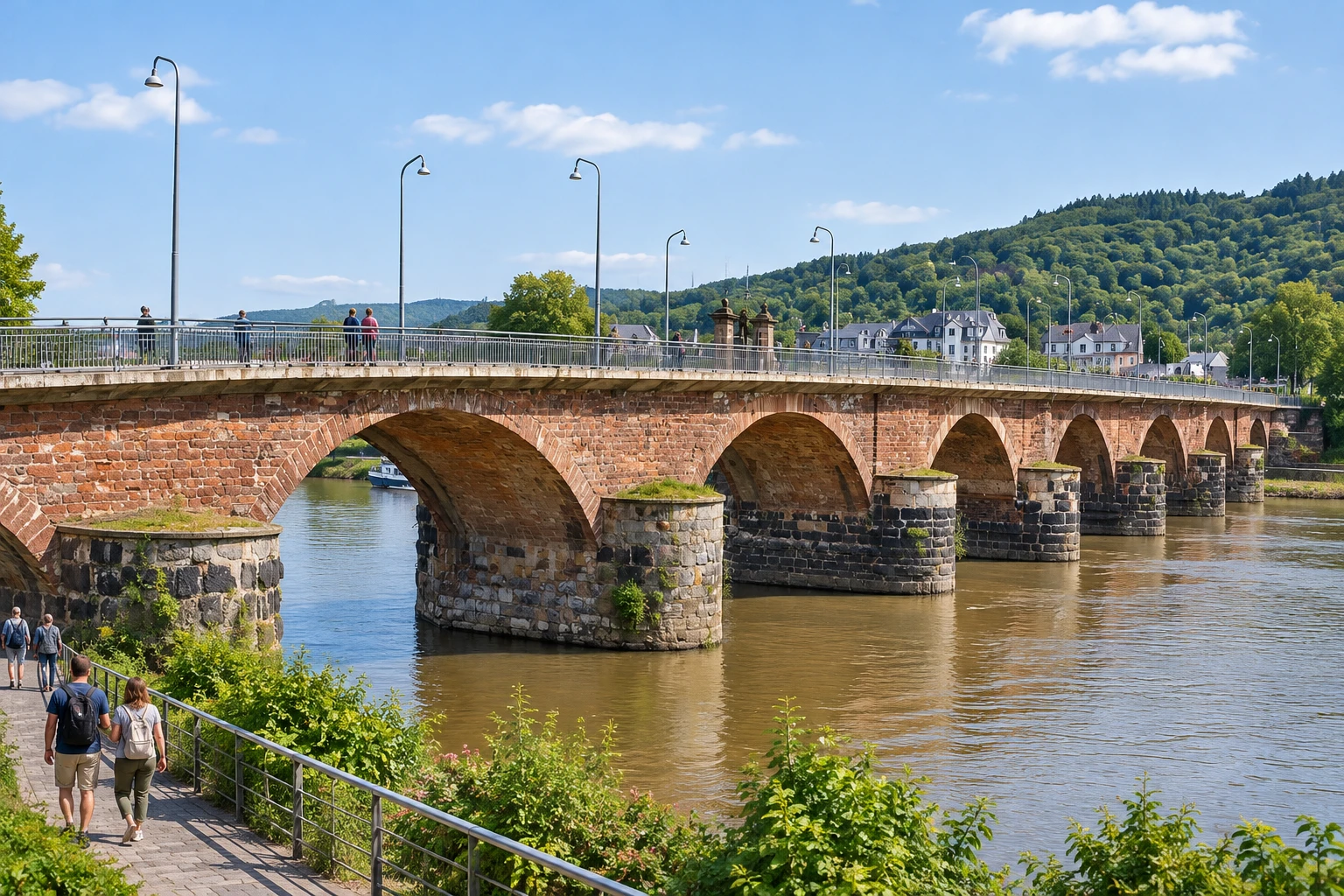
Bridge over the Mosela with stone piers built between 142 and 150 AD, considered the oldest bridge in Germany. It remains open to traffic.
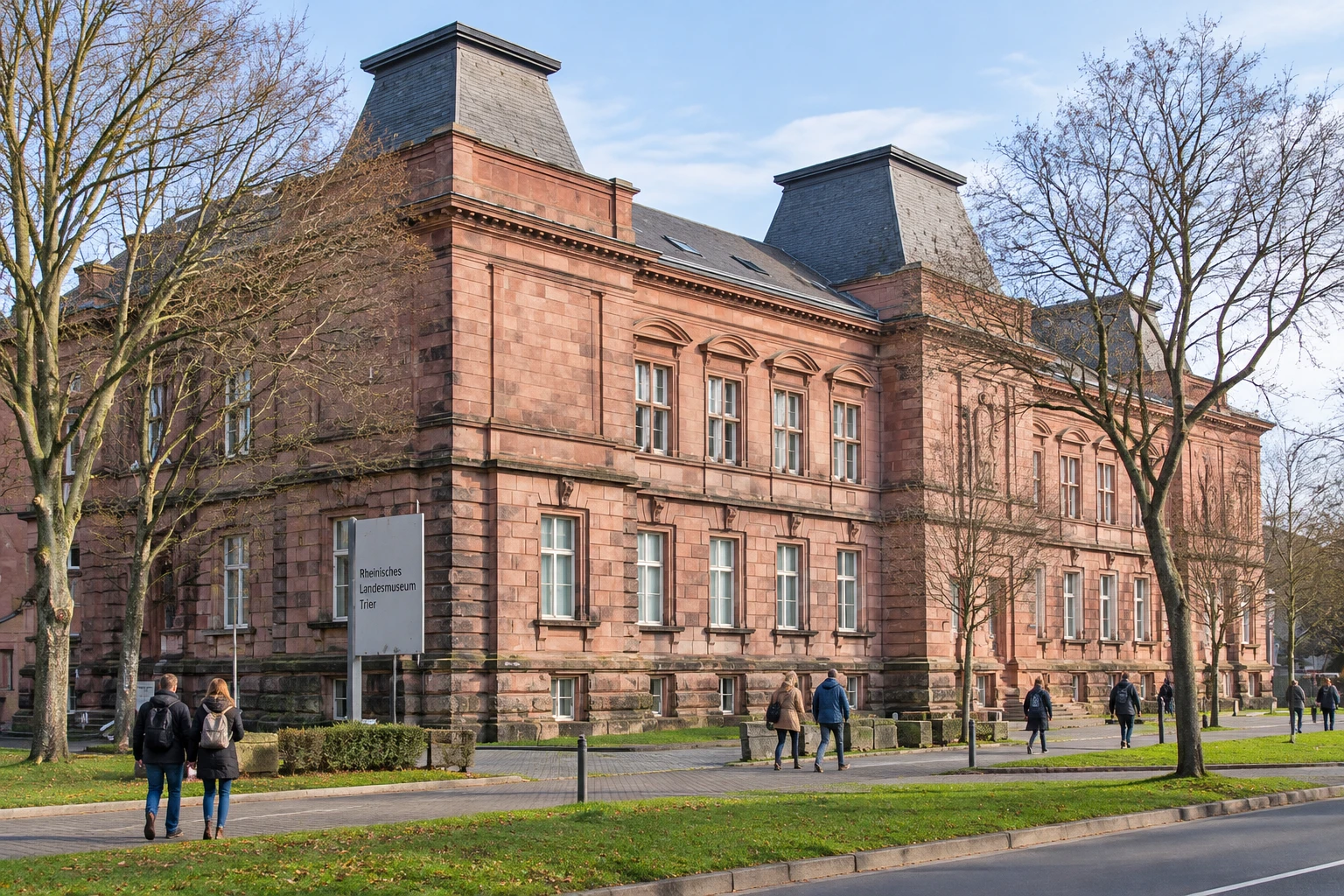
Archaeological museum with the largest collection of Roman mosaics north of the Alps, the wine boat of Neumagen and the Trier treasure of gold coins, with over 2,600 pieces.
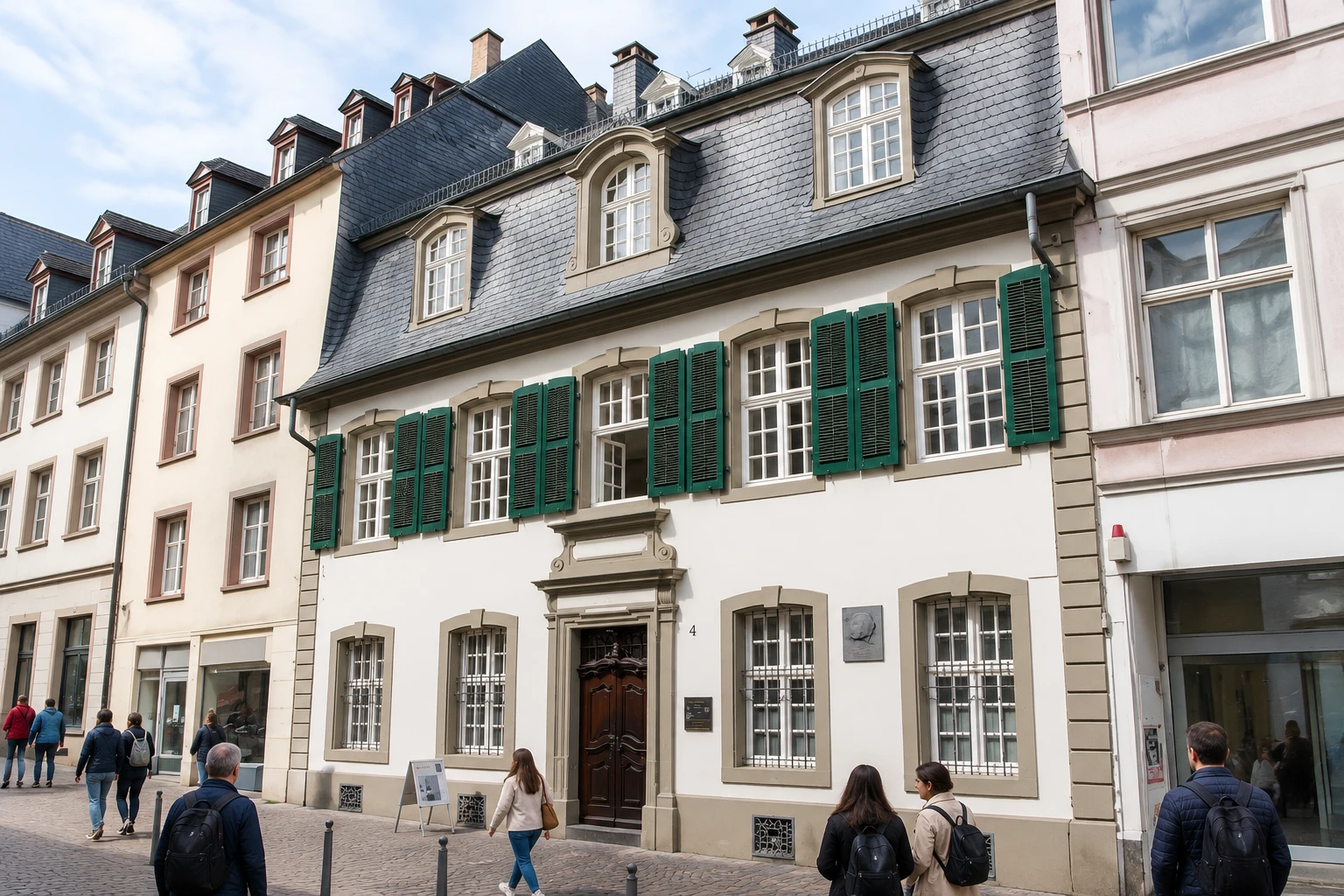
Baroque house from 1727 where Karl Marx was born on 5 May 1818; today it is a museum about his life, his ideas and their influence, maintained by the Friedrich Ebert Foundation.
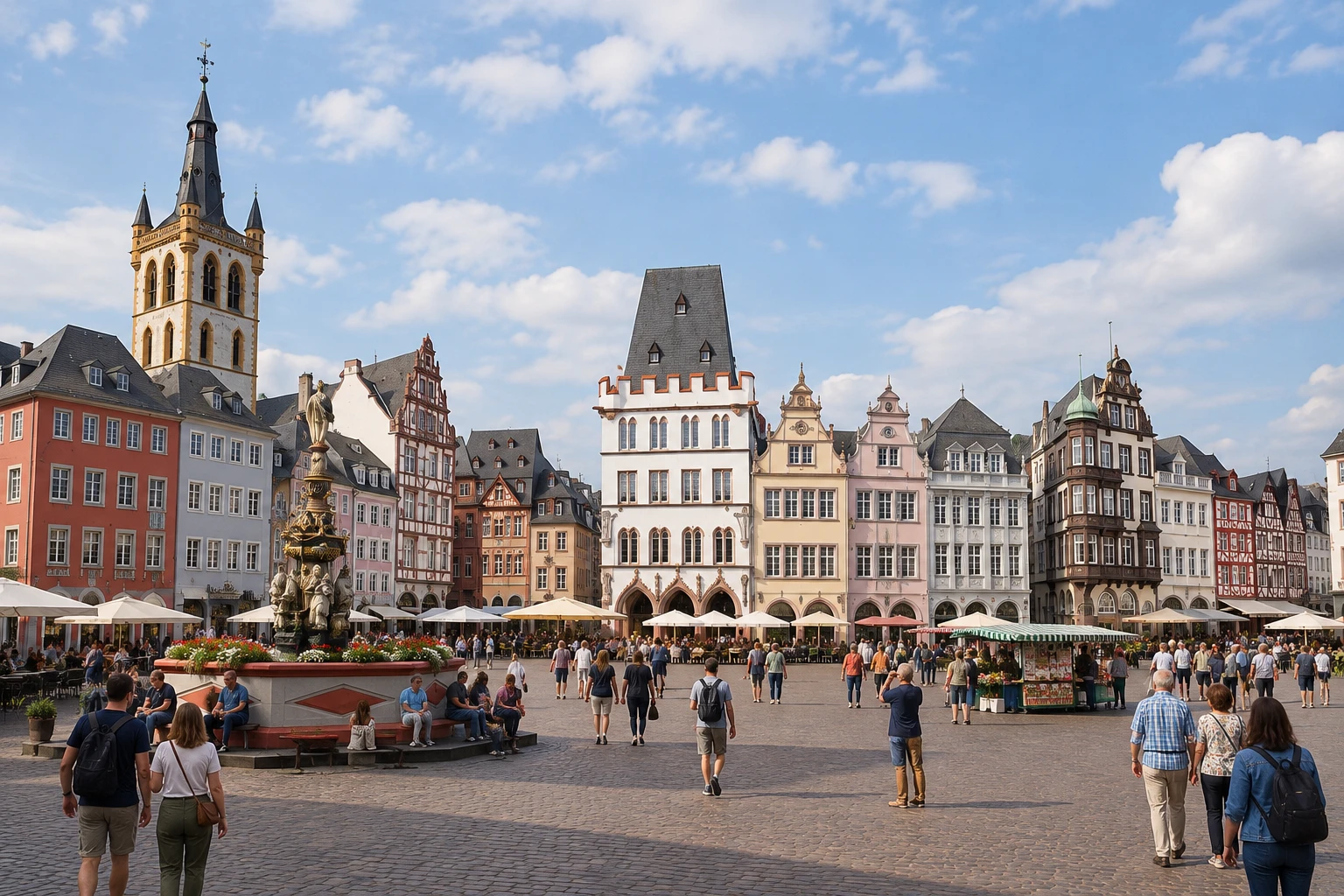
Main square of Trier, with the market cross of 958, the St. Peter fountain of 1595, the Steipe and façades from various periods. From here you can walk to the Porta Nigra, the cathedral and the Church of St. Gangolf.
To choose before you go
The details of each tour (where it leaves from, what it includes, the best time) are in the complete guide.
Get your questions answered
The guide's itineraries cover 2, 3 and 5 days: in 2 days, Cochem, the castle and the boat to Beilstein; in 3 days, Cochem, Burg Eltz and Roman Trier; in 5 days, Cochem, Bernkastel-Kues and Trier with time.
Arrival, Reichsburg and cable car. The overnight flight from Brazil arrives in Frankfurt in the morning. From the long-distance station at the airport, the train takes about 1 h 20 to Koblenz and from there the regional service follows the Mosel up to Cochem in about 40 minutes: by early afternoon you can already drop your bag. Walk up to Reichsburg Cochem for the mid‑afternoon guided tour and descend via the viewpoint path. At the end of the day, take the Cochemer Sesselbahn up to Pinnerkreuz to see the town and the castle in the low light, and finish on the Moselpromenade and the Marktplatz with an early dinner.
It generally rains less from February to April. The rainiest months are usually July and December. The guide covers each month, with the weather and what changes on the tours.
To plan