Bacharach · Rhineland-Palatinate · Castle
Stahleck Castle
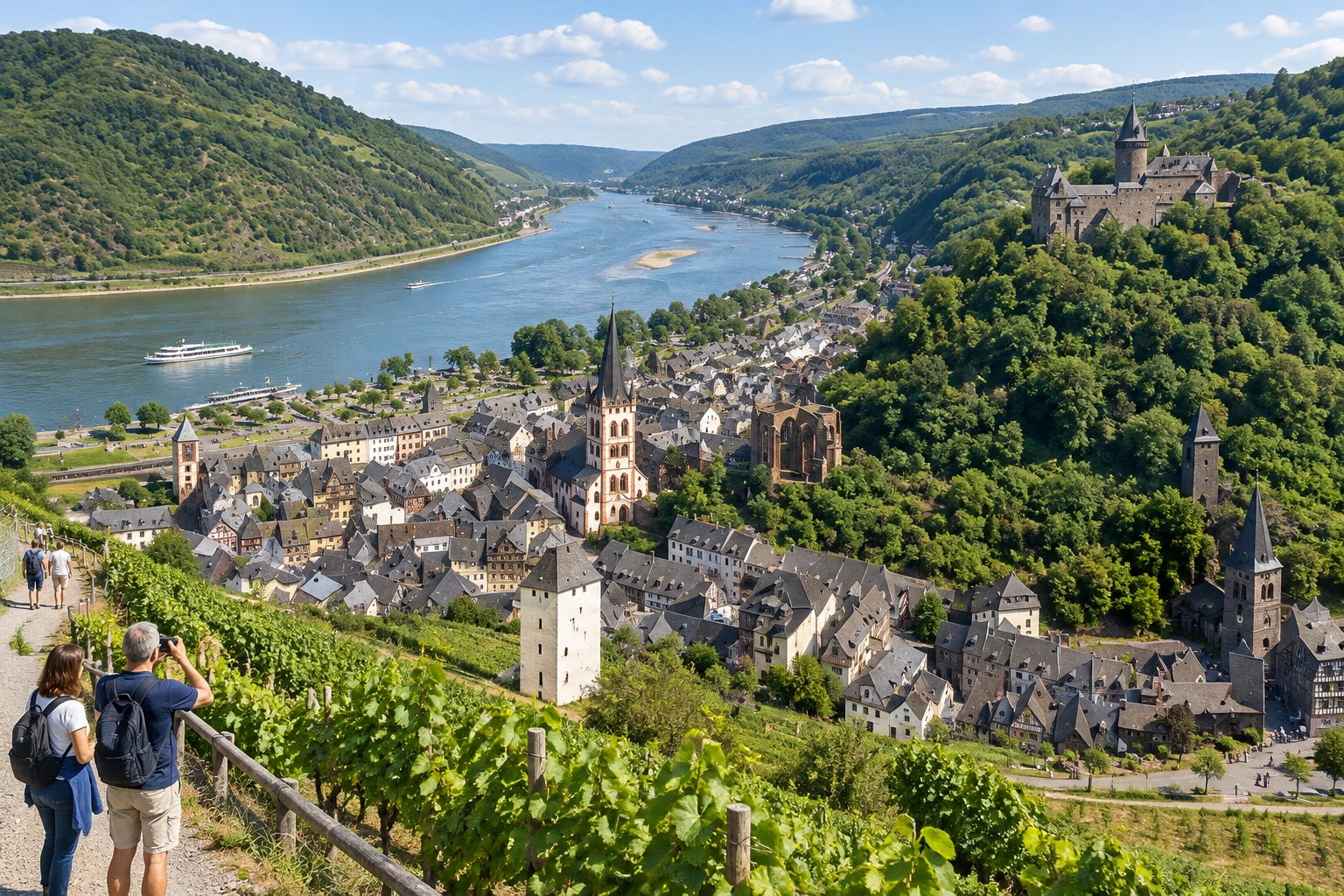
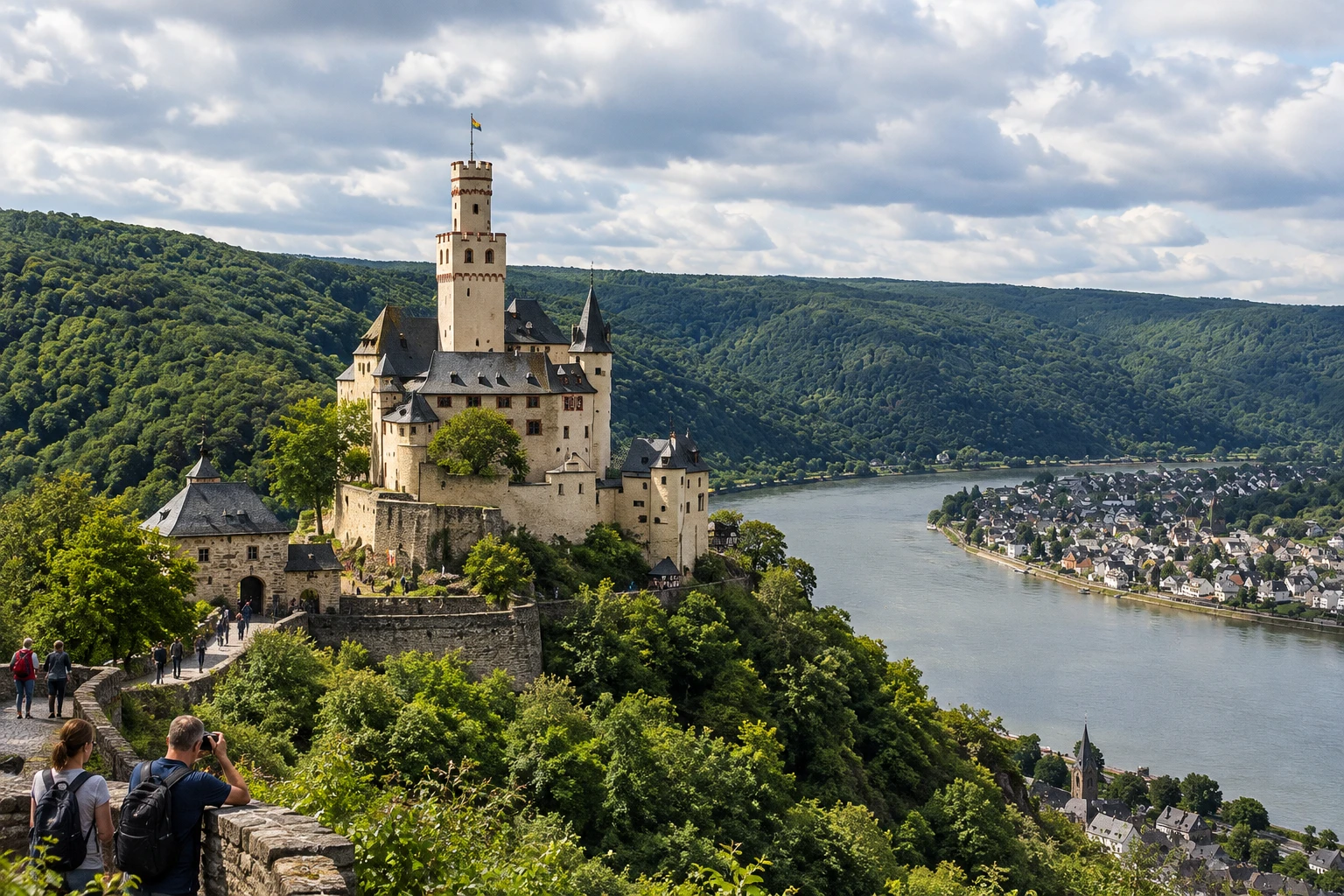
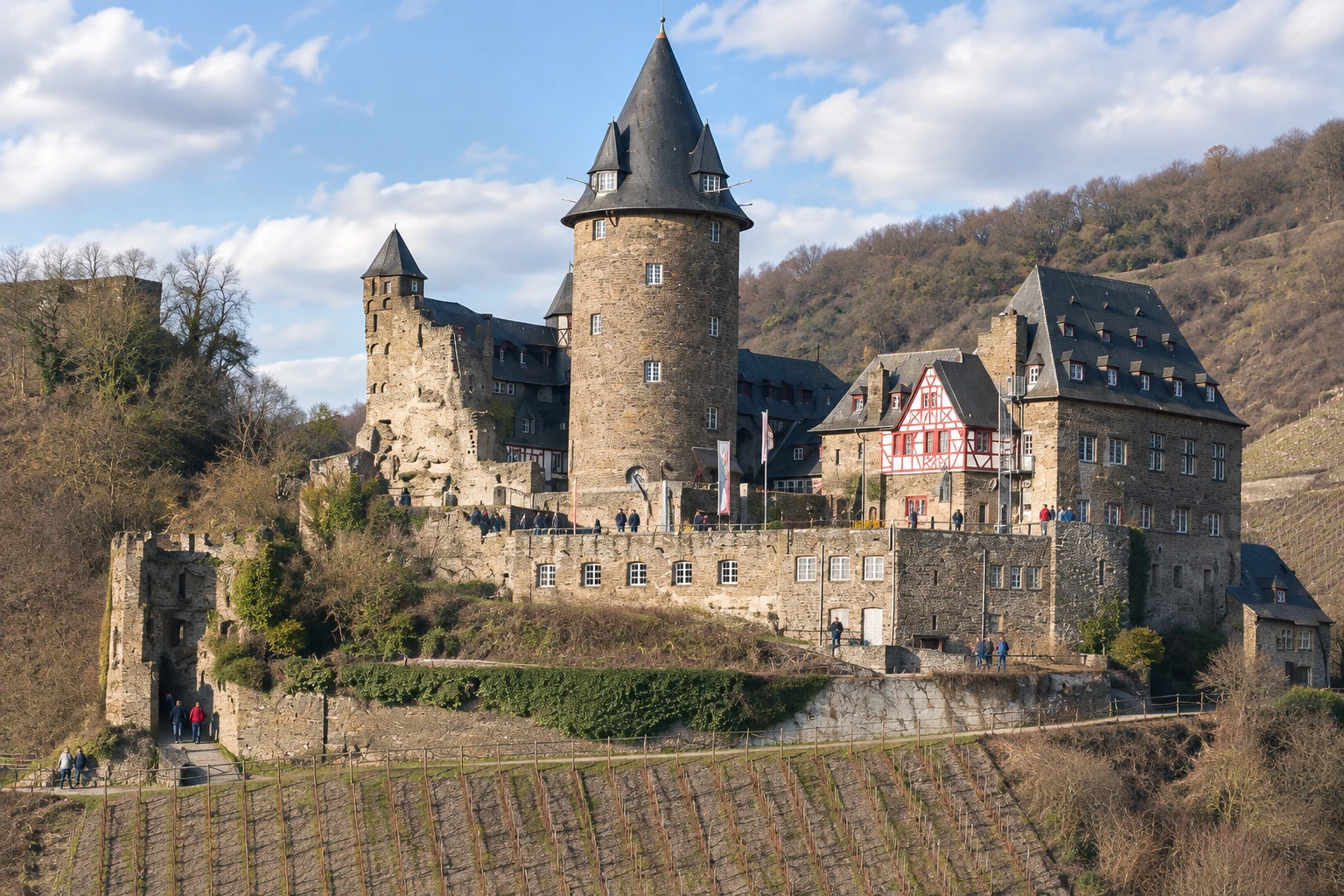
12th-century castle on the hill above Bacharach, rebuilt in the 20th century and used as a youth hostel. The terrace overlooks the Rhine.

 Search
 Brazil
 Antarctica
 Argentina
 Bolivia
 Chile
 Colombia
 Ecuador
 Falkland Islands (Malvinas)
 French Guiana
 Guyana
 Paraguay
 Peru
 Suriname
 Uruguay
 Venezuela
 Austria
 Belgium
 Croatia
 Denmark
 Finland
 FranceGermany
 Greece
 Hungary
 Iceland
 Ireland
 Italy
 Luxembourg
 Norway
 Poland
 Portugal
 Slovakia
 Slovenia
 Spain
 Sweden
 Switzerland
 the Czech Republic
 the Netherlands
 the United Kingdom
 Turkey
 Bermuda
 Canada
 Greenland
 Mexico
 Saint Pierre and Miquelon
 the United States
 the Dominican Republic
 JapanTurkey
 Egypt
 South Africa
 Australia
 Fiji
 New Zealand
 Papua New Guinea
Hesse · Rhineland-Palatinate
23 places to visit and 17 tours, chosen by the Cidade Turismo guide.
Updated
Illustrative images. The pictures in this guide are illustrations based on the real place, not photographs, and may differ from it.
To start
One by one
12th-century castle on the hill above Bacharach, rebuilt in the 20th century and used as a youth hostel. The terrace overlooks the Rhine.
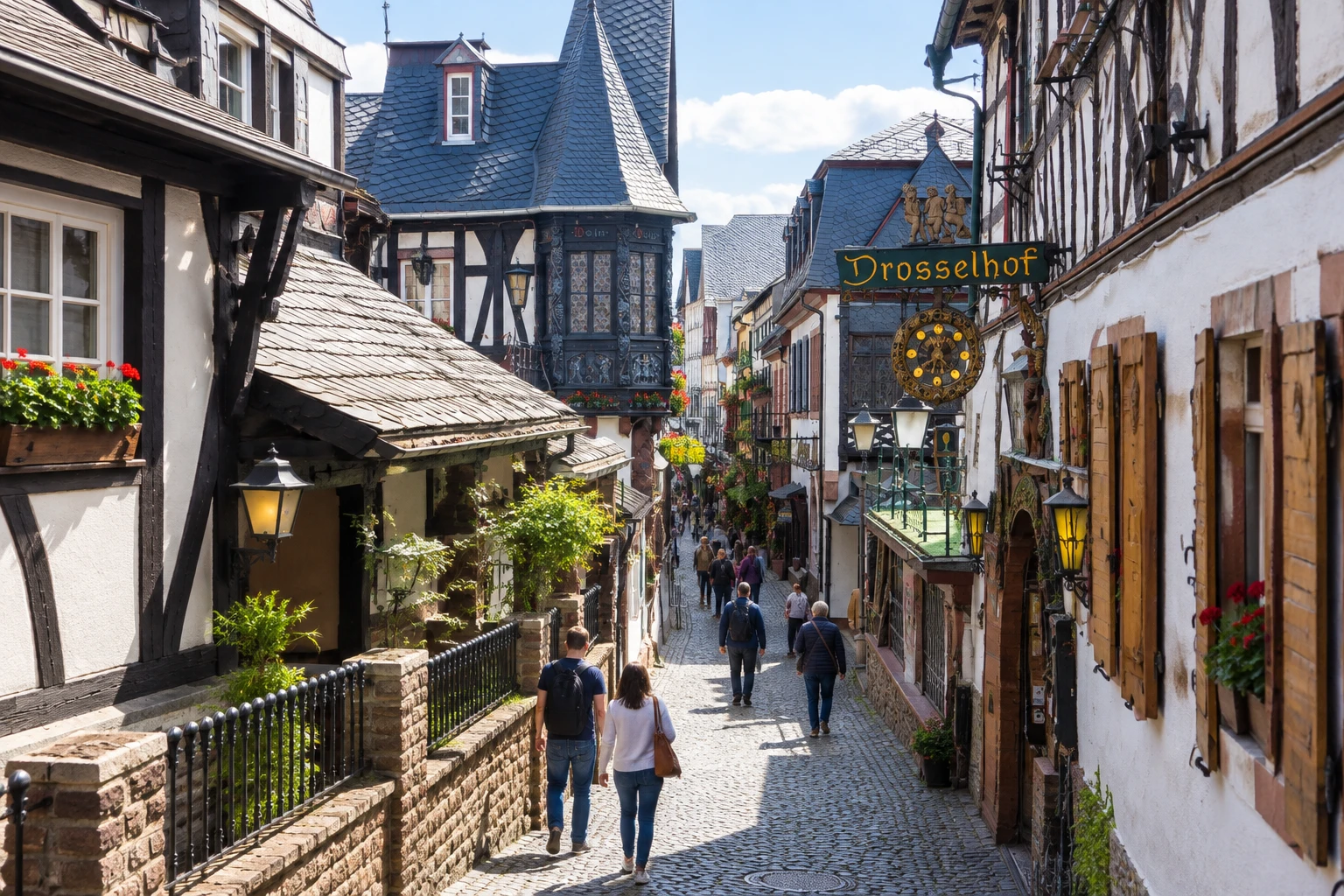
Cobblestone alley about 2 metres wide and roughly 144 metres long, filled with wine taverns, live music and small shops, between the Rhine promenade and the Oberstraße.
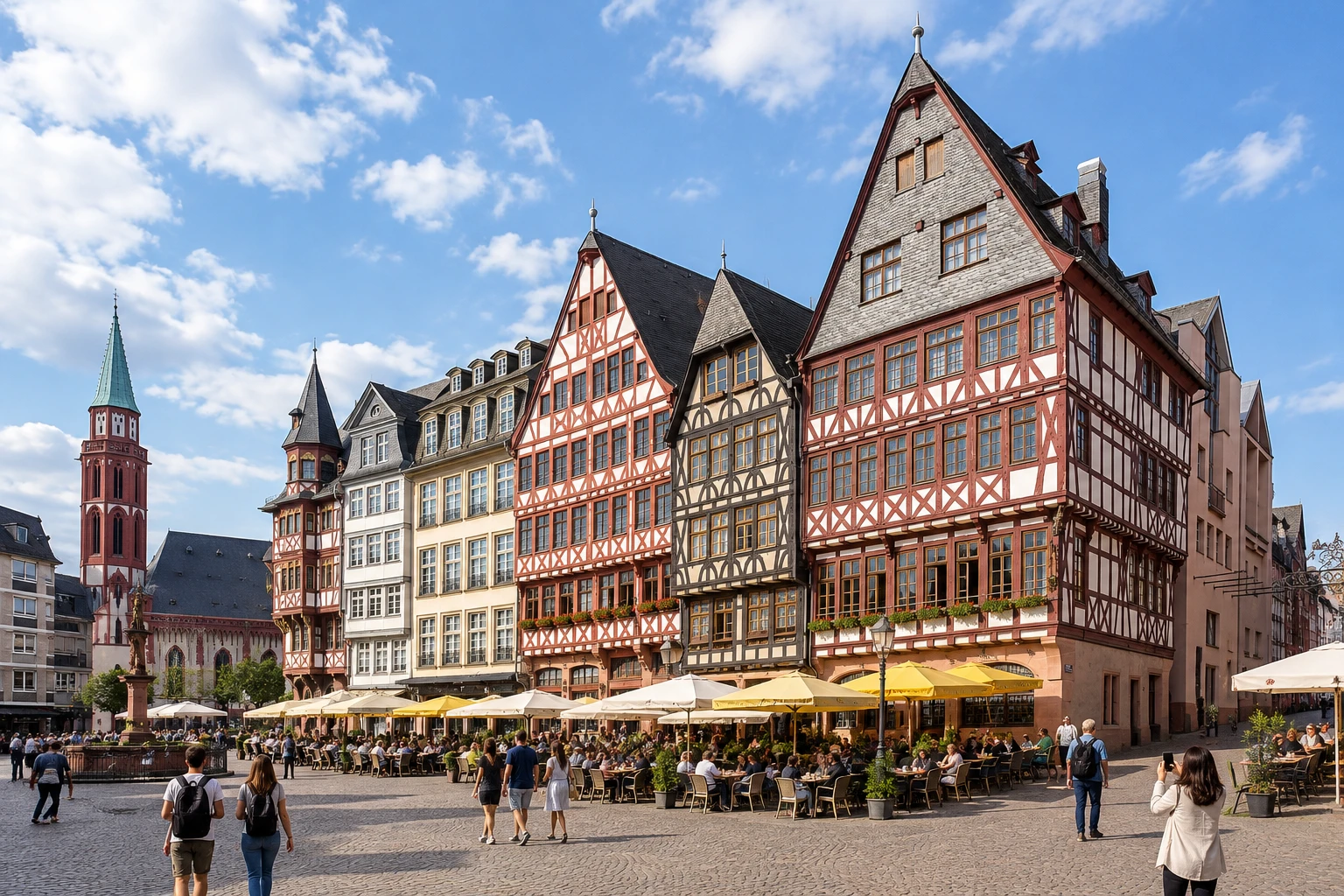
The town-hall square of Frankfurt, with the stepped-gable façade of the Römer, half-timbered houses on the east side and the Justice fountain in the middle.
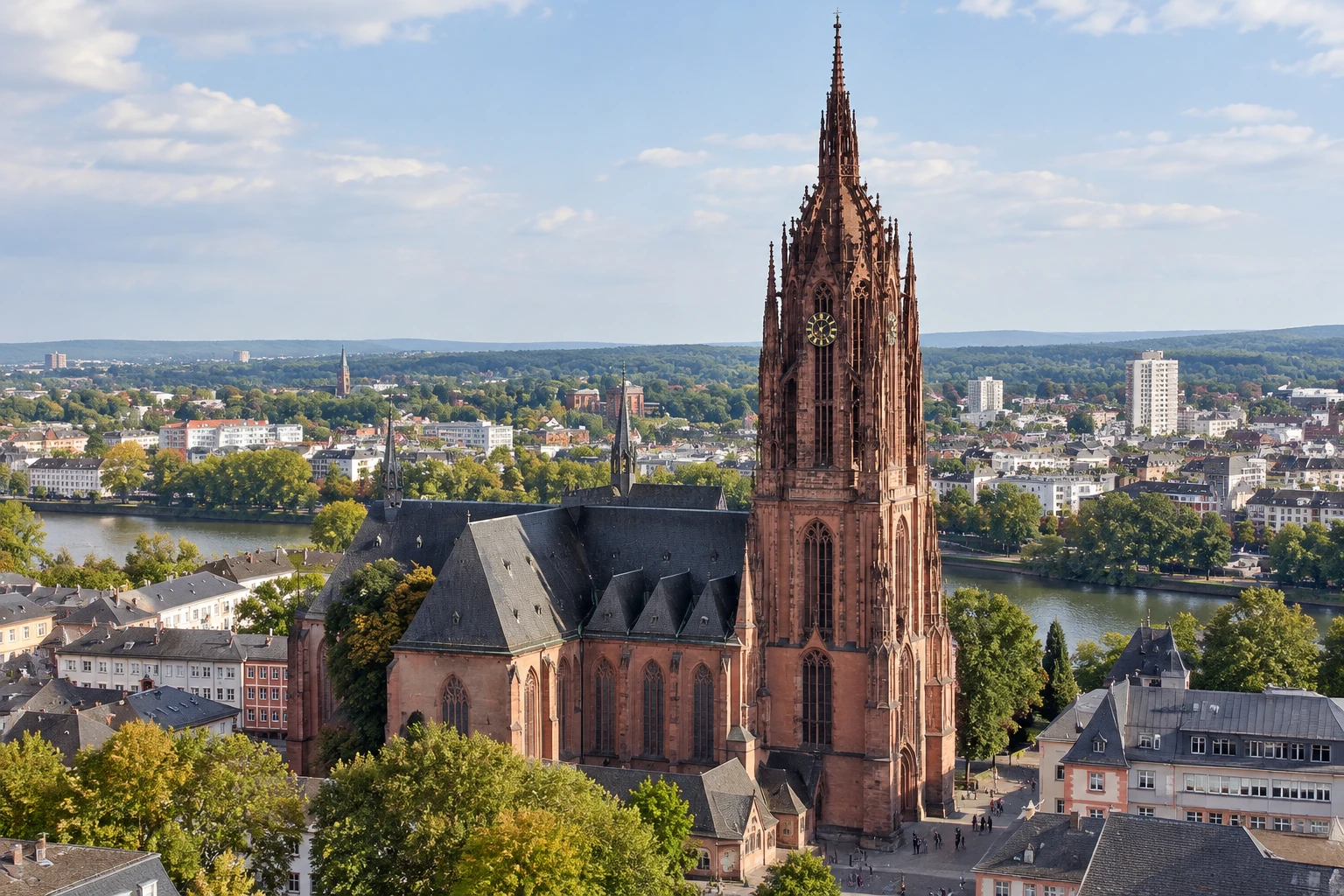
Gothic church with a 95-meter tower where the kings of the Holy Roman Empire were elected and, between 1562 and 1792, crowned. The tower can be climbed on foot.
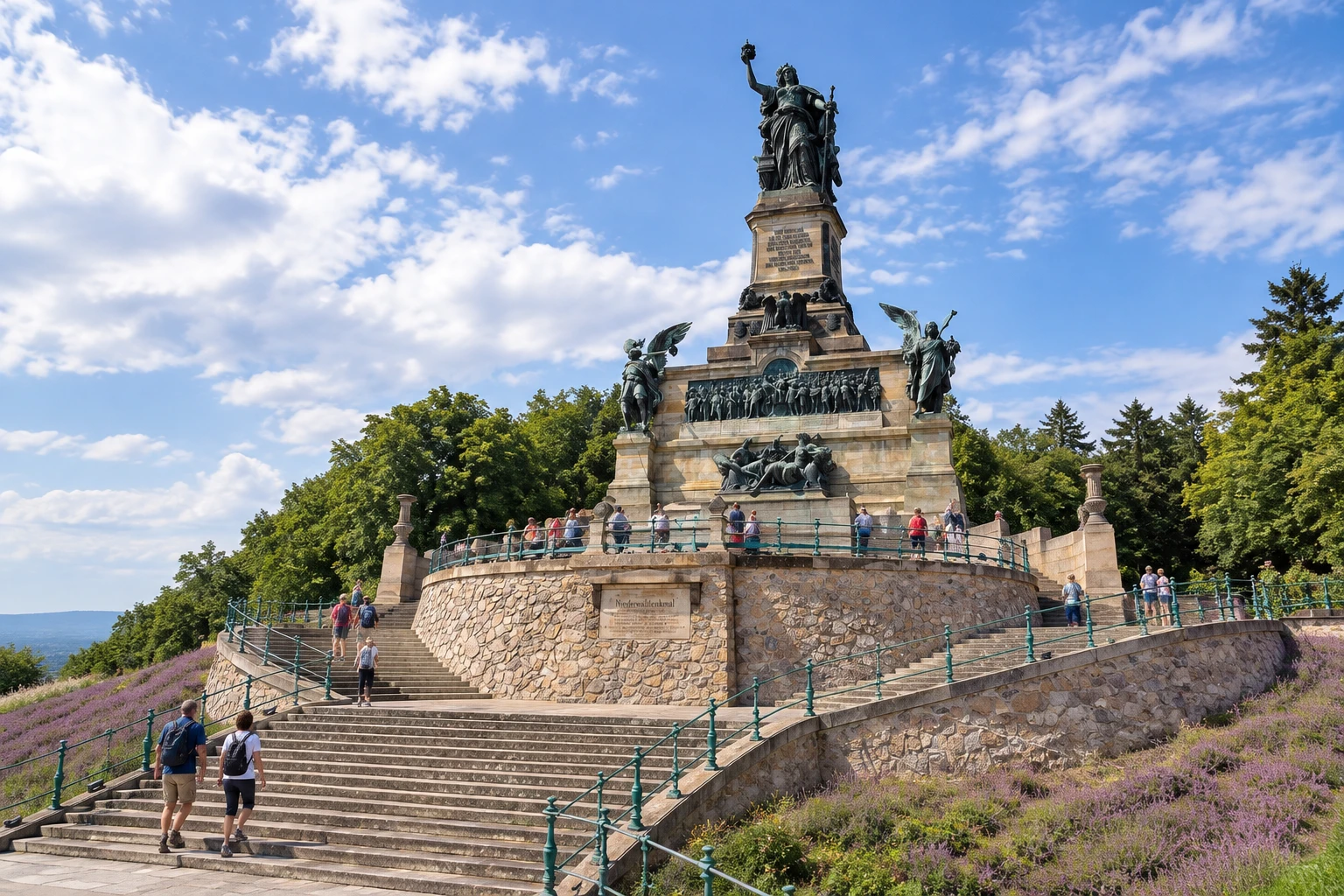
38-metre monument featuring the statue of Germania, erected between 1877 and 1883 on the hill above the vineyards, with views over the Rhine and Bingen. Reachable by cable car in season.
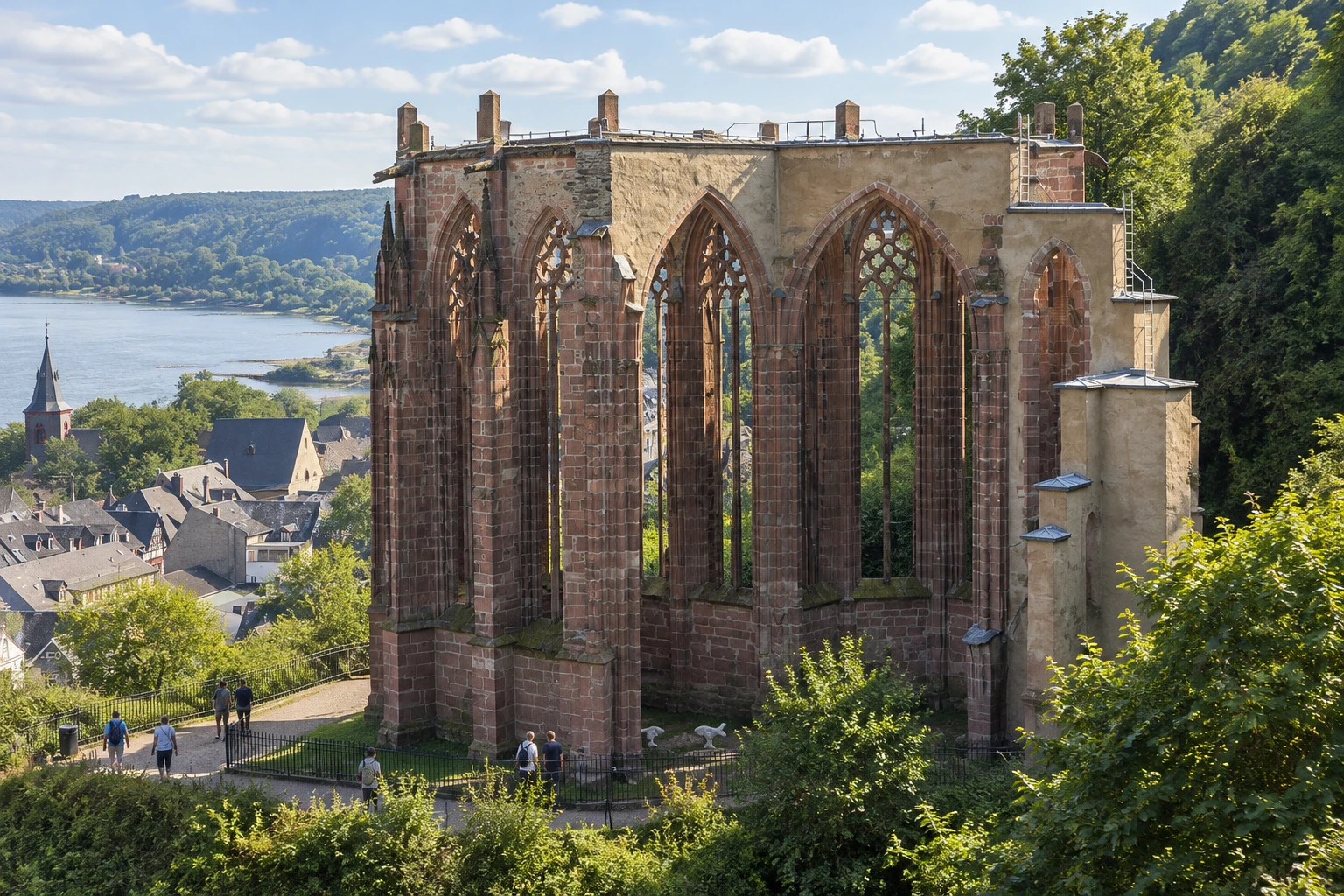
Gothic ruin of a roofless chapel, between the center of Bacharach and the castle, with a plaque that recalls the persecution of Jews linked to its history.
Walled old centre of Bacharach, with half-timbered houses, the church of St. Peter and the 14th-century wall with towers, between the Rhine and the vineyards.
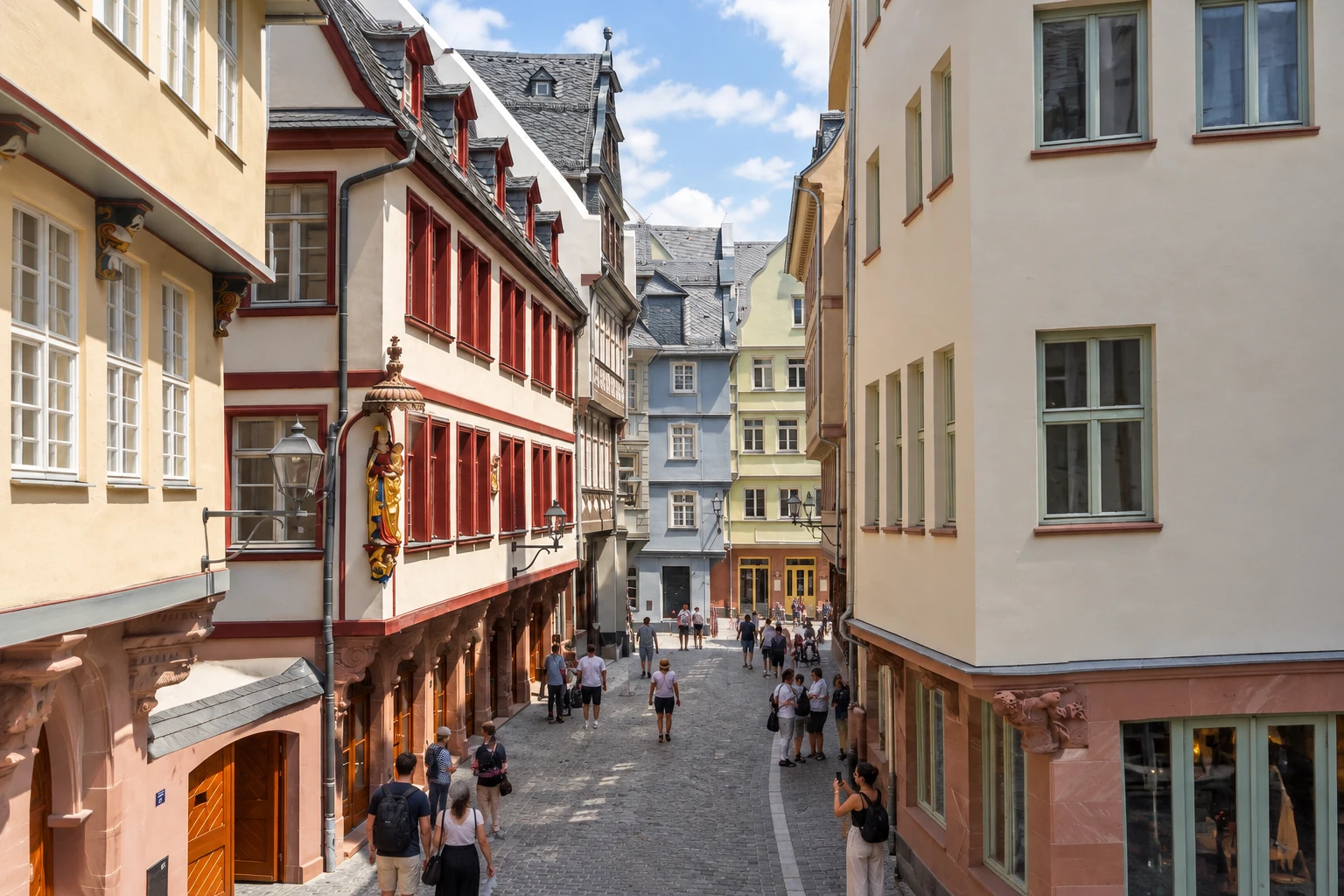
The core of the old town center, between the Römerberg and the cathedral, rebuilt between 2012 and 2018 with 35 buildings, some of them faithful copies of houses destroyed in 1944.
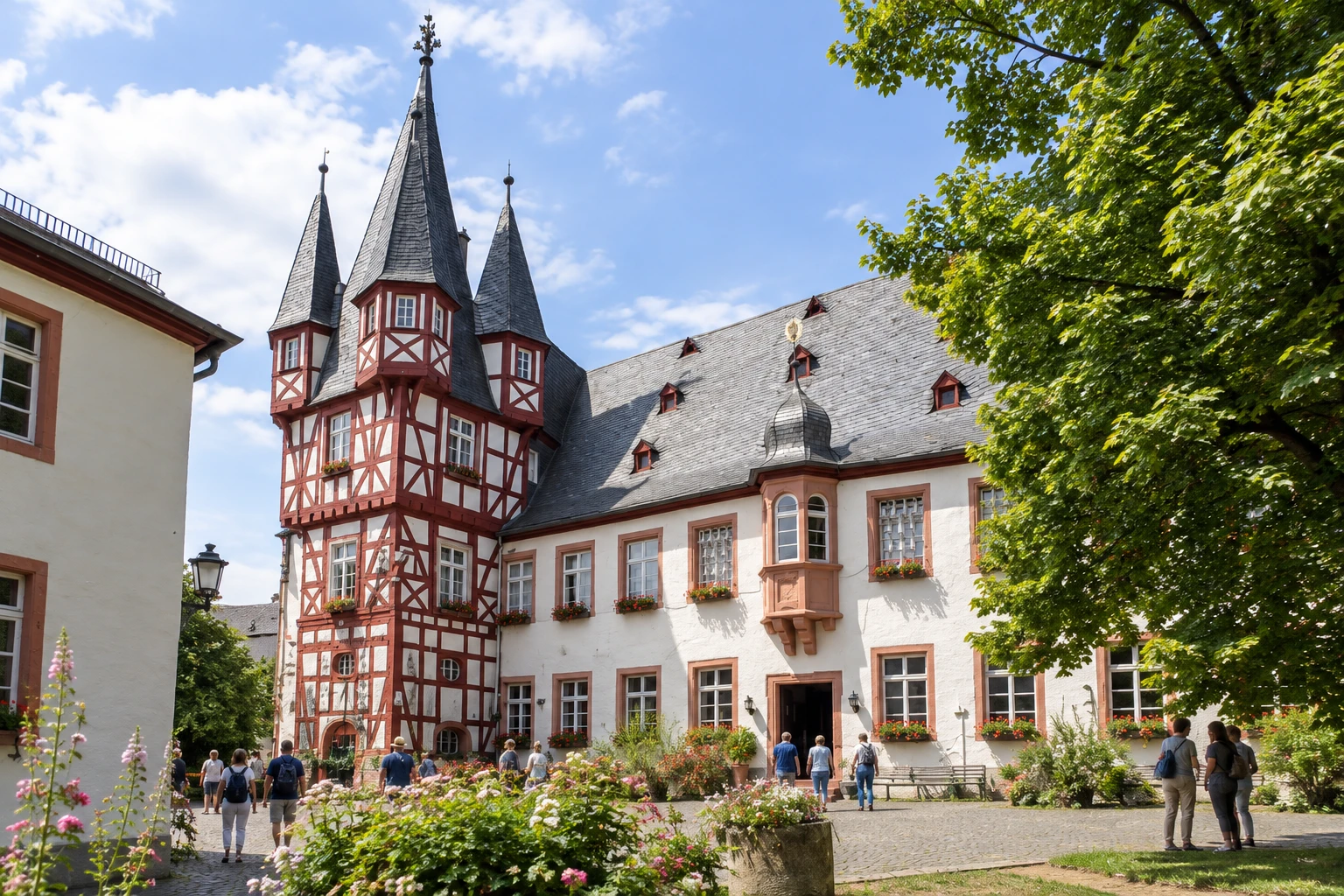
Museum with more than 400 self-playing musical instruments, from music boxes to orchestrions, presented in a guided visit at the Brömserhof, a 15th-century manor house.
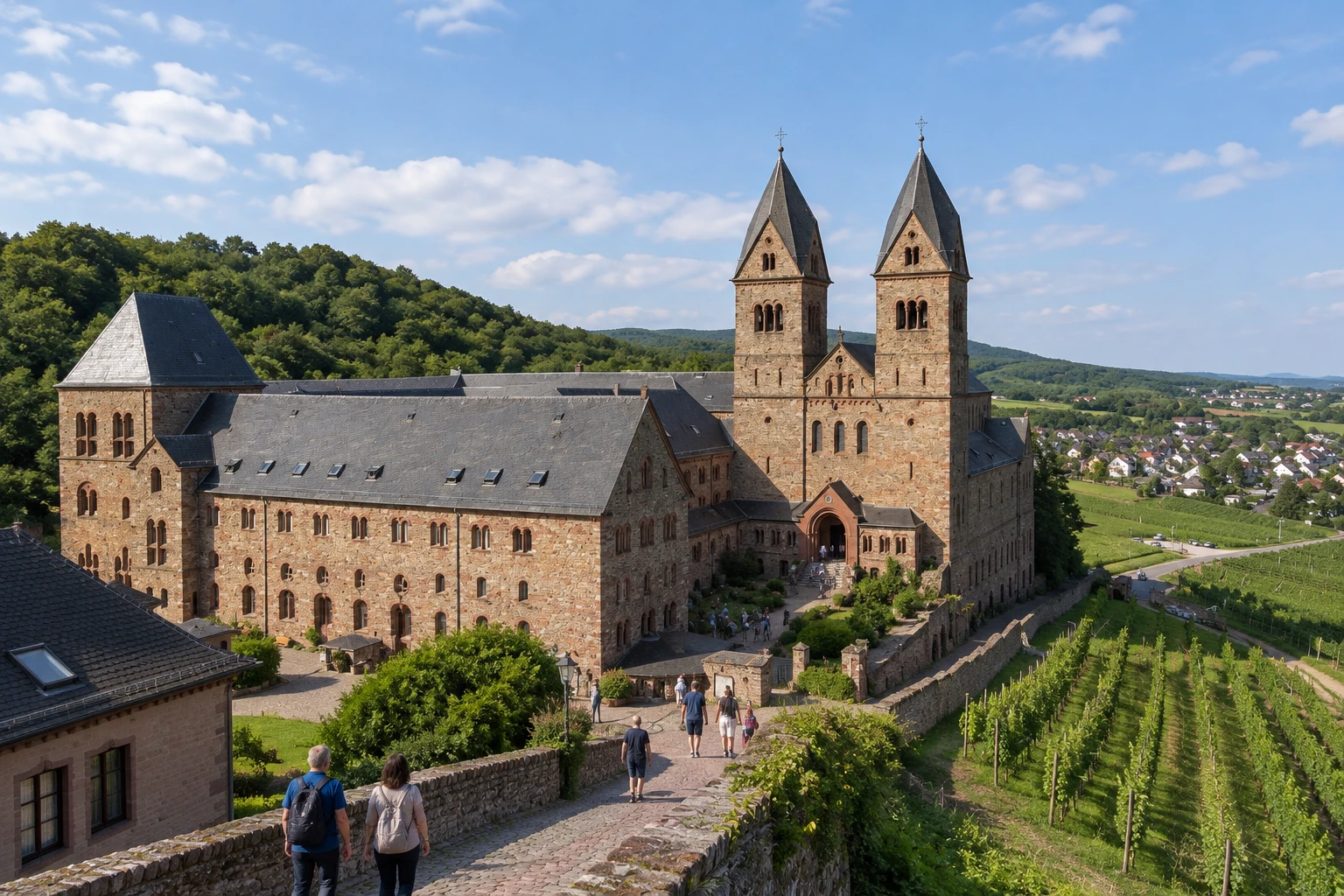
Benedictine abbey of nuns above the vineyards of Eibingen, heir to the convents of Santa Hildegarda de Bingen, with a church painted in the Beuron style, a shop and a winery.
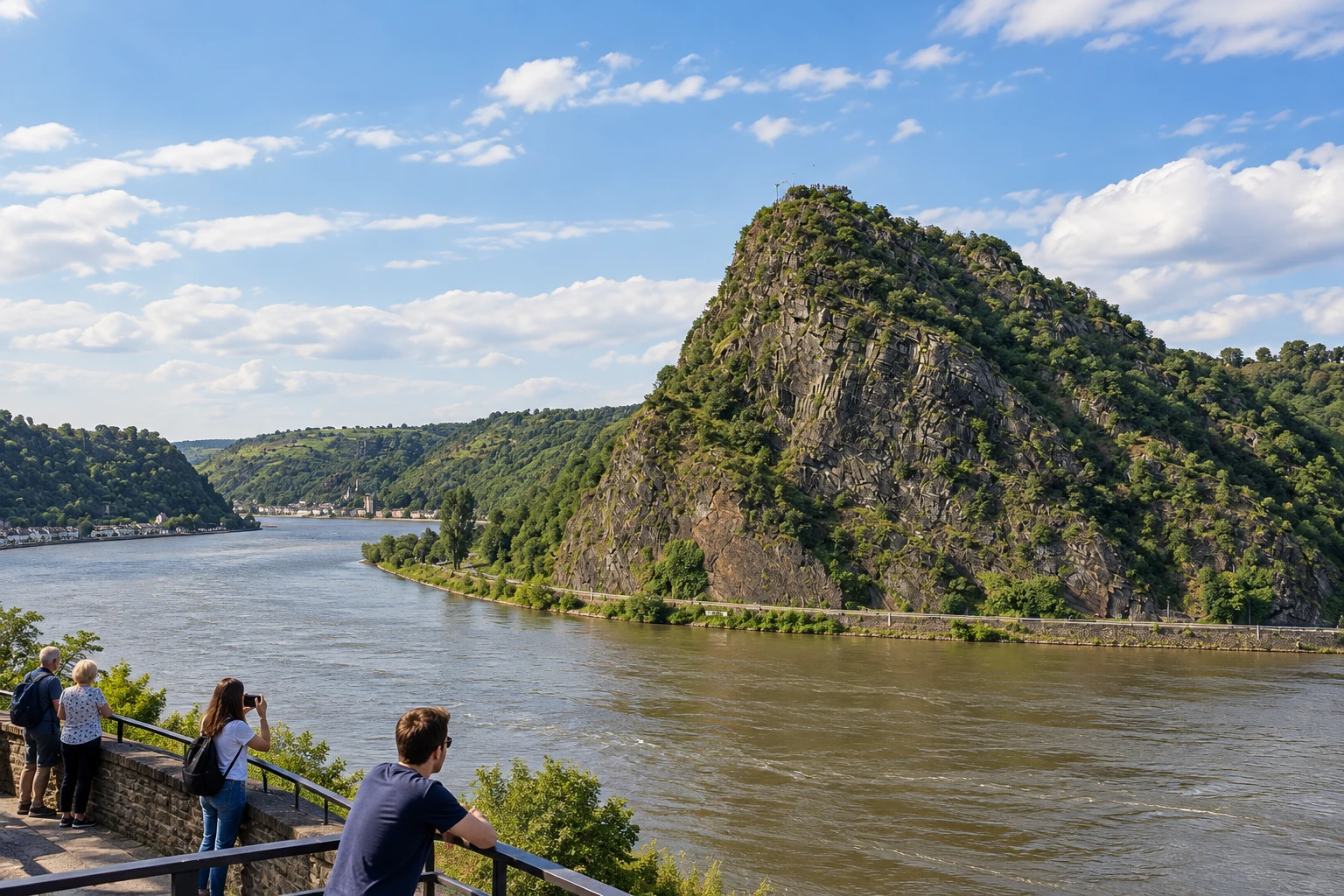
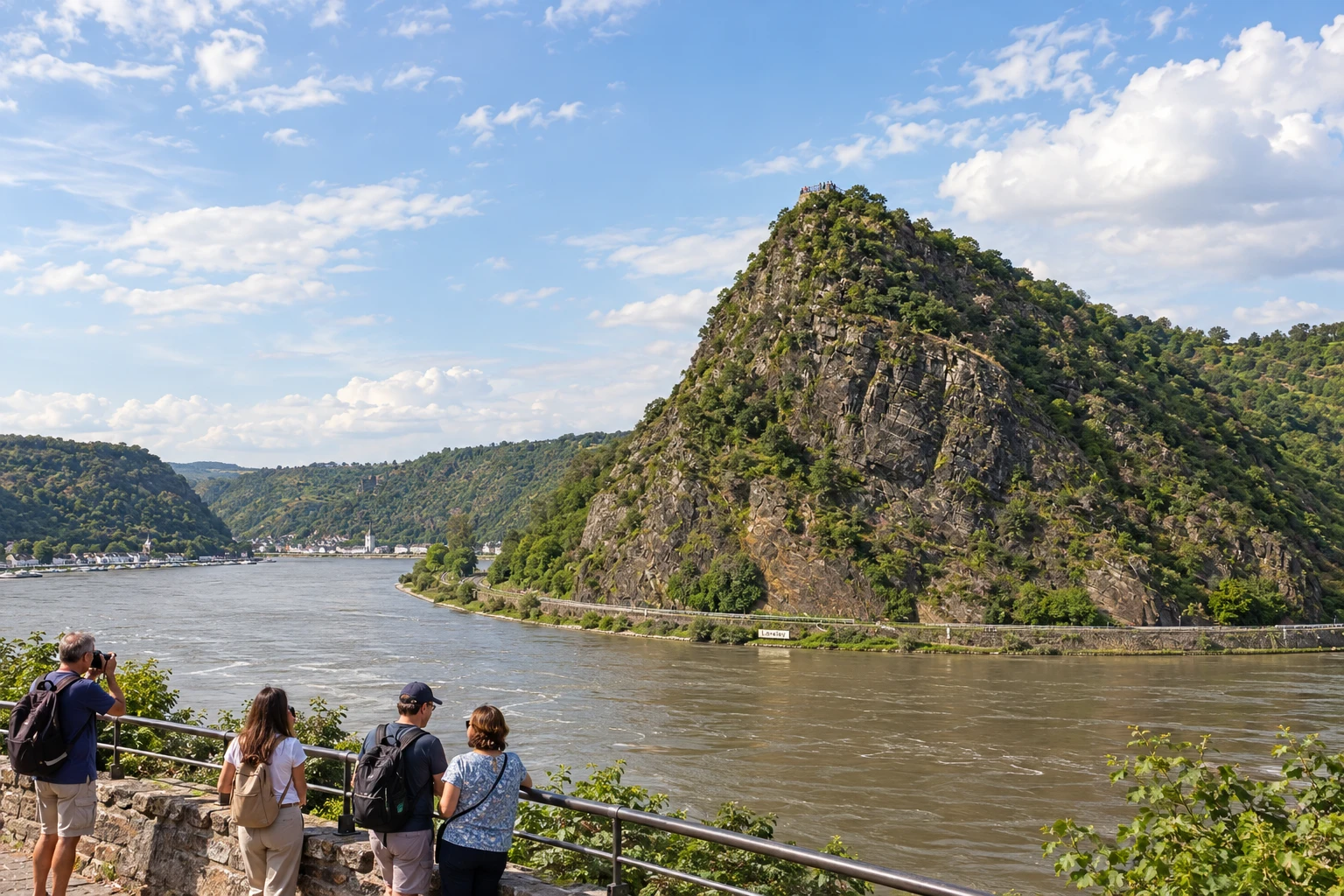
132-metre slate rock on the right bank of the Rhine, at the narrowest and deepest stretch of the river, with a lookout at the top and the legend of the siren who lured boatmen.
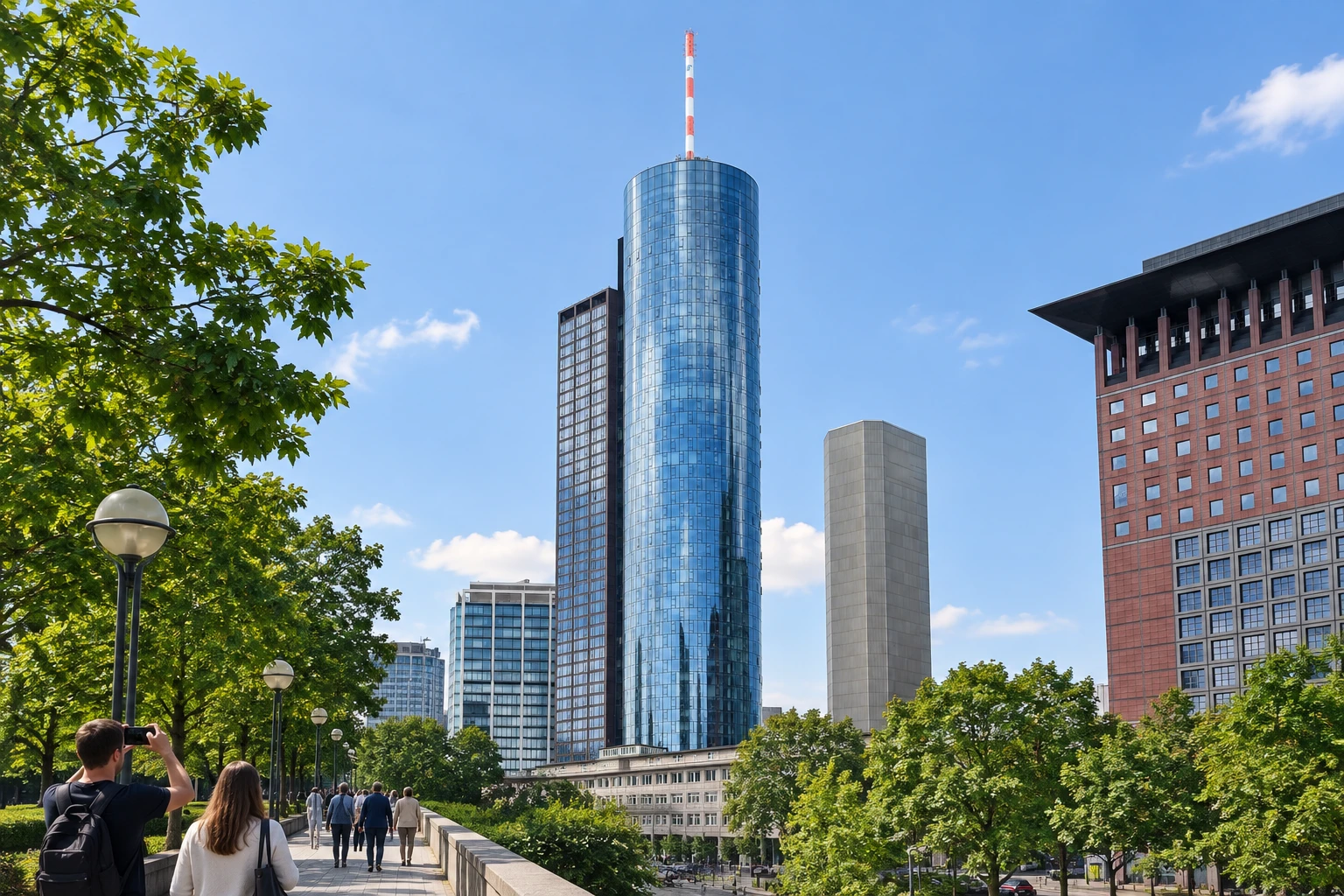
200-meter skyscraper with a publicly accessible observation deck at the top, offering 360-degree views over the city center, the River Main and the other buildings of the financial district.
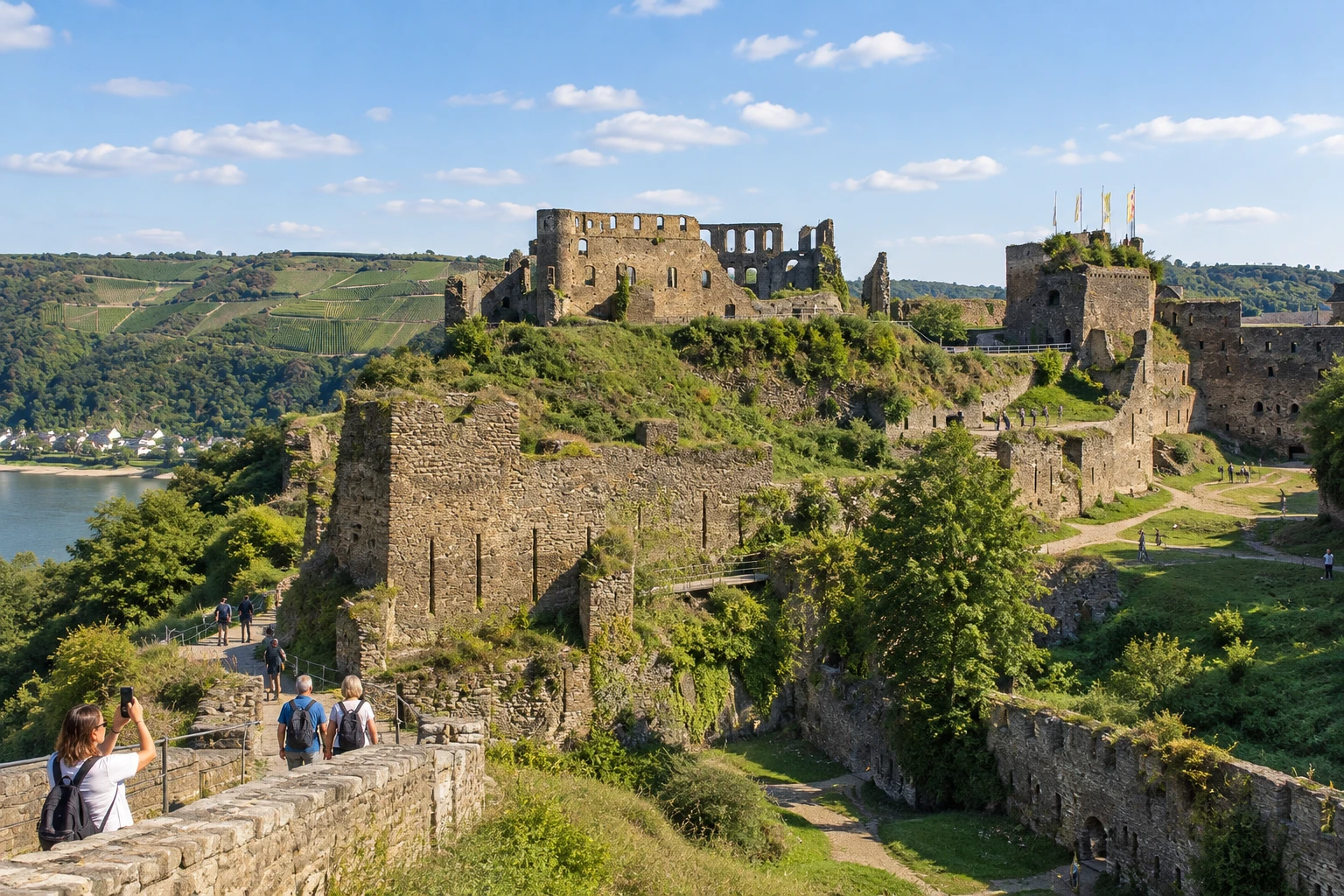
Ruin of the largest fortress-castle of the Middle Rhine, founded in 1245 above St. Goar, with underground galleries, a vaulted hall and a museum.
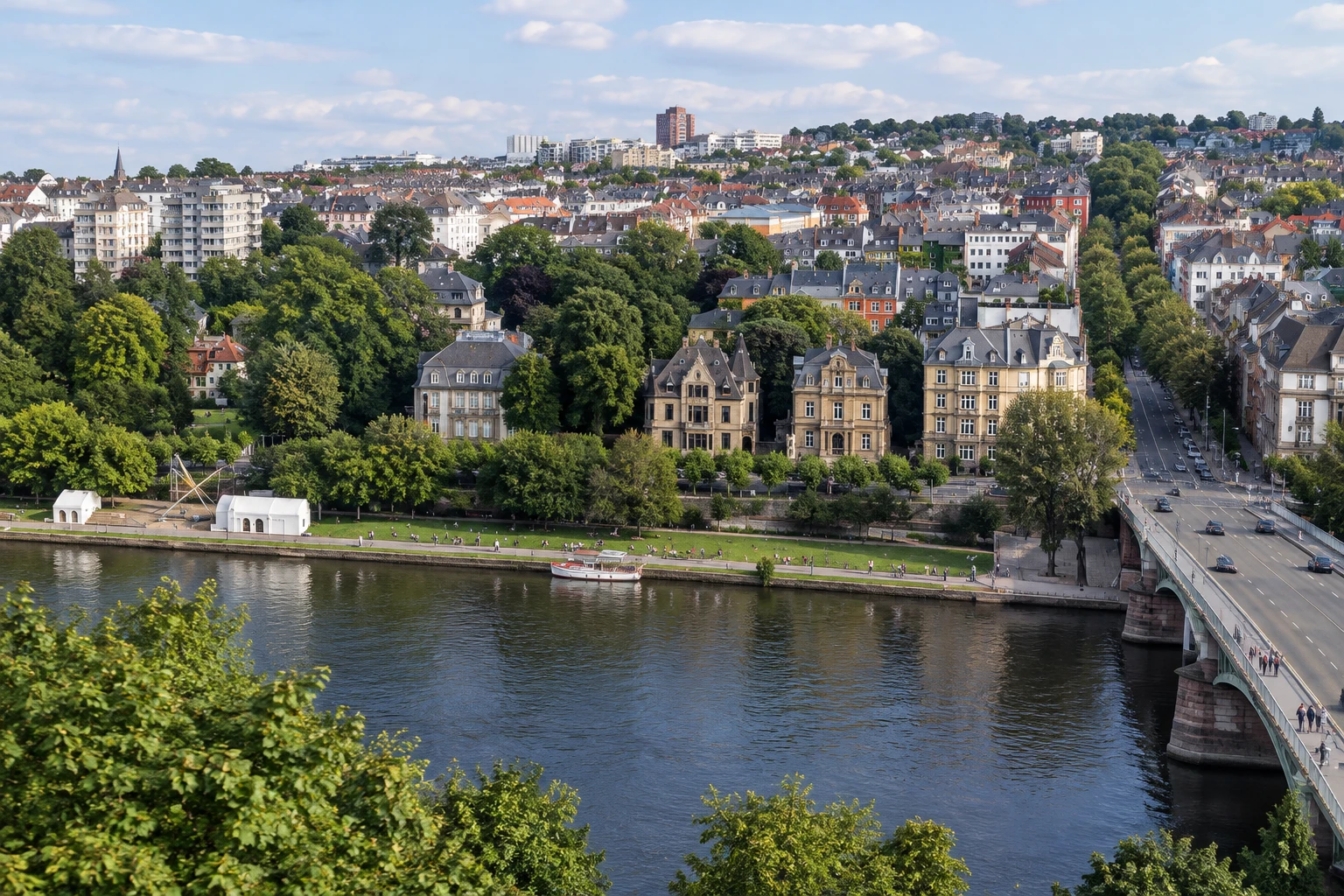
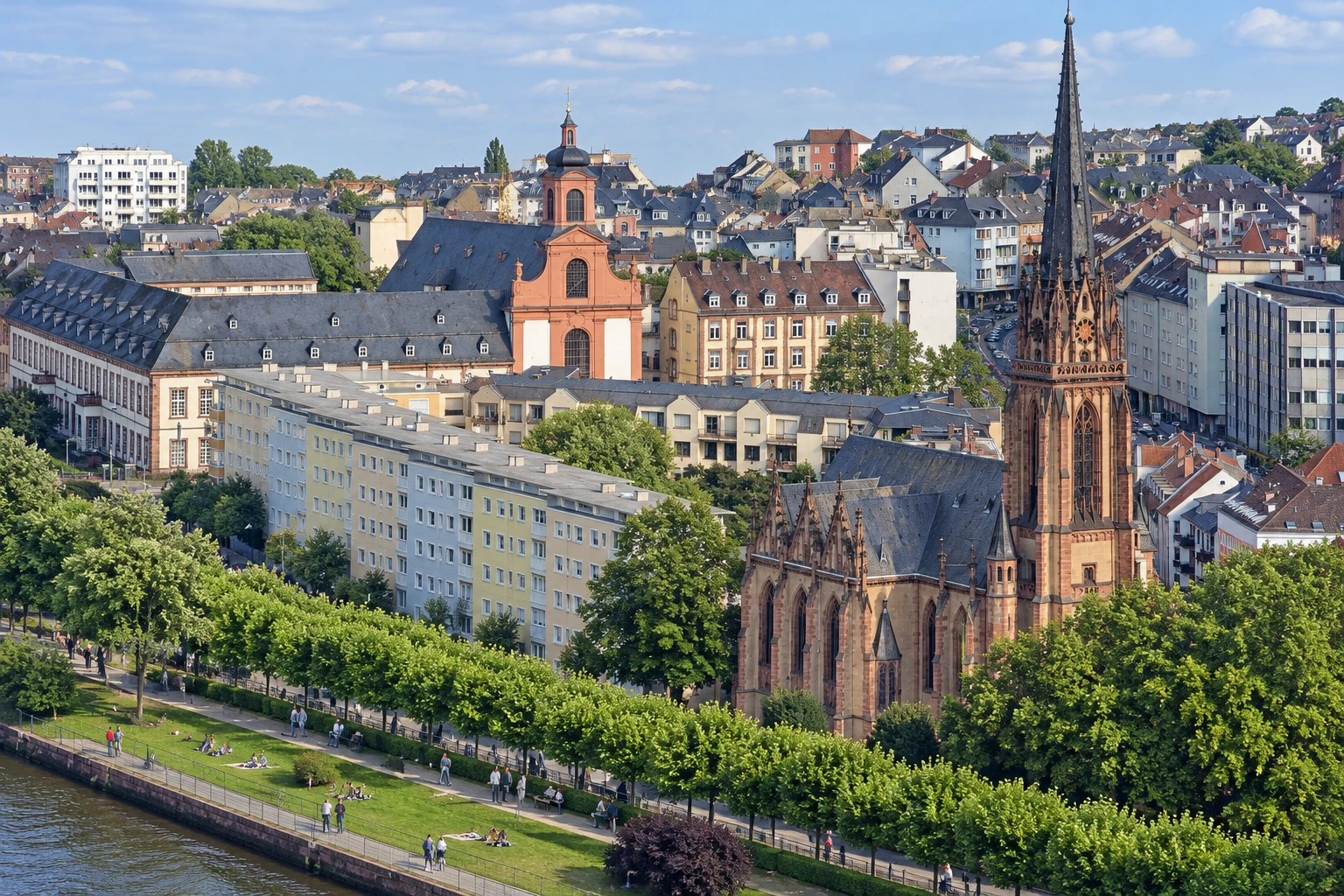
The south bank of the Main between the bridges Eiserner Steg and Friedensbrücke, with a row of museums in old mansions and new buildings, from the Städel to the Liebieghaus.
The only hill castle in the Middle Rhine that was never destroyed, from the 13th century, above Braubach. It can only be visited with a guide.
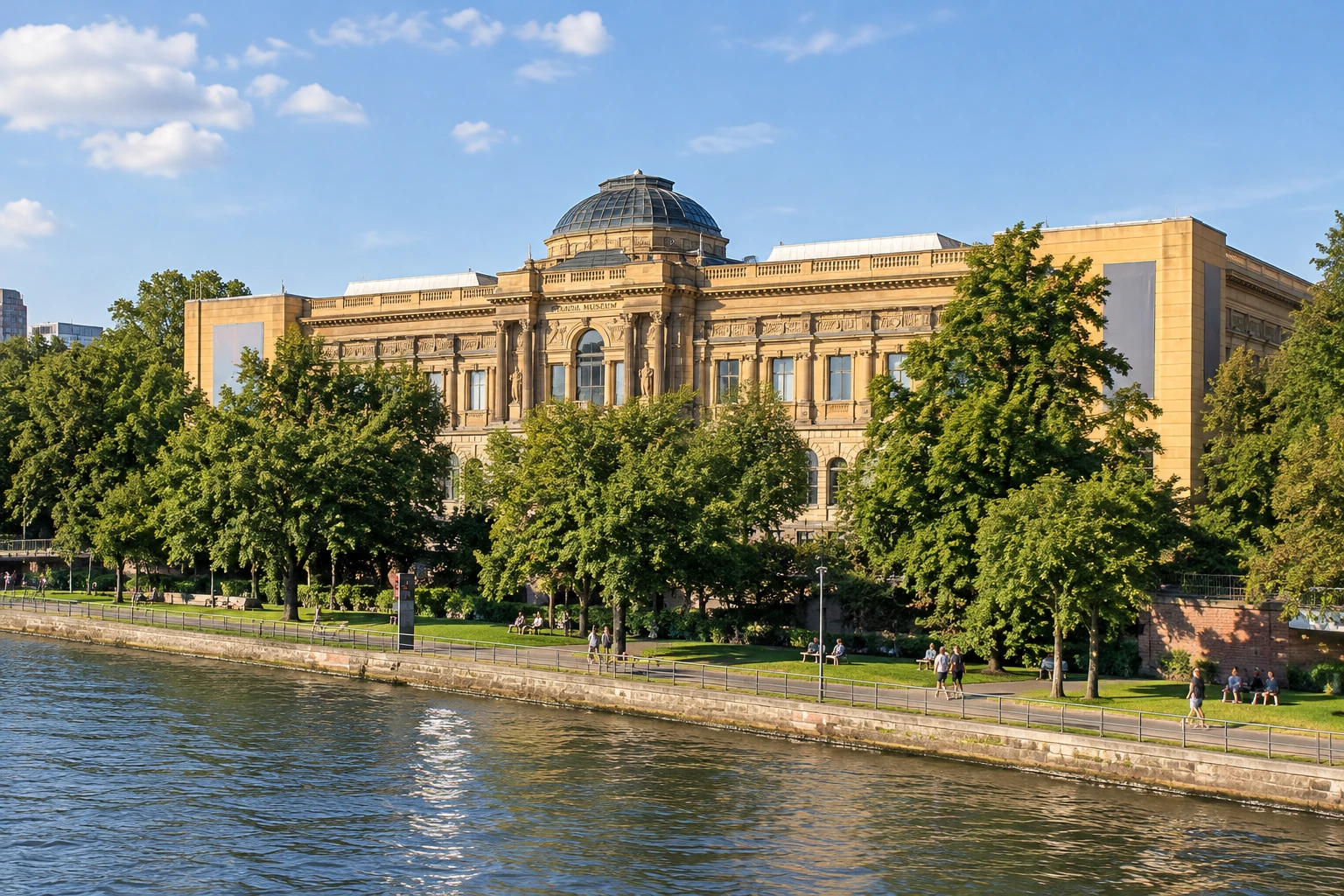
One of Germany's leading art museums, with around 3,100 paintings from the Middle Ages to contemporary art, on the Museumsufer.
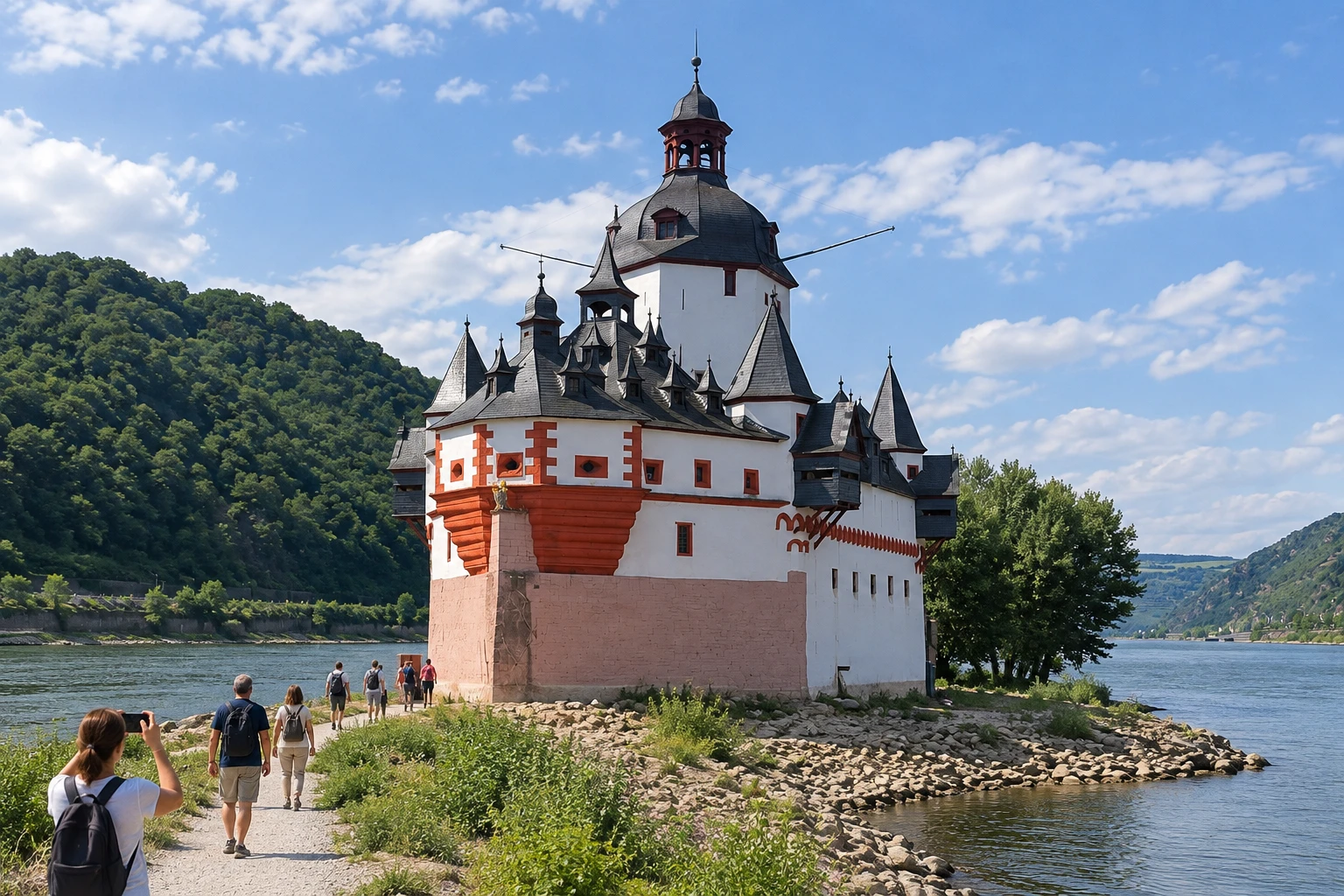
14th-century toll castle on a rocky island in the middle of the Rhine, opposite Kaub, shaped like a stone ship. It is reached by a small ferry.
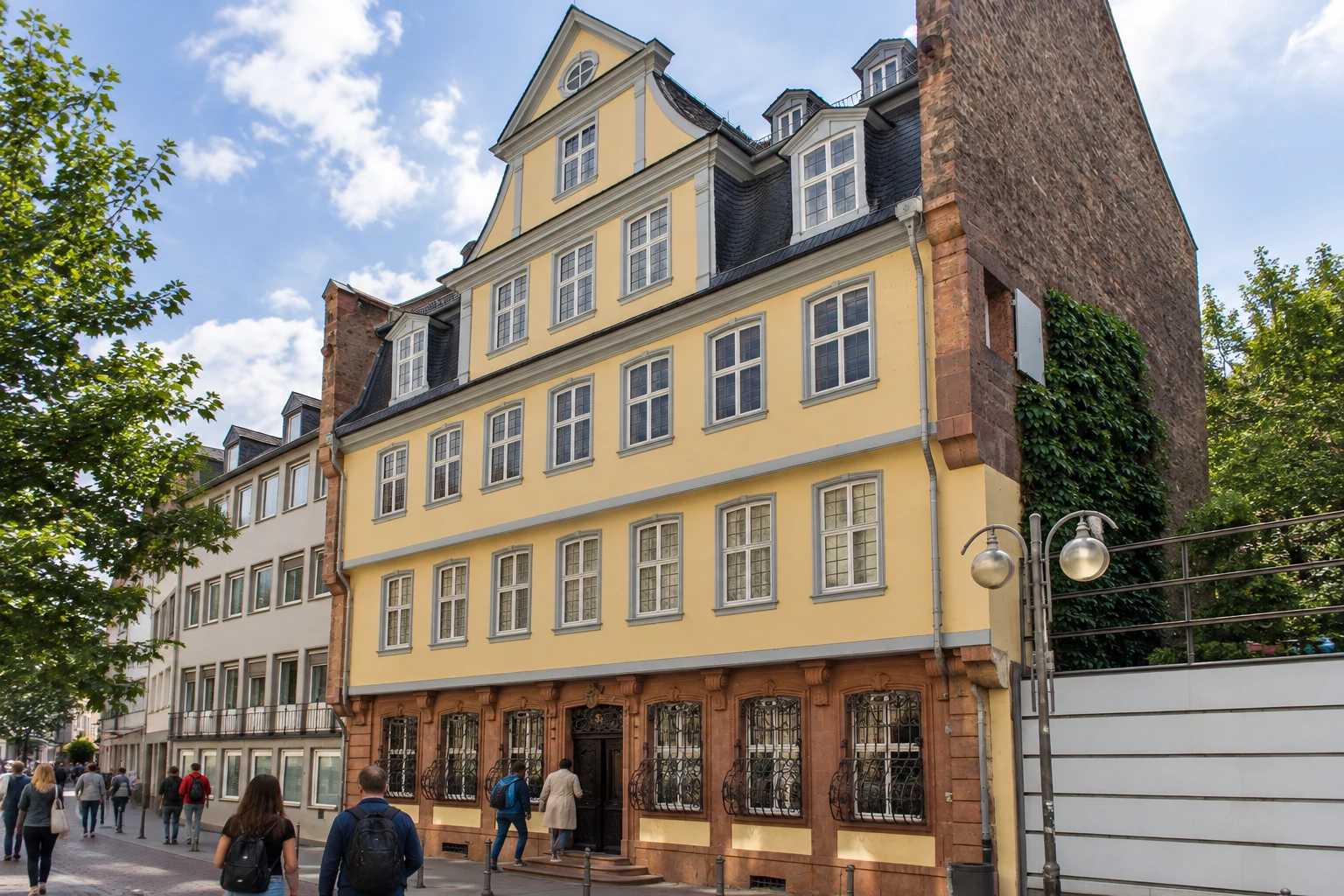
The house where Johann Wolfgang von Goethe was born in 1749, rebuilt after the war with the original furniture, next to the Deutsches Romantik-Museum.
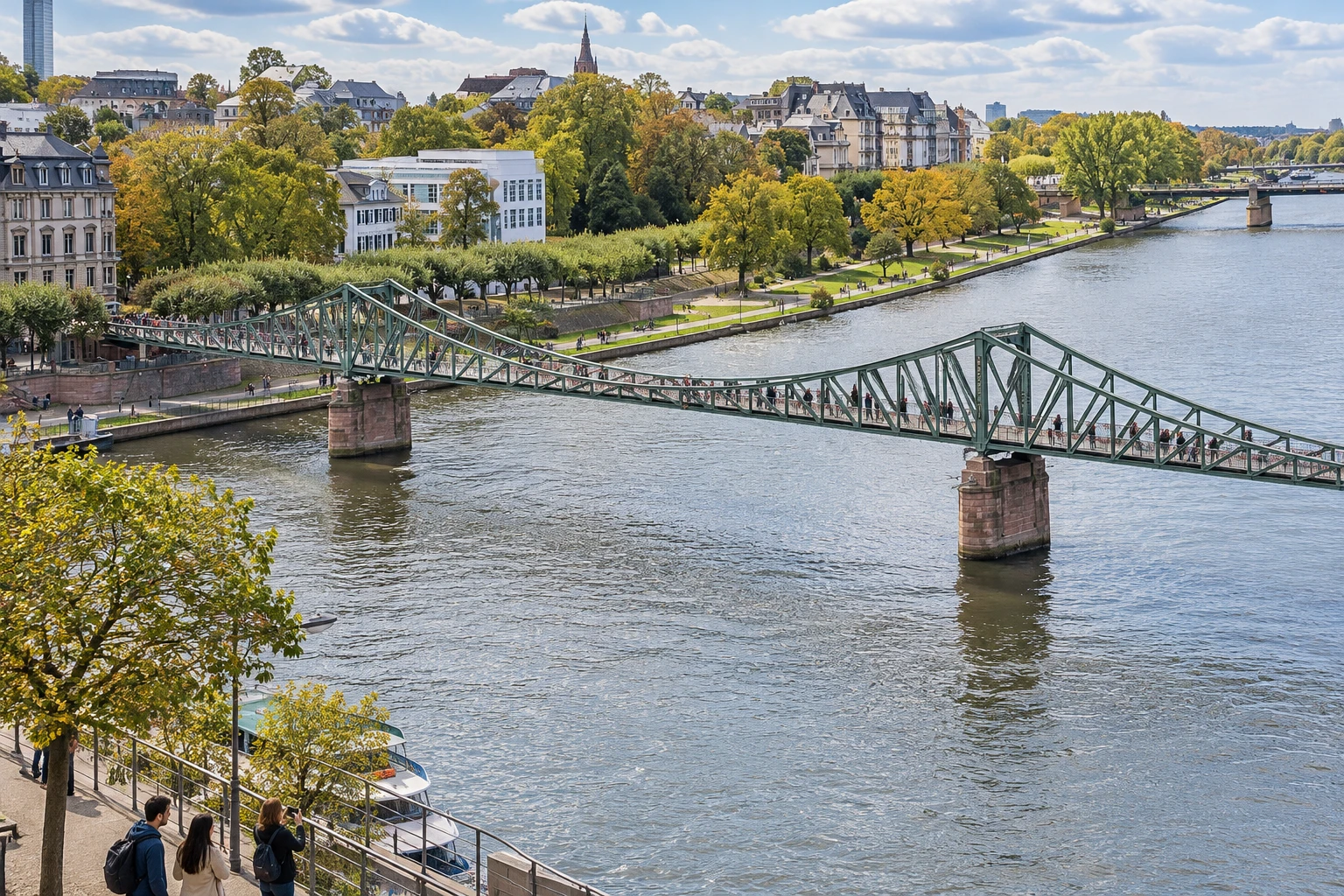
Iron pedestrian bridge over the Main, dating from 1868, which links the Römerberg to Sachsenhausen and offers the most famous view of Frankfurt's skyscrapers.
Neighborhood on the south bank of the Main, known for its Apfelwein taverns, Frankfurt's cider, served in gray and blue ceramic jugs.
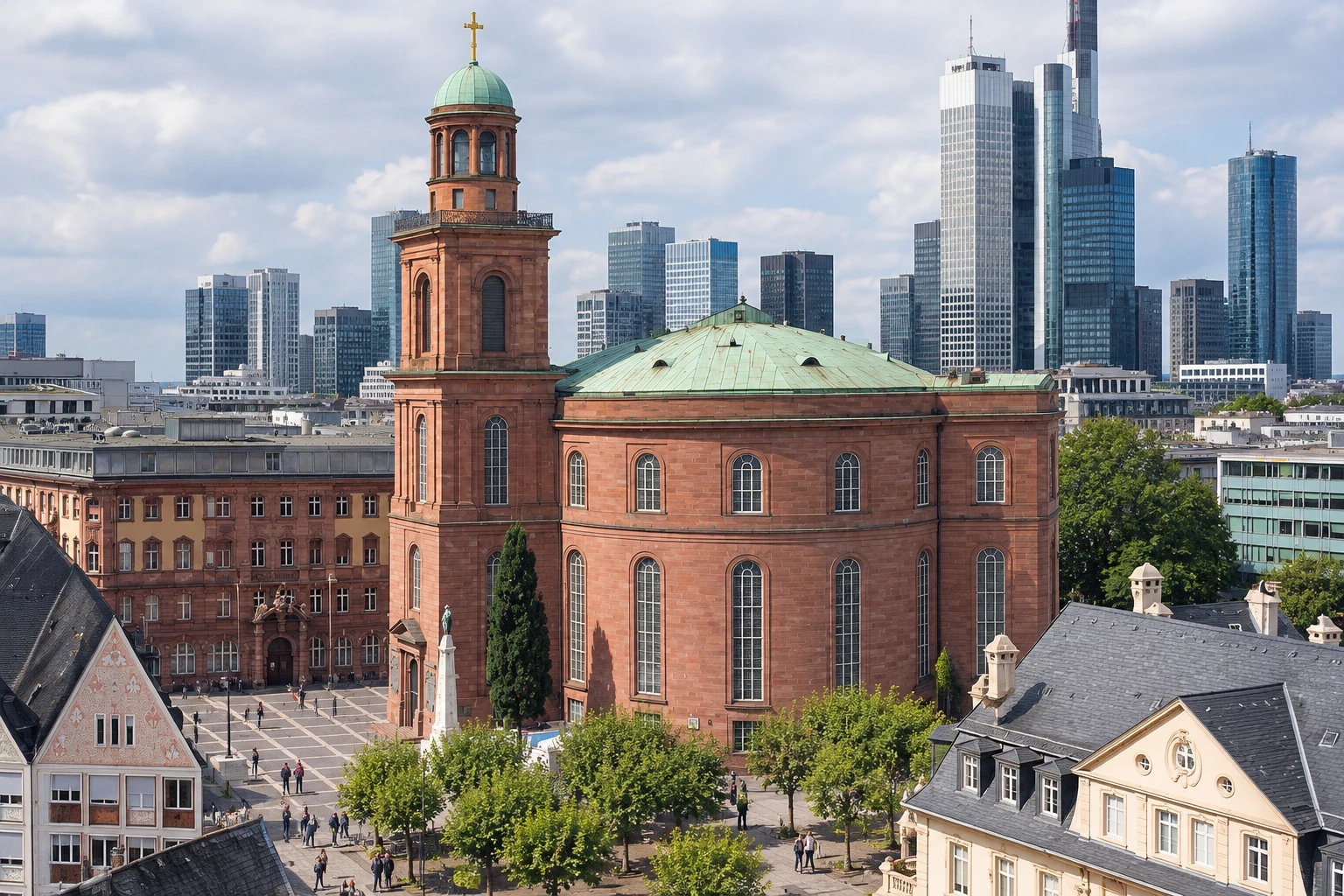
Former round church where the first elected parliament for all of Germany met in 1848 and 1849. Today it is a memorial to democracy, with an exhibition about that history.
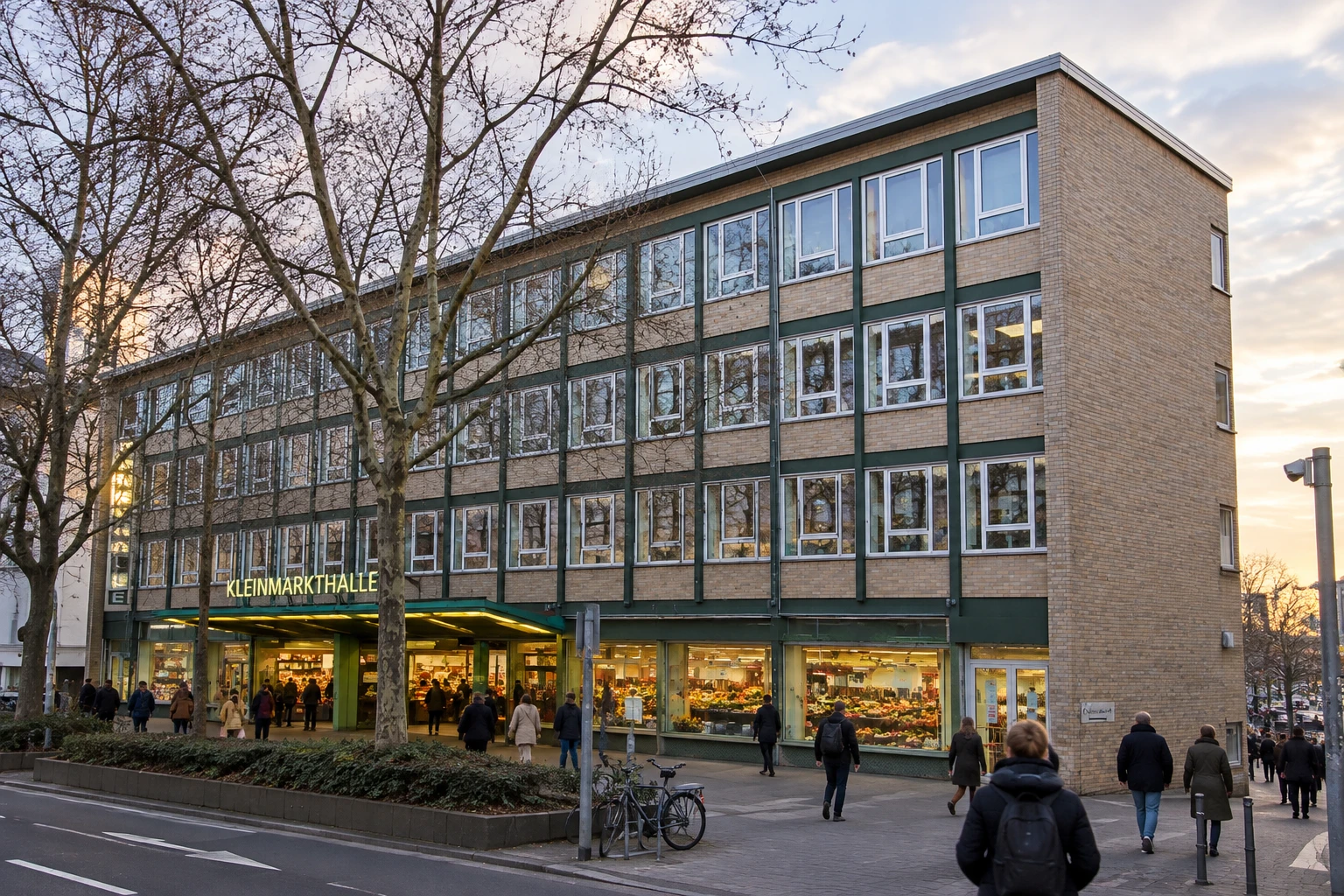
Covered market from 1954 in central Frankfurt, with dozens of stalls selling fruit, cheeses, cold cuts, herbs for Grüne Soße and snacks.
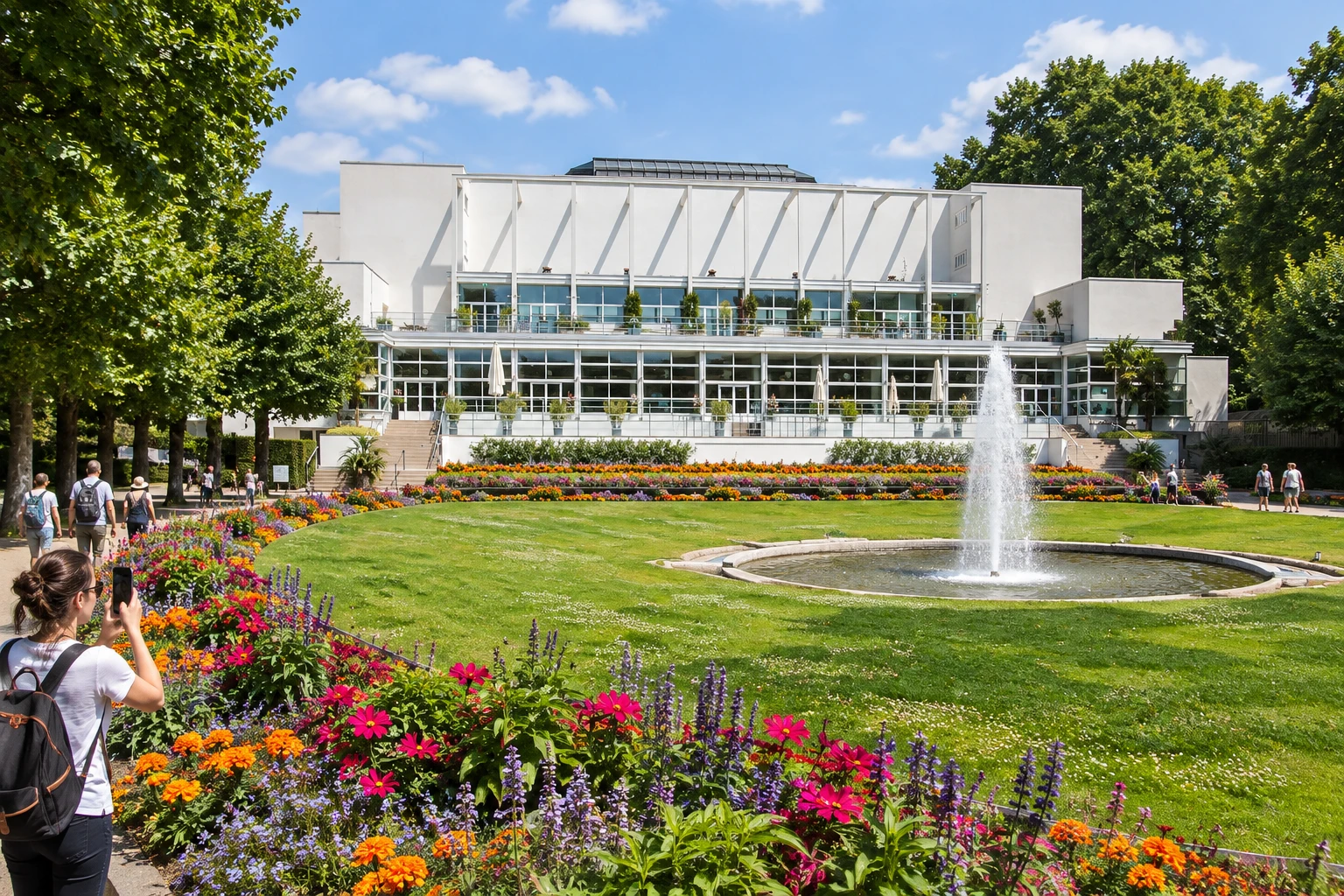
A 22-hectare botanical garden opened in 1871 in the Westend district, with tropical plant greenhouses, outdoor themed areas and lakes.
To choose before you go
The details of each tour (where it leaves from, what it includes, the best time) are in the complete guide.
Get your questions answered
The guide's itineraries cover 3, 5 and 7 days: in 3 days, the city and one day of castles; in 5 days, city, Rheingau and the Middle Rhine castles; in 7 days, the whole city and the Rhine on both banks.
Arrival, historic center and Eiserner Steg. The overnight flight from São Paulo or Rio arrives in the morning at Frankfurt Airport. From the regional station beneath Terminal 1, the S-Bahn takes about 15 minutes to the Hauptbahnhof. Drop your bags and take an easy day to cope with jet lag: walk the historic center, including the Römerberg, the Neue Altstadt, the Kaiserdom and the Paulskirche, have a standing lunch at the Kleinmarkthalle and, in the late afternoon, cross the Eiserner Steg to Sachsenhausen for dinner in a tavern. Go to bed early.
It generally rains less from January to April and in September and November. The guide covers each month, with the weather and what changes on the tours.
To plan