Things to do in Bavarian Castles and the Romantic Road
16 places to visit and 16 tours, chosen by the Cidade Turismo guide.
Updated
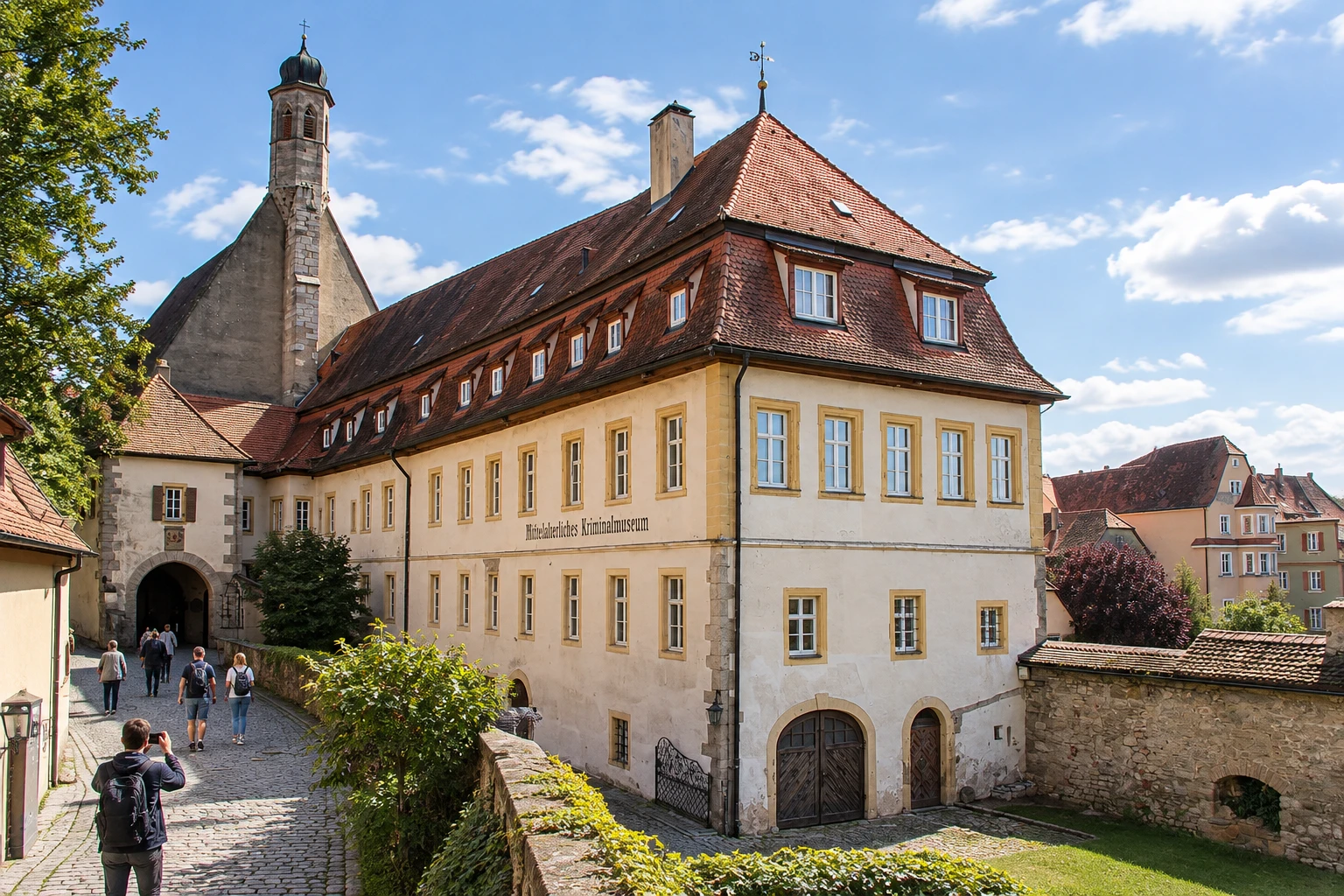
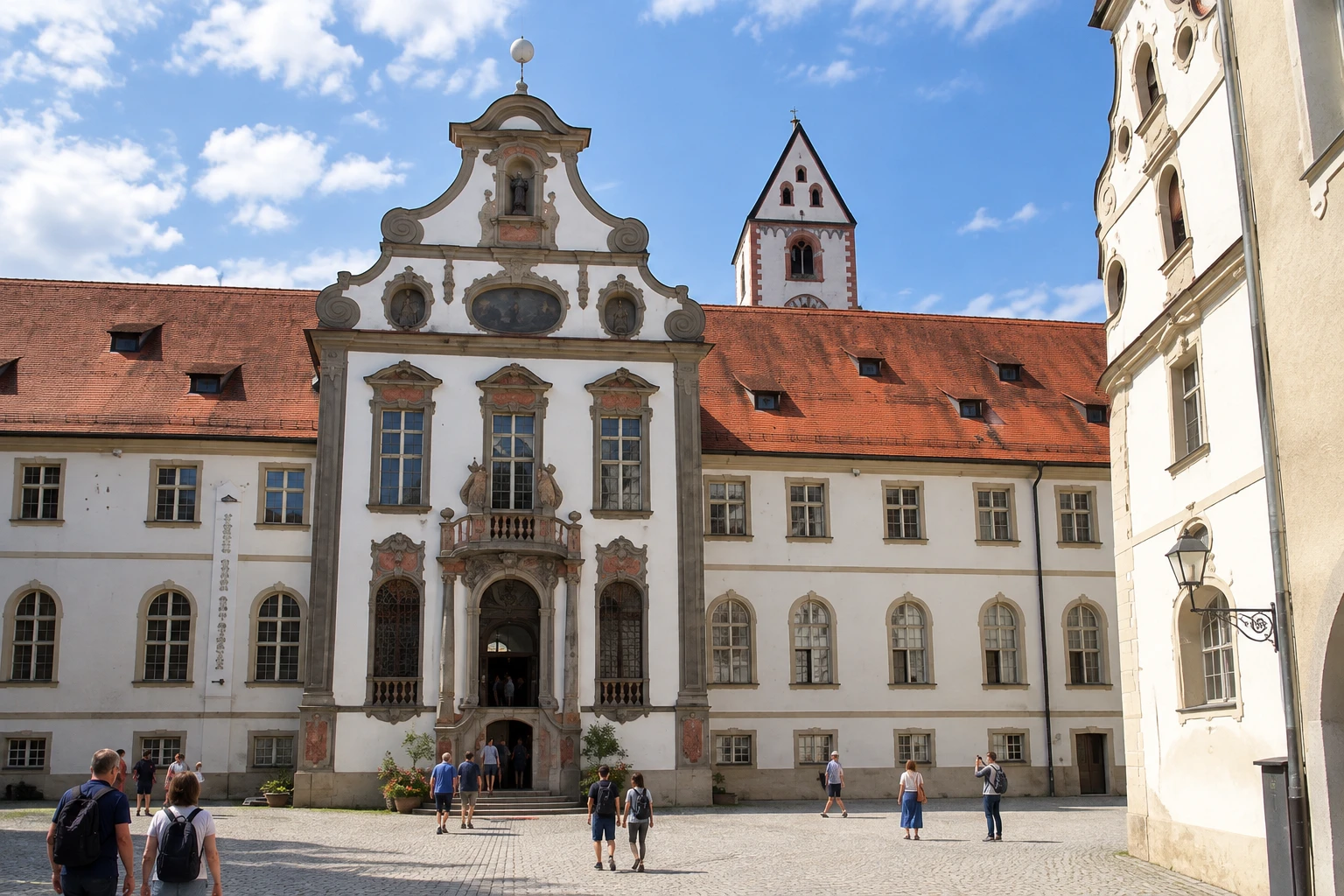
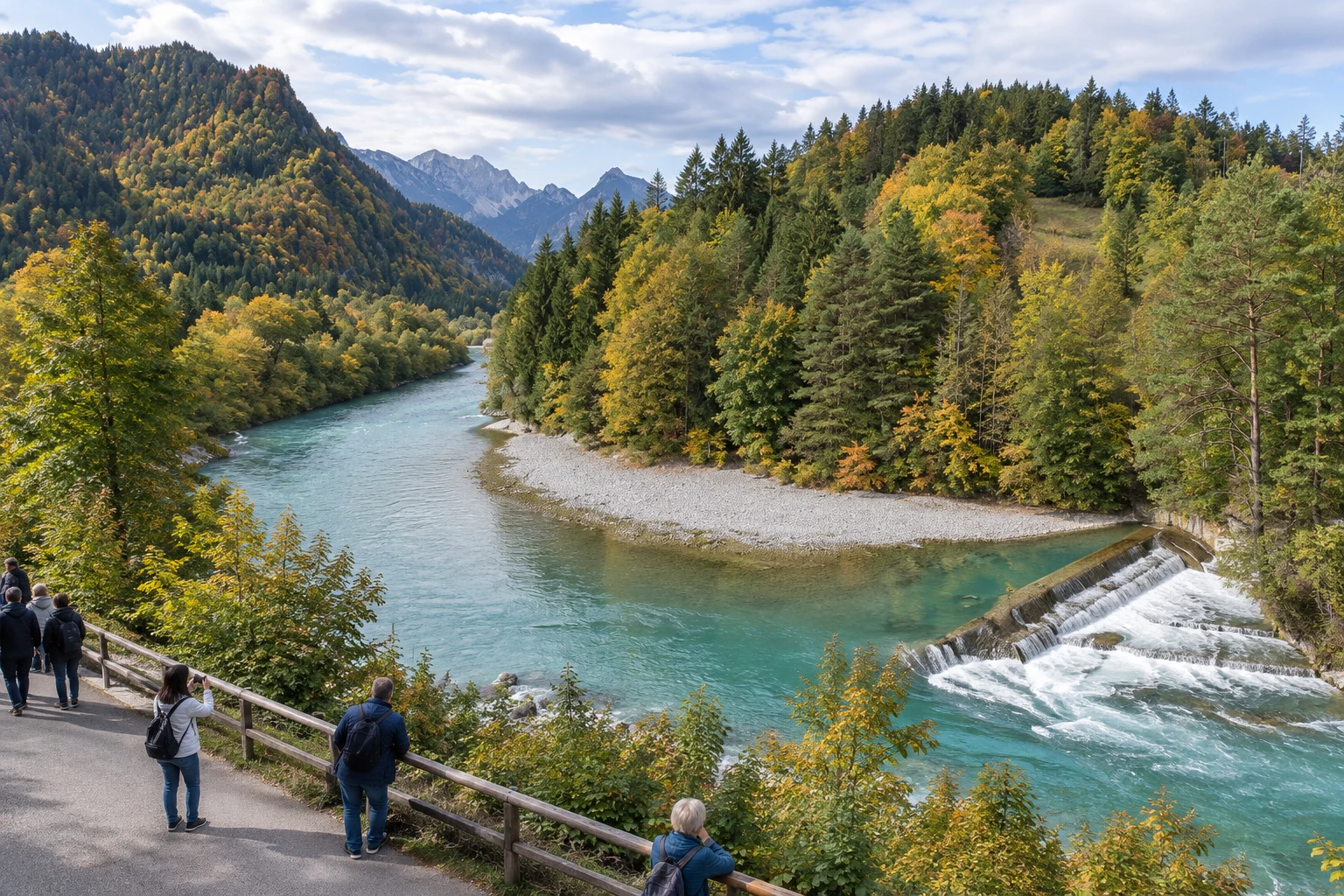
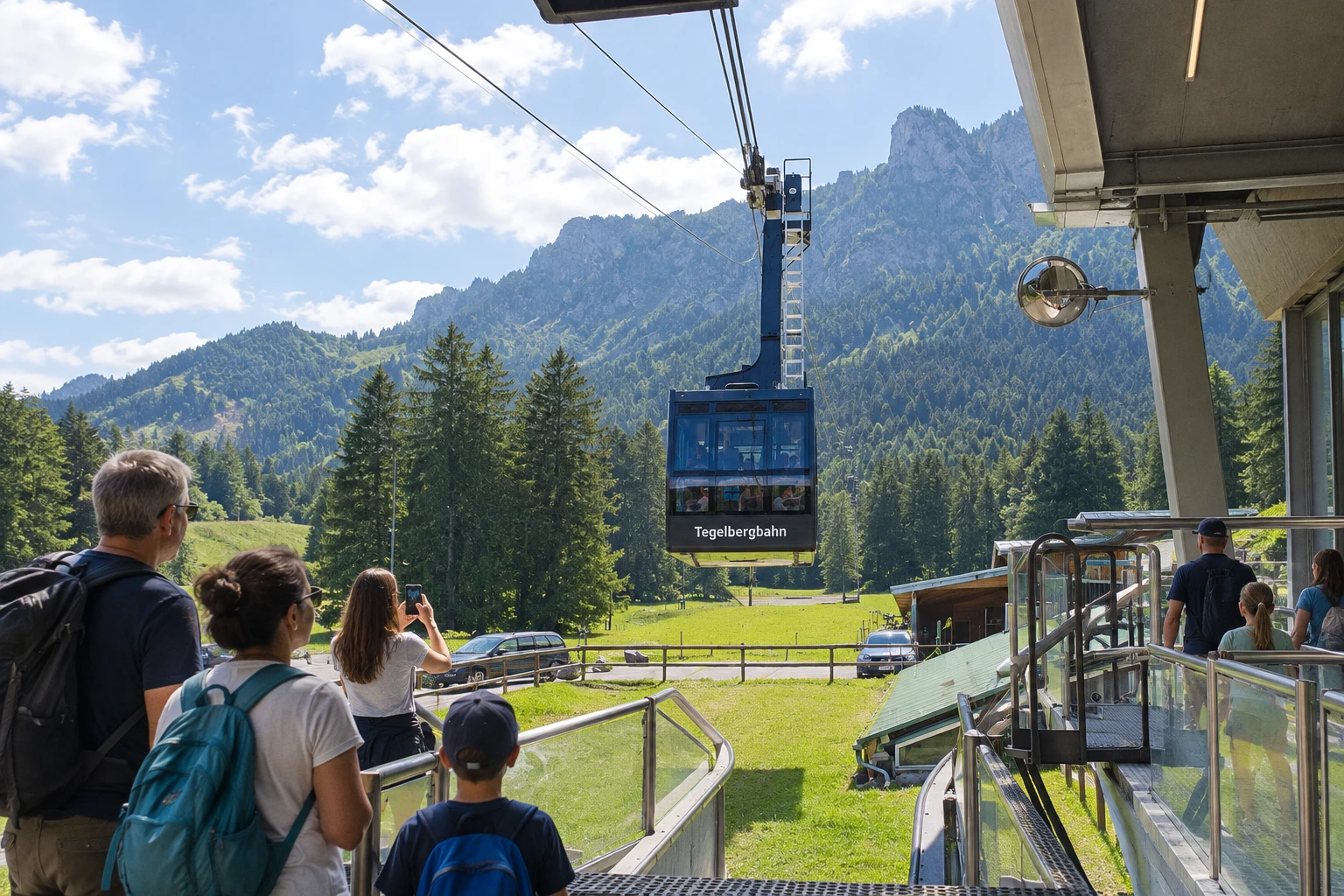
Illustrative images. The pictures in this guide are illustrations based on the real place, not photographs, and may differ from it.
To start
The 10 main places Bavarian Castles and the Romantic Road
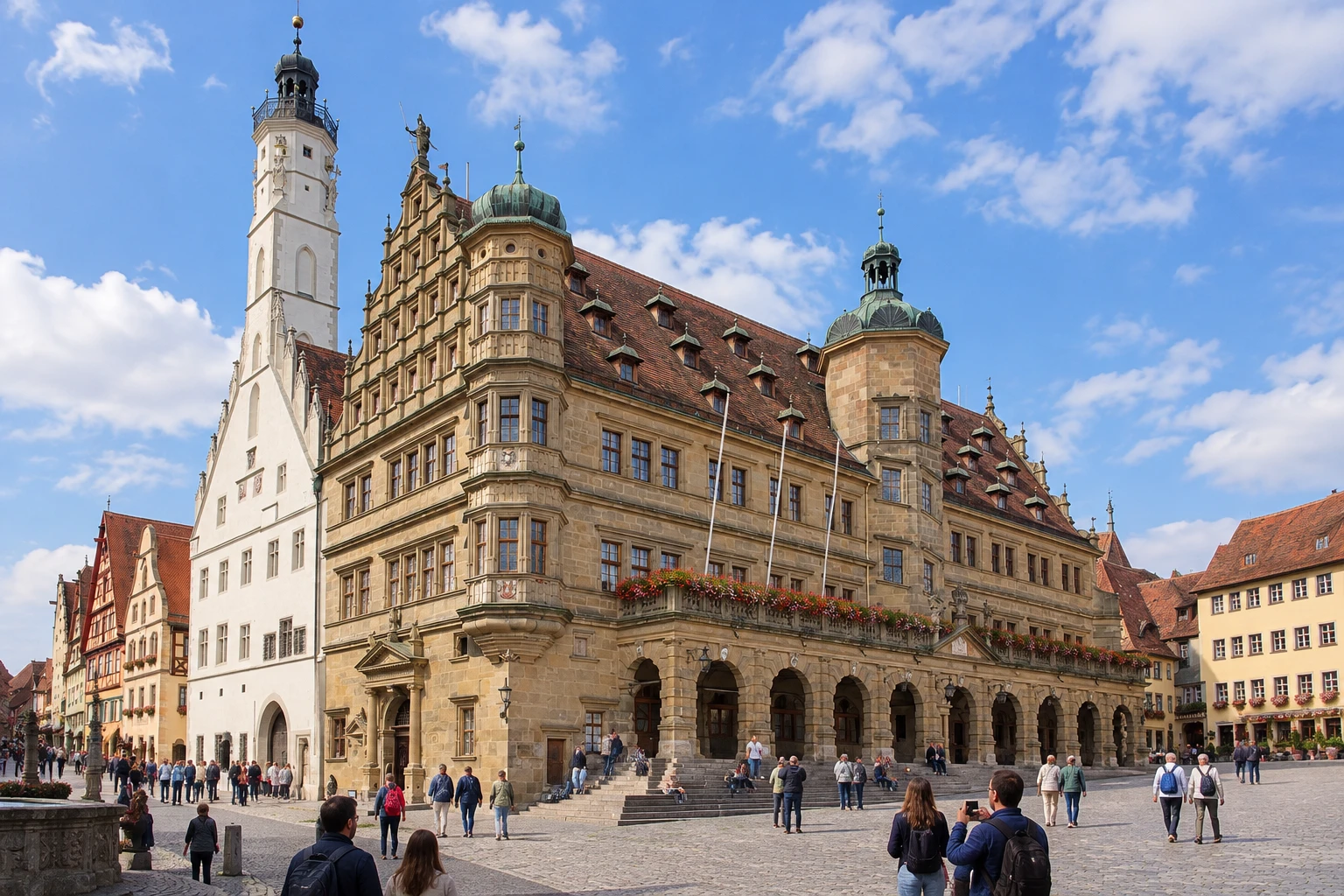
Market Square and Town Hall · Rothenburg ob der TauberRothenburg's central square, with the Gothic and Renaissance town hall, the tower with a 60-meter viewpoint, and the Ratstrinkstube clock that enacts the legend of the Meistertr...
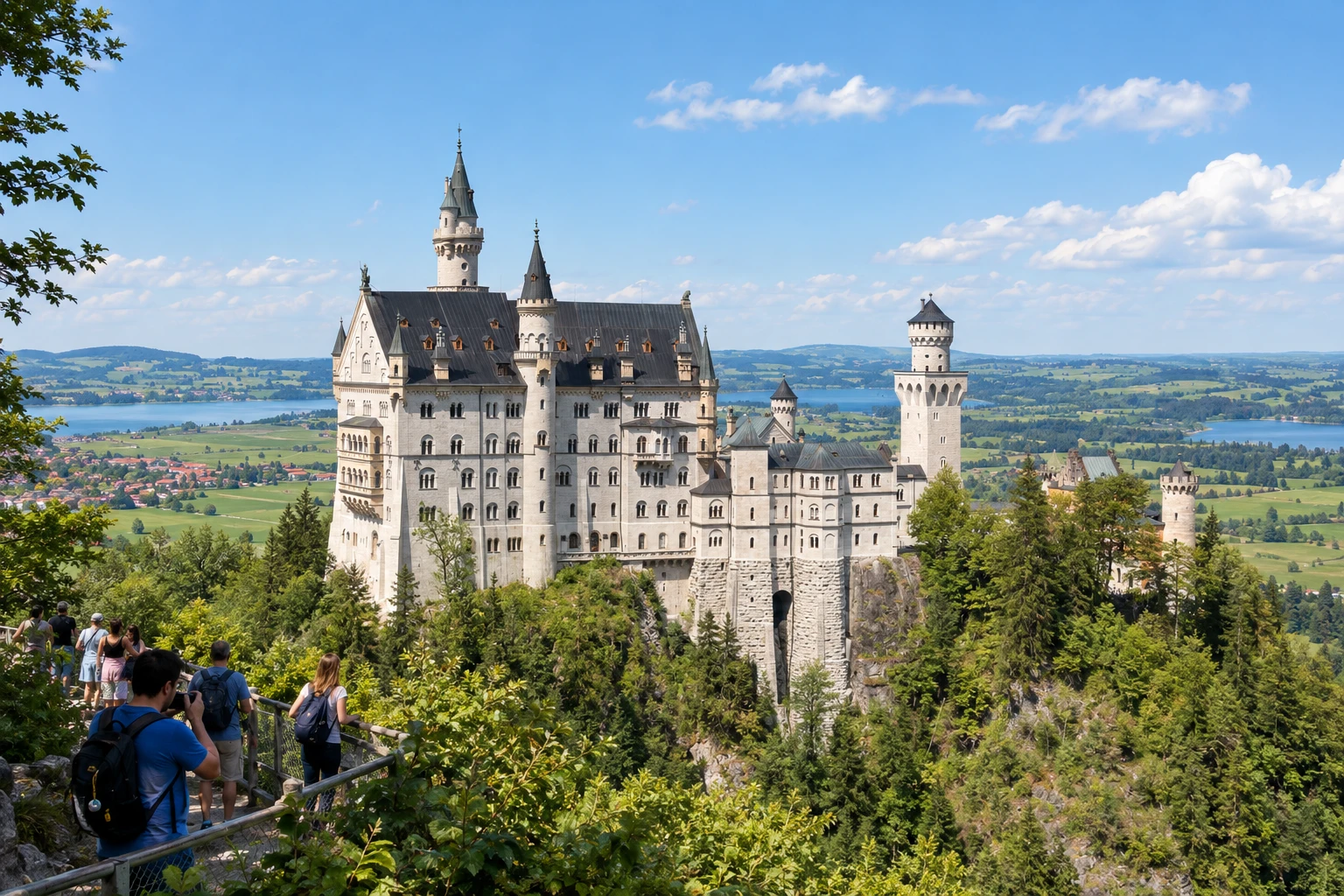
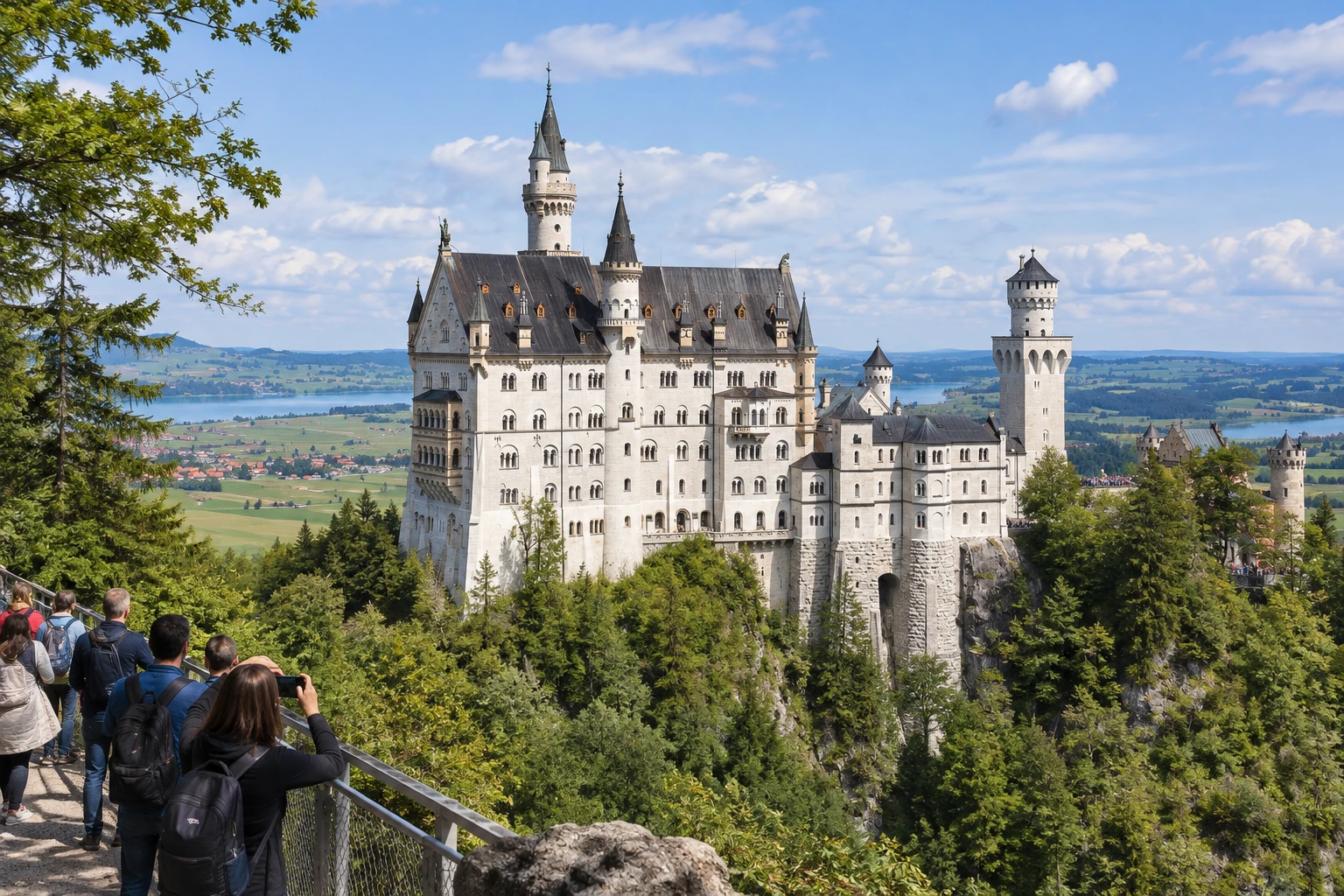
Neuschwanstein Castle · FüssenThe castle that Ludwig II commissioned from 1869, built on a rock above the Pöllat gorge in Schwangau.
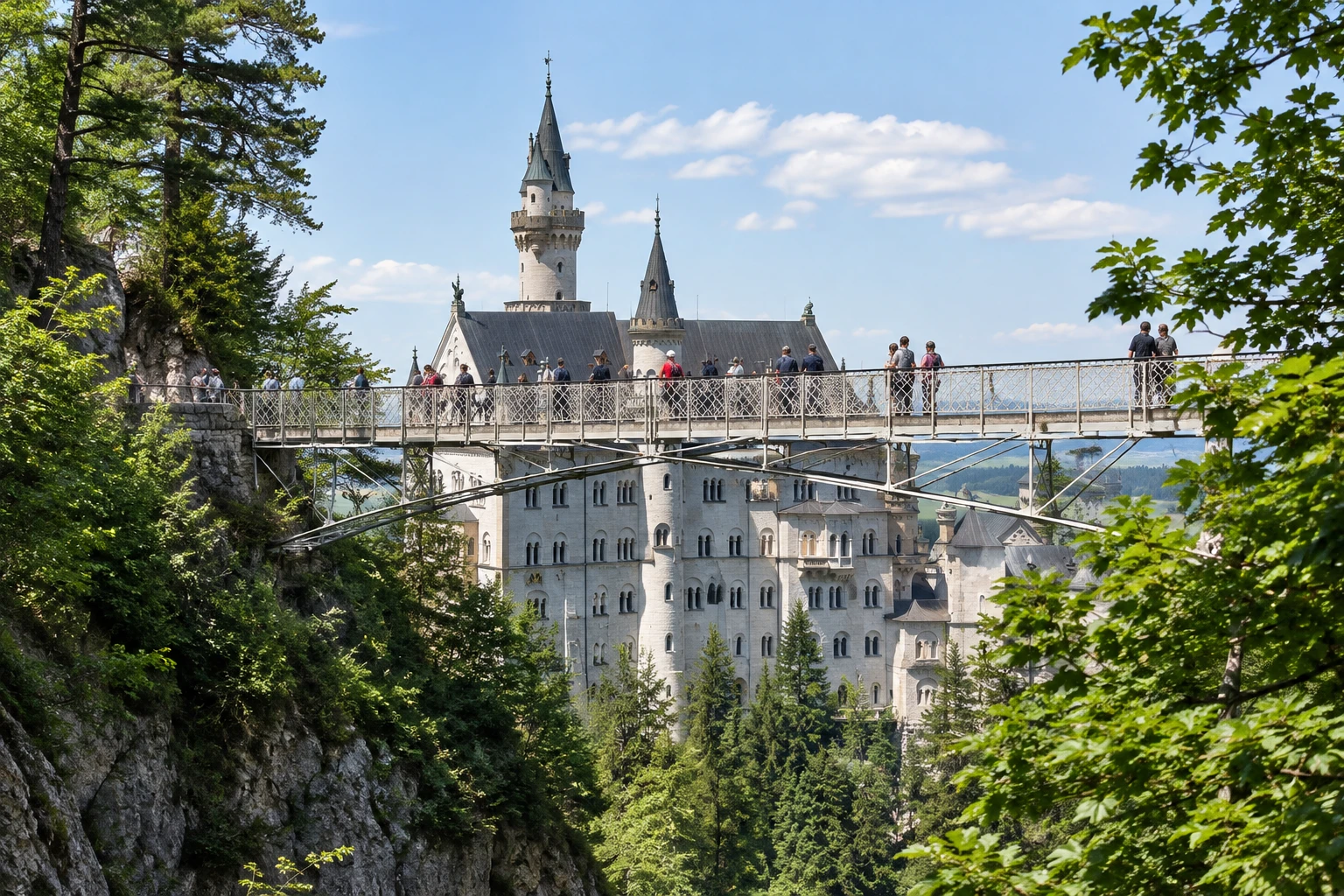
Mary's Bridge · FüssenIron bridge over the Pöllat gorge, offering the best-known view of Neuschwanstein.
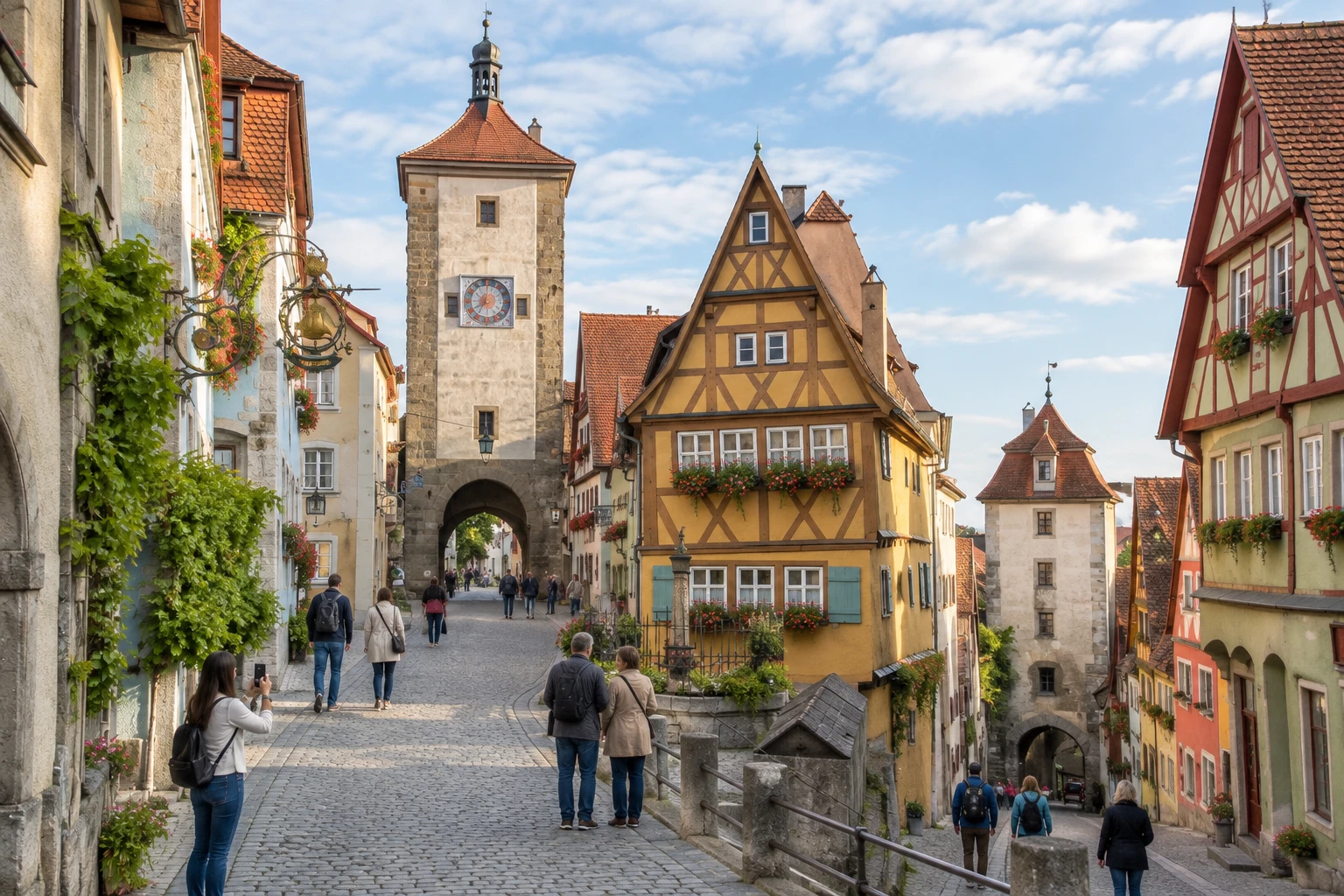
Plönlein · Rothenburg ob der TauberSmall triangular square where the street splits in two, with half‑timbered houses and the Siebersturm and Kobolzeller Tor towers in the background: the most photographed scene i...
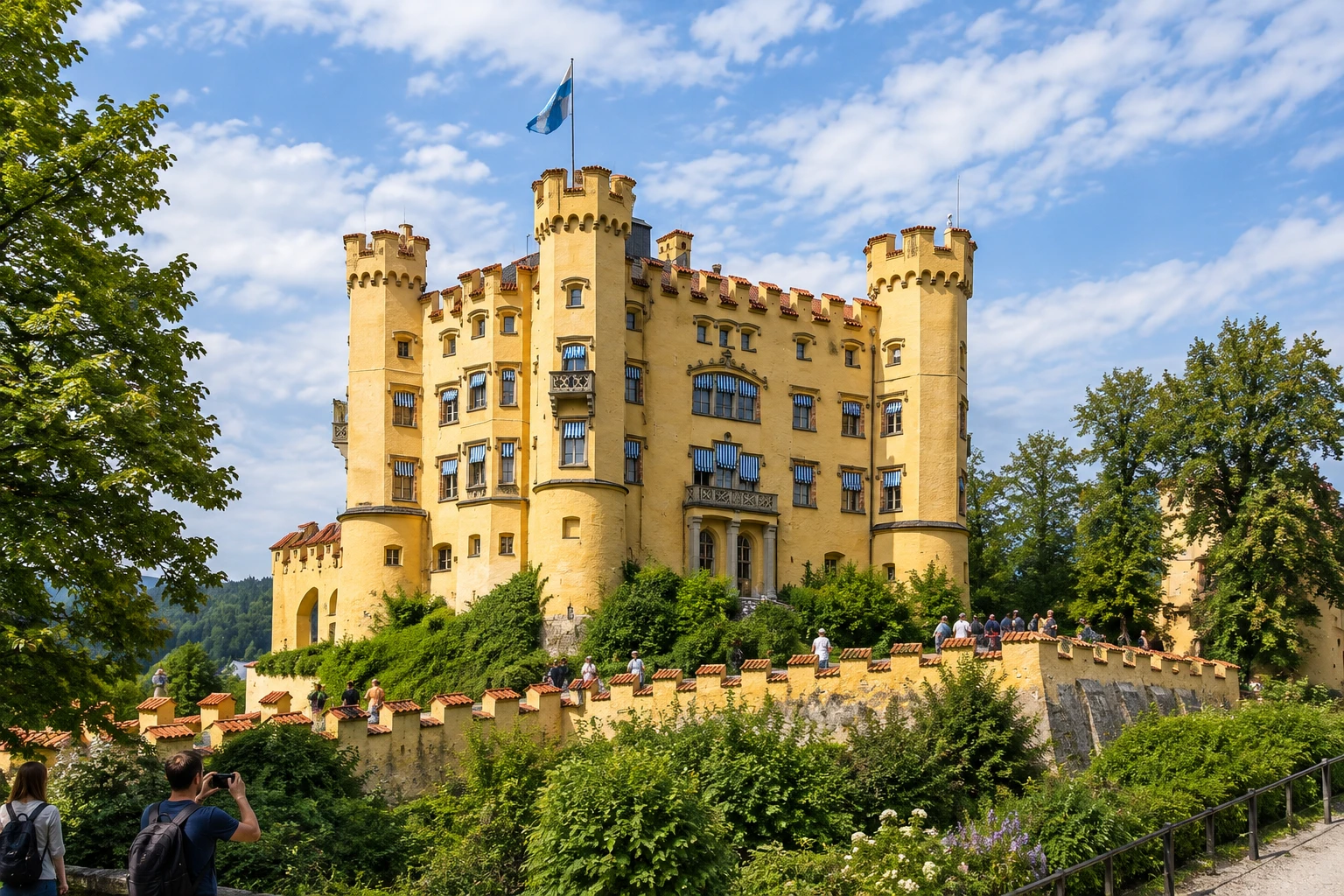
Hohenschwangau Castle · FüssenYellow neo-Gothic castle opposite Neuschwanstein, the summer residence of the Bavarian royal family, where Ludwig II spent part of his childhood.
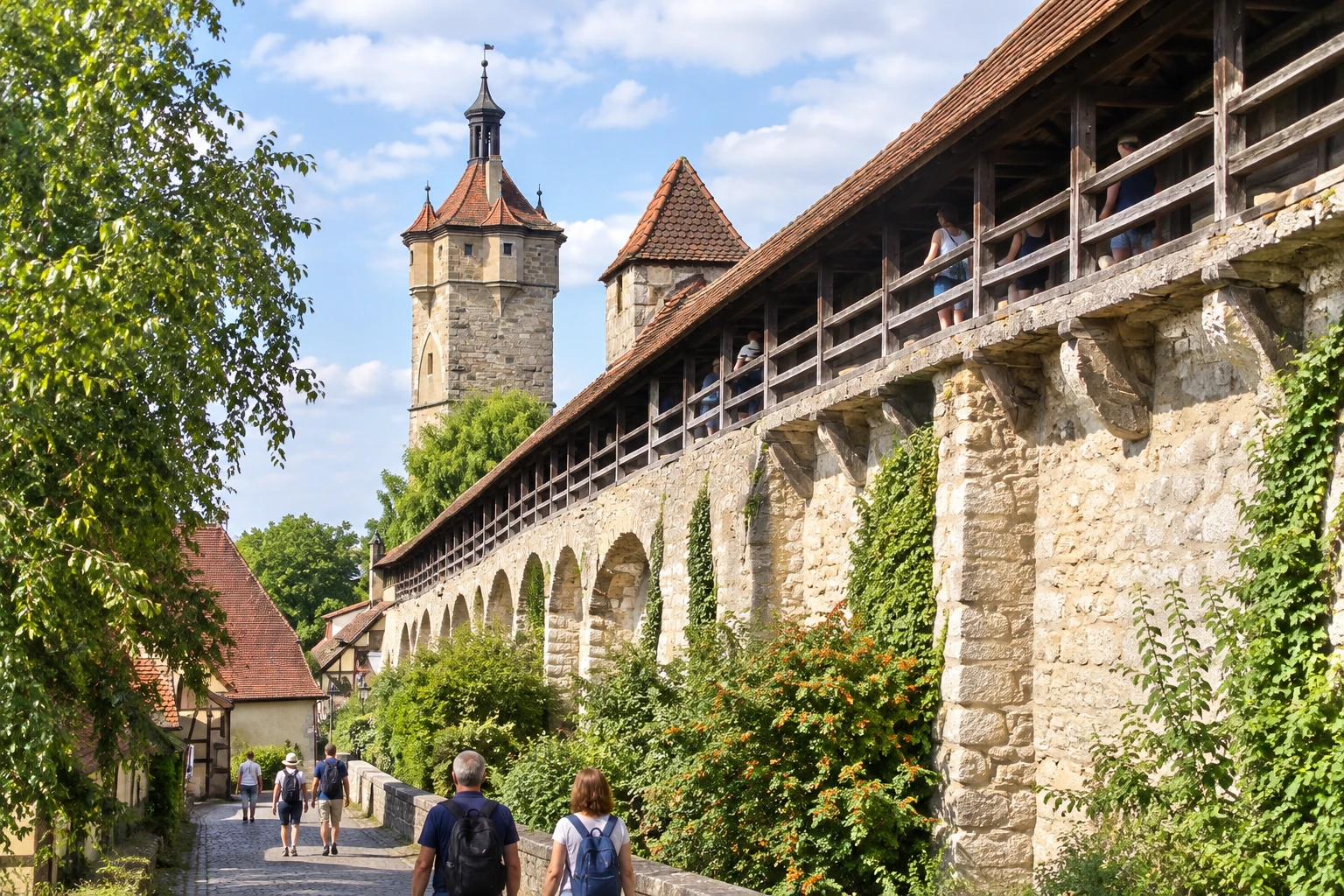
Rothenburg Town Walls · Rothenburg ob der TauberThe medieval wall that still surrounds the entire town, with a covered walkway along the ramparts, towers and gates such as the Rödertor, the Klingentor and the Spitaltor.
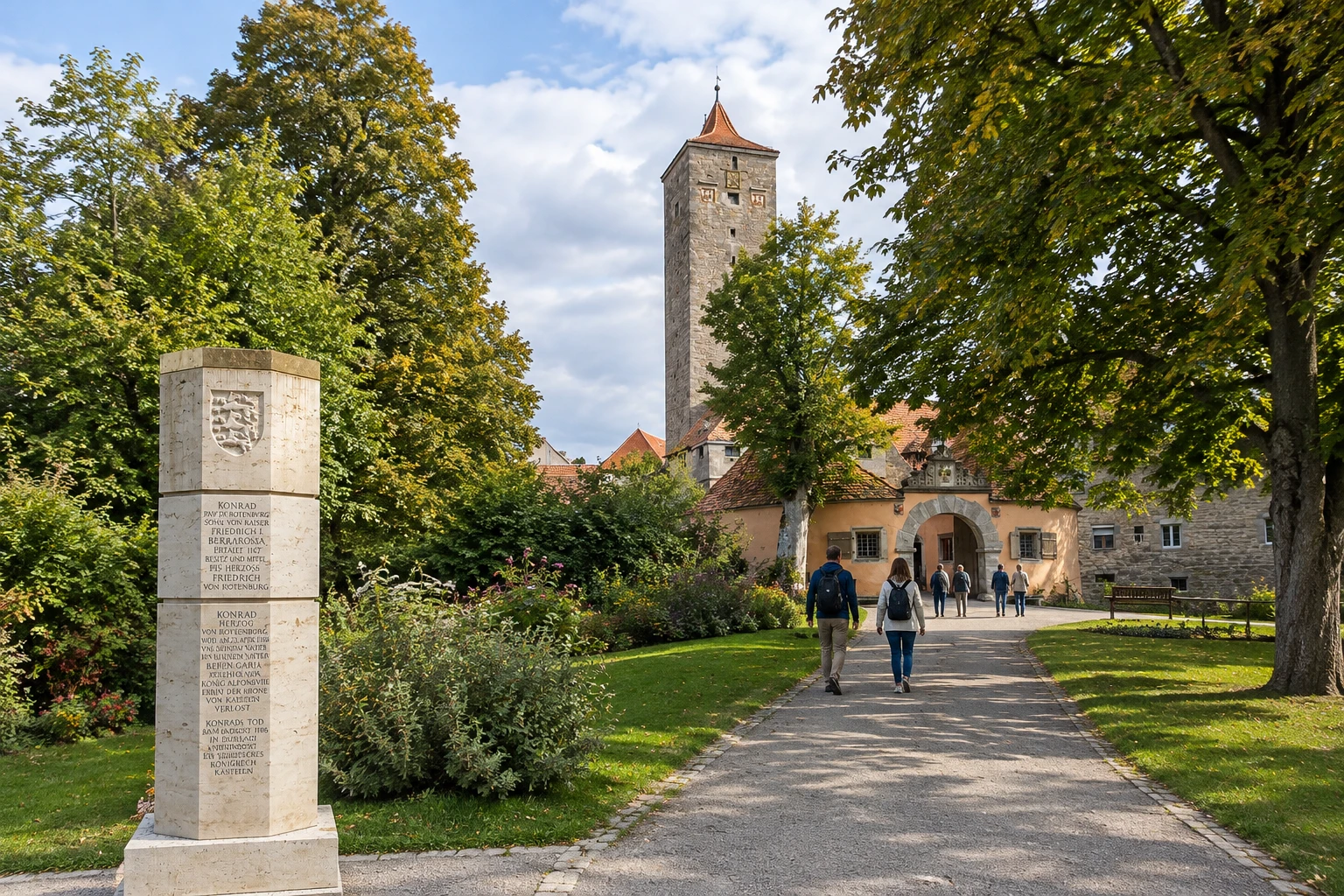
Castle Garden · Rothenburg ob der TauberGarden on the site of the former imperial castle of the Staufer, on a promontory over the Tauber valley, with the chapel of São Brás and views of the wall and countryside.
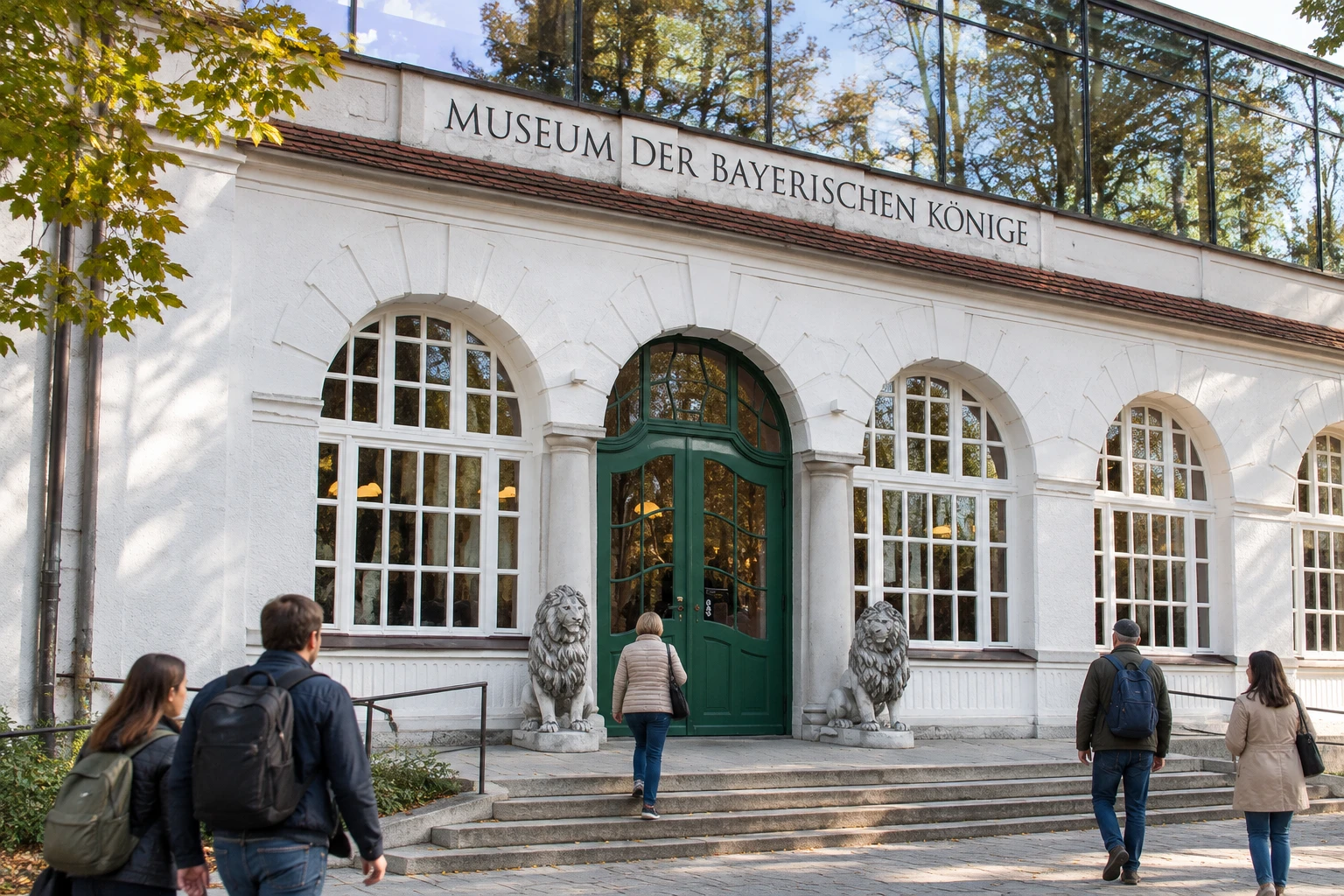
Museum of the Bavarian Kings · FüssenMuseum on the shore of the Alpsee in Hohenschwangau about the Wittelsbach dynasty and the kings of Bavaria, with a focus on Maximilian II and Ludwig II.
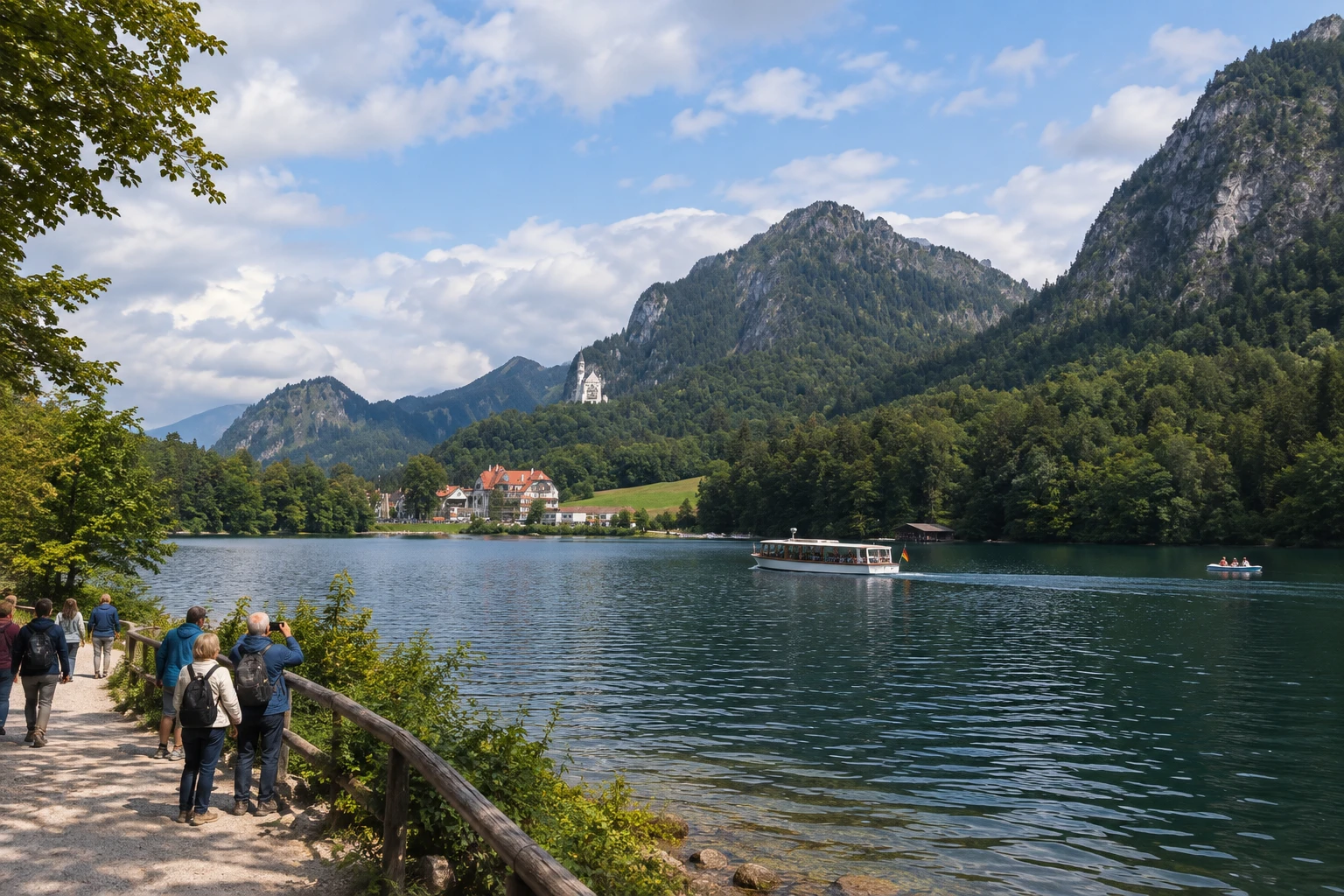
Lake Alpsee · FüssenA clear-water lake at the foot of Hohenschwangau, surrounded by mountains, with a trail around it, a viewpoint and boat rentals in summer.
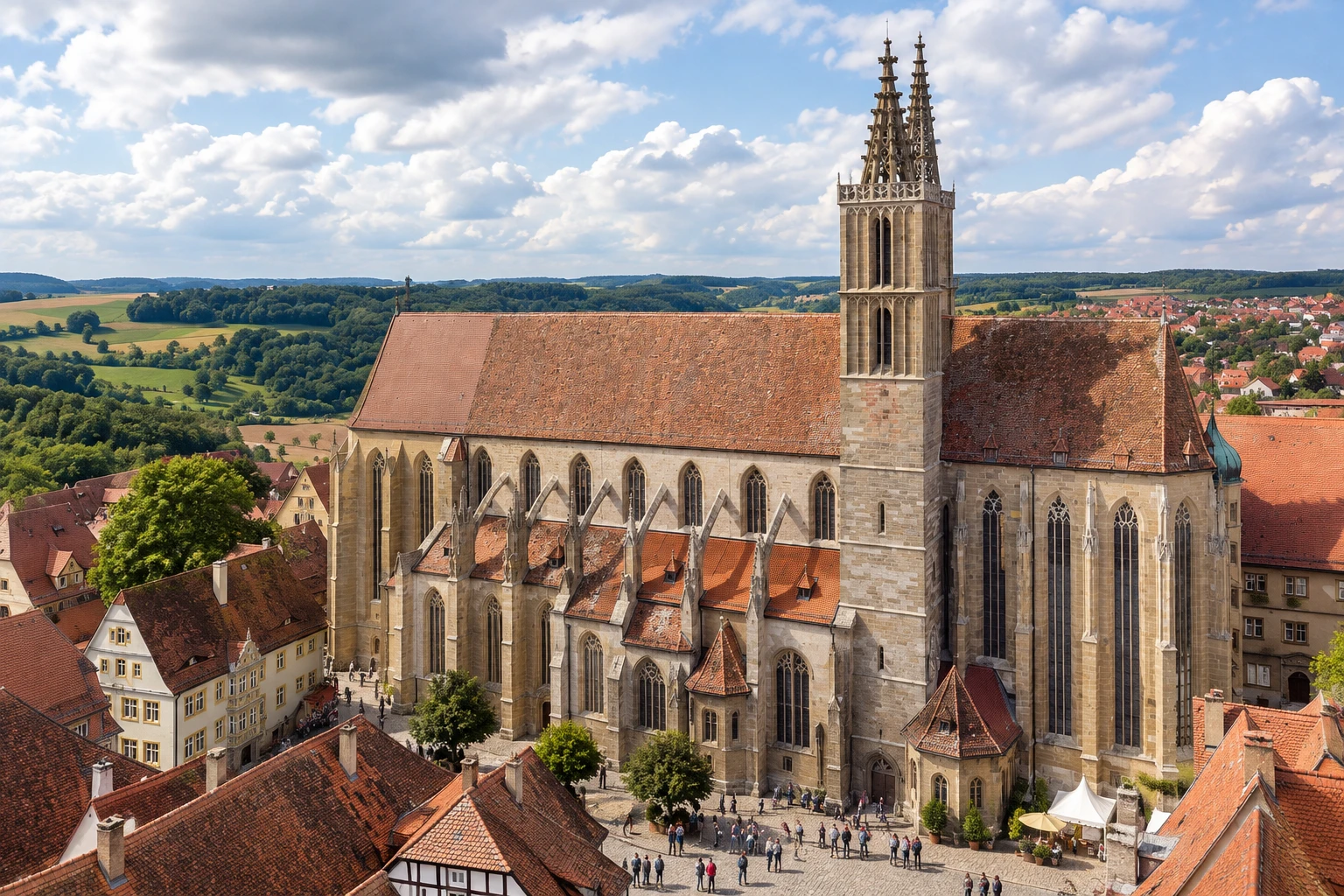
St. James's Church · Rothenburg ob der TauberMain Gothic church of Rothenburg, with the Holy Blood altarpiece carved by Tilman Riemenschneider between 1500 and 1505.
Rothenburg's central square, with the Gothic and Renaissance town hall, the tower with a 60-meter viewpoint, and the Ratstrinkstube clock that enacts the legend of the Meistertrunk.
The castle that Ludwig II commissioned from 1869, built on a rock above the Pöllat gorge in Schwangau. It can only be visited inside on a guided tour at a pre-booked time.
Small triangular square where the street splits in two, with half‑timbered houses and the Siebersturm and Kobolzeller Tor towers in the background: the most photographed scene in Rothenburg.
The medieval wall that still surrounds the entire town, with a covered walkway along the ramparts, towers and gates such as the Rödertor, the Klingentor and the Spitaltor.
Garden on the site of the former imperial castle of the Staufer, on a promontory over the Tauber valley, with the chapel of São Brás and views of the wall and countryside.
Museum on the shore of the Alpsee in Hohenschwangau about the Wittelsbach dynasty and the kings of Bavaria, with a focus on Maximilian II and Ludwig II.
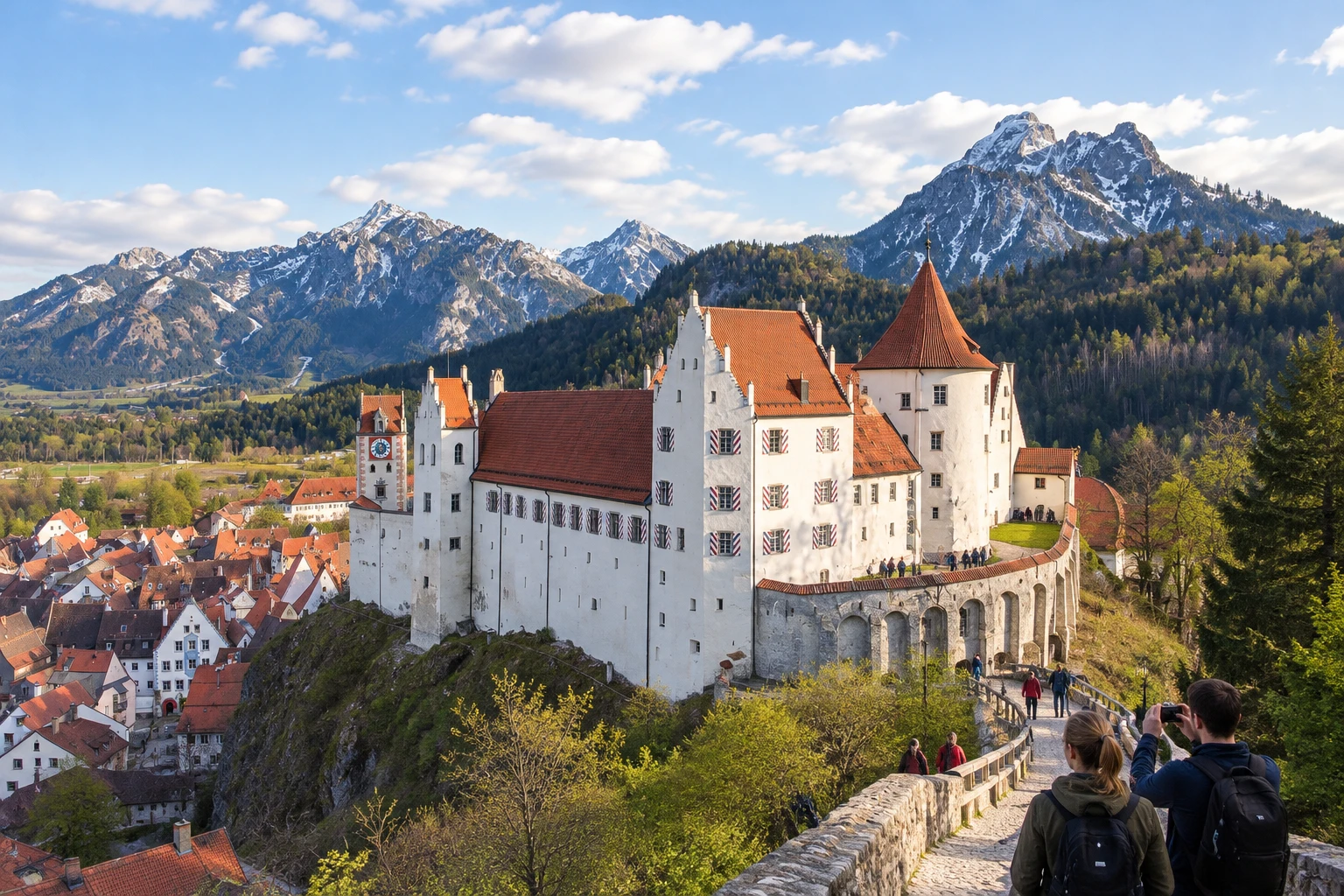
A Gothic castle of the prince-bishops of Augsburg overlooking the Altstadt of Füssen, featuring trompe-l'œil paintings in the courtyard and galleries of Gothic art from Swabia.
Museum about the history of Christmas traditions in Germany, with antique tree decorations, nativity scenes and Advent calendars, inside the Käthe Wohlfahrt shop.
Museum in the former Baroque monastery of St. Mang, with Baroque halls, the collection of lutes and violins that made Füssen famous, and a Dance of Death from 1602.
How many days should you set aside to see Bavarian Castles and the Romantic Road?
The guide's itineraries cover 2, 3 and 5 days: in 2 days, Neuschwanstein, Hohenschwangau and Füssen; Füssen and the castles in 3 days, with the Tegelberg and the Lechfall; in 5 days, from Fussen to Rothenburg ob der Tauber.
What to do Bavarian Castles and the Romantic Road in one day?
Arrival via Munich, train to Fussen and afternoon in the old town. The overnight flight from Brazil arrives in the morning in Munich (München). From the airport, the S-Bahn S1 or S8 takes about 40 minutes to the Hauptbahnhof (central station); from there, the regional train to Fussen takes about 2 hours, usually with a change at Buchloe or Kaufbeuren. Drop your bags and keep the day easy to cope with the time difference: walk around Fussen, including Reichenstraße, the Hohes Schloss and the St. Mang monastery, and, if possible, the Lechfall in the late afternoon. Check on your phone whether the Marienbrücke will be open tomorrow and whether you have the castles’ tickets. Go to bed early.


 Brazil
 Antarctica
 Argentina
 Bolivia
 Chile
 Colombia
 Ecuador
 Falkland Islands (Malvinas)
 French Guiana
 Guyana
 Paraguay
 Peru
 Suriname
 Uruguay
 Venezuela
 Austria
 Belgium
 Croatia
 Denmark
 Finland
 France
 Greece
 Hungary
 Iceland
 Ireland
 Italy
 Luxembourg
 Norway
 Poland
 Portugal
 Slovakia
 Slovenia
 Spain
 Sweden
 Switzerland
 the Czech Republic
 the Netherlands
 the United Kingdom
 Turkey
 Bermuda
 Canada
 Greenland
 Mexico
 Saint Pierre and Miquelon
 the United States
 the Dominican Republic
 Japan
 Egypt
 South Africa
 Australia
 Fiji
 New Zealand
 Papua New Guinea