6 places to visit Porlamar (Venezuela), chosen by the Cidade Turismo guide.
Illustrative images. The pictures in this guide are illustrations based on the real place, not photographs, and may differ from it.
To start
The 6 main places Porlamar
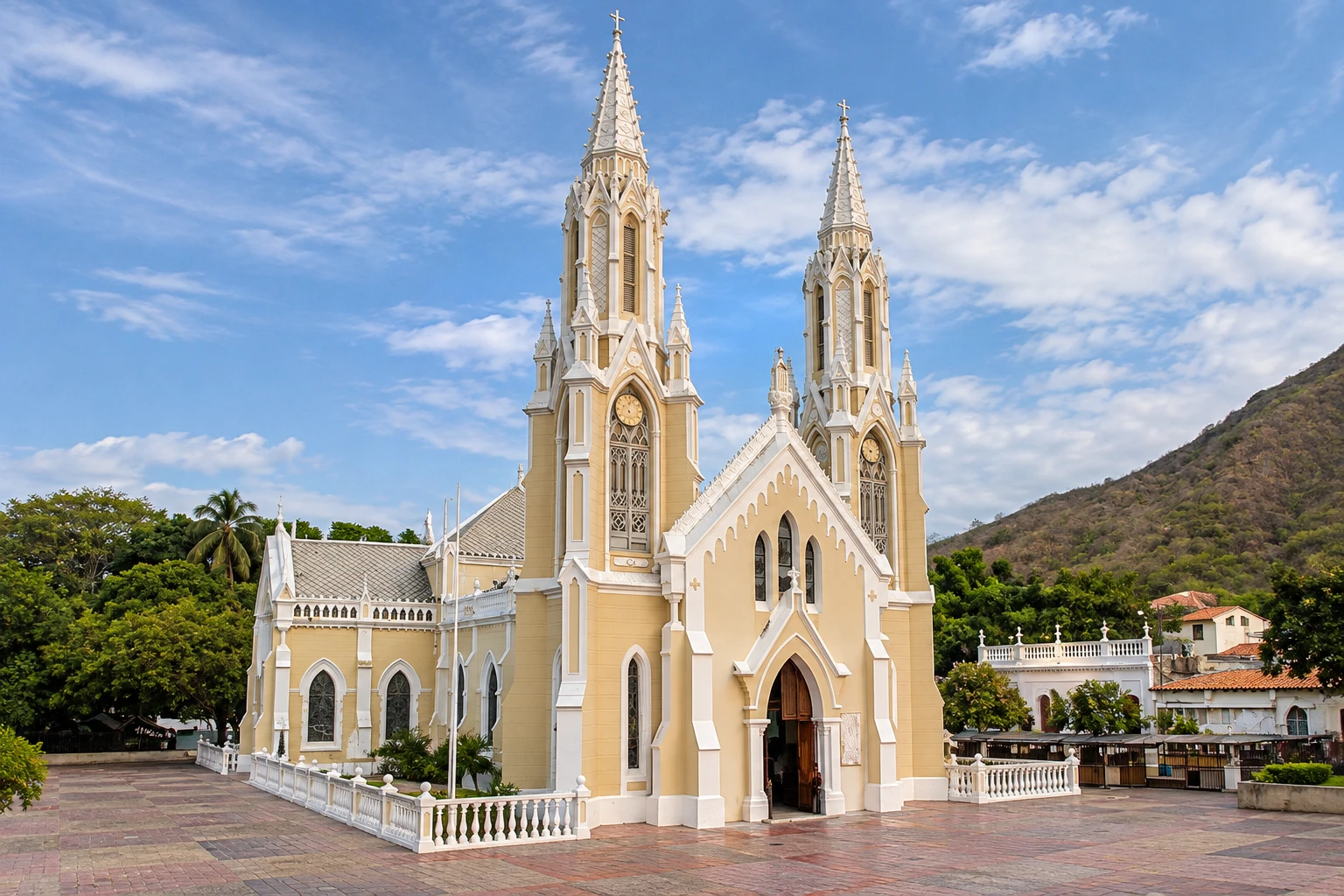
Basilica of Our Lady of the ValleyThe sanctuary of the Virgem do Vale, patron saint of eastern Venezuela and of fishermen, in El Valle del Espíritu Santo, 5 km from Porlamar.
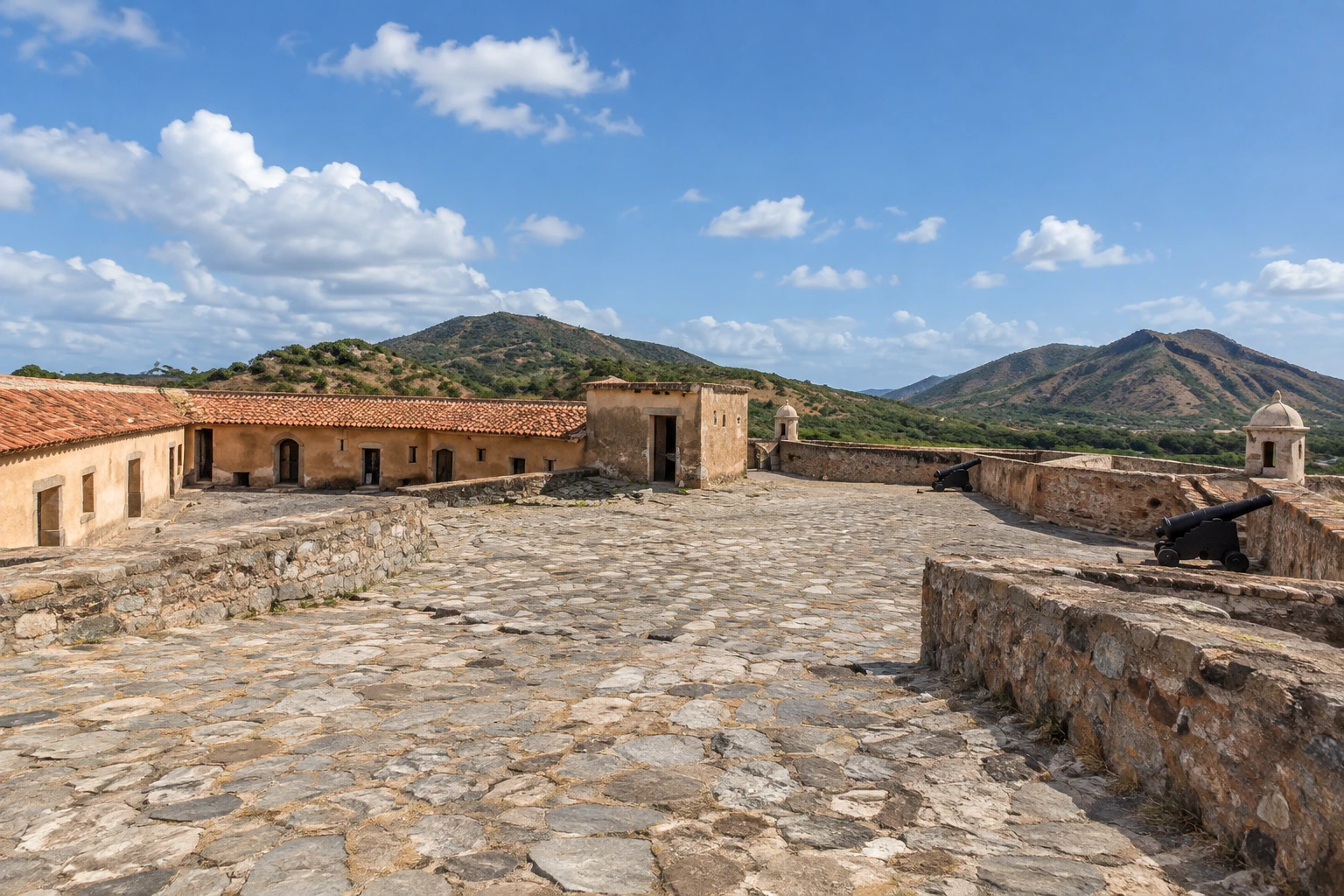
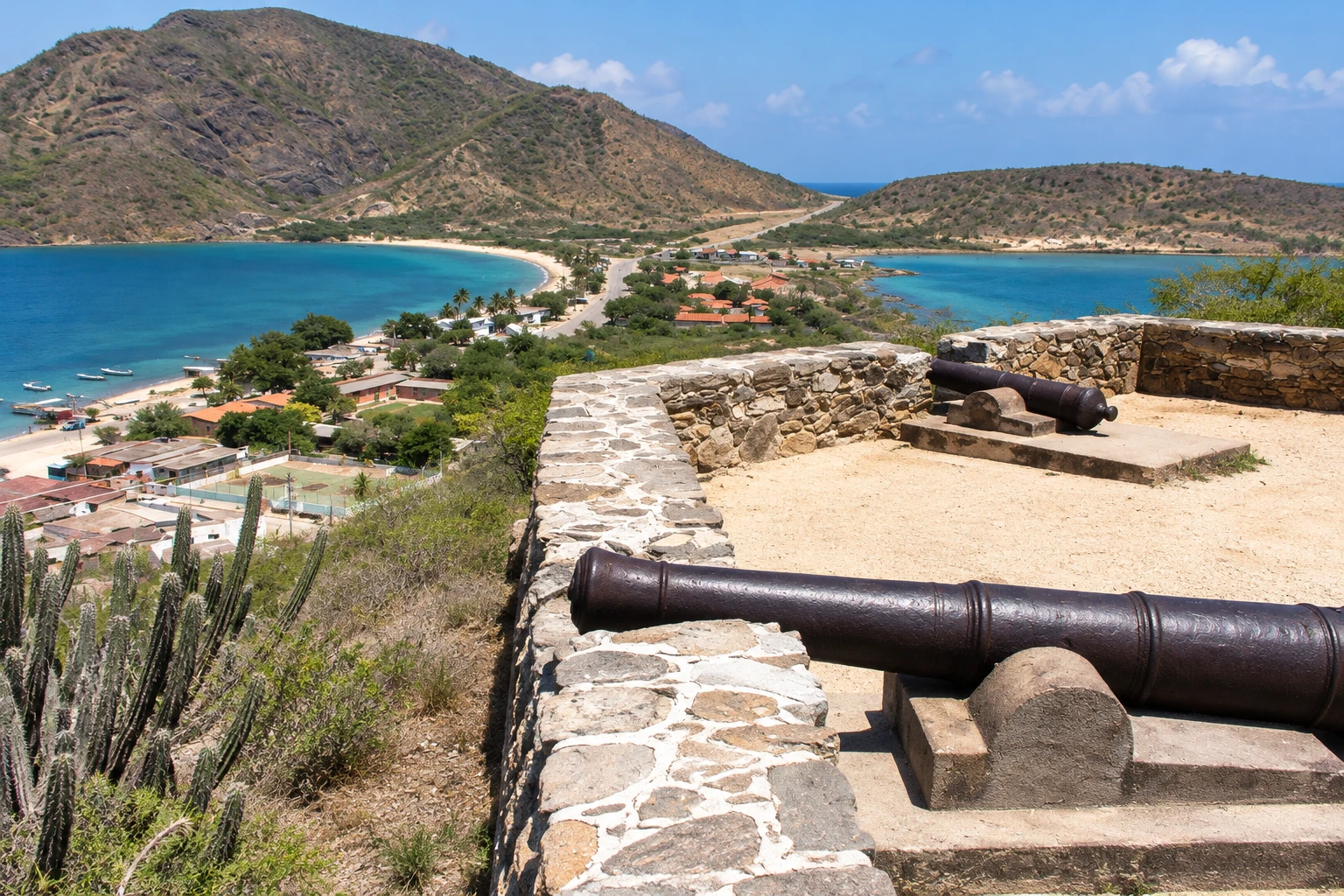
Santa Rosa CastleThe Spanish fort atop a hill in La Asunción, the capital of Margarita, completed in 1682.
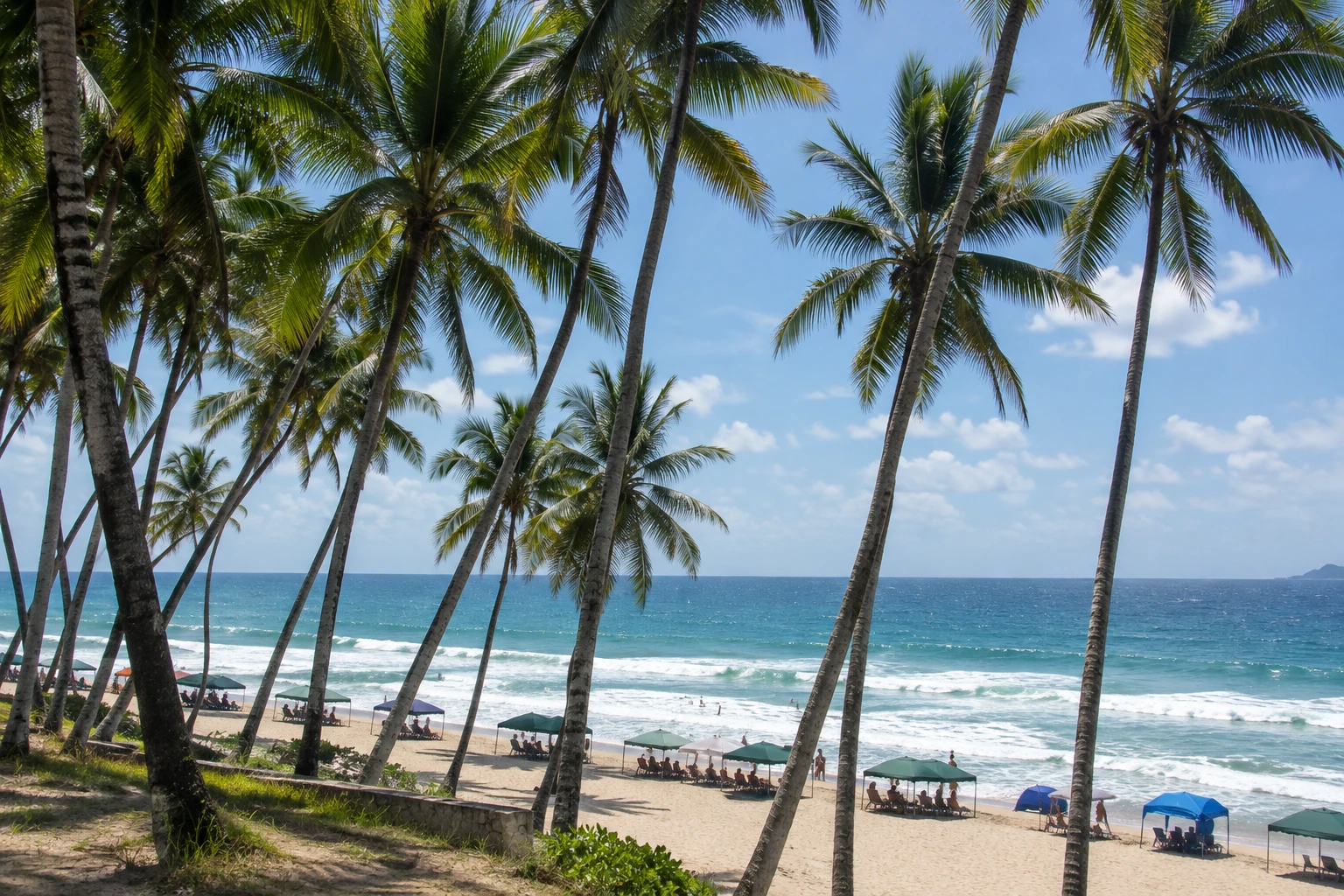
Playa El AguaThe best-known beach of Margarita, on the northeast coast: about 4 km of light, fine sand, coconut palms, fish restaurants under the palms and open sea with waves.
La Galera FortThe fort atop the hill overlooking the bay of Juan Griego, in northwest Margarita, linked to the island's independence history in 1817.
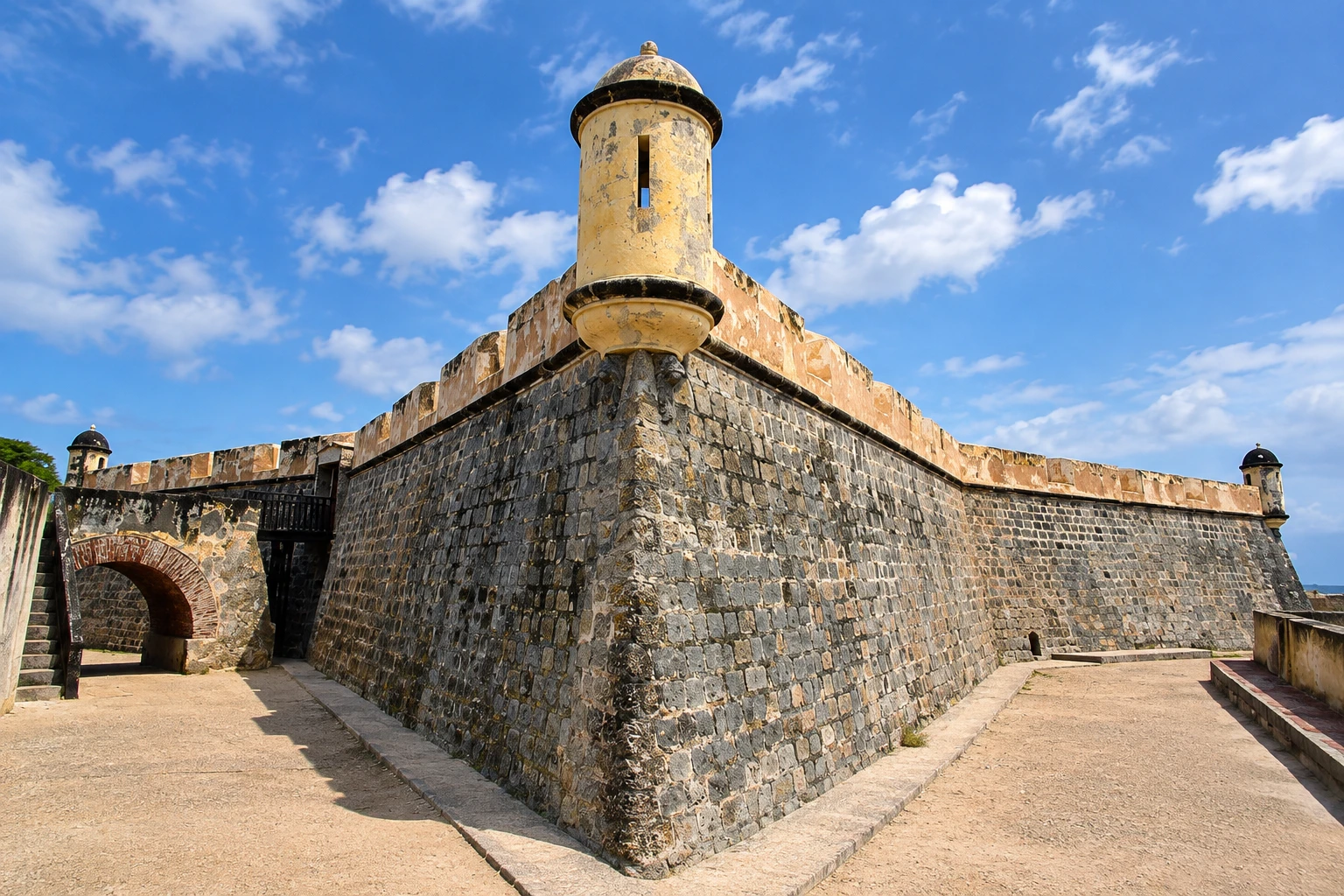
San Carlos de Borromeo FortressThe 17th-century Spanish fort on the waterfront of Pampatar, built of coral stone to protect the port from pirates and privateers.
The sanctuary of the Virgem do Vale, patron saint of eastern Venezuela and of fishermen, in El Valle del Espíritu Santo, 5 km from Porlamar. The neo-Gothic church, pink and white, receives pilgrims year-round and holds a major festival on September 8.
The Spanish fort atop a hill in La Asunción, the capital of Margarita, completed in 1682. The walls protect the cell where the heroine Luisa Cáceres de Arismendi was imprisoned and open out over the valley of Santa Lucía and the east coast.
The best-known beach of Margarita, on the northeast coast: about 4 km of light, fine sand, coconut palms, fish restaurants under the palms and open sea with waves. It is about 25 km from Porlamar.
The fort atop the hill overlooking the bay of Juan Griego, in northwest Margarita, linked to the island's independence history in 1817. It is the island's most popular viewpoint for the sunset.
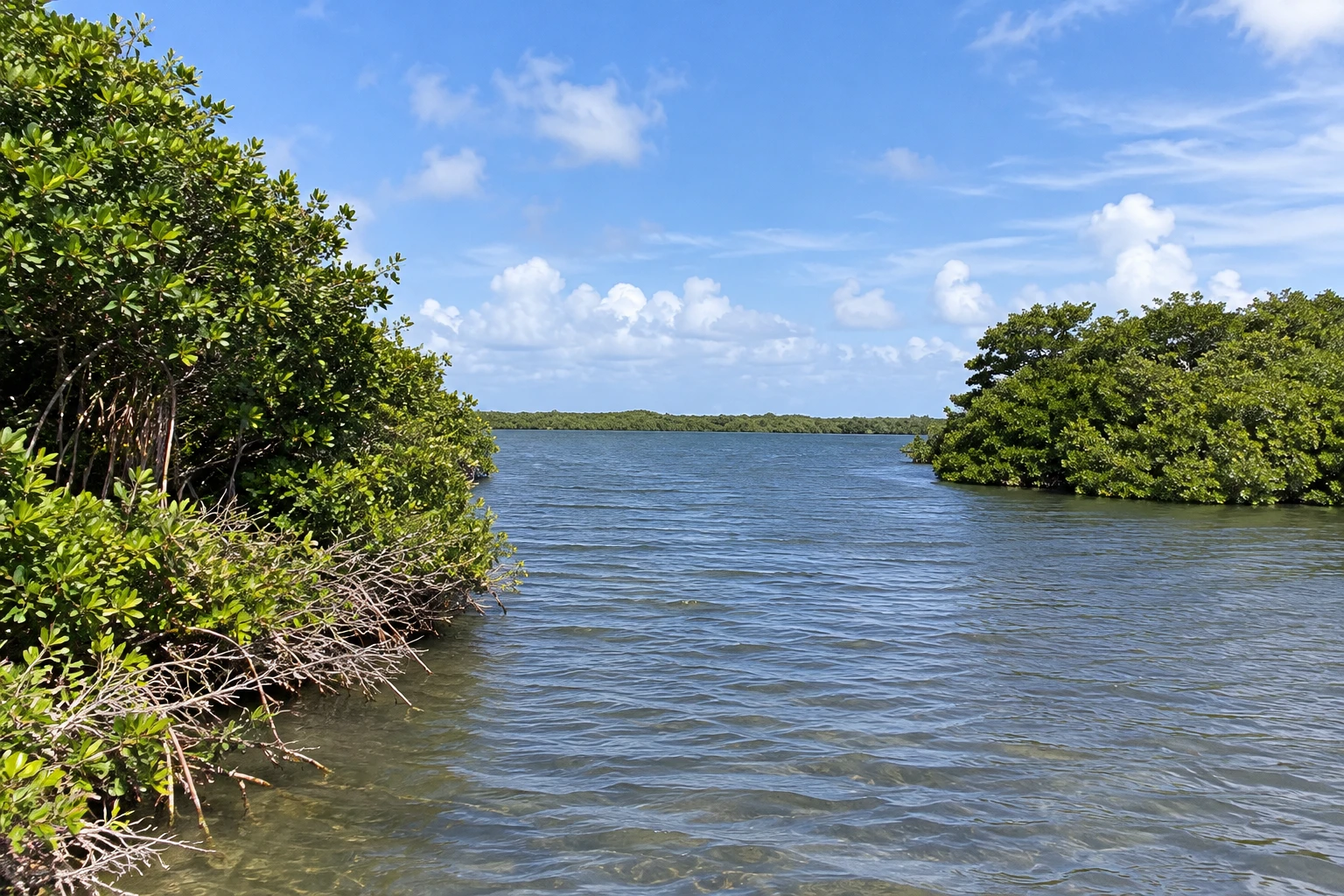
The mangrove lagoon that connects the two parts of Margarita, protected as a national park since 1974. Fishing boats travel the channels under the mangrove branches to a beach of more than 20 km, with shells and fish and oyster kiosks.
The 17th-century Spanish fort on the waterfront of Pampatar, built of coral stone to protect the port from pirates and privateers. It has star-shaped walls, a moat, cannons facing the bay and, opposite it, the church of Cristo del Buen Viaje.


 Brazil
 Antarctica
 Argentina
 Bolivia
 Chile
 Colombia
 Ecuador
 Falkland Islands (Malvinas)
 French Guiana
 Guyana
 Paraguay
 Peru
 Suriname
 Uruguay
 Austria
 Belgium
 Croatia
 Denmark
 Finland
 France
 Germany
 Greece
 Hungary
 Iceland
 Ireland
 Italy
 Luxembourg
 Norway
 Poland
 Portugal
 Slovakia
 Slovenia
 Spain
 Sweden
 Switzerland
 the Czech Republic
 the Netherlands
 the United Kingdom
 Turkey
 Bermuda
 Canada
 Greenland
 Mexico
 Saint Pierre and Miquelon
 the United States
 the Dominican Republic
 Japan
 Egypt
 South Africa
 Australia
 Fiji
 New Zealand
 Papua New Guinea