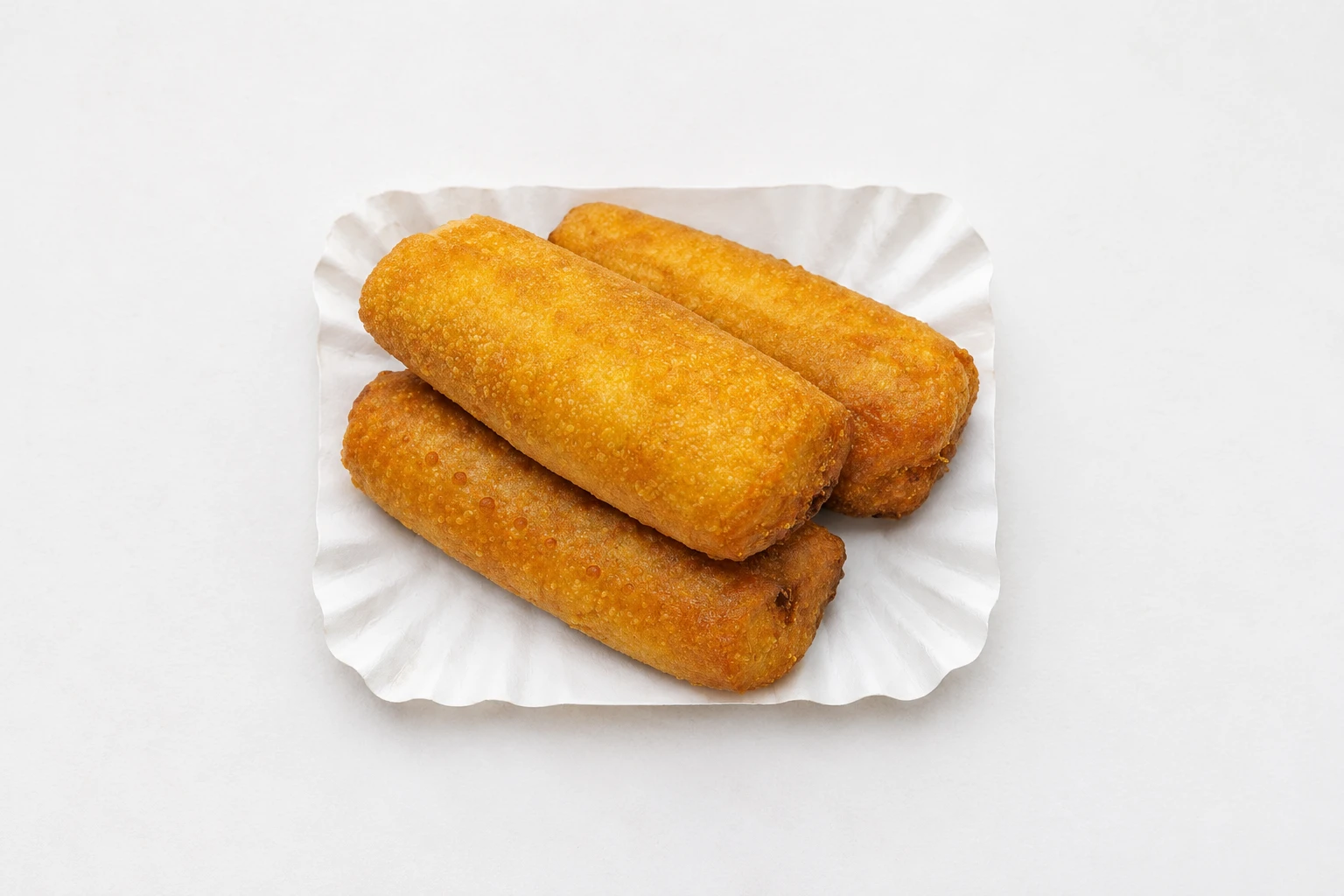
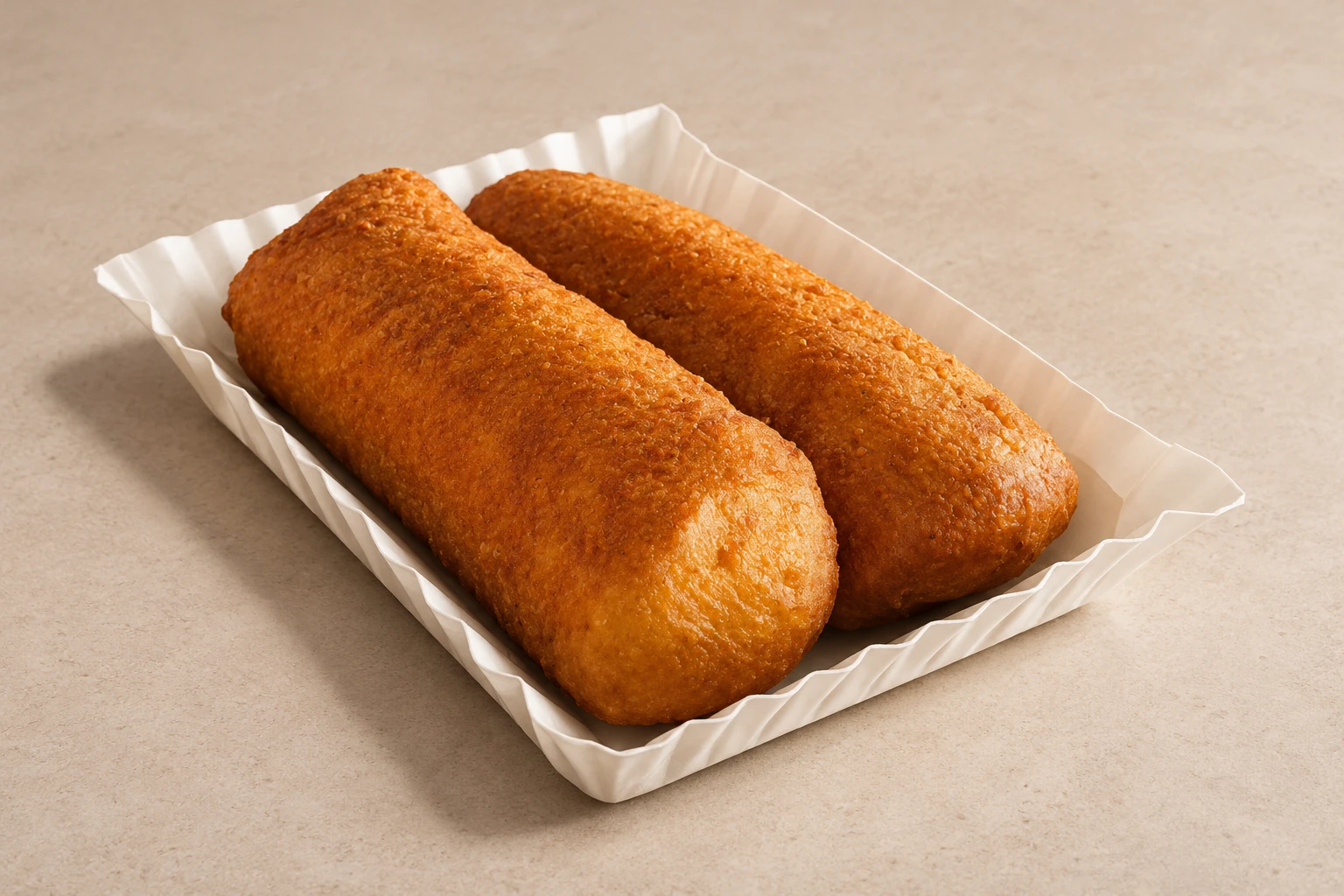
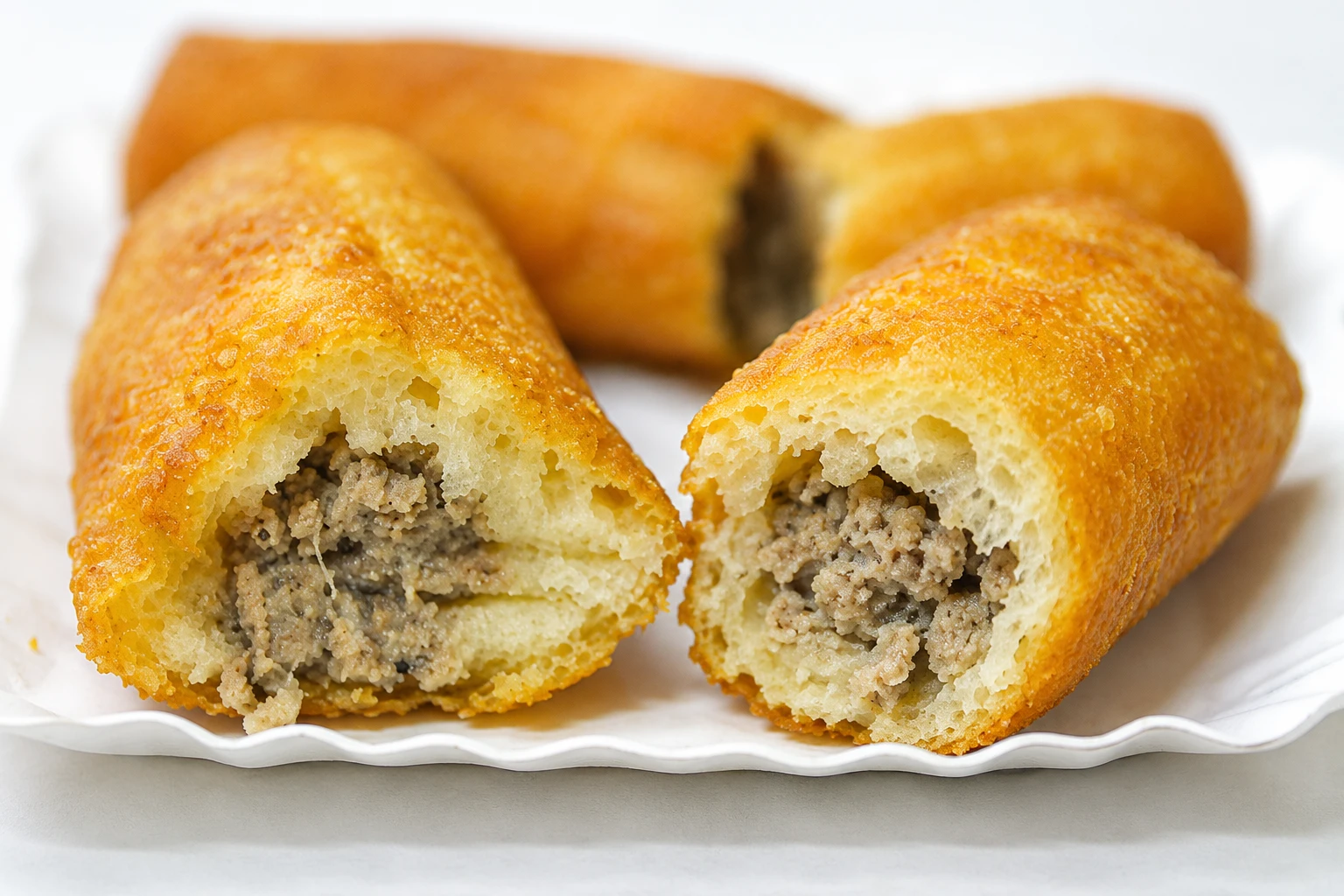
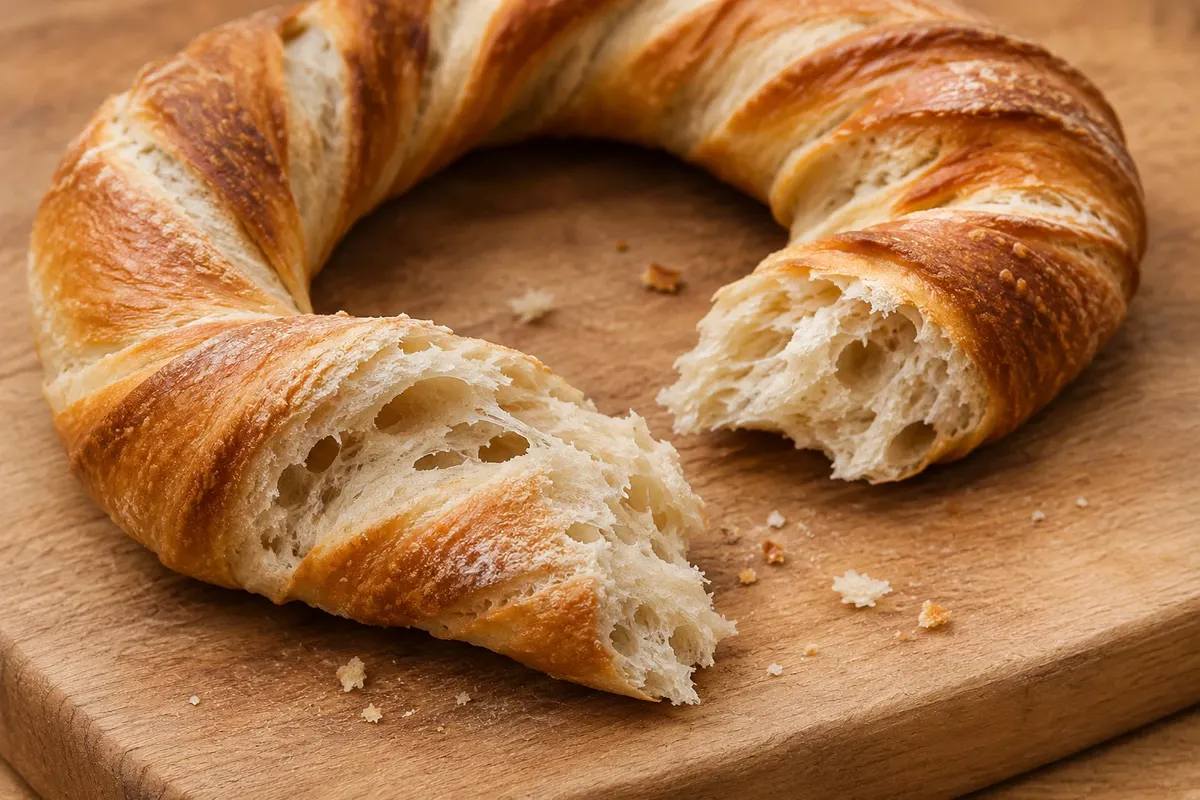
The pasztecik szczeciński has the shape of a long roll, 12 to 14 cm, with the filling visible in the center. The leavened dough rises a lot before frying, so it is porous inside, golden and crispy outside. The most common filling is ground meat seasoned mainly with pepper; there are also versions with other fillings. The recipe proportions have been kept secret by producers since the 1970s.
The story begins in 1969, when the Społem cooperative in Szczecin received a decommissioned Soviet machine made to produce small pastries in series. Employees adapted the recipe and gave the product a Polish name, pasztecik, which has nothing to do with pâté. The first pasztecik was produced in the early 1970s. In the 1980s, when meat was scarce, egg, fish and fresh cheese fillings appeared.
The pasztecik became popular among locals and visitors, especially those coming from East Germany, and turned into a city symbol. In 2010 it was added to the List of Traditional Products of the West Pomeranian Voivodeship. Since 2015, Szczecin celebrates Pasztecik Day on October 20.
According to the official description, the pasztecik should be eaten hot, as soon as it comes out of the machine; frozen or reheated, it is no longer the original product. It is sold at counters and bars in the city, to eat standing or to take away.


 Brazilija
 Antarktika
 Argentina
 Bolivija
 Čile
 Kolumbija
 Ekvator
 Gvajana
 Francoska Gvajana
 Falklandski otoki (Malvini)
 Paragvaj
 Peru
 Surinam
 Urugvaj
 Venezuela
 Nemčija
 Avstrija
 Belgija
 Hrvaška
 Danska
 Slovaška
 Slovenija
 Španija
 Finska
 Francija
 Grčija
 Nizozemska
 Madžarska
 Irska
 Islandija
 Italija
 Luksemburg
 Norveška
 Portugalska
 Združeno kraljestvo
 Češka
 Švedska
 Švica
 Turčija
 Bermudi
 Kanada
 Združene države Amerike
 Grenlandija
 Mehika
 Sveta Peter in Mihael
 Dominikanska republika
 Japonska
 Južnoafriška republika
 Egipt
 Avstralija
 Fidži
 Nova Zelandija
 Papua Nova Gvineja