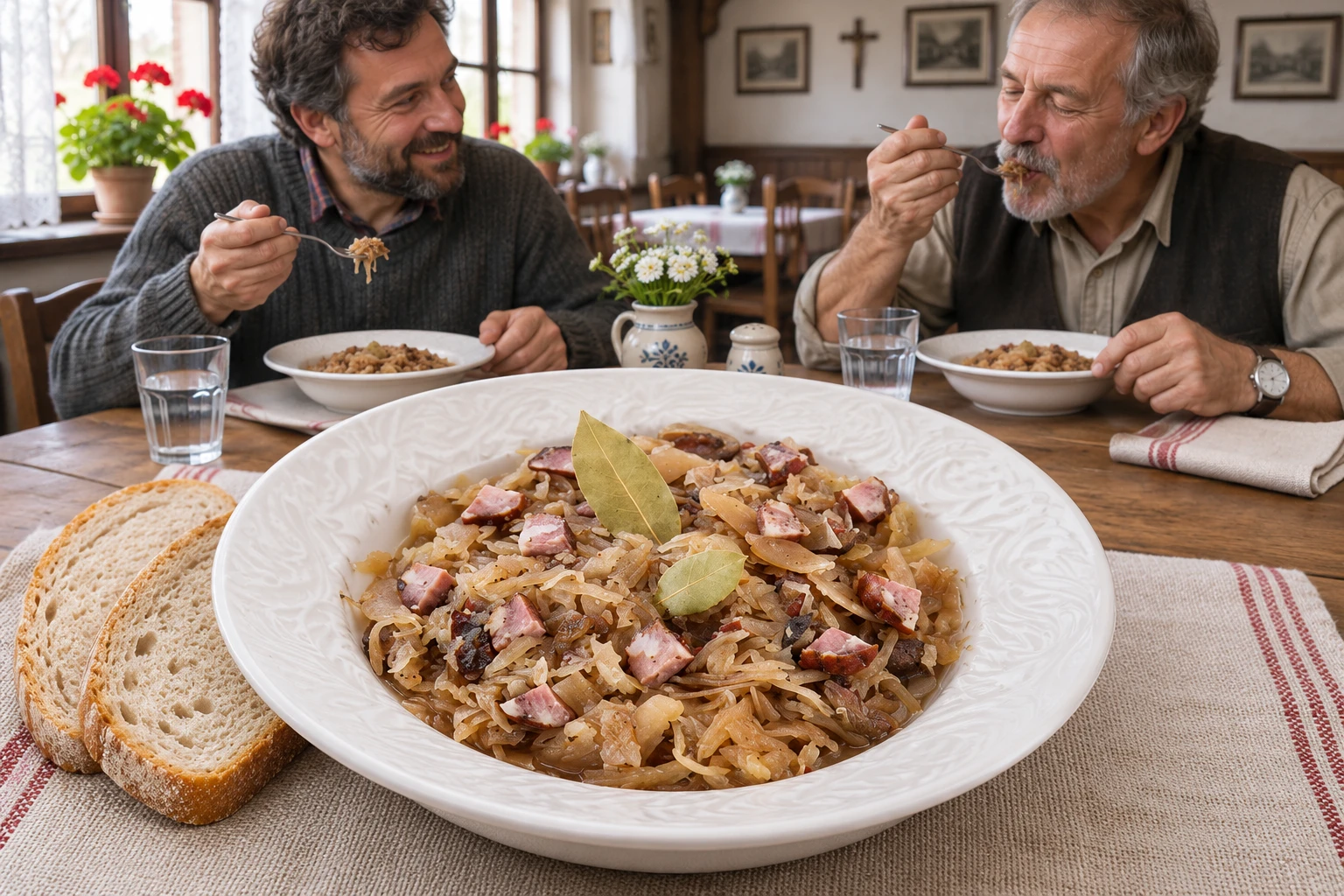
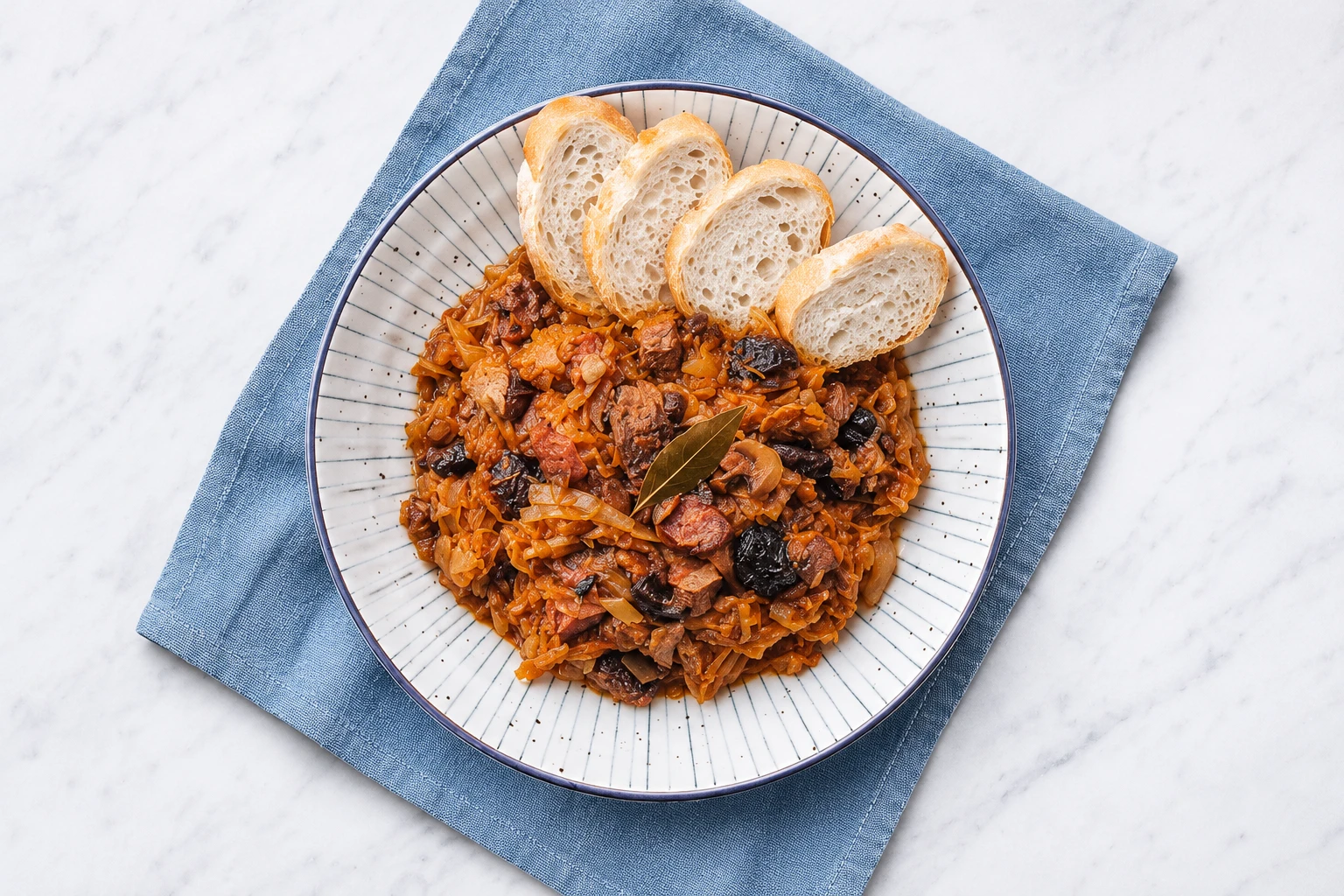
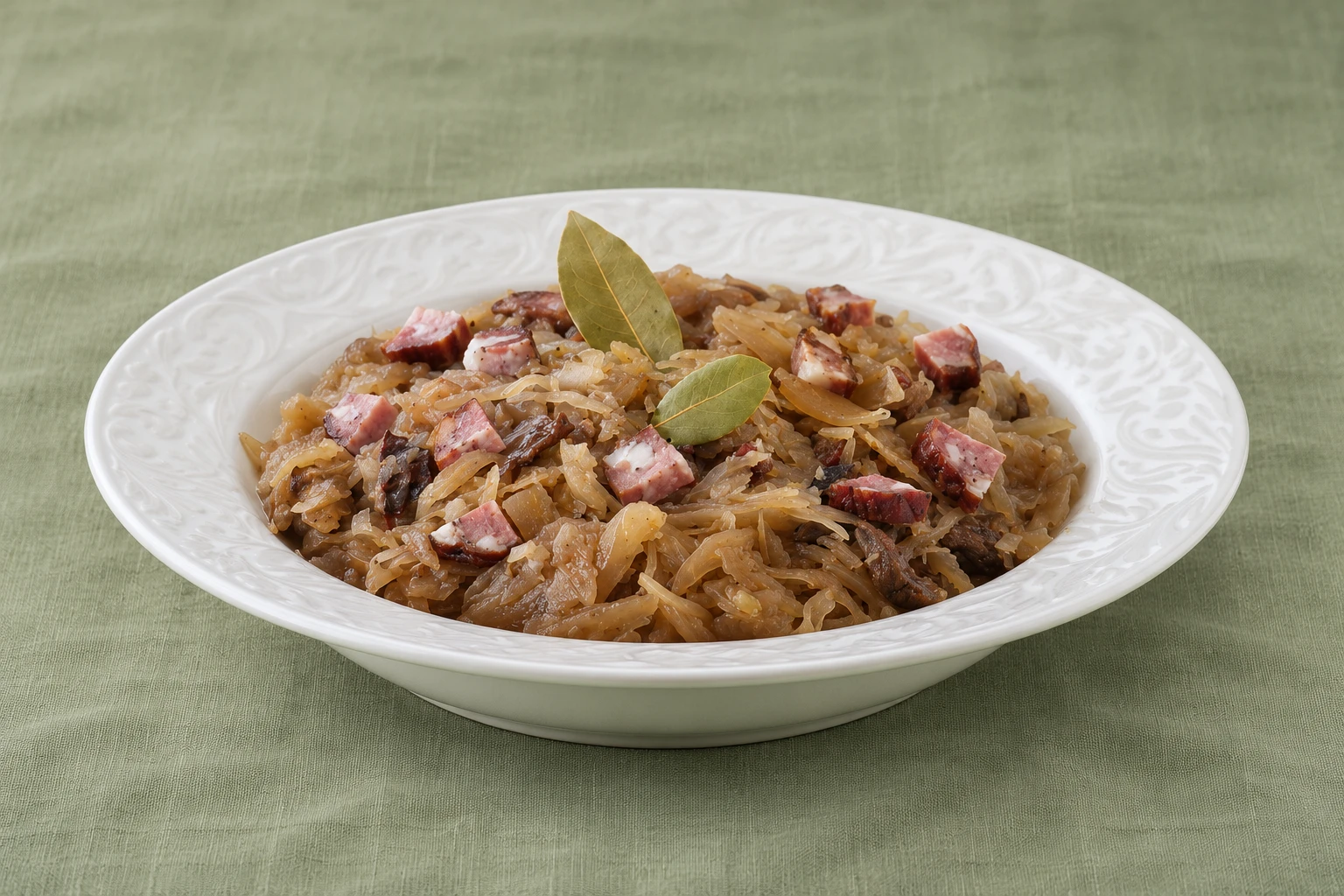
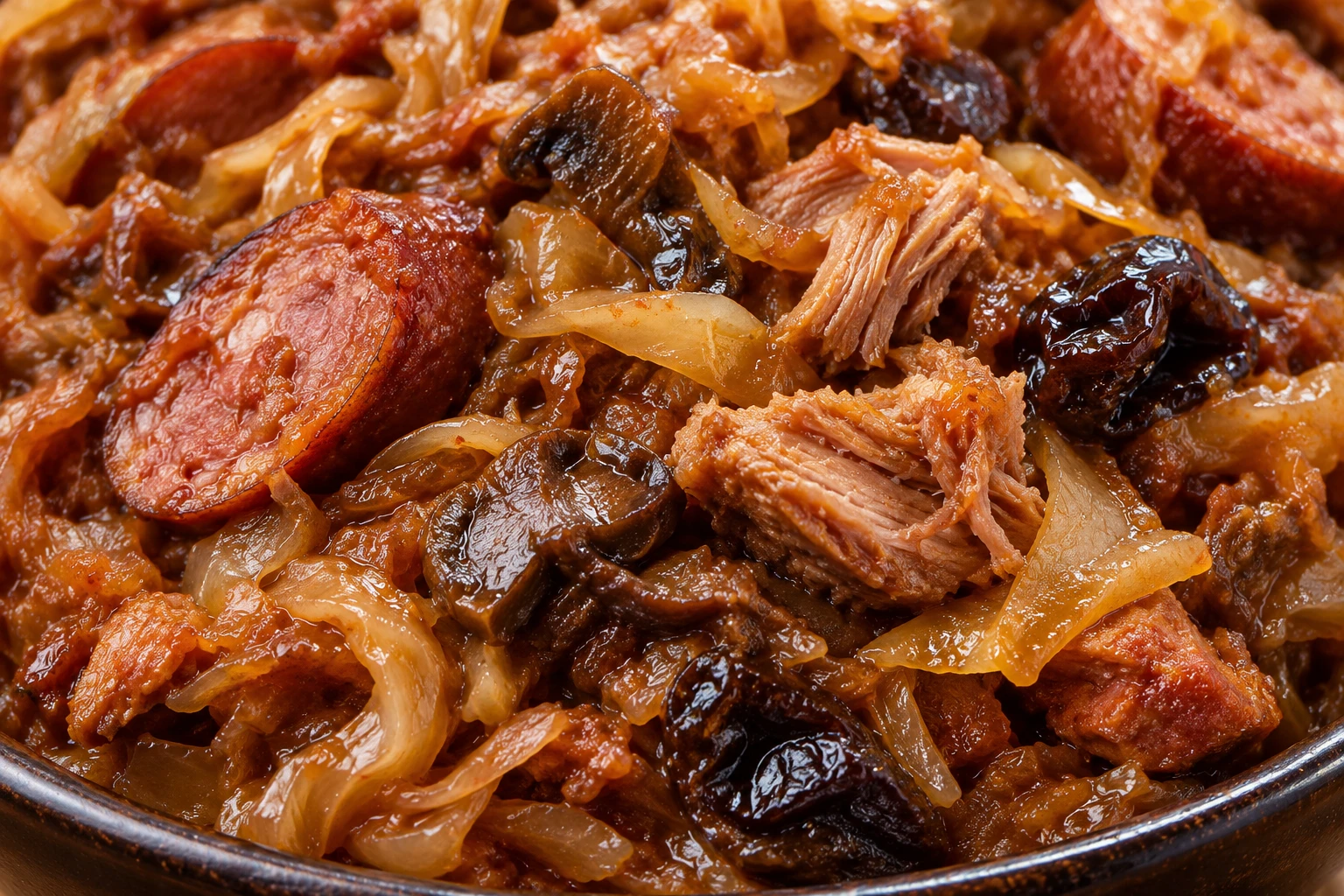
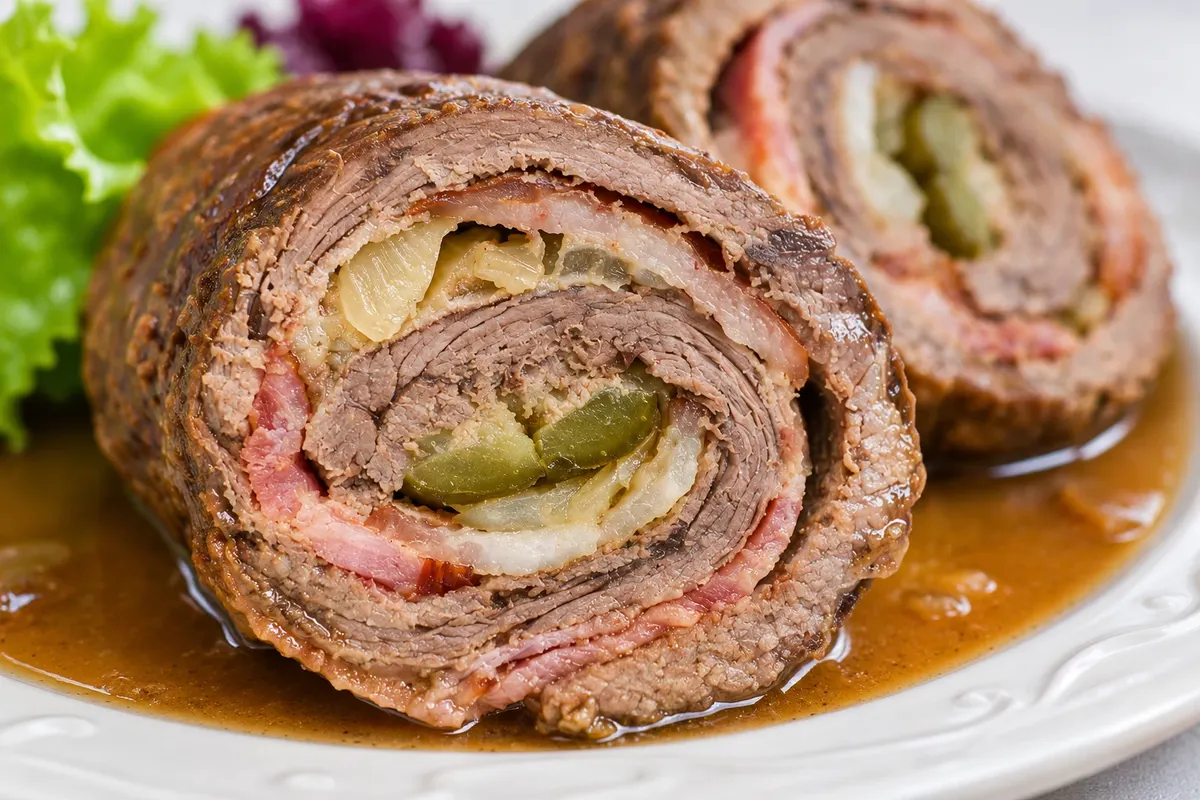
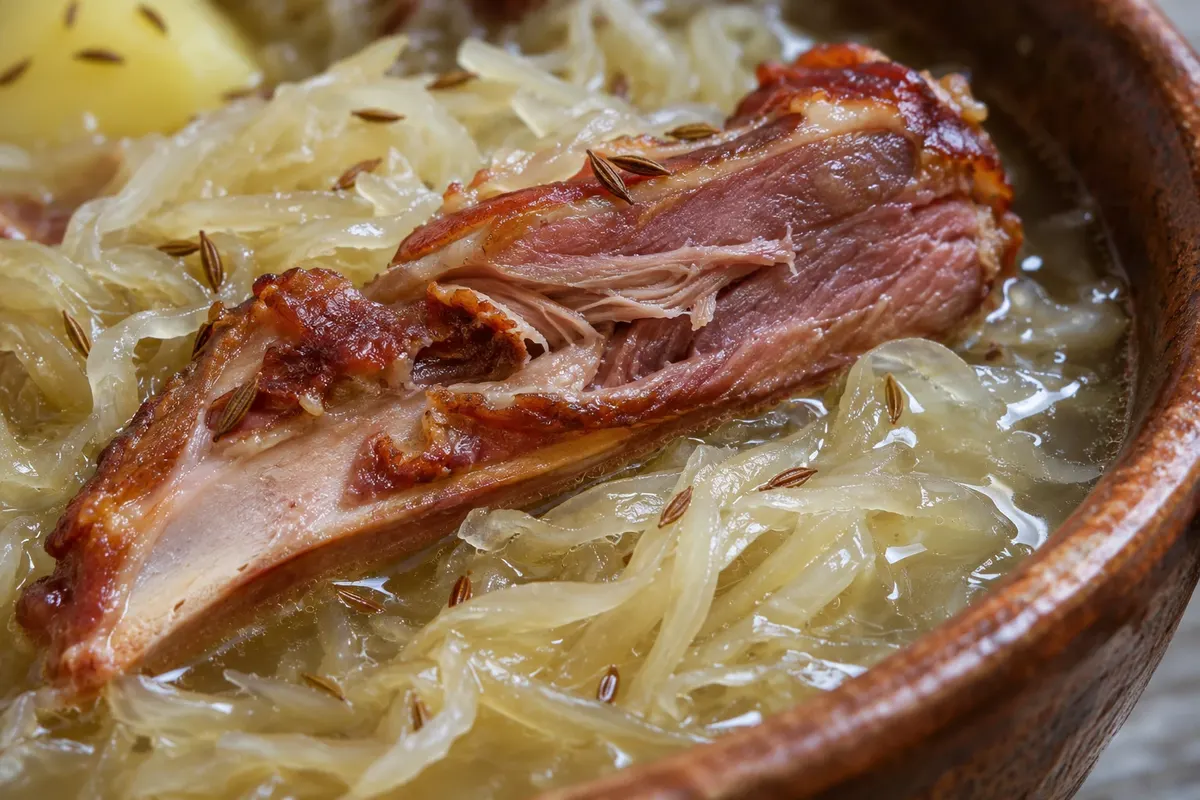
Bigos is a stew of sauerkraut, sometimes mixed with fresh cabbage, with chunks of assorted meats: pork, beef, game, smoked sausage and bacon. Dried forest mushrooms, dried plums, juniper, bay leaf and pepper add aroma, and some people add red wine. Bigos cooks for hours and gains flavor when cooled and reheated for one or more days; that is why it is made in a large pot.
The dish changed a lot over the centuries. In Compendium ferculorum (1682), the first cookbook printed in Polish, there are recipes for bigos made with carp, marrow, capon and guan (ruffed grouse), without cabbage, soured with lemon, vinegar or sorrel. By the late 18th century, the chronicler Jędrzej Kitowicz already records bigos with cabbage, and sauerkraut began to replace the more expensive acidic ingredients and part of the meat. In the 19th century, the proportion of meat and cabbage reached the form known today.
Bigos took a place in Polish literature with Pan Tadeusz, by Adam Mickiewicz, published in 1834, which describes bigos served after a hunt. Hence the name bigos myśliwski, hunter’s bigos, for the version with game meat. The dish is eaten across the country, especially in winter and at celebrations, with rye bread or potato.


 Brazilija
 Antarktika
 Argentina
 Bolivija
 Čile
 Kolumbija
 Ekvator
 Gvajana
 Francoska Gvajana
 Falklandski otoki (Malvini)
 Paragvaj
 Peru
 Surinam
 Urugvaj
 Venezuela
 Nemčija
 Avstrija
 Belgija
 Hrvaška
 Danska
 Slovaška
 Slovenija
 Španija
 Finska
 Francija
 Grčija
 Nizozemska
 Madžarska
 Irska
 Islandija
 Italija
 Luksemburg
 Norveška
 Portugalska
 Združeno kraljestvo
 Češka
 Švedska
 Švica
 Turčija
 Bermudi
 Kanada
 Združene države Amerike
 Grenlandija
 Mehika
 Sveta Peter in Mihael
 Dominikanska republika
 Japonska
 Južnoafriška republika
 Egipt
 Avstralija
 Fidži
 Nova Zelandija
 Papua Nova Gvineja