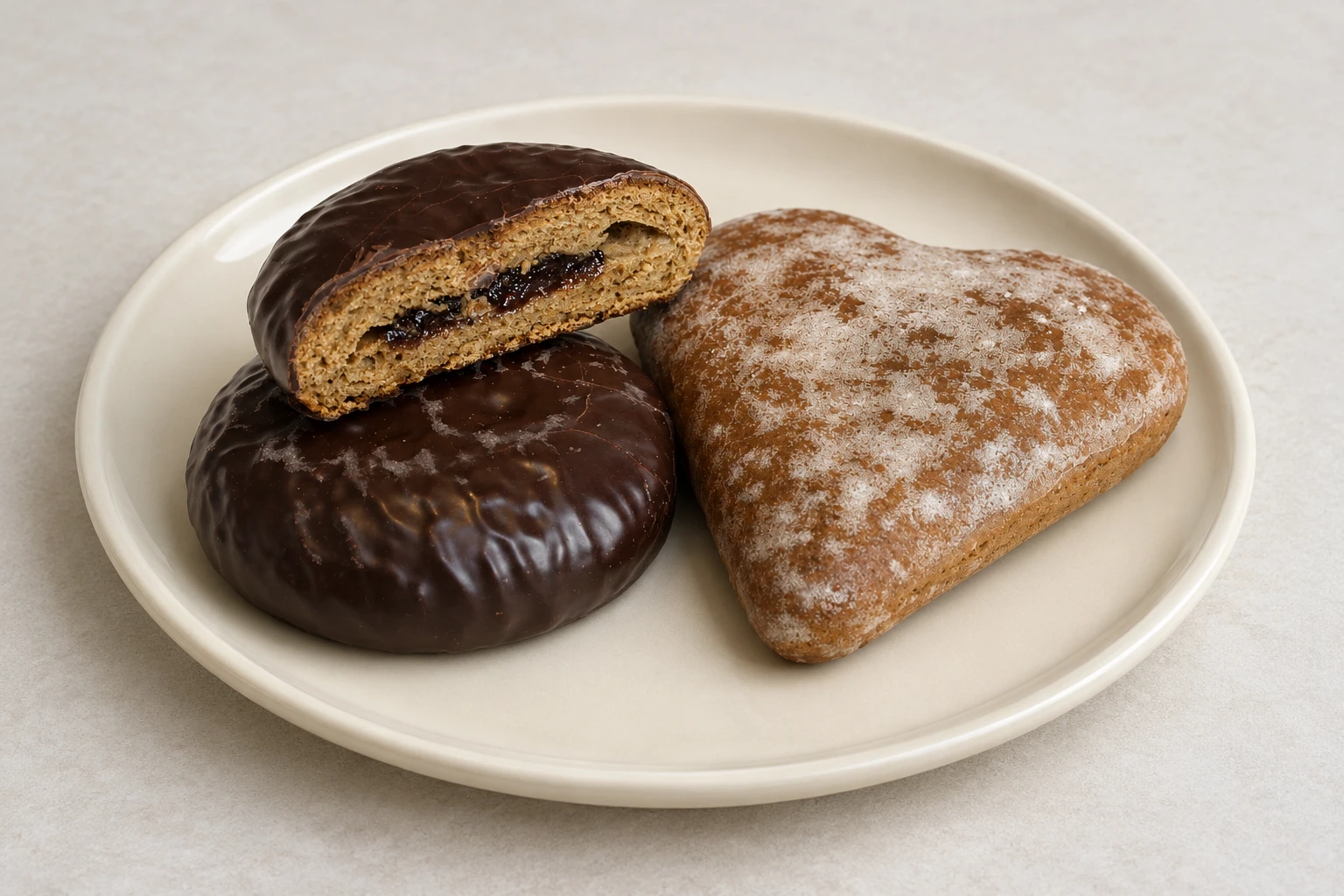
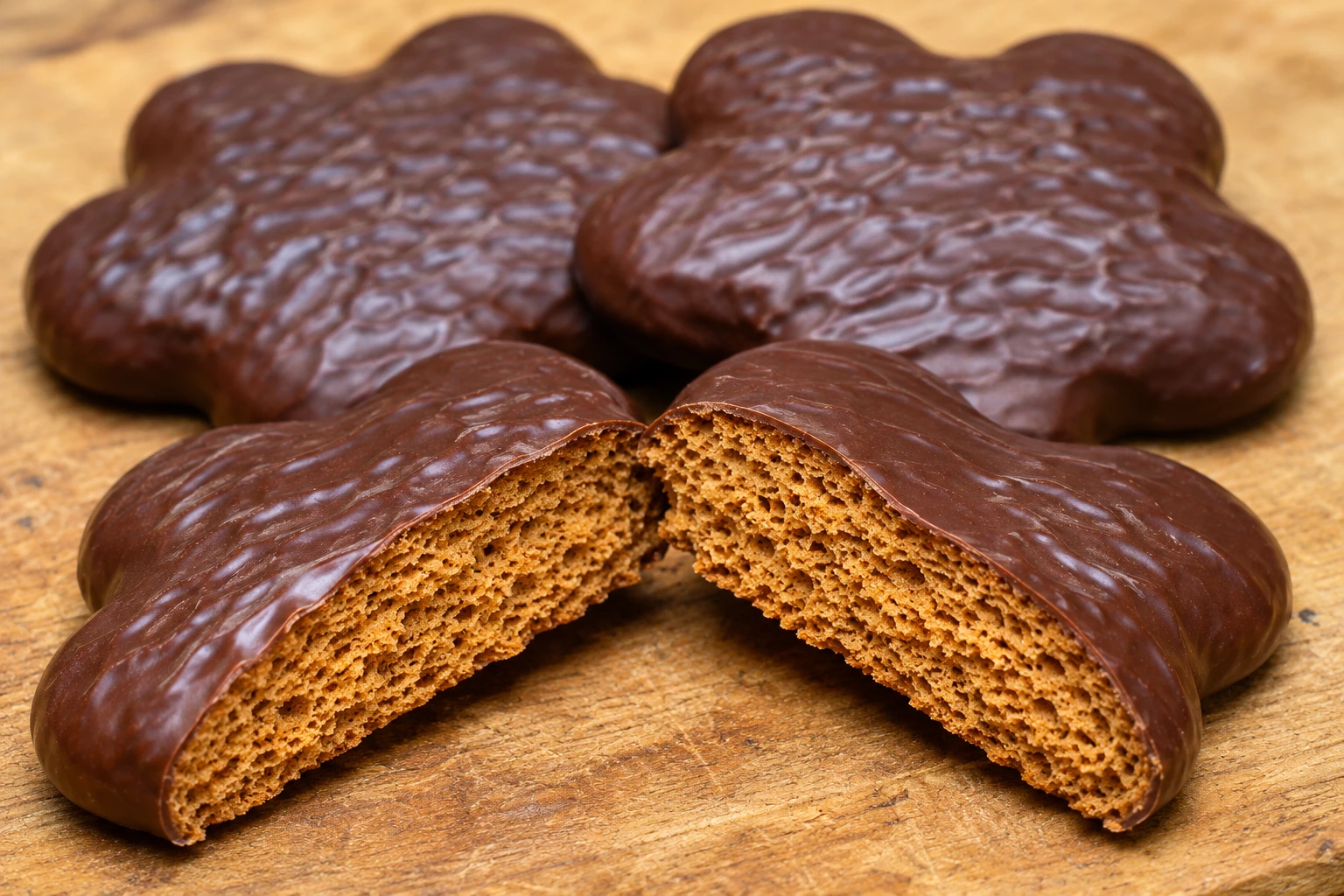
Pierniki toruńskie are gingerbreads made with wheat and rye flour, honey and a strong spice mix: pepper, cinnamon, cardamom, ginger, coriander, clove, nutmeg and star anise. The name comes from the old Polish pierny, which meant spicy. The dough is dense and compact and breaks into crunchy flakes. There are plain pierniki, glazed ones, chocolate-coated and filled varieties, in sizes ranging from 4 to 20 cm.
Toruń, on the Vistula’s bank, lay on trade routes that brought spices from abroad, while the region’s forests provided honey and the lands of Chełmno produced grain. The first pierniki baker in the city known by name, Niclos Czan, appears in a 1380 record. In 1556, Toruń and Nuremberg made an agreement allowing bakers from each city to use the other’s recipes. Production peaked in the 17th and 18th centuries, when Toruń’s gingerbread gained fame across Europe.
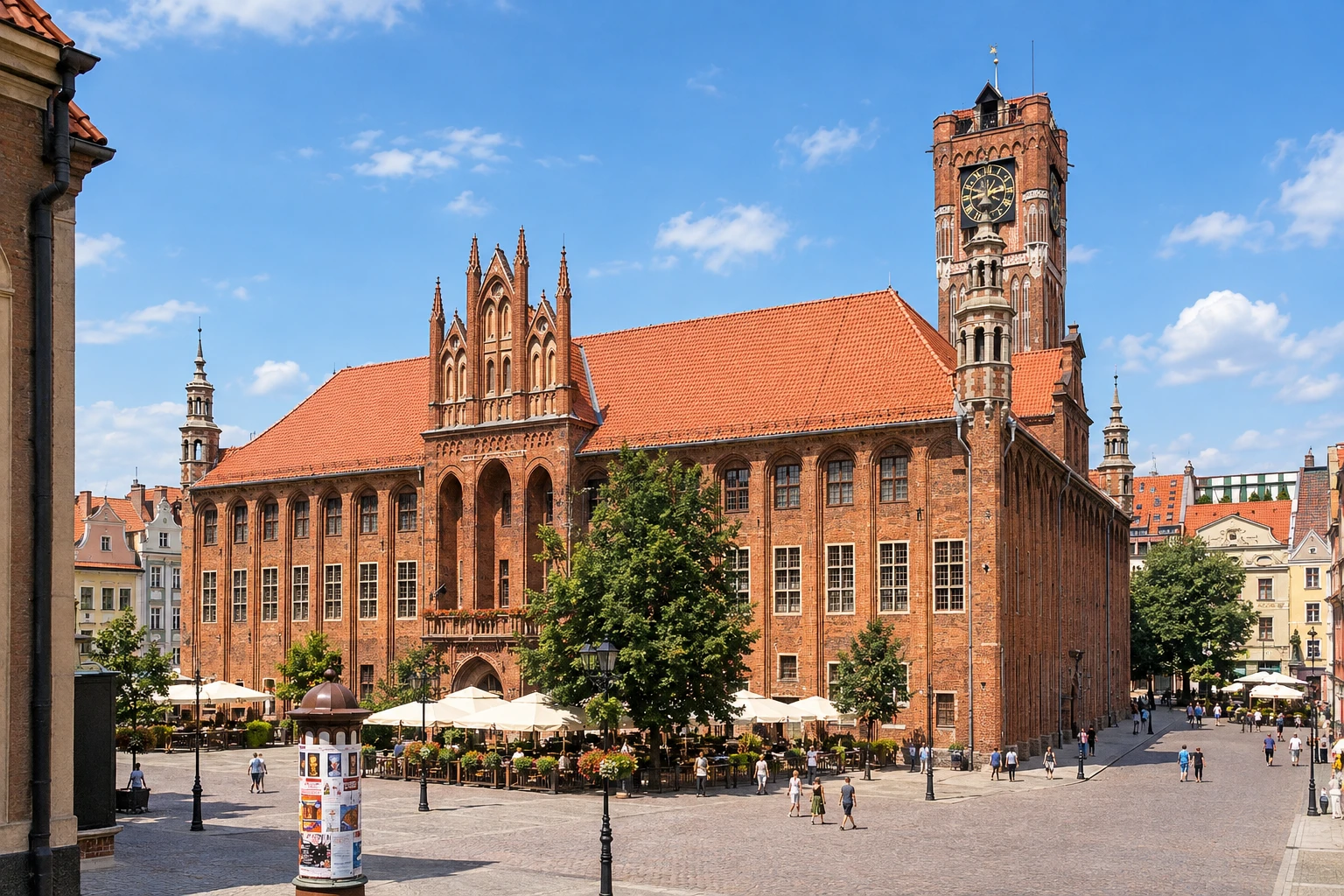
Carved wooden molds are part of the story. The oldest that survive date from the early 17th century and show Polish kings and queens, angels, St. George and carriages. Many were lost in World War II; part of the collection is exhibited in Toruń’s Old Town Hall. The katarzynka, made of six joined circles, is the best-known shape, and its origin is told in legends.
In 2021, pierniki z Torunia entered Poland’s List of Traditional Products, and in 2025 the culture of Toruń piernik was inscribed on the national list of intangible cultural heritage. The city has museums and workshops where visitors make their own piernik in wooden molds, and fairs tied to St. Catherine’s Day and gingerbread festivals.


 Brazilija
 Antarktika
 Argentina
 Bolivija
 Čile
 Kolumbija
 Ekvator
 Gvajana
 Francoska Gvajana
 Falklandski otoki (Malvini)
 Paragvaj
 Peru
 Surinam
 Urugvaj
 Venezuela
 Nemčija
 Avstrija
 Belgija
 Hrvaška
 Danska
 Slovaška
 Slovenija
 Španija
 Finska
 Francija
 Grčija
 Nizozemska
 Madžarska
 Irska
 Islandija
 Italija
 Luksemburg
 Norveška
 Portugalska
 Združeno kraljestvo
 Češka
 Švedska
 Švica
 Turčija
 Bermudi
 Kanada
 Združene države Amerike
 Grenlandija
 Mehika
 Sveta Peter in Mihael
 Dominikanska republika
 Japonska
 Južnoafriška republika
 Egipt
 Avstralija
 Fidži
 Nova Zelandija
 Papua Nova Gvineja