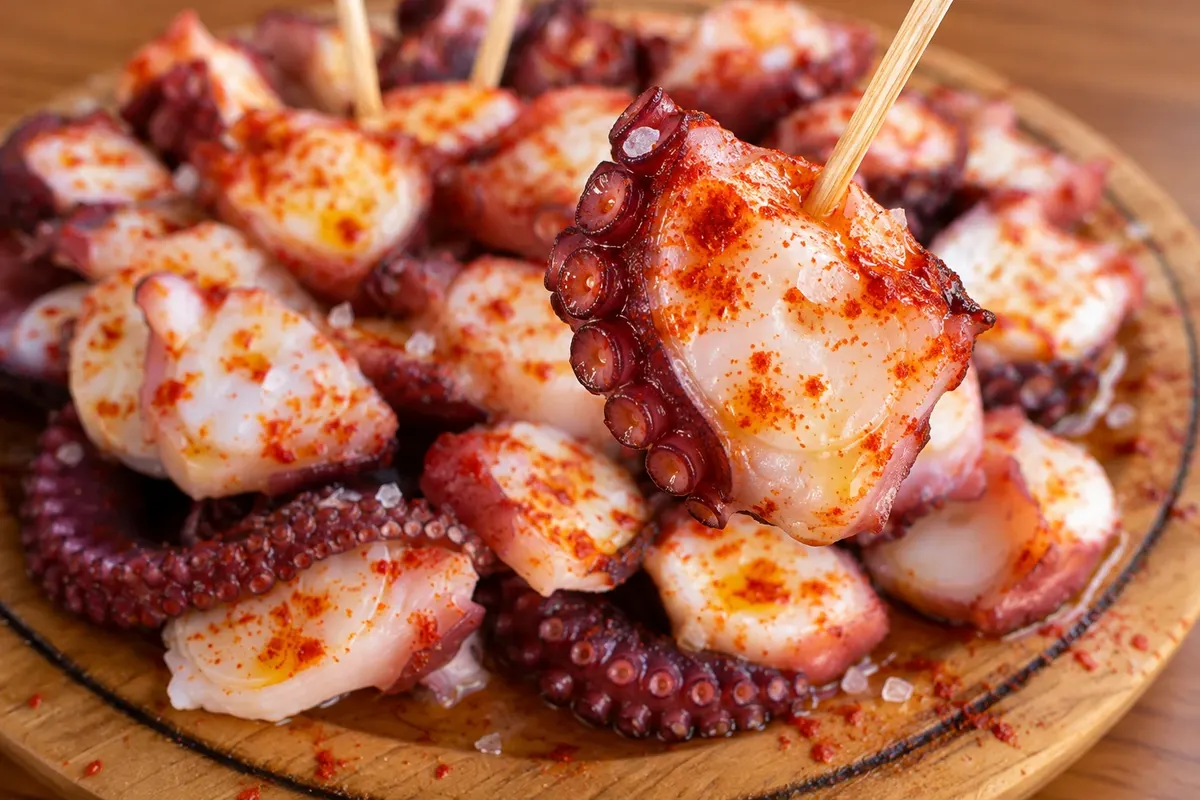
Jed · Galícia Polbo á feira Cooked octopus in a copper pot, cut with scissors into rounds on a wooden plate and seasoned with coarse salt, paprika and olive oil. It’s the dish of inland Galician fairs and was chosen to represent Galicia.
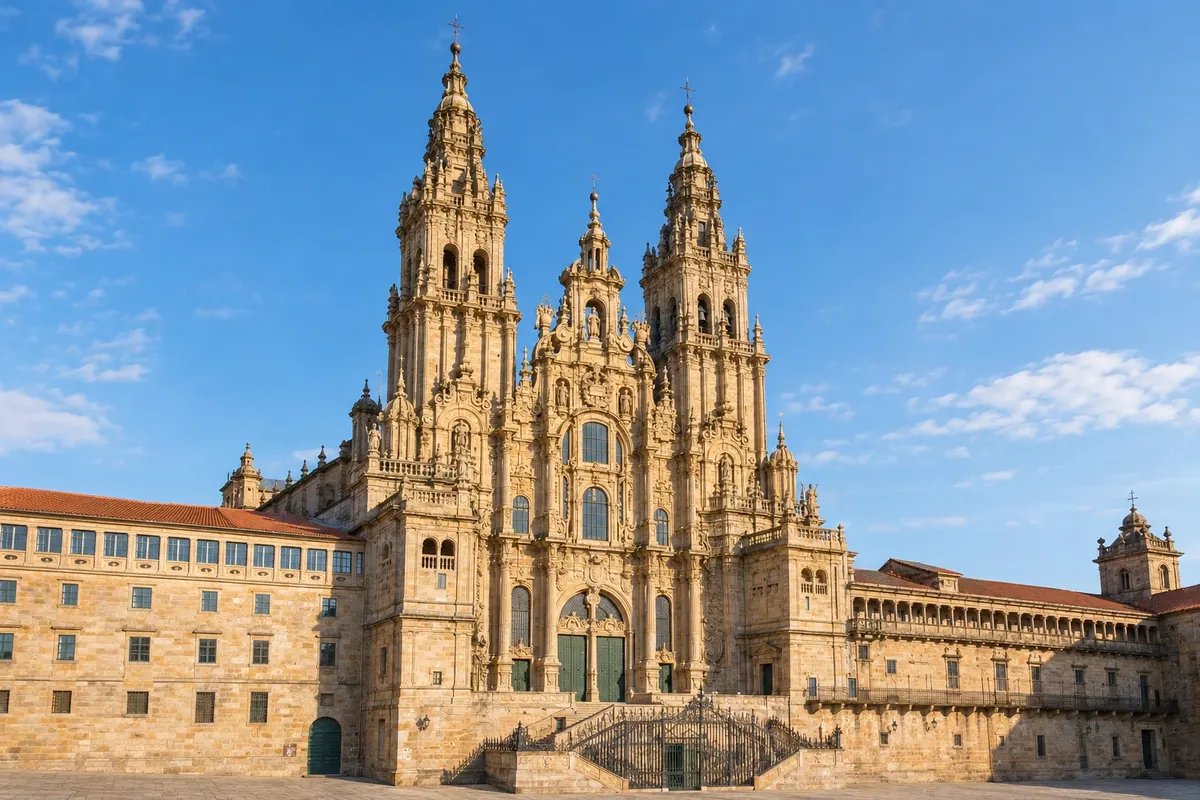
Galicia Capital Santiago de Compostela Santiago de Compostela is the capital of Galícia and the endpoint of the Camino de Santiago. The cathedral, with the tomb attributed to the apostle James, the Pórtico da Glória and the Botafumeiro, dominates the Praza do Obradoiro. The granite historic center, with arcades, monasteries and the Mercado de Abastos, is a UNESCO World Heritage Site. Galician, a sibling of Portuguese, is heard everywhere.
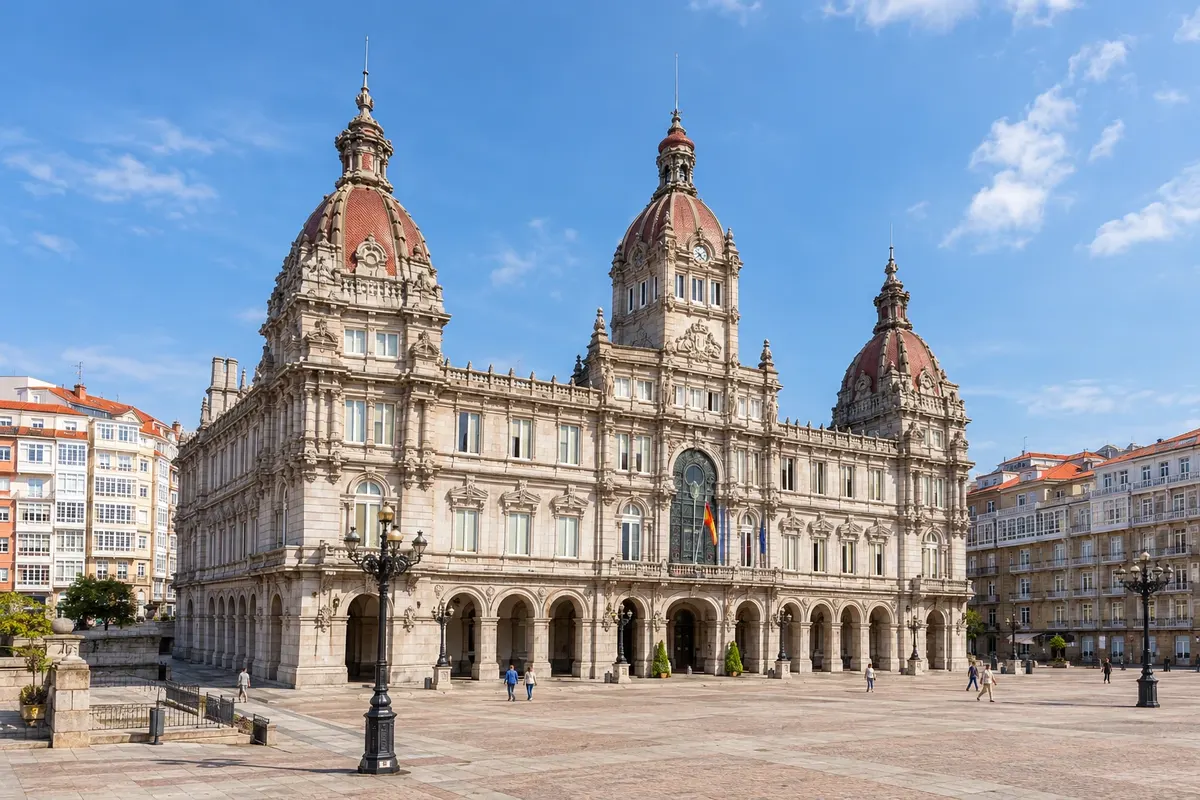
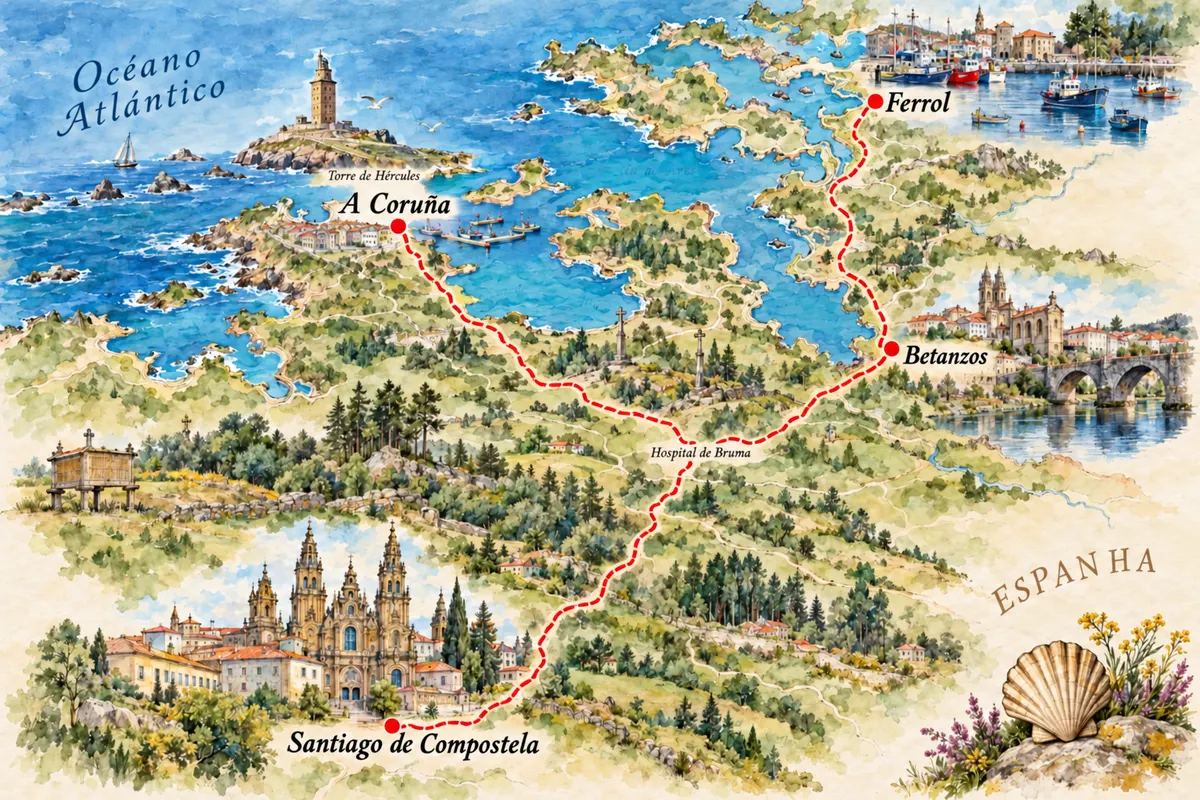
Galicia A Coruña A Coruña is a Galician city on an Atlantic peninsula, about 75 km from Santiago de Compostela. At the northern tip stands the Torre de Hércules, the only Roman lighthouse still in operation and a World Heritage Site. The glass galleries along avenida da Mariña lead to plaza de María Pita and the Old Town, with the colegiata de Santa María do Campo and the San Carlos garden. The castle of San Antón houses the archaeological museum. A seaside promenade skirts the peninsula, with the beaches of Riazor and Orzán, the Aquarium Finisterrae, the Domus, the Casa das Ciências and monte de San Pedro.
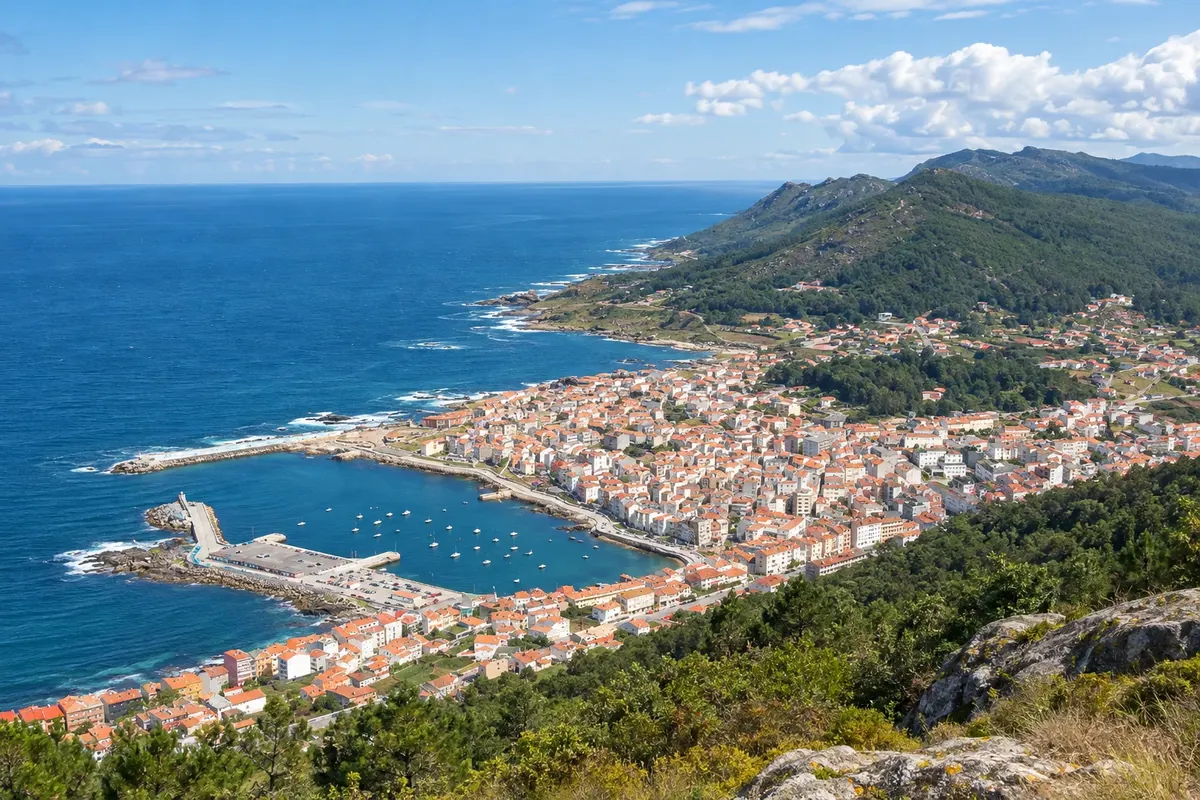
Galicia A Guarda A Guarda is a fishing village in the extreme southwest of Galicia, where the Minho river meets the Atlantic, facing Portugal. Above it rises the mount of Santa Trega, 341 meters high, where the ruins of a castro settlement stand, with round stone houses, an archaeological museum, a chapel and views of the Minho estuary. In the center, the Castle of Santa Cruz recalls the 17th-century wars with Portugal, and the harbor, with colorful houses, is known for its lobster. It is the first Galician village on the Portuguese Coastal Way. Galician and Spanish are spoken.
Galicia Arzua Arzúa is a village inland in Galicia, about 40 km from Santiago de Compostela, where the Camino Francés and the Camino del Norte join for the final stretch to the cathedral. It is known for the Arzúa-Ulloa cheese, made from cow's milk, with a protected designation of origin and its own festival in March. On the rua do Caminho are the church of Santiago and the chapel of Madalena, remnants of an old convent and pilgrims' hospital from the 14th century. About 3 km away, in Ribadiso, the medieval bridge over the Iso River and the old pilgrims' hospital make one of the best-known stops on the Camino. Galician and Spanish are spoken.
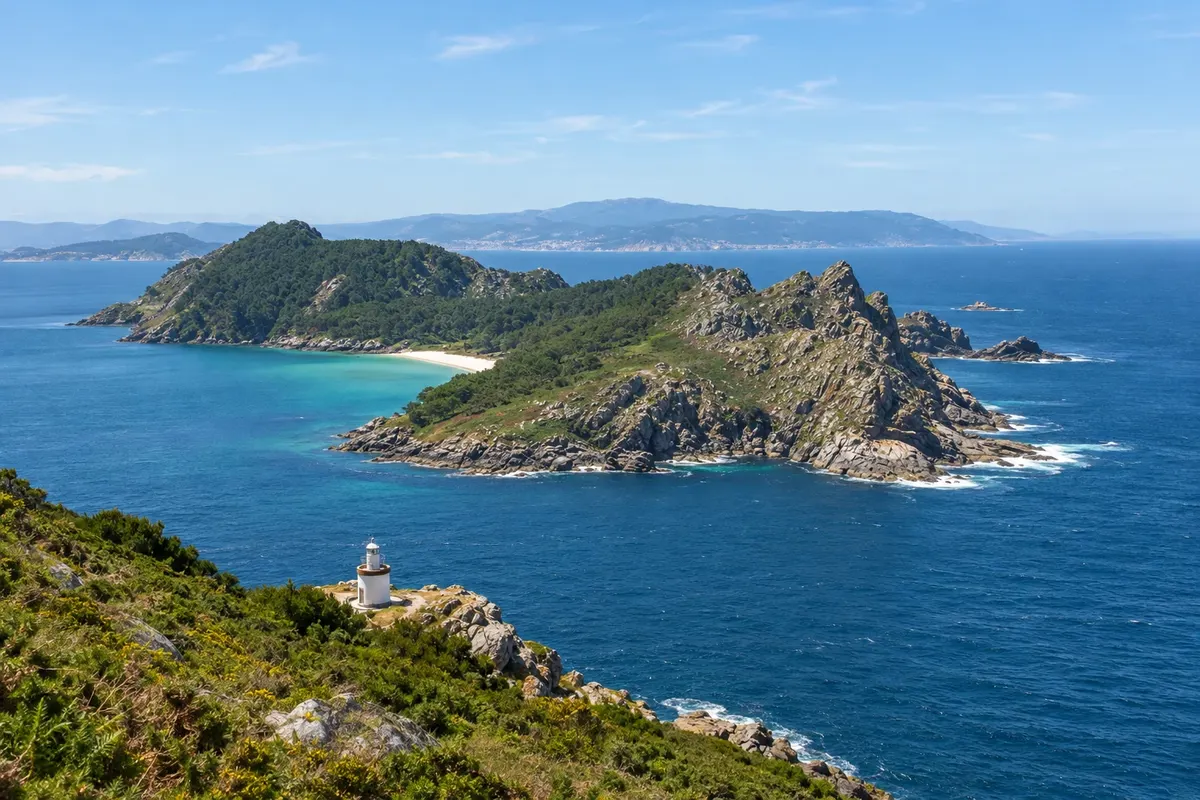
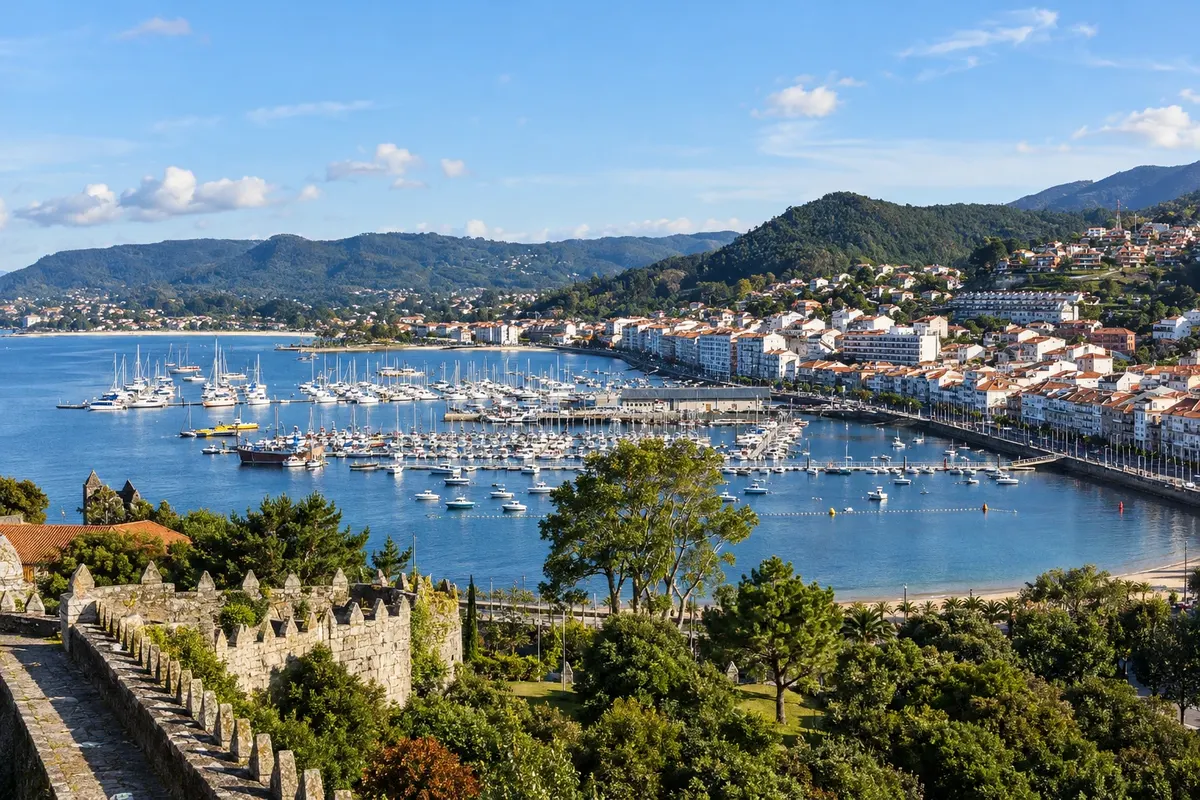
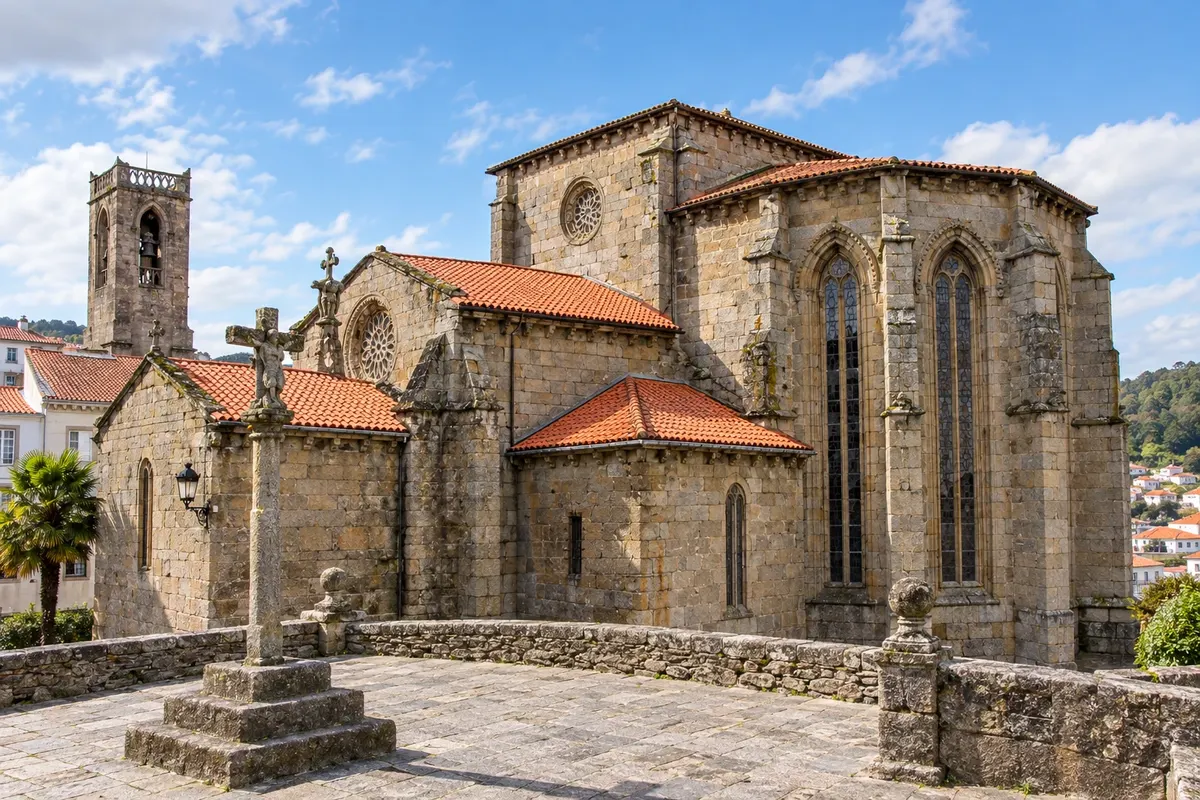
Galicia Baiona Baiona is a village on the Galician coast, about 25 km from Vigo, in a bay sheltered in front of the Cíes islands. The Monterreal peninsula is surrounded by walls, with a sea-side rampart walk; inside them is a historic parador. On 1 March 1493 the caravel Pinta arrived in Baiona with the first news of Columbus’s voyage, and a replica of the ship is in the harbor. On the top of the hill, the stone statue of the Virgem da Rocha has a viewpoint, and the town centre preserves the old Romanesque collegiate church and a covered cruceiro from the 15th century. Galician and Spanish are spoken.
Galicia Betanzos Betanzos is a medieval Galician town at the meeting of the Mandeo and Mendo rivers, about 25 km from A Coruña. The historic center climbs a hill with three Gothic churches: San Francisco, with the tomb of Fernán Pérez de Andrade supported on a bear and a boar, Santa María do Azougue and Santiago. In the old convent of Santo Domingo is the Museu das Mariñas, and down below is the Parque do Pasatempo, created by an emigrant who returned wealthy from Argentina, with grottos and figures from around the world. On the night of August 16 the town releases a huge paper balloon. It is a stop on the Caminho Inglês. Galician and Spanish are spoken.
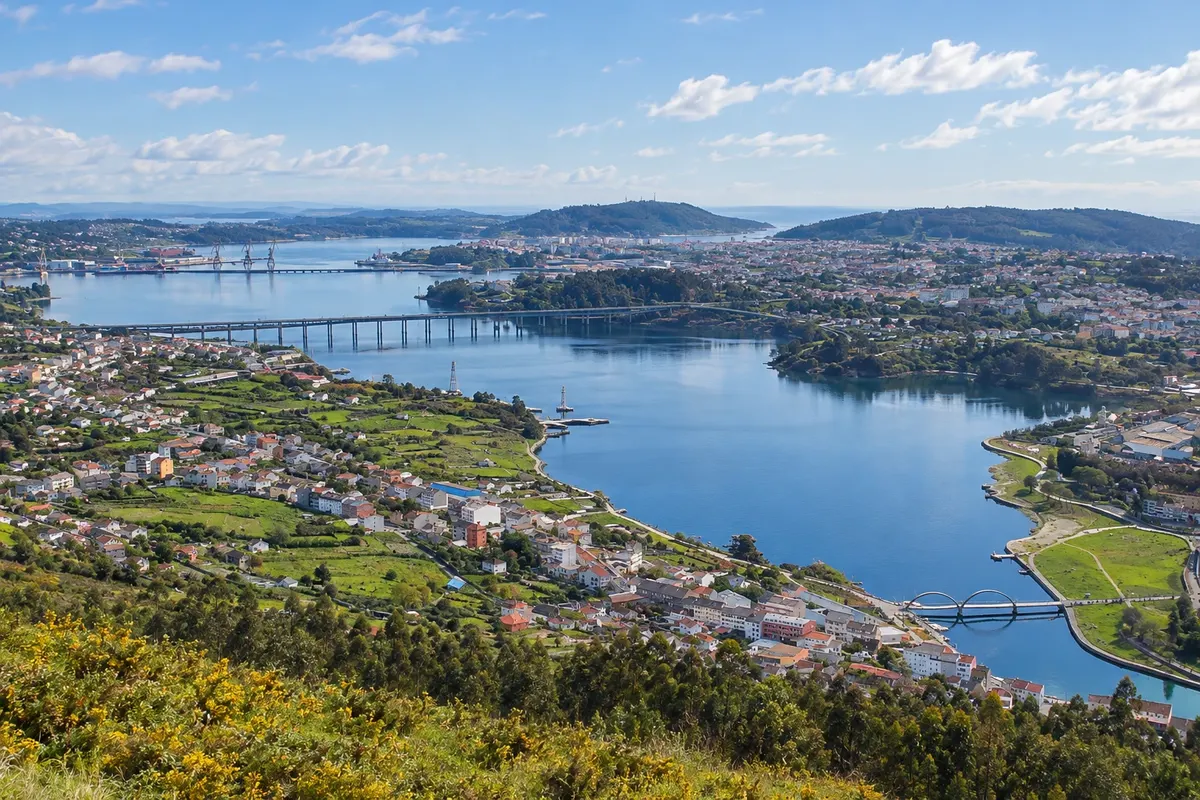
Galicia Ferrol Ferrol is a Galician city on a deep Atlantic ria, about 55 km from A Coruña, linked for almost three centuries to the Spanish Navy. The bairro da Madalena, planned in the 18th century with straight streets, has houses with glass galleries, modernist buildings and the concatedral de San Xiao. Next to the arsenal are the Museu Naval and the Exponav, about shipbuilding, and at the mouth of the ria the castelo de San Felipe guards the entrance to the port. The praia de Doniños, open to the ocean, is a few kilometers away. It is the starting point of the Caminho Inglês for Santiago. Galician and Spanish are spoken.
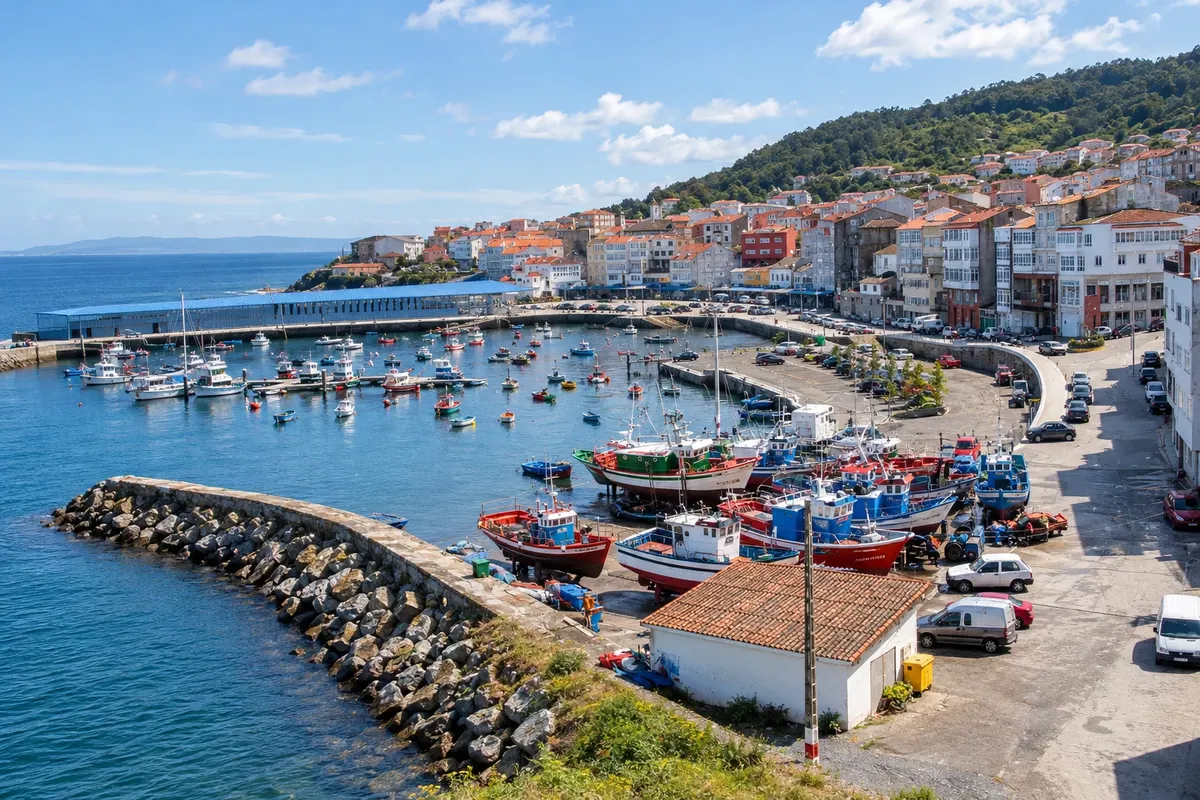
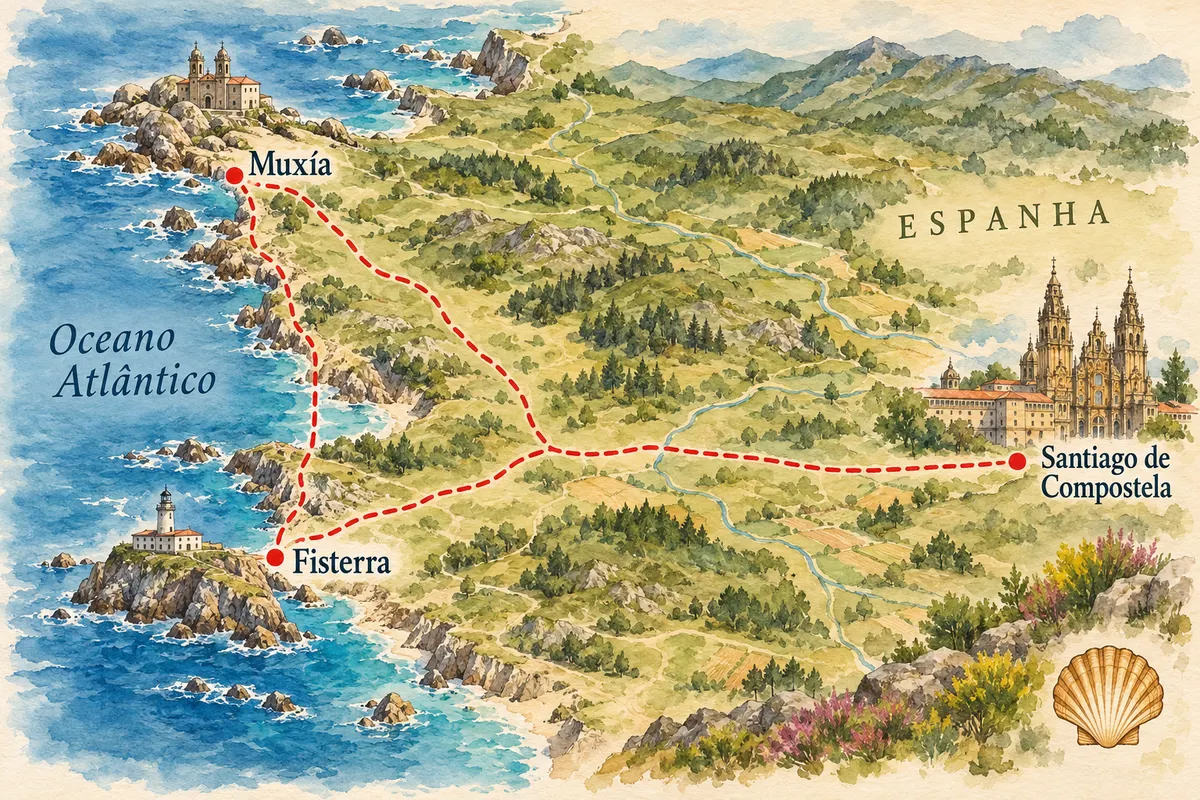
Galicia Fisterra Fisterra is a fishing village on the Costa da Morte, in Galicia, about 90 km from Santiago de Compostela. About 3 km away is the cabo Fisterra, the finis terrae of the Romans, considered the end of the known world, with the lighthouse from 1853 and the kilometer-zero marker of the route many pilgrims walk after Santiago. On the way to the cape is the church of Santa María das Areas, with the Cristo de Fisterra. In the village the castelo de San Carlos houses the Museu da Pesca, and the port, with the lonxa, shows the coastal fishing. Galician and Spanish are spoken.
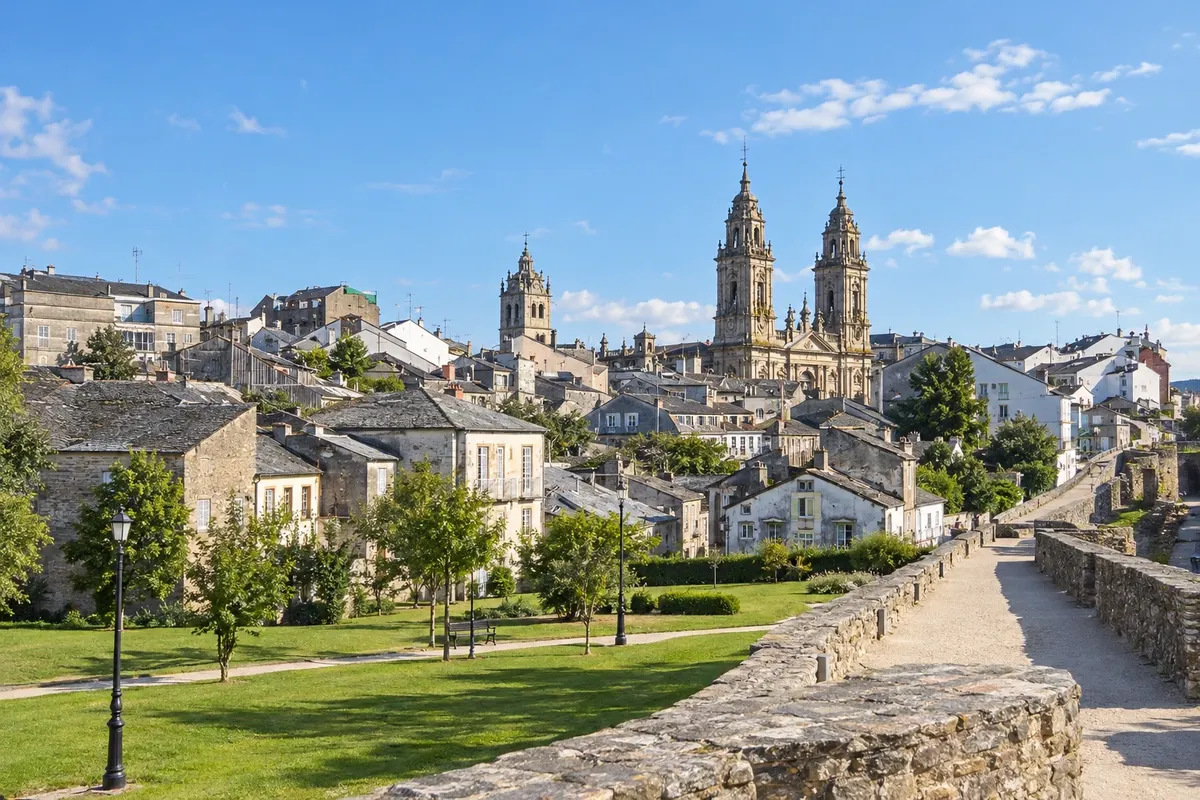
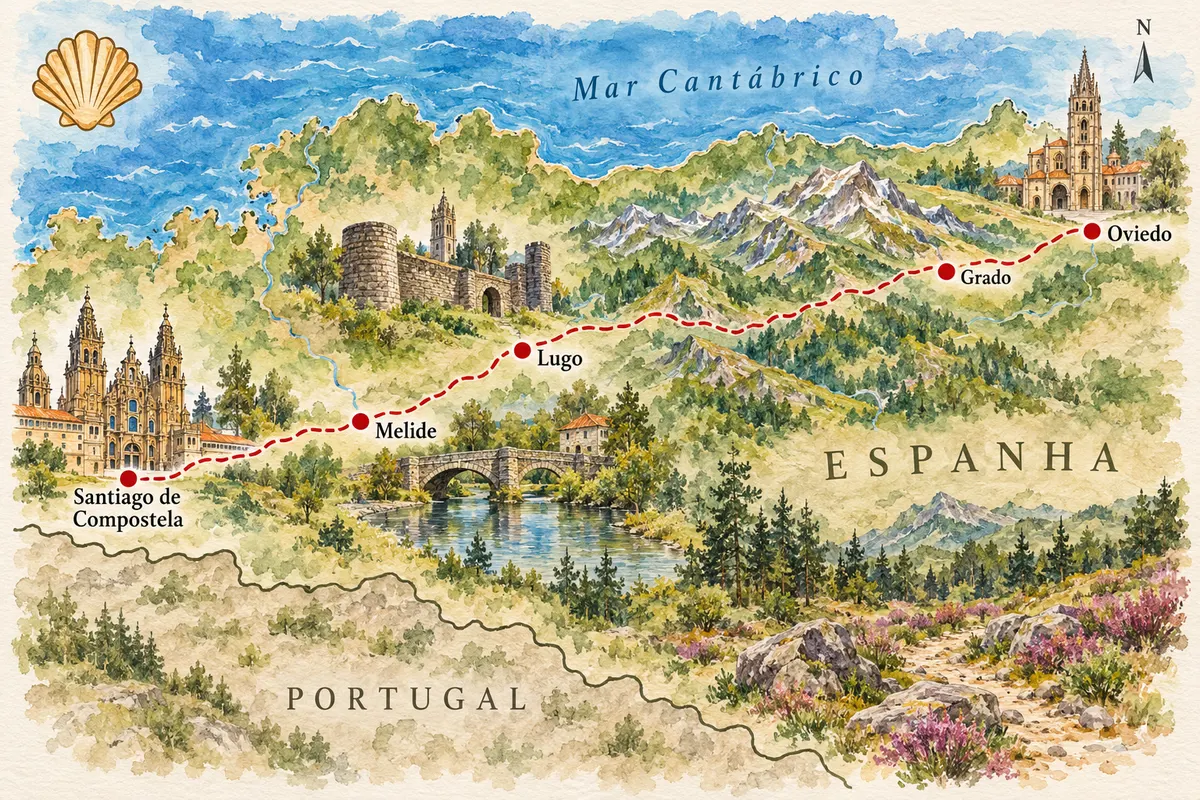
Galicia Lugo Lugo is an inland city in Galicia that began as the Roman Lucus Augusti around 15 BC. It is surrounded by a complete Roman wall of about 2 km and 71 towers, a World Heritage site; you can walk along the top of it around the entire circuit. Inside are the cathedral, Praça Maior, the Museu Provincial and the museum of the Domus do Mitreo, with remains of a Roman house. By the river Minho are the thermal baths and a bridge of Roman origin, and 14 km away is the Roman temple of Santa Eulalia de Bóveda. It is a stop on the Caminho Primitivo, about 100 km from Santiago, and in June the Arde Lucus festival revives its Roman past.
Galicia Melide Melide is a village in inland Galicia, about 55 km from Santiago de Compostela, where the Caminho Primitivo meets the Caminho Francês. It is known for polvo à feira, boiled and served on wooden plates in the pulperías on the rua do Caminho. At the entrance to the village, the capela de San Roque stands beside a 14th-century cruceiro, considered the oldest in Galicia, and in the centre are the church of the former convent of Sancti Spiritus and the Museu da Terra de Melide. On the way out is the church of Santa María, and before reaching it is the medieval bridge of Furelos. Galician and Spanish are spoken.
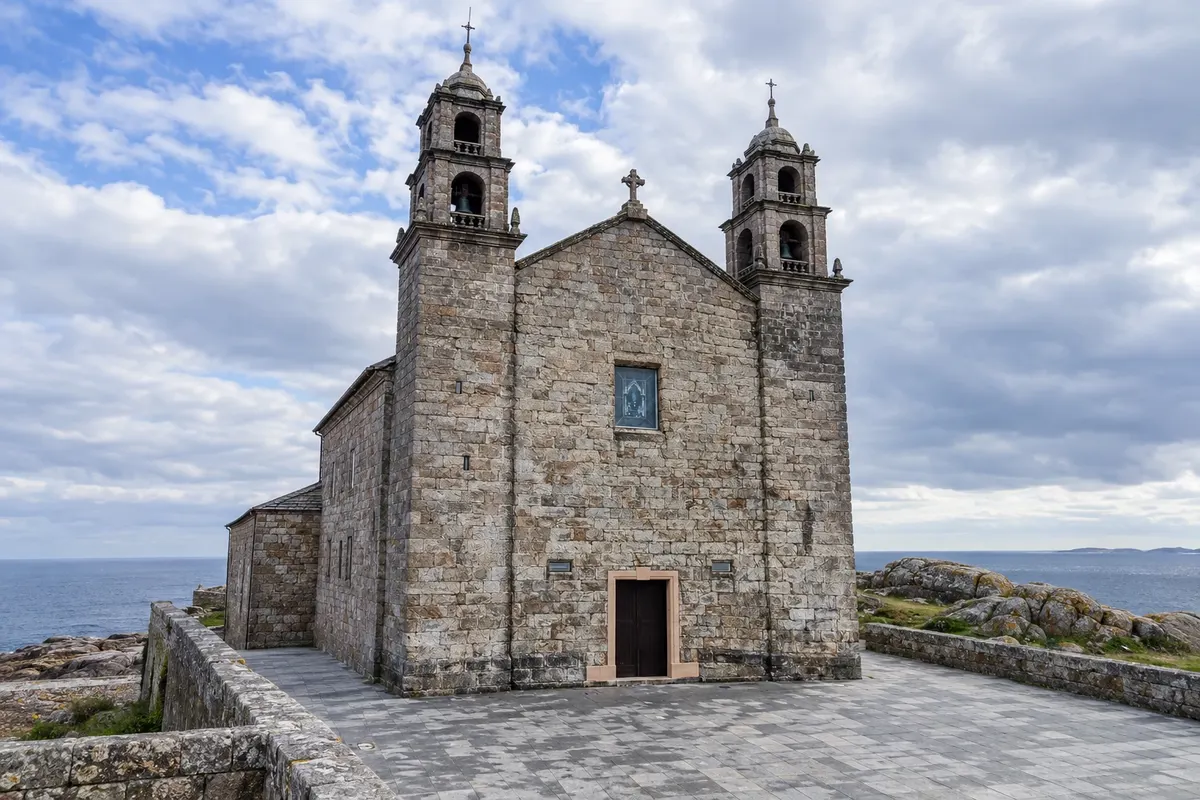
Galicia Muxía Muxía is a fishing village on the Costa da Morte in Galicia, about 80 km from Santiago de Compostela, on a peninsula facing the Atlantic. At the tip stands the sanctuary of the Virgem da Barca, among rocks linked to the legend of the stone boat that is said to have brought the Virgin to the apostle James, and beside it the sculpture A Ferida, a tribute to the volunteers of the Prestige oil spill disaster. The Gothic church of Santa María sits above the village, and about 3 km away is the Romanesque church of Moraime. The municipality includes Cabo Touriñán, the westernmost point of Galicia. Galician and Spanish are spoken.
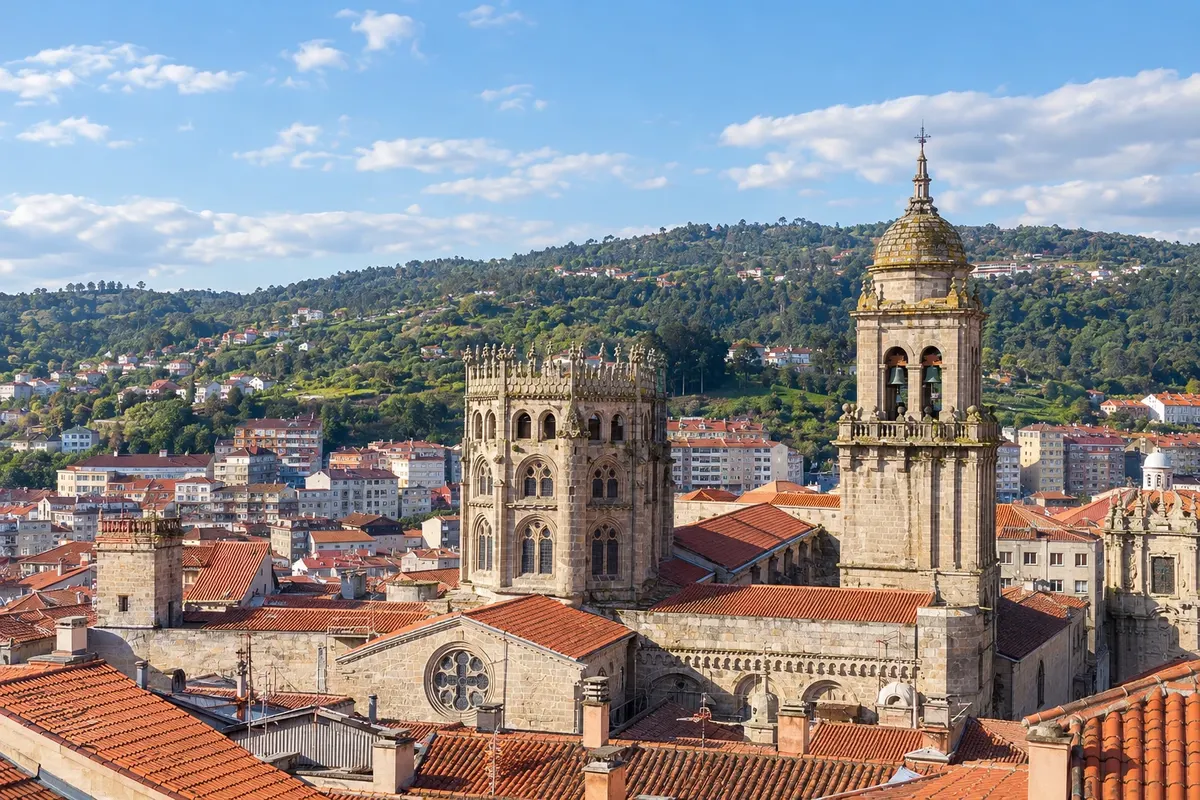
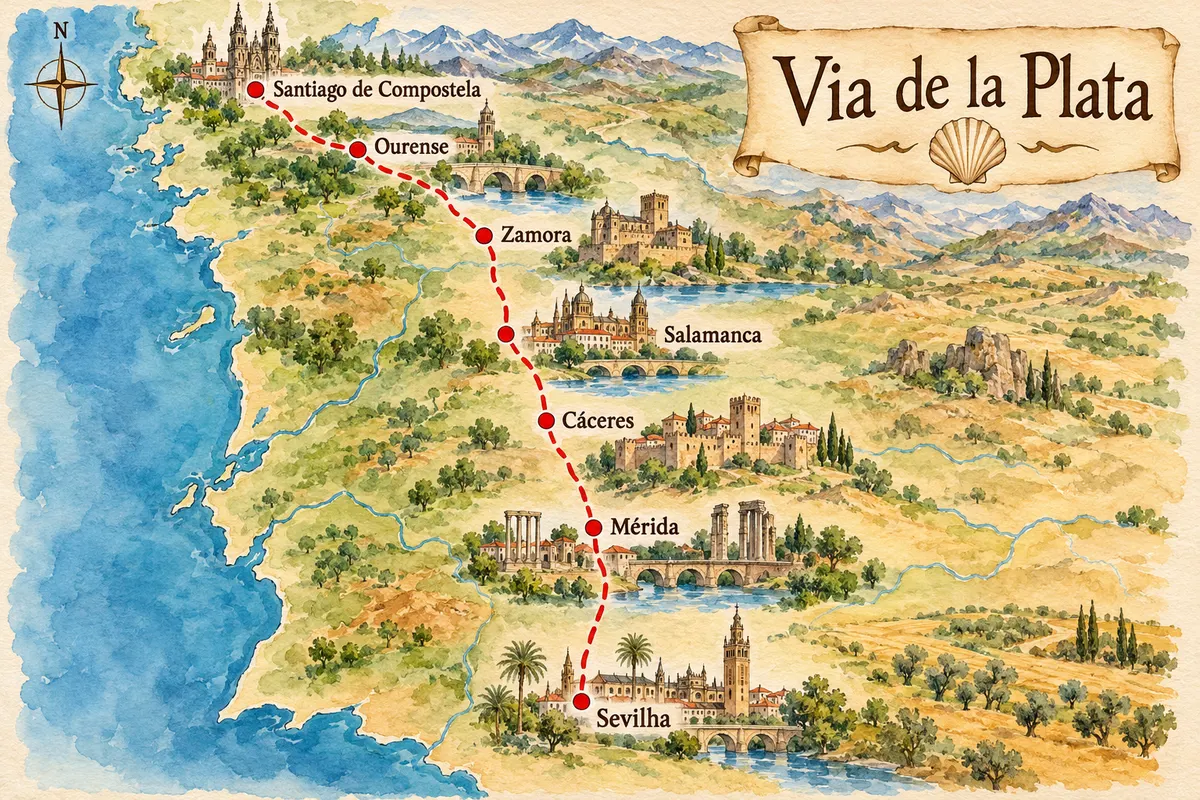
Galicia Ourense Ourense is the largest inland city in Galicia, on the banks of the Miño river, known for its thermal waters: the As Burgas springs gush hot in the old town, and the Outariz thermal baths are on the riverbank. It has the cathedral of San Martiño, the Roman bridge and the Praza Maior, and it is the most popular starting point of the Via de la Plata, about 109 km from Santiago. Nearby are the mosteiro de Santo Estevo and the cânion do Sil.
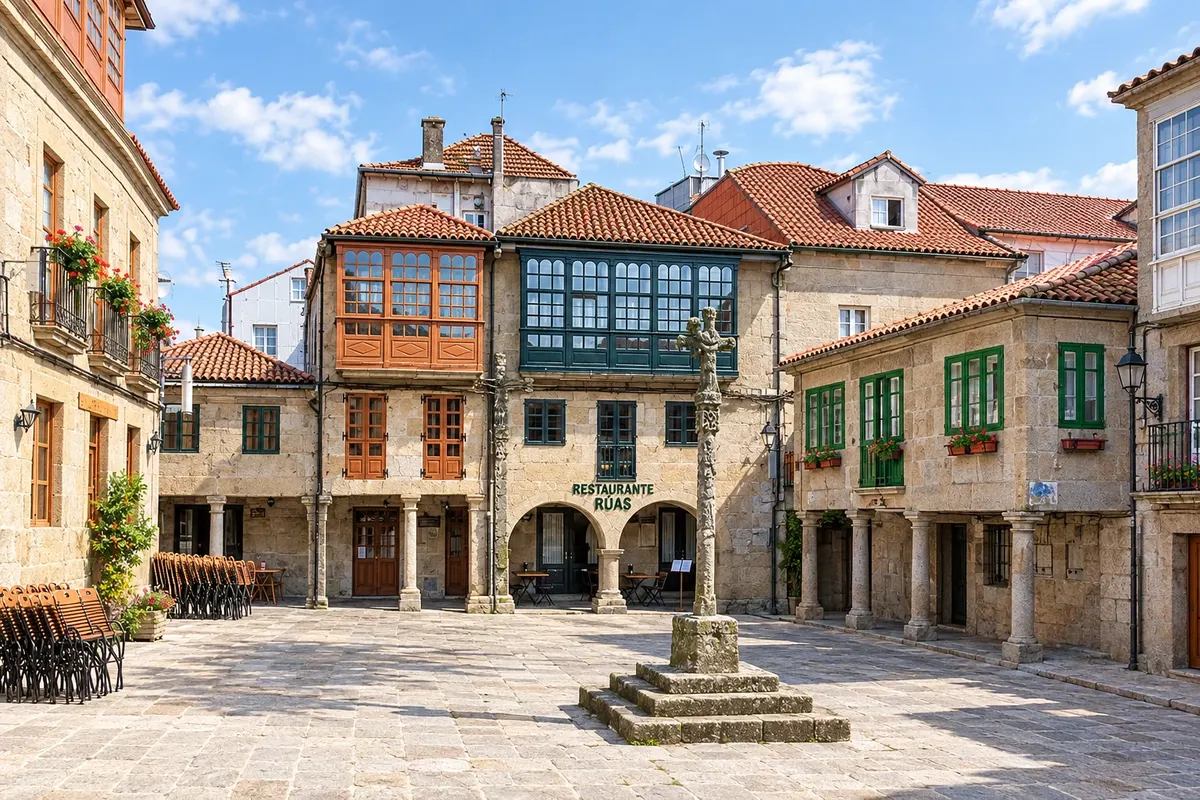
Galicia Pontevedra Pontevedra is a Galician city on the estuary of the same name, about 60 km from Santiago de Compostela. The historic center, made of granite, was closed to cars and is explored on foot through squares such as Praça da Leña, Praça da Ferrería and Praça da Verdura. There are the Igreja da Virgem Peregrina, with a scallop-shell floor plan, the Basílica de Santa María a Maior, the Convento de San Francisco, the Gothic ruins of San Domingos and the buildings of the Museu de Pontevedra. To the north, the Ponte do Burgo crosses the Lérez river, and the Ilha das Esculturas hosts outdoor art. It is a stop on the Caminho Português central and the Caminho da Costa.
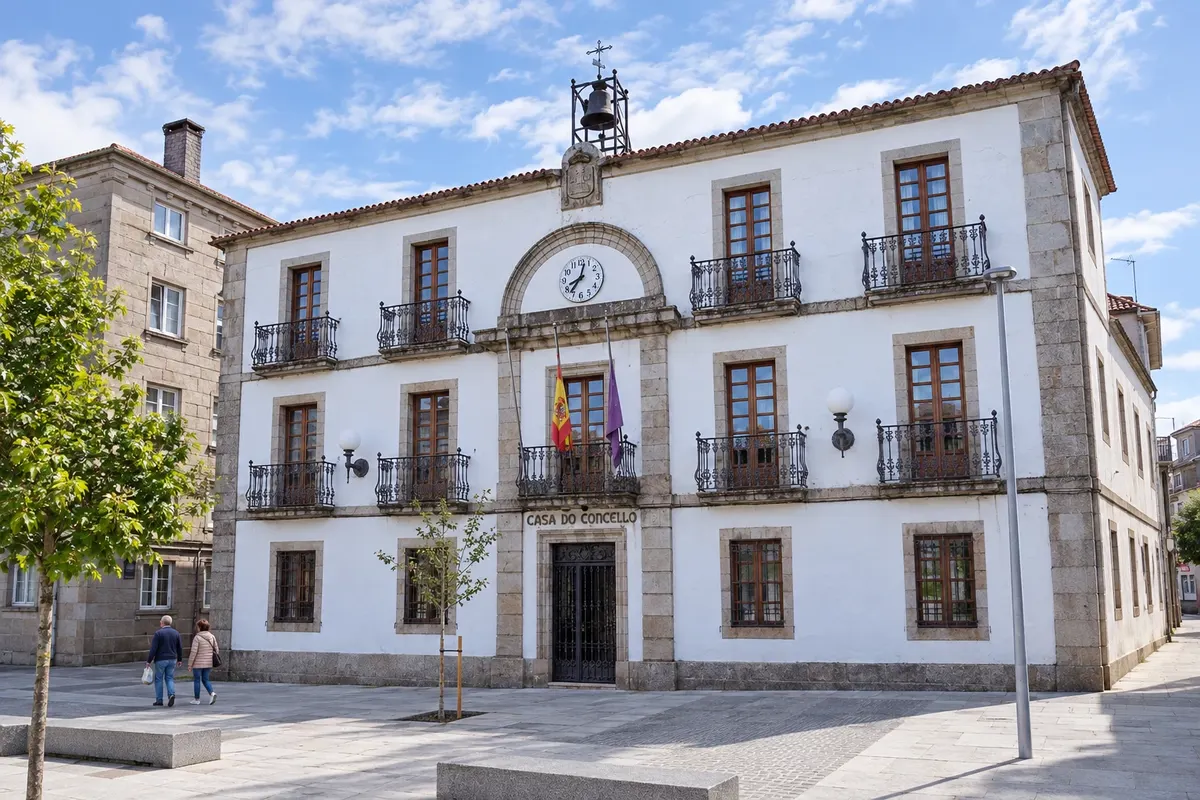
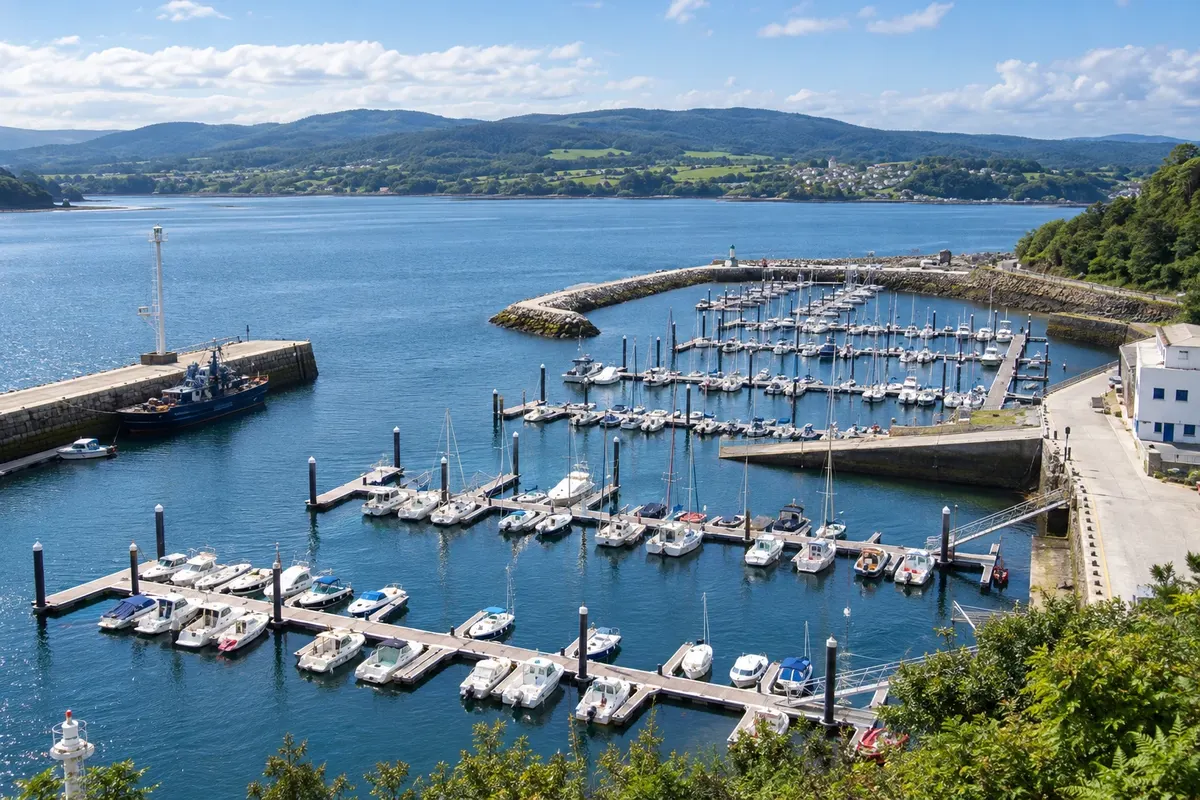
Galicia Ribadeo Ribadeo is a Galician town on the ría de Ribadeo, which borders Asturias, on the northern coast of Galicia. About 10 km away is the Praia das Catedrais, with rock arches that can only be explored at low tide. In the centre, Plaza de España includes the Torre dos Moreno, a 1915 modernist house built by emigrants who returned from the Americas, and the pazo de Ibáñez, now the town hall. At the mouth of the ría are the isla Pancha, with two lighthouses, and the 17th-century fort of San Damián, opposite the ponte dos Santos. It is a stop on the Caminho do Norte, the first Galician town. Galician and Spanish are spoken.
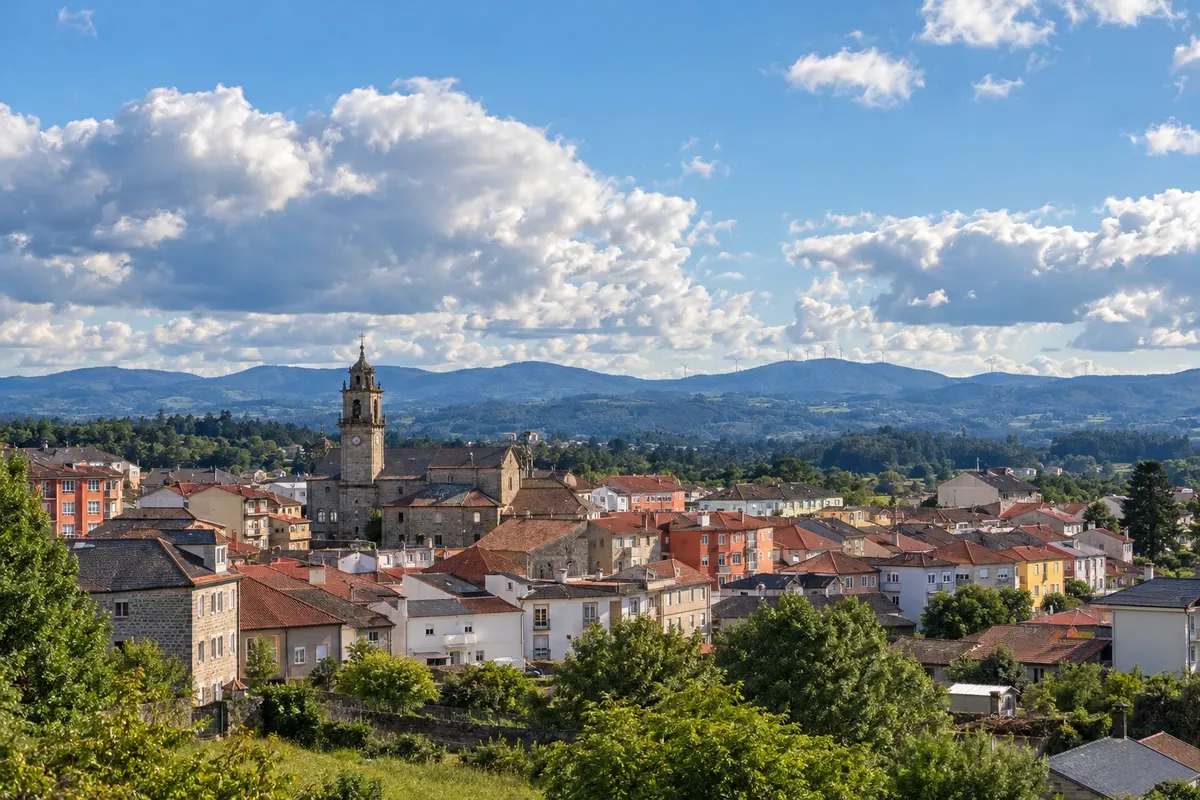
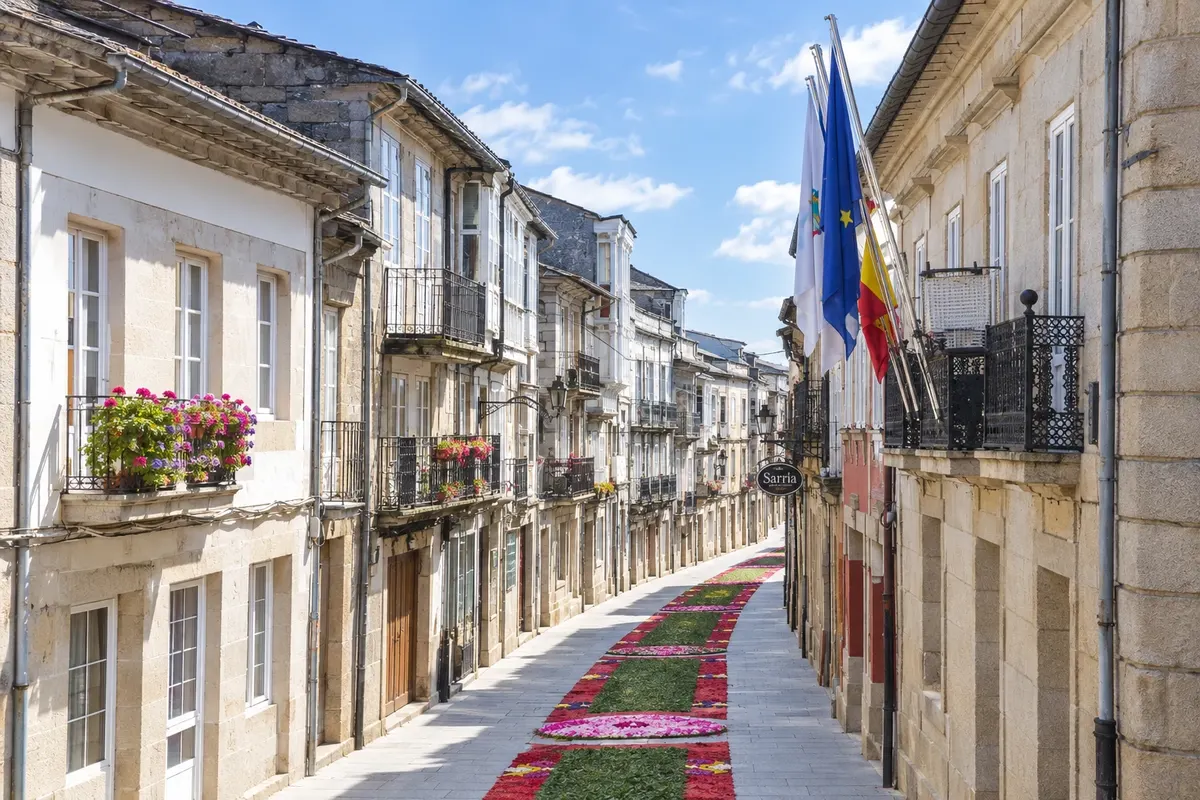
Galicia Sarria Sarria is a small town in the province of Lugo, in Galícia, about 115 km from Santiago de Compostela along the Camino. It is the most common starting point for those who walk the last 100 km—the minimum distance to request the Compostela—and it has many hostels and services for pilgrims. The Rúa Maior, the Camino street, runs past the churches of Santa Mariña and do Salvador and the tower of the old fortress, up to the mosteiro da Madalena, from the 13th century. Galician and Spanish are spoken.
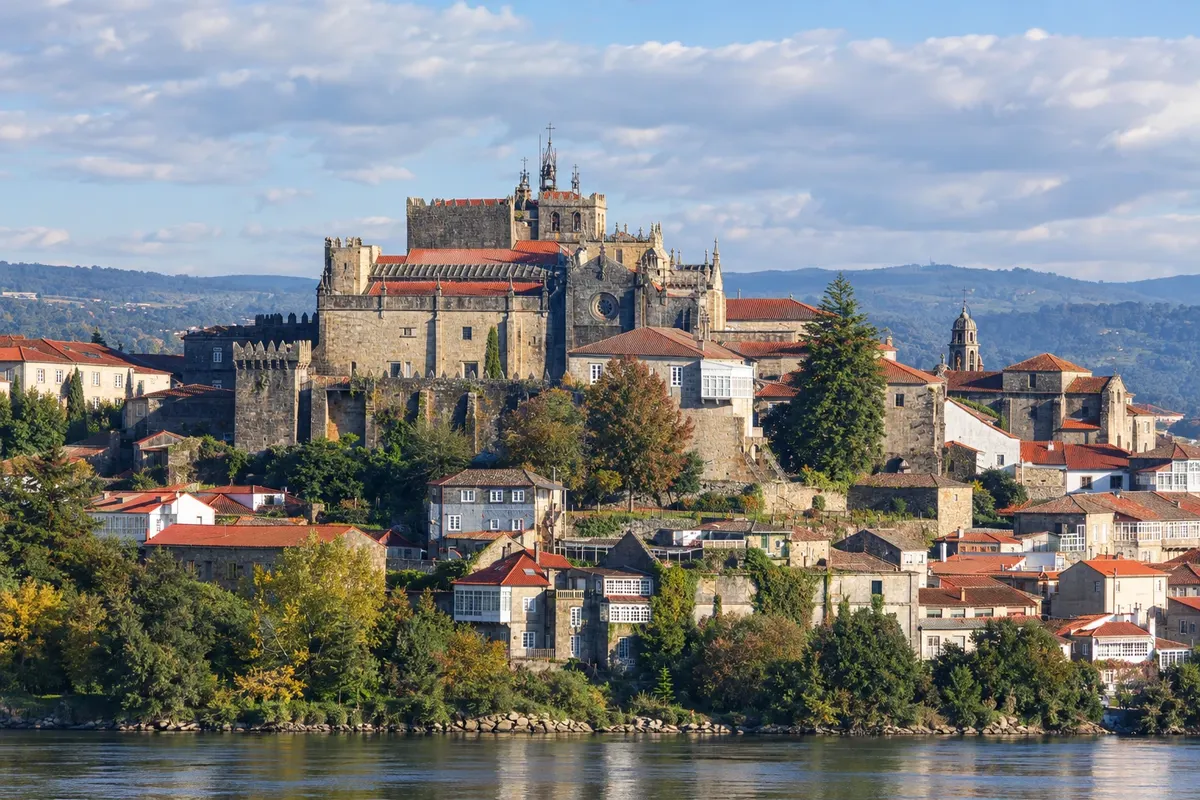
Galicia Tui Galician city on the Spanish bank of the river Minho, facing Valença in Portugal. The old stone center rises up to the Catedral de Santa María, a 12th–13th-century church-fortress with a Gothic cloister. It has convents, Baroque chapels and, to the north, the Parque Natural do Monte Aloia. It is one of the most sought-after starting points of the Caminho Português de Santiago, about 118 km from Santiago Cathedral.
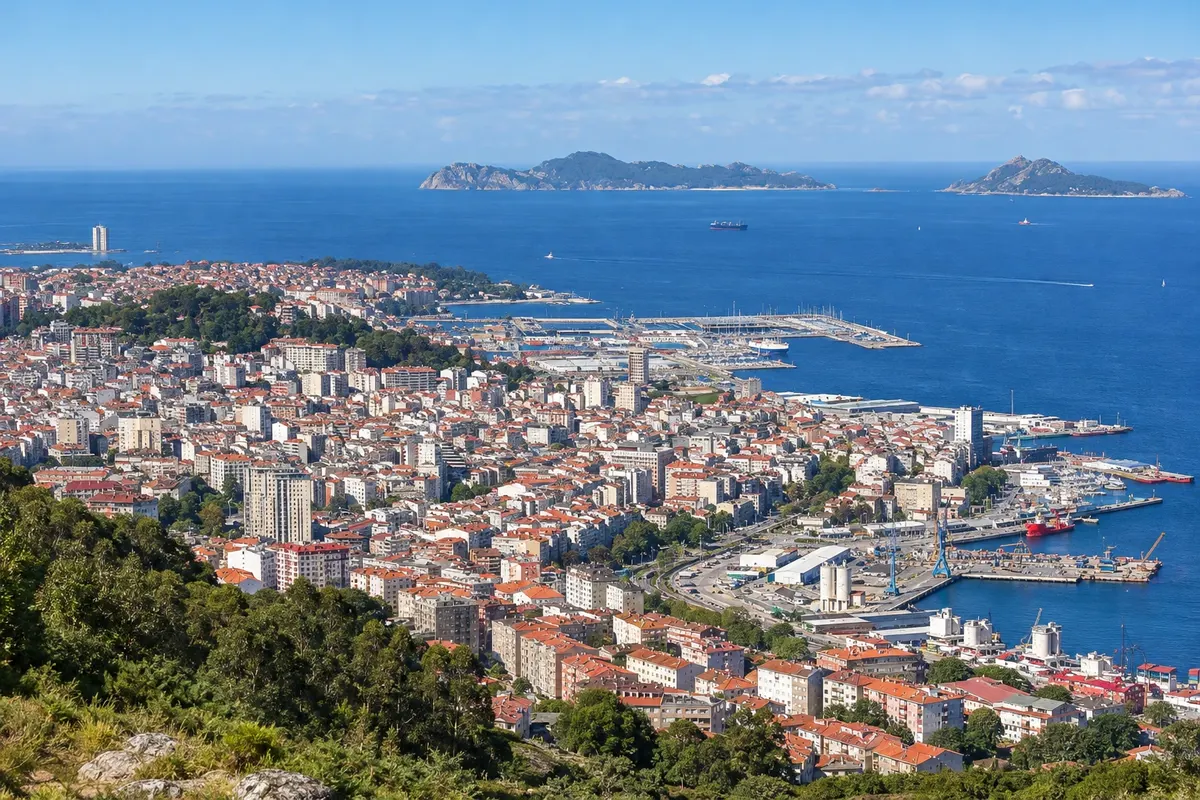
Galicia Vigo Vigo is the largest city in Galícia and a major fishing port on the ría de Vigo, near the border with Portugal. From the port boats sail to the Illas Cíes, inside a national park. The Casco Vello has the rua das ostras and the co-cathedral, and the Monte do Castro overlooks the ría. The Caminho Português da Costa passes through Vigo, and the Celta train links the city with Porto.
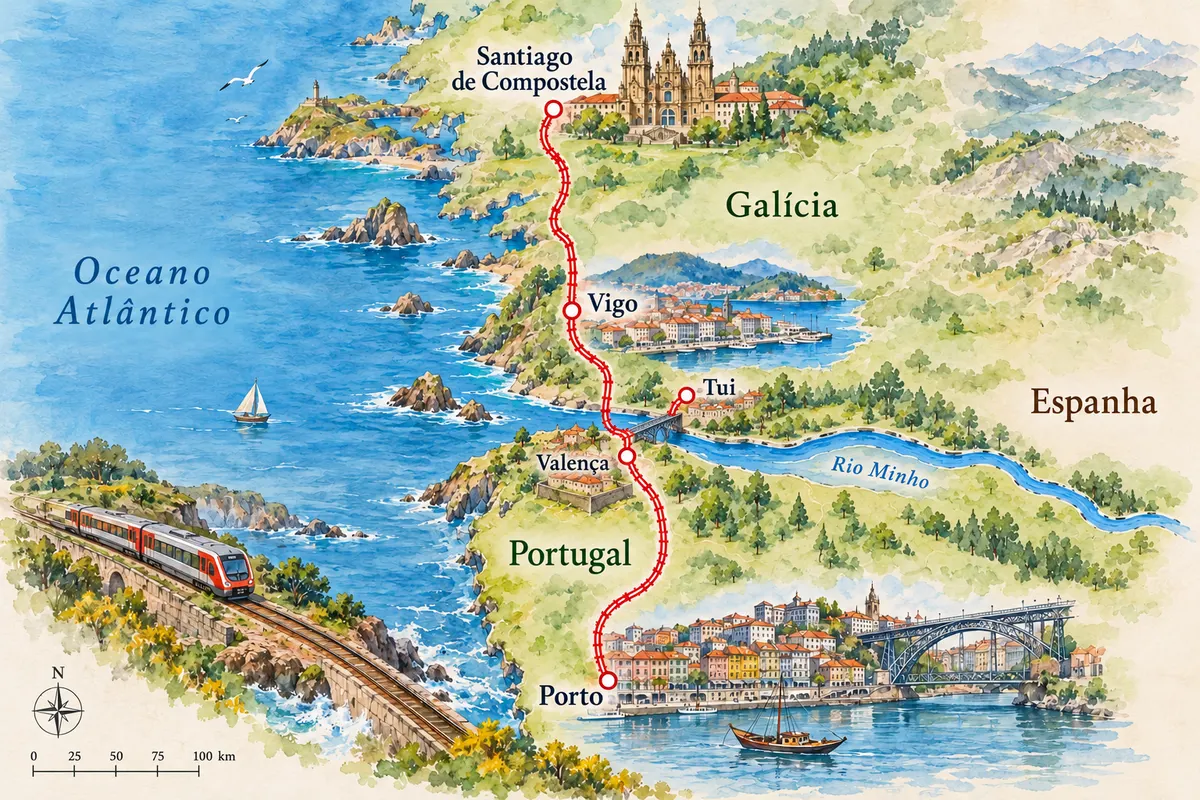
5 mesta Porto–Vigo–Santiago de Compostela by train From Porto to Galicia by train: the Celta crosses the Minho to Vigo, and a regional train takes you to Santiago de Compostela in about an hour.
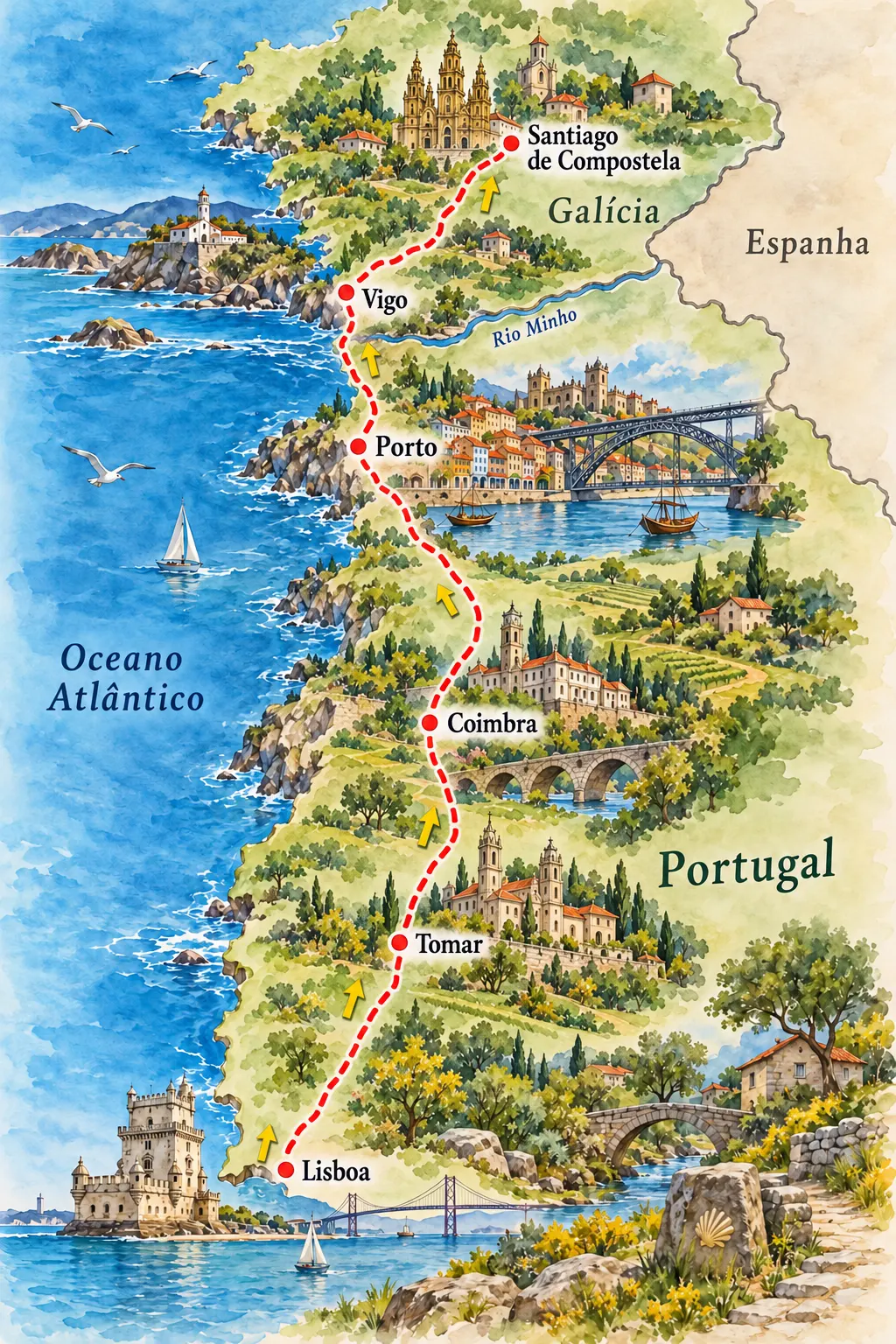
6 mesta Portuguese Way to Santiago on foot On foot from Portugal to Santiago de Compostela: the pilgrimage route that starts in Lisbon or Porto, follows yellow arrows and ends at Obradoiro Square.
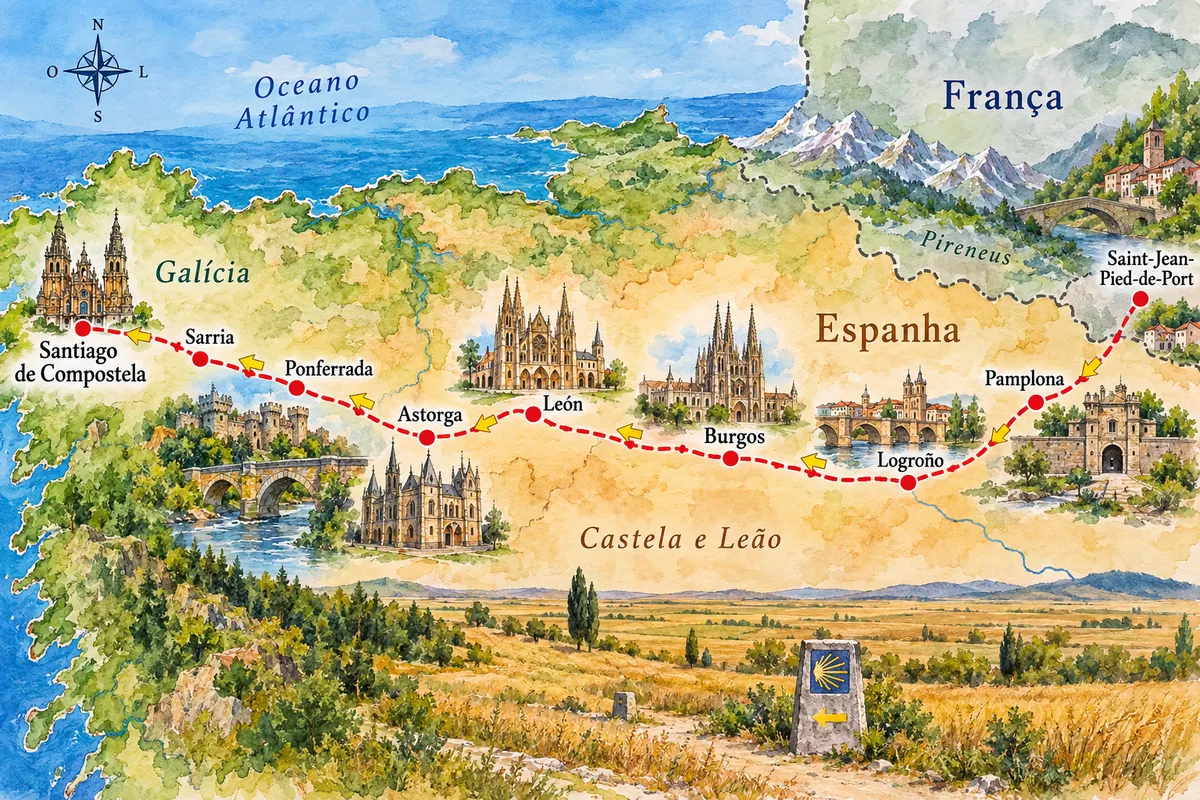
9 mesta French Way (Camino Francés) to Santiago on foot The most travelled pilgrimage route to Santiago de Compostela: from the French Pyrenees to Galicia, on foot, via Pamplona, Burgos and León, following the yellow arrows.
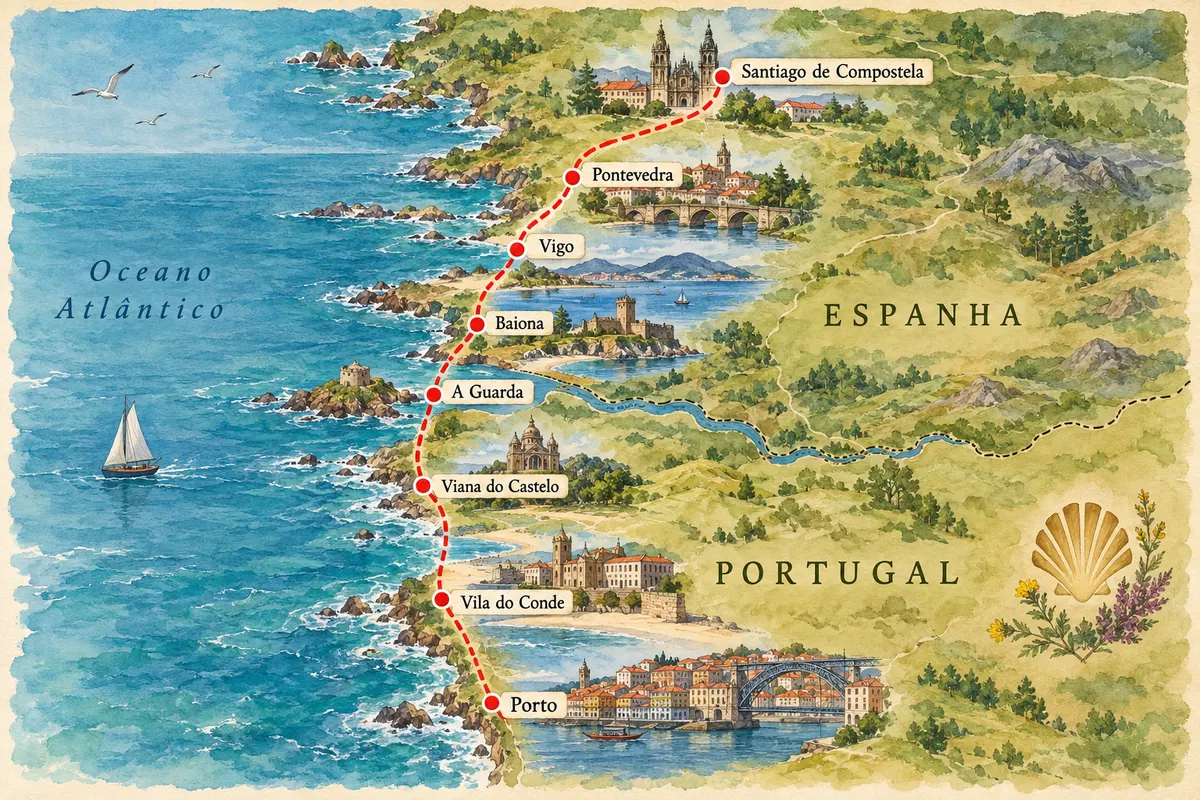
8 mesta Portuguese Coastal Way on foot The Camino de Santiago along the Atlantic: from Porto to Galicia via the coast, through Vila do Conde, Viana do Castelo, A Guarda, Baiona and Vigo, ending at Santiago Cathedral.
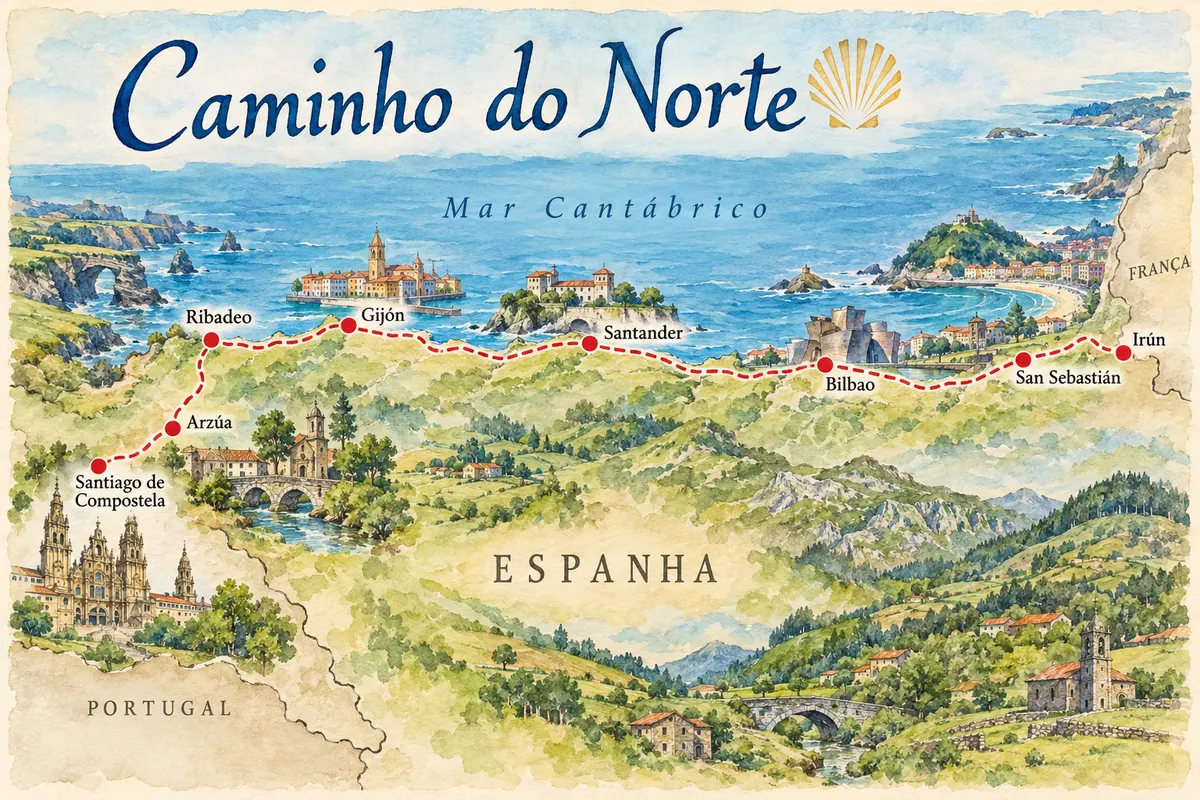
8 mesta Northern Way (Camino del Norte) to Santiago on foot The Camino de Santiago along the Cantabrian coast: from the Basque Country to Galicia on foot, via San Sebastián, Bilbao, Santander and Gijón, between the sea and the green mountains.
5 mesta Caminho Primitivo de Santiago on foot The oldest route to Santiago: from Oviedo, through the mountains of Asturias and via Lugo and its Roman walls, on foot to the cathedral of Compostela.
4 mesta English Way (Camino Inglés) to Santiago on foot The route taken by pilgrims who arrived by sea: from Ferrol or A Coruña to Santiago de Compostela in under a week, along Galicia’s northern coast.
3 mesta Finisterre and Muxía walk After the cathedral, the sea: on foot from Santiago de Compostela to Cape Finisterre, the old end of the world, and to the sanctuary of Muxía, on the Costa da Morte.
7 mesta Vía de la Plata from Seville to Santiago on foot The longest Camino de Santiago in Spain: from Seville to Santiago de Compostela along the country’s west, following the old Roman road, via Mérida, Cáceres, Salamanca, Zamora and Ourense.


 Brazilija
 Antarktika
 Argentina
 Bolivija
 Čile
 Kolumbija
 Ekvator
 Gvajana
 Francoska Gvajana
 Falklandski otoki (Malvini)
 Paragvaj
 Peru
 Surinam
 Urugvaj
 Venezuela
 Nemčija
 Avstrija
 Belgija
 Hrvaška
 Danska
 Slovaška
 Slovenija
 Finska
 Francija
 Grčija
 Nizozemska
 Madžarska
 Irska
 Islandija
 Italija
 Luksemburg
 Norveška
 Poljska
 Portugalska
 Združeno kraljestvo
 Češka
 Švedska
 Švica
 Turčija
 Bermudi
 Kanada
 Združene države Amerike
 Grenlandija
 Mehika
 Sveta Peter in Mihael
 Dominikanska republika
 Japonska
 Južnoafriška republika
 Egipt
 Avstralija
 Fidži
 Nova Zelandija
 Papua Nova Gvineja