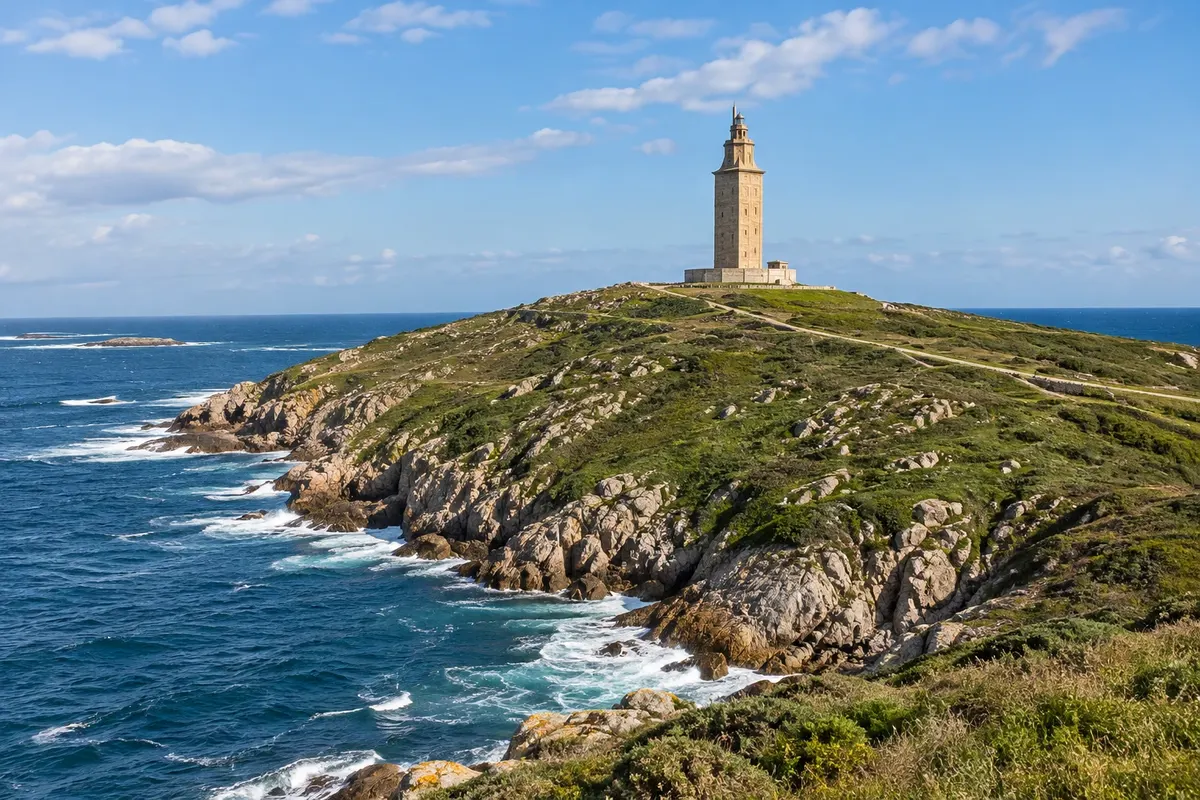
Tower of Hercules
Roman lighthouse from the late 1st and early 2nd centuries, 55 meters tall, with an 18th-century neoclassical refurbishment; the only Roman lighthouse still in operation; a World Heritage Site since 2009.
Antarktika
Galícia · Španija
Destinacija: Santiago de Compostela and Galicia.
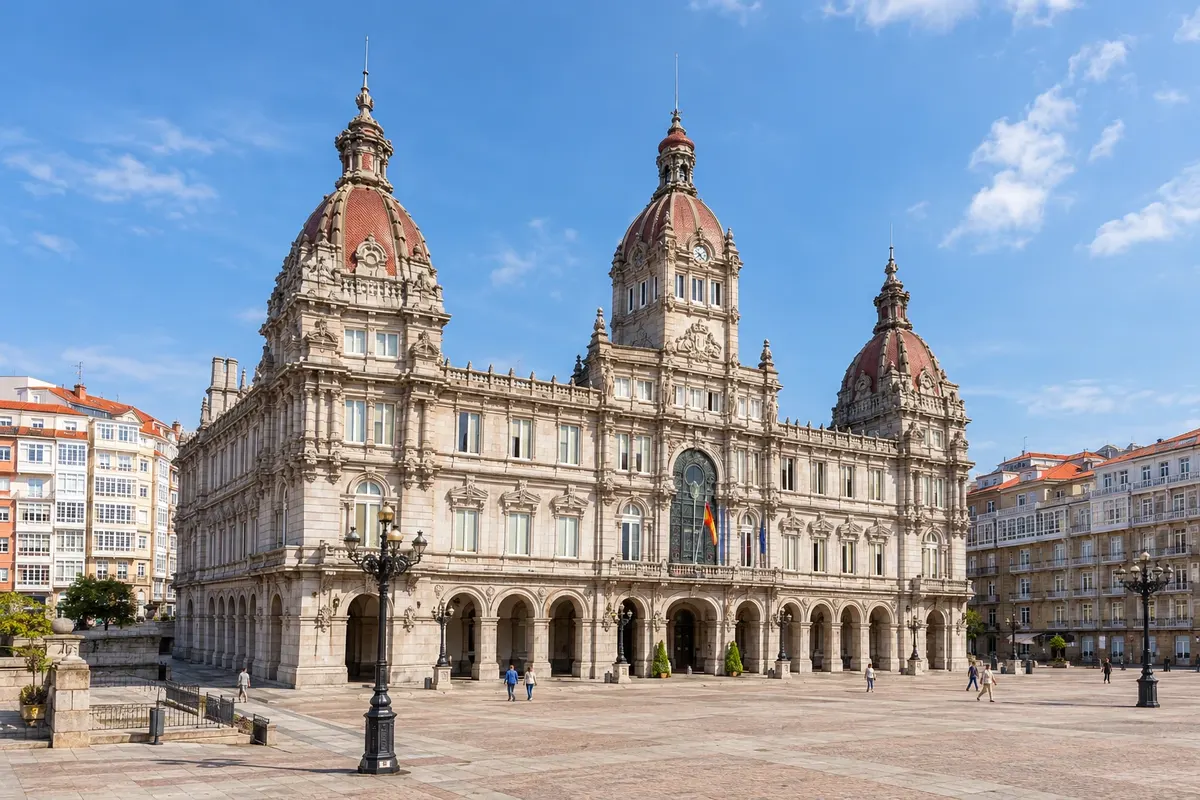
Na fotografiji: Town Hall and plaza de María Pita, A Coruña
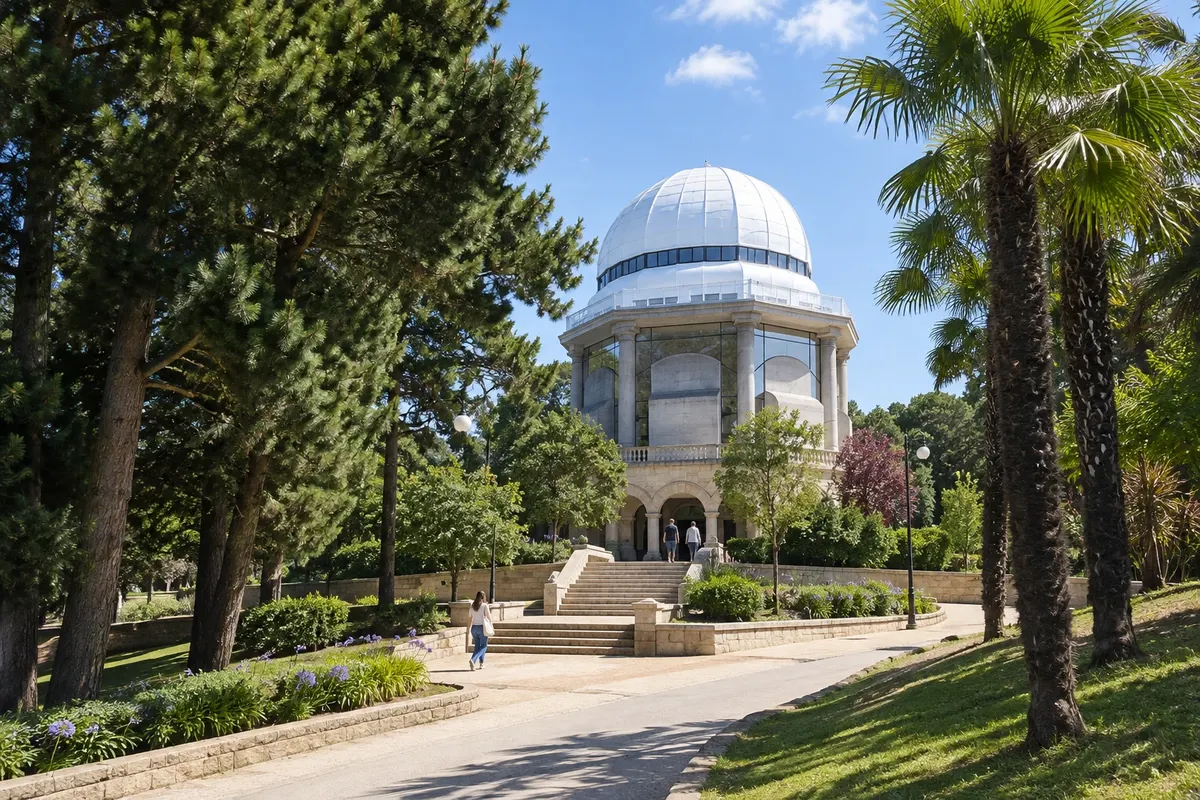
Illustrative images. The pictures in this guide are illustrations based on the real place, not photographs, and may differ from it.
Mesto
A Coruña is a Galician city on an Atlantic peninsula, about 75 km from Santiago de Compostela. At the northern tip stands the Torre de Hércules, the only Roman lighthouse still in operation and a World Heritage Site. The glass galleries along avenida da Mariña lead to plaza de María Pita and the Old Town, with the colegiata de Santa María do Campo and the San Carlos garden. The castle of San Antón houses the archaeological museum. A seaside promenade skirts the peninsula, with the beaches of Riazor and Orzán, the Aquarium Finisterrae, the Domus, the Casa das Ciências and monte de San Pedro.
V vodniku še ni nastanitev – A Coruña.
kako do tja · koliko dni · načrt poti · vprašanja
Doživite kraj
Roman lighthouse from the late 1st and early 2nd centuries, 55 meters tall, with an 18th-century neoclassical refurbishment; the only Roman lighthouse still in operation; a World Heritage Site since 2009.
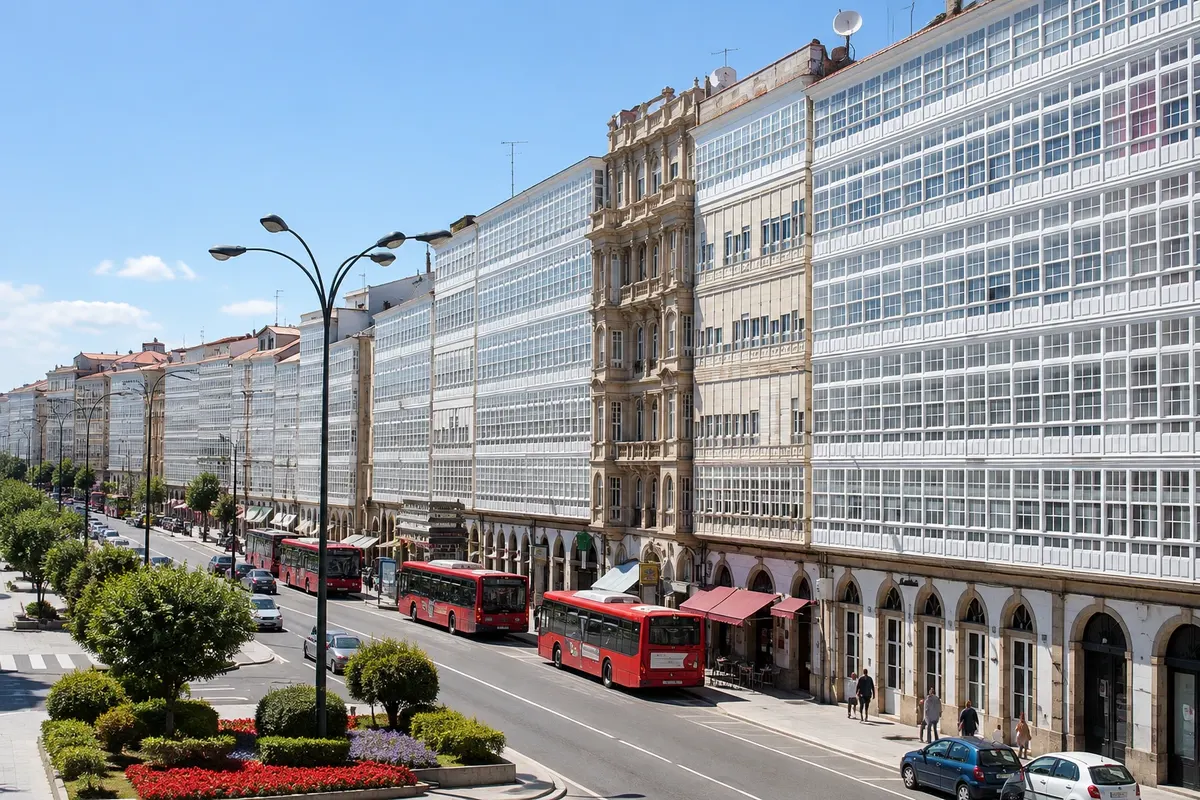
Seafront avenue with the long row of white gallery façades from the 19th and 20th centuries, which gave A Coruña the nickname 'city of glass'.
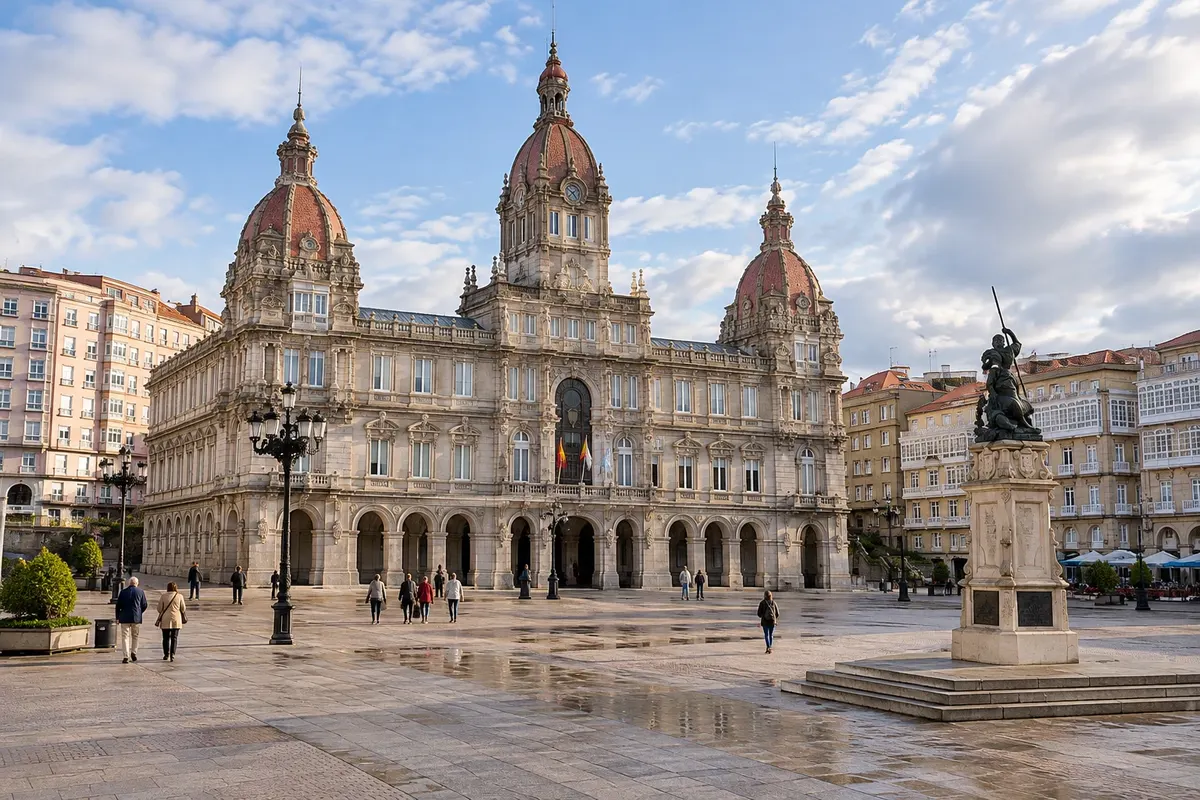
Large square in A Coruña, over 10,000 m², surrounded by arcades and glass galleries, with the town hall and the statue of María Pita, heroine of the city's defense against the English fleet in 1589.
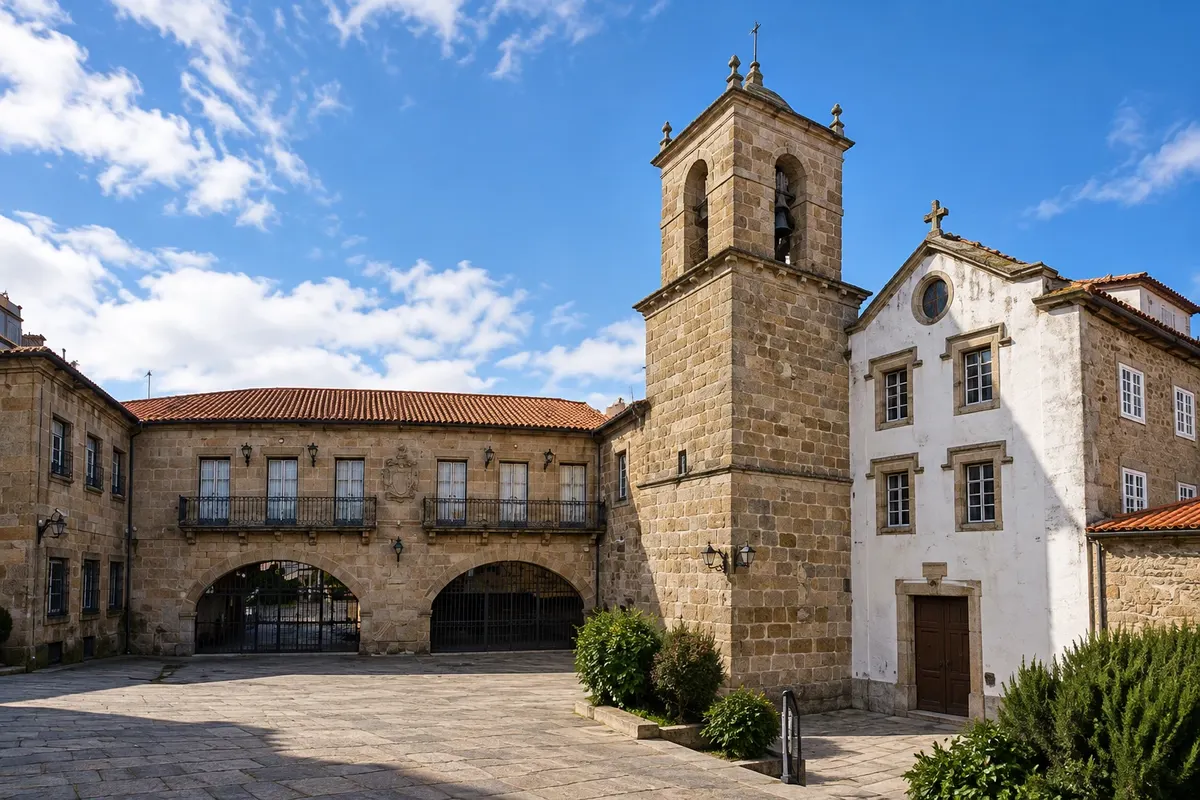
Medieval neighborhood of A Coruña, with stone streets, the Romanesque collegiate church of Santa María do Campo and the jardín de San Carlos, where the tomb of the English general John Moore is located.

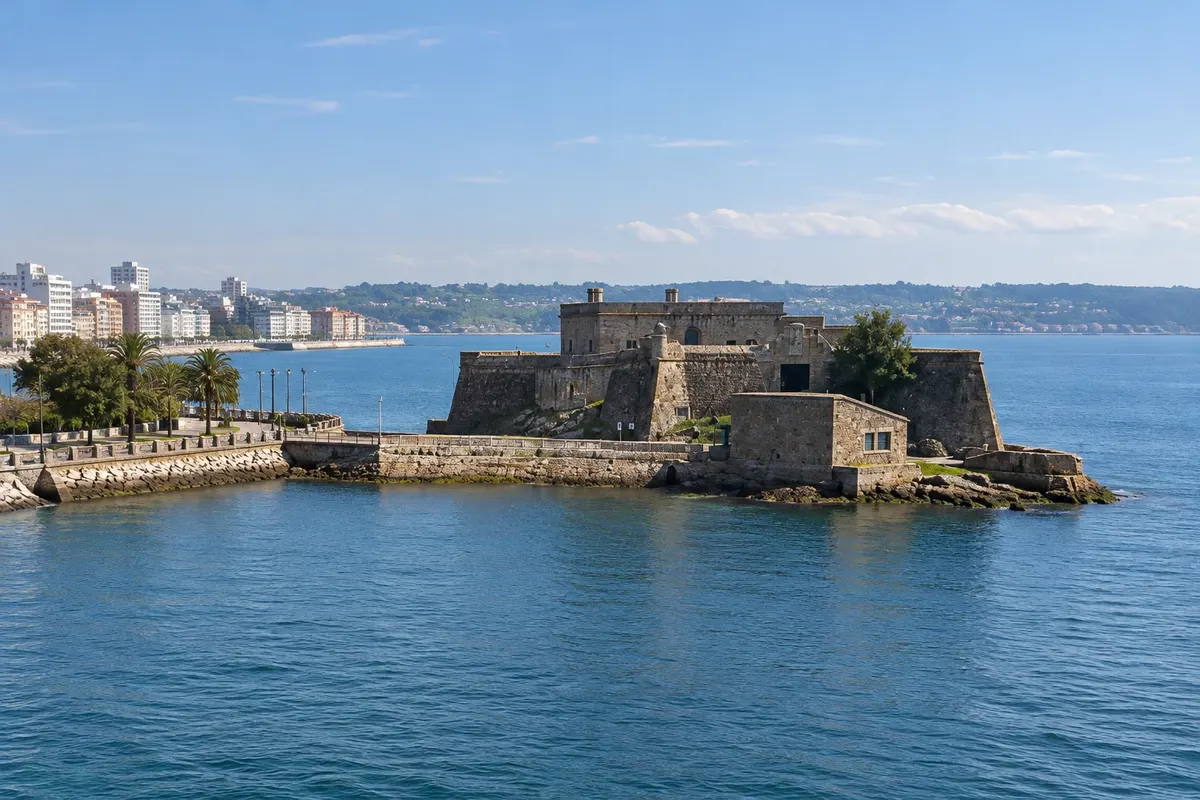
16th-century fortress on a former islet in the port of A Coruña, which defended the bay and later served as a prison; today it houses the Museu Arqueológico e Histórico.
Aquarium opened in 1999 by the sea, between the Domus and the Torre de Hércules, with pools connected to the Atlantic that follow the tides, seals and species of the Galician coast.
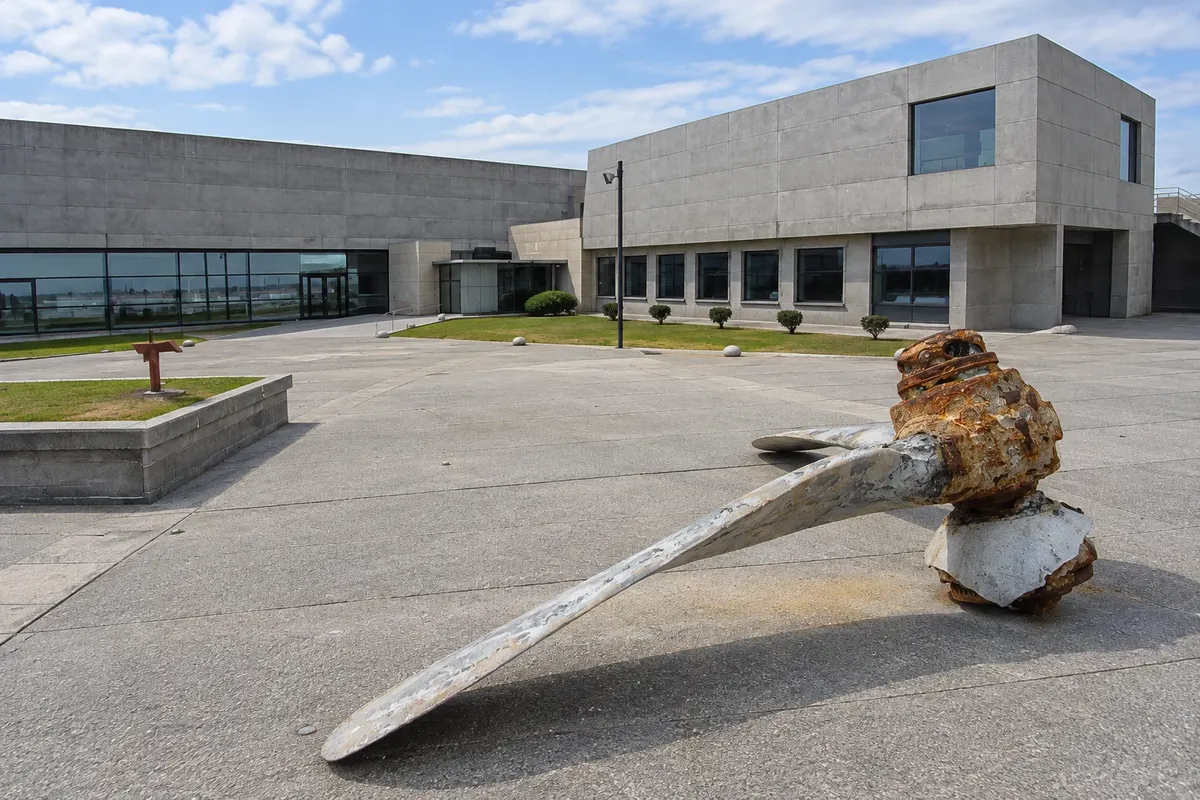
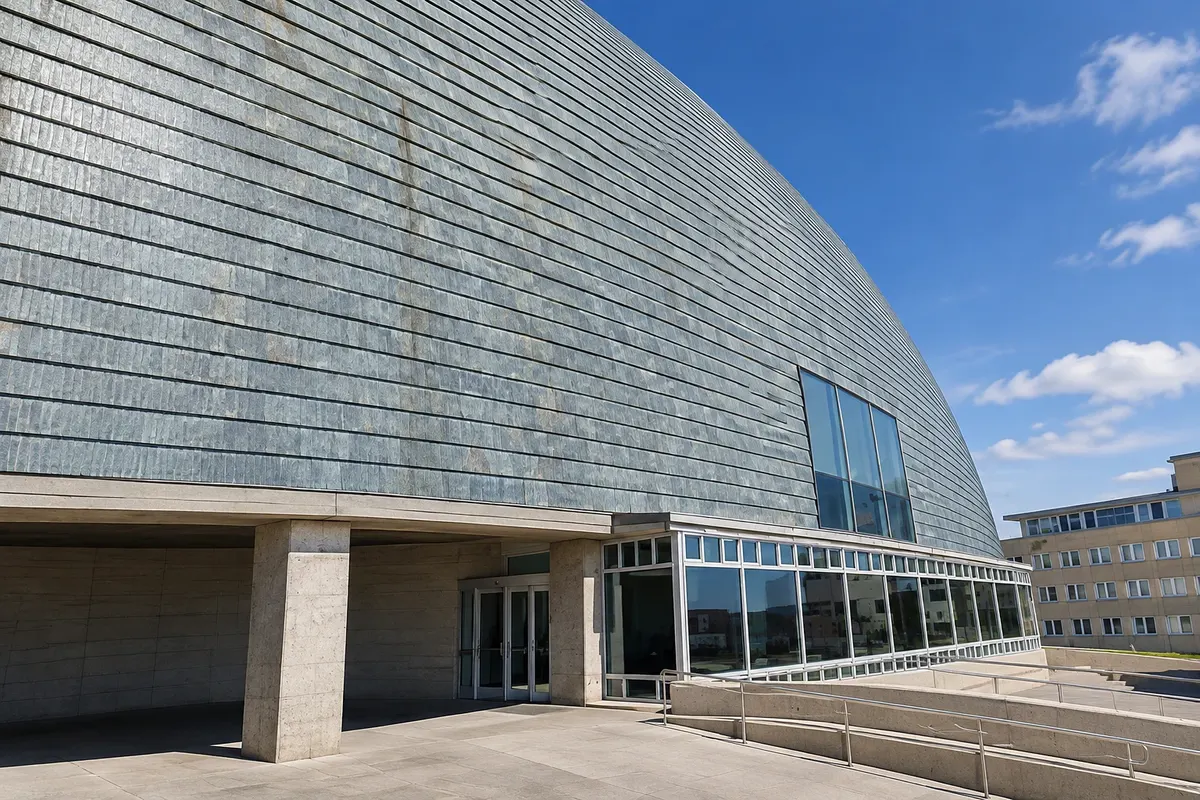
Interactive museum dedicated to the human being, opened in 1995 in a building by Arata Isozaki and César Portela, with a curved slate facade facing the sea, like a sail in the wind.
Interactive museum of science and technology opened in 1985 in a small palace in the Santa Margarida park, with a planetarium and physics experiments; the first of its kind under public management in Spain.
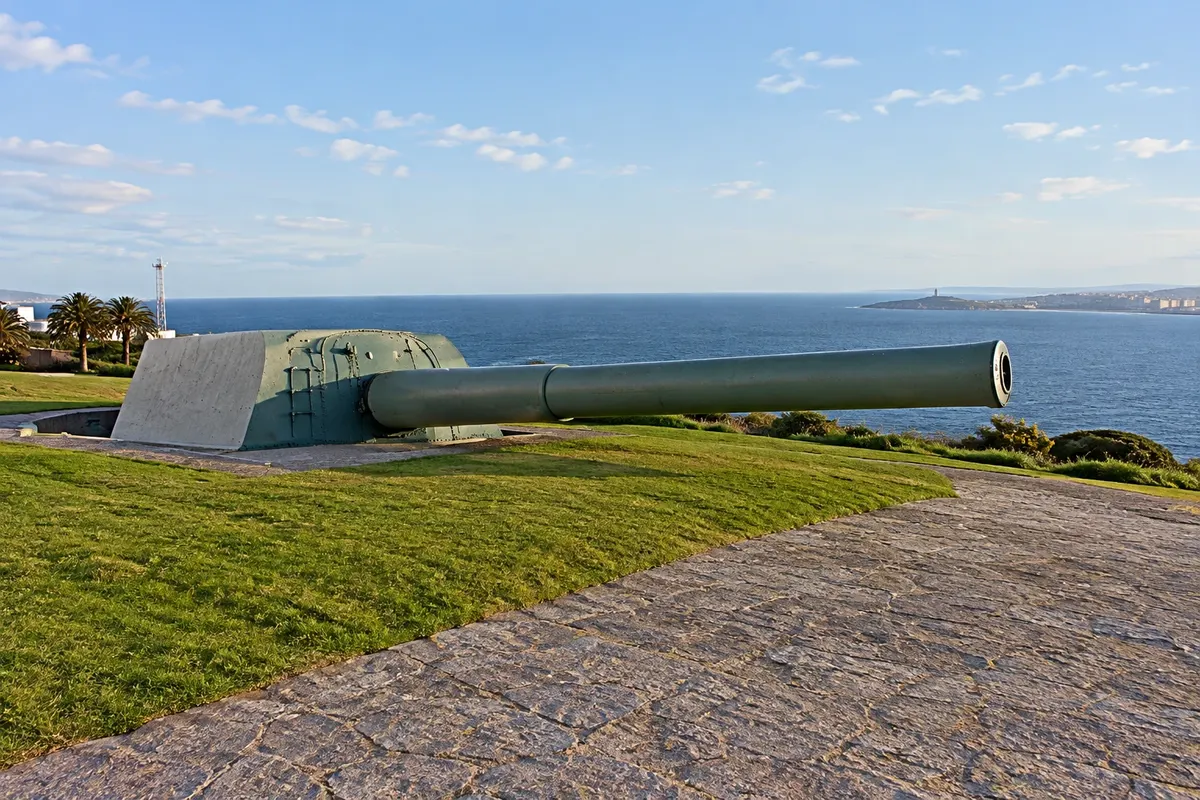
Park on top of an old military hill to the west of A Coruña, with the cannons of a coastal battery, viewpoints over the city and the sea, and a panoramic elevator that rises from the promenade.
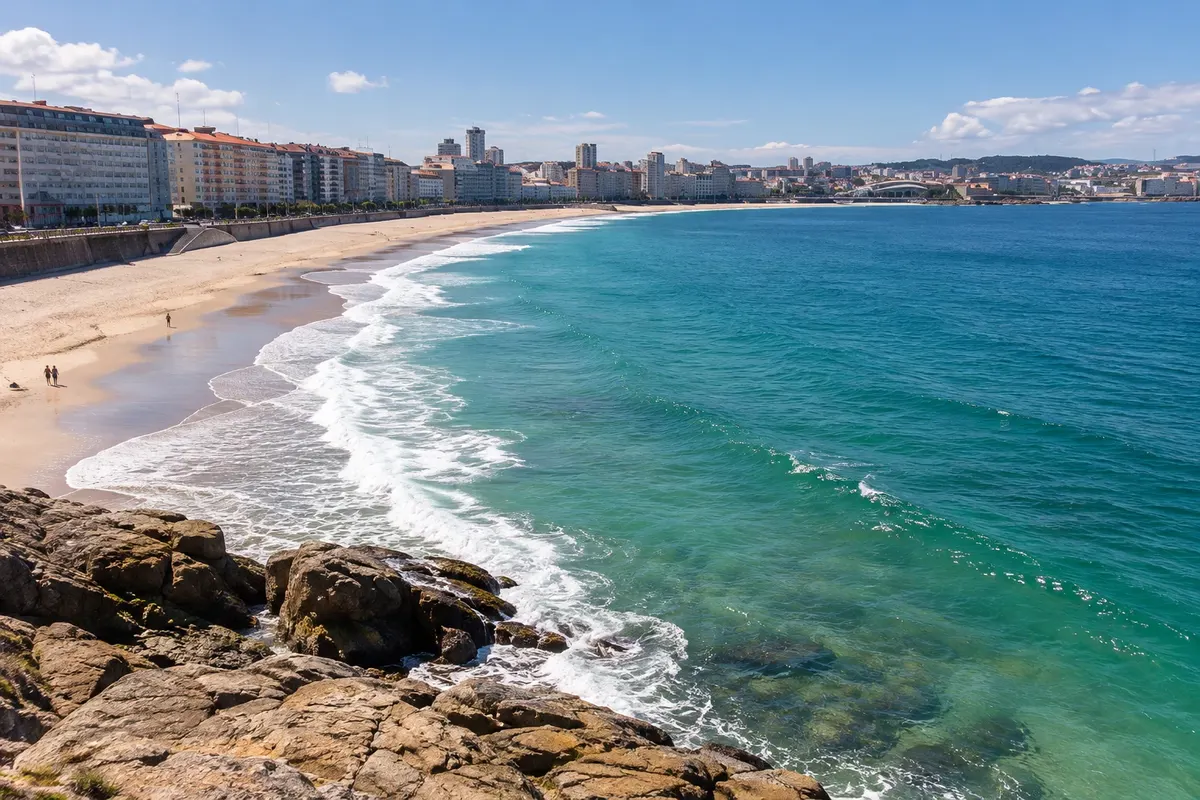
Two continuous urban beaches in the Orzán bay, in the center of A Coruña, accompanied by the promenade; Orzán has waves popular with surfers, while Riazor is calmer.
Pred odhodom
A Coruña – Galicia Destinacija Santiago de Compostela and Galicia približno 75 km stran (izhodišče: Santiago de Compostela)
Razdalje so približne. Pred potovanjem preverite lete in vozne rede avtobusov, vlakov ali ladij.
Confirm before buying. A Coruña airport is about 8 km from the center, with flights from Spanish and European cities; Santiago airport is about 70 km away. A Coruña station has trains to Santiago and Vigo on the Eixo Atlántico, and services to Madrid, Lugo and Ferrol. There are buses to Galician cities. By car, via the AP-9 and A-6 motorways.
Two days are enough for the Torre de Hércules, the seaside promenade, the Mariña, plaza de María Pita, the Old Town, the castle of San Antón and one of the science museums. With three days you’ll have time for monte de San Pedro, the beaches and a day trip to Betanzos or Ferrol.
From June to September it usually rains less and is less cold; it’s the beach season for Riazor and Orzán. On the night of June 23–24 the festival of San Juan fills the beaches with bonfires. The city is windy year-round and winters are rainy.
The seasons shown are the most usual ones; nature doesn't always follow the calendar.
No. The center, the Old Town and the seaside promenade are walkable, and city buses reach the Torre de Hércules and monte de San Pedro. Trains link the city with Santiago, Betanzos and Ferrol.
Predlog poti
Pot povezuje znamenitosti na tej strani. Za oglede boste imeli dovolj časa.
Visit the Torre de Hércules, climb to the top and walk around the surrounding sculpture park facing the Atlantic.
Follow the seaside promenade to the Aquarium Finisterrae or the Domus, depending on your interest.
Go to avenida da Mariña, with its glass galleries, and to plaza de María Pita, where the town hall is located.
Do a tapas crawl along the streets da Estrela, da Galera and da Franxa, near María Pita.
Dan 2
Walk through the Old Town, with the colegiata de Santa María do Campo and the San Carlos garden.
Visit the castle of San Antón and the archaeological museum by the harbor.
Go up monte de San Pedro by bus or by the panoramic elevator for the sunset over the city.
Check before you go. Opening hours and days change, and places may close for renovations, holidays or events. This itinerary is a suggestion from Cidade Turismo, not a commitment: plan yours by checking directly with each place you intend to visit.
Pred odhodom
Yes. It is the only Roman lighthouse still in operation, built between the late 1st century and the early 2nd century, and it has been a World Heritage Site since 2009.
Because of the glass gallery façades along avenida da Mariña, which sparkle in the sun.
By train on the Eixo Atlántico in about 30 to 40 minutes depending on the service, or by bus.
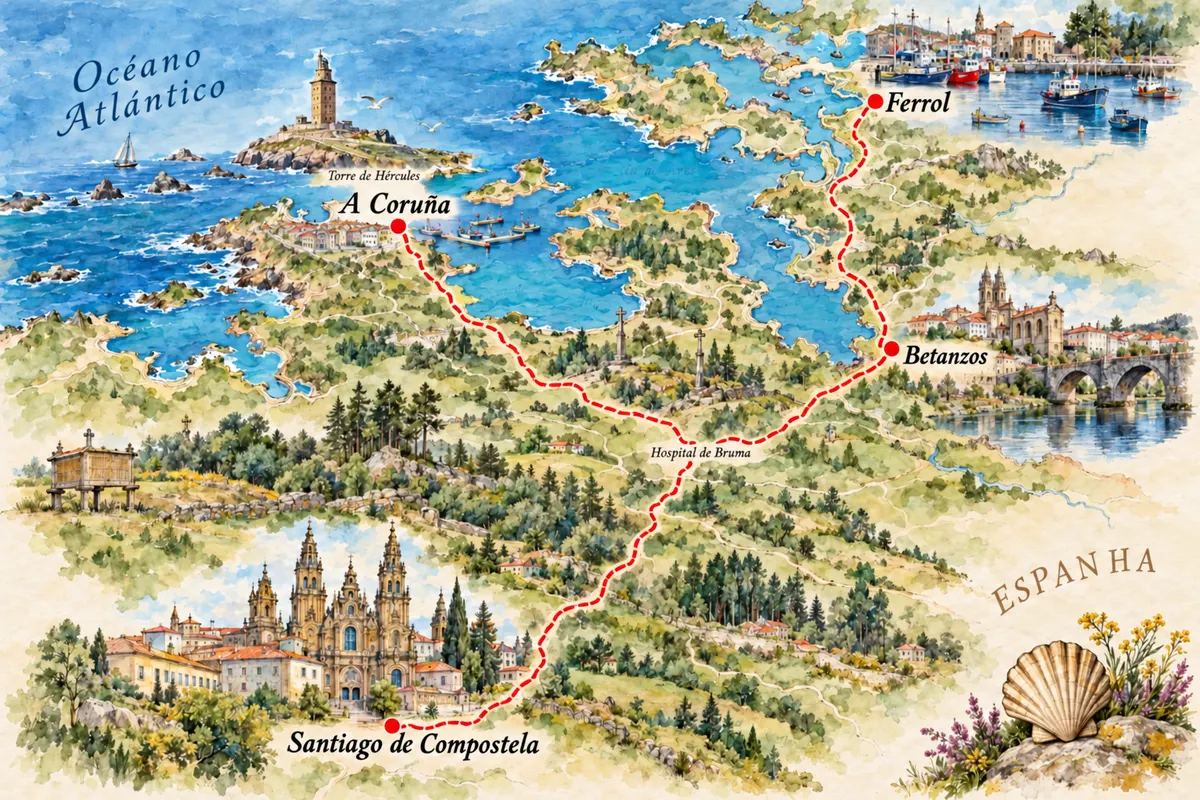
Yes, there is a variant of the Camino Inglés that starts in A Coruña and joins the one from Ferrol, but it is under 100 km to Santiago.
Galician and Spanish.
Poti – in Španija
The route taken by pilgrims who arrived by sea: from Ferrol or A Coruña to Santiago de Compostela in under a week, along Galicia’s northern coast.
Več kot vodnik