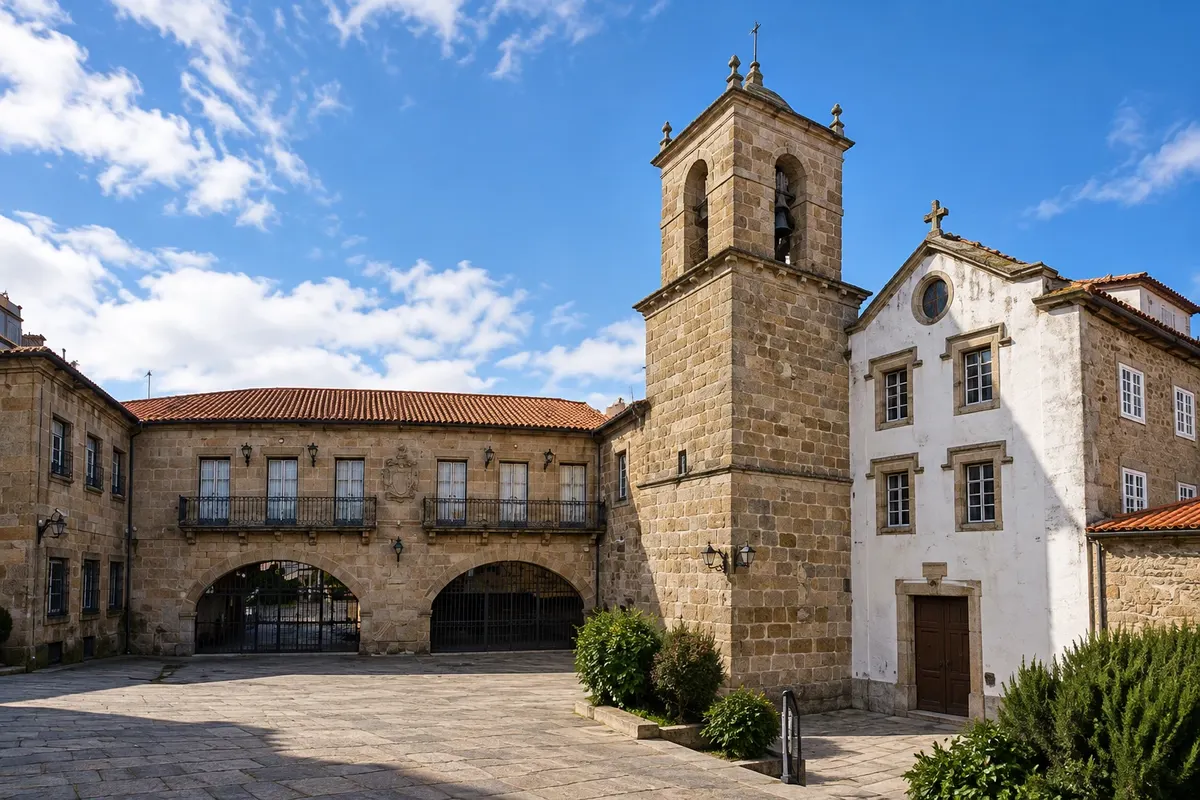
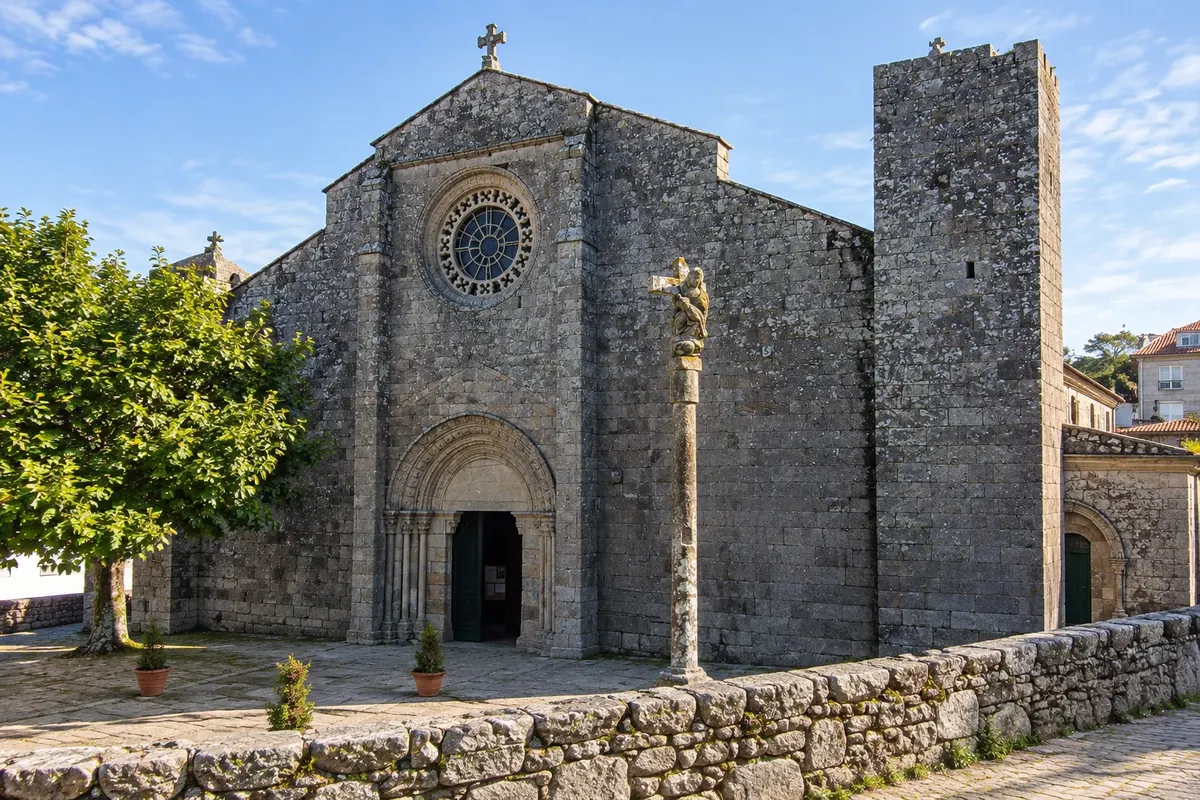
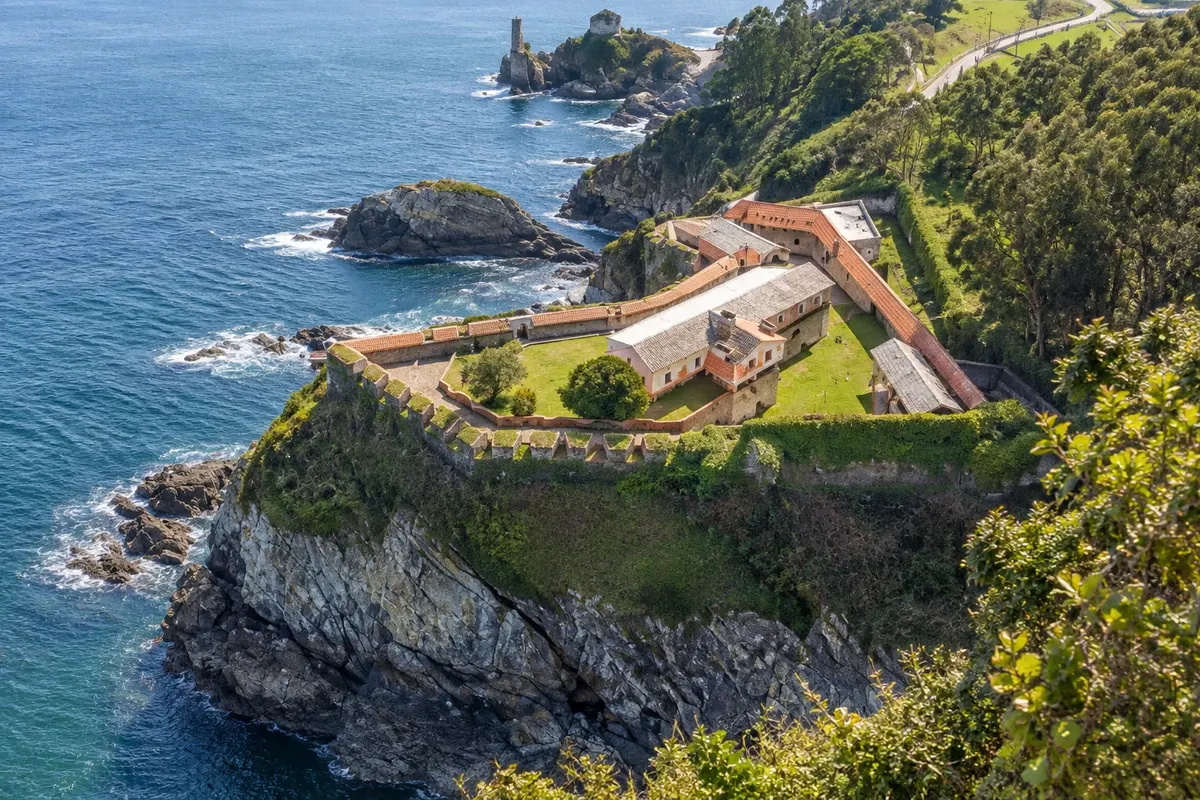
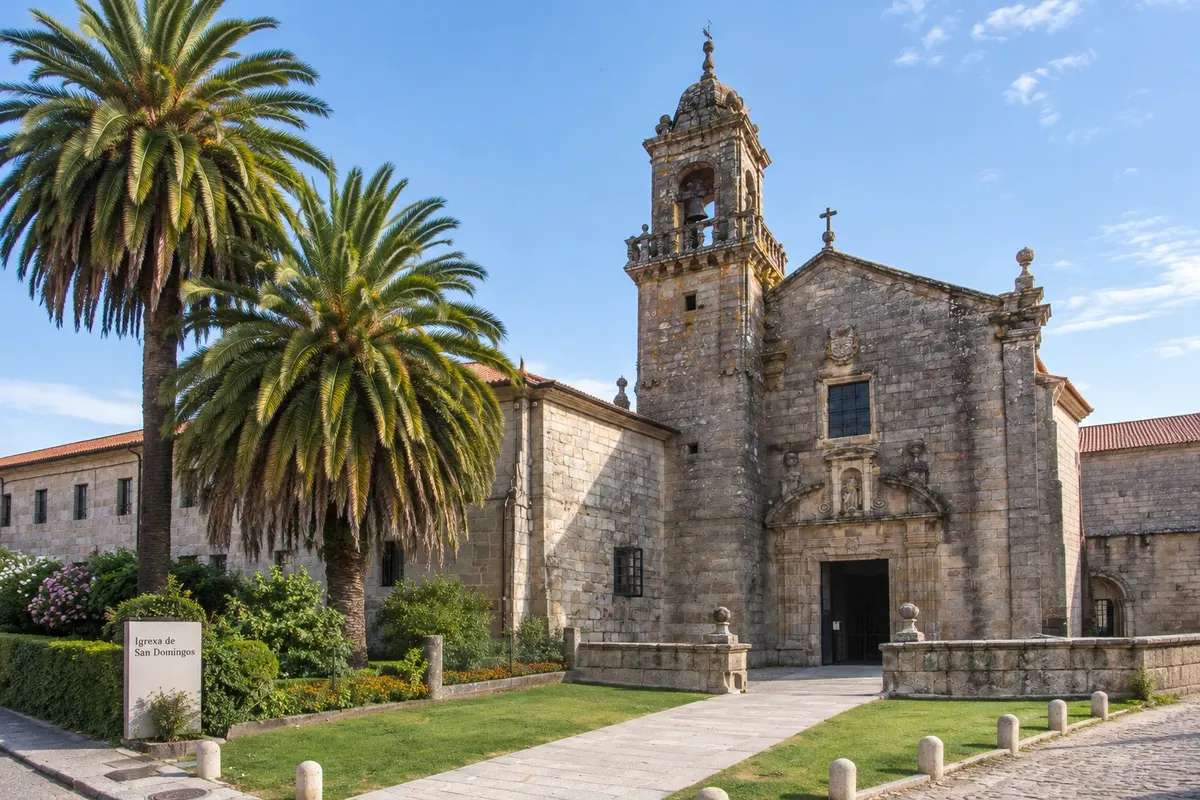
Santiago de Compostela and Galicia

Galicia · Španija

Santiago de Compostela and Galicia

The city at the end of the Way, with the cathedral of the apostle Santiago and the granite old town, and Vigo, port of the Illas Cíes, connected to Porto by the Celta train.

North

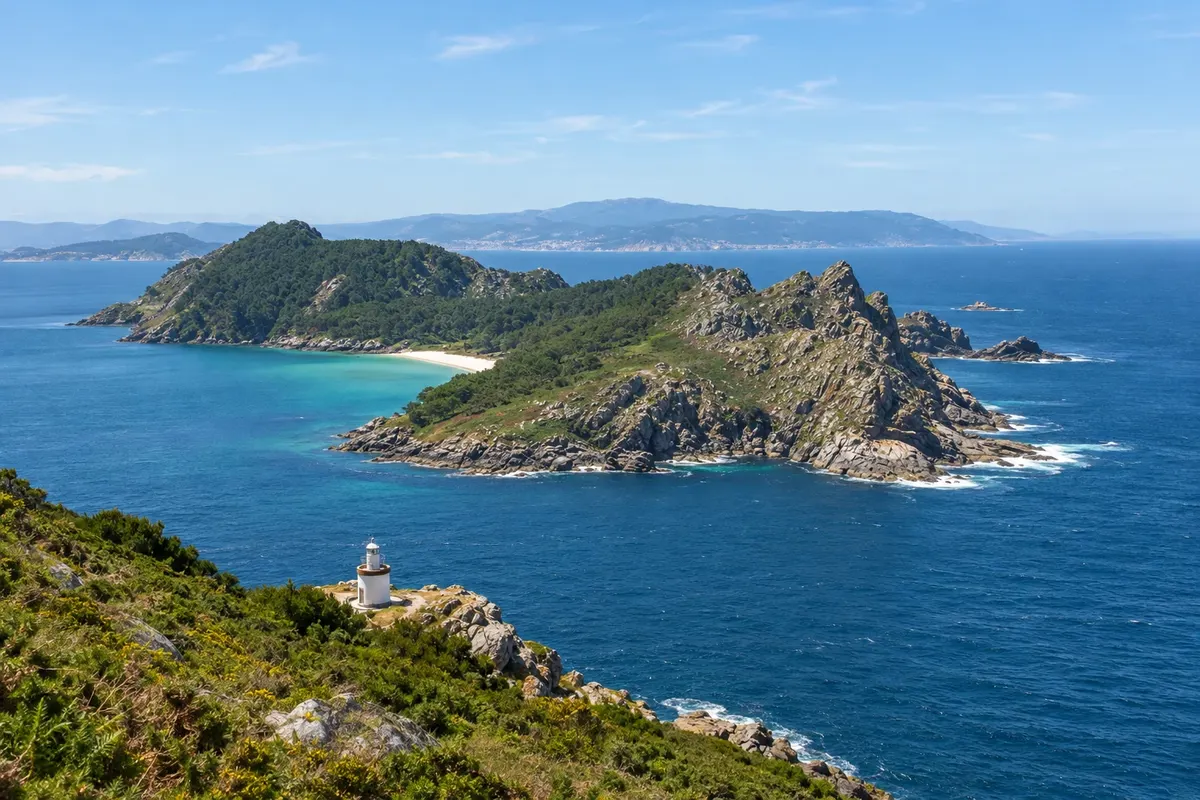
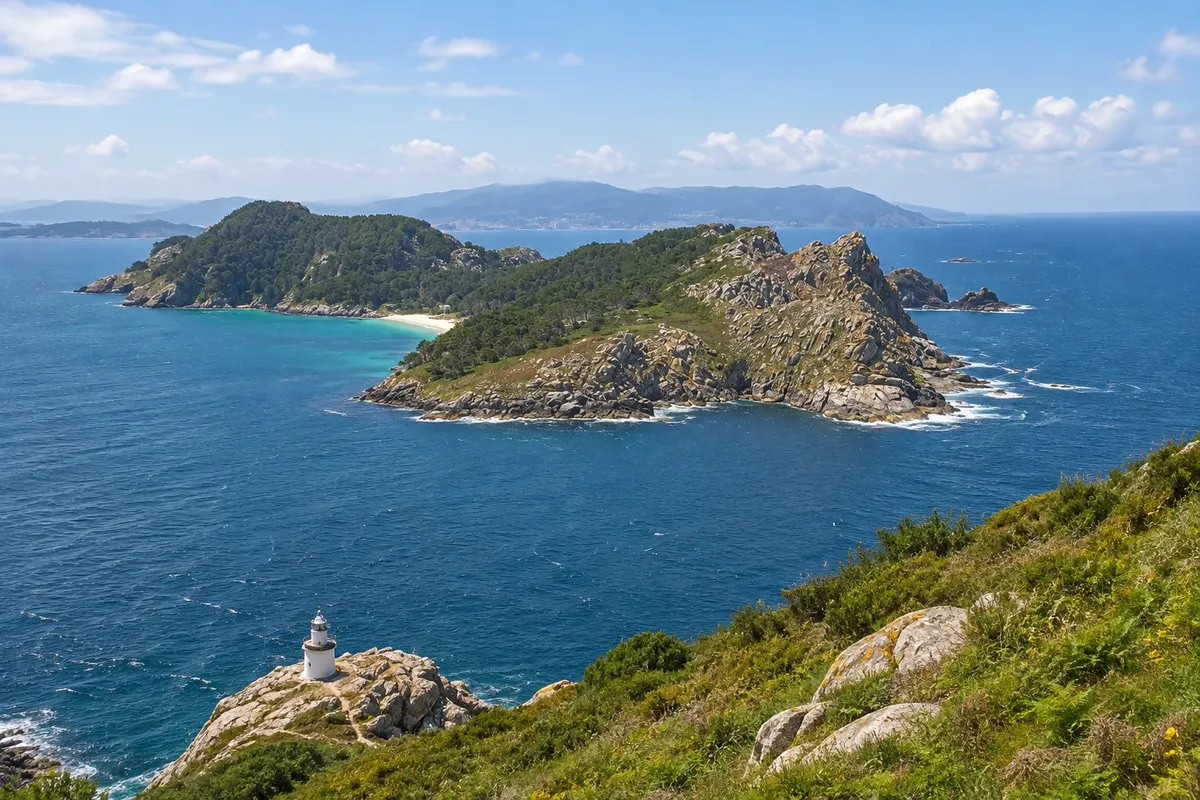
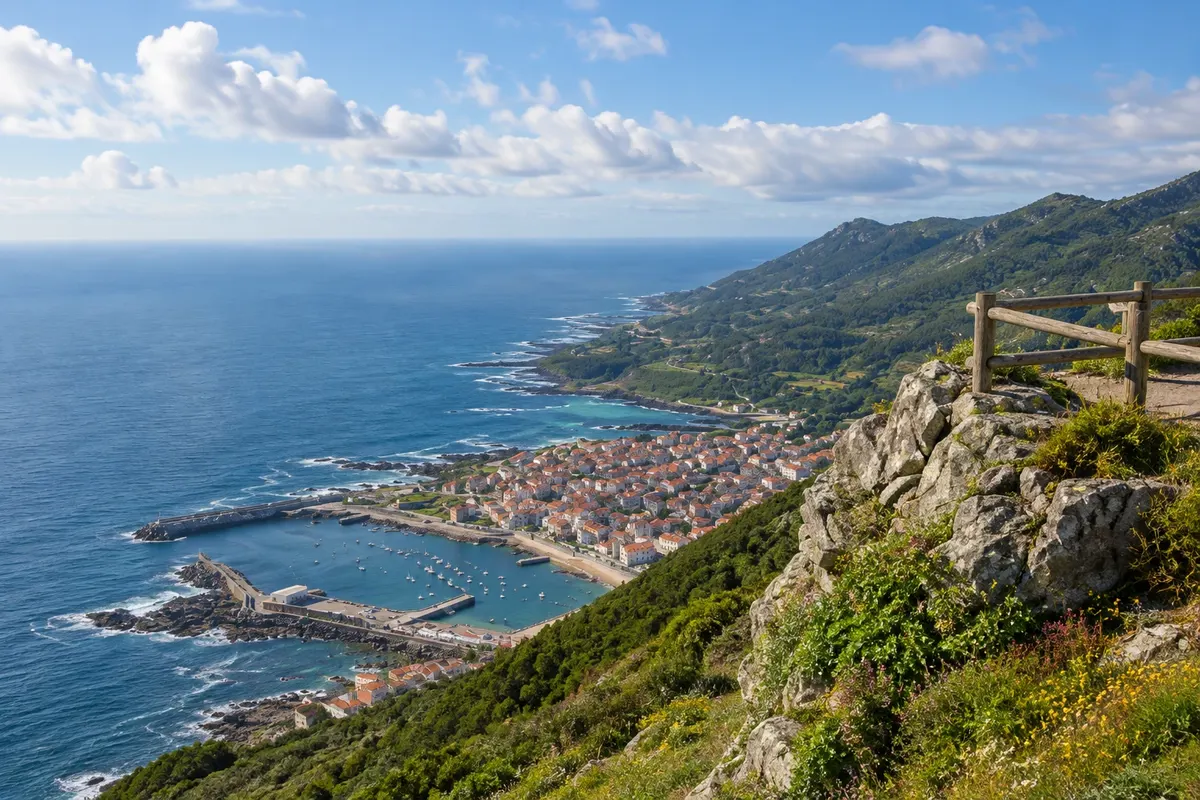
Na fotografiji: Illas Cíes

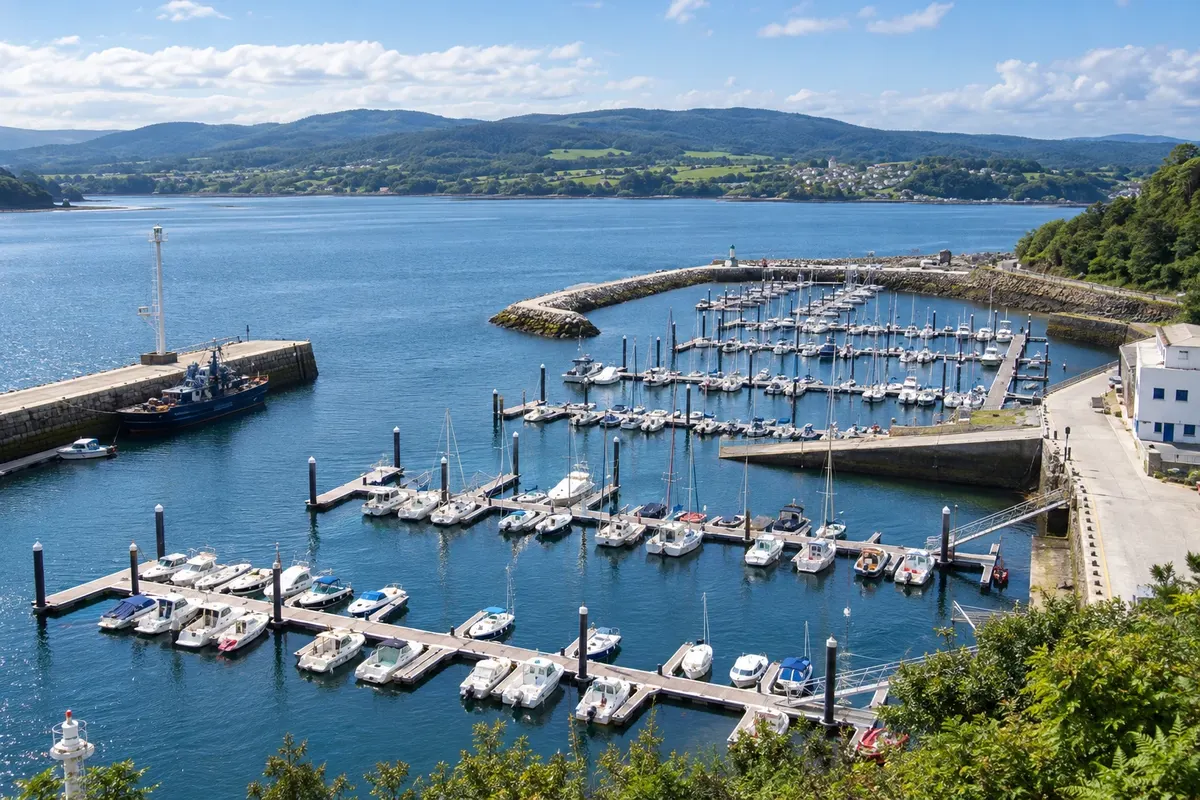
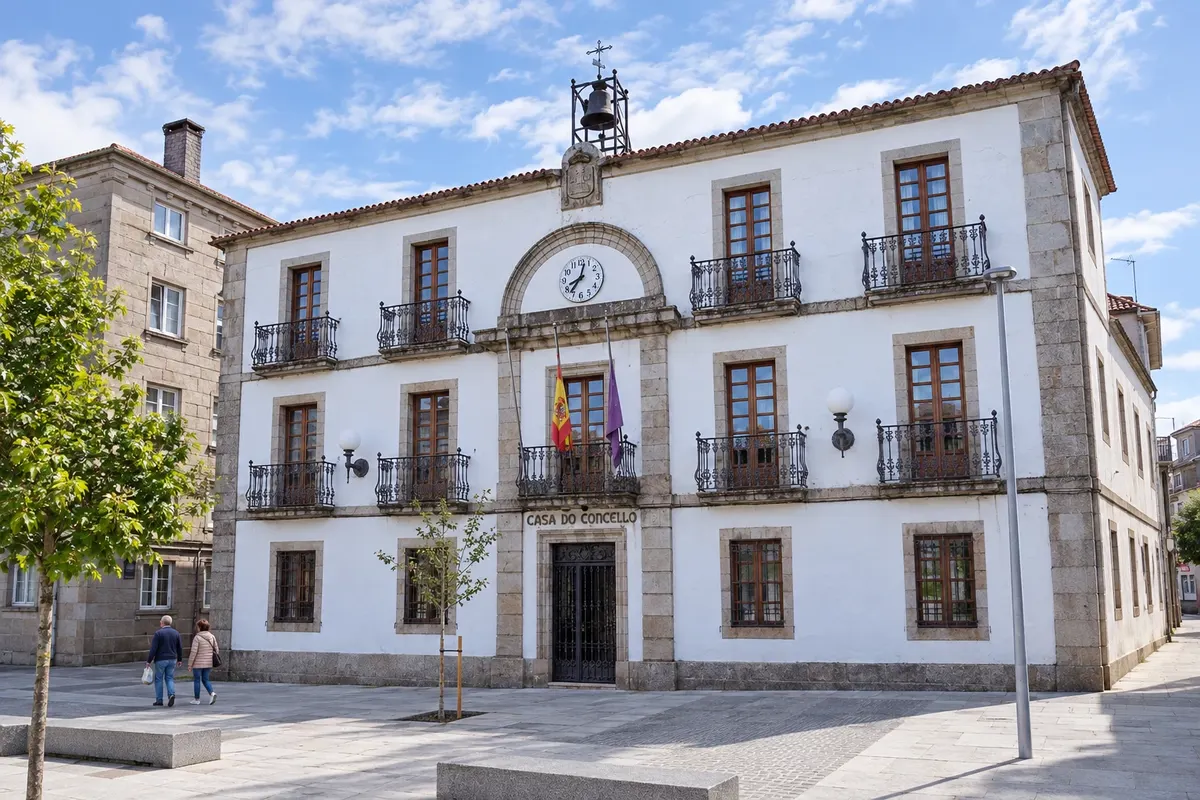
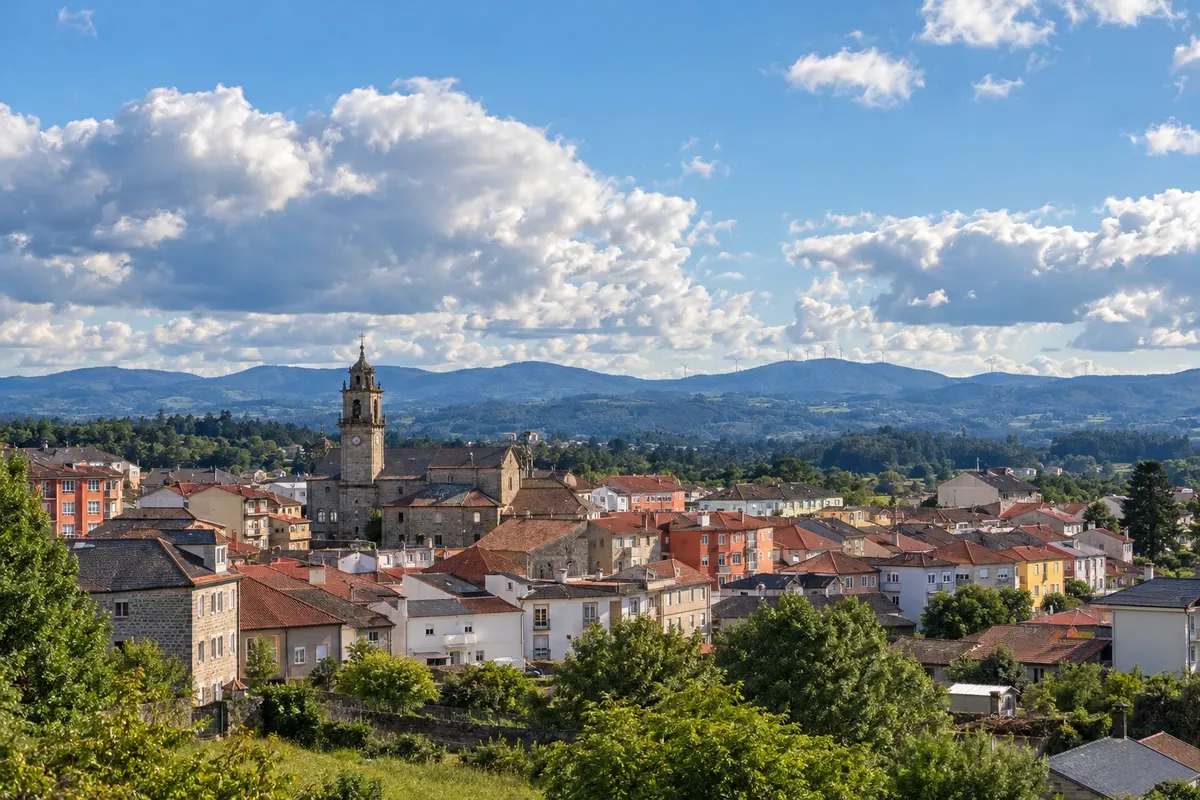
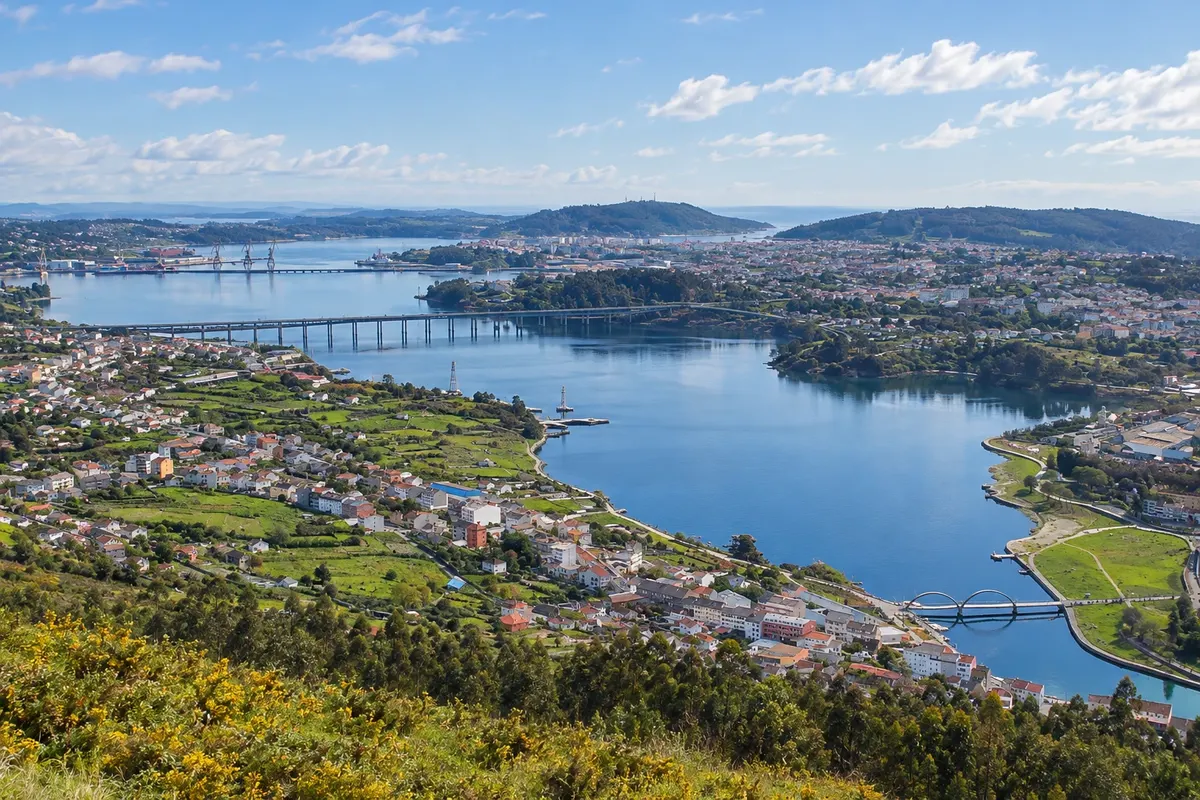
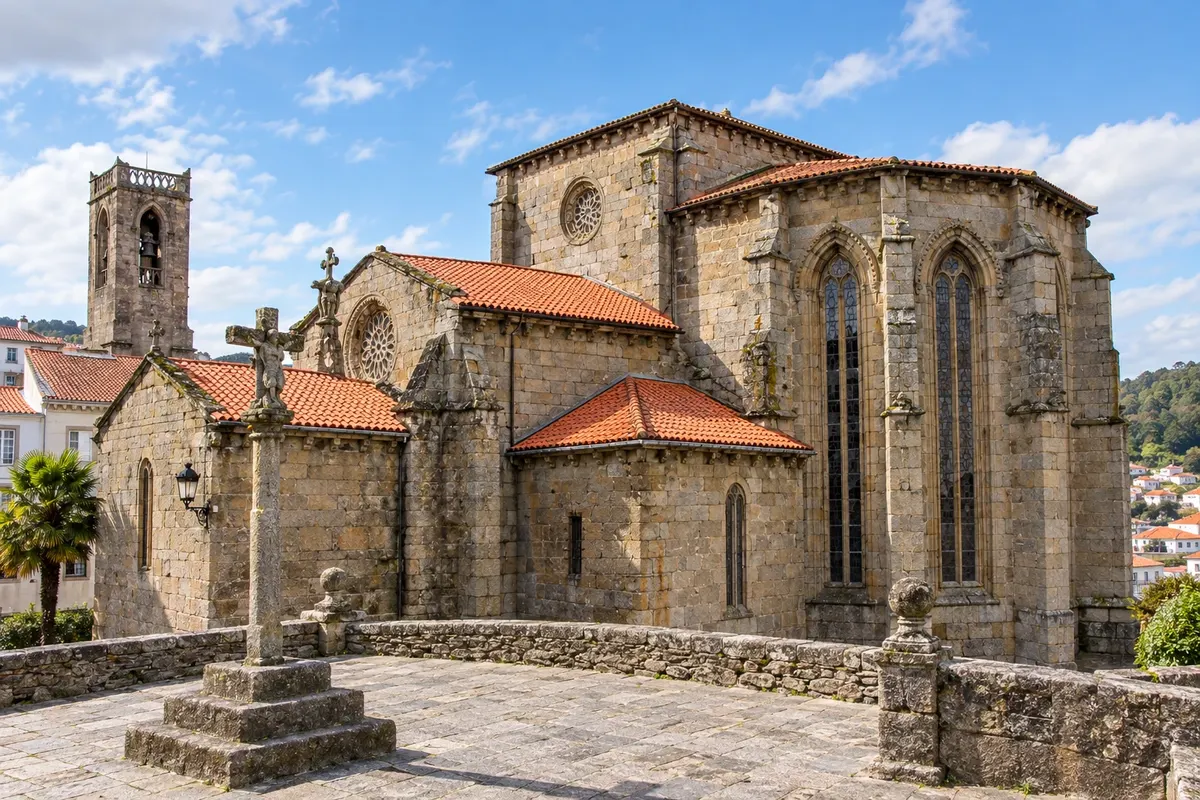
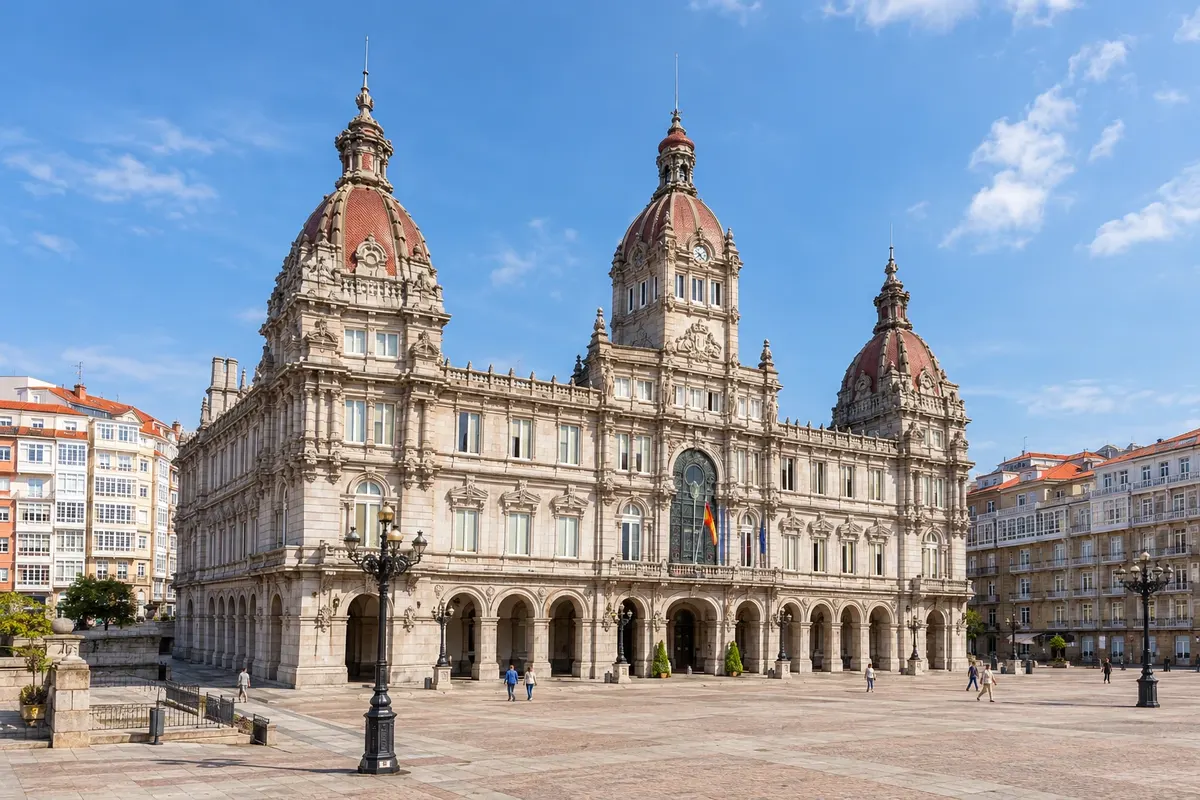
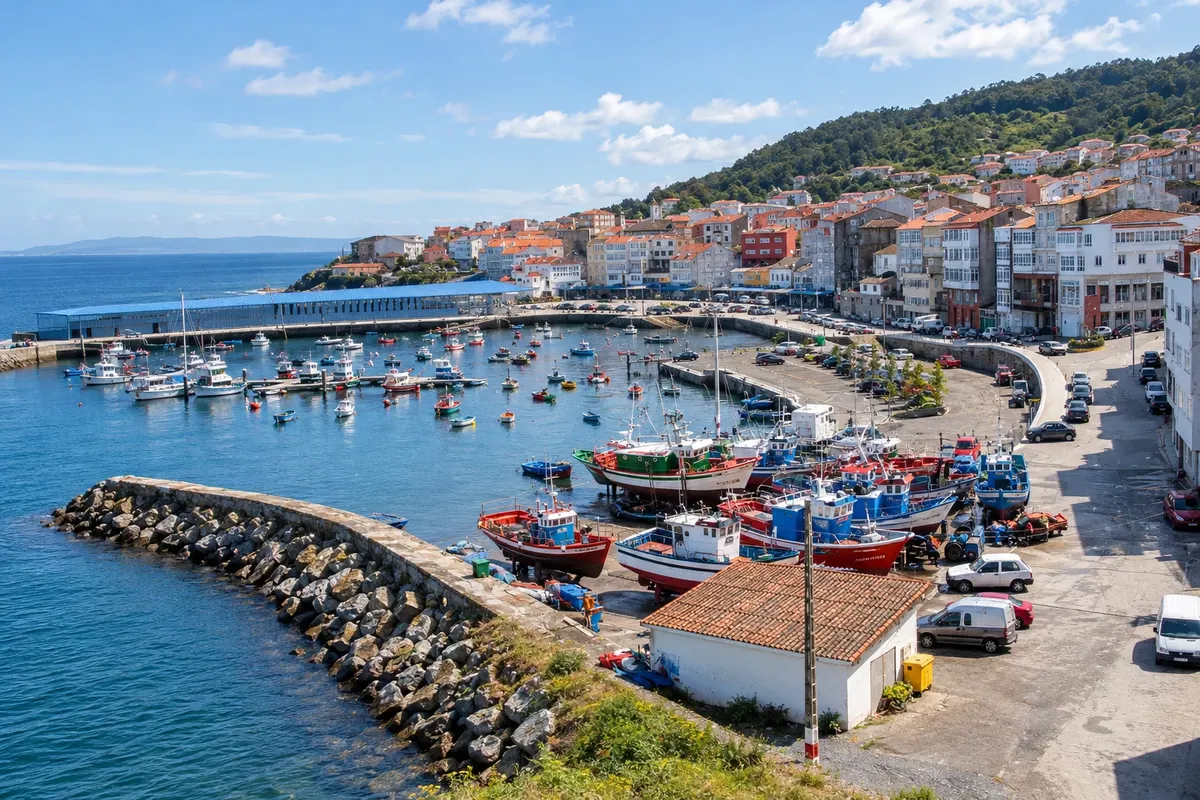
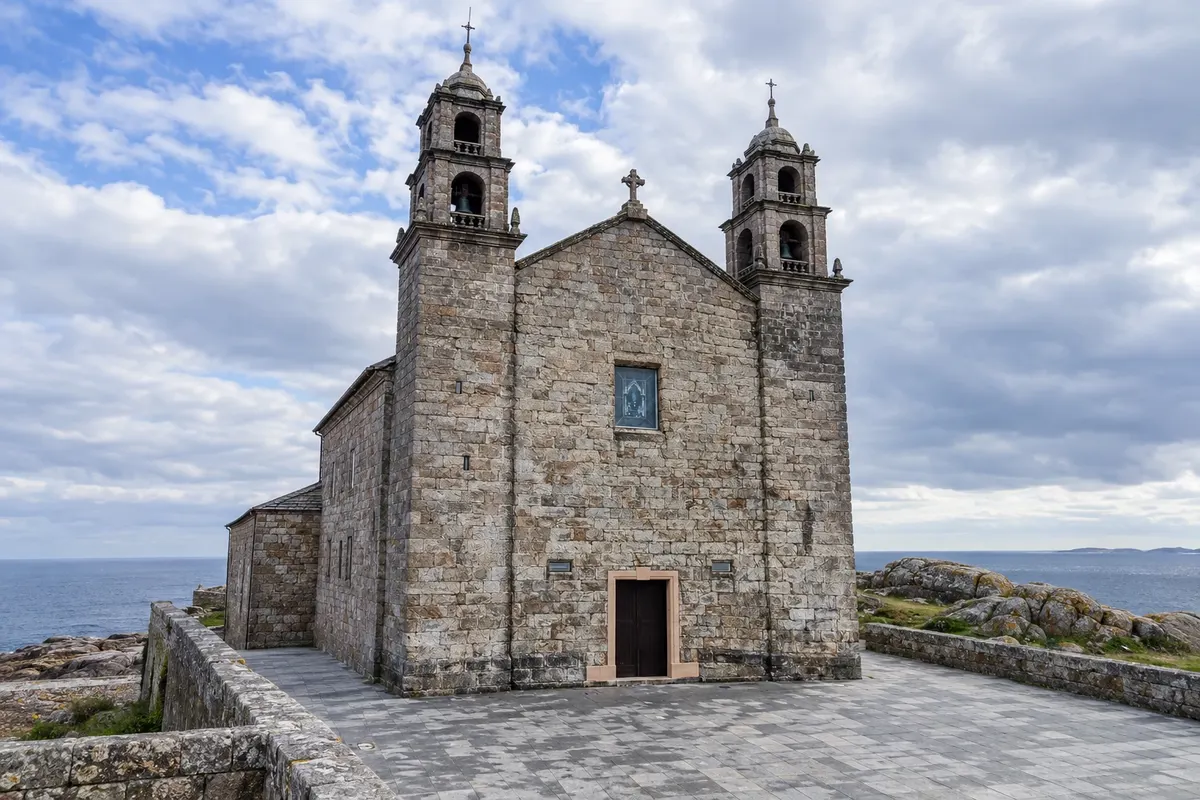
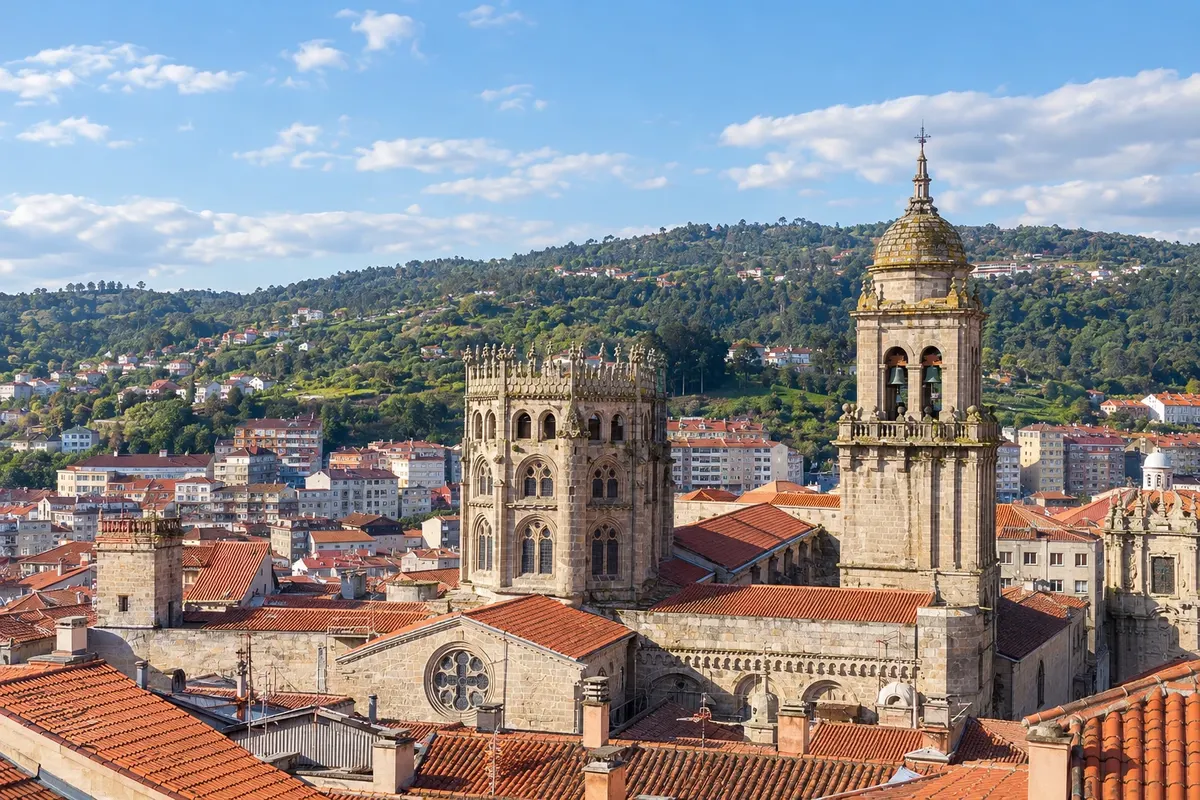
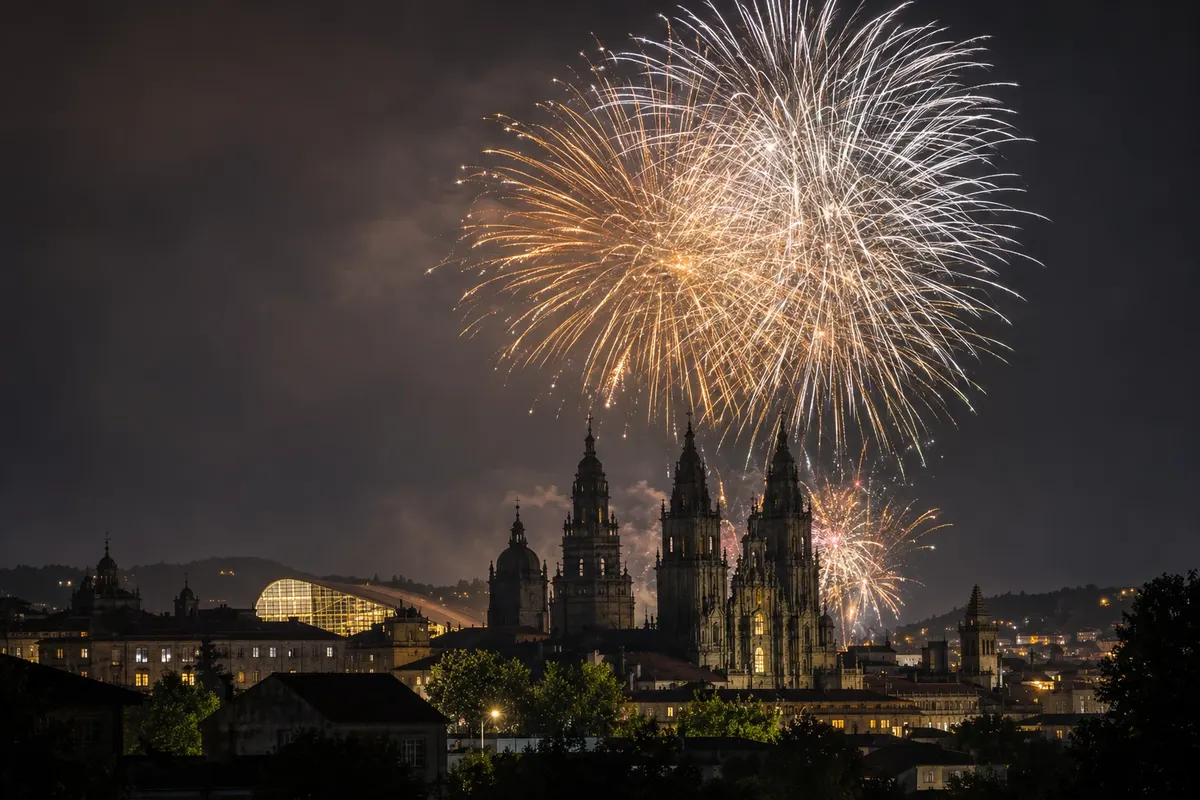
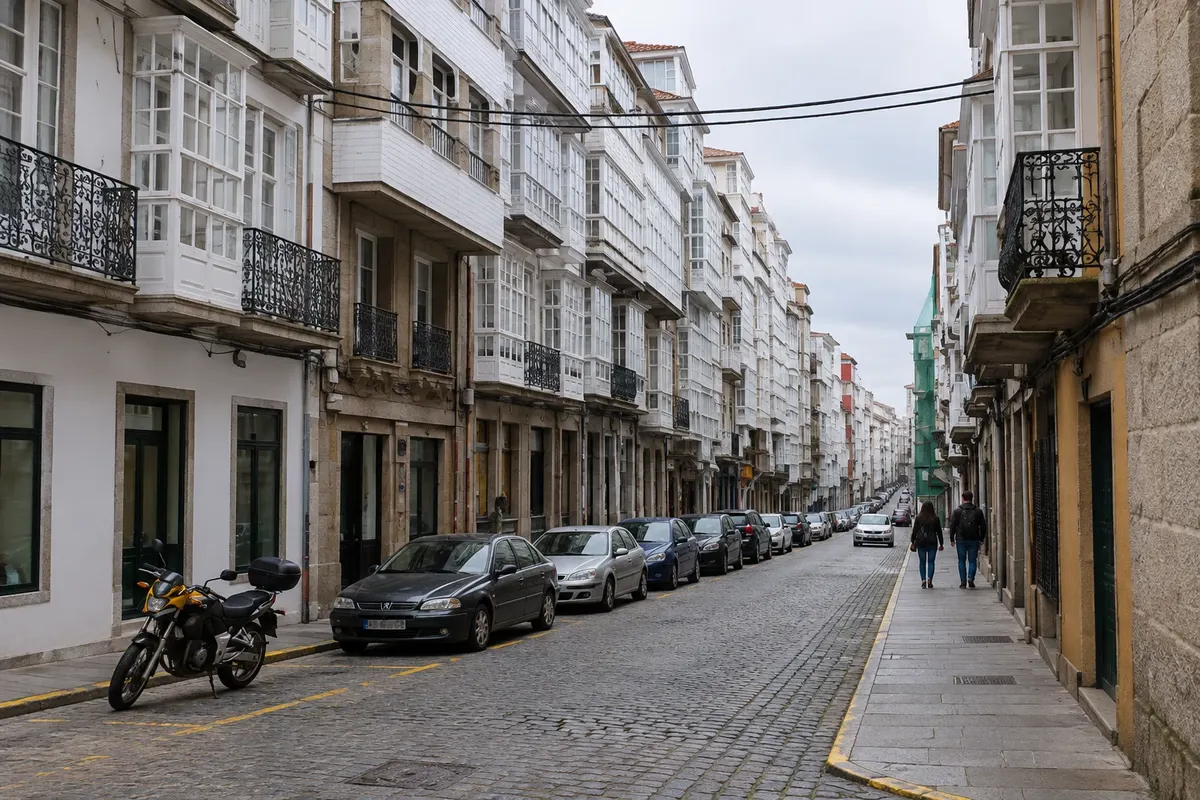
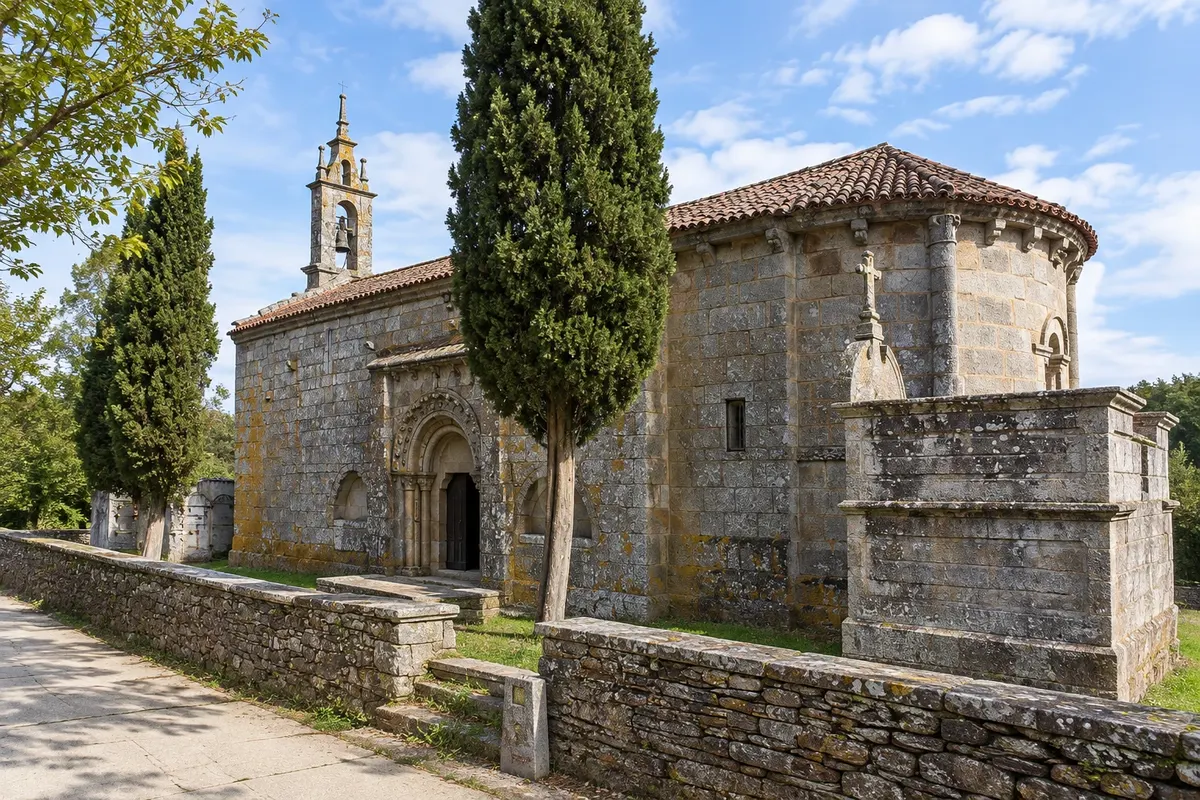
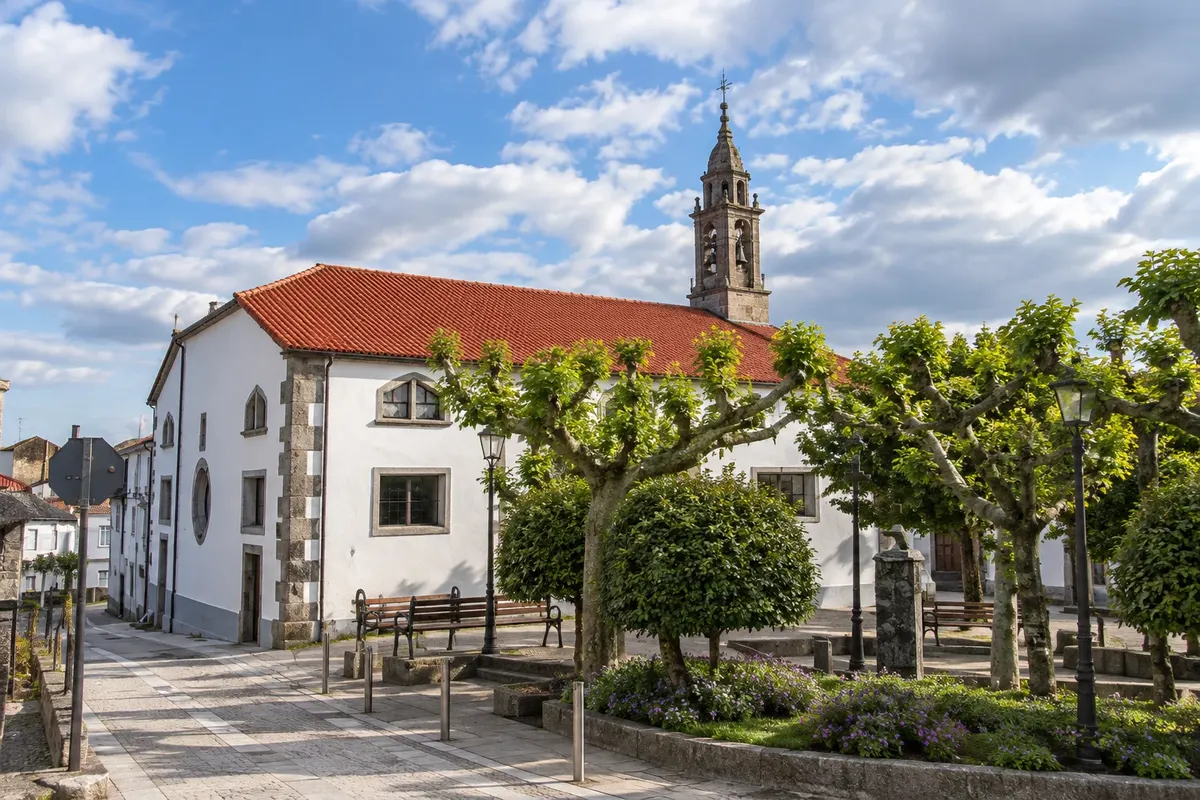
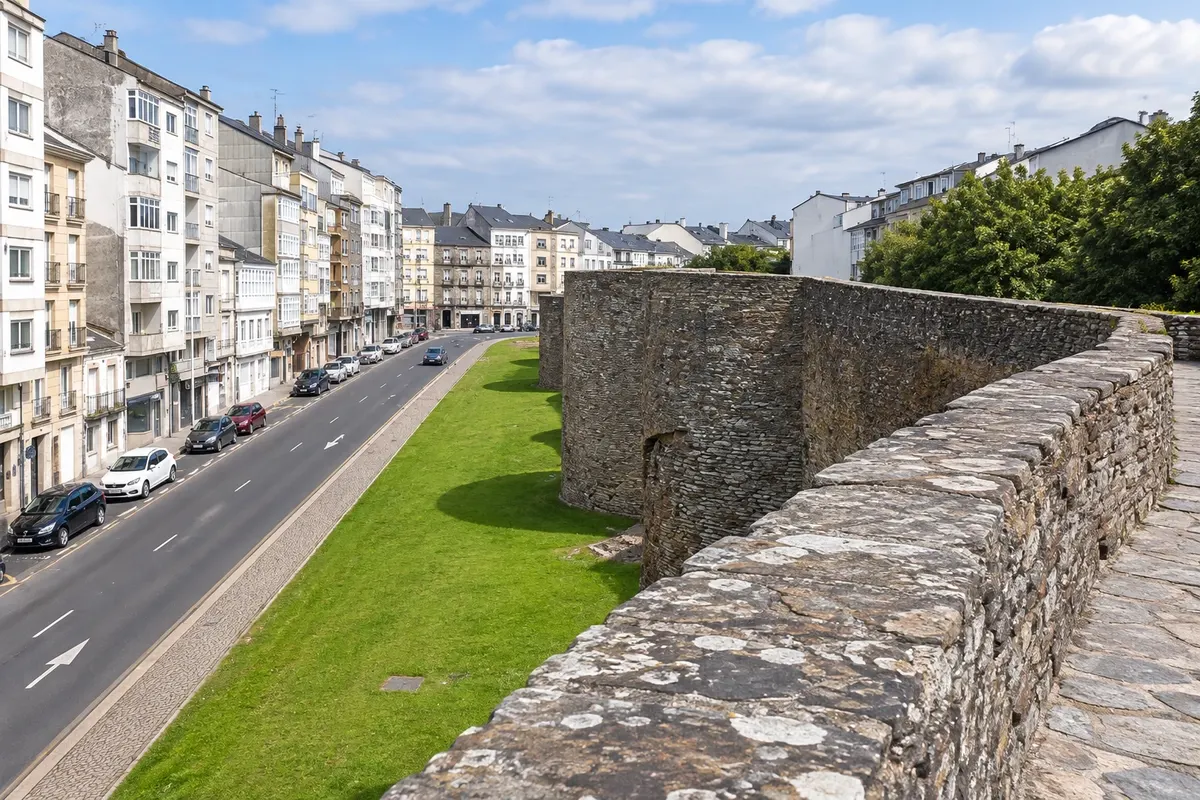
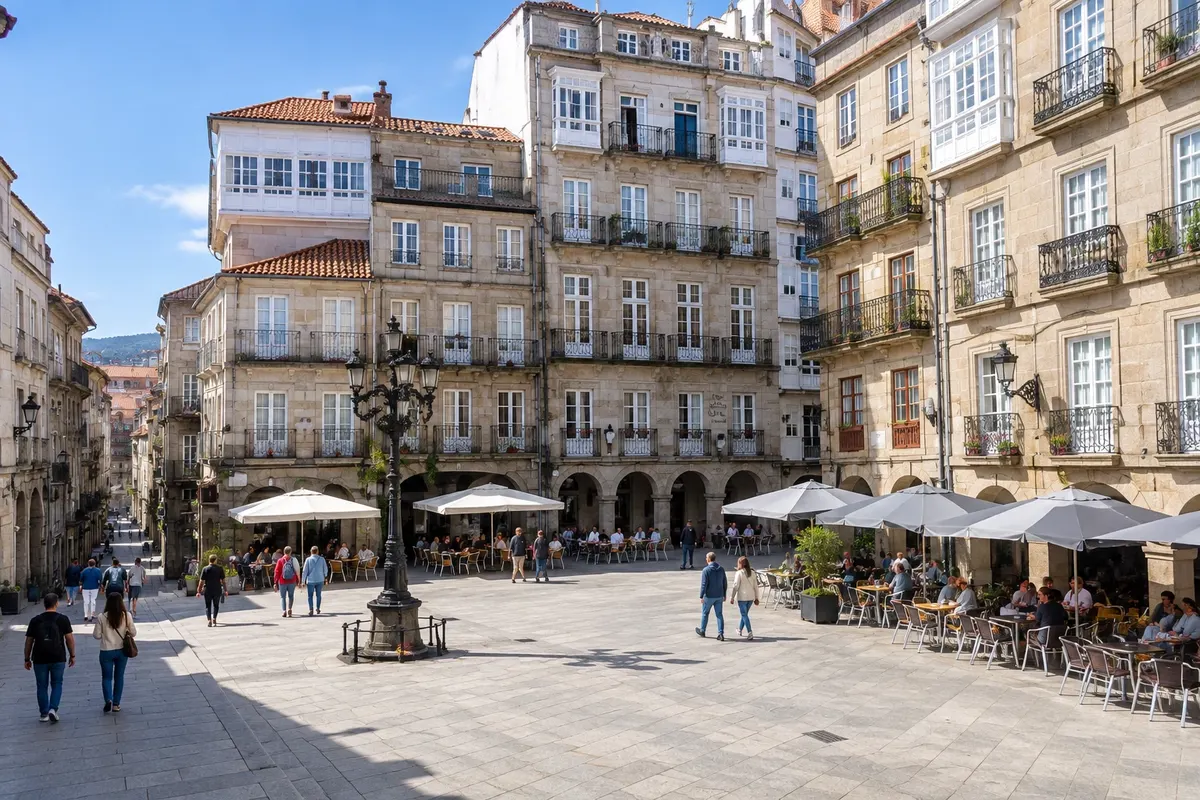
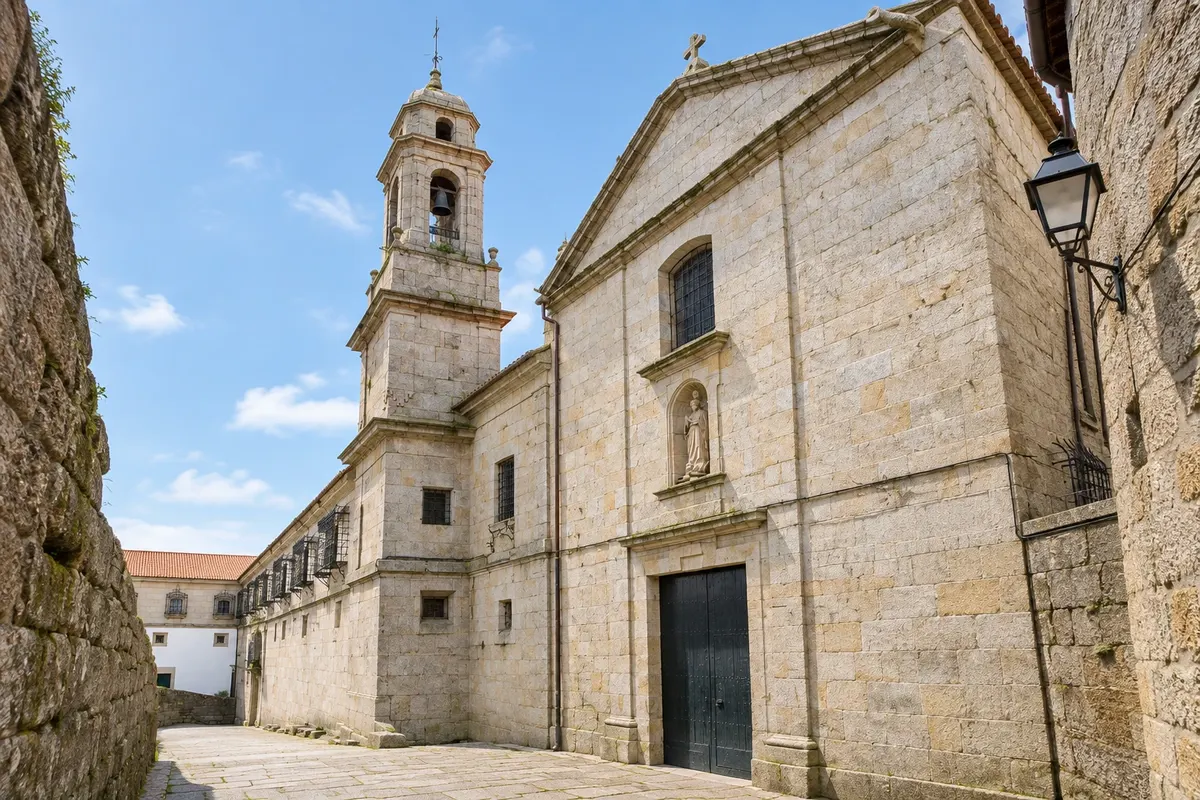
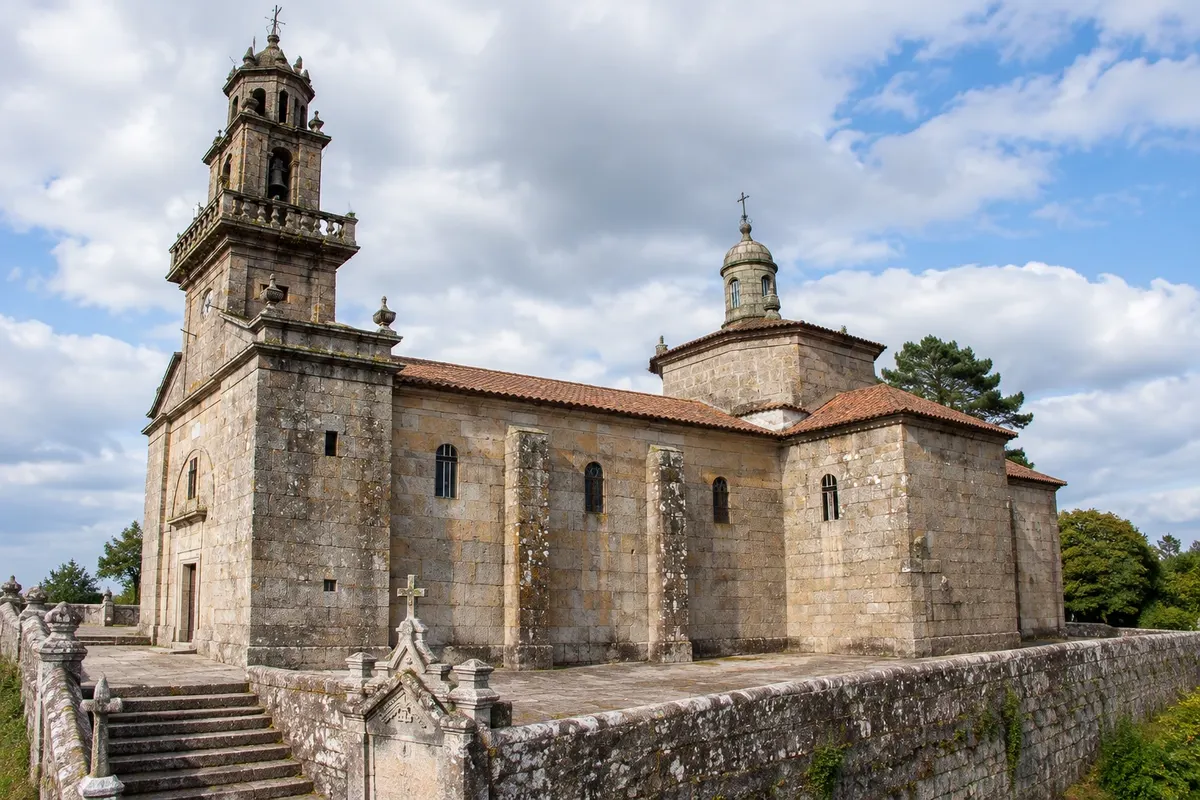
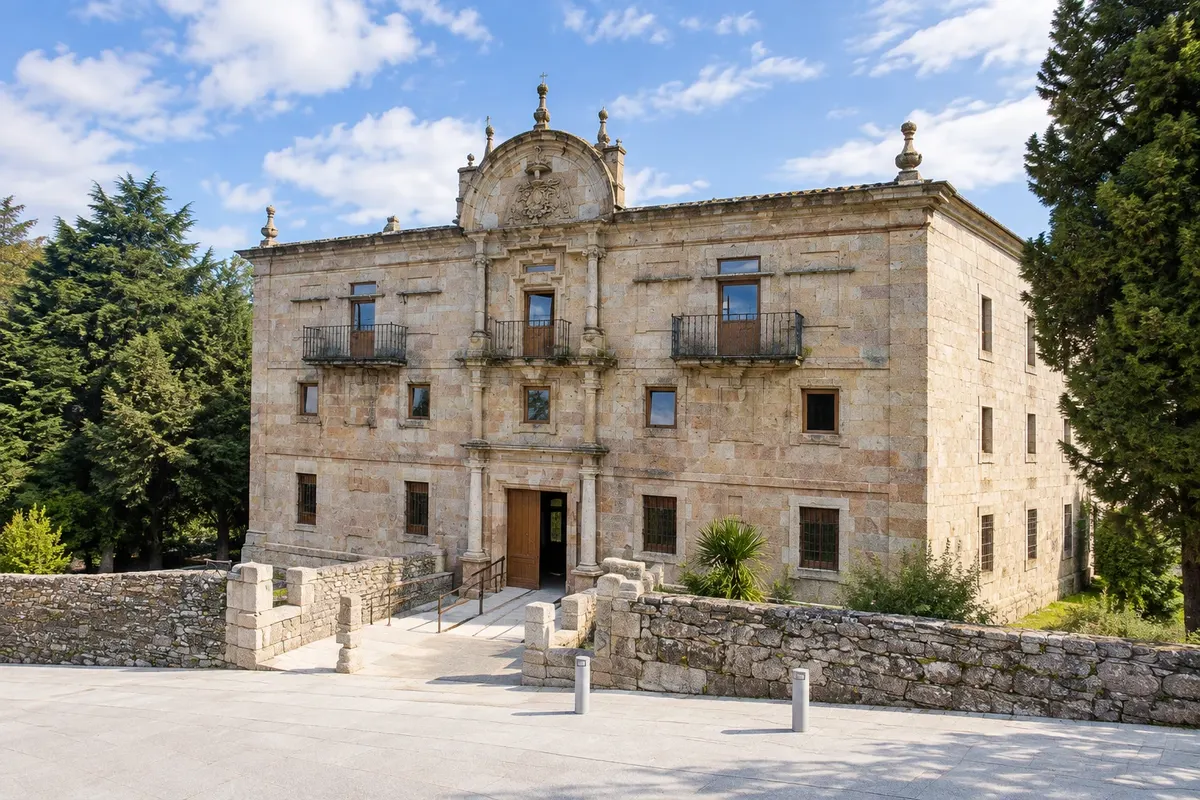
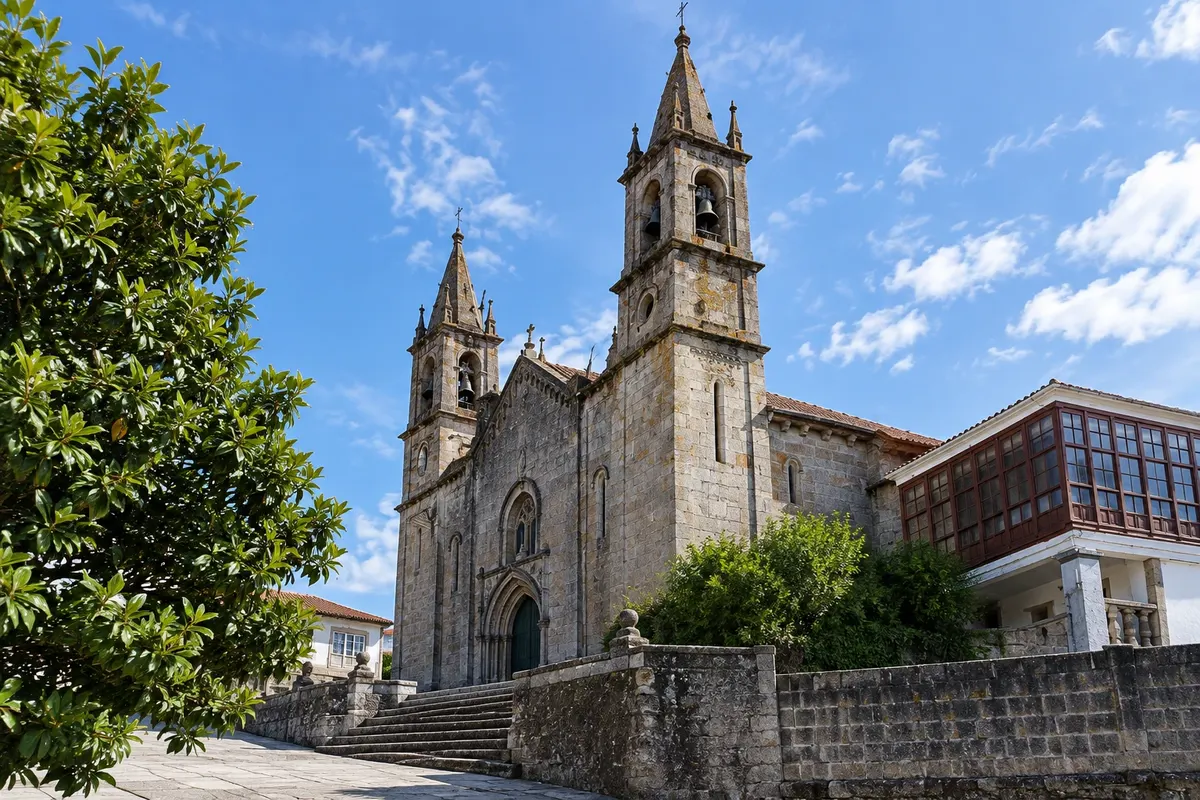
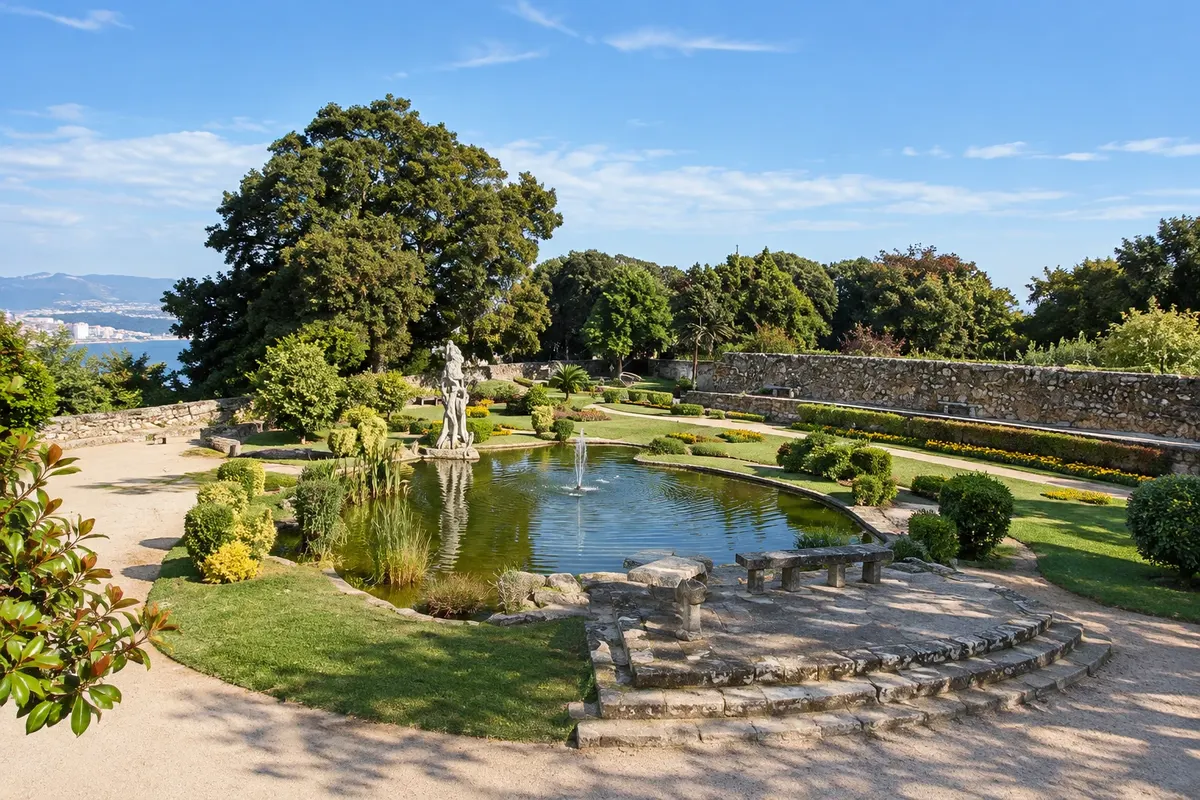
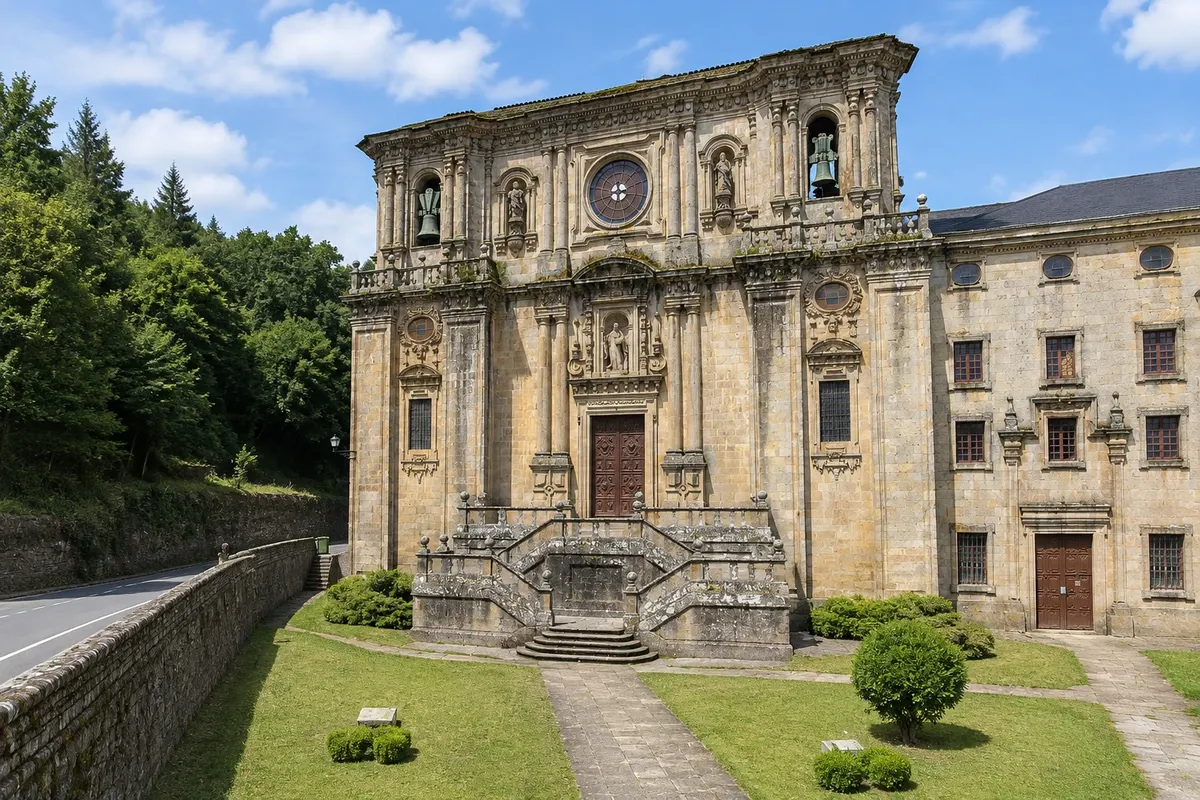
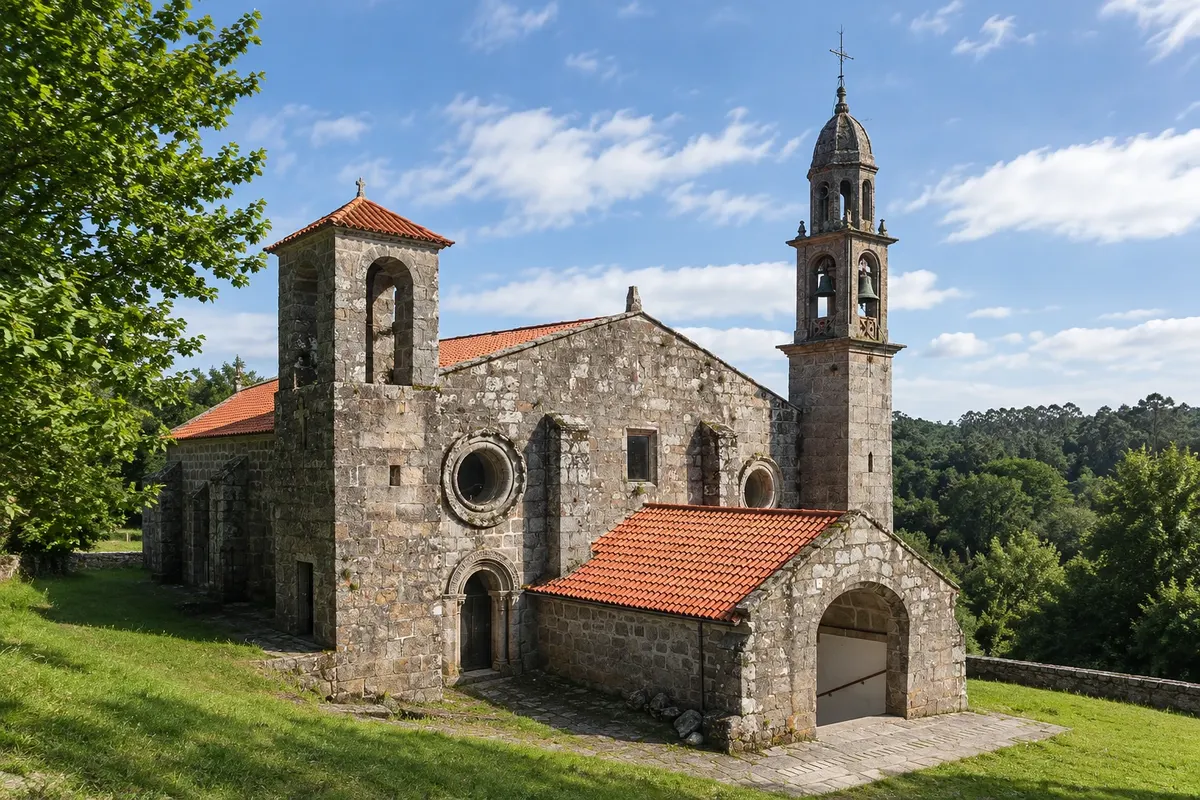
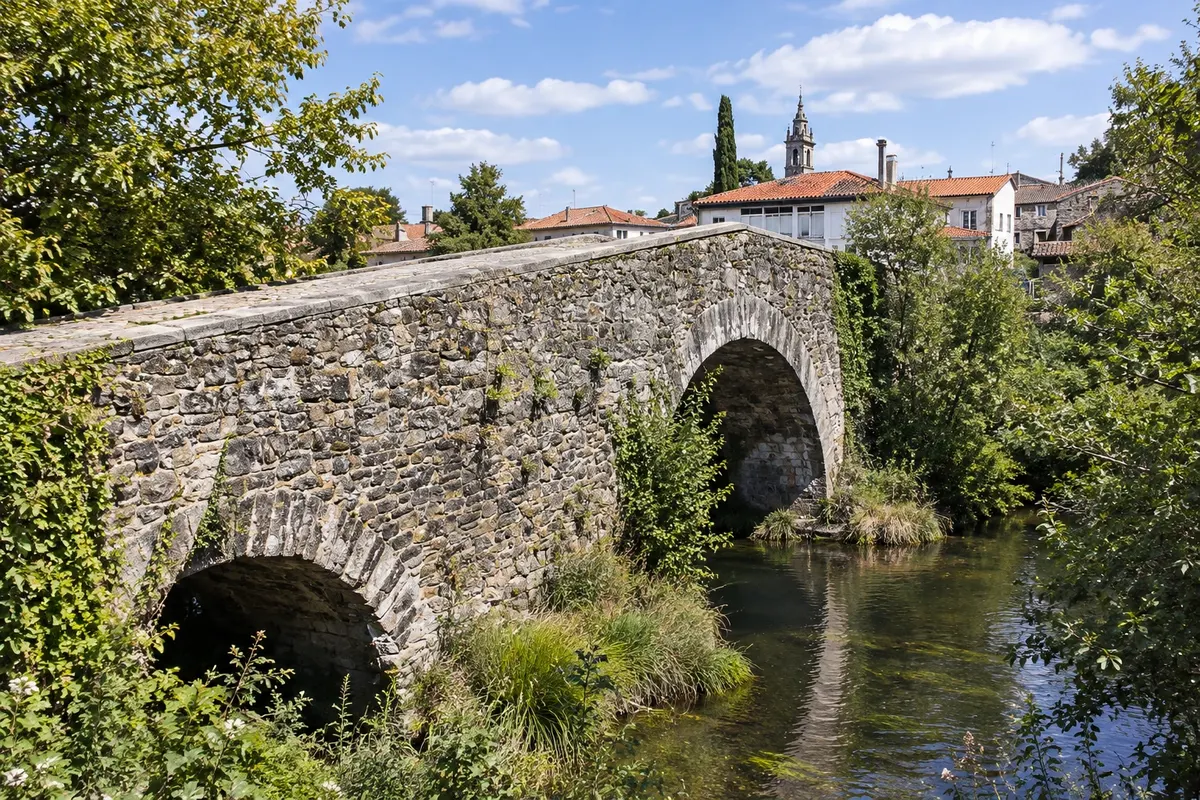
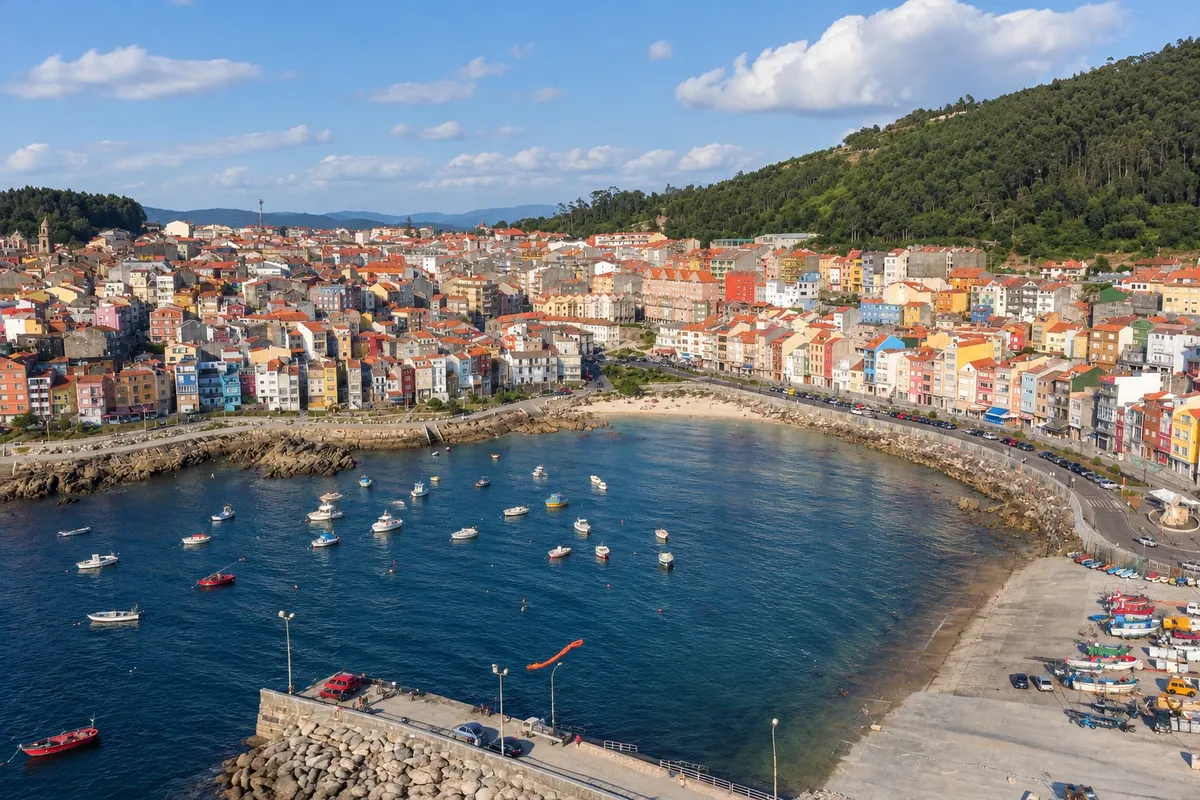
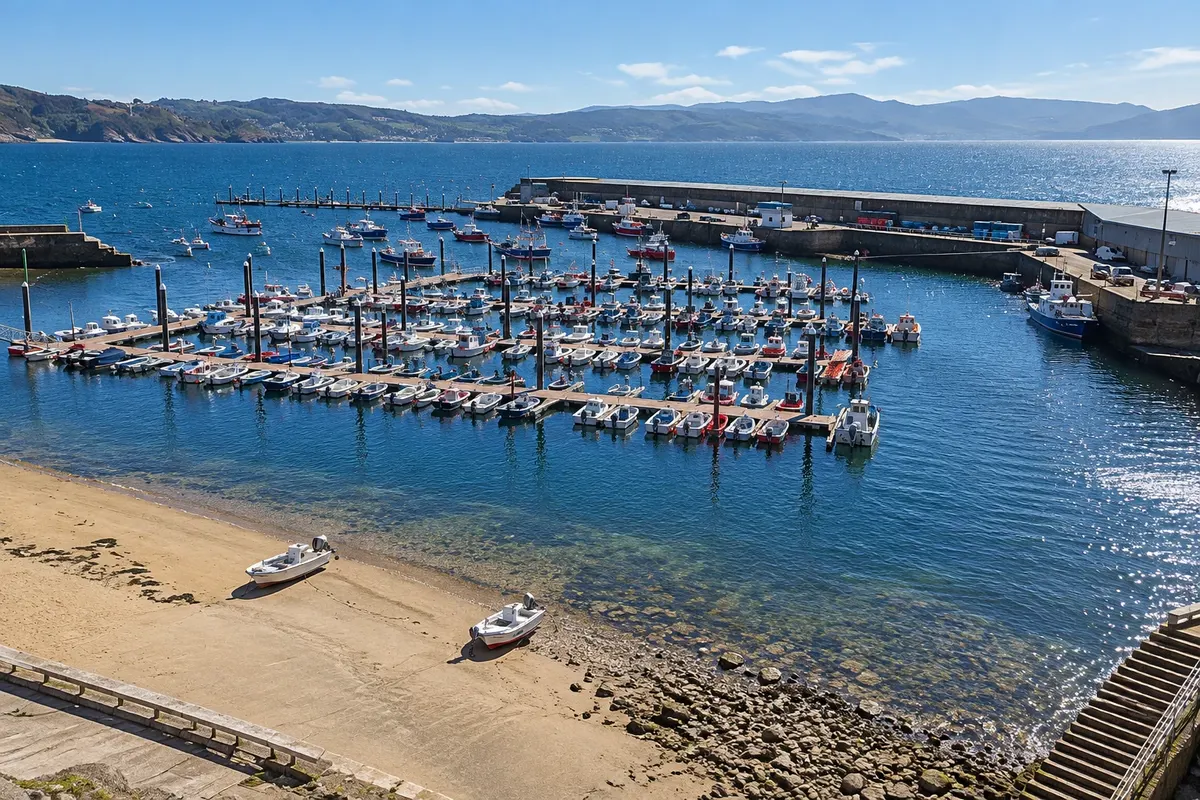
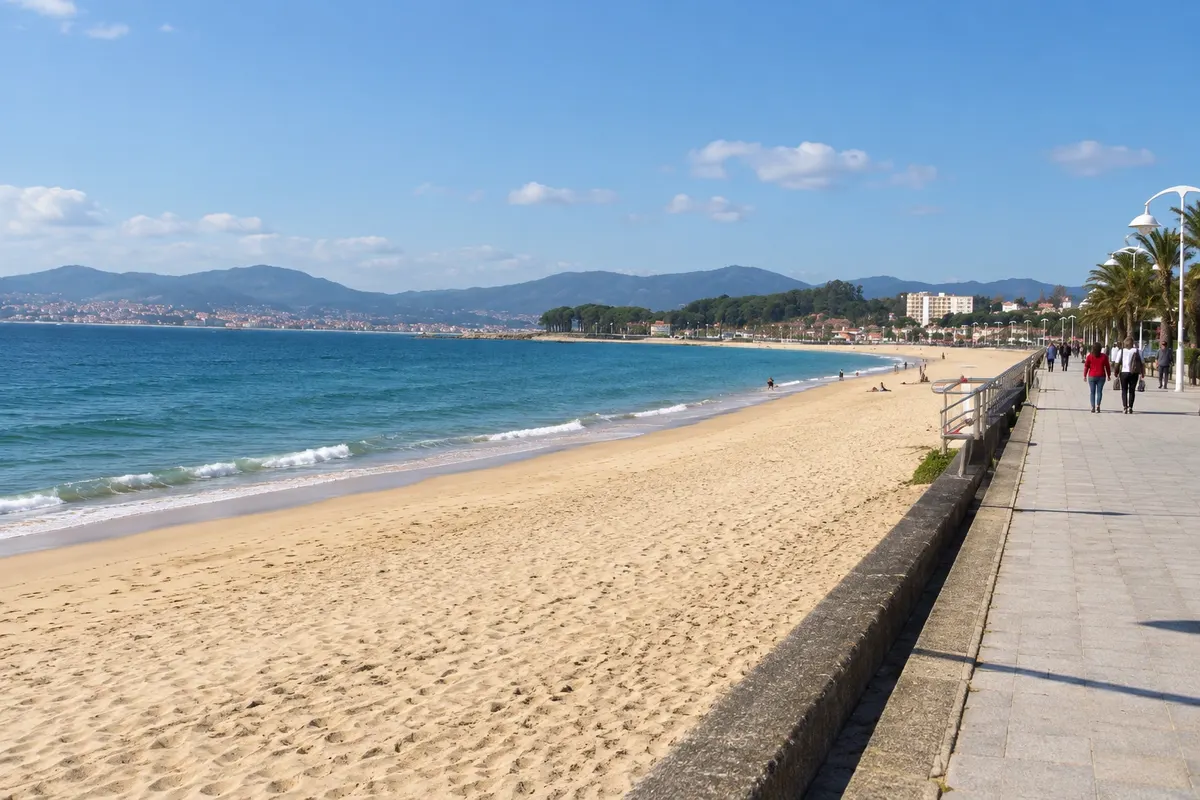
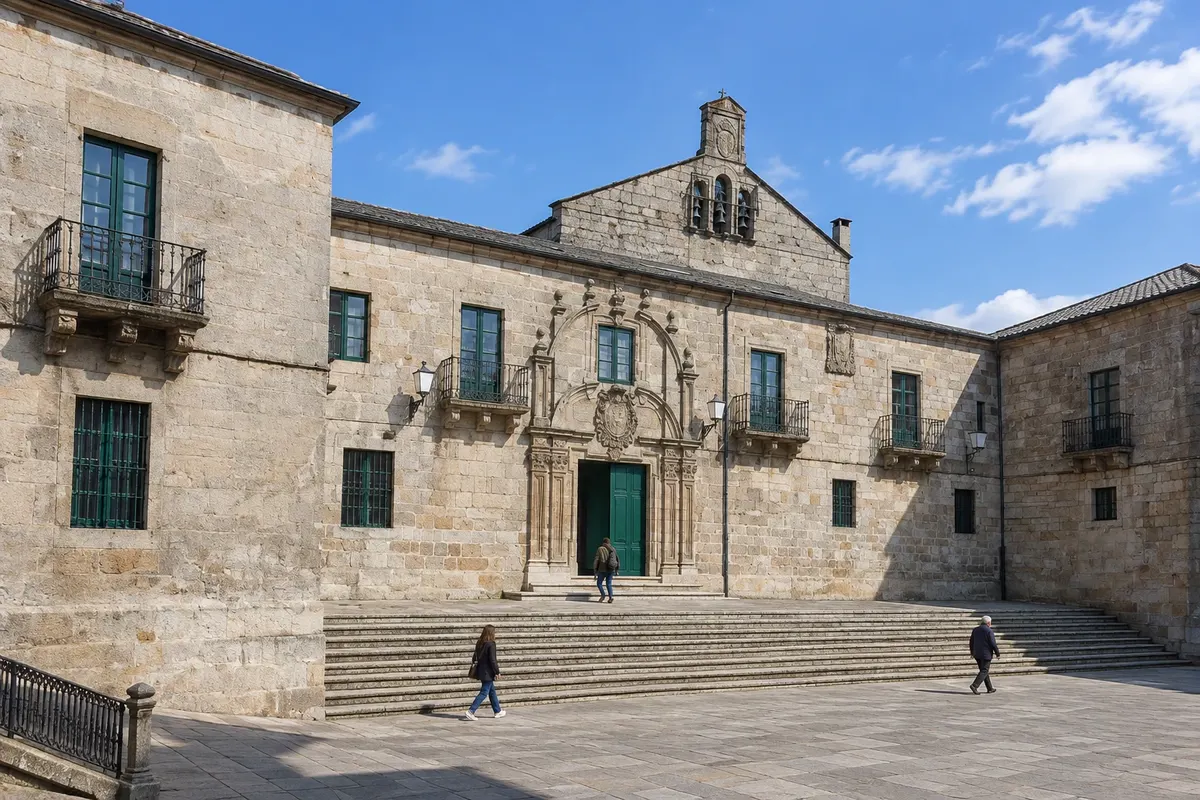
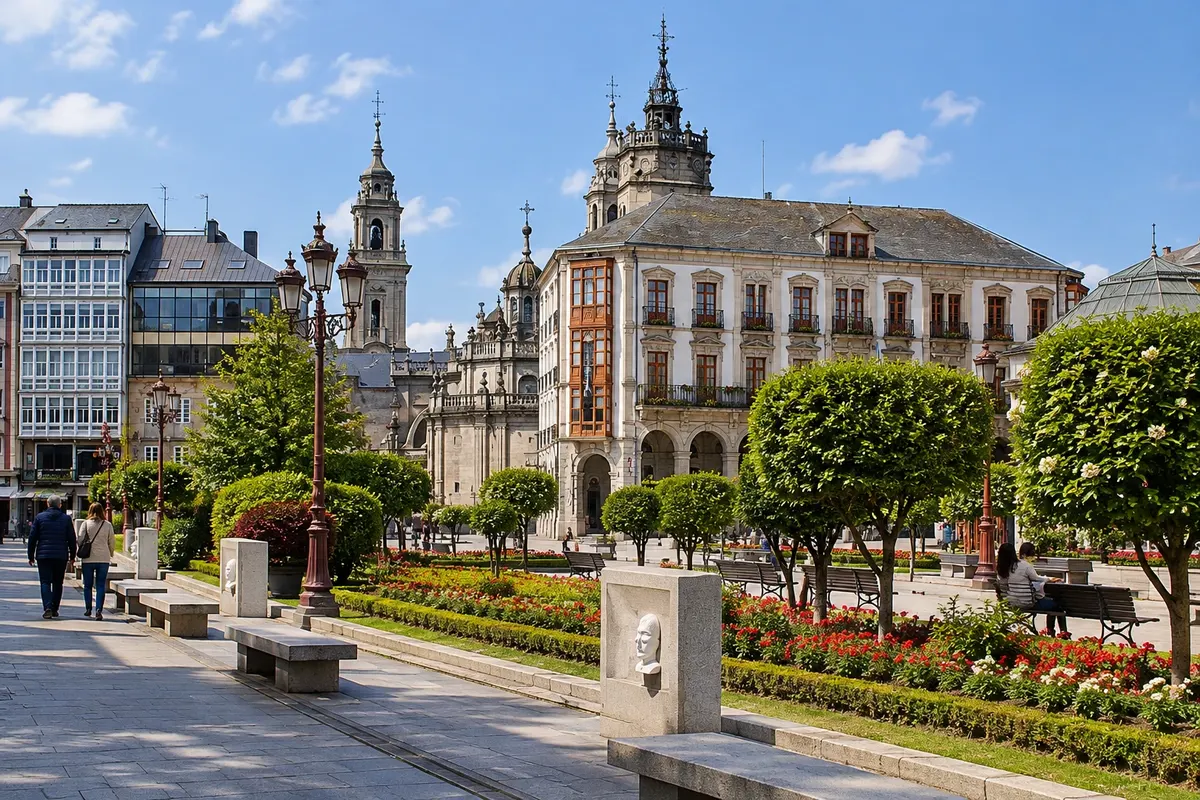
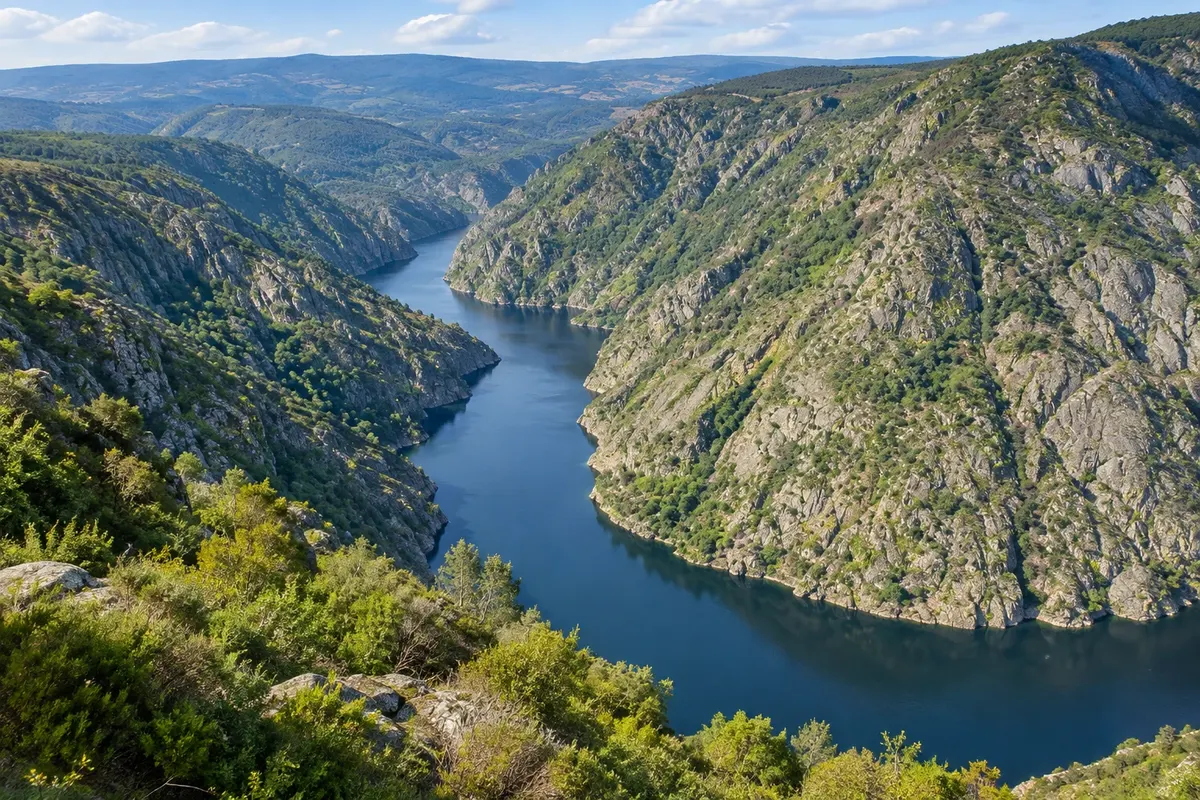
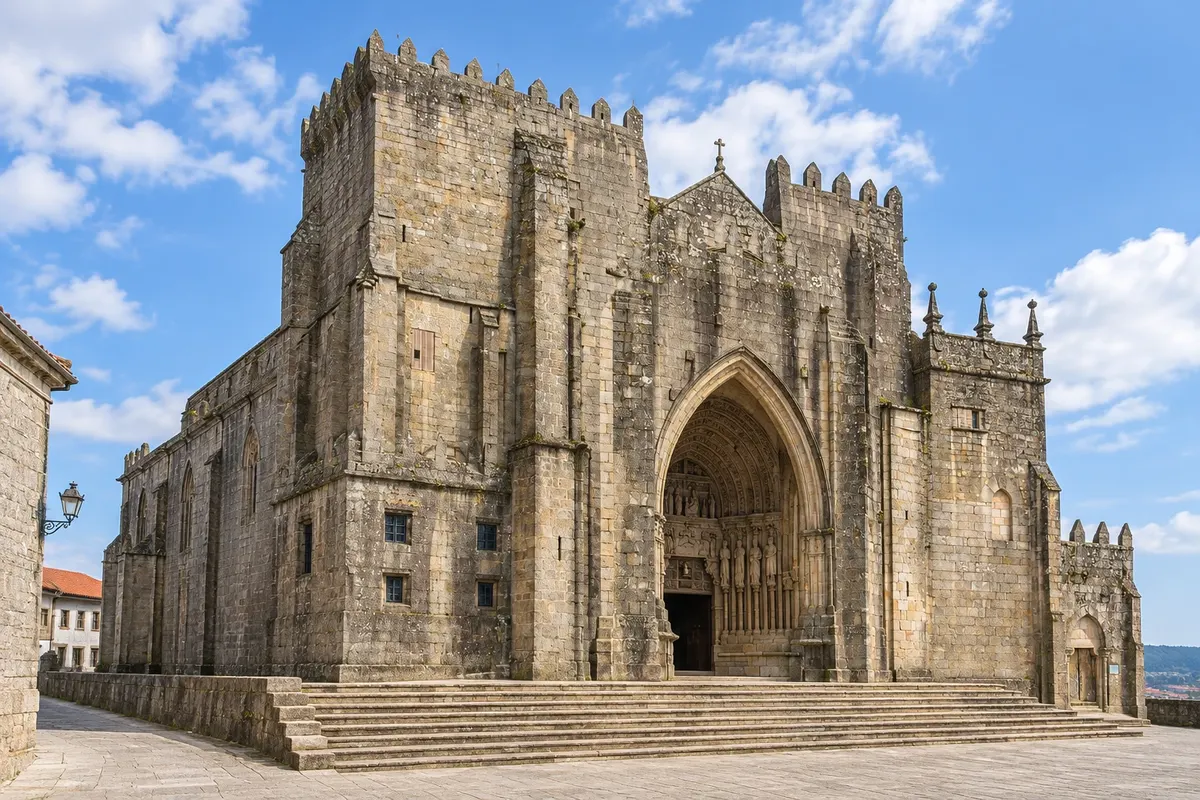
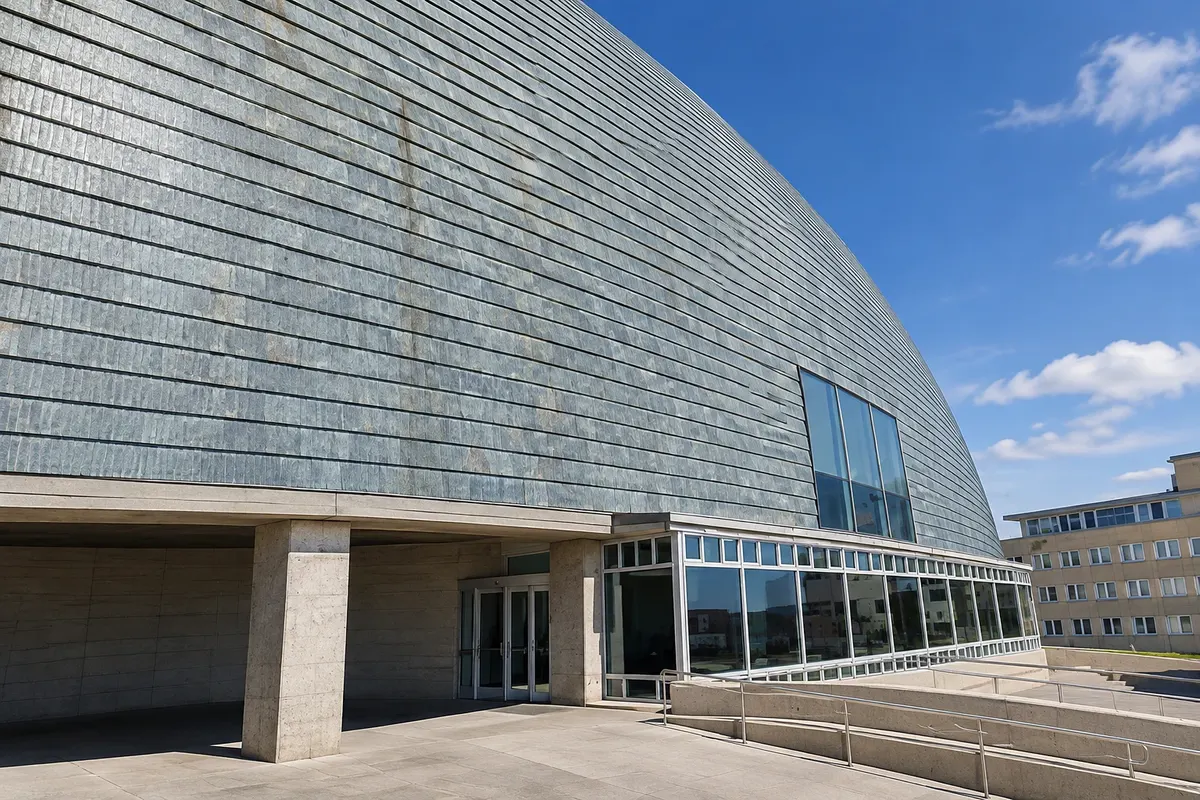
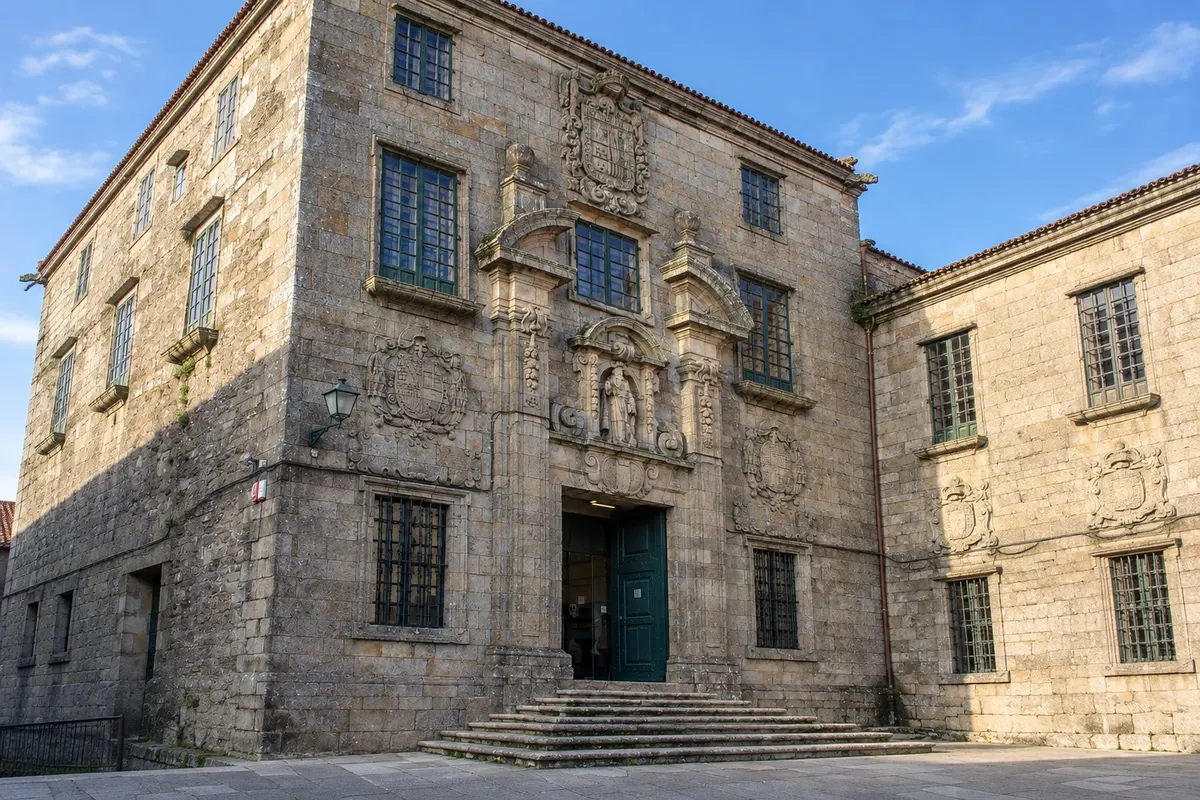
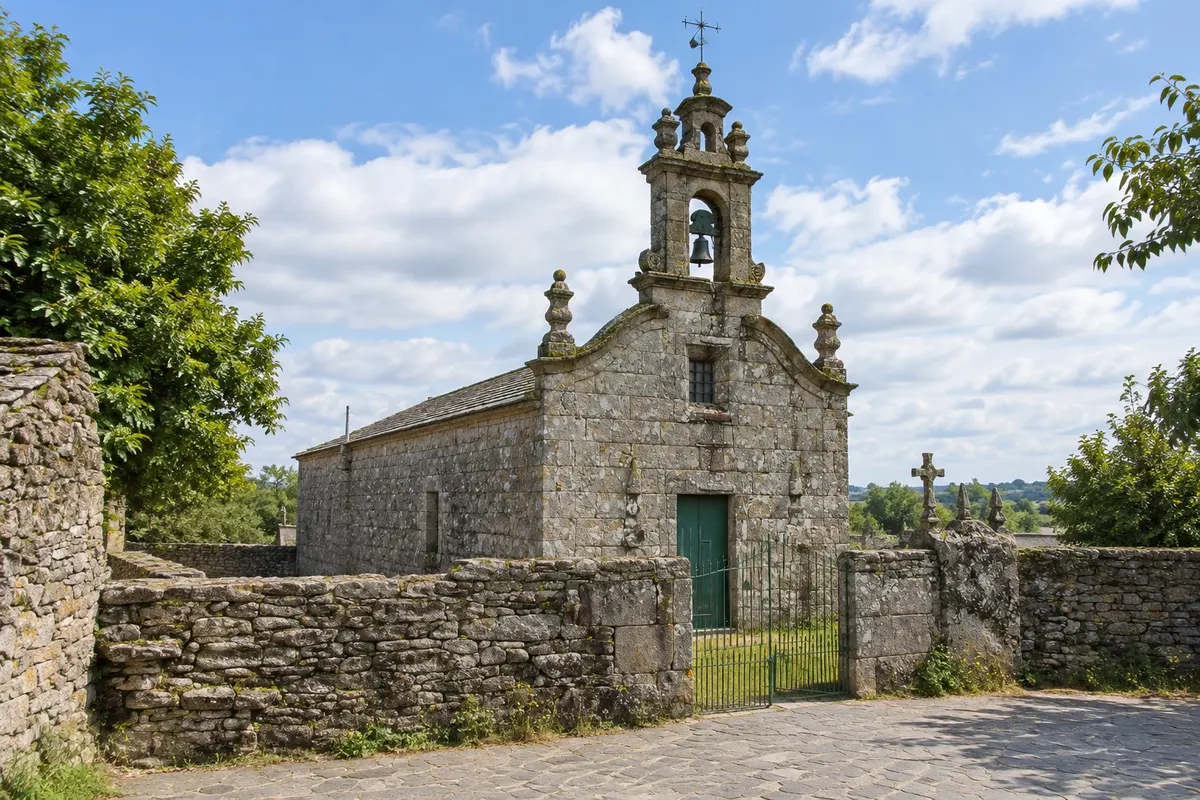
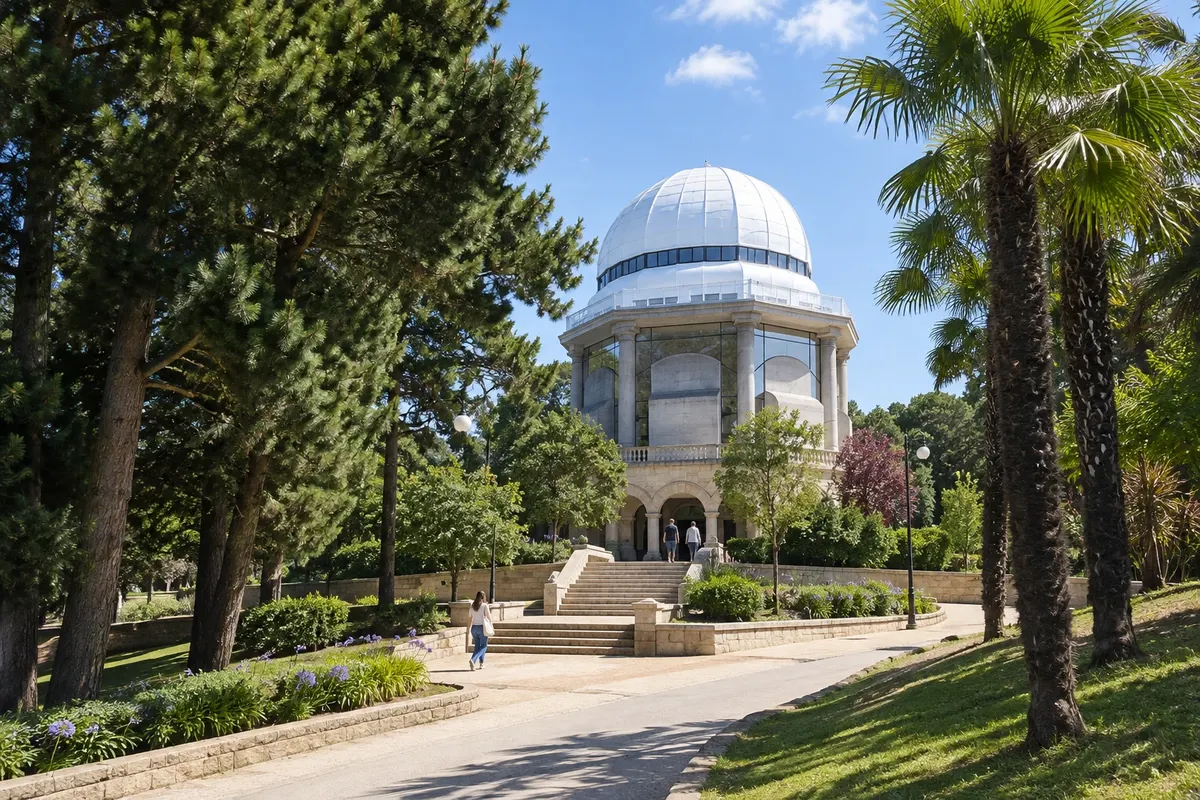
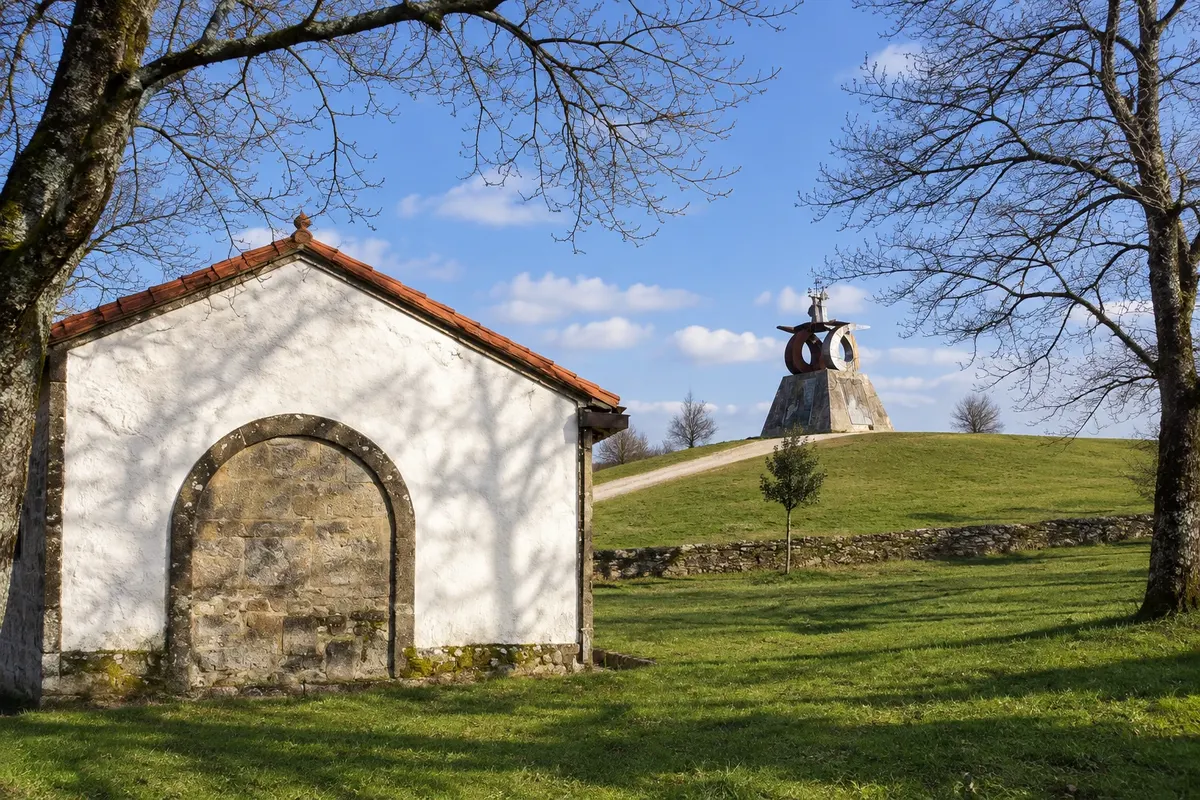
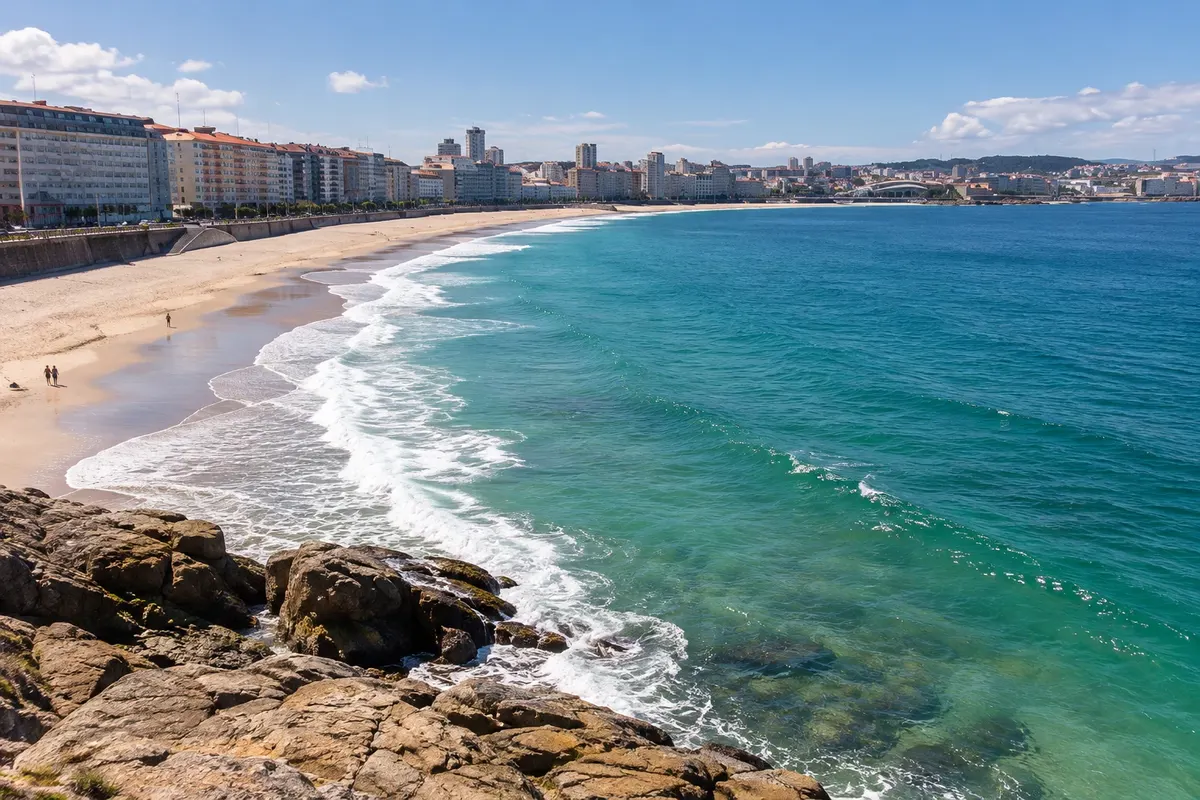
Illustrative images. The pictures in this guide are illustrations based on the real place, not photographs, and may differ from it.

Na voljo v trgovini Google Play Pošljite svoje fotografije

Spoznajte kraj

Pokrajina, ki jo doživite
v svojem ritmu.

The landscape is green and rainy, cut by the rias, arms of the sea that reach into the land, and the cuisine revolves around octopus, shellfish, bread and the white Albariño wines.

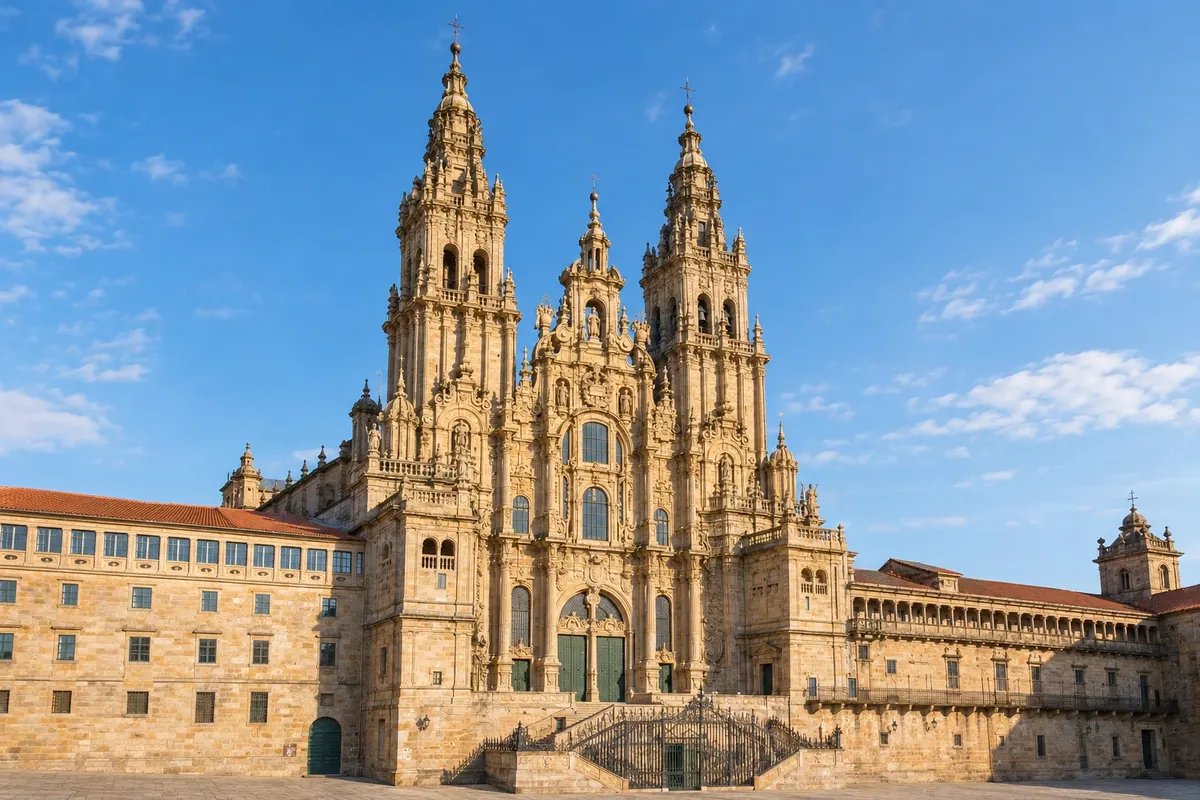
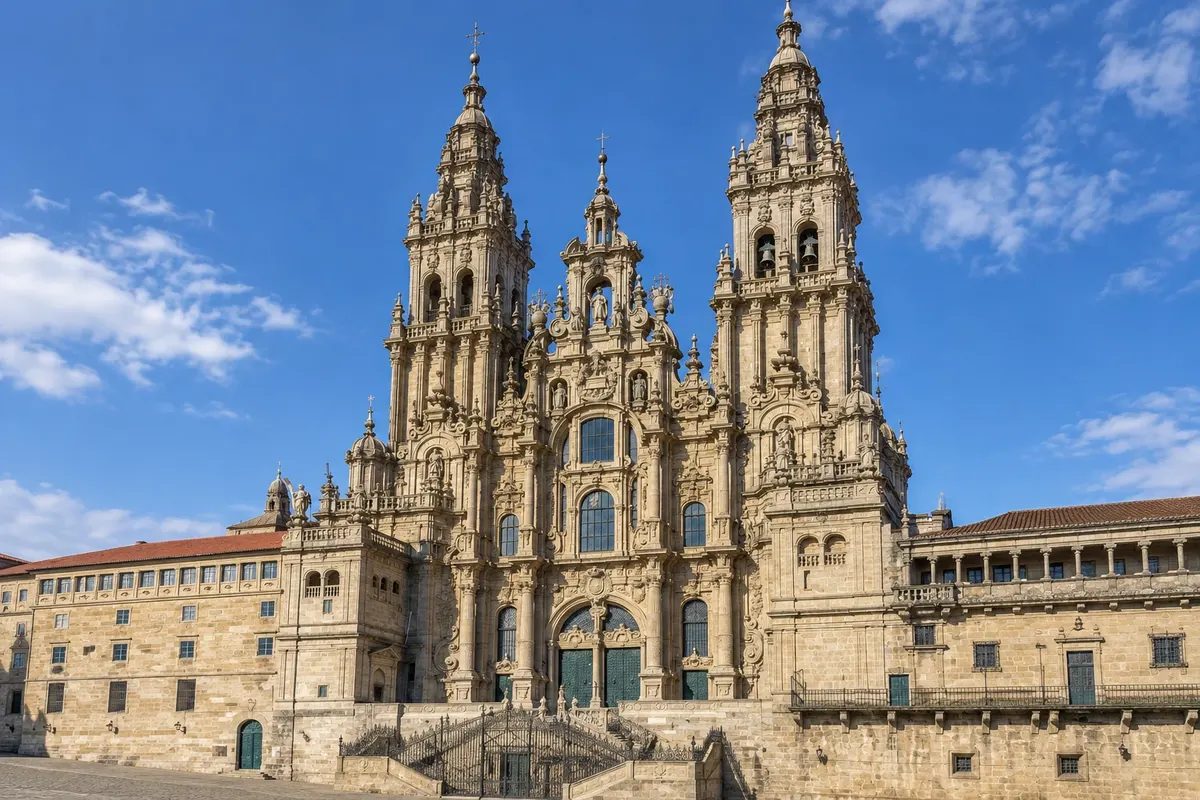
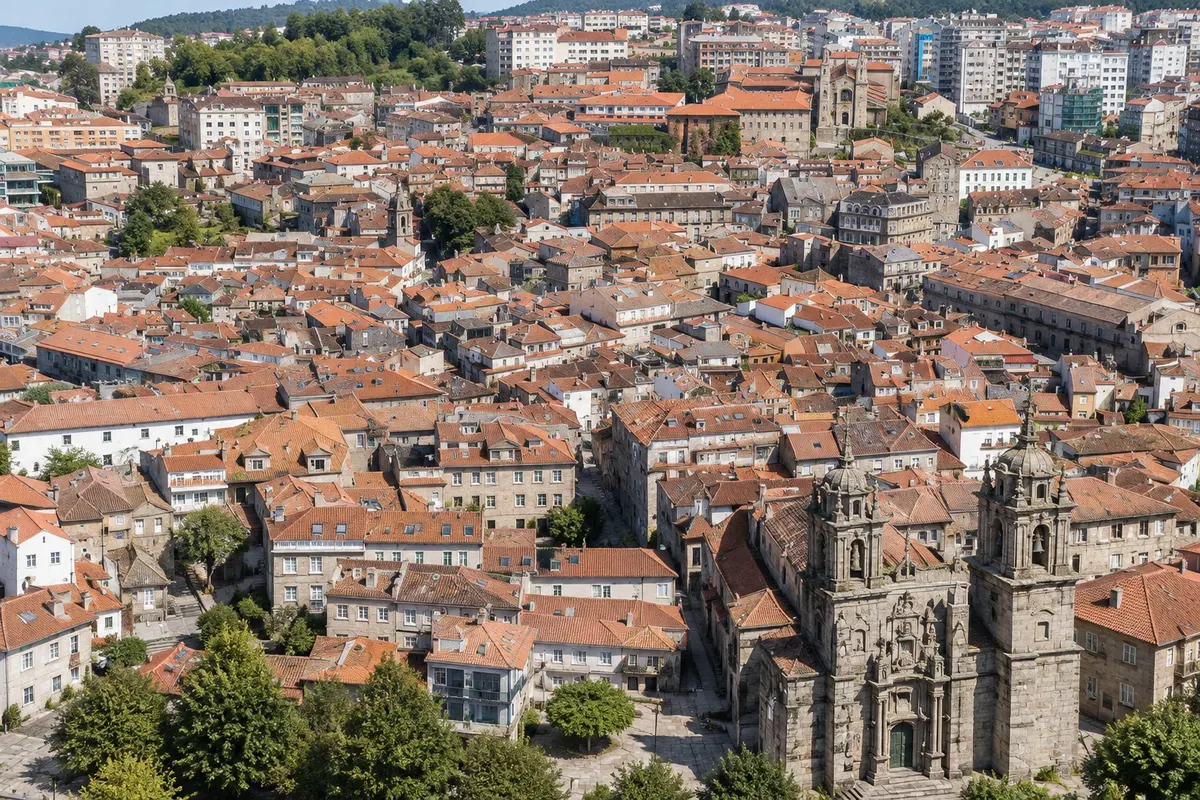
Santiago de Compostela, capital da Galícia, grew around the tomb attributed to the apostle James, discovered in the 9th century. Since the Middle Ages, pilgrims from all over Europe walk to the cathedral along the Camino de Santiago, and even today hundreds of thousands arrive on foot or by bicycle each year at the Praza do Obradoiro. The historic center, all in granite, with arcades, churches and monasteries, has been a UNESCO World Heritage Site since 1985.

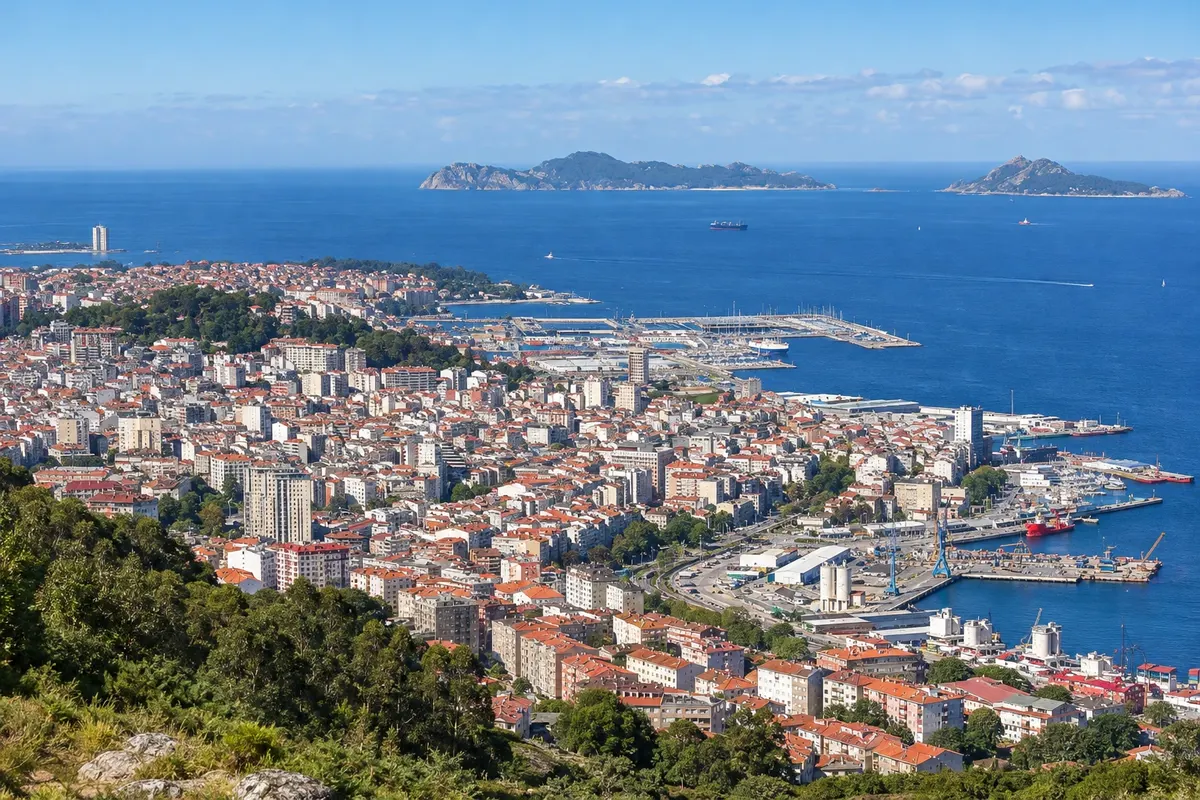
Vigo, 90 km to the south, is the largest city in Galícia and one of the main fishing ports in Europe, on the ria of Vigo. From the port depart the boats to the Illas Cíes, islands with white-sand beaches inside a national park. The Caminho Português da Costa passes through Vigo, and the city is the gateway for those coming from northern Portugal: the Celta train connects Porto to Vigo in about 2h30.

This destination brings together 17 cities: Vigo, Santiago de Compostela, Tui, Sarria, A Guarda, Baiona, Pontevedra, Ribadeo, Arzua, Lugo, Melide, Ferrol, Betanzos, A Coruña, Fisterra, Muxía, Ourense.


Delite: WhatsApp
Delite svoja popotniška doživetja s fotografijami Pošljite fotografije vsakega kraja, ki ste ga obiskali. Največje število fotografij na kraj: 5.

Ena destinacija, več poti

Mesta na tej poti

Začnite v enem mestu ali v načrt poti vključite več mest.

Santiago de Compostela and Galicia – lega
ArzúaRibadeoPontevedraA GuardaOurenseMuxíaFisterraA CoruñaBetanzosFerrolMelideLugoSarriaBaionaSantiago de CompostelaVigoTui

Obrisi: IGN/CNIG, unidades administrativas, CC BY 4.0. Priredba: Cidade Turismo.

Kako do tja:Santiago de Compostela and Galicia

✈ Aeropuerto de Vigo (VGO), kraj: Peinador· 9 km do cilja (Vigo)

✈ Aeroporto Francisco Sá Carneiro (OPO), kraj: Porto (Portugal)· 140 km do cilja (Vigo)

Confirm before buying. Santiago and Vigo have airports with flights from Spain and Europe. From Madri, the high-speed train takes about 3h30 to Santiago. From Porto, the Celta train takes about 2h30 to Vigo, and from Vigo to Santiago the train takes about 1 hour.

Predlagana točka prihoda:Vigo

Sarria
Galícia · Santiago de Compostela and Galicia

Sarria

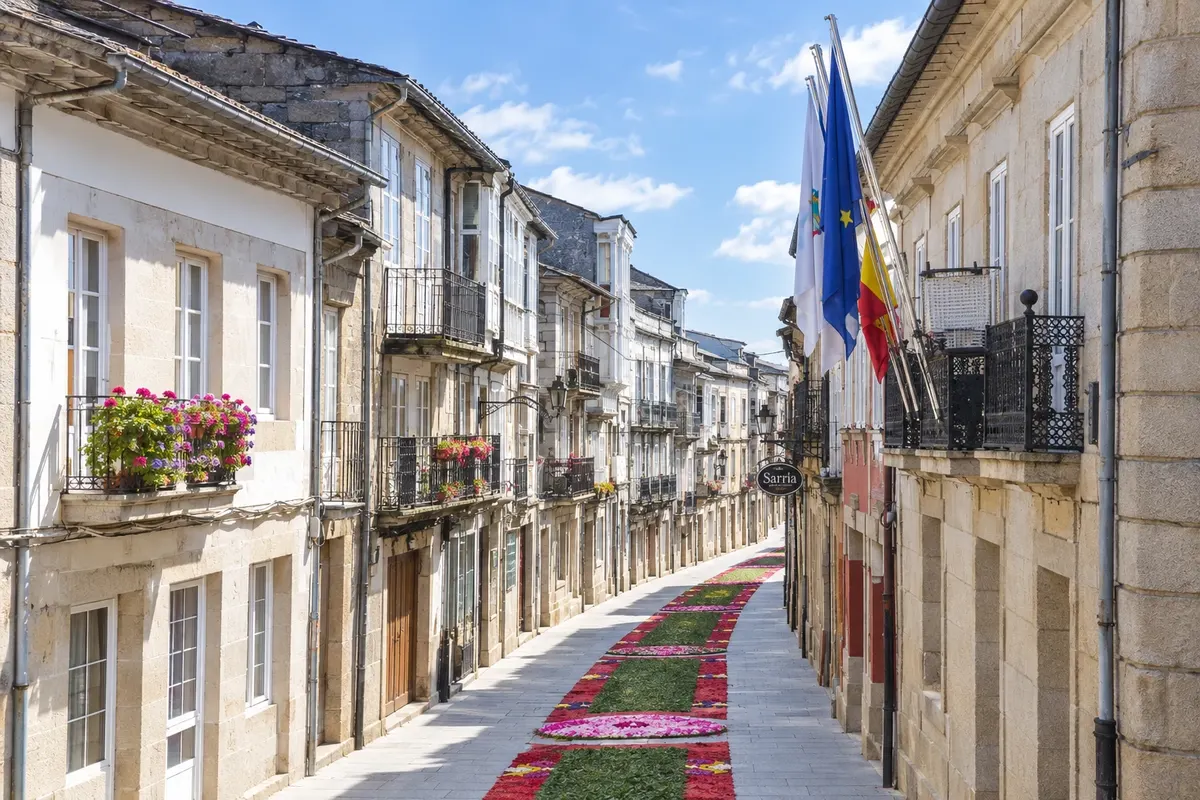
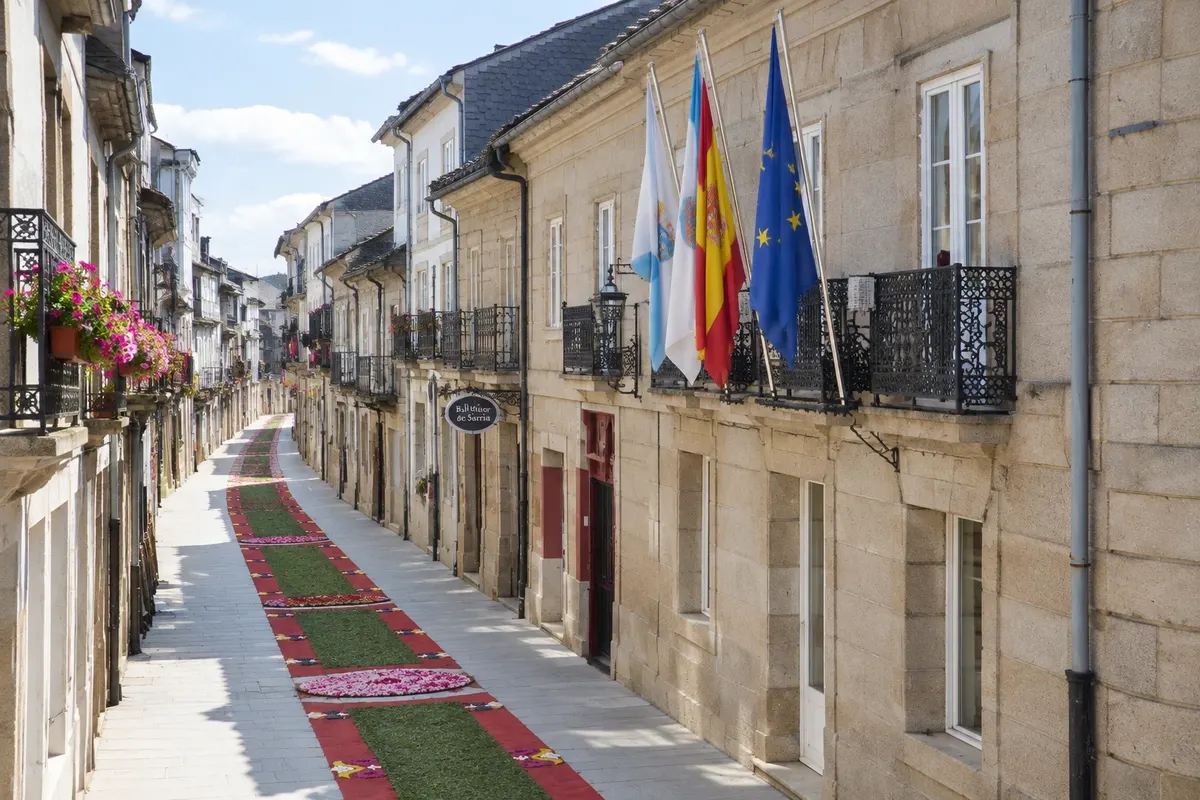
Sarria is a small town in the province of Lugo, in Galícia, about 115 km from Santiago de Compostela along the Camino. It is the most common starting point for those who walk the last 100 km—the minimum distance to request the Compostela—and it has many hostels and services for pilgrims. The Rúa Maior, the Camino street, runs past the churches of Santa Mariña and do Salvador and the tower of the old fortress, up to the mosteiro da Madalena, from the 13th century. Galician and Spanish are spoken.

A Guarda
Galícia · Santiago de Compostela and Galicia

A Guarda

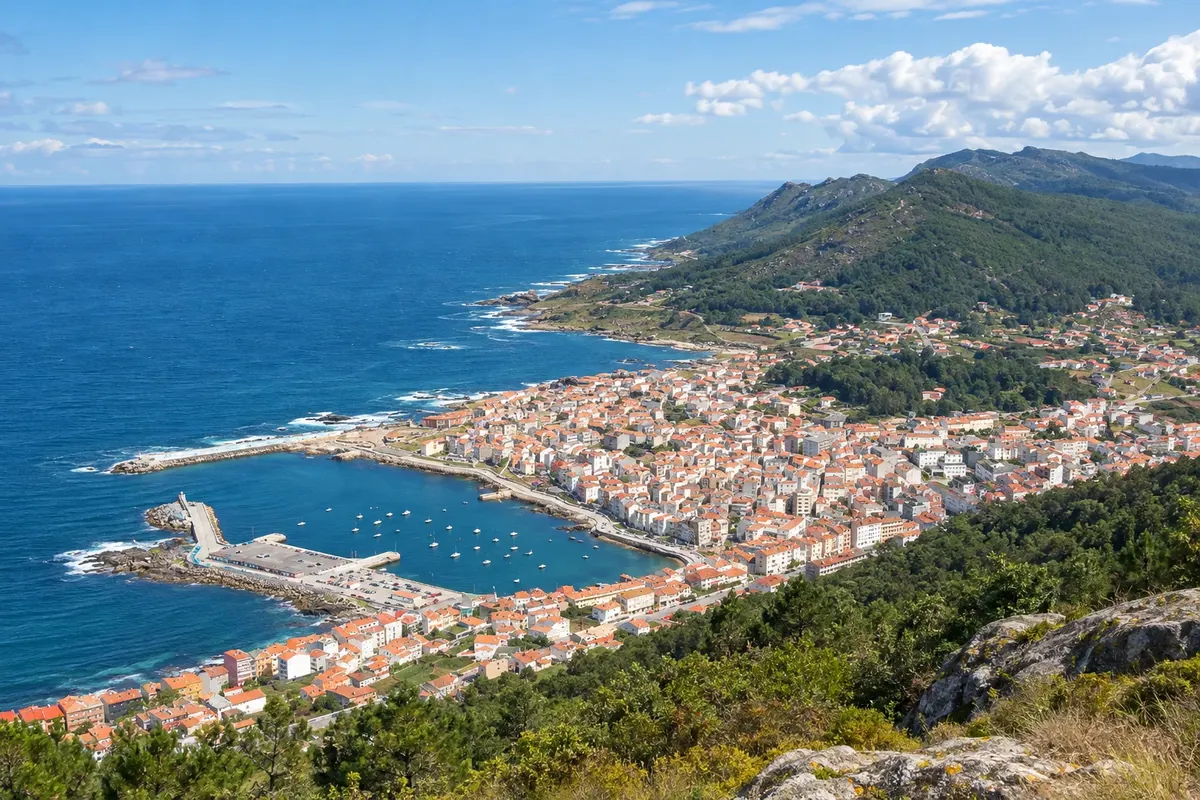
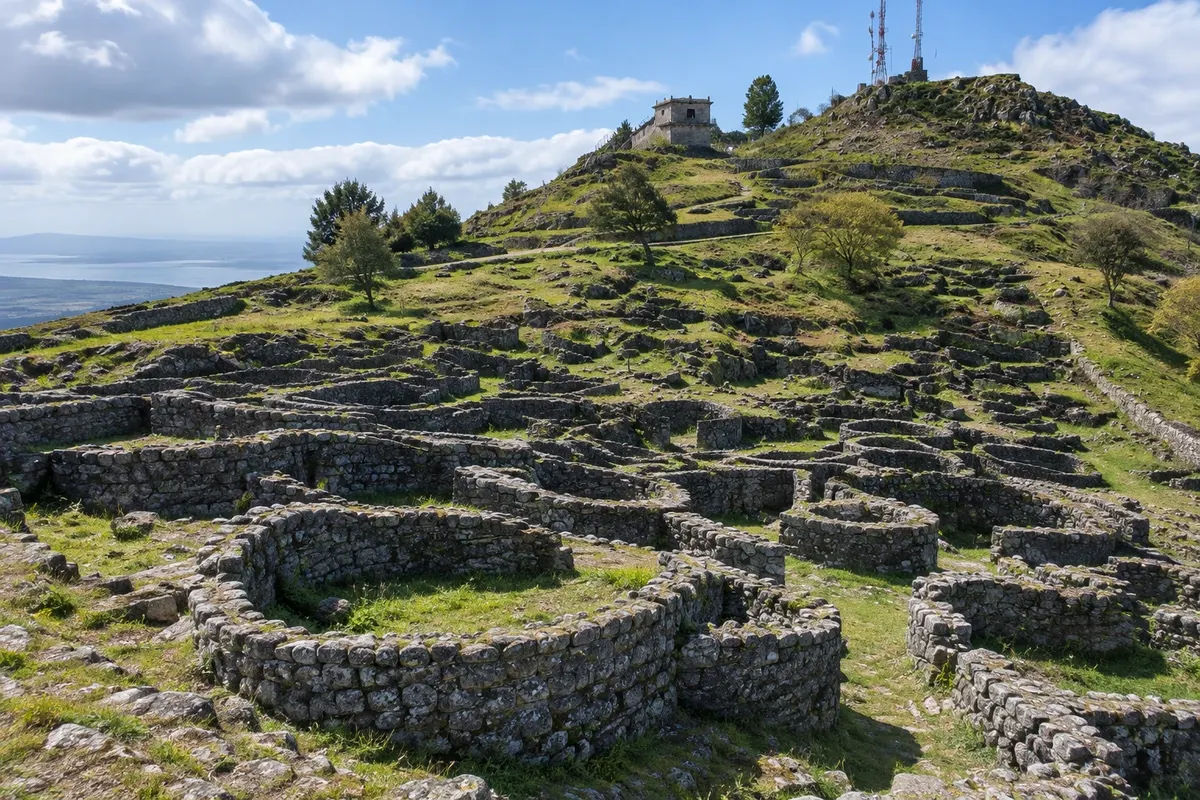
A Guarda is a fishing village in the extreme southwest of Galicia, where the Minho river meets the Atlantic, facing Portugal. Above it rises the mount of Santa Trega, 341 meters high, where the ruins of a castro settlement stand, with round stone houses, an archaeological museum, a chapel and views of the Minho estuary. In the center, the Castle of Santa Cruz recalls the 17th-century wars with Portugal, and the harbor, with colorful houses, is known for its lobster. It is the first Galician village on the Portuguese Coastal Way. Galician and Spanish are spoken.

Baiona
Galícia · Santiago de Compostela and Galicia

Baiona

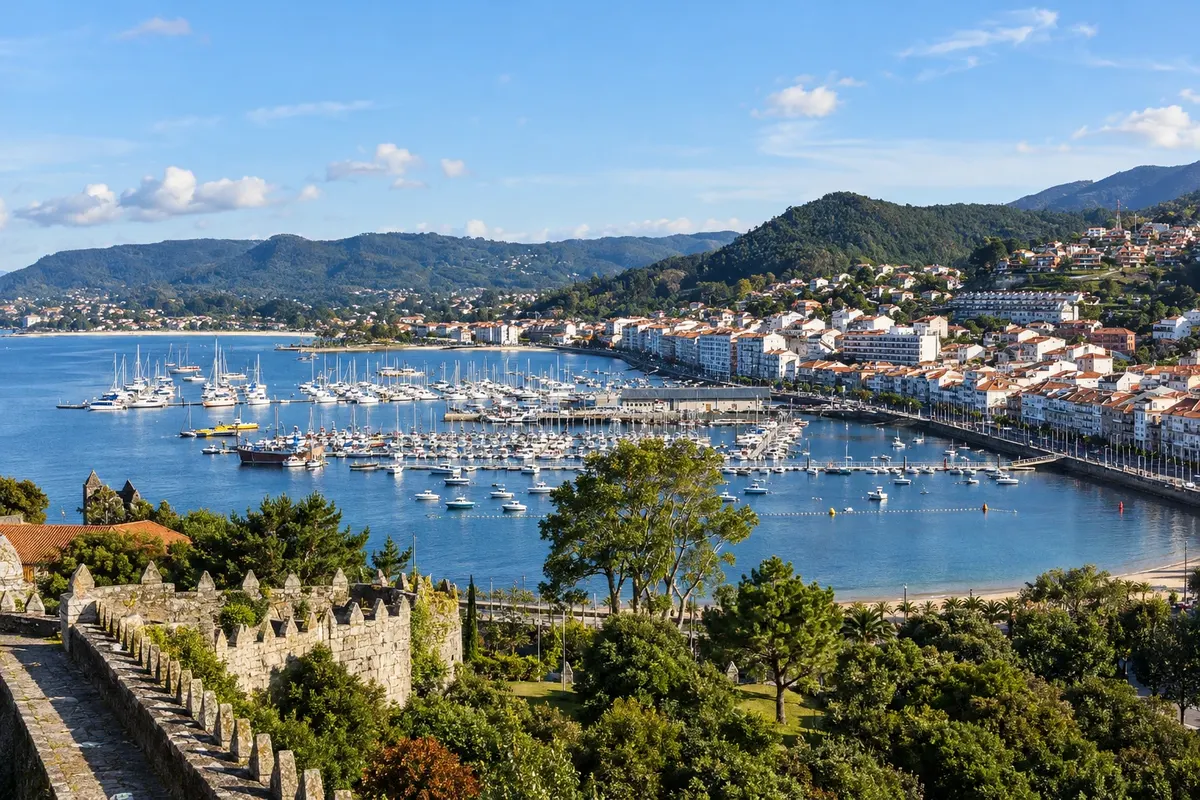
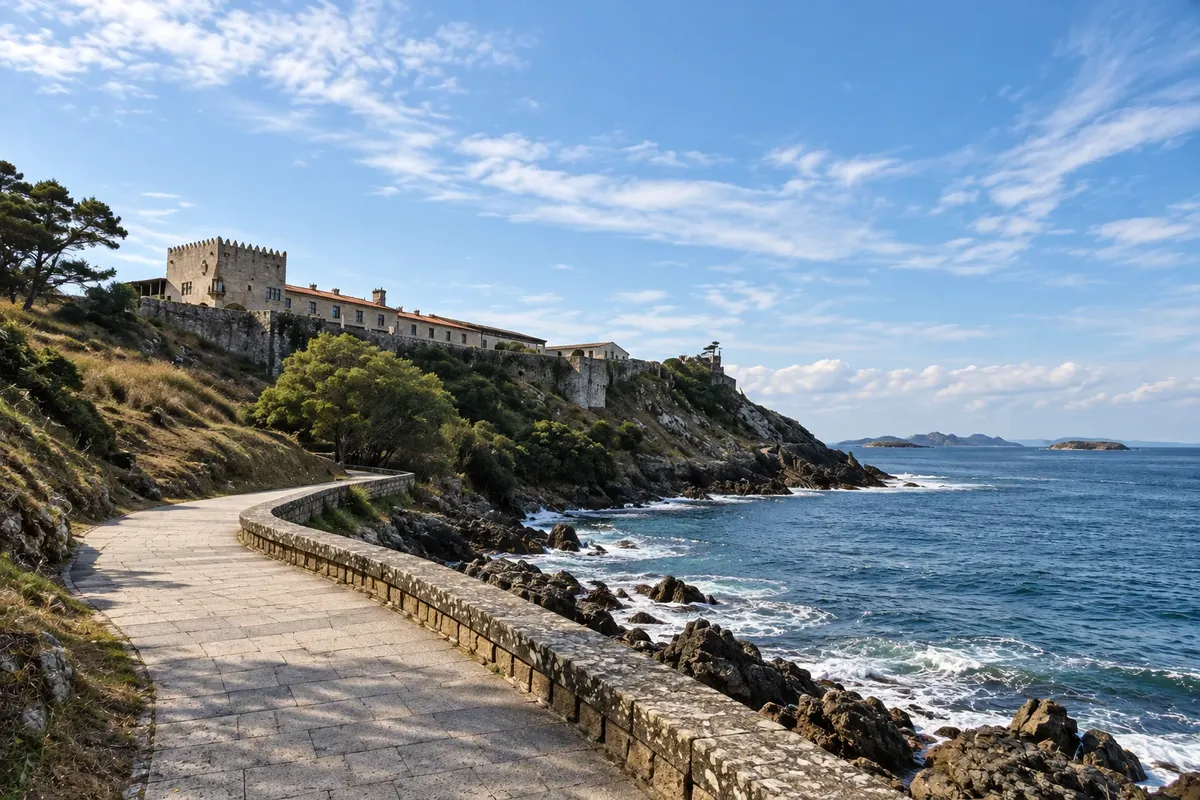
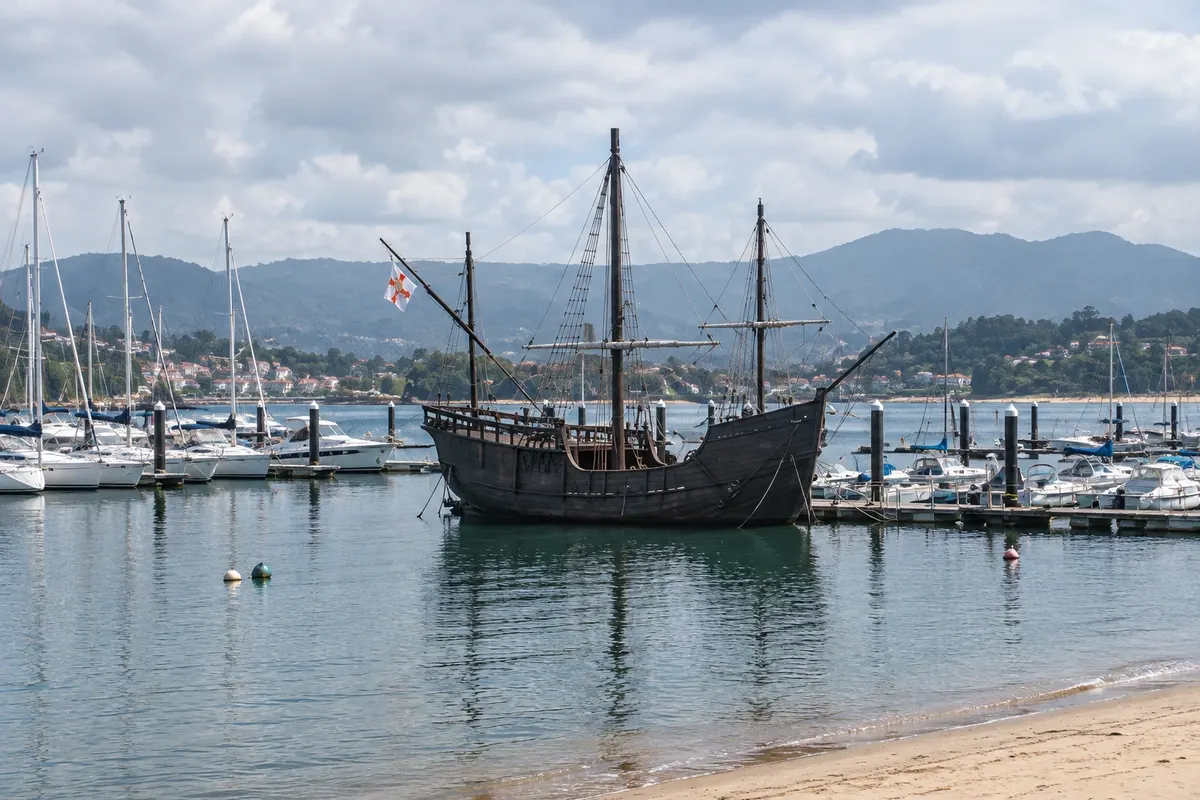
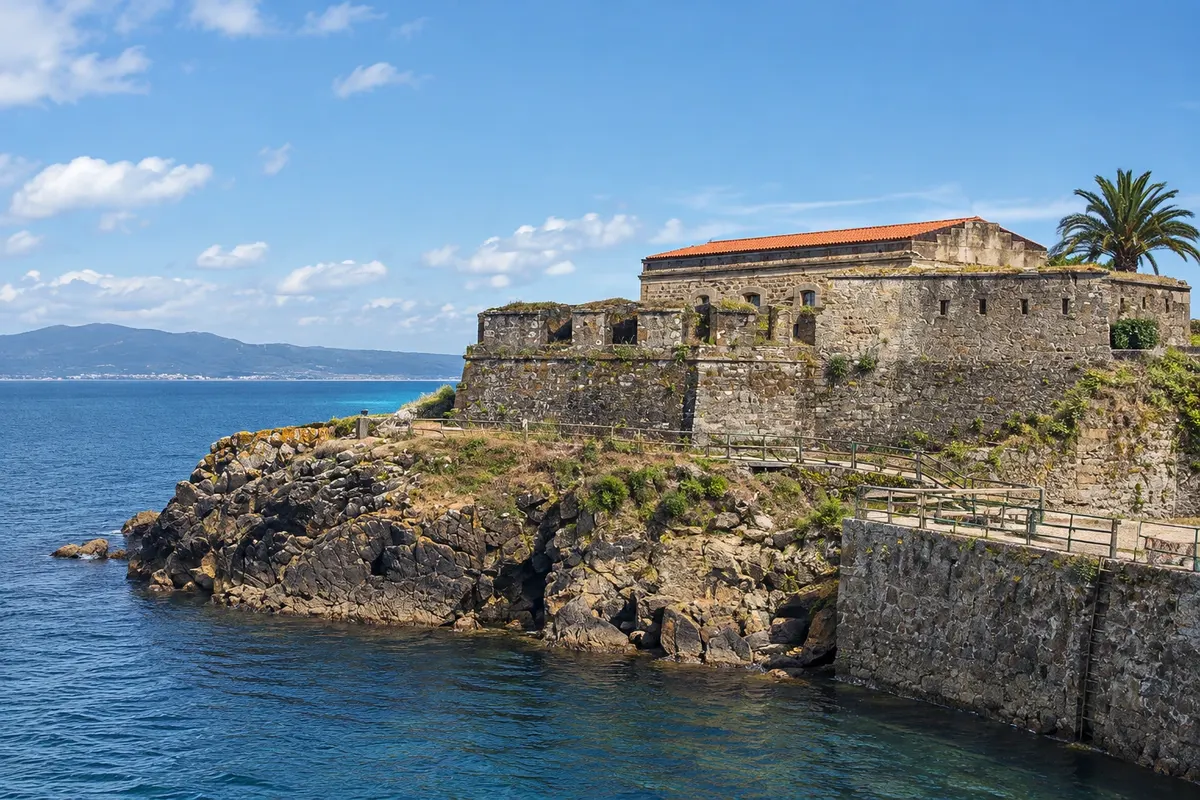
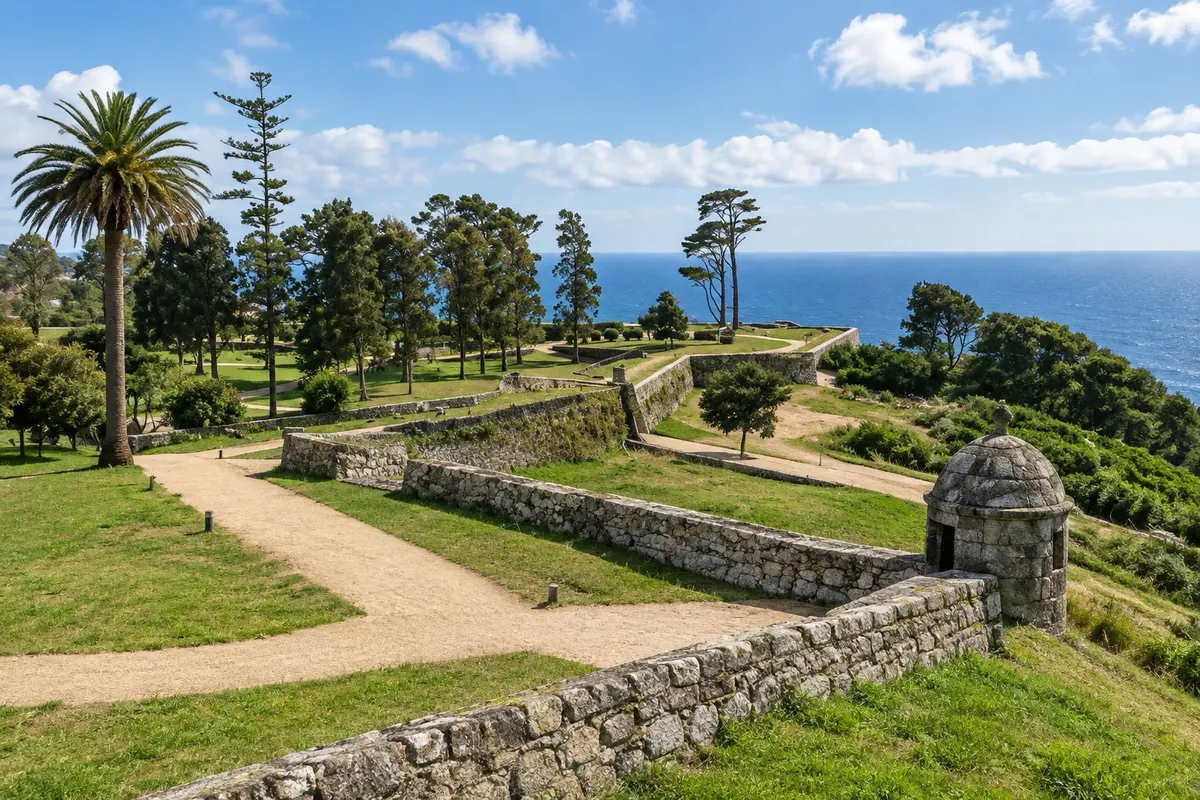
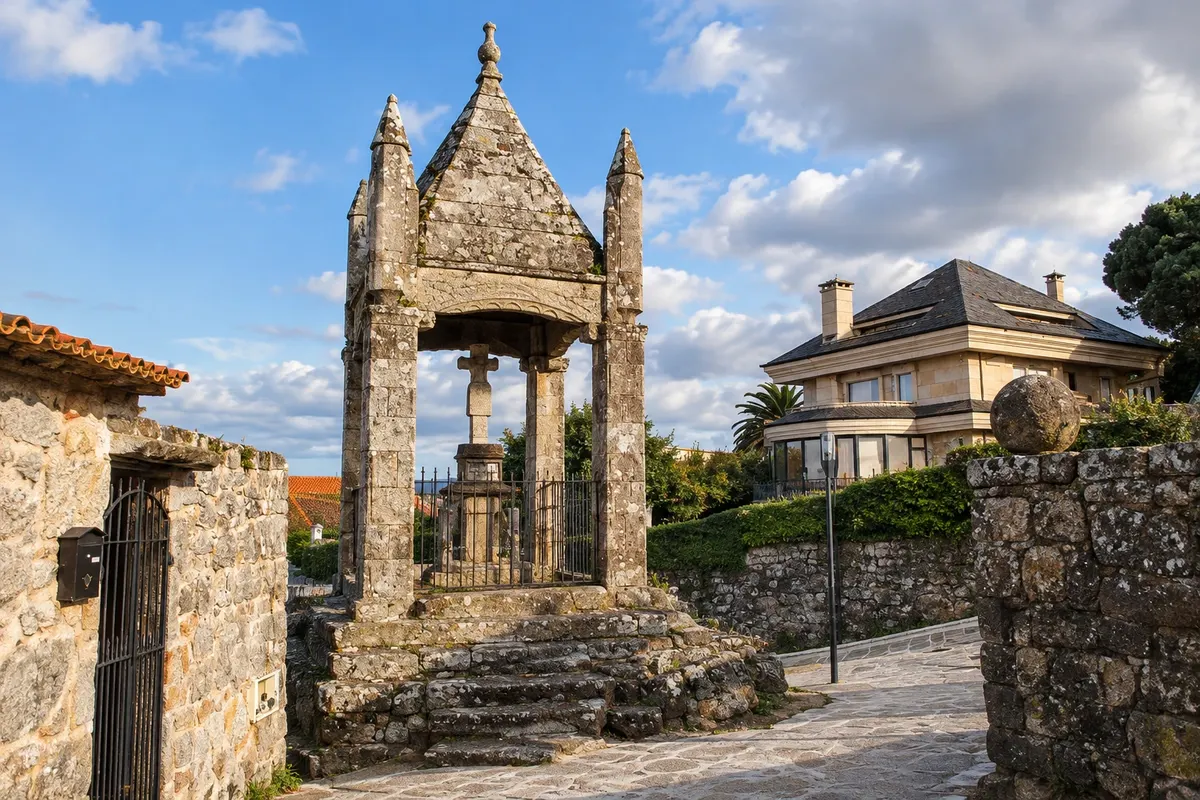
Baiona is a village on the Galician coast, about 25 km from Vigo, in a bay sheltered in front of the Cíes islands. The Monterreal peninsula is surrounded by walls, with a sea-side rampart walk; inside them is a historic parador. On 1 March 1493 the caravel Pinta arrived in Baiona with the first news of Columbus’s voyage, and a replica of the ship is in the harbor. On the top of the hill, the stone statue of the Virgem da Rocha has a viewpoint, and the town centre preserves the old Romanesque collegiate church and a covered cruceiro from the 15th century. Galician and Spanish are spoken.

Pontevedra
Galícia · Santiago de Compostela and Galicia

Pontevedra

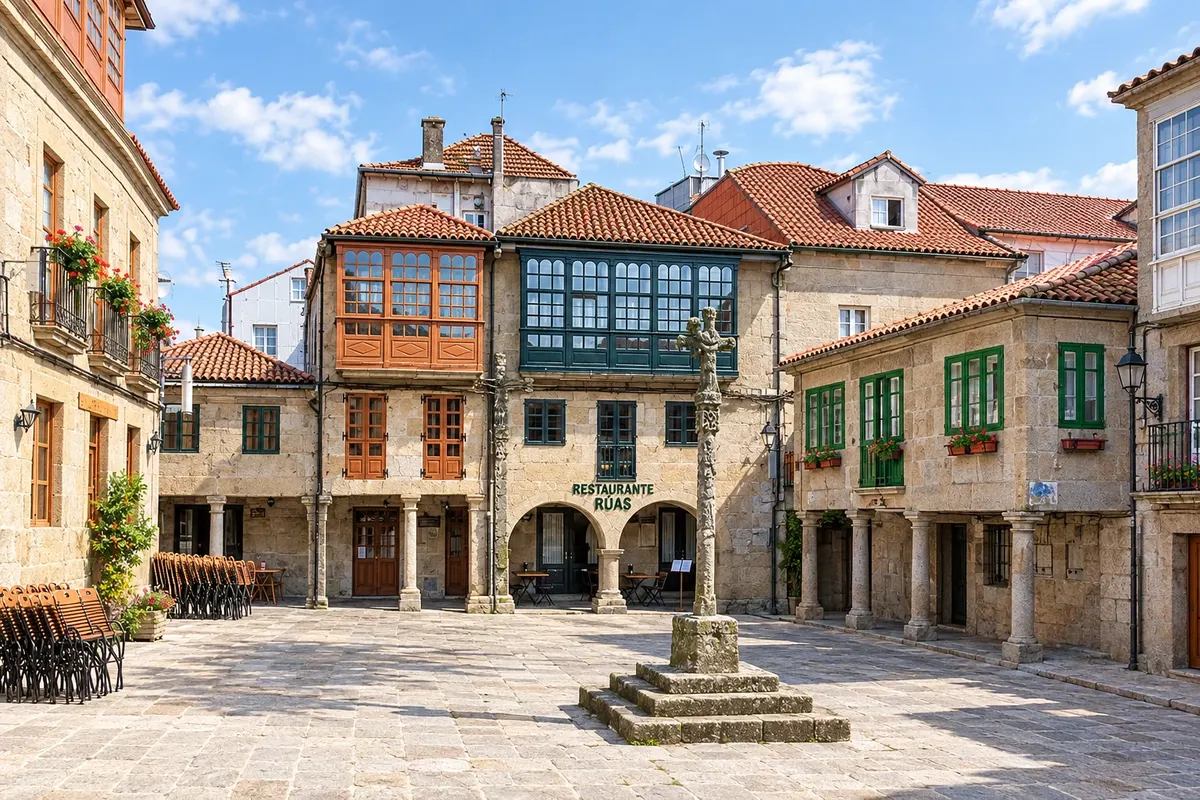
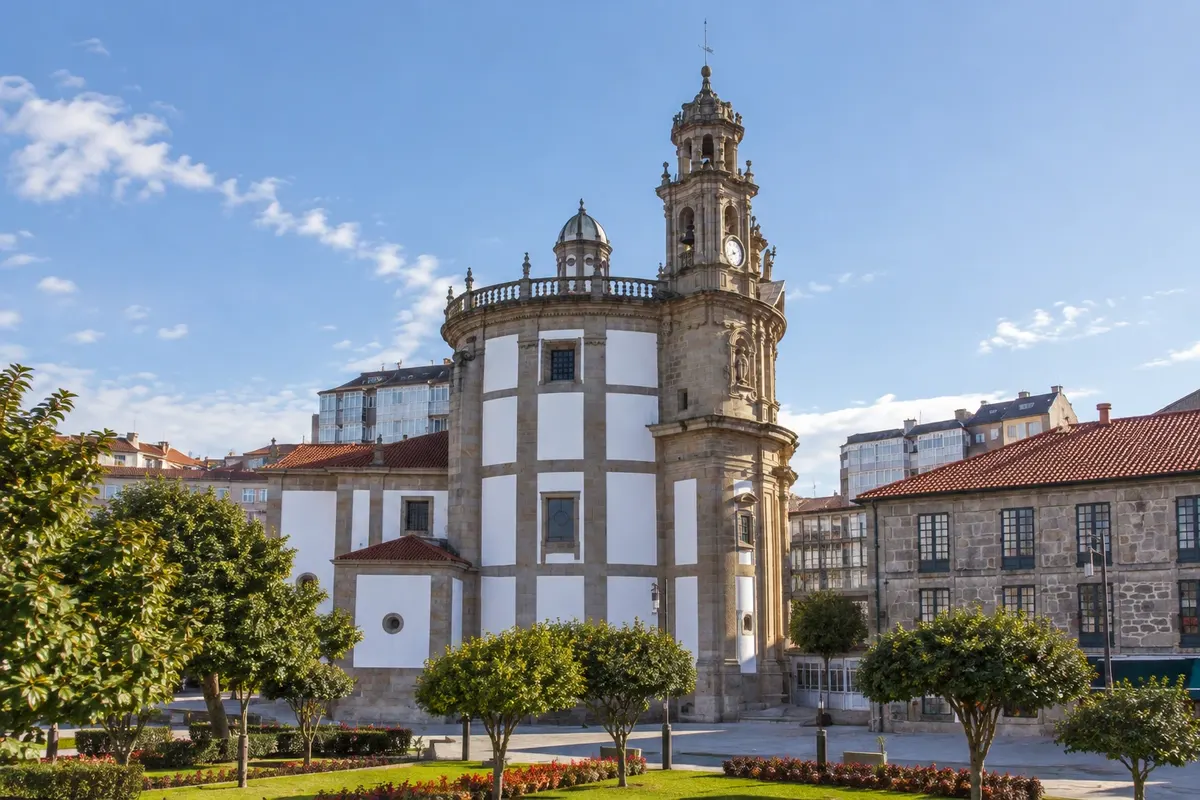
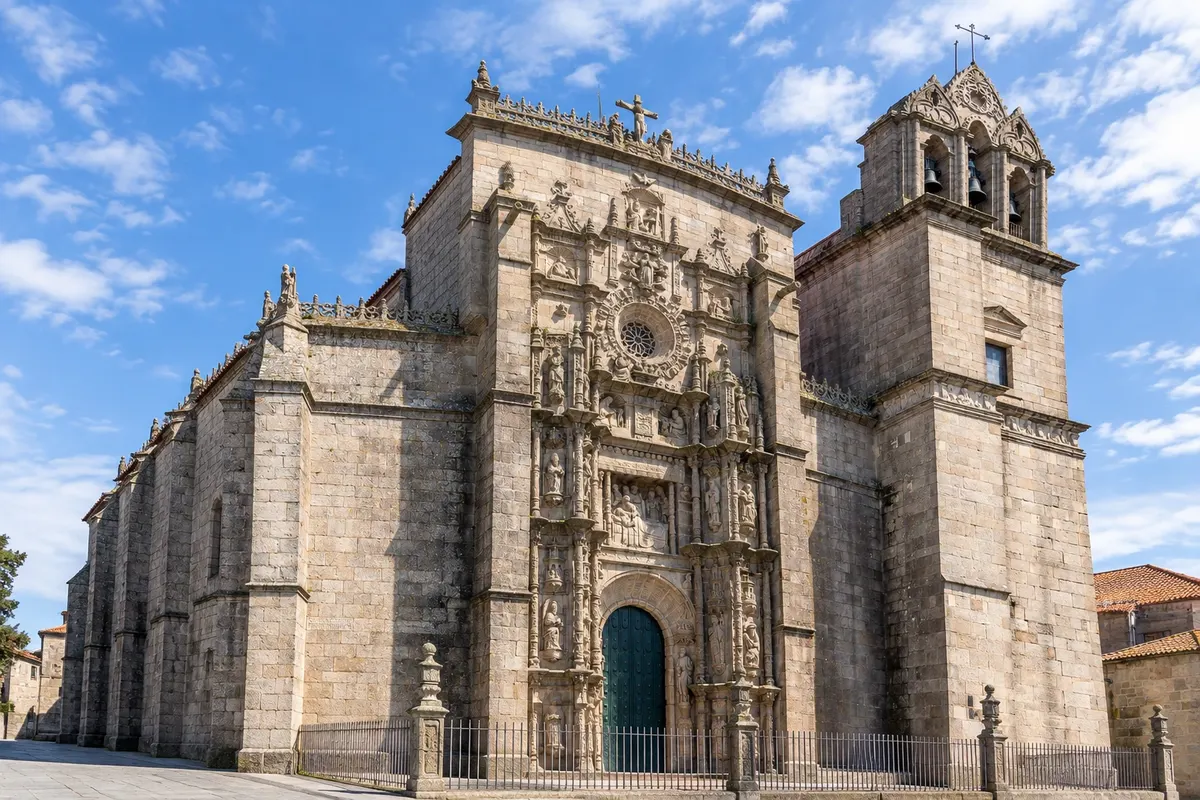
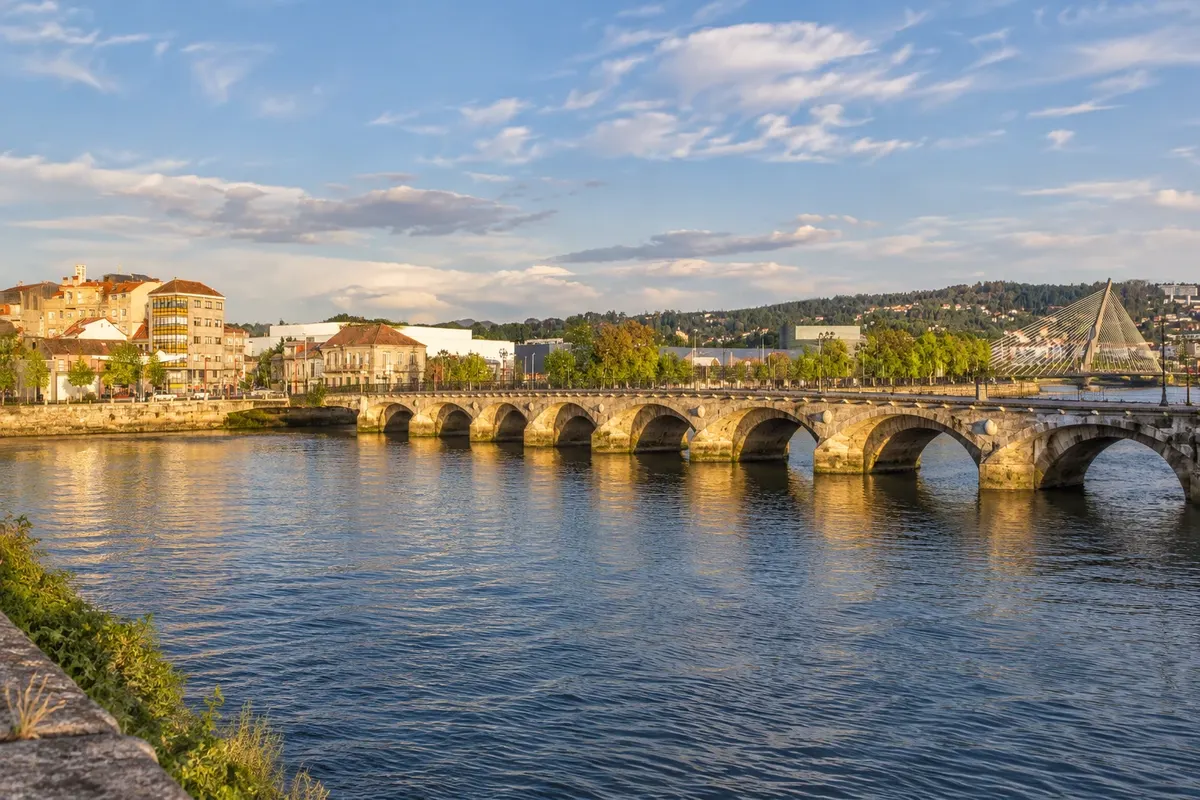
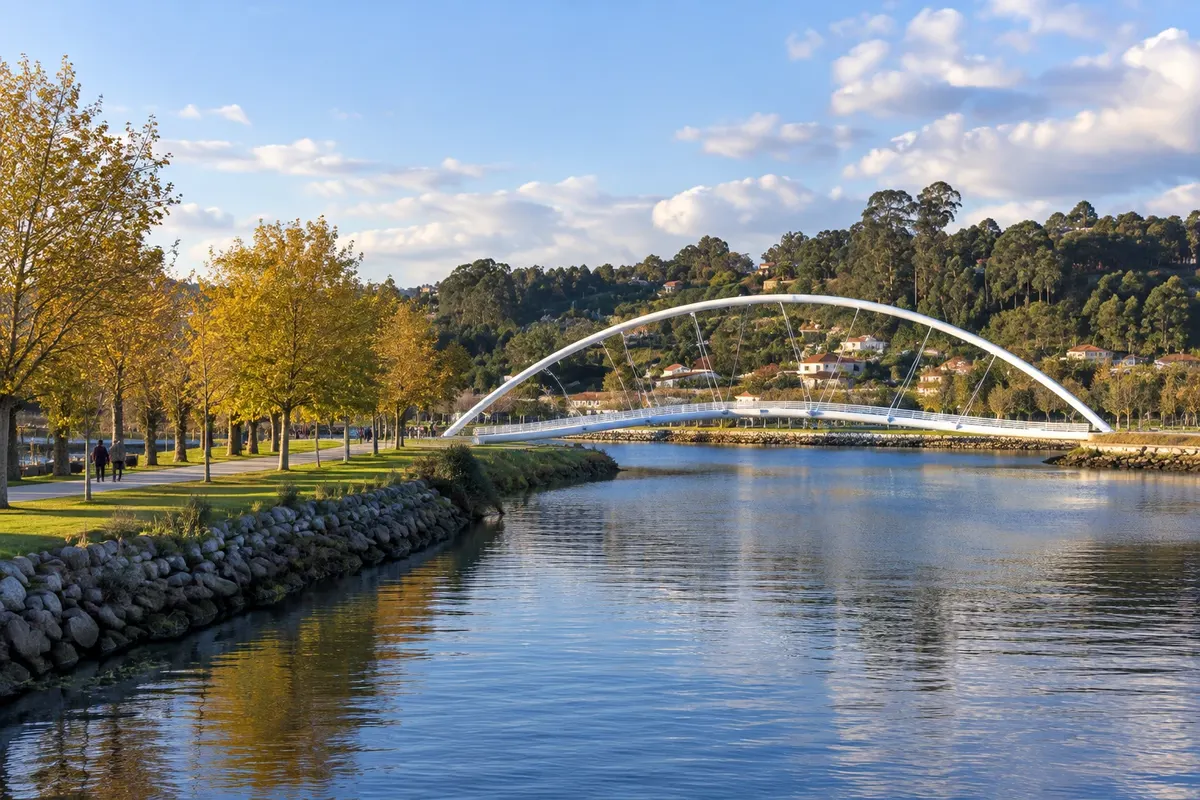
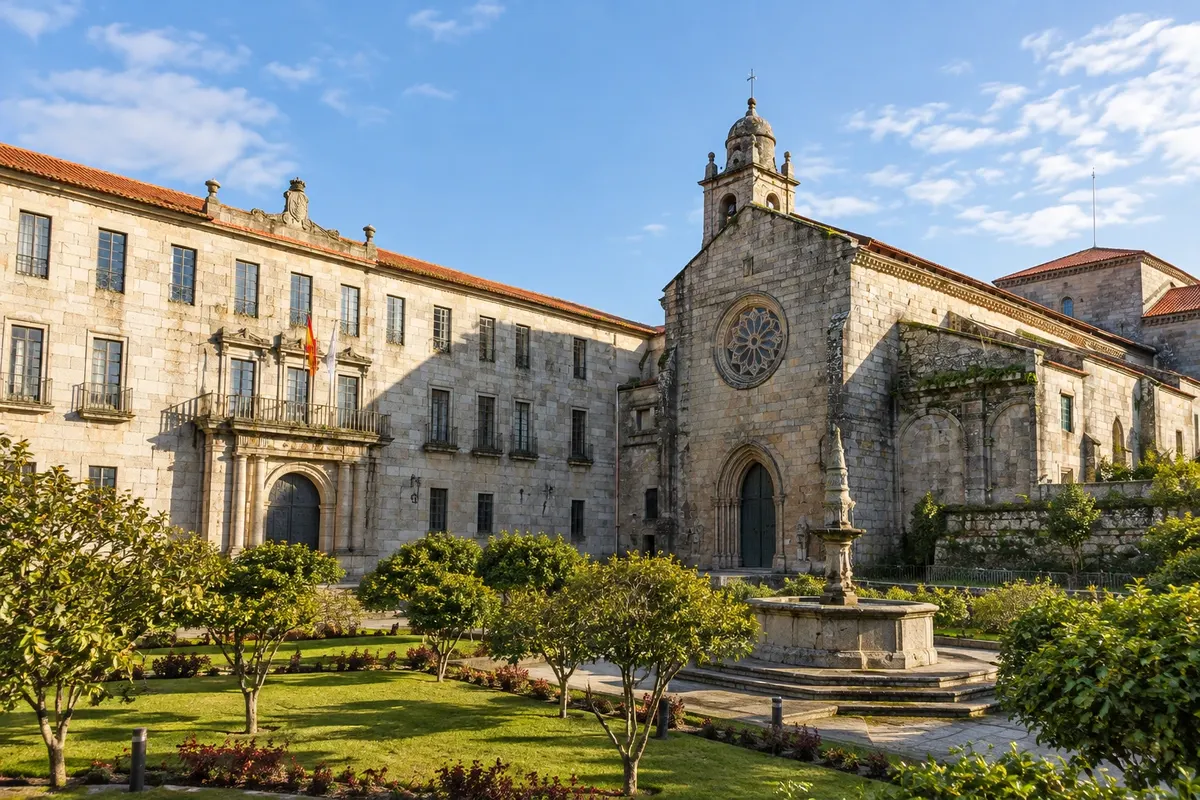
Pontevedra is a Galician city on the estuary of the same name, about 60 km from Santiago de Compostela. The historic center, made of granite, was closed to cars and is explored on foot through squares such as Praça da Leña, Praça da Ferrería and Praça da Verdura. There are the Igreja da Virgem Peregrina, with a scallop-shell floor plan, the Basílica de Santa María a Maior, the Convento de San Francisco, the Gothic ruins of San Domingos and the buildings of the Museu de Pontevedra. To the north, the Ponte do Burgo crosses the Lérez river, and the Ilha das Esculturas hosts outdoor art. It is a stop on the Caminho Português central and the Caminho da Costa.
Ribadeo
Galícia · Santiago de Compostela and Galicia

Ribadeo

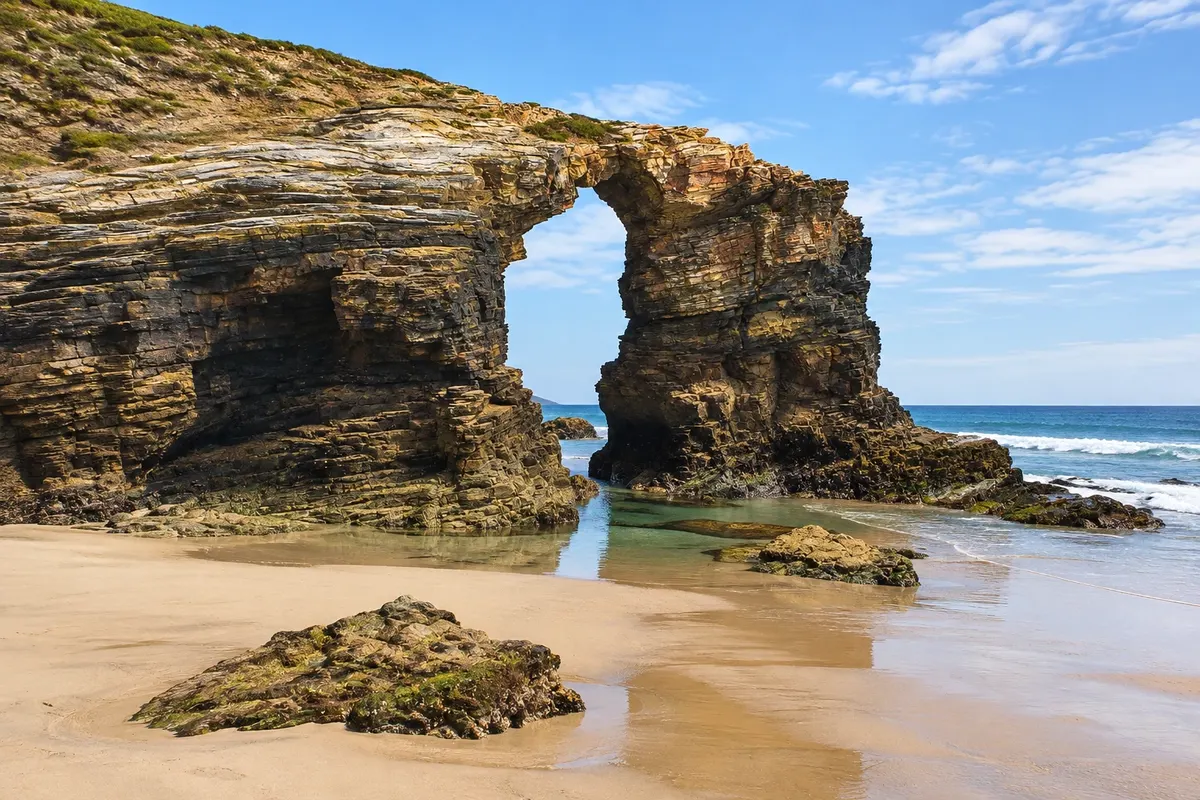
Ribadeo is a Galician town on the ría de Ribadeo, which borders Asturias, on the northern coast of Galicia. About 10 km away is the Praia das Catedrais, with rock arches that can only be explored at low tide. In the centre, Plaza de España includes the Torre dos Moreno, a 1915 modernist house built by emigrants who returned from the Americas, and the pazo de Ibáñez, now the town hall. At the mouth of the ría are the isla Pancha, with two lighthouses, and the 17th-century fort of San Damián, opposite the ponte dos Santos. It is a stop on the Caminho do Norte, the first Galician town. Galician and Spanish are spoken.

Arzua
Galícia · Santiago de Compostela and Galicia

Arzua

Arzúa is a village inland in Galicia, about 40 km from Santiago de Compostela, where the Camino Francés and the Camino del Norte join for the final stretch to the cathedral. It is known for the Arzúa-Ulloa cheese, made from cow's milk, with a protected designation of origin and its own festival in March. On the rua do Caminho are the church of Santiago and the chapel of Madalena, remnants of an old convent and pilgrims' hospital from the 14th century. About 3 km away, in Ribadiso, the medieval bridge over the Iso River and the old pilgrims' hospital make one of the best-known stops on the Camino. Galician and Spanish are spoken.

Lugo
Galícia · Santiago de Compostela and Galicia

Lugo

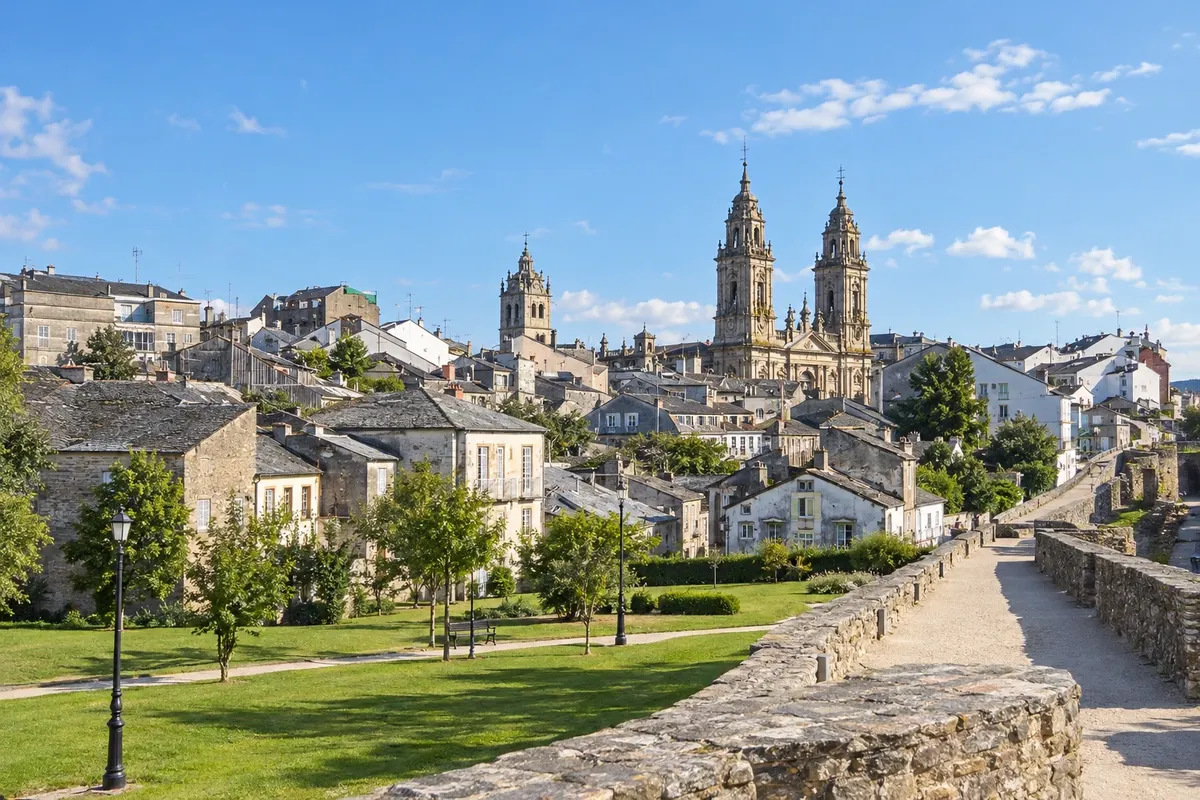
Lugo is an inland city in Galicia that began as the Roman Lucus Augusti around 15 BC. It is surrounded by a complete Roman wall of about 2 km and 71 towers, a World Heritage site; you can walk along the top of it around the entire circuit. Inside are the cathedral, Praça Maior, the Museu Provincial and the museum of the Domus do Mitreo, with remains of a Roman house. By the river Minho are the thermal baths and a bridge of Roman origin, and 14 km away is the Roman temple of Santa Eulalia de Bóveda. It is a stop on the Caminho Primitivo, about 100 km from Santiago, and in June the Arde Lucus festival revives its Roman past.

Melide
Galícia · Santiago de Compostela and Galicia

Melide

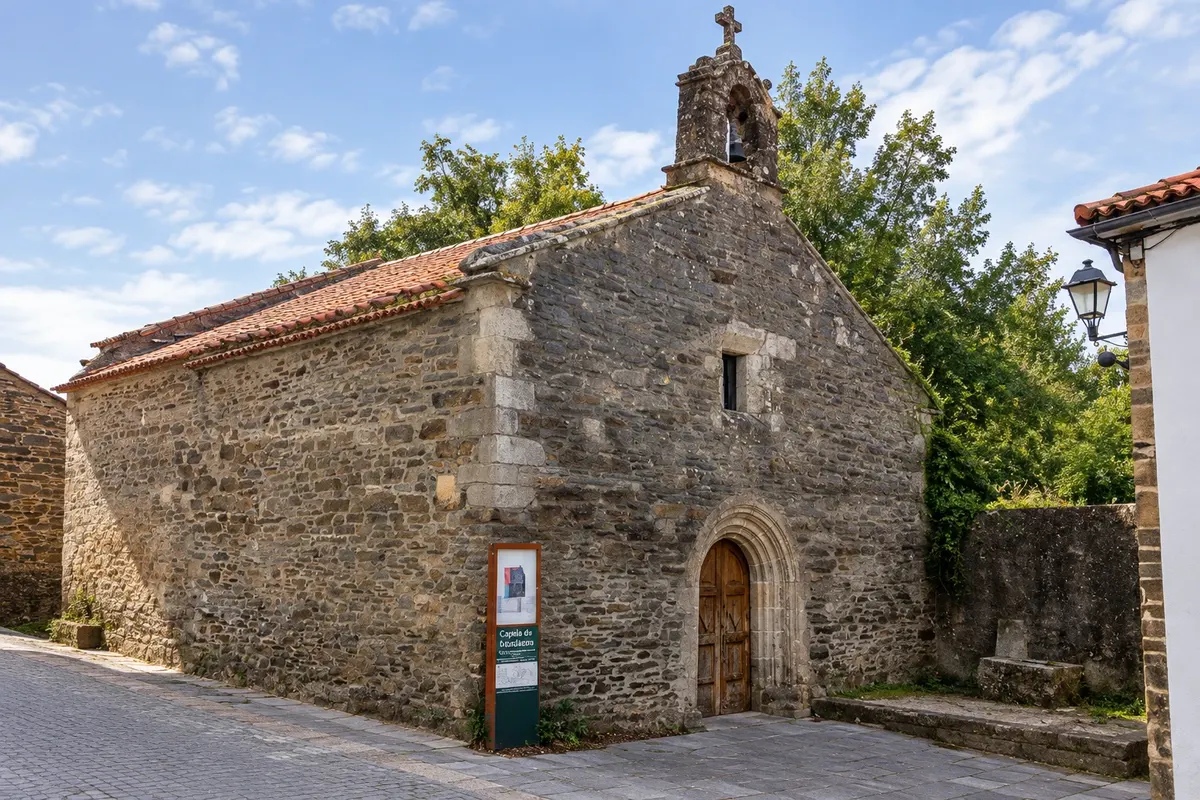
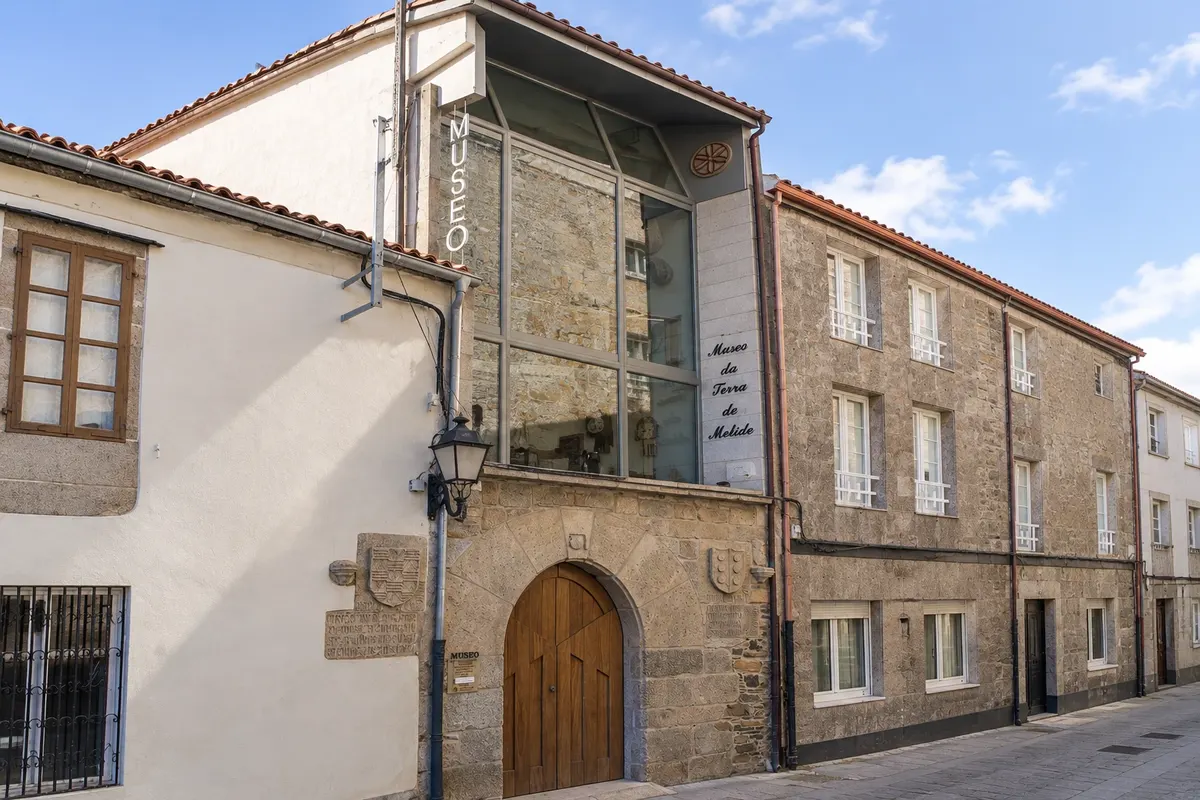
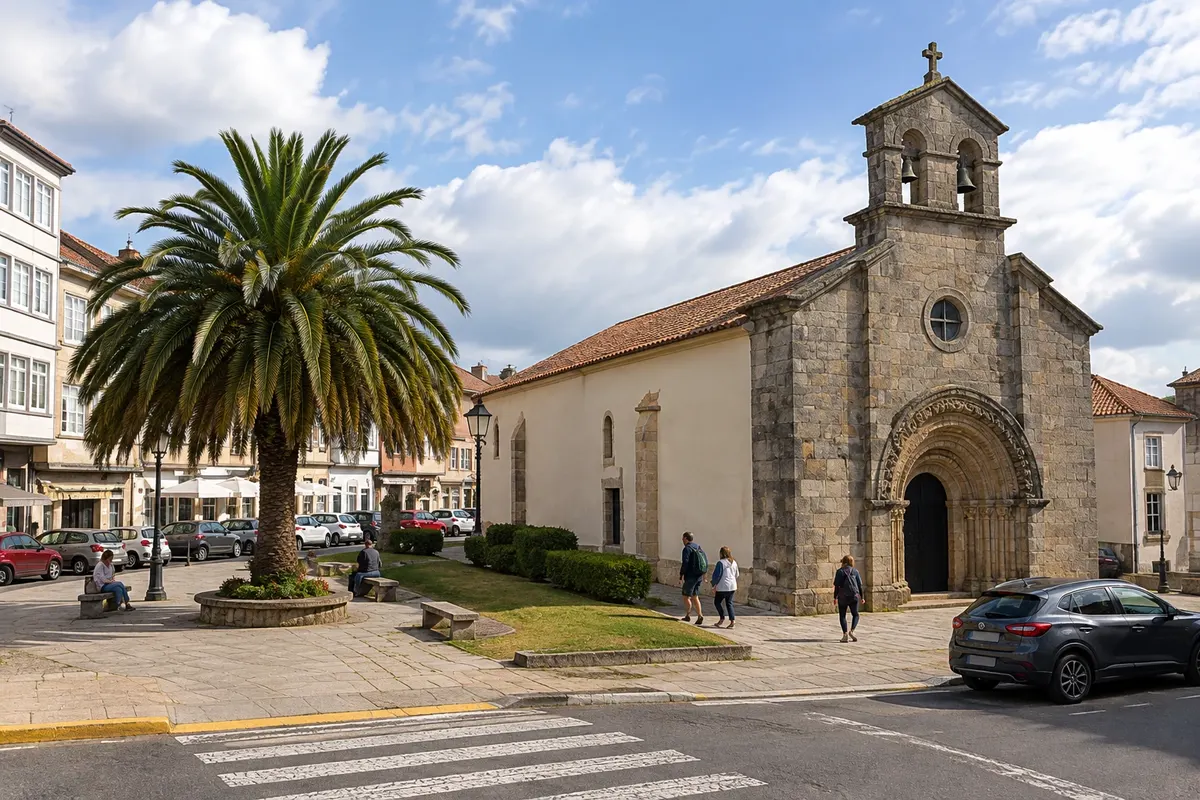
Melide is a village in inland Galicia, about 55 km from Santiago de Compostela, where the Caminho Primitivo meets the Caminho Francês. It is known for polvo à feira, boiled and served on wooden plates in the pulperías on the rua do Caminho. At the entrance to the village, the capela de San Roque stands beside a 14th-century cruceiro, considered the oldest in Galicia, and in the centre are the church of the former convent of Sancti Spiritus and the Museu da Terra de Melide. On the way out is the church of Santa María, and before reaching it is the medieval bridge of Furelos. Galician and Spanish are spoken.

Ferrol
Galícia · Santiago de Compostela and Galicia

Ferrol

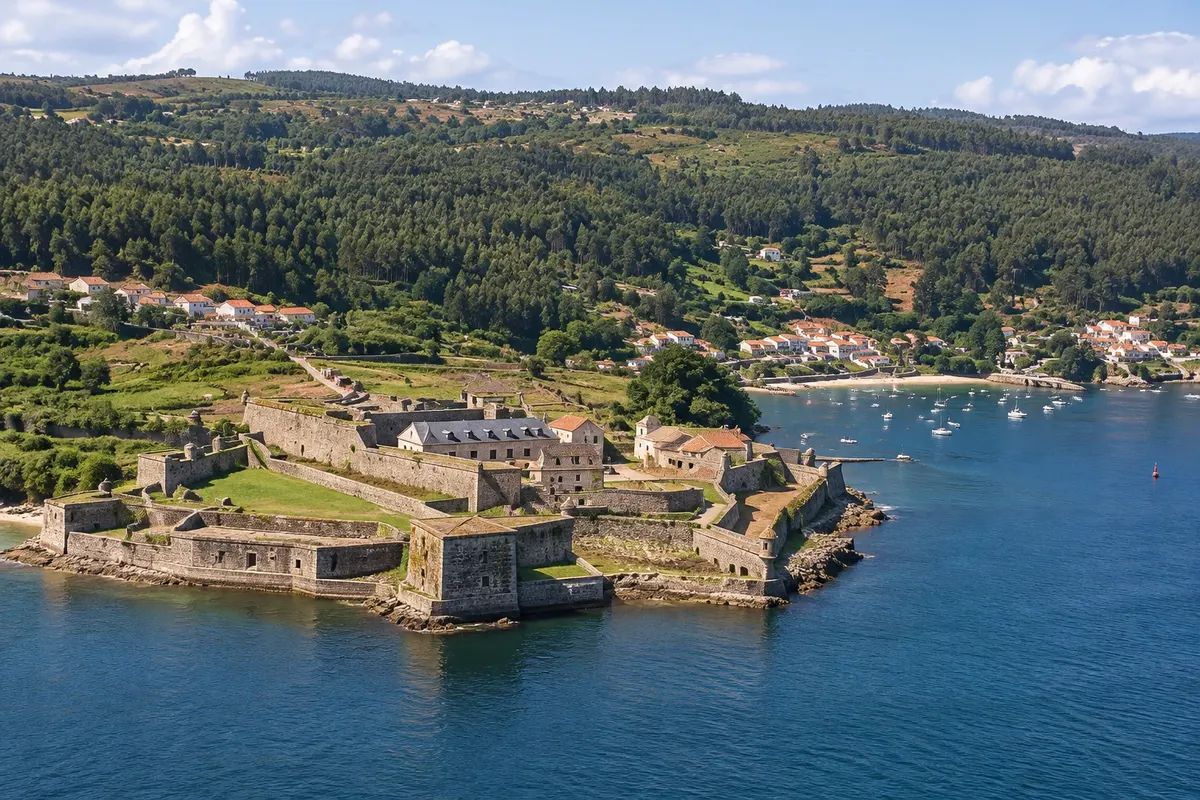
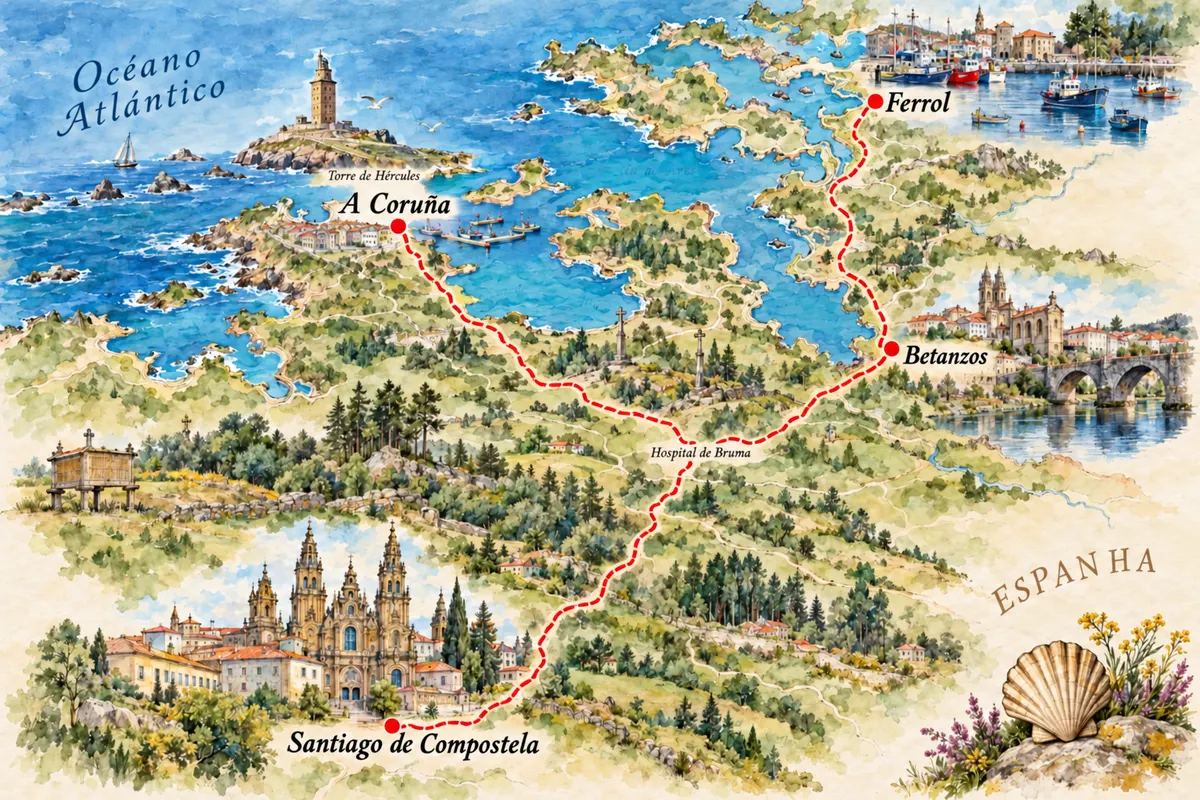
Ferrol is a Galician city on a deep Atlantic ria, about 55 km from A Coruña, linked for almost three centuries to the Spanish Navy. The bairro da Madalena, planned in the 18th century with straight streets, has houses with glass galleries, modernist buildings and the concatedral de San Xiao. Next to the arsenal are the Museu Naval and the Exponav, about shipbuilding, and at the mouth of the ria the castelo de San Felipe guards the entrance to the port. The praia de Doniños, open to the ocean, is a few kilometers away. It is the starting point of the Caminho Inglês for Santiago. Galician and Spanish are spoken.

Betanzos
Galícia · Santiago de Compostela and Galicia

Betanzos

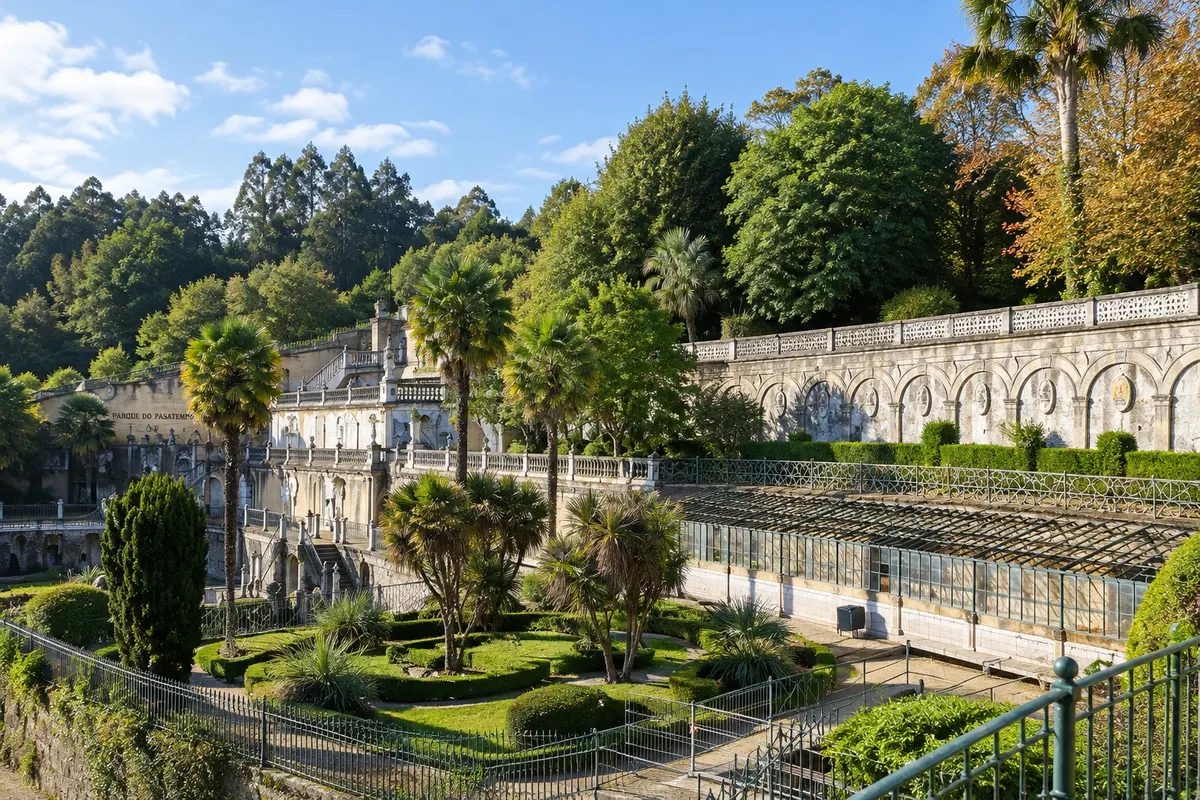
Betanzos is a medieval Galician town at the meeting of the Mandeo and Mendo rivers, about 25 km from A Coruña. The historic center climbs a hill with three Gothic churches: San Francisco, with the tomb of Fernán Pérez de Andrade supported on a bear and a boar, Santa María do Azougue and Santiago. In the old convent of Santo Domingo is the Museu das Mariñas, and down below is the Parque do Pasatempo, created by an emigrant who returned wealthy from Argentina, with grottos and figures from around the world. On the night of August 16 the town releases a huge paper balloon. It is a stop on the Caminho Inglês. Galician and Spanish are spoken.

A Coruña
Galícia · Santiago de Compostela and Galicia

A Coruña

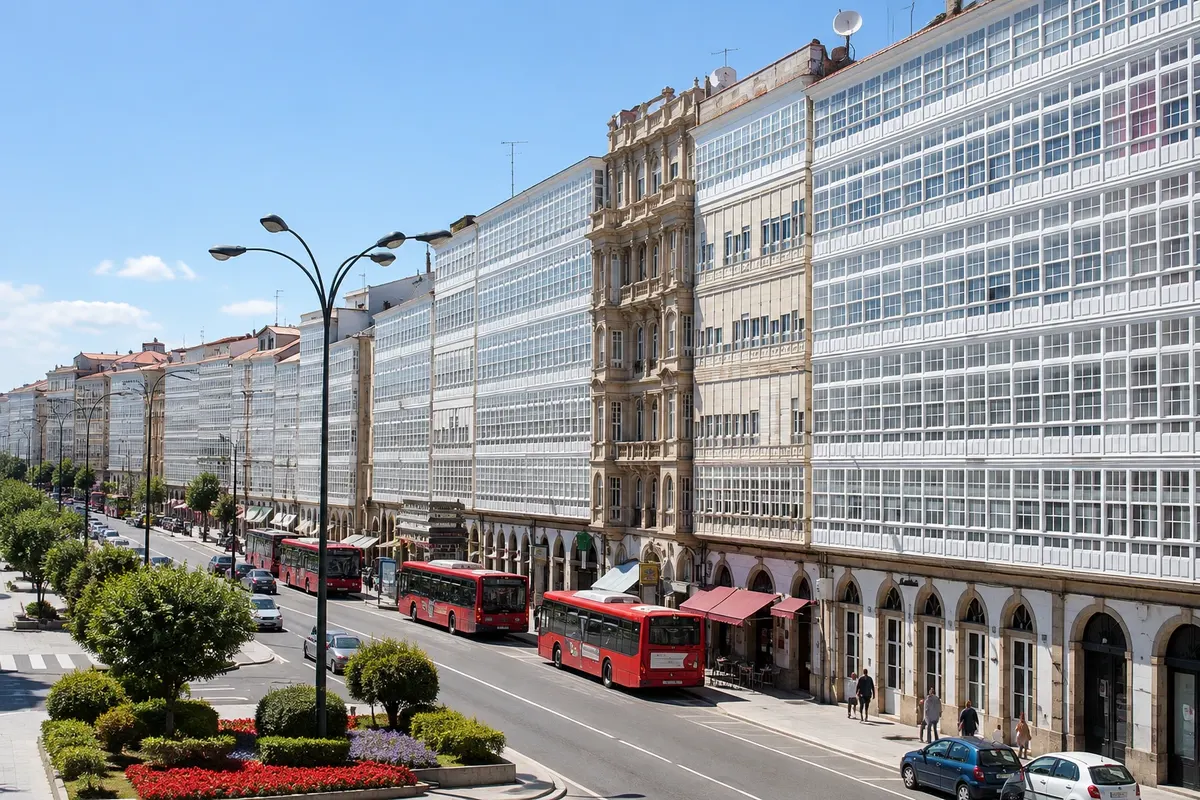
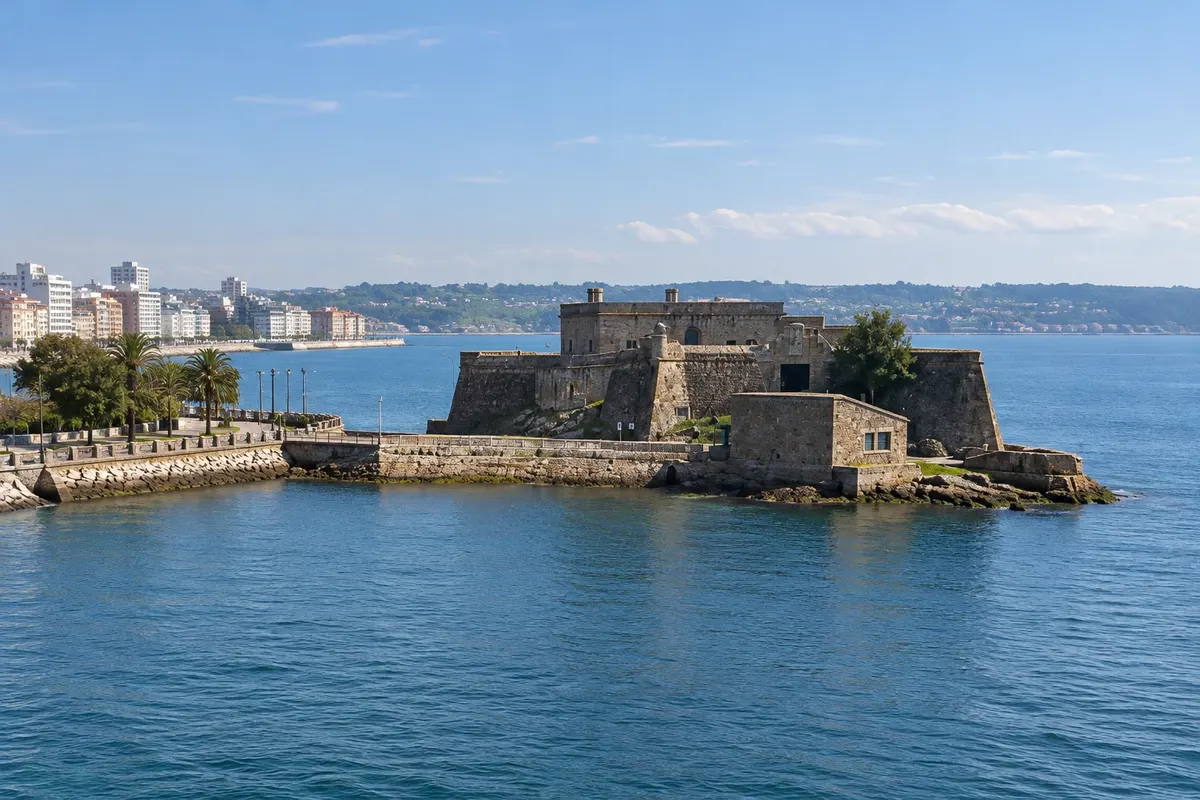
A Coruña is a Galician city on an Atlantic peninsula, about 75 km from Santiago de Compostela. At the northern tip stands the Torre de Hércules, the only Roman lighthouse still in operation and a World Heritage Site. The glass galleries along avenida da Mariña lead to plaza de María Pita and the Old Town, with the colegiata de Santa María do Campo and the San Carlos garden. The castle of San Antón houses the archaeological museum. A seaside promenade skirts the peninsula, with the beaches of Riazor and Orzán, the Aquarium Finisterrae, the Domus, the Casa das Ciências and monte de San Pedro.

Fisterra
Galícia · Santiago de Compostela and Galicia

Fisterra

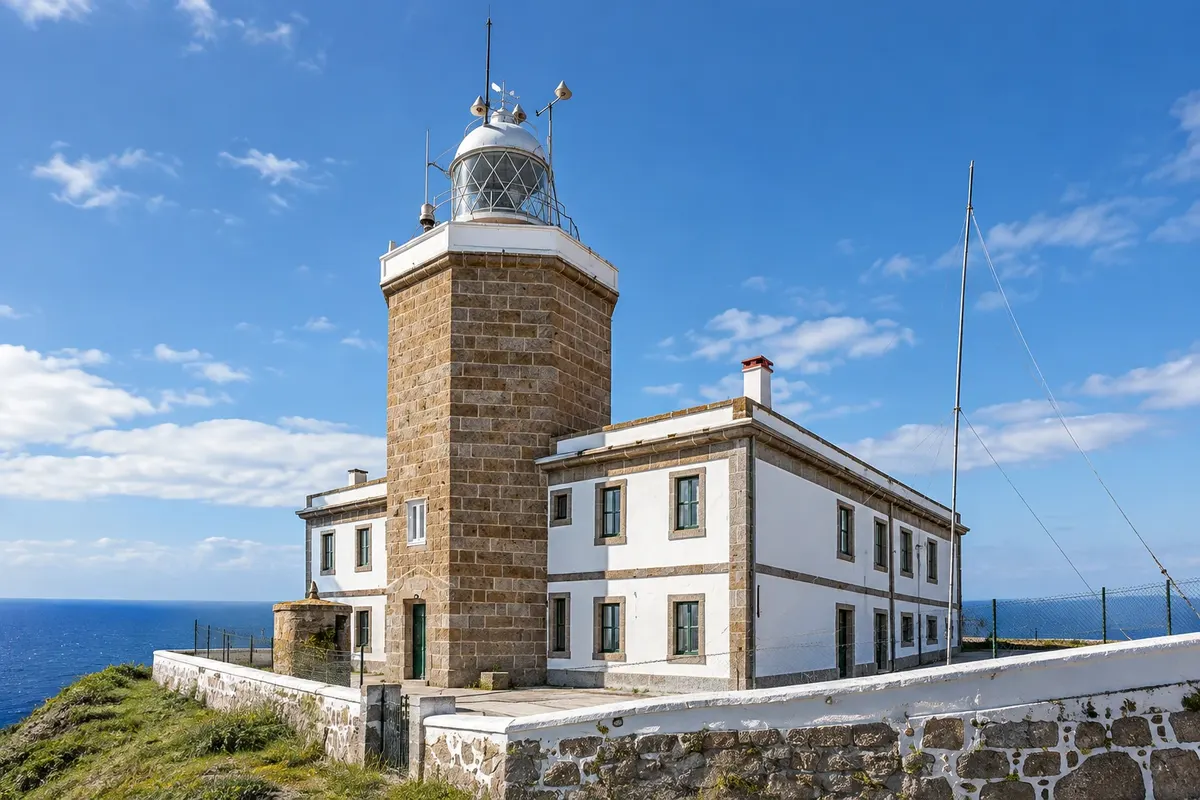
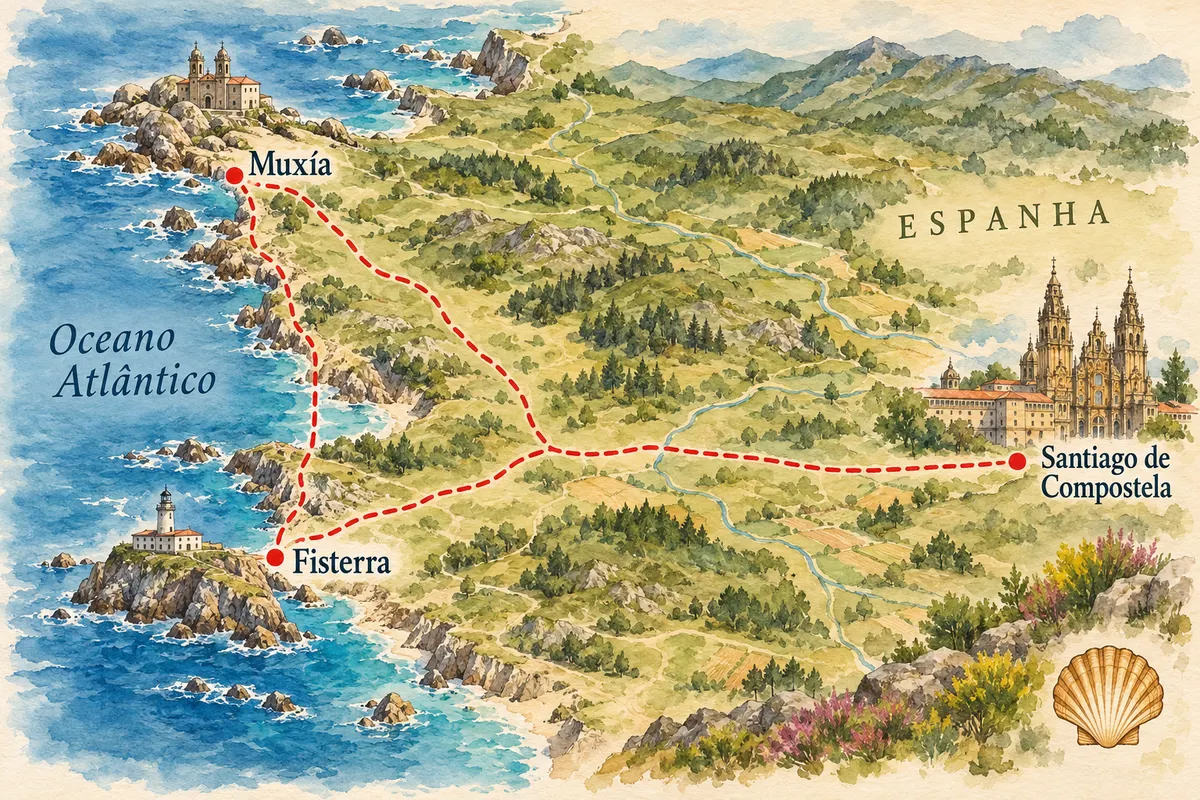
Fisterra is a fishing village on the Costa da Morte, in Galicia, about 90 km from Santiago de Compostela. About 3 km away is the cabo Fisterra, the finis terrae of the Romans, considered the end of the known world, with the lighthouse from 1853 and the kilometer-zero marker of the route many pilgrims walk after Santiago. On the way to the cape is the church of Santa María das Areas, with the Cristo de Fisterra. In the village the castelo de San Carlos houses the Museu da Pesca, and the port, with the lonxa, shows the coastal fishing. Galician and Spanish are spoken.

Muxía
Galícia · Santiago de Compostela and Galicia

Muxía

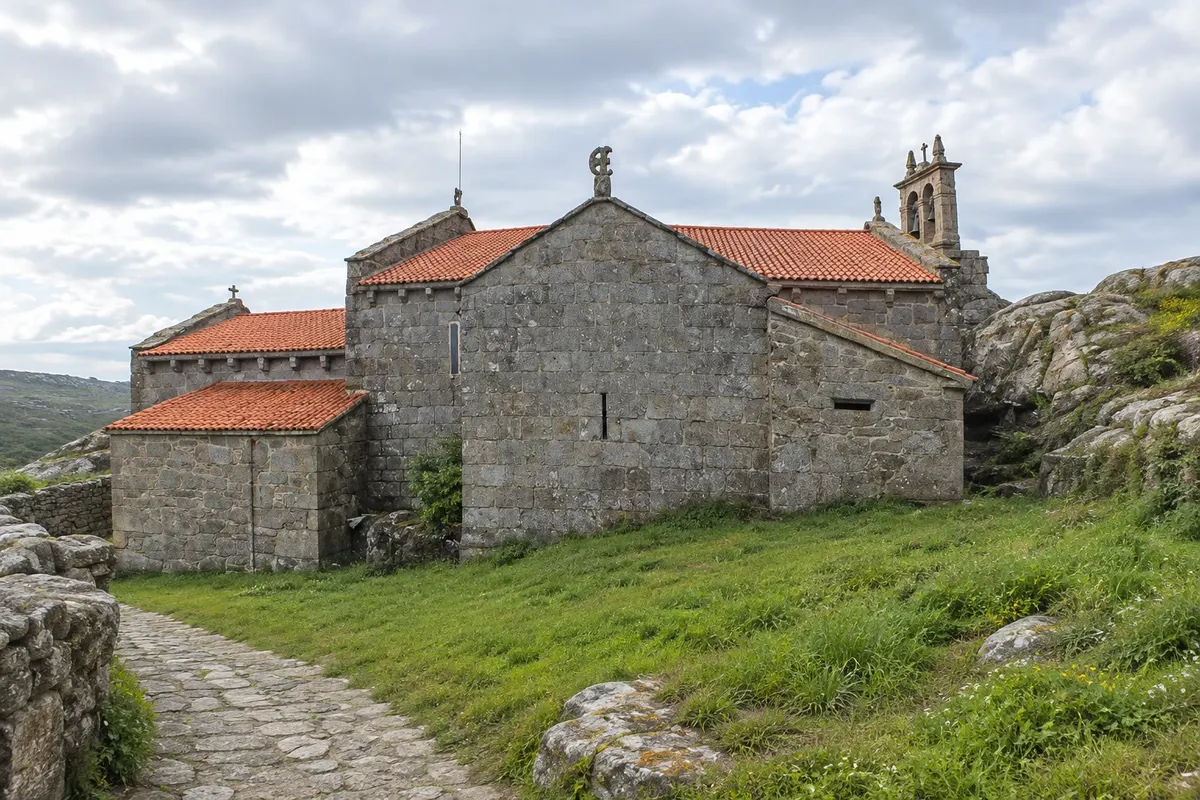
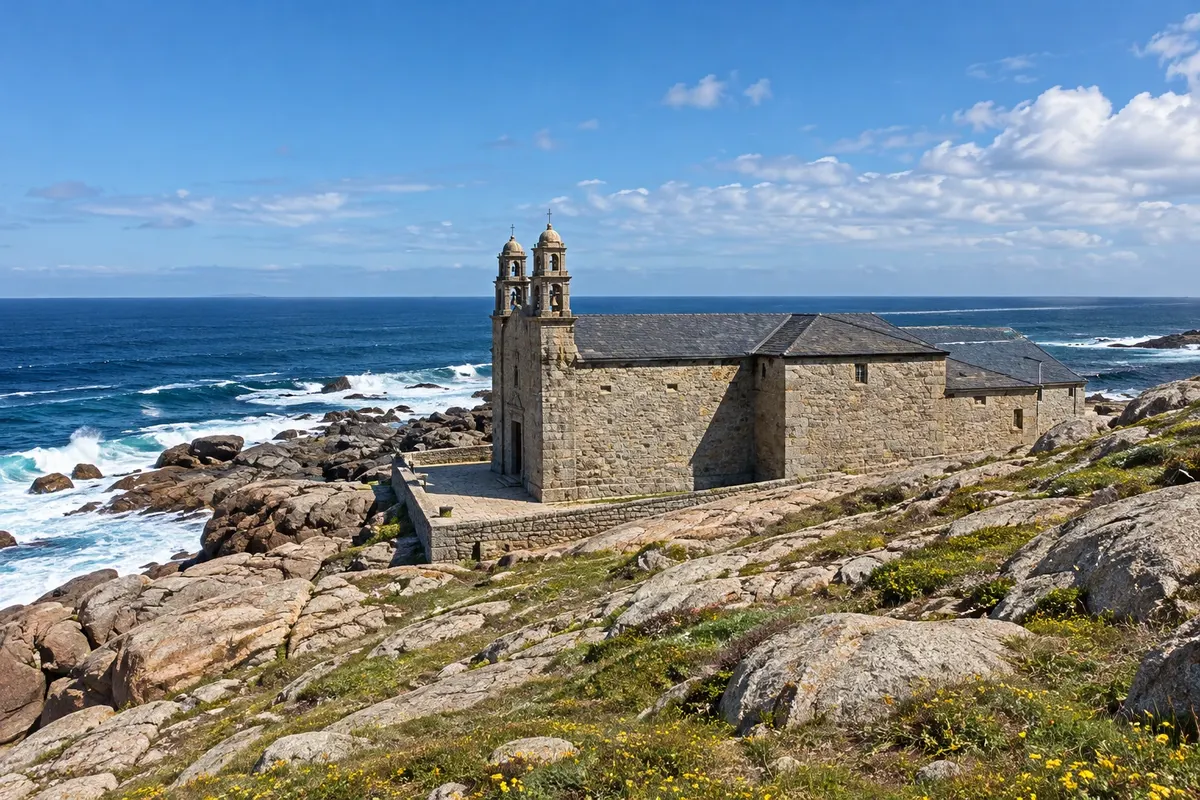
Muxía is a fishing village on the Costa da Morte in Galicia, about 80 km from Santiago de Compostela, on a peninsula facing the Atlantic. At the tip stands the sanctuary of the Virgem da Barca, among rocks linked to the legend of the stone boat that is said to have brought the Virgin to the apostle James, and beside it the sculpture A Ferida, a tribute to the volunteers of the Prestige oil spill disaster. The Gothic church of Santa María sits above the village, and about 3 km away is the Romanesque church of Moraime. The municipality includes Cabo Touriñán, the westernmost point of Galicia. Galician and Spanish are spoken.

Praznovanja in dogodki
Praznovanja – vSantiago de Compostela and Galicia
Datumi se vsako leto spreminjajo. Pred potovanjem preverite letošnji datum.

Koledar praznovanj – in Španija

Doživite kraj

Kaj početi – Santiago de Compostela and Galicia

Magdalena Quarter
Ferrol · Galicia · Zgodovinska mestna četrt

Magdalena Quarter

Neighborhood planned in the 18th century, under the reign of Carlos III, with straight streets, houses with glass galleries, modernist buildings and the praça de Armas; a protected historic ensemble.

Cape and Lighthouse of Fisterra
Fisterra · Galicia · Lighthouse

Cape and Lighthouse of Fisterra

Granite cape that the Romans called finis terrae, the end of the known world, with the lighthouse from 1853 at 143 meters above the sea and the kilometer-zero marker of the camino de Fisterra.

Castro of Santa Trega
A Guarda · Galicia · Arheološko najdišče

Castro of Santa Trega

Ruins of a castro settlement on the slopes of mount Santa Trega, occupied between the 1st century BC and the 1st century AD, with round stone houses and two reconstructed dwellings.

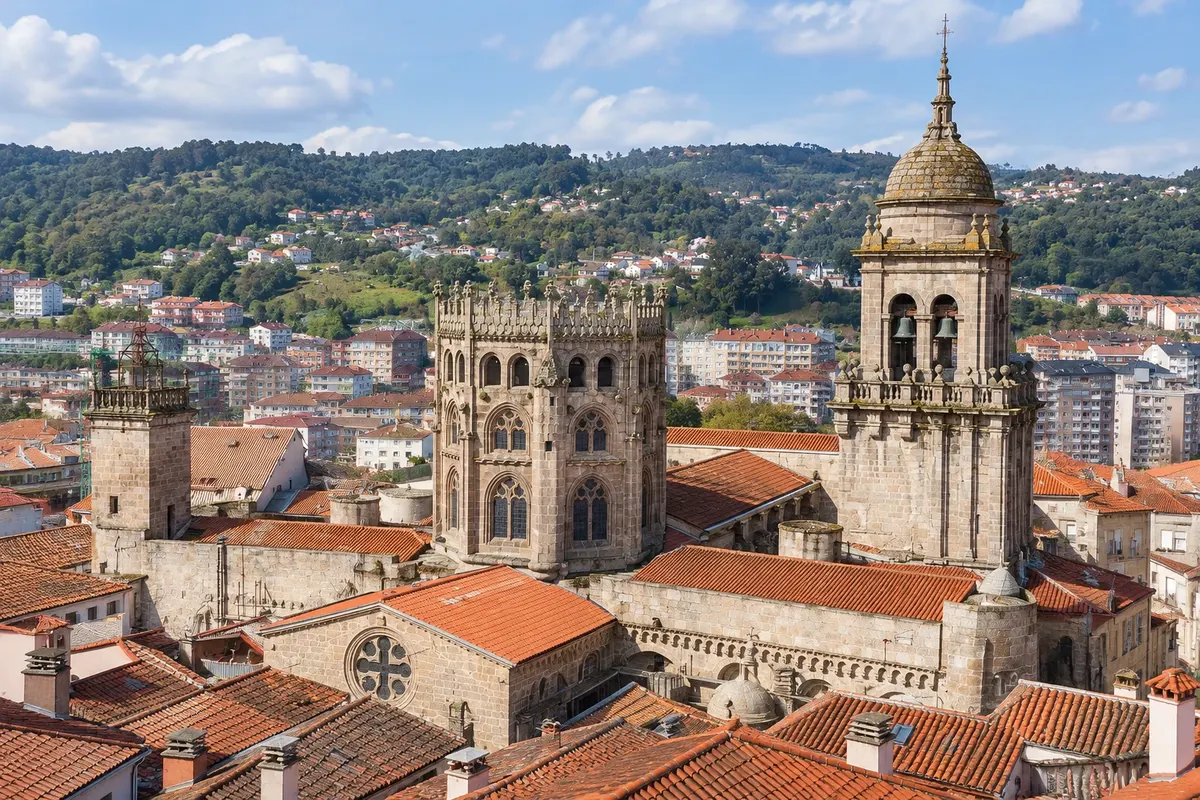
Ourense Cathedral
Ourense · Galicia · Cerkev

Ourense Cathedral

The cathedral of San Martiño, from the 12th and 13th centuries, is one of the great Romanesque churches of Galicia, with the polychrome Pórtico do Paraíso and the chapel of the Santo Cristo.

Santiago de Compostela and Galicia – prikaži dodatne kraje (92)
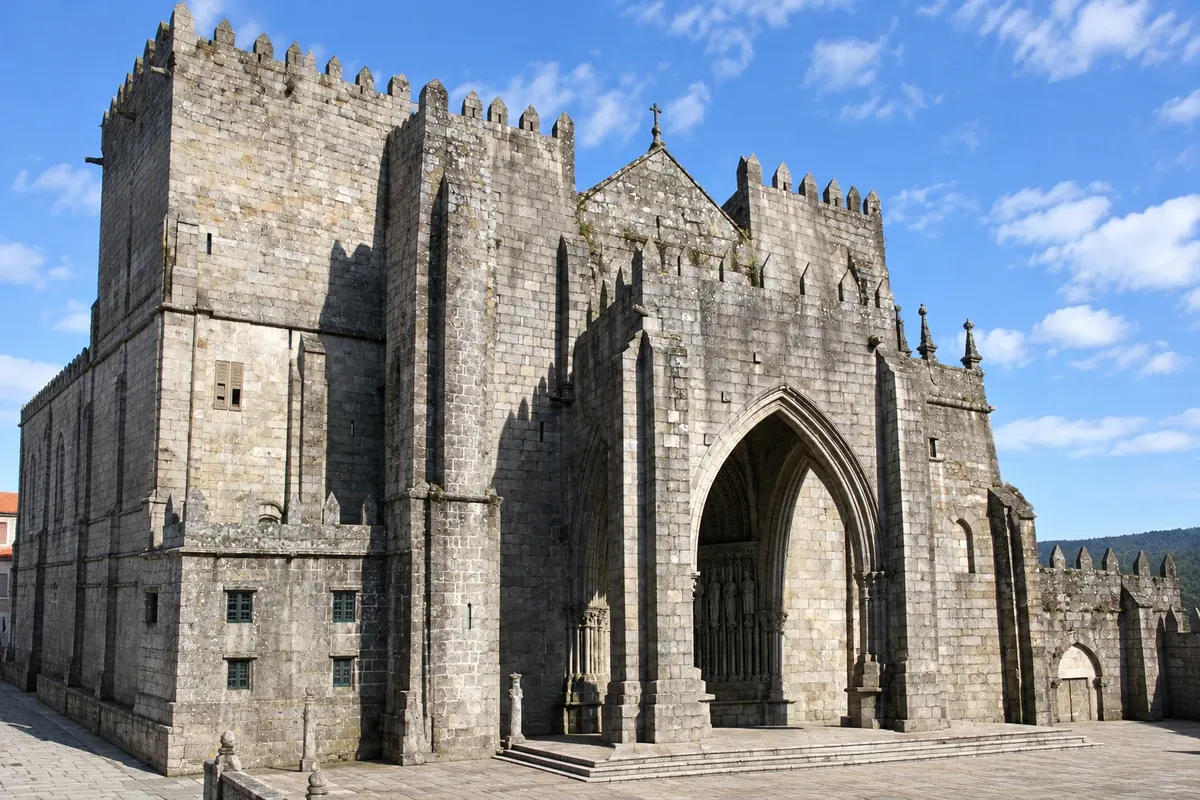
Cathedral of Santa María of Tui
Tui · Galicia · Cerkev

Cathedral of Santa María of Tui

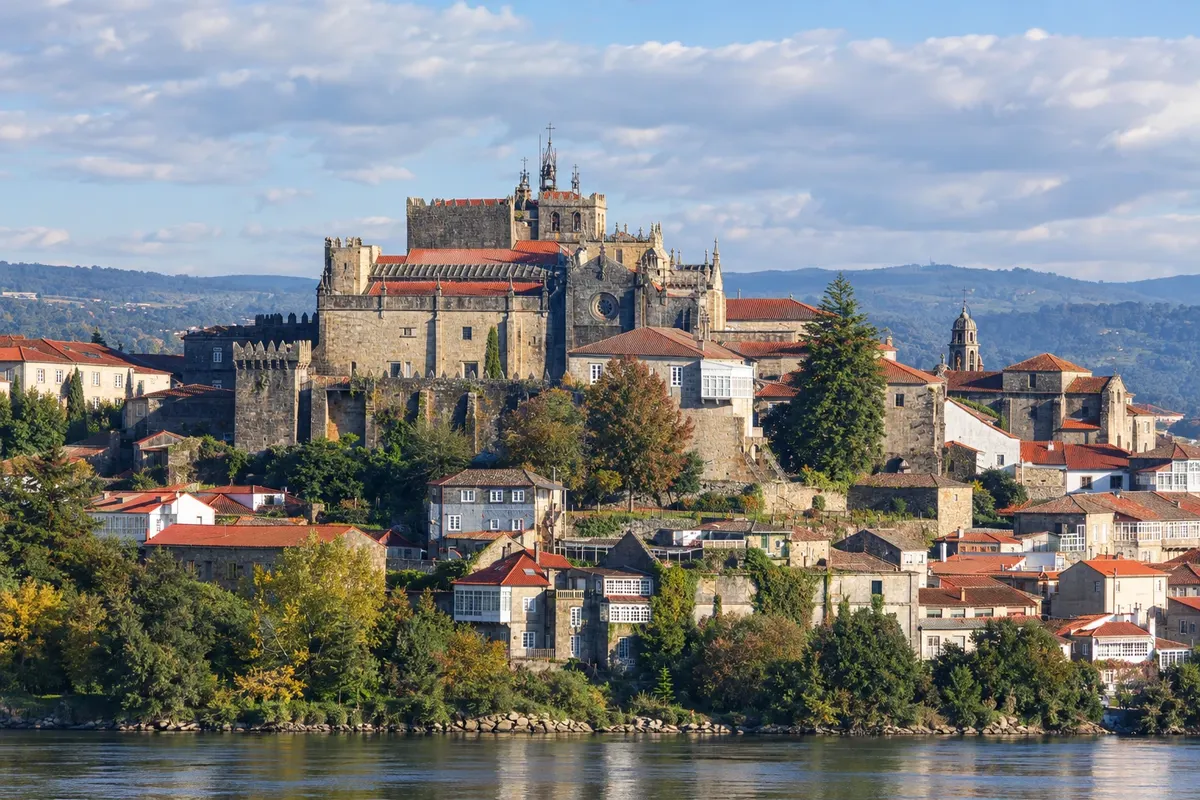
Romanesque and Gothic cathedral from the 12th and 13th centuries, with a fortress-like appearance atop the town, a Gothic portal, cloister and towers overlooking the river Minho and Portugal.

Santiago de Compostela Cathedral
Santiago de Compostela · Galicia · Stolnica

Santiago de Compostela Cathedral

Romanesque cathedral of the 11th century with a Baroque façade, which houses the tomb attributed to the apostle James, the Pórtico da Glória by Mestre Mateus and the Botafumeiro. End of the Way of St. James.

Historic Centre of Pontevedra
Pontevedra · Galicia · Staro mestno jedro

Historic Centre of Pontevedra

Medieval granite center closed to traffic, with Praça da Leña, Praça da Ferrería, Praça da Verdura and Praça do Teucro, stone houses with arcades and tapas bars.

Monterreal Fortress
Baiona · Galicia · Trdnjava

Monterreal Fortress

Fortress that surrounds the Monterreal peninsula, rebuilt in the 16th century by the conde de Gondomar, with walls, towers and a rampart walk by the sea; inside it houses a historic parador.

Church of San Francisco, Betanzos
Betanzos · Galicia · Cerkev

Church of San Francisco, Betanzos

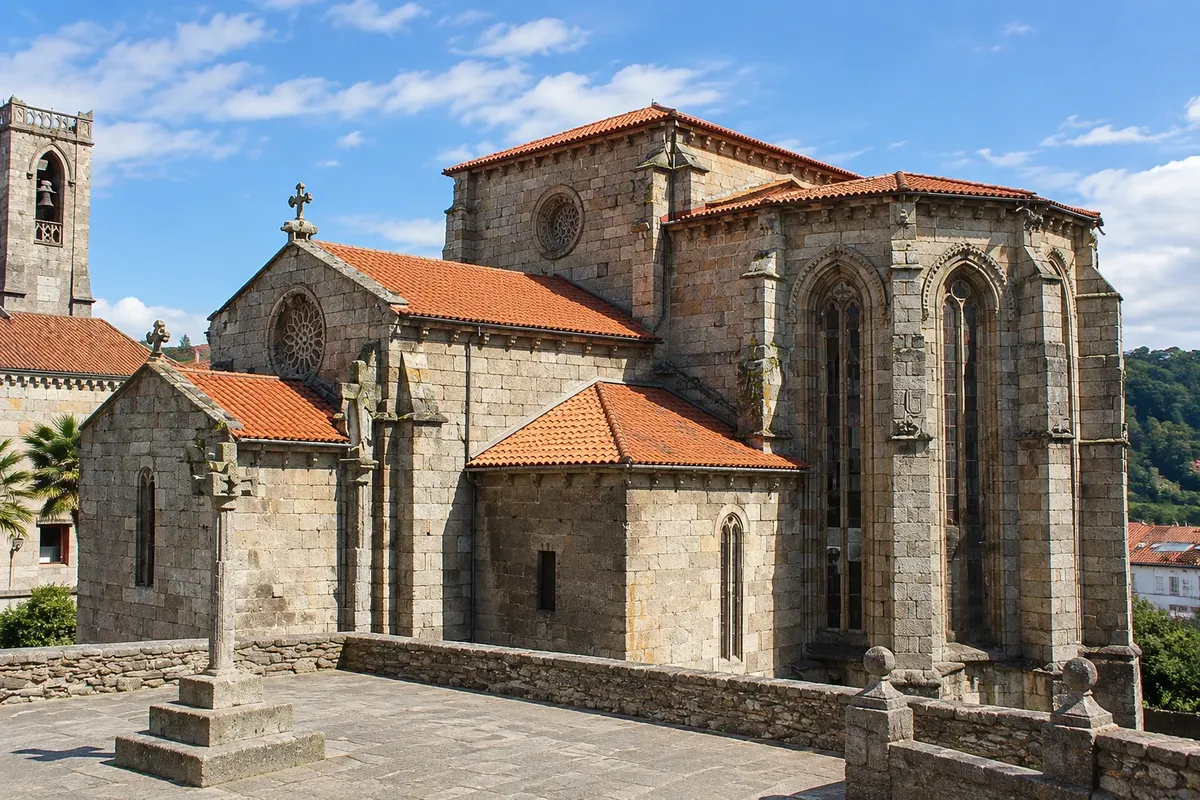
Gothic church from the 14th century, sponsored by Fernán Pérez de Andrade, with the noble's tomb supported on a bear and a boar and a collection of family sarcophagi; a national monument since 1919.

Church of Santa María de Melide
Melide · Galicia · Cerkev

Church of Santa María de Melide

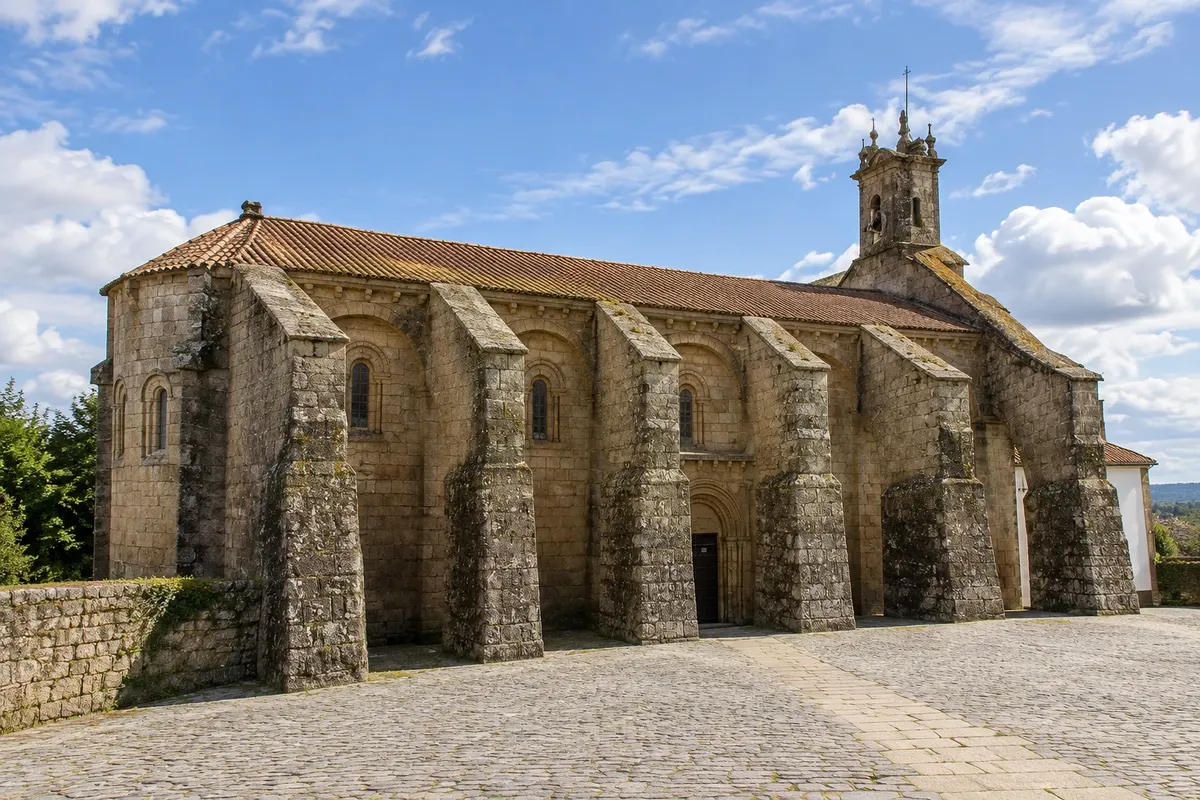
Romanesque church from the 12th century at the exit of Melide on the Caminho Francês, with an arched portal, a stone altar and remnants of Gothic mural paintings in the apse.

Church of Santiago de Arzúa
Arzua · Galicia · Cerkev

Church of Santiago de Arzúa

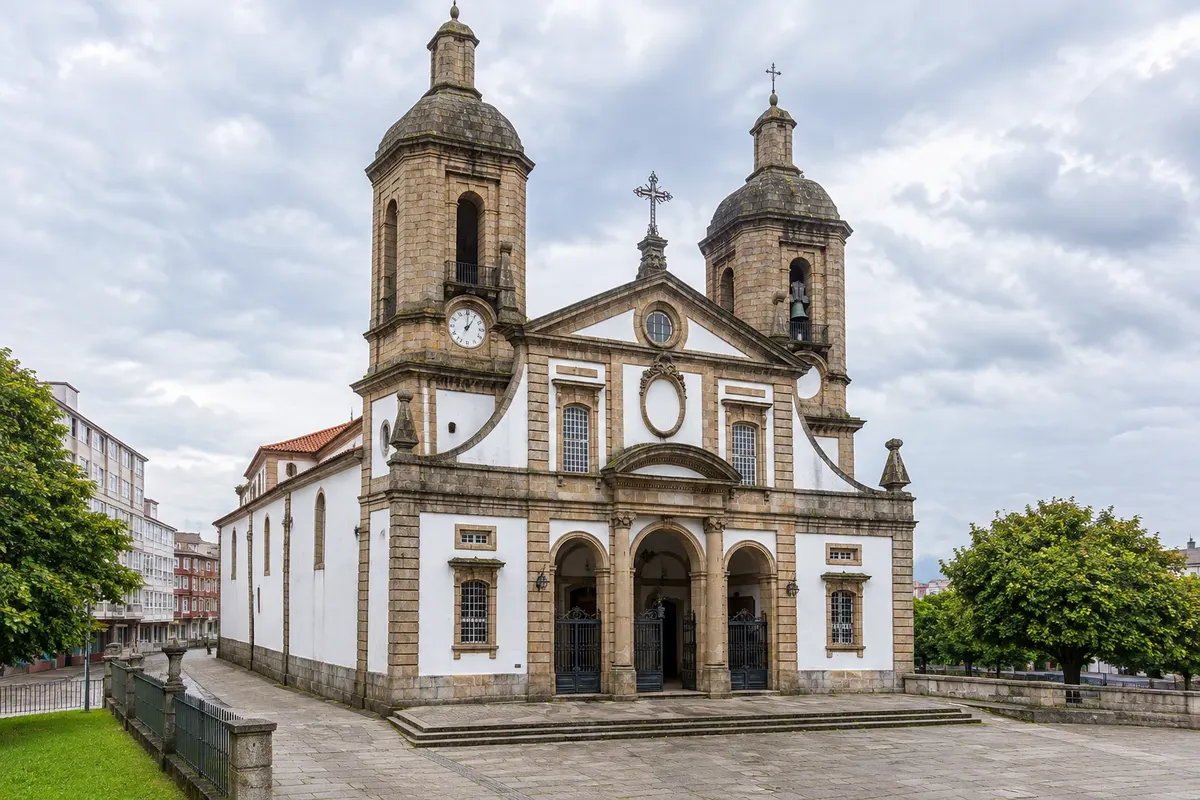
Parish igreja on the rua do Caminho, dedicated to the Apostle Santiago, with images of Santiago pilgrim and Santiago knight; a stop for pilgrims to stamp their credential.
Cíes Islands
Vigo · Galicia · Plaža

Cíes Islands

Archipelago at the entrance of the ría de Vigo, part of the Parque Nacional das Illas Atlánticas, with white-sand beaches, cliffs, trails and a lighthouse. In season, visiting requires prior authorization.

Roman Wall of Lugo
Lugo · Galicia · Monument

Roman Wall of Lugo

Roman wall from the late 3rd century that surrounds the center of Lugo, about 2 km long, with 71 towers and ten gates; the only one preserved intact; a World Heritage site since 2000.

Beach of the Cathedrals
Ribadeo · Galicia · Plaža

Beach of the Cathedrals

Beach about 10 km from Ribadeo with arches, caves and rocky cliffs that evoke a cathedral; it can only be explored at low tide, and at Easter and in summer visits require a reservation.

Rúa Maior of Sarria
Sarria · Galicia · Staro mestno jedro

Rúa Maior of Sarria

The Camino de Santiago street in the upper part of Sarria, with the church of Santa Mariña, the Romanesque–Gothic church do Salvador and the tower that remains of the medieval fortress.

Sanctuary of the Virgin of the Boat
Muxía · Galicia · Cerkev

Sanctuary of the Virgin of the Boat

Baroque sanctuary at the tip of the peninsula of Muxía, facing the sea, next to the rocking stones linked to the legend of the stone boat of the Virgem da Barca; rebuilt after a fire in 2013.

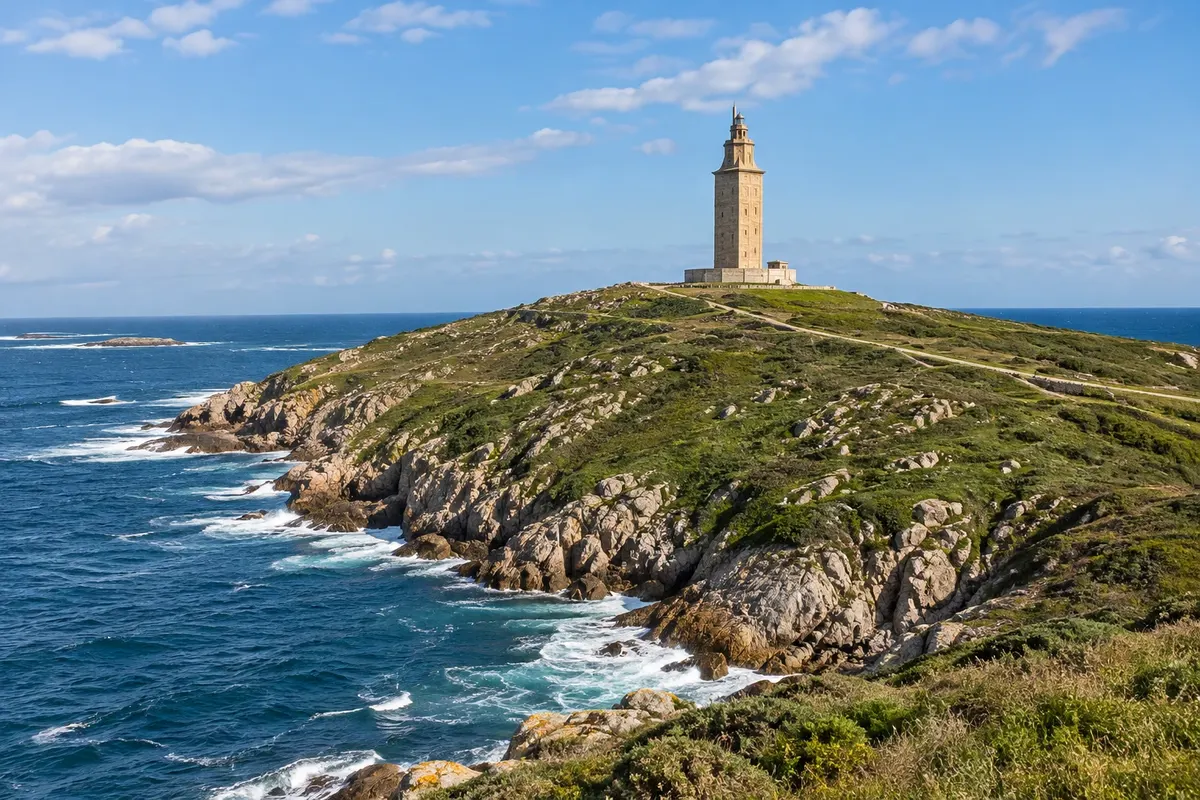
Tower of Hercules
A Coruña · Galicia · Lighthouse

Tower of Hercules

Roman lighthouse from the late 1st and early 2nd centuries, 55 meters tall, with an 18th-century neoclassical refurbishment; the only Roman lighthouse still in operation; a World Heritage Site since 2009.

Muxía · Galicia · Sculpture

The Wound (Monument to the Prestige)

Granite sculpture over 11 meters tall and weighing about 400 tonnes, by Alberto Bañuelos-Fournier, inaugurated in 2003 next to the sanctuary da Barca as a tribute to the volunteers of the Prestige disaster.

As Burgas
Ourense · Galicia · Hot spring

As Burgas

Thermal water springs that gush in Ourense's old town at over 60 °C, with a flow of around 300 liters per minute. They are the symbol of the city.

Avenida da Mariña
A Coruña · Galicia · Street

Avenida da Mariña

Seafront avenue with the long row of white gallery façades from the 19th and 20th centuries, which gave A Coruña the nickname 'city of glass'.

Chapel of the Magdalene
Arzua · Galicia · Cerkev

Chapel of the Magdalene

Gothic chapel from the 14th century in the center of Arzúa, a remnant of an Augustinian convent that functioned as a pilgrims' hospital, now used for exhibitions and cultural activities.

Old Quarter of Vigo
Vigo · Galicia · Zgodovinska mestna četrt

Old Quarter of Vigo

Old quarter beside the port, with stone houses, the neoclassical co-cathedral, the Praza da Constitución and the Rúa da Pedra, where ostreiras shuck oysters on the spot.

Cathedral of Santa María of Lugo
Lugo · Galicia · Cerkev

Cathedral of Santa María of Lugo

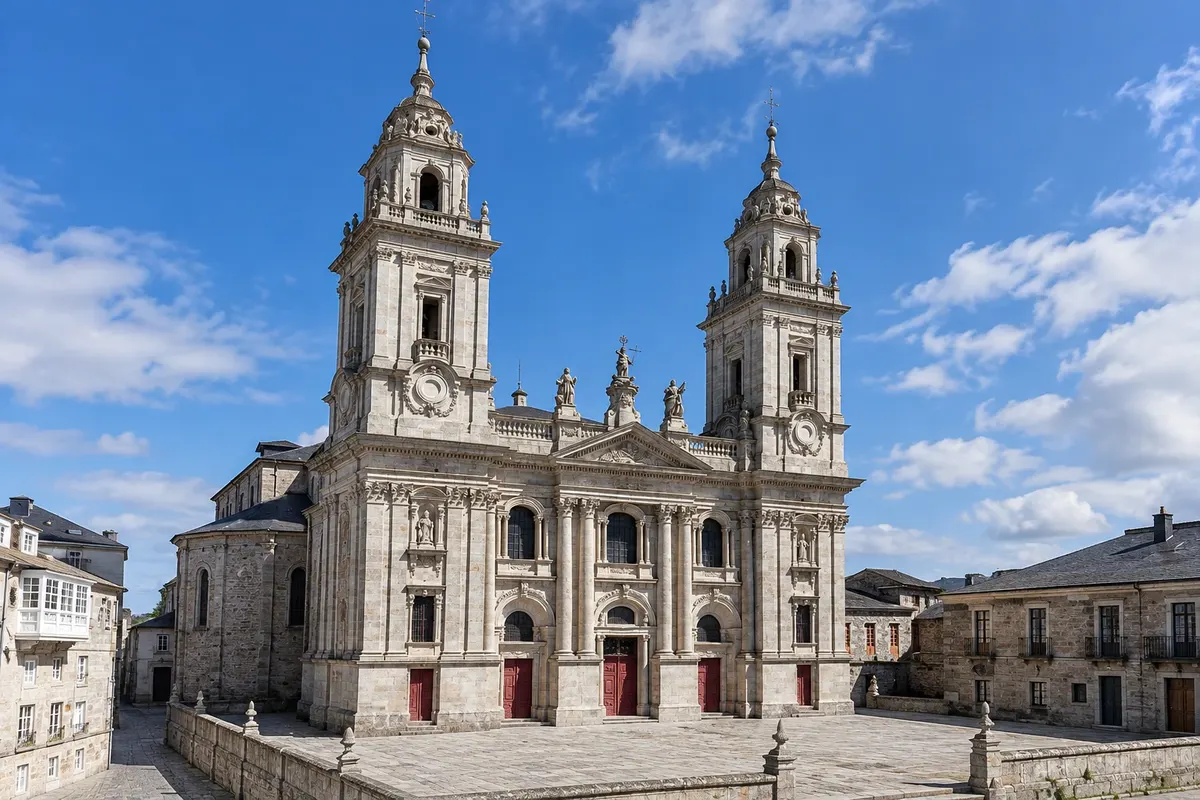
Romanesque cathedral begun in 1129, with Gothic and Baroque additions and a Neoclassical façade, where the Blessed Sacrament is exposed day and night; part of the World Heritage of the Caminho de Santiago.

Historic Center of Ribadeo
Ribadeo · Galicia · Staro mestno jedro

Historic Center of Ribadeo

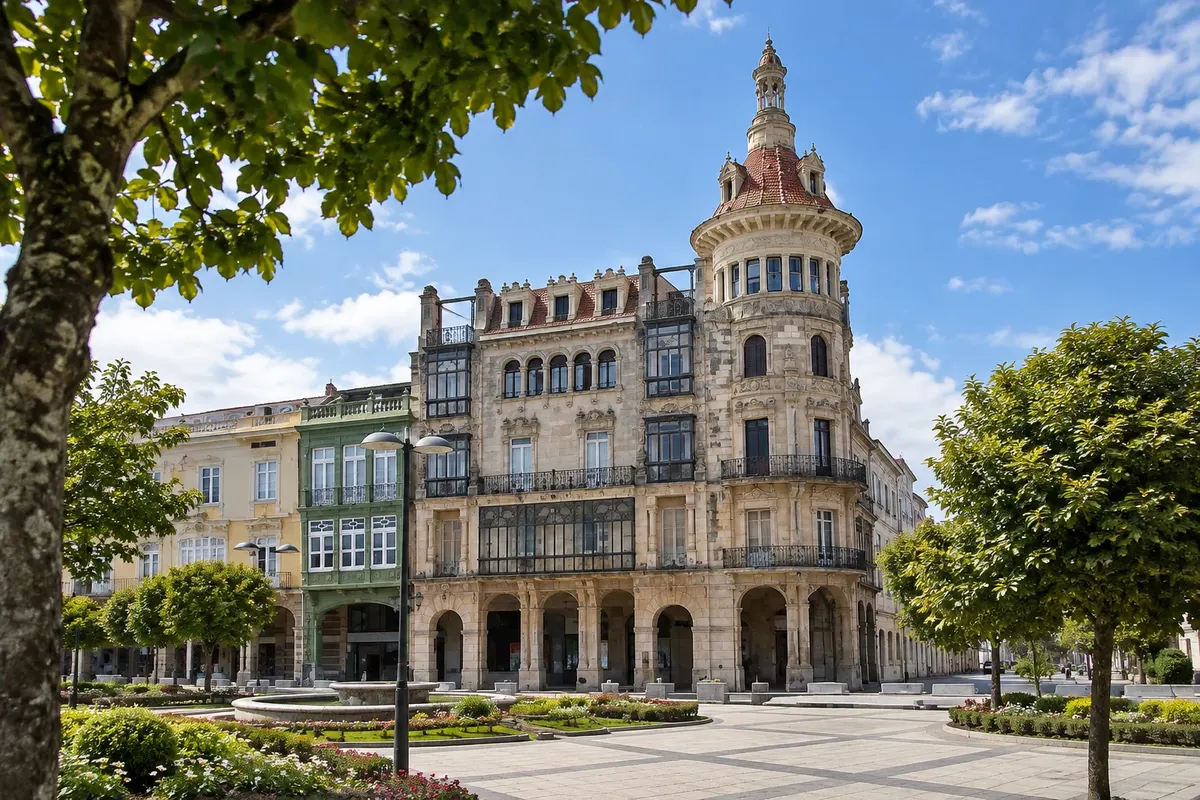
Town centre around Plaza de España, with the Torre dos Moreno, a 1915 modernist house built by emigrants who returned from the Americas, the pazo de Ibáñez and the convent of Santa Clara.

Co-Cathedral of San Xoán (San Xiao Co-Cathedral)
Ferrol · Galicia · Cerkev

Co-Cathedral of San Xoán (San Xiao Co-Cathedral)

Neoclassical 18th-century church in the bairro da Madalena, designed by Julián Sánchez Bort, co-cathedral of the diocese of Mondoñedo-Ferrol.

Convent of Santa Clara (As Encerradas)
Tui · Galicia · Convent

Convent of Santa Clara (As Encerradas)

Enclosed convent from the 16th century in Tui's old town, known as As Encerradas, with a Baroque church and a small tunnel that connects the old walled village with the upper part of the town. The nuns sell sweets made in the convent.

Church of the Virgin Peregrina
Pontevedra · Galicia · Cerkev

Church of the Virgin Peregrina

18th-century Igreja with a scallop-shell floor plan, the symbol of pilgrims, dedicated to the Virgem Peregrina, patron of the province of Pontevedra.
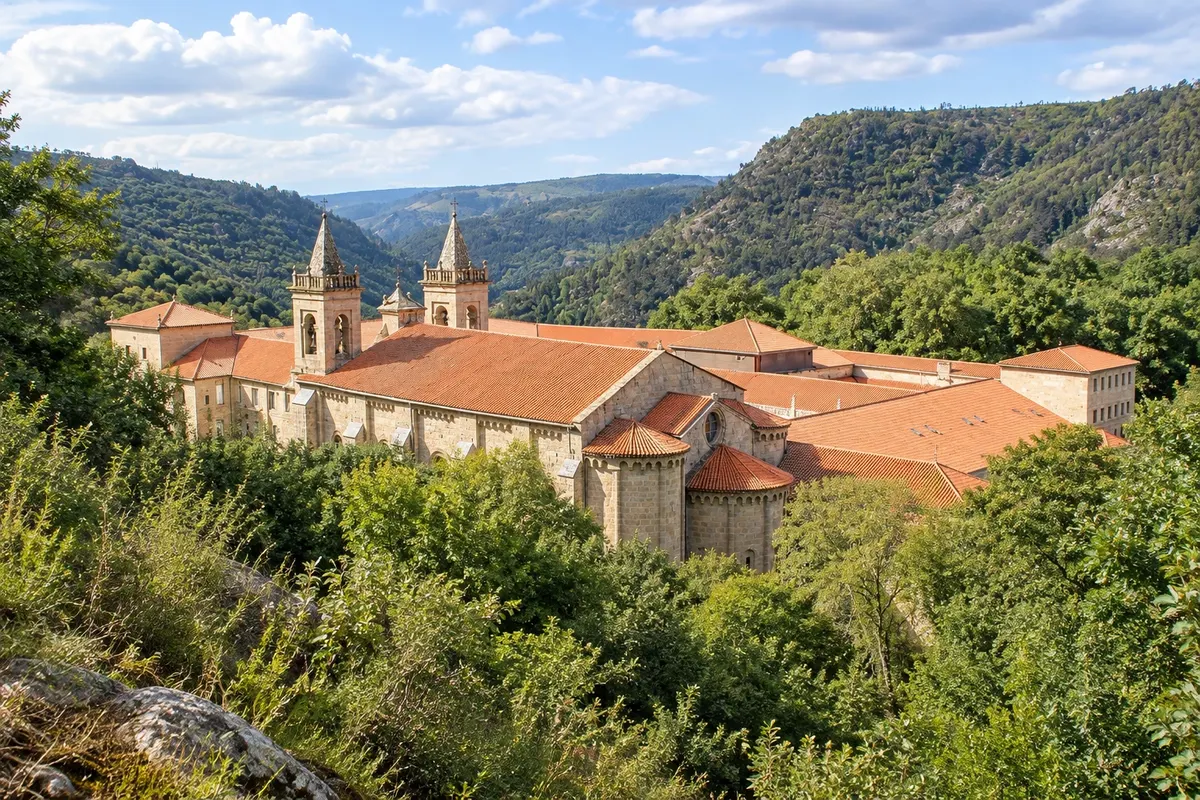
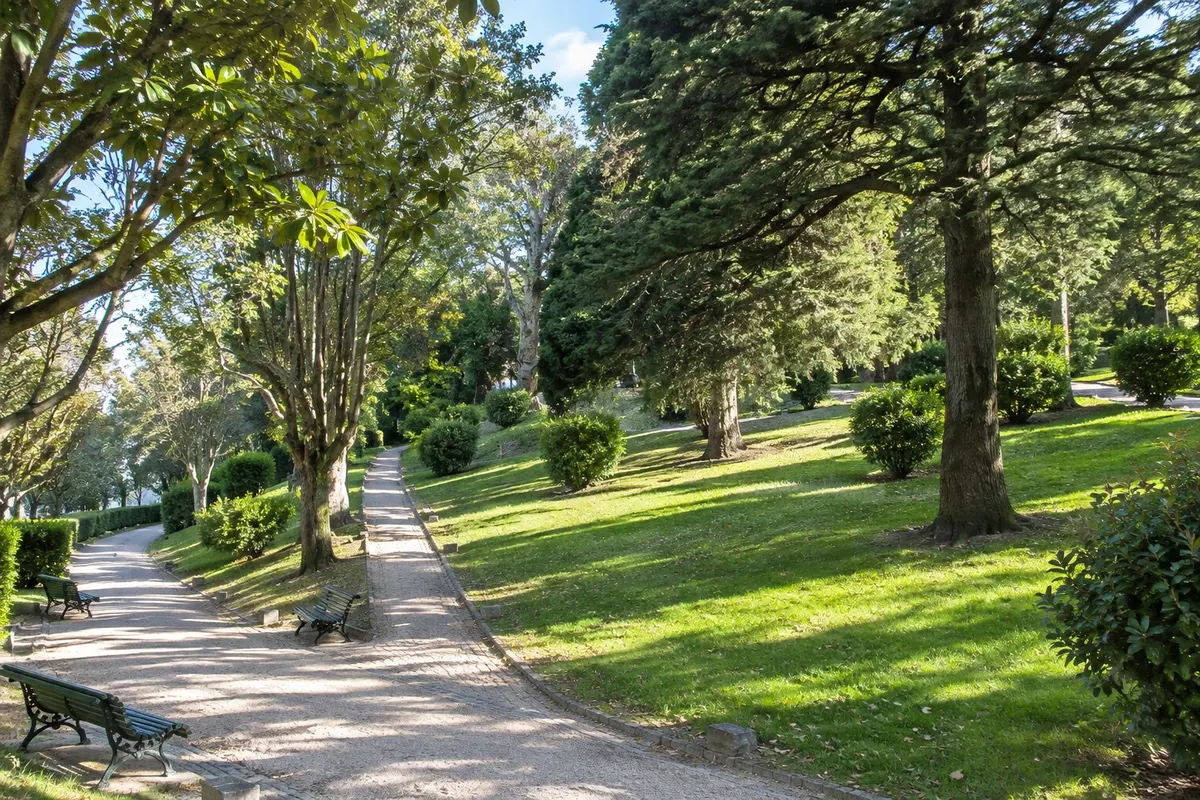
Church of Santa María das Areas
Fisterra · Galicia · Cerkev

Church of Santa María das Areas

Romanesque church from the 12th century, with Gothic chapels, on the camino to cabo Fisterra, which houses the image of the Santo Cristo de Fisterra and is a stop for pilgrims.

Church of Santa María del Azogue
Betanzos · Galicia · Cerkev

Church of Santa María del Azogue

14th-century Gothic church, beside San Francisco, built with the support of the town’s merchants, featuring a sculpted portal and three naves.

Monte de Santa Trega
A Guarda · Galicia · Razgledišče

Monte de Santa Trega

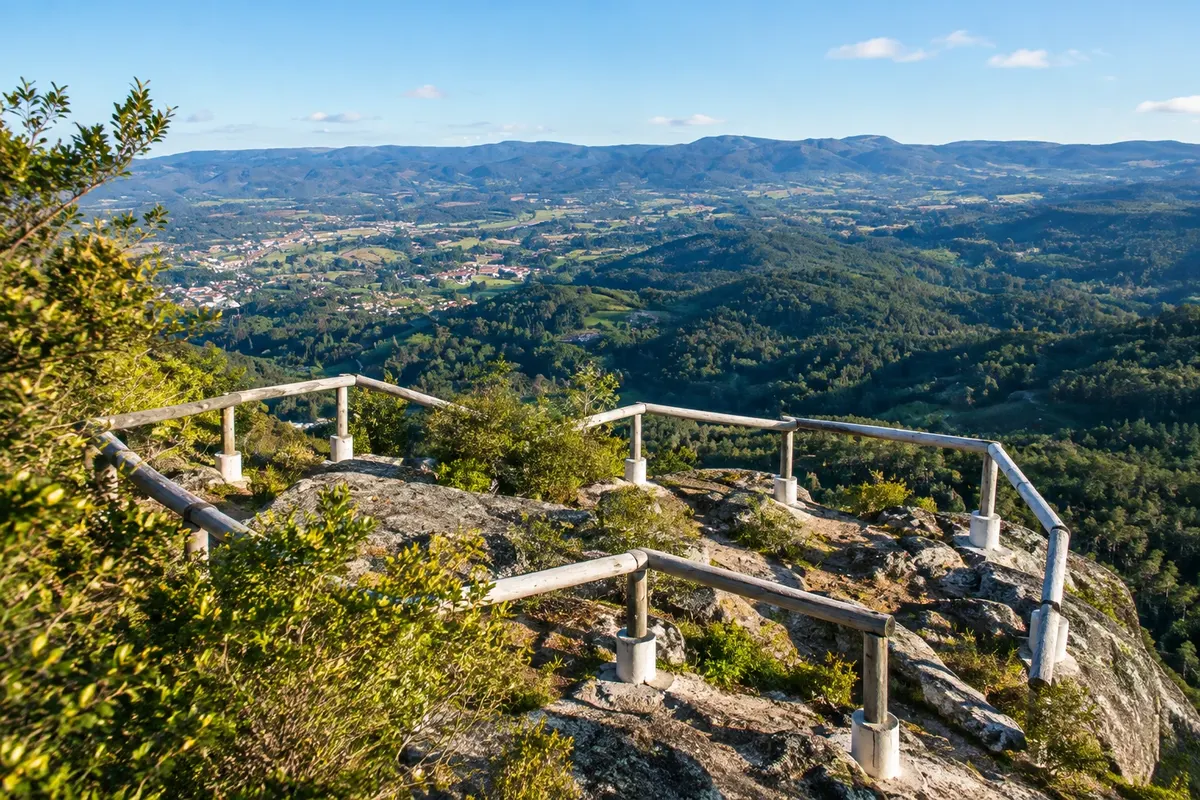
A 341-meter mount above the Minho estuary, with the chapel of Santa Trega, the archaeological museum of the castro and viewpoints toward Portugal, the river and the Atlantic.

Monastery of la Magdalena (Sarria)
Sarria · Galicia · Samostan

Monastery of la Magdalena (Sarria)

Monastery founded in the 13th century by Italian friars as a pilgrims' hospital, with a cloister transitional from Romanesque to Gothic, today run by the Mercedarian friars, who stamp the credential.

Plaza del Obradoiro
Santiago de Compostela · Galicia · Trg

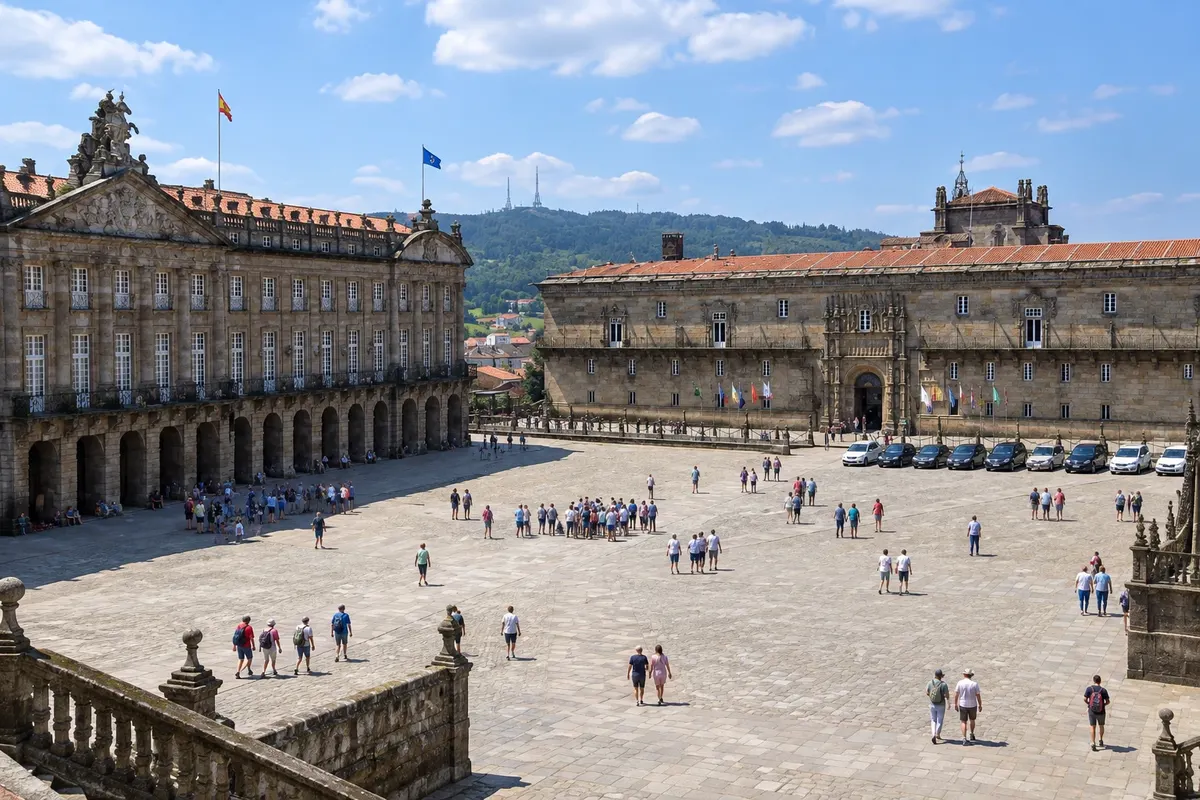
Plaza del Obradoiro

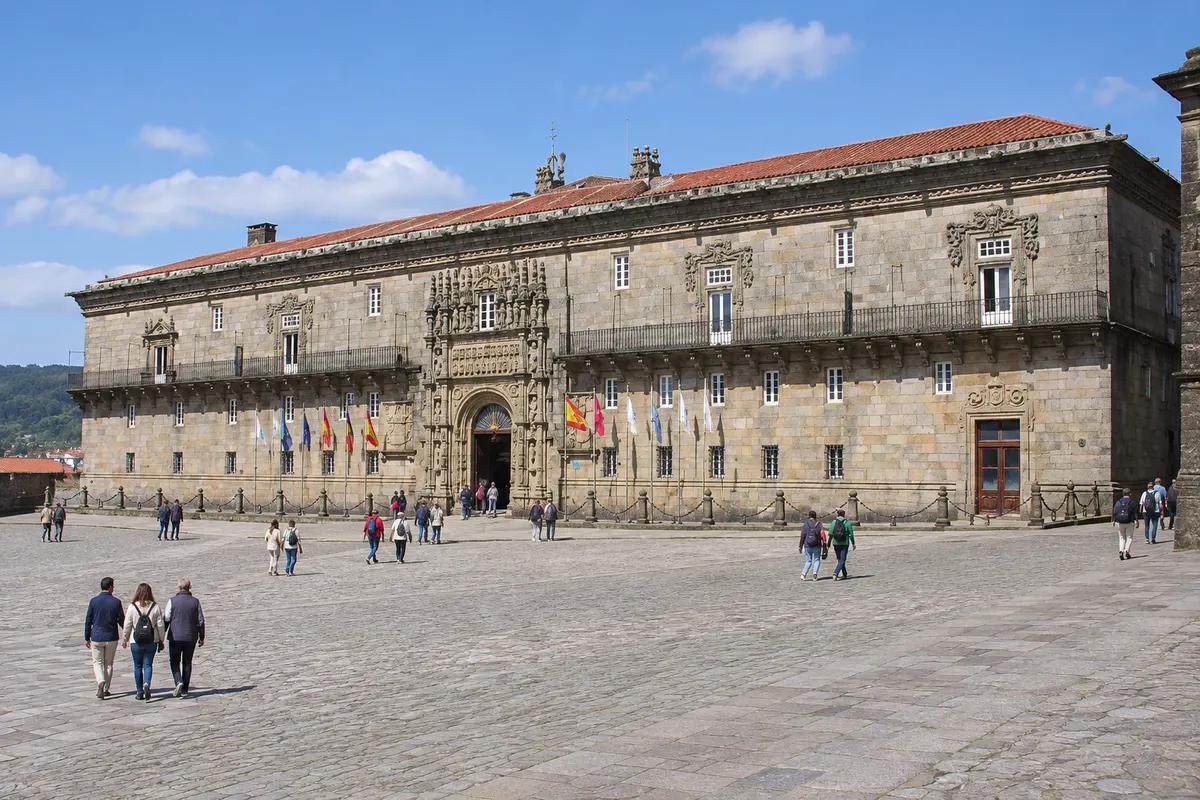
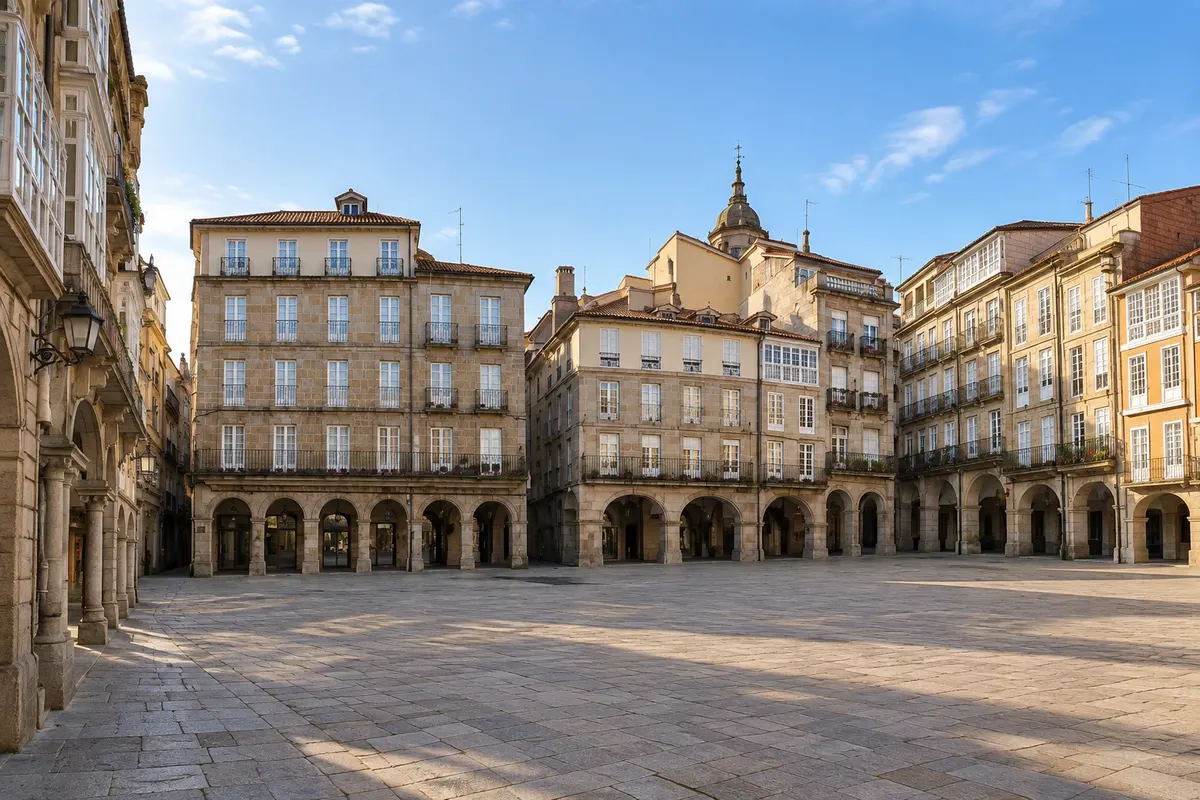
Square in front of the cathedral's Baroque façade, flanked by the Hostal dos Reis Católicos, the Pazo de Raxoi and the Colexio de San Xerome. It is where pilgrims finish the Way.

Replica of the Pinta Caravel
Baiona · Galicia · Muzej

Replica of the Pinta Caravel

Full-size replica of the caravel Pinta, which arrived in Baiona on 1 March 1493 with news of Columbus’s voyage; moored in the harbour, it can be visited inside.

Sancti Spíritus and Museo da Terra de Melide
Melide · Galicia · Muzej

Sancti Spíritus and Museo da Terra de Melide

Church of the former Franciscan convent of Sancti Spiritus, of medieval origin, and next to it the Museu da Terra de Melide, housed in the former pilgrim hospital, with archaeology and ethnography from the region.

Basilica of Santa María la Mayor
Pontevedra · Galicia · Cerkev

Basilica of Santa María la Mayor

16th-century church built by the Grêmio de Mareantes, with a sculpted Renaissance façade, considered the main church of Pontevedra; a basilica since 1962.

Chapel of San Roque and cruceiro
Melide · Galicia · Monument

Chapel of San Roque and cruceiro

Chapel at the entrance to Melide, rebuilt using the portal of an old Romanesque church, and beside it the 14th-century Gothic cruceiro, considered the oldest in Galicia.

Chapel of San Telmo
Tui · Galicia · Cerkev

Chapel of San Telmo

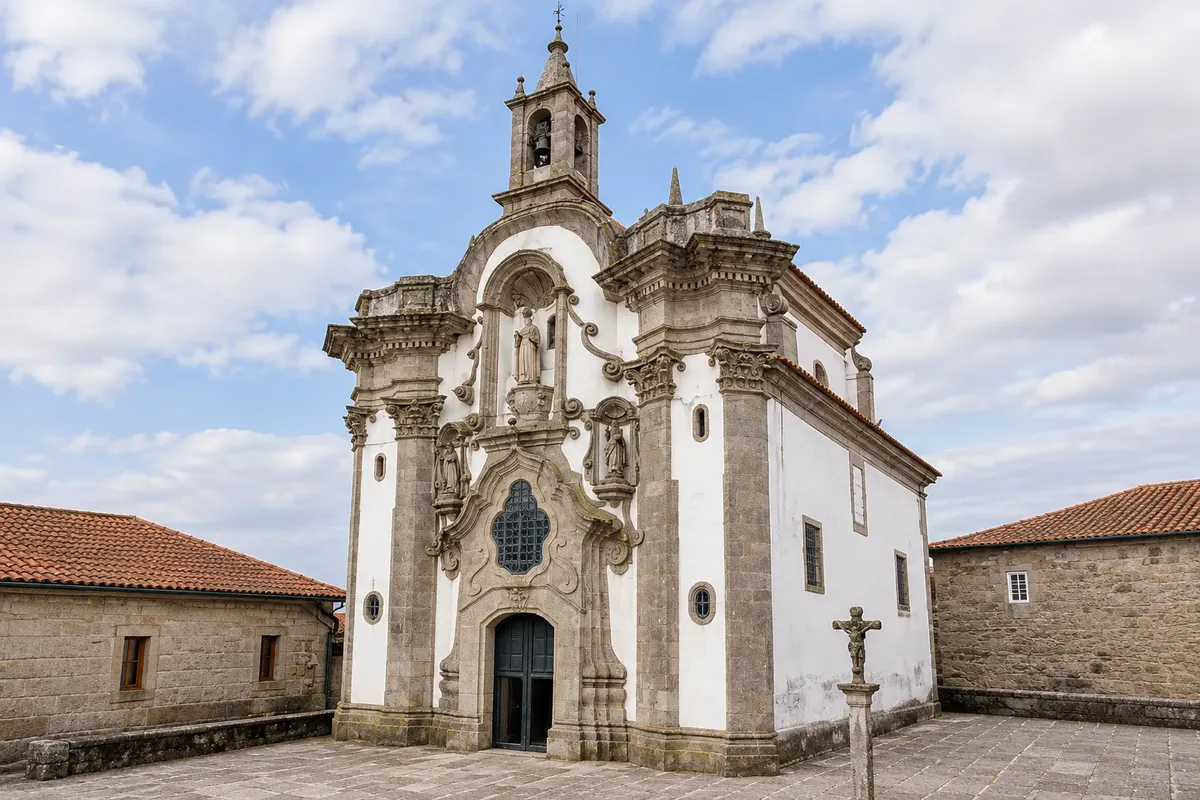
18th-century chapel in the Portuguese Baroque style, built on the site of the house where San Telmo died, patron saint of sailors and of Tui, featuring 19th-century frescoes.

Castle of San Carlos and Fishing Museum
Fisterra · Galicia · Muzej

Castle of San Carlos and Fishing Museum

Small 18th-century fortification on the edge of the porto de Fisterra, built in the reign of Carlos III against corsairs, which houses the Museu da Pesca, about the life of the fishermen of the Costa da Morte.

Santa Cruz Castle
A Guarda · Galicia · Trdnjava

Santa Cruz Castle

Stone fortress in the center of A Guarda, completed around 1664 during the Portuguese Restoration War, occupied by Portugal until 1668 and today surrounded by a garden.

Lugo · Galicia · Muzej

Domus of the Mithraeum

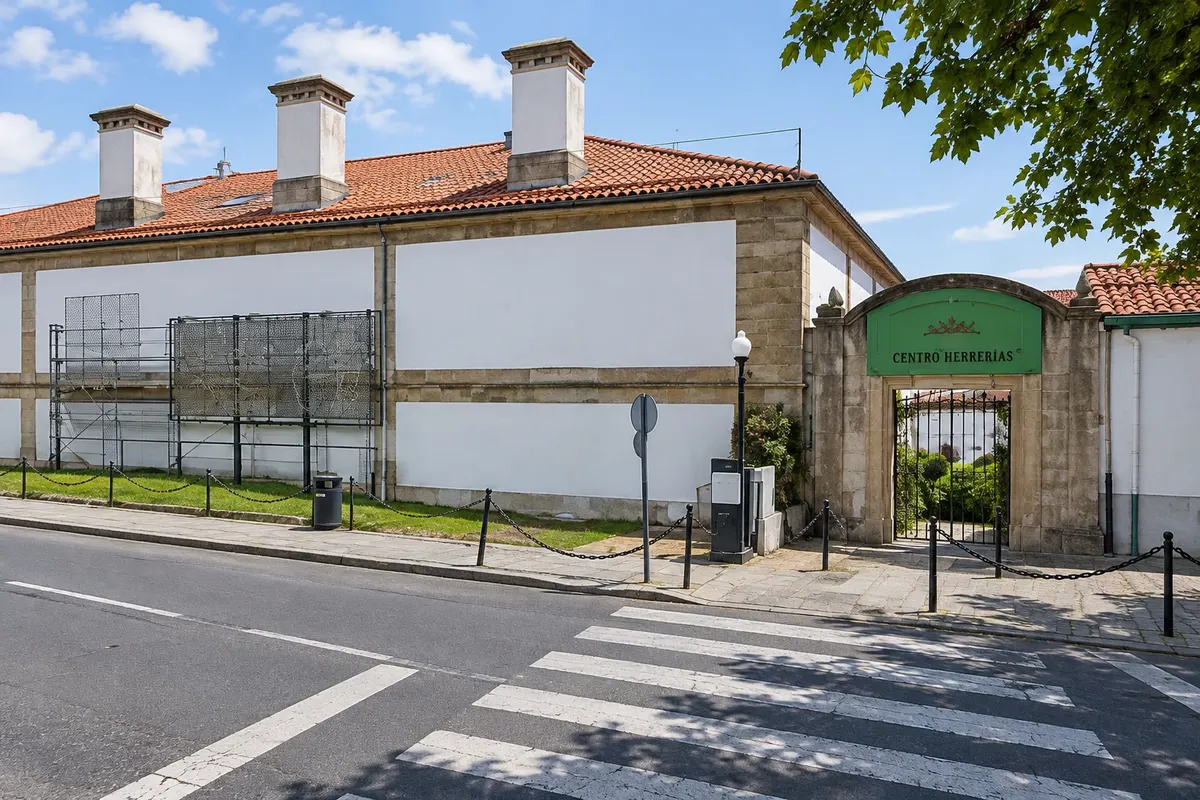
Museum of the Museu da Universidade de Santiago next to the wall, above the remains of a Roman house that was converted into a temple of the god Mitra, with an altar bearing an inscription dedicated by a centurion.

Ferrol · Galicia · Muzej

Exponav

Museum of shipbuilding, opened in 2008 in a former arsenal building in Ferrol, covering the history of ships, techniques and shipyards, from wood to steel.

Hostal dos Reis Católicos
Santiago de Compostela · Galicia · Monument

Hostal dos Reis Católicos

Former pilgrims' hospital founded in 1499 by the Catholic Monarchs on the Praza do Obradoiro, with a plateresque portal and four cloisters, today a hotel in the Paradores chain.

Church of Santa María of Muxía
Muxía · Galicia · Cerkev

Church of Santa María of Muxía

A 14th-century seafaring Gothic church with Romanesque details, located above the village at the foot of the Corpiño hill, a viewpoint over the peninsula and the sanctuary da Barca.

Church of Santiago, Betanzos
Betanzos · Galicia · Cerkev

Church of Santiago, Betanzos

Gothic church from the 14th and 15th centuries, linked to the tailors' guild, with a figure of Santiago on horseback above the main portal, next to Betanzos’s main square.

Isla Pancha (Pancha Island)
Ribadeo · Galicia · Lighthouse

Isla Pancha (Pancha Island)

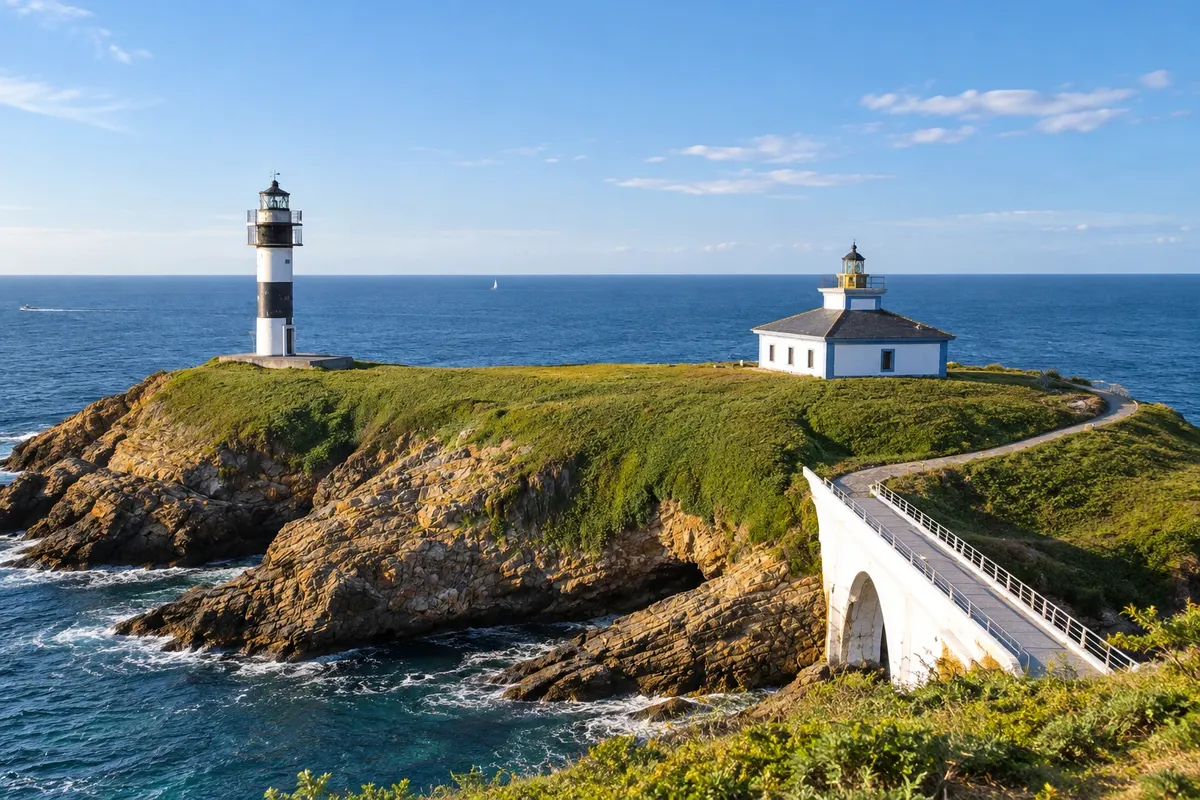
Islet at the mouth of the ria of Ribadeo, connected to the mainland by a bridge, with the old lighthouse from 1857 and the new one from 1983, surrounded by rocks and viewpoints over the Cantabrian Sea.

Monte do Castro
Vigo · Galicia · Razgledišče

Monte do Castro

Hill in the centre of Vigo with a park, remains of a 17th-century fortress, a reconstructed castro and viewpoints over the ria, the port, the Rande bridge and the Illas Cíes.

Samos Monastery
Sarria · Galicia · Samostan

Samos Monastery

Benedictine monastery founded in the 6th century, one of the oldest in Spain, 12 km from Sarria, with two cloisters, a Baroque church and a pilgrims' guesthouse.

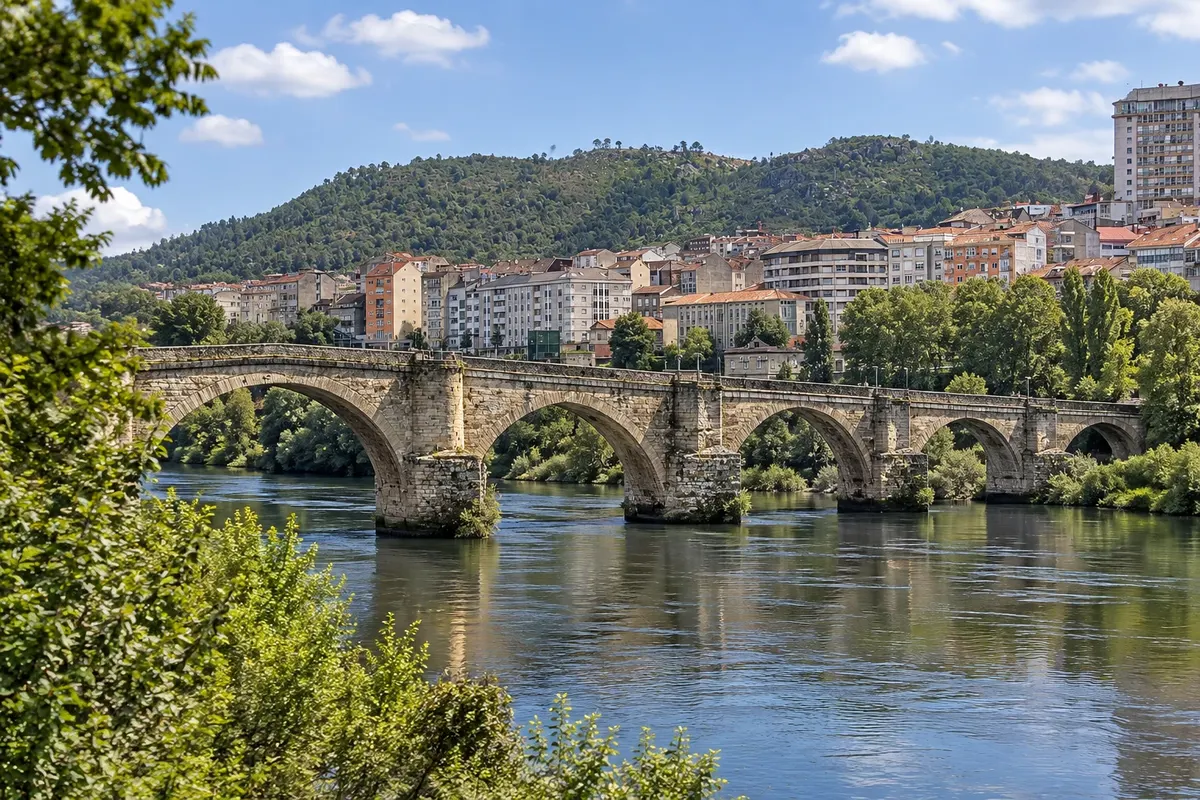
Roman Bridge of Ourense
Ourense · Galicia · Most

Roman Bridge of Ourense

The bridge over the river Miño, of Roman origin and rebuilt in the Middle Ages, along which the Via de la Plata runs. The central arch, 43 meters wide, was for a long time the largest in Spain.

Bridge and Hospital of Ribadiso
Arzua · Galicia · Most

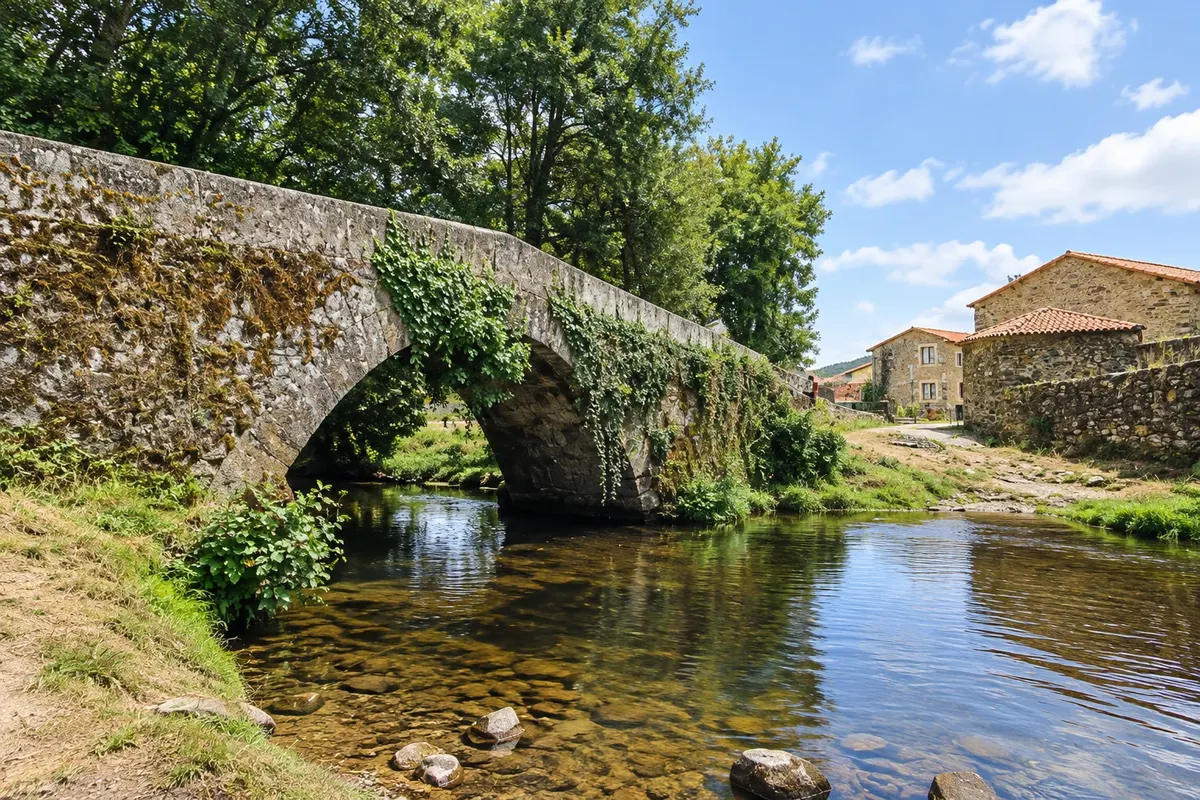
Bridge and Hospital of Ribadiso

Medieval stone bridge over the Iso River, about 3 km from Arzúa, next to the old pilgrims' hospital of San Antón, restored as a hostel, at one of the best-known stops on the Camino Francés.

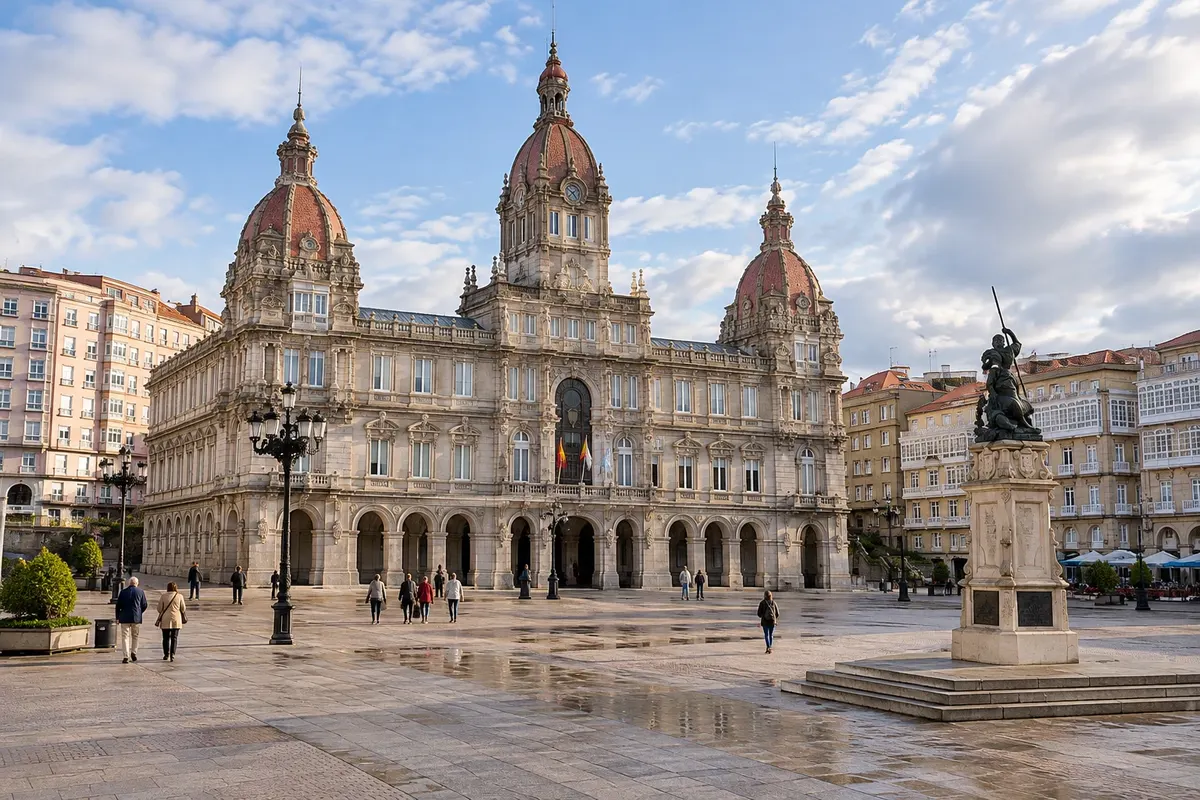
María Pita Square
A Coruña · Galicia · Trg

María Pita Square

Large square in A Coruña, over 10,000 m², surrounded by arcades and glass galleries, with the town hall and the statue of María Pita, heroine of the city's defense against the English fleet in 1589.

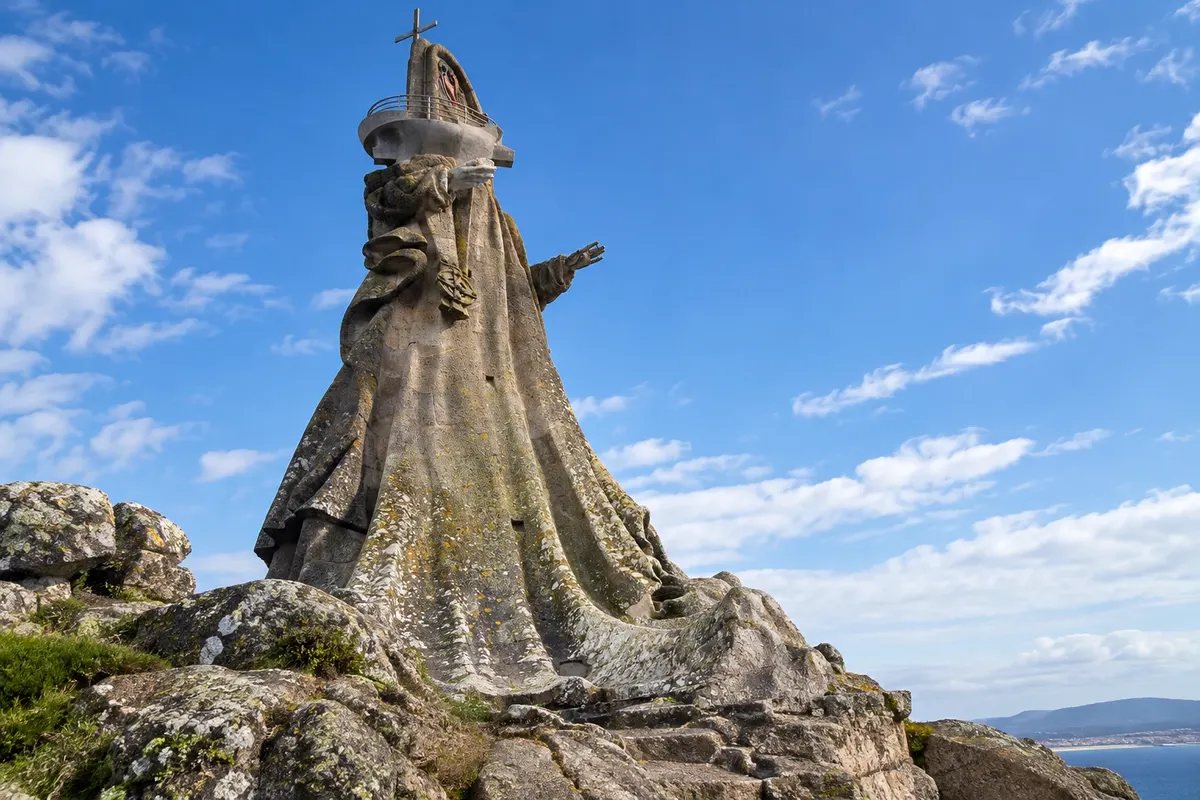
Virgin of the Rock
Baiona · Galicia · Razgledišče

Virgin of the Rock

Stone statue of the Virgin Mary, 15 metres high, inaugurated in 1930 on monte Sansón, with an internal staircase that leads to the boat she holds, used as a viewpoint over the bay.

Old Town of A Coruña
A Coruña · Galicia · Staro mestno jedro

Old Town of A Coruña

Medieval neighborhood of A Coruña, with stone streets, the Romanesque collegiate church of Santa María do Campo and the jardín de San Carlos, where the tomb of the English general John Moore is located.

Collegiate Church of Santa María de Baiona
Baiona · Galicia · Cerkev

Collegiate Church of Santa María de Baiona

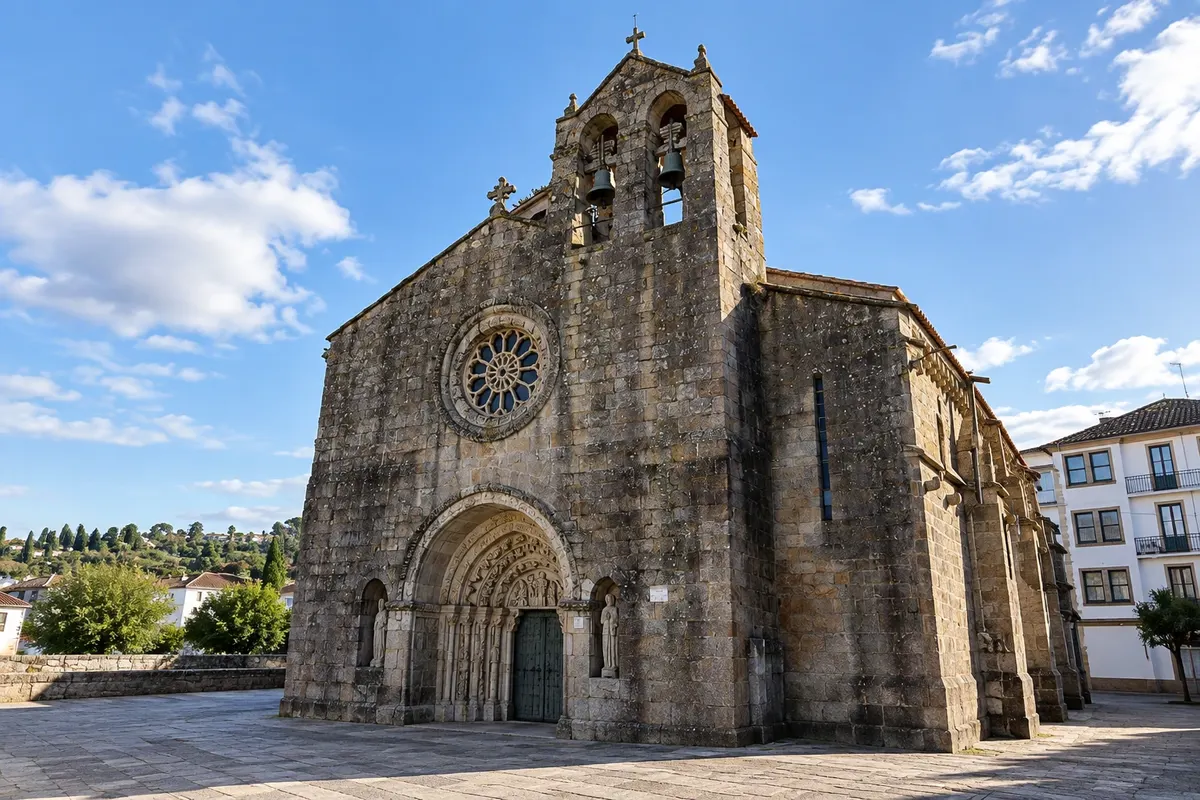
Romanesque church with a fortified appearance, dating to 1278, which was a colegiata between 1482 and 1840, with a rose window on the façade, a Baroque altar and stone cruzeiros in the churchyard.

Fort of San Damián
Ribadeo · Galicia · Trdnjava

Fort of San Damián

Fort completed in 1624 to protect the galleons built in the Ribadeo shipyard, on the edge of the ria, overlooking the ponte dos Santos, which links Galicia to the Asturias.

Church of Saint Dominic
Tui · Galicia · Cerkev

Church of Saint Dominic

Gothic church of the former Dominican convent in Tui, from the 14th and 15th centuries, with a choir of polygonal chapels and Baroque altarpieces, next to the Parque da Alameda.

Monastery of Moraime
Muxía · Galicia · Cerkev

Monastery of Moraime

12th-century Romanesque church, the remains of a Benedictine monastery about 3 km from Muxía, with carved portals and fragments of mural paintings.

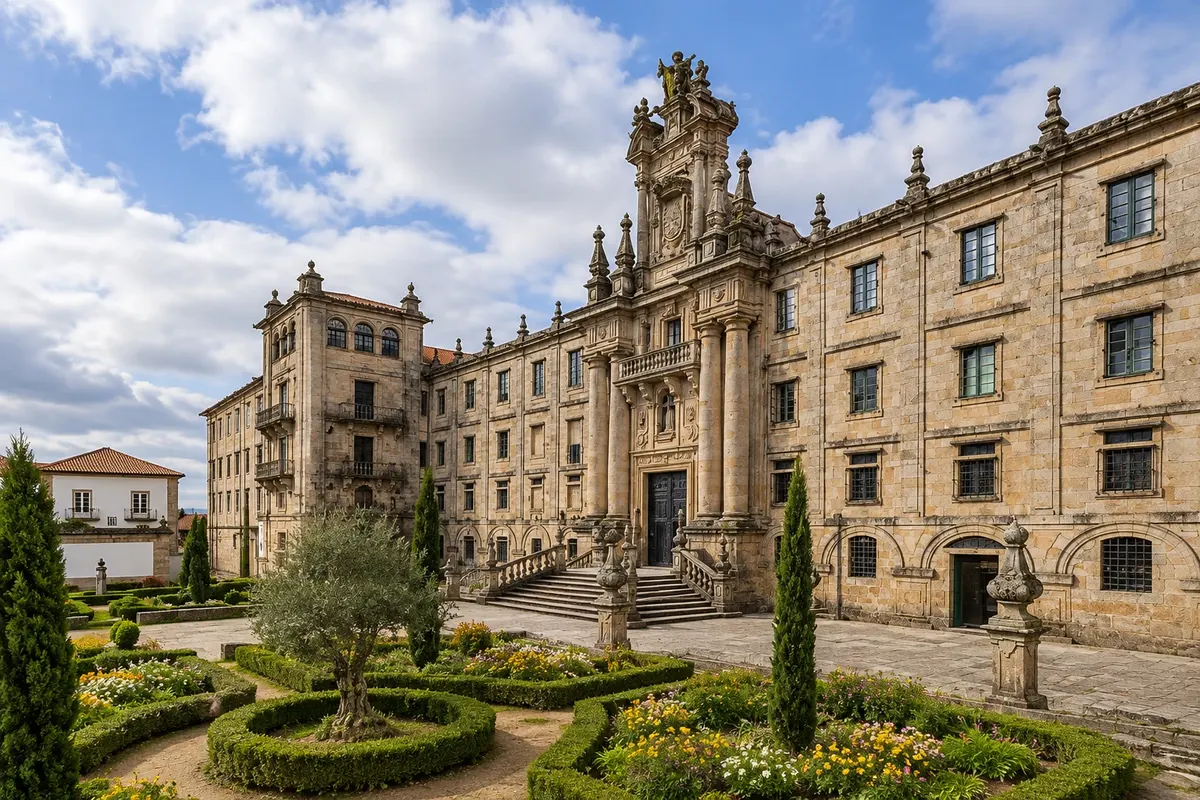
Monastery of San Martín Pinario
Santiago de Compostela · Galicia · Samostan

Monastery of San Martín Pinario

Benedictine monastery beside the cathedral, with a church featuring a baroque façade, a gilded altarpiece by Casas Novoa, a walnut choir, and a museum of sacred art.

Naval Museum of Ferrol
Ferrol · Galicia · Muzej

Naval Museum of Ferrol

Spanish Naval Museum next to the arsenal of Ferrol, with ship models, navigation instruments, weapons, uniforms and objects from the city's naval history.

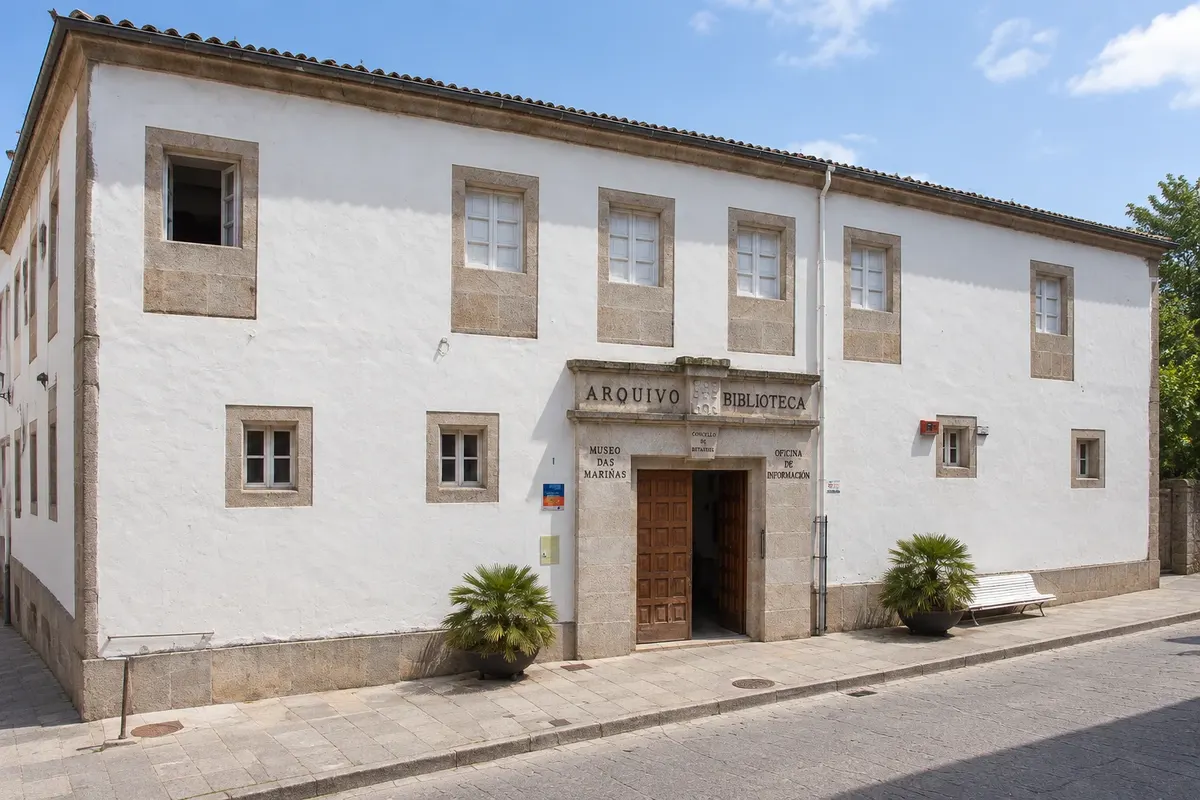
Museo das Mariñas
Betanzos · Galicia · Muzej

Museo das Mariñas

Museum of history and ethnography of the comarca das Mariñas, opened in 1983 in the former convent of Santo Domingo, next to the main square of Betanzos.

Furelos Bridge
Melide · Galicia · Most

Furelos Bridge

Medieval stone bridge over the Furelos River, about 2 km from Melide, with four arches, where the Caminho Francês enters the village of Furelos.

Port of A Guarda
A Guarda · Galicia · Harbor

Port of A Guarda

Fishing port of A Guarda, with colorful houses along the waterfront, seafood restaurants known for lobster and the small Museo do Mar on the promenade.

Port of Fisterra
Fisterra · Galicia · Harbor

Port of Fisterra

Fisterra's fishing port, with fishermen's houses, colorful boats and the lonxa, where fish from the Costa da Morte is auctioned, and fish and seafood restaurants around it.

Samil Beach
Vigo · Galicia · Plaža

Samil Beach

Urban beach of about 1.7 km south of Vigo's centre, with a promenade, pools, sports areas and views of the Illas Cíes.

Praza Maior of Ourense
Ourense · Galicia · Trg

Praza Maior of Ourense

The main square of the old town, with a sloping ground, arcades, the Casa do Concello and the church of Santa María Nai, just a few steps from the cathedral.

Ruins of San Domingos
Pontevedra · Galicia · Ruins

Ruins of San Domingos

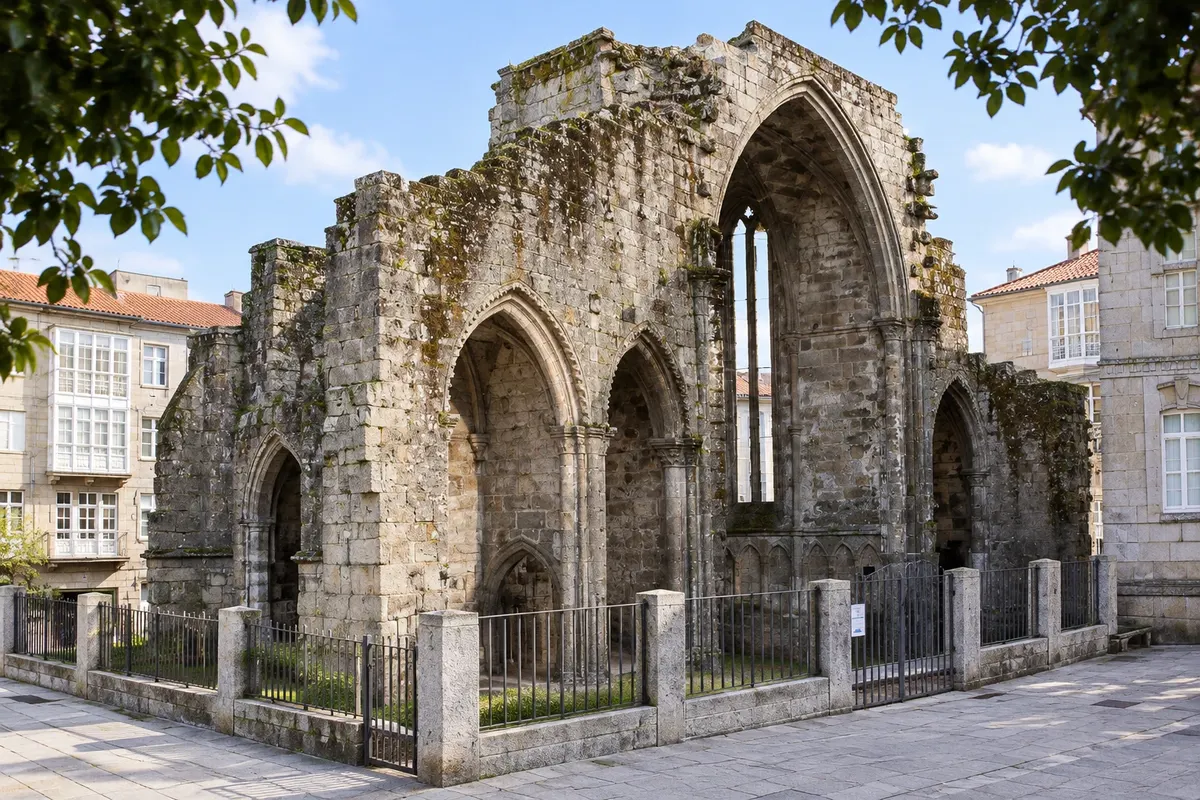
Gothic apse of the former Dominican convent of Pontevedra, with five open chapels, housing tombs, tombstones and coats of arms from the Museu de Pontevedra.

Roman Baths and Bridge of Lugo
Lugo · Galicia · Arheološko najdišče

Roman Baths and Bridge of Lugo

Remains of the Roman baths from the foundation of Lucus Augusti, by the river Minho, with the changing room preserved inside a spa hotel, and next to it the bridge of Roman origin, now for pedestrians.

Cape Touriñán (Touriñán Lighthouse)
Muxía · Galicia · Lighthouse

Cape Touriñán (Touriñán Lighthouse)

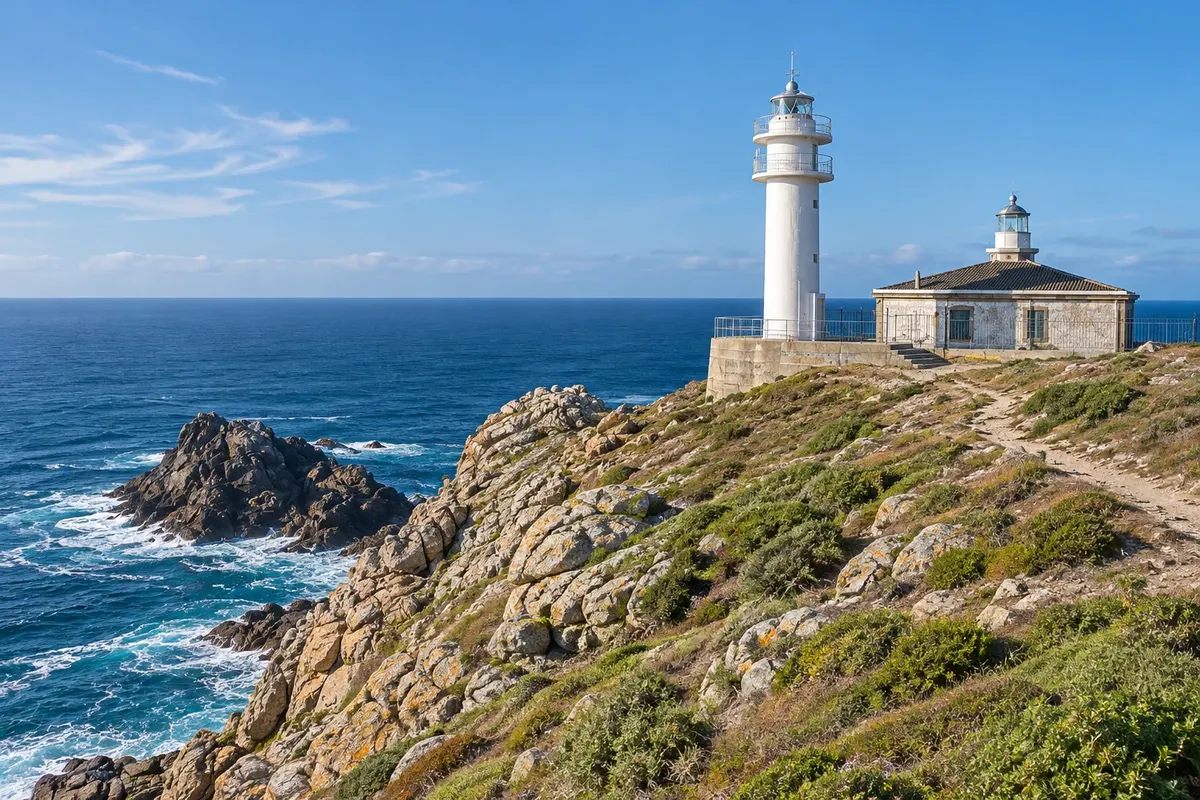
Cabo da Costa da Morte in the municipality of Muxía, the westernmost point of Galicia, with two lighthouses, the old and the new, and cliffs opening to the Atlantic.

Castle of San Antón
A Coruña · Galicia · Trdnjava

Castle of San Antón

16th-century fortress on a former islet in the port of A Coruña, which defended the bay and later served as a prison; today it houses the Museu Arqueológico e Histórico.

Castle of San Felipe
Ferrol · Galicia · Trdnjava

Castle of San Felipe

16th-century fortress, rebuilt in the 18th century, at the mouth of the ria of Ferrol, which together with the castillo da Palma on the opposite shore defended the harbor entrance; in the past a chain closed the ria between the two sides.

Cross of the Holy Trinity
Baiona · Galicia · Monument

Cross of the Holy Trinity

15th-century Gothic cruzeiro on the rocks, protected by a Renaissance canopy in the shape of a pyramid, one of the few covered cruzeiros in Galicia.

Santiago de Compostela Market (Mercado de Abastos)
Santiago de Compostela · Galicia · Tržnica

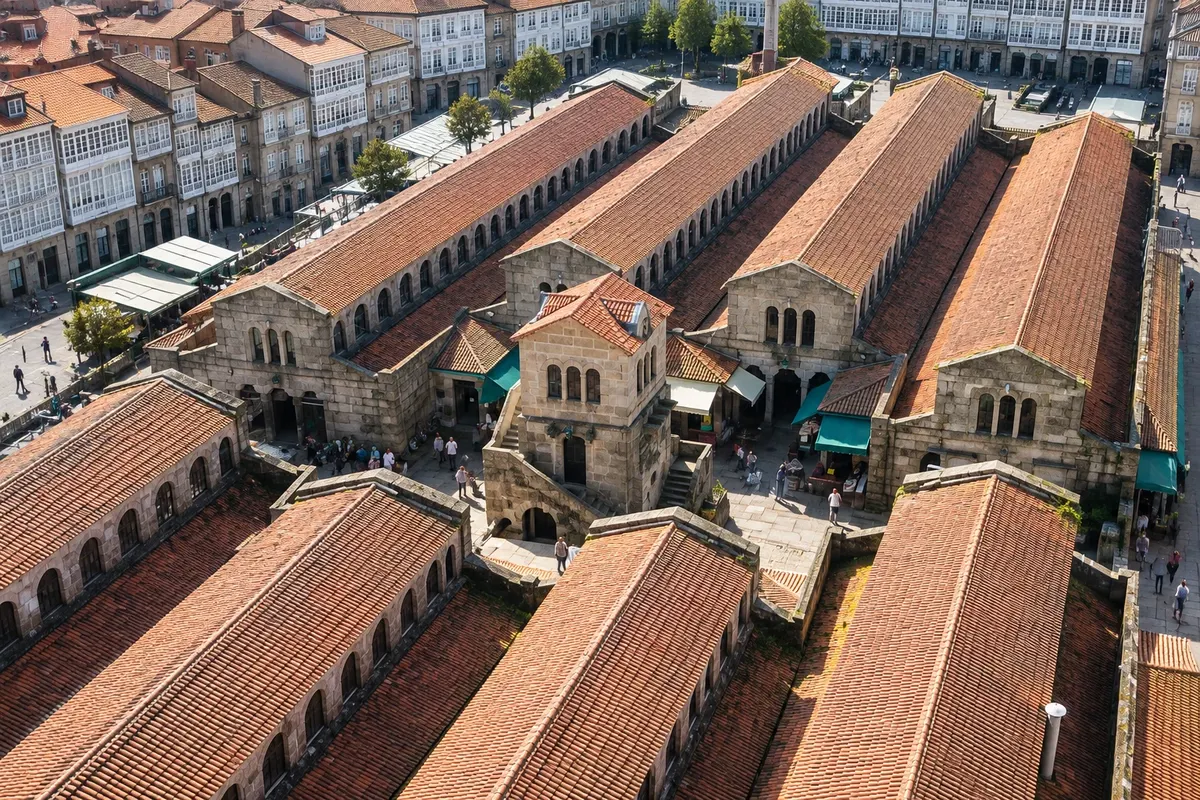
Santiago de Compostela Market (Mercado de Abastos)

Stone market from 1941 in the old quarter, with granite aisles, stalls selling shellfish, fish, cheeses and Galician vegetables, and counters that prepare on the spot what you buy.

Provincial Museum of Lugo
Lugo · Galicia · Muzej

Provincial Museum of Lugo

Provincial museum in the former convent of San Francisco, with a 15th-century cloister, 18th-century kitchen and refectory, Roman mosaics, castreja metalwork and Sargadelos ceramics.

Museum of the Sea (Museo do Mar de Galicia)
Vigo · Galicia · Muzej

Museum of the Sea (Museo do Mar de Galicia)

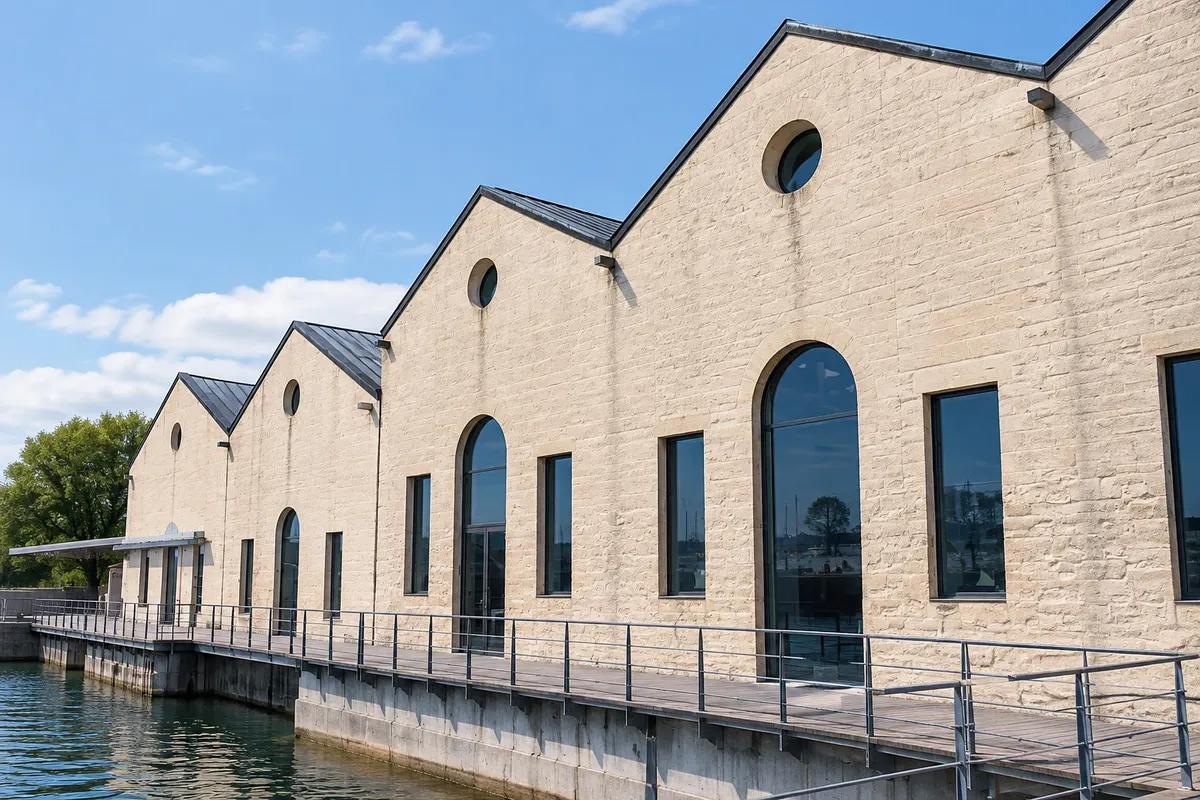
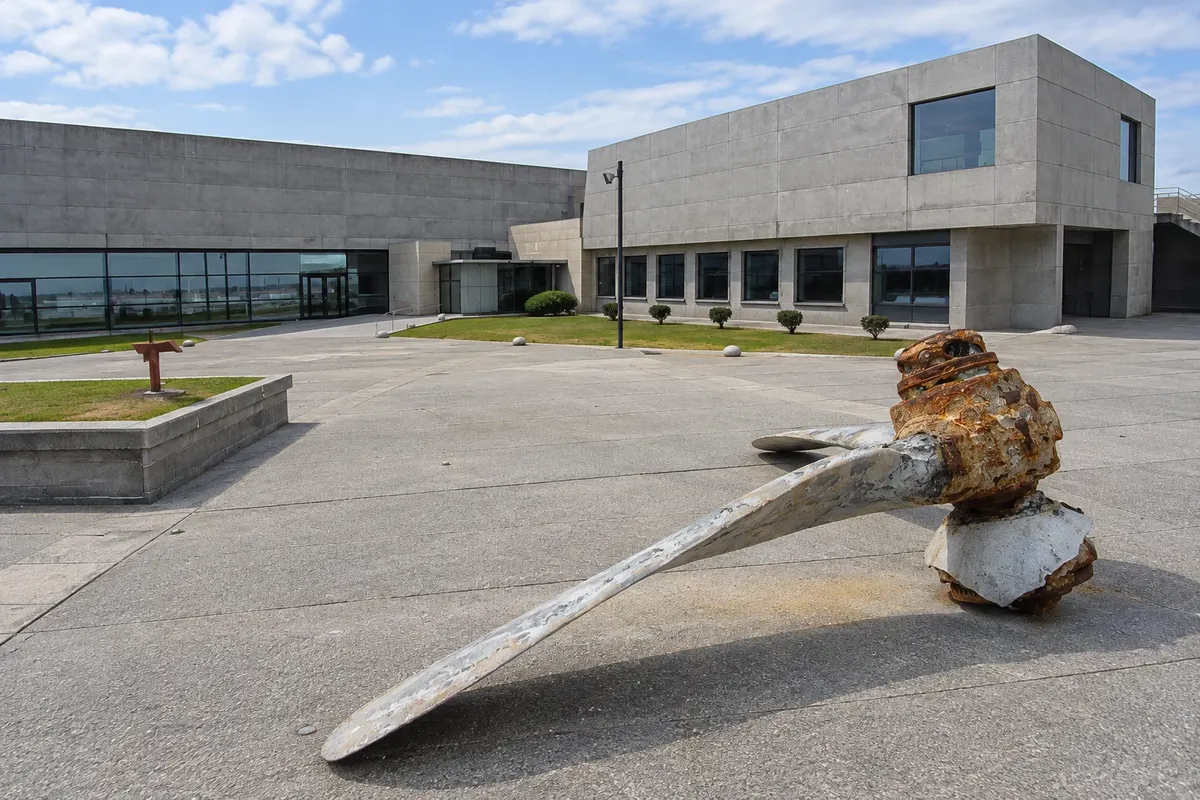
Galician sea museum in a former canning factory on the edge of the ria, renovated by Aldo Rossi and César Portela, with boats, fishing exhibits, an aquarium and a lighthouse.

Pontevedra Museum
Pontevedra · Galicia · Muzej

Pontevedra Museum

Provincial museum founded in 1927, spread across six buildings in the historic center, with archaeology, Castro-period goldsmithing, Galician and Spanish painting and works by Castelao.

Monte Aloia Natural Park
Tui · Galicia · Krajinski park

Monte Aloia Natural Park

First natural park of Galícia, designated in 1978, north of Tui, with 746 hectares of woodlands, trails, remains of a castrejo settlement and viewpoints over the Minho valley down to the estuary.

Parque do Pasatempo
Betanzos · Galicia · Park

Parque do Pasatempo

Park created between 1893 and 1914 by Juan García Naveira, an emigrant who returned wealthy from Argentina, with lakes, grottoes and sculptures that showed the townspeople places and themes from around the world.

Outariz Hot Springs
Ourense · Galicia · Zdravilišče

Outariz Hot Springs

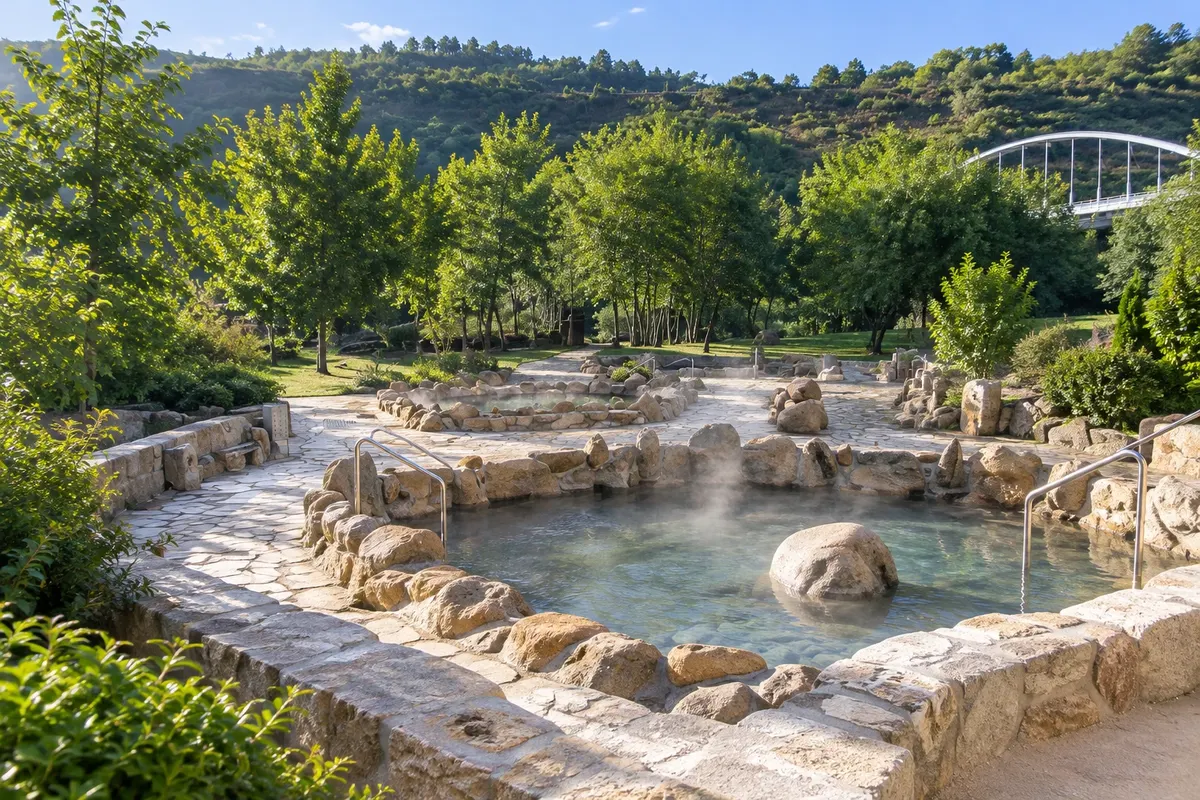
Outdoor thermal pools on the bank of the river Miño, about 4 km from the center, at the end of the riverside thermal walk.

Aquarium Finisterrae
A Coruña · Galicia · Aquarium

Aquarium Finisterrae

Aquarium opened in 1999 by the sea, between the Domus and the Torre de Hércules, with pools connected to the Atlantic that follow the tides, seals and species of the Galician coast.

Church of San Francisco (Pontevedra)
Pontevedra · Galicia · Cerkev

Church of San Francisco (Pontevedra)

14th-century Franciscan Gothic church on praça da Ferrería, traditionally linked to the passage of São Francisco de Assis, with the tomb of the admiral and troubadour Paio Gómez Chariño.

Monastery of Santo Estevo de Ribas de Sil
Ourense · Galicia · Samostan

Monastery of Santo Estevo de Ribas de Sil

Former Benedictine monastery with three cloisters overlooking the Sil canyon in the Ribeira Sacra, about 30 km from Ourense. It now operates as a historic guesthouse.

Parque da Alameda
Santiago de Compostela · Galicia · Park

Parque da Alameda

19th‑century park on the edge of the old town, featuring the Paseo da Ferradura, the best‑known view of the cathedral, the statue of the Dúas Marías and an oak grove.

Doniños Beach
Ferrol · Galicia · Plaža

Doniños Beach

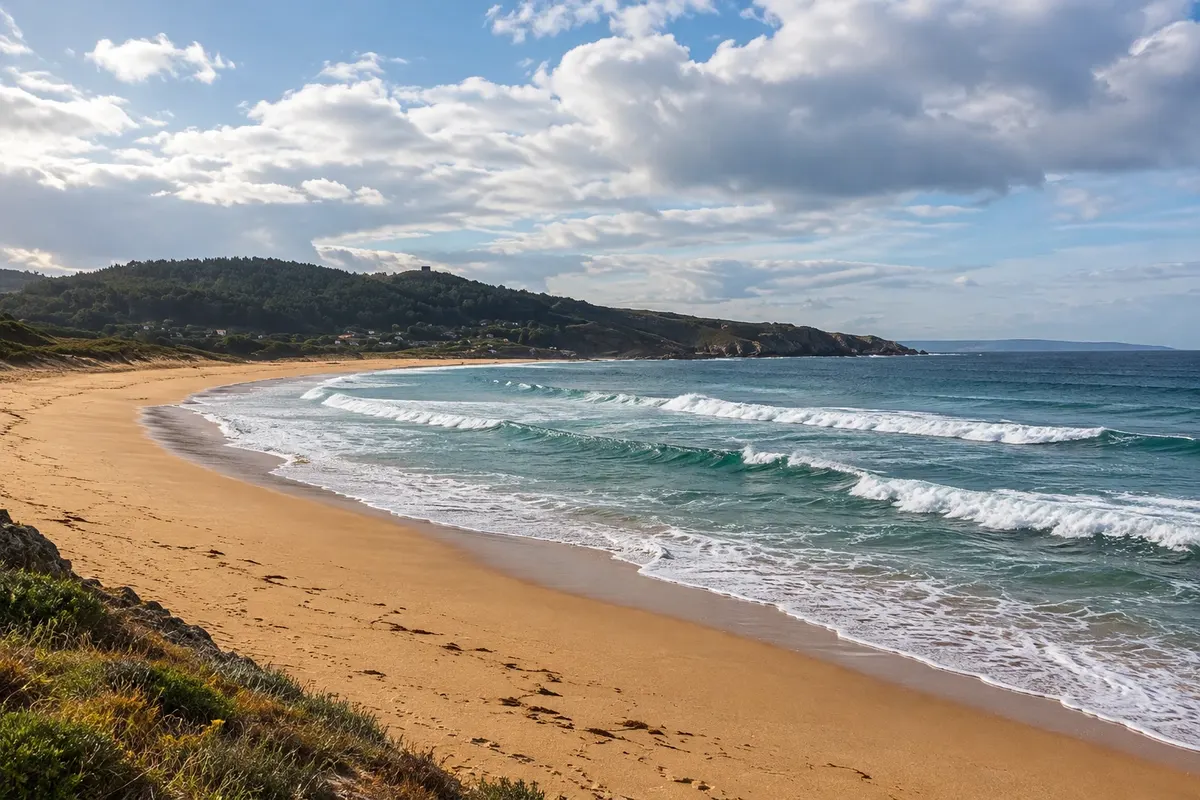
Almost 2 km beach open to the Atlantic, about 8 km from Ferrol, with dunes, a lagoon and waves popular with surfers.

Plaza Mayor of Lugo
Lugo · Galicia · Trg

Plaza Mayor of Lugo

Main square of Lugo, inside the wall, with gardens, a bandstand and the 18th-century Baroque town hall, a meeting point for locals and the starting point for the central tapas bars.

Sil Canyon
Ourense · Galicia · Soteska

Sil Canyon

The canyon of the Sil river in the Ribeira Sacra, with walls over 500 meters high and terraced vineyards that descend to the water. Catamaran tours run along the river.

Tui Cathedral
Vigo · Galicia · Stolnica

Tui Cathedral

A Romanesque and Gothic fortress-cathedral from the 12th century atop Tui, overlooking the Minho river, opposite Valença do Minho — a starting point of the Caminho Português in Spain.

Domus (House of Man)
A Coruña · Galicia · Muzej

Domus (House of Man)

Interactive museum dedicated to the human being, opened in 1995 in a building by Arata Isozaki and César Portela, with a curved slate facade facing the sea, like a sail in the wind.

Museum of the Galician People (Museo do Pobo Galego)
Santiago de Compostela · Galicia · Muzej

Museum of the Galician People (Museo do Pobo Galego)

Museum of Galician culture in the former convent of San Domingos de Bonaval, featuring Domingo de Andrade’s triple helical staircase and the Panteón de Galegos Ilustres, where Rosalía de Castro is buried.

Burgo Bridge
Pontevedra · Galicia · Most

Burgo Bridge

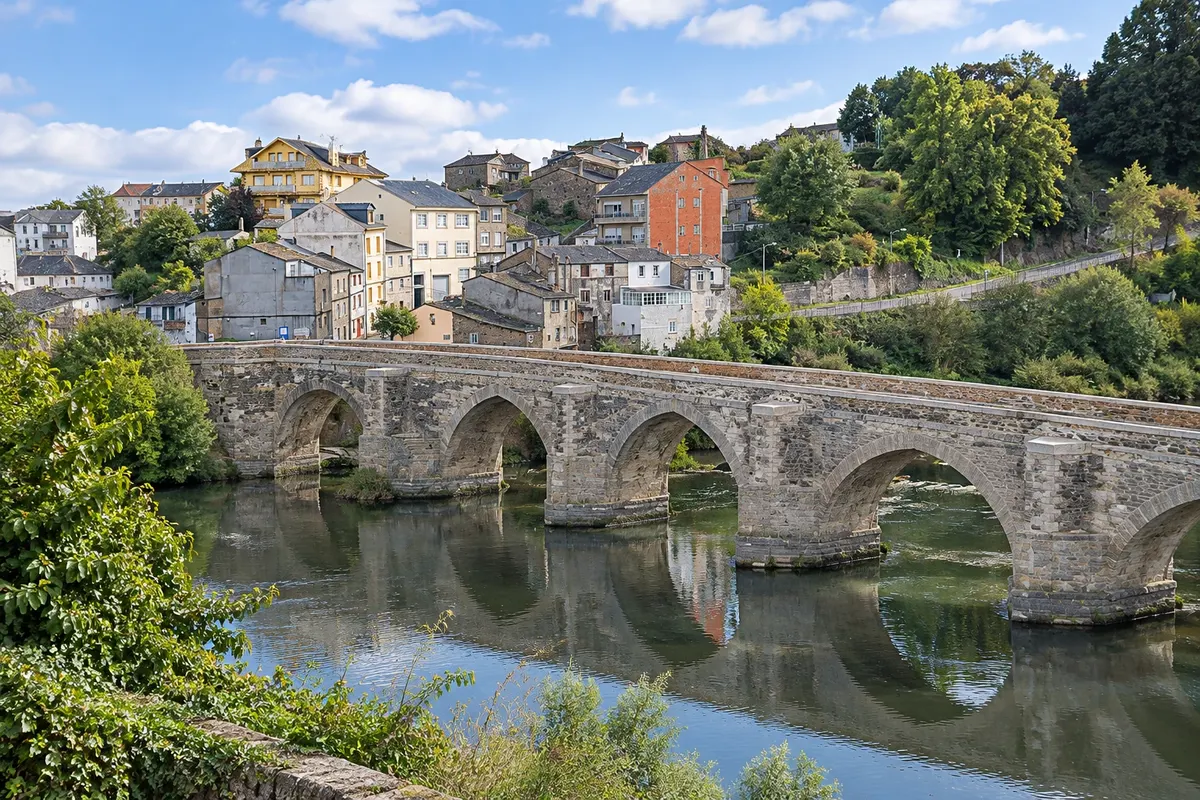
Medieval stone bridge over the river Lérez, built on top of an earlier Roman bridge, with carved pilgrim shells; it is the entrance to the Caminho Português on the north side of the city.

Santa Eulalia de Bóveda
Lugo · Galicia · Arheološko najdišče

Santa Eulalia de Bóveda

Roman temple from the 3rd century, 14 km from Lugo, probably dedicated to the goddess Cybele and later Christianized, with a central pool, bird paintings and the oldest horseshoe arch used as a structural element in Spain.

House of Sciences
A Coruña · Galicia · Muzej

House of Sciences

Interactive museum of science and technology opened in 1985 in a small palace in the Santa Margarida park, with a planetarium and physics experiments; the first of its kind under public management in Spain.

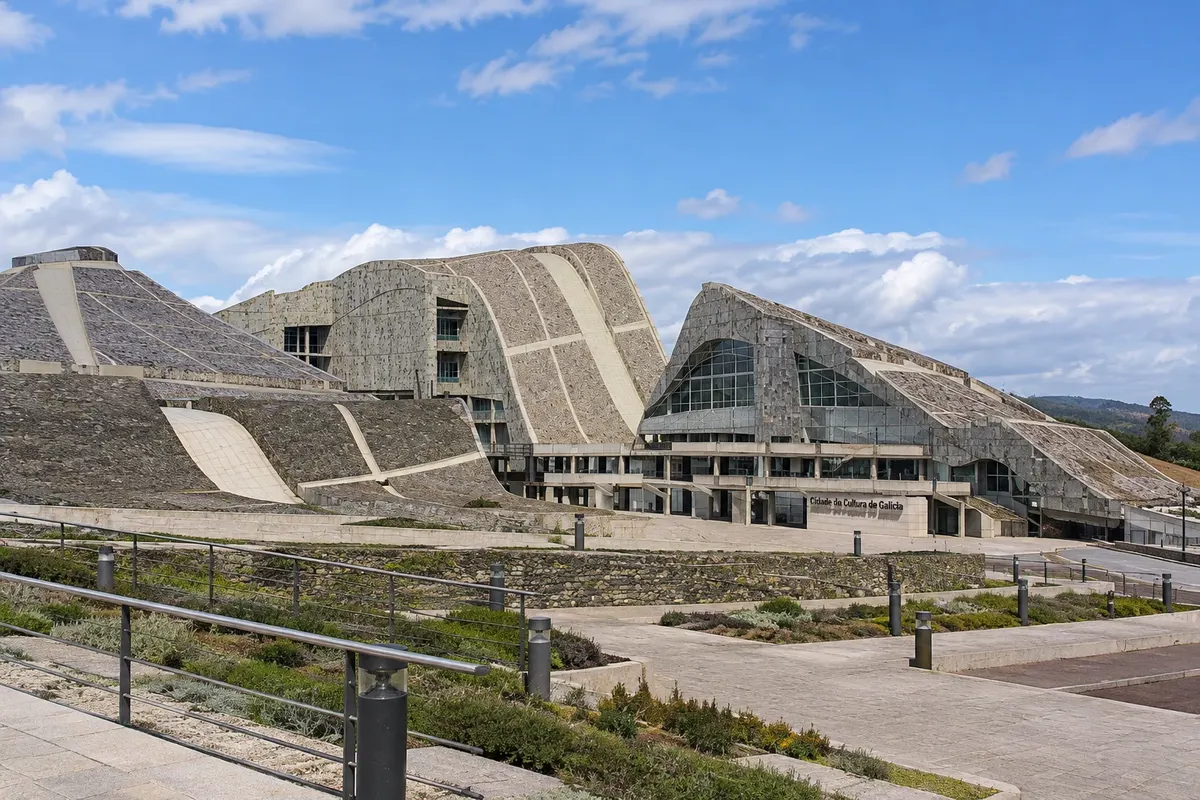
City of Culture of Galicia
Santiago de Compostela · Galicia · Cultural center

City of Culture of Galicia

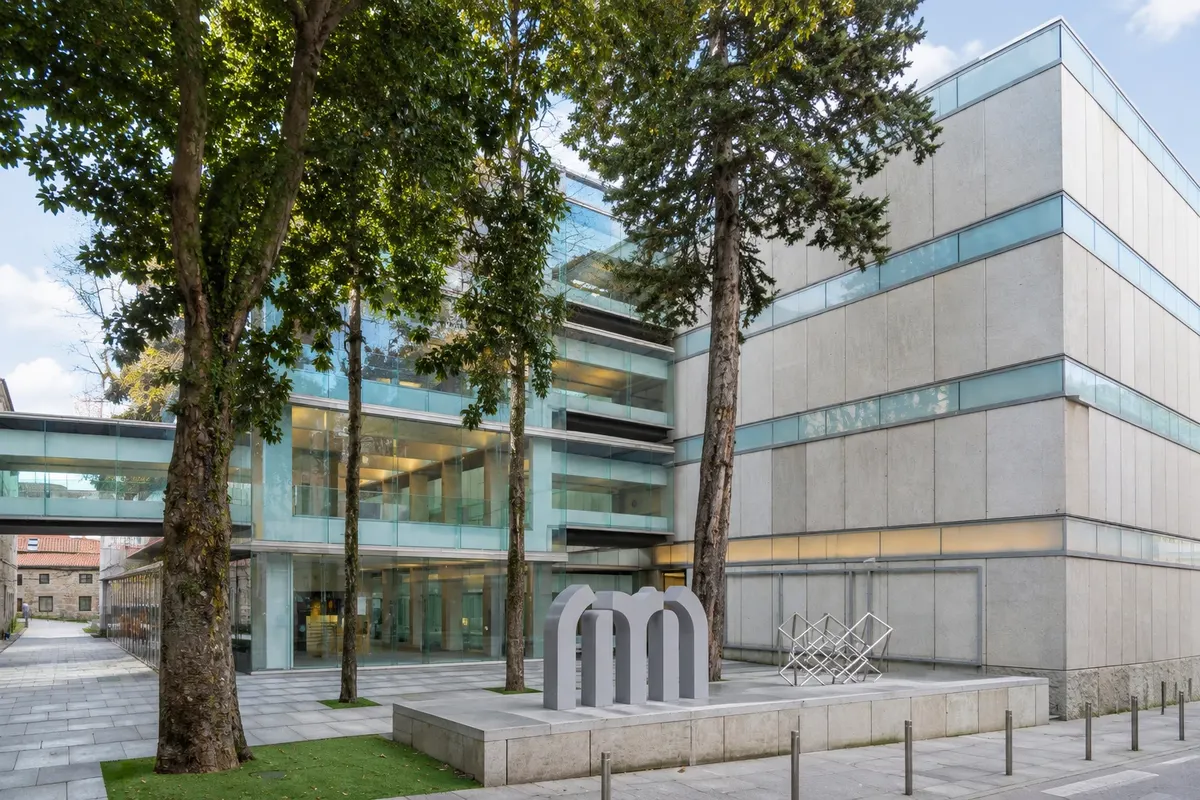
Peter Eisenman cultural complex on Monte Gaiás, with stone buildings that mimic waves, a museum, library and the Archive of Galicia, and views over the city.

Island of Sculptures
Pontevedra · Galicia · Park

Island of Sculptures

Park on an island in the river Lérez, covering 70,000 m², with outdoor contemporary art by 12 artists, including Robert Morris's stone labyrinth.

Collegiate Church of Santa María del Sar
Santiago de Compostela · Galicia · Cerkev

Collegiate Church of Santa María del Sar

12th-century Romanesque church on the banks of the Sar River, known for its leaning columns and walls, with a Romanesque cloister and a small museum.

Mount San Pedro
A Coruña · Galicia · Razgledišče

Mount San Pedro

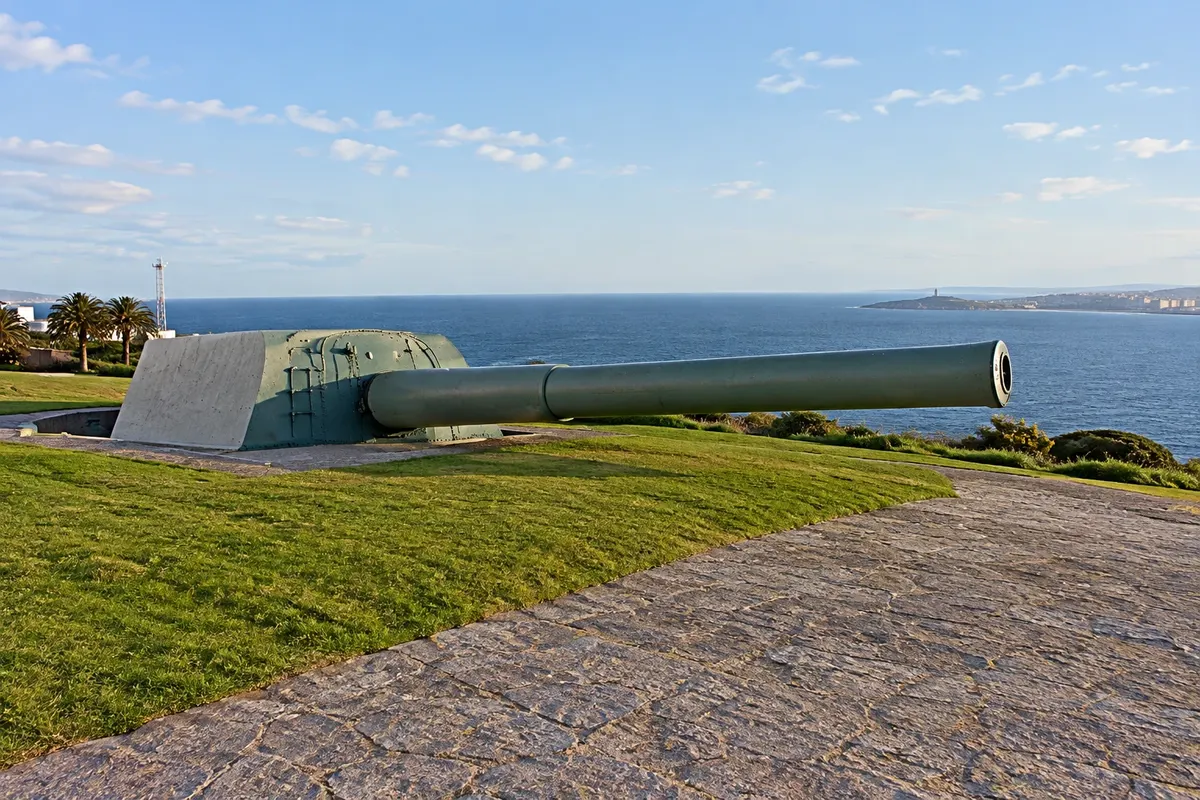
Park on top of an old military hill to the west of A Coruña, with the cannons of a coastal battery, viewpoints over the city and the sea, and a panoramic elevator that rises from the promenade.

Monte do Gozo
Santiago de Compostela · Galicia · Razgledišče

Monte do Gozo

Hill about 5 km from the cathedral, on the French Way, where pilgrims first caught sight of the towers of Santiago. It has a monument and a pilgrim hostel.

Riazor and Orzán Beaches
A Coruña · Galicia · Plaža

Riazor and Orzán Beaches

Two continuous urban beaches in the Orzán bay, in the center of A Coruña, accompanied by the promenade; Orzán has waves popular with surfers, while Riazor is calmer.

Pred odhodom

Praktične informacije

Z nekaj načrtovanja boste imeli več časa za uživanje na poti.

Kdaj se odpraviti

From June to September it usually rains less and the weather is mild, good for the Illas Cíes, which only receive regular boats in the season. May and October have fewer people but more rain. Winter is rainy and cold. In July, Santiago usually holds the Feast of the Apostle, with fireworks on the night of the 24th.

The seasons shown are the most usual ones; nature doesn't always follow the calendar.

Koliko dni ostati

Two days in Santiago cover the cathedral, the historic center, the market and the Cidade da Cultura. Vigo needs one or two days, one of them for the Illas Cíes in season. Those coming from Porto can do the route in four days, with one night in Vigo and two in Santiago.

V katerem mestu prenočiti

In Santiago, the old quarter leaves the cathedral and the restaurants within walking distance, but it has cobbled streets with climbs, bad for large suitcases; the Ensanche, to the south, has larger hotels and is a 10-minute walk away. In Vigo, the center between the Rúa do Príncipe and the Casco Vello is close to the port for the Cíes boats and to the train stations. Those who want the beach can stay near Samil, to the south, with buses to the center.

Spoštujte kraj

Odnesite svoje odpadke, upoštevajte oznake in podprite lokalne ponudnike. V naravi upoštevajte navodila za obiskovalce.

Odgovori na vaša vprašanja

Pogosta vprašanja – Santiago de Compostela and Galicia

Do you need to do the Camino to visit Santiago?

No. The city receives many tourists who arrive by train, plane or bus. Those who want to feel the Camino can walk the last stretch, from Monte do Gozo, about 5 km from the cathedral.

How to go from Porto to Santiago de Compostela?

By train, via the Celta to Vigo and another train to Santiago, in about 4 hours in total, or by direct bus, in about 3h30. In some periods, part of the Celta journey is made by bus; check in advance.

Does it rain a lot in Galícia?

Yes, mainly from October to April. Santiago is one of the rainiest cities in Spain. Bring an umbrella and footwear that can handle wet stone.

What to eat in Galícia?

Polvo à feira (octopus with paprika and olive oil), shellfish, empanada galega, tetilla cheese, pimientos de Padrón and, for dessert, the Torta de Santiago made with almonds. The white Albariño wines come from the Rías Baixas.

Rotas entre países

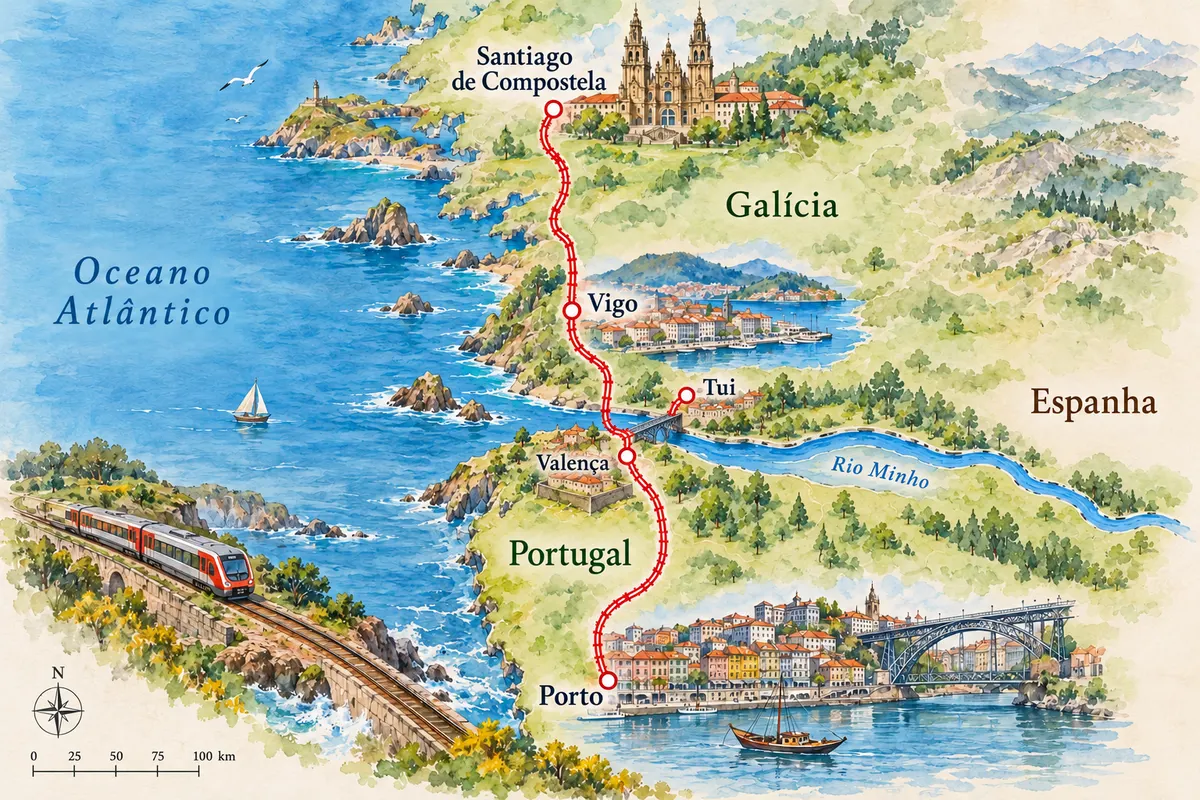
Santiago de Compostela and Galicia – na poti z imenom Porto–Vigo–Santiago de Compostela by train

From Porto to Galicia by train: the Celta crosses the Minho to Vigo, and a regional train takes you to Santiago de Compostela in about an hour.

Zemljevid je ilustrativen in ni v merilu. Dotaknite se mesta, da odprete njegovo stran.
Porto–Vigo–Santiago de Compostela by train – ilustrirani zemljevid
Več o poti – Porto–Vigo–Santiago de Compostela by train

Rotas entre países

Santiago de Compostela and Galicia – na poti z imenom Portuguese Way to Santiago on foot

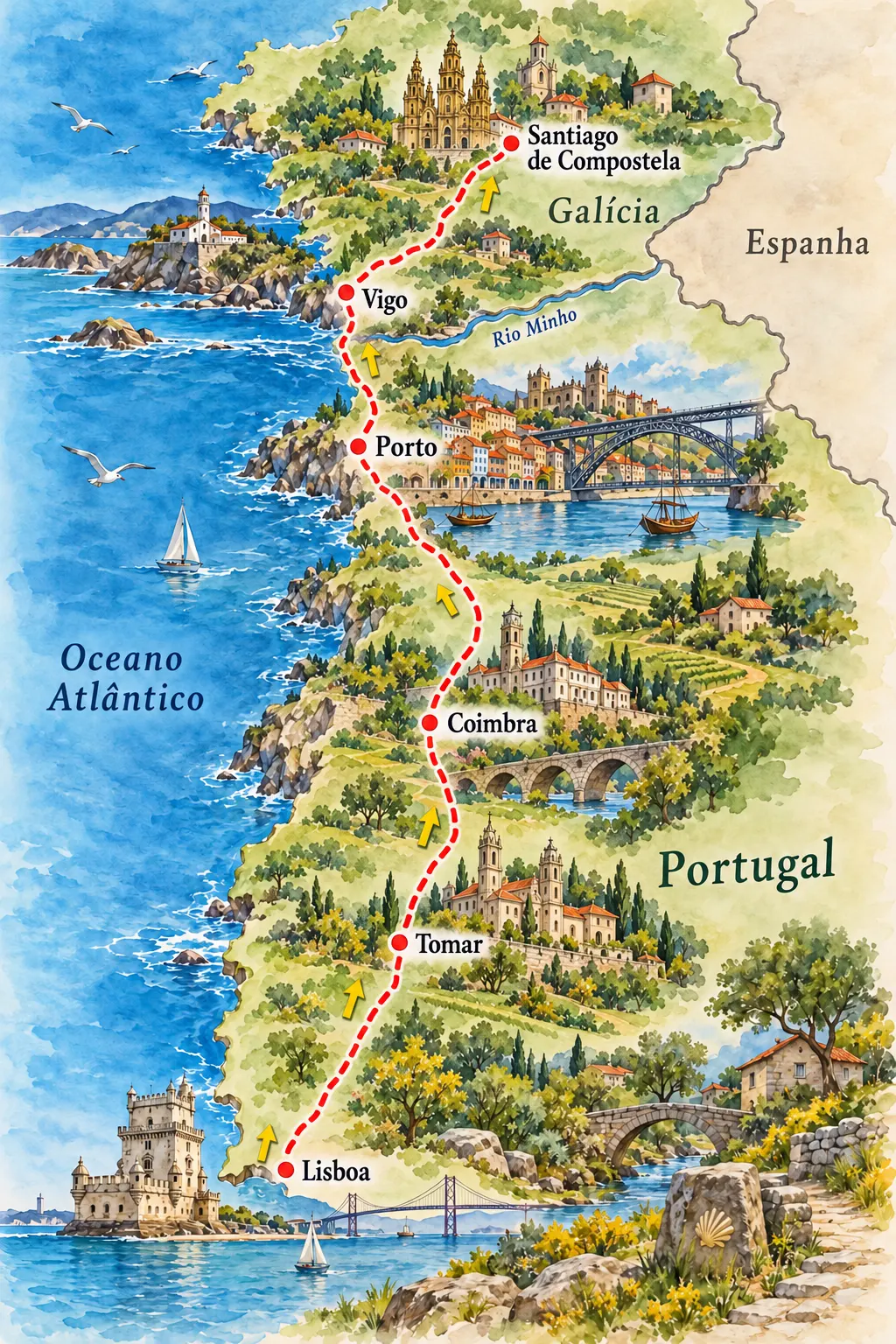
On foot from Portugal to Santiago de Compostela: the pilgrimage route that starts in Lisbon or Porto, follows yellow arrows and ends at Obradoiro Square.

Zemljevid je ilustrativen in ni v merilu. Dotaknite se mesta, da odprete njegovo stran.
Portuguese Way to Santiago on foot – ilustrirani zemljevid
Več o poti – Portuguese Way to Santiago on foot

Rotas entre países

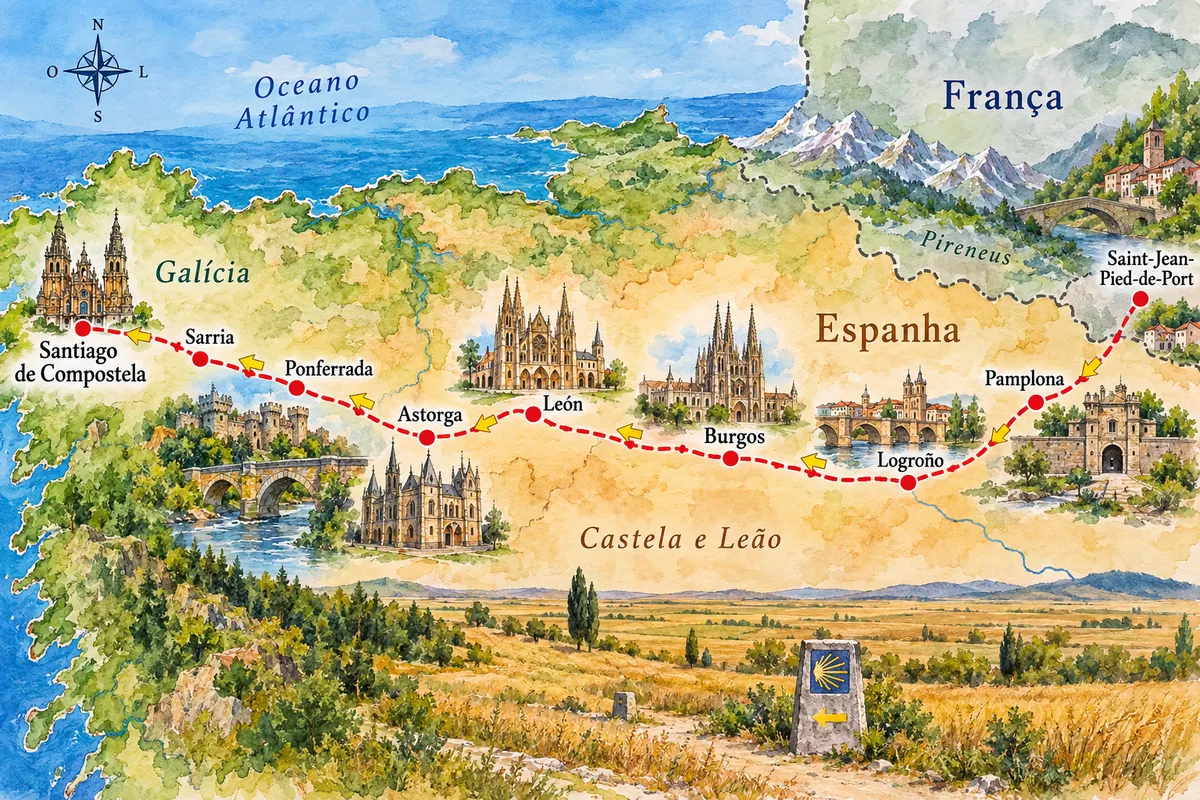
Santiago de Compostela and Galicia – na poti z imenom French Way (Camino Francés) to Santiago on foot

The most travelled pilgrimage route to Santiago de Compostela: from the French Pyrenees to Galicia, on foot, via Pamplona, Burgos and León, following the yellow arrows.

Zemljevid je ilustrativen in ni v merilu. Dotaknite se mesta, da odprete njegovo stran.
French Way (Camino Francés) to Santiago on foot – ilustrirani zemljevid
Več o poti – French Way (Camino Francés) to Santiago on foot

Rotas entre países

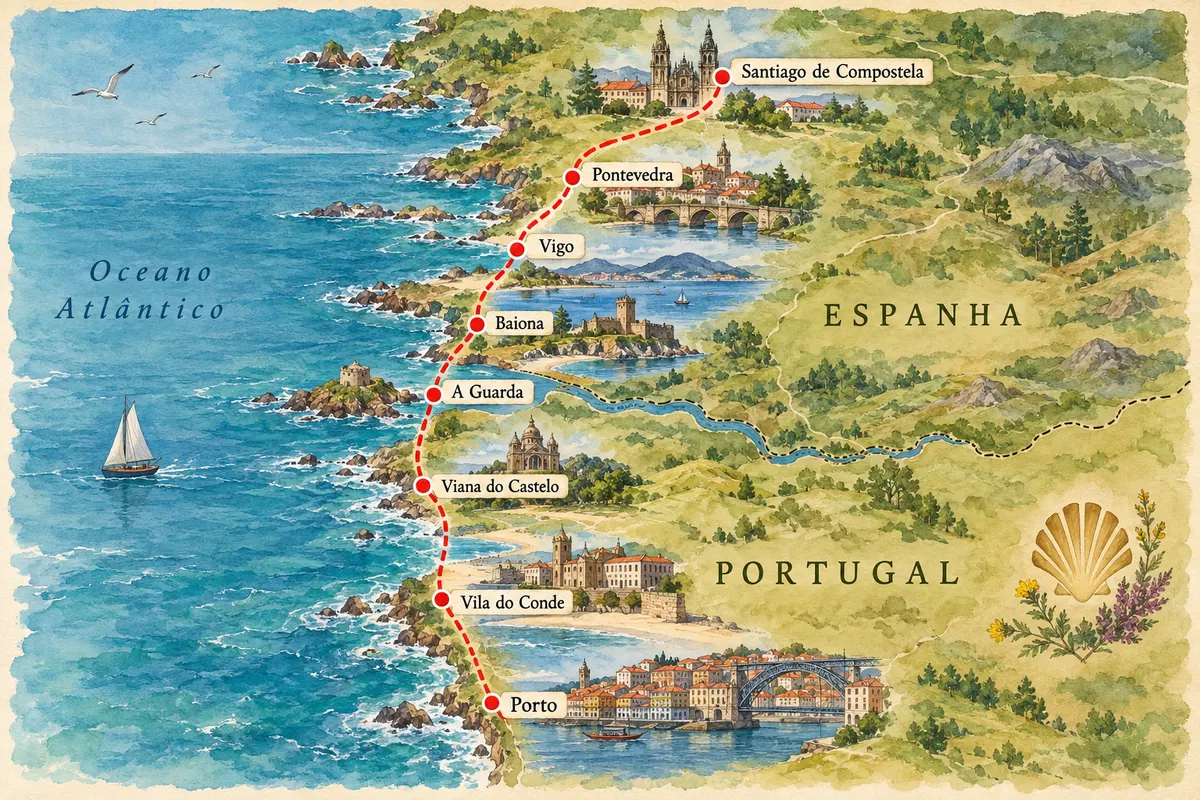
Santiago de Compostela and Galicia – na poti z imenom Portuguese Coastal Way on foot

The Camino de Santiago along the Atlantic: from Porto to Galicia via the coast, through Vila do Conde, Viana do Castelo, A Guarda, Baiona and Vigo, ending at Santiago Cathedral.

Zemljevid je ilustrativen in ni v merilu. Dotaknite se mesta, da odprete njegovo stran.
Portuguese Coastal Way on foot – ilustrirani zemljevid
Več o poti – Portuguese Coastal Way on foot

Poti – in Španija

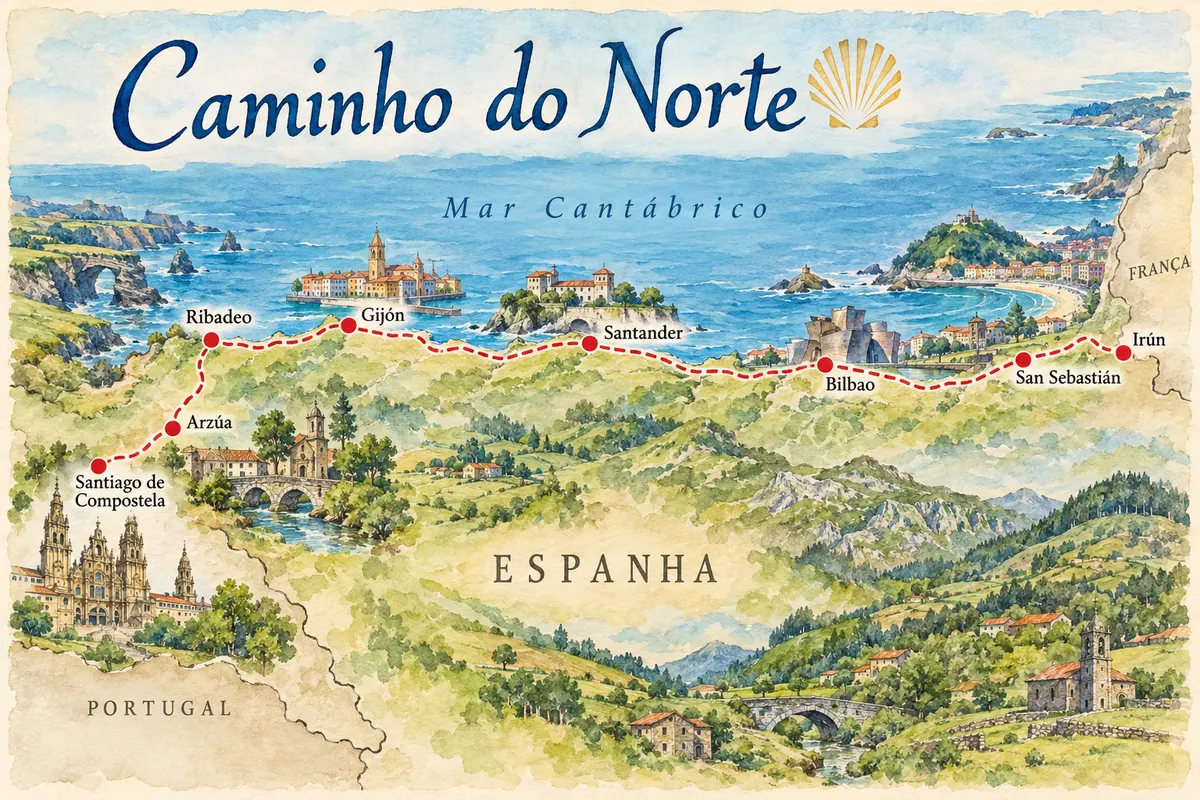
Santiago de Compostela and Galicia – na poti z imenom Northern Way (Camino del Norte) to Santiago on foot

The Camino de Santiago along the Cantabrian coast: from the Basque Country to Galicia on foot, via San Sebastián, Bilbao, Santander and Gijón, between the sea and the green mountains.

Zemljevid je ilustrativen in ni v merilu. Dotaknite se mesta, da odprete njegovo stran.
Northern Way (Camino del Norte) to Santiago on foot – ilustrirani zemljevid
Več o poti – Northern Way (Camino del Norte) to Santiago on foot

Poti – in Španija

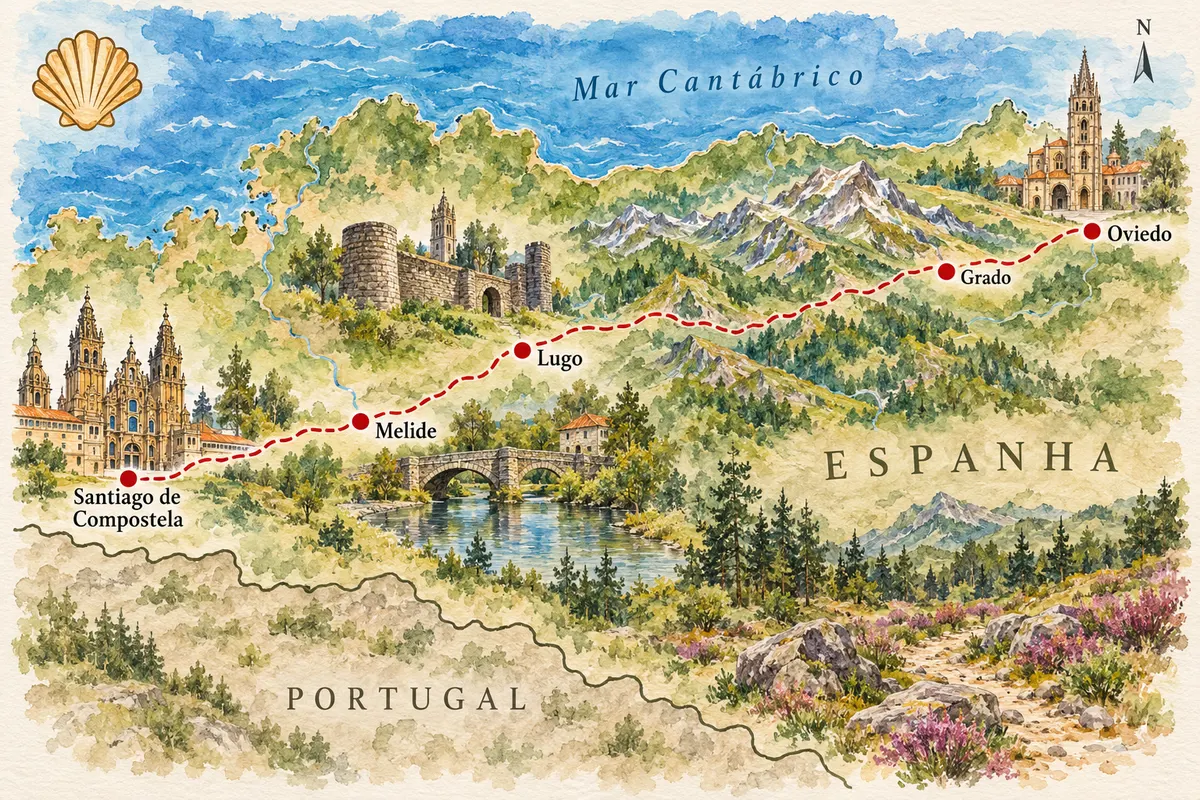
Santiago de Compostela and Galicia – na poti z imenom Caminho Primitivo de Santiago on foot

The oldest route to Santiago: from Oviedo, through the mountains of Asturias and via Lugo and its Roman walls, on foot to the cathedral of Compostela.

Zemljevid je ilustrativen in ni v merilu. Dotaknite se mesta, da odprete njegovo stran.
Caminho Primitivo de Santiago on foot – ilustrirani zemljevid
Več o poti – Caminho Primitivo de Santiago on foot

Poti – in Španija

Santiago de Compostela and Galicia – na poti z imenom English Way (Camino Inglés) to Santiago on foot

The route taken by pilgrims who arrived by sea: from Ferrol or A Coruña to Santiago de Compostela in under a week, along Galicia’s northern coast.

Zemljevid je ilustrativen in ni v merilu. Dotaknite se mesta, da odprete njegovo stran.
English Way (Camino Inglés) to Santiago on foot – ilustrirani zemljevid
Več o poti – English Way (Camino Inglés) to Santiago on foot

Poti – in Španija

Santiago de Compostela and Galicia – na poti z imenom Finisterre and Muxía walk

After the cathedral, the sea: on foot from Santiago de Compostela to Cape Finisterre, the old end of the world, and to the sanctuary of Muxía, on the Costa da Morte.

Zemljevid je ilustrativen in ni v merilu. Dotaknite se mesta, da odprete njegovo stran.
Finisterre and Muxía walk – ilustrirani zemljevid
Več o poti – Finisterre and Muxía walk

Poti – in Španija

Santiago de Compostela and Galicia – na poti z imenom Vía de la Plata from Seville to Santiago on foot

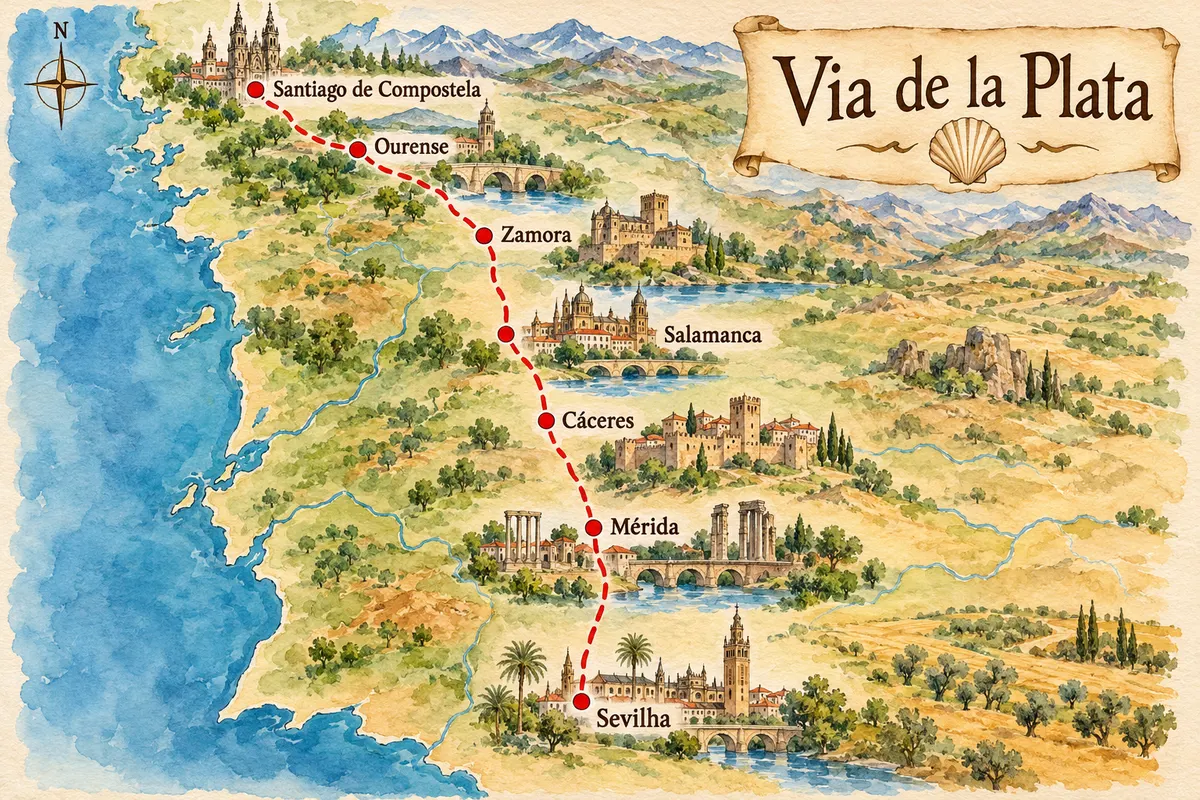
The longest Camino de Santiago in Spain: from Seville to Santiago de Compostela along the country’s west, following the old Roman road, via Mérida, Cáceres, Salamanca, Zamora and Ourense.

Zemljevid je ilustrativen in ni v merilu. Dotaknite se mesta, da odprete njegovo stran.
Vía de la Plata from Seville to Santiago on foot – ilustrirani zemljevid
Več o poti – Vía de la Plata from Seville to Santiago on foot
Odkrijte druge destinacije Iskanje po zvezni državi in mestu

Več kot vodnik