Cocido maragato
Cocido de la Maragatería, the comarca of Astorga, served in reverse: first the meats, then the chickpeas with cabbage, and finally the soup. It is the dish that Castile and León tourism associates with Astorga.
Antarktika
Castela e Leão · Španija
Destinacija: Burgos and León.
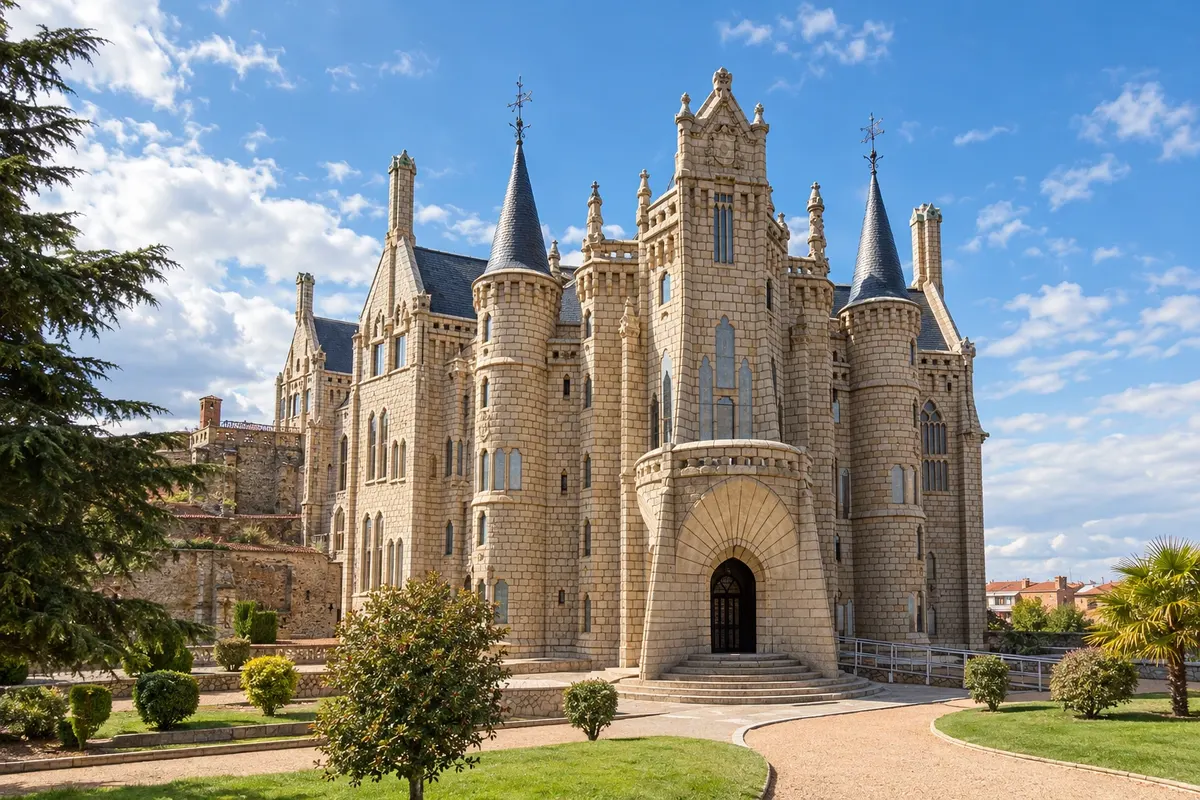
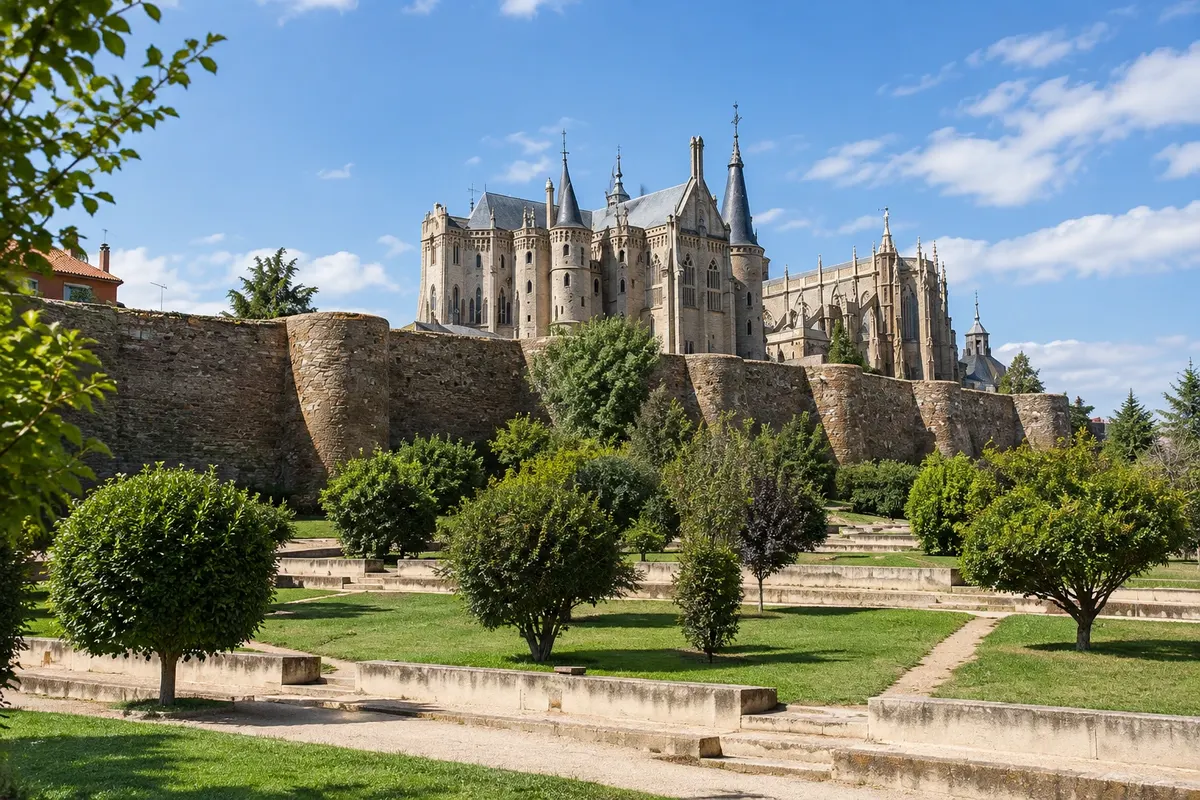
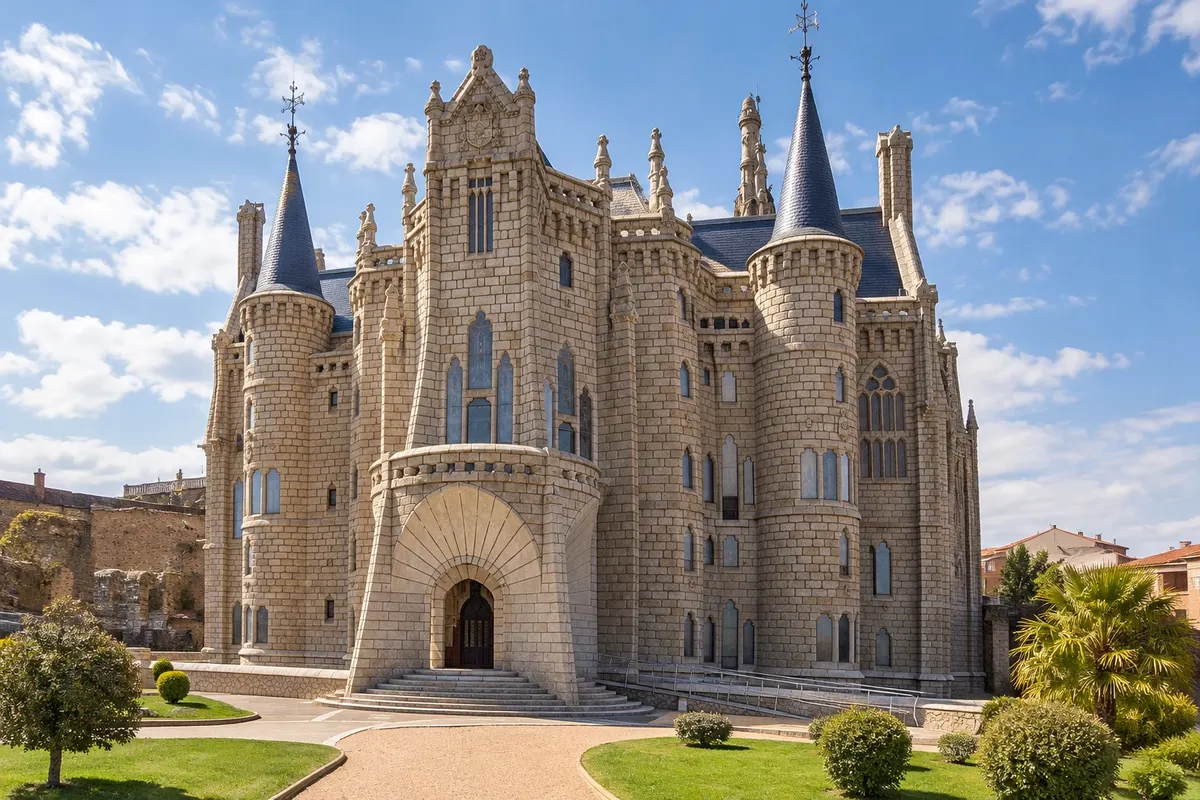
Na fotografiji: Palacio Episcopal de Gaudí in Astorga.
Illustrative images. The pictures in this guide are illustrations based on the real place, not photographs, and may differ from it.
Mesto
Astorga is a small town in the province of León, capital of the Maragatería, on a hill surrounded by more than 2 km of Roman-origin wall. Founded as Asturica Augusta, it preserves Roman remains and a museum in the former ergástula. The Palácio Episcopal de Gaudí stands next to the Gothic cathedral, and in the Plaza Mayor two maragato figures strike the hours. The town is known for chocolate, mantecadas and the cozido maragato. It is where the Caminho Francês meets the Via de la Plata. The village of Castrillo de los Polvazares is 5 km away. Spanish is spoken.
V vodniku še ni nastanitev – Astorga.
kako do tja · koliko dni · načrt poti · vprašanja
Rotas entre países
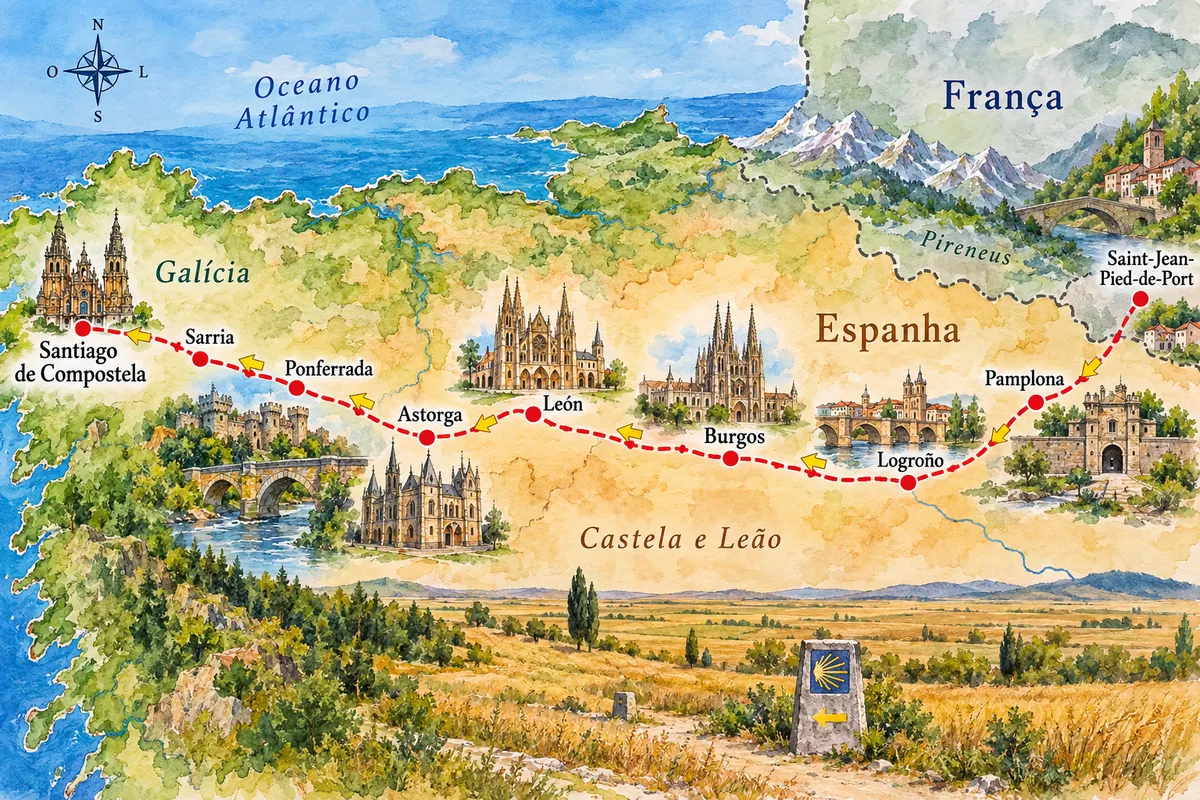
The most travelled pilgrimage route to Santiago de Compostela: from the French Pyrenees to Galicia, on foot, via Pamplona, Burgos and León, following the yellow arrows.
Lokalni okusi – of Španija

Cocido de la Maragatería, the comarca of Astorga, served in reverse: first the meats, then the chickpeas with cabbage, and finally the soup. It is the dish that Castile and León tourism associates with Astorga.

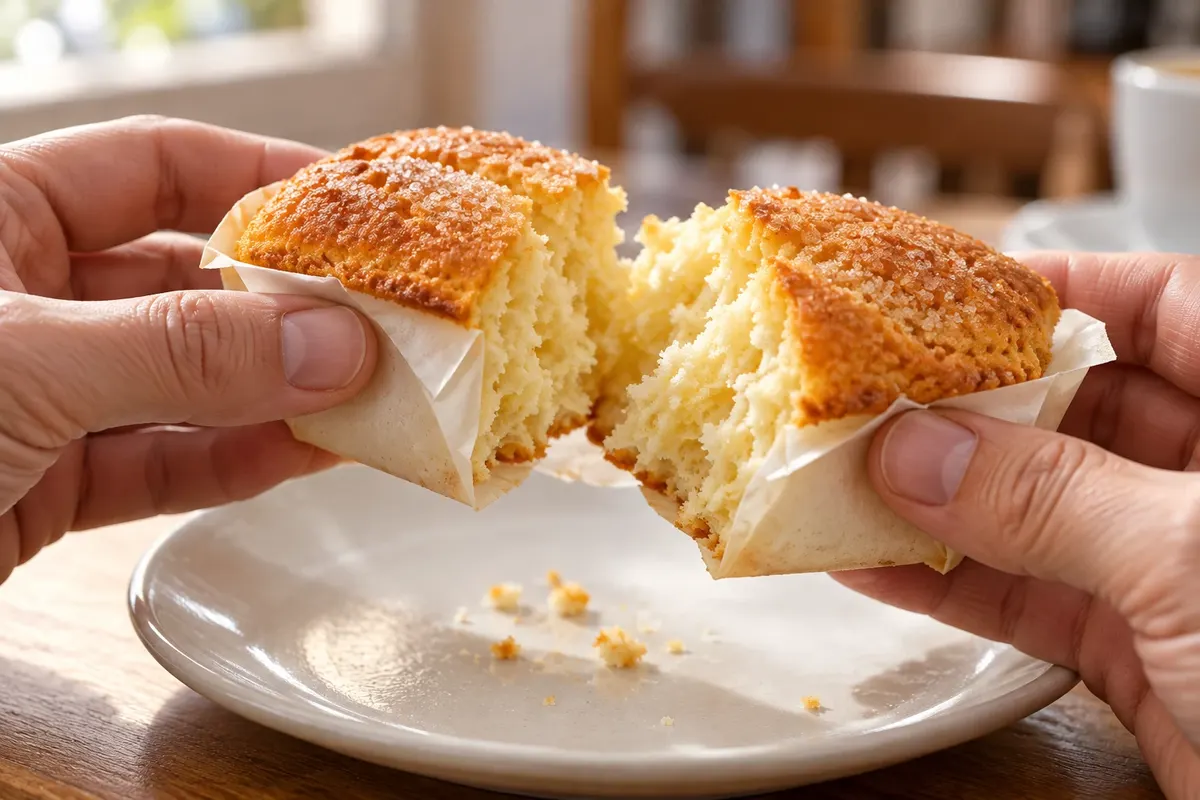
Small cake of butter, eggs, sugar and flour baked in a small square paper box, from which the batter overflows. It is a Protected Geographical Indication and appears as a Christmas sweet in the 1805 accounts of the diocesan archive of Astorga.
Doživite kraj
Neogothic Palace designed by Gaudí, built between 1889 and 1915, of white granite with towers, which houses the Museu dos Caminhos, about the Caminho de Santiago.
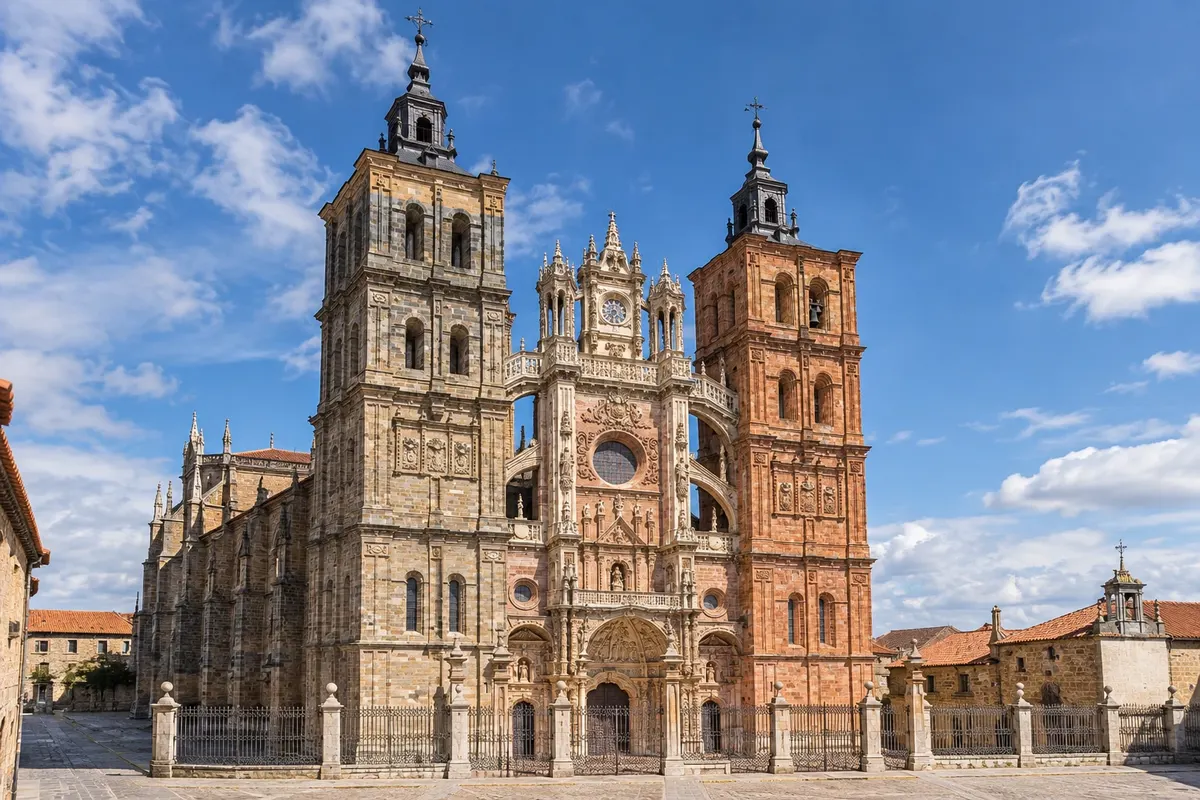
Gothic cathedral begun in 1471, with a baroque façade, towers over 60 metres and the Renaissance altarpiece by Gaspar Becerra.
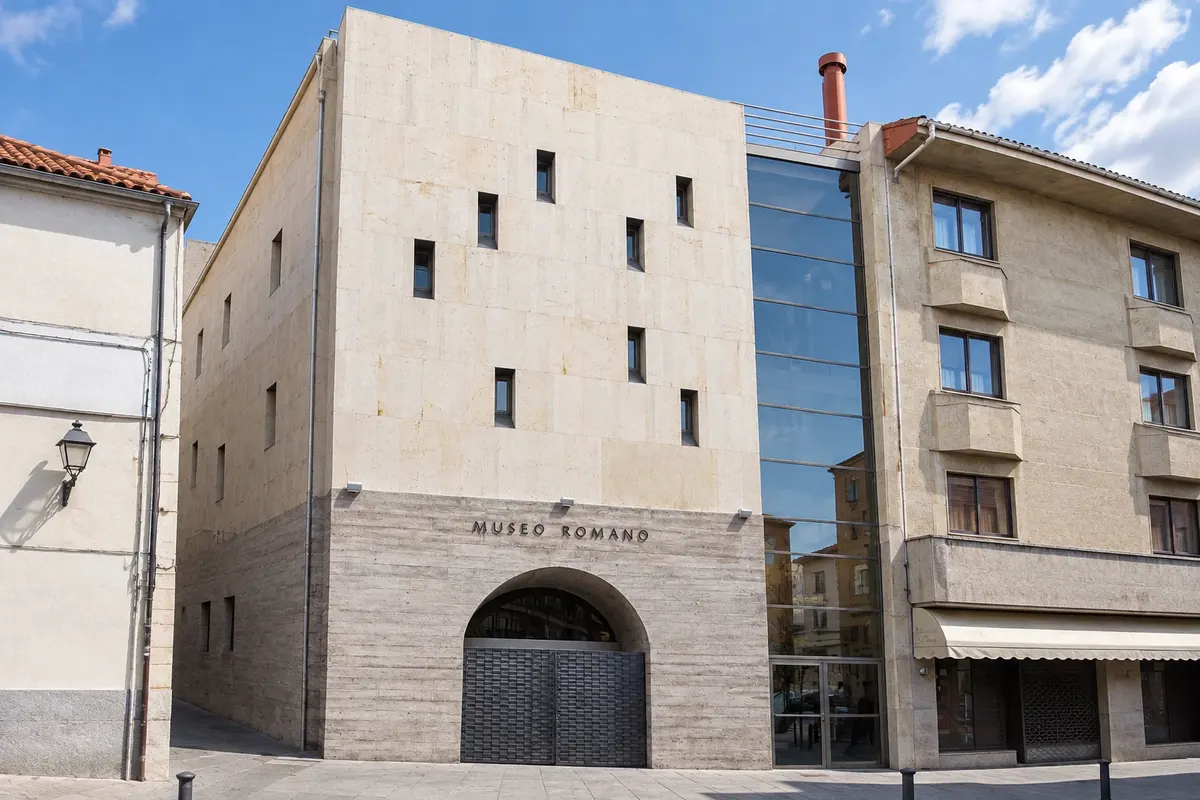
Museum of the ancient Asturica Augusta in the ergástula, a Roman gallery with a vault, starting point of the Roman route that goes past baths, sewers and mosaics in the centre.
Wall of Roman origin, from the 3rd and 4th centuries, over 2 km around the old town, with semicircular towers (cubos) and a walkway on top of part of it.
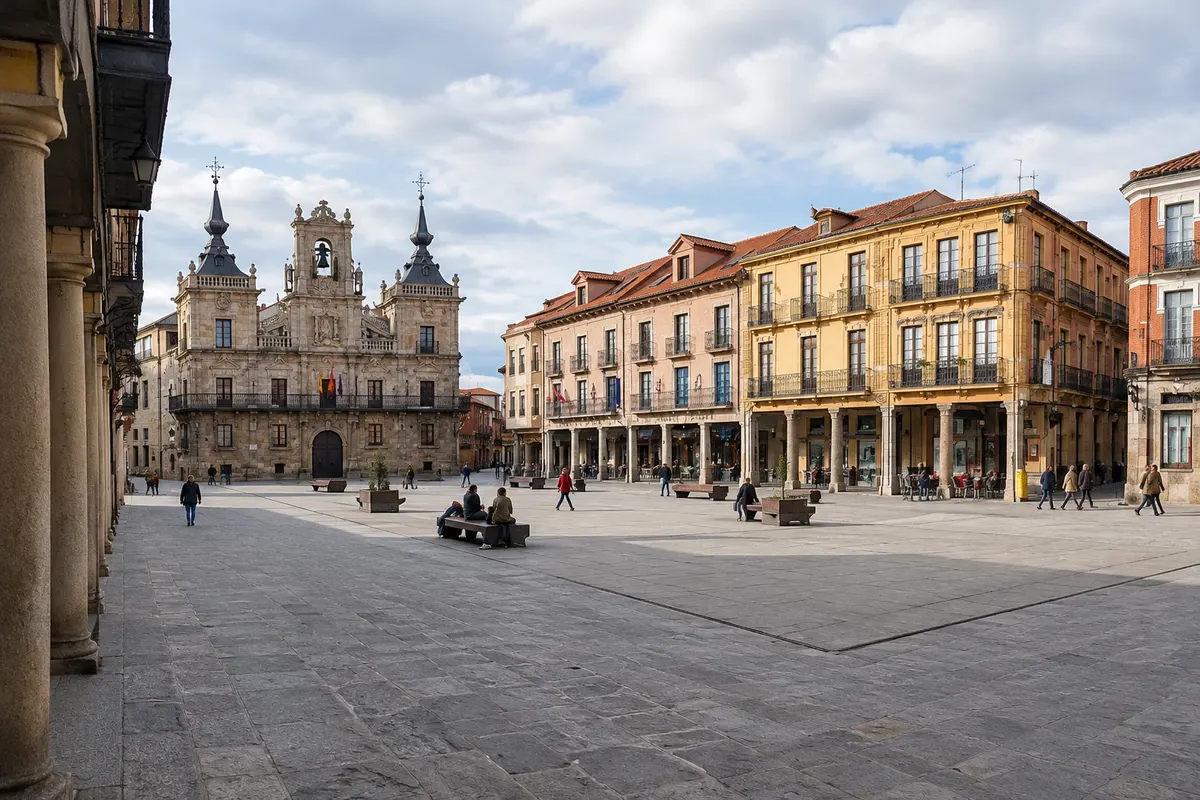
Astorga's main square, with the 17th-century Baroque town hall and the clock where two figures in maragato costumes strike the hours.
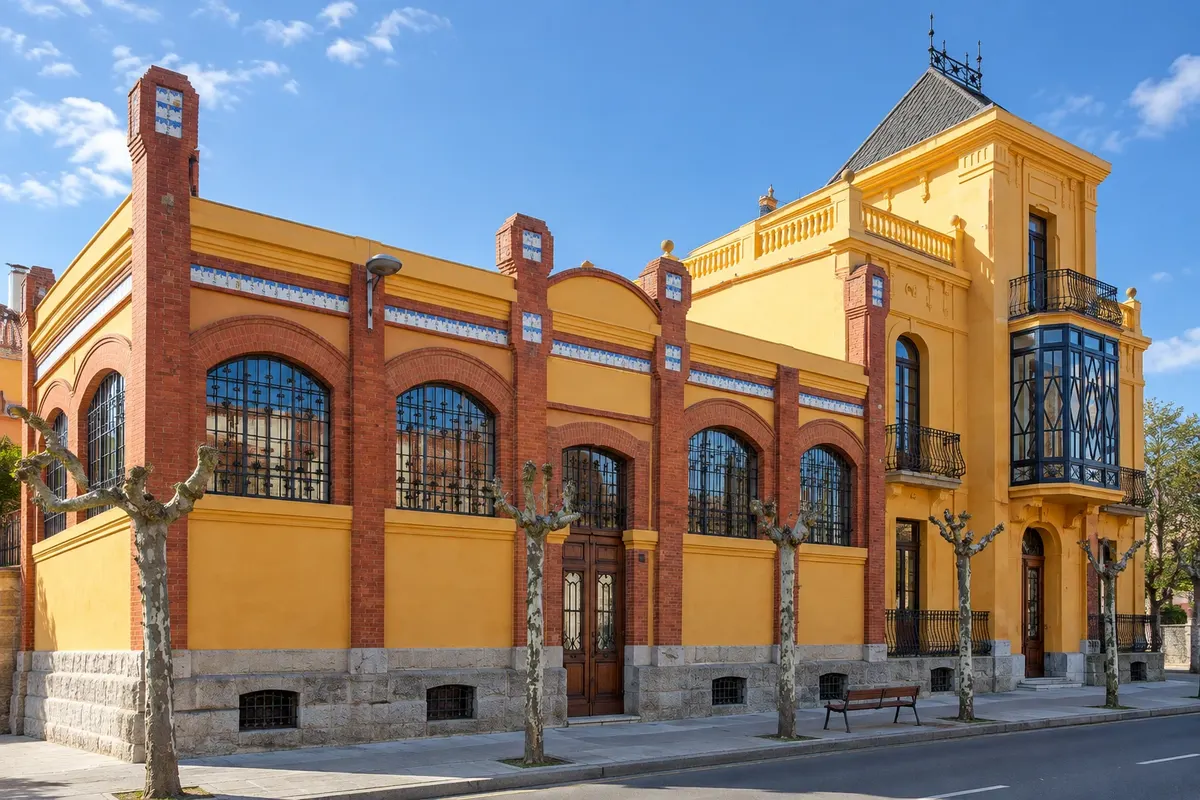
Museum about Astorga's chocolate industry, which once had dozens of factories, with machines, utensils, labels and vintage posters, and a tasting at the end.
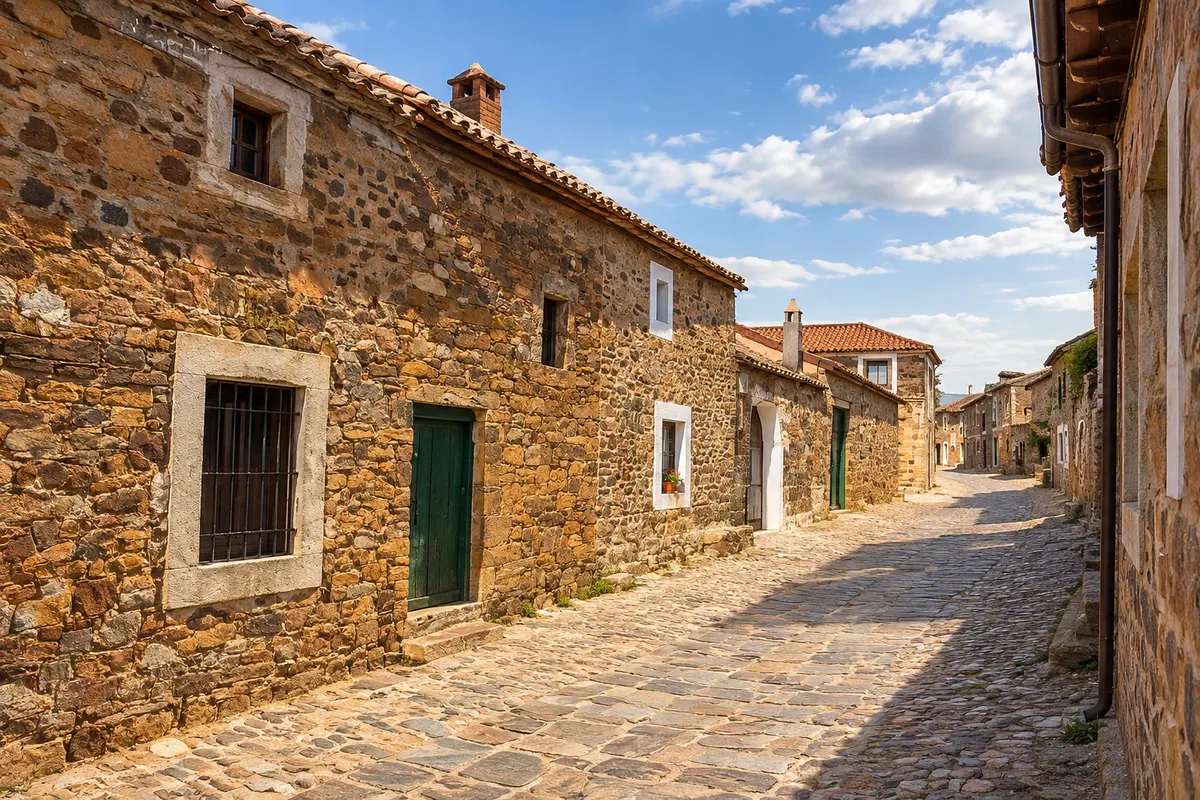
Maragato village 5 km from Astorga, a historic ensemble of reddish stone houses, cobbled streets and large gates from the old muleteers, known for the cozido maragato.
Pred odhodom
Astorga – Castile and León Destinacija Burgos and León
Razdalje so približne. Pred potovanjem preverite lete in vozne rede avtobusov, vlakov ali ladij.
Check before buying. International flights arrive at Madri; from there, high-speed train (AVE) to León and regional train or bus to Astorga, about 50 km from León. Astorga station has trains to León and Ponferrada, and the bus station has services to León, Ponferrada and other towns. By car, take the A-6 motorway, which links Madri to Galicia.
One day is enough for the Palácio de Gaudí, the cathedral, the Roman museum, the wall, the Plaza Mayor and the chocolate museum. With an overnight stay you can have the cozido maragato for lunch and spend an afternoon in Castrillo de los Polvazares.
From May to October the days are long. Summer is warm by day and cool at night, and winter is cold with frosts. At the end of August the Astúricos and Romanos festivals recreate the town's Roman history.
The seasons shown are the most usual ones; nature doesn't always follow the calendar.
Not within the town—Astorga is walkable inside the walls. For Castrillo de los Polvazares, 5 km away, a car or taxi helps; it's also reachable on foot. Trains and buses link Astorga with León and Ponferrada.
Predlog poti
Pot povezuje znamenitosti na tej strani. Za oglede boste imeli dovolj časa.
Start at the Palácio Episcopal de Gaudí, which houses the Museu dos Caminhos, then continue to the cathedral next door, with the altarpiece by Gaspar Becerra.
Have lunch on cozido maragato, served the other way around: first the meats, then the chickpeas and the kale, and the soup at the end. Then visit the Roman museum, in the ergástula, and some points of the Roman route.
In Plaza Mayor, wait for the hour to see the maragato figures strike the town-hall bell. Finish with a walk along the promenade on the wall, with views of the Montes de León.
Try the hot chocolate and the mantecadas, typical small cakes of the town, in one of the cafés in the centre.
Check before you go. Opening hours and days change, and places may close for renovations, holidays or events. This itinerary is a suggestion from Cidade Turismo, not a commitment: plan yours by checking directly with each place you intend to visit.
Pred odhodom
The Palácio Episcopal de Gaudí, the cathedral, the Roman museum, the city wall, Plaza Mayor with the maragato clock figures and the chocolate museum.
It is the typical dish of the Maragatería, served backwards: first the meats, then the chickpeas with kale and, finally, the soup.
By regional train or bus in about 45 minutes, or by car about 50 km via the A-6.
At the end of the 19th century and the beginning of the 20th, the town had dozens of chocolate factories. Some are still operating, and there is a museum about that history.
Yes. Astorga is a point on the Caminho Francês and the place where it meets the Via da Prata, which comes from Sevilha.
Več kot vodnik