

Cerkev
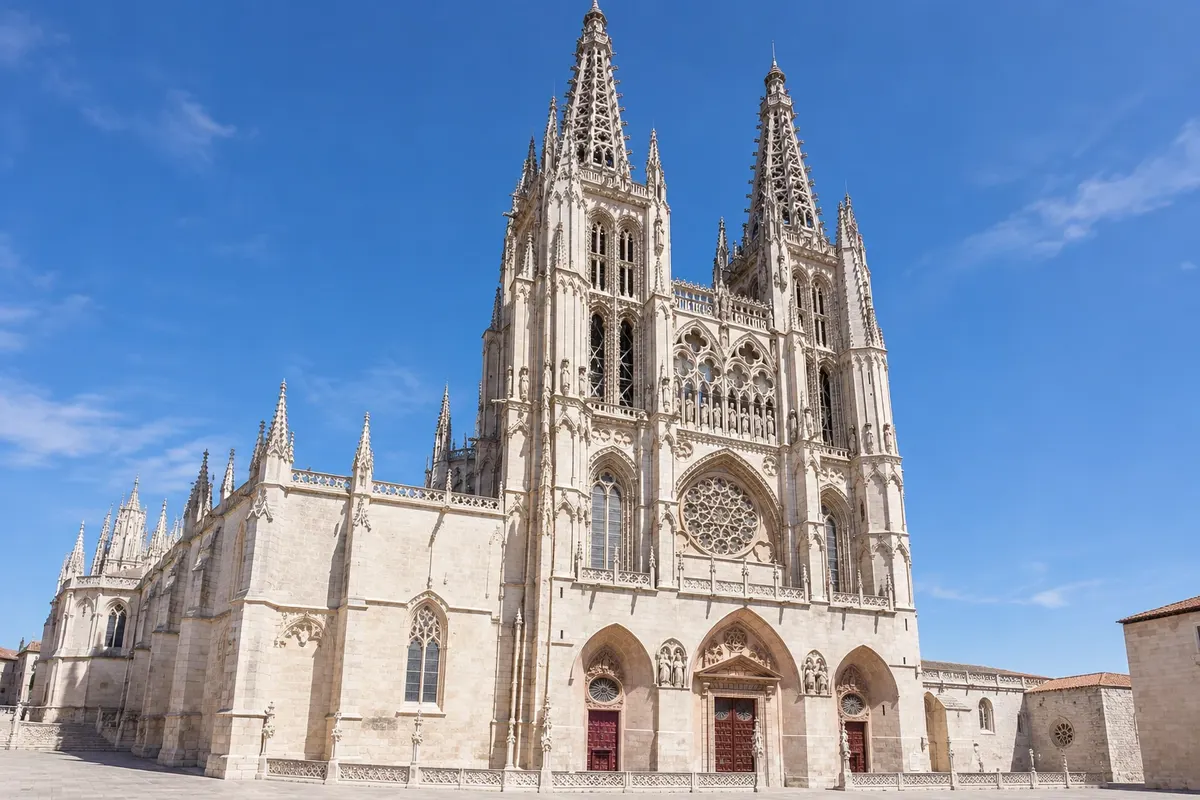
Burgos Cathedral
Gothic cathedral begun in 1221, a World Heritage Site, with lace-like spires, the capela do Condestável, the Escada Dourada and El Cid's tomb.

 Išči
 Brazilija
 Antarktika
 Argentina
 Bolivija
 Čile
 Kolumbija
 Ekvator
 Gvajana
 Francoska Gvajana
 Falklandski otoki (Malvini)
 Paragvaj
 Peru
 Surinam
 Urugvaj
 Venezuela
 Nemčija
 Avstrija
 Belgija
 Hrvaška
 Danska
 Slovaška
 SlovenijaŠpanija
 Finska
 Francija
 Grčija
 Nizozemska
 Madžarska
 Irska
 Islandija
 Italija
 Luksemburg
 Norveška
 Poljska
 Portugalska
 Združeno kraljestvo
 Češka
 Švedska
 Švica
 Turčija
 Bermudi
 Kanada
 Združene države Amerike
 Grenlandija
 Mehika
 Sveta Peter in Mihael
 Dominikanska republika
 JaponskaTurčija
 Južnoafriška republika
 Egipt
 Avstralija
 Fidži
 Nova Zelandija
 Papua Nova Gvineja
Castela e Leão · Španija
Destinacija: Burgos and León.
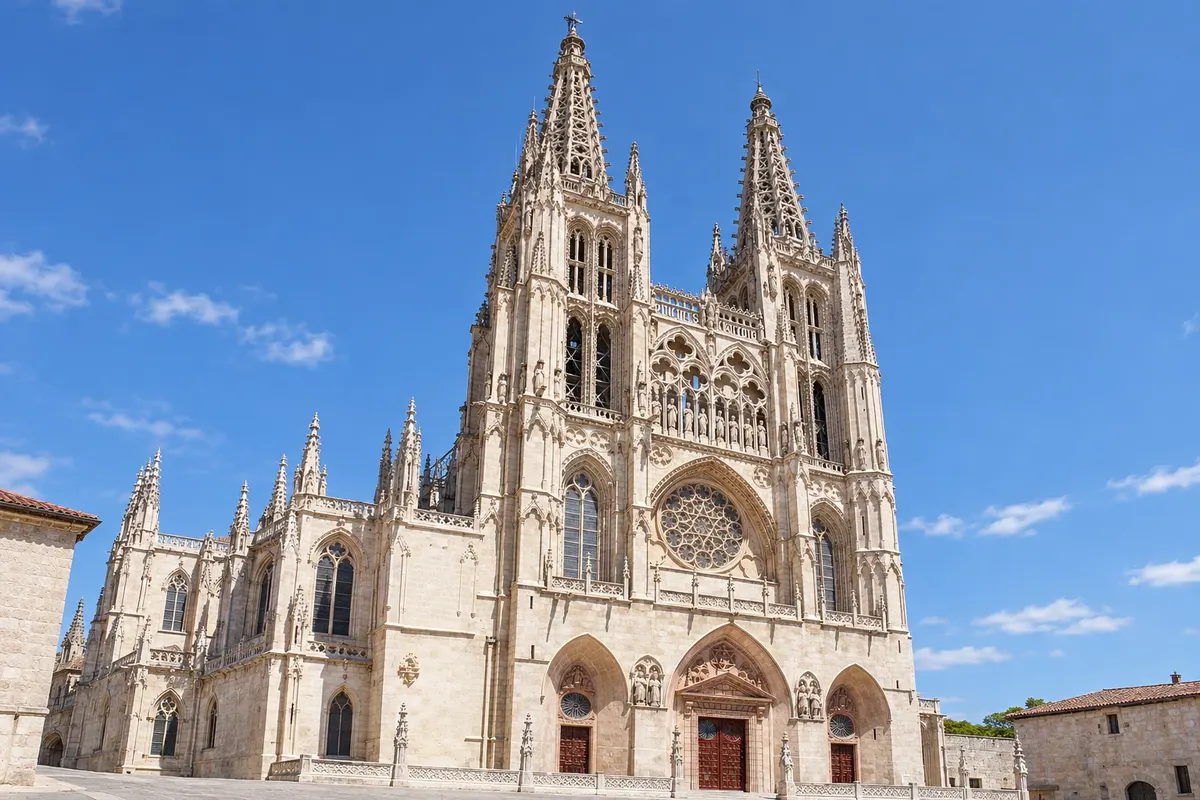
Na fotografiji: Catedral de Burgos, in Burgos.
Illustrative images. The pictures in this guide are illustrations based on the real place, not photographs, and may differ from it.
Mesto
Burgos is a city in Castilla y León on the banks of the rio Arlanzón, the former capital of Castilla and the land of El Cid. The Gothic cathedral, a World Heritage Site, features lace-like spires, the capela do Condestável and El Cid's tomb. Pilgrims enter the centre through the Arco de Santa María. The city also has the royal monastery of Las Huelgas, the cartuxa de Miraflores, the Casa del Cordón and the castle on the hill. The Museu da Evolução Humana displays the Atapuerca fossils, a prehistoric World Heritage site about 15 km away. Spanish is spoken.
V vodniku še ni nastanitev – Burgos.
kako do tja · koliko dni · načrt poti · vprašanja
Rotas entre países
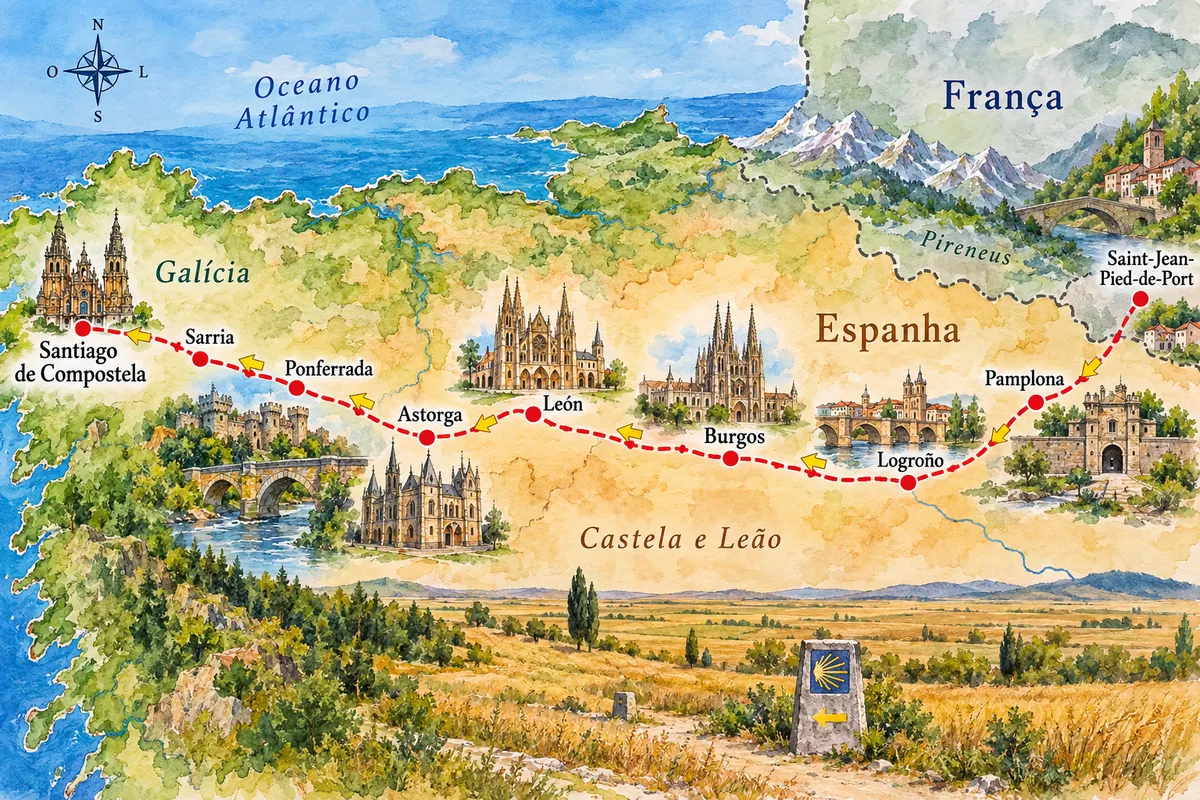
The most travelled pilgrimage route to Santiago de Compostela: from the French Pyrenees to Galicia, on foot, via Pamplona, Burgos and León, following the yellow arrows.
Doživite kraj
Gothic cathedral begun in 1221, a World Heritage Site, with lace-like spires, the capela do Condestável, the Escada Dourada and El Cid's tomb.
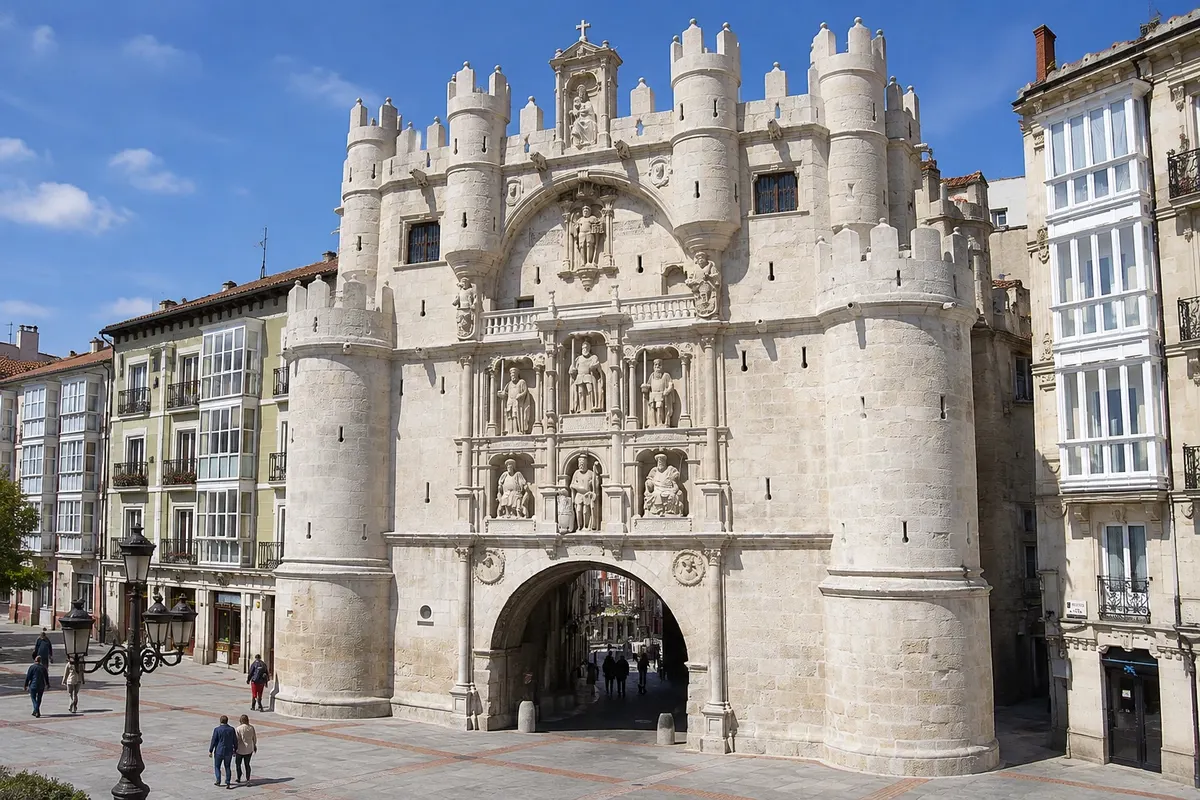
The former main gate of the wall, rebuilt in the 16th century as a triumphal arch with statues of El Cid, Count Fernán González and Carlos V, through which pilgrims enter the centre.
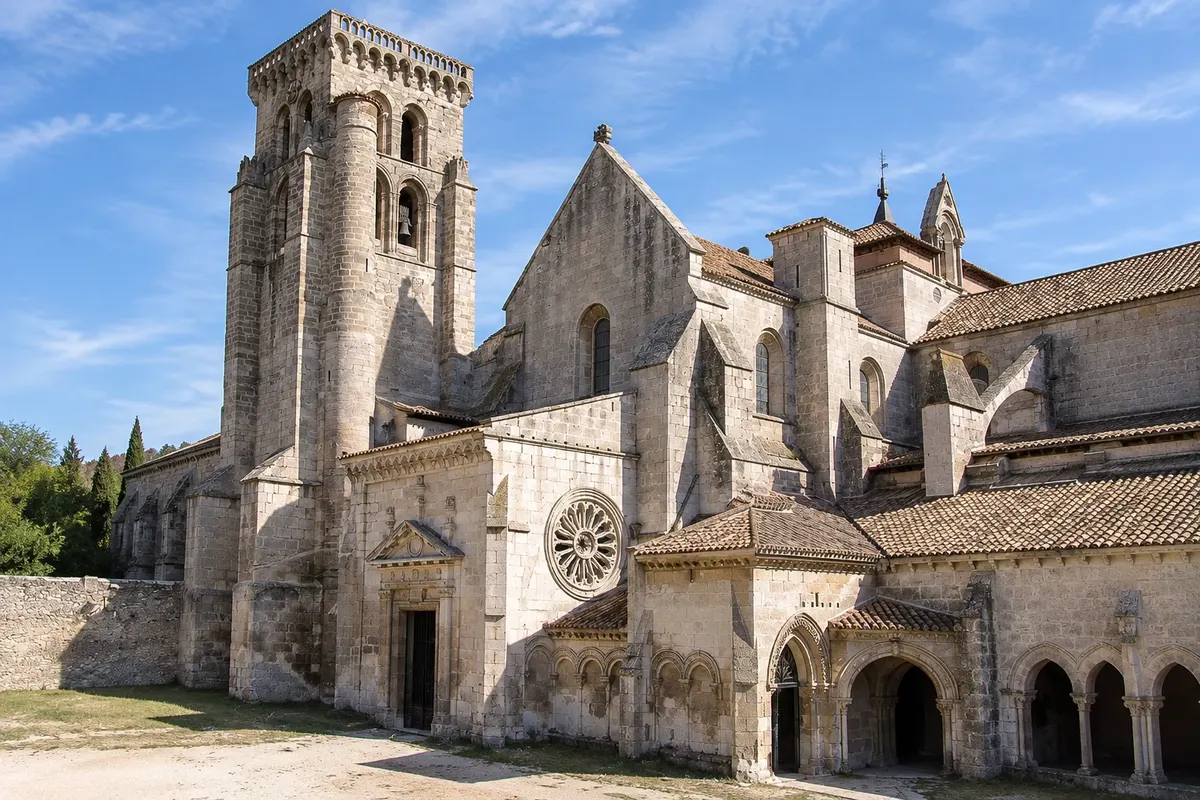
Cistercian nunnery founded in 1187 by King Alfonso VIII and Eleanor of England, royal pantheon of Castela, with a museum of medieval textiles.
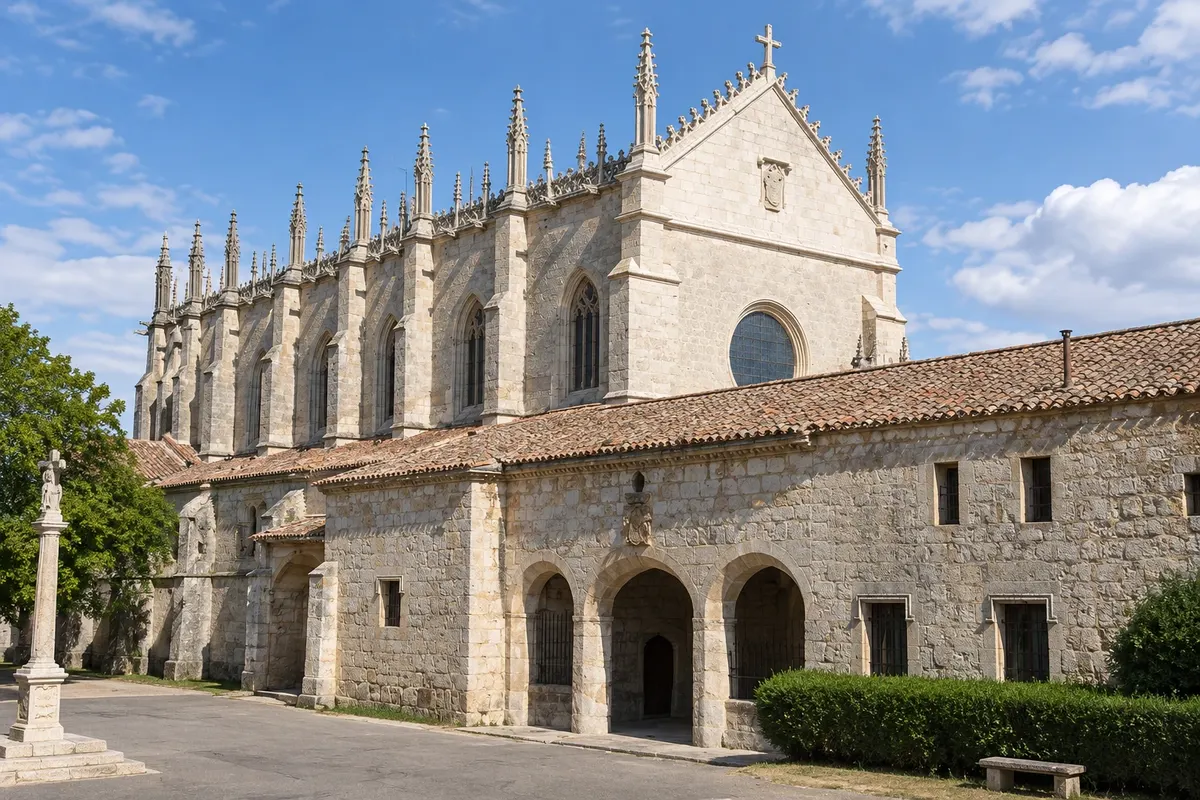
Carthusian monastery from the late 15th century about 3 km from the centre, with a Gothic church, a gilded reredos and the alabaster tombs of Juan II and Isabel of Portugal, carved by Gil de Siloé.
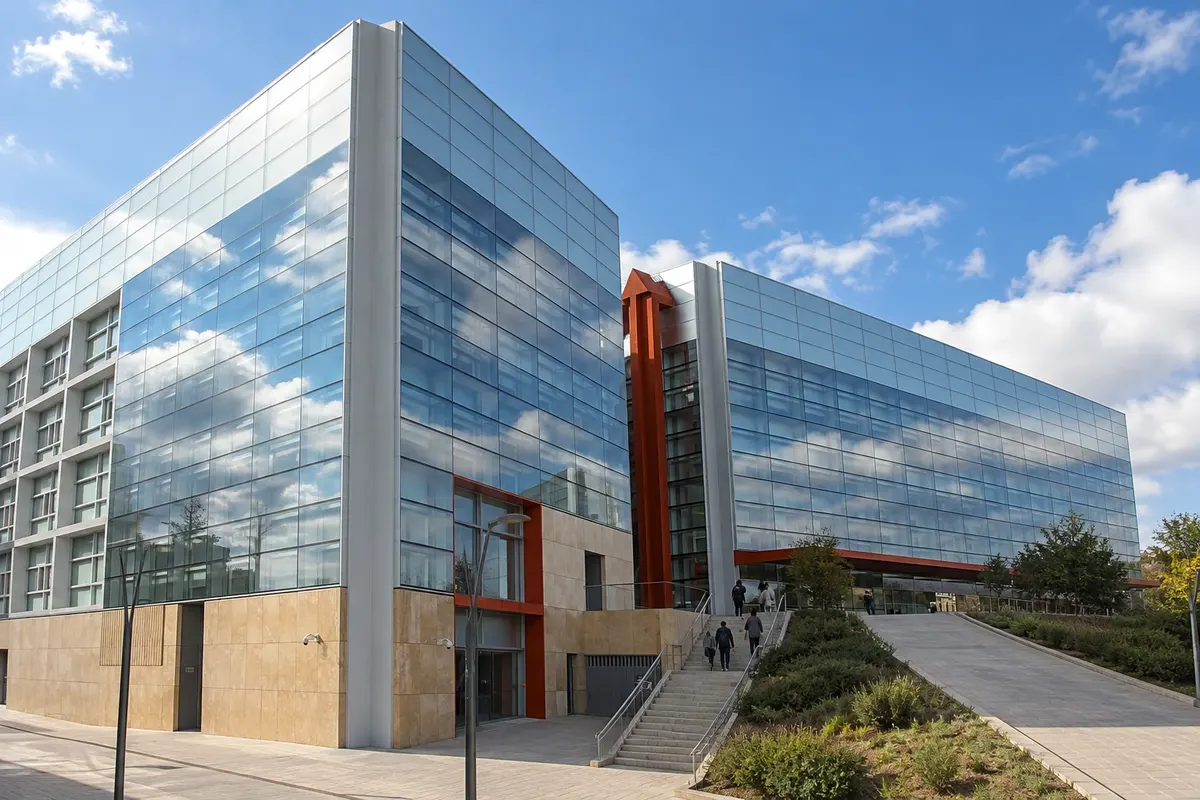
Museum opened in 2010 on the banks of the Arlanzón, with fossils and finds from the Atapuerca sites and exhibitions on human evolution.
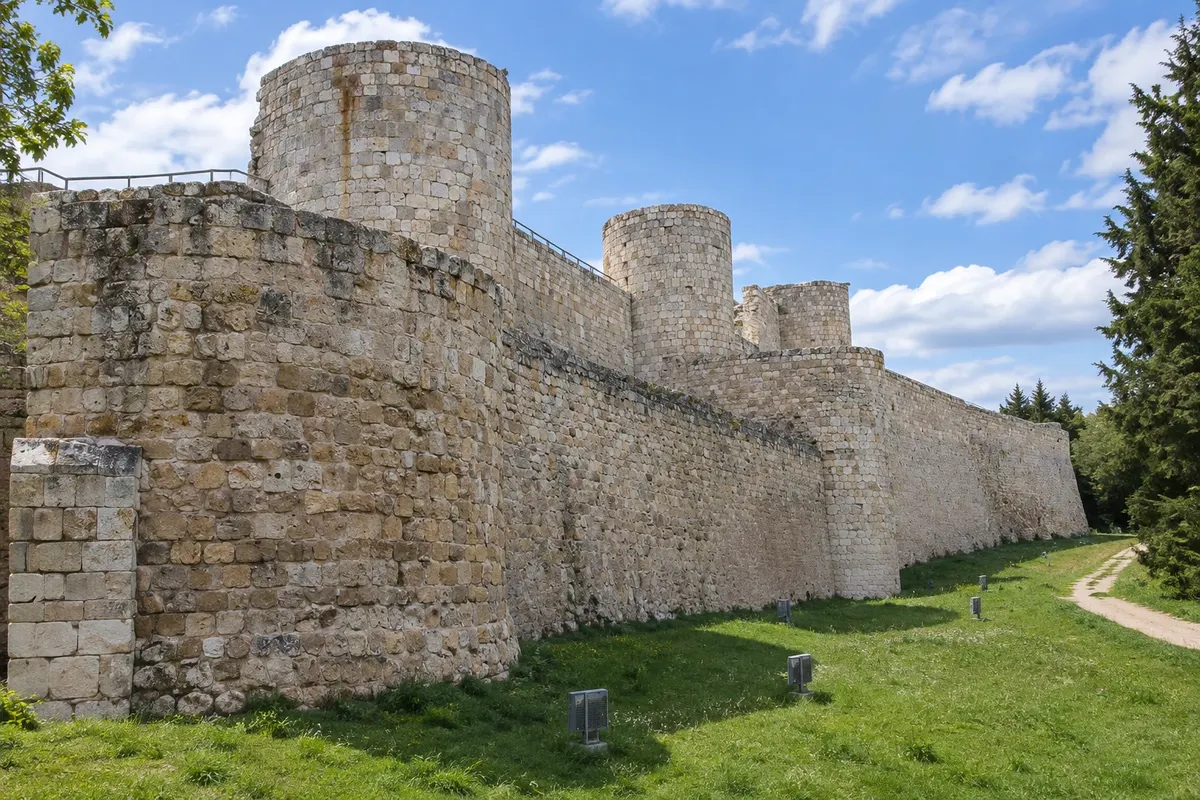
Ruins of the castle on the hill behind the cathedral, dating back to the 9th century, with underground galleries and a viewpoint offering views of the city and the cathedral's spires.
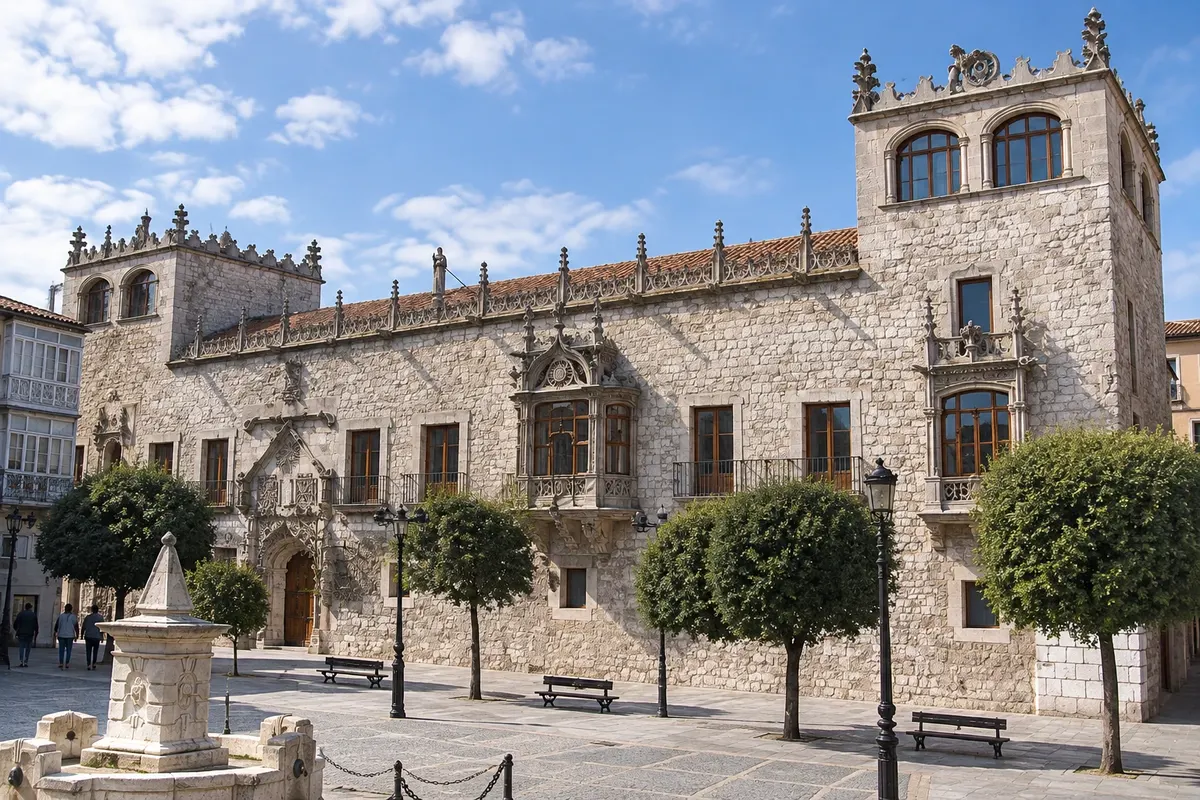
15th-century Gothic palace of the Constables of Castile, with the Franciscan cord carved into the façade, where the Catholic Monarchs received Columbus after his second voyage to America.
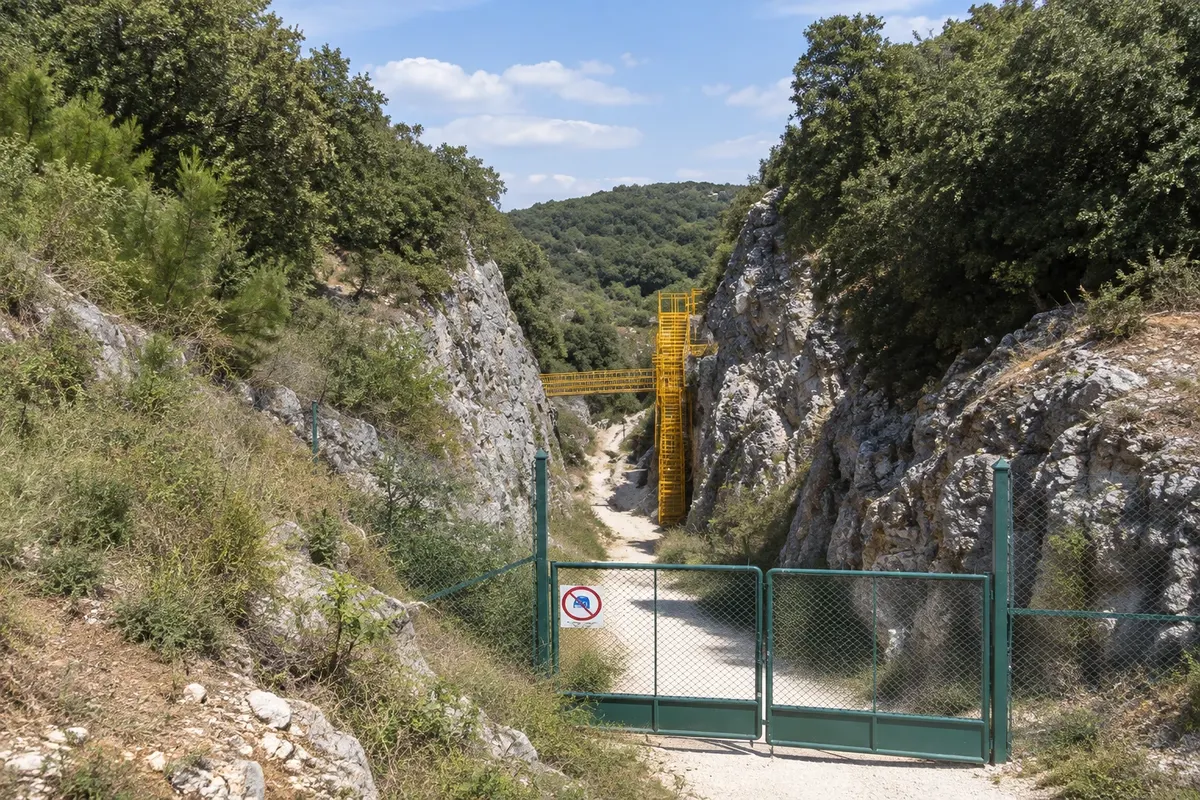
Prehistoric sites in the sierra of Atapuerca, about 15 km from Burgos, Patrimônio Mundial, with caves where some of the oldest human remains in Europe were found.
Pred odhodom
Burgos – Castile and León Destinacija Burgos and León
Razdalje so približne. Pred potovanjem preverite lete in vozne rede avtobusov, vlakov ali ladij.
Check before you buy. International flights arrive to Madri, about 240 km away, and to Bilbao, about 160 km. By train, Burgos has services to Madri, taking roughly 1h30 to 2h30 depending on the train, and to Bilbao, Valladolid and León; Burgos Rosa de Lima station is about 5 km from the centre, with local buses. The bus station in the centre has buses to several towns on the Camino. By car, via the A-1 motorway coming from Madri.
One day is enough for the cathedral, the Arco de Santa María, the Espolón and the castle. With two days, you can add the monastery of Las Huelgas, the cartuxa de Miraflores and the Museu da Evolução Humana. With three days, visit the Atapuerca sites.
From May to October, with long days and more visiting slots for Atapuerca. Summers are hot by day and cool at night; winters are cold, with frost and sometimes snow, and the city is quiet.
The seasons shown are the most usual ones; nature doesn't always follow the calendar.
Not needed for the centre, which is walked. Las Huelgas is about a 20-minute walk and the cartuxa de Miraflores is 3 km away, served by a city bus. For Atapuerca there are buses that depart from the Museu da Evolução Humana on visiting days; a car gives more freedom.
Predlog poti
Pot povezuje znamenitosti na tej strani. Za oglede boste imeli dovolj časa.
Begin with the cathedral, including the capela do Condestável, the Escada Dourada, El Cid's tomb under the crossing, and the Papamoscas, the clock automaton that opens its mouth on the hour.
Climb the castle hill behind the cathedral for views over the city and the cathedral's spires, passing the viewpoint.
Walk down to the Arco de Santa María and along the Espolón, the tree-lined promenade on the banks of the rio Arlanzón, to the statue of El Cid and the Casa del Cordón.
Bars on the streets San Lorenzo and Sombrerería serve tapas, including Burgos morcilla made with rice and the local fresh cheese.
Dan 1
Full visit to the cathedral.
Ascent to the castle hill and the viewpoint.
Arco de Santa María, Espolón and Casa del Cordón.
Streets San Lorenzo and Sombrerería.
Dan 2
Visit the Museu da Evolução Humana, on the riverbank, with the fossils from Atapuerca.
Walk to the monastery of Las Huelgas for the guided visit to the royal pantheon and the museum of medieval textiles.
Take a bus or taxi to the cartuxa de Miraflores, 3 km away, to see the alabaster tombs by Gil de Siloé.
Castilian cuisine, with roast lamb and Castilian soup.
Check before you go. Opening hours and days change, and places may close for renovations, holidays or events. This itinerary is a suggestion from Cidade Turismo, not a commitment: plan yours by checking directly with each place you intend to visit.
Pred odhodom
The cathedral, the castle with its viewpoint, the Arco de Santa María, the Espolón promenade and the Casa del Cordón.
In the catedral de Burgos, beneath the crossing, together with his wife, Dona Jimena.
By train, in about 1h30 to 2h30 depending on the type of service, or by car via the A-1 in roughly 2h30. It's about 240 km.
Yes. The sites are about 15 km away, with guided tours and buses that depart from the Museu da Evolução Humana on visiting days. Book in advance.
Yes. It is one of the major cities on the Camino Francés, and pilgrims enter the centre through the Arco de Santa María.
Več kot vodnik


