

 Brazilija
 Antarktika
 Argentina
 Bolivija
 Čile
 Kolumbija
 Ekvator
 Gvajana
 Francoska Gvajana
 Falklandski otoki (Malvini)
 Paragvaj
 Peru
 Surinam
 Urugvaj
 Venezuela
 Nemčija
 Avstrija
 Belgija
 Hrvaška
 Danska
 Slovaška
 Slovenija
 Finska
 Francija
 Grčija
 Nizozemska
 Madžarska
 Irska
 Islandija
 Italija
 Luksemburg
 Norveška
 Poljska
 Portugalska
 Združeno kraljestvo
 Češka
 Švedska
 Švica
 Turčija
 Bermudi
 Kanada
 Združene države Amerike
 Grenlandija
 Mehika
 Sveta Peter in Mihael
 Dominikanska republika
 Japonska
 Južnoafriška republika
 Egipt
 Avstralija
 Fidži
 Nova Zelandija
 Papua Nova Gvineja
Pot · Asturias · Galicia
Caminho Primitivo de Santiago on foot
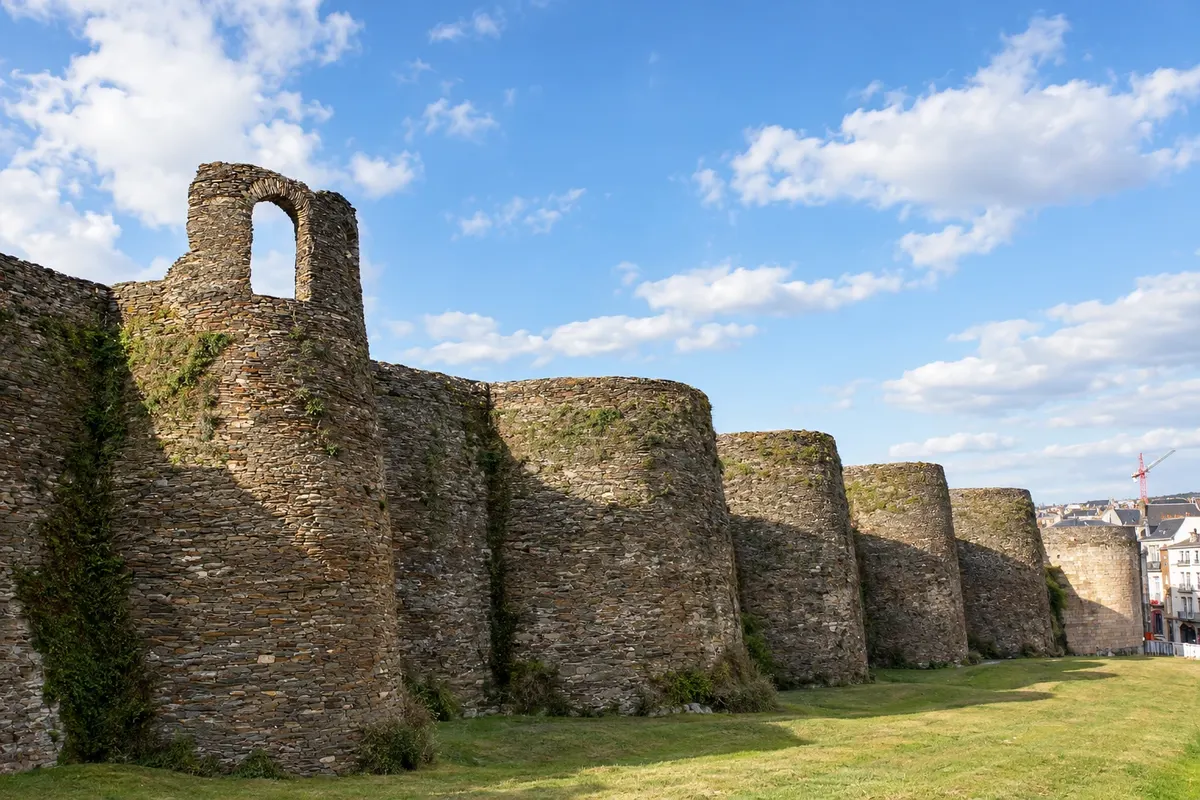
The oldest route to Santiago: from Oviedo, through the mountains of Asturias and via Lugo and its Roman walls, on foot to the cathedral of Compostela.
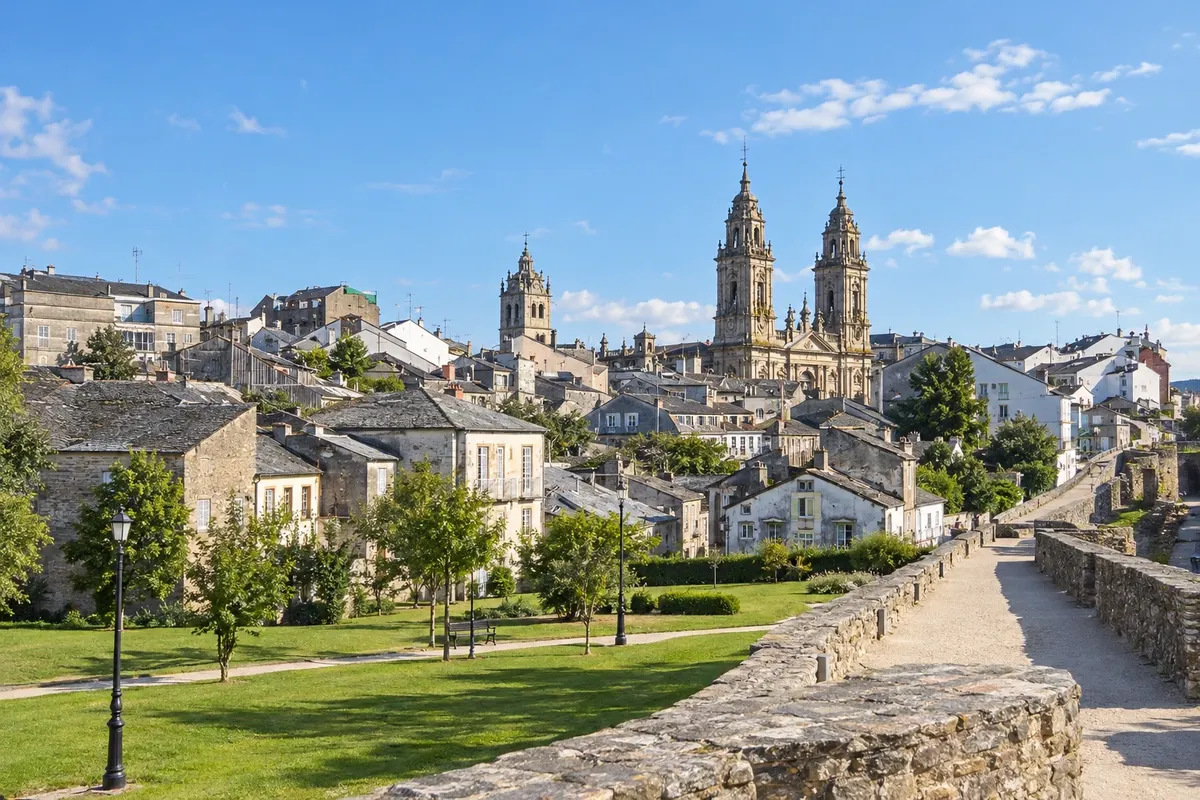
Na fotografiji: Roman wall of Lugo
Illustrative images. The pictures in this guide are illustrations based on the real place, not photographs, and may differ from it.


Pot
o Caminho Primitivo de Santiago on foot – predstavitev
The Camino Primitivo starts in Oviedo, in Asturias, and reaches Santiago de Compostela in about 320 km and 13 to 14 stages. It is regarded as the oldest route: according to tradition, it was the route of King Alfonso II of Asturias, who in the 9th century left Oviedo to visit the tomb of the newly discovered apostle. It is recognized by UNESCO as World Heritage, together with the other northern routes of Spain.
The route crosses the interior mountains of Asturias, through Grado, Salas, Tineo and Pola de Allande, climbs to the Puerto del Palo at over 1,100 meters, passes the Salime reservoir and enters Galicia at A Fonsagrada. In Lugo it crosses the Roman wall, a World Heritage site, and continues to Melide, where it joins the Camino Francés, three days from Santiago.
It is a mountain route, with steep ascents, isolated stretches and few services on some stages, and fewer pilgrims than the Francés. The route is waymarked with yellow arrows and the scallop shell.
Zemljevid
Število mest na poti: 5
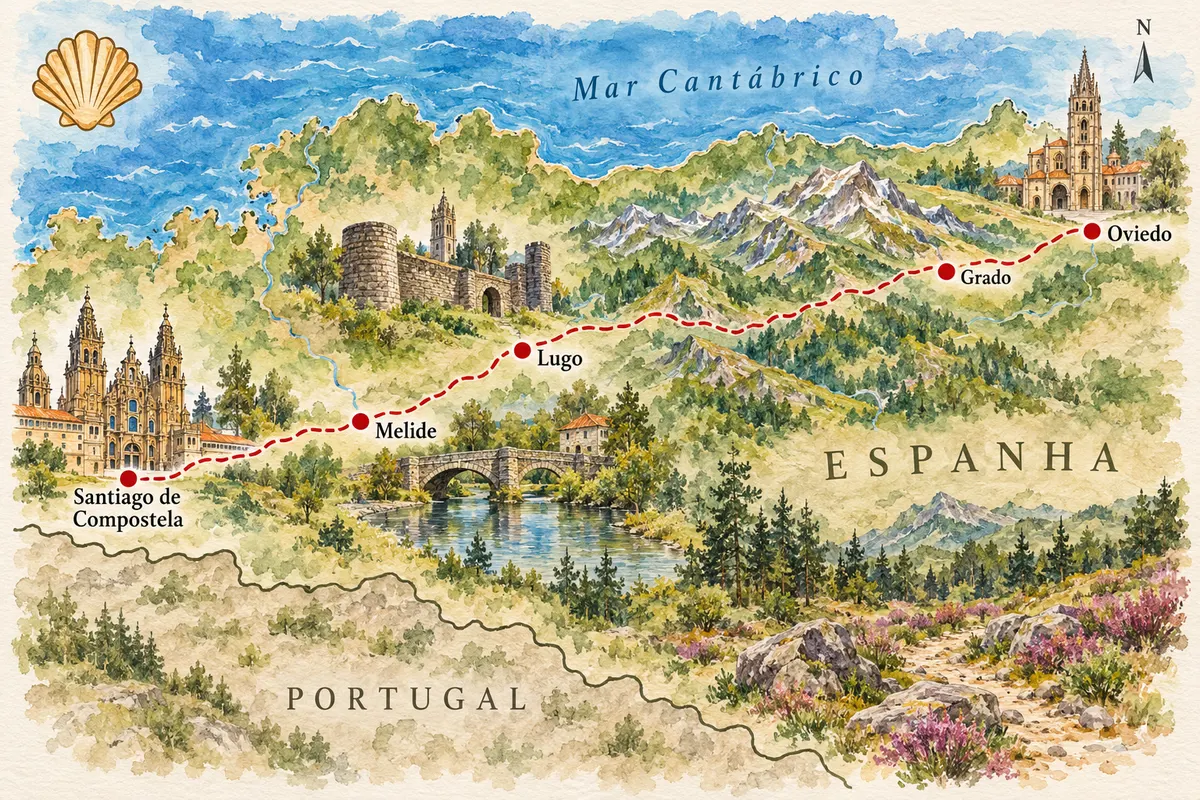
Obrisi: IGN/CNIG, unidades administrativas, CC BY 4.0. Priredba: Cidade Turismo.
Potek poti
Od mesta do mesta
Razdalje in časi so okvirni. Preverite jih pred odhodom.
-
 1 · Asturias
Oviedo
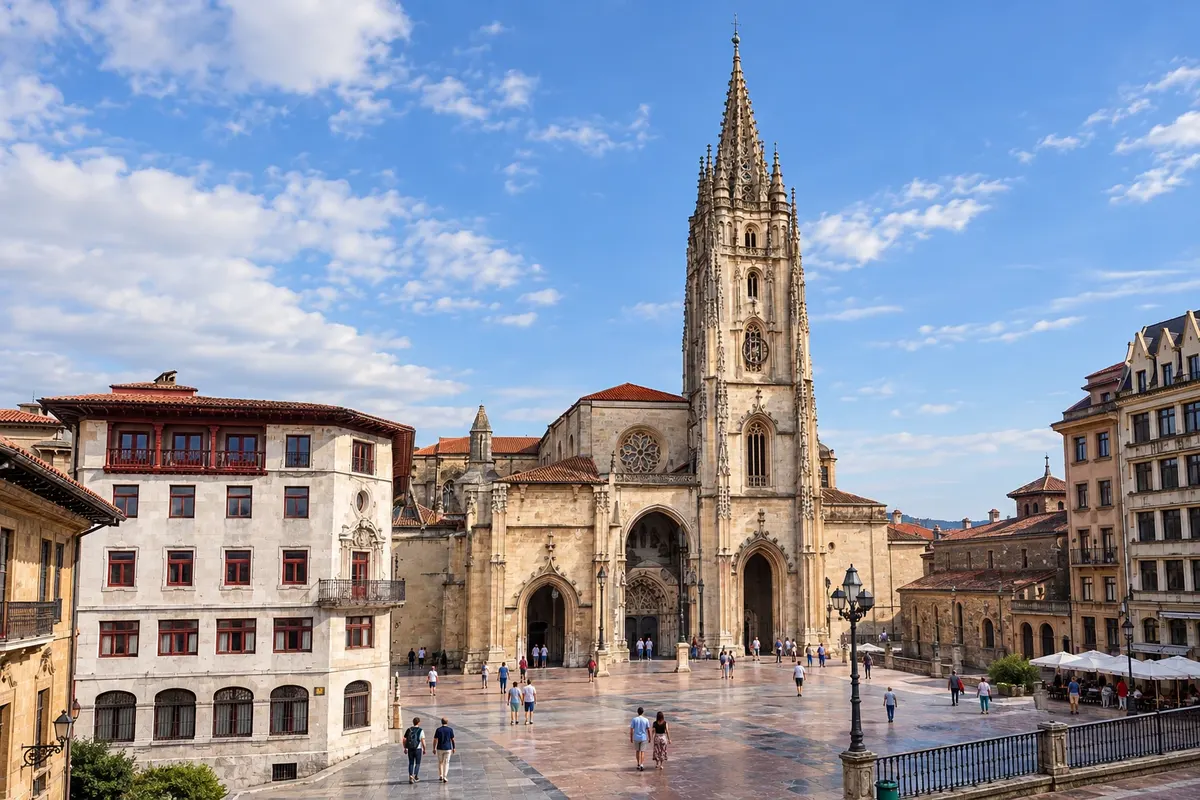
The route begins at the Cathedral of San Salvador in Oviedo, where many pilgrims visit the Cámara Santa before setting out. The city, capital of Asturias, has the pre-Romanesque churches of Santa María del Naranco and San Miguel de Lillo, World Heritage sites, and an old town of plazas and cider houses.
→ Grado približno 25 km 1 day on foot Oviedo–Grado (about 25 km), through the outskirts of Oviedo and valleys with climbs and descents.
-
 2 · Asturias
Grado
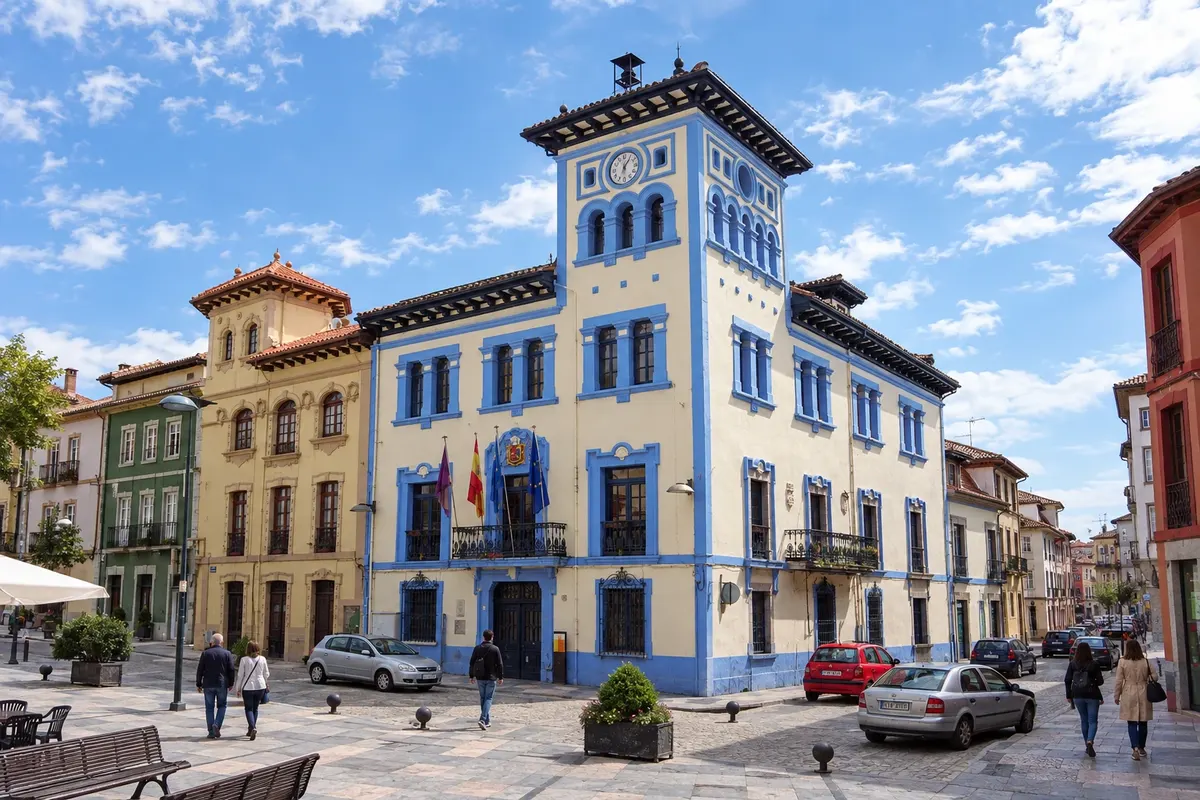
Grado is the first stop, an Asturian town with a street market and manor houses. From here the route enters the mountains via Salas, with its tower and collegiate church, Tineo and Pola de Allande. After Tineo, you choose between the main route and the Route of the Hospitals, which goes higher and is more demanding.
→ Lugo približno 193 km about 8 days on foot Grado–Salas (22 km), Salas–Tineo (19 km), Tineo–Pola de Allande (28 km), Pola de Allande–La Mesa (22 km, via the Puerto del Palo), La Mesa–Grandas de Salime (18 km), Grandas–A Fonsagrada (28 km), A Fonsagrada–O Cádavo (23 km) and O Cádavo–Lugo (32 km).
-
 3 · Galicia
Lugo
After the Puerto del Palo, Grandas de Salime and A Fonsagrada, now in Galicia, the route reaches Lugo. The city is encircled by a complete Roman wall, a World Heritage site, which can be walked along at the top. It has a cathedral and a center of plazas and tapas bars. Lugo is about 100 km from Santiago.
→ Melide približno 47 km about 2 days on foot Lugo–Ferreira (27 km) and Ferreira–Melide (20 km), across Galician fields and villages.
-
 4 · Galicia
Melide
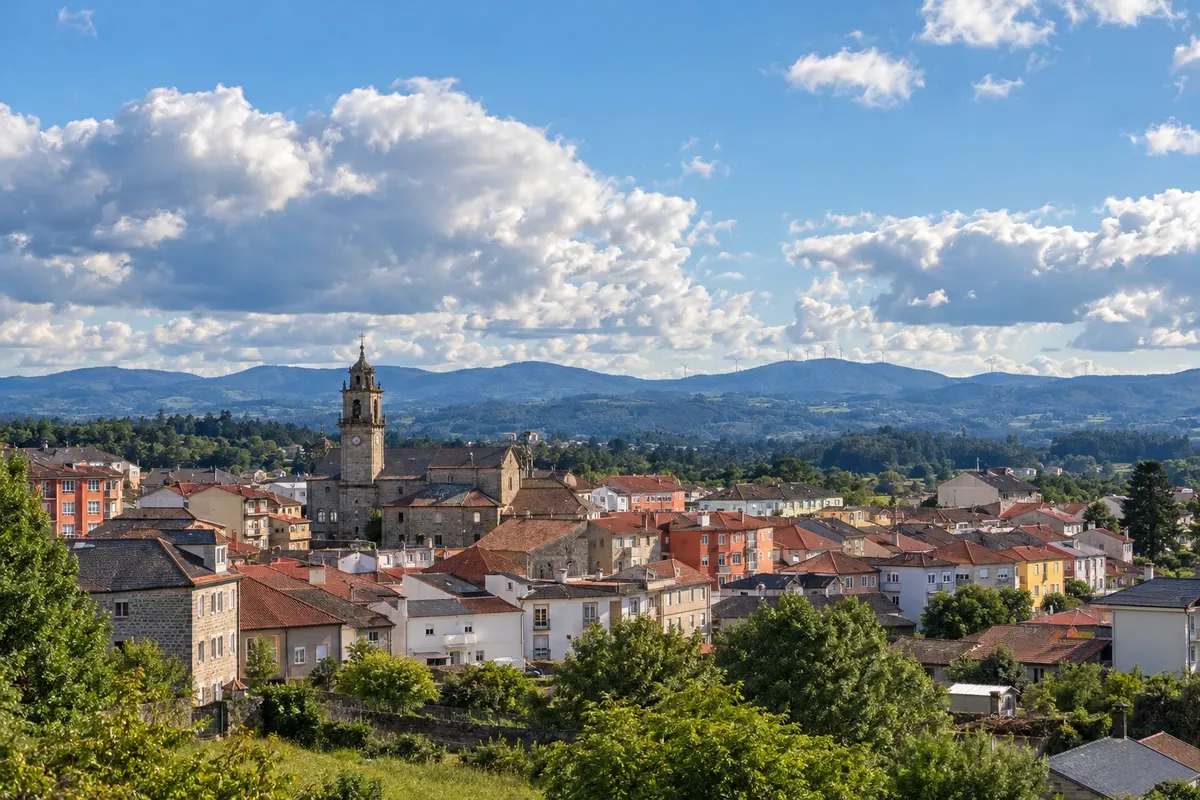
After San Román da Retorta and Ferreira, the route reaches Melide, where it joins the Camino Francés. The village is known for pulpo a la gallega served in the pulperías. From here the route continues through Arzúa and O Pedrouzo, with many pilgrims.
→ Santiago de Compostela približno 53 km about 3 days on foot Melide–Arzúa (14 km), Arzúa–O Pedrouzo (20 km) and O Pedrouzo–Santiago (19 km), together with the Camino Francés.
-
 5 · Galicia
Santiago de Compostela
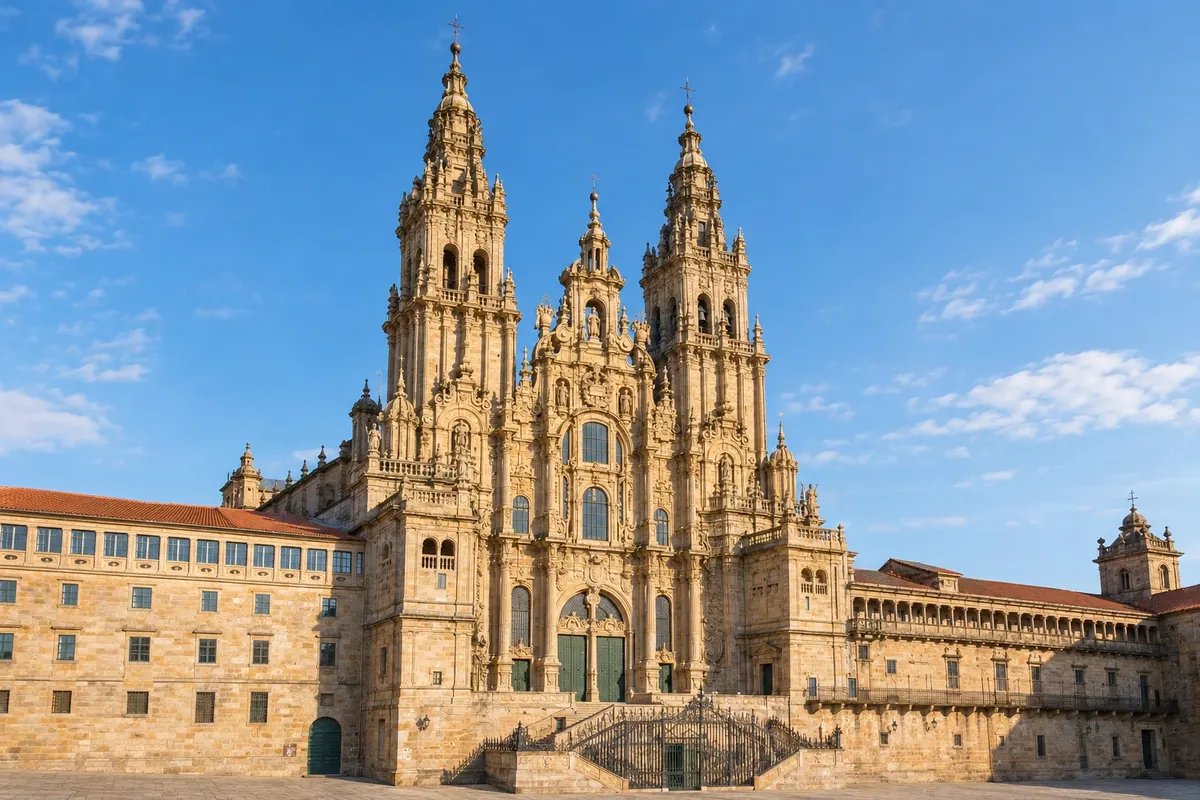
The arrival is over Monte do Gozo and through the old town to the Plaza del Obradoiro in front of the cathedral. The Pilgrim’s Office, near the cathedral, issues the Compostela.
Koliko dni
The entire route takes about 2 weeks on foot. From Lugo, about 100 km from Santiago, it is 5 days—the minimum for the Compostela.
Najboljši čas za obisk
From May to September, when the mountains are free of snow and the hostels are open. In winter, high sections such as the Puerto del Palo can receive snow, and fog and frequent rain occur. July and August are the busiest months, but the route remains less crowded than the Francés up to Melide.
The seasons shown are the most usual ones; nature doesn't always follow the calendar.
Kako prepotovati pot
On foot, following the yellow arrows, carrying your backpack or using a luggage transfer service between stages. Stages range from 14 to 32 km, several with long climbs. Carry food and water for mountain stretches, where there are few villages.
Komu je pot namenjena
For those with good physical fitness who enjoy mountain walking, for those who want a quieter route with history, and for those who have done another route and are looking for a greater challenge.
Odgovori na vaša vprašanja
Pogosta vprašanja – Caminho Primitivo de Santiago on foot
Why is it called the Camino Primitivo?
Because it is considered the oldest route to Santiago: according to tradition, it was the route of King Alfonso II, who left Oviedo in the 9th century to visit the apostle’s tomb.
How many kilometers is the Camino Primitivo?
About 320 km from Oviedo to Santiago, in 13 to 14 stages. From Lugo, about 100 km.
Is the Camino Primitivo difficult?
It is a mountain route, with steep climbs, isolated stretches and long stages, especially between Tineo and A Fonsagrada. It requires good physical condition and is generally not recommended as a first route for those who have never done long-distance walks.
What is the Route of the Hospitals?
It is a high-mountain variant across the sierra between Tineo and Pola de Allande, passing the ruins of former pilgrim hospitals. It offers wide views but is isolated and exposed to the weather: avoid it in fog, heavy rain or snow.
Where to start to obtain the Compostela?
In Lugo or earlier. Lugo is about 100 km from Santiago, at the minimum distance required by the Pilgrim’s Office. Check the rules on the Office’s website.
Can it be combined with the Camino del Norte?
Yes. Many pilgrims do the Camino del Norte from Irún and, in Asturias, head to Oviedo and continue along the Primitivo.
Več kot vodnik


