6 places to visit Gdańsk (Poland), chosen by the Cidade Turismo guide.
Illustrative images. The pictures in this guide are illustrations based on the real place, not photographs, and may differ from it.
To start
The 6 main places Gdańsk
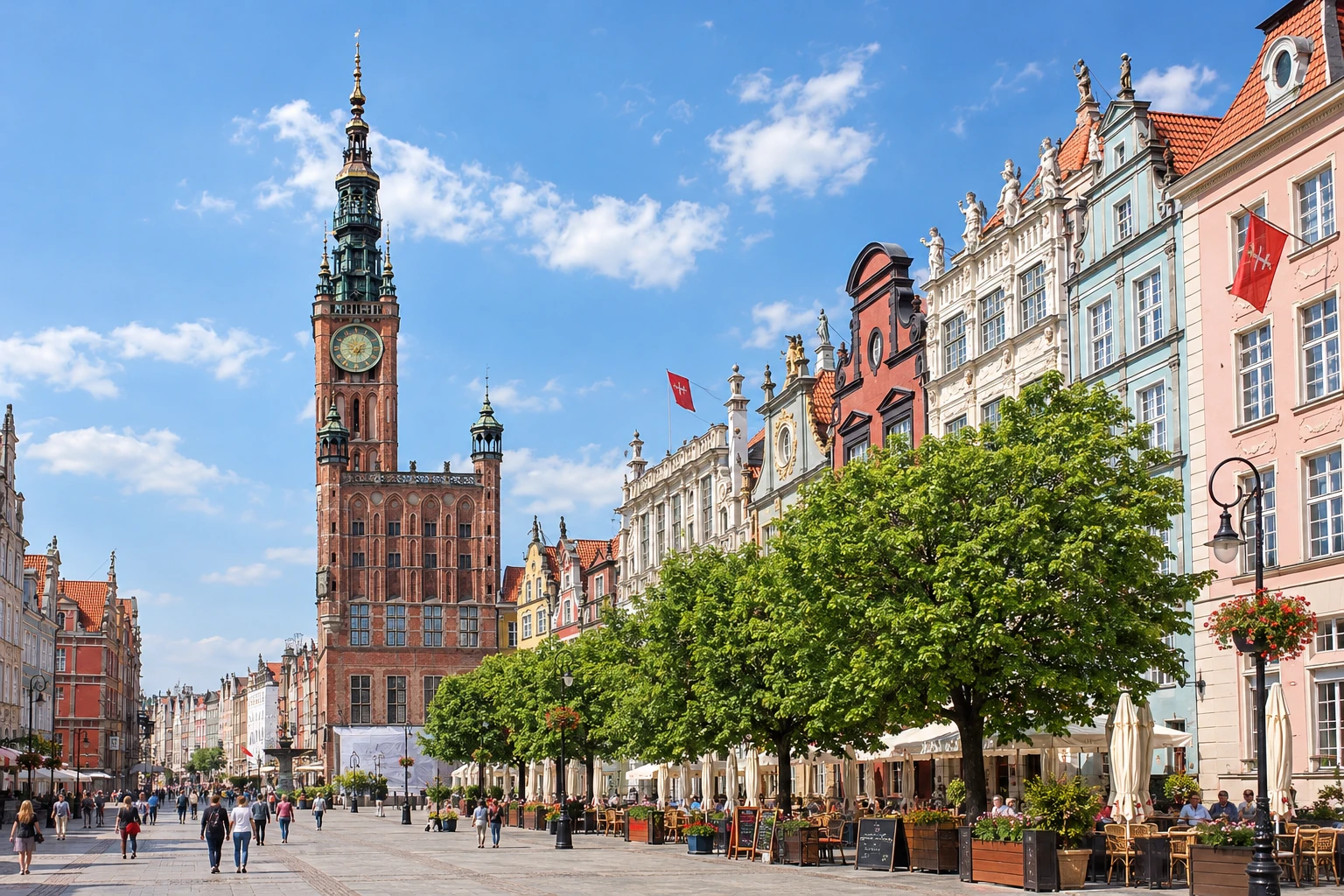
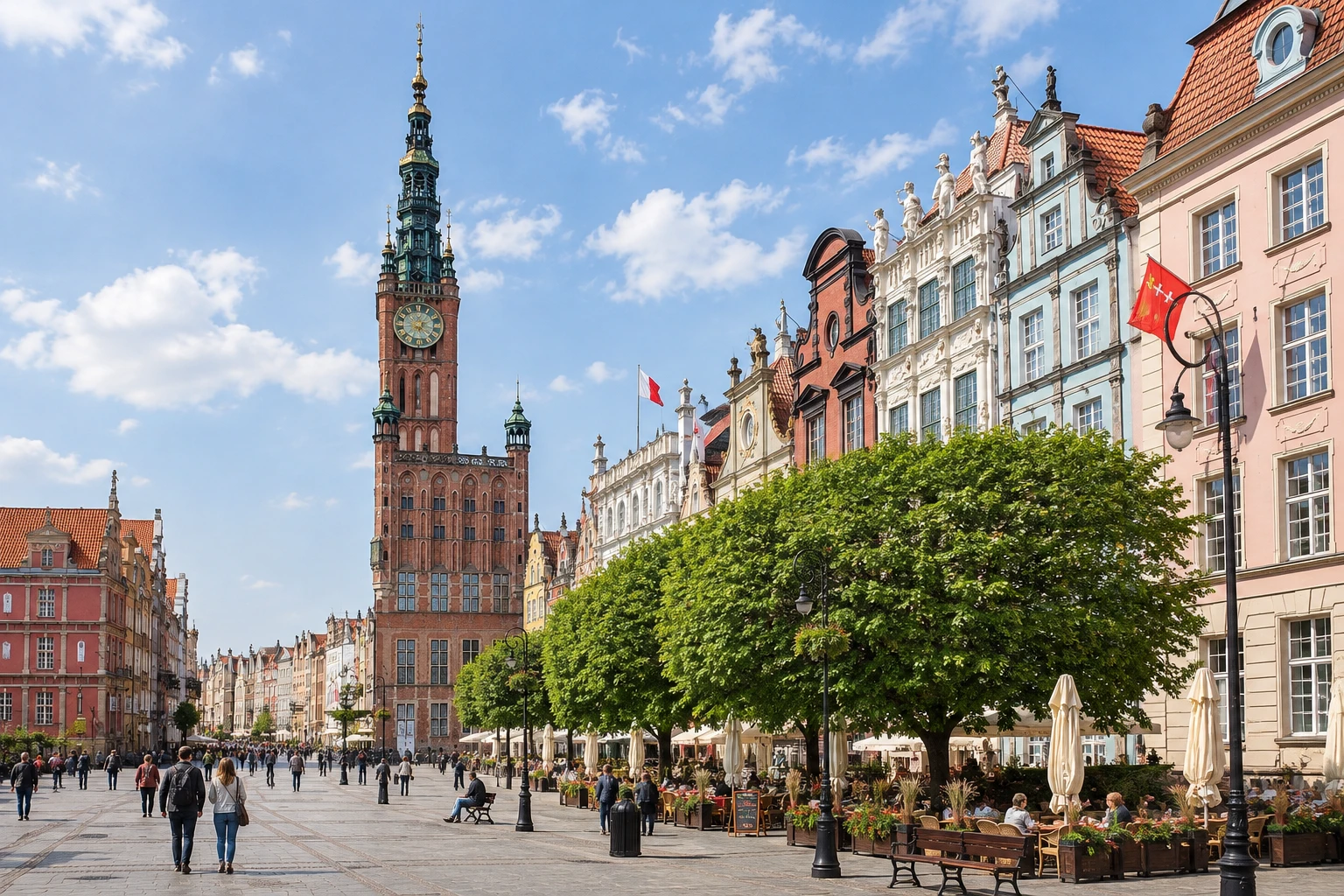
Long MarketDługi Targ extends Długa Street toward the river, forming the representative axis of Gdańsk’s centre.
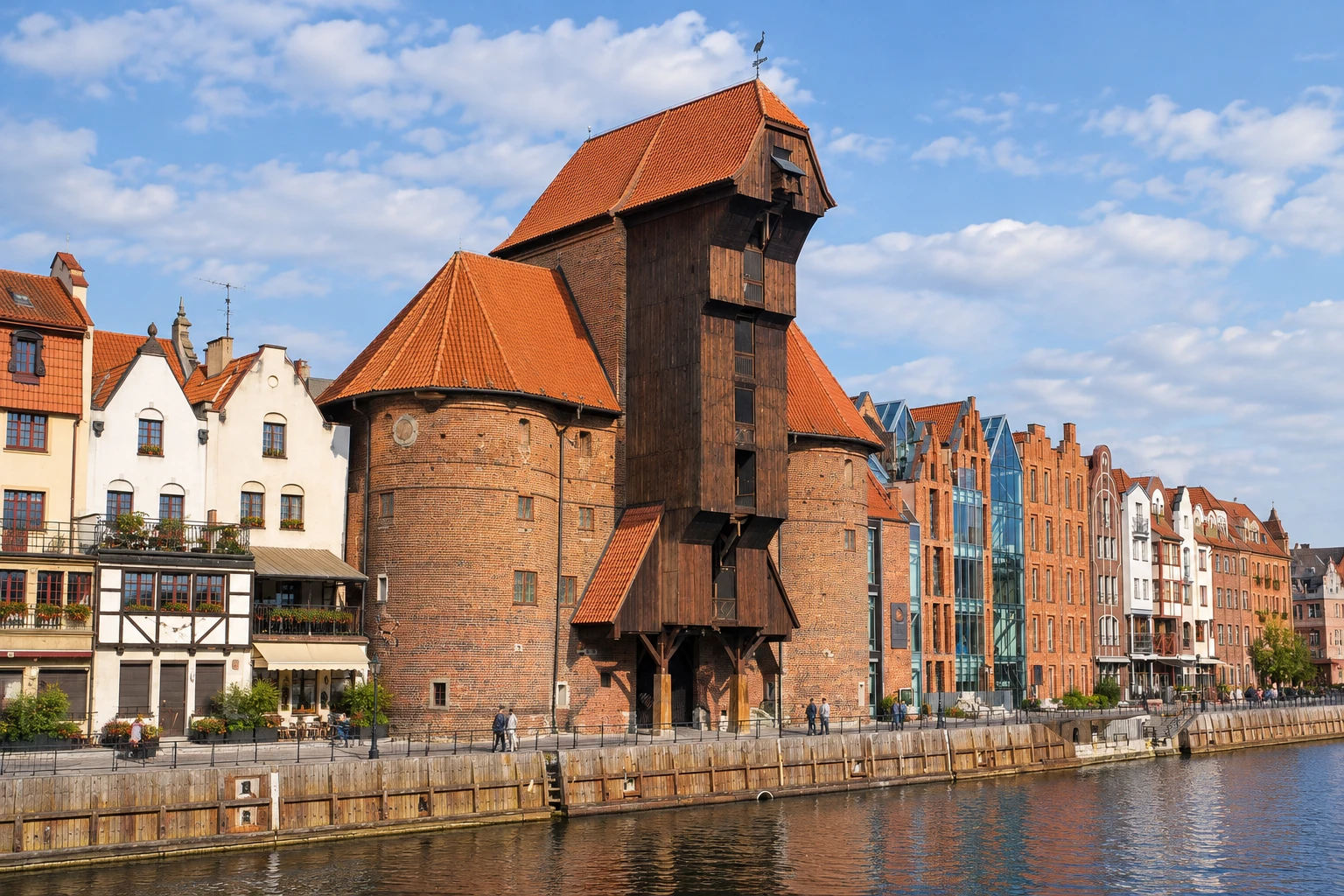
Gdańsk CraneThe Żuraw projects over the Motława riverbank with a wooden structure between brick towers.
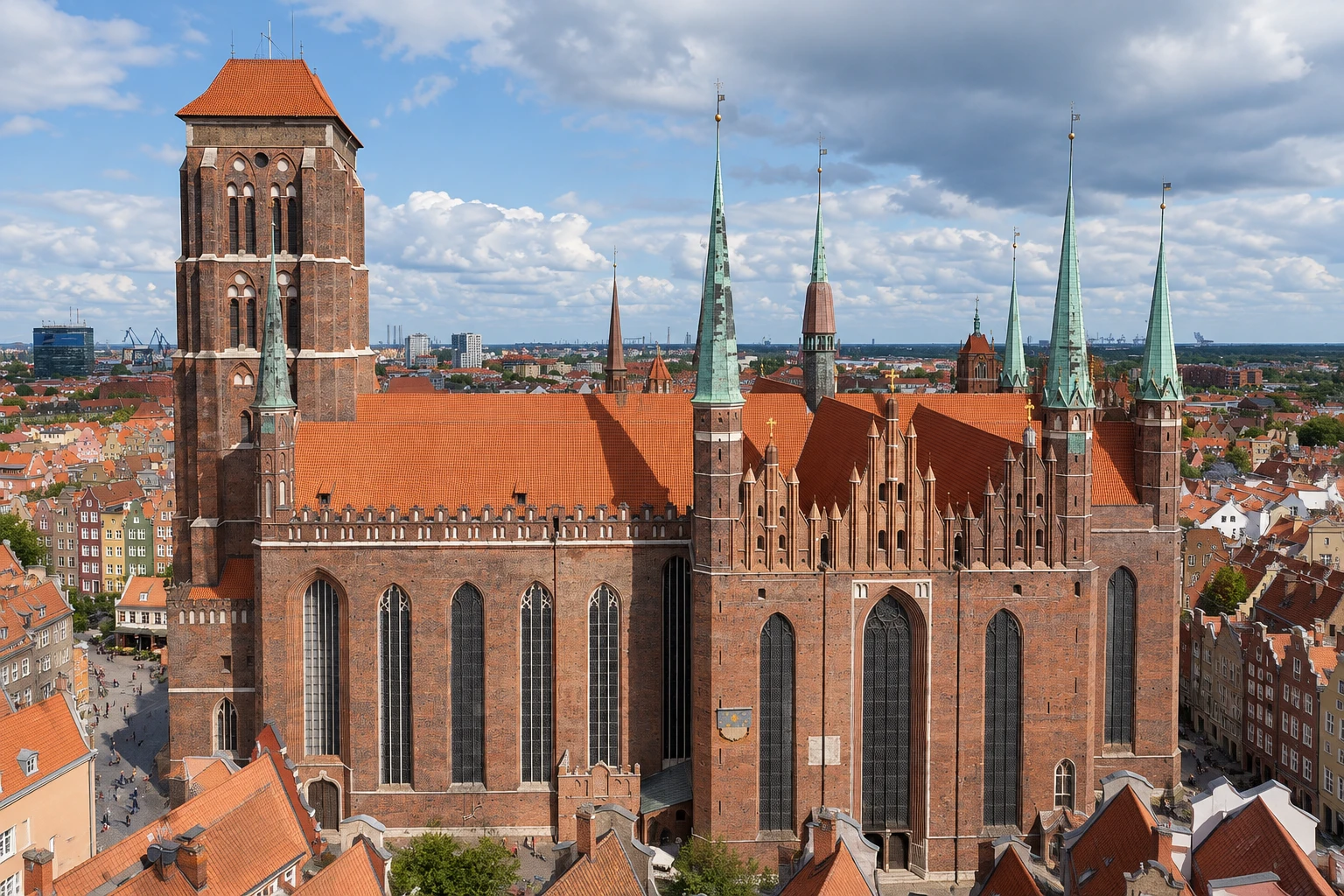
St. Mary's Basilica in GdańskSt. Mary’s Basilica occupies a large brick volume in central Gdańsk. Its scale is felt both from the narrow surrounding streets and inside, where pillars and vaults organize a n...
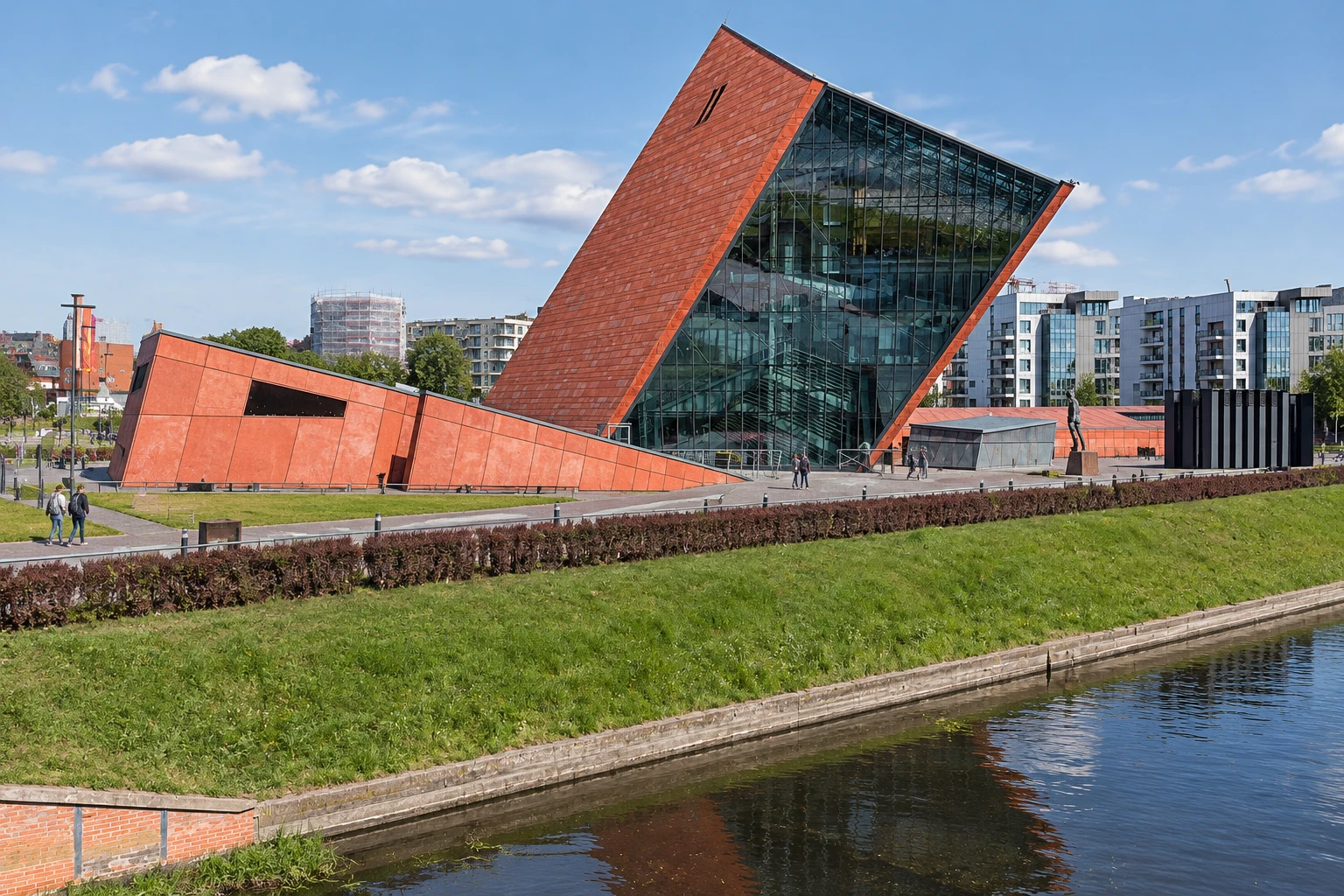
Museum of the Second World WarThe Museum of the Second World War occupies a contemporary building in Gdańsk, with a significant portion of the exhibitions underground.
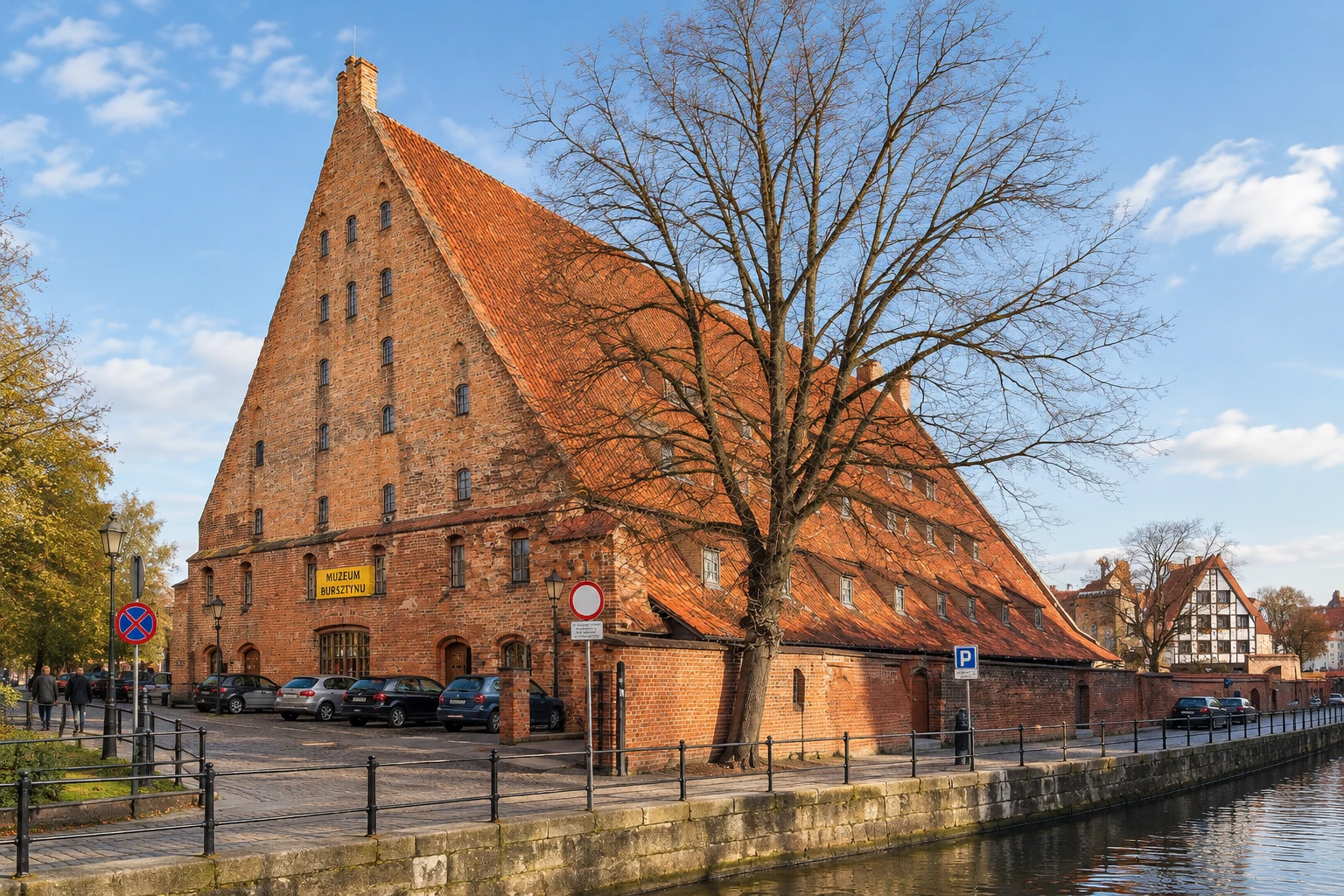
Amber MuseumThe Gdańsk Amber Museum occupies the Great Mill, a brick building tied to the city’s history.
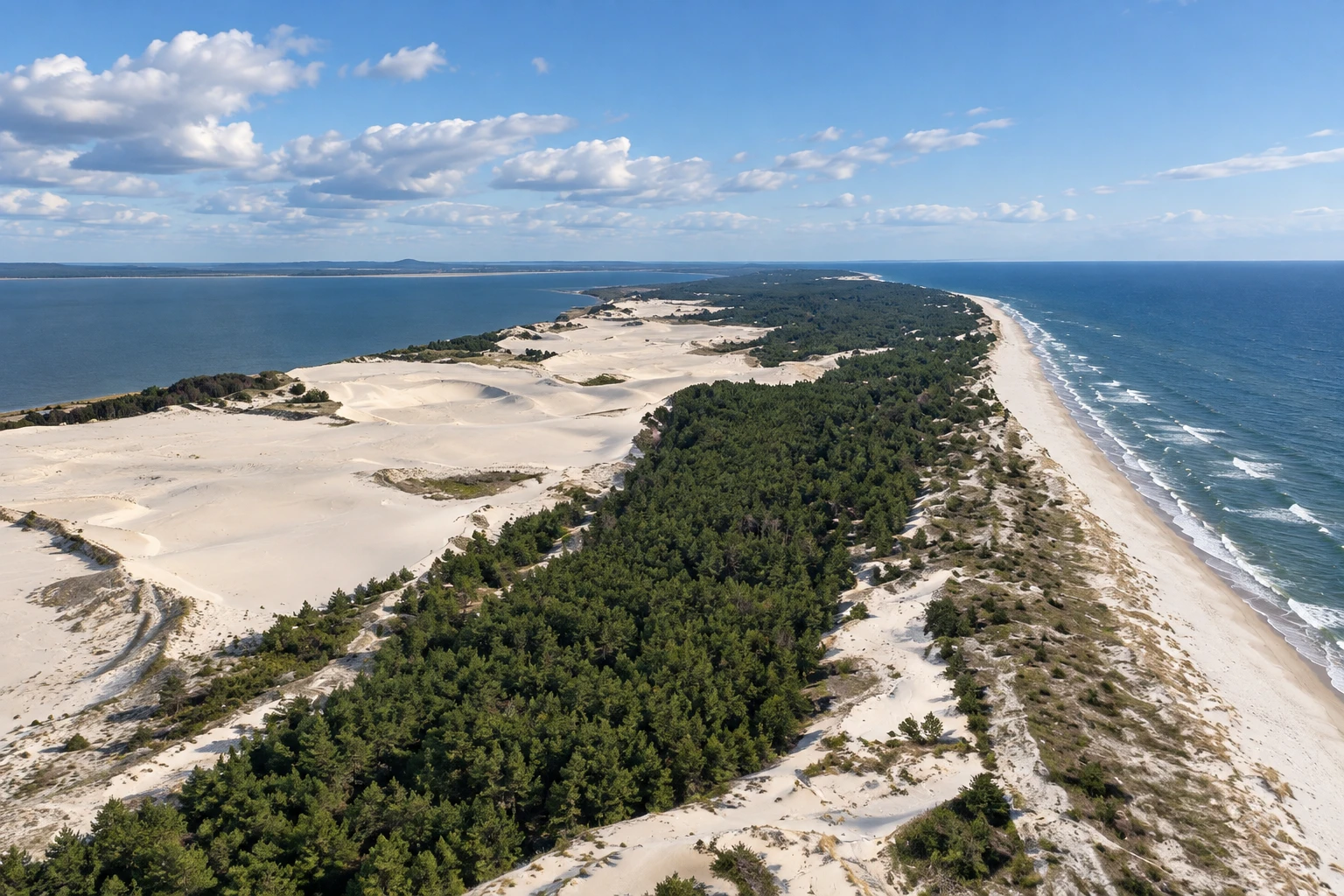
Słowiński National ParkSłowiński National Park protects a coastal landscape of dunes, lakes, and belts of woodland on the Baltic.
Długi Targ extends Długa Street toward the river, forming the representative axis of Gdańsk’s centre. Narrow, tall façades line the old market space, where the Neptune Fountain and buildings connected to mercantile life can be recognised.
The Żuraw projects over the Motława riverbank with a wooden structure between brick towers. The former port crane is a landmark in Gdańsk’s landscape and shows how cargo infrastructure was integrated at the city’s entrance.
St. Mary’s Basilica occupies a large brick volume in central Gdańsk. Its scale is felt both from the narrow surrounding streets and inside, where pillars and vaults organize a nave that looks different from the decoration of many Baroque churches.
The Museum of the Second World War occupies a contemporary building in Gdańsk, with a significant portion of the exhibitions underground. The visit brings together objects, documents and accounts about the war and its effects on people’s lives, in a wide-ranging narrative.
The Gdańsk Amber Museum occupies the Great Mill, a brick building tied to the city’s history. The subject connects the natural formation of fossilized resin with the craftwork that linked amber to Baltic culture and trade.
Słowiński National Park protects a coastal landscape of dunes, lakes, and belts of woodland on the Baltic. Visits are usually organised from the Łeba sector, but the park has separate access points and does not correspond to a single beach near Gdańsk city centre.


 Brazil
 Antarctica
 Argentina
 Bolivia
 Chile
 Colombia
 Ecuador
 Falkland Islands (Malvinas)
 French Guiana
 Guyana
 Paraguay
 Peru
 Suriname
 Uruguay
 Venezuela
 Albania
 Austria
 Belgium
 Croatia
 Denmark
 Finland
 France
 Germany
 Greece
 Hungary
 Iceland
 Ireland
 Italy
 Luxembourg
 Norway
 Portugal
 Slovakia
 Slovenia
 Spain
 Sweden
 Switzerland
 the Czech Republic
 the Netherlands
 the United Kingdom
 Turkey
 Bermuda
 Canada
 Greenland
 Mexico
 Saint Pierre and Miquelon
 the United States
 the Dominican Republic
 Japan
 Egypt
 South Africa
 Australia
 Fiji
 New Zealand
 Papua New Guinea