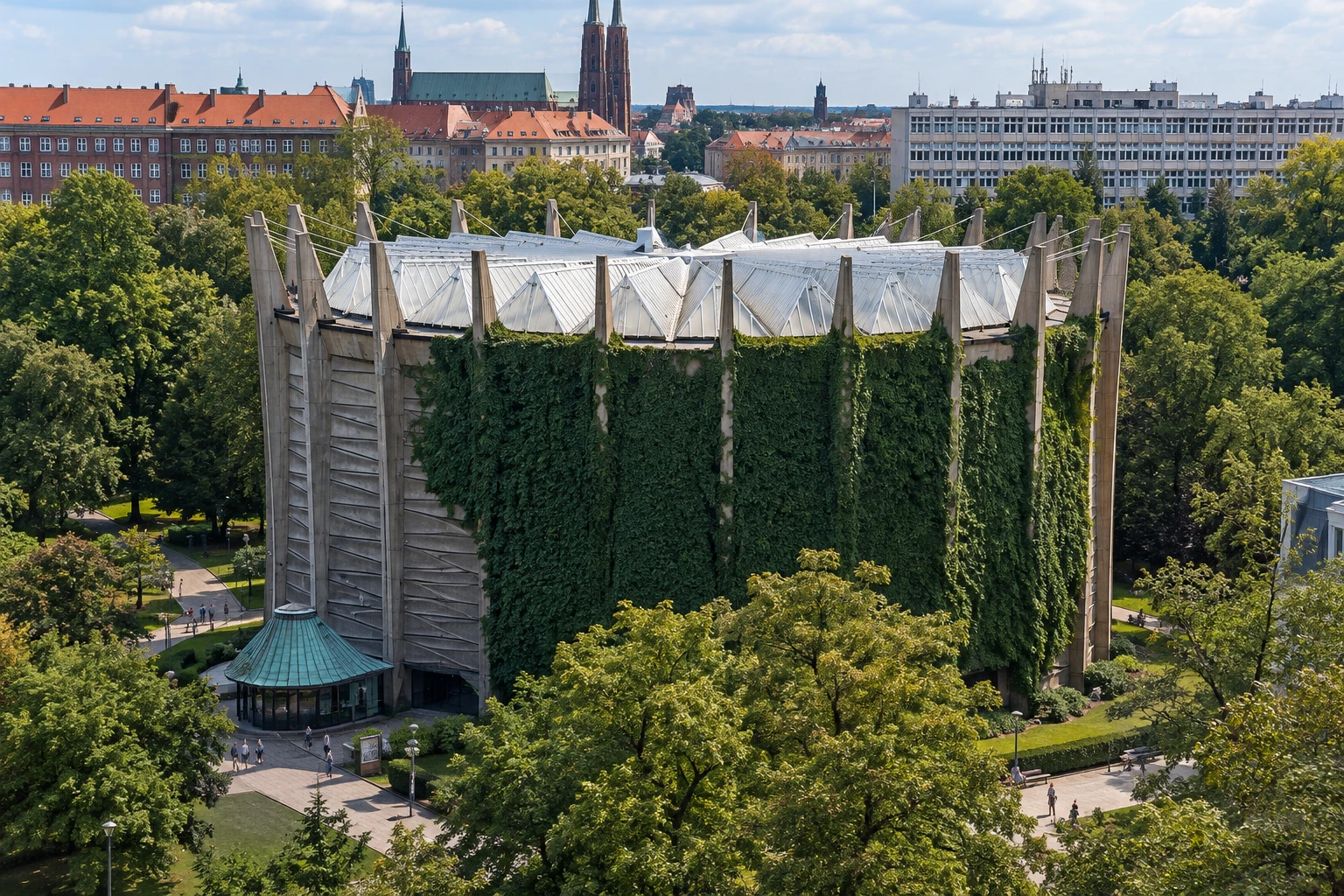
Illustrative images. The pictures in this guide are illustrations based on the real place, not photographs, and may differ from it.
The city
What to expect from Wrocław.
Wrocław is laid out between the Rynek, the branches of the Oder and Ostrów Tumski. The Centennial Hall adds a concrete work to the circuit of squares and churches. Trams help link the areas beyond the old town.
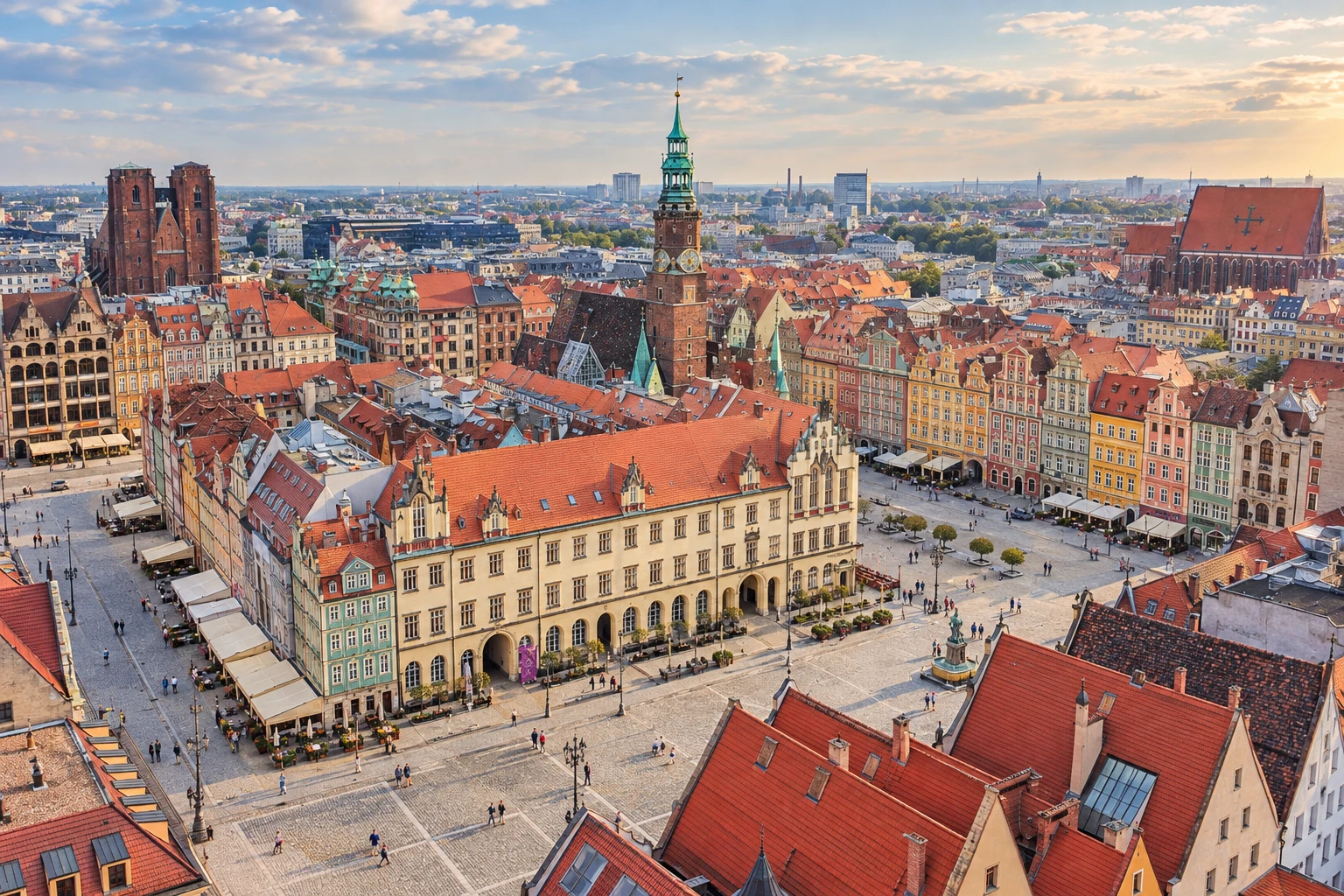
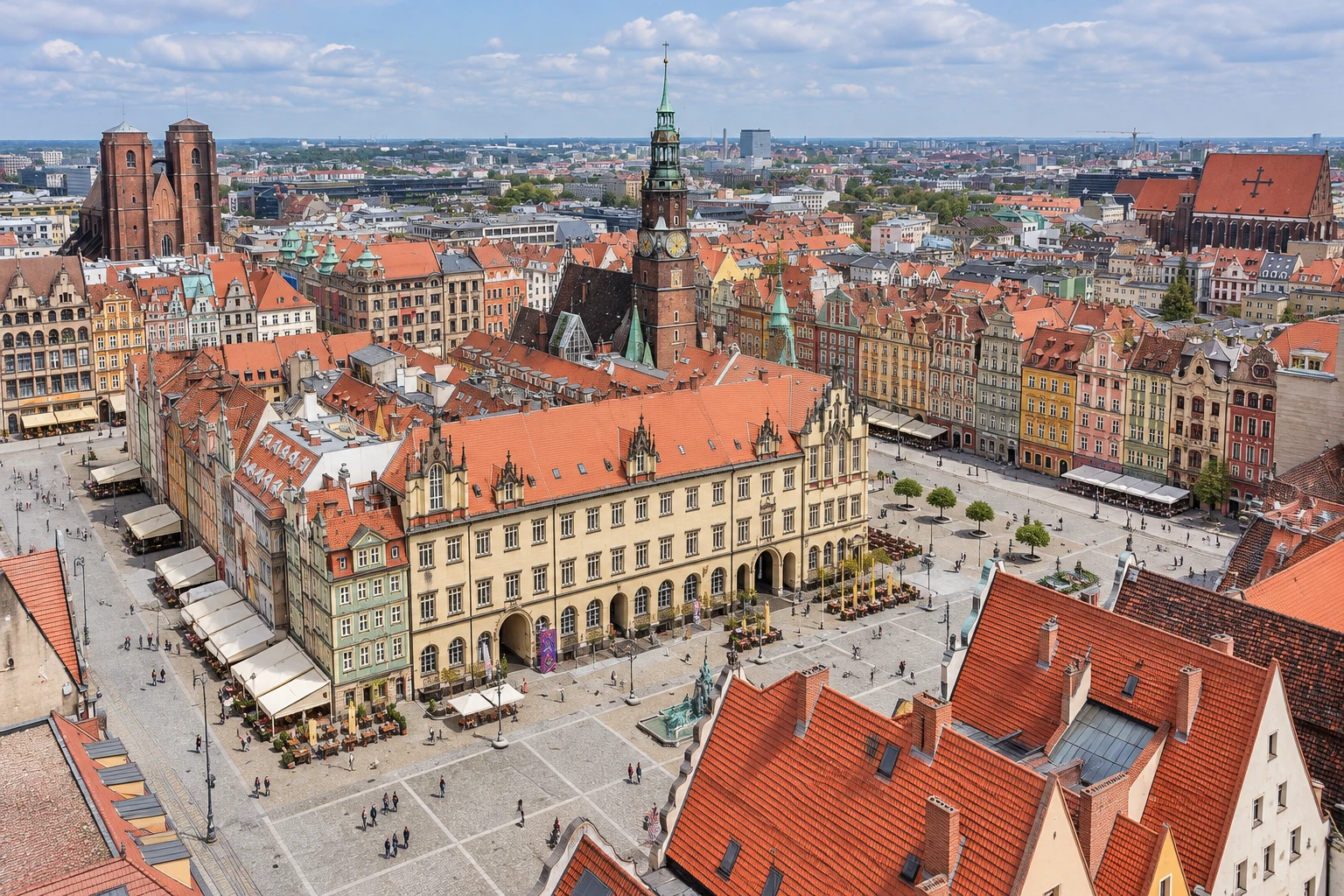
The Rynek of Wrocław structures the old town around the town hall and a set of façades from different periods. The square serves as a starting point for routes among the shopping streets, the former municipal building and the surrounding passages.
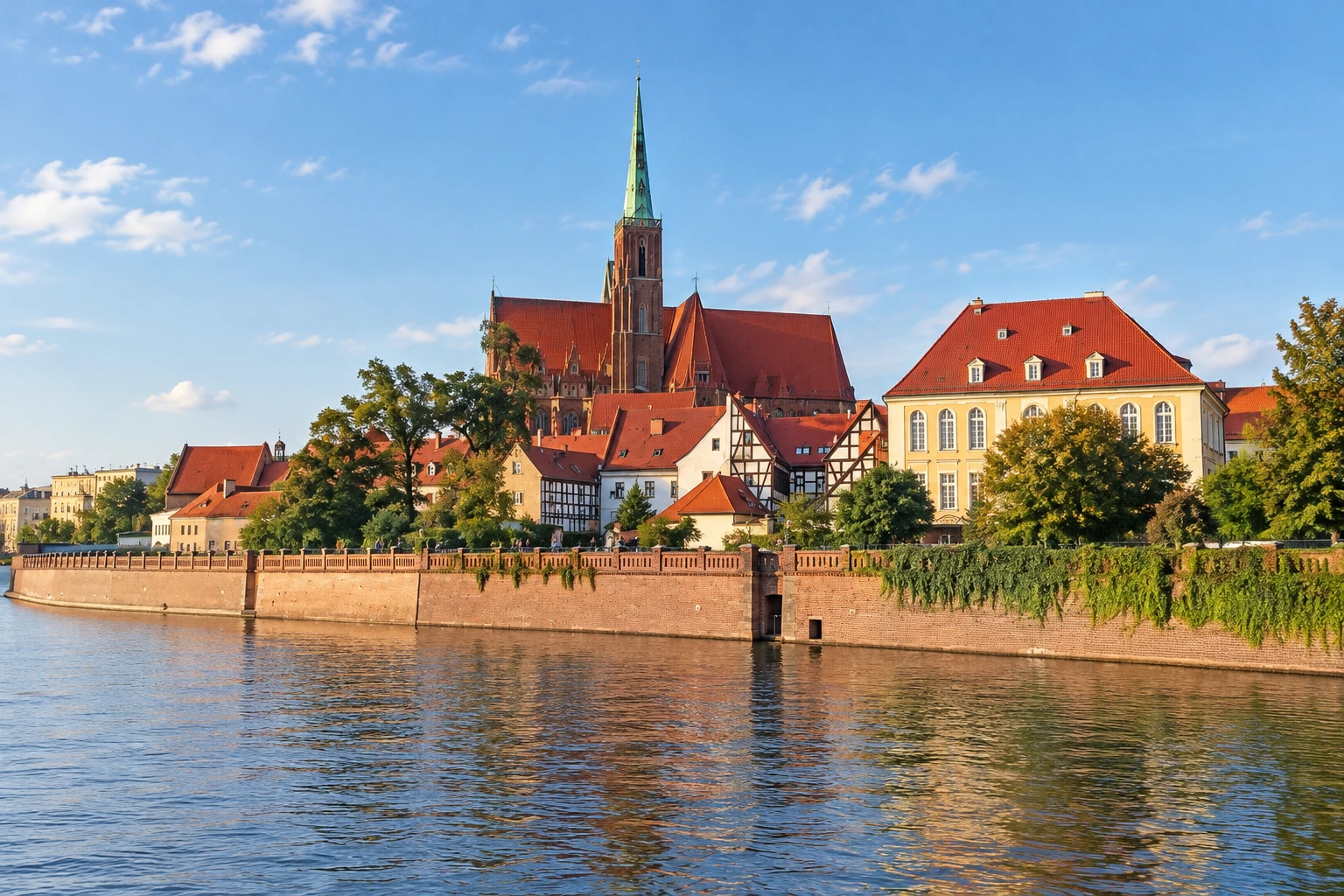
Ostrów Tumski brings together churches and streets linked to Wrocław's origins, along the branches of the Oder. Although the name refers to an island, the urban configuration has changed over time; the area retains a visual and historical relationship with the water and the bridges.
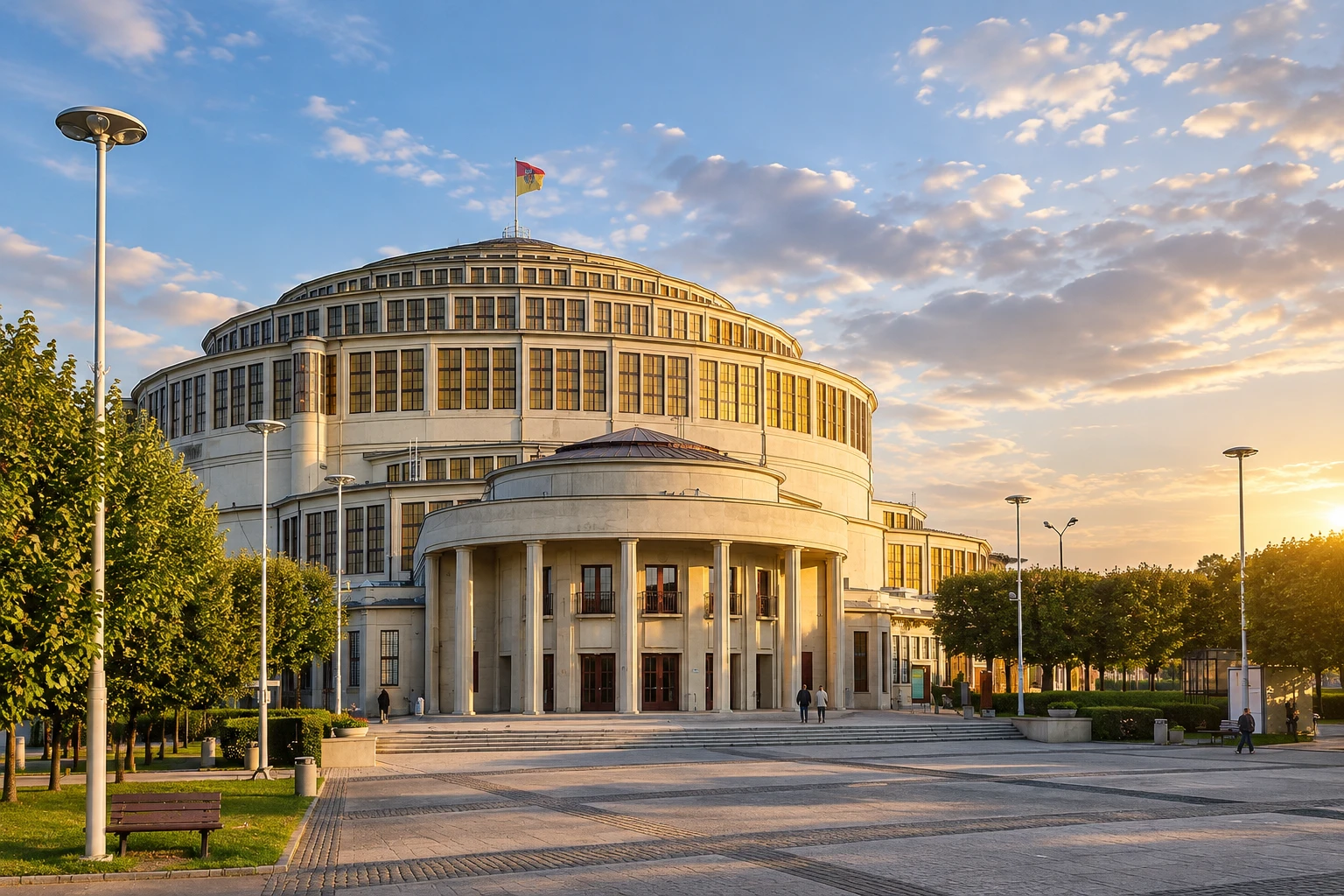
The Centennial Hall is located east of Wrocław’s center and features a reinforced concrete dome associated with early 20th-century architecture. Max Berg’s work is part of the World Heritage and should be observed both for its external volume and for the space it covers.
The Panorama Racławicka museum displays a panoramic painting in a circular-plan building in Wrocław. The work surrounds the viewing space and uses a composition that brings the painted image close to scenic elements, creating a visit experience of its own.
Approximate distances. Check flights and bus, train or boat schedules before you travel.
Connections from Brazil are usually via a stopover in another city. Confirm before booking. The airport has buses to the city. Wrocław Główny is the main station and connects the Lower Silesian capital to regional departures.
How many days
Two or three days for the squares, islands and the Centennial Hall.
When to go
From May to September it is usually more comfortable to walk the bridges and islands. December to February tends to bring cold and short days, in seasons opposite to those in Brazil.
The seasons shown are the most usual ones; nature doesn't always follow the calendar.
Do you need a car?
The centre can be explored on foot; trams serve the Hall and other areas.
Suggested itinerary
An order that works
Built with the places on this page. No rush: it's paced so you have time to see them.
One day in Wrocław
manhã
First route in Wrocław
Take in the Rynek and the town hall by walking around the different sides of the square.
tarde
Visits and transfers in Wrocław
Head to the islands and Ostrów Tumski to walk the streets and the surroundings of the cathedral.
fim de tarde
Continuation of the day in Wrocław
Use the tram to view the Hala Stulecia complex; allow more time on another day if you include exhibitions.
noite
Meal and return in Wrocław
Return to the centre for dinner, grouping the walks in an area near your accommodation.
2 days in Wrocław
Day 1
manhã
Wrocław: day 1, morning
Observe the Rynek and the town hall by walking around the different sides of the square.
tarde
Wrocław: day 1, afternoon
Head to the islands and Ostrów Tumski to explore the streets and the area around the cathedral.
fim de tarde
Wrocław: day 1, late afternoon
Take the tram to see the Hala Stulecia complex; set aside more time on another day if you plan to visit exhibitions.
noite
Wrocław: day 1, evening
Return to the centre for dinner, grouping the walks in an area near your accommodation.
Day 2
manhã
Wrocław: day 2, morning
Attend the Panorama Racławicka session in the language of your choice.
tarde
Wrocław: day 2, afternoon
Visit the selected galleries of the National Museum in a nearby building.
fim de tarde
Wrocław: day 2, late afternoon
Walk along the sections of the Oder you haven't yet explored and take a break before returning.
noite
Wrocław: day 2, evening
Return to the centre for dinner, consolidating the walks in an area near your lodging.
3 days in Wrocław
Day 1
manhã
Wrocław: day 1, morning
Observe the Rynek and the town hall by walking around the different sides of the square.
tarde
Wrocław: day 1, afternoon
Proceed to the islands and Ostrów Tumski to explore the streets and the cathedral's surroundings.
fim de tarde
Wrocław: day 1, late afternoon
Use the tram to view the Hala Stulecia complex; plan additional time on another day if you include exhibitions.
noite
Wrocław: day 1, evening
Return to the centre for dinner, bringing together the walks in an area near your accommodation.
Day 2
manhã
Wrocław: day 2, morning
Attend the Panorama Racławicka session in the language you choose.
tarde
Wrocław: day 2, afternoon
Explore the selected galleries of the National Museum in a nearby building.
fim de tarde
Wrocław: day 2, late afternoon
Walk through the sections of the Oder you haven't covered yet and pause before heading back.
noite
Wrocław: day 2, evening
Return to the centre for dinner, grouping the walks in an area close to your accommodation.
Day 3
manhã
Wrocław: day 3, morning
Head to the zoo and choose the first areas to visit based on your group's layout.
tarde
Wrocław: day 3, afternoon
Continue through the chosen pavilions, including the Afrykarium if it is part of the available route.
fim de tarde
Wrocław: day 3, late afternoon
Observe the exterior complex of the Hala Stulecia nearby; a long internal visit should replace part of the zoo.
noite
Wrocław: day 3, evening
Return to the centre for dinner, consolidating the walking routes in an area near your accommodation.
Check before you go. Opening hours and days change, and places may close for renovations, holidays or events. This itinerary is a suggestion from Cidade Turismo, not a commitment: plan yours by checking directly with each place you intend to visit.
Before you go
Frequently asked questions
How to organise arrival in Wrocław?
The airport has buses to the city. Wrocław Główny is the main station and links the Lower Silesian capital to regional departures.
How long to stay in Wrocław?
Two or three days for the squares, islands and the Centennial Hall.
Is a car necessary to visit Wrocław?
The centre can be walked; the tram serves the Hall and other areas.
What changes with the time of year in Wrocław?
From May to September it is usually more comfortable to walk bridges and islands. From December to February it tends to be cold and days are short, in seasons reversed compared with Brazil.


 Brazil
 Antarctica
 Argentina
 Bolivia
 Chile
 Colombia
 Ecuador
 Falkland Islands (Malvinas)
 French Guiana
 Guyana
 Paraguay
 Peru
 Suriname
 Uruguay
 Venezuela
 Austria
 Belgium
 Croatia
 Denmark
 Finland
 France
 Germany
 Greece
 Hungary
 Iceland
 Ireland
 Italy
 Luxembourg
 Norway
 Portugal
 Slovakia
 Slovenia
 Spain
 Sweden
 Switzerland
 the Czech Republic
 the Netherlands
 the United Kingdom
 Turkey
 Bermuda
 Canada
 Greenland
 Mexico
 Saint Pierre and Miquelon
 the United States
 the Dominican Republic
 Japan
 Egypt
 South Africa
 Australia
 Fiji
 New Zealand
 Papua New Guinea