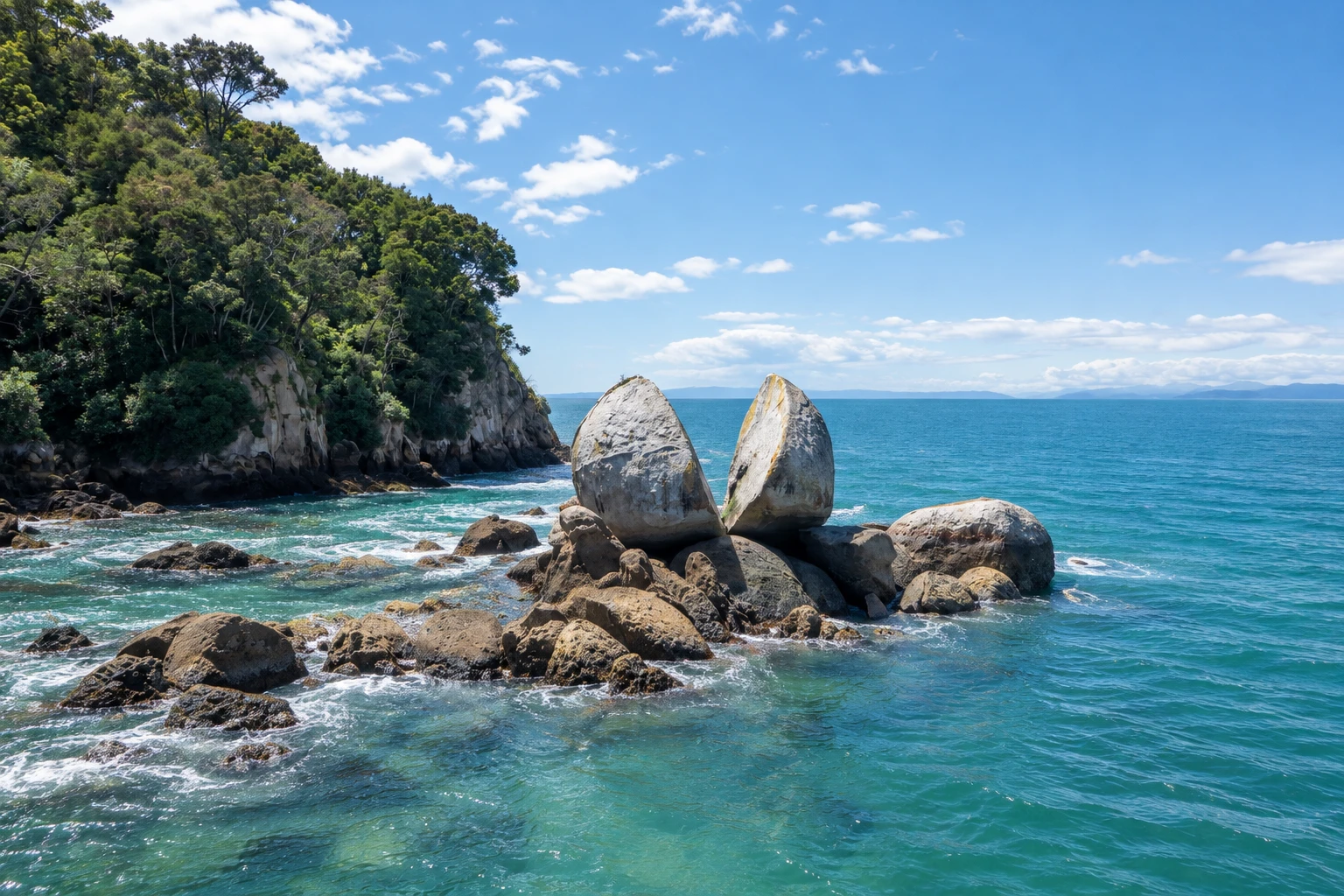
Illustrative images. The pictures in this guide are illustrations based on the real place, not photographs, and may differ from it.
The city
What to expect from Kaiteriteri.
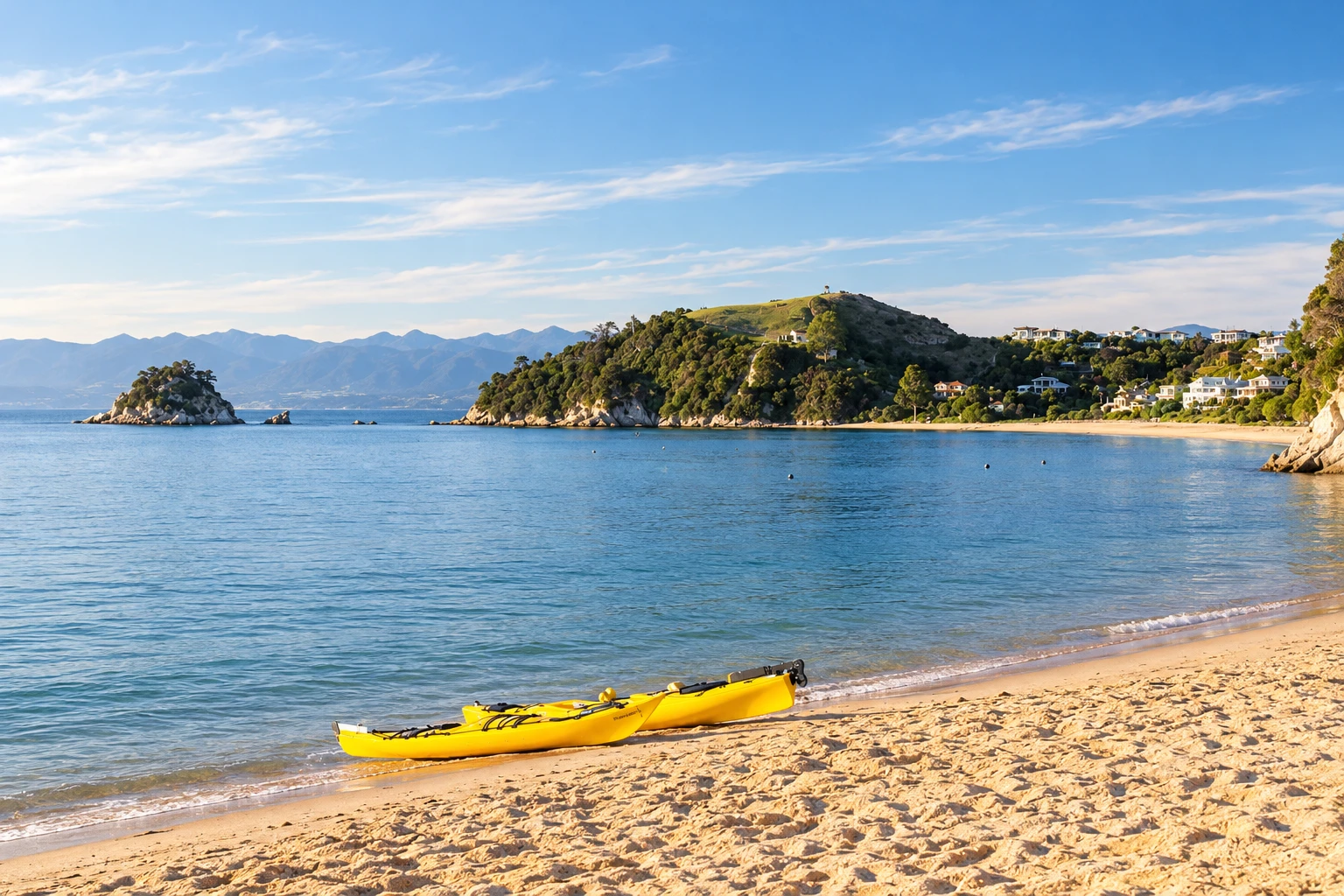
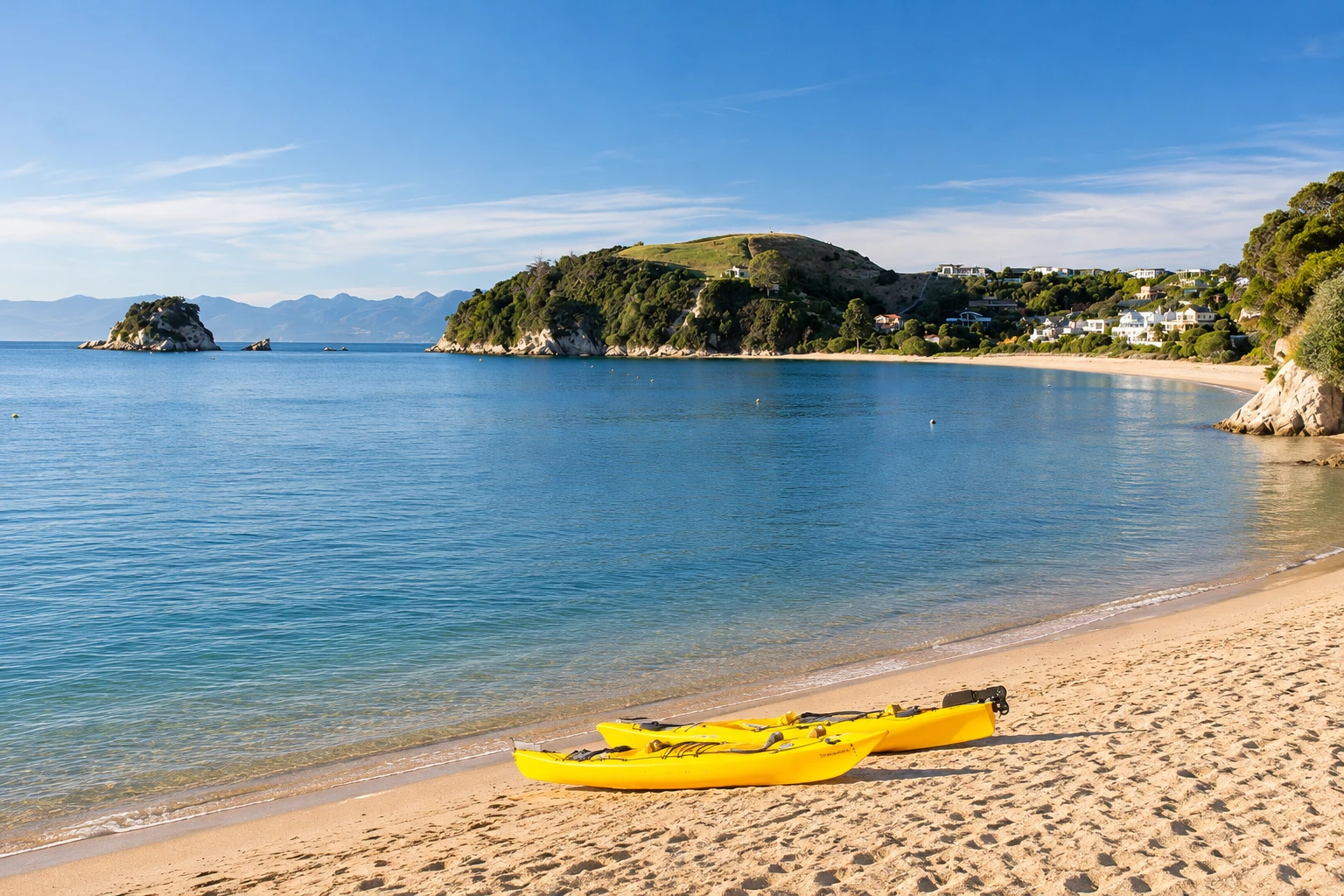
Kaiteriteri is a beach village on Tasman Bay at the entrance to Abel Tasman National Park. The main crescent beach, with golden sand and calm water, is the departure point for boats that go to the park’s coves. The village has accommodation, a mountain-bike park and short walking tracks, and is close to Mārahau where the coastal track begins.
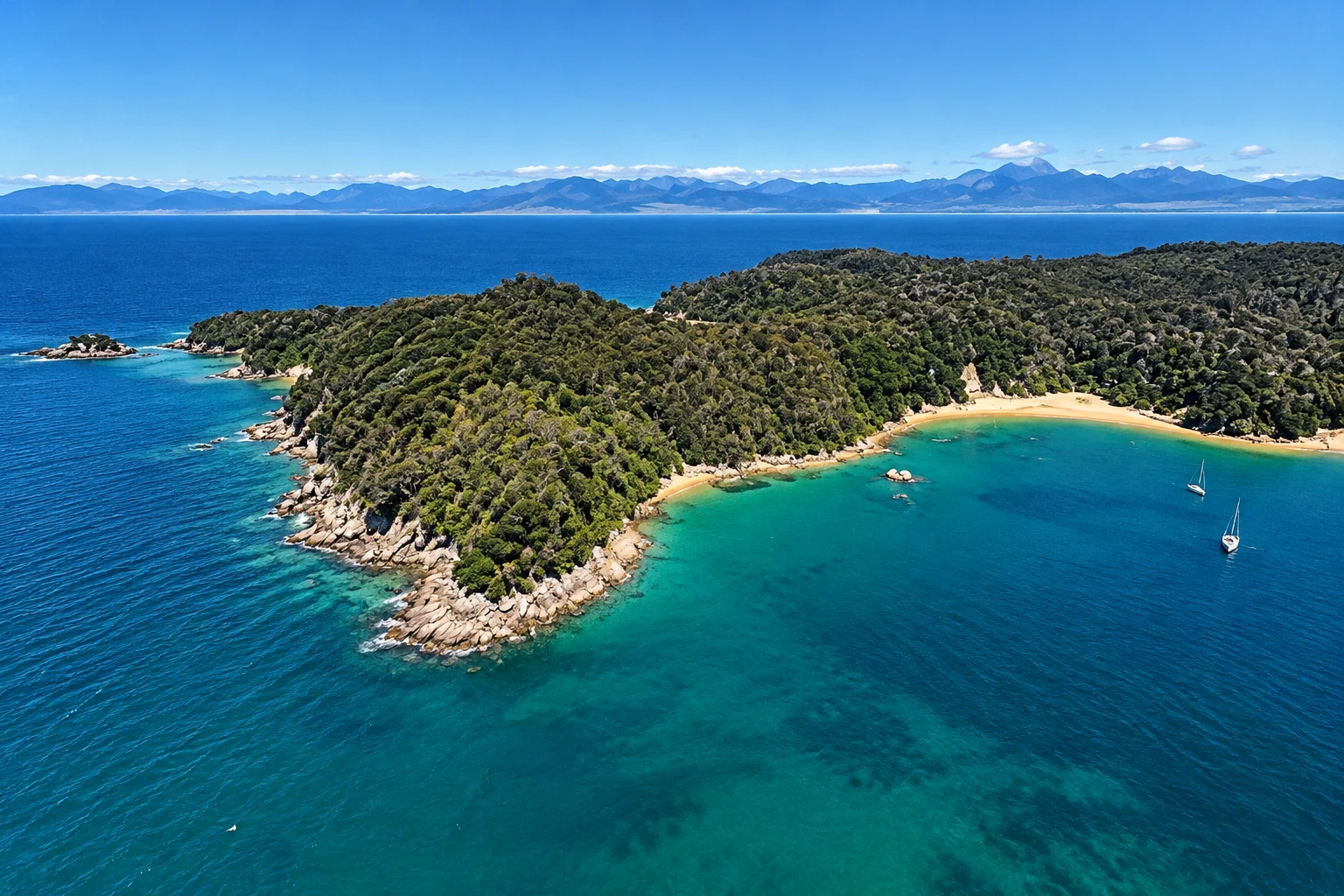
The smallest national park in New Zealand, at 237 km², created in 1942 on the coast of Tasman Bay. Golden-sand coves, native forest, rivers and islands, accessible by boat, by kayak or via the coastal track.
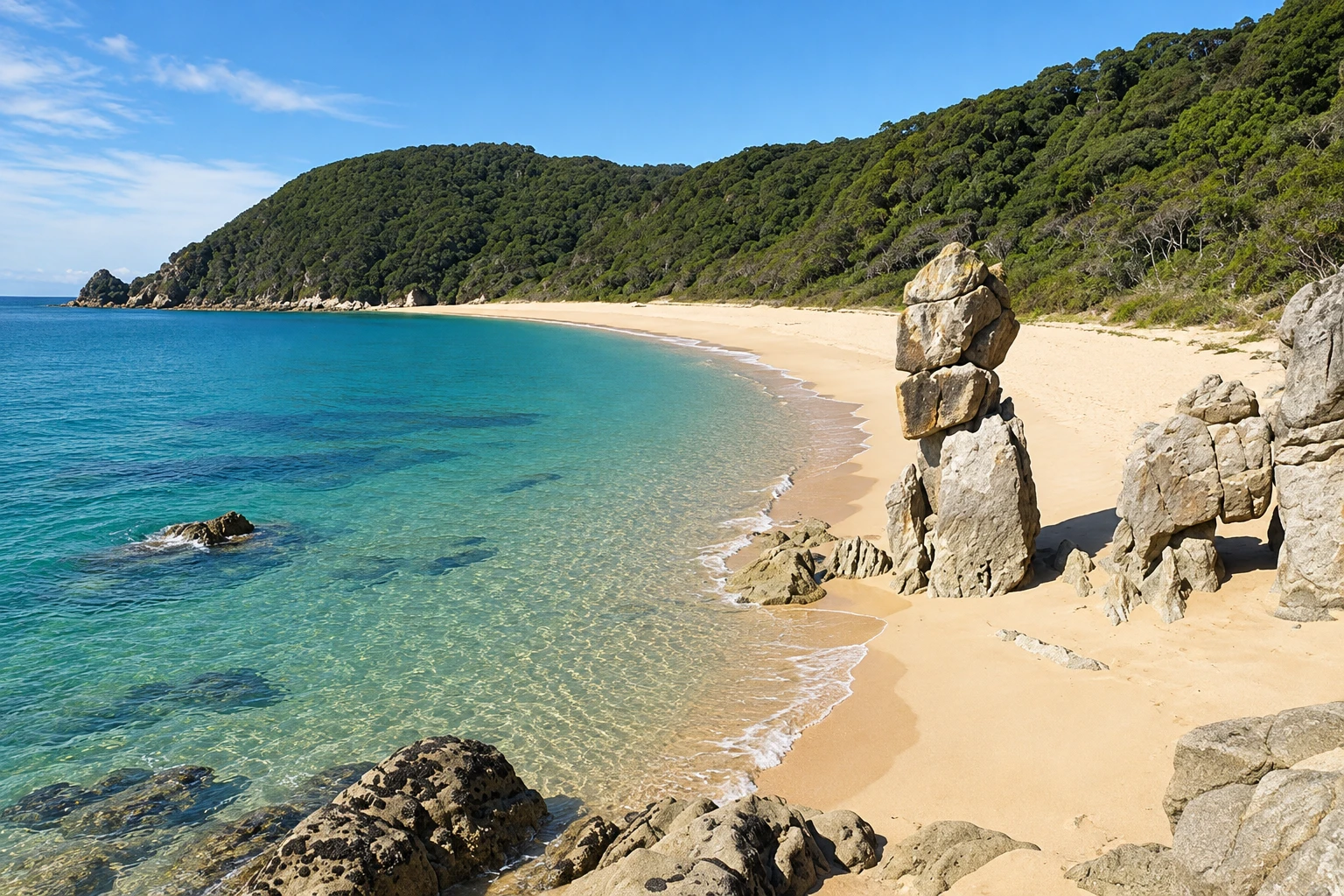
One of New Zealand’s Great Walks: 60 km along the coast of Abel Tasman National Park, from Mārahau to the park’s northern end, passing beaches, native forest and estuaries. Day sections with boat transfers are common.
A crescent beach of golden sand and calm water at the entrance to Abel Tasman National Park. It is the departure point for park boats and the busiest summer beach in the area.
A granite rock split in two, like a cut apple, about 50 meters off the coast between Kaiteriteri and Mārahau. It’s visible from the boats to Abel Tasman and, at low tide, from the beach in front.
Approximate distances. Check flights and bus, train or boat schedules before you travel.
It is about 60 km from Nelson, an hour by car along State Highway 60, and about 13 km from Motueka. In season there are buses from Nelson and from Motueka. The boats to the park depart from the beach itself.
How many days
One day for a boat trip in Abel Tasman, with a beach landing and a section of track. With two or three days, add kayaking and another section of the coastal track.
When to go
From December to March, with long days and calm seas. This is high season, with busy beaches on weekends and around Christmas and New Year. April and November are quieter, and boats still run.
The seasons shown are the most usual ones; nature doesn't always follow the calendar.
Do you need a car?
It helps to have transport, but in season there are buses. Inside the park there are no roads along most of the coast: access is by boat, kayak or on foot.
Suggested itinerary
An order that works
Built with the places on this page. No rush: it's paced so you have time to see them.
One day in Kaiteriteri
manhã
Boat trip in Abel Tasman
Board early at Kaiteriteri Beach on a boat that passes Tokangawhā (Split Apple Rock) and follows the park’s coves. Land at a beach such as Anchorage or Bark Bay.
tarde
Section of the coastal track
Walk a section of the coastal track to the next boarding beach, through native forest and viewpoints over the sea. Allow enough time to reach the returning boat before you set out.
fim de tarde
Kaiteriteri Beach
Back in Kaiteriteri, enjoy the main beach or take the short track up to the Kaka Pa Point viewpoint at the headland.
noite
Dinner in Kaiteriteri or Motueka
Dine in the village by the beach, or continue to Motueka, 13 km away, where there are more options.
Check before you go. Opening hours and days change, and places may close for renovations, holidays or events. This itinerary is a suggestion from Cidade Turismo, not a commitment: plan yours by checking directly with each place you intend to visit.
Before you go
Frequently asked questions
How do you get from Kaiteriteri to Abel Tasman National Park?
By boat, departing from Kaiteriteri Beach, with several departures daily in season. Boats stop at beaches along the park coast and return in the afternoon. You can also drive a few kilometres to Mārahau and start the track on foot.
Kaiteriteri or Mārahau: where to stay for Abel Tasman?
Kaiteriteri has the main beach, more accommodation and the larger boats. Mārahau is smaller and sits at the start of the coastal track, convenient for those going on foot or by kayak.
Can you swim at Kaiteriteri beach?
Yes. The beach is sheltered with calm water, and in summer it’s commonly used for swimming and kayaking. The water is cold outside December to March.
Do you need to book a boat for Abel Tasman?
In summer, yes—especially on weekends and during the December and January holidays. Outside the high season there are fewer departures per day.


 Brazil
 Antarctica
 Argentina
 Bolivia
 Chile
 Colombia
 Ecuador
 Falkland Islands (Malvinas)
 French Guiana
 Guyana
 Paraguay
 Peru
 Suriname
 Uruguay
 Venezuela
 Austria
 Belgium
 Croatia
 Denmark
 Finland
 France
 Germany
 Greece
 Hungary
 Iceland
 Ireland
 Italy
 Luxembourg
 Norway
 Poland
 Portugal
 Slovakia
 Slovenia
 Spain
 Sweden
 Switzerland
 the Czech Republic
 the Netherlands
 the United Kingdom
 Turkey
 Bermuda
 Canada
 Greenland
 Mexico
 Saint Pierre and Miquelon
 the United States
 the Dominican Republic
 Japan
 Egypt
 South Africa
 Australia
 Fiji
 Papua New Guinea