Aoraki / Mount Cook and Tekapo

Canterbury

Aoraki / Mount Cook and Tekapo

The highest mountain in New Zealand, glaciers and blue-turquoise lakes on the Mackenzie Plateau, the church on the shore of Lake Tekapo and a dark-sky reserve.

Canterbury and the West Coast

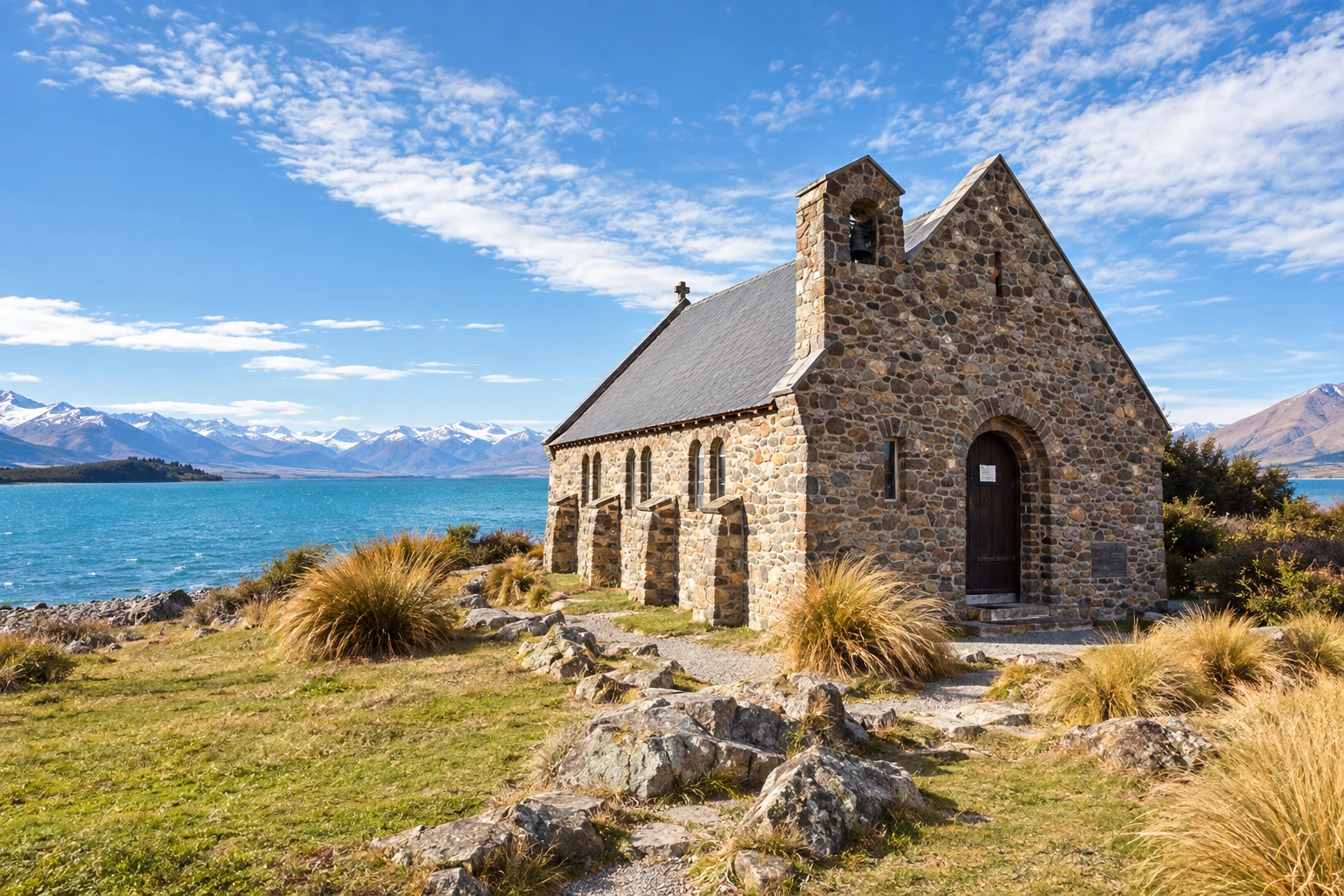
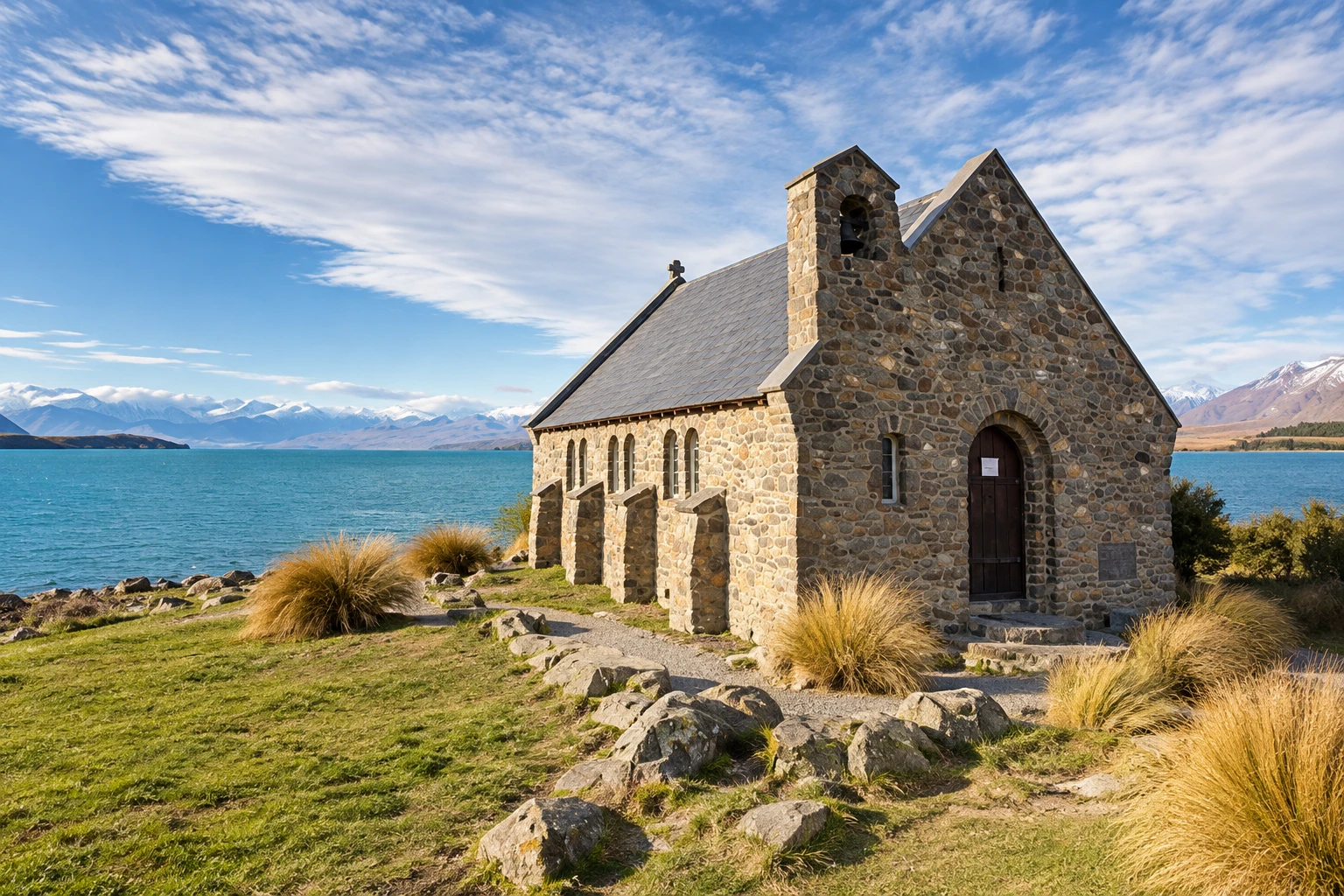
In the photo: Church of the Good Shepherd and Lake Tekapo

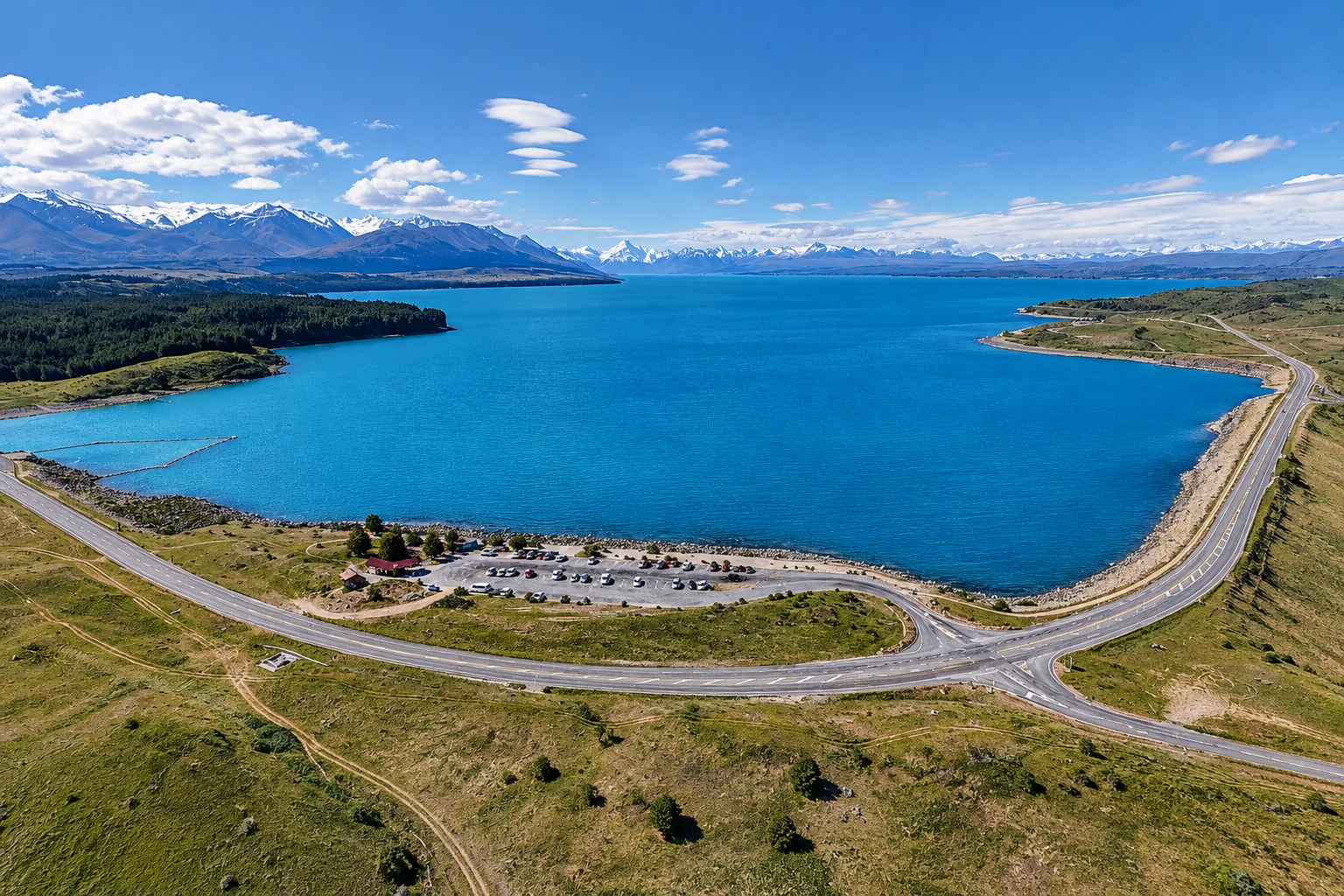
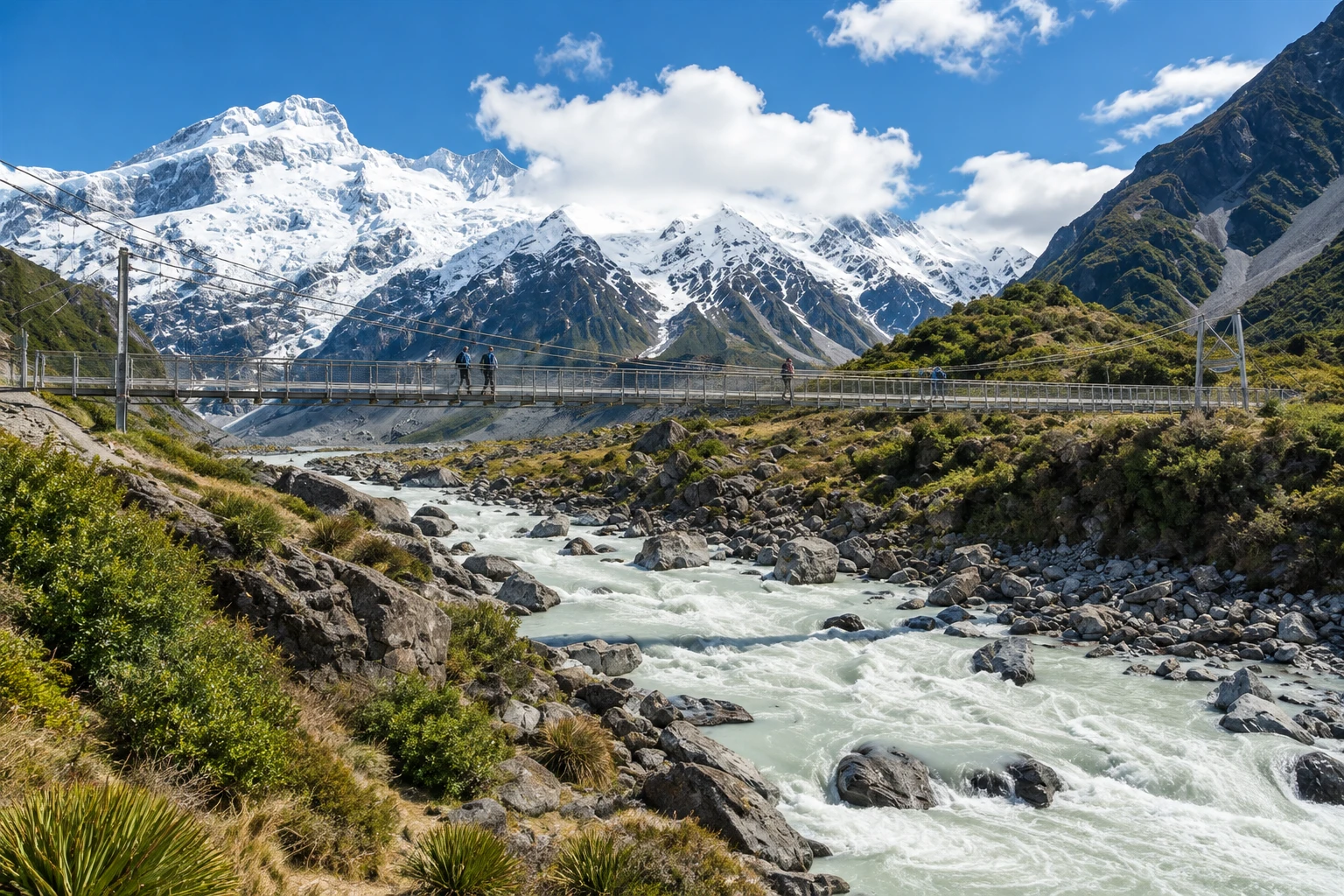
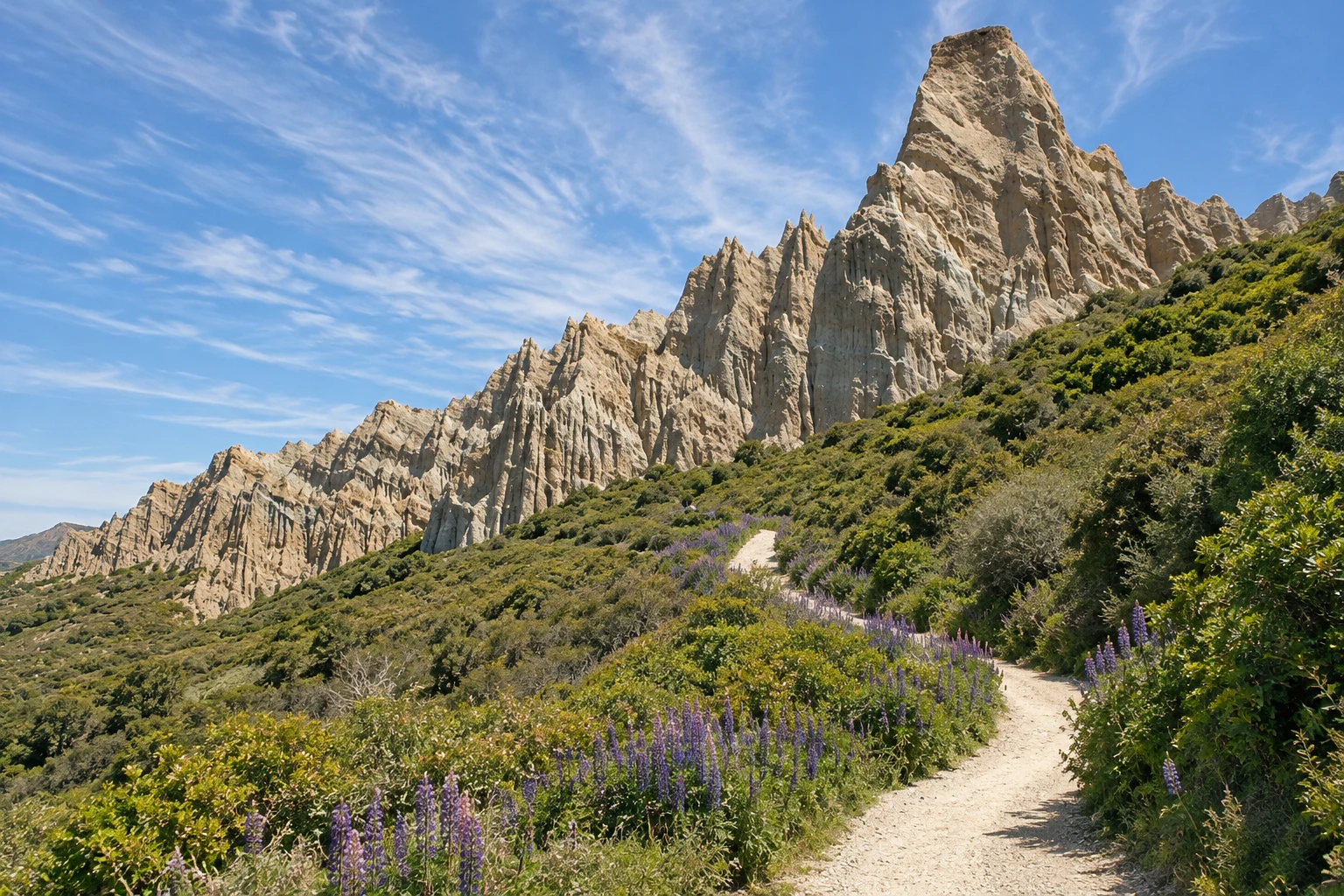
Illustrative images. The pictures in this guide are illustrations based on the real place, not photographs, and may differ from it.

Get it on Google Play

Get to know the place

A region to enjoy
at your own pace.

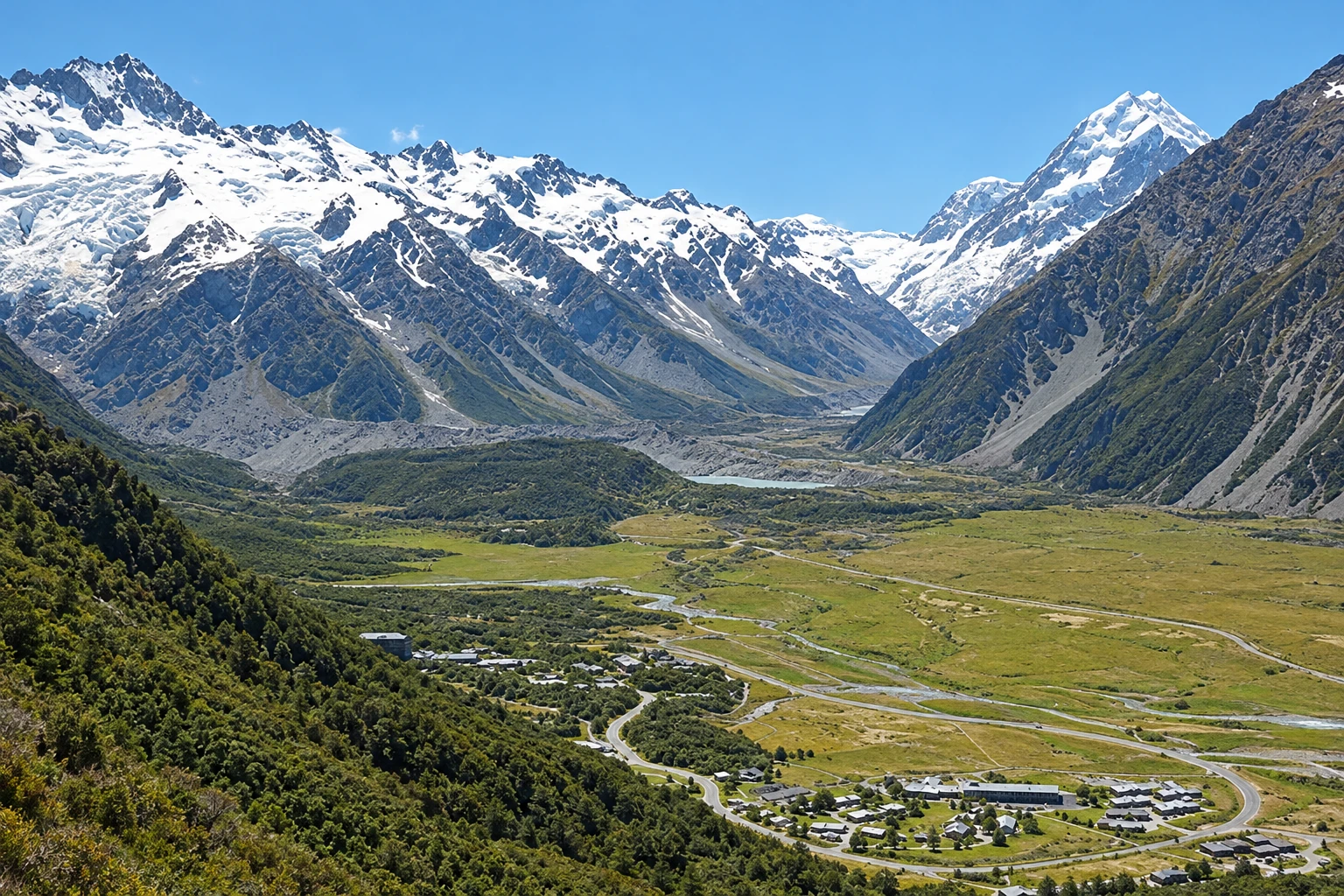
In the center of the South Island, the dry plain of the Mackenzie Basin ends at the wall of the Southern Alps. There stands Aoraki/Mount Cook, New Zealand’s highest mountain at 3,724 meters, surrounded by glaciers and other peaks over 3,000 meters. Aoraki/Mount Cook National Park is part of Te Wāhipounamu, the southwest New Zealand area listed as a UNESCO World Heritage Site.

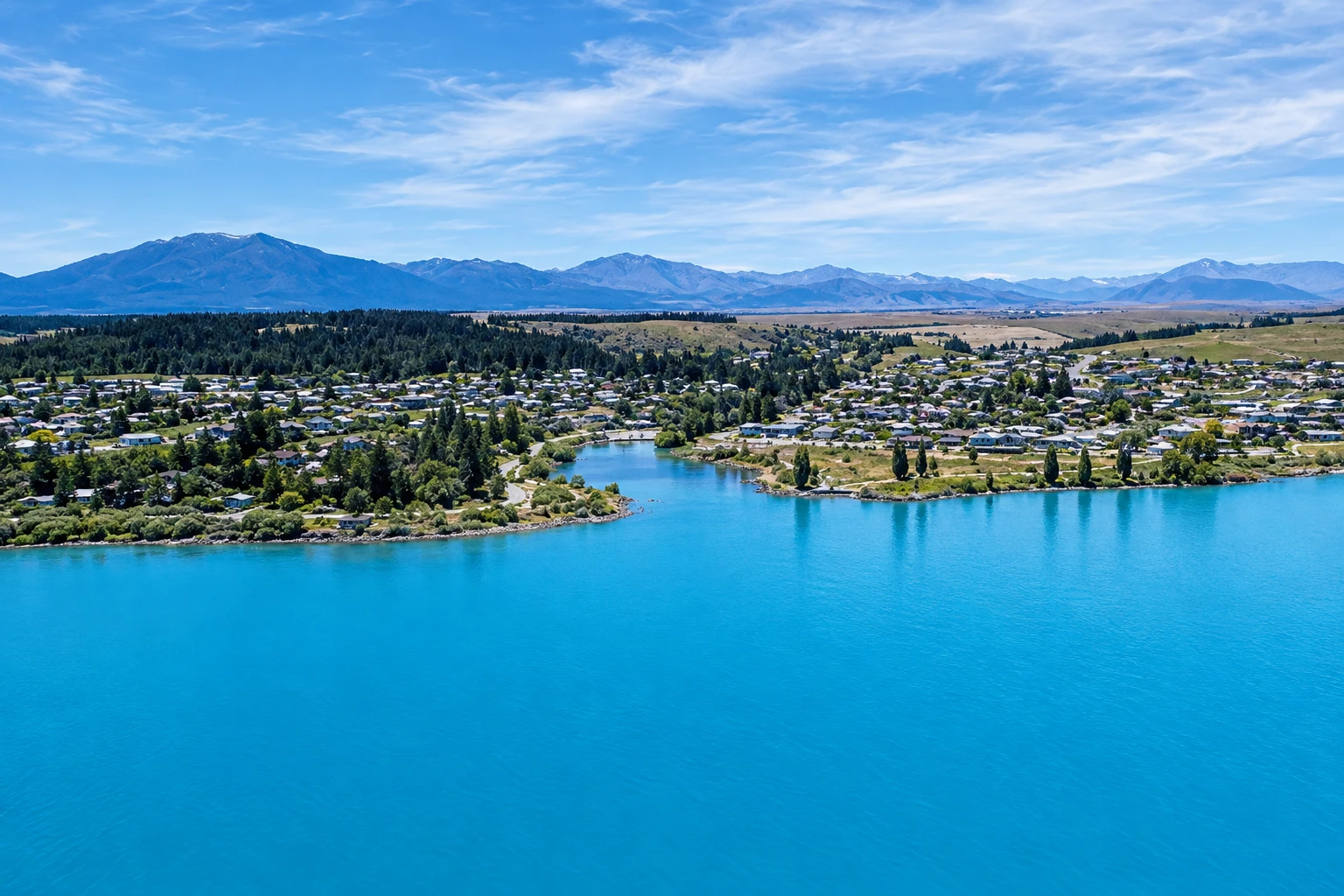
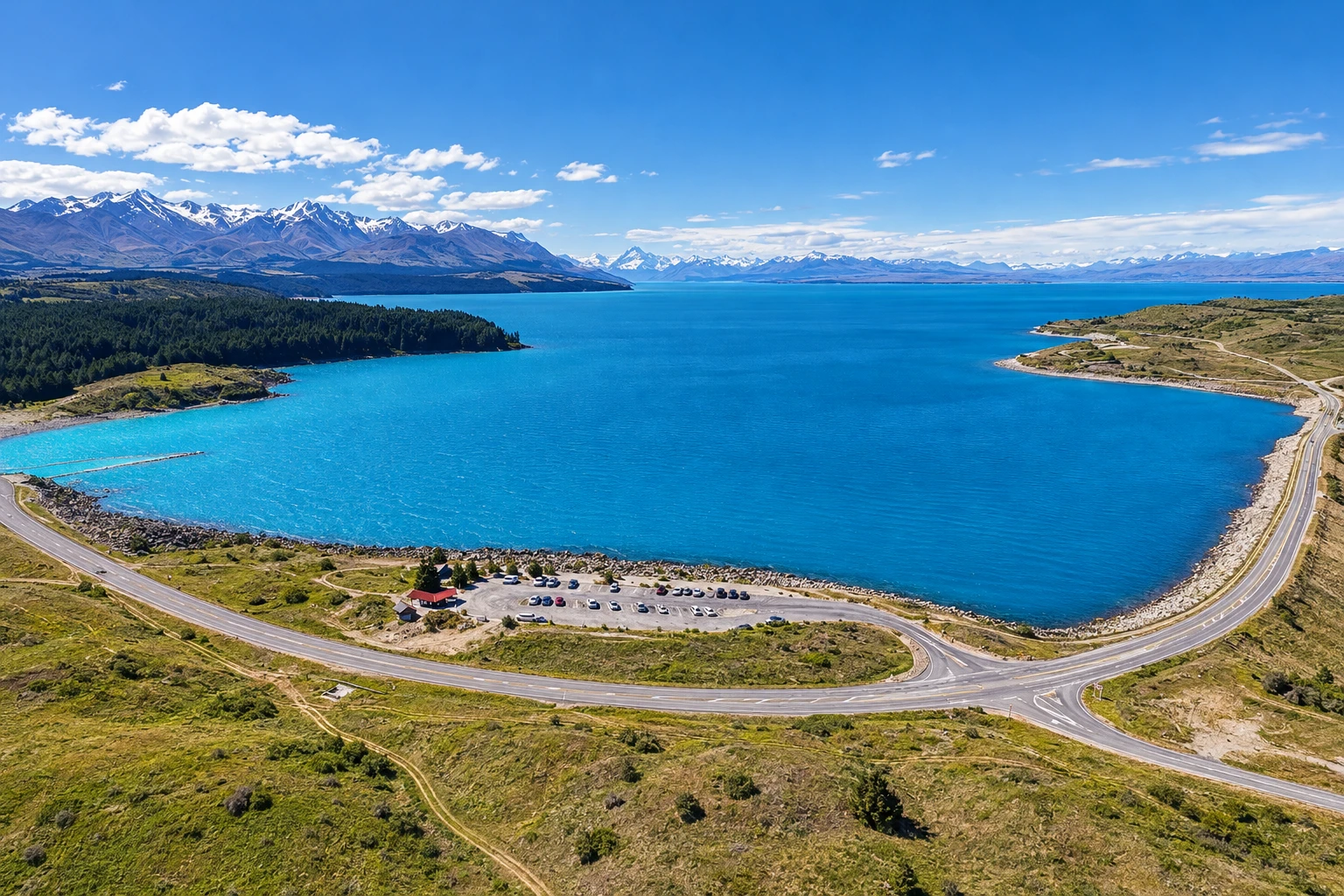
The plateau lakes, Tekapo and Pukaki, are fed by glacial melt and have a milky blue color caused by rock flour — the fine powder ground by ice. On the shore of Lake Tekapo the village of the same name has about 600 inhabitants and the small Church of the Good Shepherd, built in 1935, with the altar window facing the lake and the mountains. Along the shore of Pukaki the road follows to the village of Aoraki/Mount Cook, at 750 meters altitude, at the end of the valley at the foot of the mountain.

The village is the starting point for the region’s most popular hikes, such as the Hooker Valley track, which ends at a glacial lake with a direct view of Aoraki, and the trails to Lake Tasman, formed by the retreat of the Tasman Glacier, the country’s longest. Scenic flights fly over the glaciers and some land on the snow.

The sky is part of the experience. In 2012 the region was declared the Aoraki Mackenzie International Dark Sky Reserve, covering 4,300 km² where lighting is controlled, and the Mount John Observatory above Tekapo welcomes visitors. Twizel, a town established in 1968 for hydroelectric construction, completes the area, offering more services and accommodation near Lake Pukaki.

This destination brings together 3 cities: Tekapo, Aoraki / Mount Cook, Twizel.

Share: WhatsApp
Traveler, share your experiences through photos Up to 5 photos of each place you visited.

One destination, many paths

The cities on this trip

Start with one city or combine several in your itinerary.

Where Aoraki / Mount Cook and Tekapo is The star marks the nearest capital, Christchurch.
ChristchurchTekapoAoraki / Mount CookTwizel

Boundaries: Stats NZ / geoBoundaries (CC BY 4.0). Adapted by Cidade Turismo.

How to get there: Aoraki / Mount Cook and Tekapo

Aeroporto Internacional de Christchurch (CHC), in Christchurch · 227 km to Tekapo

Aeroporto de Queenstown (ZQN), in Queenstown · 260 km to Tekapo

From Christchurch, Tekapo is about 227 km away, roughly a 3-hour drive, and the village of Aoraki/Mount Cook is about 105 km from Tekapo. From Queenstown it’s about a 3-hour drive to Twizel. Long-distance buses pass through Tekapo and Twizel, and there are buses to the village of Aoraki/Mount Cook.

Suggested arrival point: Tekapo

The local experience

Things to do in Aoraki / Mount Cook and Tekapo

Twizel · Canterbury · Lake

Lake Pukaki

Glacial lake of 178.7 km², milky-blue in color, with views to Aoraki/Mount Cook about 70 km to the north. Visitor centre on the south shore, about 7 km from Twizel.

Explore Lake Pukaki

Aoraki / Mount Cook · Canterbury · Track

Hooker Valley Track

About a 5 km track each way, almost flat, with three suspension bridges over the Hooker River, to Hooker Glacial Lake, with icebergs and a direct view of Aoraki/Mount Cook.

Explore Hooker Valley Track

Twizel · Canterbury · Rock formation

Omarama Clay Cliffs

Towers and cliffs of gravel and clay sculpted by erosion, near Omarama about 40 km from Twizel. A short trail runs between the formations on private land.

Explore Omarama Clay Cliffs

See 5 more places in Aoraki / Mount Cook and Tekapo

Before you go

Practical information

A little planning leaves more time to enjoy the journey.

When to go

From December to March, with long days and snow-free trails. November and December often have lupines blooming on the lake shores. From June to August it is very cold, it snows in the mountains and the long nights favour sky watching. The weather changes quickly year-round; clouds can hide the mountain for days.

The seasons shown are the most usual ones; nature doesn't always follow the calendar.

How many days to stay

Three days: one in Tekapo, for the church, Mount John and stargazing; two in the village of Aoraki/Mount Cook, for the Hooker Valley trail, Lake Tasman and a buffer day for the weather. With less time many people do one day in each place.

Which city to stay in

Tekapo has lakeside accommodation and is the base for night sky activities. The village of Aoraki/Mount Cook has few options, in the middle of the park, and fills up in summer. Twizel, about 65 km from the village, offers more options and lower prices.

Respect the place

Take your trash with you, follow the signs and support local businesses. In natural areas, follow the visiting guidelines.

Beyond the guide

Your questions

Frequently asked questions about Aoraki / Mount Cook and Tekapo

How many days to stay in Tekapo and Aoraki/Mount Cook?

Three days let you see Tekapo and the night sky and do the park trails with a buffer for the weather. With two days, do one in each place. Clouds can hide the mountain, so it’s worth having an extra day.

Can you go from Christchurch to Aoraki/Mount Cook in one day?

The round trip is about 660 km, more than 8 hours on the road, which leaves little time for trails. The usual approach is to stay overnight in Tekapo, Twizel or the park village.

Why are Lakes Tekapo and Pukaki blue-turquoise?

Glacial meltwater carries very fine rock powder, called glacial flour, which stays in suspension and reflects light, producing the milky blue colour.

What is the best time to see the stars in Tekapo?

The longest nights, from April to September, provide more hours of dark sky, but it is very cold. Moonless, cloudless nights are best at any time of year.

Do you need a car in Aoraki/Mount Cook and Tekapo?

It helps a lot, because distances are large and public transport is limited. There are long-distance buses and buses to the park village, but with few departures.

Explore other destinations Search by state and city