The Hague and Delft

South Holland

The Hague and Delft

The seat of government and of the king, with Vermeer museums, international courts and a beach on the Mar do Norte, and next to it Delft, the city of blue-and-white pottery.

West

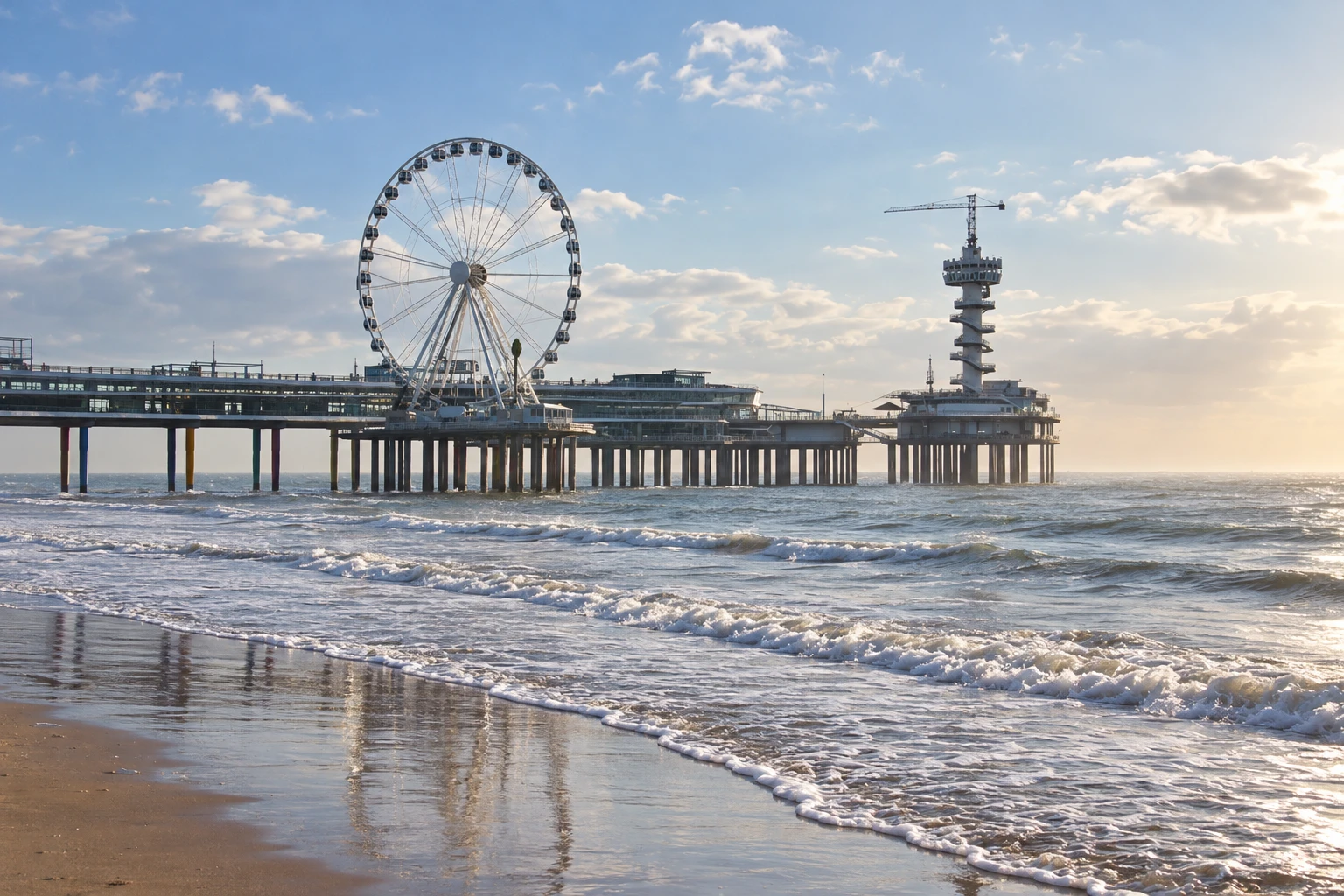
In the photo: Scheveningen Pier, Haia

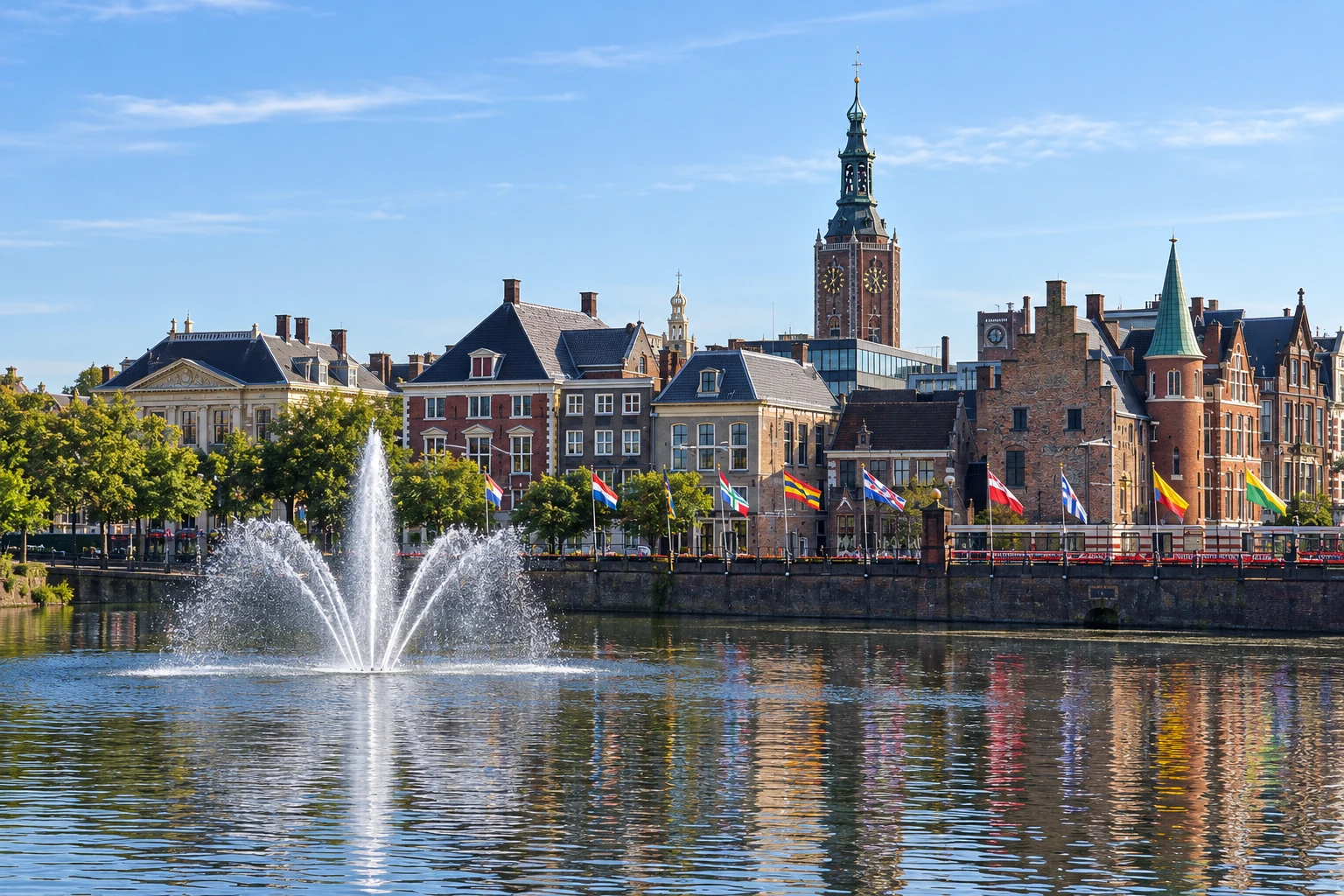
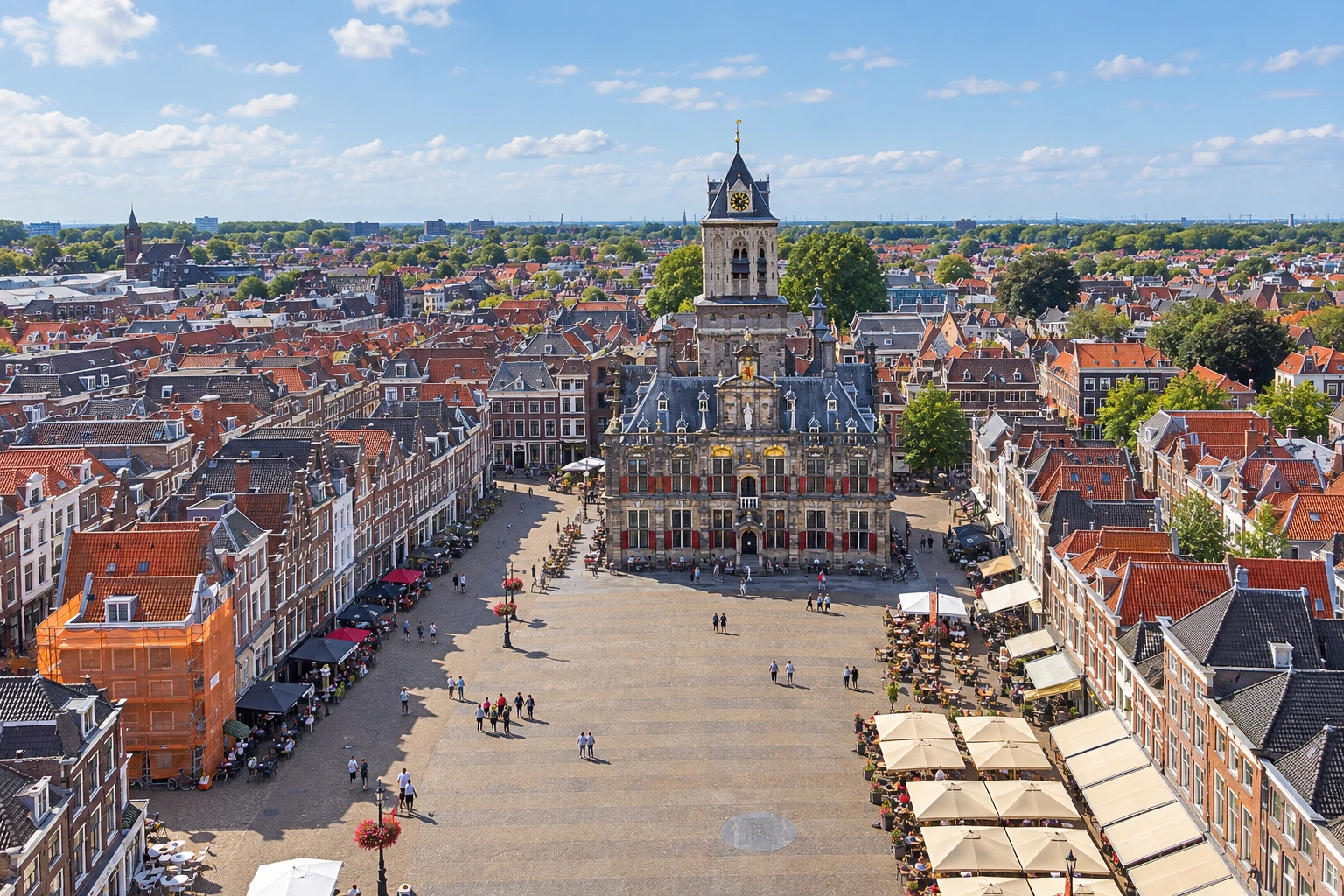
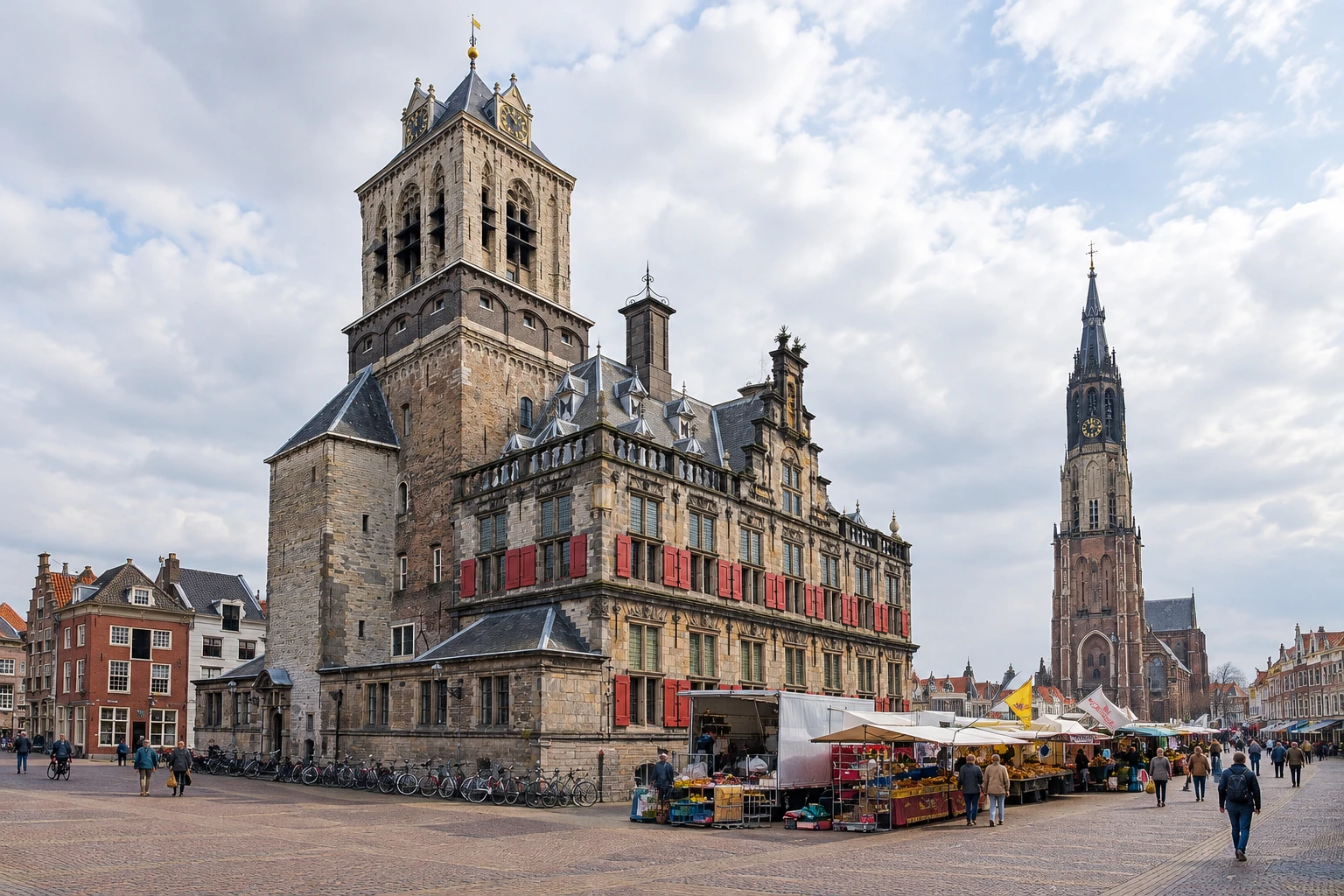
Illustrative images. The pictures in this guide are illustrations based on the real place, not photographs, and may differ from it.

Get it on Google Play

Get to know the place

A region to enjoy
at your own pace.

Haia (Den Haag, in Dutch) is where Holanda is governed. There are the parliament, the ministries, most of the embassies and the king's working palace. Even so, the country's official capital is Amsterdã, as the Constitution says. For Brazilians, a simple way to understand it: Amsterdã is the capital on paper; Haia is the seat of power.

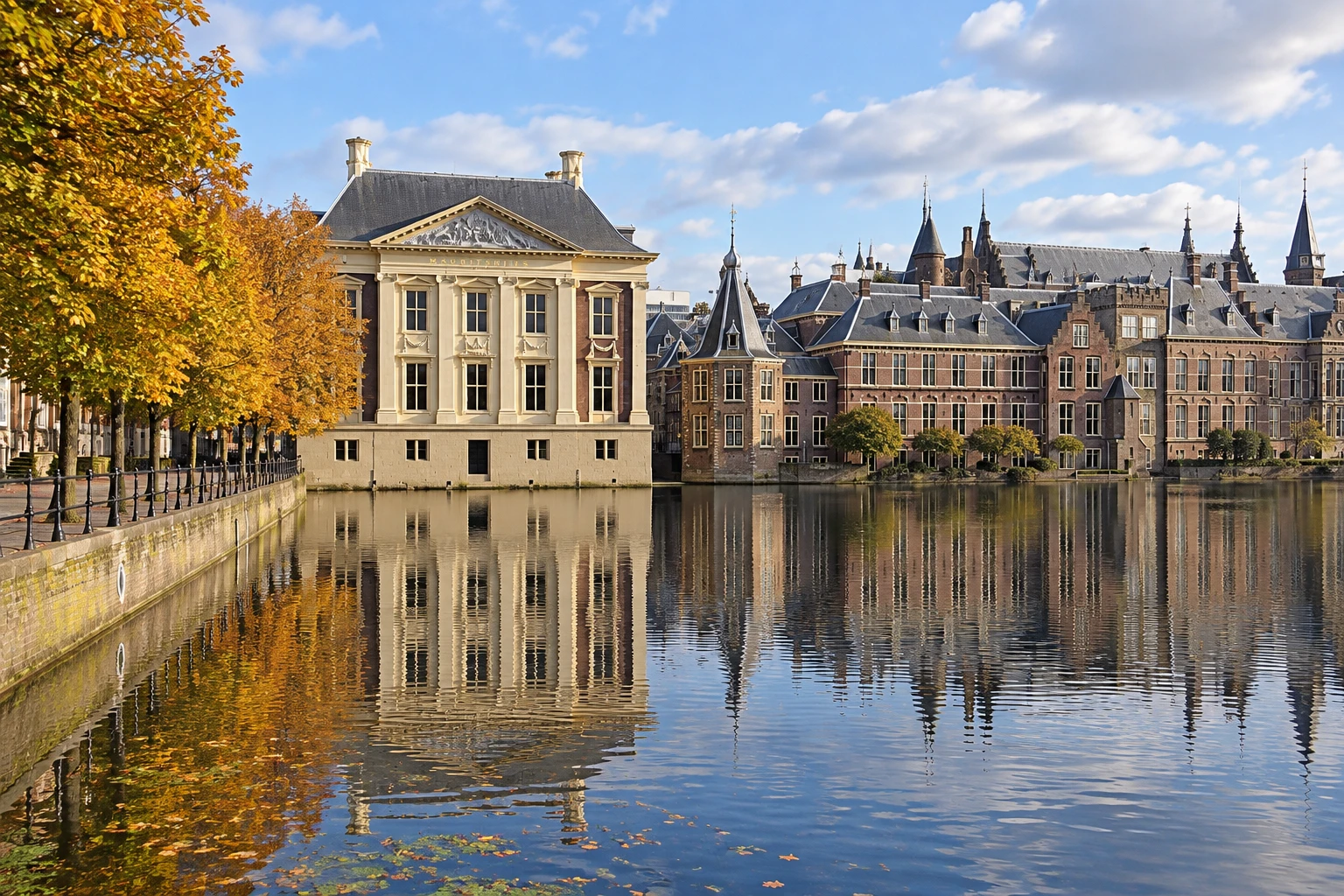
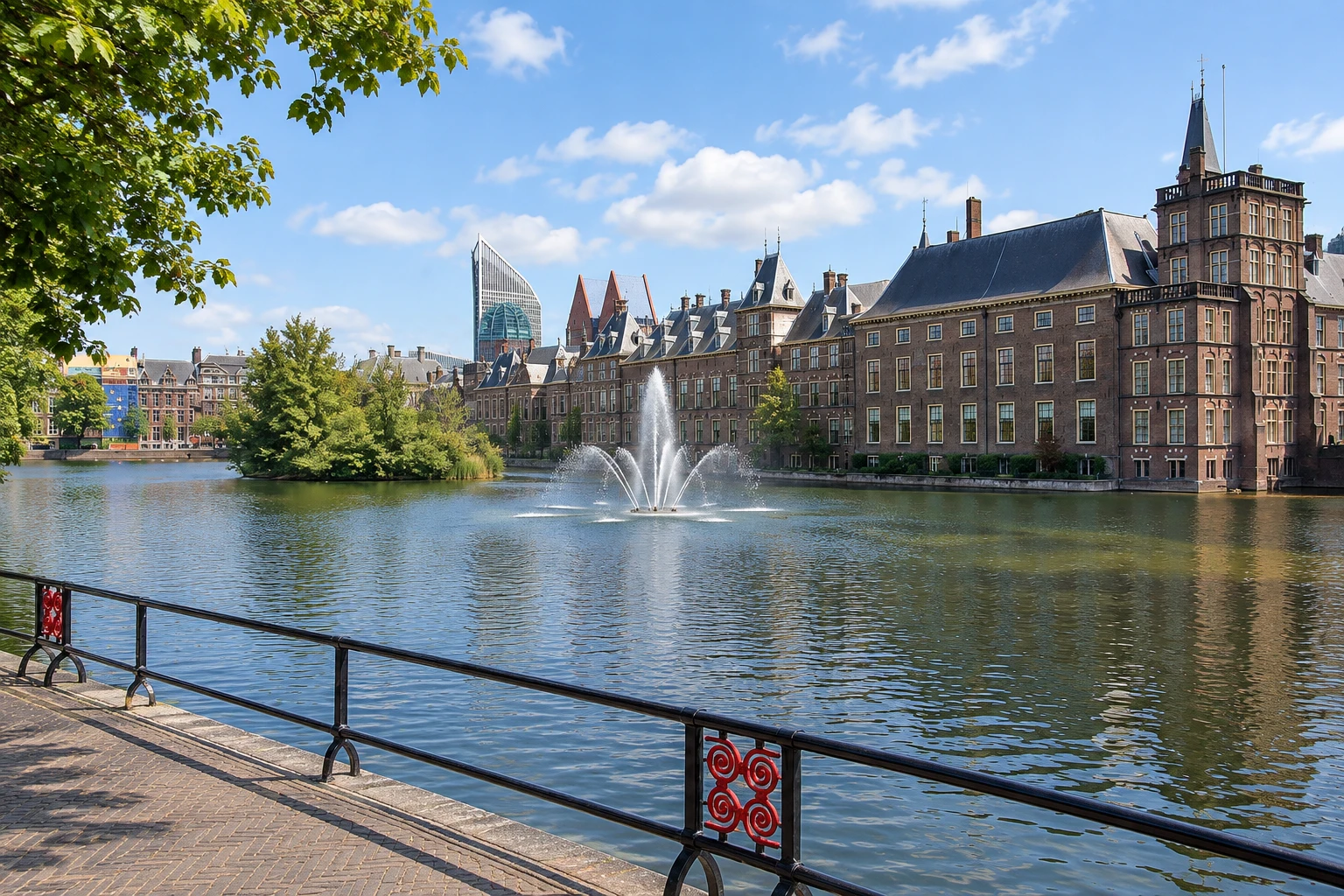
The city is also called the city of peace and justice. In the Palácio da Paz operate the International Court of Justice of the United Nations and the Permanent Court of Arbitration. Near the historic center are the Mauritshuis, home of the Moça com Brinco de Pérola, and the lake Hofvijver, with the Binnenhof complex reflected in the water.

Haia has 11 kilometers of coastline. Scheveningen, the beach neighborhood, has wide sand, a pier and a promenade, and the tram reaches it from the center. On the promenade stands the Kurhaus, a large 19th-century hotel, and in the center the Panorama Mesdag shows what that very beach looked like in 1881.

Delft is about 15 minutes by train. It's a small city of canals and old houses, where the painter Johannes Vermeer was born and where the factory of the blue-and-white pottery known as Delfts blauw still operates. In the Nieuwe Kerk is the tomb of Guilherme de Orange and the royal family's crypt.

This destination brings together 2 cities: The Hague, Delft.

Share: WhatsApp
Traveler, share your experiences through photos Up to 5 photos of each place you visited.

One destination, many paths

The cities on this trip

Start with one city or combine several in your itinerary.

Where The Hague and Delft is The star marks the capital, The Hague.
The HagueDelft

Outlines: CBS/PDOK, Gebiedsindelingen 2024, CC BY 4.0. Adapted by Cidade Turismo.

How to get there: The Hague and Delft

Amsterdam Airport Schiphol (AMS), in Haarlemmermeer · 50 km to The Hague

Rotterdam The Hague Airport (RTM), in Roterdã · 22 km to The Hague

Connections with Brasil are usually via another city. Confirm before buying. From Schiphol, Amsterdã's airport, the train reaches Den Haag Centraal in about 30 minutes, and from there to Delft in about 15 minutes. Rotterdam The Hague Airport, smaller, is located between the two cities.

Suggested arrival point: The Hague

The local experience

Things to do in The Hague and Delft

Delft · South Holland · Square

Delft Market Square

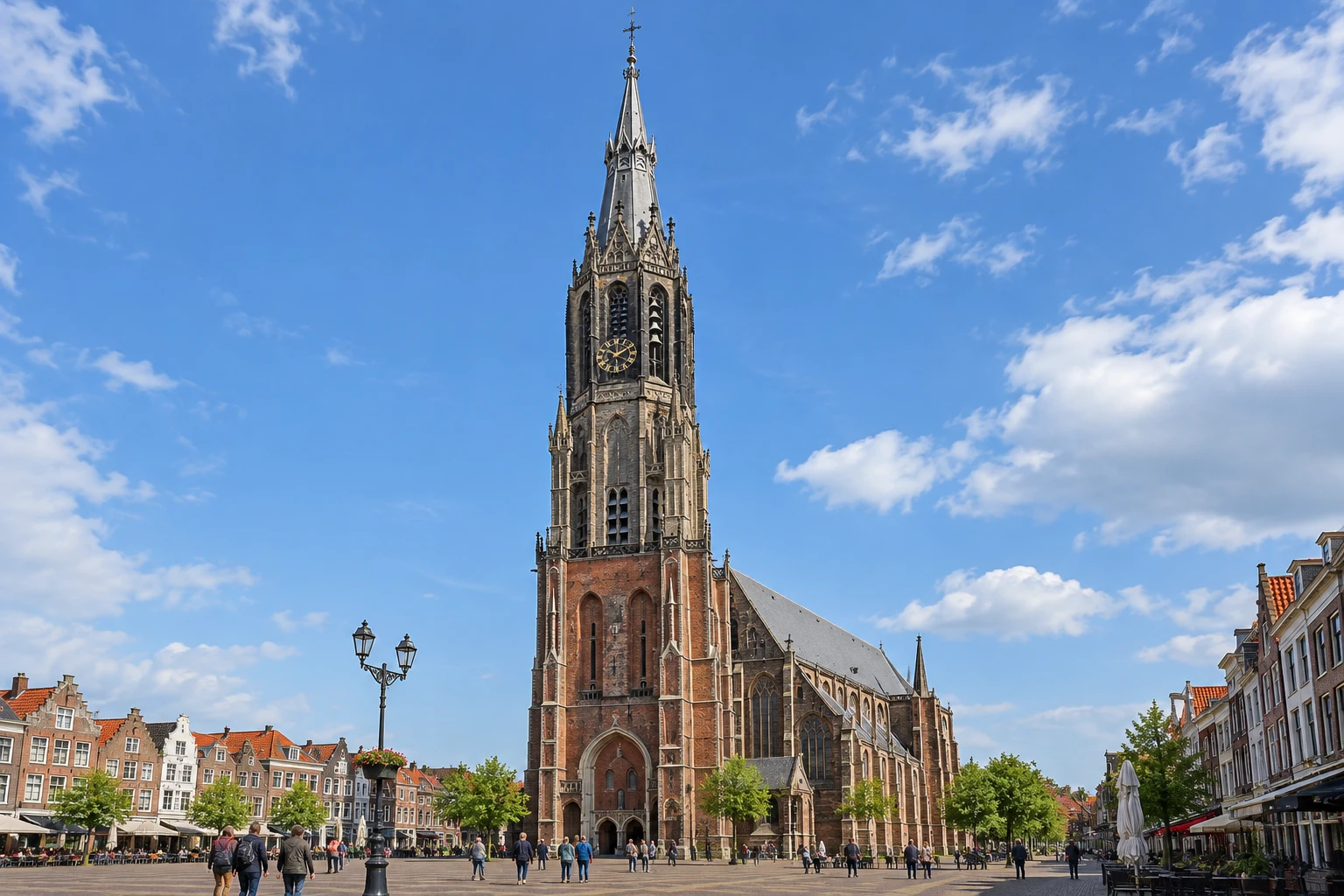
Delft's market square, one of the largest historic squares in Europe, between the tower of the Nieuwe Kerk and the Renaissance town hall. It has a weekly market on Thursdays.

Explore Delft Market Square

The Hague · South Holland · Museum

Mauritshuis

Museum of 17th-century Dutch and Flemish painting in a palace by the Hofvijver. It houses the Moça com Brinco de Pérola and the Vista de Delft by Vermeer, and A Lição de Anatomia do Dr. Tulp by Rembrandt.

Explore Mauritshuis

The Hague · South Holland · Lake

Hofvijver

Rectangular lake in the centre of The Hague, with the Binnenhof, the historic seat of parliament, reflected in the water. The Binnenhof is undergoing a long renovation; the outside view from the shore and the Plein remains open.

Explore Hofvijver

Delft · South Holland · Church

New Church

Gothic church on the Markt in Delft with the monumental tomb of Guilherme de Orange and the crypt of the Dutch royal family. The tower, at 108.75 meters, is the second-tallest in the Netherlands and can be climbed.

Explore New Church

See 12 more places in The Hague and Delft

To choose before you go

Tours in The Hague and Delft

Where each tour starts, how long it takes, how it is done, what is included and the price range.

Mauritshuis: The Girl with a Pearl Earring

From Den Haag Centraal on foot, about 10 minutes about 2 hours morning easy

The Mauritshuis is a 17th-century townhouse on the edge of the Hofvijver, the lake in central Den Haag (The Hague). Inside is a collection of Dutch Golden Age painting, displayed in small rooms with few works per wall, which makes for a calm visit. The three paintings everyone looks for are The Girl with a Pearl Earring by Vermeer, The Anatomy Lesson of Dr. Tulp by Rembrandt, and The Goldfinch by Fabritius. There are also works by Jan Steen, Frans Hals, Rubens and Holbein. The route is short: two floors connected by a staircase and an elevator. The entrance is at the basement level, where the ticket office, left-luggage and the shop are located. When you exit, Plein square, with a statue of William of Orange in the centre and cafés around it, is the natural spot for a break.

Stops: Mauritshuis, Plein, Hofvijver.

Includes: Museum admission with an app audioguide; the ticket is paid separately and also covers the Prince William V Gallery, a few steps away.

Tip: Buy the ticket on the official website with a dated time slot and go early: the rooms with The Girl with a Pearl Earring and The Goldfinch fill up around midday. On Mondays the museum usually opens only in the afternoon.

Best time: All year; on rainy days it's a good indoor option.

The Hague historic center on foot: Hofvijver, Lange Voorhout and Passage

From Den Haag Centraal on foot about 3 hours morning or afternoon easy

Den Haag (The Hague) is the seat of the Dutch government, and the city center mixes official buildings, shops and tree-lined squares. Start at the Hofvijver, the rectangular pond with a small island in the middle: from the north bank, at Lange Vijverberg, you can see the collection of towers and roofs of the Binnenhof reflected in the water. Follow Lange Voorhout, a wide linden-lined avenue with mansions on both sides, where Escher in Het Paleis and Hotel Des Indes are located. From there go to Paleis Noordeinde, the king’s working palace: the facade is visible from Noordeinde street, and at the back is the Paleistuin, a garden open to the public from sunrise to sunset, with flowerbeds, fountains and lawns. Finish at De Passage, a 19th-century covered arcade with a glass dome and shops, and at the Grote Markt, a bar-lined square near the Grote Kerk.

Stops: Hofvijver, Lange Voorhout, Paleis Noordeinde, Paleistuin, De Passage, Plein, Grote Markt.

Includes: Self-guided walk; the Paleistuin and the Passage do not charge admission. The interior of Paleis Noordeinde is not open to visitors.

Tip: On Thursdays and Sundays there is often an antiques and book fair at the Lange Voorhout, from spring through autumn. Watch for bike lanes when you cross: they run right next to the sidewalks.

Best time: April to October, when the lindens of the Lange Voorhout are in leaf; in winter the days are short.

Escher in Het Paleis

From Den Haag Centraal on foot, about 12 minutes about 1 hour 30 minutes afternoon easy

The museum dedicated to M. C. Escher occupies the former winter palace of Queen Mother Emma, at Lange Voorhout 74. There are more than 120 prints by the Dutch artist of impossible staircases and figures that transform into one another, displayed in palace rooms with chandeliers made to measure for the museum. The upper floor has an interactive section, with perspective tricks that work well for children and teenagers. The visit is short and pairs well with a stroll through the center, as the museum stands on the avenue that links the Hofvijver to Paleis Noordeinde. The shop offers reproductions and books about Escher’s tessellations.

Stops: Escher in Het Paleis, Lange Voorhout.

Includes: Museum admission, with an audio guide via app; ticket paid separately.

Tip: The museum usually closes on Mondays. Combine it with the Mauritshuis on the same day: it’s a 10-minute walk between them.

Best time: All year.

Panorama Mesdag

From Den Haag Centraal tram or on foot, about 20 minutes about 1 hour afternoon easy

The Panorama Mesdag is a circular painting from 1881 more than 14 meters high and 120 meters in circumference, created by Hendrik Willem Mesdag with his wife, Sientje Mesdag-van Houten, and students such as George Hendrik Breitner. It shows Scheveningen as it was at the end of the 19th century: the beach with fishing boats pulled up on the sand, the dunes, the village and the sea. Visitors climb a spiral staircase to a covered platform in the center of the cylinder; the sand and real objects between the platform and the canvas create the illusion of standing on a dune. Light comes through the roof and changes with the outside weather, so the painting looks different on a sunny day and on a cloudy day. The adjoining rooms hold paintings by the Mesdags and the Hague School.

Stops: Panorama Mesdag, Zeestraat.

Includes: Museum admission; separate ticket required.

Tip: Go before visiting Scheveningen: it will be easier to compare today’s beach with the one in the painting. The museum usually closes on Mondays.

Best time: All year.

Kunstmuseum Den Haag and Mondrian

From Den Haag Centraal tram, about 20 minutes about 2 hours 30 minutes afternoon easy

The Kunstmuseum Den Haag is housed in a yellow-brick building designed by H. P. Berlage, the architect’s final project, with courtyards and rooms lit from above. It is the museum with the largest collection of Piet Mondrian in the world: you can trace the painter from his Dutch landscapes to his compositions of black lines and colored rectangles, including the Victory Boogie Woogie, which remained unfinished. The holdings also include European modern art, fashion, musical instruments, Delft ceramics and decorative arts. The museum is in the Statenkwartier neighbourhood, between the centre and Scheveningen, next to the Museon-Omniversum, which is focused on science and families.

Stops: Kunstmuseum Den Haag, Stadhouderslaan.

Includes: Museum admission; ticket paid separately. The fashion and decorative arts rooms change frequently.

Tip: Take tram 16 from Den Haag Centraal or line 24 and get off near the museum; check the stop on the HTM map. Reserve the morning for the centre and the afternoon for the museum, which usually closes on Mondays.

Best time: All year.

Vredespaleis (Peace Palace)

From Den Haag Centraal tram, about 15 minutes about 1 hour morning easy

The Vredespaleis (Peace Palace) is the red-brick building with a clock tower that houses the International Court of Justice, the UN’s only judicial body outside New York, and the Permanent Court of Arbitration. It was funded by American Andrew Carnegie and opened before World War I. Because it is an active court, the interior can only be visited on a guided tour, with advance reservation on the website, and places are released a few weeks beforehand. What anyone can do is enter the Visitors' Centre next to the gate, featuring an interactive exhibition and audio guide about the building’s and the courts’ history, and see up close the Flame of Peace, which burns by the entrance, surrounded by the World Peace Path with stones from 196 countries, including a piece of the Berlin Wall.

Stops: Vredespaleis, Carnegieplein, Vredespaleis Visitors' Centre.

Includes: Visitors' Centre with audio guide. The tour of the interior and the gardens is separate and requires a reservation.

Tip: If you want to see the interior, check the official website in advance for tour dates; visits do not take place on days with sessions. The Visitor Center usually closes on Mondays.

Best time: Open year-round; in summer the façade looks better with the gardens green.

See 11 more tours

Scheveningen: beach, Pier and Kurhaus

From Den Haag Centraal tram 9 or 1, about 20 minutes half a day afternoon easy

Scheveningen is the seaside district of Den Haag (The Hague), 15 minutes by tram from the center. The stretch of sand is about one kilometer long, with the Kurhaus, a 19th-century hotel with a dome and ballroom, marking the promenade. In front are the beach stalls and restaurants, and a little to the north the De Pier extends over the sea, with a Ferris wheel at the end. To the south is the harbor, Scheveningen Haven, with fish restaurants and the Maritime Museum. In summer the beach fills with bathers and surf schools operate in the central section; in winter it’s a windy place for walks, with cafés open. Keizerstraat, behind the promenade, preserves the fishing-village side. Sea Life, the aquarium beside the Pier, is an option with children on a rainy day.

Stops: Scheveningen, Kurhaus, De Pier, Strandweg, Scheveningen Haven, Keizerstraat.

Includes: Free stroll. Ferris wheel, Sea Life and Maritime Museum charge separate admission.

Tip: Bring a windbreaker even in summer: the North Sea wind is constant. To watch the sunset, stay on the north promenade, which is quieter. Tram 11 goes to the port.

Best time: June to September for the beach; year-round for walking.

Madurodam

From Den Haag Centraal tram 9, about 15 minutes about 3 hours morning easy

Madurodam is a miniature park featuring the Netherlands’ best-known places in reduced scale: Amsterdam’s canals with bicycles leaning on the bridges, the port of Rotterdam with moving ships, the cube houses, the Binnenhof, windmills, the airport and trains that really run. There are also indoor attractions that tell the story of the fight against water, the Dutch East India Company and the Dutch origins of New York. It sits between the centre and Scheveningen, and the name honors George Maduro, a student from Curaçao killed in World War II. It’s a program that works for adults and children, and gives a general idea of the country in a short time.

Stops: Madurodam, George Maduroplein.

Includes: Park admission and indoor attractions; tickets paid separately.

Tip: Buy the ticket on the website and go at opening time, before school excursions. Combine it with Scheveningen the same afternoon: tram 9 continues to the beach.

Best time: April to October, with longer days and less rain; open year round.

Delft on foot: Markt, canals and Oostpoort

From Delft station on foot half day morning easy

Delft is about a 15-minute train ride from Den Haag (The Hague) and is a compact canal city, almost entirely closed to cars. The center is the Markt, a square with the Nieuwe Kerk at one end and the Stadhuis, the Renaissance town hall, at the other; on Thursdays the square hosts the weekly market with flowers, cheeses and fish. From there follow the Oude Delft, the oldest canal, with narrow-gabled houses and stone bridges, to the Oude Kerk, with its leaning tower. The Beestenmarkt, a tree-lined square of bars, is the stop for a coffee. Walk on to the Oostpoort, the only remaining gate of the eight that the medieval wall had, with two slim-pointed towers by the canal, reminiscent of the Rotterdam Gate shown in Vermeer’s View of Delft. The town belongs to the painter and to the blue pottery: both themes appear on street signs, shops and façades.

Stops: Markt, Stadhuis, Nieuwe Kerk, Oude Delft, Beestenmarkt, Oostpoort, Voldersgracht.

Includes: Self-guided walk; churches and museums charge separate admission.

Tip: Go on a Thursday to catch the market at the Markt. From the station, the center is a 10-minute walk; HTM tram 1 also connects The Hague with Delft and stops near the center.

Best time: April to October; the Thursday market runs year-round.

Nieuwe Kerk and Oude Kerk of Delft, with tower climb

From Delft station on foot, about 10 minutes about 2 hours morning moderate

The two churches in Delft are visited with the same ticket. The Nieuwe Kerk, on the Markt, is the church of the Dutch royal family: in the chancel is the marble mausoleum of William of Orange, founder of the dynasty, and beneath it the crypt where the Orange-Nassau have been buried since the 16th century (the crypt is not open to the public). The tower is 108.75 meters high and can be climbed by 376 steps to about 85 meters; on a clear day the view reaches Rotterdam and Den Haag (The Hague). The climb is narrow and has no elevator, only for those who are fit and not afraid of heights, and it closes in bad weather. The Oude Kerk, on the other side of the center, is the oldest church in the city, with a leaning tower because it was built over an old moat. Inside are the tombs of Johannes Vermeer, the scientist Antoni van Leeuwenhoek and Admiral Piet Hein, as well as modern stained glass.

Stops: Nieuwe Kerk, Oude Kerk, Markt, Oude Delft.

Includes: Admission to both churches with a single ticket; the climb to the tower is paid separately.

Tip: On Sundays the churches hold services and visiting access is limited; prefer weekdays. Wear sturdy footwear for the tower and leave your backpack in the shop locker.

Best time: April to October for the tower, when there is less wind and clearer days.

Royal Delft, the blue pottery factory

From Delft station on foot, about 20 minutes, or by bus about 2 hours afternoon easy

Royal Delft (De Koninklijke Porceleyne Fles) is Delft’s blue pottery factory founded in 1653, the oldest still in operation. The visit goes through the museum, which tells how Dutch earthenware imitated Chinese porcelain and became its own product, and the studio, where painters work in public view with a fine brush and paint that only turns blue after firing. In the courtyard and galleries there are large pieces, such as tile panels and vases commissioned by royalty. After the visit, the shop sells everything from single tiles to complete sets; pieces with the factory’s mark on the bottom are the originals. There are workshops where visitors paint their own tile, by reservation.

Stops: Royal Delft, Rotterdamseweg.

Includes: Museum and studio with audio guide; admission charged separately. Painting workshop separately, by reservation.

Tip: It is located outside the center, on the way to the TU Delft campus; it’s worth going by bike or bus. Check the studio’s timetable and hours on the website before you go to see the painters at work.

Best time: Year-round.

Vermeer Centrum Delft

From Delft station on foot, about 10 minutes about 1 hour afternoon easy

Johannes Vermeer was born, lived and died in Delft, and none of his paintings remained in the city. The Vermeer Centrum, on Voldersgracht, behind the Markt, fills that gap: it shows life-size reproductions of all the painter’s known works, explains the light, the colors and the camera obscura he may have used, and places each painting in 17th-century Delft. There is a reconstruction of a studio and a map of the city with sites linked to the painter, which helps to understand the walk afterwards. The visit is short and serves as an introduction before seeing the Girl with a Pearl Earring at the Mauritshuis in Den Haag (The Hague), and the View of Delft, also there.

Stops: Vermeer Centrum Delft, Voldersgracht, Markt.

Includes: Entry with audio guide; ticket paid separately. There is a combined ticket with the Nieuwe Kerk and the Oude Kerk.

Tip: The building stands where the Guild of Saint Luke once was, to which Vermeer belonged. Visit the Mauritshuis the following day, with the original paintings still fresh in your memory.

Best time: Year-round.

Boat tour of Delft’s canals

From Koornmarkt, Delft city centre on foot about 50 minutes afternoon easy

Sightseeing boats depart from Koornmarkt, a wide canal a few steps from the Markt, and navigate the canals of central Delft in about 50 minutes, passing under low bridges, along the Oude Delft and past the Oostpoort. The guide tells the city’s story, about Vermeer and the blue pottery, while the boat moves slowly between the facades. The boats have glass roofs that open on sunny days and close in rain. The season generally runs from April to October; outside that period the regular service does not operate. It’s a good rest for your legs at the end of a walk and gives a different view of the houses, which were built to be seen from the water.

Stops: Koornmarkt, Oude Delft, Oostpoort.

Includes: Guided boat tour; separate ticket required, sold at the Koornmarkt kiosk or on the website.

Tip: On summer days, the afternoon boat often fills up; stop by the kiosk in the morning and reserve a time. Bring a jacket: the wind is colder on the water.

Best time: April to October, regular boat season.

By bicycle from The Hague to Delft along the Vliet canal

From Den Haag Centraal or Den Haag HS bicycle half day (about 10 km each way) morning moderate

For cyclists who ride safely, the route between Den Haag (The Hague) and Delft is a good first bike ride in the Netherlands: about 10 kilometers flat, almost entirely on separated bike paths, following the Delftsche Vliet canal. Leave from Den Haag HS station, cross the bicycle tunnel and follow Rijswijk to the canal bank; from there just follow the water, with boats, houseboats and a mill at the entrance to Delft. Arrival is through the Oostpoort, the medieval gate. After exploring Delft, return the same way or leave the bike at Delft station and take the train, which is allowed with the OV-fiets. Stations have NS rental bikes (OV-fiets) for those with a personal OV-chipkaart; without it, use rental shops near the stations.

Stops: Den Haag HS, Delftsche Vliet, Rijswijk, Oostpoort, Delft station.

Includes: Self-guided ride; bicycle rental paid separately.

Tip: Rent a bicycle with a hand brake if you are not used to a pedal brake (coaster brake). On bike lanes, keep to the right and signal with your arm. On very windy days, make the trip by train.

Best time: April to October; avoid rainy and very windy days.

Louwman Museum, vintage cars

From Den Haag Centraal bus, about 15 minutes about 2½ hours afternoon easy

The Louwman Museum houses about 275 automobiles and other vehicles from a private collection begun in 1934, in a brick building with a high roof designed by American Michael Graves, beside the A44 motorway and the Haagse Bos. It is considered one of the largest collections of pre-1910 cars in the world, with a 1903 Spyker among the oldest pieces. The exhibition traces the history of the automobile: steam carriages, the first Benz and Ford models, racing cars, luxury models from the 1930s, movie cars and royal family vehicles. There are also posters, trophies and art related to mobility. It’s a program for car enthusiasts, but the rooms are spacious and appeal to families.

Stops: Louwman Museum, Leidsestraatweg, Haagse Bos.

Includes: Museum admission; ticket paid separately.

Tip: The museum usually closes on Mondays. Combine it with a walk through the adjacent Haagse Bos up to the Huis ten Bosch.

Best time: All year round.

Haagse Bos, Huis ten Bosch and Westbroekpark

From Den Haag Centraal on foot and tram about 3 hours morning easy

The Haagse Bos is the woodland that begins right behind Den Haag Centraal station and stretches for kilometres, with wide paths among oaks and beeches and lakes in its interior. At its far end is the Huis ten Bosch, the palace where the royal family lives; it is not open to the public, but its façade can be seen through the gate on the Bezuidenhoutseweg side. On the other side of the city, en route to Scheveningen, Westbroekpark is an English-style park with a large rose garden, the Rosarium, containing thousands of rose bushes that usually bloom from June to September, plus lawns, a lake with pedal boats in summer and a café with a terrace. Both are the green face of Den Haag (The Hague), a city with many trees between the dunes and the canals.

Stops: Haagse Bos, Huis ten Bosch, Westbroekpark, Rosarium.

Includes: Free stroll; parks open without charge.

Tip: Do the Haagse Bos in the morning, leaving straight from the station, and Westbroekpark in the afternoon on the way to Scheveningen beach by tram 9. In autumn the woods turn yellow and red.

Best time: June to September for the roses; October for autumn colors.

Day trip to Leiden: Rijksmuseum van Oudheden, Hortus and canals

From Den Haag Centraal NS train, about 12 minutes full day, about 8 hours full day easy

Leiden is about 12 minutes by Intercity from Den Haag (The Hague) and is the country’s oldest university town, founded in 1575. The spine of the walk is the Rapenburg, a wide canal lined with professors’ houses and university buildings. There you’ll find the Rijksmuseum van Oudheden, the national archaeology museum, with Egyptian mummies and sarcophagi, Greek, Etruscan and Roman pieces, and archaeology of the Netherlands. Opposite is the Hortus botanicus, the oldest botanical garden in the Netherlands, with greenhouses, Clusius’s reconstructed garden—he introduced tulips to the country—and a Japanese garden. Climb the Burcht, a circular fortification on an artificial mound, for views over the roofs, and pass the Pieterskerk, a church connected to the Mayflower pilgrims who lived in Leiden before sailing to America. Rembrandt’s birthplace also has markets on Wednesdays and Saturdays along the canals.

Stops: Leiden Centraal, Rapenburg, Rijksmuseum van Oudheden, Hortus botanicus Leiden, Burcht van Leiden, Pieterskerk.

Includes: Self-guided day; train, museum and garden tickets separate.

Tip: Take the train from Den Haag Centraal and get off at Leiden Centraal: the center is a 10-minute walk. On Saturdays the market fills the banks of the Nieuwe Rijn.

Best time: April to October for the Hortus; the museum is open year-round.

Day by day

2, 3 and 5-day itinerary in The Hague and Delft

Suggestions to plan the trip. Change the order of the days according to the weather and tour availability.

2 days · Two days: The Hague and Delft - essentials

For Someone coming from Amsterdam or Rotterdam for a short time who wants to visit the Mauritshuis, The Hague city centre and spend a full day in Delft. · Based in Den Haag (The Hague), near Den Haag Centraal
  1. Day 1 · The Hague: Mauritshuis, historic centre and Scheveningen

    Arriving from Schiphol in the morning (about 30 minutes by Intercity), leave your luggage and walk to the Mauritshuis with a timed ticket. Then explore The Hague’s historic centre on foot: Hofvijver, Lange Voorhout, Paleis Noordeinde and Paleistuin, De Passage. In the afternoon, visit Escher in Het Paleis or Panorama Mesdag. At the end of the day take tram 9 to Scheveningen to walk the promenade and have dinner at the harbour.

  2. Day 2 · Delft: churches, Vermeer and pottery

    Take the Sprinter train to Delft (about 15 minutes). In the morning, explore Delft on foot: Markt, Oude Delft, Beestenmarkt and Oostpoort. Visit the Nieuwe Kerk, climb the tower if the weather is clear, then head to the Oude Kerk. Lunch at Beestenmarkt. In the afternoon, Vermeer Centrum and, if time allows, Royal Delft or the canal boat (April to October). Return by train to The Hague or continue directly to Rotterdam or Amsterdam.

3 days · Three days: The Hague museums, beach and Delft
For Someone who wants to see The Hague’s main museums at a relaxed pace, visit Scheveningen and devote a full day to Delft. · Based in Den Haag (The Hague), city centre
  1. Day 1 · The Hague centre and Mauritshuis

    Arrive in the morning from Schiphol by Intercity to Den Haag Centraal. Walk the historic centre of The Hague in the morning: Hofvijver, Lange Voorhout, Paleis Noordeinde, Paleistuin and De Passage. Lunch at the Plein. In the afternoon, Mauritshuis with a timed entry and then Escher in Het Paleis, a 10-minute walk away. Dinner at the Grote Markt.

  2. Day 2 · Vredespaleis, Kunstmuseum and Scheveningen

    In the morning, take the tram to the Vredespaleis for the Visitor Centre and the Peace Flame. Continue to Panorama Mesdag on the way back to the centre and have lunch. In the afternoon, visit Kunstmuseum Den Haag, which includes the Mondrian collection. Late afternoon, take the tram to Scheveningen: the promenade, Kurhaus, Pier and sunset on the beach, with a fish dinner in the harbour.

  3. Day 3 · Full day in Delft

    Take the Sprinter to Delft (about 15 minutes) or, if you cycle, ride from The Hague to Delft along the Vliet canal. Delft on foot in the morning with Nieuwe Kerk, the tower climb and Oude Kerk. Lunch at Beestenmarkt. In the afternoon, Vermeer Centrum, Royal Delft and the canal boat between April and October. Return by train to The Hague, or continue directly to the next destination.

5 days · Five days: The Hague, Delft, Leiden and the green side
For Someone using The Hague as a base for the region who wants to include Leiden, Madurodam, parks and a relaxed bike ride. · Based in Den Haag (The Hague), city centre or Scheveningen
  1. Day 1 · Arrival and historic centre

    Arrive in the morning via Schiphol and take the Intercity to Den Haag Centraal (about 30 minutes). Start slowly with the historic centre of The Hague on foot: Hofvijver, Lange Voorhout, Paleis Noordeinde, Paleistuin, De Passage and Grote Markt. In the afternoon, visit Escher in Het Paleis — a light programme for arrival day. Dinner near Plein.

  2. Day 2 · Mauritshuis, Panorama Mesdag and Vredespaleis

    Visit the Mauritshuis at opening, with a timed ticket. Afterwards, walk to Panorama Mesdag. Lunch in the Zeeheldenkwartier neighbourhood. In the afternoon, Vredespaleis: Visitor Centre and Peace Flame; if an interior tour is offered on that date, book in advance. End the afternoon in Westbroekpark, with the rose garden open between June and September.

  3. Day 3 · Delft

    Take the Sprinter to Delft (about 15 minutes). Explore Delft on foot: Markt, Oude Delft, Beestenmarkt, Oostpoort. Nieuwe Kerk with the tower climb and Oude Kerk. Lunch in the centre. In the afternoon, Vermeer Centrum and Royal Delft; finish with the canal boat, April to October. If it’s Thursday, the market is on the Markt.

  4. Day 4 · Leiden

    Return trip to Leiden: an Intercity of about 12 minutes from Den Haag Centraal. Morning at the Rijksmuseum van Oudheden on the Rapenburg. Lunch by the canals. In the afternoon, Hortus botanicus, Burcht and Pieterskerk. On Saturdays there is a market along the Nieuwe Rijn. Return to The Hague in the late afternoon.

  5. Day 5 · Madurodam, Kunstmuseum and Scheveningen

    Visit Madurodam at opening, reachable by tram 9. After that, Kunstmuseum Den Haag with Mondrian on the same side of the city. In the afternoon, Scheveningen: promenade, Kurhaus, Pier and harbour, with time for the beach in summer. An alternative for car enthusiasts is the Louwman Museum and a walk in the Haagse Bos. If your return flight is early the next day, Den Haag Centraal to Schiphol takes about 30 minutes.

Best time to go

When to go: The Hague and Delft month by month

From May to September the days are long and Scheveningen beach is busy; summer runs from June to August. In spring and autumn there are fewer people at the museums. Winter, from December to February, is cold with short days. Wind and rain can occur in any month: bring a waterproof jacket.

The seasons shown are the most usual ones; nature doesn't always follow the calendar.

January Some rain

Winter · Museums

January is mid-winter, the opposite of Brazilian summer: highs around 6 °C, lows near 1 °C, short days, and frequent wind and light rain. It’s museum season (Mauritshuis, Escher, Kunstmuseum, Panorama Mesdag) and for short walks; Scheveningen is empty and windy. Delft boats are off-season. Few people in lines.

February Some rain

Cold · Few people

February remains cold, with highs of about 7 °C and lows near 1 °C; light snow can occur in some years. Rainfall is moderate and the sun appears more than in January. Good for those who want museums without queues and emptier hotels. Bring real winter clothing: North Sea wind lowers the felt temperature.

March Some rain

Spring arrives · Longer days

In March, spring begins on the calendar, but it’s still cold: highs around 10 °C, lows near 2 °C, with moderate rain and already longer days. Parks start to bloom and climbing the Nieuwe Kerk tower is more pleasant on a clear day. Scheveningen is still just for walking.

April Low rain

Tulips in the region · Low rainfall

April is the driest month of the year and days already exceed 14 hours of light; highs around 14 °C, lows of 5 °C. Flower fields between Leiden and Haarlem are usually in bloom, and Delft boats resume their season. At the end of the month is King’s Day on the 27th, when cities typically have street parties and many places close. Bring a coat: mornings are cold.

May Some rain

Full spring · Terraces open

May has highs of about 18 °C and lows of 8 °C, moderate rain and many hours of sun. It’s the month when the terraces on the Plein, the Grote Markt and the Beestenmarkt fill up and the Lange Voorhout turns green. Good for cycling to Delft and for Westbroekpark. May holidays fill trains and hotels on weekends.

June Some rain

Start of summer · Long days

June opens northern-hemisphere summer: highs around 21 °C, lows of 11 °C and daylight until after 10:00 PM. The rose garden at Westbroekpark is usually in bloom and Scheveningen begins to get swimmers, although North Sea water is cold. Moderate rain, in showers. Book museums and hotels in advance.

July Some rain

Summer · Beach and festivals

July is one of the warmest months, with highs around 23 °C and lows of 13 °C; days above 28 °C happen but are not the norm. Scheveningen is in high season, with kiosks, surfing and events on the promenade. Moderate rain, in summer showers. European school holidays: queues at the Mauritshuis and Madurodam; go at opening.

August High rain

Midsummer · High rainfall

August maintains July’s warmth, highs of 23 °C and lows of 13 °C, but it is the rainiest month of the year, in short showers. Beach, parks, Delft boat trips and cycling work well between showers. High activity across the region; Delft market and terraces get busy.

September High rain

End of summer · Beautiful light

September is still pleasant, with highs around 19 °C and lows of 10 °C, high rainfall and shortening days. It is the month of Prinsjesdag, the Tuesday when the king opens the parliamentary year in The Hague with a carriage procession; the city centre is closed for the parade. The roses in Westbroekpark are often still in bloom. Fewer people than in August.

October High rain

Autumn · Colours in the Haagse Bos

October brings autumn: highs around 15 °C, lows of 7 °C, frequent rain and wind. The Haagse Bos and Lange Voorhout change colour and museums become central again to the itinerary. Delft’s canal boats end their season at the end of the month. On the last Sunday the clock goes back one hour: the time difference to Brasília becomes larger.

November High rain

Rain and wind · Low season

November is gray, with highs of about 10 °C, lows of 4 °C, high rainfall and few hours of sun. Museum-and-café itinerary: Mauritshuis, Kunstmuseum, Escher, Louwman. Scheveningen is worth it for a windy walk—dress warmly. Hotels and trains are empty, and prices are low-season.

December High rain

Winter · Year-end lights

December is deep winter, the opposite of Brazilian summer: highs near 7 °C, lows of 1 °C, high rainfall and it gets dark before 5:00 PM. Cities are decorated for Sinterklaas at the start of the month and for Christmas; there is often an ice skating rink and year-end markets in Den Haag and Delft. Many museums are closed on the 25th and on January 1st.

Plan the journey

How to get there: The Hague and Delft

From Brazil by plane to Amsterdam (Schiphol)

The Hague and Delft do not have an international airport for tourist use: the gateway is Amsterdam Airport Schiphol (AMS). There are direct flights from São Paulo and Rio de Janeiro to Amsterdam; from other Brazilian cities there are connections via São Paulo, Rio or another European city; confirm before booking. The direct flight takes about 11½ hours and usually departs Brazil at night, arriving in the Netherlands in the morning. The train station is under the Schiphol terminal, with direct access from the arrivals area, and from there trains run to Den Haag (The Hague).

From Schiphol to The Hague by train

From Schiphol Airport to Den Haag Centraal there is a direct NS Intercity, with a journey of about 30 minutes and trains every 10 to 15 minutes during the day. Some trains call at Den Haag HS (Hollands Spoor), the other station in the city a little south of the centre; both stations are served and the tram links them. For Delft, take at Schiphol the train towards Rotterdam that stops at Delft, or change at Den Haag. You can board the train by tapping a contactless credit or debit card on the platform readers (OVpay), checking in for departure and checking out on arrival; the station ticket machines also sell tickets.

By train from Amsterdam, Rotterdam, Utrecht, Brussels and Paris

From Amsterdam Centraal to Den Haag Centraal the Intercity takes about 50 minutes; from Rotterdam Centraal, about 25 minutes; from Utrecht Centraal, about 40 minutes. Between Den Haag and Delft the Sprinter takes about 15 minutes and runs every few minutes; Delft is also on the Rotterdam line. From Leiden Centraal it is about 12 minutes. Those coming from Belgium or France arrive on the Eurostar (NS International) to Rotterdam Centraal, departing Brussels-Midi or Paris Gare du Nord, and from there continue by Intercity to Den Haag; check times and stops on the NS website before buying.

By car

The Hague is in the west of the Netherlands, about 60 km from Amsterdam via the A4, about 25 km from Rotterdam via the A13, which passes through Delft, and about 65 km from Utrecht via the A12. Delft is about 10 km from The Hague city centre. A car is not helpful inside the cities: Delft’s centre is almost entirely closed to traffic and The Hague’s central parking is paid and busy; prefer P+R car parks on the city edges and continue by tram. If you drive to Scheveningen in summer, traffic along the promenade is slow at weekends.

How to get around The Hague and Delft

In Den Haag (The Hague) public transport is operated by HTM: trams and buses serve the city and the beaches. Lines 1 and 9 run from the centre to Scheveningen (line 1 continues on the other side to Delft), line 11 goes to Scheveningen harbour from Den Haag HS, line 16 passes the Kunstmuseum and line 19 links Delft to Leidschendam. You pay by tapping a contactless credit or debit card (OVpay) or with the OV-chipkaart, always checking in on board and checking out when you leave. Delft is walkable: it’s about 10 minutes from the station to the centre. Rental bikes are available in both cities; at the stations there is NS’s OV-fiets for holders of a personal OV-chipkaart. Pedestrians: watch out for bike lanes, which run directly alongside the sidewalks.

Documents

Brazilian nationals enter the Netherlands with a passport; requirements can change: confirm before travel. The Netherlands are part of the Schengen area, and immigration control is carried out at Schiphol or at the first European airport where the flight lands.

Time zone

The Netherlands use Central European Time (CET) with daylight saving: they are 4 or 5 hours ahead of Brasília, depending on the time of year. European daylight saving runs from the last Sunday in March to the last Sunday in October.

Tickets and reservations

Museums and attractions charge separate admission; check the current rates on each website. Mauritshuis, Madurodam and Royal Delft sell dated tickets online, which avoids queues in high season. The interior of the Vredespaleis can only be visited on a guided tour with reservation, and spots open a few weeks in advance. The Nieuwe Kerk and the Oude Kerk in Delft have a combined ticket; the tower is paid separately. If you plan to visit many museums, compare with the Museumkaart, the annual Dutch museum card, also valid in The Hague, Delft and Leiden.

Before you go

Practical information

A little planning leaves more time to enjoy the journey.

When to go

From May to September the days are long and Scheveningen beach is busy; summer runs from June to August. In spring and autumn there are fewer people at the museums. Winter, from December to February, is cold with short days. Wind and rain can occur in any month: bring a waterproof jacket.

The seasons shown are the most usual ones; nature doesn't always follow the calendar.

How many days to stay

Two days in Haia are enough for the central museums, the Palácio da Paz and Scheveningen. Delft requires another day, or at least a relaxed half day. If you're short on time you can see the essentials of Delft in an afternoon, leaving Haia by train or tram.

Which city to stay in

In Haia, the historic center, between the Plein, the Lange Voorhout and Denneweg street, places museums and restaurants within walking distance and is close to Den Haag Centraal. Scheveningen suits those who want to stay facing the sea, with the center a tram ride away. In Delft, the old center, between the Markt and the Oude Delft canal, is compact and a few minutes from the station. Delft is a good base for those who also want to visit Roterdã.

Respect the place

Take your trash with you, follow the signs and support local businesses. In natural areas, follow the visiting guidelines.

Beyond the guide

Your questions

Frequently asked questions about The Hague and Delft

Is Haia the capital of Holanda?

No. The official capital is Amsterdã, as the Constitution determines. Haia is the seat of government: that's where the parliament, the ministries, most of the embassies and the king's working palace are located. It's a situation similar to countries that separate the official capital from the city where the government operates.

How do I get to Haia and Delft from Amsterdã or the airport?

By train. From Schiphol airport, which has a station inside the terminal, the train takes about 30 minutes to Den Haag Centraal. From Amsterdã Centraal the journey is a little longer. From Haia to Delft it's about 15 minutes by train; the tram also links the two cities. You can tap in and tap out with a contactless credit or debit card (OVpay system): do check-in and check-out. Confirm before you go.

Do I need a car to visit Haia and Delft?

No. Train, tram and bicycle cover everything, and Delft's center is almost entirely closed to cars. Parking in both cities is paid and difficult in the center. If you rent a bicycle (fiets), use the cycle lanes and be careful when walking: many people step onto them without noticing.

Can you do Haia and Delft as a day trip from Amsterdã?

You can see part of them, but it's rushed. In one day from Amsterdã you can fit in the Mauritshuis, a walk through Haia's center and the late afternoon in Delft. To include the Palácio da Paz, Scheveningen and Delft's museums, it's best to spend the night in the region.

What's the best time to go to Haia and Delft?

From May to September, for the long days and for Scheveningen beach. The boat tour on Delft's canals usually runs from April to October. In winter, from December to February, museums stay open but days are short and cold. Holanda is 4 or 5 hours ahead of Brasília, depending on the time of year.

Explore other destinations Search by state and city