

 Brazil
 Antarctica
 Argentina
 Bolivia
 Chile
 Colombia
 Ecuador
 Falkland Islands (Malvinas)
 French Guiana
 Guyana
 Paraguay
 Peru
 Suriname
 Uruguay
 Venezuela
 Albania
 Austria
 Belgium
 Croatia
 Denmark
 Finland
 France
 Germany
 Greece
 Hungary
 Iceland
 Ireland
 Italy
 Luxembourg
 Norway
 Poland
 Portugal
 Slovakia
 Slovenia
 Spain
 Sweden
 Switzerland
 the Czech Republic
 the Netherlands
 the United Kingdom
 Turkey
 Bermuda
 Canada
 Mexico
 Saint Pierre and Miquelon
 the United States
 the Dominican Republic
 Japan
 Egypt
 South Africa
 Australia
 Fiji
 New Zealand
 Papua New Guinea
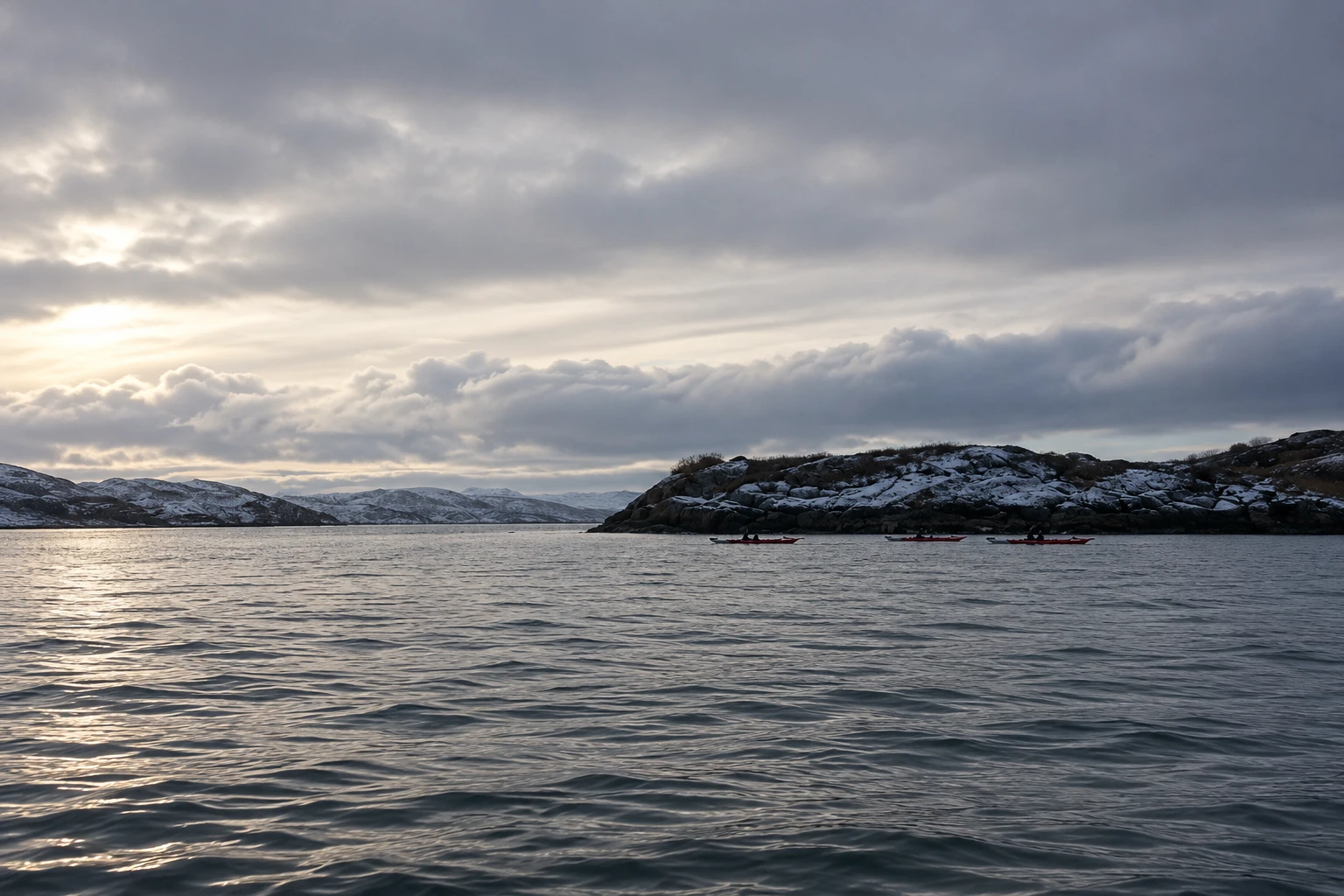
Archipelago · Aasiaat, Greenland
Aasiaat Archipelago
Thousands of low, rocky islets around Aasiaat at the southern entrance of Disko Bay, explored by boat or kayak among icebergs, seabirds and whales.
Illustrative images. The pictures in this guide are illustrations based on the real place, not photographs, and may differ from it.

Discover
About Aasiaat Archipelago
Aasiaat is surrounded by islets of smooth rock, scoured by ice, at the southwest entrance of Disko Bay. Rather than cliffs and deep fjords, the landscape consists of narrow channels, coves and islets.
Boat trips depart from the harbor and weave through the channels, passing icebergs that come from the Ilulissat Icefjord, bird colonies and small settlements such as Akunnaaq. Some stop on an uninhabited island for a walk.
The waters around the archipelago receive whales year-round: the Greenland whale tends to appear in winter and spring, and humpbacks arrive in summer.
The archipelago is one of the best places in the country for kayaking, with sheltered waters between the islands and short crossings.
Before you go
Practical information
Cidade Turismo reviews its information regularly, but something may have changed. Check with the place before planning your trip.
How much time to set aside
Two to three hours by boat; a full day by kayak.
Best time
In summer, with the midnight sun over the channels. Greenland whales are often seen at the end of winter and in spring.
How to get there
Boats and kayaks depart from Aasiaat’s harbor, operated by local providers.
Tip
Bring waterproof clothing and warm layers: between the islands, wind and spray cool you down quickly.
Your questions
Frequently asked questions about Aasiaat Archipelago
What can you see in the Aasiaat archipelago?
Low rocky islands, channels, icebergs, seabirds, small settlements and, depending on the season, whales.
Can you go kayaking in Aasiaat?
Yes. The sheltered waters among the islands are suitable for kayaking, with local operators.
Are there whales in Aasiaat in winter?
The Greenland whale usually appears in late winter and spring; humpbacks in summer.