Illustrative images. The pictures in this guide are illustrations based on the real place, not photographs, and may differ from it.
The city
What to expect from Harpers Ferry.
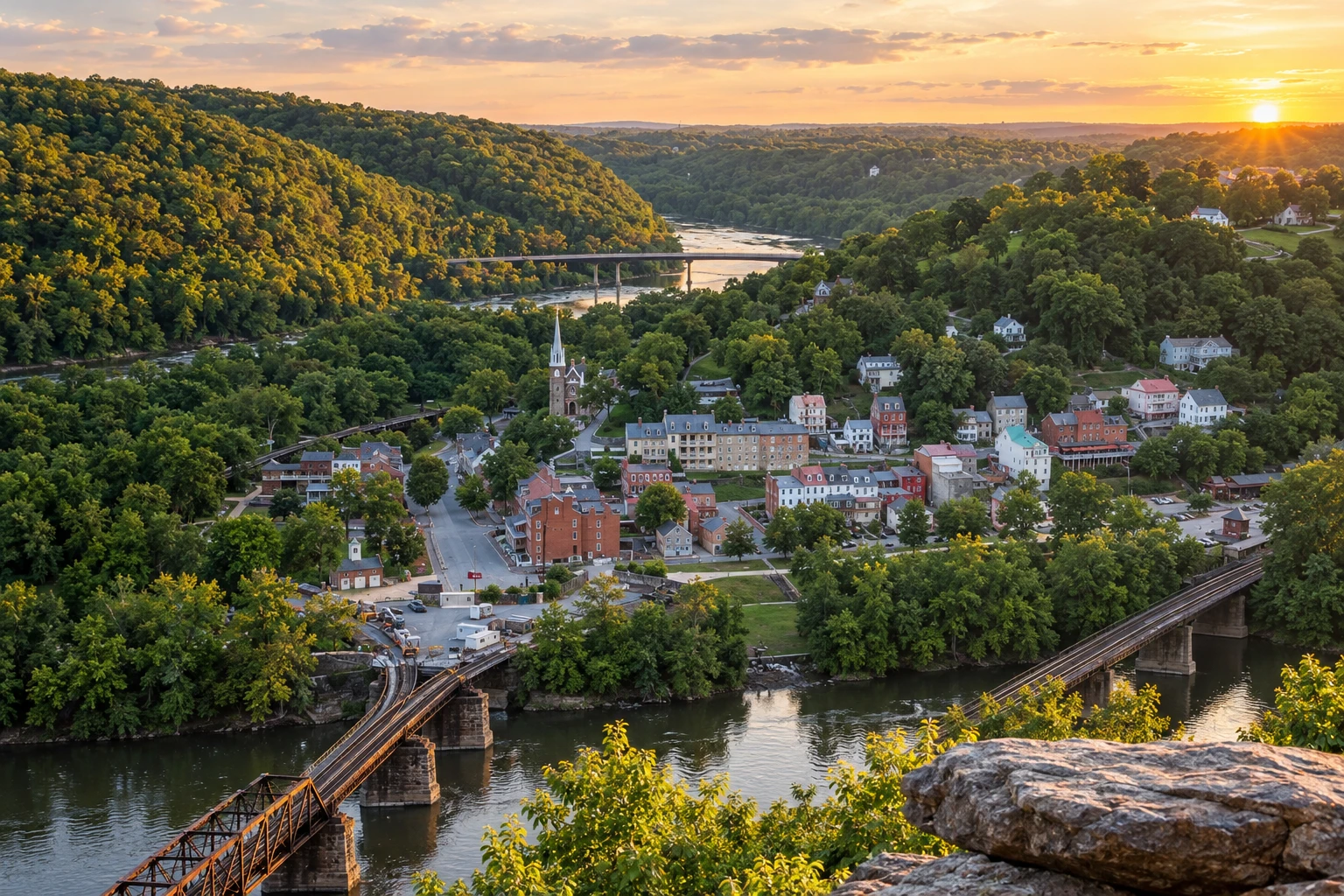
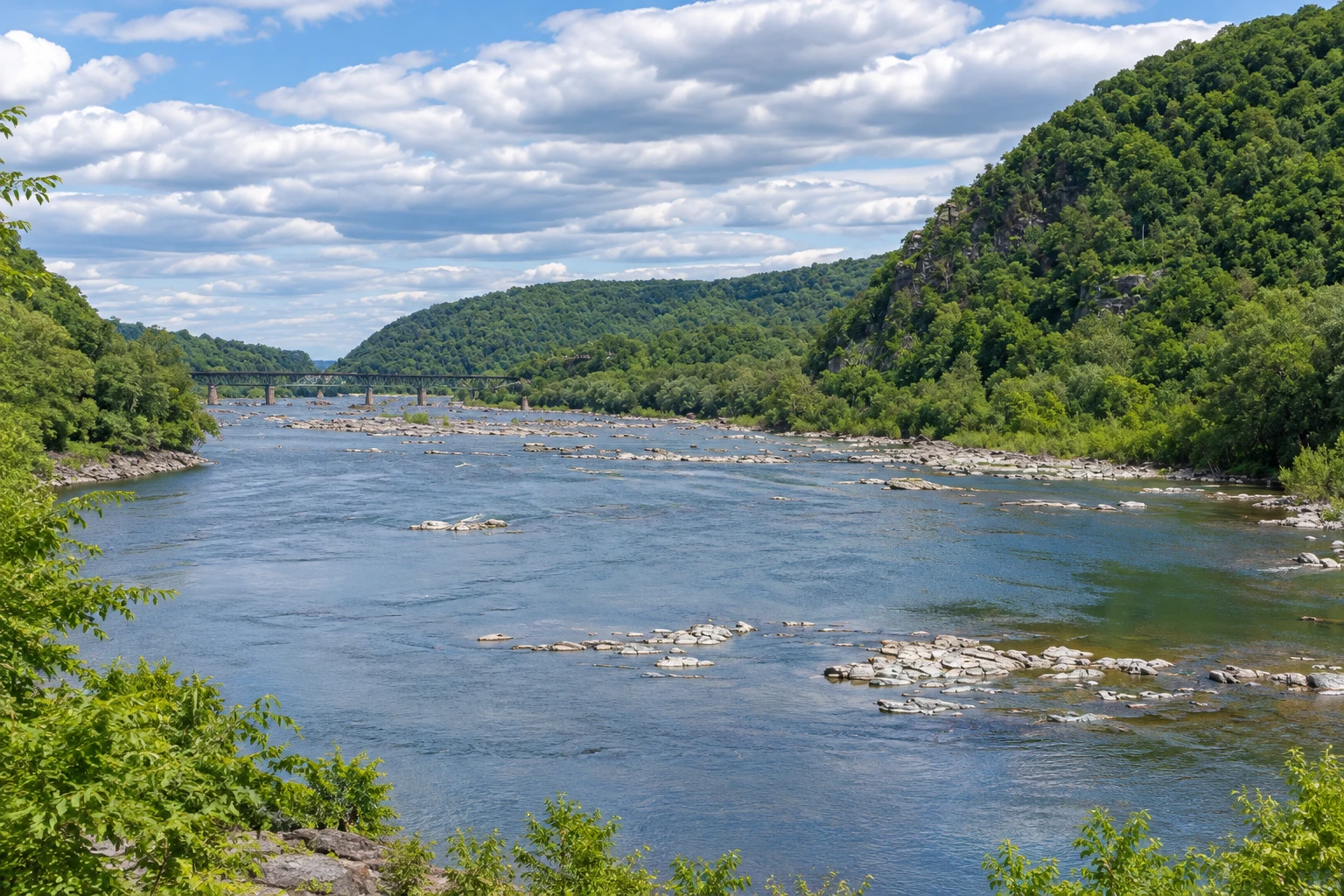
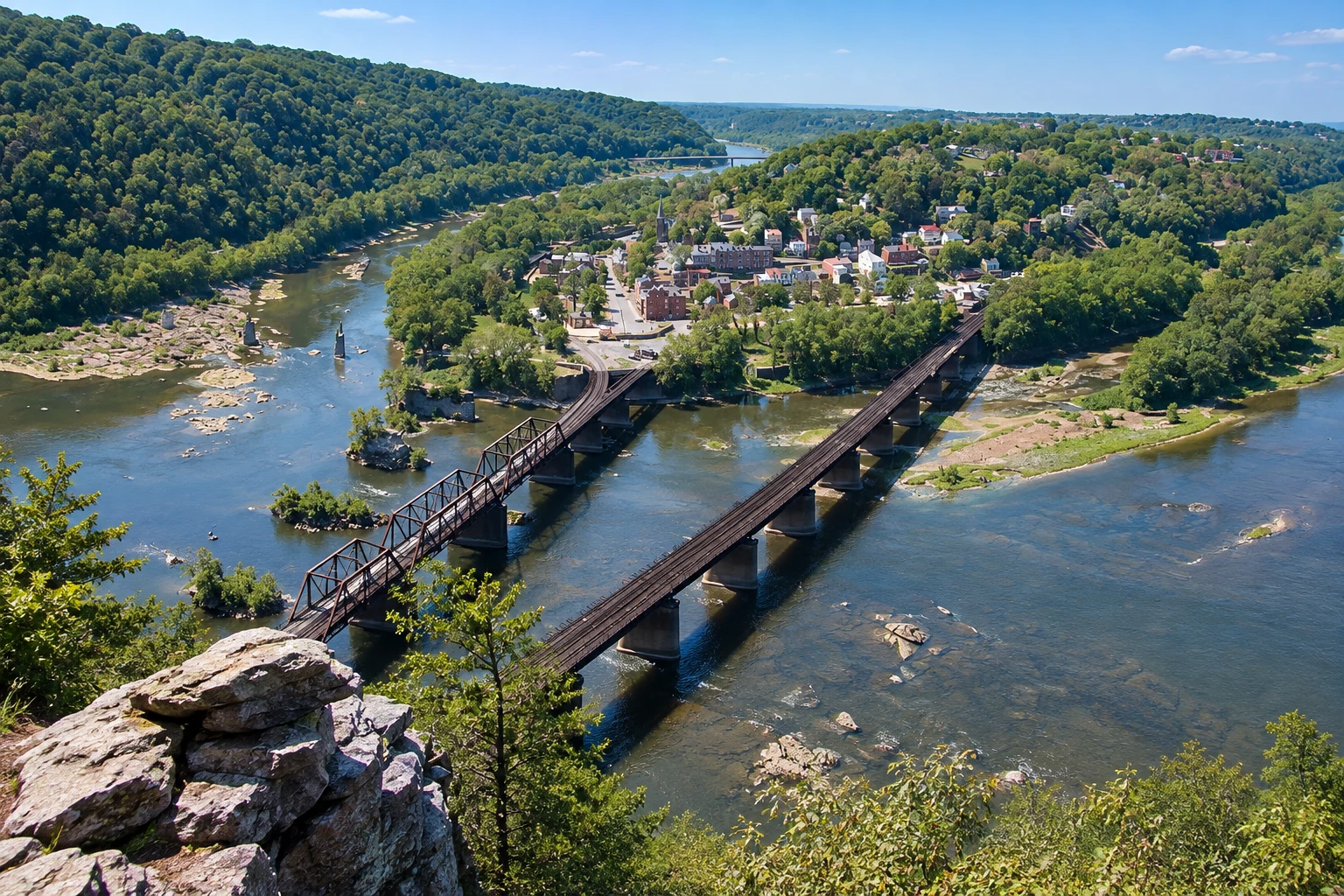
Small historic town at the point where the Shenandoah River meets the Potomac, in West Virginia, next to the borders with Virginia and Maryland. The lower town, preserved by the national historical park, has 19th-century buildings linked to the federal armory, John Brown’s 1859 raid, and the Civil War. It is crossed by the Appalachian Trail and the C&O Canal towpath.
The lower town of Harpers Ferry, at the confluence of the Potomac and Shenandoah rivers, with 19th‑century buildings and museums about the armory, John Brown, the Civil War and Storer School.
Washington Dulles International Airport (IAD)55 km
Harpers Ferry Station1 km
Approximate distances. Check flights and bus, train or boat schedules before you travel.
Long‑distance trains and, on weekdays, Washington regional trains stop at Harpers Ferry station in the lower town. By car, take US‑340; it is about 55 km from IAD airport and 100 km from Washington.
How many days
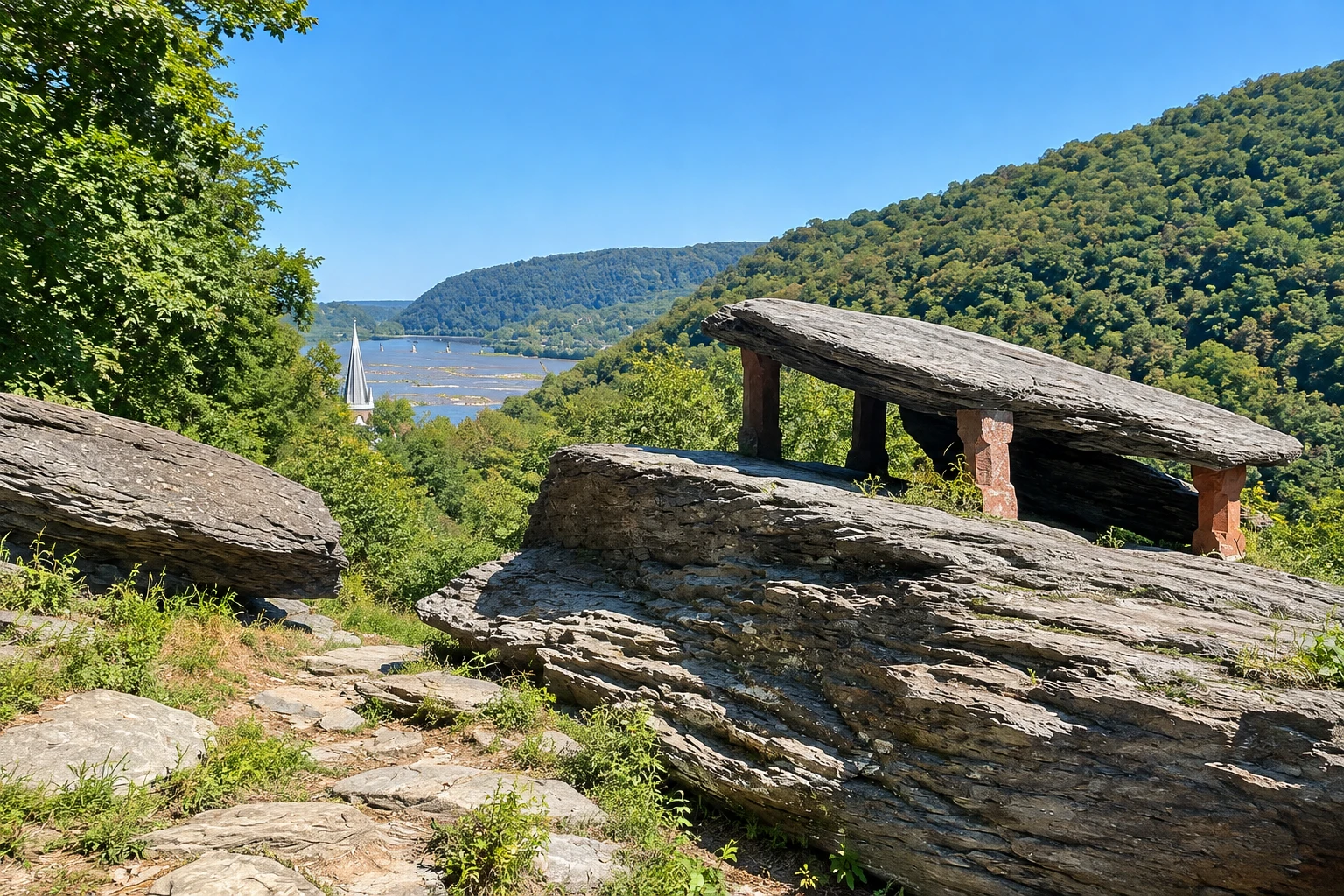
One day for the lower town, Jefferson Rock viewpoint and a short hike; two days to include the Maryland Heights trail or a bike ride along the canal.
When to go
From spring through fall. In October the slopes turn colorful. In summer there are tubing and kayaking trips on the rivers. In winter some lower‑town museums reduce their hours.
The seasons shown are the most usual ones; nature doesn't always follow the calendar.
Do you need a car?
Help getting there is useful, but the lower town is explored on foot. Parking is at the park visitor center, with shuttle buses to town; parking spots in the lower town are few.
Suggested itinerary
An order that works
Built with the places on this page. No rush: it's paced so you have time to see them.
One day in Harpers Ferry
manhã
Lower town
Park at the visitor center, take the shuttle to the lower town and visit the park museums, the firehouse where John Brown fought, and the 19th‑century streets.
tarde
Jefferson Rock and Maryland Heights
Climb the stone steps up to Jefferson Rock and, if you have the energy, cross the footbridge and take the Maryland Heights trail to the viewpoint.
Check before you go. Opening hours and days change, and places may close for renovations, holidays or events. This itinerary is a suggestion from Cidade Turismo, not a commitment: plan yours by checking directly with each place you intend to visit.
Before you go
Frequently asked questions
What to do in Harpers Ferry?
Walk the lower town in the national historical park, climb Jefferson Rock, hike Maryland Heights, walk or bike along the C&O Canal, and float or kayak the rivers.
How to get from Washington to Harpers Ferry by train?
By long‑distance trains or, on weekdays, regional trains that depart Union Station; the trip takes about an hour and a half.
Harpers Ferry is in which state?
In West Virginia, at the meeting point with the borders of Virginia and Maryland, across the rivers.
What time zone is Harpers Ferry in?
Harpers Ferry follows Eastern Time: UTC‑5 in winter and UTC‑4 in daylight saving time, from the second Sunday in March to the first Sunday in November.


 Brazil
 Antarctica
 Argentina
 Bolivia
 Chile
 Colombia
 Ecuador
 Falkland Islands (Malvinas)
 French Guiana
 Guyana
 Paraguay
 Peru
 Suriname
 Uruguay
 Venezuela
 Austria
 Belgium
 Croatia
 Denmark
 Finland
 France
 Germany
 Greece
 Hungary
 Iceland
 Ireland
 Italy
 Luxembourg
 Norway
 Poland
 Portugal
 Slovakia
 Slovenia
 Spain
 Sweden
 Switzerland
 the Czech Republic
 the Netherlands
 the United Kingdom
 Turkey
 Bermuda
 Canada
 Greenland
 Mexico
 Saint Pierre and Miquelon
 the Dominican Republic
 Japan
 Egypt
 South Africa
 Australia
 Fiji
 New Zealand
 Papua New Guinea