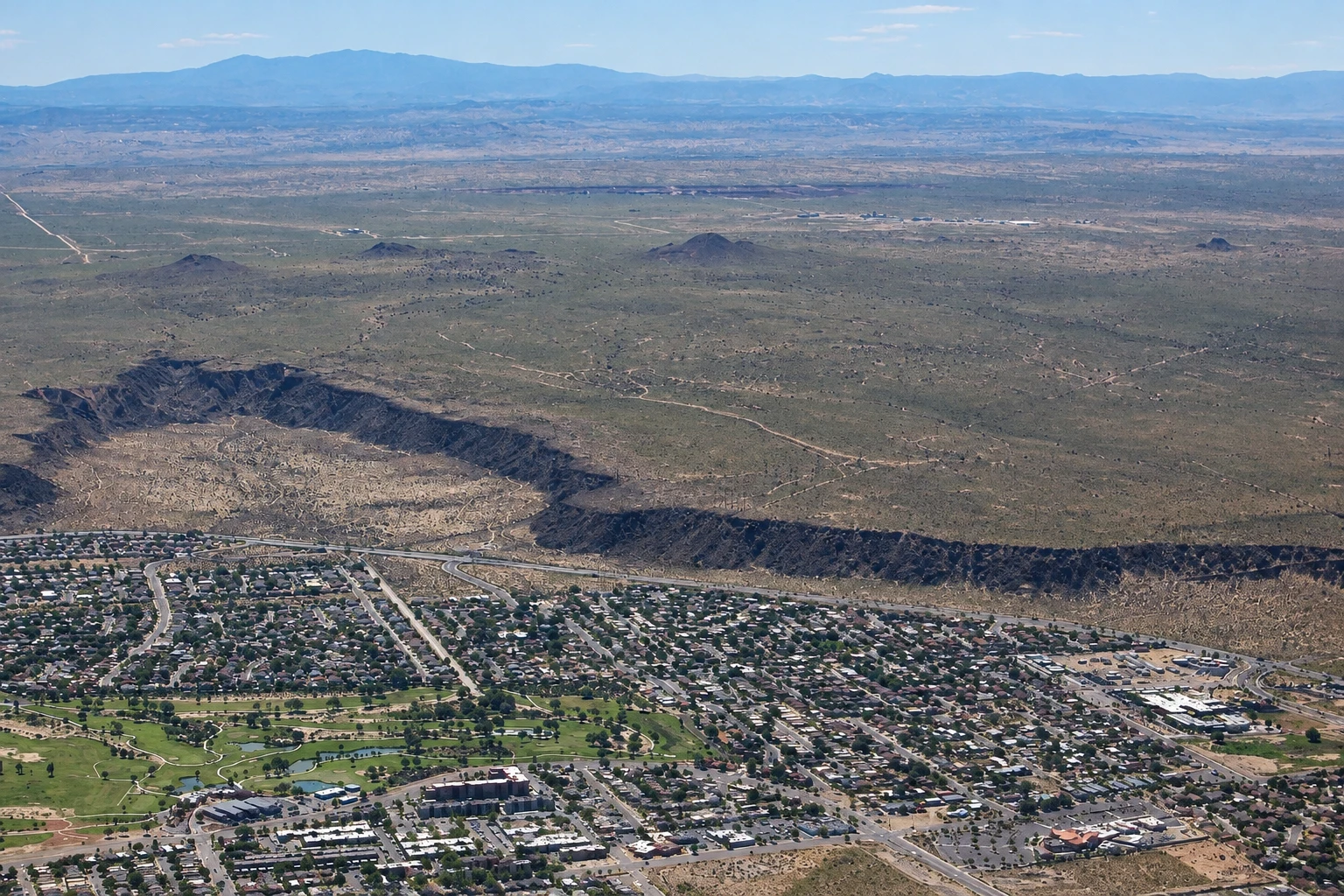
Illustrative images. The pictures in this guide are illustrations based on the real place, not photographs, and may differ from it.
The city
What to expect from Albuquerque.
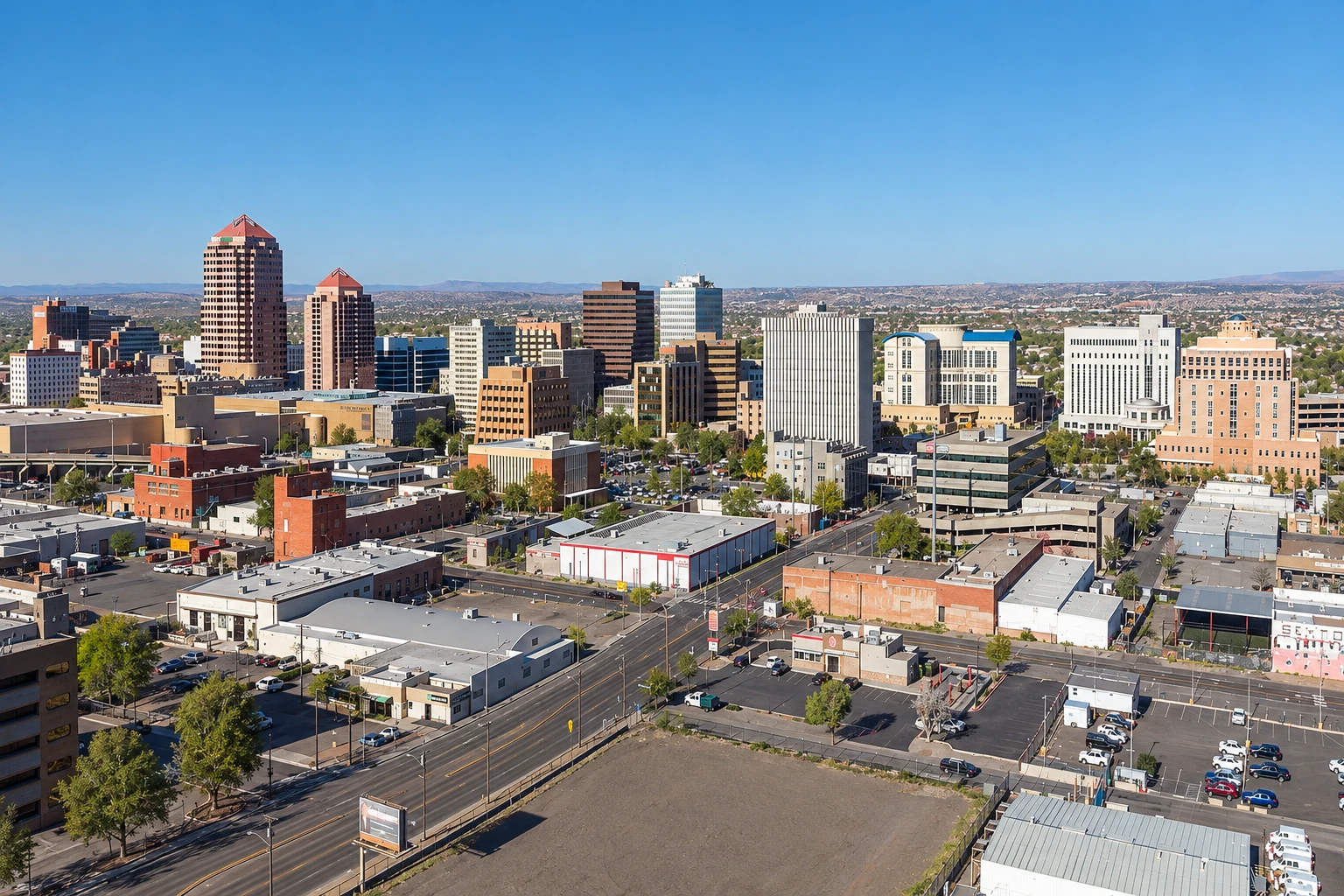
Largest city in New Mexico, on the Rio Grande and at the foot of the Sandia Mountains. Old Town preserves the Spanish plaza and the church of San Felipe de Neri. The city has the Indian Pueblo Cultural Center, the Sandia Peak tram and the Petroglyph National Monument, and hosts the international balloon festival in October.
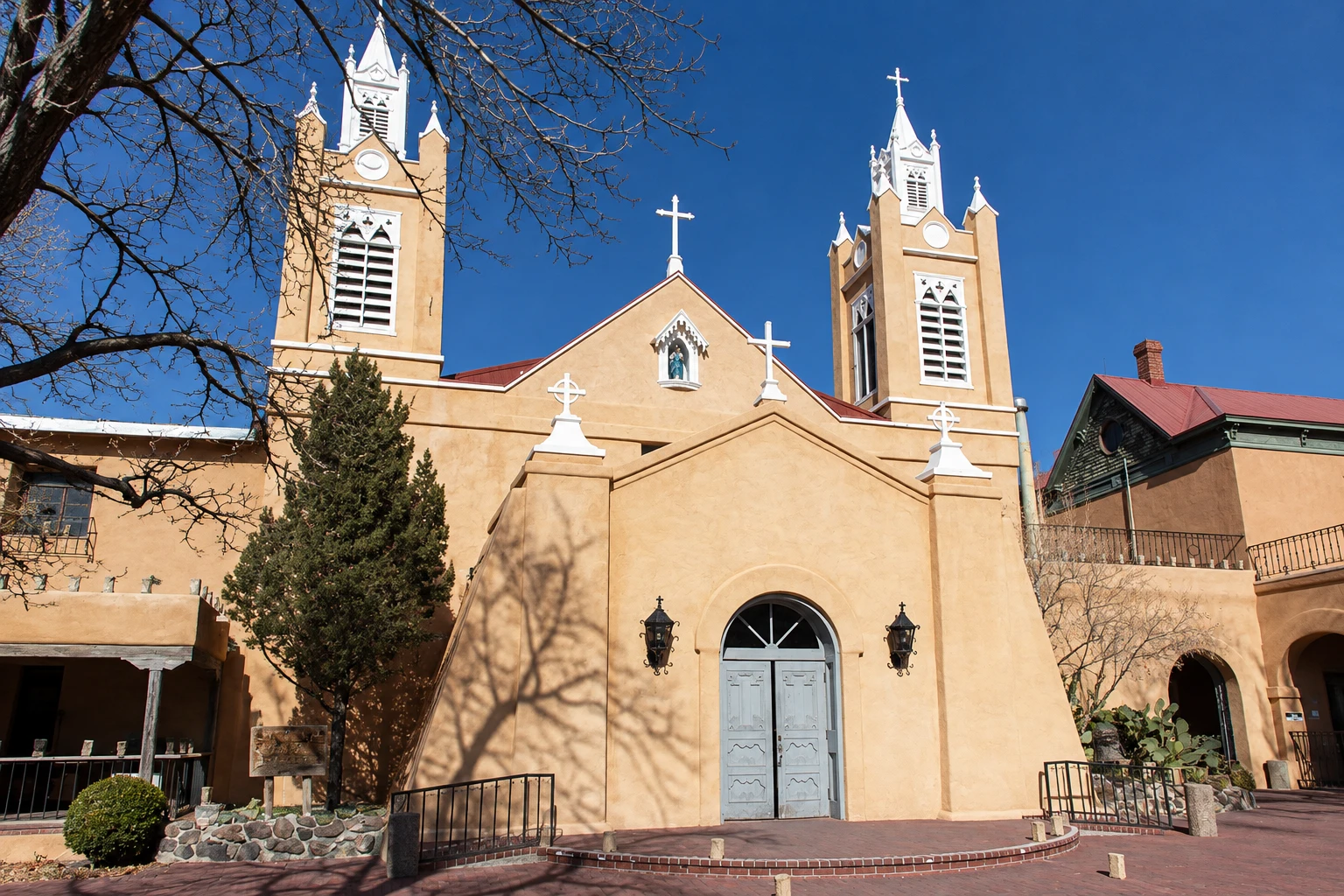
The nucleus founded by the Spanish in 1706, with the plaza, the adobe church of San Felipe de Neri, and low adobe houses with craft shops, galleries, and restaurants.
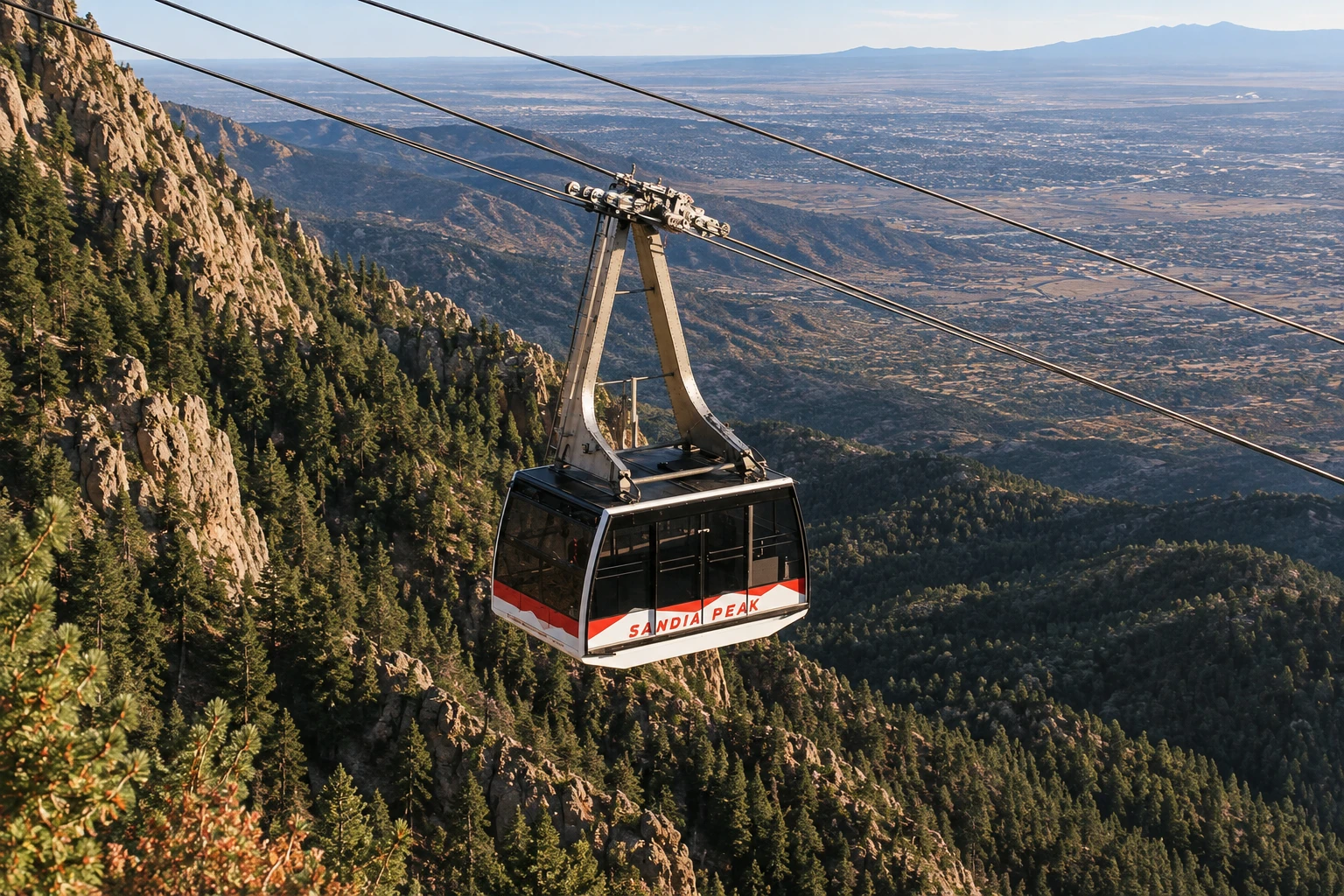
Aerial tram that rises from Albuquerque’s edge to the top of the Sandia Mountains, above 3,100 m, with views over the Rio Grande valley. One of the longest in the United States.
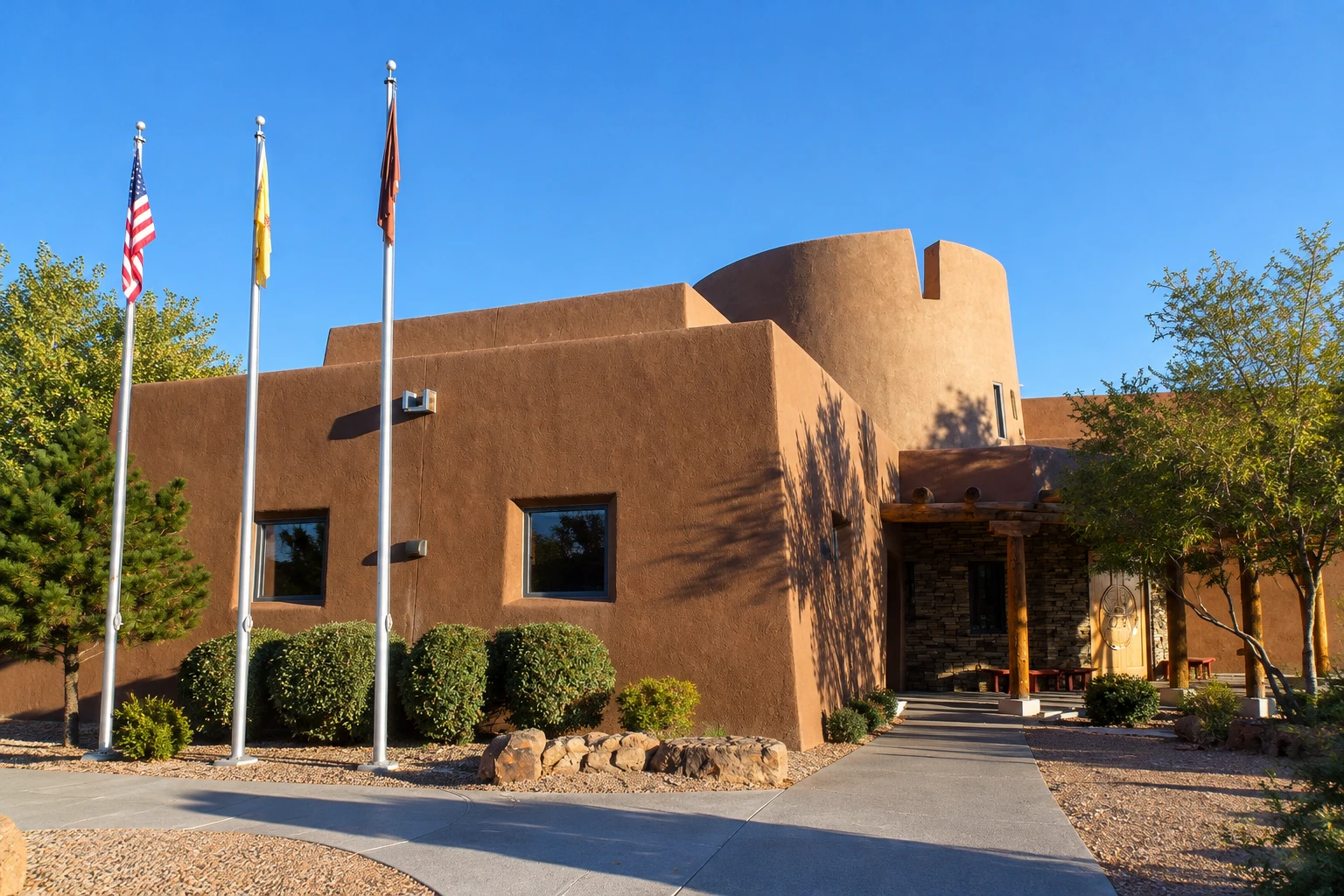
Museum and cultural center run by the 19 pueblos of New Mexico, presenting their history and art, weekend dance performances, and a pueblo-cuisine restaurant.
A national monument on Albuquerque’s western edge with thousands of petroglyphs on dark volcanic rock, made by Pueblo peoples and Spanish settlers, along short trails.
Approximate distances. Check flights and bus, train or boat schedules before you travel.
Albuquerque International Sunport (ABQ), the Sunport, is about 8 km from downtown. The regional Rail Runner train connects the city to Santa Fe, and the long‑distance Chicago–Los Angeles line stops at the Alvarado transportation center. By car, I‑25 and I‑40 cross in the city.
How many days
A day and a half covers Old Town, the Indian Pueblo Cultural Center and the Sandia tram at late afternoon. With two days, you’ll have time for the Petroglyph National Monument and the museums.
When to go
From spring to fall, with afternoon thunderstorms in summer. Early October is the time of the balloon festival, when the city is busy. In winter days are usually sunny and cold, with snow high on the Sandia Mountains.
The seasons shown are the most usual ones; nature doesn't always follow the calendar.
Do you need a car?
Helpful. Buses and the regional train serve downtown and Old Town, but the tram, the petroglyphs and the region’s pueblos are easier to reach by car.
Suggested itinerary
An order that works
Built with the places on this page. No rush: it's paced so you have time to see them.
One day in Albuquerque
manhã
Old Town
Walk around the Old Town plaza, see the church of San Felipe de Neri and the adobe houses with shops and galleries around it.
tarde
Indian Pueblo Cultural Center
Visit the Indian Pueblo Cultural Center, with the museum of New Mexico’s 19 pueblos and, on some days, dance performances.
noite
Sandia Tram
Take the Sandia Peak tram near sunset and watch the Rio Grande valley darken and the city lights come on from above.
2 days in Albuquerque
Day 1
dia inteiro
Old Town, pueblos and Sandia
Do Old Town in the morning, the Indian Pueblo Cultural Center in the afternoon and the Sandia tram at sunset.
Day 2
manhã
Petroglyphs
Go early to the Petroglyph National Monument and hike one of the trails among the carved volcanic rocks.
Check before you go. Opening hours and days change, and places may close for renovations, holidays or events. This itinerary is a suggestion from Cidade Turismo, not a commitment: plan yours by checking directly with each place you intend to visit.
Before you go
Frequently asked questions
What to do in Albuquerque?
Stroll Old Town, visit the Indian Pueblo Cultural Center, ride the Sandia Peak tram, see the petroglyphs at the national monument and, in October, watch the balloons launch at the festival.
What is Albuquerque’s time zone?
Mountain Time: UTC‑7 in winter and UTC‑6 in daylight saving time, from March to November.
How to get from Albuquerque to Santa Fe?
By car on I‑25 in about an hour, or by the regional Rail Runner train, which departs downtown Albuquerque and arrives near Santa Fe’s historic center.
Where can I watch the Albuquerque balloon festival?
At the festival park north of the city, where the balloons take off at dawn on event days. Admission is paid and traffic becomes heavy; many visitors take the festival shuttle buses.


 Brazil
 Antarctica
 Argentina
 Bolivia
 Chile
 Colombia
 Ecuador
 Falkland Islands (Malvinas)
 French Guiana
 Guyana
 Paraguay
 Peru
 Suriname
 Uruguay
 Venezuela
 Austria
 Belgium
 Croatia
 Denmark
 Finland
 France
 Germany
 Greece
 Hungary
 Iceland
 Ireland
 Italy
 Luxembourg
 Norway
 Poland
 Portugal
 Slovakia
 Slovenia
 Spain
 Sweden
 Switzerland
 the Czech Republic
 the Netherlands
 the United Kingdom
 Turkey
 Bermuda
 Canada
 Greenland
 Mexico
 Saint Pierre and Miquelon
 the Dominican Republic
 Japan
 Egypt
 South Africa
 Australia
 Fiji
 New Zealand
 Papua New Guinea