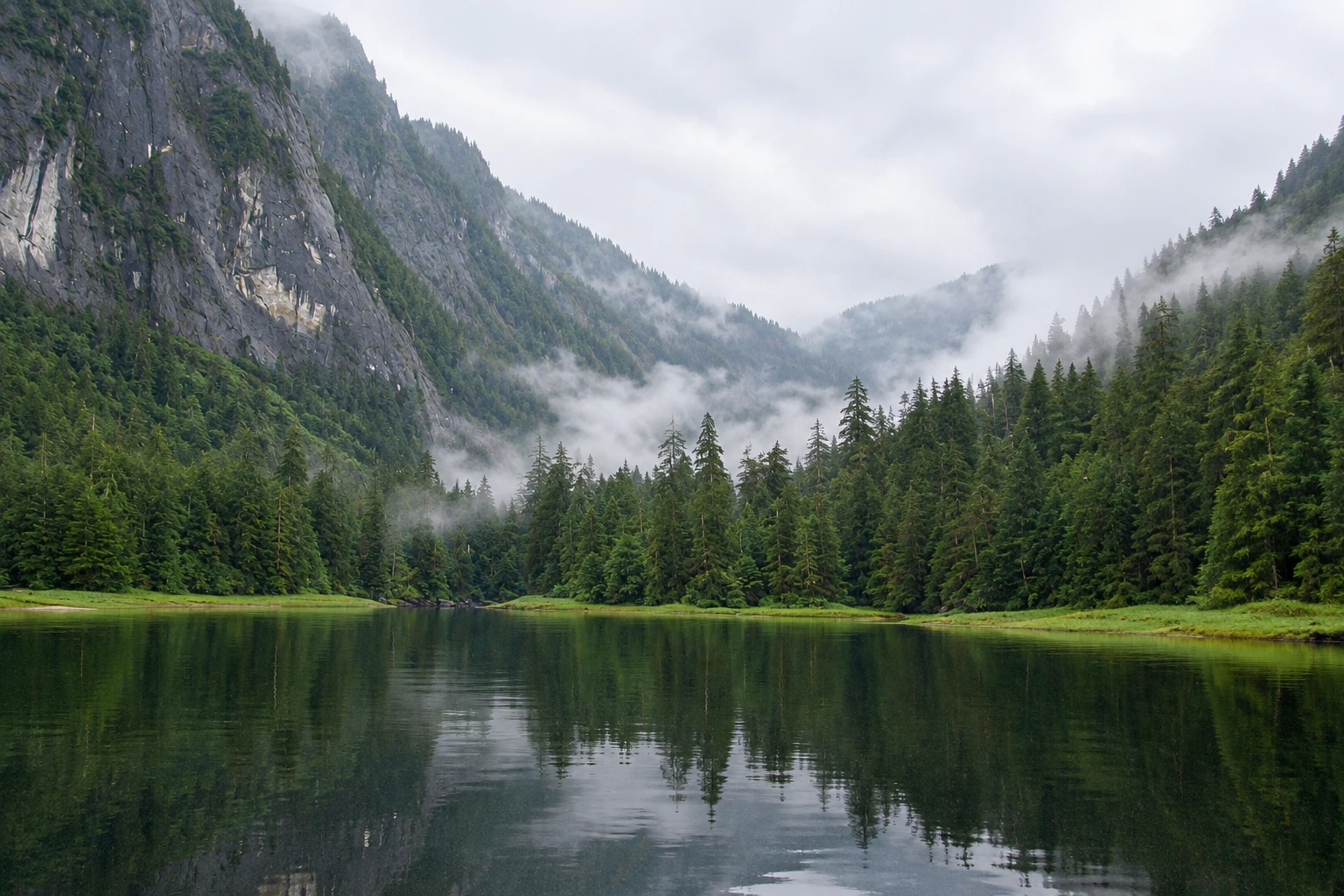
8 places to visit, chosen by the Cidade Turismo guide.
Illustrative images. The pictures in this guide are illustrations based on the real place, not photographs, and may differ from it.
To start
The 8 main places Juneau and the Inside Passage
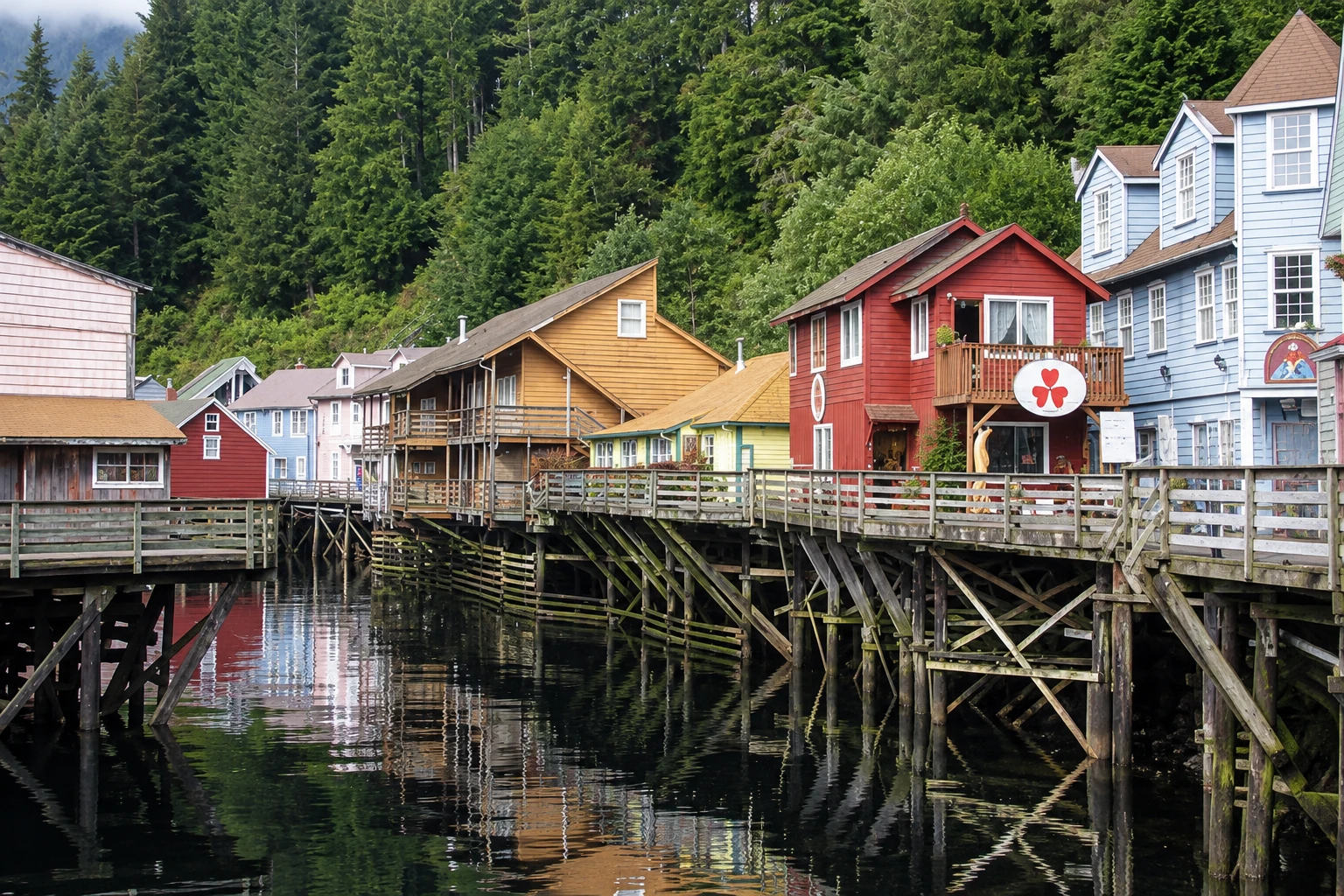
Creek Street · KetchikanA boardwalk built on stilts along Ketchikan Creek, with colorful wooden houses that were the city’s bohemian quarter until 1954.
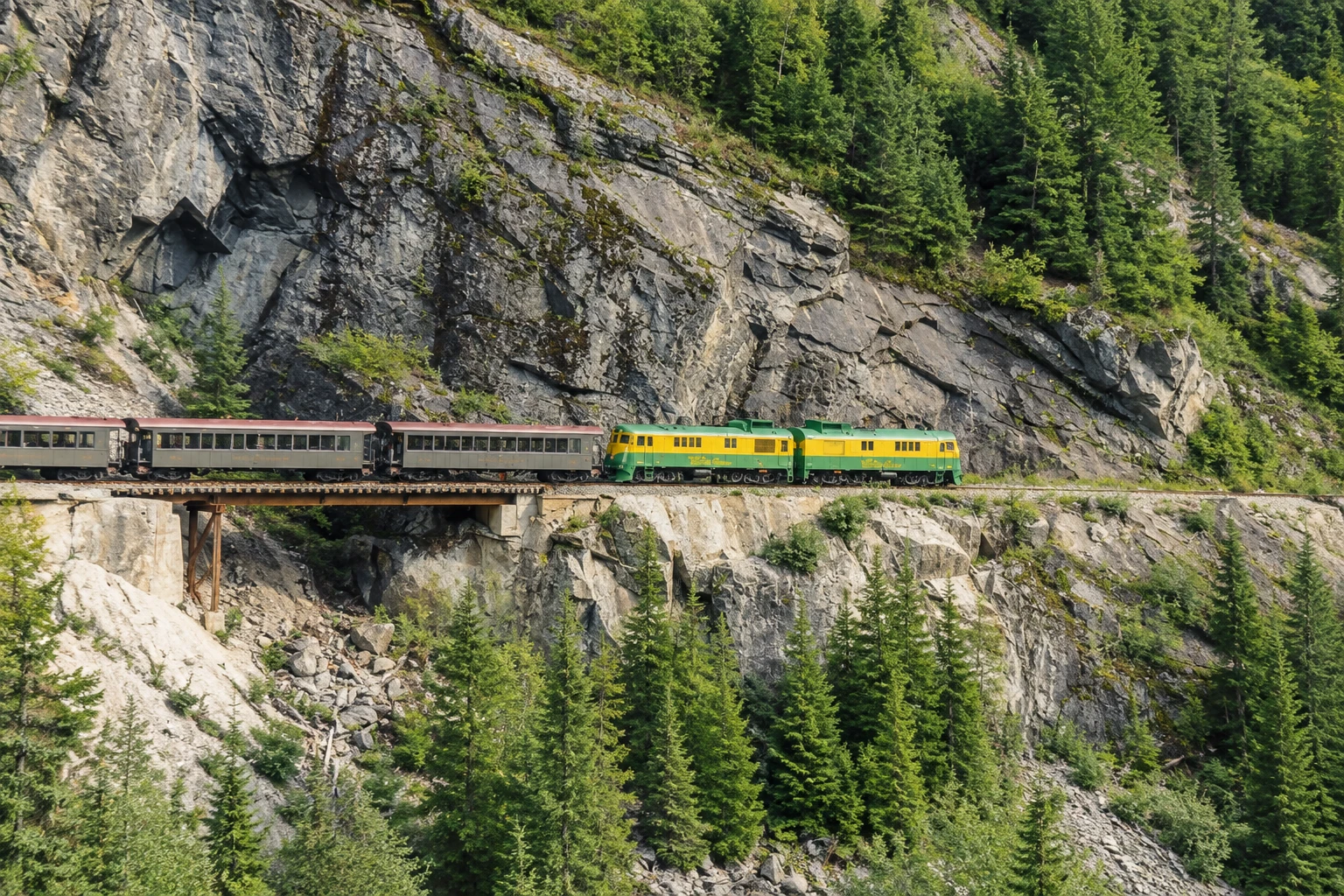
White Pass and Yukon Route · SkagwayA narrow-gauge railway built between 1898 and 1900 during the Klondike Gold Rush, which climbs from Skagway to the White Pass gorge at 879 meters, crossing bridges, tunnels and...
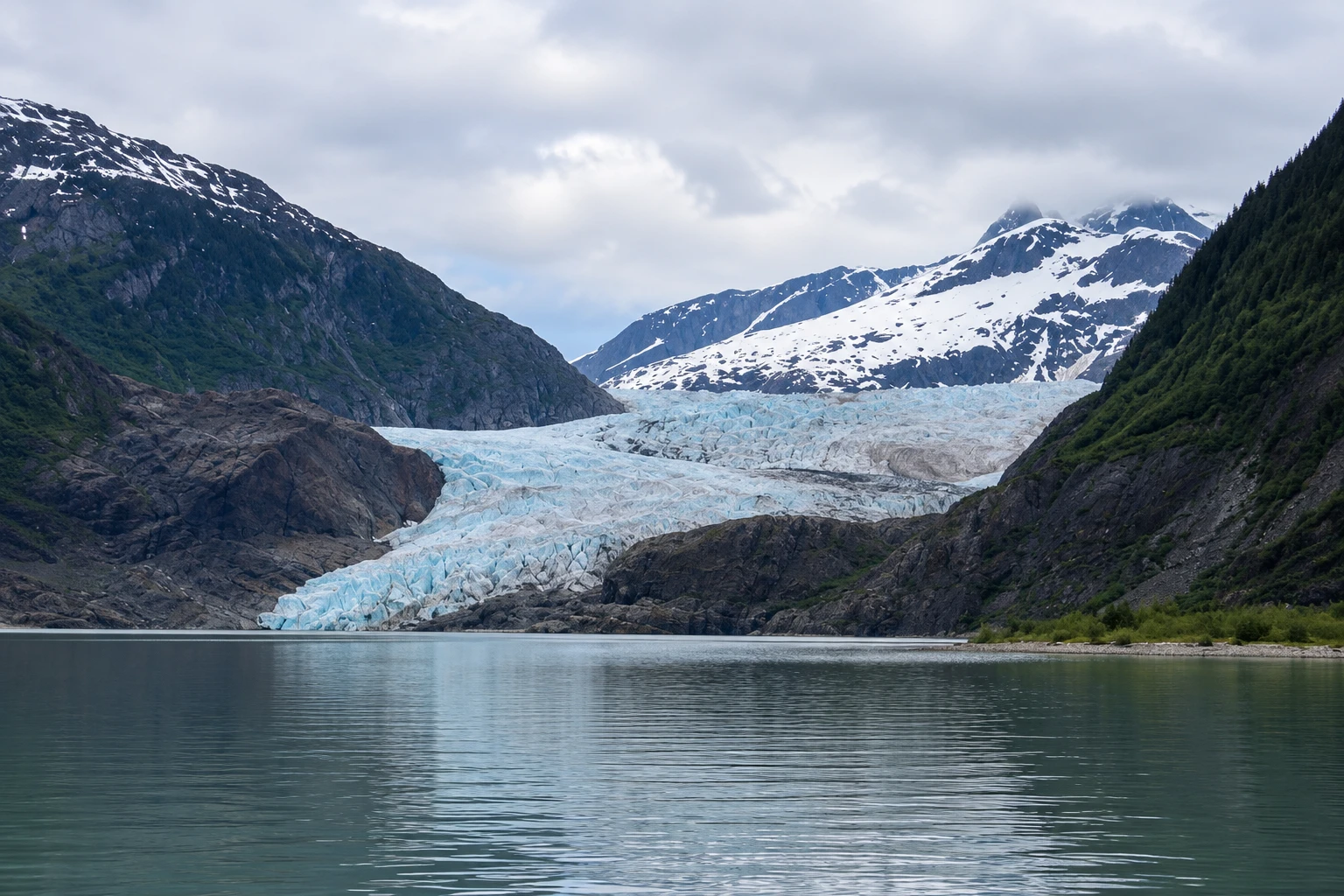
Mendenhall Glacier · JuneauA glacier of about 22 km that descends from the Juneau Icefield to the lake of the same name, about 20 km from downtown.
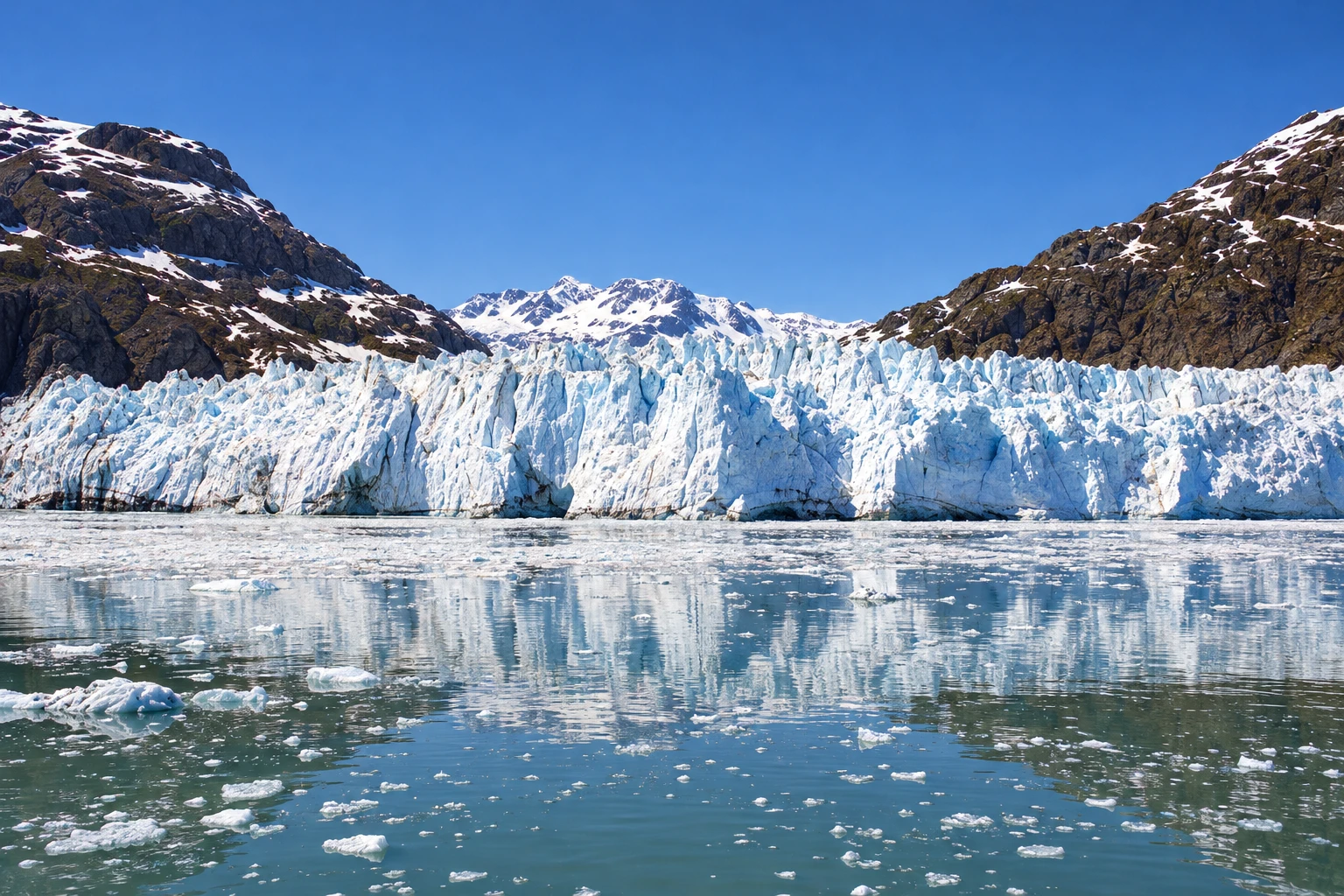
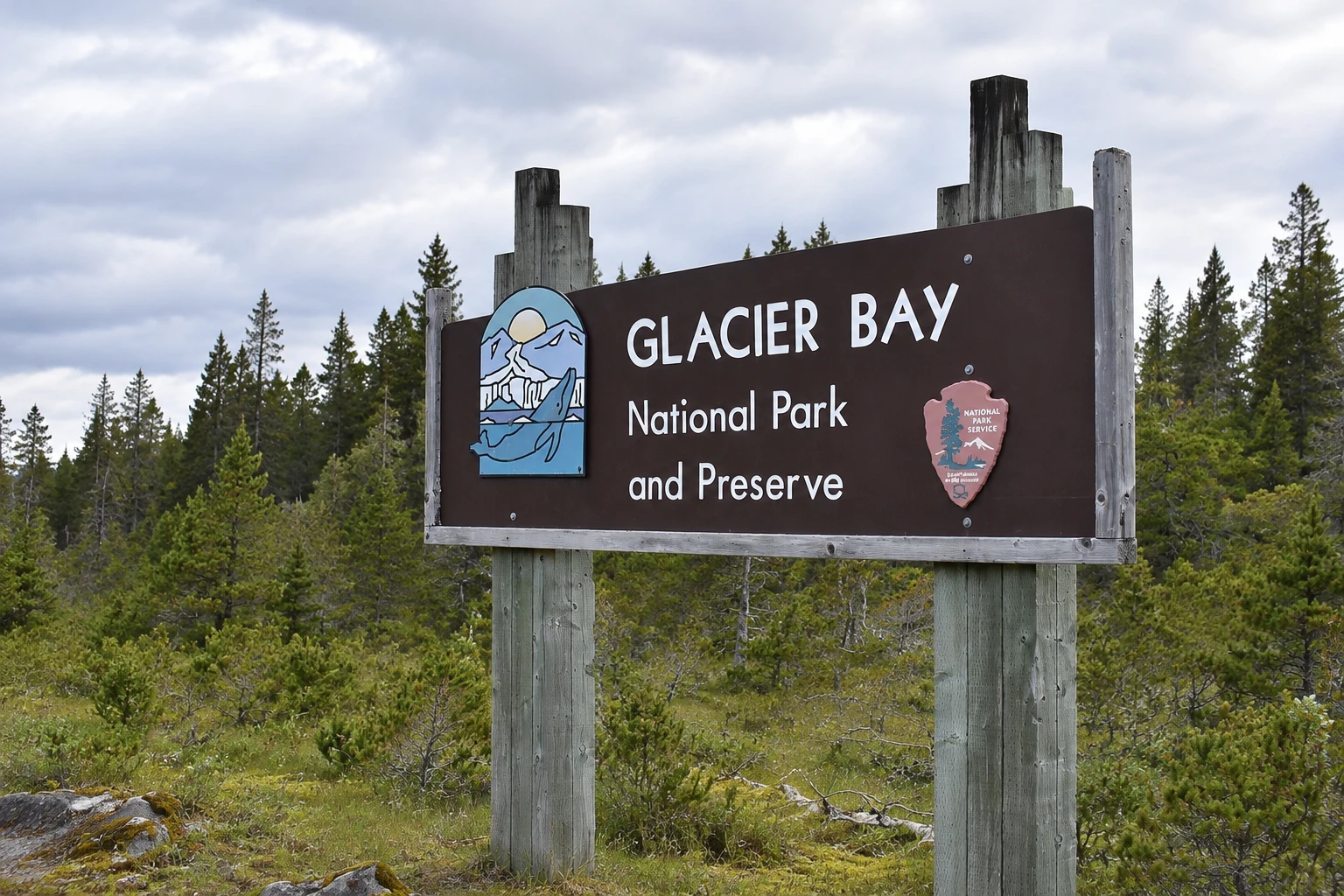
Glacier Bay National Park and Preserve · GustavusPark of fjords, mountains and glaciers that reach the sea, west of Juneau, and a UNESCO World Heritage site.
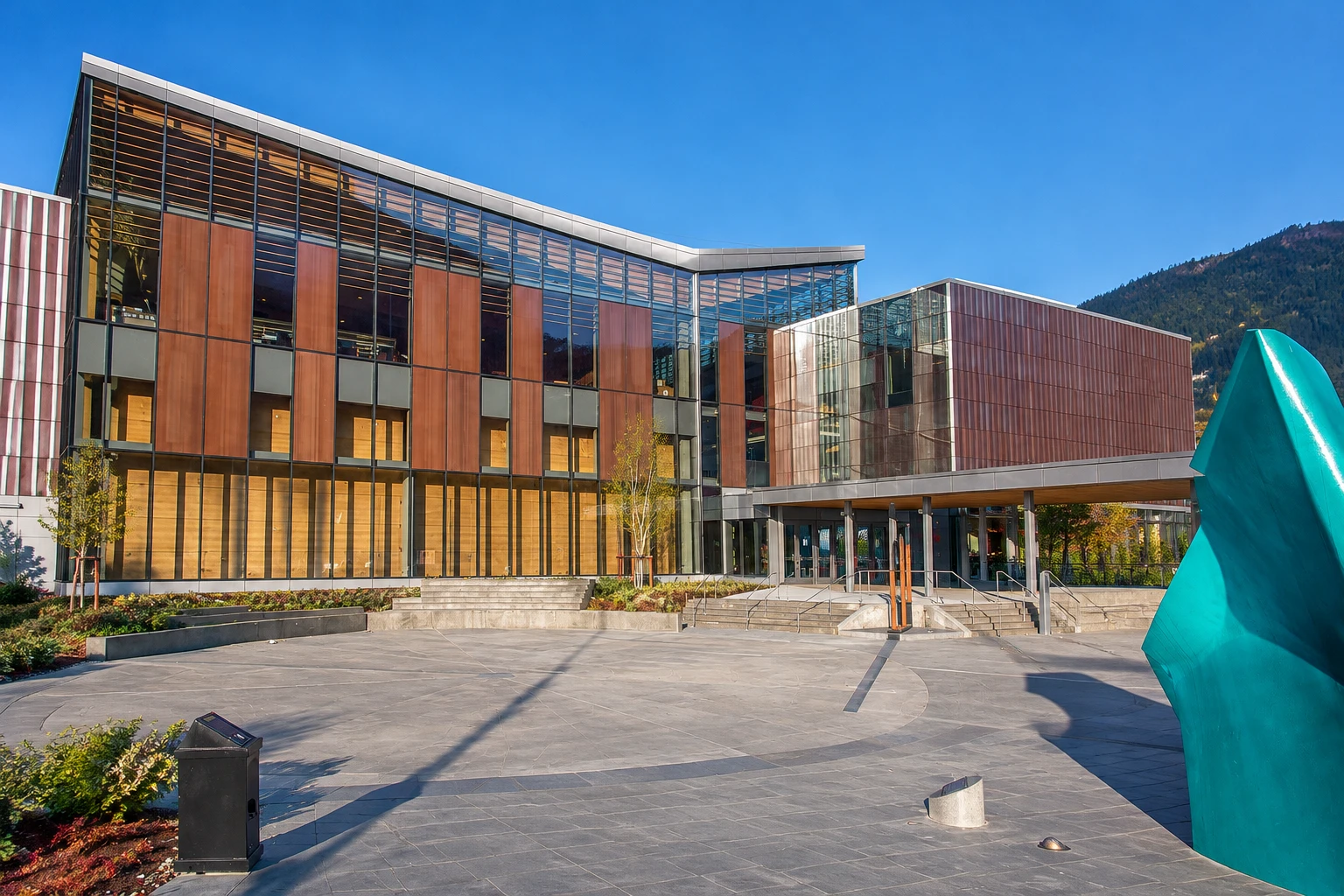
Alaska State Museum · JuneauThe Alaska State Museum, in downtown Juneau, with collections from the native peoples of the entire state, objects from the Russian period, art and natural history, in a buildin...
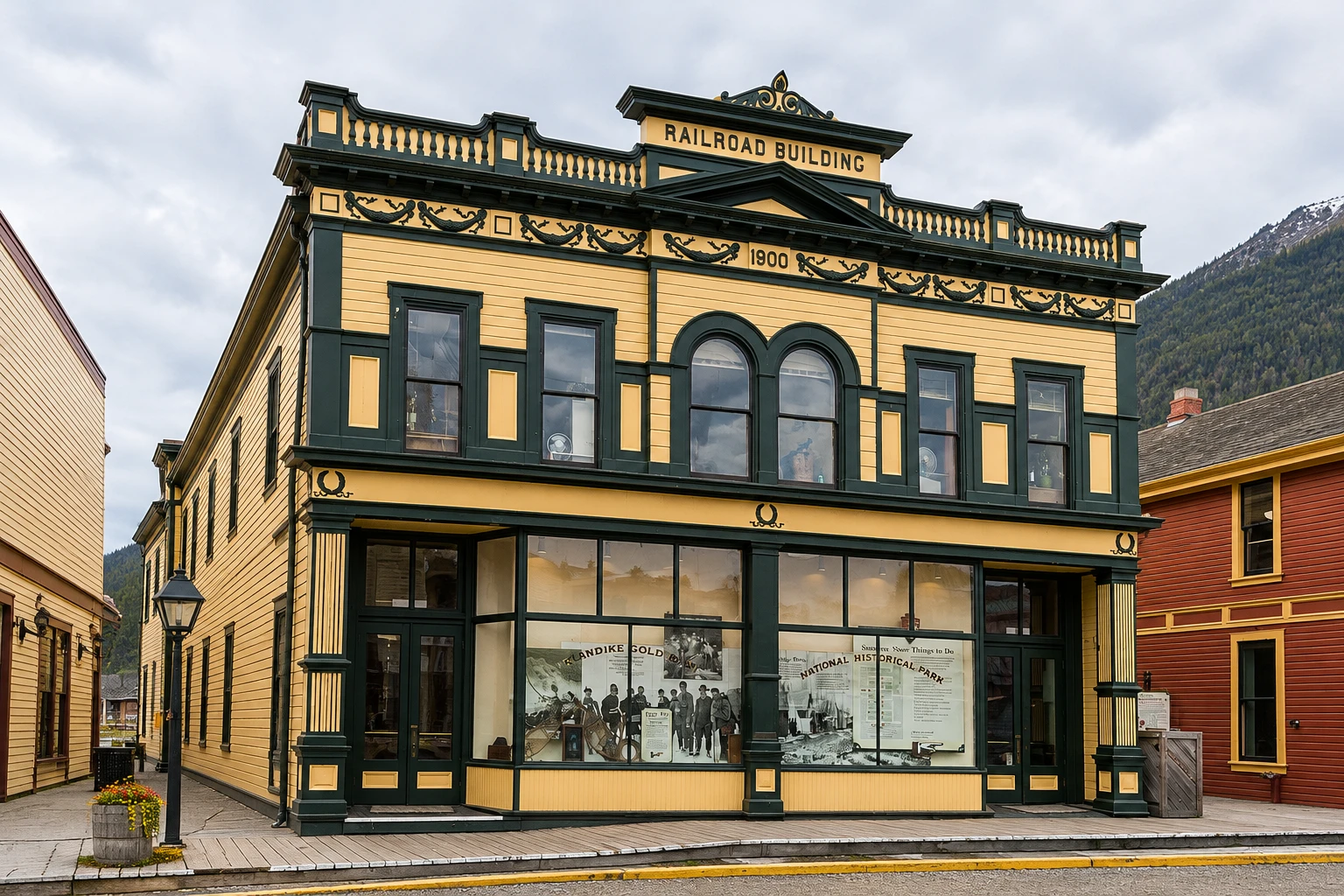
Klondike Gold Rush National Historical Park · SkagwayThe park that preserves Skagway’s downtown from the Klondike Gold Rush era, with restored buildings, the 1898 Mascot saloon, the founder’s house, the old train station that serv...
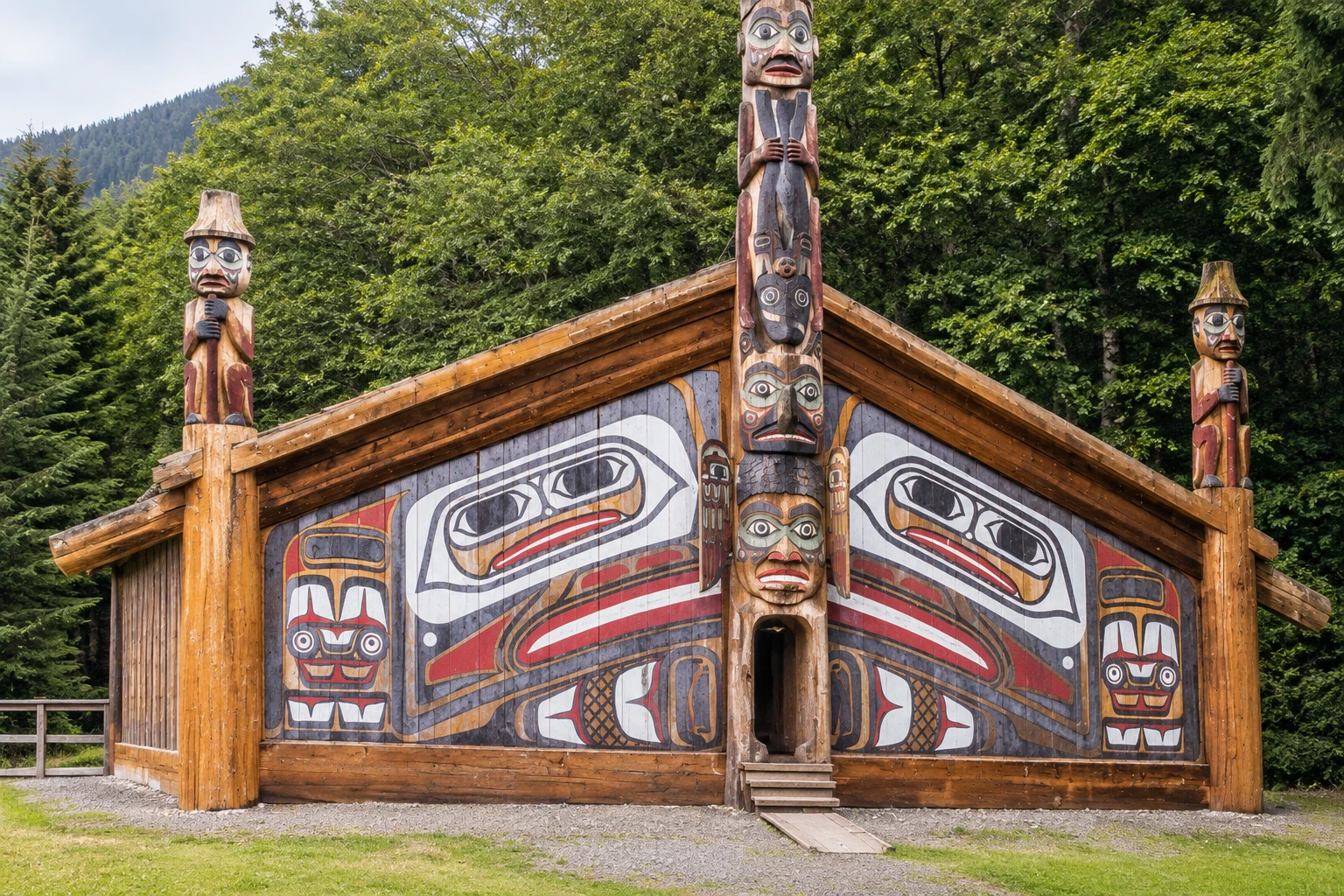
Totem Bight State Historical Park · KetchikanA seaside state park north of Ketchikan, with 15 totem poles and a Tlingit clan house amid the forest, carved by native carvers as reproductions from old pieces that were deteri...
Misty Fjords National Monument · KetchikanA protected area of fjords, granite walls and waterfalls east of Ketchikan, with no roads, visited by floatplanes and boats.
A boardwalk built on stilts along Ketchikan Creek, with colorful wooden houses that were the city’s bohemian quarter until 1954. Today it has shops, galleries, a small museum and, late in summer, salmon running up the creek.
A narrow-gauge railway built between 1898 and 1900 during the Klondike Gold Rush, which climbs from Skagway to the White Pass gorge at 879 meters, crossing bridges, tunnels and rock slopes at the border with Canada.
A glacier of about 22 km that descends from the Juneau Icefield to the lake of the same name, about 20 km from downtown. The visitor center and short trails lead to ice viewpoints and Nugget Falls; in summer black bears fish for salmon in a nearby stream.
Park of fjords, mountains and glaciers that reach the sea, west of Juneau, and a UNESCO World Heritage site. Boats depart from Bartlett Cove, near Gustavus, and travel up the bay to the glacier fronts, with humpback whales, sea otters, seals and bears along the way.
The Alaska State Museum, in downtown Juneau, with collections from the native peoples of the entire state, objects from the Russian period, art and natural history, in a building that also houses the state library and archives.
The park that preserves Skagway’s downtown from the Klondike Gold Rush era, with restored buildings, the 1898 Mascot saloon, the founder’s house, the old train station that serves as the visitor center and the start of the Chilkoot Trail.
A seaside state park north of Ketchikan, with 15 totem poles and a Tlingit clan house amid the forest, carved by native carvers as reproductions from old pieces that were deteriorating in abandoned villages.
A protected area of fjords, granite walls and waterfalls east of Ketchikan, with no roads, visited by floatplanes and boats. Rock walls rise hundreds of meters straight from the water.


 Brazil
 Antarctica
 Argentina
 Bolivia
 Chile
 Colombia
 Ecuador
 Falkland Islands (Malvinas)
 French Guiana
 Guyana
 Paraguay
 Peru
 Suriname
 Uruguay
 Venezuela
 Albania
 Austria
 Belgium
 Croatia
 Denmark
 Finland
 France
 Germany
 Greece
 Hungary
 Iceland
 Ireland
 Italy
 Luxembourg
 Norway
 Poland
 Portugal
 Slovakia
 Slovenia
 Spain
 Sweden
 Switzerland
 the Czech Republic
 the Netherlands
 the United Kingdom
 Turkey
 Bermuda
 Canada
 Greenland
 Mexico
 Saint Pierre and Miquelon
 the Dominican Republic
 Japan
 Egypt
 South Africa
 Australia
 Fiji
 New Zealand
 Papua New Guinea