New Haven-style pizza
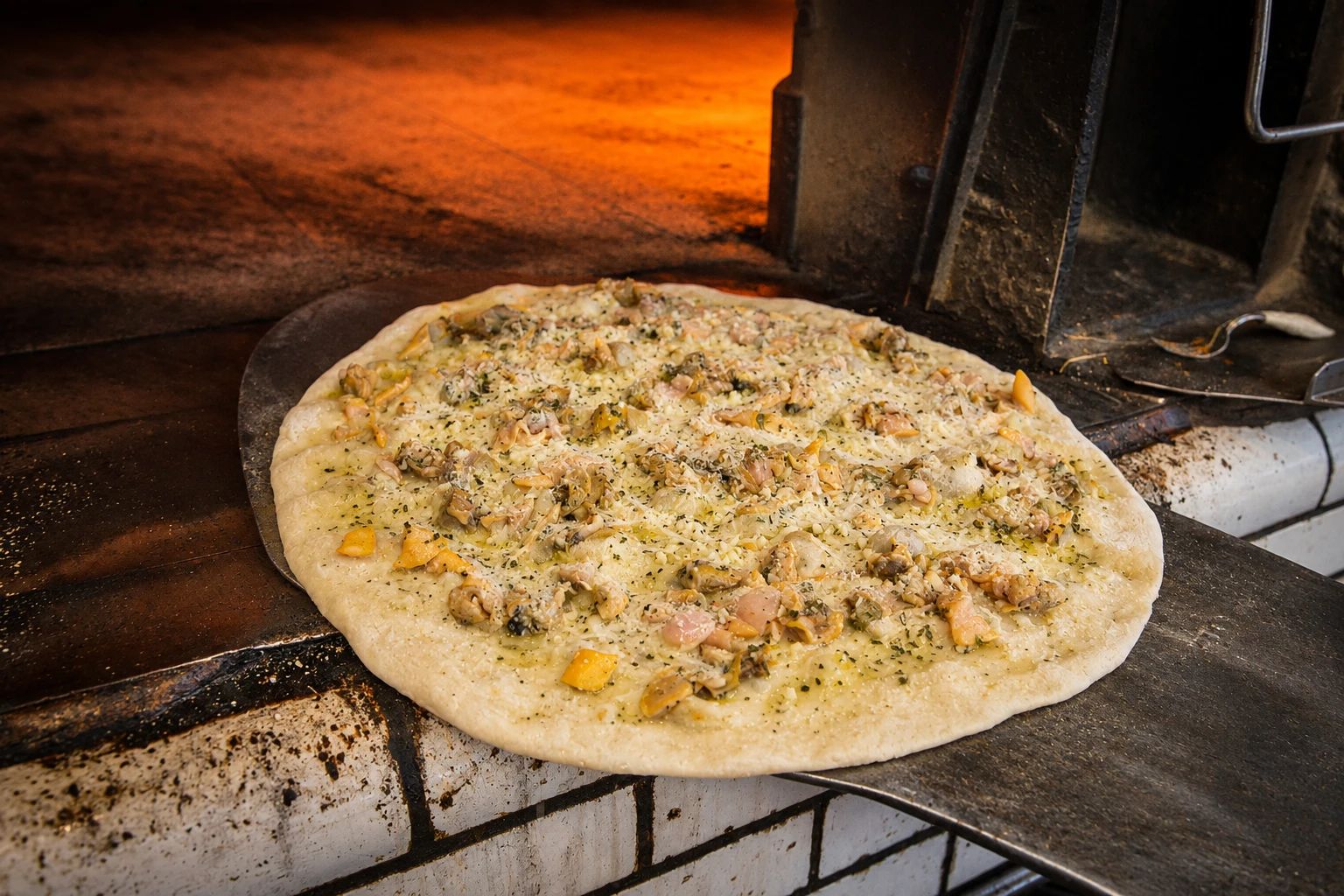
Thin, uneven crust, very well toasted, baked in a very hot coal or wood-fired oven. Locals in New Haven call it apizza, in the style of immigrants from southern Italy.
Antarctica
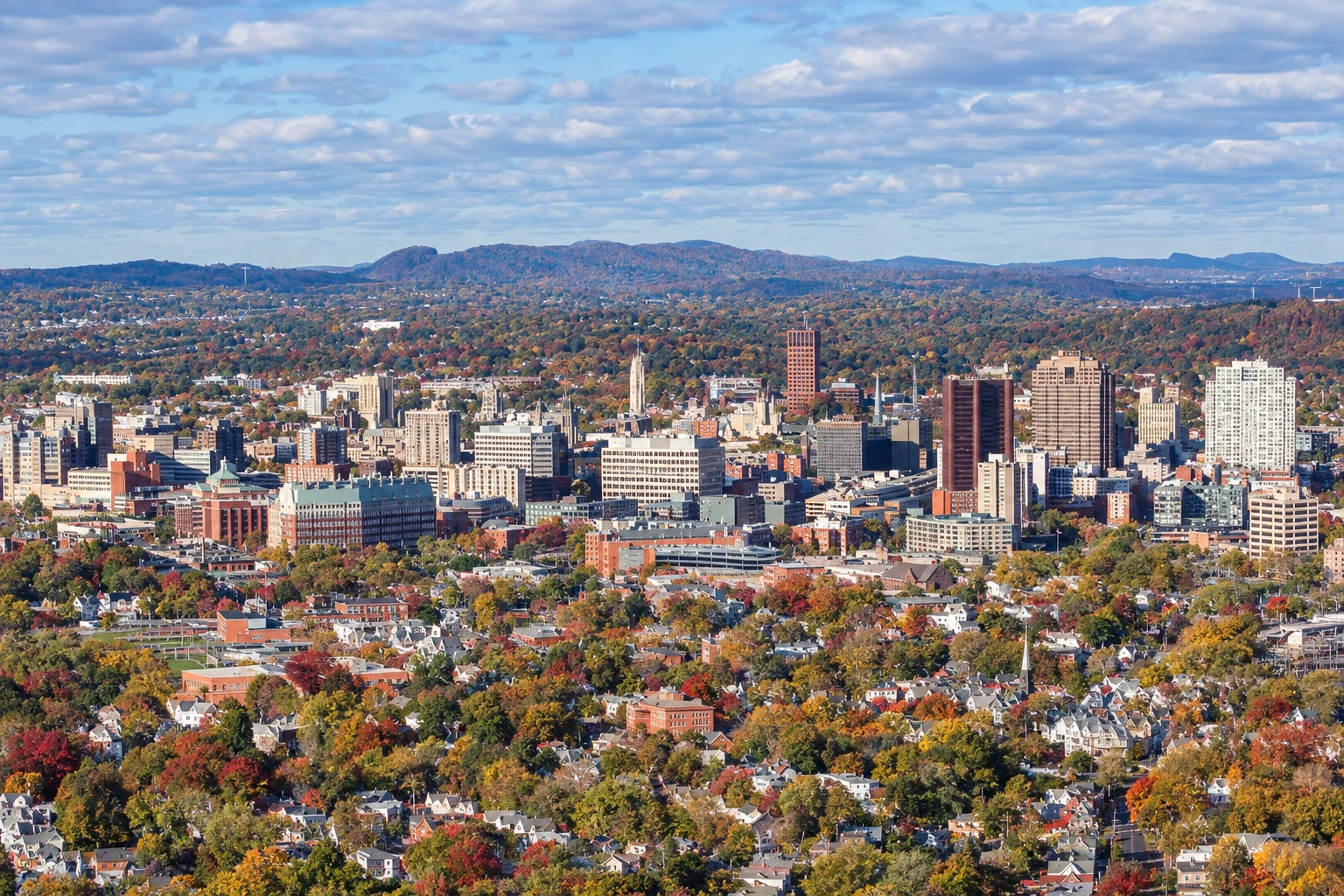
In the photo: Downtown New Haven seen from above
Illustrative images. The pictures in this guide are illustrations based on the real place, not photographs, and may differ from it.
The city
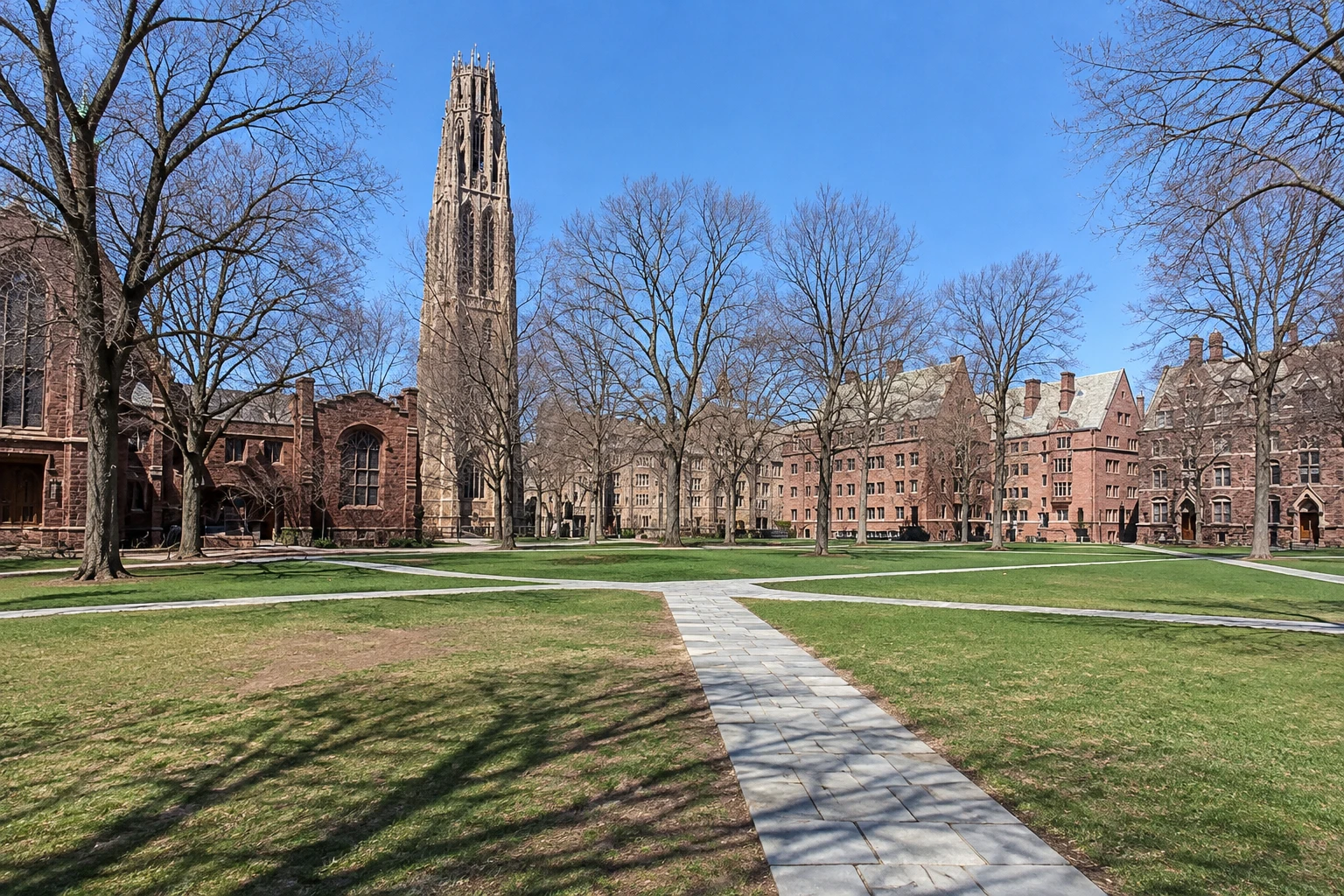
Port city in Connecticut founded in 1638 around the New Haven Green, home to Yale University. The campus, with Gothic buildings, courtyards and towers, blends into the downtown. Yale opens to the public the art gallery, the Center for British Art, the Peabody Museum, with its dinosaurs, and the Beinecke Rare Book & Manuscript Library. The pizzerias in the Wooster Square neighborhood keep the local coal-oven recipe.
There's no accommodation in the guide yet in New Haven.
Do you run a hotel, guesthouse or vacation rental here? List itThere are no restaurants in the guide yet in New Haven.
Know a good one? Recommend it to usThe city's hotels and restaurants on the map.
how to get there · how many days · itinerary · questions
Flavors of the United States
The local experience
One of the oldest universities in the United States, located in New Haven since 1716, with a campus of Gothic buildings, inner courtyards, Harkness Tower and Sterling Library.
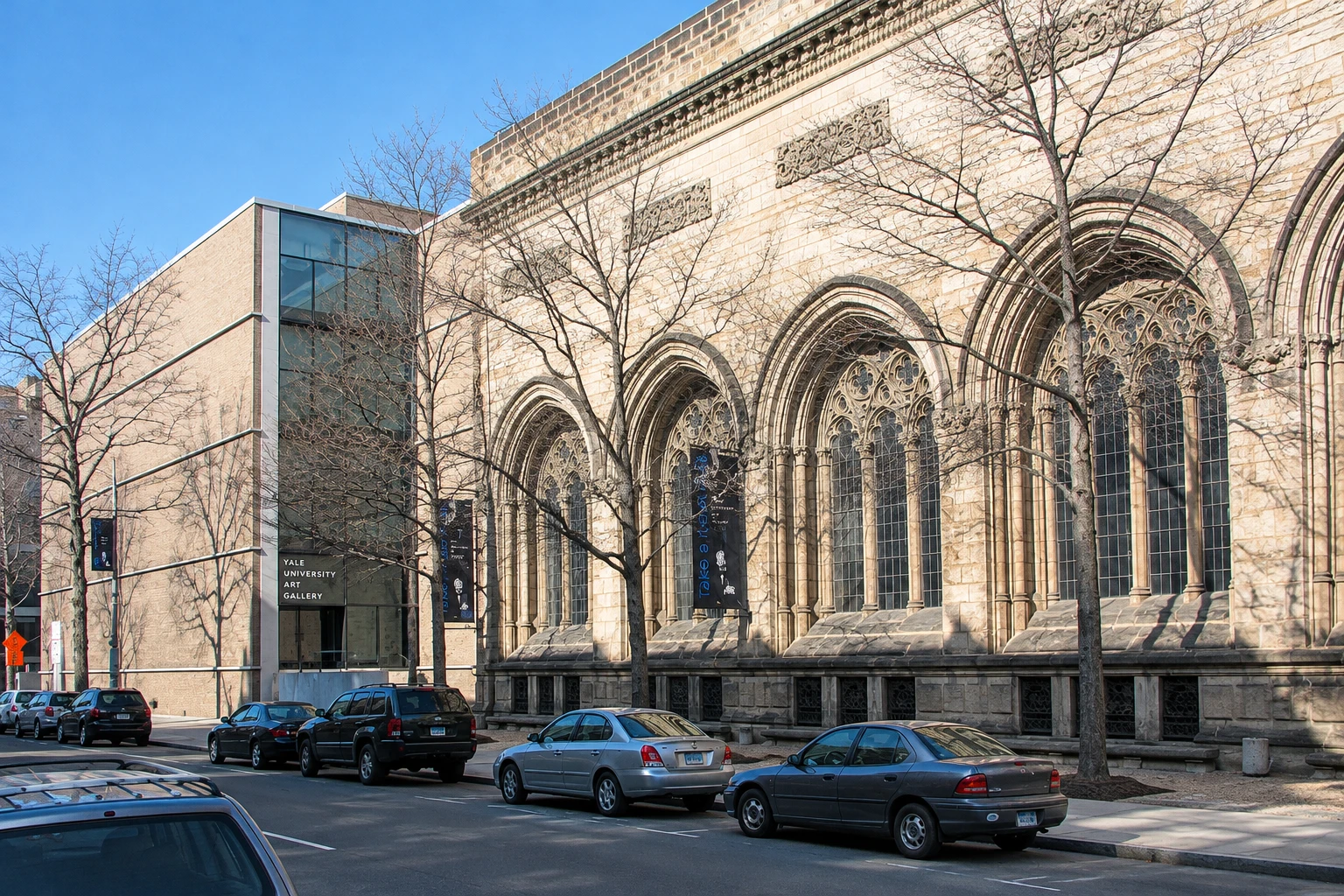
The oldest university art gallery in the Americas, founded in 1832, with a collection ranging from ancient to contemporary art, including The Night Café by Van Gogh. Admission is free.
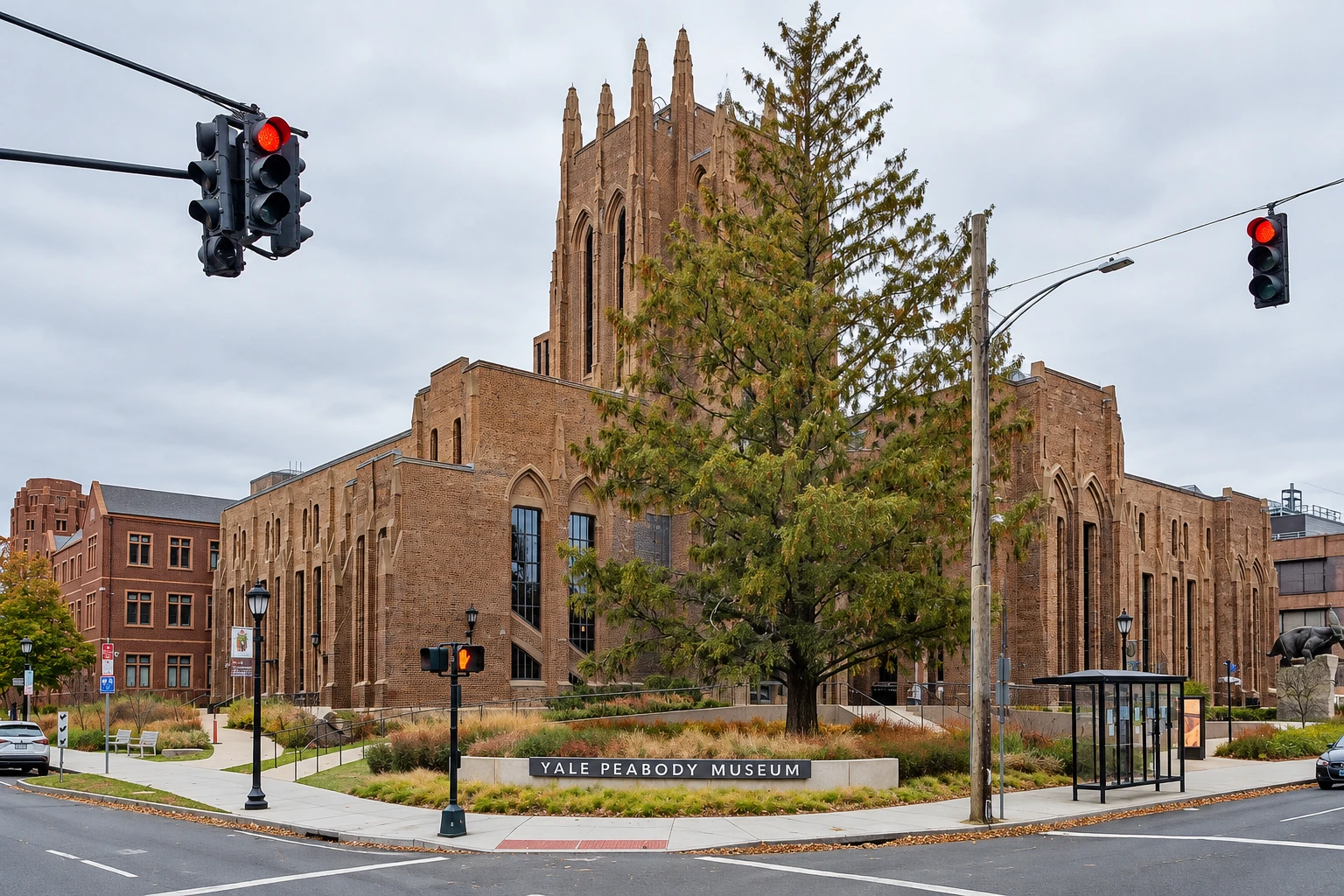
Yale Peabody Museum of Natural History, founded in 1866, with a dinosaur hall, a brontosaurus skeleton and the large mural The Age of Reptiles. There is no admission fee.
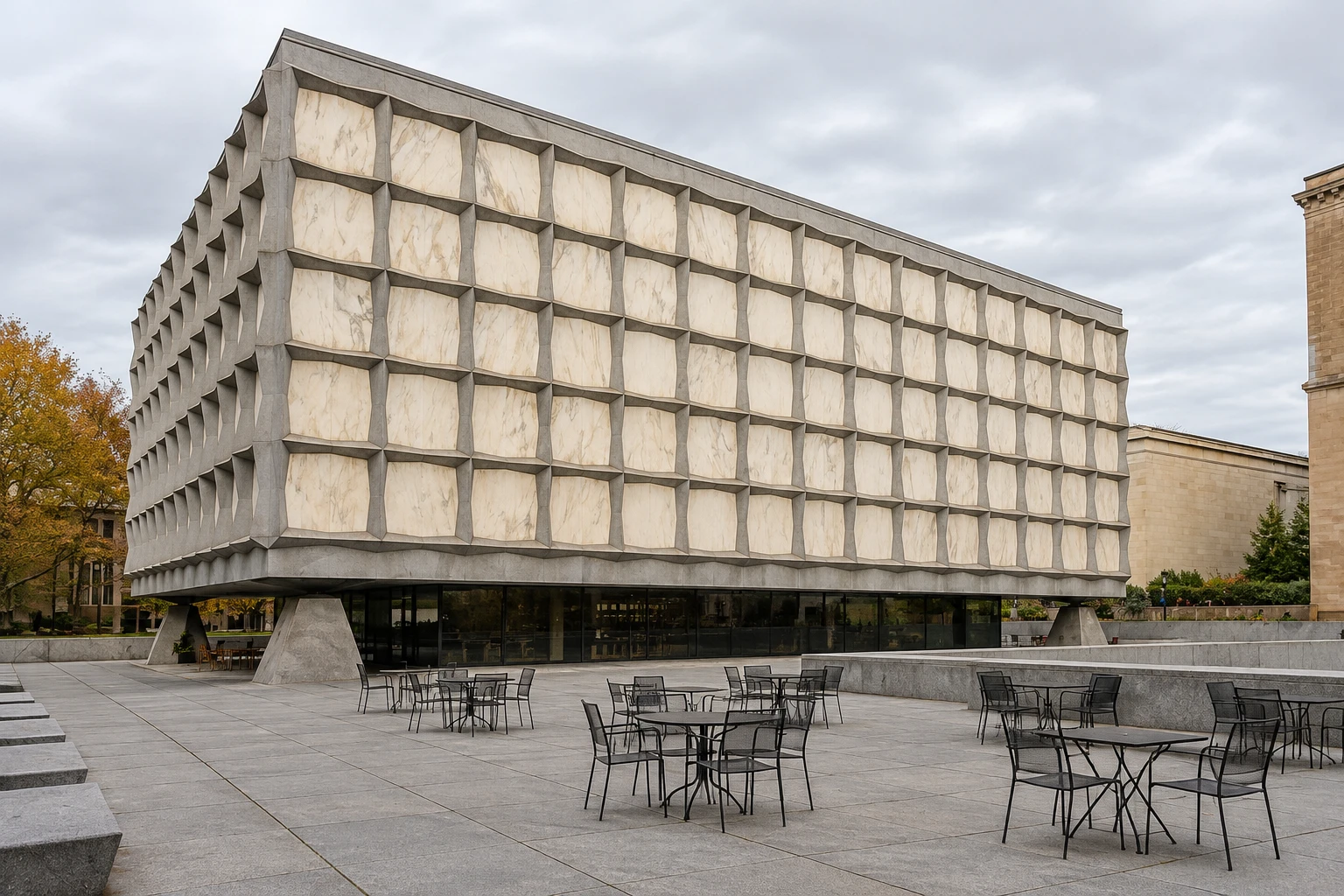
Yale’s rare book and manuscript library, opened in 1963, with thin marble walls that let light through. It displays a Gutenberg Bible and Audubon’s Birds of America.
Before you go
New Haven – the United States Destination Mystic and New Haven
Approximate distances. Check flights and bus, train or boat schedules before you travel.
Union Station handles long-distance trains and the New York metropolitan trains, about 2 km from the Green. Tweed Airport (HVN), roughly 6 km away, has few flights; Hartford’s airport (BDL) is about 90 km away.
One day is enough to see the campus, the art gallery and the Beinecke. With two days you can add the Peabody Museum and the Center for British Art at a relaxed pace.
Spring and autumn, when the campus is full and temperatures are mild. Summer is hot and humid, usually between 25 °C and 30 °C, with the university quieter. Winter is cold and can bring snow; the museums operate year-round with their own schedules.
The seasons shown are the most usual ones; nature doesn't always follow the calendar.
No. The campus, museums and the center are walked on foot, and the train station has city buses and taxis to the center. Drive on the right.
Suggested itinerary
Built with the places on this page. No rush: it's paced so you have time to see them.
Start at the New Haven Green and enter the Old Campus, with Harkness Tower, then continue to the Beinecke Library.
Visit the Yale University Art Gallery and, across Chapel Street, the Center for British Art.
Dine at one of the coal-oven pizzerias, as local tradition dictates; expect a line at the best-known places.
Day 1
Green, Old Campus and the Beinecke Library.
Yale University Art Gallery and the Center for British Art.
Day 2
Spend the morning at the Peabody Museum, with the dinosaur hall and the mural of the age of reptiles.
Walk among the Gothic student residences and Wooster Square, with its trees and pizzerias.
Check before you go. Opening hours and days change, and places may close for renovations, holidays or events. This itinerary is a suggestion from Cidade Turismo, not a commitment: plan yours by checking directly with each place you intend to visit.
Before you go
Yes. The campus is open to walk, and the visitor center organizes guided tours led by students. Some inner courtyards have restricted access.
Walk the New Haven Green and Yale campus, visit the art gallery and the Beinecke Library, and have dinner at a coal-oven pizza place.
About 130 km. The metropolitan train takes around two hours to Grand Central; by car it depends a lot on traffic.
It’s the thin-crust pizza with a charred edge from the city’s old pizzerias, baked in a coal-fired oven at very high temperature; the local name, apizza, comes from the dialect of Italian immigrants. The clam pizza is the most traditional.